What begins as a playful experiment in language becomes a striking, surreal exploration in Jack Turits’ short film Pun Intended, revealing how humour can expose the absurdities hidden within societal norms. Three unrelated storylines, coexisting in the same beige-toned nonsensical world, are brought to life through meticulously composed tableaux. The film exploits restraint, ambiguity, and static observation, allowing meaning to emerge between the lines as it prioritises neutrality over explicit emotional cues. In our interview, Turits reflects on letting the writing lead, shaping surrealism through production design, and how a list of puns became the foundation for a world that is as unsettling as it is darkly humorous. With themes of power, absurdity, and societal compliance woven into each frame, Pun Intended invites us to look closer—and then laugh, nervously.
What inspired you to start working on a film centred around puns? Was there a specific moment or idea that sparked it?
The initial idea came from a running list of puns I was keeping. I didn’t know what purpose they would have other than a quick laugh. Whenever one would come to mind, I’d add it to the list. Calling them puns is probably a misnomer. They were more of a play on words, and almost all of them used double entendre. It wasn’t until years later that I began exploring my favorites as a film. As I worked on the script, the puns themselves lost their relevance. What remained was a style of humor—and of course the title.
The film intertwines three distinct stories. What made these particular narratives stand out, and how do they connect?
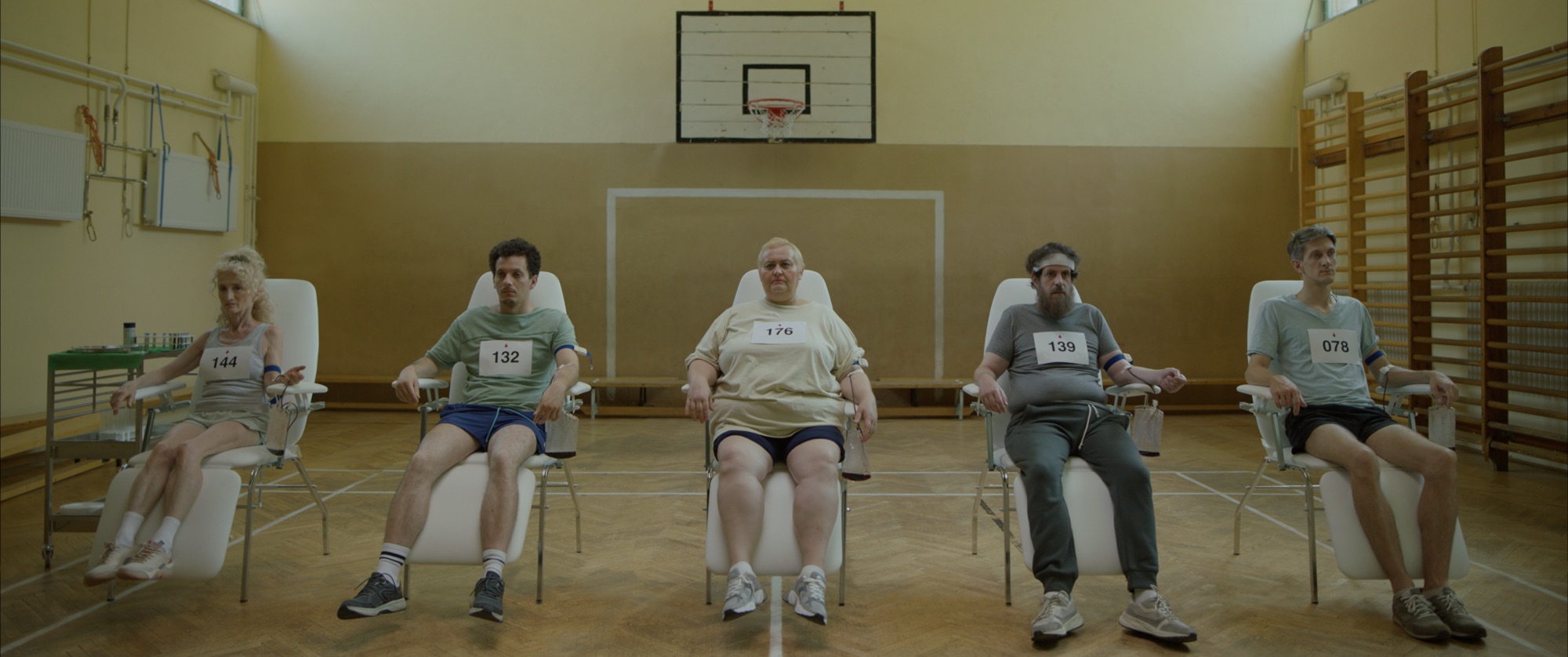
There’s no character or event explicitly connecting them, but they do take place in a shared world. The characters from one storyline could walk into another. I think the same government that would oversee a cruel citizenship test would also encourage competitive blood donation.
What role does laughter play, especially in contrast with the short’s darker scenarios?
My intention was to make a comedy. A dark comedy. At least in part. Humor can have a clarifying effect when contrasted against darker subjects. I think this works similarly to chiaroscuro, where the tension between light and dark is used to create depth.
As I worked on the script, the puns themselves lost their relevance. What remained was a style of humor—and of course the title.
Pun Intended has a surreal and ironic tone. How did you shape the narrative to achieve this balance of humour and surrealism throughout the scriptwriting process?
I’ve found that the best material comes when I’m following the writing rather than imposing too much of my will onto it. That’s not to say I don’t try! But that rarely gets me where I want to go. So much of this film’s tone was shaped by my personal taste and preferences. It’s an amalgamation of what I’ve witnessed, which, so far, has only gotten more absurd with each passing day.
Most Popular
Were there any specific film references or influences that guided your approach to the film’s overall tone and aesthetic?
Direct references no. At least not intentionally. Influences however, were plentiful. The films of Charlie Chaplin, Buster Keaton, Ulrich Seidl, Yorgos Lanthimos, Aki Kaurismäki, Stanley Kubrick, and Roy Andersson are in Pun Intended’s DNA. As were paintings by Edward Hopper and George Tooker, photographs by Gregory Crewdson and Lars Tunbjörk, the writings of Franz Kafka, and the music of Arvo Pärt and David Lang. The list goes on.


How did you approach the cinematography to achieve a sense of static observation, almost like a theatrical performance?
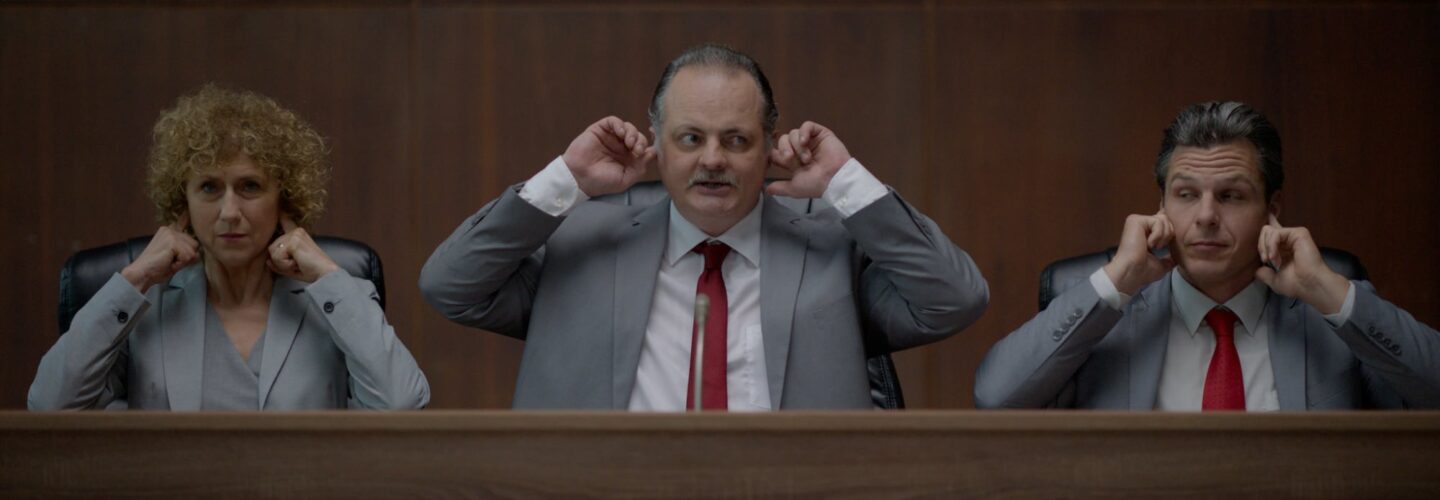
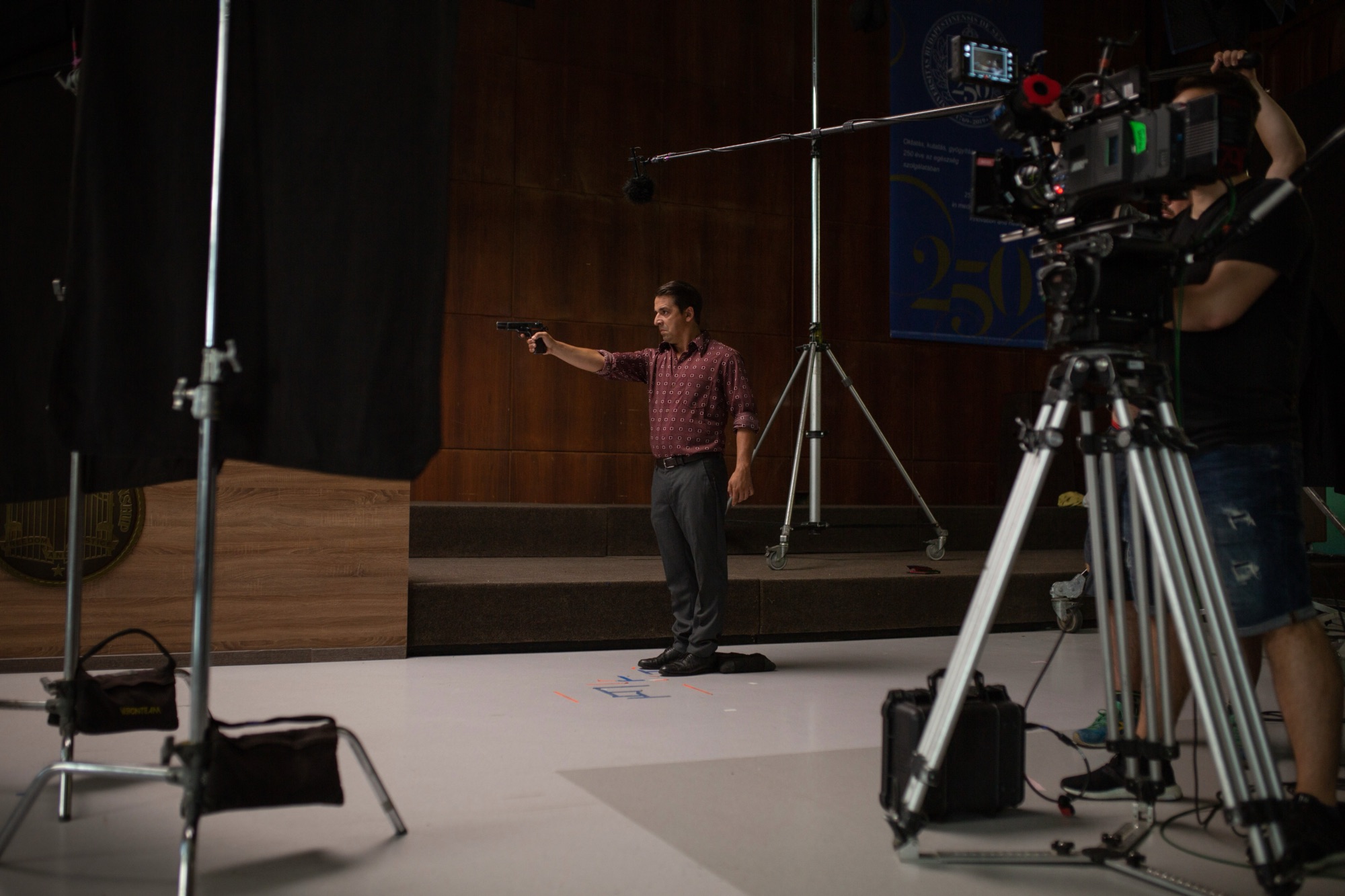
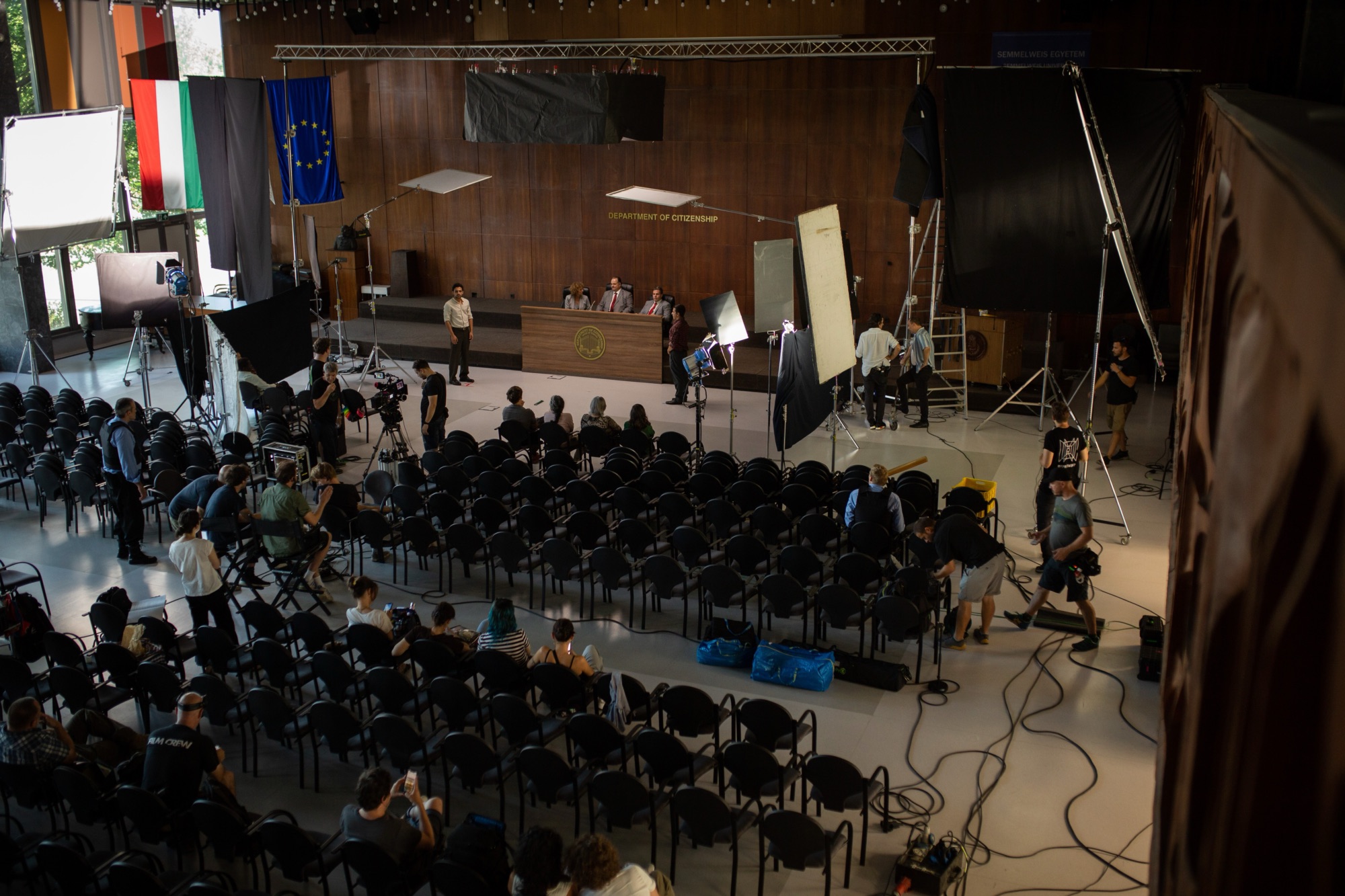
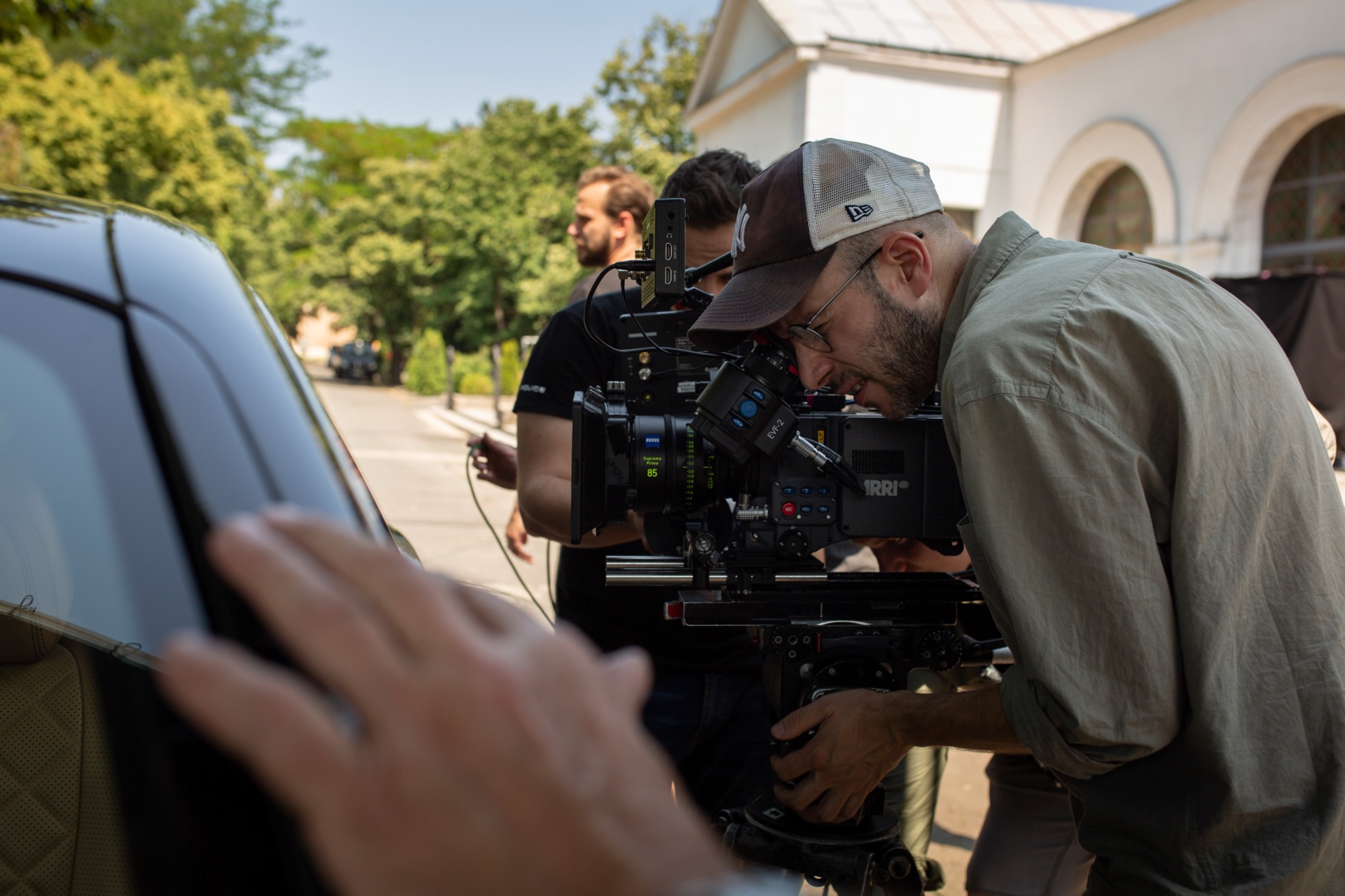
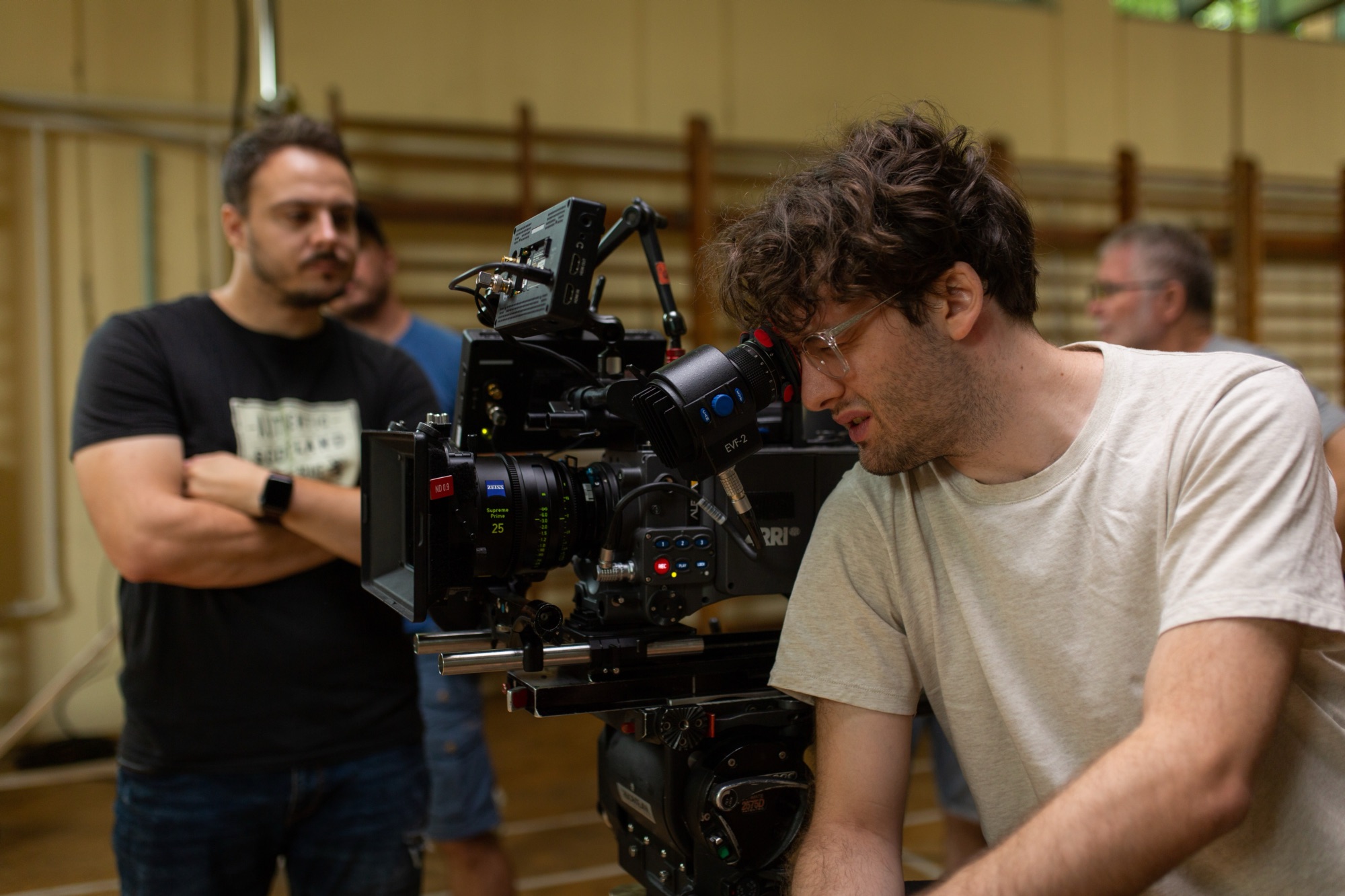
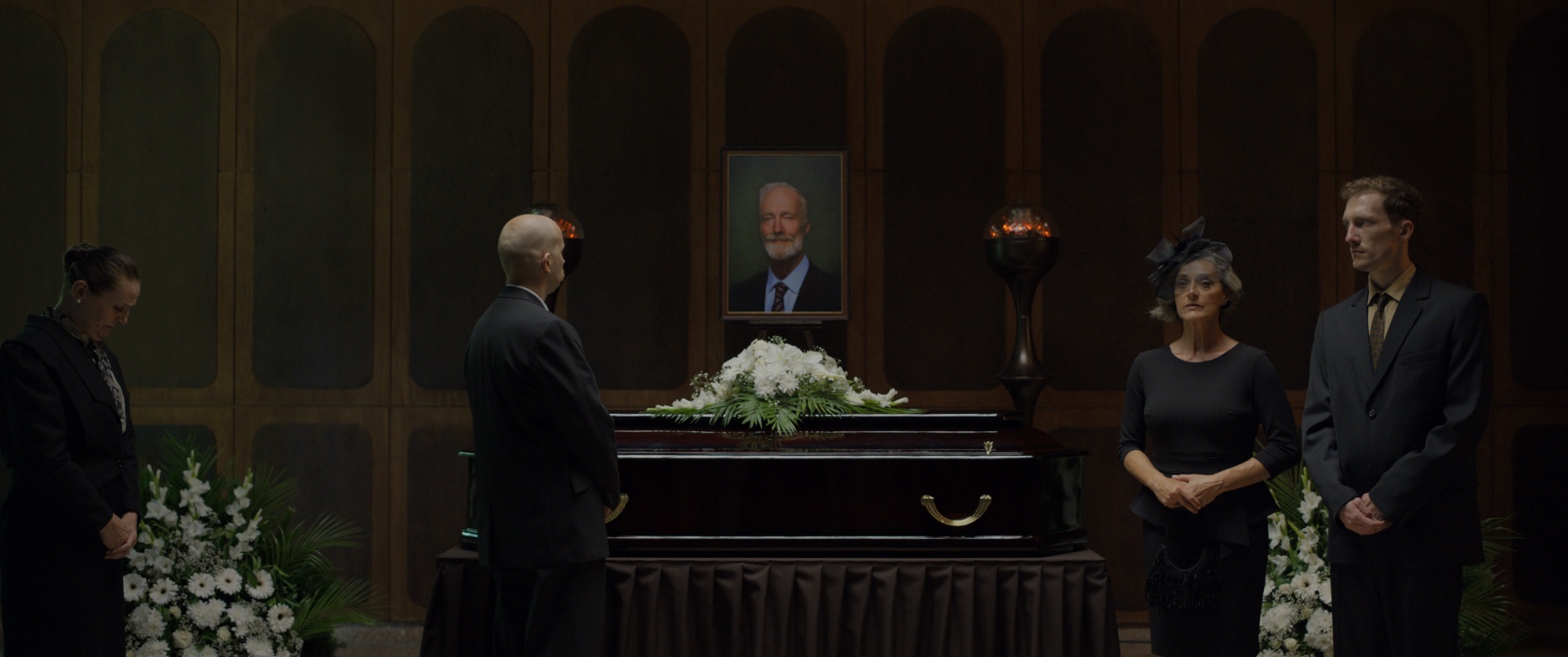
Whether it’s the duelists, the mourners, or the blood donors, each has an audience or observer of some kind. I think this had a role in my initial visual thinking, but so did my general penchant for a more dioramic style. This was a style I had never applied to a narrative project. Gergely Pálos, Pun Intended’s DP, worked with Roy Andersson for years, and it was my love of their work together that led to our being introduced. I initially hesitated at the idea of working with someone so closely associated with such specific and iconic work, concerned that maybe we wouldn’t be able to step out from its shadows. But any fears I had quickly disappeared when Gergely and I began working together and creating something new.
A more neutral, objective, and atonal approach leaves the audience free to make their own decisions, find their own connections, and walk away with their own interpretations.
We wanted to avoid some of the usual ways in which filmmakers emotionally guide the audience through cinematography. This meant static, locked-off frames, and lighting that was not traditionally dramatic or even cinematic. A more neutral, objective, and atonal approach leaves the audience free to make their own decisions, find their own connections, and walk away with their own interpretations. This is also one of the reasons the film uses only non-diegetic music. There’s no score or soundtrack.
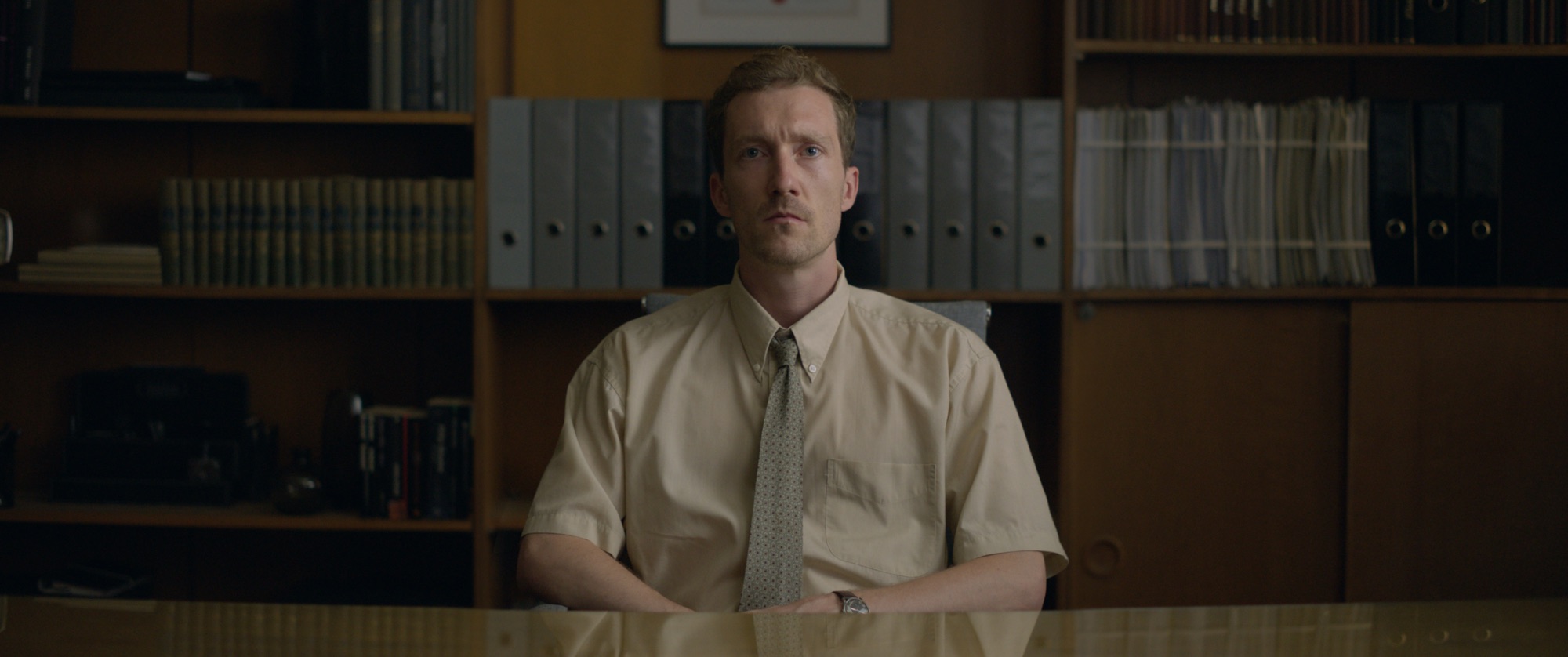
The film has a distinct colour palette and tone. How did you approach these choices, and how do they connect with its themes?
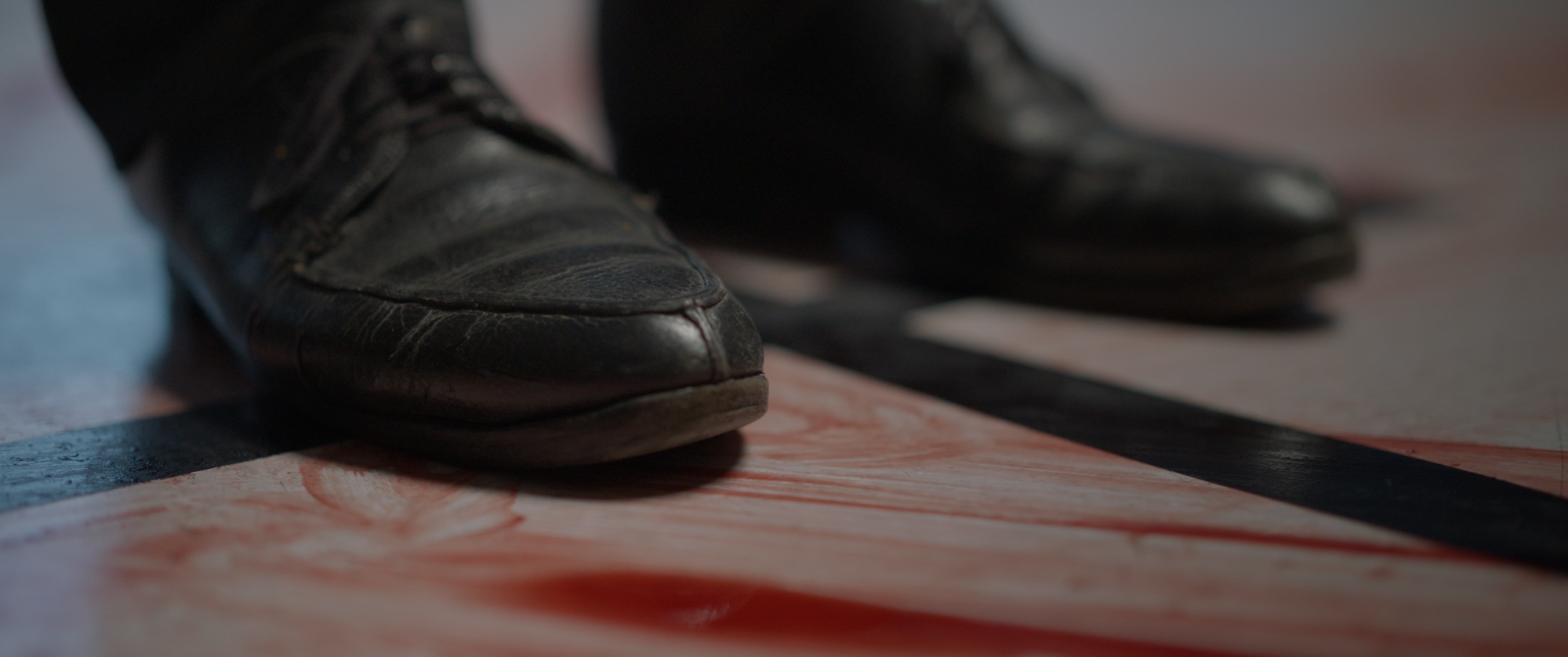
Color palette is so important to creating a cohesive overall aesthetic on any film, but this is especially true when you’re on a tight budget! This film has more of a tone palette rather than a color specific one. After we began scouting for locations, I noticed my favorites all prominently featured wood. So we leaned into that, and I think this texture helps to subtly tie the storylines together. I’ve since wondered what it was about wood that felt right for the film. Perhaps having an organic material like wood in the set offers a counterpoint to the film’s coldness.
Can you share more about the characters and what inspired their creation?
I think all the characters have an archetypal quality to them without being generic and remaining somewhat enigmatic. It was very important to me that they feel as universal as possible and untethered to any specific geography or culture. Of course, these characters are distinctly western in what they wear and how they act, but beneath any distinction there is, I hope, something universally recognizable.
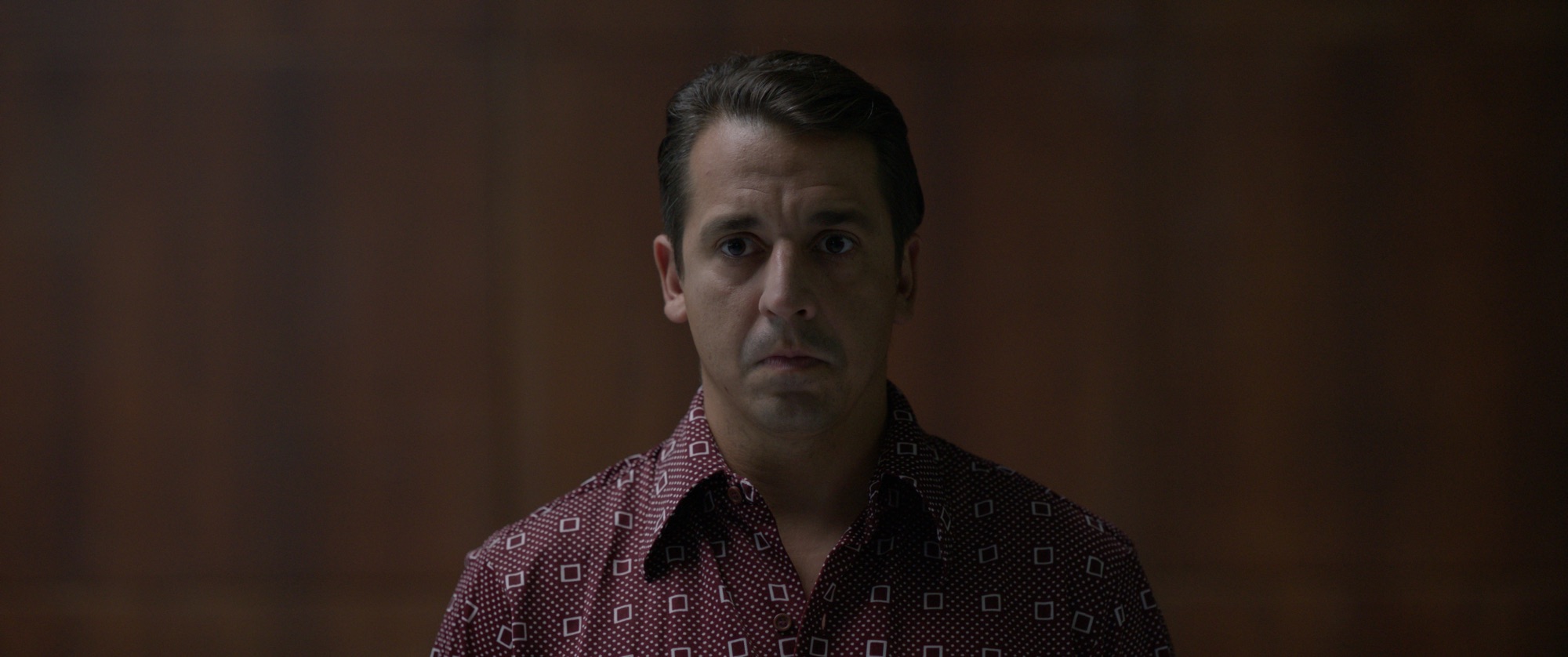
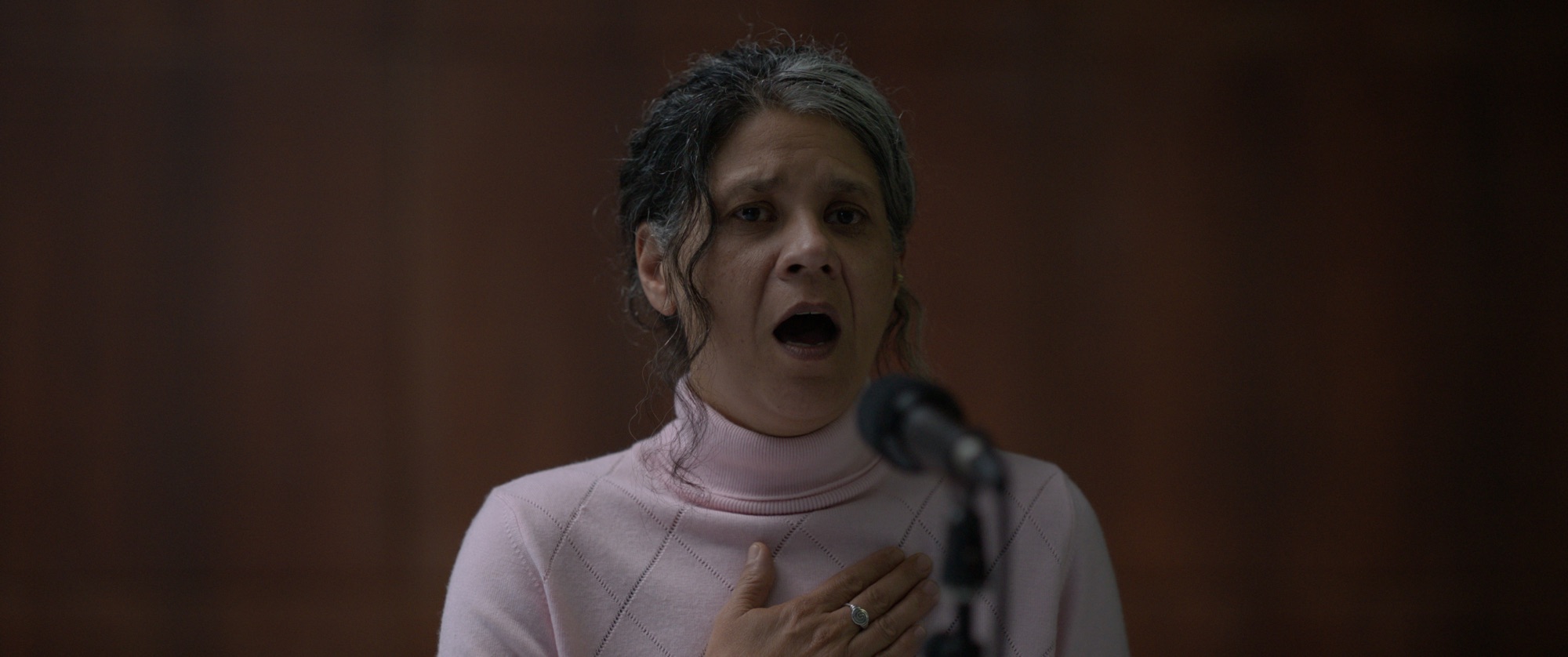
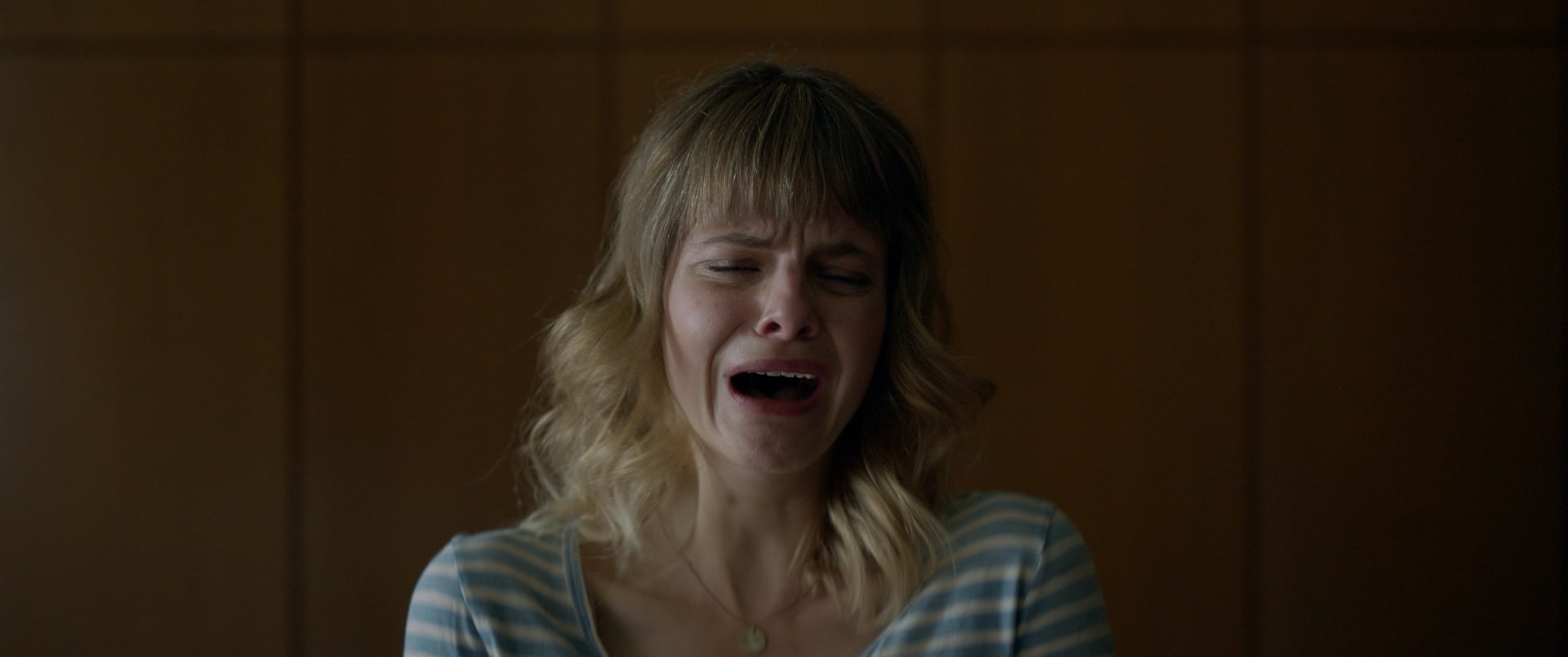
It was very important to me that they feel as universal as possible and untethered to any specific geography or culture.
It was always the plan to have a cast that spoke diversely accented English to further obscure where in the world the film takes place. Our casting director Hermina Fátyol put together an amazing group of actors from London, Berlin, and, of course, Budapest. They were the ones who made these characters into living, breathing, and authentic human beings. Each of these actors brought so much of themselves to their roles, and I think it shows. Without them, the characters you see on screen simply don’t exist.
What was your vision for the production design and how did it inform the creation of the settings?
I wanted this to feel like it could be set somewhere within our own world, but where exactly is never quite clear. I passed on some interesting locations simply because they looked too specific. I wanted to create something that felt universal. I took the same approach to wardrobe.
With Pun Intended still fresh in our eyes, can you share any insights into your upcoming film projects?
The one I’m currently preparing to cast is my first attempt at feature length. It takes place in a similar world to Pun Intended. Death is once again a central theme, as is power, class, crime, punishment, justice, guilt, innocence, and free will, to name a few of the lighthearted ones! Gergely has graciously agreed to join me once again, and although we’ve only just begun, so much of our approach thus far has been built upon our experience making Pun Intended together.