
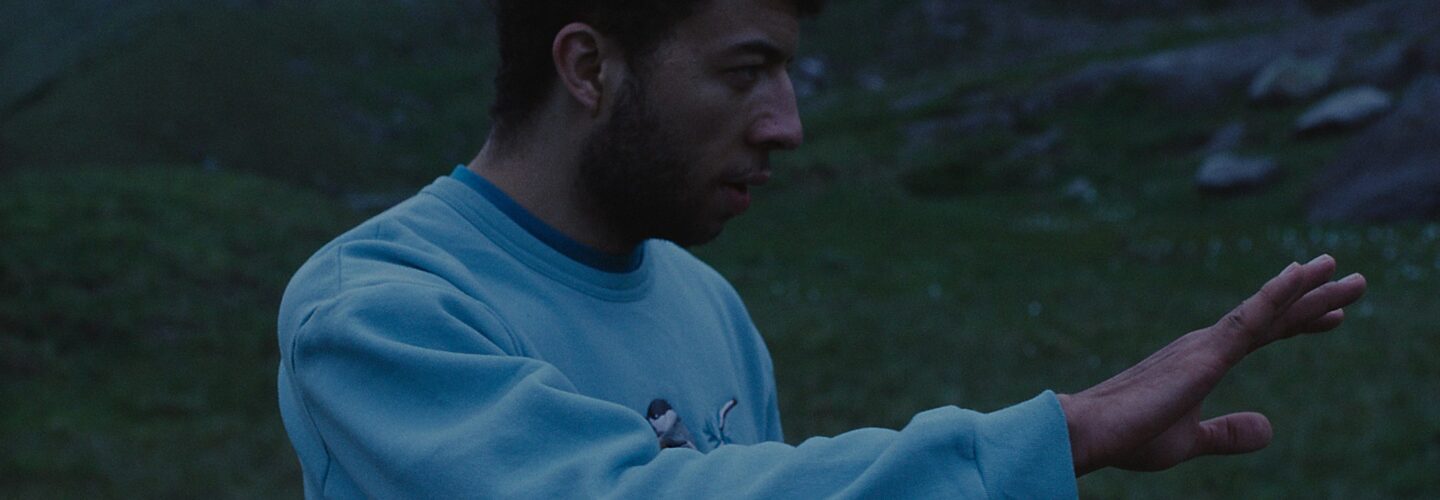
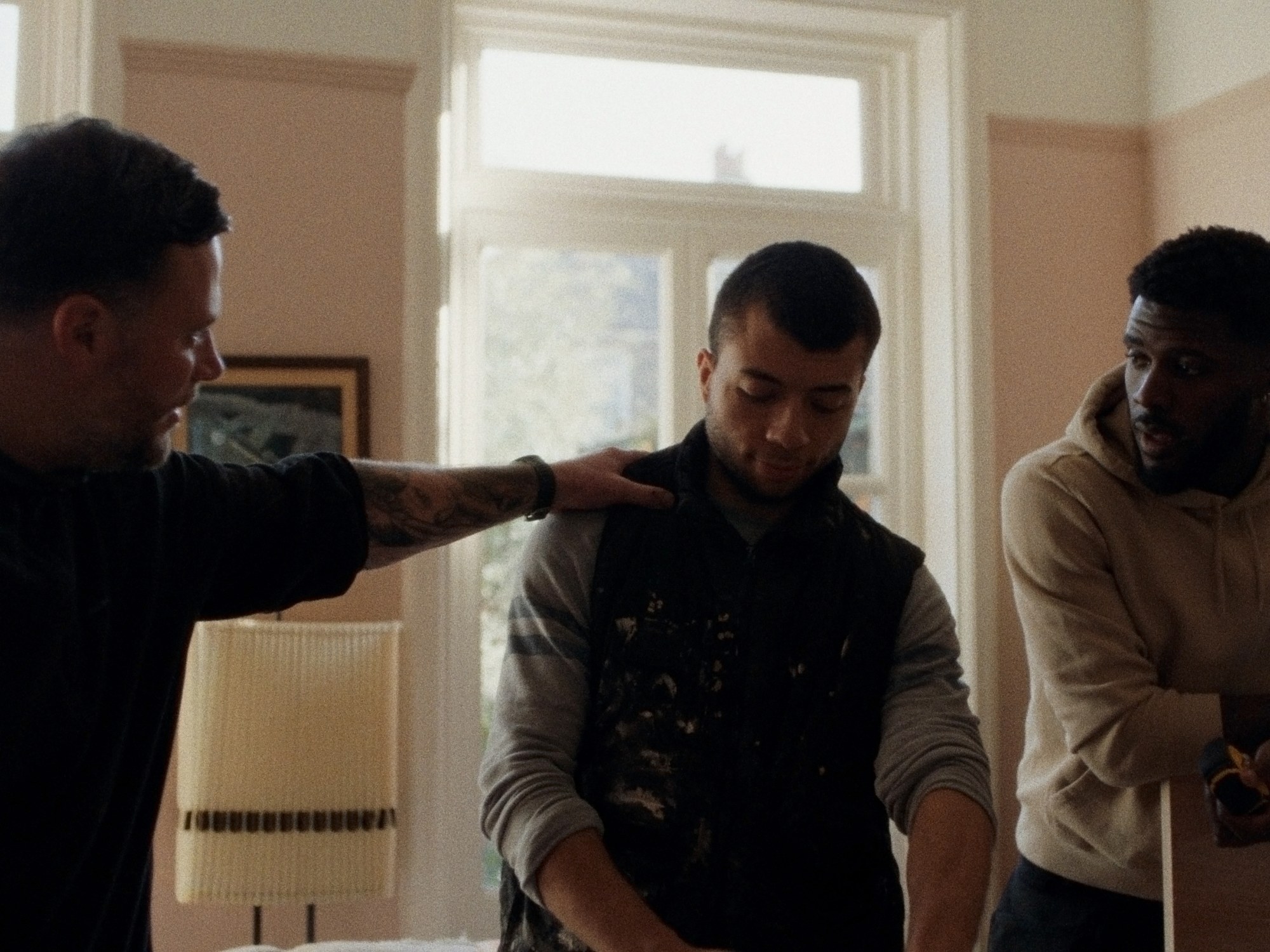
With Directors Notes celebrating its 20th anniversary in 2026, we’ve had the privilege of watching countless filmmakers make the leap from short film to features. Yet, it’s never any less exciting when we hear news of one of our previously featured filmmakers taking that next step, particularly when their debut feature retains so much of what first drew us to their work. That’s certainly the case with DN alum writer/director Bertil Nilsson’s Masc, which screens tomorrow (Thursday 8 October) as part of the London Film Festival.
Knowing relatively little about the film, beyond my familiarity with Nilsson’s earlier work, watching Masc felt like a welcome reminder of why we remain so committed to independent filmmaking here at Directors Notes. Shot with a skeleton crew over the course of around a year, the freedom afforded by that approach has resulted in one of the most singular pieces of filmmaking I’ve seen this year. At times, it’s difficult to pin down exactly what we’re watching, as the boundaries between performance and reality, fiction and lived experience, gradually begin to blur. However, rather than making the film feel elusive, that uncertainty is precisely what makes Masc so captivating.
Fresh from watching the film, I sat down with Nilsson to discuss his first foray into feature filmmaking, his collaborative partnership with Masc lead Joshua Griffin and the challenges and freedoms that come with taking a slower, more contemplative approach to making a film.
You’ve been making films for quite a few years now and we’ve watched you move between portrait work, dance films and narrative shorts. So, I’m interested…What made now feel like the right time to take on your first feature?
I always wanted to make feature films. I guess that was my original exposure to filmmaking when I was young and I was excited by the worlds that you have a chance to create in a feature. But I never really thought that was for me. I didn’t come from a background in art or film or anything like that, so it seemed like a completely different universe. Over time, working in the industry, doing photography and making movement, portrait and narrative films, I guess I was building my confidence. I was moving closer to where I originally wanted to go in some ways and obviously learning along the way. It wasn’t really an intentional journey. I think it was just a development of my confidence in even thinking that I could do it.
With shorts, especially narrative shorts, it takes a lot of creative energy and time to put together a short film that doesn’t necessarily get seen by a lot of people. I’ve been lucky with some films getting great distribution, but it’s still quite hard to get a narrative short film seen. So I was thinking that I wanted to make something bigger that could have a bigger audience, but I was also thinking about how to do that without the support or money that people normally spend on feature films. That’s kind of how we came to this process. It was about asking: can we do something with what we have access to right now in terms of equipment, knowledge, collaborators and connections? Can we find a way that we can make a feature film?
That leads nicely onto the practical side of making the film. I think a lot of our audience will be filmmakers themselves, so they’ll be interested in that transition from short film to feature. How did you go about finding the money and support to get Masc made?
It was mainly self-produced, so it was more about us finding a way to not have the money [Laughs]. It was about finding a way to do it without needing to raise money, because that didn’t seem possible. We wanted to find a way to do it that was less stressful and gave more room for exploration. That ended up fitting together with this idea of making the film in five blocks. Each one was almost like a short film in its own production. We had separate locations and, to a certain extent, separate casts. We were casting in between the blocks and prepping each block separately.
It was about finding a way to do it without needing to raise money.
That broke the feature production down into something more manageable, but it also allowed us to be a little bit bigger in our scope. Instead of thinking, “We have very small resources, so we can only make a film in one room for one week,” we could use a few different locations that we had easy access to. It meant we didn’t have to build this house of cards of favours and opportunities that all had to fit into a really tight space.
That sounds like a very liberating way to make a film, with a real independent spirit running through the production. Were there times when you wished you had more resources or more money?
Yeah, of course. There are a lot of problems that you can pay to not have. One of the biggest struggles with spreading out the filming was the logistics of scheduling it and making sure that cast and crew were available for the various blocks. So that’s definitely the downside of it. But I’m very happy with what we set out to do, which was to enjoy the process of making a film like this. When you make a small film, it’s very unlikely that it will go anywhere. If you’re over-focused on trying to get into a festival or whatever goal you have, then that process can be horrible – a sort of nightmare of stress and overextending yourself. I didn’t want to do that. I’ve been part of those productions.
What we were hoping was that if we could have a more enjoyable process and give more space to the actors, the whole energy on set could be more relaxed and we would get more out of it in terms of the final product than if we tried to rush it. There’s this weird paradox where, when you’re starting out, you have the least amount of resources and you also have the least amount of experience, so you kind of need the most amount of time. Whereas a very experienced crew and director can probably do it very quickly because they have all that experience to fall back on.
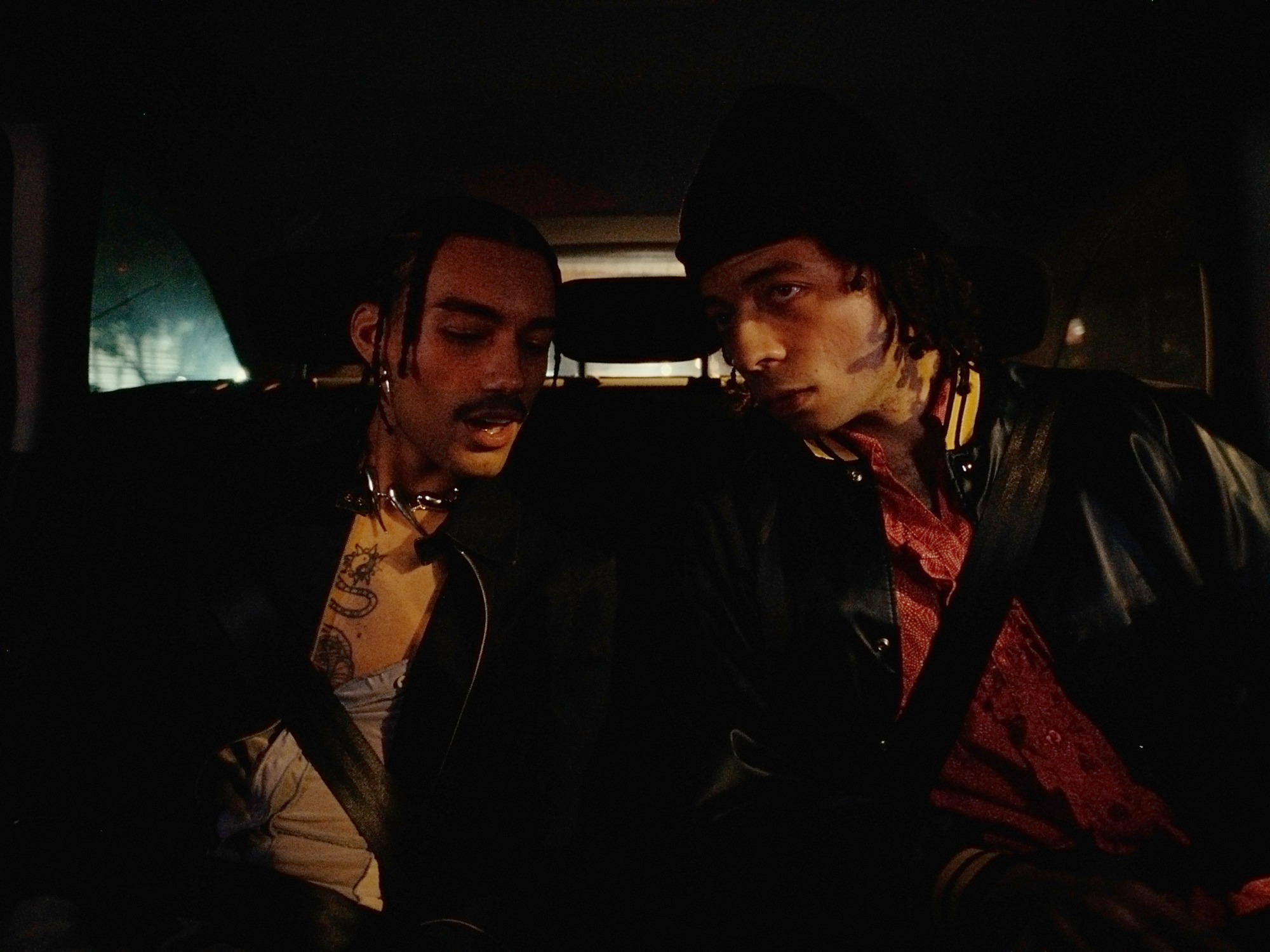
Whatever you did, it really worked. I’m fresh from watching Masc and I’m still unpacking the layers of the film, but I found it incredibly moving and totally refreshing. There are a lot of relatable themes in the film – from masculinity to identity and the performative nature that surrounds both of them – but you seem to be exploring them from a fresh perspective. To focus on the subject matter for a minute, why were these the themes you wanted to explore and how did you want to approach them?
I’m really interested in performance and in how that works. It’s something that has never come naturally to me, so I’m really interested in how it works. A lot of it is more intellectual than instinctive for me. Both Joshua and I are interested in where the line between performance and reality ends. We’re making a film, we’re putting on a performance, we’re creating a character, we’re telling a story, but that’s also what you do in your own life.
We go to all these different environments where there are very different codes of conduct. I was really interested in how you can be a different person, or at least be expected to be a different person, in those different places. And how that kind of performance is maybe not necessarily visible to other people, especially in spaces where women or trans people might not be welcome. How is that negotiated? I feel like it’s a negotiation of what the rules are, what’s allowed and what’s right in a particular space.
I wanted the story of Masc to show that we’re not just one thing. You’re not just a gay person; you might have different identities and there’s an intersectionality there in terms of everyone being unique in where they’re coming from and their experiences. That changes how you have to negotiate all of those different environments.
Most Popular
You’ve mentioned Joshua Griffin a few times already and you developed the original idea with him as well as having him play Robin. He’s obviously an integral part of the production. How did that first idea form between the two of you, and how did you develop it into what we see on screen?
I first met Joshua when we were casting for my short film Repair and our relationship started there. I’d written a script, but then he came in with some ideas and was very open and collaborative about developing the story and the character. The idea actually came from a conversation about process – about whether films could be made in a different way. We came up with the idea of doing a story that made sense in chapters. That meant we could play with appearance, change the hair and the costume and Joshua was very open to everything. So it was very fluid.
At some point I wrote a sort of outline and then we would develop that. We would take from our own experiences and come up with scenarios. They would start more literally and then develop as the story developed, becoming more fictional. It was a fluid process. I would be the secretary and write the script and keep an eye on the structure, while Joshua was key in the emotional journey of the character and figuring out what was driving him in different moments.
The idea actually came from a conversation about process – about whether films could be made in a different way.
He was also very involved with the casting and finding the right people. As we brought more people in, we would open it up to them and discuss their experiences. Sometimes things would come from them, or we’d shape the character and adapt it to something that felt right for them. Some of the people we actually cast were slightly different from what I had originally written. You make something up, and then you find a real actor and think, “Oh, this person is really interesting. Let’s adapt it so it fits them.”
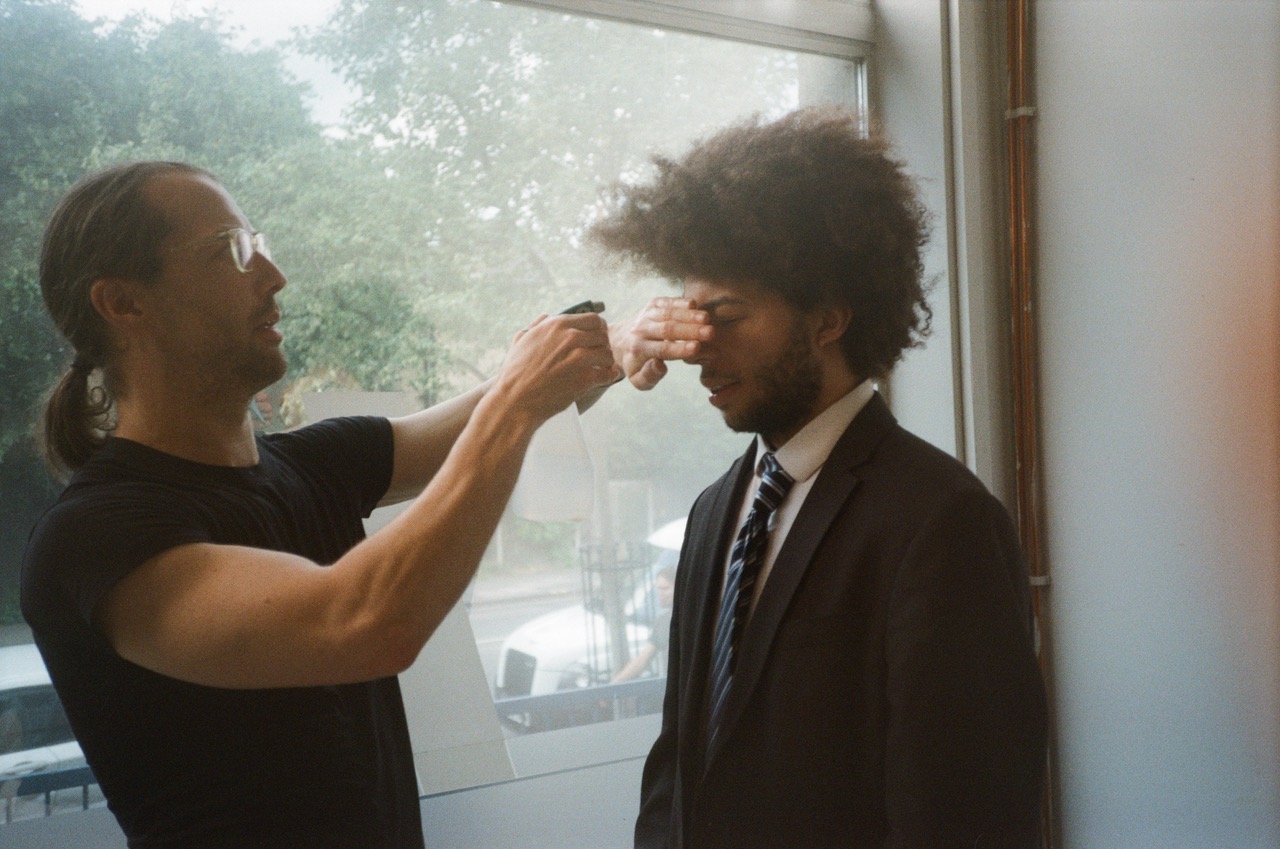
It sounds like you and Joshua had a lot of trust in each other throughout that process. When you were building Robin together, did the character evolve during the development? Is that character on screen how you imagined them at the start of the production?
I guess Robin is this expression of something joint from us – Joshua and I. In that sense, I feel like we just came closer to something more truthful in an emotional sense, rather than a literal sense. We moved away from the literal towards something more fictional and that helped us create more truth. It’s definitely different from where we started, but it also feels like it’s just where it’s supposed to be.
I think the whole process for us was very instinctual – going with what makes sense and not trying to force things. Within a scene, if the dialogue we’d written, whether that was before filming, on set or in the edit, wasn’t really working or didn’t feel like it was coming from the characters, we would get rid of it or find other ways of putting it together.
One of the things I loved about the film was how intimate it feels when you’re spending this time with Robin. How did you think about that intimacy when you were making the film? Was there a conscious effort to make the audience feel close to him without ever feeling like we’re intruding on his experience?
I definitely love that type of intimacy – that feeling of really being with the character. Even though we’re playing with layers of performance in Masc, I wanted it to feel like you’re actually getting something that Robin doesn’t want to reveal. A lot of the words are where he’s hiding, where his masks or his personas are. But his actual physicality and his presence are where we can see the real Robin come through.
I think, in all aspects of the filmmaking, because a lot of those things were just shot with me and Joshua—maybe with one other person—it was very intimate in the way we captured it. Sometimes, someone was helping with sound, but it wasn’t like there were 20 people on set. That’s one of the things I’ve learnt from my photography and making my other films. If you can create that intimacy on set, then it can carry over into the actual filmmaking, because it’s not something you’re trying to force. It’s actually what happened. It was very intimate.
I like to operate the camera because I prefer to direct while watching through the viewfinder.
You just mentioned that you shot the film yourself. What made you want to take on the cinematography, alongside directing?
I think it’s a combination of things. On the one hand, I knew that having a cinematographer would create one of the biggest logistical issues, because I wanted to work across the year and the cinematographers I want to work with are busy and off doing great things. But then it was also about the intimacy and directness of it. Even when I work with cinematographers, I like to operate the camera because I prefer to direct while watching through the viewfinder. It feels more like I’m literally in the audience’s seat and I can respond to what I’m seeing. If I’m watching it on a monitor, it feels like I’m starting to become detached from the actual scene and more focused on the presentation of it.
I really value that closeness of being part of the performance in a way. That’s what I enjoy about photography and filmmaking. There are definitely challenges to doing both things at the same time. There are certainly more things to think about, but with Masc we solved that by just giving ourselves more time.
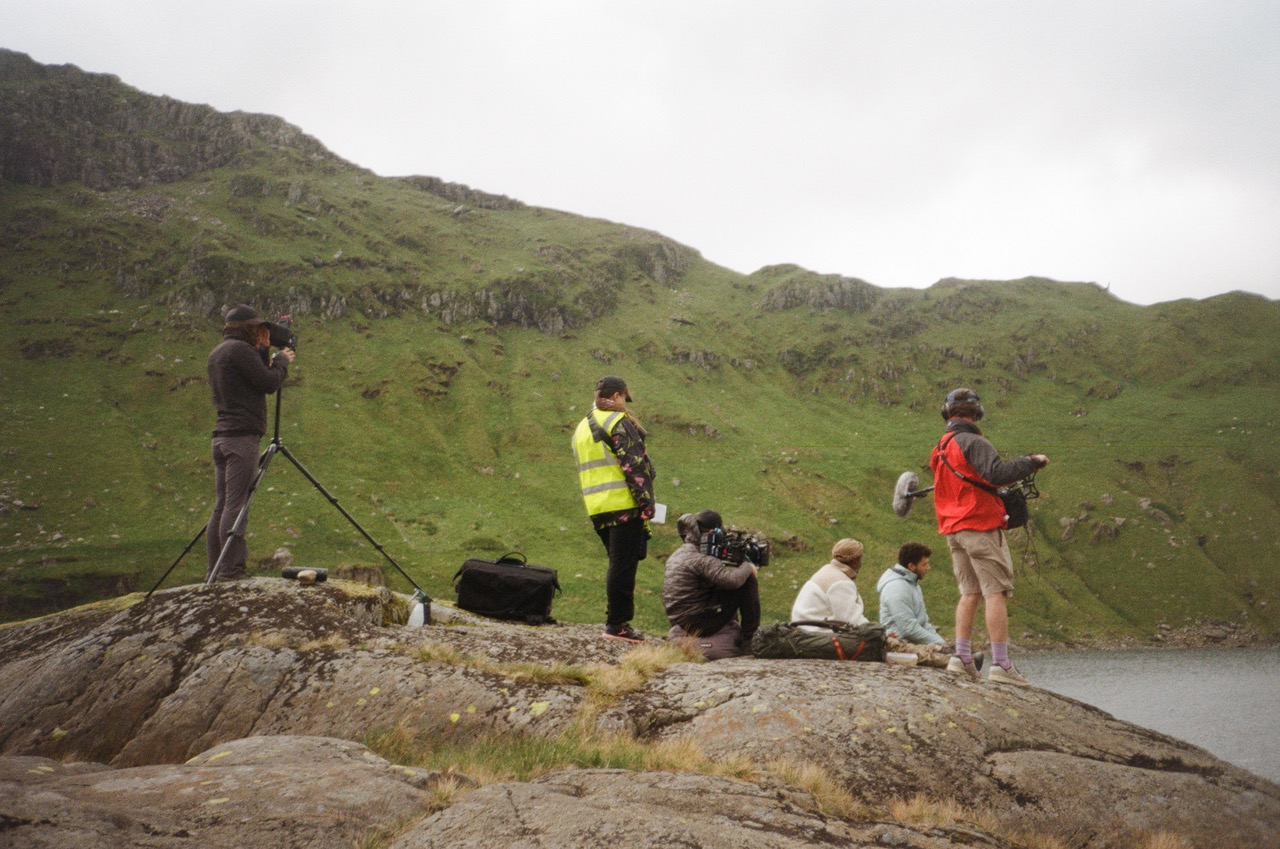
Do you think the film would have been different if you hadn’t been handling the cinematography and directing at the same time? Were there moments where you wished you could step away, or was that intimacy vital to the way the film turned out?
There was definitely no moment where I wanted to step away. Again, I think it’s just about the balance. I like to keep things smaller and be more nimble, but obviously sometimes it’s useful to have a few more people who can help you. At times it was physically hard to hold the camera. You get tired and you wish you weren’t the person shaking and could just sit in the chair. We did bring in additional hands when we needed them, especially when we literally couldn’t do everything at the same time. If the camera was moving on a rickshaw, for example, then I needed someone else to do that. But I loved the process and wouldn’t have changed it.
One of the things I loved about the film is the way it moves through time. I know you shot it in these different chapters, but when you put the film together, there’s a real fluidity to it. We’re often left questioning exactly what we’re watching or where we are in the story. What was the editing process like, and what drew you to that structure?
The film is actually quite linear. It just has the appearance of being less so, with a few non-linear moments and some layers being revealed that make you question what’s going on. I was interested, on a more self-indulgent film-nerd level, in this idea of the film representing the process that we were going through – learning about these things and figuring them out together. I wanted the film to reflect that process in some way. For the metafictional layers, I didn’t want to do it in a way that I’d seen before, in terms of it being about a film shoot and going to that particular place.
It definitely created some challenges, but we had an amazing editor, Anna Miller, who’s a good friend and who I’ve worked with on most of my films. We had to find the right balance, giving the audience things to hang on to, so they can follow it, without trying to be too explanatory. We went with the emotional truth, the emotional continuity or flow of it, rather than trying to be too informative and saying, “Okay, now we’re going to orient people, now we’re in Wales.” Anna was super valuable in creating that audience perspective and challenging us on distilling things. I think what she did really well was help shape things and maintain the unique way we wanted to approach the film, while also keeping that idea of how we wanted to reveal Robin. She didn’t try to apply a conventional narrative structure and say, “Here’s how it has to be, and this is exactly how it should flow.”
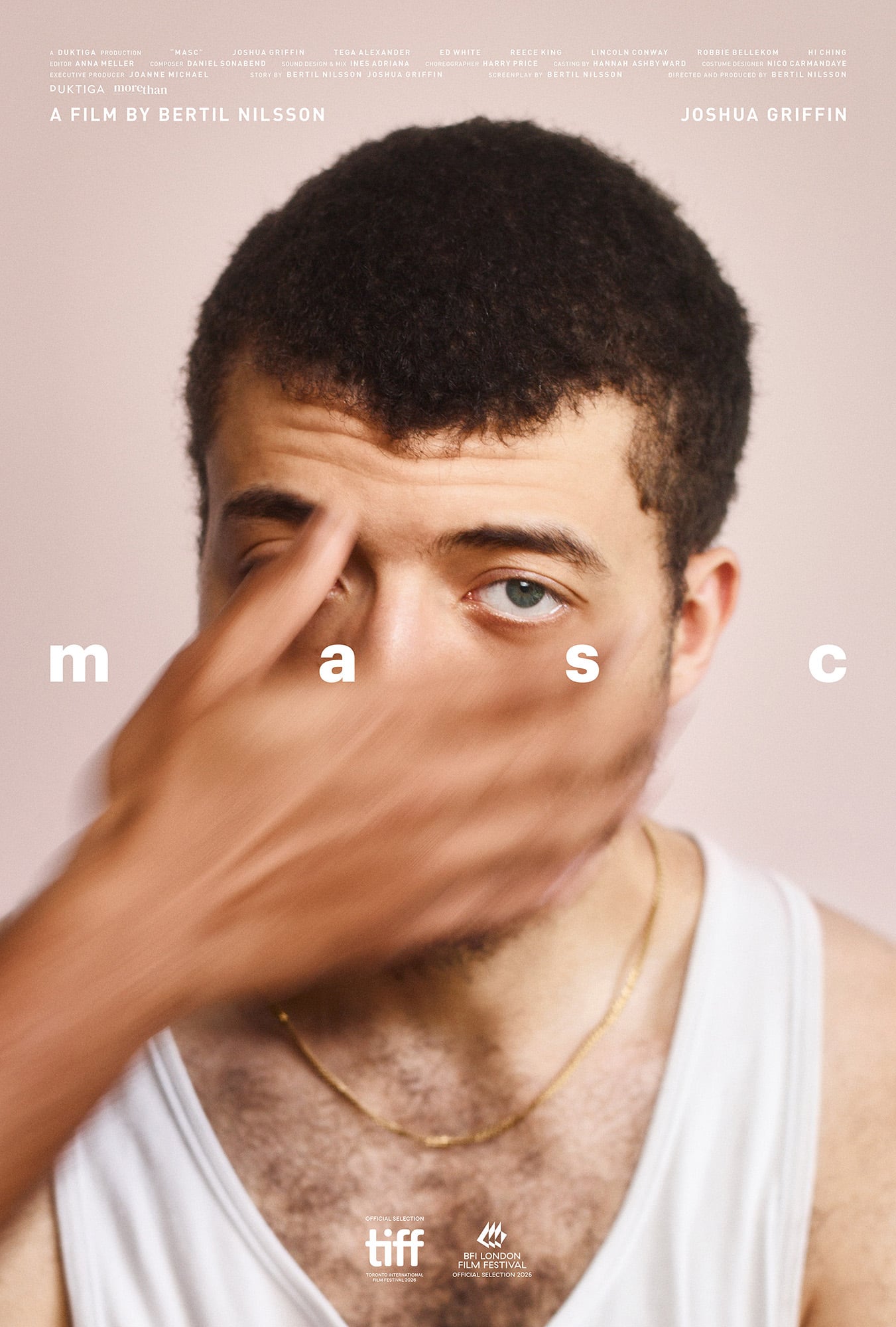
Without giving too much away for people who haven’t seen the film, I do want to touch on the ending. You conclude Masc with this mesmerising piece of choreography and having followed your work for a while, I know movement has always been a recurring element in your filmmaking. What keeps drawing you back to movement and choreography and did you always know that was going to be the end of the film?
Yeah, I did actually. That was one of the very first scenes I wrote. I knew I wanted to do that. I think I’m fascinated by movement because I can’t do it myself. It’s such a powerful form of communication; it’s beyond words. You can get something from it emotionally, but for me it’s also very mystical. I don’t really understand it, so I guess there’s a fascination there. It’s amazing, but it’s also quite mysterious to me.
Joshua also has a background in physical theatre, so he loves working with the body. It became a way of showing something true of Robin, while also having a more lyrical element to the physicality he’s revealing. It was an early idea that made sense because I’d worked with movement before. It wasn’t like, “This film has to have that element,” but it managed to sneak in quite early on and then develop.
I’m keen to protect that process. I don’t want to immediately abandon it and do something in a very traditional way.
It’s such a fitting end to your debut feature. Final question then: has the experience of making Masc changed the way you think about your filmmaking? Has it cemented any beliefs you have, or is there anything you’ll take into your next project?
I think what I’m most happy about is that we were able to make the film in this way. Instead of being told, “This is how you have to make a film,” I just made the film in the way that made sense to me and it seems to have worked. So I’m keen to protect that process. I don’t want to immediately abandon it and do something in a very traditional way. I think there are ways to adapt it.
For me, it’s always about who you’re working with and figuring out what works for everyone together, rather than going in with a prescribed idea of how something has to be done to be a proper film, or a proper way to do it. I think it’s important to treat everyone respectfully and not take advantage of people. But beyond that, it’s about finding ways that make sense for you and for every person involved
Have you already started thinking about what’s next?
I’ve got two projects that I’m developing. One is a queer thriller, which is a little bit more of a genre-driven film, but obviously it will have some of my elements and some of my approach. And then there’s another film that’s a sort of love triangle around seeing and hearing. That one maybe follows on more directly from some of the aesthetics and ideas in Masc.