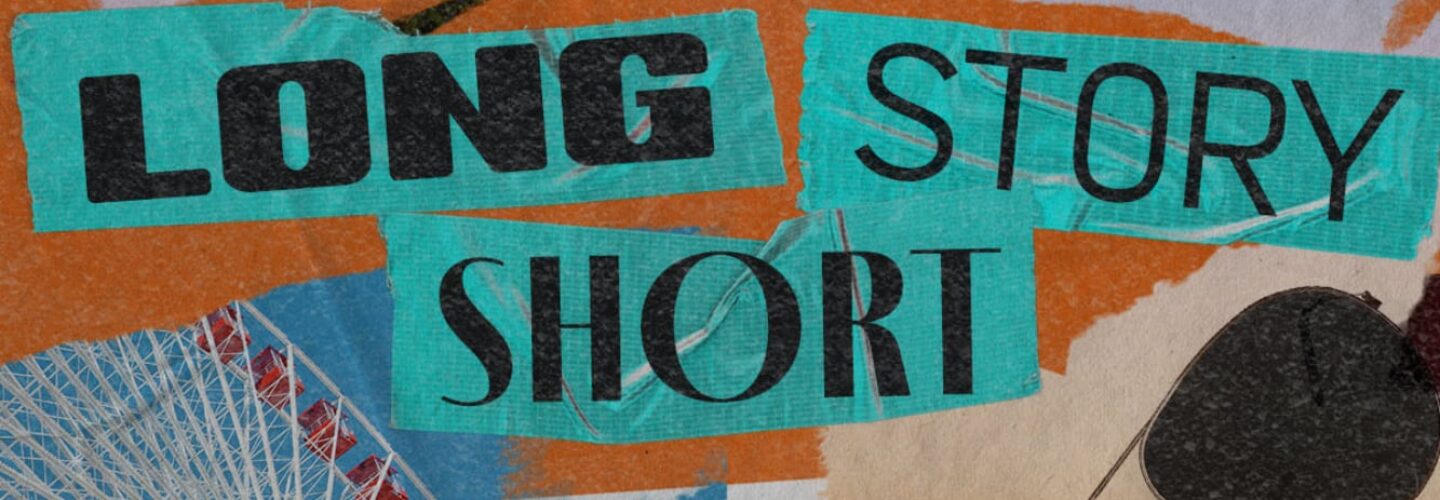

When it comes to funding opportunities, the short film world can always use more support. So when we learned of a new BBC initiative designed to spotlight the next generation of UK screen talent, our interest was immediately piqued. Long Story Short brings together emerging writers and directors from across all four nations of the UK, pairing them with local production companies to produce seven ambitious short films which recently premiered on BBC iPlayer and BBC Three.
With a focus on championing homegrown storytelling while amplifying voices from every corner of the country, the resulting films function not only as a showcase of emerging talent but as a snapshot of the diverse narratives currently shaping the UK screen landscape. To explore the initiative in more depth, we spoke with Jess Loveland, Head of New Writing at BBC Writers and Drama Commissioning, to discuss the project’s origins, its aims, and whether similar opportunities might follow in the future.
Thanks for talking to us Jess. Can you introduce us to the Long Story Short initiative and explain why it was started?
Long Story Short is a short film talent initiative designed by BBC Writers to identify, support and showcase the UK’s most exciting emerging writing, directing and producing talent. It brings original short films to audiences on BBC platforms, giving filmmakers the opportunity to make ambitious, authored work and to reach a genuinely broad audience.
We started the initiative because we wanted to invest directly in the careers of new writers. At BBC Writers we work with hundreds of incredibly gifted new writers every year and we wanted to create a commissioning opportunity with a direct pathway to production funding, creative collaboration and that all-important professional onscreen credit. As the industry becomes ever more competitive and risk-averse, we feel it’s increasingly important to create funded, supported spaces where new voices can experiment, take creative risks, and build credits that genuinely move their careers forward.

What was the process for selecting the films/filmmakers to take part and what were you looking for in a selected project?
We had funding for seven short films and so we started where all good stories start – with the writer. We put a commissioning brief out to recent alumni of our BBC Writers groups looking for bold, ambitious short film scripts aimed at the 16-34 year-old BBC Three audience. We then worked with the BBC’s Small Indie Fund to find seven emerging producers from each nation and region of the UK. In collaboration with the selected producers, we shortlisted several writers and invited them to discuss their scripts and ideas with us. We were looking for projects with a strong and distinctive voice, an entertaining and imaginative story, bold characters that we want to spend time with, a clear awareness of the BBC Three audience, and ideas that could be achieved on the production budget. We were thrilled with the response we got to the brief, and it was very challenging to arrive at just seven projects to greenlight.
We are exploring ways to build on what worked, whether that’s another round of the initiative or a slightly evolved model.
We wanted to replicate the actual process of developing, making and releasing a piece of television as closely as possible. So, after a period of focused script development, the producers began the process of meeting and attaching exciting up-and-coming directors. The films went into production across Summer 2025 and were delivered by the end of September. In October, we screened the films with the filmmaking teams and an invited industry audience at the BFI IMAX. They then enjoyed a short festival run in November (CineCity, ASFF, Belfast Film Festival) before launching on BBC Three and iPlayer on 1st February.
Most Popular
Will you be running the initiative – or similar opportunities – again in the future and how can filmmakers get involved?
We’re absolutely committed to creating more routes in for emerging talent, and Long Story Short has shown us how valuable this kind of focused support can be. While we’re not announcing the next iteration just yet, we are exploring ways to build on what worked, whether that’s another round of the initiative or a slightly evolved model.
For writers and filmmakers who want to get involved, the best thing is to stay connected with our BBC Writers public callouts, like our Open Call every November, keep an eye on our social channels and industry partners, and keep honing and developing their unique voice.

To get the filmmaker perspective on the Long Story Short initiative, we spoke to directors Theo James Krekis (Jealous People are Ugly People) and Annabel Vine (True Love and Wormholes)
How did you get involved in the Long Story Short initiative and what does it mean for your career having the BBC back your work?
Annabel Vine: The script for the intriguingly titled True Love and Wormholes landed in my inbox after my agent, Steven Russell, was contacted by Bruce Goodison and Kate Cook from Indefinite Films. I was keen to get the job. So I worked up a creative pitchdeck that laid out my ideas about the characters, casting, locations, mood, camera, lighting, production design and music. Kate called the following week to say that I got the job.
Theo James Krekis: I was part of BBC Voices – a six-month development programme for writers up and down the country. My cohort, along with the previous years, was eligible to apply for Long Story Short. I was then one of seven filmmakers to receive the funding for their short film.
We’ll have to wait and see what long-term impact this will have on my career, but the initial mood is pretty buoyant.
AV: Making this film for the BBC has already opened doors. Producers and development execs from some of the UK’s most well-loved production companies have responded to the film with compliments and requests for meetings, which I have been happily attending. We’ll have to wait and see what long term impact this will have on my career, but the initial mood is pretty buoyant.
TJK: Having the Beeb back my work is a stamp of approval that makes me feel less insane for pursuing writing and directing as a career.

What kind of help did you get from the BBC in getting these films made?
AV: The budget the BBC offered was key in helping to get the film made. It was generous for a short and allowed us to bring in experienced heads of department and top talent, which in turn opened creative doors and gave us options from the start.
TJK: They gave cool notes on the script during the development stage and in the edit, but most importantly, they teamed me up with the producers at The Fold. They really pushed the material and helped me bring the vision I had for the film to life, and I’m now working with them on a longer form version of the story.
AV: We consistently reported back to the BBC on decisions about cast, locations, costume, and production design. With strict time constraints, balancing narrative with wonderfully nuanced performances and the need to cut stuff was nail-biting at times. With any film, you can never have it all, and the constraints become the fire in which the film is forged.
Industry professionals have been in touch to say how well they thought the film was directed.
Getting films made is one step in a filmmaker’s journey, getting them seen is another challenge. What’s it been like having your film screen on the BBC platforms?
TJK: It’s nice knowing that an attempted eye-gouging scene with an HB pencil is being discovered in living rooms across the country.
AV: Since the film aired, industry professionals have been in touch to say how well they thought the film was directed. That has definitely given my confidence a lift. And having my work available on the iPlayer marks a significant step forward in my career.