
This year, BFI Flare, one of the world’s most celebrated LGBTQIA+ film festivals, celebrates its 40th anniversary. A cemented treasure in the festival calendar, which Directors Notes is always excited to return to each year, Flare runs from 18th-29th March, offering a vast range of LGBTQIA+ cinema across ten short film programmes, three strands of features, and numerous archive gems. During twelve packed days, the BFI Southbank becomes a safe haven for queer cinephiles, showcasing narratives that celebrate community and challenge the systems that oppress us. Ahead of sharing our Best of Fest selection of favourite short films from the festival, DN interviews Flare programmer Diana Cipriano, who delves into the process of curating the festival, speaking on the importance of intersectional representation, the power of identity as a programmer, and how the festival has evolved over forty years.
[The following interview is also available to watch at the end of this article]
Could you start by introducing yourself and tell us a bit about your role in programming Flare?
I started working at Flare in 2018 on more of the programme planning side of things, then I’ve been part of the programming team since 2024, so this is my third year on the team.
Could you tell us a bit more about BFI Flare and what makes it stand out from other festivals?
Well, it’s our fortieth anniversary this year. We’re a festival that has been constantly evolving as the landscape has evolved. We’ve tried to kind of evolve with it. The festival started in 1986, under a very different name called Gays On Pictures, and then two years later, in 1988, it became a proper festival called the London Lesbian and Gay Film Festival. Then, in 2014, it took on the name Flare.
Even under the BFI Flare umbrella, we’ve evolved. First, it was LGBT, then in 2018 LGBTQ+, and then LGBTQIA+. So, as the community has moved towards more inclusivity, we’ve made an effort to make sure we are where our community is and be as inclusive as we can. Every year we’re a non-competitive festival, more of a celebration of the best of LGBTQIA+ offerings throughout the world each year. We have three thematic strands: Hearts, Bodies and Minds. This year, because of our fortieth anniversary, we also have a sidebar with a group of archive titles, hidden treasures and treasures from our first edition.

You mentioned the three strands, Hearts, Bodies and Minds. What is the significance of those three words, and could you elaborate on the relationship between those strands and queer cinema?
Well, Hearts is hearts because when you think about queer cinema, there’s so much about coming of age, first love, stories of love. At the end of the day, that is something that is very specific to our experiences: the way we love, who we love and how we experience love is one of the things that make groups in the community stand out. So Hearts is about love, and that’s not only carnal or passionate love, it’s all kinds of love.
Bodies is stories of desire, identity and changing identities, and then Minds is more political and historical. For example, this year we have the documentary Barbara Forever, which is a documentary on Barbara Hammer. So it’s where we trace these more historical and politically involved films. These strands have been going on since Flare became Flare in 2014. Of course, sometimes it’s interesting because there’s overlap, when we’re making programming decisions, there’s a film that could go into one spot, but then we’re like, “Ooh, but maybe it would be interesting to put it in another because there’s another aspect of this film that maybe is not as evident, but still important”. So we might highlight it.
Most Popular
You mentioned that it’s the fortieth anniversary, congratulations! LGBTQIA+ film has come a long way in forty years. I wondered how the relationship between queer film and Flare has evolved.
Thankfully, much more queer, trans and LGBTQIA+ film is being made, so the base level of work is generally higher, there’s a higher level of production and you can tell there’s been a positive change in how good the work is. But also in the breadth of the stories that are told, we’ve gone from a binary to all these different scopes of intersectionality that are available to us as programmers. So it’s been interesting to see this kind of evolution of films making our work harder, because each year there’s more and more an embarrassment of riches!
Even with the challenges that the world presents, the community is still able to come back with stronger offerings and stronger work that empowers and champions our stories.
Maybe before, many years back, there was an over-reliance on documentary form for certain kinds of stories because there was no production budget or no production companies taking the risk, or having the guts, to tell these stories. Whereas now we see more and more of these voices being championed in a way that we hadn’t before. So it’s been very encouraging, even in the years that I’ve been working alongside the programmers, to have seen that shift. Even with the challenges that the world presents, the community is still able to come back with stronger offerings and stronger work that empowers and champions our stories.
With such a large quantity of amazing and diverse stories, what are the things you’re looking for as you sift through so many submissions?
We look, first of all, at the breadth of stories from different parts of the world. It’s quite important to us to have different life experiences and different cultures showcased, especially championing areas outside of Europe. We try to include every continent, every culture, every breadth of the human experience within our program and also ensure some intersectionality in terms of race, life experience or cultural backgrounds. Then we also look for stories that feel rooted in reality, or if rooted in the ludicrous, have truth to them. Even if they take place in a fantasy land, there is some truth in the core of the story… that’s what we look for.
We also try to balance the ages we represent, because different ages of stories bring different challenges and we try to have the biggest, widest display of the human and queer experience represented on screen. We are a festival that wants to represent our community in all corners of it, so that’s what we look for, apart from the basic quality of a film.
We also look for stories that feel rooted in reality, or if rooted in the ludicrous, have truth to them. Even if they take place in a fantasy land, there is some truth in the core of the story… that’s what we look for.
I understand Flare champions independent queer voices over more mainstream representation. Does that bring any challenges to the festival?
Definitely. I mean, last year we had a big title with our opening night gala with The Wedding Banquet. So we’ve recently been fortunate to have these stories that have been embraced by bigger and bigger production companies. But the challenge this presents sometimes is the balance between what we want to serve our audiences, but also understanding the value that is in the story.
As a programme starts being built into life, we start having titles stacked up to each other, we try to understand where the value from each film comes from, and how that connects with the rest of the films in the programme. But then I think the challenge in championing more independent voices is making sure we are also serving something audiences will resonate with, identify with and be pulled in by, as much as they would be to a film that is more on the mainstream side. It’s also part of our role as programmers to make sure we communicate and showcase the value of a film to an audience, so they will want to come and part with their money to sit there to watch it.


This year the festival is opening with Hunky Jesus and closing with Black Burns Fast. As you’re sorting through submissions, what are you looking for in an opening and closing film?
It kind of shifts from year to year. There are years where something like The Wedding Banquet comes along, and evidently that’s a big title and going to be a crowd pleaser. We have a party afterwards, so it needs to be a film that puts pep in the step of the audience. But something like Hunky Jesus, that’s a film that celebrates a community that has an event that has spent so many years fighting bigotry, so it felt like an easy choice to celebrate The Sisters of Perpetual Indulgence, as that community also has a UK chapter. We wanted to bring a celebration in a safe space to the community, and it really felt like it did that.
And then, when thinking of something like Black Burns Fast, another thing we always want films to have is something new, and Black Burns Fast premiered at the Berlinale last month. It is a very sweet, young story of love. It’s accessible to audiences, a story that’s easily identifiable, but at the same time, people may have read about it when they saw the Berlinale selections. More informed audiences may have it on their radar. We try to have those films in bigger slots as we want to present audiences with stuff they’re looking forward to.
I’d love to know a bit more about the programming team that selects these films. What considerations go into building the panel and who does the panel consist of?
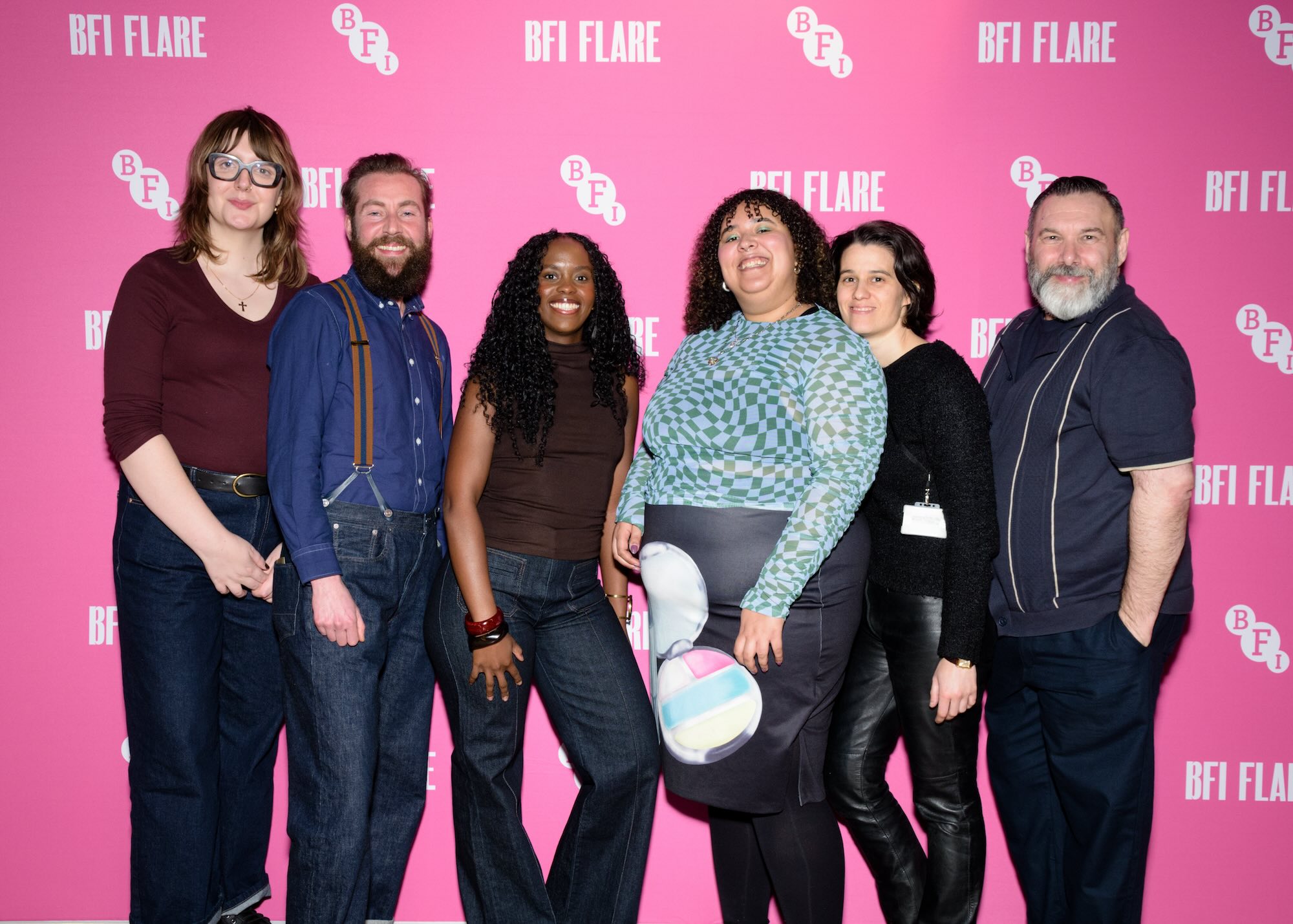
So on the panel we have me. Then Grace Barber-Plentie, who’s a full-time programmer for Leeds Film Festival and BFI Flare. Then we have Darren Jones, who’s a programmer and also the production manager for the festival. We also have Wema Mumma, who’s an external programmer, we also have external programmers Zorian Clayton and Jaye Hudson, who also runs T-Girls On Film. Then we also have some people who do pre-selection for us, who’ve either collaborated with us at previous festivals or worked with us for a long time. We have that rapport, and that’s really helpful when getting through submissions.
I think the Flare programming community is quite varied, aside from our baseline identity, some of us being trans women, trans mascs, lesbian women, gay men, we all have very different artistic sensibilities and different areas of knowledge, which go beyond me watching a lesbian film because I’m a lesbian programmer. We all watch different films because they may be within our more regional areas of knowledge, in terms of religions we’re attuned to or cultures we have more knowledge about. We’re always able to be in dialogue and trade cards so to speak, and that makes for quite easy, pleasant programming. There’s never a meeting where you know there’s tensions around a film, it feels quite friendly and a moment to share knowledge, share opinions, share sensibilities. I think we’re quite lucky in the synergy that the team has built.
I love your point about your identities as programmers, not just being your actual identities, but also the knowledge you bring. Sometimes in LGBTQIA+ film, we can get so boxed into who or what we are, that you can forget what you bring is not just your identity, but the knowledge you have from that identity.
Yeah, I think it’s such an important thing because it’s kind of a way of working together. It’s important to get a programme that’s not just several lanes not intersecting with each other. There’s a real melange of themes, sexualities and identities, and you can only achieve that kind of flexibility and fluidity when we have knowledge. I think that’s the real key to our programme process and decisions.
As you previously mentioned, there are so many different areas these films are coming from. I’m always captivated by noticing patterns from each year. Have you noticed any emerging themes this year?
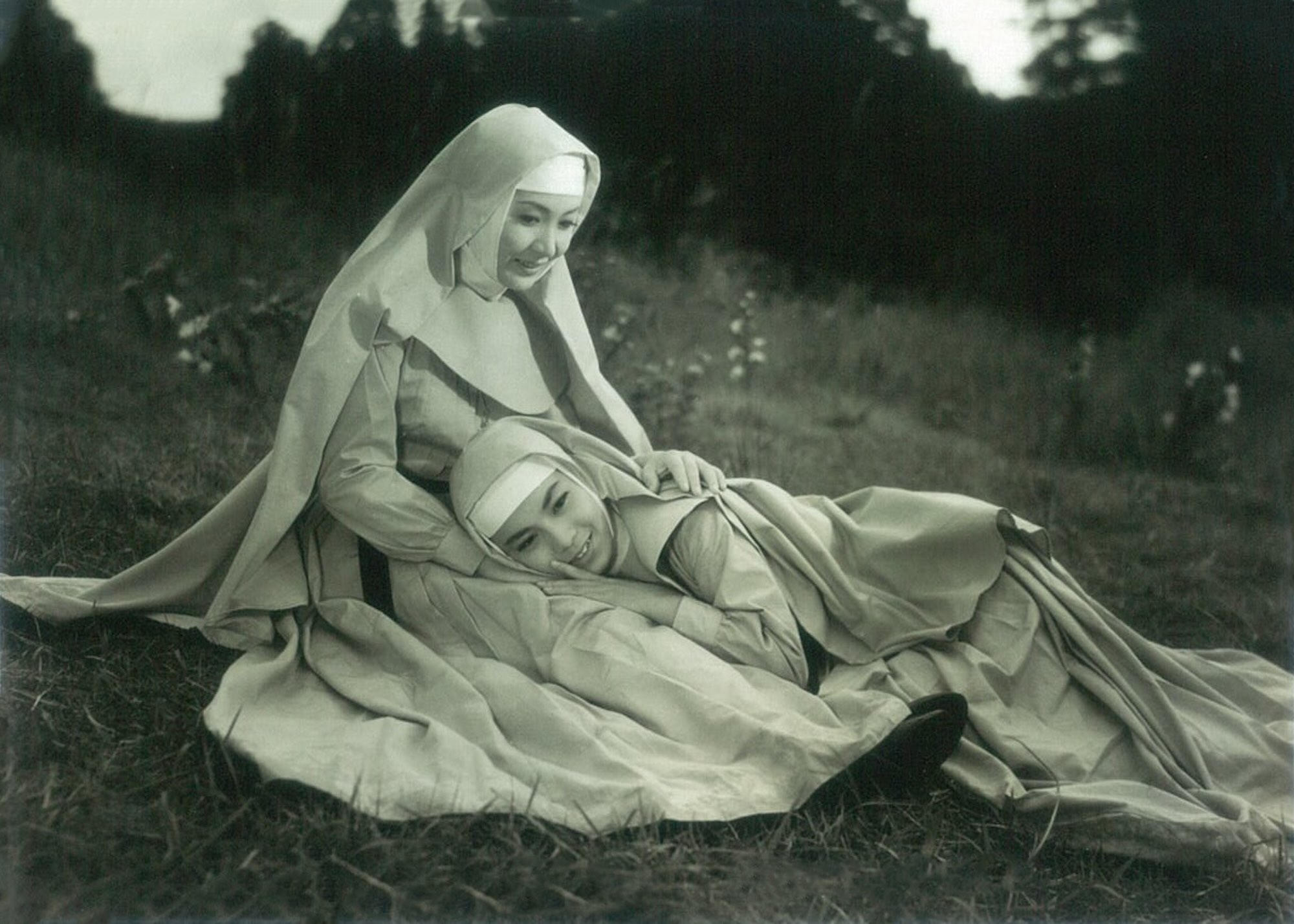
I mean, the obvious one is religion and the relationship between religion and queerness. Apart from Hunky Jesus, we have one of the great gems of the festival, a film called Impure Nuns. It’s a 1950s lesbian romance between two nuns in a boarding school – it’s an incredible film, and fittingly curated on a Sunday matinee. Aside from that, we also have a shorts programme, Immodest Acts. We noticed a lot of shorts touched on the relationship between faith, queer identity, desire and crisis of faith. So I would say that the relationship between religion and queerness is a big one.
Then we also have quite a few films that touch on legal hurdles that still affect people in the countries where homosexuality and trans identity are still outlawed, but also in European countries where there are all kind of legal hurdles. We have films like Love Letters, which tells the story of a couple who are conceiving via IVF but are navigating the process so they can actually both be parents to the child. Then we have films like Uchronia and Out Laws, that trace the history of rights and the colonial laws that are still felt today in certain countries. On the flip side of coming of age, we also have films on more mature love, like Maspalomas or Montreal, My Beautiful. So yeah, there are quite a few themes that have been popping up this year.
We try to think about how the world is, and make sure the programme not only faces the issues that are troubling our communities, but also becomes a haven for celebration of community.
Flare originally appeared in the 80s as a response to Section 28. Since last year’s Flare, there’s been an influx of political hurdles for queer rights, with the rise of the Far Right, hostility to immigrants and challenges to trans people. I wondered how much this impacts your programming decisions from year to year?
Yeah absolutely. We are always very conscious of the political spectrum and we try to make sure our programme celebrates and is a safe haven. We have a shorts programme that my colleague Zorian programmed called Heavenly Havens, about safe spaces for community. We try to think about how the world is, and make sure the programme not only faces the issues that are troubling our communities, but also becomes a haven for celebration of community. That’s something always at the forefront, the balancing of celebrating but never becoming lenient or forgetting the liberties. Hunky Jesus touches on this, the liberties that are being taken away from us.

Is it challenging balancing more celebratory narratives with darker, confrontational ones?
Absolutely, yes it is. We strive to strike a balance in all of the strands. The real push of the festival is the balancing act we as a programming team face. Especially this year, it’s been a challenge, but I think we’ve managed to arrive at a nicely balanced one. It’s quite an interesting thing, how far we’ve come along that we can now flip the script and revisit genres and things that are in the canon of filmmaking, and make it our own. It’s empowering.
On the formal, stylistic side of filmmaking, as a programmer have you noticed any formal shifts in the LGBTQIA+ cinematic landscape?
That’s a great question. I think there has been more play with form. I’ve noticed transgression and subversion of certain kinds of canons. I’m thinking of a fabulous film we have in the programme called Death and Life Madalena, which is kind of an 8½ film about the chaos of filmmaking, but it flips the very problematic trope of cis actors playing trans characters. It’s a film where there’s no queerness at face value, but then the main character is a pregnant woman who’s played by a trans character. I think it’s a delicious spin, and we’ve seen films play on that.
It’s quite an interesting thing, how far we’ve come along that we can now flip the script and revisit genres and things that are in the canon of filmmaking, and make it our own. It’s empowering.
How do you approach ensuring intersectional queer representation when you’ve got so many different stories? How do you ensure that race, class and identity beyond queer identity are properly represented?
When you think back to our opening night film, Hunky Jesus, it’s quite important to us that it’s a South African film. Even Death and Life Madalena, it’s kind of a love letter to black girlhood. It’s important to us that we are centring non-white stories. When you have a French film like The Little Sister, where it’s someone who’s queer but also in a Muslim community, we try to have those stories centred beyond just being characters in the queer community. I think it’s important to celebrate that.
Even thinking back to the films we have from the archive, there’s a title that’s quite important to us called Woubi Chéri. It’s a film from Côte d’Ivoire about gay and trans people. We try as much as we can to have all races represented alongside all those life experiences. Thinking about a film like 10s Across The Borders, which is about vogue ballroom performers in Southeast Asia, it was important to showcase these stories and these people whose existence is put into question by the government. It’s always important to us that all cultures and backgrounds are represented. When the films stack up in our programme we think, “Okay, what are we missing in terms of representation?”
Finally, what advice would you give to any filmmakers who are eager to be selected by Flare?
My advice would be to make something that’s true and just submit it because we’re eager beavers in terms of viewing. We’ve got films that are very low budget that are made by two people, and we also have bigger films. So I think really just think of the stories you have to tell, the stories that are relevant to the people around you, make it, and send it over because it’s free to submit and we love watching the films we receive. It’s quite an enriching experience watching everything!
The full BFI Flare programme is available on the BFI Flare website. Keep an eye out next week for our upcoming Best of Fest recommendations from the festival.