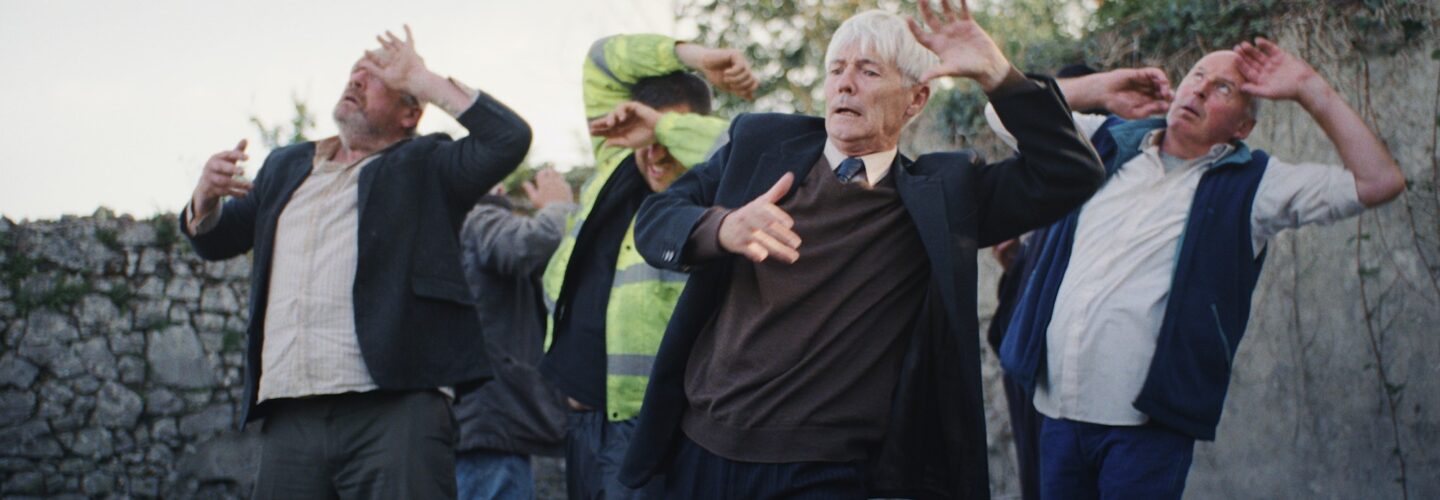
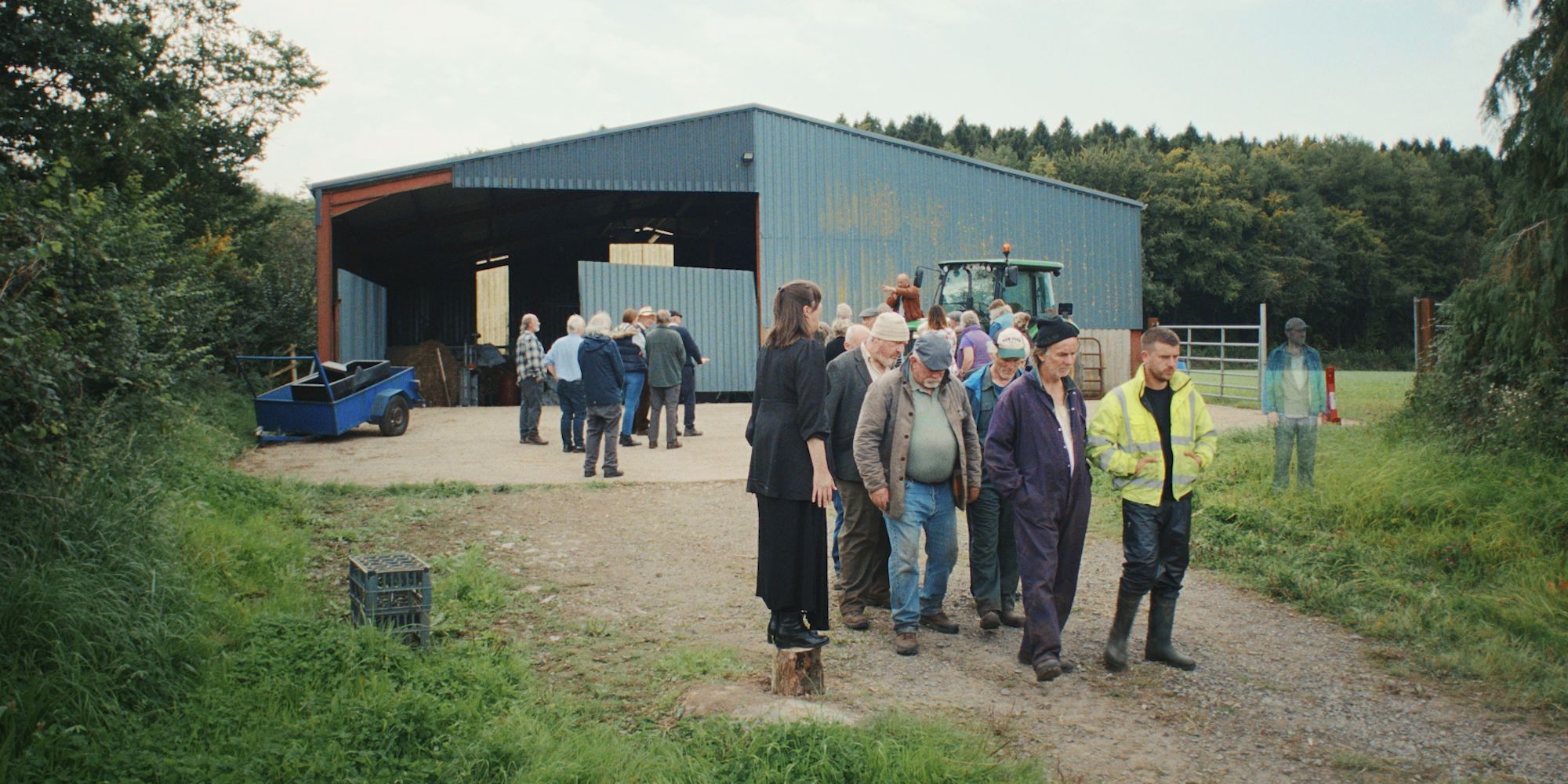
Beginning with a single image that sparked a world of its own, FARMERS!? unfolds as a living painting, where rural Ireland, folklore and the unseen inner worlds of its characters intertwine. Freddie Leyden explores how grief, masculinity and unspoken emotions find their way into the body through movement, transforming dance into a language for what remains unexpressed. FARMERS!? brings together the rituals of rural life, Irish folklore and visual art references, opening up a world where the boundaries between the everyday and the otherworldly begin to blur. Through a choreography shaped by Irish traditional gestures and instinctive improvisation, a group of countrymen reveal an unexpected and transcendent flow of movement, turning their bodies into a language of expression and connection.
Following its Irish premiere at Cork International Film Festival, where the film received the Best Director Irish Short Award, Leyden returns to Directors Notes after previously speaking to us about exposing Britain’s colonial horrors through dance with Under The Skin of a Guild: Wake of Lost Souls and transforming 70s folk horror into ethereal Bat for Lashes promo The Dream of Delphi. Reflecting on the creative spark behind FARMERS!?, Leyden discusses his return to Ireland after years away, the influence of art history on the film’s visual language, and the collaborative process of shaping its surreal yet deeply rooted portrait of rural life, looking beyond the stereotypes of rural masculinity to reveal the hopes, emotions and inner lives of the men at its centre.
You mentioned the concept for FARMERS!? came from a moment of daydreaming, with the image of farmers dancing almost exactly as it appears in the film. Is this kind of instinctive, inward spark a familiar starting point for you when developing a concept, and more broadly in your approach to directing?
100%. My filmmaking is rooted in images. I’m obsessed with art and art history, particularly painting, and very often the starting point for a project is seeing an image in my mind that feels almost like a living painting or a tableau. Sometimes these images arrive while daydreaming, sometimes they emerge from dreams themselves, and often I don’t fully understand where they’ve come from. It’s usually not a story at first. It’s a feeling, a composition, a moment that I can’t quite explain, but that I feel compelled to explore. With FARMERS!?, the image of these farmers dancing arrived almost fully formed. It was such a specific vision that I felt there must be something buried within it. There was enough mystery, emotion and contradiction baked into that image for me to believe an entire world could grow from it.
That’s fundamentally how I work. Images tend to arrive first, and then the filmmaking process becomes an act of excavation. I start asking questions of the image. Why does it exist? What is it trying to express? Who are these people? What emotional truth is hiding inside it? From there, the challenge is creating the infrastructure around the image, building a narrative, a visual language and a world that allows it to flourish. In many ways, every film I’ve made has started with an image I couldn’t stop thinking about.
The image of these farmers dancing arrived almost fully formed. It was such a specific vision that I felt there must be something buried within it. There was enough mystery, emotion and contradiction baked into that image for me to believe an entire world could grow from it.
The screenwriting process was a collaboration with Clare Hoey, and I’m curious about how that initial image evolved into a fully formed narrative. Were there specific sparks or themes that guided the development of the story throughout the writing process?
Totally. Clare is an amazing talent and collaborator, and the writing process was very organic because these conversations were ongoing. We’re married, so the film was something we lived with together over a long period of time, discussing ideas constantly and gradually shaping the world of the story. What was especially interesting was that Clare was coming at the material from a very different perspective. Although the film is deeply rooted in the place I grew up, a country road in the west of Ireland, Clare comes from a farming background in Australia. That created a really rich dialogue between us, and it became clear quite quickly that although the film is rooted in rural Ireland, many of its themes felt universal. Clare was brilliant at helping synthesise these disparate ideas into a cohesive narrative. We also drew inspiration from a trip visiting Amish communities in Pennsylvania and from visiting North Queensland in Australia.
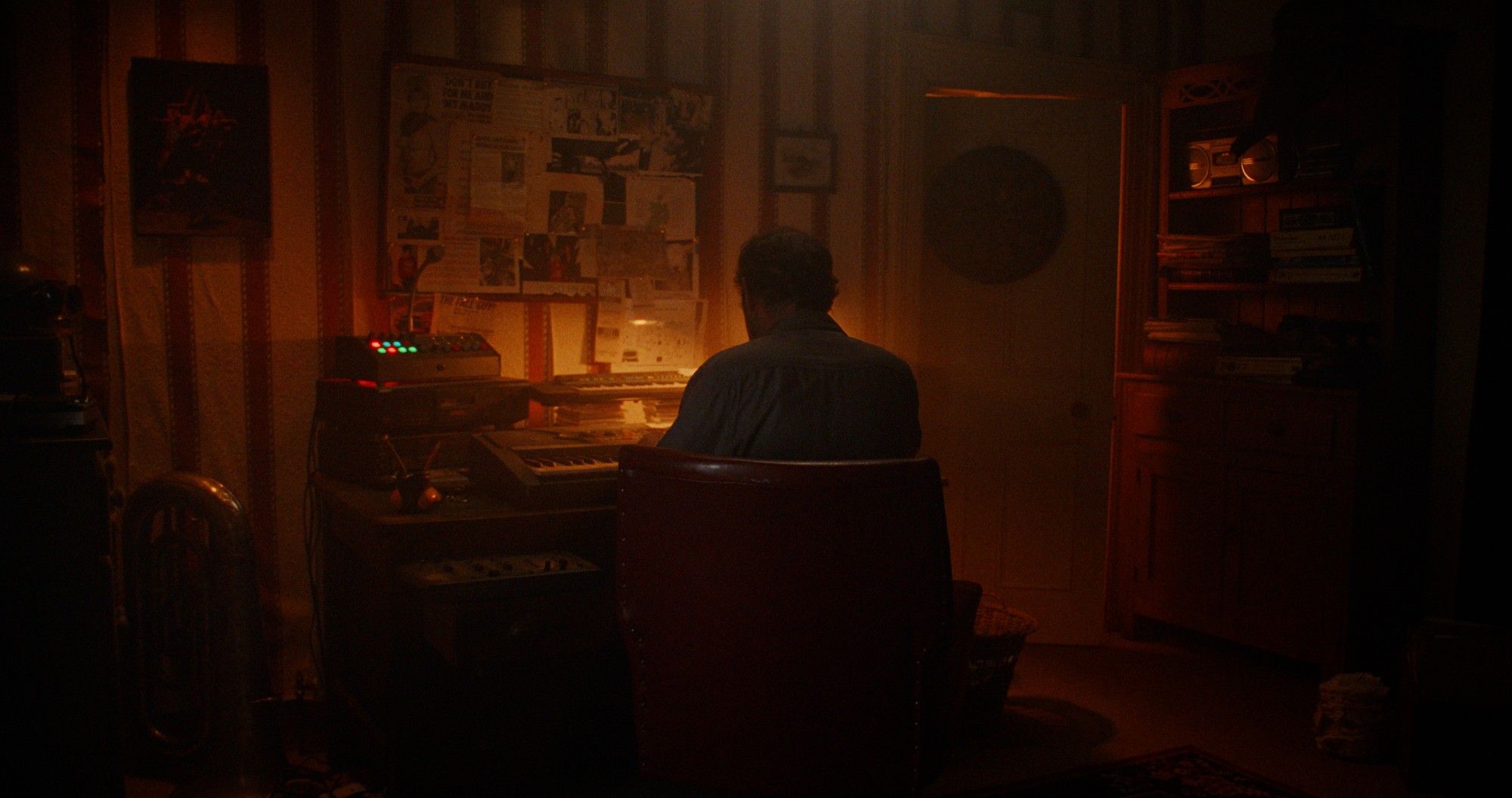
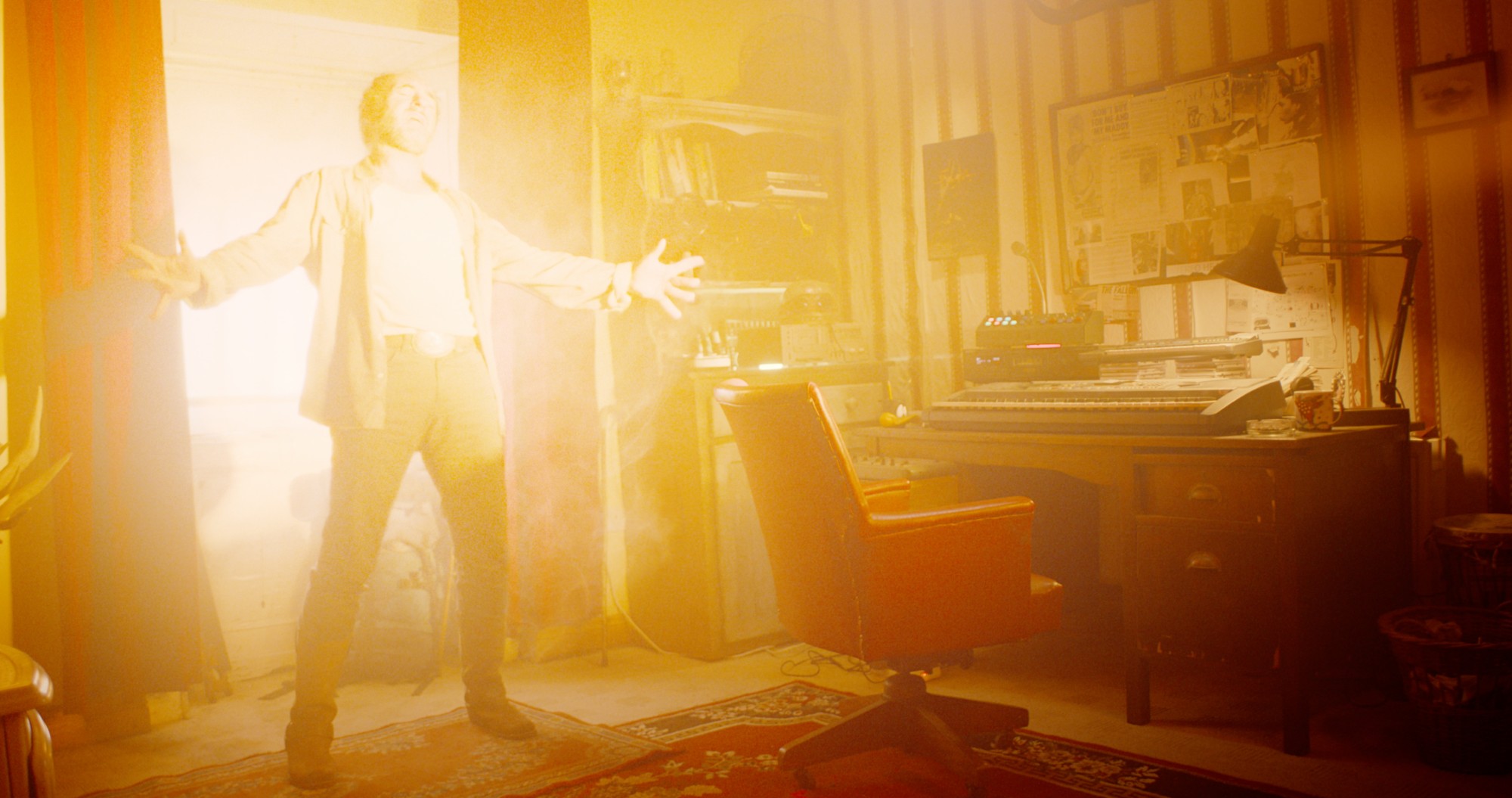
One of the most important things that helped transform the original image of the dancing farmers into a fully formed narrative was the song the farmer sings at the beginning of the film. I became fascinated by the idea of what would happen if this farmer, with only a rudimentary understanding of how to play an instrument, tried to express something profound through music. What would that sound like? What would he choose to sing about? I was thinking about artists like Daniel Johnston and even Brian Wilson, artists whose songs feel raw, instinctive and emotionally direct. I wanted to create a kind of outsider art version of that, an expression of what a farmer from my part of the world might sing if he were trying to articulate the things he couldn’t otherwise say. In many ways, that song became the emotional and thematic blueprint for the entire film. Lines like “Are we friendly now though? Ha!” and “I knew your people… Jesus mine trapped me” felt funny, strange and deeply human. More than anything, I wanted him to sound desperately lonely.
From there, other pieces of the world began to emerge. The auction sequence was a significant one. Auctions have always felt deeply ritualistic to me. There are moments where entire lives are distilled into objects and sold. Clare and I were interested in that idea of a person’s presence lingering after they’ve gone. The mantra in the cowshed, the ghostly presence that hangs over the film, and the final dance all grew from the same place. I was trying to build a world that felt completely familiar to me, but when viewed from a slightly different angle became uncanny, spiritual and dreamlike.
FARMERS!? was shot in Ireland, which brings you back to your roots. What led you to connect the daydream image with the place you come from? And what unexpected insights or surprising moments did shooting in Ireland bring to the project?
The image originally came to me in a dream just after I’d returned home to Ireland after being away for over two years during COVID. I think I had seen home with fresh eyes. I was paying attention in a way I hadn’t before, and suddenly the peculiarities and specifics of rural life stuck out to me. There was a real pull to go home and make this film there. I had spent the previous decade living in London, working in the art world and collaborating with artists across Europe, Asia and America, often helping tell other people’s stories through film, movement and image making. But with FARMERS!? I felt a strong desire to bring everything I’d learned from that world, choreography, contemporary art and avant-garde visual language, and root it in the place I come from.
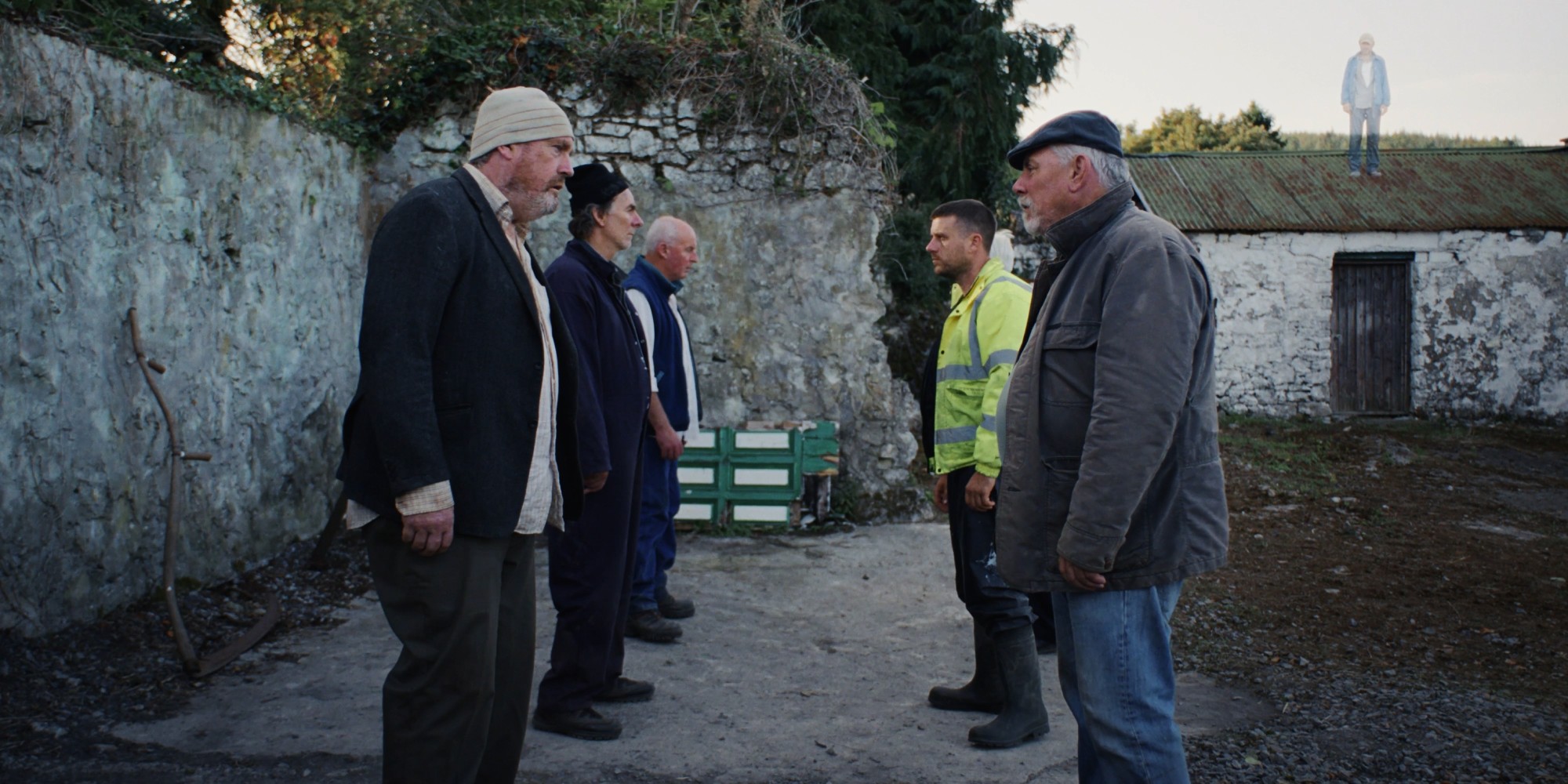
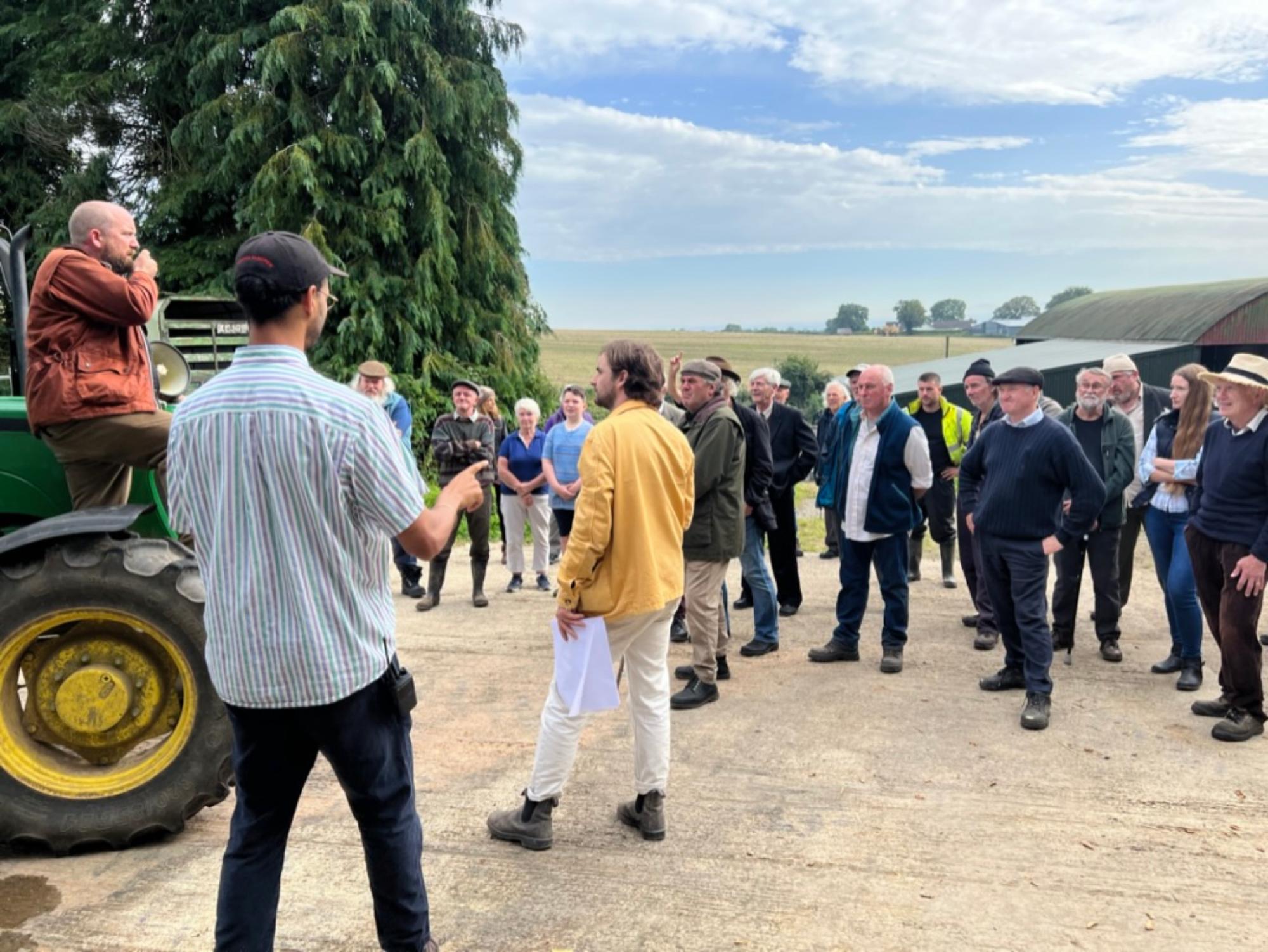
County Clare isn’t necessarily the first place people think of when they think of arthouse cinema, which I actually loved. There felt like something exciting in bringing these seemingly contrasting worlds together, taking highly stylised choreography and visual language and placing it in a deeply rural Irish setting. Once I started developing the film there, the crossovers felt surprisingly abundant. What really blew me away was the generosity and willingness of collaborators at every level. We were lucky to have incredible industry veterans like Clare Lambe on hair and makeup and Tara Knol on costume, who brought so much experience and elevated the work enormously. At the same time, the local support was extraordinary. Gillian and David, whose farm we shot on, were unbelievably generous in opening up their land to us, and so many people from the local area became extras and helped look after the crew. It felt like the whole community embraced the film.
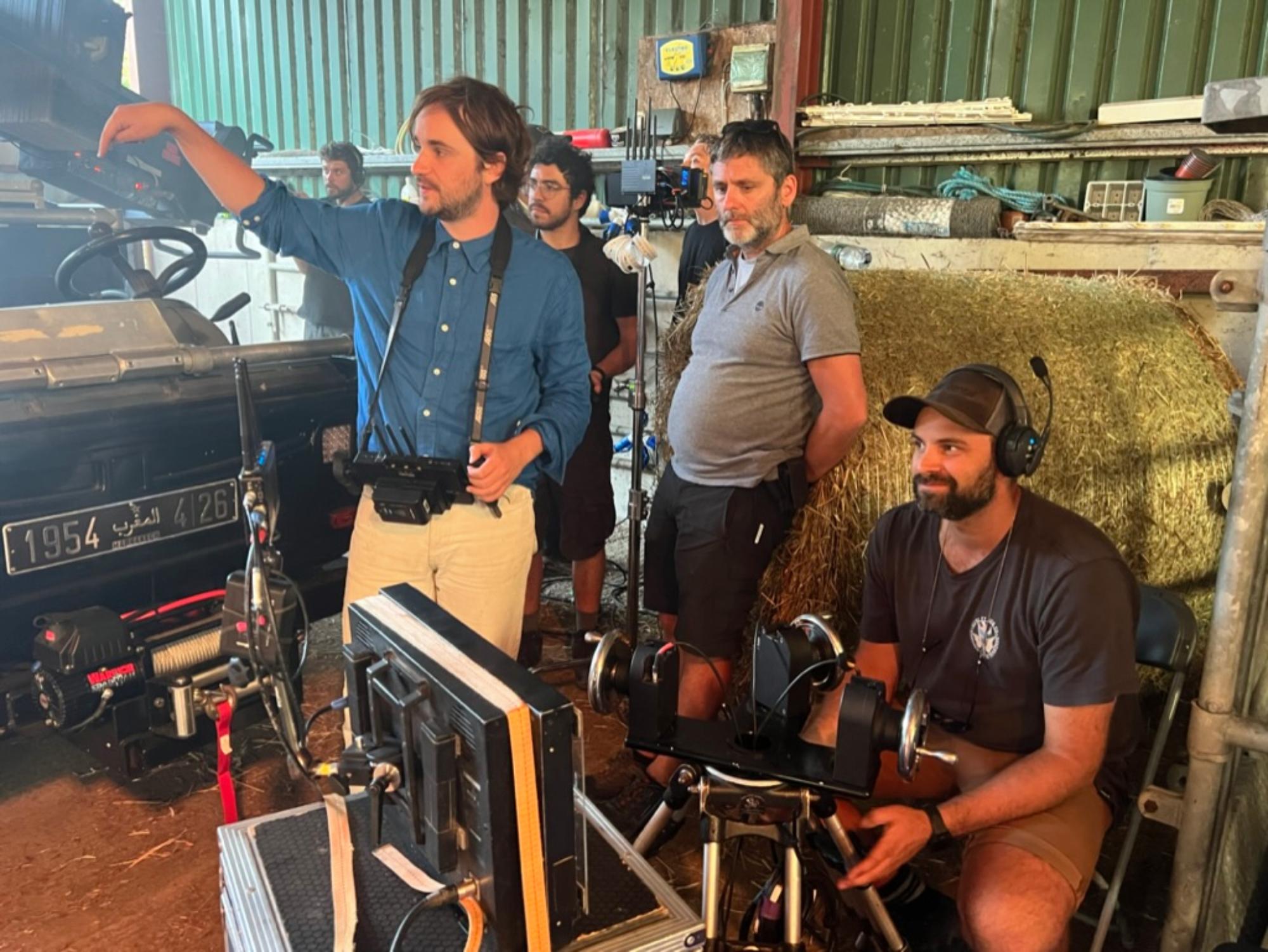
There were definitely surreal moments, like trying to manoeuvre a techno crane down a tiny country road in rural Clare, but somehow we made it work. And one detail I still love is that I only discovered after we wrapped that David’s surname was Lynch. Realising we had just made this strange, dreamlike film on David Lynch’s farm felt bizarrely perfect.
Most Popular
From the farmer character playing the keyboard to the farmers dancing, the expression of grief through artistic expression and the resistance to intense emotions emerges as a central theme. How did you choose dance as the foundational language to convey this connection to the inner emotional landscape?
The film began with the image of real farmers from my locality moving like Sadler’s Wells dancers and using their bodies to express grief. But the deeper emotional reasoning behind that is actually quite personal to me. When I was a teenager, discovering songwriting, singing in bands and eventually going to art school gave me a profound outlet for expression. Having some channel to release emotion through creativity was incredibly comforting to me, and I’ve always felt very fortunate that I found that relatively young. I think that made me very aware of the opposite question, what happens if that channel isn’t available? If someone is carrying grief, loneliness or emotional pain but doesn’t have a creative outlet, where does that feeling go? That became central to FARMERS!?.
The film became a real exploration of masculinity and emotional repression, particularly in rural communities where expression can often be more internalised. There’s an adage I’ve never fully connected with, that when people are struggling they should simply “talk to someone.” Of course that can be important, but I also think it can be too simplistic. For these men, even if they did reach out, I’m not sure they would know what to say. Their grief isn’t necessarily intellectual. It lives somewhere deeper. It’s in their bodies, in the things left unsaid. That’s why dance felt like the perfect language for the film. It allowed me to express a wealth of feeling without relying on words.
Working with choreographer Alexandra Green, we developed many of the movements and expressions the men perform in the film. A lot of those gestures came directly from the performers themselves, through rehearsals and workshops where they reflected on their own experiences and visualisations of grief, loneliness and irrelevance. During that process, it stopped being about dance in a formal sense and became something more primal, an emotional language for things these men could feel intensely but never articulate.
One of the things that surprised me most was the way the performers moved. I never would have guessed they weren’t familiar with this type of dance movement. Can you walk us through the approach to the casting process, led by Áine O’Sullivan, and how you worked with the performers to bring out that authenticity?
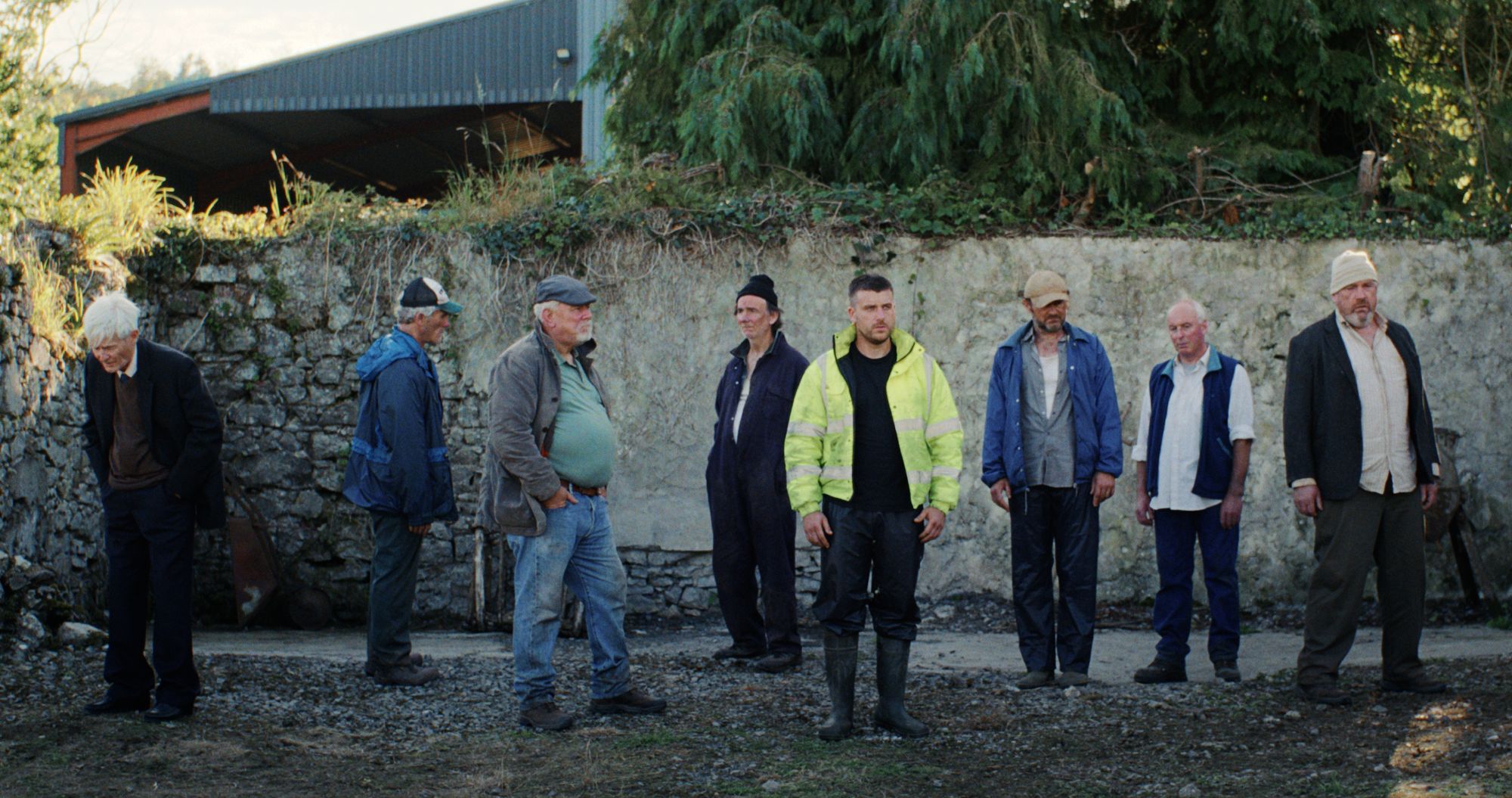
Áine did an incredible job casting the film. First and foremost, it was really important to me that these men looked and felt like actual farmers, not Sadler’s Wells dancers dressed up as farmers. That authenticity was essential to the whole piece. All seven of the performers were actors, but only two had any formal movement or dance training. The others were completely new to that process, which made what they achieved even more remarkable. What really moved me was their willingness to commit. We were asking them to step into something that could easily have felt strange, vulnerable or even absurd on paper, but every one of them approached it with real openness, humility and courage.
The first time we saw them moving as a unit, it was really quite something to behold. The movement stopped feeling performed and started feeling instinctive, deeply lived in and strangely truthful.
Through Alexandra Green’s rehearsal process, and through the trust that developed between all of us, they gradually became a genuine unit. And sometimes things just click. There was something about this specific group of men together that felt special almost immediately. The first time we saw them moving as a unit, it was really quite something to behold. The movement stopped feeling performed and started feeling instinctive, deeply lived in and strangely truthful. I’m incredibly proud of all of them, and deeply grateful to Áine for bringing this group together. What they achieved feels both surprising and deeply authentic, which was always the goal.
The choreography is a pivotal element of the film, introducing a movement language and a collective identity for the farmers. What was your approach to developing it with Alexandra, and how much freedom did you give the performers for improvisation?
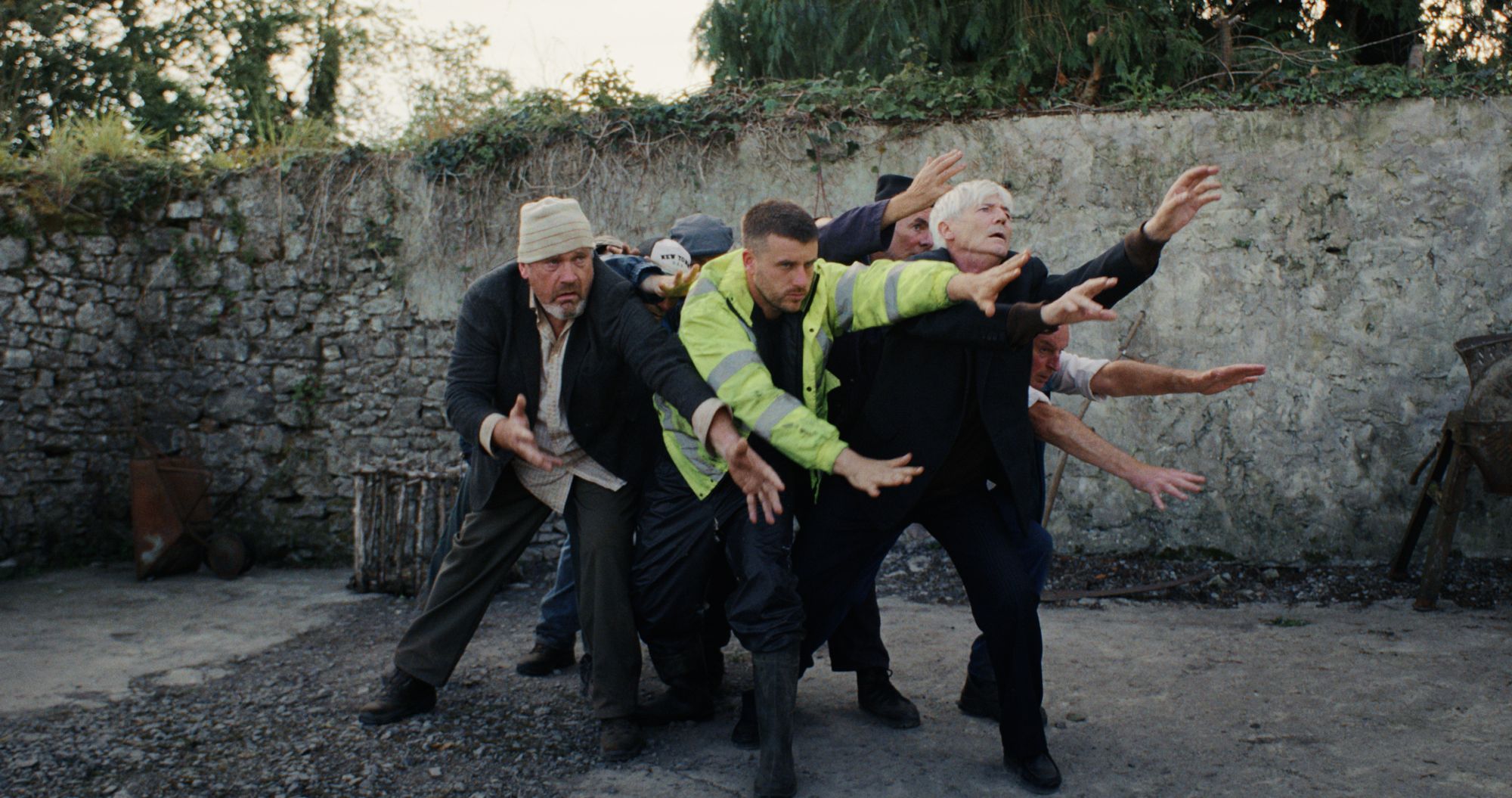
Alexandra connected very deeply to the piece from the beginning. Before rehearsals, we spent a lot of time talking through the central themes of the script and our shared interest in translating visual and art historical references into movement. That became a really exciting foundation for us, because although we were both interested in similar ideas, Alexandra brought a completely distinct artistic language to the process. That’s what I loved about collaborating with her. I could bring the visual world, the emotional themes and the references, but Alexandra brought her own artistry and intuition, and somewhere in that overlap the choreography really began to flourish. She spent time independently with the cast, workshopping ideas and finding ways into the movement that felt truthful to them. I was fascinated by her process. She drew from influences like Irish traditional dance and unexpected musical references, finding her own soundscapes and methods to unlock something in the performers.
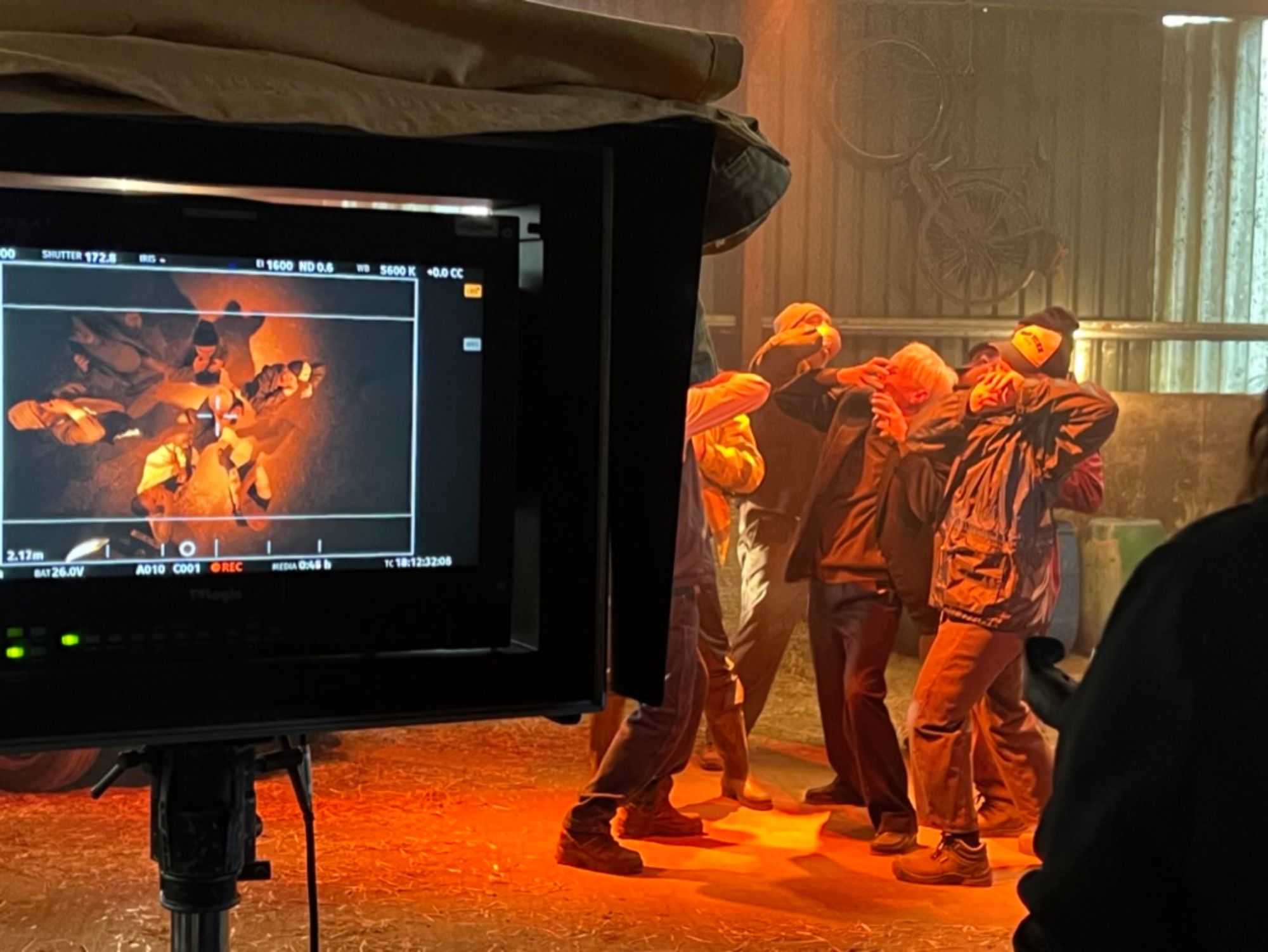
What I find particularly beautiful about the choreography is how naturally it sits in these men’s bodies. It never felt like we were forcing them into movement that didn’t belong to them or asking them to perform something artificial. Even at its most stylised, it always felt grounded in their physicality, their rhythms and their way of moving through the world. The rehearsal process itself was full of play, improvisation and discovery. A lot of the film’s most resonant gestures, the bell ringing, scattering ashes, feeding birds, emerged organically through that process. Alexandra had a remarkable ability to bring out the spiritual core of the piece. She found a movement language that felt physical and grounded, but also deeply emotional and transcendent.
Artistic references, such as the surreal imagery reminiscent of Magritte or theatrical composition, form a foundational part of FARMERS!?. Can you walk us through how these references are woven into the fabric of the film, and how they connect to the story and its visual atmosphere?
I’m obsessed with art history, and I don’t think I’ll ever make a film that isn’t shaped in some way by painting, sculpture or visual art, whether that’s compositionally, emotionally or thematically. Often the starting point for me is a painting, sculpture or image from art history, or at least a feeling rooted in one. These works have an extraordinary ability to compress emotion, symbolism and narrative into a single frame, and I’m constantly trying to bring some of that density into cinema. What interests me isn’t referencing art for its own sake, it’s using these references to deepen the emotional and psychological world of the film. They become another storytelling language.
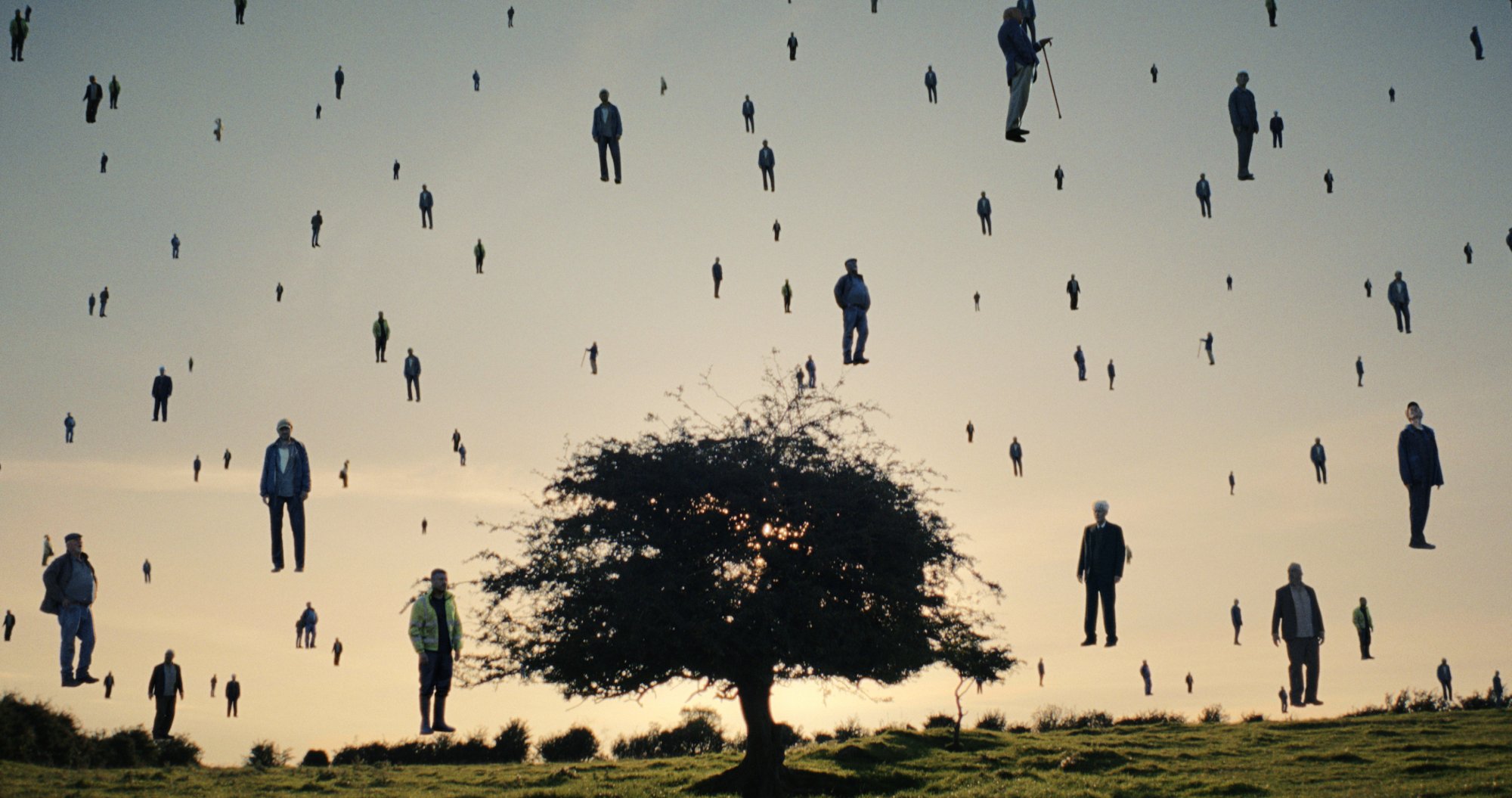
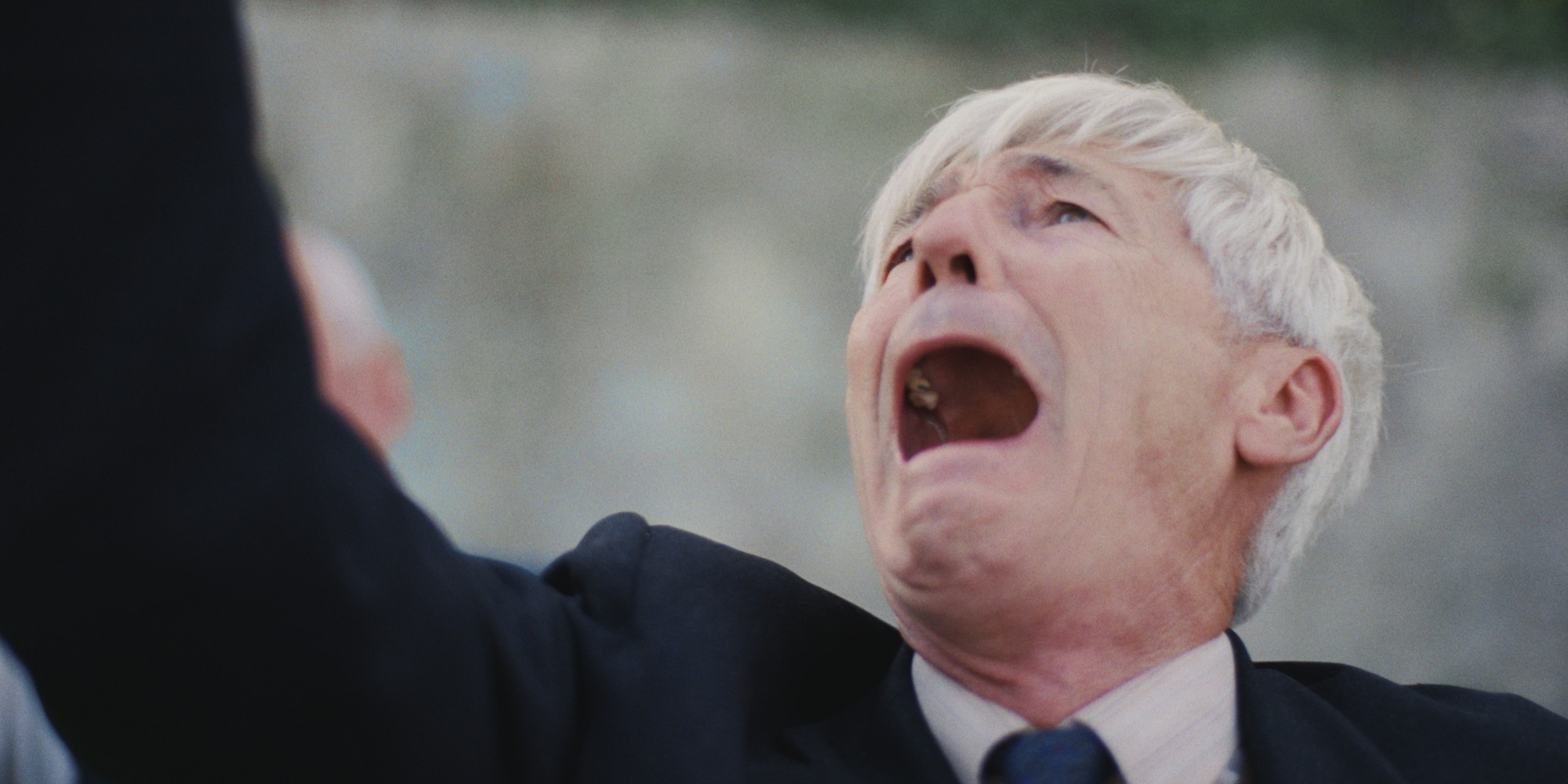
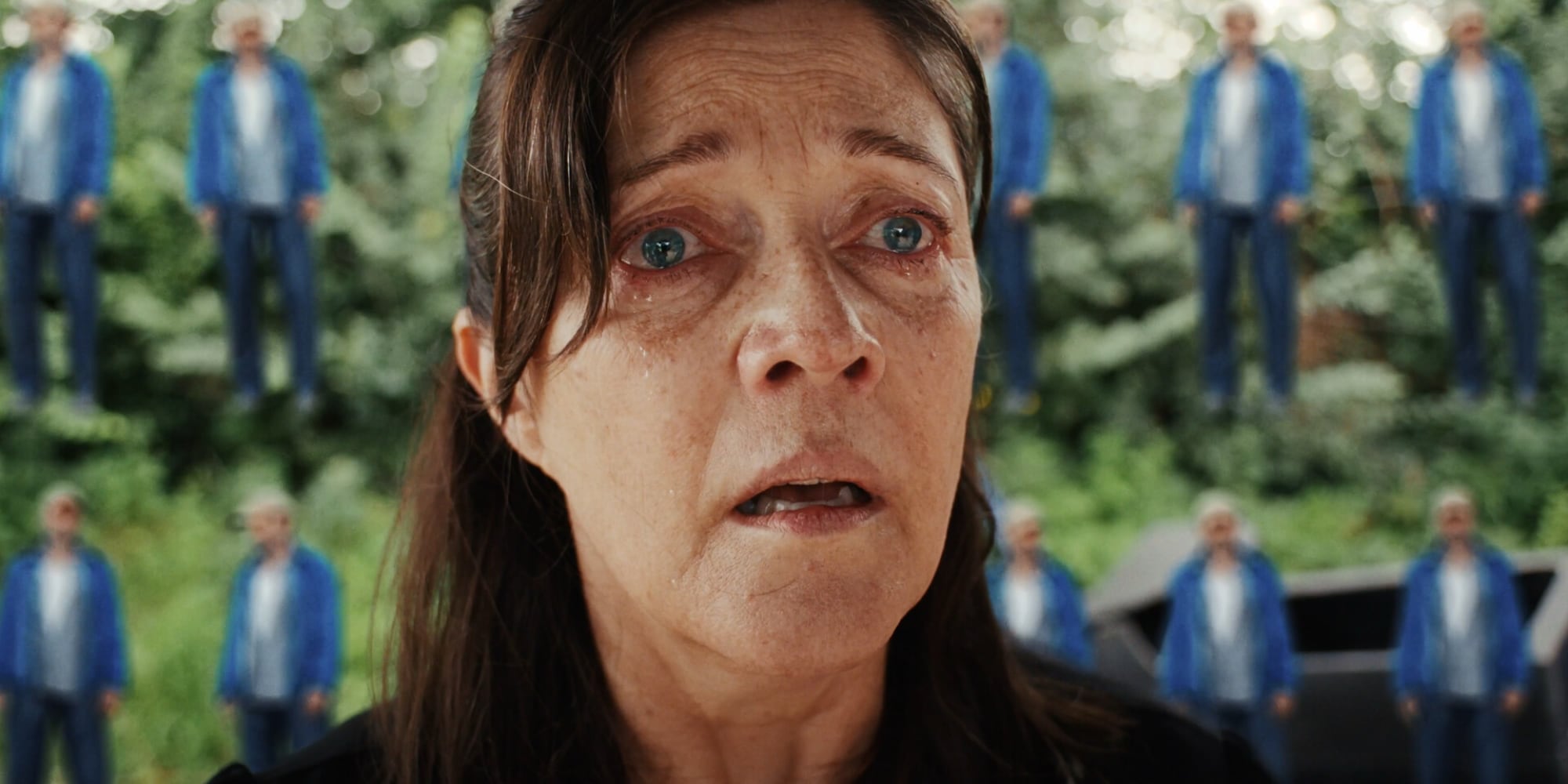
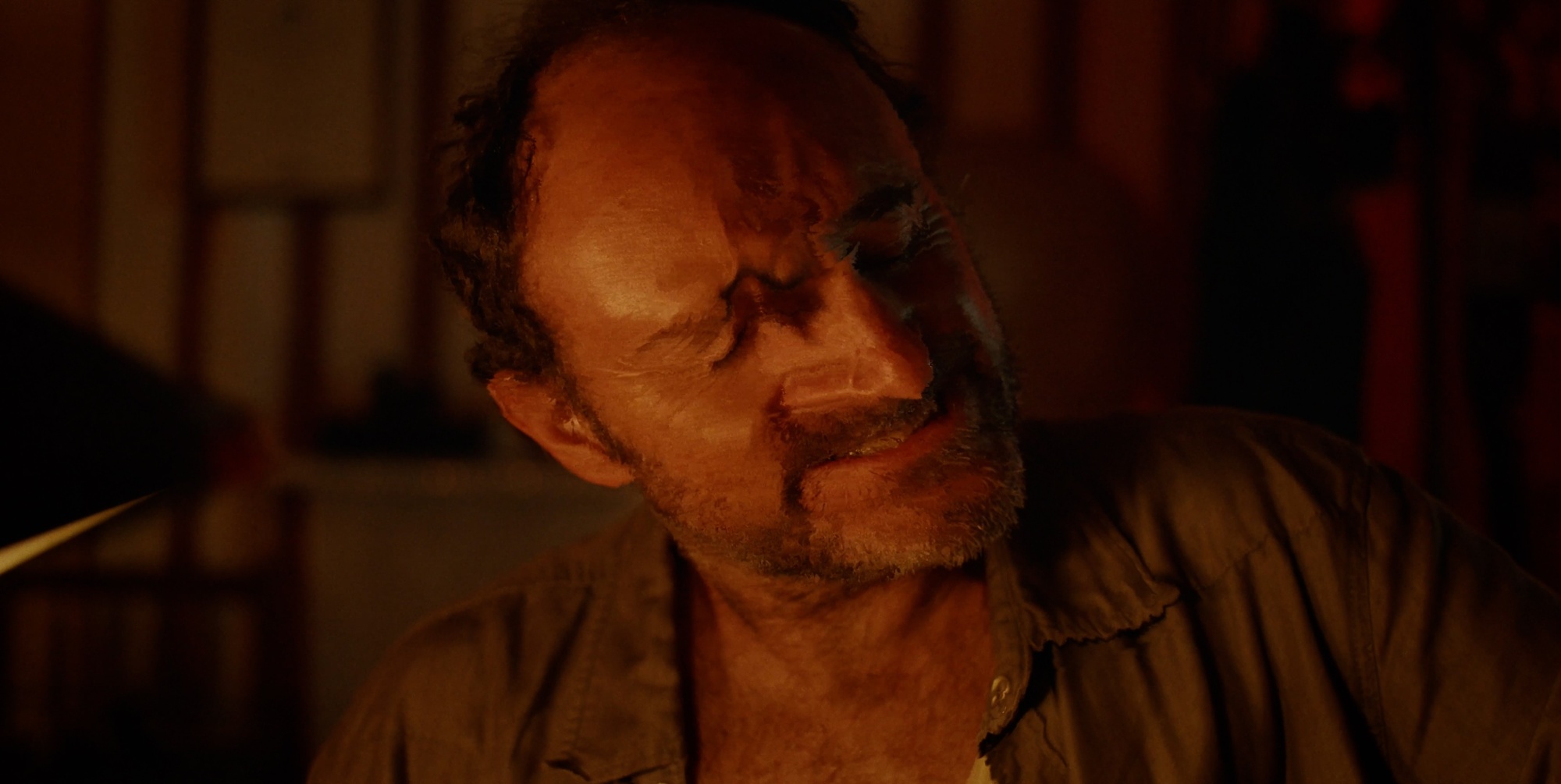
The references in FARMERS!? are woven throughout the film. The opening image of the floating farmers is directly inspired by Golconda by René Magritte, which immediately establishes a surreal and uncanny visual language. Later, when the farmer’s face distorts, I’m referencing Portrait of George Dyer Talking by Francis Bacon. Bacon’s work captures psychological rupture and inner torment in a way that felt deeply aligned with that moment. When the men walk down the hill, I’m referencing Doña Joanna the Mad by Francisco Pradilla Ortiz, which carries this powerful sense of grief, ritual and collective mourning.
What interests me isn’t referencing art for its own sake, it’s using these references to deepen the emotional and psychological world of the film. They become another storytelling language.
Even the formation of the men during parts of the dance was inspired by The Burghers of Calais by Auguste Rodin. I was drawn to the weight and emotional burden held within those bodies, and the way collective suffering could be expressed through posture and physical arrangement alone. And even within the farmer’s workshop, there’s a reproduction of Witches’ Flight by Francisco Goya hanging on the wall. I love that detail because it quietly foreshadows the ending of the film and hints at the spiritual and supernatural forces already present in the world.
There are many more references woven throughout the piece, some obvious and some almost invisible. I like the idea that viewers might feel the weight of those images even if they don’t consciously recognise them.
The film conveys a sense of spiritual dimension and coexistence between the worlds of the living and the dead. I was particularly captivated by the Hawthorn tree in the opening scene, a fairy tree in Irish folklore. Can you share how you developed this spiritual layer, both narratively and symbolically, throughout the film?
The Hawthorn tree at the beginning is indeed a fairy tree! They carry enormous significance in Irish folklore. They’re believed to be portals or meeting points between worlds, places where the veil between the living and the dead feels thinner. What I find fascinating is that belief in them isn’t just historical or symbolic. Even now, people genuinely alter their behaviour around these trees. Farmers won’t cut them down. Roads have been rerouted to avoid them. In fact, that literally happened not far from where I grew up in County Clare, they built part of a motorway around a fairy tree rather than remove it. I love that there’s something almost unhinged and amazing about how seriously people still take them. The Hawthorn tree we filmed beside happened to be on the hillside near the farm where we were shooting, and it felt too significant not to include. It immediately gave the film a spiritual anchor.
More broadly, I think the spiritual dimension of the film comes from the sense that farming itself feels ancient. The opening image of the farmers floating above the land is partly alluding to that. Farmers have worked that land for generations and generations. There’s such a long lineage there that it almost feels as though all those who came before are still present somehow. I was interested in that coexistence between past and present, the living and the dead, and the sense that memory, ancestry and grief are never really gone, but always hovering somewhere just above us.
The score, composed by Matthew Wilcock, with the human voice at its core, plays a key role in shaping the film’s atmosphere, alongside Ellis McGourley’s sound design. How did you collaborate with Matthew to envision the score, and what was the process like in weaving the music and sound layers together?
Matthew and I have been collaborating for over ten years now, so there’s a huge amount of trust between us creatively. Through our conversations, we arrived at the idea of using a choral score. Matthew was referencing a piece of music called Just (After Song of Songs), and I thought it was a genius reference point. There was something about the human voice in that piece that felt deeply emotional, intimate and spiritual, and it immediately felt right for the world of FARMERS!?.
I had already been cutting with temp music while assembling the film, and then it became a fascinating process working with Matthew as he composed the final score. He collaborated with London Contemporary Voices to record the material and wrote the lyrics in response to the film itself. What I love about Matthew’s score is that the choral compositions feel like they’re carrying the emotional undercurrent of the film. Even when the words aren’t fully intelligible, they’re still communicating something essential and alluding to the central themes of the piece.
The film also includes the song I wrote for the farmer to perform on the keyboard, which became a thematic anchor for the whole film. Alongside that, Ellis McGourley was shaping the sound design, constantly finding places where sound and score could overlap and become intertwined. What Ellis did so beautifully was build connections between the voices of the farmers, the surrounding environment and Matthew’s music, so the whole sonic world feels unified. What Matthew captured so beautifully was the loneliness at the heart of the piece, but importantly the score never becomes sentimental. There’s always a sense of unease and danger running through it as well, which felt essential to the film.
Can you also tell us about one of your favourite short films?
My favourite short film is Premonitions Following an Evil Deed by David Lynch. I think it’s under a minute long. It feels completely singular. To me, it’s the closest anyone has ever come to capturing the feeling of a dream on film. It’s deeply unsettling, totally perplexing, and yet feels emotionally precise in a way I can’t quite explain. It also feels almost like watching four paintings unfold in sequence, which I obviously love.
With FARMERS!? still fresh in our minds, can you share what you’re currently working on?
I’m currently developing a feature film called The Screamers, with a script I developed with Screen Ireland. It’s set in the 1970s and centred on a primal scream therapy cult. It’s probably the most ambitious thing I’ve written to date and I’m very excited about it. I’m also developing another feature called DIARMUID DIARMUID, a strange, David & Goliath story set in County Clare with trappings of Donnie Darko. More broadly, I’ve been writing a lot recently and building up a slate of projects that all feel quite distinct but connected by similar themes and obsessions. I also have another short I’m very excited to make called Old Masters, set in the art world that is desperately violent and outrageous.