
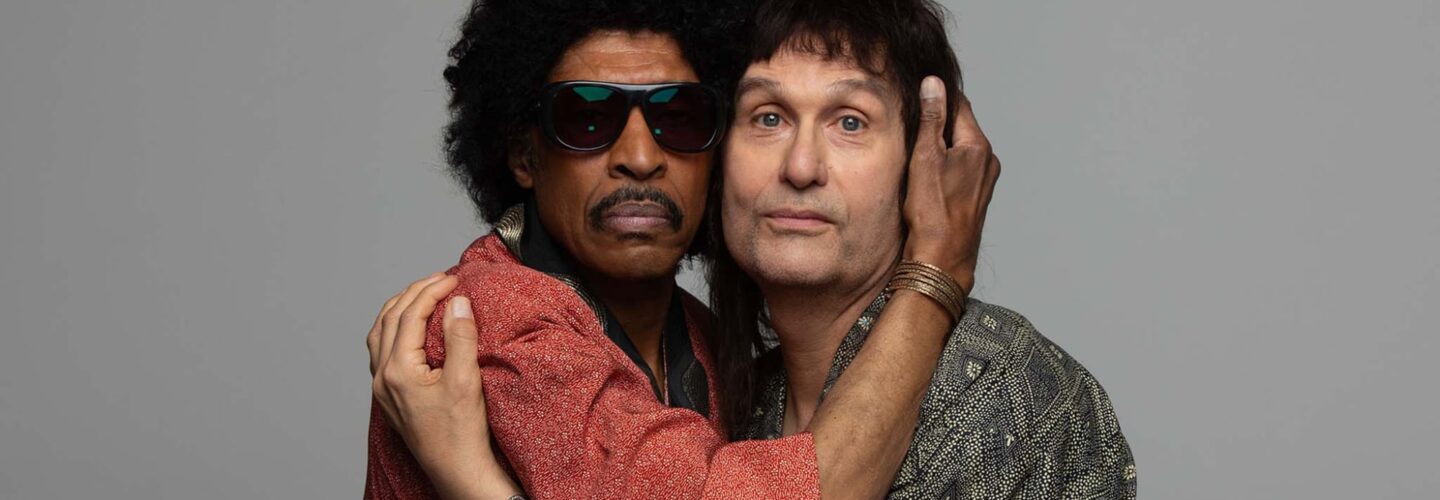
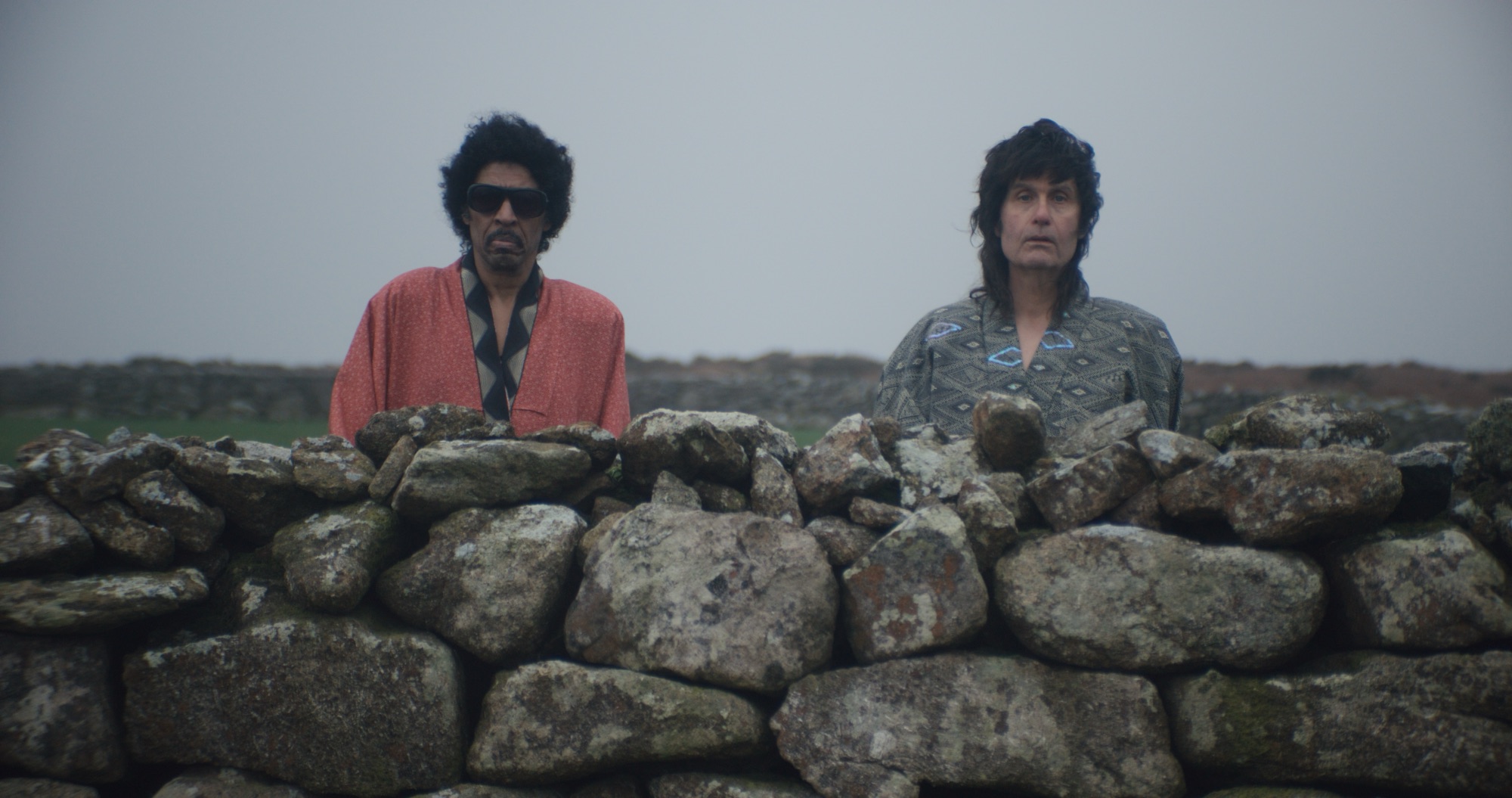
If the world of film often feels like a carefully curated gallery, then Jim Hosking is the artist who’s gleefully sticking googly eyes on all the portraits. An iconoclast whose work defies comparison and whose very name guarantees a reaction—be it delirious laughter or bewildered outrage. His latest brilliant oddity, Ebony & Ivory, a revisionist biopic about the making of the universally recognised lacklustre McCartney/Wonder racial harmony song that is less concerned with fact but wholly embraces the sheer, awkward, and hilarious potential of its fanciful premise. Hosking’s filmography, from the slimy, grotesque horror-comedy of The Greasy Strangler, which we spoke to him about in 2016, to the deadpan romantic dysfunction of An Evening with Beverly Luff Linn, operates on a frequency all its own. He crafts worlds where logic is optional, social graces are non-existent, and mundane moments are stretched to their absurdist breaking point. This isn’t merely style for its own sake; it’s the product of a deeply personal ethos. Hosking’s creative drive stems from a desire to create something that bears his unique fingerprint, something perhaps deemed (un)aspirational in a world obsessed with slick perfection. The result is a body of work that is purposefully polarising. To watch a Hosking film is to understand your own tolerance for the bizarre. He doesn’t just divide audiences; he liberates them. For every viewer exasperated by a five-minute sheep bleating scene, there’s another feeling a surge of permission to embrace their own weirdness. In an era of algorithmic content, Hosking remains a gloriously stubborn original, reminding us that true independence isn’t just about how you fund a film, but how fearlessly you follow your own strange and wonderful instincts. With Ebony & Ivory hitting UK cinemas on the 19th of September coupled with a Q&A tour with Hosking in attendance, we caught up with the writer/director to talk about the genesis of his uniquely personal style, the mechanics of collaborative alchemy and knowing how (over)long to hold a joke.
[The following interview is also available to watch at the end of this article.]
When watching your films, I can safely say there are no comparisons, which is so refreshing. I want to open by asking you about developing a very singular identity and style, which I want more of!
I’ve thought about it quite a bit because I think there’s quite a big gulf between the sort of work that I make and then the films that I watch that I enjoy and that I seek out—they’re completely different from each other. I landed on the thought that it might stem from having a typically repressed British childhood and feeling like doing anything creative was outside my possibilities. I went to university and studied Spanish and was going down an academic line. Then my girlfriend at the time was at art school, and I was very jealous of her and all her friends, and I started to think that maybe I could do something more creative.
I started off in advertising as a copywriter, but I always felt a bit ashamed about peddling things and that whole industry. I wanted to make the work as unaspirational as possible—because they always use the word aspirational—I wanted to make it the opposite of that because then it didn’t feel like it was trying to be slick or sexy or cool. That somehow really corrupted my aesthetic, so I ended up going in this different direction. Making work that felt very much like me and quite singular. I didn’t understand the point of making anything unless I felt like it had my fingerprint on it and it felt like nobody else could have made it.
I realised that when I wrote it, and when I filmed it, I hadn’t thought for a second about an audience or about anyone’s reaction. I was just completely in my own head.
Sometimes I can look at the work I make and get frustrated with myself and think, “Why am I still going down this contrary rabbit hole?” It feels like a bit of an experiment; I don’t know how it will work or whether it will succeed. I just try to keep it quite loose and try to keep myself interested by not over-preparing, not being strategic or formulaic with what I do.
There’s something in me that wants not to analyse too much. The more instinctive and fresher it feels to me, the more I feel like it’s of me and therefore quite personal. With Ebony & Ivory, I remember when we were editing was the first time that I thought about how it might feel to anybody watching it. And I realised that when I wrote it, and when I filmed it, I hadn’t thought for a second about an audience or about anyone’s reaction. I was just completely in my own head. Doing what made sense to me and doing what made me laugh or made me feel excited—which I think is where you should try to be. But I obviously also think it would be nice to try to connect with a bigger audience. I don’t know. I mean, I’ll see.
Most Popular
I think you should keep fighting that good fight.
I think it’s also just being mindful. This was a particularly indulgent film, so I think my next film will not feel like this in any way. I’m leaning into something that I probably did with The Greasy Strangler—which is where I’m trying to push moments and hold moments and scenes to see how far I can stretch them and how that feels. It’s quite interesting when you make work like this; you really do seem to polarise people. There are some who feel liberated watching it, and feel excited and really love it and think that there’s some permission to be a bit freer with the way that they might create work. This sounds very grandiose, but when I first saw David Lynch when I was a teenager, it made me feel like it’s okay to be in your head and to have the thoughts that you have and not feel ashamed about who you are or how you are.
I tend to stay away from interviews and reviews because I’ll get fixated—even if there’s a good one—on some line. I did an interview with the Sydney Morning Herald in Australia, where he started off telling me the review in the New York Times said the film was “singularly annoying”. That’s completely fair enough. One thing I said to that journalist was it’s like sitting next to someone at a dinner party who’s got a really particular kind of abrasive voice and loud clothes and a strong personality. For some people, that might be a nightmare to be sat next to that person. Then, for someone else, it might be a relief!

Ebony & Ivory is a breath of fresh air in a world of biopics which all blend into each other, but I would love to speak to someone who went into a screening thinking this would be one of those.
My desire to make this film wasn’t born out of any kind of interrogation of Paul McCartney and Stevie Wonder or a fascination with the song. Having this fanciful notion of making a revisionist fake biopic about a song that no one’s fascinated by as a concept made me chuckle. But then I thought, can I actually make a ninety-minute film about Paul McCartney and Stevie Wonder hanging out? The end result is the film Ebony & Ivory. I just realised very quickly that it was about two characters, my versions of Paul and Stevie, and within ten seconds of starting to write the opening of the film, I’m thinking about my versions of them. I wrote it with Sky Elobar and Gil Gex in my head. I know both of them and how they express themselves so I was heading in a direction that was very much influenced by that.
I’d love to know more about the longstanding collaborative relationships you’ve built with both Sky and Gil.
It’s different with both of them. Sky, who plays Paul, takes his craft very seriously and really applies himself. I’m sure he watched dozens of videos of Paul McCartney talking and tried to nail his accent, tried to nail his mannerisms. Whether he did or not, let’s not get into that—I have my own point of view. He takes it very seriously, but he also has cultivated a persona for himself in real life, so it’s quite hard to tell who’s the real person.

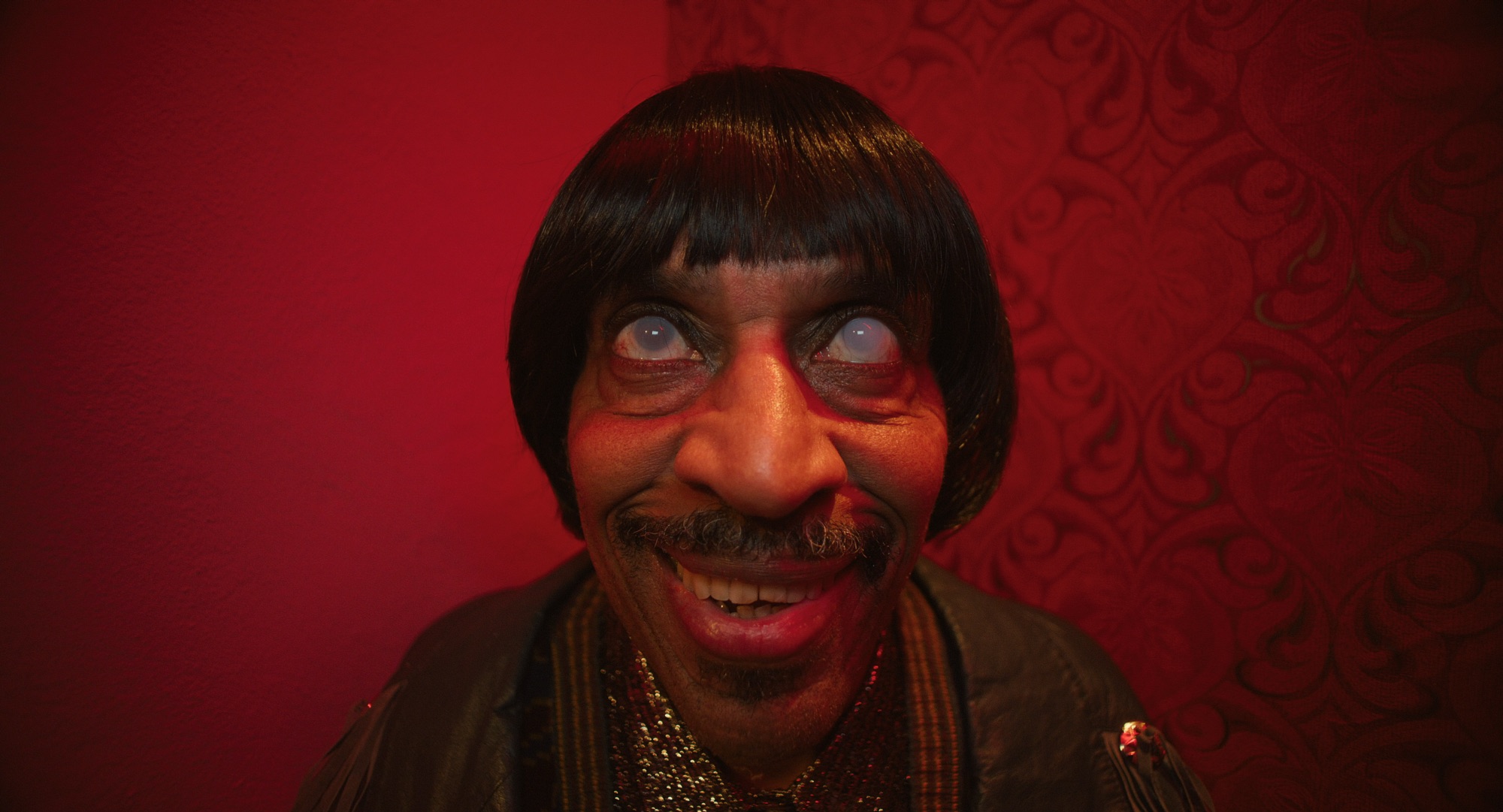
Gil, who plays Stevie, I find really endearing and I love being with him. He’s just the sweetest guy, and I’m very protective of him, but I also really wanted to work with him in a greater role. He was in An Evening with Beverly Luff Linn and The Greasy Strangler, but I find Gil so funny and so unique and wanted to highlight him. He was probably the biggest reason for me making this film. I don’t know that Gil operates in the same way as the rest of us. I don’t know when he reads a script, whether he understands why things are happening, or maybe he does on a deep level. He’s quite trance-like; he struggles to remember dialogue and he gets very anxious. I don’t think he slept much throughout the whole shoot. He collected his breakfasts throughout the shoot, so apparently by the end, there were about 18 breakfasts around his bed in his room. It was all very strange.
You just have to work with each person according to what’s going to make them feel comfortable and bring out the best in them. So I suppose with Gil, I was much more attentive to whether he feels comfortable, whether he needs a break. I developed a shorthand for directing him a little bit because time was of the essence. So rather than having to over-explain things, there was a good Stevie, bad Stevie, and an evil Stevie. Then I’d shout at him, “Okay, now bad Stevie,” and then he’d really go for it.

Let’s move on to your composer, Andrew Hung, with whom you have consistently worked and his instantly recognisable short, sharp, disarming electronic vibe.
I talk to him before I’ve even made the film. He’s a really close friend of mine; he always asks me if I’m planning anything. But I don’t work with him until I’ve assembled the film. So I’ll cut and assemble it, knowing that Andy will be able to make pieces of music to fit whatever the scene lengths are. He’s very versatile and makes this bouncy, elastic-sounding music that’s also very tight and hard. It’s an interesting combination with a childlike quality to it, a sweetness and a fun aspect to it, but it’s also strangely humourless and serious.
This was the first film where I sat down with him when he was composing all the music. We’d look at a scene like where they go and dance on the beach and I’d ask him for a propulsive kind of beat—some really cool music language and really bring out the best from him in a way that nobody else could—then he was just composing stuff there and then with me, and it was really quite amazing. It was the first time I’ve worked with him in that way, where I’m actually seeing him go into this zone of looking really serious, like a conduit for something, and then making music there and then in front of me to picture.
Developing that kind of collaborative trust is priceless.
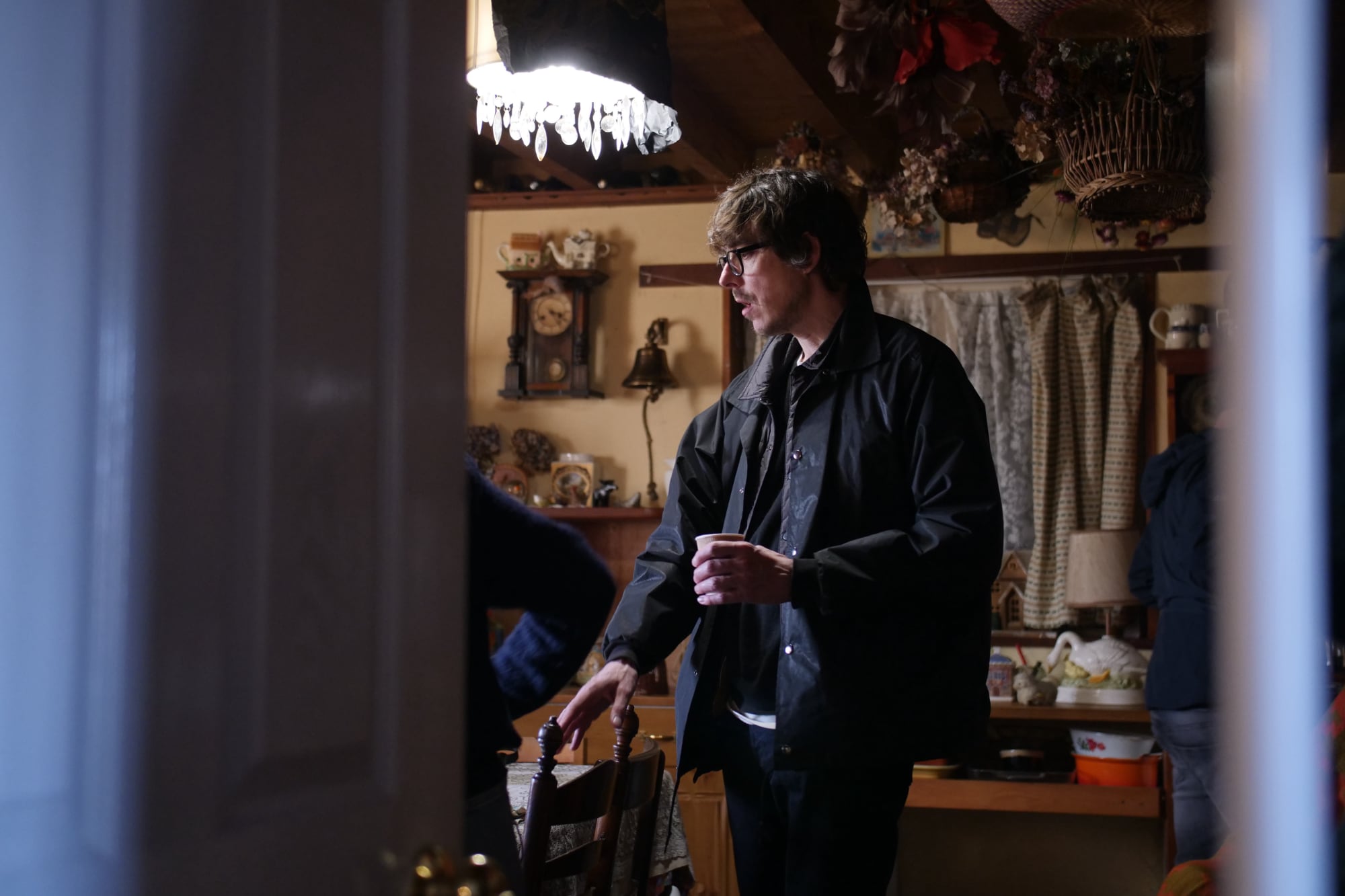
I think when you start out directing, there’s a tendency to always seem like you have the answer to everything. If a DOP shows you a 25mm on a lens finder, and asks what you think and you then ask to see it a bit wider—it feels like micromanaging people. That certainly comes out of insecurity, but as I’ve gone along, I think it’s more satisfying when you give space for people to really contribute what they can. What they like, how they think something should feel, then you get surprised by it.
I gravitate towards people who are instinctive and intuitive and don’t over-intellectualise so it feels like a dry, careerist, academic process.
With Andy, I would never be too prescriptive with him because he’s not that kind of guy; he’s very intuitive. I don’t know if he knows why he creates what he creates, and it’s a bit like that with me. I gravitate towards people who are instinctive and intuitive and don’t over-intellectualise so it feels like a dry, careerist, academic process. That’s not what I’m interested in. I would rather he comes back to me with something I have no idea how to use rather than something that just feels like obvious film school music. You see films that feel technically so competent and really well written with strong acting, but then the soundtrack just feels generic. I love Andy because he just makes something that nobody else could.
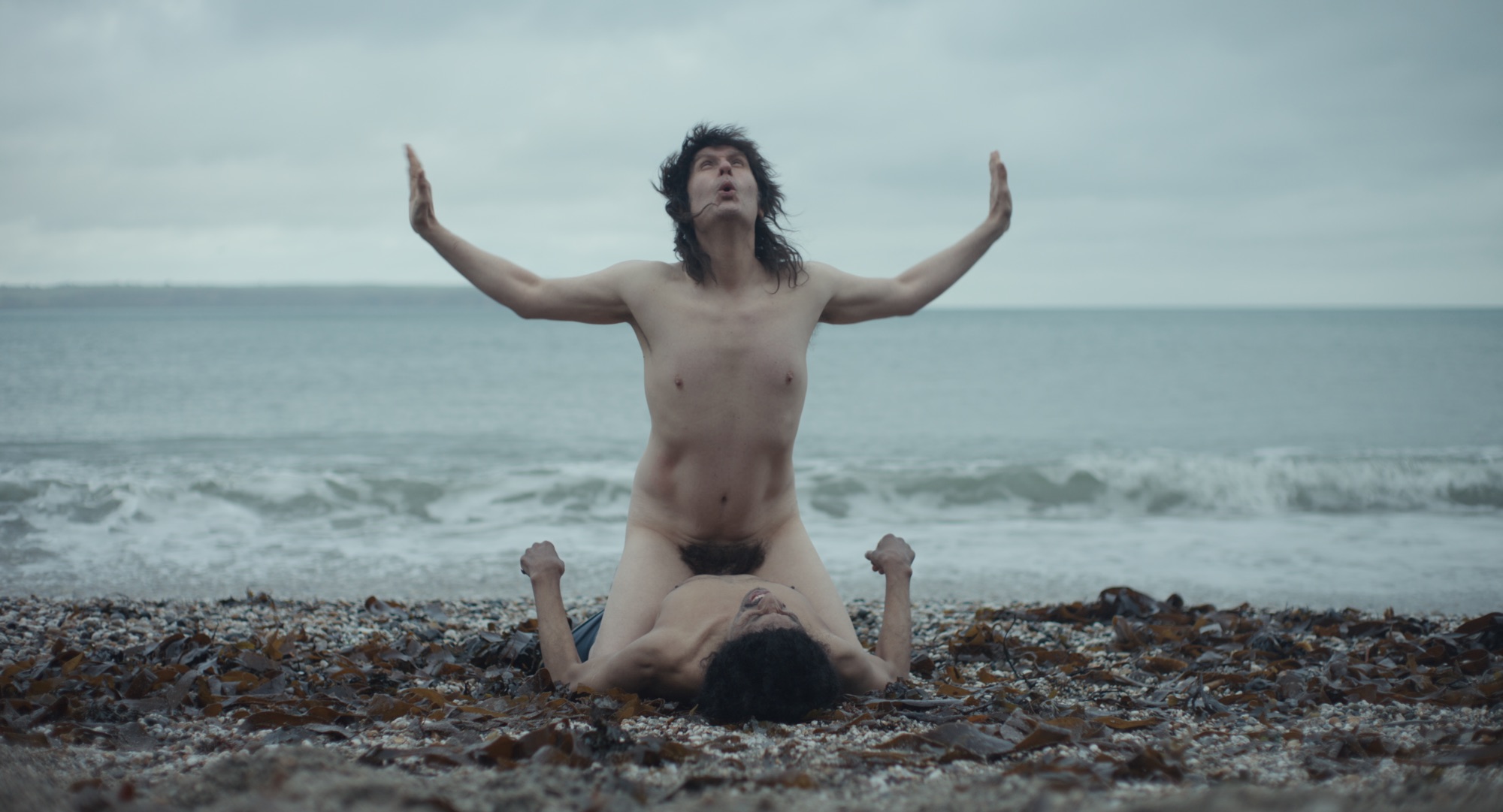
You have this incredible knack of knowing exactly how far to push a joke, take the sheep bleating scene in Ebony & Ivory. How do you know, when shooting and then editing, how far to push your audience?
There’s definitely a lot of annoying, persistent questions from me to the editor with a scene like that. “Oooo, do you think it’s too long? Do you think people are going to find this annoying? Do you think they’ll find it funny?” That’s when I reach the point where I’m suddenly aware that I’m going to have an audience. Watching it, then thinking, “How far do I push this?” You have to keep reverting back to, how did I feel when I first watched this? And just get in a headset of someone who’s watching the film—a pure headset of “How does this feel? Would I find this funny?” I know the answer to that is yes, so that’s all I can go on.
Maybe there’s a sort of contrariness in me that is quite oppositional to the current film landscape.
But of course, there is some childlike glee in the fact that it’s still going on. I’m not trying to wind people up or exasperate people. I’m trying to make them laugh and feel free. It sounds really stupid, but it feels like today in film that everything’s very serious or dramatic or action. Maybe there’s a sort of contrariness in me that is quite oppositional to the current film landscape. If there were a lot of slightly experimental comedy being made, I’d probably move into a different place. I’m just enjoying making this stuff and being in a place where certain details are obviously pointless or even boring, not funny, and they’re milked—because that’s what life is like.
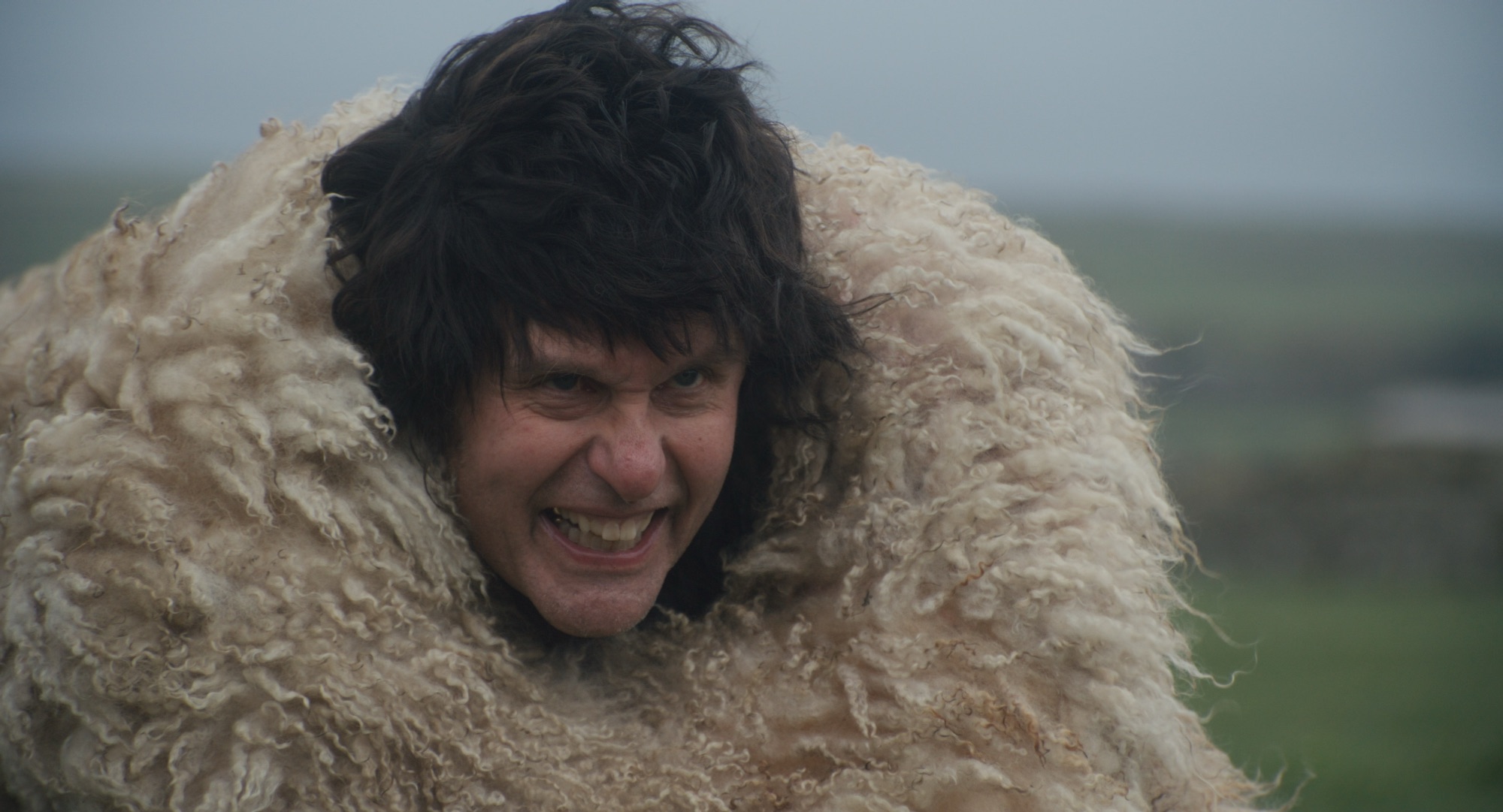

Ebony & Ivory gets its cinema release on the 19th of September. I’d very much like to hear about the reception to the film so far.
I tend to only really get the sort of positive feedback, I guess, because people don’t generally come up and say, “Hey, you know what? I thought that was the most annoying, dreadful film I’ve ever seen”. As I was saying, I don’t read reviews or get involved with that kind of stuff, but after Glasgow Film Festival, I thought, “God, people seem to be really enjoying this, I’ll have a look on Letterboxd and see what people are saying.” I felt a little emboldened for a moment and then looked on there and found it sort of mildly terrifying. The polarity there.
The Greasy Strangler was even more like that. That was reviewed multiple times in the same publication. The first time at Sundance, it got four stars. Then Peter Bradshaw reviewed it and gave it three stars. And then my producer texted me because it was being reviewed again and it had zero stars, which I thought must have been a typo, that they hadn’t filled in one of the stars! But then it won some awards. An Evening With Beverly Luff Linn got quite a negative reaction at Sundance when it came out, and then it got a better reaction over here. When you’re doing work that feels a little jarring or jolting and you don’t know quite how to contextualise it—that’s going to really upset some people. Then, for other people, that feels like exactly what they’re looking for when they go to see a film or stream a film; they feel grateful to be surprised.
I think you just want to feel like you’re doing what you want to do. I feel like I’m sounding like one of the characters in the film. “You do what you want to do, and you do it, and you do it the best you can, and then you’re done.”