Filmmaking has long provided artists with a means of processing difficult experiences. When the subject is deeply personal, however, the process of transforming these lived experiences into a fictional narrative can also become an act of vulnerability, requiring the filmmaker to negotiate the boundaries between reality and performance. For writer/director Andy Reid, this tension sits at the heart of Brief Somebodies, a short film that explores his relationship with his own experience of sexual assault through the story of two actors rehearsing a complicated scene depicting sexual violence.
Rather than approaching the subject directly, Reid situates the film within the environment of a film production, creating an intriguing distance between the filmmaker’s experience and its onscreen representation. With Brief Somebodies having recently reached a new audience through its online premiere as a Vimeo Staff Pick, as well as being a film we’ve kept an eye on since highlighting it in our SXSW 2025 Best of Fest selection, this release offers Directors Notes the perfect opportunity to explore the filmmaker’s approach to such intensely personal material. In our conversation, Reid reflects on whether making the film proved cathartic, why he chose to explore his experience through the context of a film set and the complexities of casting the actor portraying his assaulter.
I’m never a big fan of interviews with filmmakers that begin by exploring the inspiration behind a film, but with Brief Somebodies it feels impossible to ignore, as I know this is a very personal short. Can you explain a little about why you decided to tell this story and the impact it’s had on you since sharing it?
At the time, I was writing a feature that similarly drew from my own experiences with sexual assault. I thought it would be cathartic, but I was growing anxious that it might actually be traumatizing in its own way. I found myself in this constant state of negotiating how much of my own comfort I was willing to compromise for the work. Initially, I wrote Brief Somebodies as an exercise. This was my way of saying, “okay, here’s what following through on this might look like,” and I ended up with all these questions about the process, the personal toll, and the professional ethics of making my colleagues go ‘there’. I made the short to see if the work itself offered any answers.
In sharing the film, I’ve actually been surprised by how my relationship to my own assault has changed. It’s a little less ‘mine’ now. It’s become its own thing. That’s been a relief. I took an Ativan before pitching it to my producer, and now I’m typing my responses for this interview with a bowl of ice cream beside me.
It also feels like there were numerous ways you could have explored these themes, so I’m intrigued to know why you chose to set this particular story within a film production.
I love films with meta elements, so this was the perfect opportunity for me to add to the tradition of films about their own creation. I’m definitely speaking through Joel when he worries his work is self-absorbed, so maybe I’m trying to offload that burden a bit here too. It’s not just me, even the film is interested in itself!!
This film was very process driven, and I knew that someone as engaged as him was what it needed.
You’re an actor yourself and, from researching the film, I know you considered casting yourself in the lead role of Joel. Why did you ultimately decide against doing that and what drew you to Aldrin Bundoc for the role instead?
Well, thank God I didn’t, because Aldrin absolutely crushes it, doesn’t he? That was a tough decision to come to. Like I said, so much of the film is about calibrating how much of my own comfort I’m willing to spend to make something that feels honest, and as we started pre-production, it just became increasingly clear that my emotional wallet couldn’t afford that particular ticket price. I think it was assumed by everyone involved that – since this is a personal story and I’m also an actor – I would be playing Joel, and it wasn’t until I gave myself permission ‘not’ to play him that I was able to really show up and be as present as the filmmaker must be.
Most Popular
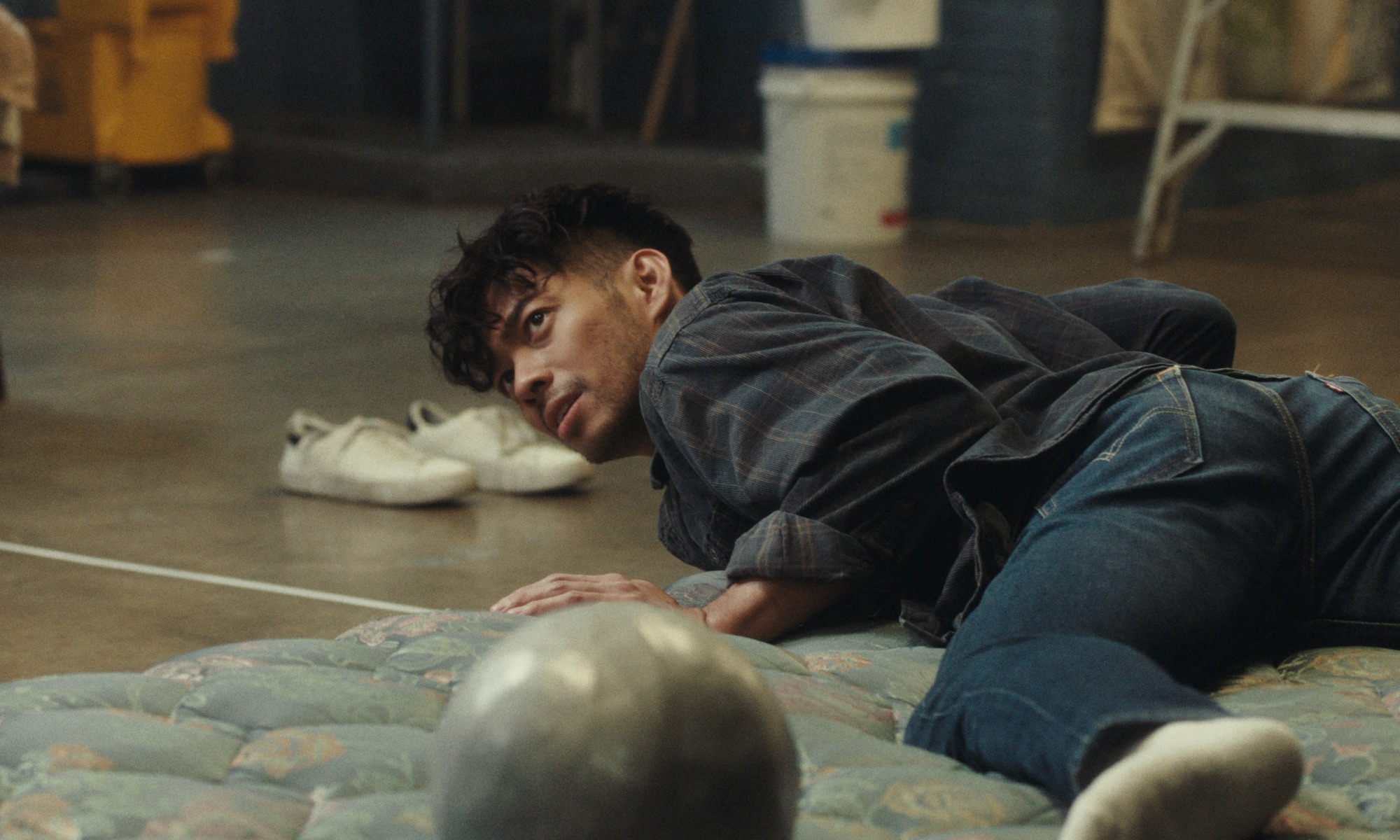
My day job is in casting, and so I have a lot of exposure to actors in Toronto. I had actually seen Aldrin in a play a couple weeks earlier and had my casting director request a tape from him. He’s great, and talented, and has this innate vulnerability to him which makes you lean in, but above all else, he was the most collaborative actor I worked with in callbacks. This film was very process driven, and I knew that someone as engaged as him was what it needed.
Sticking with casting, I’m also interested in the process of casting Matt O’Connor as Calvin. Given how personal this story is, was that role particularly difficult to cast and how did you approach finding the right actor?
I wouldn’t say it was difficult, per se, but rather odd to watch these men and assess both whether I believed their performance and if they had the capacity to hurt the version of me that’s in this story. In the film, we’re exploring ideas of ‘what’ makes a sexual encounter an assault. We all understand images of sexual violence when we see them in the form of an attack, but it was important for me to show the kind of sexual assault that happens because someone is made to believe that what they want doesn’t matter.
Whether or not it’s comfortable to believe this, the man who assaulted me is probably a good person (beyond my experience with him).
Most of the men who auditioned played him with a roughness, as if Calvin would have gotten the role because he seems like the kind of man who would assault someone. That’s never really the case though, is it? Whether or not it’s comfortable to believe this, the man who assaulted me is probably a good person (beyond my experience with him). What really struck me about Matt’s audition was that his approach was quite soft. His instinct was to play Calvin as someone who’s wholly present and curious, and when we got to the assault scene, his character has lost that interest.
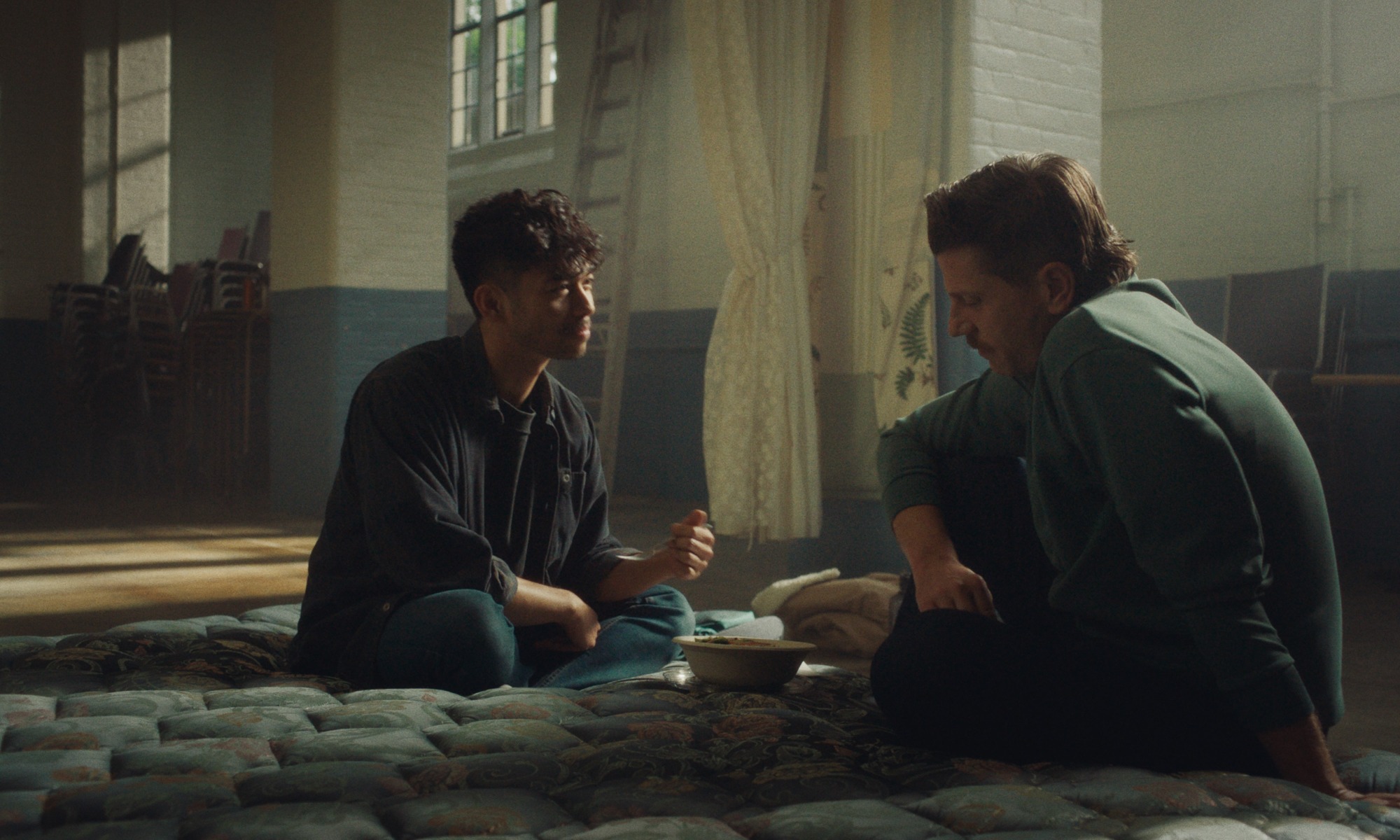
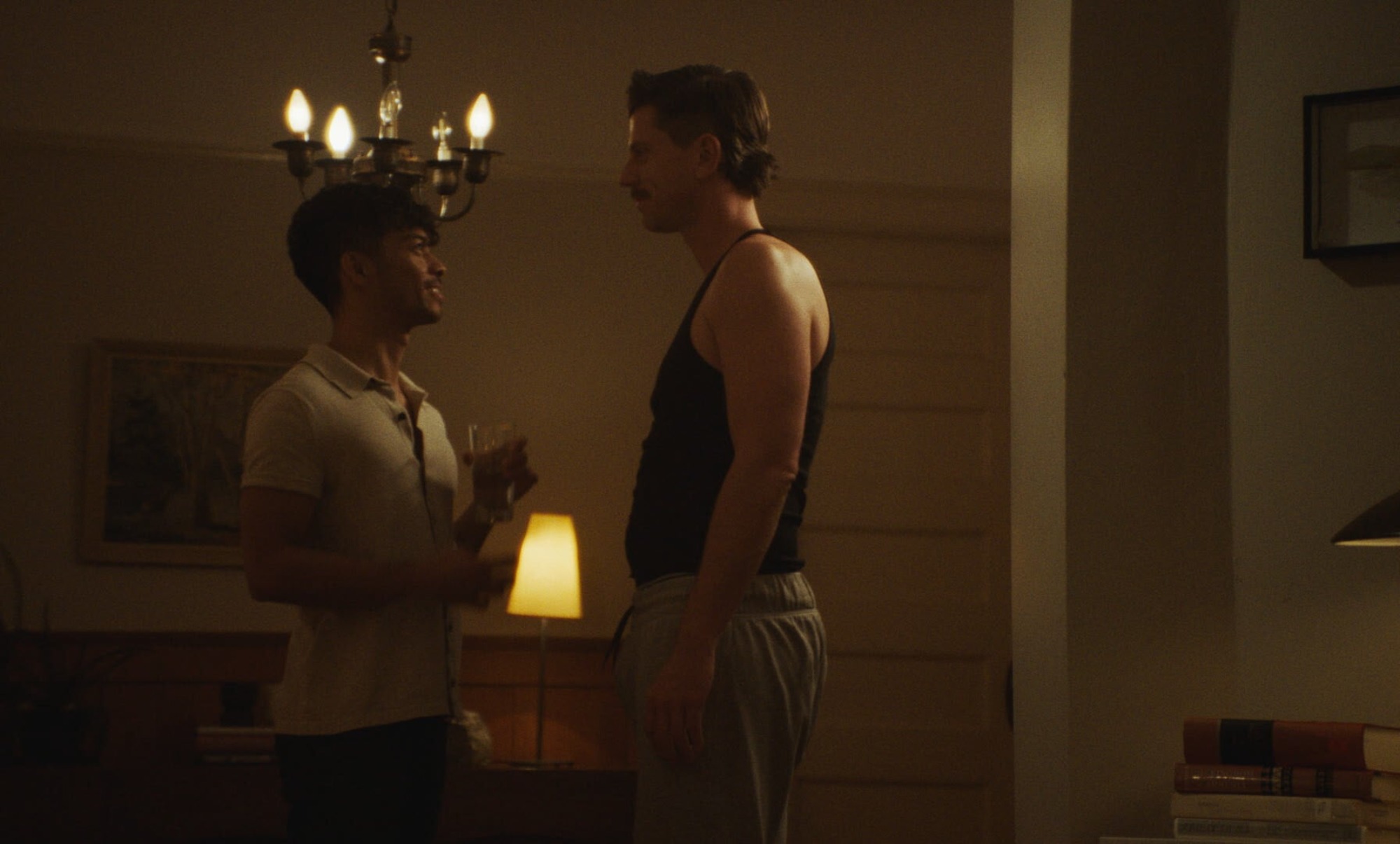
One last question on casting and performance and then I promise I’ll move on. One of the key elements that makes Brief Somebodies so compelling is the burgeoning connection between Joel and Calvin. How did you work with Aldrin and Matt to develop that relationship and portray that chemistry on screen?
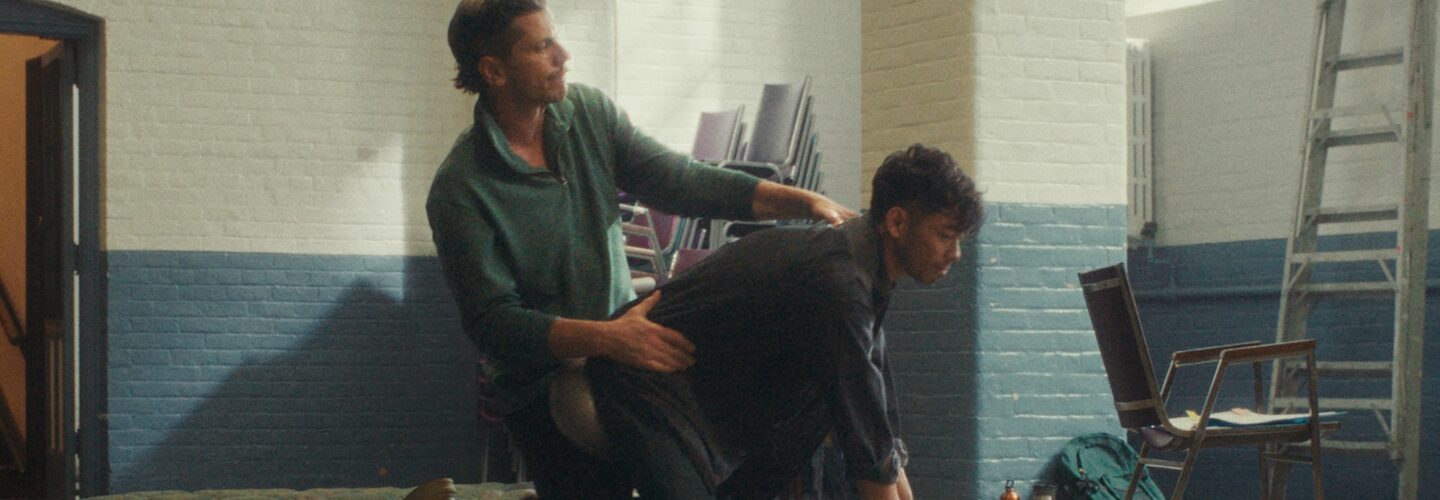
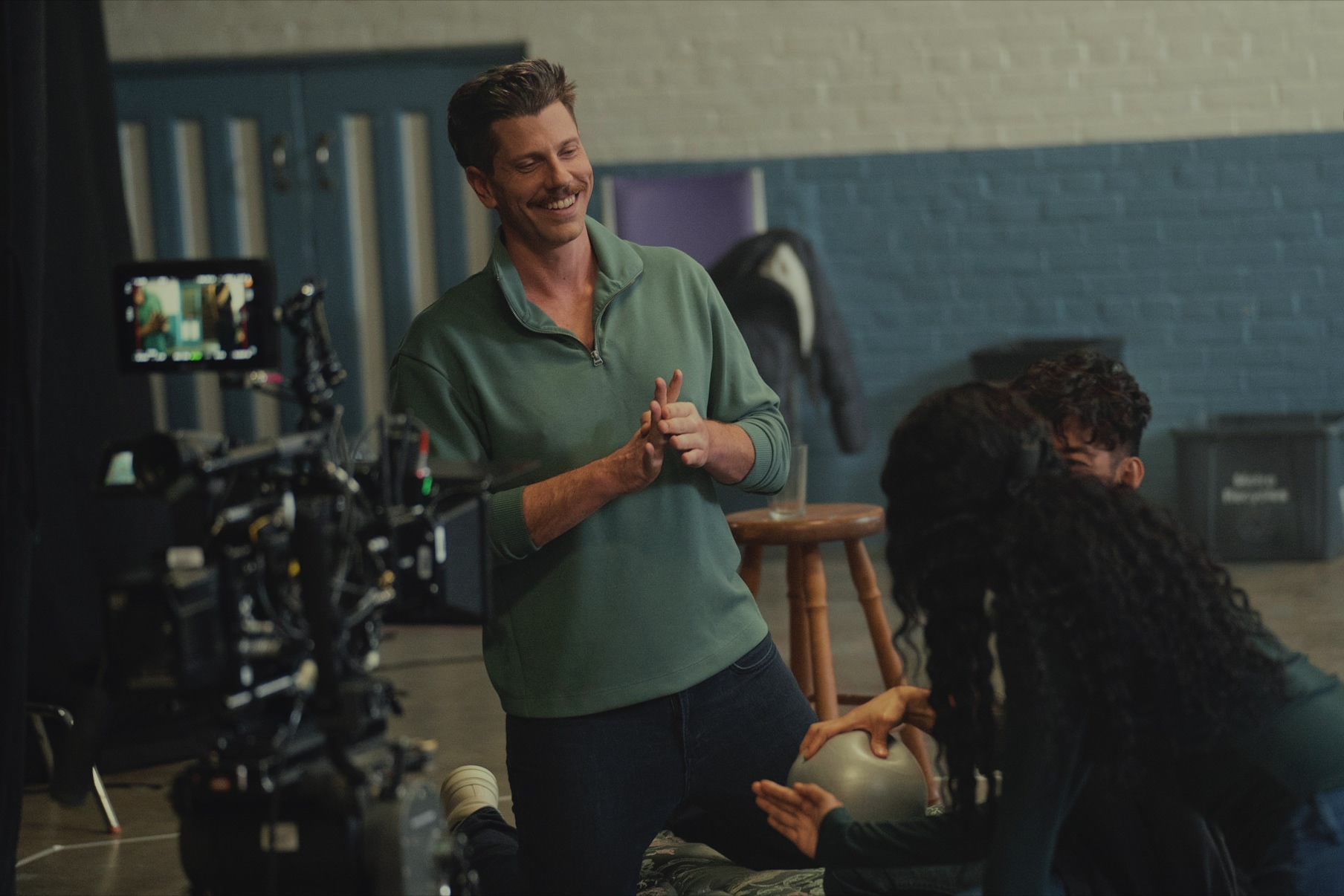
What was really exciting to me about this production was that, by design, much of what happens on screen directly reflects the experience of making it. Aldrin and Matt really trusted me with bringing the meta format of the film into our process, so our only rehearsal was to choreograph the assault scene with our intimacy coordinator, Krystle Ferdinand. I used that rehearsal to watch how Aldrin and Matt – who, like in the film, went from meeting with a handshake to dry humping minutes later – calibrated their physical and emotional boundaries and revised the scripted rehearsal to match.
I cast them because I could tell they wanted to do the work.
We also shot chronologically, so Aldrin and Matt would only have had time to get to know each other for as long as their characters had at any point in time. When we shot the rehearsal scene, they were still relative strangers to each other; at the lunch scene, they’d had enough downtime on set to start to get to know each other as people; and their hug was the last thing we shot, after they’d just spent days going through this intimate and intense thing together. Like I said before, I cast them because I could tell they wanted to do the work. Building the chemistry in this way could really only succeed because Aldrin and Matt were invested in the process.
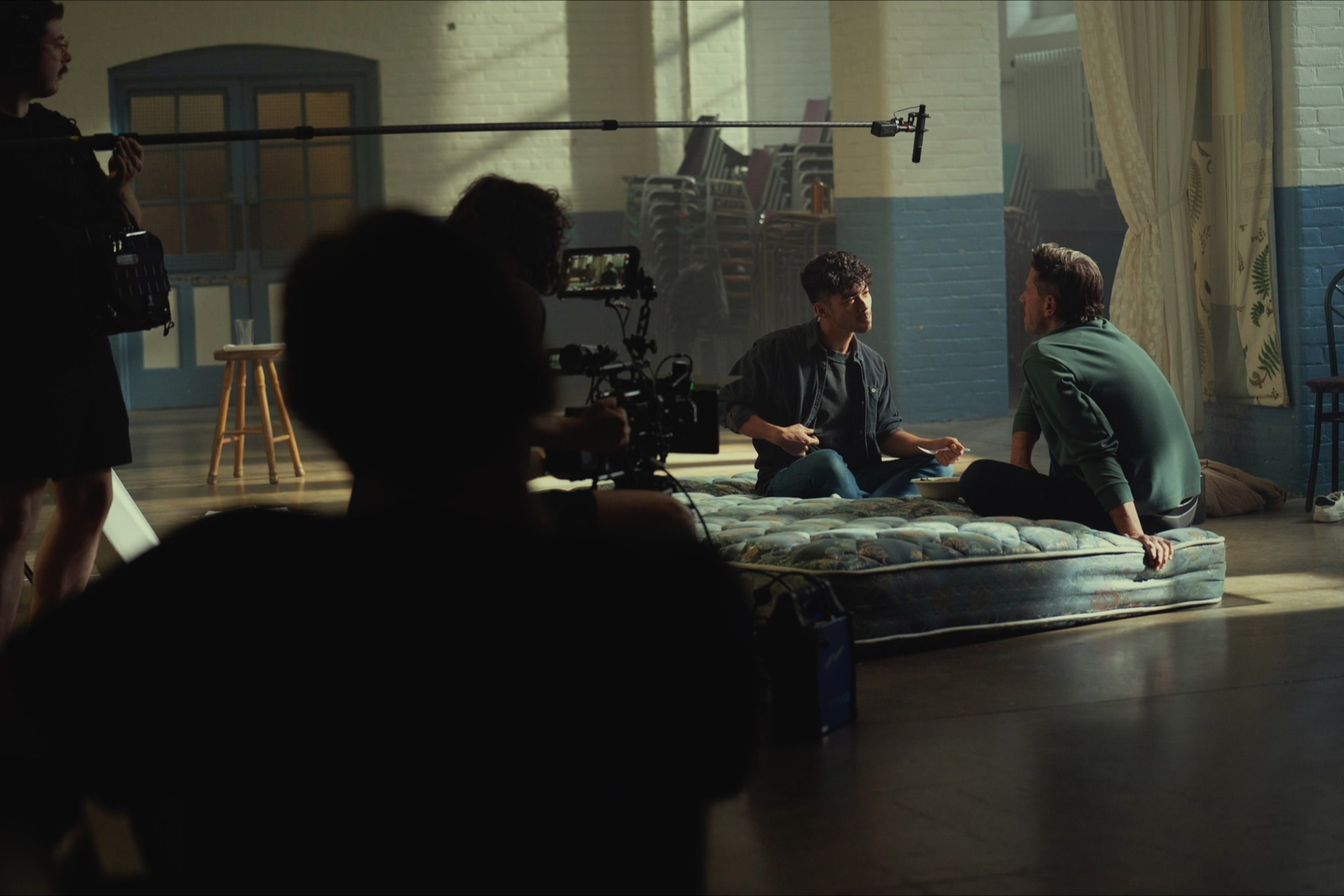
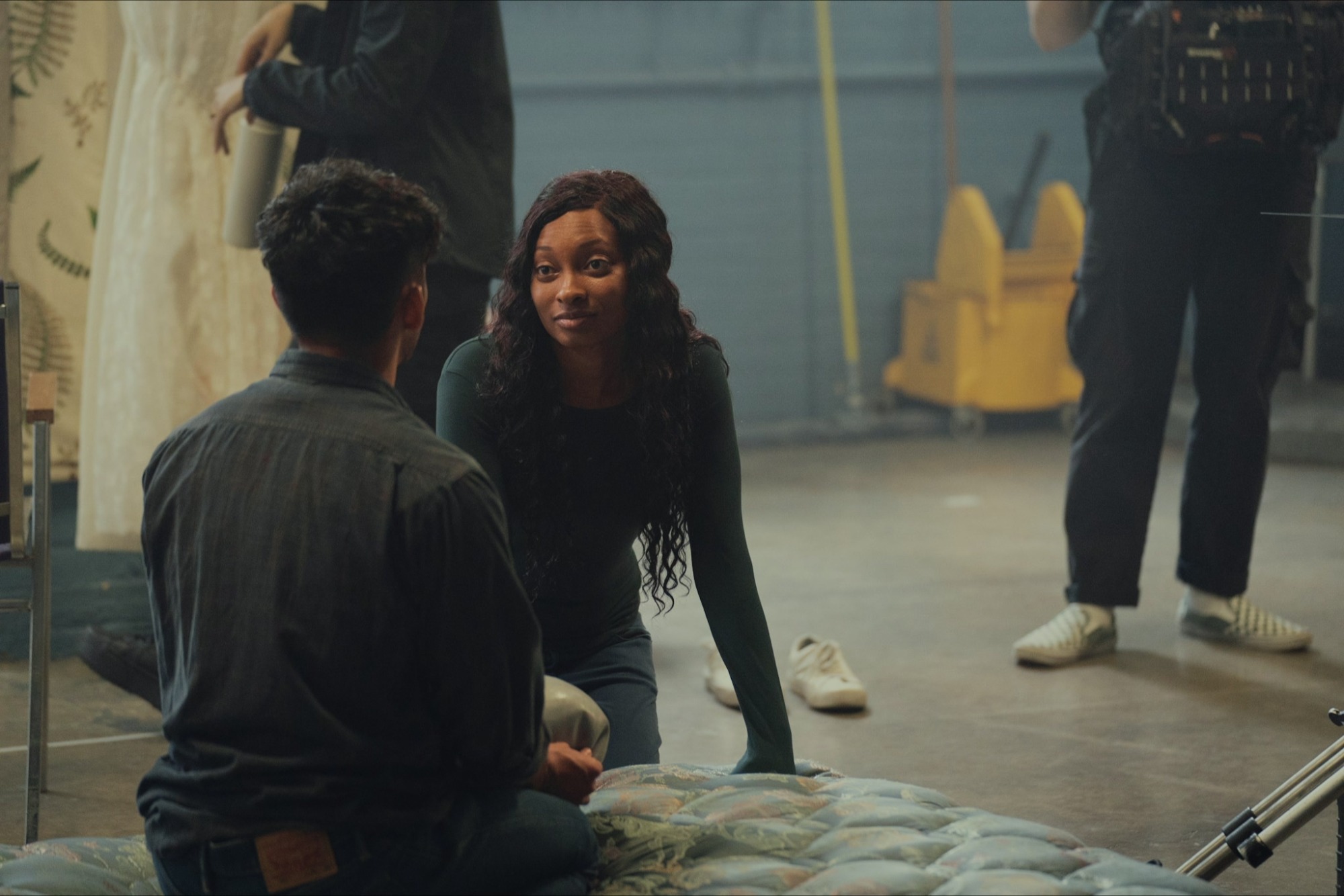
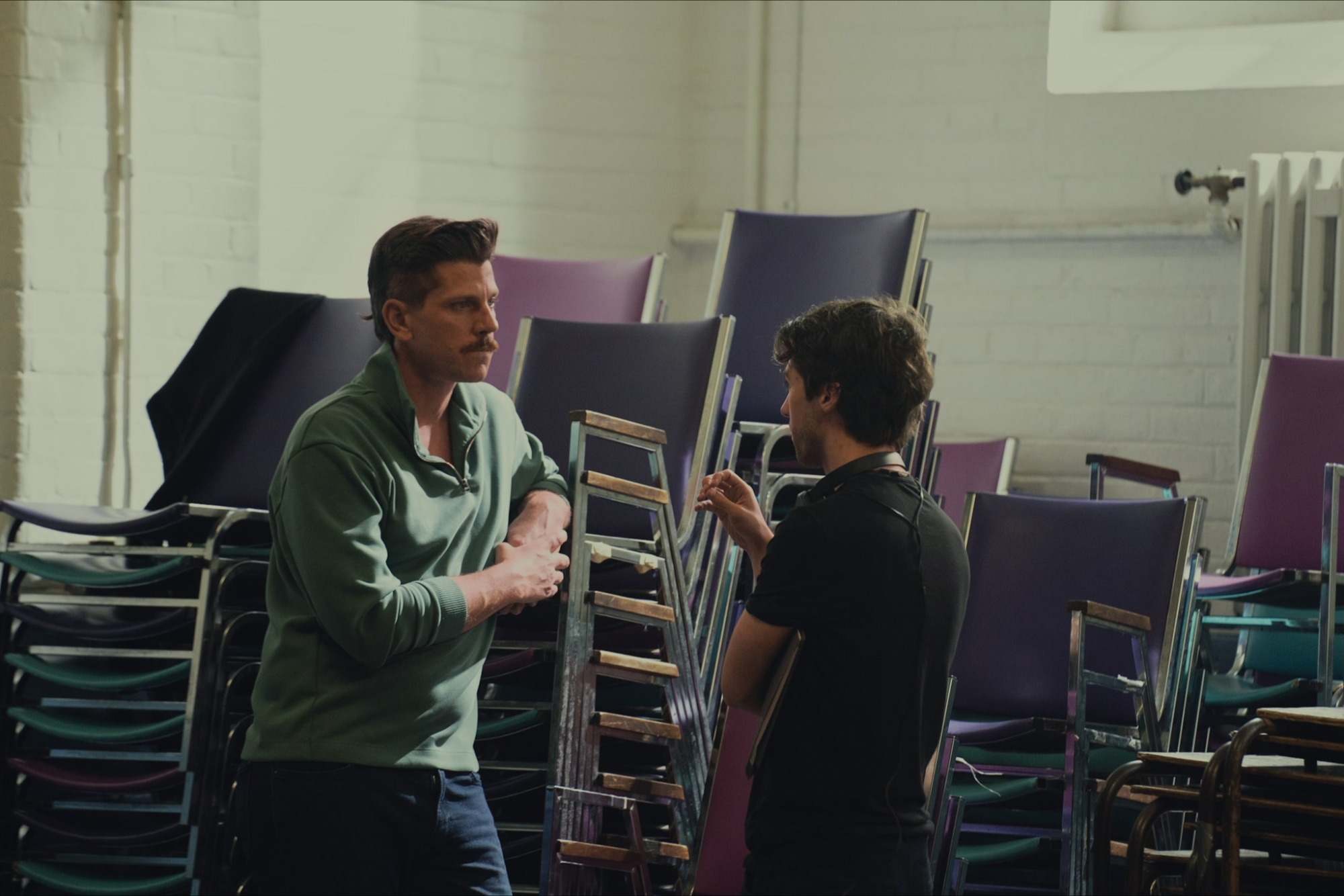
Visually, the film seems to move between distance – through locked-off, wide compositions – and intimacy, with close-up handheld camerawork. Can you talk a little about how you worked with cinematographer Colin Cameron to develop the film’s visual language and what you wanted the aesthetic to communicate?
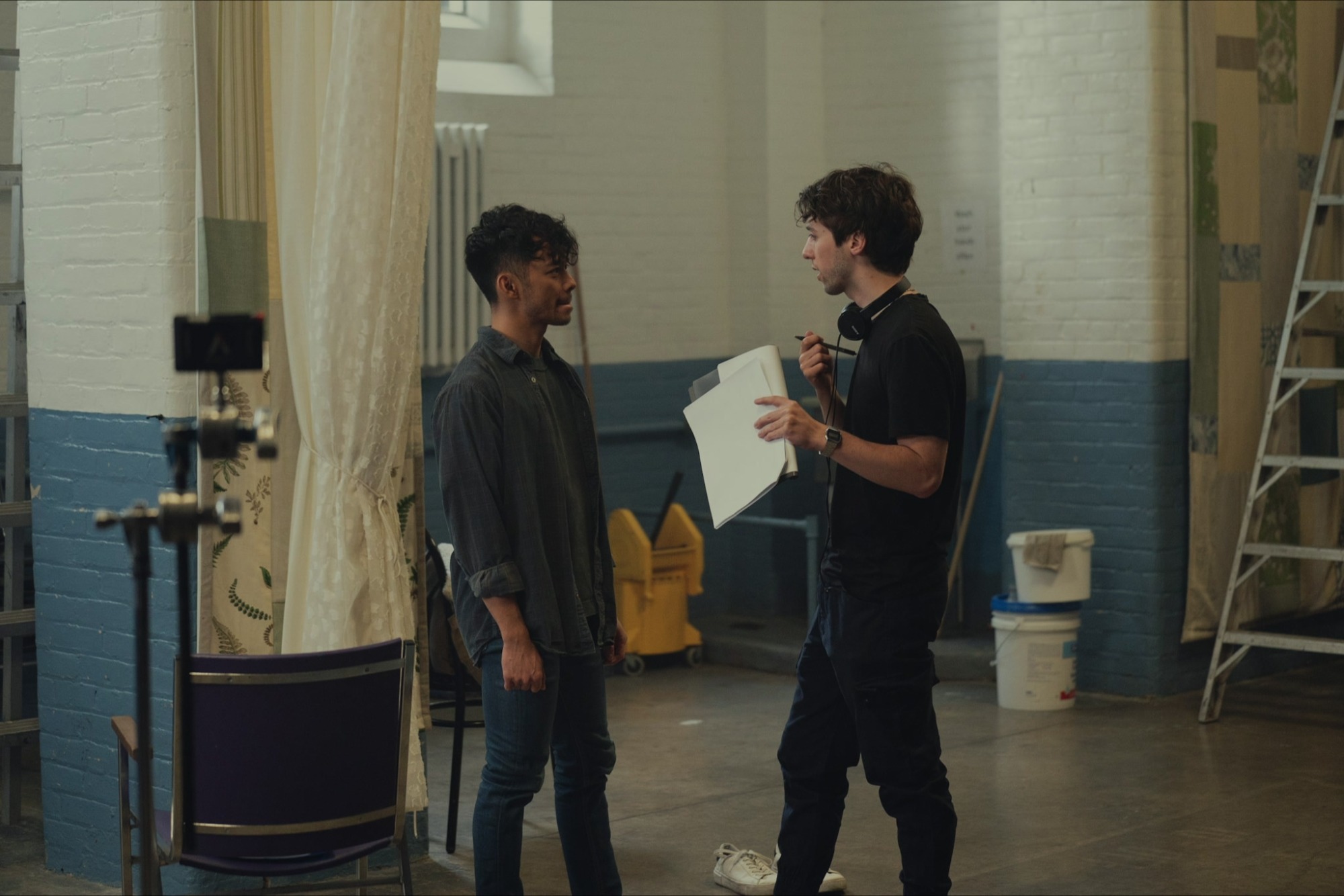
Colin is someone I’ve worked with since film school – he’s shot everything I’ve made for nearly a decade. This film is fiction, but in many ways it’s not, and so we tried to harness that contradiction visually. Our visual language became defined by saying “it is, but it isn’t.”
We shot on sticks, but didn’t lock off the head so it could feel handheld. The film looks like celluloid, but we shot digitally. Our ‘real world’ feels cold, yet our film within the film is lit all warm and full of life. And yes, even composition-wise, we bring the audience in to feel like they’re a character observing the scene, then pull them away from it to remind them they’re not quite there.
We knew we wanted a slight change in visual language for the film within the film, but not large enough to let the audience know this is no longer Joel and Calvin. I believe it was Colin’s idea to introduce a constant, subtle zoom – a sense of force on the image that just ‘is’.
Narratively, the film ends on an intriguing note. Joel and Calvin share another moment of connection before Joel retreats into an isolated space to watch the playback. There’s no clear resolution, but that ambiguity gives the film an even greater emotional impact, allowing it to linger long after it ends. Can you offer some insight into why you chose to conclude the story in this way? Did you ever consider ending it differently?
It was always the intention for things to be a bit ambiguous. I fulfilled my duty to resolve the central narrative conflict, but I knew that, by bringing the audience into Joel’s headspace in the way that this film does, it would be sort of insulting to then tell them how to feel. As an audience member, I want to be trusted and I want to participate.
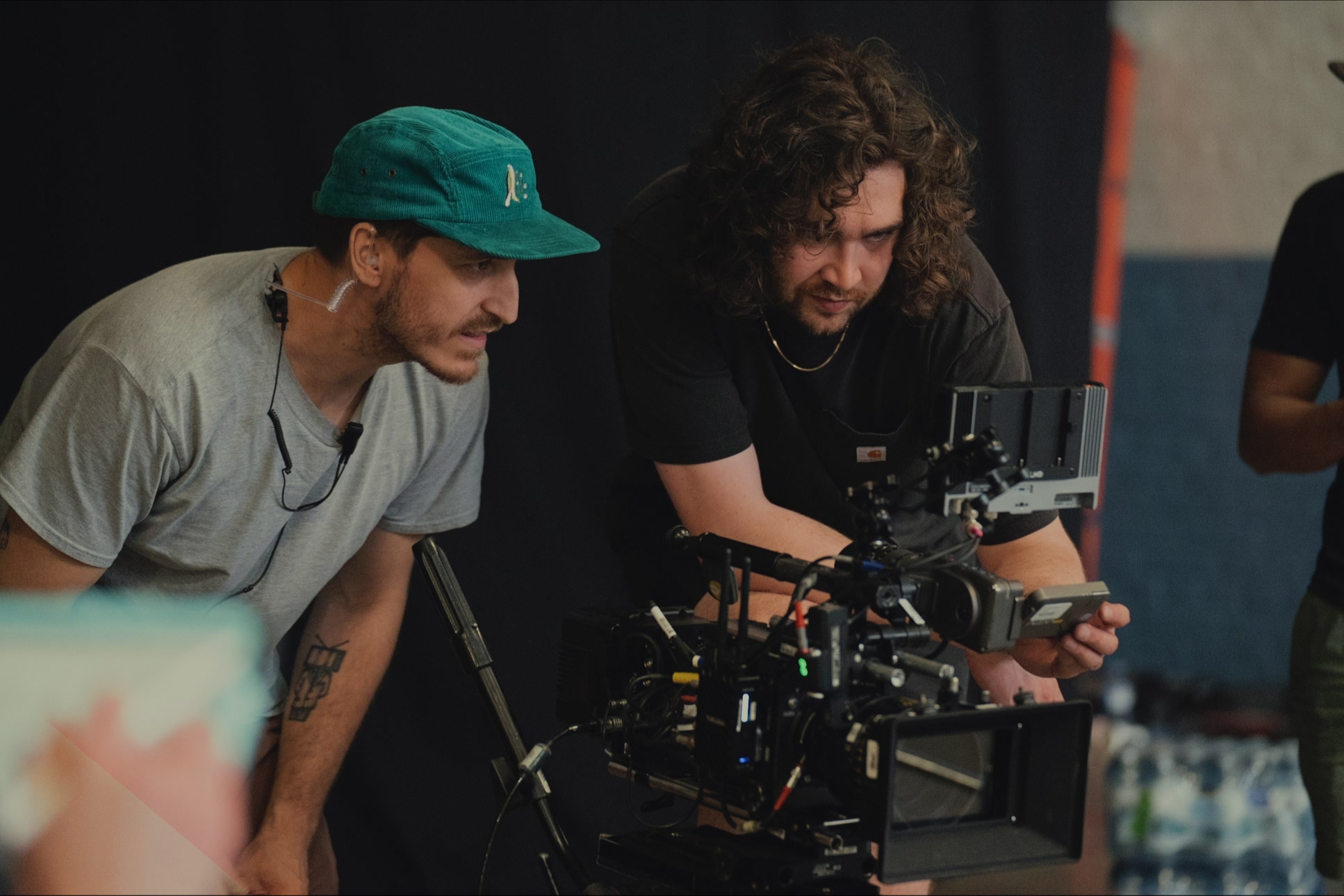
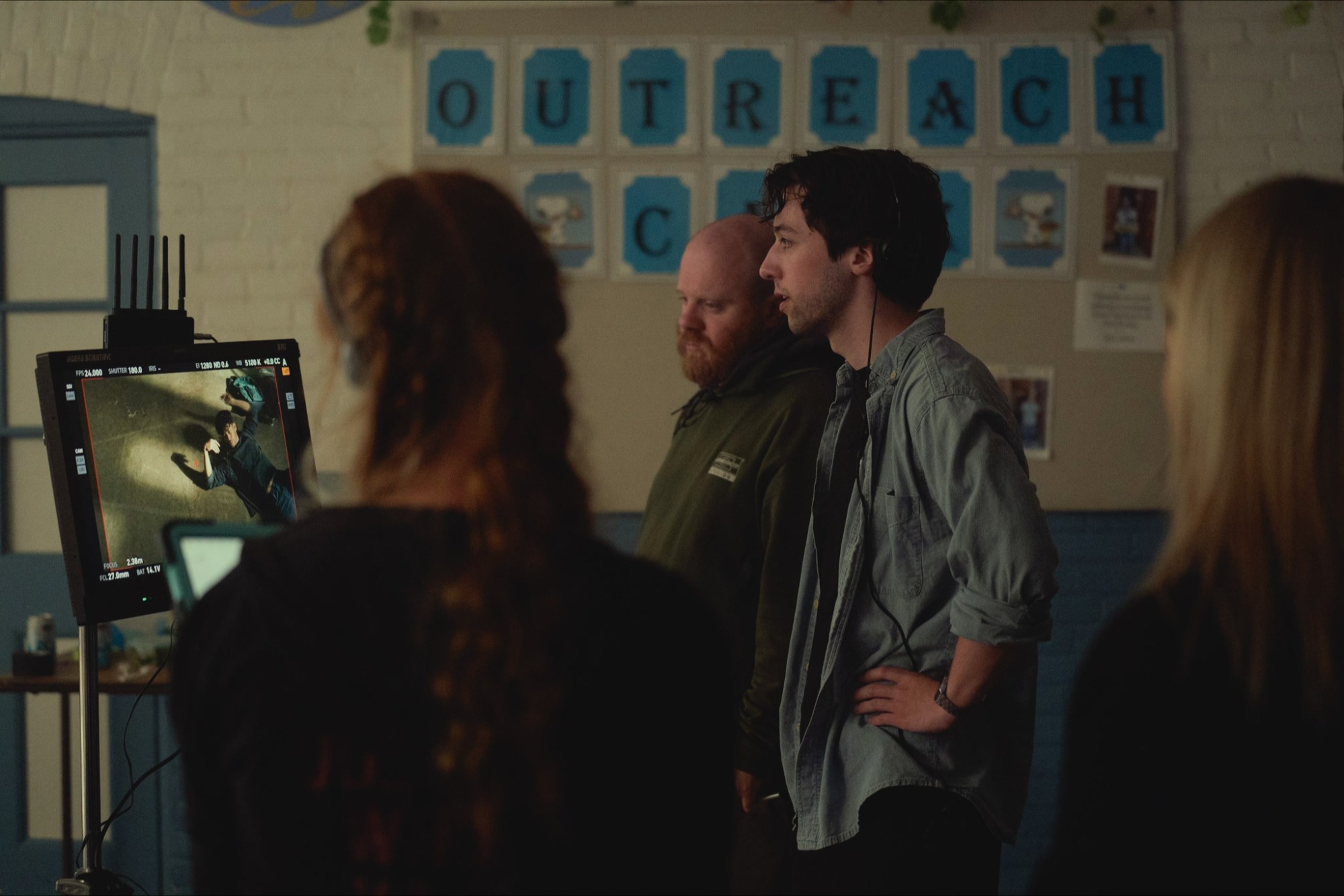
Thanks so much for your time, Andy. I’m a huge fan of Brief Somebodies and really grateful we’ve had the opportunity to discuss the film. To finish, can you tell us a little about any upcoming projects you’re excited about and where our readers can follow your work?
Thanks, Rob! I’m now deep in development on the feature that inspired Brief Somebodies! It’s called Pickups and it follows a tap dance teacher who develops a fixation on the father of his favourite student. Crucially, it’s full of my favourite things: tap dancing, cringe humour, and self-loathing. We’re still trying to close our financing gap, so reach out if this sounds like your jam!
I’m @ndyreid on Instagram if any of you want to see what else I’m up to.
Before you go, this is a question we’re asking all the filmmakers we speak to: What’s one short film – by another filmmaker – that you’d recommend to our audience and why?
I was really lucky to have Brief Somebodies screen alongside Alexander Farah’s One Day This Kid a number of times. It’s beautiful, and affirming, and epic in scale yet intimate in execution. He’s got such a strong sense of his craft… I’m just in awe of it. I’ve seen the film five or six times and it always moves me.