
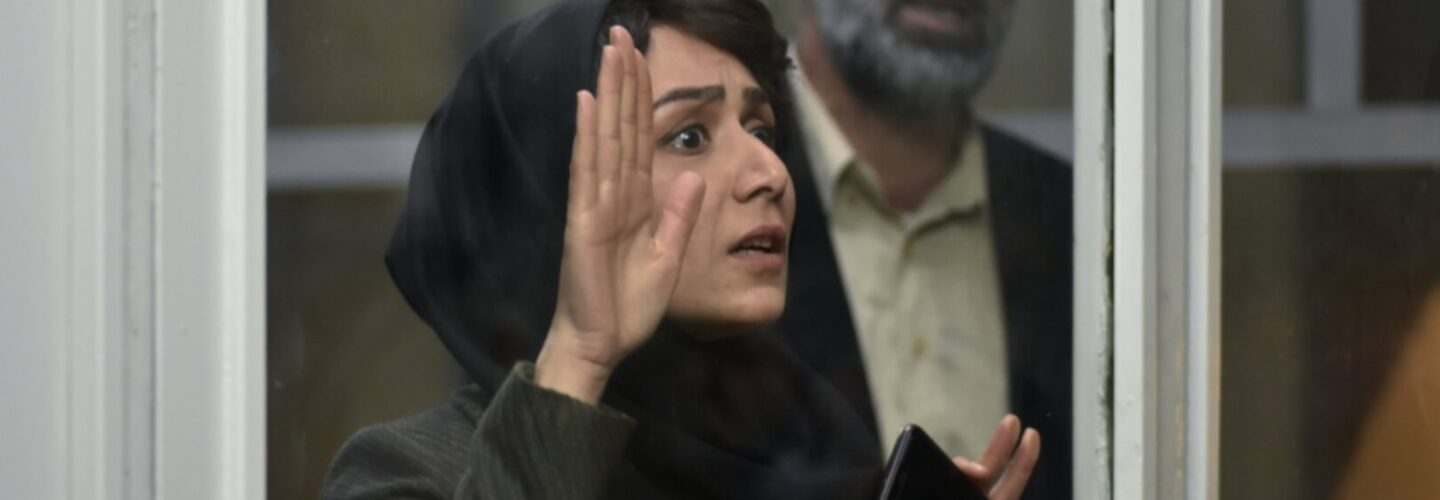
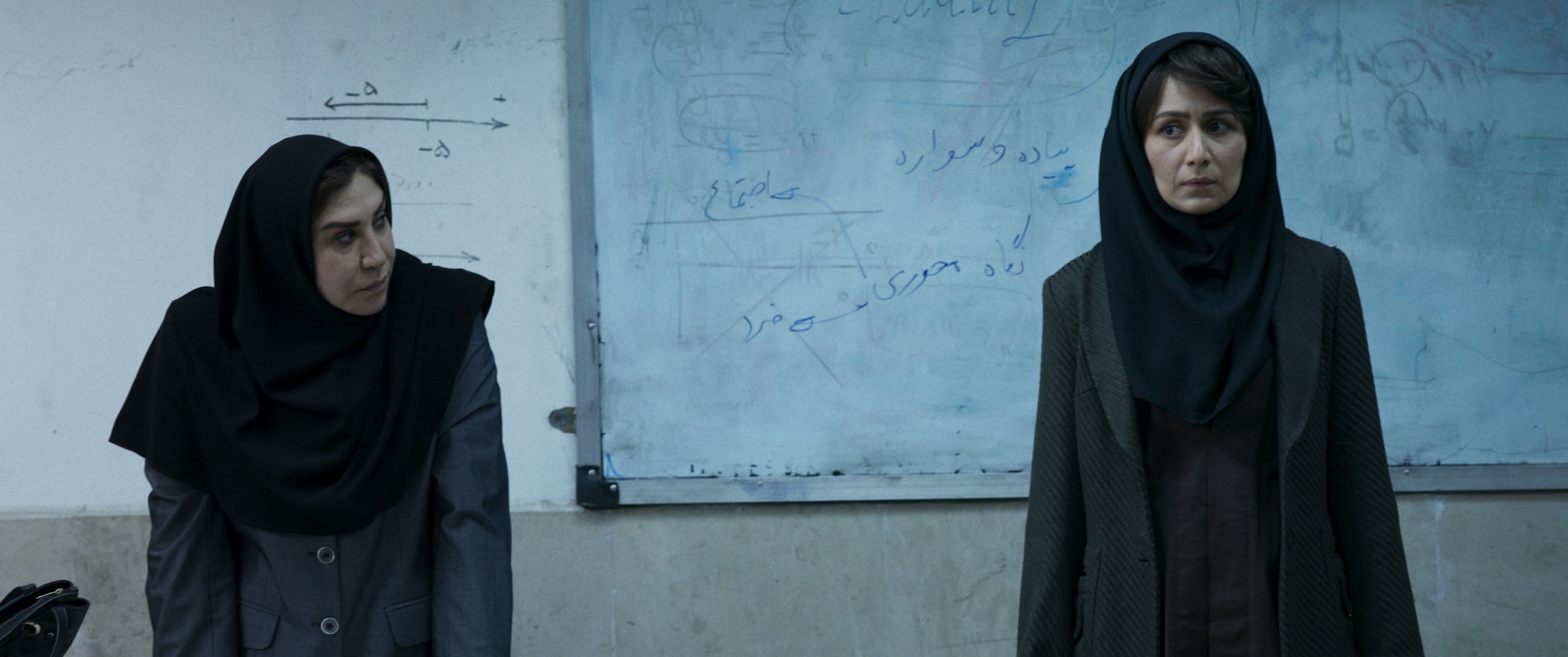
In Mohammad R. Khavari’s Unjustified, a pregnant young woman finds herself in a complicated web of miscommunication, caught between a classmate’s well-intentioned lie and the oppressive truth. The setting, an Iranian University, exists as a microcosm for society: an institution founded in and inescapable authority and power structure. An understated approach to aesthetic, including a lack of bold colour and handheld cinematography, crafts a genuine sense of realism to the piece, evoking a long tradition of humanist Iranian cinema. While the images are simple, they are deeply evocative, endless underlit corridors evoke the halls of a prison, while a tendency to shoot through windows contributes to a tone of emotional oppression, empathetically capturing the experience of existing as a young woman in Iran. Sound is treated with equal restraint. The absence of score or overt sound design pulls the audience into the ambient world of shuffling feet and quiet corridors. It’s not just immersive, but thematic – Unjustified is concerned with miscommunication and the unspoken. Nasim Abadi and Faranak Kalantar turn in spectacularly detailed performances, gentle yet filled with appropriate emotional intensity. Khavari’s directorial approach leads to intimacy, reminding us that when a narrative carries such urgency, cinema needs little embellishment. A lingering shot, a subtle gesture, a glance held too long, these are the tools that make the screen come alive, whether in a theatre or on a laptop. With Unjustified recently arriving online, DN speaks to Khavari about the film’s sociopolitical roots, his thorough rehearsal process and the power of using sound as music.
How did Unjustified’s narrative come to you, and what drew you thematically to the university setting?
The initial idea for Unjustified took shape years ago during my time as a university student. For me, the university was a place where people from diverse economic, cultural, and geographic backgrounds—cities, villages, and various neighborhoods—came together for the first time. Additionally, in Iran, education before university is strictly gender-segregated, and the university is the first space where this barrier dissolves. This unique feature made the university an inspiring setting for complex human stories. Back then, I made a documentary at the university, and I wrote the first draft of Unjustified—which had a different title at the time—during that period.
Much of the grounded tone comes from phenomenal use of location, could you tell us more about the high school you shot in, and how it informed the film’s tone?
Our location was an old, abandoned high school. The owner told us that during the Iran-Iraq war, it was used as a temporary prison, and many architectural features from that era remained intact. The contrast between the school’s educational facade and its harsh, prison-like past aligned perfectly with the film’s atmosphere and deeply influenced its tone.


In Iran, education before university is strictly gender-segregated, and the university is the first space where this barrier dissolves. This unique feature made the university an inspiring setting for complex human stories.
The film is grounded in sensitive performances from Nasim Adabi, Faranak Kalantar, and Mohammad Movahednia. I’d love to hear about your casting process.
Since the story takes place in a university setting, it was clear we’d need many characters. Like my previous film, I wanted a mix of actors with diverse backgrounds. Nasim Adabi, a well-known film and TV actress, joined the project on a friend’s recommendation. She runs her own acting school, and the students playing university students in the film are her real students. I knew Faranak Kalantar from theater, and her performance in a short film had impressed me. She’s an excellent actress and performed many of the film’s scenes in a single take. I had met Mohammad Movahednia a few times at a mutual friend’s office, and for the role of the husband, I needed someone who wouldn’t immediately evoke strong judgments in the audience—he had exactly that quality. I had seen Amin Mazaheri, who plays Erfan Nazari, in the courtyard of Bamdad Film School. Interestingly, although we were at the school together for years, we never directly interacted—our friendship began on the set of Unjustified.
Most Popular
Once you had decided upon your fantastic cast, how did you approach collaborating with the actors in crafting such naturalistic performances?
Once an actor is cast, we quickly dive into conversations and rehearsals. Some sessions happen even before they read the script, resembling interviews where we discuss their real-life experiences. These conversations help find connections between the actor’s life and the character—a kind of inner bond. For example, one night, Mohammad Movahednia and I went out to buy perfume! These seemingly unrelated interactions gradually bring layers of the character to life. After reading the script, rehearsals continue individually or in groups to build the character’s sensory memory.


There’s no villain in this story, everyone is a victim of a dysfunctional system, be it through duty, fear, or confusion. Was this refusal to rely on moral binaries something you were conscious of during production?
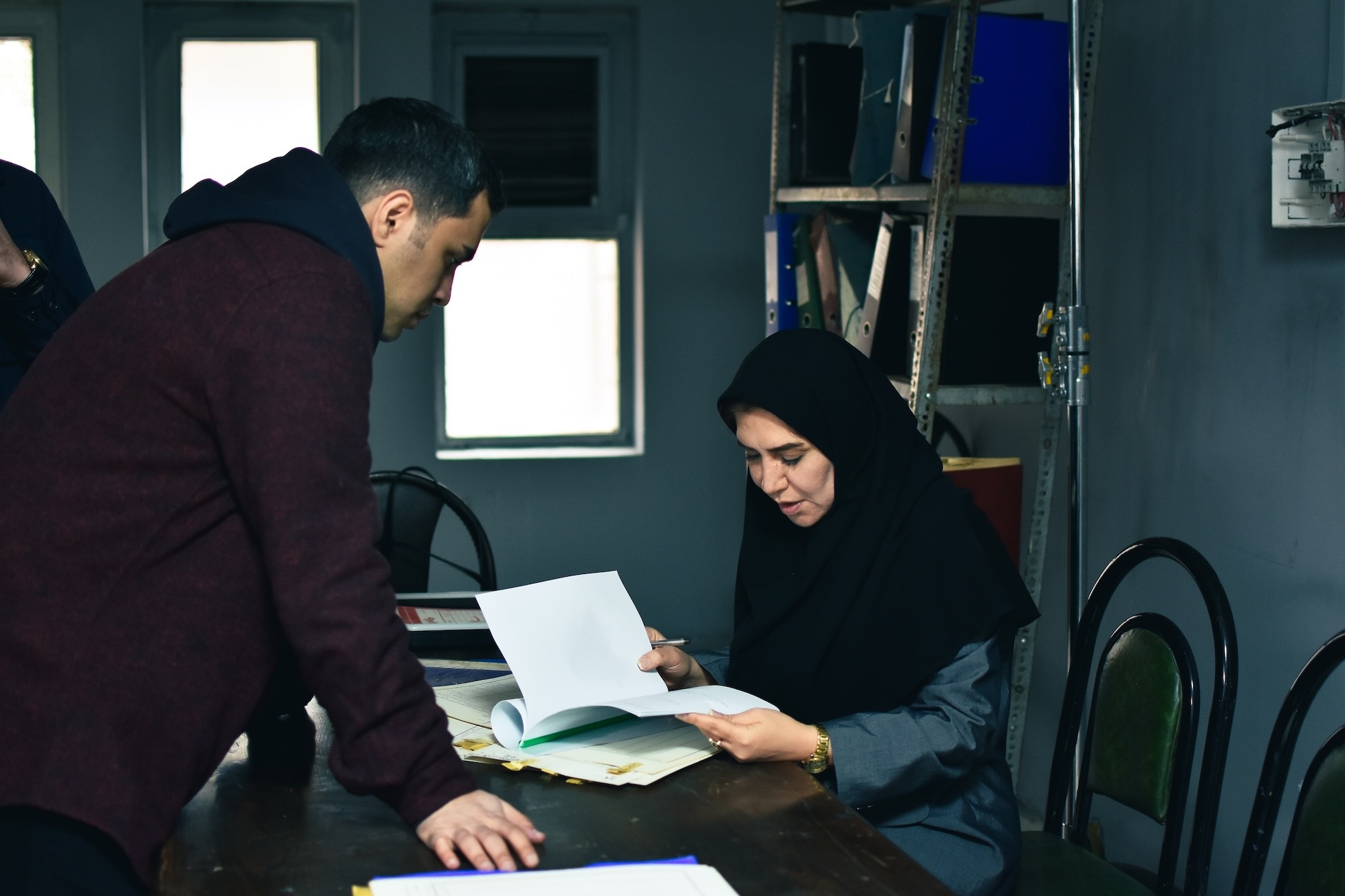
Yes, it was important to me that no character be entirely good or bad because the film is about systems and structures, not individuals. In this system, everyone—regardless of their position or mindset—must either stay silent or play a complex game. Even those who seem powerful, like the professor who appears to dominate others, are trapped, constantly fearing that their voice might be recorded or that people are talking about them behind their back. By maintaining a certain distance in the storytelling, both in staging and directing, I aimed to shift the film from a character-driven drama to a piece about social structures.
I understand you spend as much time as possible in pre-production. What did that process teach you about the characters or story that didn’t come through in the script alone? Did the narrative develop or change at all?
Pre-production for me is more than technical preparation; it’s where the film takes shape in my mind with all its details. I usually spend two to three months selecting locations, rehearsing with actors, and designing the staging. During this time, the script may evolve. The actors’ life experiences and emotions sometimes find their way into the text, enriching the story’s atmosphere. Unjustified was shot in just three days, but many of the details you see in the film are the result of months of reflection and mental engagement during pre-production.


This is a very immersive film, yet the sound design is bare, and there is no score. What role does silence have in Unjustified?
From the start, I knew the film shouldn’t have a traditional score. Instead, I opted for a minimal, realistic, and precise sound design to convey anxiety and suspense. For me, sound is a form of music that emerges naturally from the environment, not something imposed externally. Since the film is dialogue-heavy and busy, we needed silence more than music—silence that allows information to settle in the viewer’s mind and gives them space to focus and reflect.
The end-credits music has an interesting story. During pre-production, I met an old friend from university, where we both studied architecture. He’s now a successful architect but composes music for himself. From that pre-production phase, after rehearsal sessions, I listened to one of his pieces in my car and felt it perfectly matched the story’s atmosphere and the rhythm of the film’s ending. Without any changes, we chose it for the end credits. It was as if part of our shared university experience came alive in that piece and the film.
Since the film is dialogue-heavy and busy, we needed silence more than music—silence that allows information to settle in the viewer’s mind and gives them space to focus and reflect.
Similarly, Keyvan Shabani’s handheld camerawork is so simplistic, and yet completely gorgeous. What were the conversations like between you and Keyvan in shaping that visual restraint? Did you ever feel tempted to incorporate more elaborate camerawork?
The film’s visual style stems from my documentary background. From the beginning, the narrative didn’t allow for complex camera movements. We decided the camera should act as an observer—neither too close to be intrusive nor too far to seem passive. The focus was on how the characters’ behavior affects the space and those around them, not just the characters themselves. With Keyvan Shabani, the cinematographer, we had many discussions about this visual restraint. He’s very precise and sensitive, and we both insisted that the lighting shouldn’t be showy and should appear as if it comes only from the space’s windows or real fixtures. This approach in staging and lighting minimised external interventions and gave the film more authenticity and realism.


Dictatorships and imbalanced power dynamics appear to be a recurrent idea in Unjustified. Can you expand on how institutional and familial power systems intersect in this story?
For me, power isn’t confined to formal institutions; it also reproduces itself in families. When silence, repression, or fear become normalized in a family, these patterns unconsciously transfer to formal spaces like schools or universities. The reverse is also true: the educational system can reinforce or generate these patterns. This interplay between institutions and families fascinates me because it shows that violence isn’t always overt or physical. Sometimes it’s in a tone, a silence, or a glance. In the film, everyone is ‘free’ to not answer questions or leave the classroom, but the tools of control have evolved.
This interplay between institutions and families fascinates me because it shows that violence isn’t always overt or physical.
Unjustified tells an urgent and empathetic story rooted in a very specific cultural and social context. Can you speak more about the role of short film in communicating such specific experiences in a way that resonates universally?
A short film can tell a specific, local experience in a way that’s understandable and moving to a global audience. The time constraint forces the filmmaker to focus on a single moment or crisis, and this focus can sometimes be more powerful than a feature film. Additionally, today’s audiences have shorter attention spans due to social media platforms like Instagram, making short films more relevant than ever. But short films shouldn’t be simplistic or superficial. When viewers watch a scene, they don’t care if it’s part of a feature or a short film; what matters is the quality and care in crafting that moment.
Finally, what can we expect to see from you next?
My next project is a contemporary short drama set in a traditional rural environment. It shares some stylistic and thematic similarities with my earlier films, but it’s more dynamic, complex, and challenging. I’m currently scouting locations, and if all goes well, we plan to begin shooting this fall.