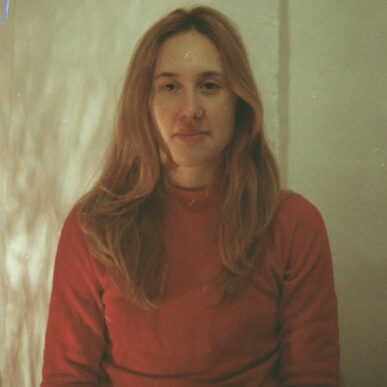
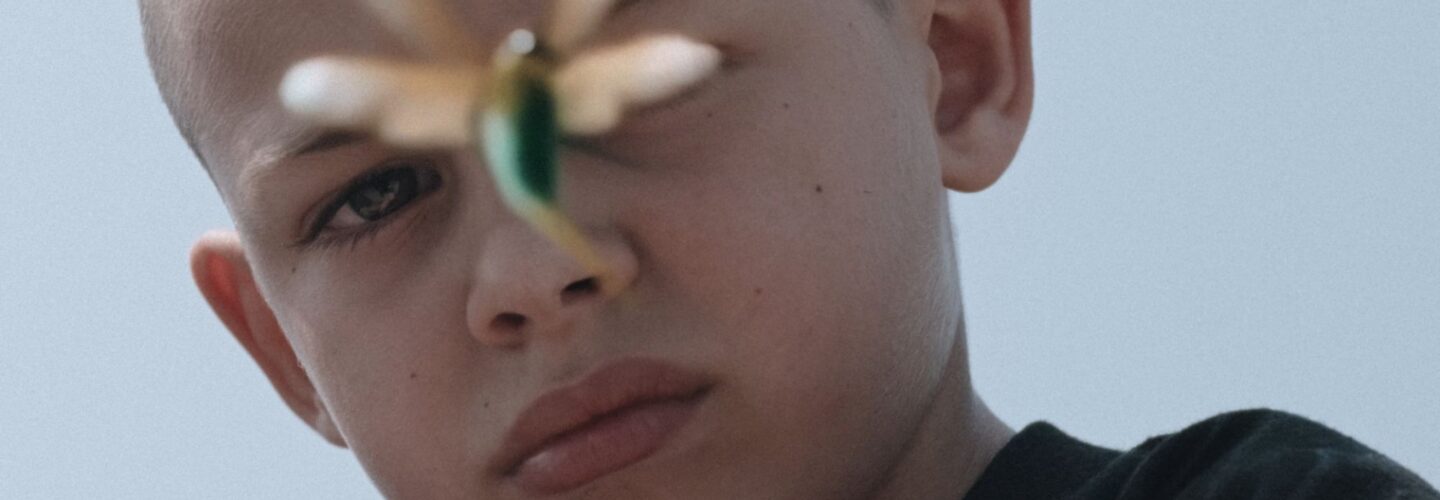

Filmmaker Luke White’s Boy Inside crafts a richly textured descent into the blurred territories between memory and embodiment, adulthood and its younger imprint. Set within the atmospheric grounds of renowned dance studio Orsolina28 and created in collaboration with choreographer Jacob Jonas and his Films.Dance project, the short frames movement not as performance but as memory unfolding, where physicality becomes both burden and release. Surreal, symbol-laden images populate the piece, including a vast meteorological balloon, a child inflating it with quiet determination, and twitching insect limbs that blur the line between human and creature. Boy Inside explores how traces of early experiences embed themselves in the body, shaping how we carry ourselves through the world. Influenced by White’s background in clowning and improvisation, its unpredictable flow favours instinct over narrative logic. The result is not merely an experimental dance film, but a corporeal fable that is abstract yet emotionally resonant. As the short lands on DN’s pages, we discuss how many of its key ideas came about during production, the body as a site for trauma and memory, and the symbolism behind its most striking motifs.
The connection between the child and the insect is established from the very first frame. What inspired you to explore this mirrored relationship?
Many of the ideas in the film, including that one, came about during production and by following impulse over logic. My motivation for the project was for the experience and to find out what it was through doing it rather than being deterministic. I had been to clown school before this, and getting on stage without a plan was exciting, so I think that fed into it. It’s funny with the insects, on location we were eaten by mosquitoes, and now they’re inside the film too. I think the initial reason for that opening shot was to borrow the wonder and curiosity children have with the world, how they’ll stop and crouch over a bug as if it’s the most pressing thing.
In the lead-up, choreographer Jacob Jonas and I kept circling back to one video of a polar bear supposedly releasing trauma by convulsing on the ground. We’re both interested in how adversity maps across the body as much as the mind, how trauma can lay stealth in the body and disrupt things later on if not let out. So with the insects, maybe it’s the exoskeleton physicality of them, how their limbs have as much say as their minds. It makes me think of Jacob’s choreography: body first, mind second.

There is a strong sense of connection between the child and the man, as if a channel between past and present is being held open. What did you want to explore through this connection?.
I like the way you put it, past and present held open is how I see it too. Maybe it’s an internal conversation. Maybe the past is holding him to account, showing a route. The man is a bit paralysed up on that plinth. It’s the boy’s job to unstick him.
I’m interested in how young children are exposed to the complexity of adult lives, the coping mechanisms they develop, and how that shapes what they come up against in adulthood.
The child/adult connection came through conversations Jacob and I had on childhood dynamics and health in adulthood. Children really are sponges, and I’m interested in how young children are exposed to the complexity of adult lives, the coping mechanisms they develop, and how that shapes what they come up against in adulthood. If it’s unacknowledged, it can develop into a dissociated, third-person mindset, or the body will find a way to express it. I wanted the child in the film to have too much responsibility for his age—controlling the industrial air compressor and running the drills.
Most Popular
The choreography evokes a strong sense of bodily materiality both through movement and the presence of multiple bodies in motion. How did you work with Jacob to use the body as a central expressive tool in the film?.
This all comes from the movement systems Jacob has developed. One moment, there are three separate people; then they are a Rubik’s cube of limbs looking for a configuration. In the film, I wanted the dancers to be physically manipulating the man out of stasis, pushing him until he pushes back.
I find dance to be pretty inaccessible for audiences generally, but Jacob’s approach keeps it active, making the eye chase an invisible ball. I think it’s because rather than going for spectacle, the dancers always seem charged with something they’re trying to solve. In the chaos of bodies folding, overlapping, and swallowing one another, you can follow the power shift around — get shared or stolen.
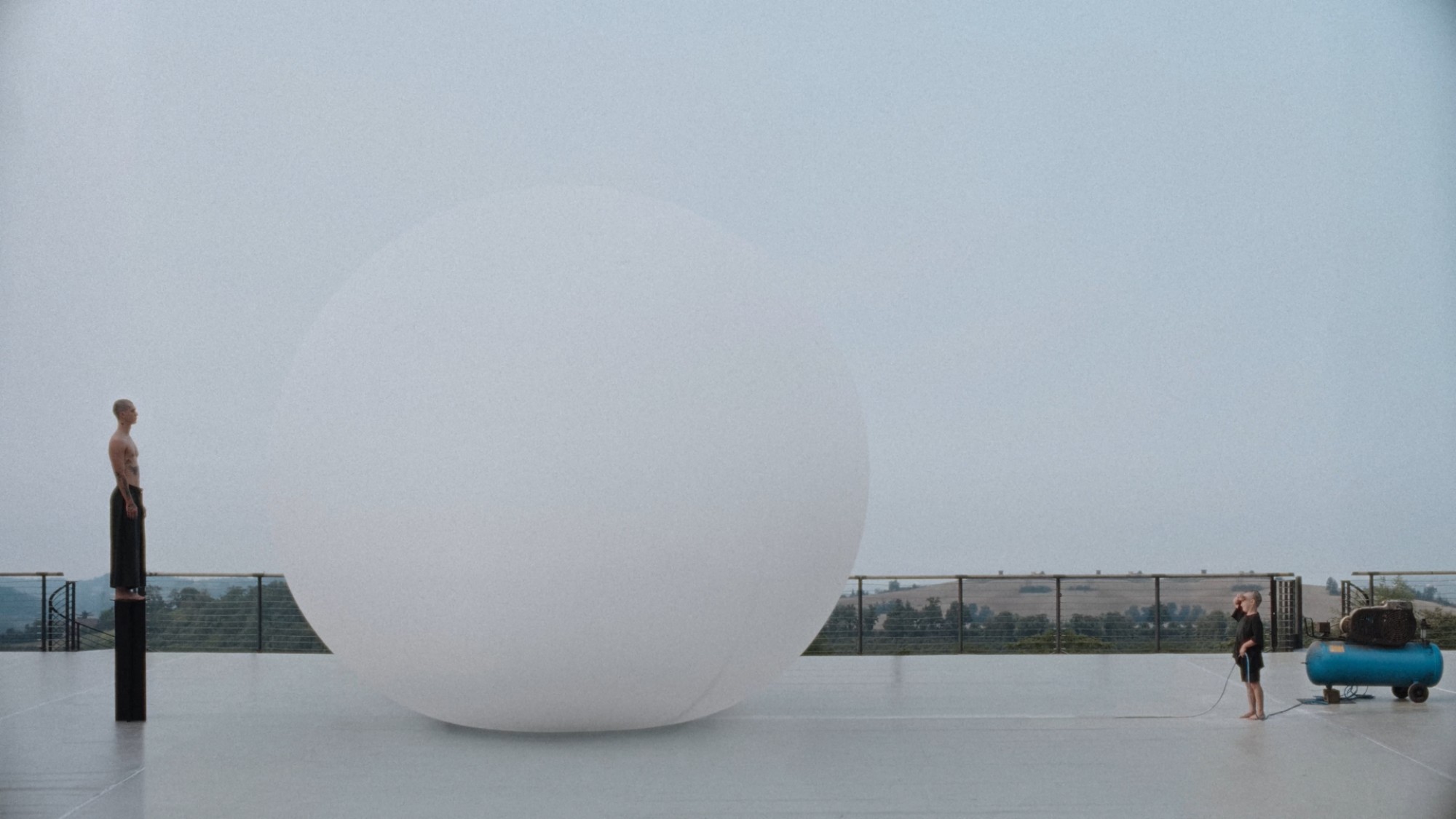
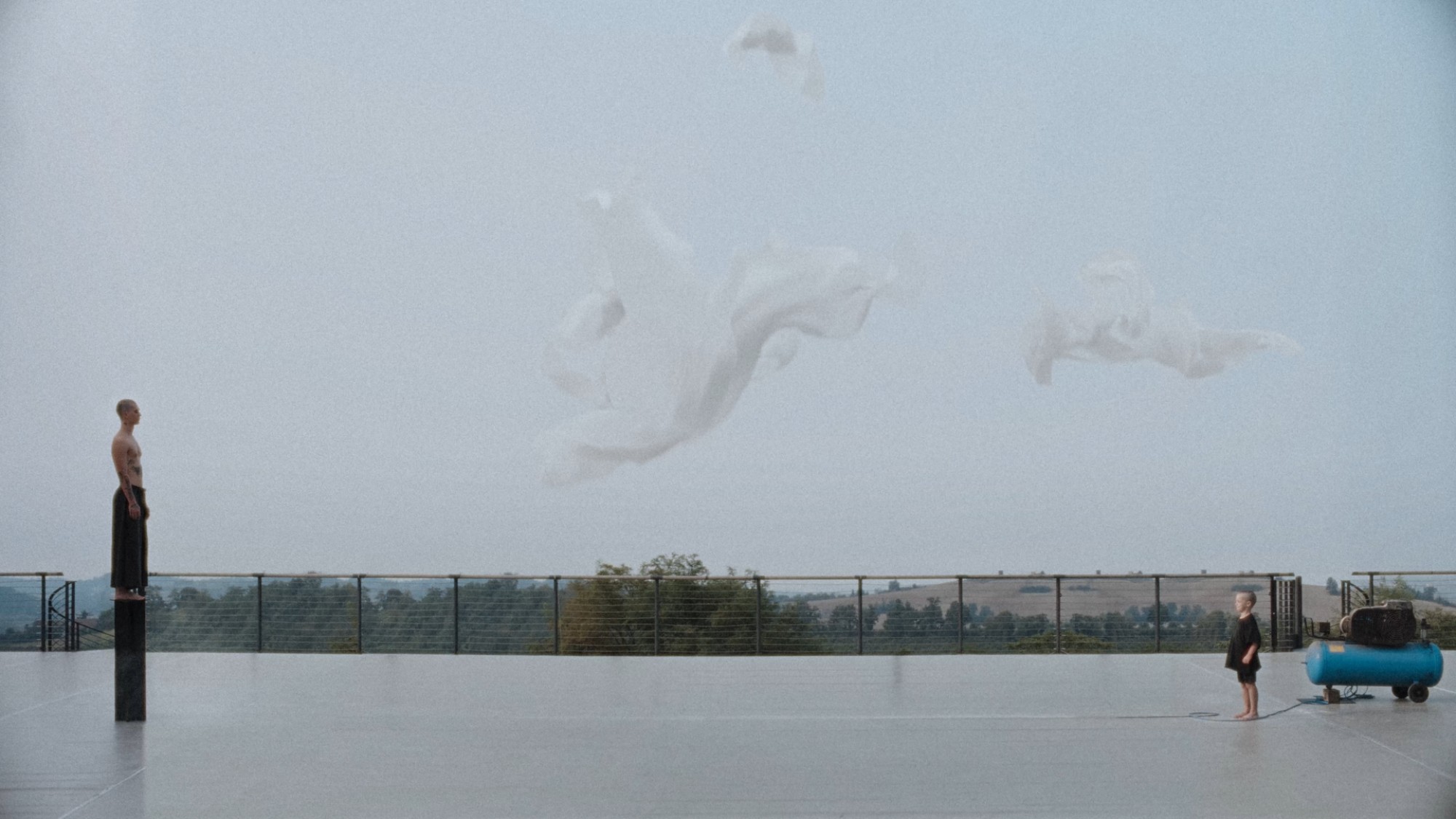

One of the most striking evocations is the meteorological balloon: inflated, fragmented, then set free. Where did this image originate, and what meaning does it carry within the film’s narrative world?.
It’s a simple device to dislodge the man, lower his defences, and get him to cross a boundary. My obsession with balloons comes from old experiments where I asked people to release air into a balloon close to their face until it burst. I wanted to see the fight between the expression people hold when they know they’re being filmed vs the one distorted by anticipation.
The falling in the film makes me think of surrender, sacrifice, restarts, and dropping control in the pursuit of change.


Inside the balloon, the falling becomes a recurring motif—bodies falling alone and together.
I love choreography with interruptions and ideas that bail mid-movement. Our minds are always filling in what’s about to happen, so it’s fun to hijack the expectation and take it elsewhere. The falling in the film makes me think of surrender, sacrifice, restarts, and dropping control in the pursuit of change. Impact and collision are across Jacob’s choreography, showing places that can’t be crossed. I recently came off my bike and hit the ground hard—not to get too masochistic, but along with the pain there was some pleasure in how real and close-up it was.
The insects create rhythmic, pulsing correspondences between different worlds. What work was undertaken post-production to bring these elements into the film’s visual language?
I used the real movement of the dancers to drive the movement of the insects, mutating and shapeshifting. At first, they served as quick transitions between live-action and underworld shots, but they quickly became more prominent. I liked the chaos of them spliced with the dancers rearranging the man, as if something was being chewed, ingested, and spat out — going from wet cockroach to iridescent dragonfly.


How did you approach the film’s shifting rhythm, and how does it connect to the narrative and imagery?.
I like a stubborn camera that fixates and refuses to follow action. There’s a bit of that at the start, but the space in the edit was led by the balloon inflation, and then things naturally get more chaotic as bodies collide. The pace was developed by the two editors, Anna Meller and Matt Nee. They were both very direct about the blind spots in the edit and found a balance between narrative and abstraction.
The shooting angle on location for the dance was tight, and we couldn’t get our balloon interior set to Italy in time. That forced alternative ways to get inside the choreography in post-production. We had some bodysuit movement data (for an idea that was dropped), so I experimented with how to get under the floor and bring an isolated figure dimension into the sequence. Along with the insects and some particle animation, by Samuel Pietri, there were lots of textures to dial up the claustrophobia.

Boy Inside was filmed at Orsolina28, a renowned Italian dance centre known for its striking terrace and surrounding hills. What was your experience working there with the dancers during production?
It’s a unique place, and I recommend it to anyone with the opportunity to go. I stayed with the DP Mathieu Brelière in a cottage right beside the shooting stage, which was lovely because we could chat through ideas in situ. We all shared meals, including the hundred ballet students studying at Orsolina. All this, along with other international artists there, made for a very good atmosphere. It also gave room to get to know Jarrett Yeary (lead) and build trust, which helped when the camera was rolling.
Moving the huge meteorological balloons around under the heavy sun without them popping was a challenge.
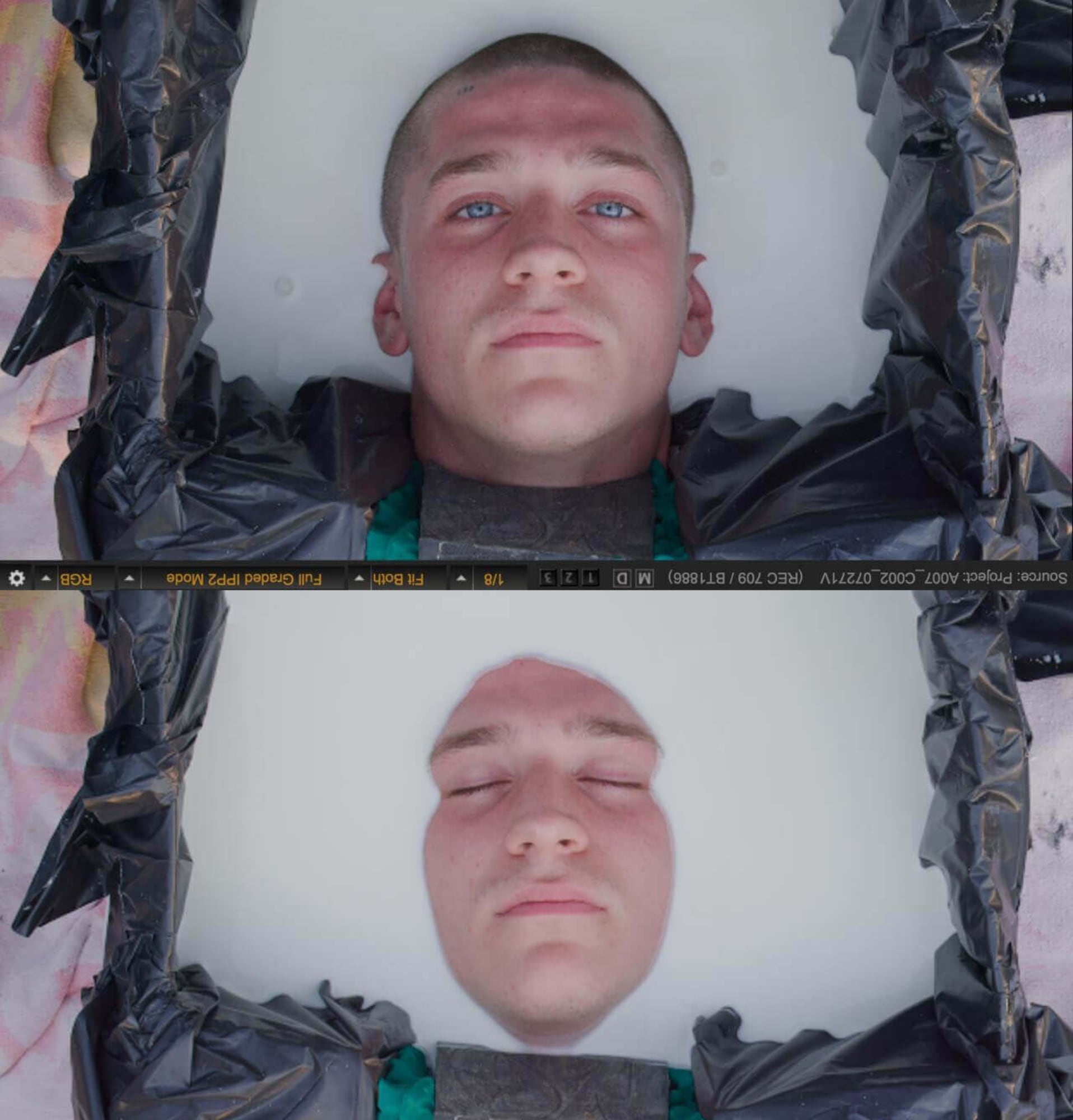
On arrival, we didn’t have anyone to play the part of the boy and had to scout on location. The boy we have in the close-ups was leaving a day before our shoot, so we did an emergency session with him on the stage, and the second boy was a local florist’s son who was brave enough to get his head shaved to match our first boy.
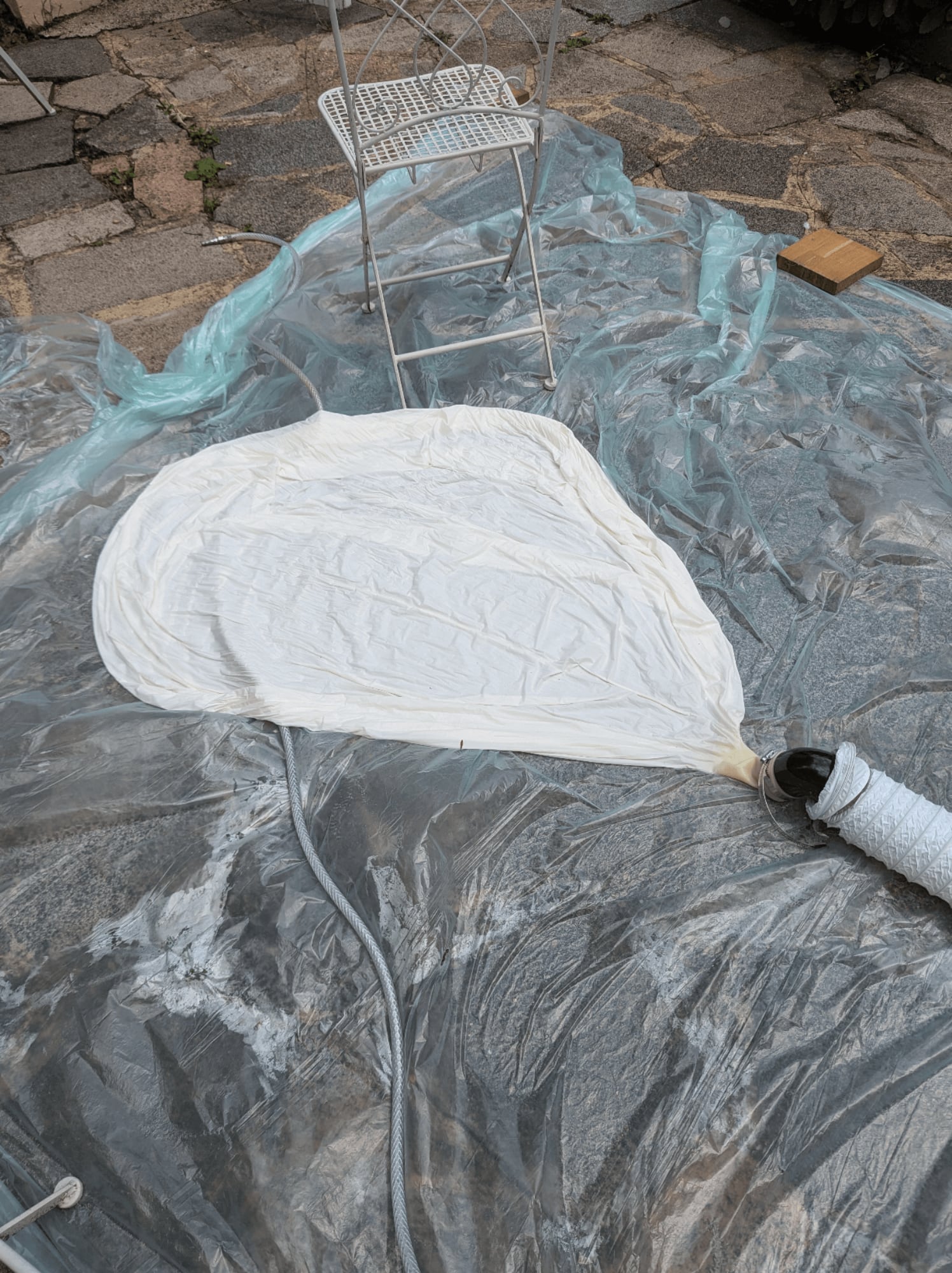
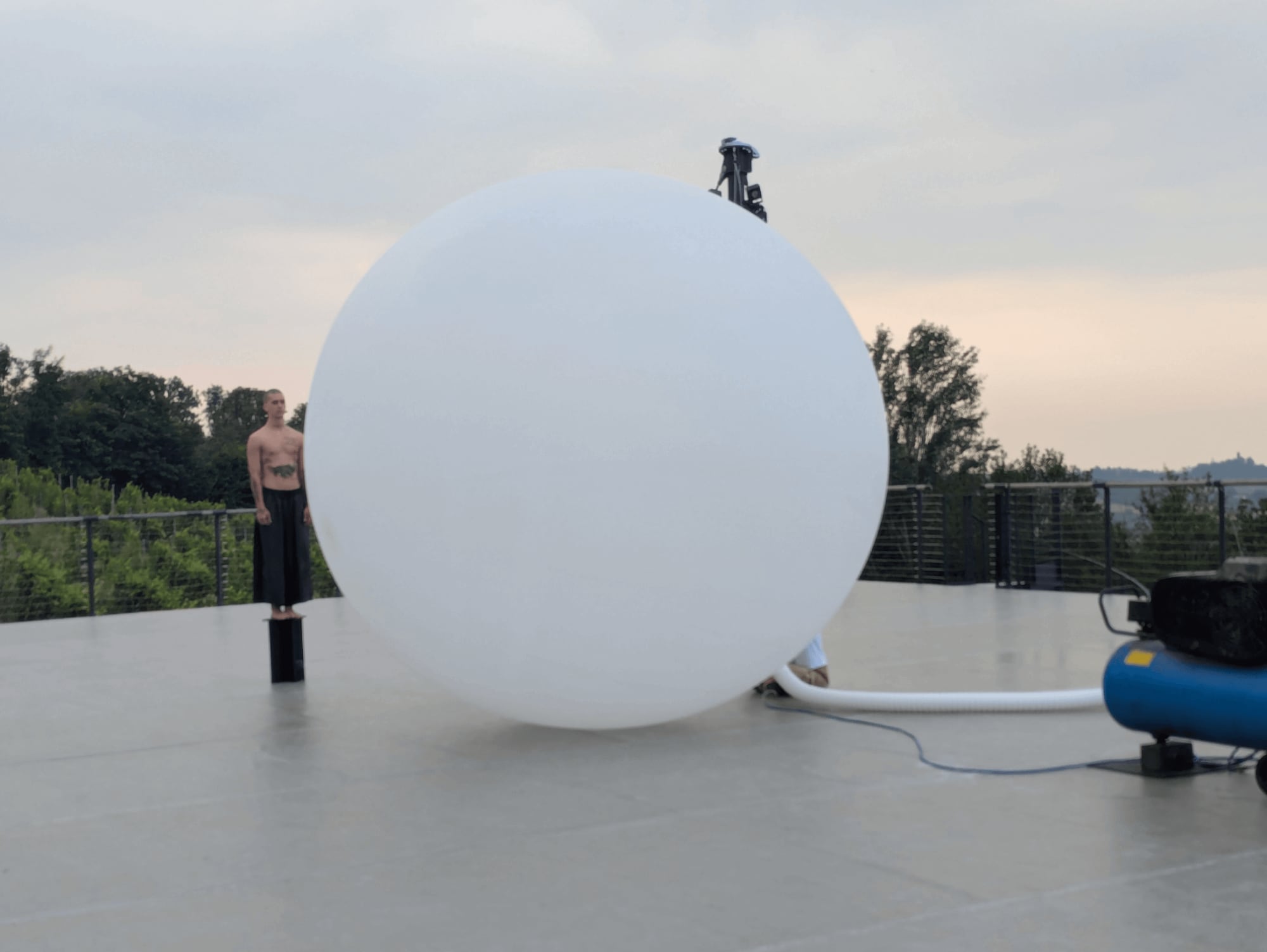
Moving the huge meteorological balloons around under the heavy sun without them popping was a challenge. We did get an explosion on film, but in post. Time Based Arts helped recreate one we could finesse. It was a bit chaotic to film this with a crew of four (plus help from Jacob’s team), but everyone did multiple roles, and I think we all took something special from it.
The sound is immersive and feels deeply woven into the fabric of the film.
The sound design is by a long-time friend and collaborator, Shervin Shaeri from Mutant Jukebox. We spoke about ways to build anticipation and bring out the insect texture—Shervin took it from there. His approach is about process first, which is valuable because it’s always going to be unique and deeply woven, as you say. He pulls from different areas all at once, working both in sound and score.
With the images of Boy Inside still fresh in our minds, can you share something about your upcoming film projects?.
A film about a courier working between heaven and hell, based in New York. Other than that, I want to put a lot more time into painting.