
In his celebrated master’s film, Lebanese filmmaker Firas Itani transforms a single evening in Beirut into a quietly devastating portrait of servitude and systemic erasure. Lower Ground (لطابق السفلي) follows Samir, a Syrian concierge caring for his young nephew while his brother remains missing, as he attempts the simple act of making dinner—an effort repeatedly derailed by the trivial demands of residents living above him. What distinguishes Itani’s approach is his commitment to restrained, empathetic realism, where every formal choice is precisely calibrated to articulate the invisible weight of class and labour. Built on a series of unflinching long takes, the film denies viewers any relief from mounting tension, forcing us to inhabit Samir’s relentless cycle in real time. The camera itself becomes a tool of hierarchy: static and observational in the warmth of the upstairs apartment, it shifts to handheld fluidity in Samir’s fluorescent-lit basement, yet consistently favours back shots and profiles, visually encoding his shame and invisibility. Itani’s commitment to diegetic sound is equally potent—the relentless buzz of the intercom, muffled laughter from above, and the ambient honk and pulse of Beirut at night build a soundscape that refuses to tell us how to feel. By forgoing a musical score, he creates space for sober, observational empathy. Lower Ground is not melodrama but a sustained, rhythmic observation of a systemic paradox: the labour required for sustenance systematically erodes the very connections it seeks to preserve. Premiering on Directors Notes today, we speak with Itani about the logistical puzzle of constructing a single, oppressive building from three disparate Beirut locations, casting ten-year-old Mohamad Al Mohamad—a non-professional actor whose life mirrored his character’s—and how shooting in the sweltering heat of July 2022 amid constant power cuts became inseparable from the film’s atmosphere of struggle.
What drew you to this setting and the specific power dynamics at play in Lower Ground as a way to explore alienation and class?
The seed of the story began with a simple, absurd loop: a concierge endlessly mopping the entrance of a building, only for residents to keep crossing and leaving footprints. That image captured something fundamental for me: the futility of certain routines, the quiet desperation of work that goes unseen, and the alienation that comes from being trapped in a role defined by service to others. It’s a feeling almost everyone recognises at some point. Samir is someone who has lost all agency. He is at the mercy of the residents. The stakes of losing his job mean losing his sustenance and that of his nephew, while also being at the mercy of Khaled, who needs his uncle not only for dinner but also emotionally as a parental figure.
From there, I wanted to expand the story, give it texture and life, and ground it in a place I know intimately: Beirut. The city itself became a character, and the concierge, Samir, became the lens through which I could explore it. In Lebanon, these building caretakers are central to the daily rhythm of life. Yet, they are often invisible, overworked, and at the mercy of residents who treat them like personal assistants. I remembered countless small stories, the ridiculous requests, the demands, the entitlement, and I wanted to bring that reality to the screen. While staying true to the original loop, I layered in narrative and emotional depth. Samir’s desire to make a simple dinner for his nephew became a small, human anchor amidst the chaos of his work. Through his eyes, we experience the absurdity, the grind, and the subtle heartbreak of being trapped in a system that values productivity over connection.
Visually and emotionally, I wanted the film to reflect the rhythm of Beirut in the evening: the sounds of life around Samir, the traffic, the power cuts, Khaled’s demands for dinner. My aim is for the audience to see these systemic pressures not as a story of victimhood, but as a reflection of the paradoxes that exist in many lives. Samir works to sustain himself and his nephew, but the demands of labour take him away from truly connecting with him, leaving gaps where care and emotional presence should be. I wanted viewers to feel Samir’s world not just as a series of tasks, but as a space of real human struggle, dignity, and longing.


How did Samir’s basement room and Joseline’s apartment above become active symbols in the film?
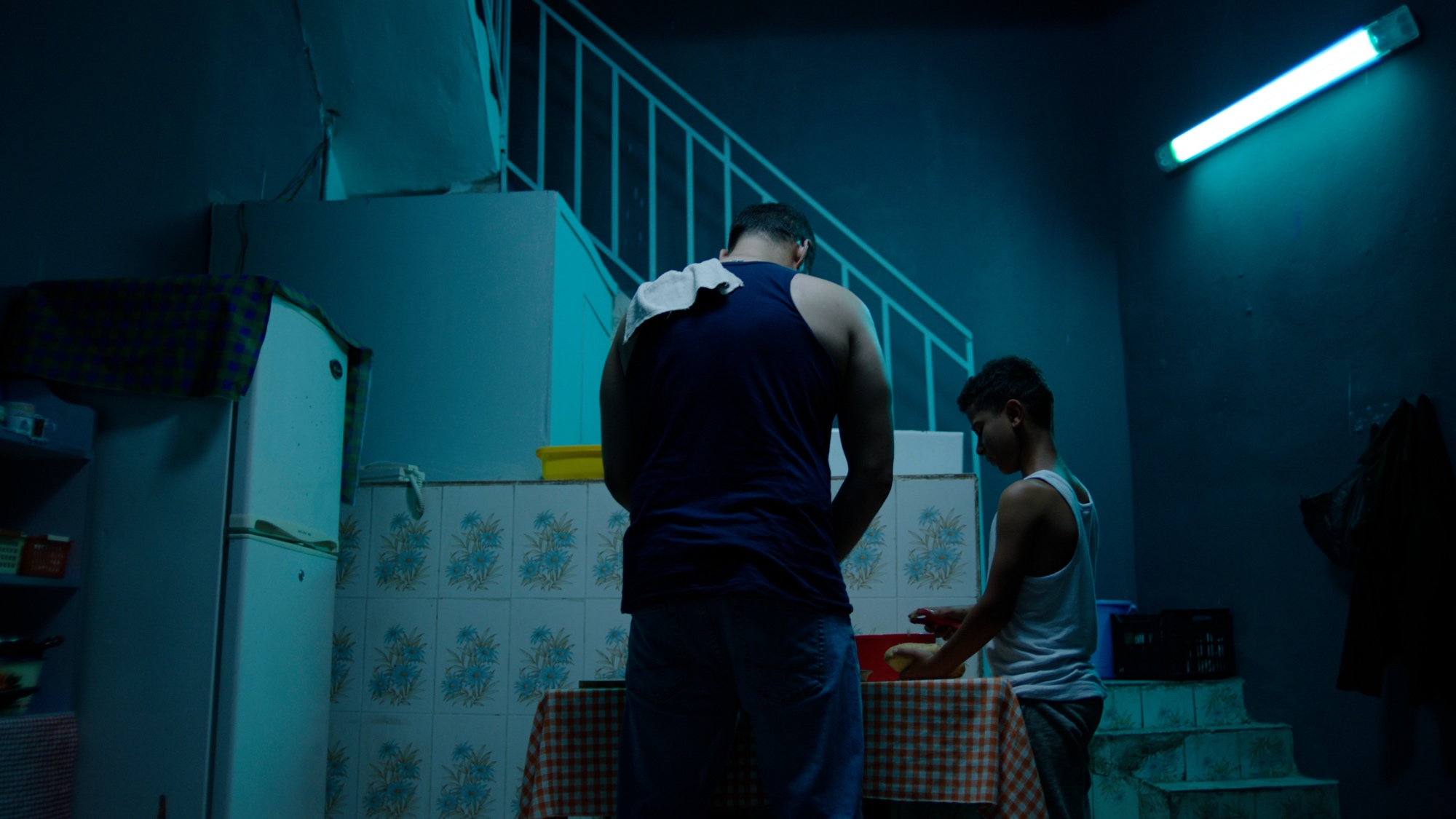
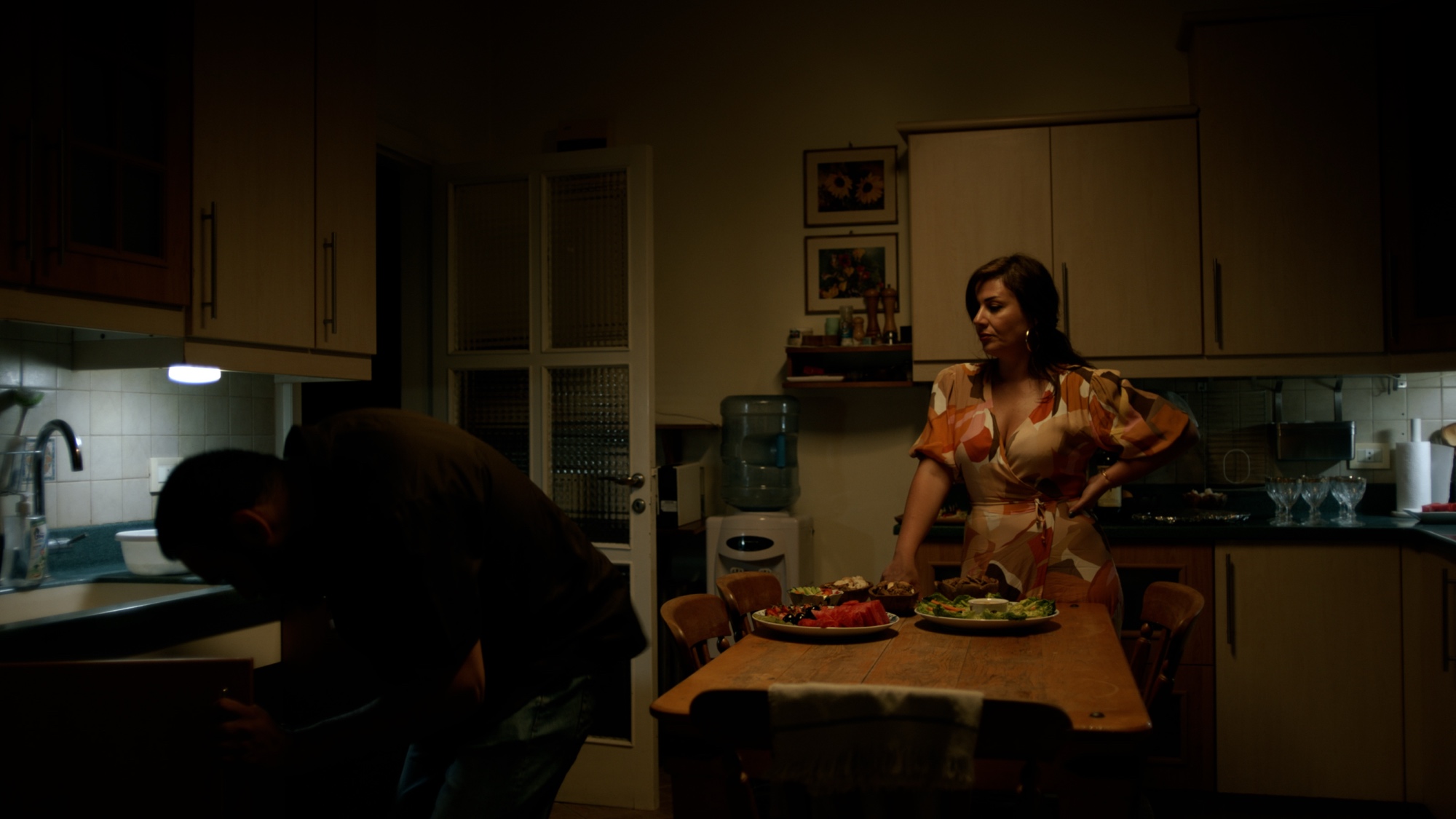
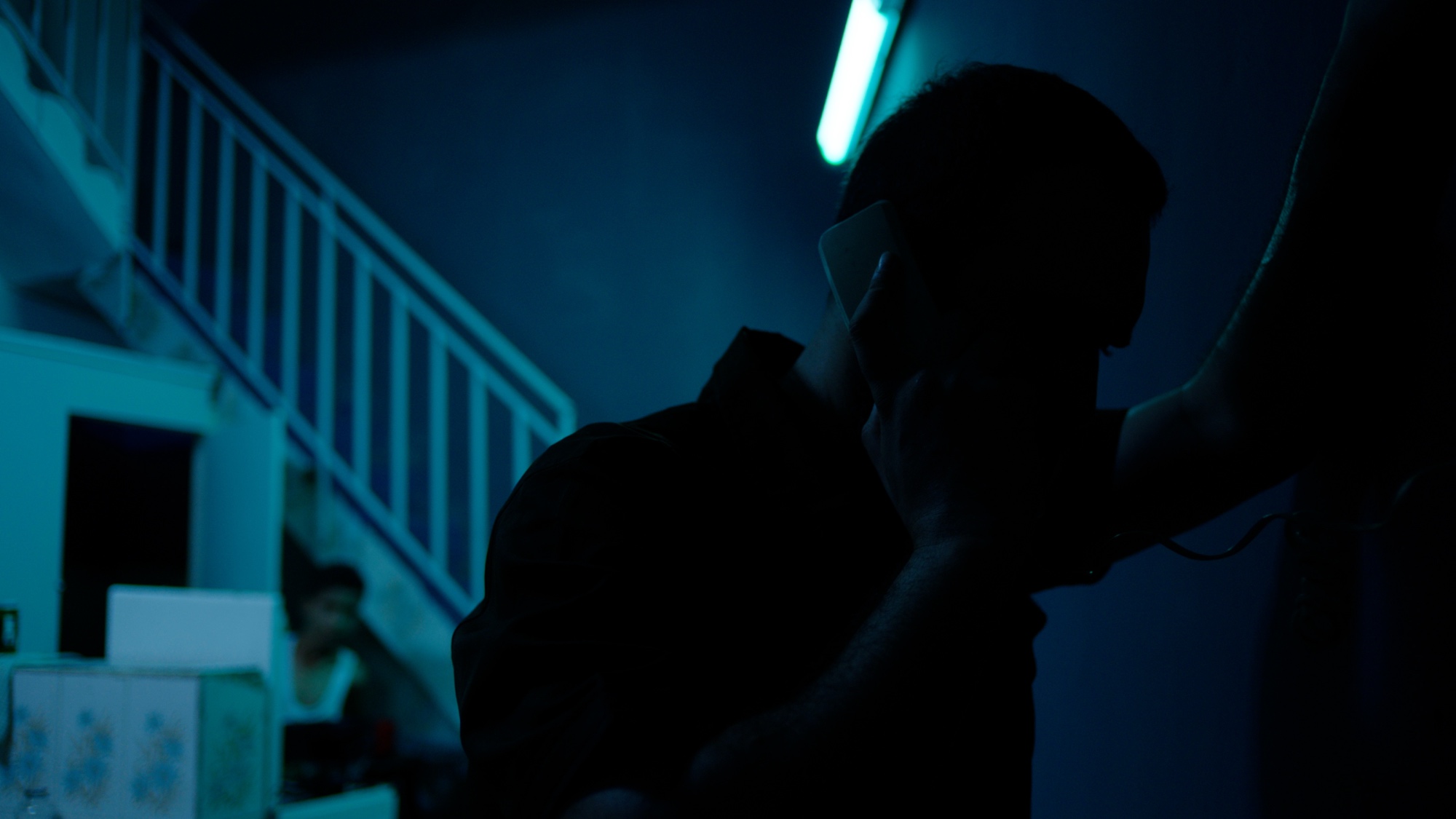
The basement room is Samir’s home. While modest and small, it’s still a place where he feels most comfortable; no one else is around except his nephew, whom he loves. It’s his home, and the camera work reflects that. It’s handheld and flows with his movements around the house. We wanted a contrast in colour between upstairs and downstairs: while warmth upstairs signifies comfort, safety, and abundance, the muted blue tones signify scarcity, hiddenness, and the invisibility of Samir. The white, fluorescent light, favouring functionality over comfort, emphasising bareness, the bare necessities, as it mirrors his own bareness there.
Through his eyes, we experience the absurdity, the grind, and the subtle heartbreak of being trapped in a system that values productivity over connection.
The lack of natural light emphasises the invisibility and the exclusion of Sami. The stairs in the room appear in the frame as a backdrop in the master shot, spatially representing the class divide. When we were looking for Samir’s home, we looked at many different options, even considered filming in actual concierges’ rooms/homes, to maintain the reality as much as possible, only to stumble upon this abandoned, unused store while we were walking in a neighbourhood in Beirut. We looked at it and jokingly, someone said this. Imagine this was his home. I was really struck by that. It was perfect for having those stairs in the background, those beautifully flower-printed tiles that screamed home and gave it charm. We imagined together what it would be like to actually transform this space into his house.
Upstairs, the camera is still, reflecting Samir on his best behaviour. The static framing signifies the work environment, or the rigid structure Samir must adhere to when attending to Joseline’s demands. Furthermore, the camera favours Joseline: it follows her movements, pans with her as she serves guests, moving in and out of the kitchen and living room. In these moments, Samir is only seen when Joseline is with him, emphasising his loss of agency.
Most Popular
In what other ways did you visually articulate this class divide?
In general, I didn’t shy away from back shots and avoided close-ups. I never intended the film to be an emotional piece, but rather a more realistic portrayal of a usual evening in this man’s life. Samir appears in many back shots, reflecting the shame he feels in having to compromise his nephew’s dinner to attend to his job. Samir shies away from the camera; he constantly moves away from the camera, appears in profiles/back shots and rarely faces until the very end, where he runs towards Khaled. Ultimately, the camera work reflects his inner turmoil. While upstairs, it focuses on Joseline, leaving Samir out.
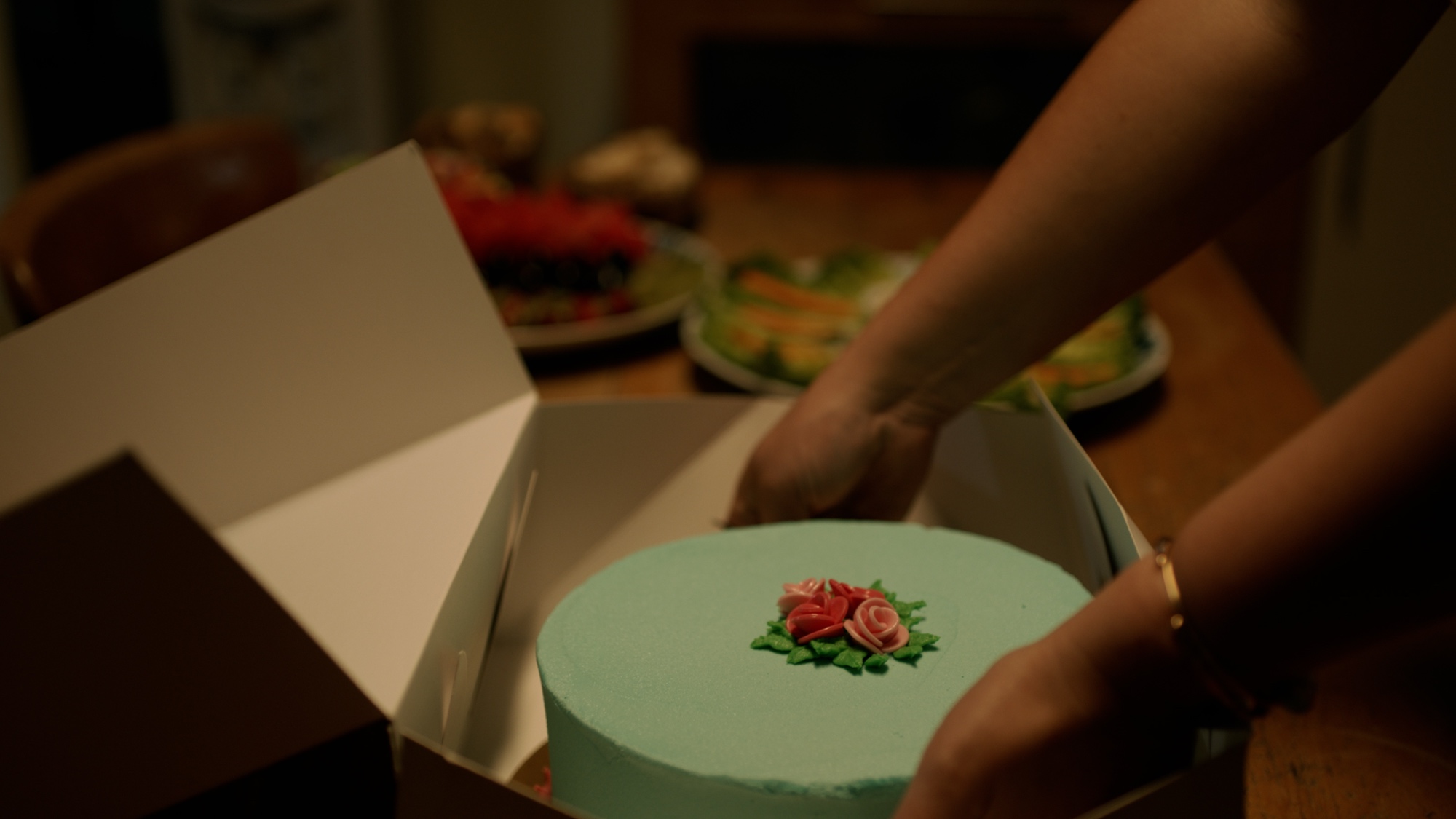
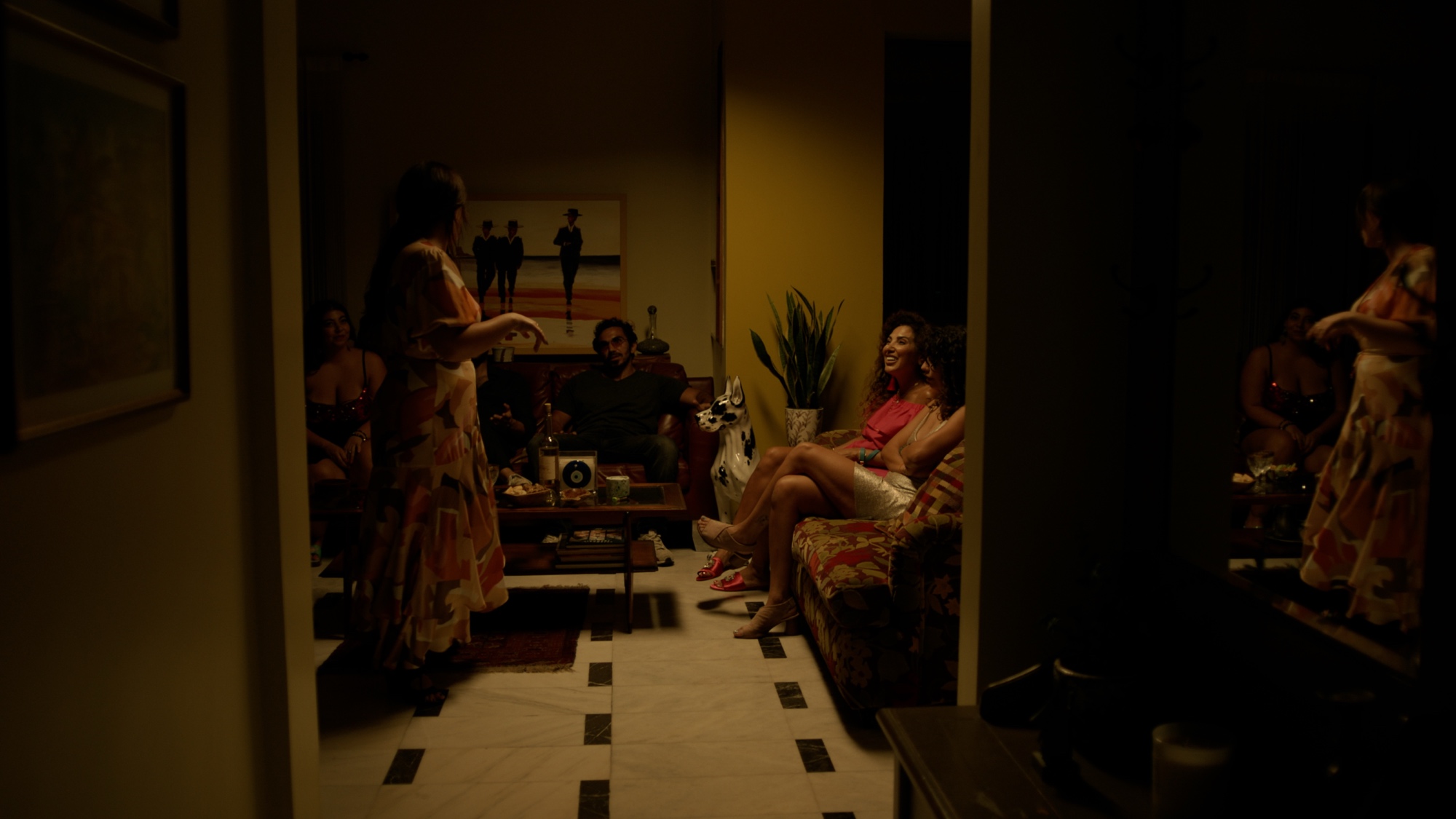
I love the mirroring between upstairs and downstairs. Joseline prepares a luxury cake for her evening, while downstairs there’s the quiet desperation of the cupcake. Can you tell us more about drawing those differences in their situations?
The cake upstairs, Joseline’s cake, signifies her obsession and fixation, as well as her compulsion to please and cater to her guests. It’s telling that it’s one of the only close-ups in the film; the camera lingers on it because it’s an extension of her emotional state. Meanwhile, downstairs, we have this modest little cupcake. It reflects Khaled’s fragility, but also his quiet rebellion against the system he’s trapped in. The mismatch between the two desserts magnifies the power imbalance, the emotional tension, and the social divide that the film is trying to expose.
The film is built on long takes that force the audience to sit with the tension. Can you talk about the specific intention behind this choice and the practicality of filming those?
The decision to build the film on long takes was rooted in wanting the audience to experience the moment exactly as Samir does, to feel his breath, his movements, and the constant tension he carries. A long take doesn’t let you escape; it denies you the relief that a cut usually provides. For Samir, there is no break, no release, so I didn’t want to offer one to the audience either. That meant thinking very intentionally about how each shot evolves to carry out the desired emotional rhythm. The long takes also amplify the discomfort; they make the audience feel as if they’re intruding on Samir’s private crisis, forced to sit in that unease with him. That sense of proximity and tension was essential to the film’s emotional truth.
A long take doesn’t let you escape; it denies you the relief that a cut usually provides. For Samir, there is no break, no release, so I didn’t want to offer one to the audience either.
Practically, this required impeccable performances. We rehearsed extensively, almost like preparing a theatre piece. Authenticity was everything, and my process involved having the actors improvise the scenes in their own natural rhythms. Only after those improvisations would I rewrite the dialogue, so it felt lived-in rather than constructed.


The performances do feel incredibly authentic. How did you ensure you found the right actors to stick true to your desire for realism?
Hassan Aqqoul, who plays Samir, is Syrian, and that was incredibly important to the authenticity of the film. Our rehearsals often blurred into conversations about work, displacement, and family. These weren’t just acting exercises—they were genuine exchanges that informed his performance. Hassan brought his own understanding of what it means to navigate life as a Syrian worker in Lebanon, and that lived experience is woven into every frame.
Mohamad Al Mohamad’s story is quite extraordinary. He was discovered by chance at a local skate park—the story of how we met still makes me laugh. He was ten years old at the time and worked at a barber shop instead of going to school. His own life mirrored aspects of the characters in ways that were both heartbreaking and illuminating and that authenticity grounded the film in a way no amount of direction could have achieved. He wasn’t performing vulnerability or need—he understood it intimately. Working with him required sensitivity, but it also gave the film an emotional honesty that I’m deeply grateful for.
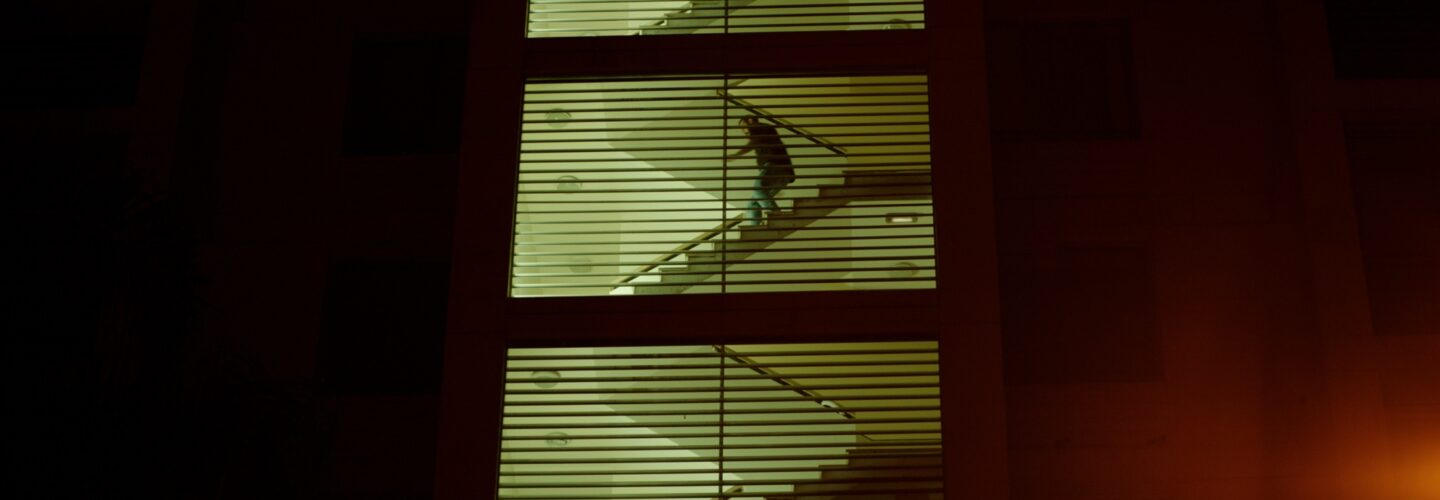
There are these brilliant moments where we see the staircase from outside, with Samir running up and down. What did these breaks in the story mean to you?
Funnily enough, even though the idea of setting the film in one estate was meant to simplify production and reduce company moves, we actually ended up with three different physical locations: the staircase was somewhere, the upstairs flat was somewhere else, and the lower-ground room was in a third place. But we always knew we wanted that staircase shot. It was the one moment where the class divide could become spatial, literally embodied on screen.
Seeing Samir running up and down those stairs allowed us to zoom out just enough to look at his world from a slightly more macro perspective while still keeping him present in the frame. These breaks in the story were important to me; they hold a kind of Sisyphean quality, that endless repetition, the labour of going up and down, up and down. It’s a rhythm of struggle. This particular location worked because it gave us the chance to momentarily pull back, to let the audience breathe and reflect, while still maintaining visibility of Samir. It’s a pause, but not an escape, a brief widening of the lens without ever letting him out of sight.


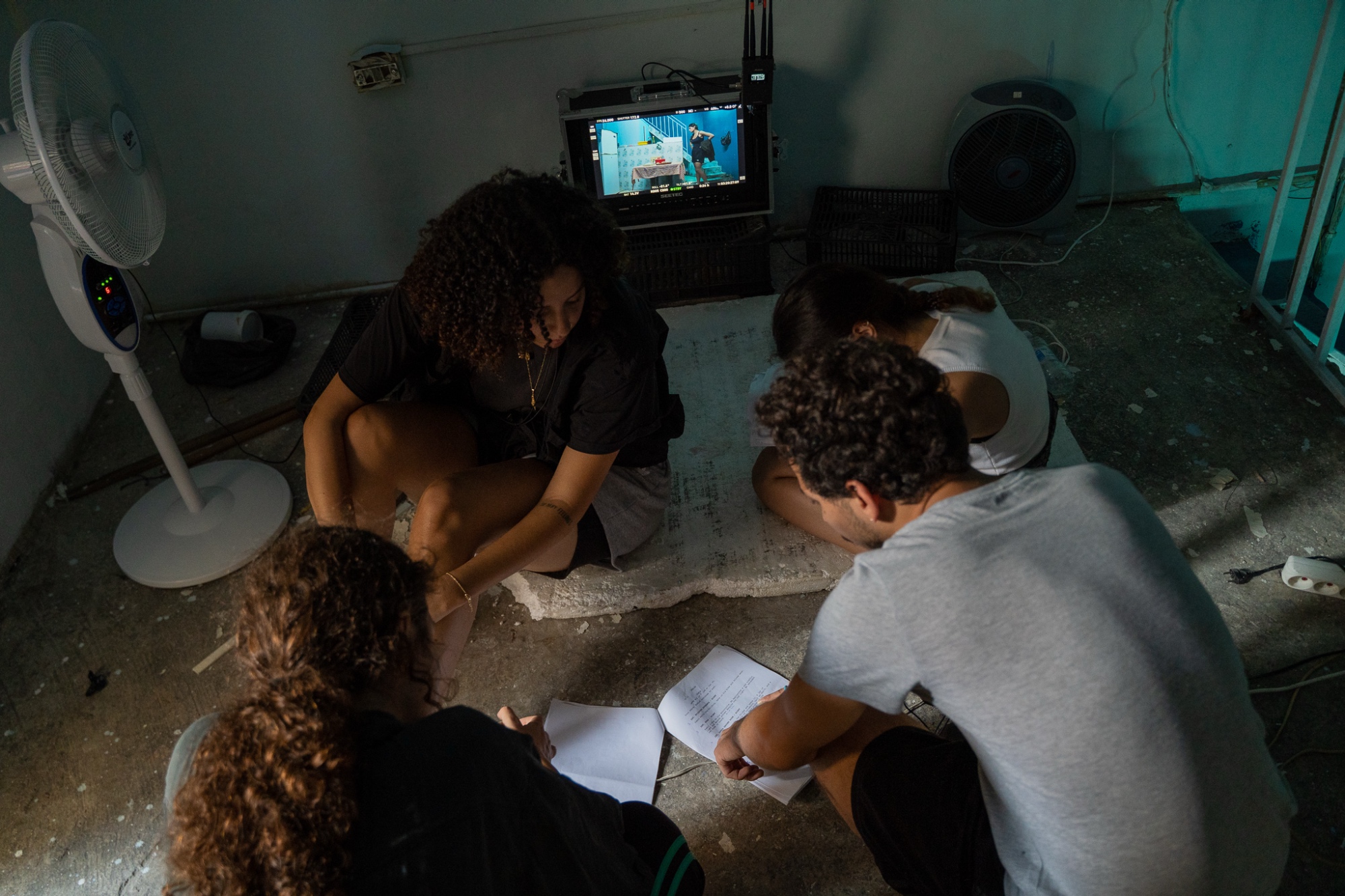

What were the practical realities of the shoot?
We shot the entire film over two long days on an Arri Alexa, in the heat of Beirut in July 2022. It was physically demanding for everyone involved. We had constant power cuts and no air conditioning, which meant every scene had to be meticulously planned around the city’s unpredictable electricity schedule. You’d be in the middle of setting up a shot and suddenly everything would go dark. It became part of our rhythm—waiting, adapting, pushing through. But in a strange way, those conditions fed into the film’s authenticity. The heat, the exhaustion, the sense of working against the infrastructure itself—it all mirrored what Samir experiences daily. The crew felt it, the actors felt it, and I think that collective experience of struggling against the environment shows up in the final film.
I love building a film’s soundscape from the world itself — from its textures, its breath, its lived noise.
The decision to use only diegetic sound is a powerful one. It makes the buzz of the intercom, the sounds from upstairs, and the ambient noise of Beirut inescapable for Samir (and the audience).
In general, as a filmmaker, I’ve always worked with diegetic sound. It fits naturally with my style, which leans toward realism. I love building a film’s soundscape from the world itself — from its textures, its breath, its lived noise. Beirut is incredibly rich sonically; it gives you so much to work with. Upstairs, Joseline listens to old French songs that subtly echo Beirut’s colonial past. Downstairs, we hear the TV, whatever Khaled is watching. Outside, the honking, the traffic, the constant pulse of the city. It was my way of keeping Beirut alive in the film — allowing her to seep into every frame.
I avoid musical scores because I don’t like telling the audience how to feel. The film walks a fine line: it’s not melodrama, and it’s not tragedy. It’s simply a day in someone’s life. Using a score felt like it would impose an emotional reading on the audience. By leaving music out, I’m giving them more space — more freedom to interpret, to feel whatever they find themselves feeling. The absence of a score becomes an invitation for a more honest, personal response. This approach carried through every aspect of the filmmaking. I didn’t want to prescribe emotion for the audience or create a tear-jerking piece, it would have been very easy to fall into melodrama, and that was never my intention. What I wanted was for the audience to soberly observe the systemic paradox the protagonist faces, and to recognise elements of it in their own lives and in the lives of the people they love.
Every movement was treated as a beat within an inner rhythm. It was important to find how the film breathed and allow it to take its time rather than rushing it.
Lower Ground has a distinct rhythm built on task and interruption—the cooking of the eggs, the cleaning of the floor, all punctuated by the demands from above. How did you edit these sequences to create the Sisyphean feeling you mentioned without making it feel overly repetitive for the viewer?
For me it really felt like conducting; rhythm was everything. Of course, having a great sound designer helped, but so much of it came from instinct while directing. I was constantly tuning into the natural rhythm of things: how long the intercom buzz should last, when the interruption should land, how Samir turns on the stove or moves around the house. Every movement was treated as a beat within an inner rhythm. It was important to find how the film breathed and allow it to take its time rather than rushing it. It’s almost like building a music track: repetition with tiny shifts that keep it alive.
In the edit, I followed that same feeling. The Sisyphean quality comes from the repetition, but I didn’t want it to become dull, so I trusted those small changes in timing and energy. I was following my inner rhythm the whole way through, letting it guide how the tasks and interruptions collide. The actions repeat, but Samir’s internal build-up shifts with every intercom buzz.
I would love to know what you are working on now and how filmmaking is treating you.
Right now, I’m co-writing and producing another short film, also centred on the alienation of our modern world, but this time with a more playful approach to storytelling and a touch of magic added to my usual realism. This film will be set in London, which is exciting as it’s where I’ve been living for the past few years. We’re currently in the writing phase and moving into pre-production in early spring while we secure funding. Themes of disconnection and alienation continue to be central to my work and something I’m still exploring.