With storytelling playing such an important role in human culture – from helping us understand the world around us to serving as a way of passing knowledge from one generation to the next – I’m always fascinated by the kinds of narratives filmmakers choose to bring to the screen. Short film directors, in particular, often approach storytelling with a sense of experimentation that feels refreshing. At this stage in their careers there’s usually a bit more freedom and less pressure, which can encourage some bold ideas.
For animator Louis Morton, the driving force behind his work appears to be a growing concern with climate change and the long shadow it casts over both the present and the future. In his earlier short Floreana, he imagined what he described as a “Bleak, post-apocalyptic climate crisis-influenced future world,” using his film to explore a speculative universe ravaged by environmental collapse. Now, with his latest film Mine!, premiering on DN today, Morton shifts both the setting and the historical perspective, transporting viewers to a 20th-century coal mine. From deep underground, the film gradually reveals how a discovery made in the darkness could have consequences that echo far beyond its time – linking past industrial activity with the environmental realities we’re grappling with today. Curious to dig further into the recurring themes running through his work, and to learn more about how he approached crafting a story set in such a confined and shadowy environment, we invited Morton to join us to talk about his SXSW short.
As this is your first time on Directors Notes, Louis, let’s introduce your filmmaking to our audience a little. How did you get into animation and how would you describe your visual approach? Are there any recognisable traits in your work?
Thanks for having me here! While I’ve always wanted to be an animator, I didn’t seriously get into it until I was in my early 20s. I had a graphic design internship at a place called Free Range Studios, creators of some early viral YouTube animations. I was able to learn Flash on the job, which made animation feel much more reachable to me, and I just kept at it from there.
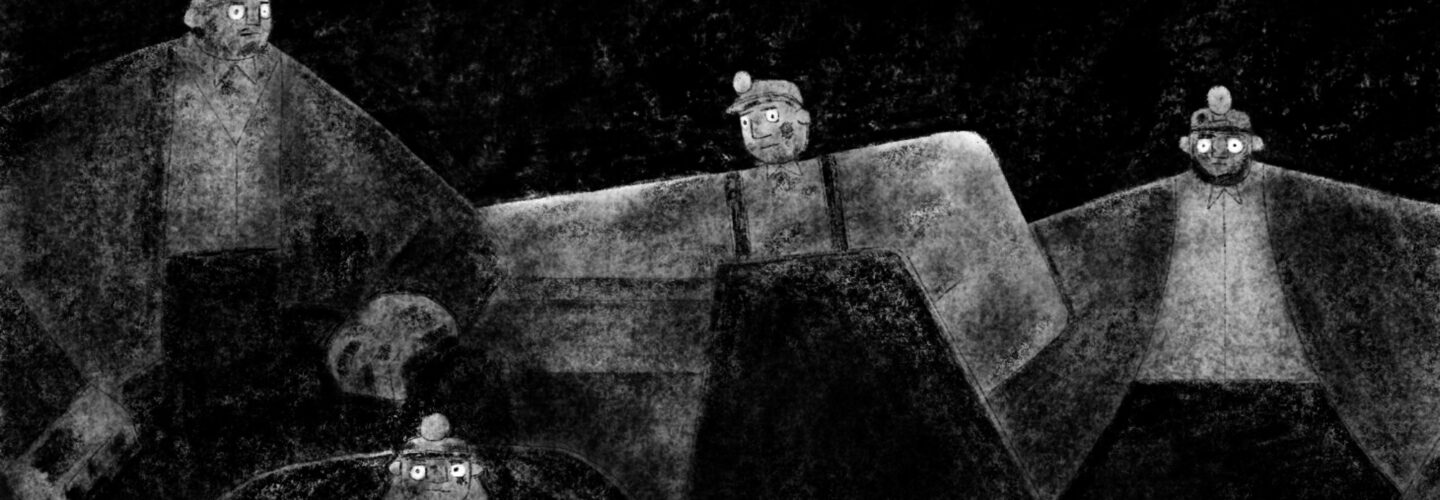
I use simplified graphic characters and fluid hand-drawn transitions in most of my work.
As far as visual approach, while I do have a style of drawing, I try to adapt the overall design of each project to best communicate its story and themes. But all my work is heavily inspired by visual music and city symphony films. I use simplified graphic characters and fluid hand-drawn transitions in most of my work.
Your previous short film, Floreana, transported viewers to a future world, while Mine! takes us back to the early 20th century. What is it that compels you to tell these stories in different time periods and what do you think they say about the present day?
In the case of each of these films, the idea came first, and the time period followed. Both films take different angles of looking at climate change, which is such a broad and overwhelming topic that it goes both forwards and backwards in time. Maybe a common theme that connects to the present is that while the devastating effects of climate change rage, the industrial systems that caused it keep chugging along. I don’t know if I’m trying to make any profound statements though, it’s more just my own small way of grappling with thinking about these ideas.
Mine! is a film about a discovery that will change the world and while I’m sure similar storylines have been told in films before, it strikes me as a very unique short. With that in mind, I’m eager to know about the development of the storyline – how did it originate and what different forms did it take along the way?
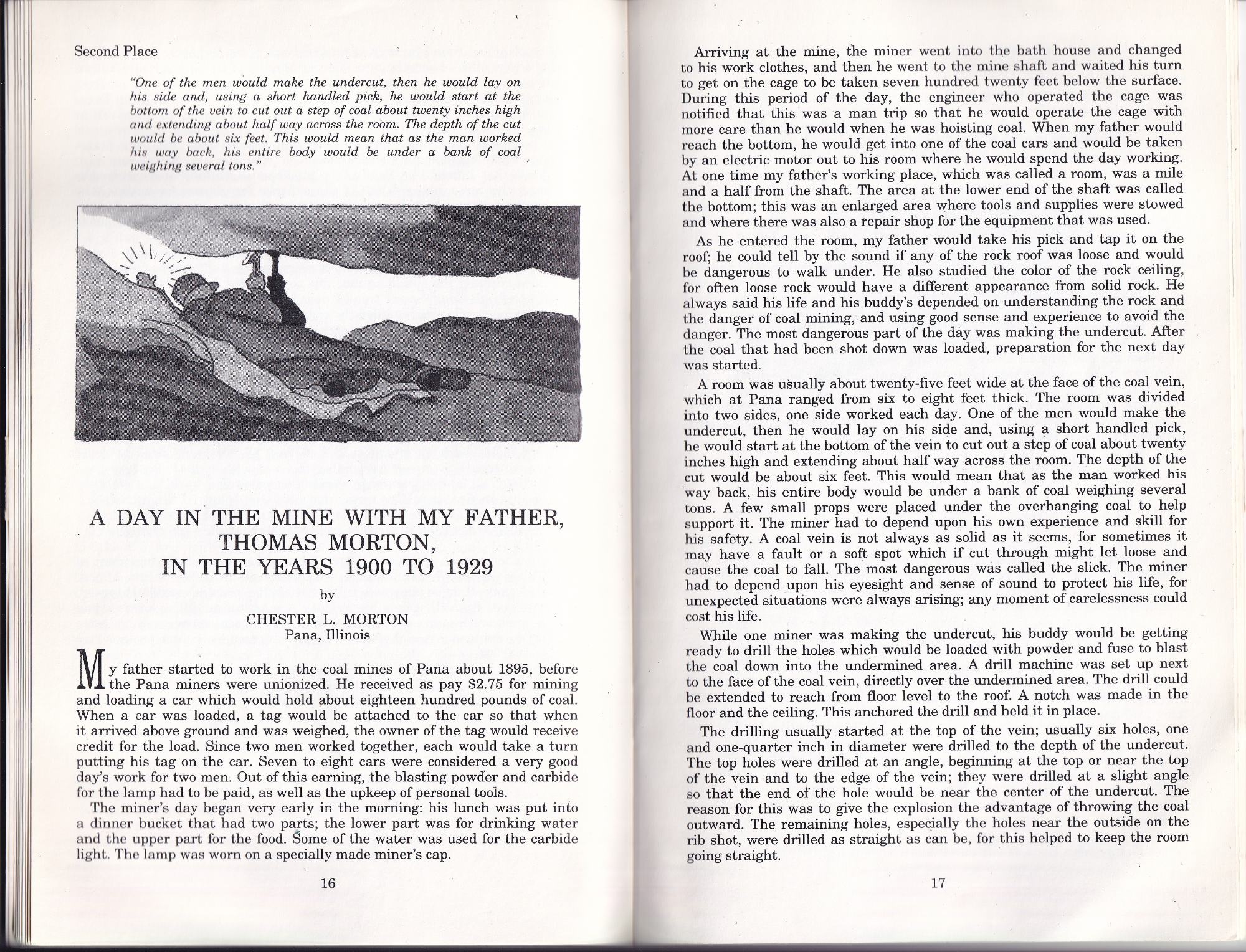
The original idea came from a short story my great-grandpa had written about his dad, who worked in an Illinois coal mine. He describes the tedious details and dangerous conditions of the daily work of the miners. But at the end of the day, it was better than other jobs because the miners got to be their own bosses and had a sense of ownership over their space, which they called ‘rooms’. I was interested in this idea of ownership and the visual aesthetic of the mine. So the title is meant to have a double meaning in this way. I started boarding various scenes of coal miners working but I wasn’t sure where to take it.
Most Popular
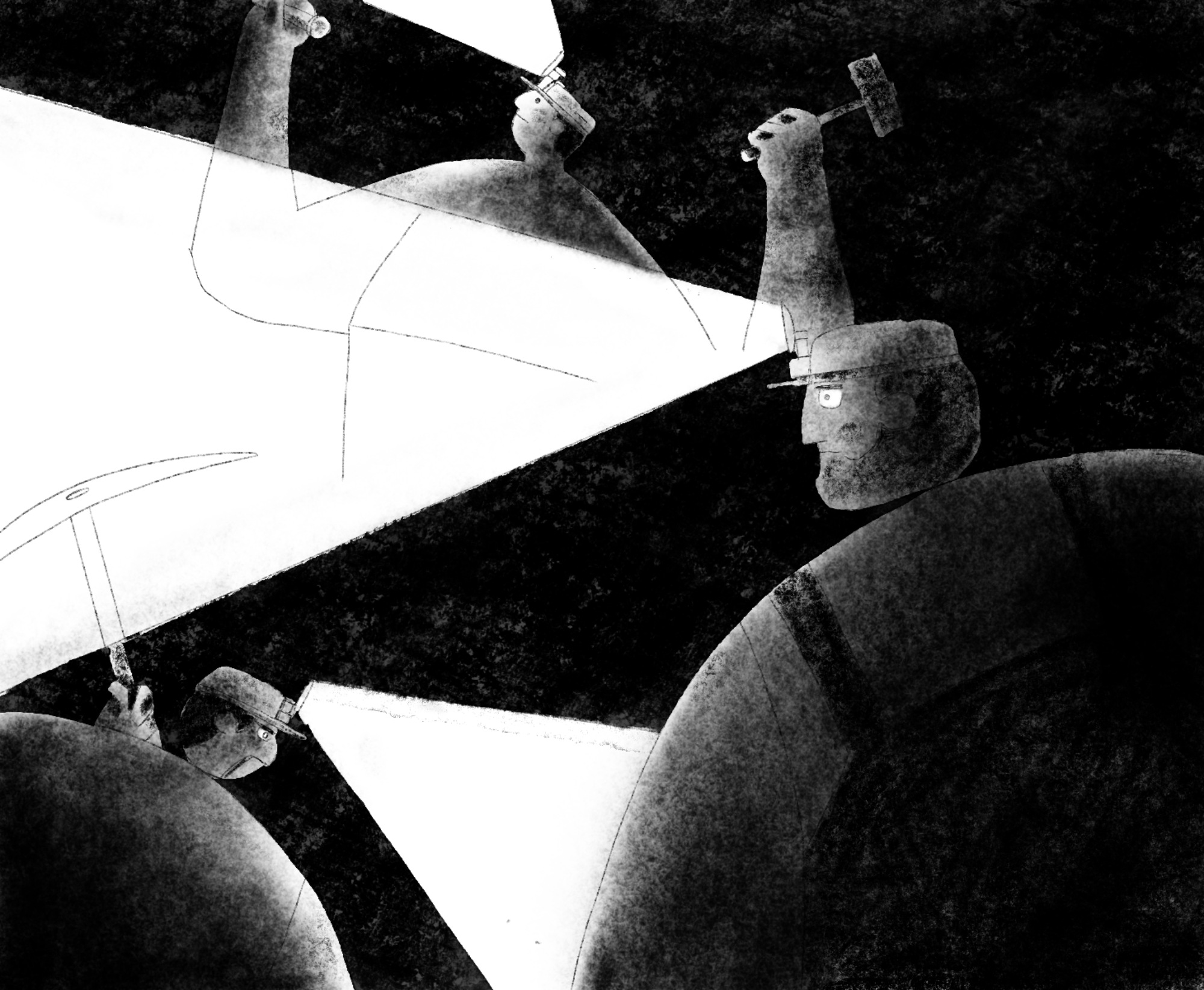
Then I read the book Coal: A Human History by Barbara Freese and there was a section about how the miners would sometimes befriend rats underground. I loved the image of big tough miner guys cuddling with rats. And the rats became a way of representing the ambivalence of nature. Another idea came from this photo of the founders of a small South Dakota ghost town posing on a hotel balcony. I imagined them as various mine owners posing for a ribbon-cutting ceremony and the story just kinda clicked into place from there.
I loved the image of big tough miner guys cuddling with rats.


Although Mine! is a very different storyline from Floreana, I’m interested in any recurring themes in your work – was there a particular message you wanted to put out there with this film? And does that tie into what you’ve tried to say in earlier work?
Both films are about industrial systems. Floreana is about how people far into the future might adjust to climate catastrophe and shows the daily work tasks they go through in this new system they’ve created. Mine! is about the early industrial systems of energy extraction and the daily work going into that, with the workers oblivious to, then discovering its impacts. Both films explore themes of labor, industrialized capitalism and its environmental impacts. This is more of a recent theme I’ve been exploring, with my earlier work being more visually music-driven.
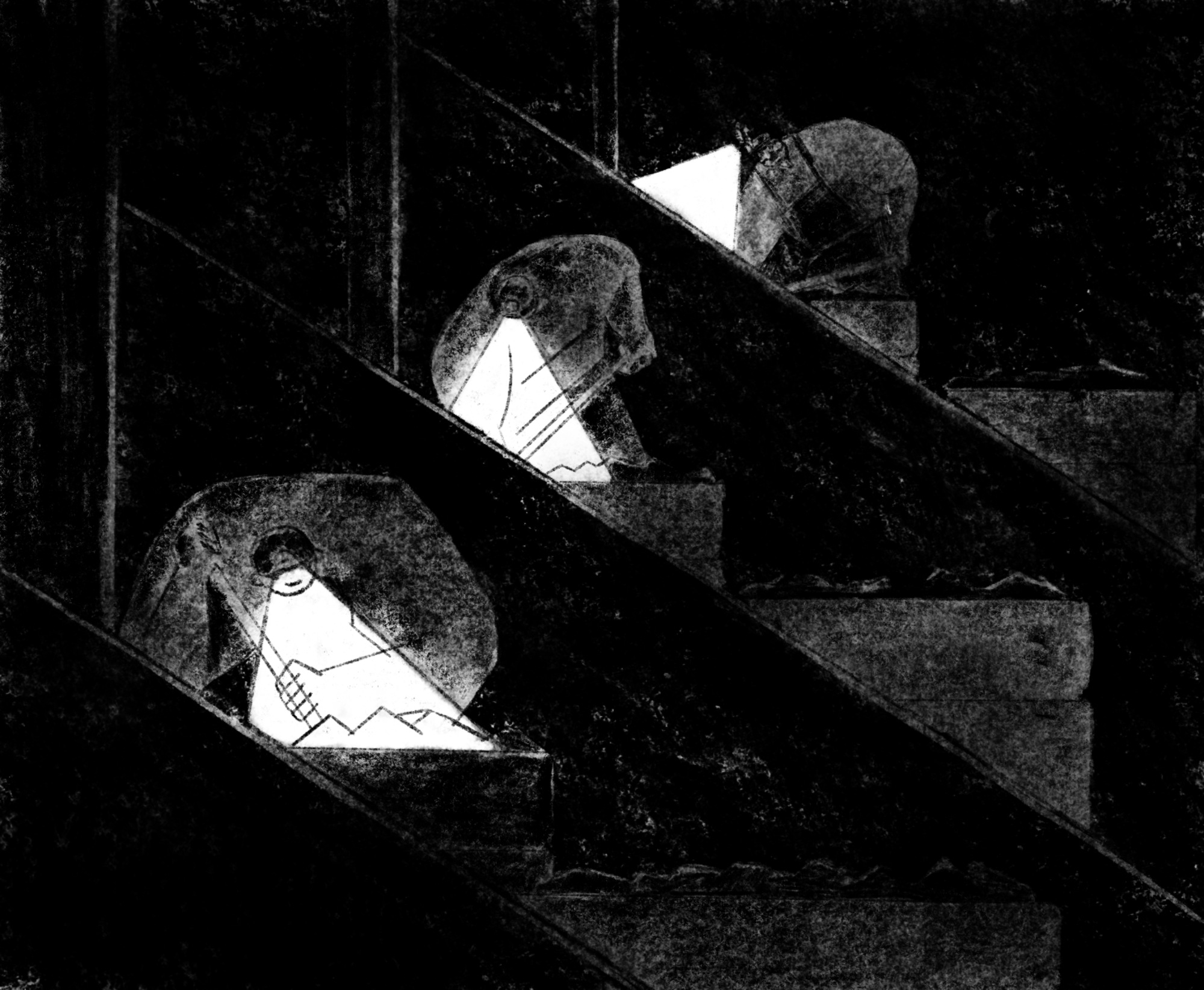
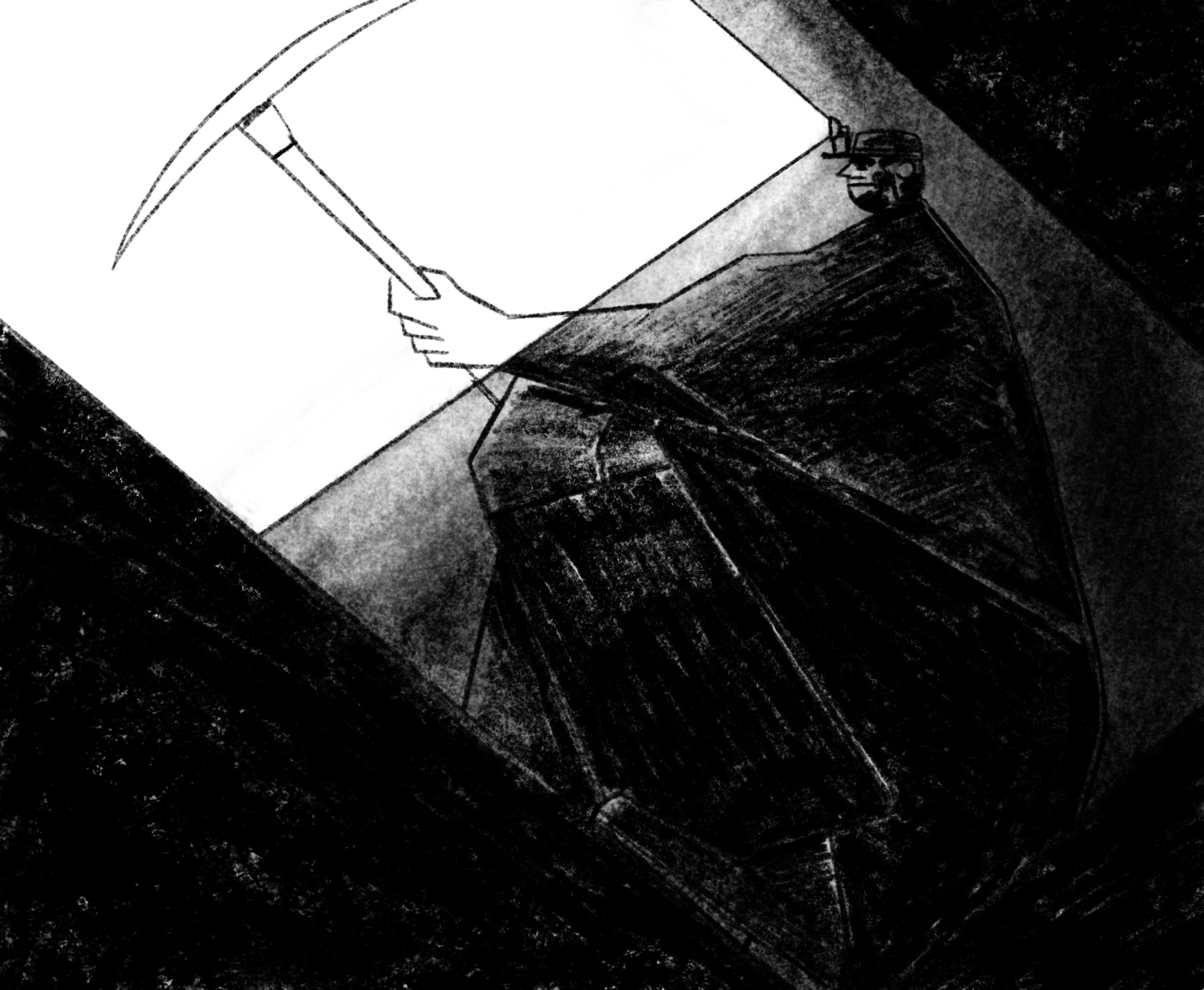
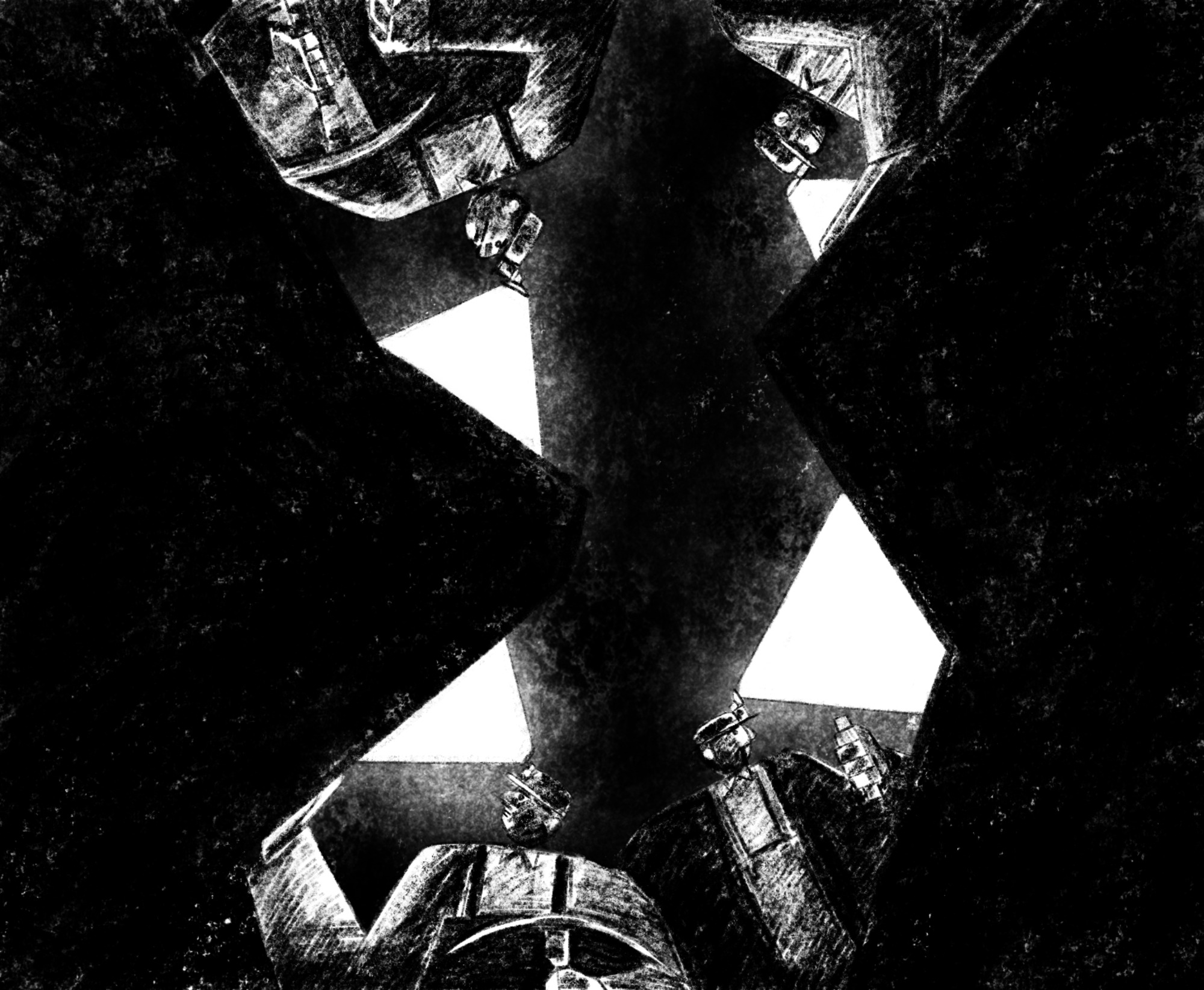
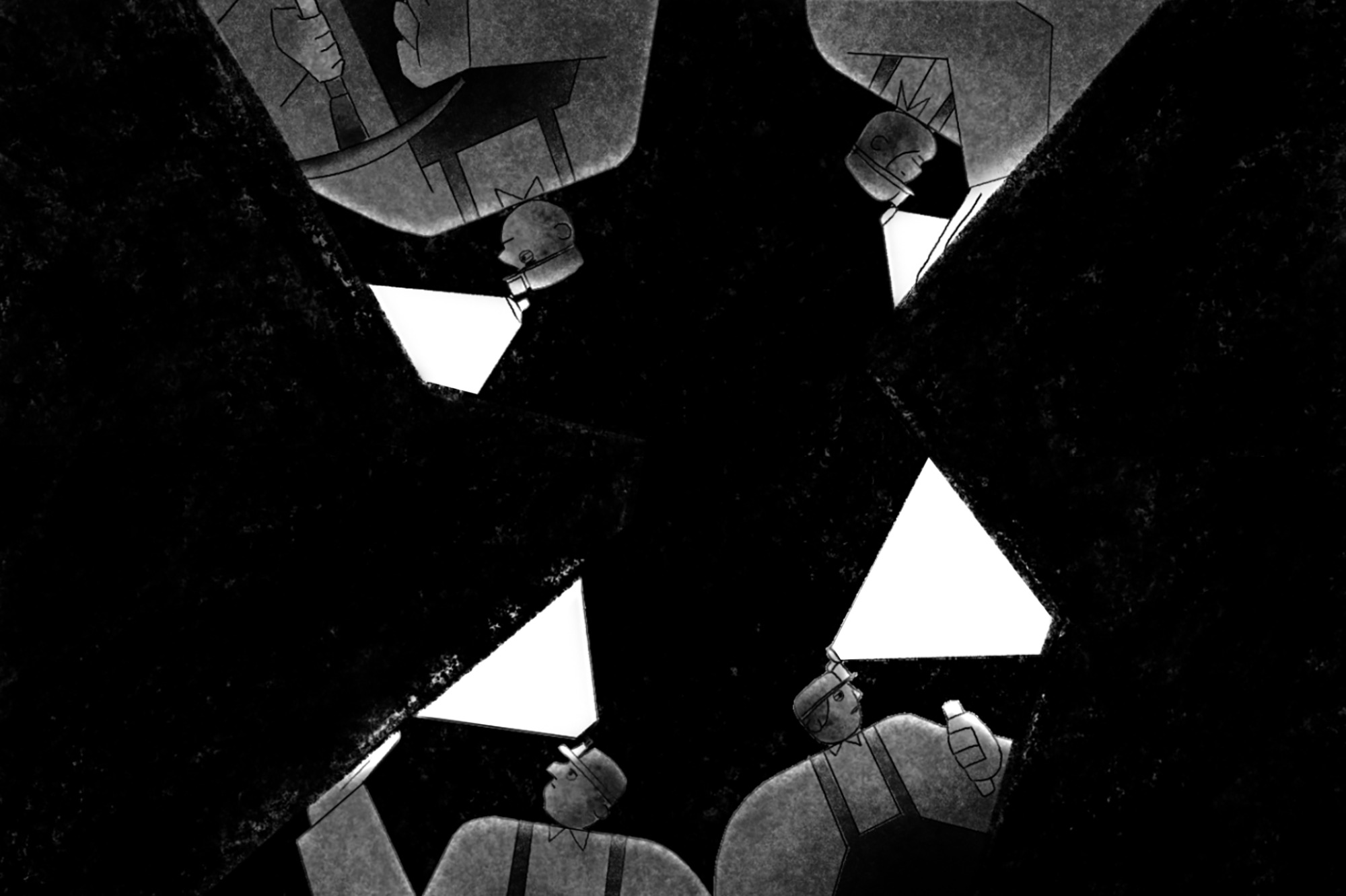
Most of the short is told through this grubby black-and-white aesthetic, which feels perfect for capturing the life of a coal miner. However, the discovery central to the storyline is portrayed brilliantly in a transformation of style – first going through a more minimalist abstract transition, even more devoid of colour, before sparking to life with frenetic design work, including a bright, fiery palette. Did the aesthetic come to you organically while developing Mine! or was it something that took more work to refine?
Wow thanks, that’s the perfect way to describe it. I always wanted the coal miners to be able to break out of the system they were stuck in. Originally, the whole teleportation sequence was black and white. I showed my friend and fellow animator Adrian Dexter an early cut and he asked if I was planning to add color to those sections. So I gotta give him credit with sparking the idea! Once that was suggested, it just made so much sense to use the fiery colors. It was a way to separate the time periods and bring the miners into the future.
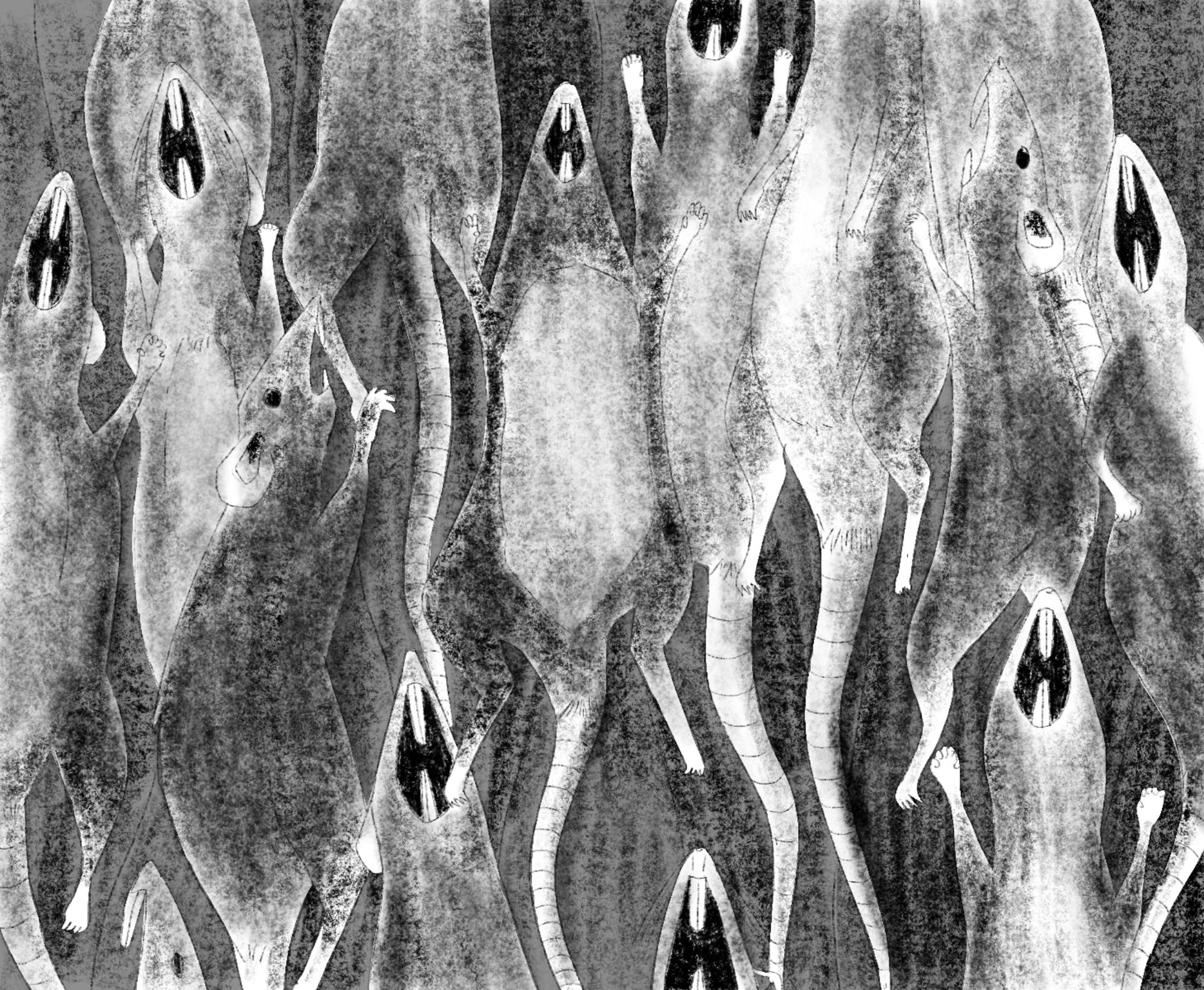
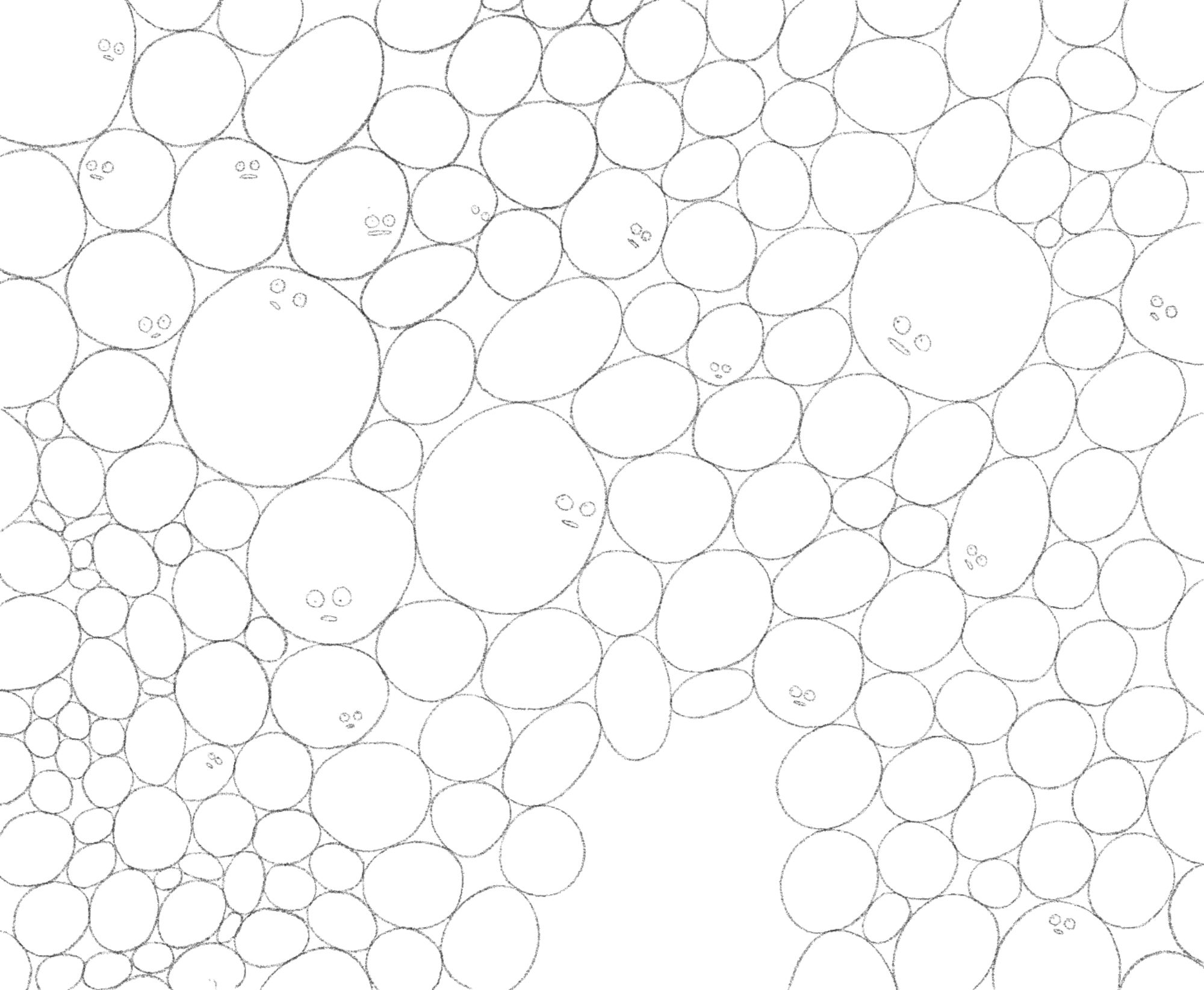
Looking at the credits for your film, it’s clear that you handled the visual side of production by yourself – is this a financial choice or just a preferred way of working? And can you provide some insight into the production – how long did it take? What tools/software were used in its creation?
It was really just the best way for me to work at the time. When I started making boards in Summer 2020 I was still working a full-time 9-6 job, and the idea of creating another animated short in my after-hours was too overwhelming. So I would just draw scenes of the miner guys at night with no definite path for completion in mind. In 2022 I got a full-time teaching position, which provided a lot more available time and headspace for working on films. After that, I had more of a clear vision for how I could finish it and wrapped it up in early 2024. The advantage of working this way was that I could take my time with the story, figure it out visually and try out some weird ideas.
I used Procreate to draw the original boards and backgrounds and TVPaint for the animation, with After Effects and Premiere for the edit and camera.

Talking of finances, how did you fund Mine! and in general, how do you approach finding a balance between private projects and paid work?
I was able to get a $5,000.00 grant from the Milwaukee Film Forward Fund, which I used to pay Katie Gately for her amazing sound design and score. I paid my two voice actors, W. G. Tonner and Ryan Clark, the SAG day rate (I think $600 each) out of pocket. The rest of the film just cost my own time. It would’ve been impossible to finish it while still working a full time job. Getting the teaching position is really the only way I have been able to secure financial stability, health care and the time to take on freelance and work on personal projects, so I am very grateful that this sort of path exists.

I try to learn a new software or skill on each new project.
I know you also work as an Associate Professor at the Milwaukee Institute of Art and Design – how important is it to your work as an educator that you are still creative and have working experience to share with your students?
I think it is important and I hope that they do too! The students work on a broad range of projects – from video games, 3D digital sculpting, to writing comic books. While I don’t have personal experience working in some of these industries, I do have experience pitching ideas and finishing projects. So with that in mind, I always ask them to write out the idea, story and themes in a sentence, so all creative choices can be traced back to and supportive of that core concept.
Keeping active on my own creative projects helps me stay in that student mindset I think. I try to learn a new software or skill on each new project. Hopefully, keeping that part of my brain flexible helps me to relate to the students as they are learning new technical tools while also figuring out the best way to communicate their own creative ideas.
Are there any short films that have stayed with you which you’d recommend the DN community watch?
I’d like to recommend a few films from my USC grad school class of 2013 that inspired me back then and to this day – Amy Lee Ketchum’s Two Ghosts – for its musical approach to stop motion animation, Javier Barboza’s El Coyote, for his mixed media documentary style and commitment to interviewing the subject, a human smuggler and Miguel Jiron’s La-gar-to, for its cinematic storytelling and way of depicting memories.
What can you tell us about any future projects you’re working on and where can people go to find out more about your work and follow any of these upcoming projects?
At the moment I’m working on a multimedia play. My collaborator Anna Castelaz is writing the script and I’m designing the backgrounds and animations that will be projected behind the actors. In a nutshell, it’s about a factory strike, early Nickelodeon movies and the social power of cinema.
I also have a couple ideas in early stages for longer films. One takes place during the Dust Bowl and the other returns to the world of Floreana. While the more meandering solo process for Mine! ended up working out for that story, for future projects I really would love to plan things out better and work on a team.
You can find me on IG @louisjmorton and louisjmorton.com