
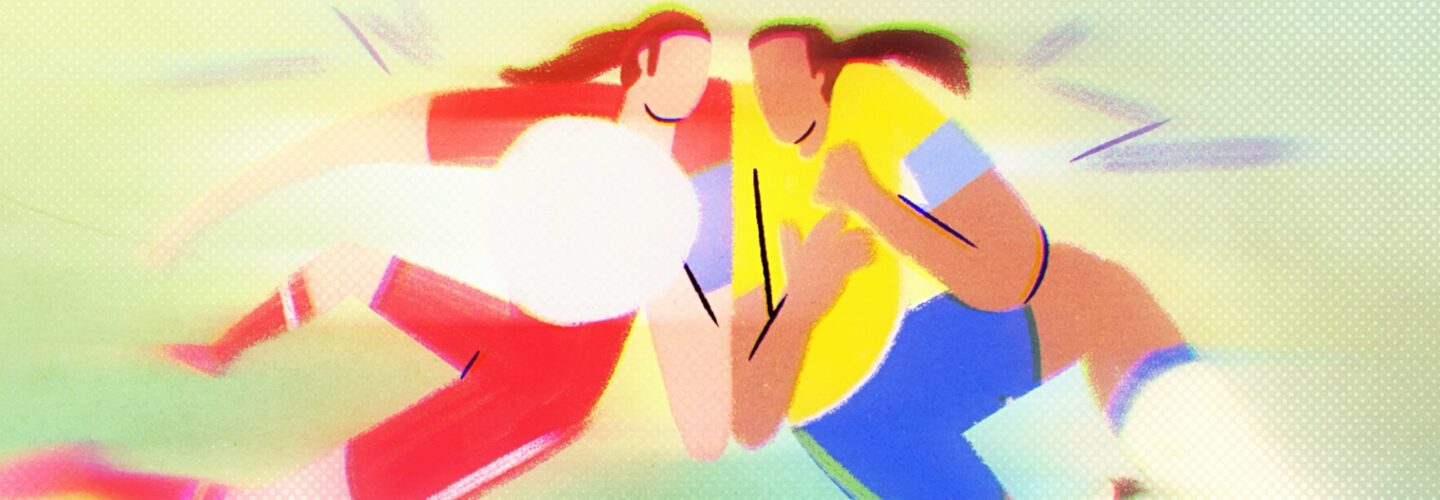
Unless you’ve been hiding under a rock lately, you’ve probably noticed that there’s a pretty big football tournament taking place in North America right now. And while World Cup 2026 is entering its final week, the global passion for the game shows no signs of slowing down. That makes the release of Eoin Duffy’s striking animated documentary Christine Sinclair: Kind of a Big Deal feel particularly well timed. Yet this is also a film with an appeal that extends far beyond the current tournament – a short that celebrates not only a football icon, but the enduring power of sporting legacy.
Featuring narration from fellow Canadian and Hollywood star Ryan Reynolds, Duffy’s nine-minute documentary charts the life and career of one of international football’s true greats: the titular Christine Sinclair, the world’s all-time leading goalscorer in international football and one of the most-capped players the game has ever seen. Told through Duffy’s distinctive animation style and propelled by the kinetic energy that has become a hallmark of his work, the film is as entertaining as it is celebratory. Thirteen years after we first took a deep dive into Duffy’s career as part of our They Are Animators series, the filmmaker returns to Directors Notes to discuss his latest short and the challenge of bringing a sporting legend to the screen.
Your films have taken audiences on some remarkable journeys over the years, whether travelling across time and space in I Am Here, following a squirrel’s existential quest in The Missing Scarf, or navigating the liminal spaces of On Departure. With Christine Sinclair: Kind of a Big Deal, however, you’ve turned your attention to a much more grounded subject: the life and career of one of football’s greatest players. How did you first become involved with the project, and what attracted you to telling Christine’s story?
The project was put out to tender across Vancouver, so we were up against some pretty big studios. We knew we were the underdogs, so instead of trying to compete on scale, I wrote a really personal pitch about why Christine’s story connected with me. It wasn’t just everything she’d achieved. It was her style of quiet leadership, her connection to family, and the fact that she leads by example rather than trying to be the loudest person in the room. That resonated with Christine, and they trusted us with the film.
What interested me was the person behind the player.
Right from the beginning, I knew I didn’t want to make a “Wikipedia page” documentary. You could spend eight minutes listing Christine’s achievements and still leave most of them out. What interested me was the person behind the player. The more I researched her, the more I realised how little I actually knew.
Beyond celebrating Christine’s extraordinary achievements, was there a larger message or ambition that you hoped the film would communicate?
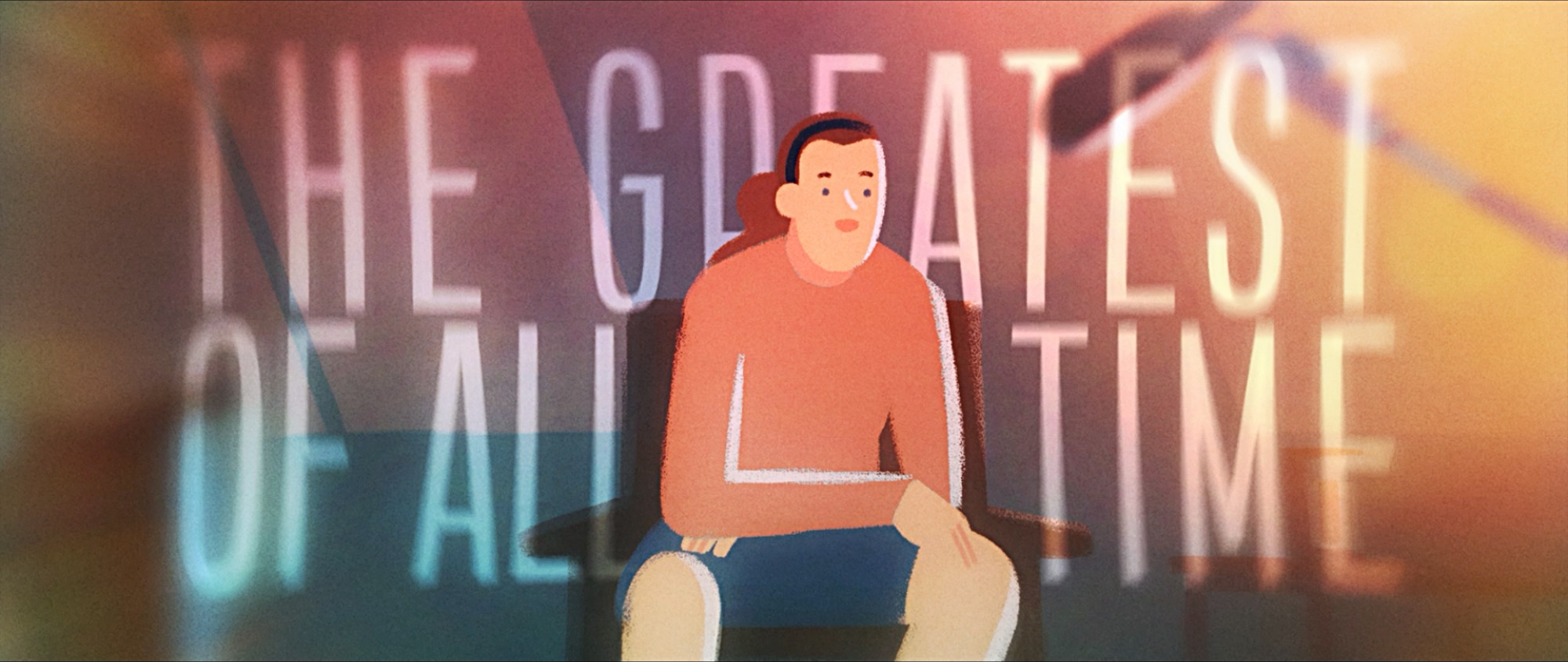
To me, it’s much more a film about leadership than football. Christine represents a kind of leadership that I don’t think gets talked about enough. She’s not a “rah-rah” leader. She’s thoughtful, she’s quiet, and she just gets on with it. That really resonated with me because I was an incredibly quiet kid myself, and somehow I’ve ended up leading bigger and bigger creative teams over the years.
I also wanted young people to see that even someone like Christine has doubts. We usually only see the medals and the trophies, but the interesting part is everything that happens in between.
I honestly think well over 90% of what I wrote ended up in the bin. I’d take one little 10-second quote from Christine’s interview and spend a week exploring where that idea could go, only to realise it wasn’t the film.
One of the most impressive aspects of Christine Sinclair: Kind of a Big Deal is how much story it manages to pack into its concise eight-minute runtime. It feels like a film that required a tremendous amount of planning and careful decision-making before production began. How extensive was the development and pre-production process, and how did you determine which moments of Christine’s life would make it into the final film? Did the project largely unfold according to plan, or did new ideas emerge organically during production?
The writing took way longer than I expected. I spent almost two months just researching Christine before we even interviewed her, and then our interview completely changed the direction of the film. At first, I was trying to tell her entire life story, but it just wasn’t working. The film only really clicked once I stopped trying to tell everything and focused on a handful of moments that floated to the surface during our interview. I honestly think well over 90% of what I wrote ended up in the bin. I’d take one little 10-second quote from Christine’s interview and spend a week exploring where that idea could go, only to realise it wasn’t the film. It was a constant process of stripping things away until only the essentials were left.
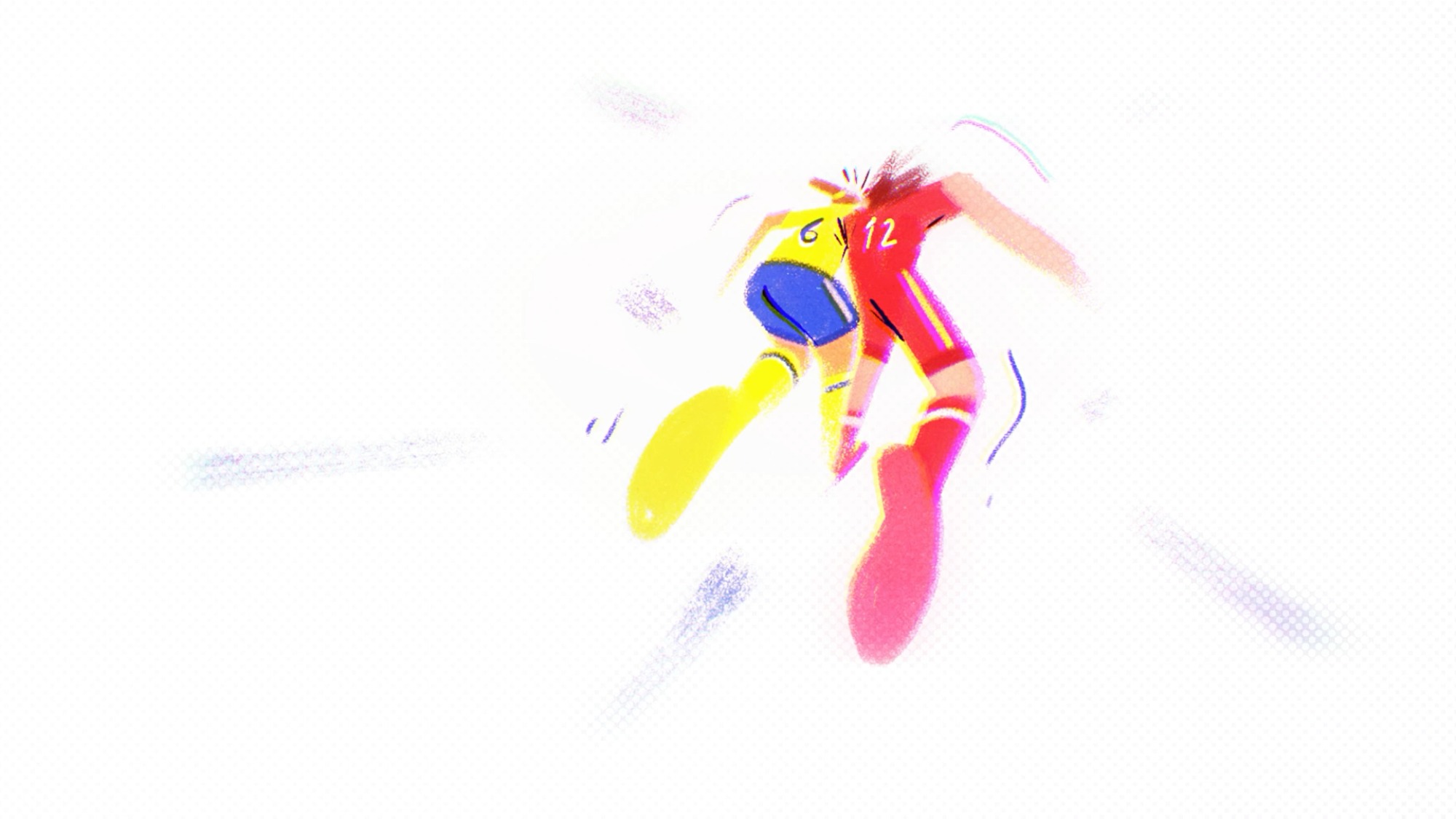
The soundtrack plays a huge role in driving the film’s pace and maintaining its momentum throughout. At what stage did music become part of the creative process? Were you editing to the score, or did the music evolve in response to the visuals? And how did your collaboration with Genevieve Vincent help shape the film’s emotional rhythm?
Genevieve and I were bouncing ideas back and forth throughout the whole production. She loved that we weren’t making a typical sports documentary and really embraced the more experimental, visceral direction we wanted to take with the score. Because so much of it was recorded with live musicians, the music didn’t really come together until the very end. We could only take it so far with mock-ups, it wasn’t until the musicians performed it that the score really found its voice. It was a massive leap of faith but Genevieve nailed it.
Most Popular
Christine Sinclair is, of course, an iconic figure in the world of sport, but the film also benefits from the presence of Ryan Reynolds as narrator. Beyond the obvious profile that his involvement brings, what qualities did Ryan contribute to the film, and how did his narration help shape its tone and impact?
Ryan was our dream choice from day one. He’s Canadian, he’s from Vancouver, he genuinely supports football, and he’s been a longtime admirer of Christine. We honestly didn’t think we’d get him. But thanks to Christine’s manager, Brian Levine, we eventually got in touch via a DM on Instagram of all places, and Ryan very generously agreed to do it. He even donated his time and just asked that we make a donation to Covenant House Vancouver instead.
The warmth and sincerity he brought to the final moments of the film really elevated the entire weight of the film.
Everyone knows how funny Ryan is, and there was plenty of that in the recording session, but what really surprised us was how effortlessly he could switch gears. The warmth and sincerity he brought to the final moments of the film really elevated the entire weight of the film.

Although this film feels quite different from some of your previous work, there remains a distinctive visual sensibility running through it that will be familiar to anyone who has followed your films. The aesthetic here is varied and dynamic, yet it still feels unmistakably yours. Is developing a recognisable visual voice something you’ve consciously worked towards over the course of your career, or do you place greater value on adapting your style to the needs of each project?
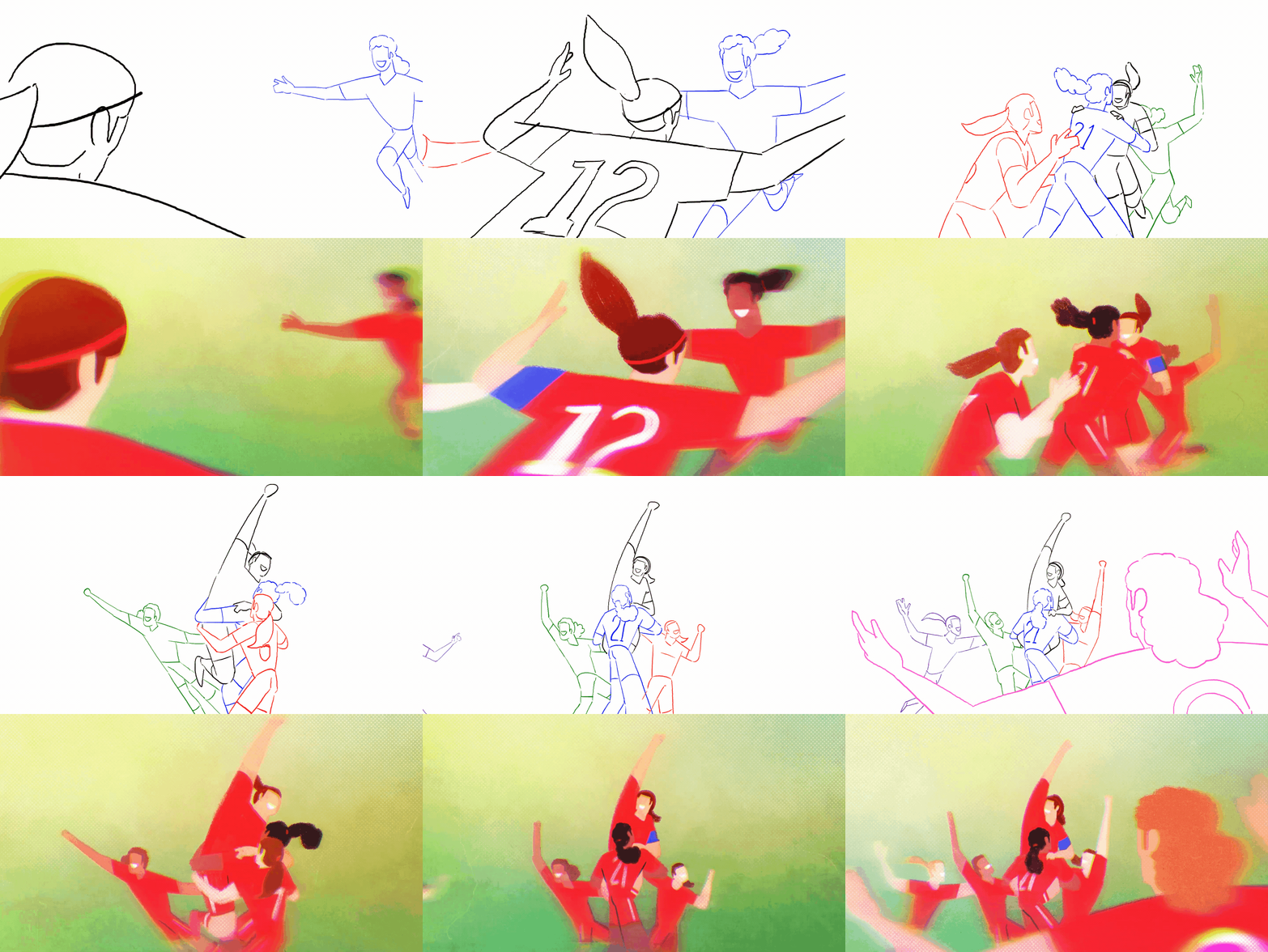
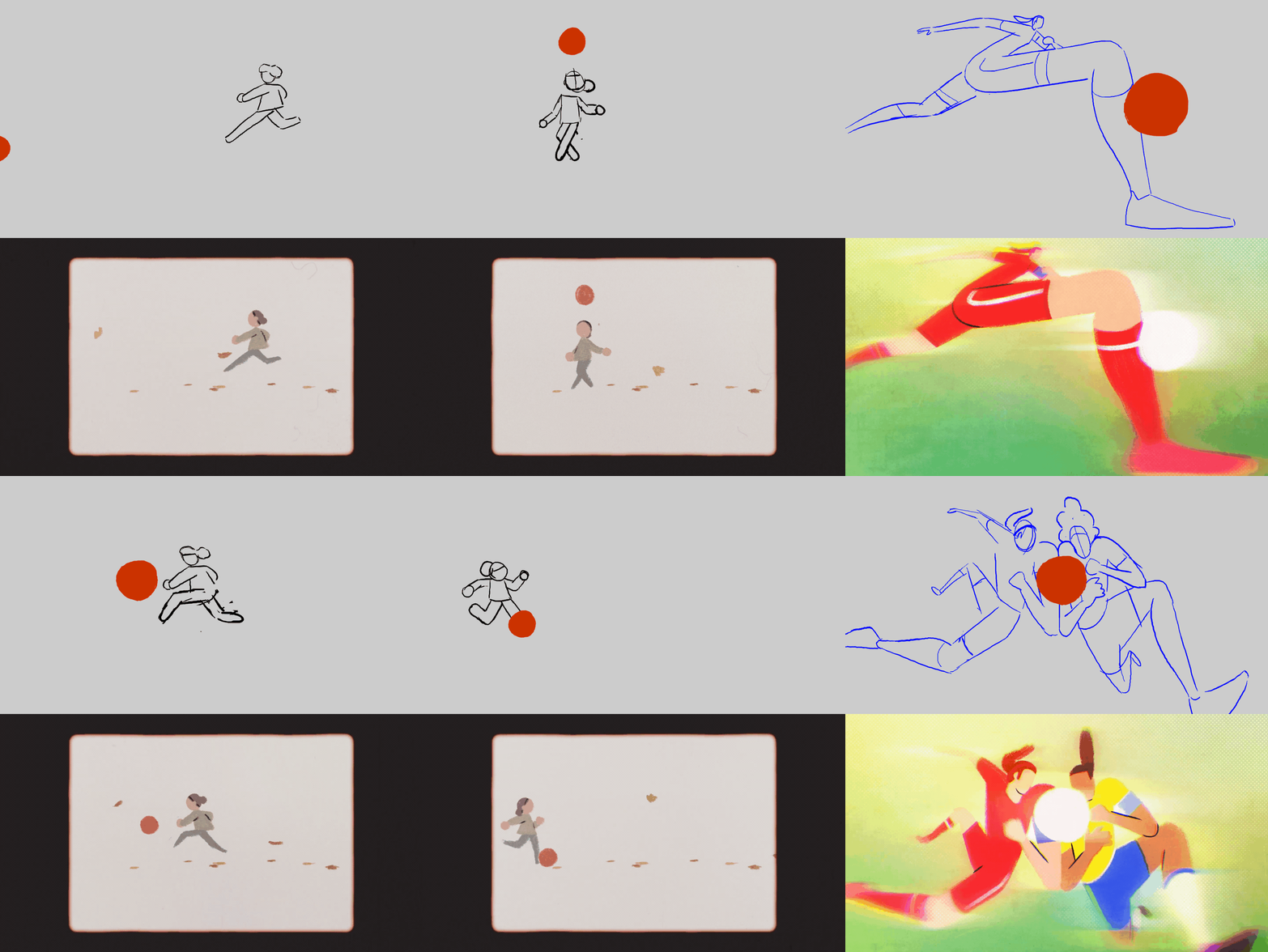
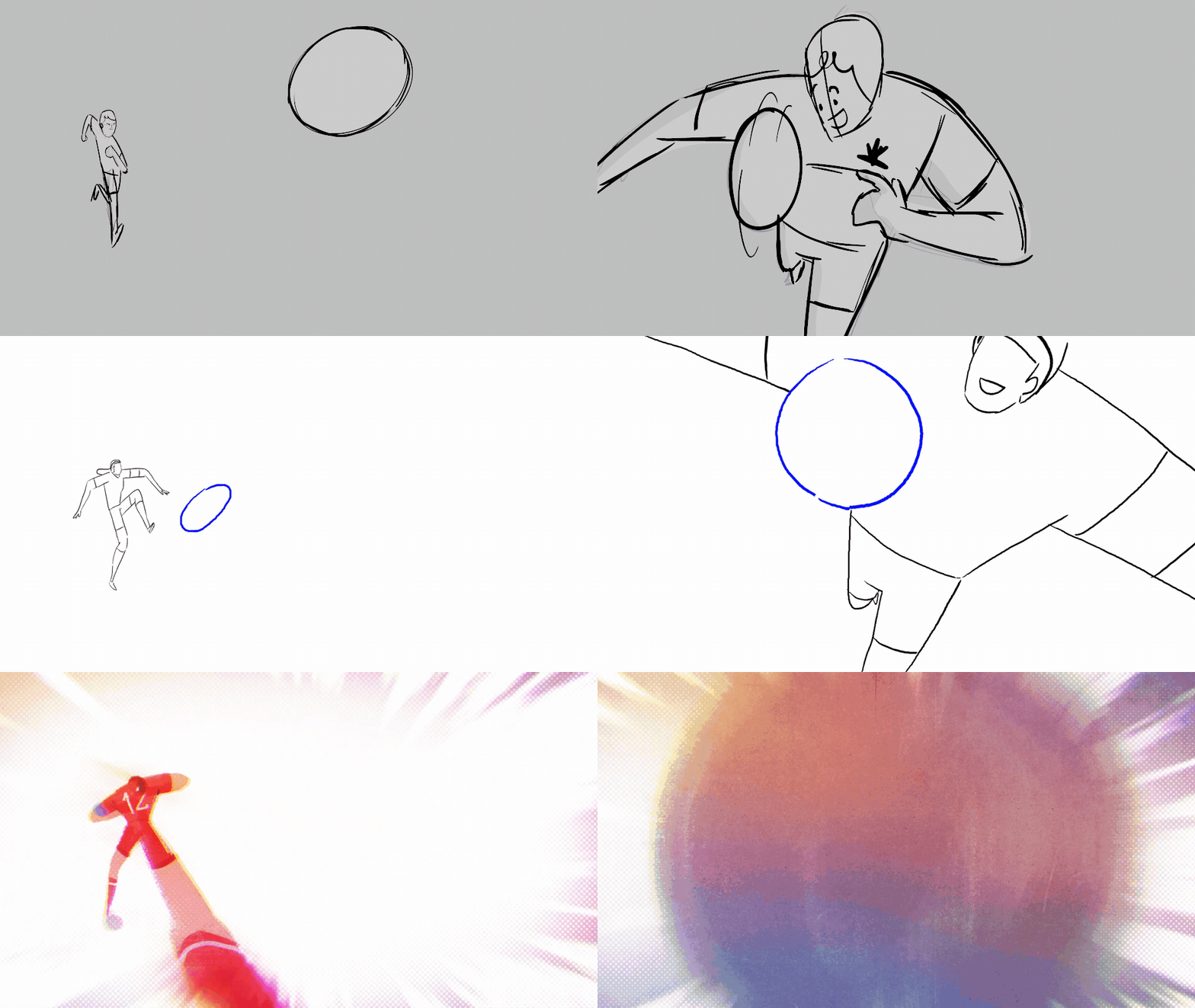
I’ve never really sat down and thought, “I need a signature style.” I think if you make enough films, certain things just keep sneaking back in. I’ve always loved mixing really minimal 2D graphics with much richer 3D graphics, and I probably strip things back further than I should. I like leaving just enough information for the audience to fill in the rest themselves. At the same time, I never want to get stuck repeating myself. This film pushed me to work with a much bigger team than ever before, and I think the visuals are stronger because so many talented artists brought their own ideas into it.
Probably the biggest lesson, though, was learning to let go.
While your primary role on Christine Sinclair: Kind of a Big Deal was director, you’re also credited in the illustration and design and animation departments. How important is it for you to remain creatively involved in these disciplines during production? Does maintaining that hands-on relationship with the craft help you preserve and refine your overall vision for a film?
I still think of myself as a designer before anything else, so I don’t think I’ll ever completely stop tinkering with visuals. On this film I focused on the mograph and typography, which felt like a natural fit given my background in graphic design. Probably the biggest lesson, though, was learning to let go. Up until now I’ve had a bad habit of trying to do everything myself. On this project that simply wasn’t possible, and the film is much better for it. We had an amazing team, and I really wanted everyone to feel they had ownership over the work instead of just carrying out instructions.
Looking ahead, what projects are currently occupying your attention? Are there any new films or creative ventures on the horizon that you’re excited to share, and where can our readers go to keep up with your latest work?
For the last few years I’ve been quietly writing an animated feature, and that’s where most of my brain has been lately. It’s probably the most personal thing I’ve written. It’s exploring this growing feeling of hopelessness that a lot of people seem to be carrying around today. I don’t pretend to have any answers, but it’s something I’ve wanted to explore for a long time. Hopefully, that’s the next big step, a feature.
I’ve been slowly finding my way back onto social media after a long, lovely break, so Instagram is probably the best place to keep up with what I’m working on. I’ll be posting there, sporadically.
Finally, this is a question we’re asking all of our interviewees: if you could recommend ‘one’ short film by another filmmaker to our audience, what would it be, and why?
Oooooo, too many shorts!! But if pushed, I keep coming back to Tom Scott’s Welcome to Life. It’s a reminder to myself to keep shit simple AF, a strong concept is king, even if the animation looks like it was made in PowerPoint.