


Two days after I interview Rohan Parashuram Kanawade, the writer and director of Marathi language feature Cactus Pears (Sabar Bonda), it is announced that the film has won the prize for Best Feature Film at the inaugural SXSW London festival, continuing its streak after winning the World Cinema Grand Jury Prize: Dramatic at Sundance back in January. At Directors Notes (virtual) towers MarBelle (Editor-in-BIG-chief) summed up the team sentiment on a group thread: “A divine piece of filmmaking, Rohan is a bloody genius”. The Oxbridge characterises geniuses by having exceptional intellectual or creative abilities, often combined with traits like deep curiosity, intense focus and a strong drive to learn and explore – exhibiting originality, creativity and the ability to think and work in previously unexplored areas – risk takers and abstract thinkers. In the 30 minute conversation I had with Rohan, I can categorically confirm (not that there was any question) that he is, indeed, a genius – not least in deciding to take on one of the most emotionally complex moments one can ever live through – a ‘traditional’ mourning period. Much has been written about the story since it premiered at Sundance at the start of 2025, its semi-autobiographical nature, its subversion of queer tropes, its depiction of life in rural India and the craft in making it. Rohan’s generous insight into his creative process, his approach to idea development, screenwriting, storyboarding and shooting in this interview almost serves as a ‘how to be a genius’ guide (if only it were that simple). His unique approach to both the emotional and technical aspects of filmmaking and the interplay between the two creates a beautifully tender, innovative drama with emotional depth and gravity.
Cactus Pears is the story of Anand, a gay man trying to live life amongst the societal pressures that exist around his lifestyle. Pressure that he’d found a way to sidestep until he couldn’t. Framed in the ten day mourning period after his father’s death, Anand finds himself deep in the pressure cooker of all he’d been trying to avoid – the suffocating love of his extended family with their incredibly traditional views on how life should be lived. What unfolds is a heartwarming tale that would be easy to reduce to a queer love story, or a story of tradition versus modernity, but it is actually a depiction of the interconnected threads of life and the pivotal moments that can come from the darkest times. Through the lens of a moment of time that is ‘meant’ to feel sad, heavy and anguish laden, where one is ‘meant’ to act and feel a certain way, can come humour, surprise, love – because that is the reality of life and the complexity of human emotion.
The sound design and cinematography are central characters to the narrative, giving the film a juxtaposition of tragedy yet joy, the weight of grief yet lightness that begins to shine through. The wide angle shots and still frames invite the viewer to experience the emotional depth of the story without being rushed through or feeling like they’re on an emotional rollercoaster, culminating in an ending that feels like a profound release, opening the doors to hope, optimism and joy. Whilst this may be Kanawade’s debut feature, there is no doubt much more is to come from this incredible filmmaker and true to the form of any genius, I am sure he will continue to surprise and delight with his future projects.
[A heads up, the following interview contains spoilers. You can also watch it at the end of this article.]
The end of Cactus Pears felt like this incredible moment of freedom and release. I wanted to know how you captured that with such little dialogue from the moment they walked into the apartment to lying on the floor together.
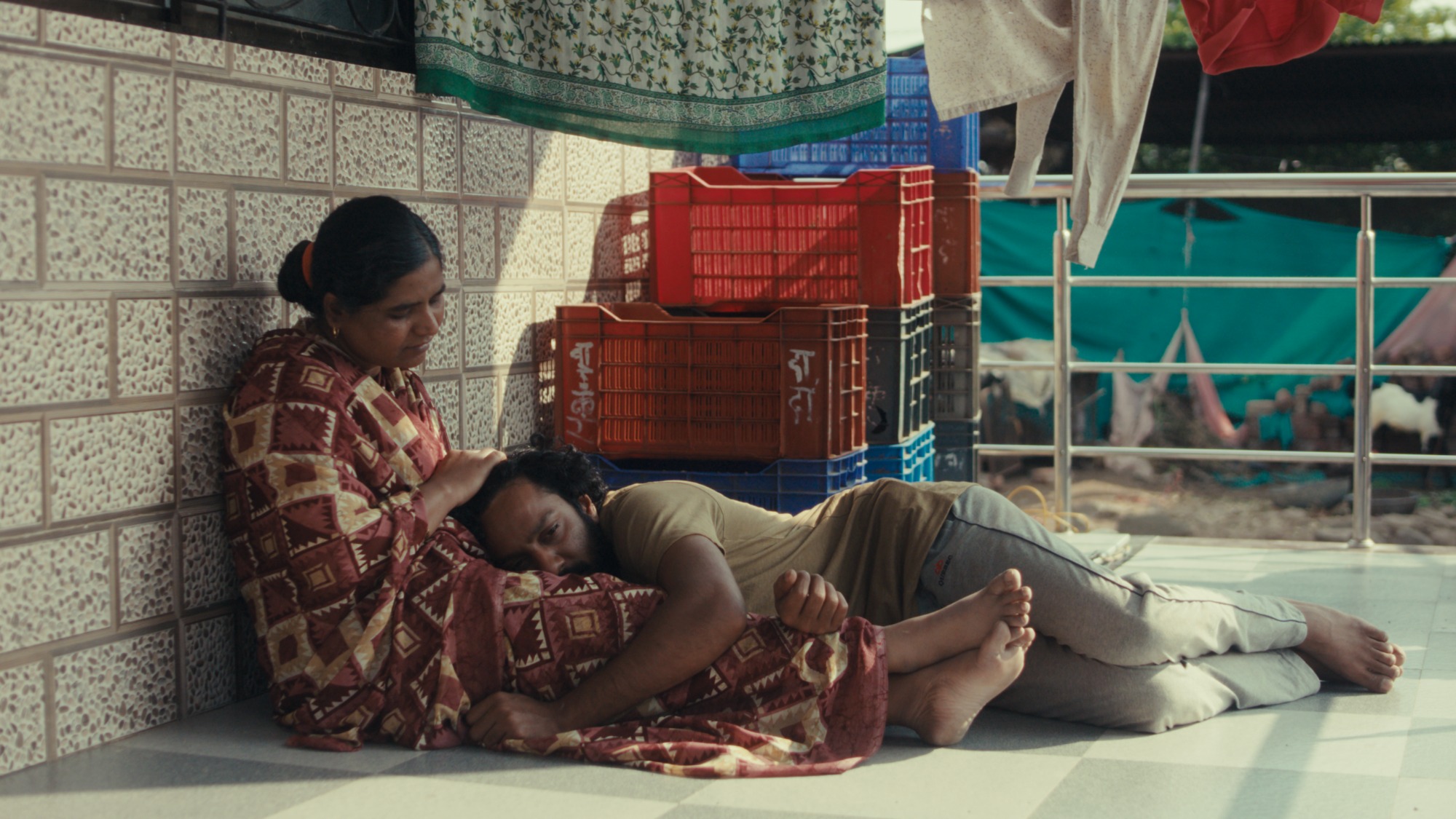
You know, you won’t believe so many renowned filmmakers said, “The film ended for us in the village, for us, why did they go back to Mumbai?”. That would have been such a stereotypical way to end the film, and I know that many filmmakers would do that, but for me, that wasn’t the end. There were so many things that meant the film had to end with these two boys coming to Mumbai and being in the house. Anand couldn’t grieve his loss in the village. Even for me, even though I cried during the cremation during my father’s grieving period, the most important thing was when I came back to Mumbai, where I spent most time with my father, that’s where I felt his absence and I actually cried. So I felt the same for Anand, I needed to bring him back to Mumbai because once he is in the house, that’s when he’s going to feel the absence more. And then having Balya next to him, being there as a support, that was really important.
The other thing was the way Anand got his freedom in Mumbai, even though the apartment was cramped, he got his freedom to be who he is because of the people in that house, which are his father and his mother. Now, when Balya seeks the same, he will get to live with the person he loves and now experience that freedom and love. So them coming to the house and sleeping in that space was really important to me. That’s why the film ends there and comes back to Mumbai.
You’ve said in previous interviews that this is a quiet film, which it is, but it’s also a heavy film. You feel the weight of what Anand is carrying, and maybe the South Asian diaspora/people who understand what that grieving period is like will understand more; it’s such an intense period. The tradition feels like it imprisons you. Equally, you feel like you have to be there for all the other people who need you to be. You’ve brought the heaviness of the emotion, and a lot of that came through your sound design and cinematography so I’d love for you to talk about that a bit.
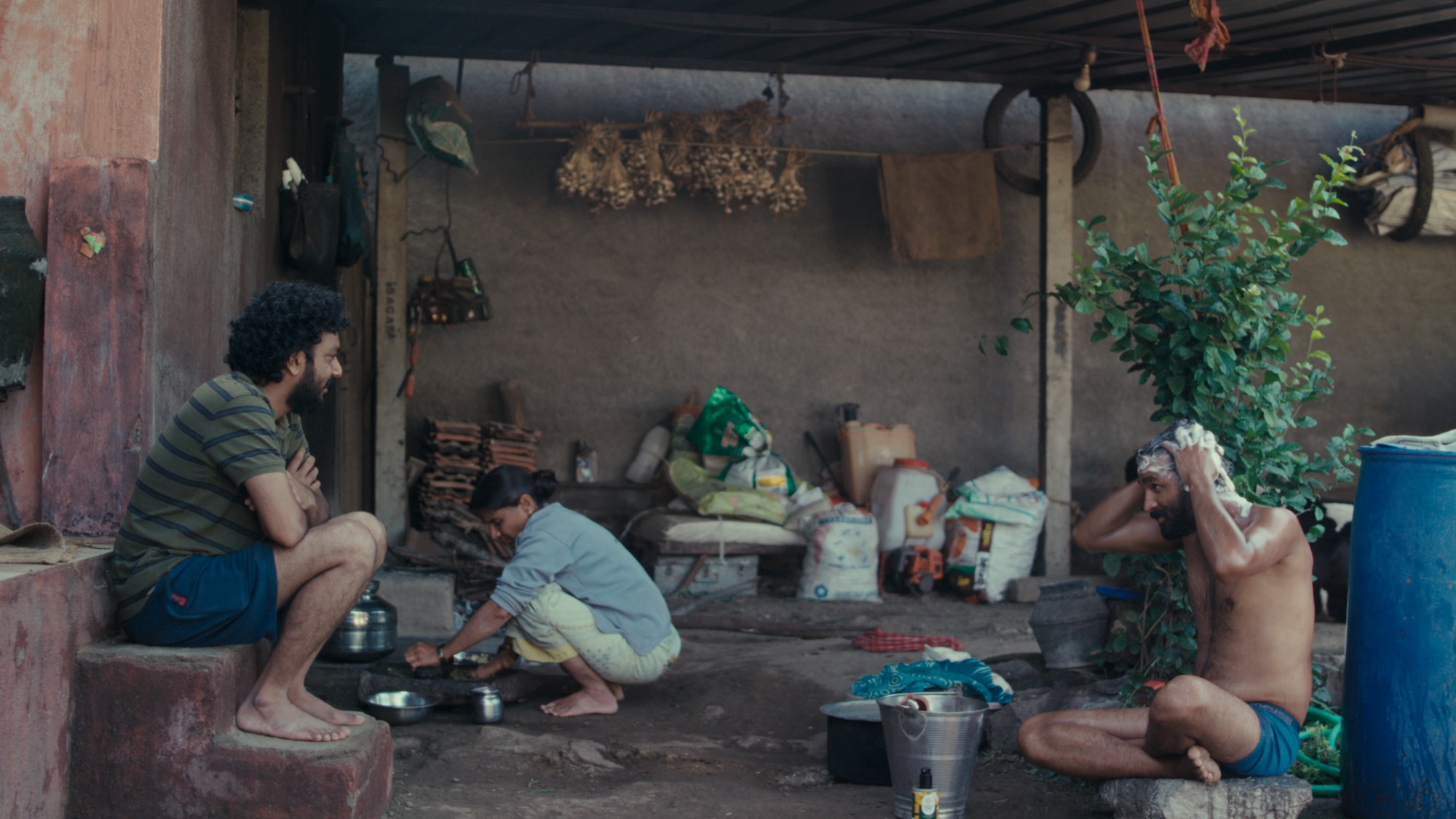
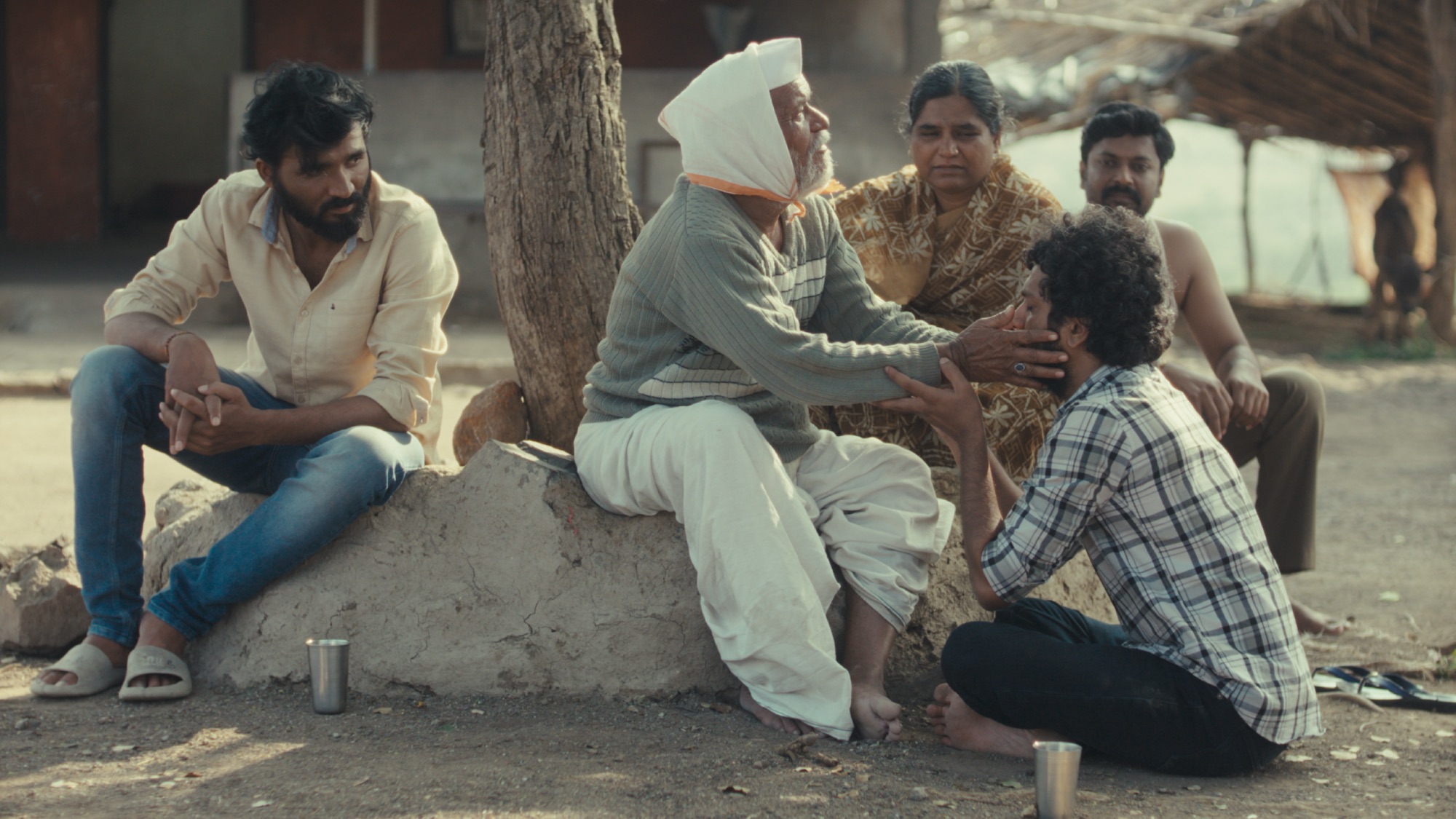
Both these things were part of the film before I even started writing. I had decided that the film will have static camera work and most of the shots will be wide shots, very rarely will I go close to the character. That’s because I like to see where these characters are. In some films it works that the camera is always close up right in the face of the actors but I think that’s become a bit clichè to show characters who are trapped/helpless. You can also make them look helpless and trapped with these wide shots, in the villages there’s vastness. By showing him as a small figure against all the vastness, you can also depict him as trapped. I didn’t want to use grading to do that, or people use seasons to depict sadness, like Monsoon/rain to show sadness and gloominess and I didn’t want to do that either. In the villages, people start building bungalows, then they run out of time and can’t finish the bungalows, so they just plaster and leave the house. That greyness on the wall also added to the feeling of gloominess. I wanted to use all of those things. I also wanted to show there is life around Anand. Anand isn’t the only one living life, there are so many other people living their lives and I wanted to show Anand within that. So in those wide shots you see people around him. I wanted to create that.
I had decided that the film will have static camera work and most of the shots will be wide shots, very rarely will I go close to the character.
With the sound design, I wanted to create a portrait of what I experience in the villages, most of the time me and my mother would be in the house. My Uncle and Aunt and my cousin, who is a vet, would go about their work, my cousin’s wife would sometimes be in the house, out of the house, doing her own thing. Me and my mother would be there all the time. Most of the time we were just sitting. I would be sitting on the verandah looking at the village and there was stillness. The sound of the village, the nature, at different times it sounds different. In the morning, people are doing their work, going to the farm, taking the animals to graze, so there are lots of those sounds. And during the afternoon it’s quiet, you just hear birds and stuff, and again in the evening it became noisy. I wanted to have all those things in the film, so that’s why I say the writing started with all of those things being incorporated into the script.
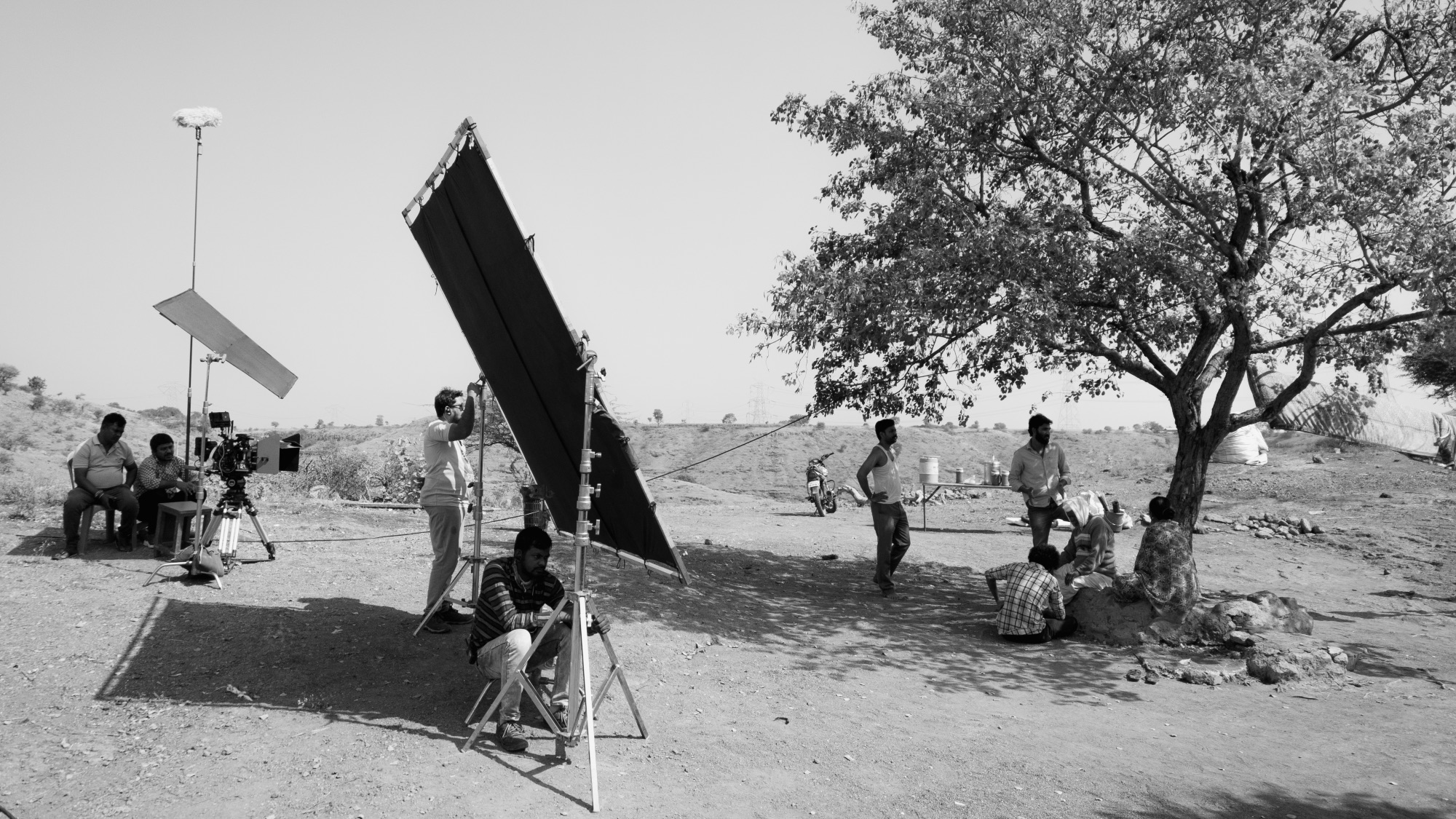


When I started the location scouting I was taking my own pictures to start creating a visual language. Then I would colour grade those images so when we did the test shoot with the camera and lenses, I shared all those images with my DoP (Vikas Urs) and colourist (Himanshu Kamble), so based on that, they also came up with their own look for the film. I told them this film cannot look like any other Indian film, or for that matter, any other Marathi film. I told them I needed to have a very specific, different looking film, but at the same time, it needed to look realistic. You know there’s this habit of filmmakers to beautify everything, showing the Indian villages like they’re this very exotic thing, but that’s not the case, the villages are not like that at all. I wanted to show them the way they are but at the same time have a nostalgic quality to it. So I had told my DoP, I just want the images to look like photographs, and the static camera work will give us enough room to compose the frames and choreograph the scenes, so I did all that with him. When I locked all the locations, I did my own storyboards. The film you see, 90% was drawn on paper, which I discussed with my DoP and it was him who took the images onto the screen that you see. His lighting, his lens choices – you know everything the DoP does, he translated those images onto the screen.
Then my sound designers, Anirban Borthakur and Naren Chandavarkar, when we started designing they said let’s go to the village again and let’s record live. All the sound design you hear is actually that we went to all the locations, spent from morning to evening there and we recorded live. Because you know all the sounds you hear, you can’t separate that one goat or one cow, or someone yelling at the other end of the village – you can’t take single things. So we went there and recorded everything in surround sound because now the technology allows you to create a 360-degree world which is even outside the frame and I wanted to use that. It took us a year to work on the sound design – my sound designers worked on it for 600+ hours. Even my colourist, it was their talent and the way they graded. The sound and colour, and images are all because of them (the team). I mean it was of course my vision, but it was their talent and commitment to it that made it possible.
This film cannot look like any other Indian film or for that matter any other Marathi film. I told them I needed to have a very specific, different looking film.
It’s a masterpiece. I couldn’t get over the use of those still shots. Was that visual approach always in your head?
Yes, if I could, I’d show you the storyboards and you’d see everything was drawn, even with the layout in the room: where are the characters so where is the camera positioned, if the camera is moving. Like the sequence in the ambulance when they take the dead body out, the camera moves in a certain way. It was all drawn with a layout plan and everything.
The sequence in the ambulance was actually really poignant because of the angle. I would never have expected to see that angle, it was incredible. Where did your inspiration come from?
I don’t know, whilst writing I didn’t really have these thoughts. I mean, you have general images in your head whilst writing, but most of it was developed when I had the location because now I can see the space where I want to shoot these scenes. When I have these spaces I spend time there and because I was always interested in images and I am an interior designer, when I design I have to imagine the space. And I can draw, so all these things really enable me to imagine and draw it out so people can see it. It was the space and the scenes which were written in the screenplay. So then you start thinking about it, the whole idea of making a storyboard is to create the visual language of the film, which didn’t exist before.
I hate the practice of going onto set and suddenly trying to figure things out and how to shoot. In pre-production, I spent three months creating the storyboards, so I had three months to really create that visual language, thinking about each frame and how it would look. So you know, then you’re sure, this is how it is, this is how you want to shoot. The pre-production time means I can really spend time thinking about each image and if I want to change it again. It’s like a screenplay, you write it, then you rewrite and rewrite – making the storyboards was like writing the screenplay again but with the images.
Most Popular
What an incredible creative process. What did you shoot Cactus Pears on?
We couldn’t use a high-end camera, but we needed to shoot so many scenes at dawn and dusk and I really wanted to capture that light. My DoP suggested we go for the Sony FX9, because it has dual ISO, it’s a full-frame camera and 4K, so it will help us a lot. There are so many long takes we needed to cover, like when the boys are swimming – it’s a long take, there are no cuts and we shot it for two days. One day on land and the next day when they get into the water, because I wanted to shoot in that light and if you don’t get the shot you have to do everything again. But then we’d have to wipe them dry, which takes time, and the light will go. The camera needed to have all this flexibility so that in post we could tweak a little more and get the desired look. So it was just that camera because our budget didn’t allow for us to use high-end cameras. This is a cinema camera at the end of the day, just not one of the top-end ones.
We also used vintage lenses because I hate the look of those ultra sharp modern lenses. I told my DoP I don’t want that at all. That’s when he said we could use vintage lenses and I was like, “I would love that”. He suggested we go for these Russian vintage lenses that are discontinued and India only has one set of those lenses in Hyderabad, so we had to fly those lenses to Mumbai, calibrate them, and test them. These are Russian vintage lenses called Lomo Illumina MKII and we used them to shoot the film.
So, ultimately, what is this film about?
Well, you have to tell me. I’ve made my film so what does the audience think/feel? You tell me.
I’ve seen a log line that focuses on the homosexual narrative, but it feels like it’s about so much more. That’s part of the story, it’s not ‘THE’ story. It’s a story about finding yourself through these pivotal moments that we live through. It’s about relationships, identity, and when I say relationships, of course the romantic ones, but his relationships with his mother, his extended family, and friends. It’s a story of a guy finding himself through the huge life changing moment of losing a parent.
I mean that’s what it is, it’s about so many things at the same time. But when you pitch, people want it to be about something specific so you know we had to write a logline to satisfy that and help us get funding but yes, the film is about so many things. Even during the editing process, people were saying I don’t understand if the film is about a relationship between these two boys, or the relationship between Anand and his mother or Anand and his father, it’s so confusing. And I said you know what, that’s what it is. It’s life, it’s all of that. I wanted to create life on screen and not this filmy idea about story, plot points and all these things. It’s not about that, I just want to create life on screen. So it’s about life and it’s about that phase of life when you lose someone. I just wanted to create a tender portrait of that phase.
I wanted to create life on screen and not this filmy idea about story, plot points and all these things. It’s not about that.
So you’ve summed it up best, “Life on screen”. I think that moment in time you’ve chosen, it’s one of the most intense moments anyone can go through. You can only really understand it if you’re of the religion or a religion that has a mourning period like that. You’ve chosen that period but there are such juxtapositions of what happens for Anand – finding a romance he didn’t expect, unlocking something with his mum in the most unexpected way, yet realising how to let her continue to live within the family. Even his relationship with his little niece that was just real life.
Yeah. Unfortunately, we had to cut two small moments between those two.
I thought that relationship really brought the reality to life, the bit where he’s shaved his head for the ten day ritual and she’s just sitting there looking at him and it’s exactly what we were doing as the audience, I wanted to say what she said, “Can I touch it?”
I mean that’s what I’m saying, I wanted to create life and these things were inspired by life. You know, kids do that. My nephew did it when my father passed away and even when I was a kid, I wanted to touch someone’s bald head and just see how it feels. So it’s all inspired by life. As a creator, you’re always absorbing life and when you’re creating, some of that is useful to create these moments.
Can I ask what you’re doing next?
I have an idea in my head, but my writing process is long. Even for this one, the idea came to me in 2016 when I was grieving my father and it took me four years to start writing. That’s what it’s like with me, if the idea sticks with me for that long, then I know I have to write it. You get so many ideas all the time right, but not every idea is worth exploring and spending time on. But during that time you get some visual notes, ideas for a sequence, you keep thinking about it. Then at some point, your head is saturated with all those things so you know you have to sit down and write. That’s happening right now with this other idea, which has been with me since 2018, so I’m just thinking about it and hopefully by the end of this year, I will have the screenplay for that. Right now I’m exploring it so I can’t really talk about it, but it’s completely different from this film. That’s what I like, I like to listen to the idea. The idea actually dictates how to tell the story in the best way. If you see my previous short film it looks completely different from this or the film before that is completely different. I want to do justice to the ideas and present stories in different and unique ways, so I have to spend time with the idea to figure it out and find a vision for that specific story.
I like to listen to the idea. The idea actually dictates how to tell the story in the best way.
And do you want to continue writing and directing together?
Yes! I like to write my own scripts even though it’s a painful process. I can’t work with other people’s scripts. I have my own way to tell stories. If I have to change other writers’ scripts to suit me it’s not fair. I have an actor friend who wants me to direct his script and he’s acted in one of my films so he knows what I’m like, and he’s still keen for me to read it and see if it interests me but I much prefer to write my own things.
Is there anyone out there who is your inspiration, who got you wanting to make films?
No, actually my first inspiration or my first love for the cinema was a film projector as a kid. I was just fascinated how this machine makes these images look so big and how it’s making images move. So my love for cinema actually started with a gadget, which is why I’m so interested in cameras, sound, etc. so I do all my own homework, then I share with my team. The projector was my first love. When I was 7 or 8 years old I made my own slide projector so it wasn’t a filmmaker or film or actor that was my inspiration. But of course later on as I started watching world cinema because I had access to a DVD library in Mumbai, around 2007, I started watching lots of films and that’s when I realised how differently you can tell stories. There’s not only one way – which is Bollywood or populist filmmaking – that’s not the only way, you can tell stories in so many different ways. That actually helped me understand and then challenge myself to think about how I can tell my stories in my own way and how it can be different. I mean think about that most queer films we see end with a tragedy. This film, yes there’s a tragedy, but it ends in an optimistic way with these two boys taking that step to come together and explore that bond, so all these things help you to create something that people have not seen before. Even for me, I’m like, “Yes, this is something new, I want to explore that.” That’s what excites me most of the time. But yes, of course, there are a few filmmakers that I’m always excited to see their work.

Finally, what do you want people to take away or feel when they watch Cactus Pears?
This is something I’ve said all along, even in my pitches, I just want people to feel like this film is giving them a ‘warm hug’. Usually, we associate this grieving period with sadness but I wanted to make a film that was warm and tender. I didn’t want to make a sad film. So the whole goal was very simple, that the audience should feel like it’s a warm hug and have a smile on their faces whilst watching.
Well, it made me feel like it was a big bear hug, but I also felt free because it’s this understanding of how tradition can make you feel but there’s always a way through.
Well, yeah, to be honest, I don’t like to say what the audience should feel or take away, because as we were talking about, I just wanted to create life on screen. Experiencing life can be different for different people, because people have their own perception about life, so you have to let them feel what they feel. For some people, the mother and son bond was most important, for some people it was different. So now I’m like, feel whatever you want but as long as you feel something.