
With a great sigh of relief, the conversation around representation and gender equity in cinema has shifted from the margins to the mainstream. No longer confined to niche academic circles or activist spaces, feminist film criticism and advocacy now shape industry discourse, festival programming, and even awards campaigns. Anna Smith is a critic and industry professional who has long been championing this space. Host, and co-founder of the Girls On Film podcast and awards, Anna has spent her career carving out space for women’s voices in a landscape that hasn’t always welcomed them—whether as one of the few female critics in early 2000s press screenings, as a constant champion of female-led cinema in the face of industry snobbery, or as the driving force behind Girls On Film, which has become a vital platform for nuanced discussions about representation on and off-screen. Directors Notes brings you a candid conversation with Anna where we dive into the breadth of her work in the industry, the shifting dynamics of criticism and why the fight for diversity in film is far from over—even as we celebrate hard-won progress.
[The following interview is also available to watch at the end of this article.]
Has your feminist lens always been part of your world or is it something that emerged from your experiences?
I’ve always felt strongly about it innately. At university, I took a class called Gender and Popular Culture, examining advertisements, films, and TV shows through a feminist lens. When I think back, that probably laid the groundwork for a lot of the work that I do now. We analysed films like Thelma and Louise and Basic Instinct, which were both coming out at the same time, through a female lens, which really turned me on to it.
How did you manage to maintain your authorial voice when you began working for some of the larger, more established publications?
I started writing film reviews at Minx, and it was then that I realised that’s what I wanted to do. When Minx folded, sadly because the world wasn’t ready for it, I wrote for titles such as Empire, Time Out and Sight and Sound. I worked very hard to get those opportunities, a lot of proving myself, a lot of thinking sideways. Regarding keeping my voice, I think I found it. As a film critic, you’re always evolving. Interestingly, when I went to journalism school we were told not to put our thumbprint or our opinion on things, so I had to really learn and adjust to keep my authentic voice, which I very much used at Minx and Empire, where I was encouraged to do so. The whole point of film criticism is your opinion.
Initially, I wasn’t always given a great range of films to review. There may have been some unconscious bias, certainly in the early noughties, that women might be more suited to writing about certain types of films. Or maybe that the staff were mostly male, so they thought the rom-coms were more suited to me. I did a lot of children’s films and a lot of rom-coms to start out with, and I became an authority on those. But how great when my editors started saying, “Here’s an action movie, here’s a sci-fi,” recognising that I can write about anything.
At one point I may have been the only woman writing for Sight and Sound, which is crazy and I’m happy to say that is far from the case now.
How did you find it as a woman in a very male-dominated space?
When I started at Empire, the editor was a woman. It certainly was a majority of men, but some great women were doing important work. At one point I may have been the only woman writing for Sight and Sound, which is crazy and I’m happy to say that is far from the case now. I would often be the only woman in a screening room. Thankfully, there’s less judgment and bias now against us in terms of just being free to pick out the shades in a film that interests us. I feel more confident taking a feminist angle in a mainstream review now than I probably would have been then. It would have probably been a smaller part of my review but now I can lead with that.
Sight and Sound – hats off – always let me go with that angle, because that is a very erudite publication that likes to do a deep dive. So that was naturally a more academic approach. I think it has shifted a bit in the mainstream, which is great. There’s slightly less snobbery now in terms of the film canon and people taking an analysis of rom-com seriously because that can be done–all film is art.
Most Popular
Let’s move on to the Girls On Film podcast. Did you see a gap in the market or did you always have a burning desire to set up a podcast?
I thought of the name and the concept Girls On Film before podcasts even existed. Back in 2000 I wanted to do a TV show with women talking to each other about film. As I was getting asked to do more and more TV, I was often paired with a man, but very rarely with a female presenter. There was this concept that two women talking with each other about film was very niche. I wanted to make a TV show, not just talking about representation on screen, but also to show that women talking with each other about film is just as entertaining.
When nobody wanted to pick it up as a TV show, my agent and producer, Hedda Archbold, suggested turning it into a podcast. We just started in 2018, and by episode three, we had Carey Mulligan and Andrea Riseborough. The interest, not just from other film critics who wanted to come on, but from women in the industry and some great male allies, was just huge, and it continues to be–we’re turning people down. We’re so lucky to have people so keen to come on Girls On Film.
I know the podcast also takes on different formats.
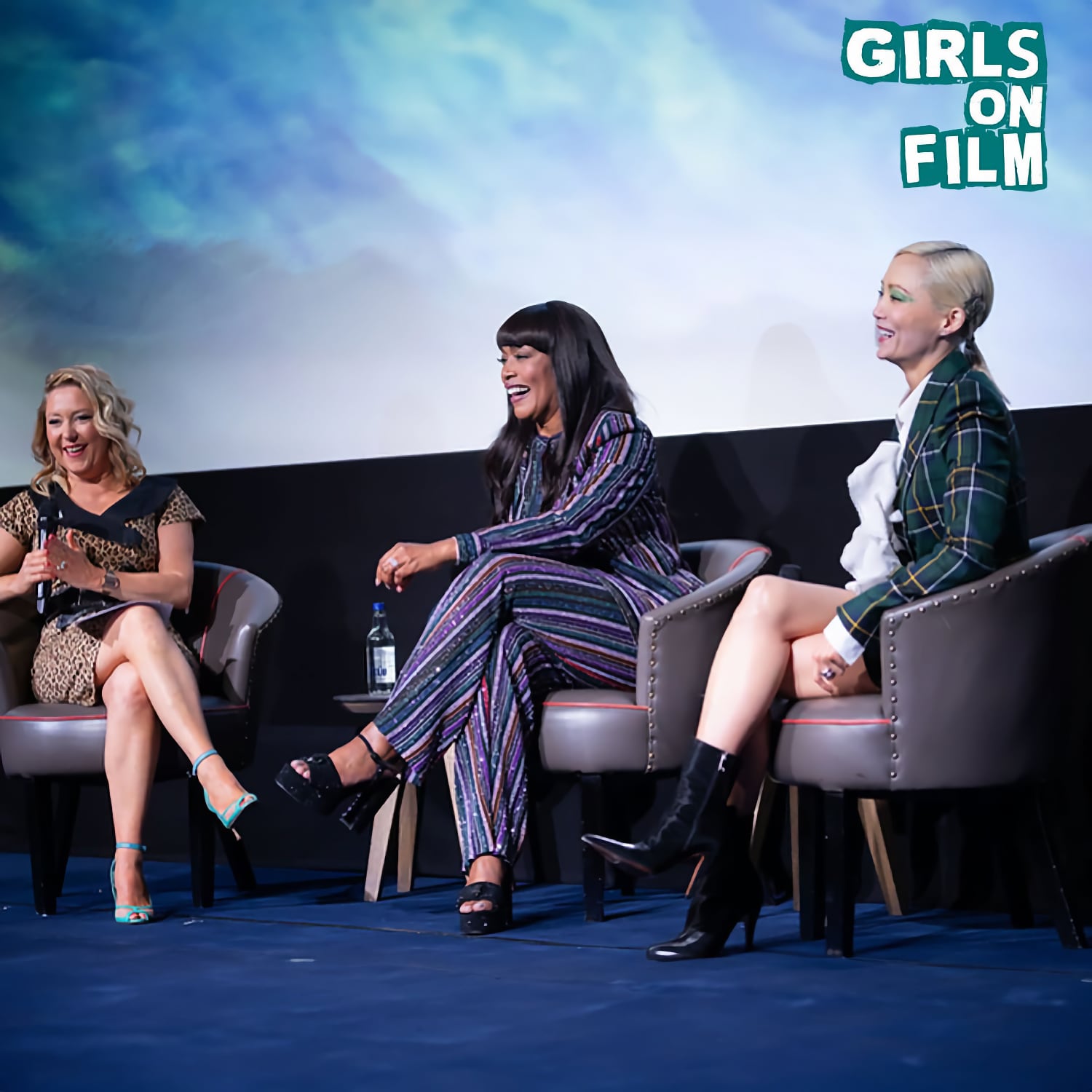
We do live shows, either with an industry audience or at a festival. We also get the chance to work in partnership with distributors for great films that really fit our brand. We invite our community along, see the film and then have a discussion about it afterwards over drinks, which works really well for us. We did one with the women of Mission Impossible in partnership with Paramount recently. Having Angela Bassett and Pom Klementieff on stage was just wonderful, then our network all get to meet each other, connect and talk as well.
Deadline were really keen to come on as a media partner because of that focus and because we’re shining a light on films that maybe other awards ceremonies might be overlooking.
You also have the Girls On Film Awards. As we seem to be awash with awards and so much noise in the industry, how do you position yourself and make your awards stand apart?
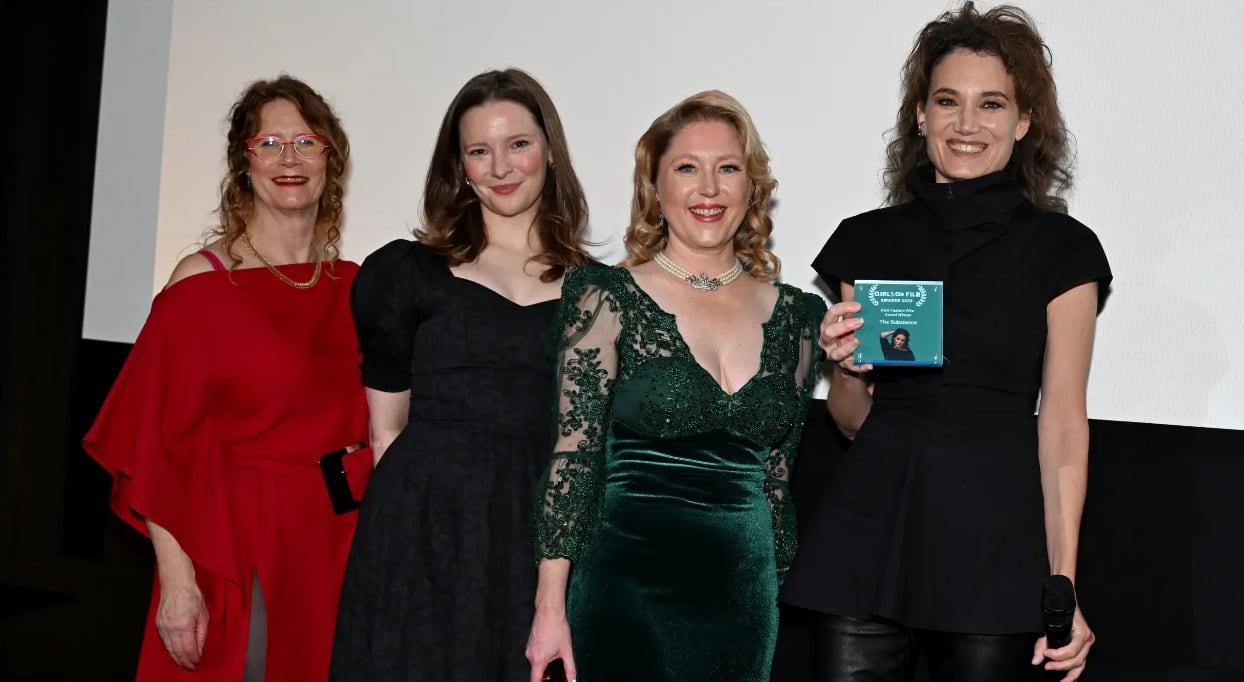
It all comes from a very sincere place. We just are Girls On Film. We’re supporting women in film and the allies who support women and talk about representation on screen. Everything’s very connected to the podcast. A lot of the nominees and the winners are people who have been on the podcast and they’re voted for by film critics, many of whom are not connected directly with us. So it’s an objective viewpoint but there is that synergy with some of the more undersung films by women, which is what I’m most proud of.
Deadline were really keen to come on as a media partner because of that focus and because we’re shining a light on films that maybe other awards ceremonies might be overlooking. Not in all cases and obviously, The Substance did well at ours and other ceremonies last year, but then there are others that we’re so proud to have lifted up and to shine a light on, and hopefully that then encourages more people to see them. Again, it builds our community.
How do films qualify for your awards?
In our first year we said it was any of the films we had featured on the podcast but now, it’s any female-centred film of the past 12 months. Most of the nominations are films with female directors or writer-directors. We do have the Ally Award, where it’s a male director who excelled in making a female-led film. We’re also really proud to have craft categories such as our female or non-binary cinematographer award for example. We’d love to expand those categories if anyone wants to sponsor them, please let us know. The only reason we haven’t done more of those categories is just financial.
How do you navigate the complex and often daunting world of sponsorship?
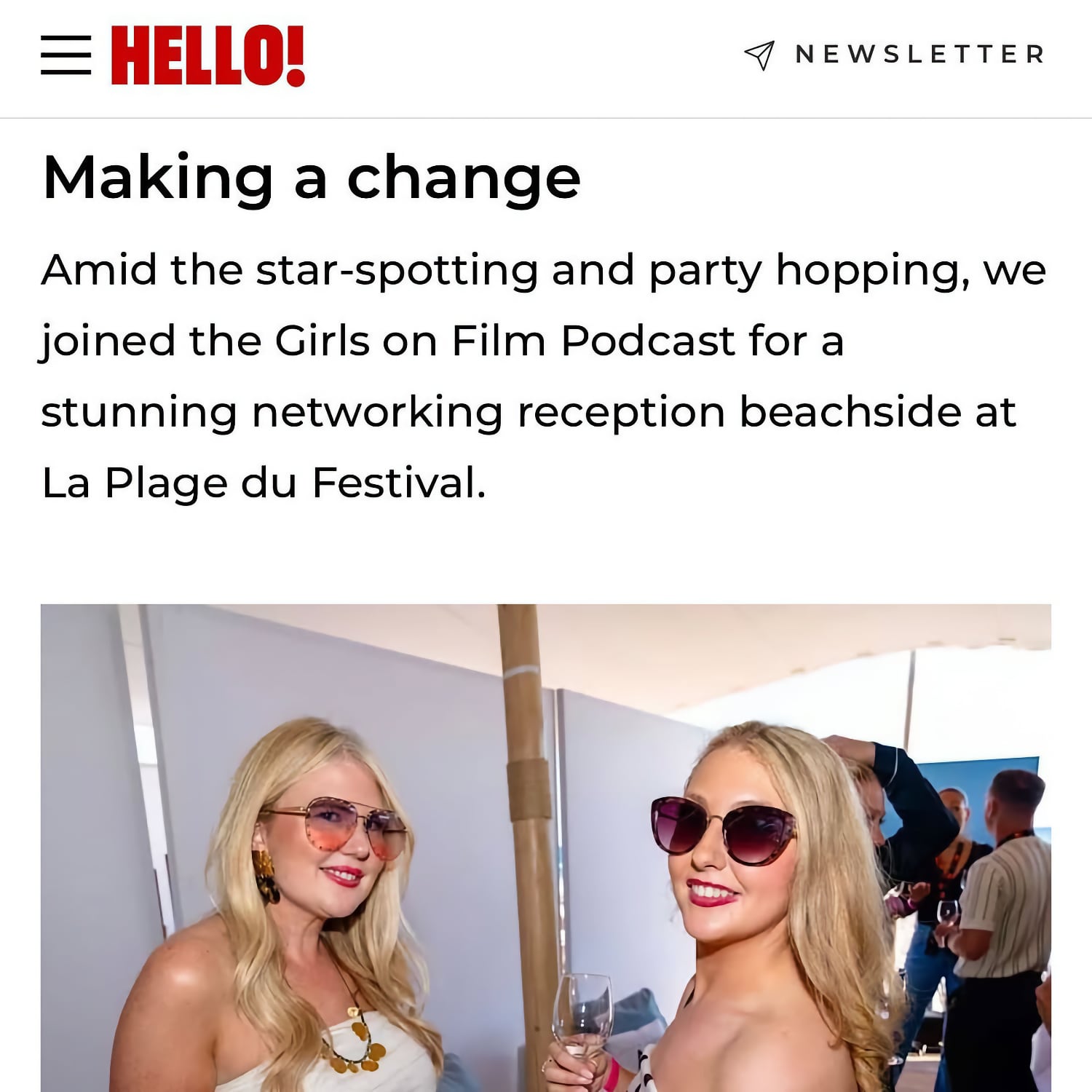
We have a small dedicated team—who all work on other things—but to be honest, it normally comes from people you’ve personally met and connections you’ve made. We’ve started having parties in Cannes every year and the people who come to our parties, awards and events are often those we end up partnering and working with because they can see firsthand the magic in the room, quite frankly. I’m not necessarily crediting us, it’s what’s been created by Girls On Film, which is really special and increasingly a lot of brands want to be a part of that, which is brilliant.
With social media being so huge nowadays, with everyone on Letterboxd and writing their own reviews, how do you see that changing things for industry professionals like you?
It’s an interesting one because on the one hand, I think a lot of film critics feel a bit threatened; they just feel like it’s encroaching on our territory. I’m not speaking for everyone, but I’ve heard it voiced, the idea that everyone’s a critic. On the other hand, I love what Letterboxd is doing because it’s encouraging people to be very thoughtful about film and to amass a lot of knowledge about film. Platforms like that seem to be working well for thoughtful audiences.
What I’m necessarily not a huge fan of is when those working to promote a film are not being transparent about the fact that it’s an ad, and perhaps altering their opinion for a YouTube review or those sorts of things. Suddenly, there’s a very blurry line between criticism and promotion and then how do viewers or listeners distinguish between that? With Girls On Film, when we work with partnerships, it’s always on films that we already like. We would turn someone down if we don’t like the film and it’s not right for us. I fear that there’s a bit of a commercialisation of the ravey reviews and for example, some of the poster quotes that come out of that. I think that can be misleading for audiences where the most important thing is that they need to know where to go for the truth and for an honest opinion. So there is still a great deal of value for criticism in that.
Suddenly, there’s a very blurry line between criticism and promotion and then how do viewers or listeners distinguish between that?

Do you ever worry about being pigeonholed?
There have been times where I felt the need to point out that I can interview men. Of course, I often benefit when people are specifically looking for a female host for a female-driven film. Then, there are other times where people realise it would be interesting to have a woman talking about a very masculine film with all these men on stage. It’s about making sure people know that I do have broad interests. I regularly write for Rolling Stone UK, which has a very male audience and I watch everything I can and continue to write about everything that I can. I don’t particularly think there are any worries about being pigeonholed. I just need to make sure that I remind people—as we were saying at the beginning—as to the breadth of my interests in film.
Most people in the industry are looking to support women in film and are looking to put their money where their mouth is. They want to make sure that there is good representation on the panels that they put on and the conversations about diversity on screen, which is something we talk about a lot on Girls On Film and we strive for when we have panels. So, if I’m pigeonholed as the feminist who talks about representation from an informed perspective, then that’s OK there are worse things to be.
Have you seen positive changes in the industry in terms of diversity on panels?
It’s an ongoing fight. Those conversations are getting louder, and there’s a lot more talk and discussions, both publicly and behind closed doors, about making sure that different voices are heard. But there is a very long way to go, especially when it comes to conditions in the film industry and things that I am not privy to, but things I get wind of. If I’d have gone on Sky News 10 years ago talking about female directors and feminism, it probably would have been seen as quite niche but now, whether they’re men or women, the presenters are asking me those questions.
What I also love to see is now, in the mainstream, we’re seeing a lot more films where there are characters who might have been classed by their sexuality, gender, colour or by their disability, which is now not mentioned. It’s not even referred to; it’s never a problem but just part of the many facets of their character. That’s the kind of film I want to see. A lot of the LGBTQIA+ listeners we have on Girls On Film feel similarly because they are sick of seeing gay tragedies. We want to see women celebrated for all their various sexualities in positive stories that are more complex than that. I do think that is changing fairly rapidly. For example, this week I was hosting a big Q&A for Echo Valley, the new thriller on Apple TV, and part of Julianne Moore’s character is that she fell in love with a woman and and she also has a gay friend played by Fiona Shaw but it is just presented as part of her story–it’s not the focus. That’s a male director, Michael Pierce, and it’s great that it is completely normal and nothing to get excited or shocked about. It just is what it is. But it’s been a long time coming. I love having those conversations on Girls On Film because you can see the cogs turning in people’s minds.
What have you got coming up that you’re excited about that we can look forward to?
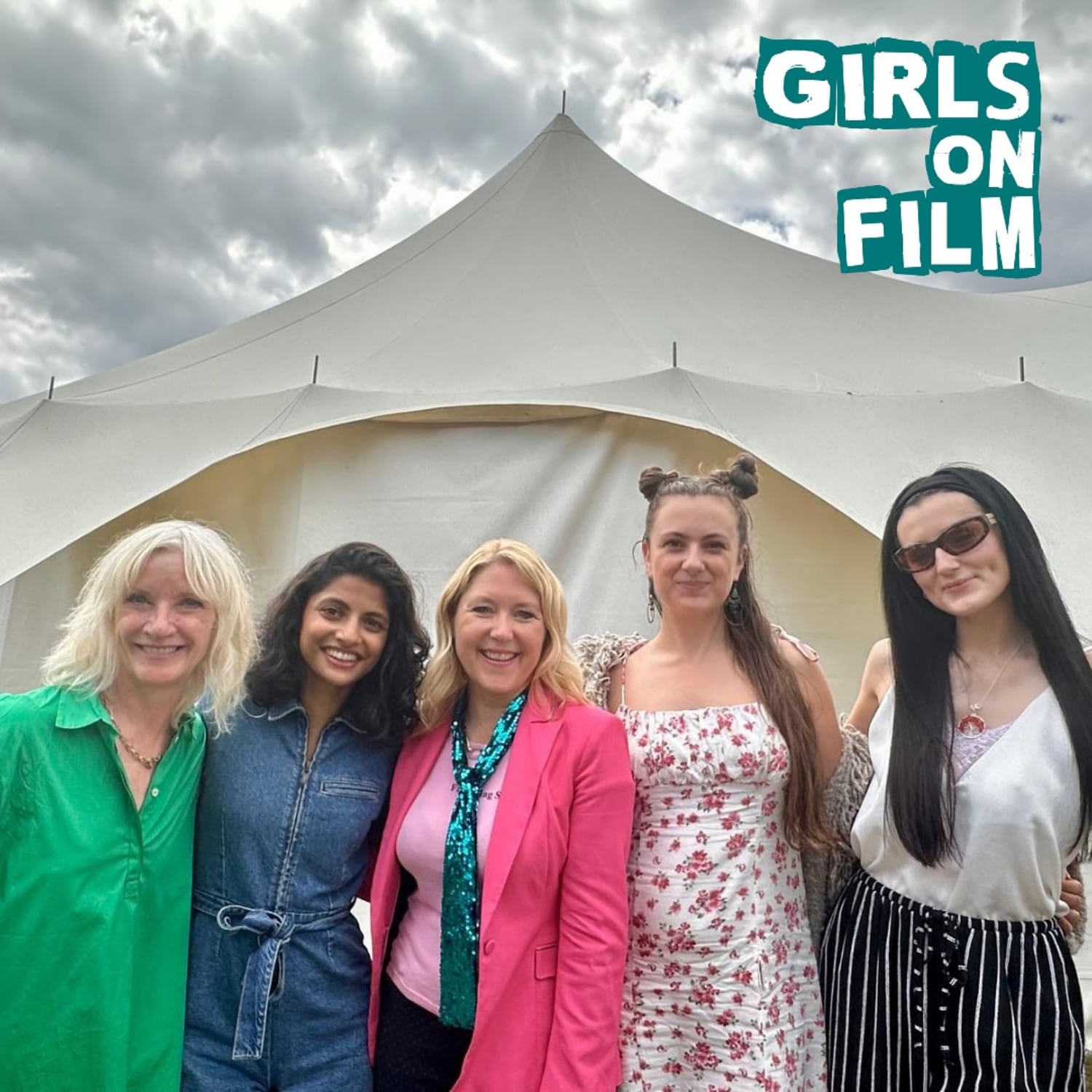
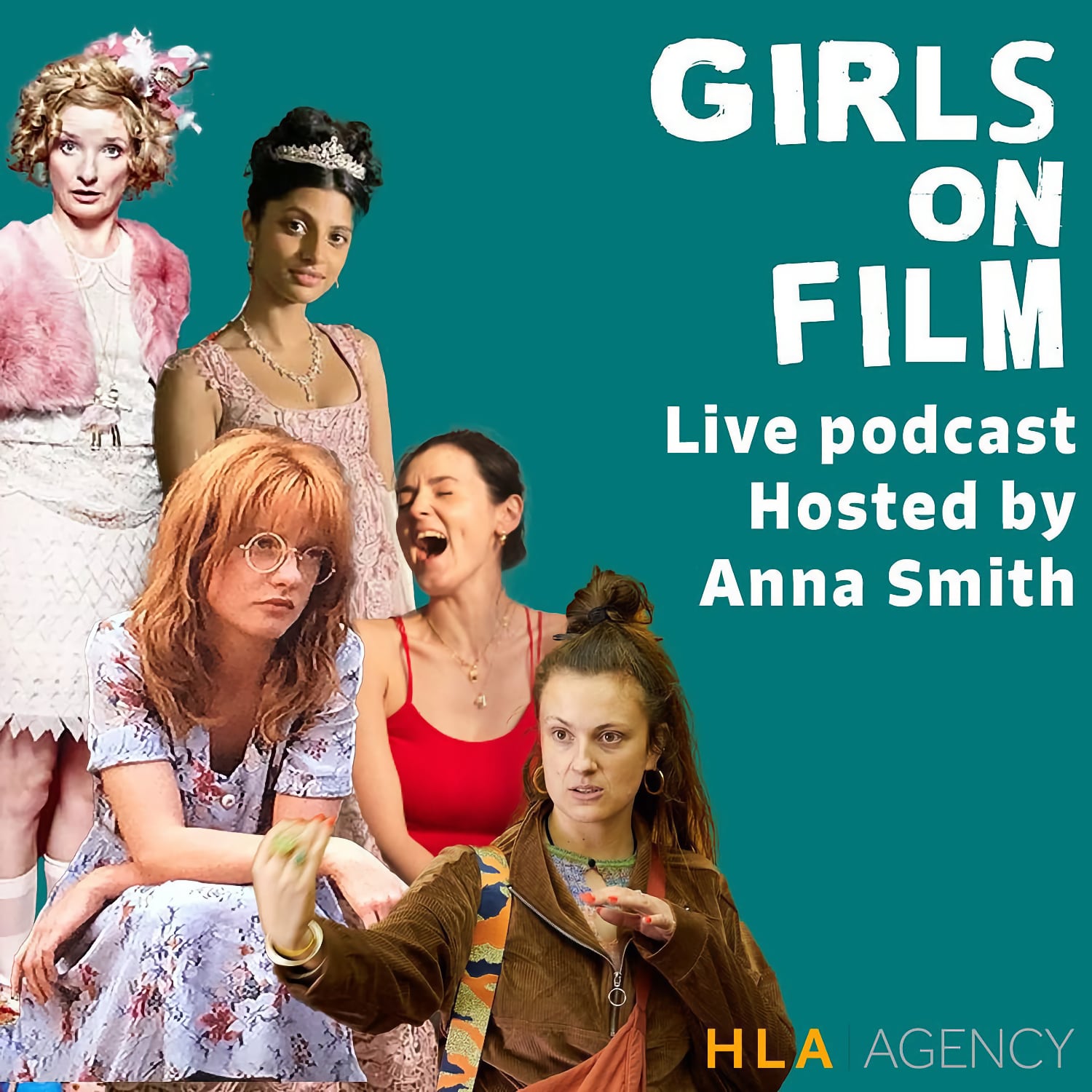
We were just live on stage at Latitude Festival [talking to Daisy-May Hudson], which we’ve been doing every year and which I love. I love music and arts festivals. It’s a really fun chat show style panel with really amazing women chatting with me and with each other on stage. We’re going to be back at Evolution Mallorca Film Festival, which is always a treat in October. We’ll be doing a live show. And we are always looking for partnerships. In the meantime, we’ll be doing new episodes and talking about current releases. I’m also going to the Mediterranean Film Festival in Malta, I’m going to see what they’ve got going on in terms of women in film.