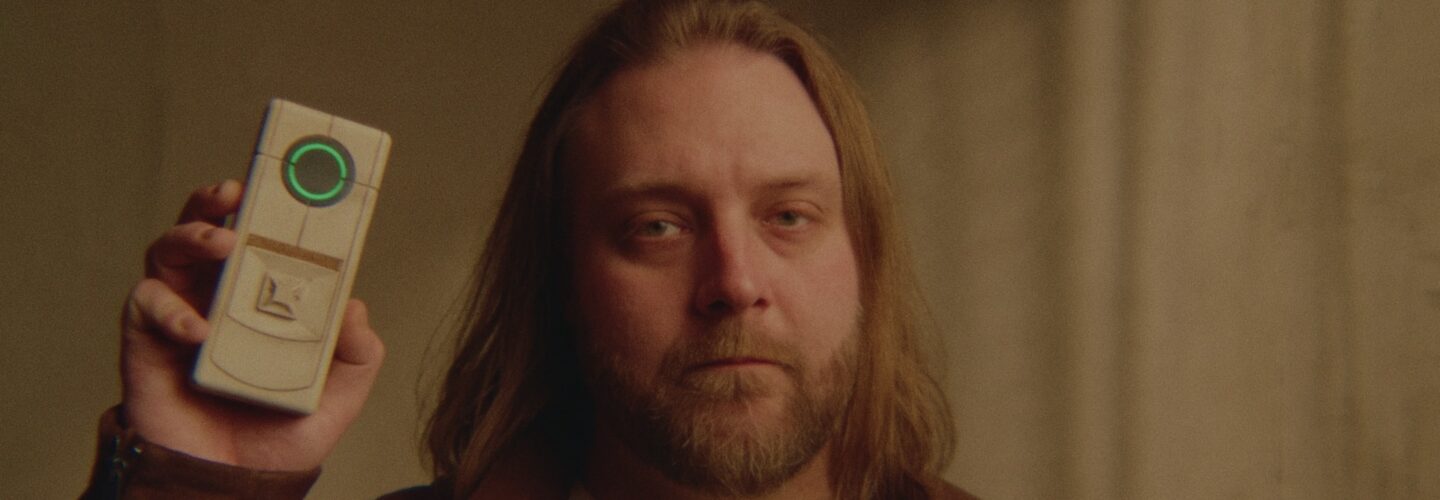
No stranger to the ins and outs of filmmaking, Konstantin Enste becomes a jack of all trades for the production of The Death of the Machine, taking on all major crew roles right down to the development and production of the set. The work put in behind the scenes most definitely translates to screen, intimate shots of both actor Andreas Schlicht and the machine draw you into their dynamic and the unhealthy reliance the former has on the latter. With the convenience/threat of artificial intelligence seeping into every aspect of our lives, Enste’s short envisions the improper use of AI—what happens when, for whatever reason, you resign yourself to the mercy of a machine, and what then when the time comes to start living for yourself? Just as The Death of the Machine takes the supposed comfort of an all helpful AI and uses it as a Trojan horse for overdependence, the genre of comedy similarly acts as a disguise for a deeply heartfelt and reflective project. Exploring the psyche and taking responsibility for negative traits is often uncomfortable narrative ground; if you don’t laugh, you’ll cry and Enste most certainly succeeds in making you laugh. We sit down with the multi-hyphenate filmmaker ahead of today’s premiere to discuss the limitations of working with such a small crew as well as the benefits of taking the time to reflect during the developmental period, and how literally building your world can further help flesh out what’s envisioned.
What led you to create something so inward facing and reflective?
The initial idea was much simpler and quite different: after the death of my father and personal relationship struggles, I felt desperate to create something to clear my head. It was about a man going on a retreat, eventually meeting someone new there and discovering that comfort could lie in the connections we build through shared experiences.
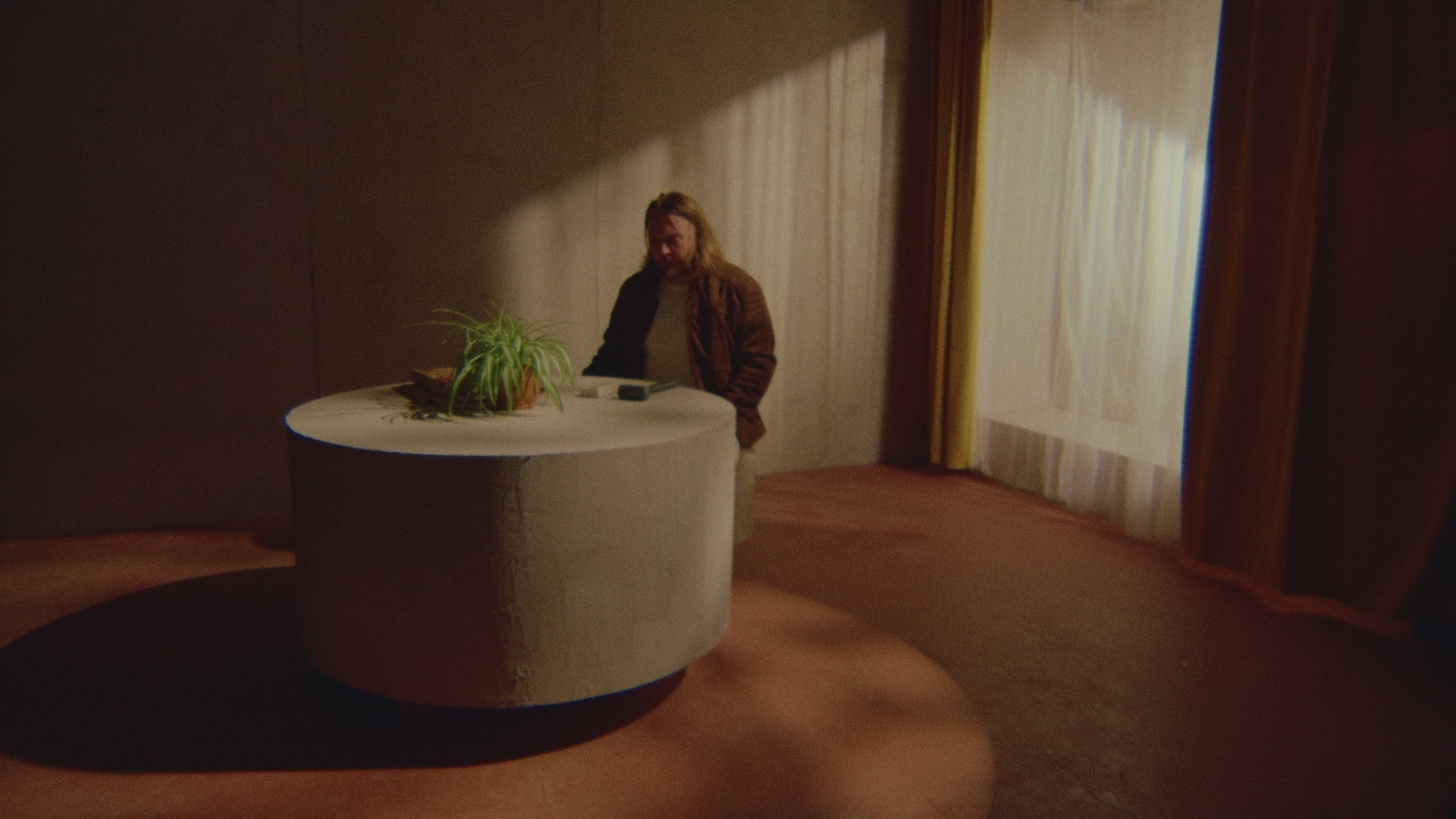
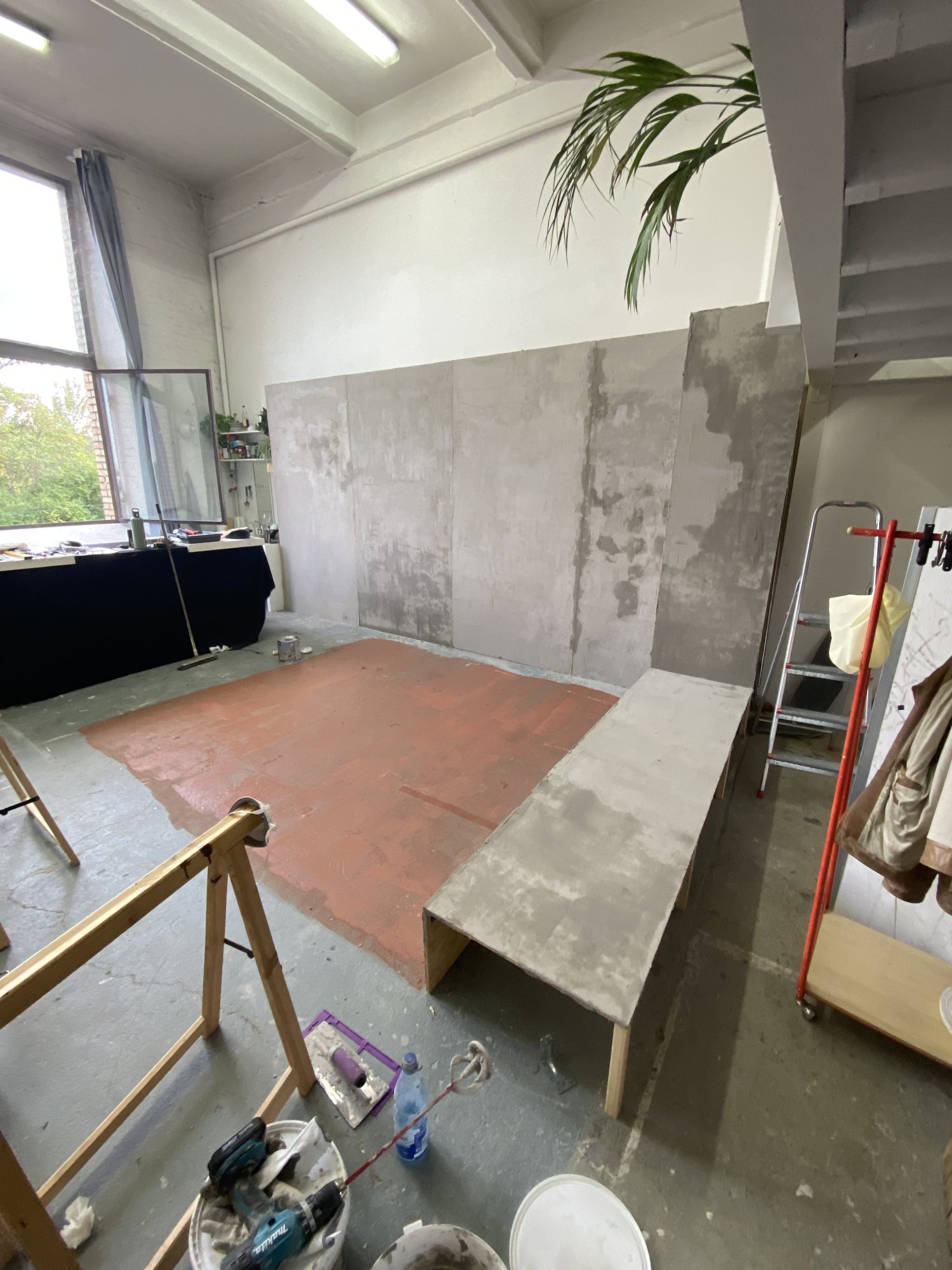
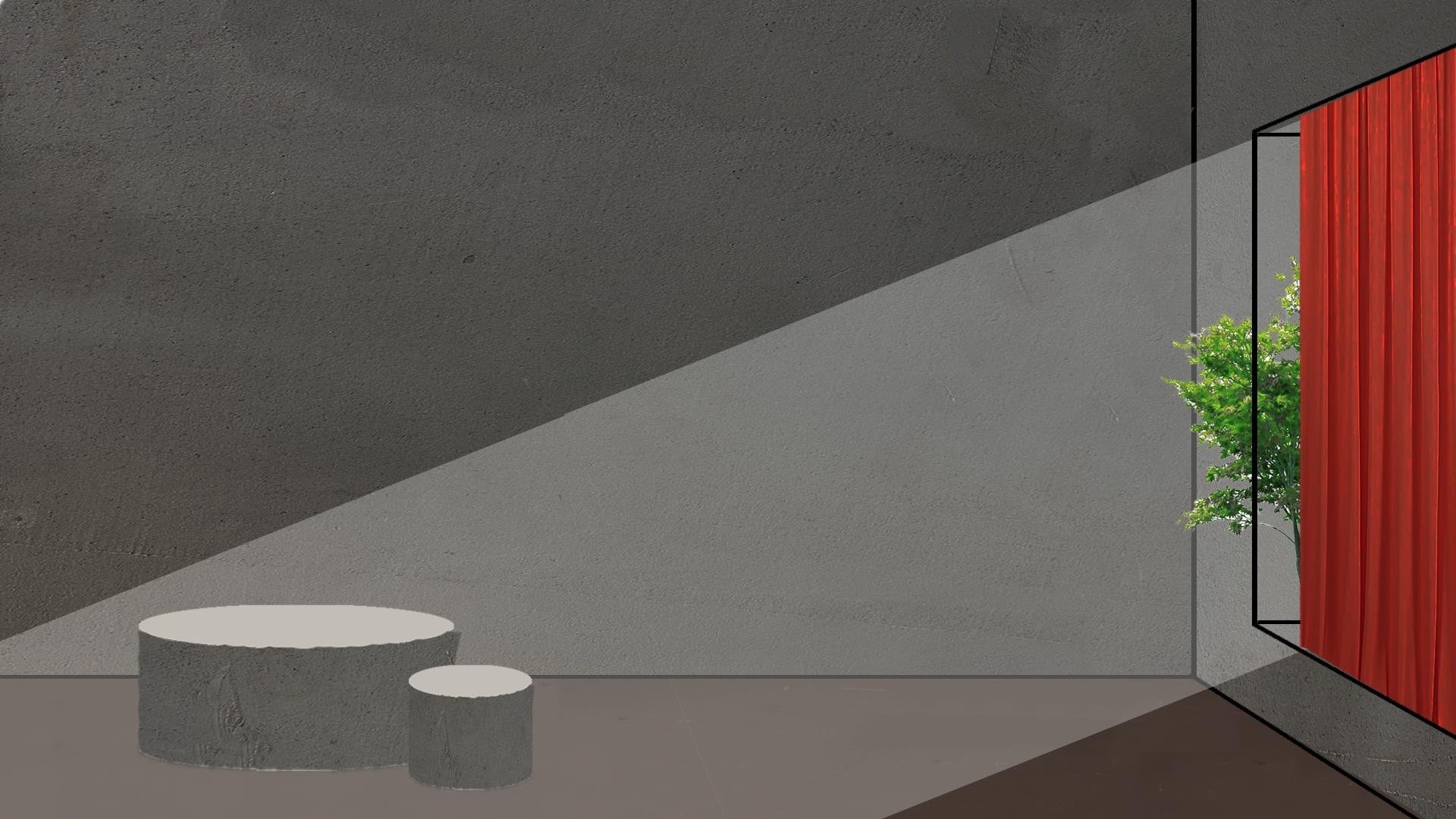
I started building the retreat set in my small studio. Inspired by brutalism, I wanted a minimalistic design where nothing distracts, a space stripped down to clarity. This process stretched over several weeks, as I had to balance it with other jobs. After the first attempt at shooting, I realized I had rushed the whole idea — the minimalistic approach didn’t work because I was still too distracted by life and by that time the story no longer felt right to me. So I left the set standing, took a step back, and started writing the script that became the final film. Since there was no rush, and I could let the idea rest while I reshaped it — again drawing from my own life, but in a more exaggerated and humorous way. In a way, I was poking fun at myself and my first approach to the project.
I still believe that comfort can be found in connections, but at that particular time it felt more truthful to explore a relationship of dependency instead.
The relationship between Some Guy and the Machine is one of dependence and reliance. This varies greatly from what you had originally planned. What caused you to change directions?
While making the film I went through a very intense period in my own life. I started to understand more about my personal needs, the patterns in my relationships, and why they exist in the first place. I still believe that comfort can be found in connections, but at that particular time it felt more truthful to explore a relationship of dependency instead. I had experiences that made me realize how easily comfort can turn into reliance, sometimes even without consciously wanting it. So in the end, this shift wasn’t just a creative choice, it reflected what I was learning, and what I’m still learning, about myself.
How did literally building your world affect your vision for The Death of the Machine? What do you gain from the process of ‘building and refining’?
First of all, it’s simply a lot of fun to build things. I’ve always loved coming up with an idea and then actually bringing it to life from scratch. There’s something very satisfying about combining practical, hands-on work with finer artistic decisions. I once read that “the story inspires the art, and the art defines the story,” and that has always felt very true to me. I usually start with a clear vision, but it’s really in the building and refining process that the world of the film takes shape.
In my personal projects, I usually build everything from scratch in the studio, which gives me the freedom to take my time until I’m genuinely happy with it. I’m not a full-time production designer, and I have my limitations, but that process of building and refining has become a part of how I approach filmmaking. Once you physically construct the space, you quickly see what works and what doesn’t, and often the set itself suggests new ways to shoot or even how the story might unfold. For me, building the set isn’t just a technical task, it’s part of the storytelling. That process always uncovers details I could never have planned on paper.
Most Popular
Using AI as a foil to Some Guy’s very human feelings was a great contrast. Where did the idea to pit him against a machine come from?
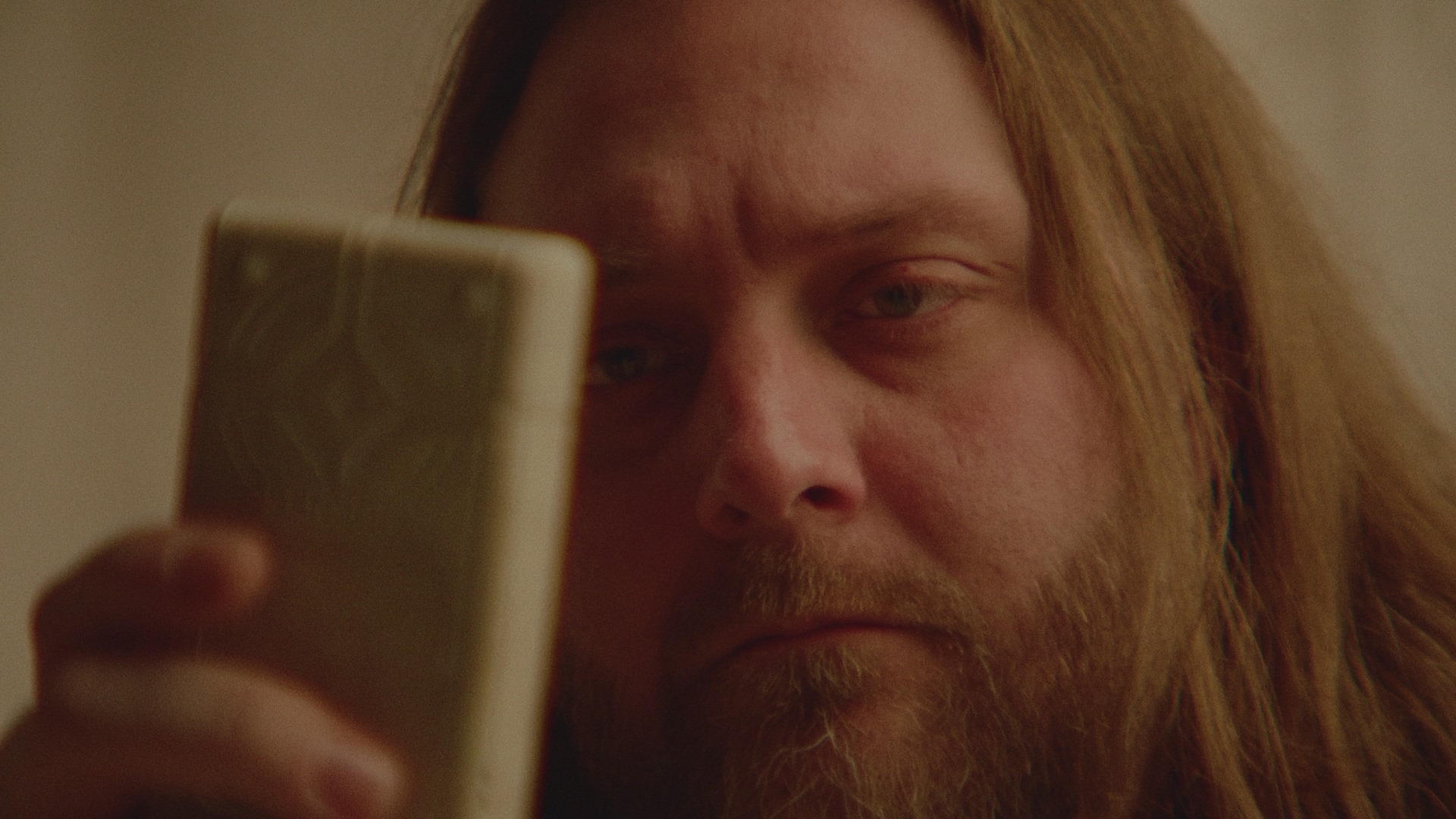
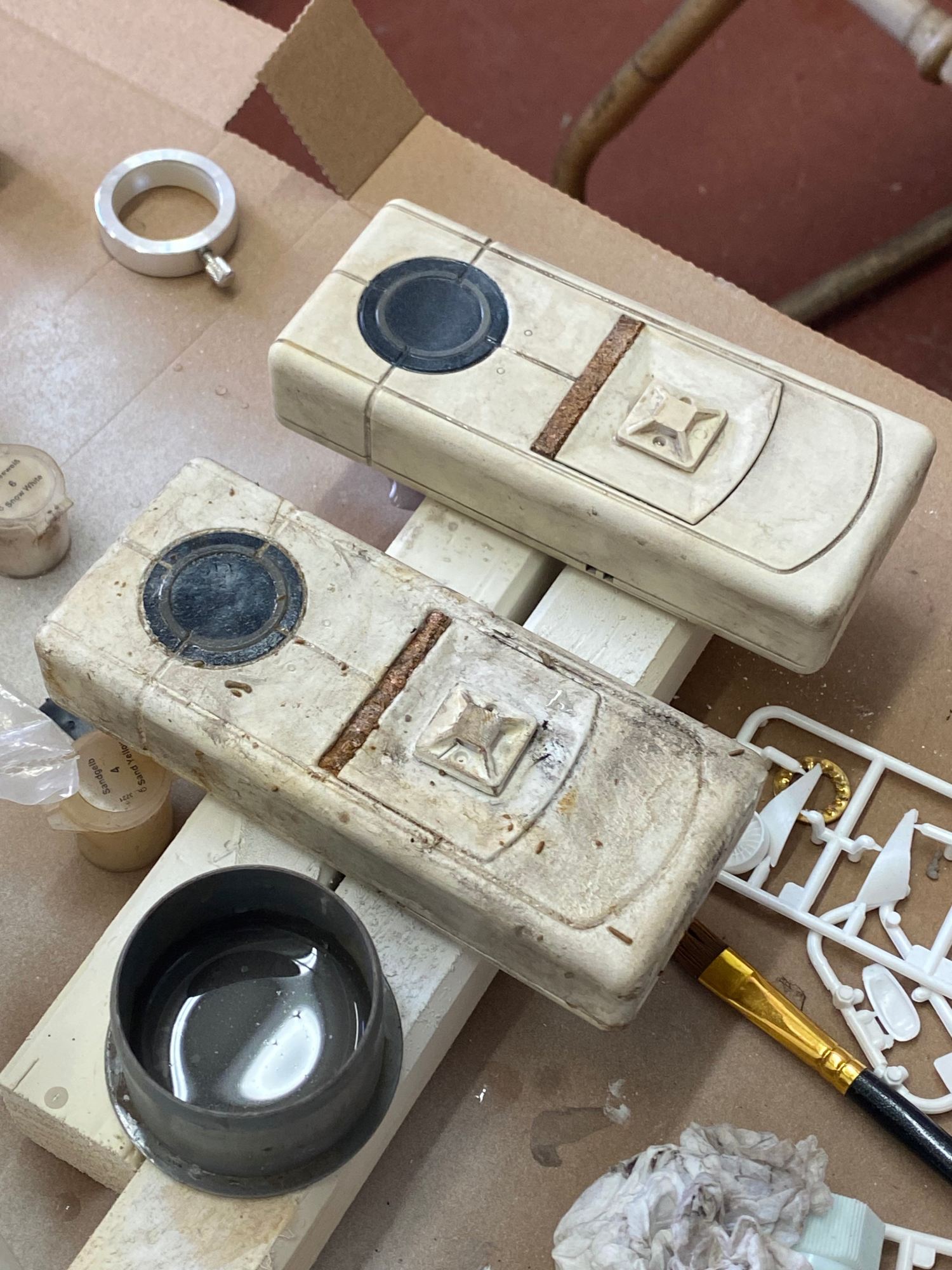
Since I’ve always enjoyed using machines and devices in films, allowing one to act as a kind of counterpart to the character felt natural. I hadn’t planned to make a film about AI in the first place, but while writing, I realized it felt strikingly fitting for this moment in time. Today, AI is often used as a substitute for self-reflection, a tool we increasingly turn to instead of engaging with our own feelings and actions. That tension—between the promise of quick answers and the challenge of truly confronting oneself—became an important part of the story. The ‘machine’ used in the film was in fact a simple digital detector. Luckily, it only needed minor modifications — a new coat of paint and a few added parts.
Building the set isn’t just a technical task, it’s part of the storytelling.
The look of The Death of the Machine adds to the calm, meditative mood of the film. How were you able to capture this calmness?
I used an old B4 Angenieux broadcast zoom lens that I fell in love with a few years ago, adapted to a digital camera. At the time, I was looking for an all-around zoom because when I’m both directing and operating, it keeps me fast and flexible. The zoom range is just wild – something like 14mm-175mm. The lens comes with plenty of artifacts and the image is very soft, but that’s exactly what I like about it, the somewhat organic, nostalgic quality. It makes the world feel more believable to me.
The fourth wall breaks engage the audience, making them part of the narrative. Why did you wish to involve us as opposed to exclusively presenting a story to us?
For me, the fourth wall breaks work on different levels. They underline the oddity of his situation on a meta level but they also expose his constant need for reassurance. Whenever the machine can’t provide answers, he turns to the audience instead, seeking support. Even at the end, when the machine is gone, his last glance at us becomes a final attempt to find help. It felt like the right tool to amplify that helplessness while also adding a comedic note.
Does taking on the majority of crew roles allow you to better achieve what you’d envisioned in your head?
I ask myself that a lot. Filmmaking is, of course, about collaboration, but for my personal projects this has been the only way to actually make them happen while also handling paid jobs. Since I was both filming and directing, I pre-lit almost everything in advance so I could focus more on the performance during the takes. The AI’s voice was prerecorded, giving Andreas something real to respond to in the moment.
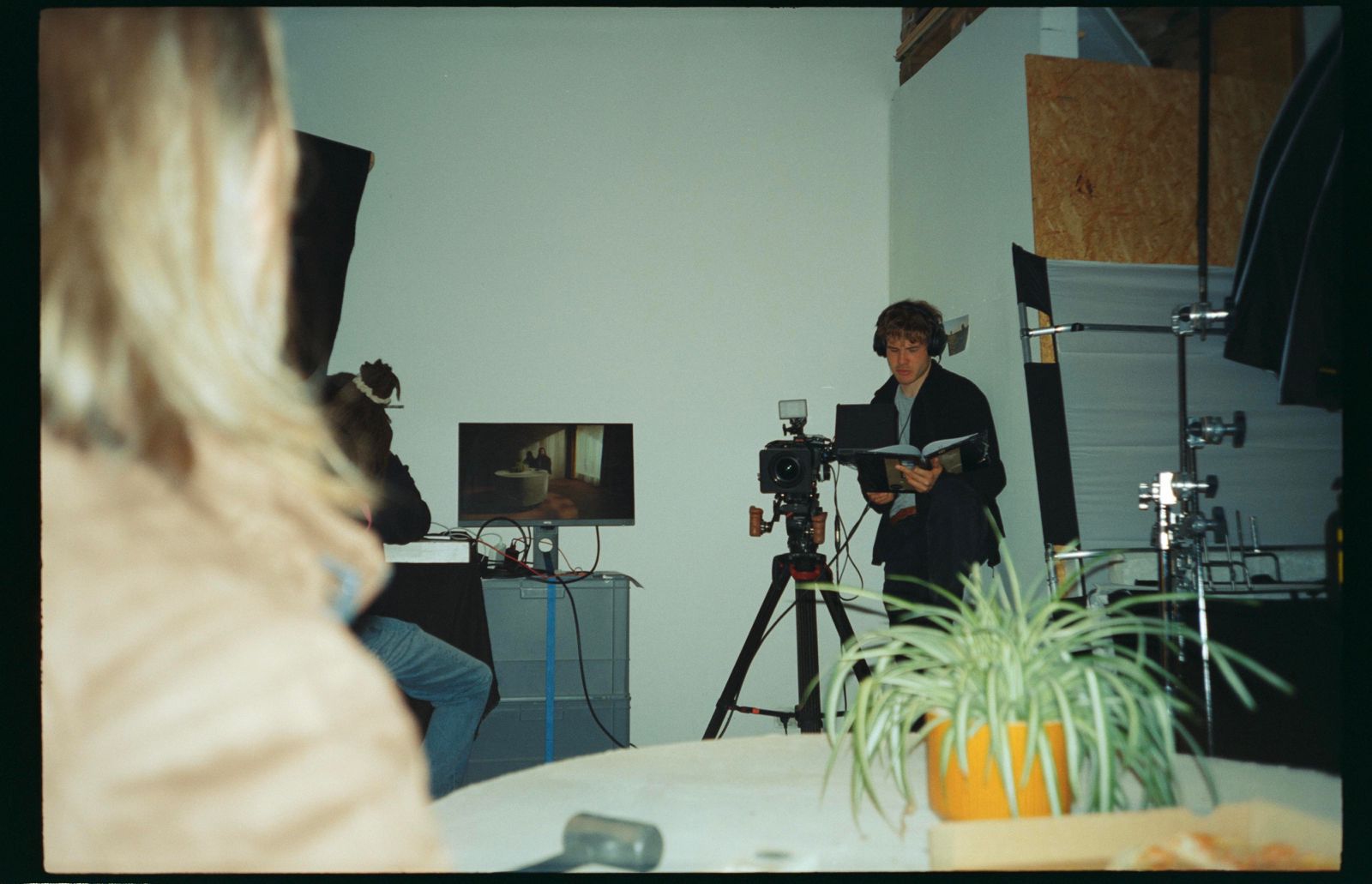
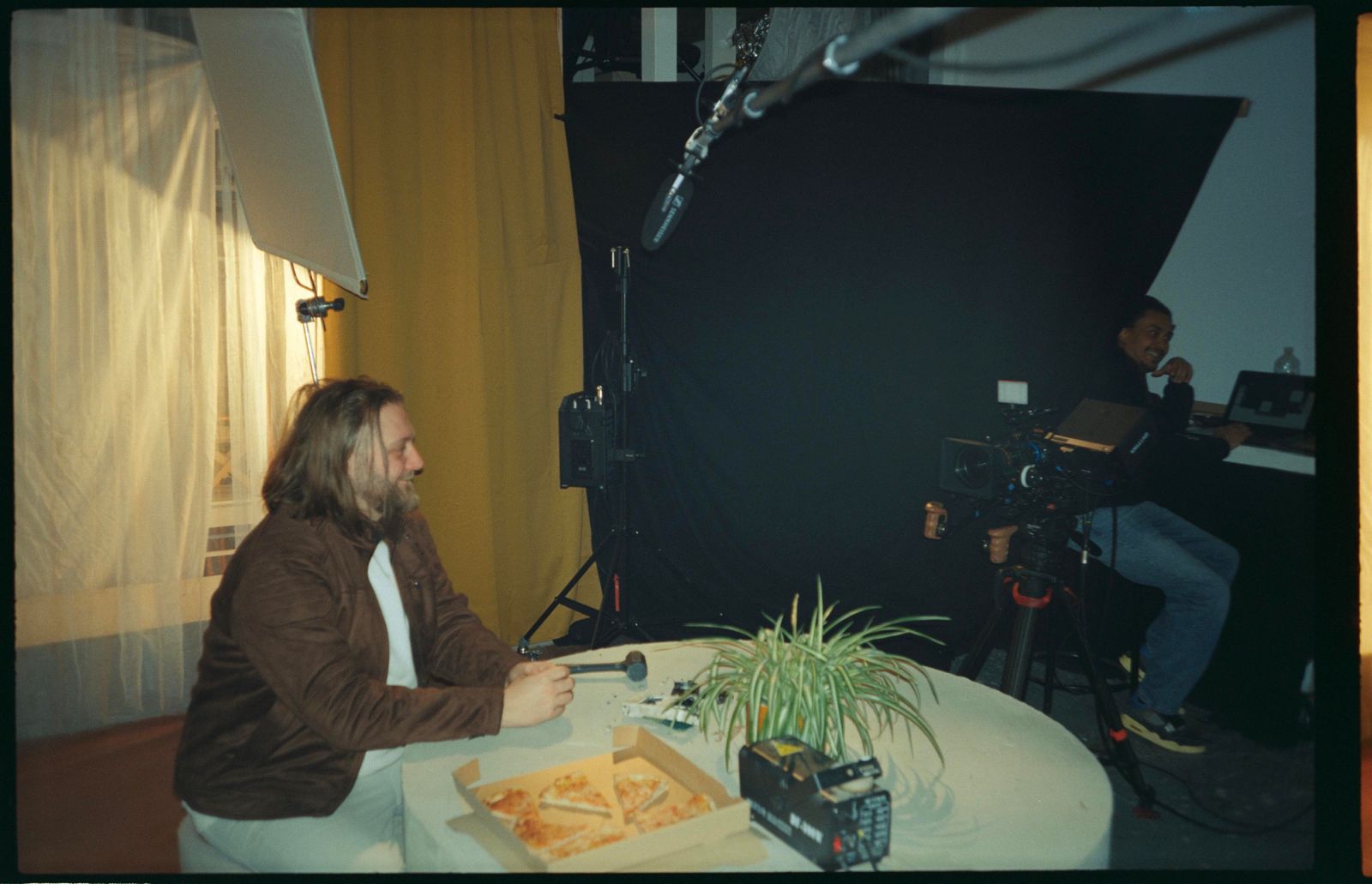
The actual shoot itself was small and intimate: just three of us plus the actor. We managed to shoot everything in just two half-days, since Andreas had to fit it into his schedule. I’m incredibly thankful that Andreas and the crew were willing to participate, even though no one was getting paid. Because of that, I try to take on as much of the work and decision-making as I can beforehand, and I try not to take too much of anyone’s time.
It may sound lonely at times, but there are also advantages, especially in terms of the defining process I mentioned earlier. I can take all the time I need, let the project grow slowly into what I want it to be, and even squeeze in spontaneous work whenever possible. That freedom allows me to experiment, and much of the film really takes shape during that process.
For me, it’s a product of its time, and above all it’s a playground where I can try things out and grow.
On the camera side, I know there are many DPs who are more skilled, but by taking on the work myself I learn a lot, and I compensate what I lack in technical expertise with time. My personal projects have helped me regain confidence in doing directing/DP work professionally, make faster decisions on set, and gradually find my own style. I also keep sharing thoughts with filmmaker friends, so in the end, that ongoing exchange keeps the process from ever really feeling isolated.
Of course, there are shots where the lighting isn’t perfect, or where I later noticed the curtains in the set looked a bit messy — but I’m fine with that. Technically it may not be flawless, but it’s the version I connect to the most. For me, it’s a product of its time, and above all it’s a playground where I can try things out and grow. Looking back, the process became a cathartic lesson in patience and in trusting the process itself. I’m not sure I’ll always work this way, but for now it’s how I approach my personal projects.
With such a curated crew, where did the decision to cast Andreas Schlicht come from? Was it challenging for him to act against the pre-recorded dialogue?
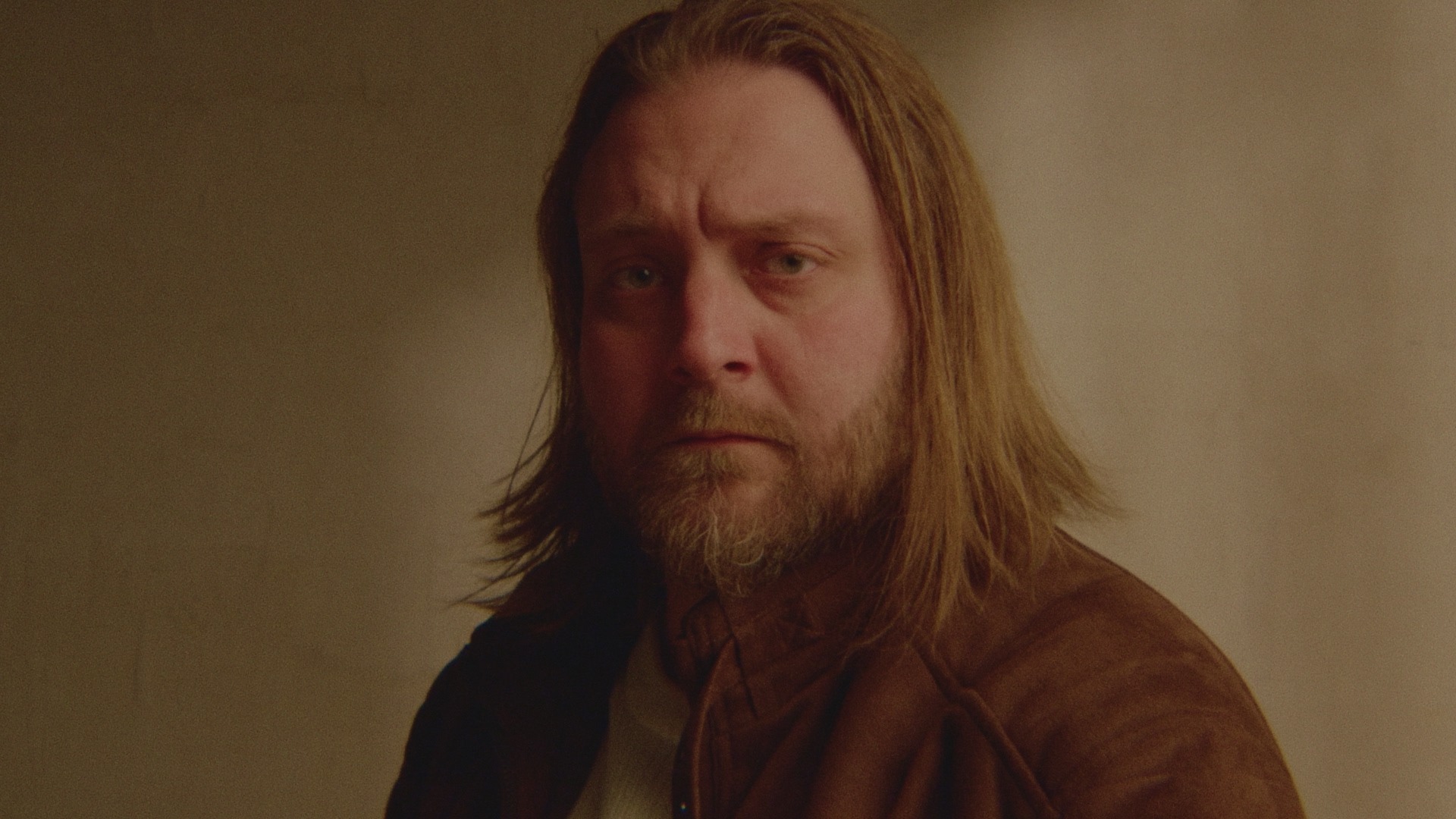
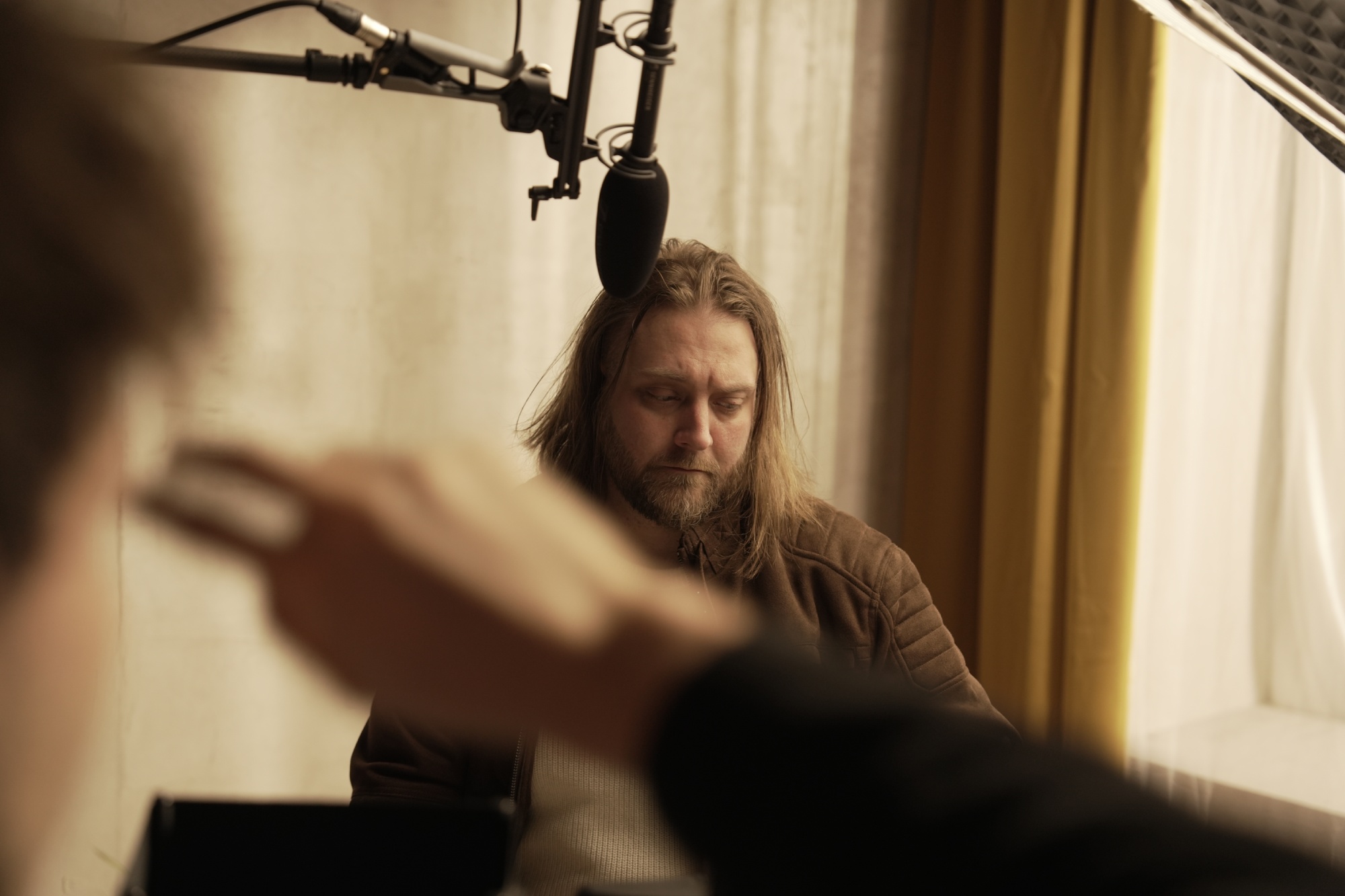
I worked with Andreas before on a very personal project about reconnecting with my dad. My dad was still part of that film but passed away a few months later, which made the project a deeply bonding experience for us. Andreas has such a unique presence on screen, and I feel I can relate to him a lot. There’s a quiet sadness he carries that felt absolutely right for this role.
As for acting against the machine, the pre-recorded dialogue worked surprisingly well. We had every single line recorded as its own file, so Devin Lee, who operated playback, could trigger the responses in real time. That allowed both of them to naturally react to each other’s timing. It was fun to listen to and at times it really felt like Andreas was just chatting with the machine.
Are you currently building anything we can look forward to seeing in a future project?
I’ve just finished building the set for a new project. It’s more minimalistic and it’s going to be more experimental and poetic in tone. After the excessive process of TDOTM, I felt the need to strip things down. This more toned-down approach feels like the right step for me now, to focus less on detailed production design and more on atmosphere, pacing, and a quieter kind of storytelling.