

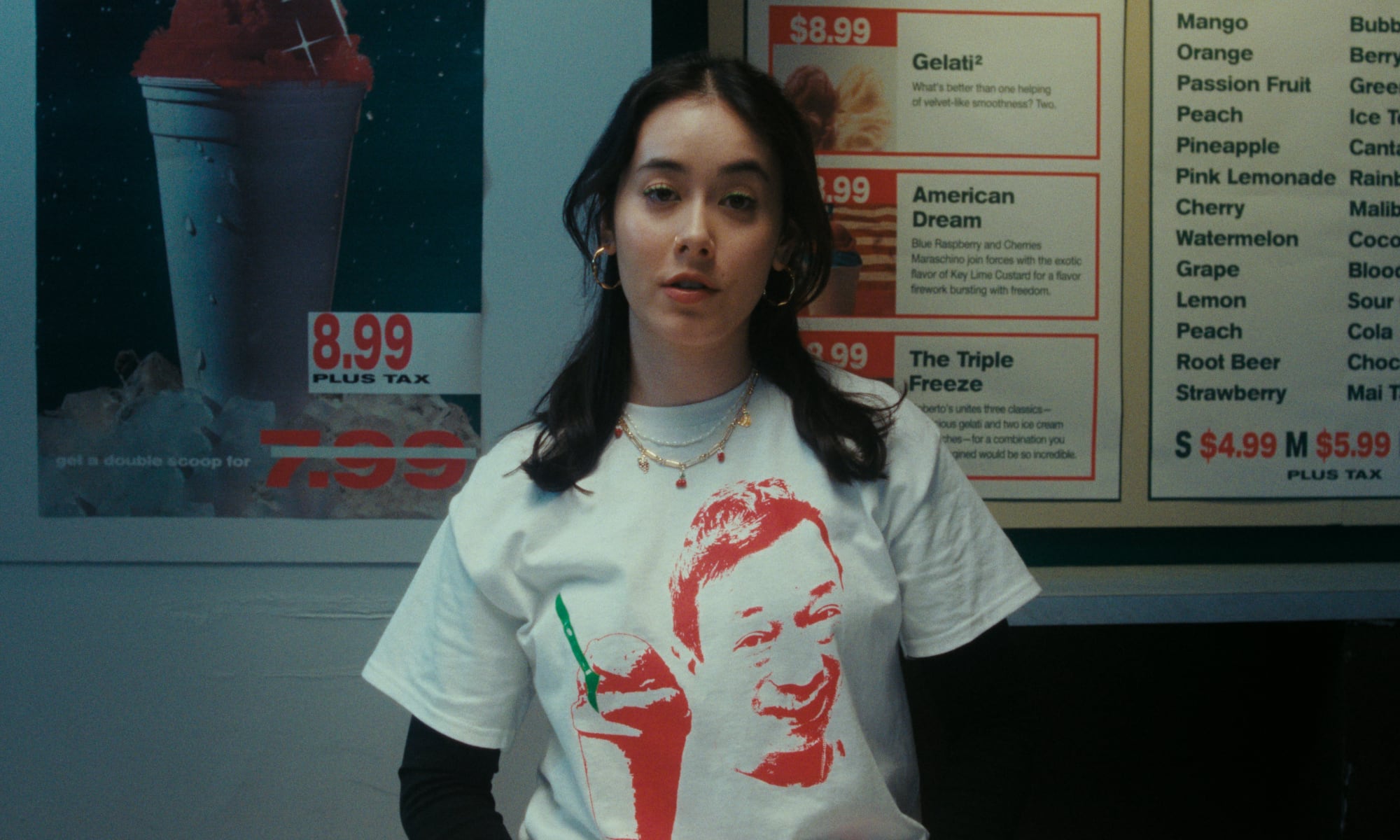
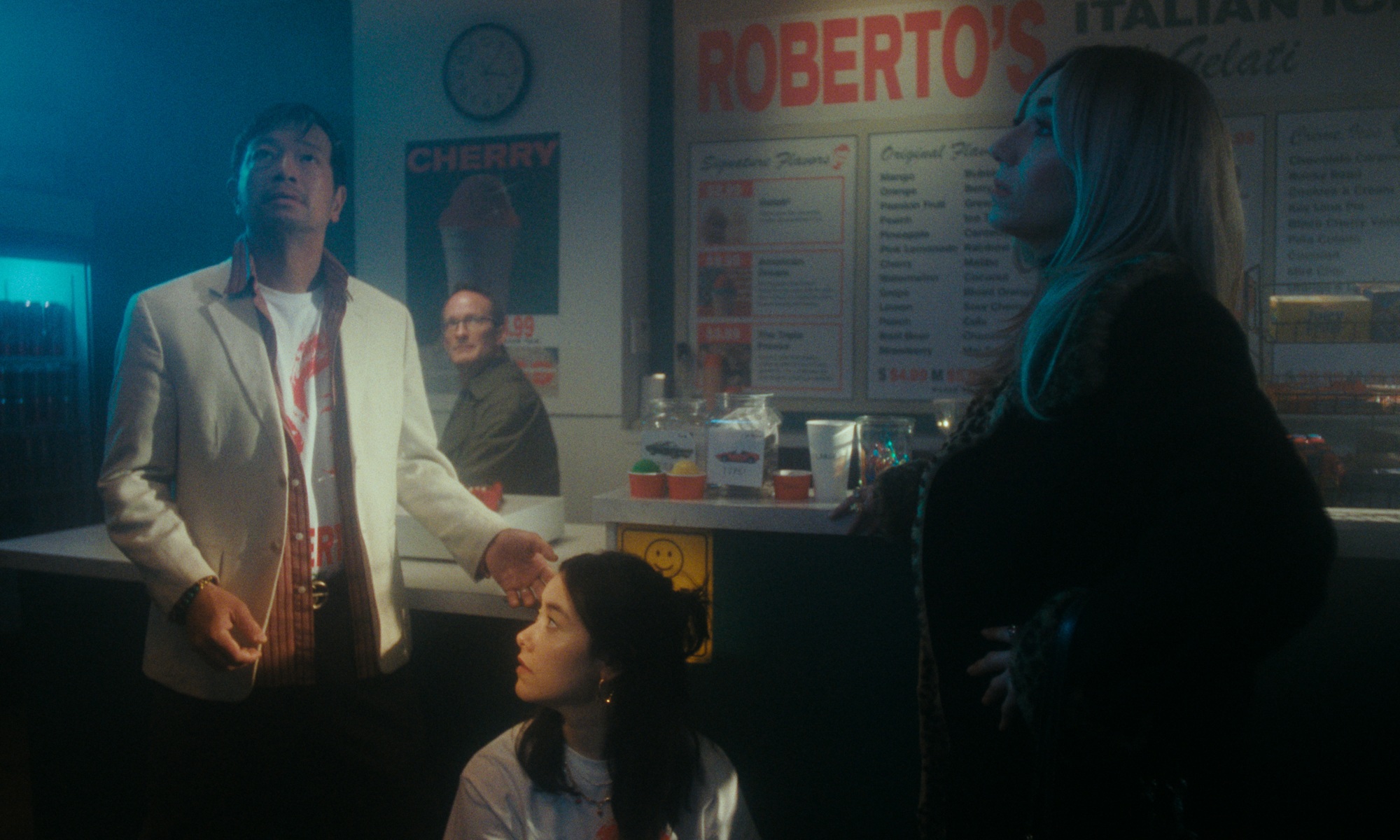
Despite the multitude of frozen flavours on offer, temperatures and tensions only rise in writer/director Chelsie Pennello’s Cherry-Colored Funk as we see the personal and professional life of serial grifter Roberto Ferrari go up in flames around him. Set on the launch day of a new Italian ice store, the misguided businessman, desperate to live out his own American Dream, finds himself instead embroiled in a self-imposed nightmare as just about everyone he’s ever wronged shows up on opening day. The film has as much to say about capitalism as it does the entrepreneurial spirit, and the false hope given to so many looking to make their fortune in a world that just doesn’t want them to. Put simply, not everyone is cut out to start their own franchise operation, and the sooner they realise that the better off they and those unfortunate enough to be in their orbit will be. A film we first highlighted when it screened at Tribeca, Cherry-Colored Funk is a pacy, stylish, single-location comedy with ever-increasing angst, anchored by Michael Tow’s brilliant performance as a man trying to live his life with a ‘hardcore intensity’ CEO mentality, but who in reality is quite literally his own worst enemy. In our interview, Pennello and close collaborator Corbett ‘Cory’ Blair speak to us about building a frenetic world around a character conceived as a vehicle for actor Michael Tow’s untapped manic energy, the intricate shot-by-shot Google Sheets mapping required to navigate the real store location’s limited space, and how a diegetic, genre-hopping DJ score became the film’s chaotic heartbeat, evolving to treat each of Roberto’s tormentors with their own thematic musical identity.
Considering Cherry-Colored Funk is set entirely in an Italian ice store, it’s quite the juxtaposition that the energy of the story unfolding makes the film feel more like a boiling kettle. Where did the idea for the Roberto Ferrari character and the setting come from?
Chelsie Pennello: My first job in high school was at an Italian ice shop, so I assume that planted the first kernel in my head. It was definitely less chaotic than the shop in the film, but it still had a classic mom-and-pop, small business operation feel to it. Some days were smooth sailing and some days were more about survival. As for Roberto, so much of the idea for the character came from just imagining what we’d like to see Michael Tow do. He was truly our muse. We were familiar with his game at that point and so we thought–okay, we’re early career filmmakers with this amazing talent that we have a good relationship with. How can we use him?
He emerged as almost a parody of this type of character, but still someone we take – and the film takes – very seriously.
Corbett Blair: We really wanted to push Michael into zones we hadn’t seen him operate in before – in our first film with him, Mandarins, he plays this buttoned-up, repressed older brother, and we were thinking, “Wouldn’t it be great to see him go completely in the opposite direction?” What eventually formed from this was a man constantly on the brink, talking himself out of trouble, and always on the run – from people he’s wronged, family he’s shorted, and even from himself, as he changes his name and tries to lay his old self in the dust. Of course, this has been done before, but we thought it would be fun to make the problems as small and silly as possible. Instead of a scary mafia guy he owes money to, it’s a mitten-wearing weenie; instead of a cut-throat businessman dealing with mergers and acquisitions, he’s selling colorful Italian ice to children; instead of a normal name, he chooses ‘Roberto Ferrari’. He emerged as almost a parody of this type of character, but still someone we take – and the film takes – very seriously.
Personally, I always prefer short films taken from feature projects to either be a standalone story within the world of that feature, or even perhaps a prologue to it, rather than a truncated version of what that feature could be. Where does this film sit in the world of your feature and how did you find developing this specific script and character from that larger project?
CB: We knew from the beginning that we were writing this film to be a short – the cyclical and rhythmic character introductions, the music that plays for the entire runtime, the sustained pace, the rapid-fire nature of the callbacks – we felt a lot of this only works in the short format and never really had an intention of adapting the same thing to a feature. That being said, we love Roberto and want to do a lot more with him. We feel like there’s a lot more depth to explore there, and it’s just so fun to see him try and deal with problems. The stakes in the short were intentionally set relatively low. What if there was actual danger involved? What if things got a bit more surreal? I really laugh imagining Roberto Ferrari trying to survive a scene out of something like Blue Velvet.
CP: Cherry-Colored Funk did evolve from a previous feature script I was working on. It was a coming-of-age, neo-noir thing that focused more on the relationship between Lily and The DJ Dragon Li. I killed that project pretty quickly, the themes didn’t feel mature enough, and so Cherry-Colored Funk was a result of pulling Roberto from that idea and just building a story around him. It was quite different from how I’ve written before. I had never written from the starting point of a character. I had never had to find the theme later. It was a fun exercise. And yes, the one about a Chinese guy who wants to be Italian felt more mature.
Most Popular
Having worked with Michael Tow previously, how was it collaborating on this project? Did you have much time to rehearse?
CP: It’s always a joy to work with Michael. He’s obviously an incredible talent, but on top of that, he has the right attitude for an indie set. He’s doing it for the love of the craft and that makes it super easy to work with him. Michael is a rehearsal guy. He likes to drill his lines and continually talk in the voice of the character, which he was doing all throughout the day in between takes on set. We didn’t get to see this fully on the previous short because his character was much smaller, but with this one, we got to see Michael’s full abilities at play and it was pretty awesome to watch.
Prior to the shoot, we had set up a few group virtual rehearsals with the cast (our cast came from all over the East Coast), but he also set up as many as he could himself with each of the actors. We didn’t have the time or resources to run through the blocking prior to the shoot, so before each take I would quickly walk each of the actors through their movements. And then I think, once we started filming, once Michael first put on his costume (ingeniously created by our costume designer Valerie Truong) I think you could just tell. He started to walk a certain way, he had that stupid swagger, and there he was, there was Roberto.
CB: He was also going around the store in costume filming these little vlogs while in character, where he’d take us around the store, walk us through the new flavors, point at the cameras and say “We’re shooting a commercial!” etc. It was hilarious. And everything, everything had his face plastered on it.
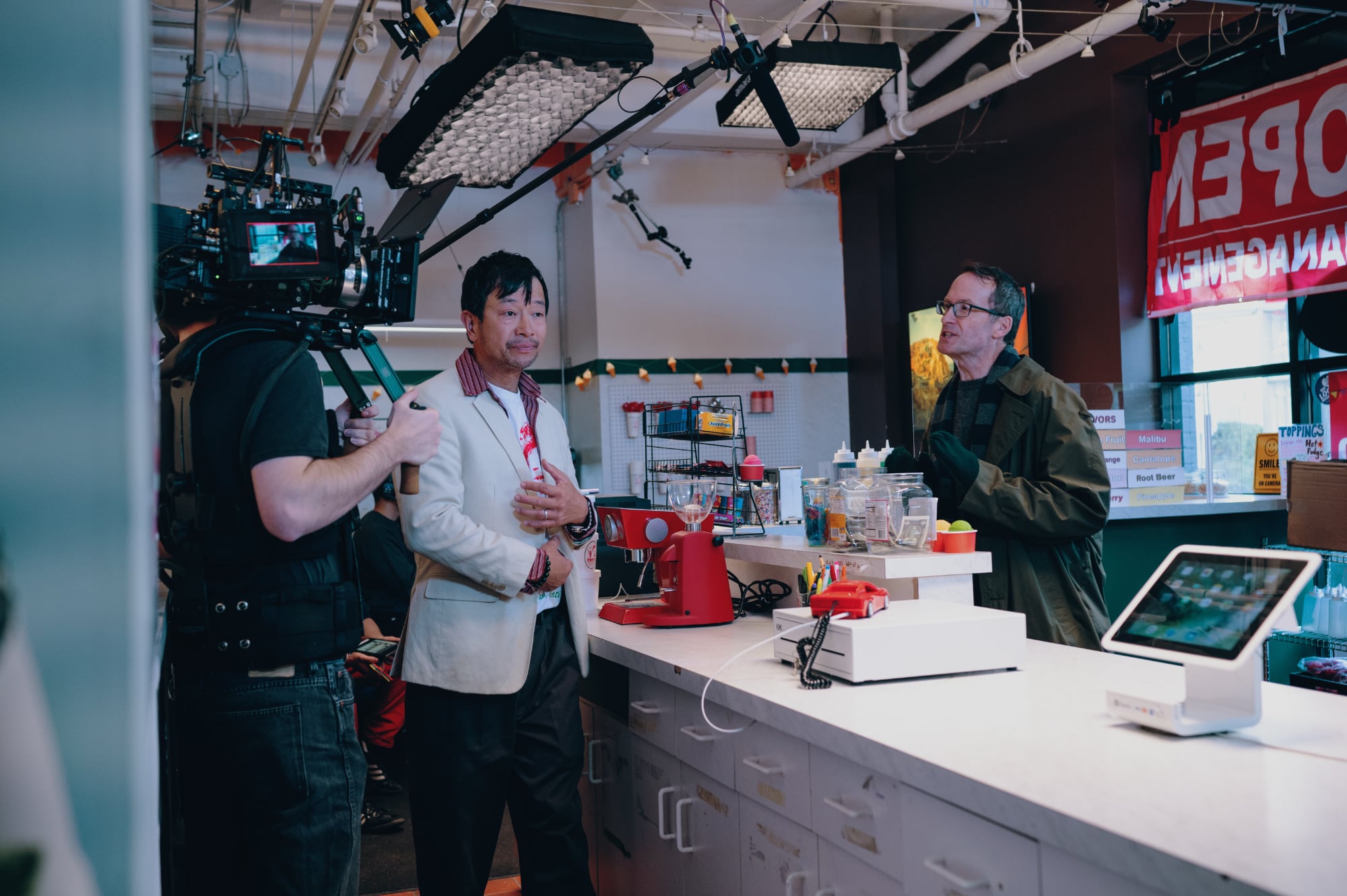
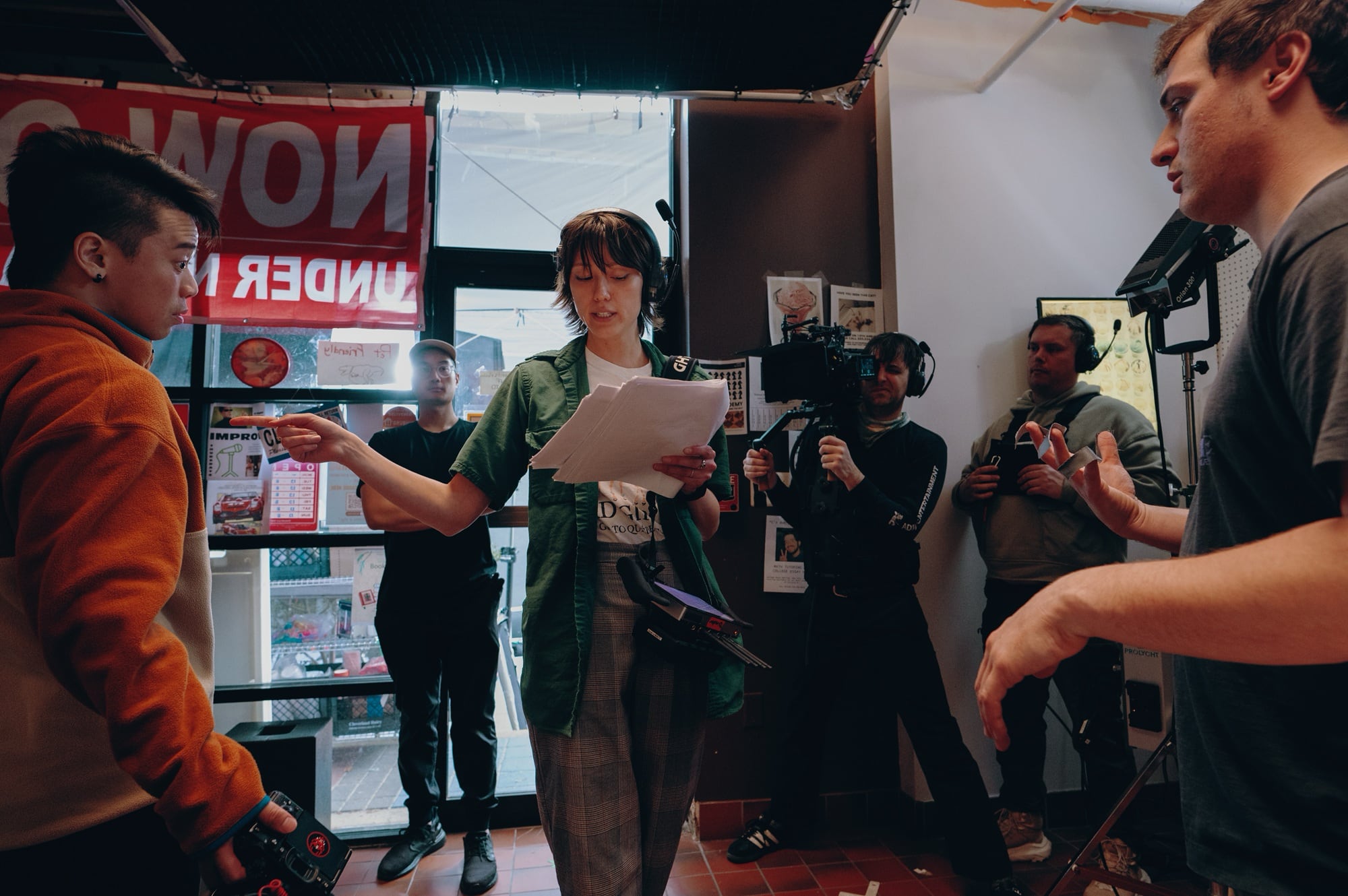
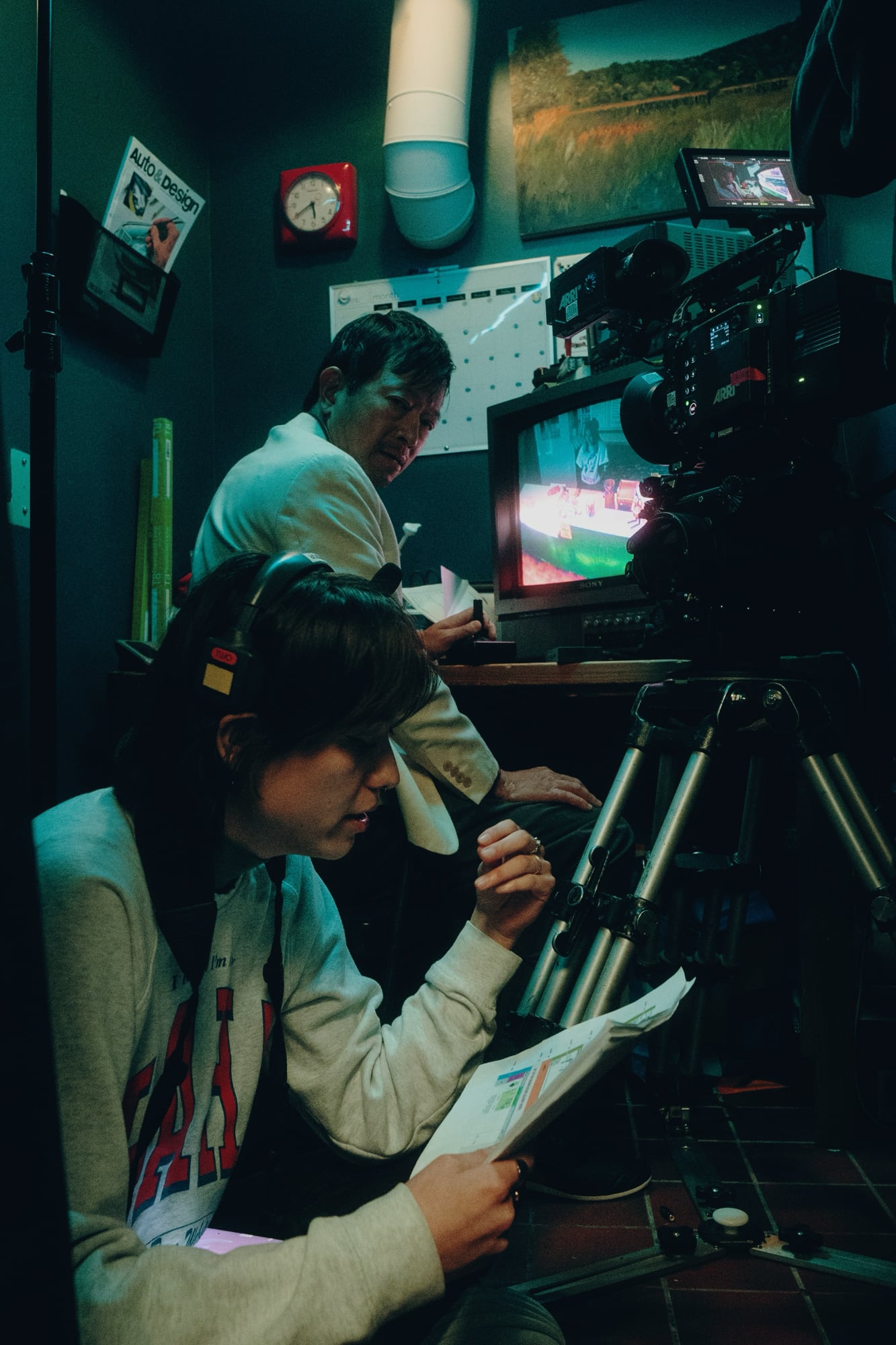
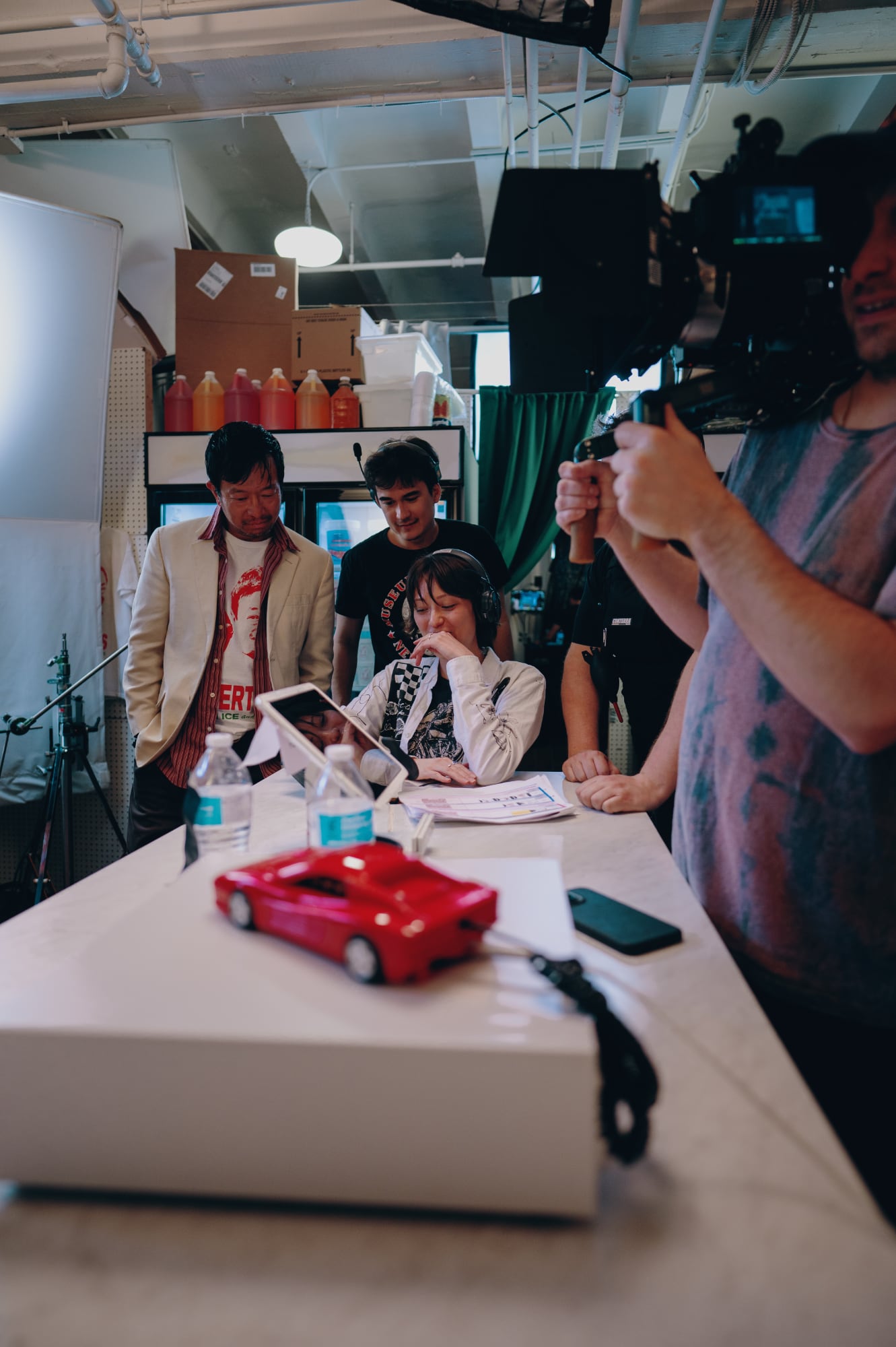
The film has a very stylised aesthetic in terms of how it’s shot and lit, giving it, at times, the feeling of something that might at any moment turn into horror or sci-fi. Can you tell us about how you developed this aesthetic and worked with DOP Robin Groulx to capture it?
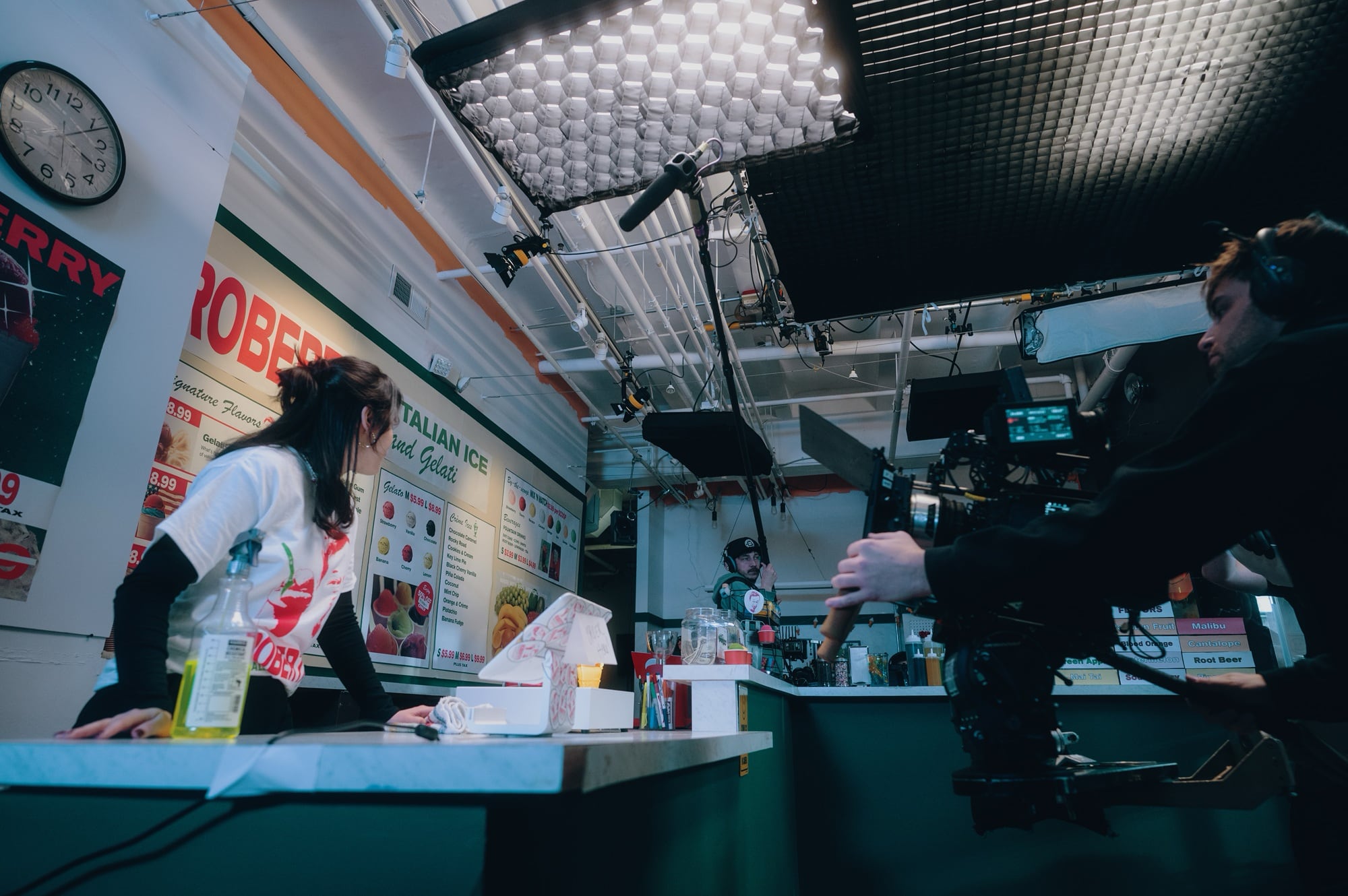
CP: From the beginning, the word “grit” kept coming up. We wanted the shots to feel dirty and imperfect. Frames would start one way and would be broken or disrupted by other characters by the end of the shot. Movement was a big factor as well. I wanted the audience to feel the bounce of Roberto’s footsteps each time he walked between his backroom and the front of the shop. Once we had this initial doctrine for the cinematography, we started thinking about pacing and progression. We wanted the cinematography to mirror the increasing chaos. Shots got tighter. The camera got shakier. As the walls close in around Roberto so does the frame.
Movement was a big factor as well. I wanted the audience to feel the bounce of Roberto’s footsteps each time he walked between his backroom and the front of the shop.
We shot a good amount of the film in chronological order, so we started on the dolly and as the week progressed, we had Rob switch to all handheld. The camera was literally in the middle of the chaos. The only time we really deviated from this was in The DJ Dragon Li’s two monologue scenes. In the first one, she kicks off the momentum of the film with her narration and in the final one, she inserts herself, finally breaking the increasing tension in the room. Both shots have the camera on the dolly making slow, lulling movements. Her final monologue serves as a brief reprieve from the chaos and suffering of all the characters–like god coming down to part the clouds momentarily–and so the camera, now slow motion on a dolly, stands in stark contrast to the rest of the film.
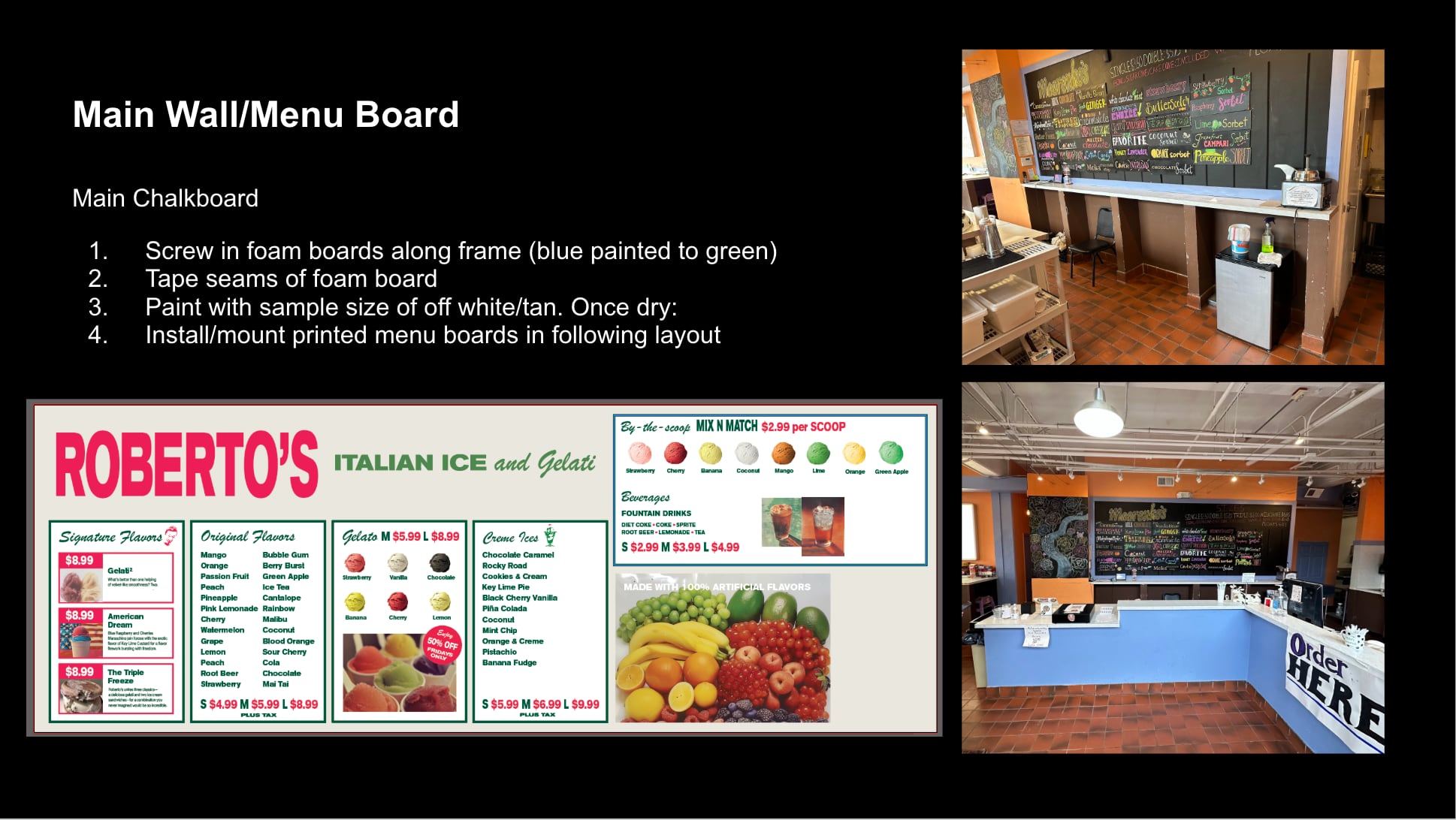
You had the opportunity not only to film in a real ice cream store but also to redecorate to suit your aesthetic too. Where did the inspiration come from for the look of the store?
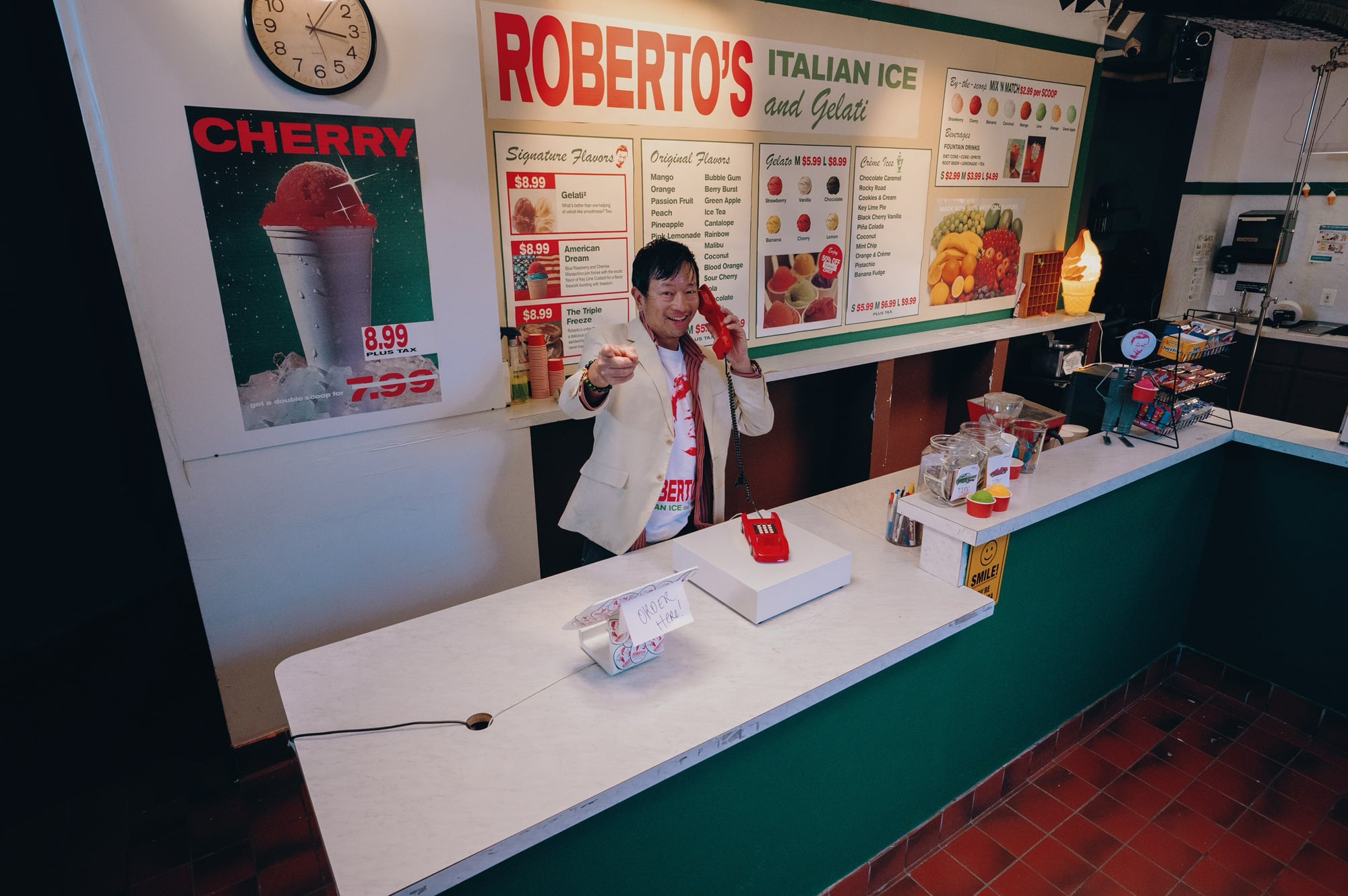
CP: Production Designer An-Phuong Ly and the art department team really put the store through a drastic transformation. We actually repainted the whole shop to green and off-white, and then had to repaint it back to the original purple and orange after we were done. I think the final look of the store can best be described as a sort of mash up between post-modern, ironically kitschy design and the Hong Kong aesthetic maximalism of Chungking Express. But also, so much of the production design was dictated by Roberto himself.
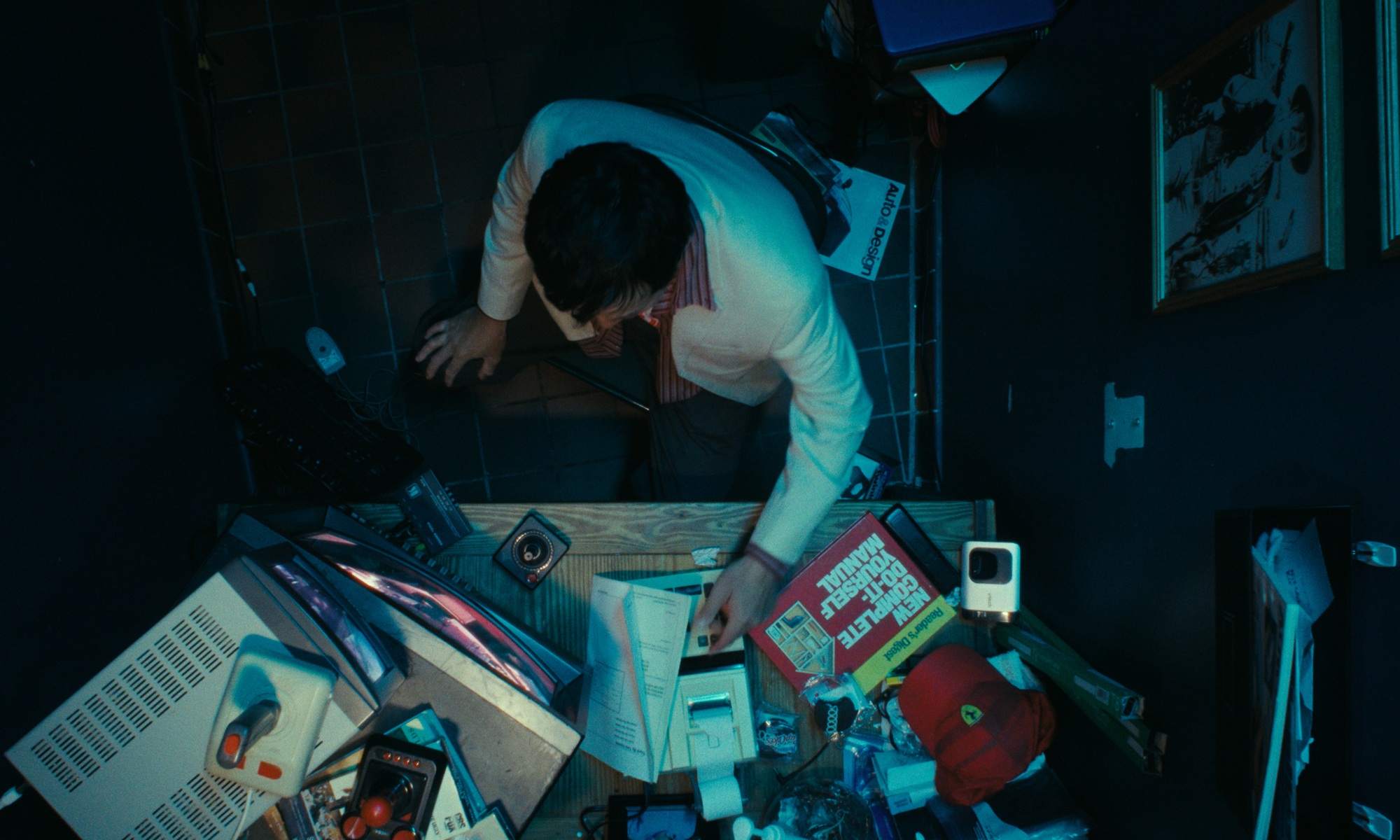
In our early discussions, we were always asking ourselves, “What would Roberto do?” The shop is ‘his’ shop. He would be too cheap to hire real designers, so the signs had to look like they could have been made by Roberto himself in some early version of Microsoft Word. An was also thinking about what the space was beforehand. There was the idea that it had maybe been an old DVD rental shop that Roberto got for cheap, so there’d be remnants of the old shop in the new shop. The junk on Roberto’s desk would be things that would appeal to him. Everything that you saw in the film was a reflection of Roberto’s own tastes.
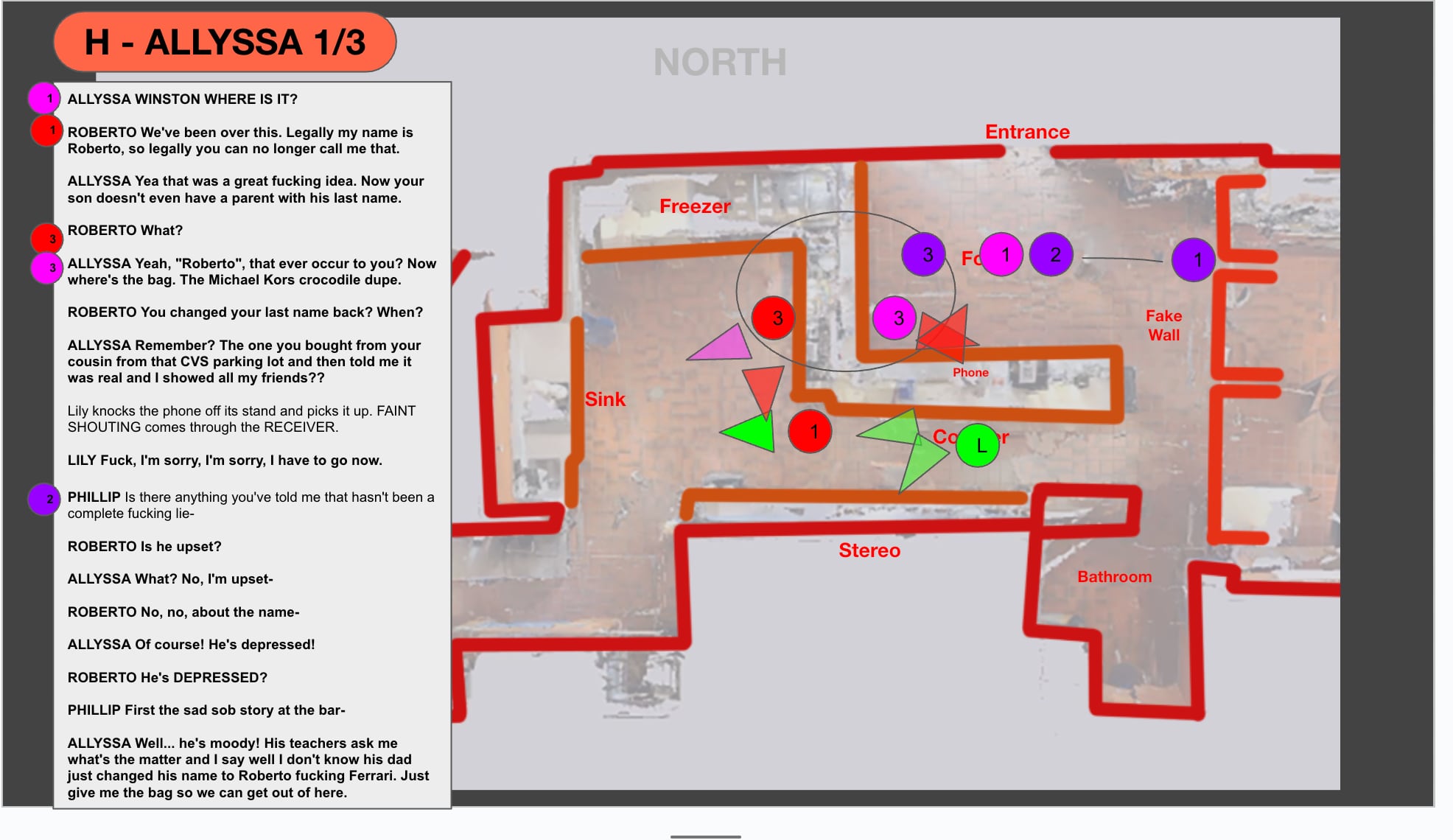
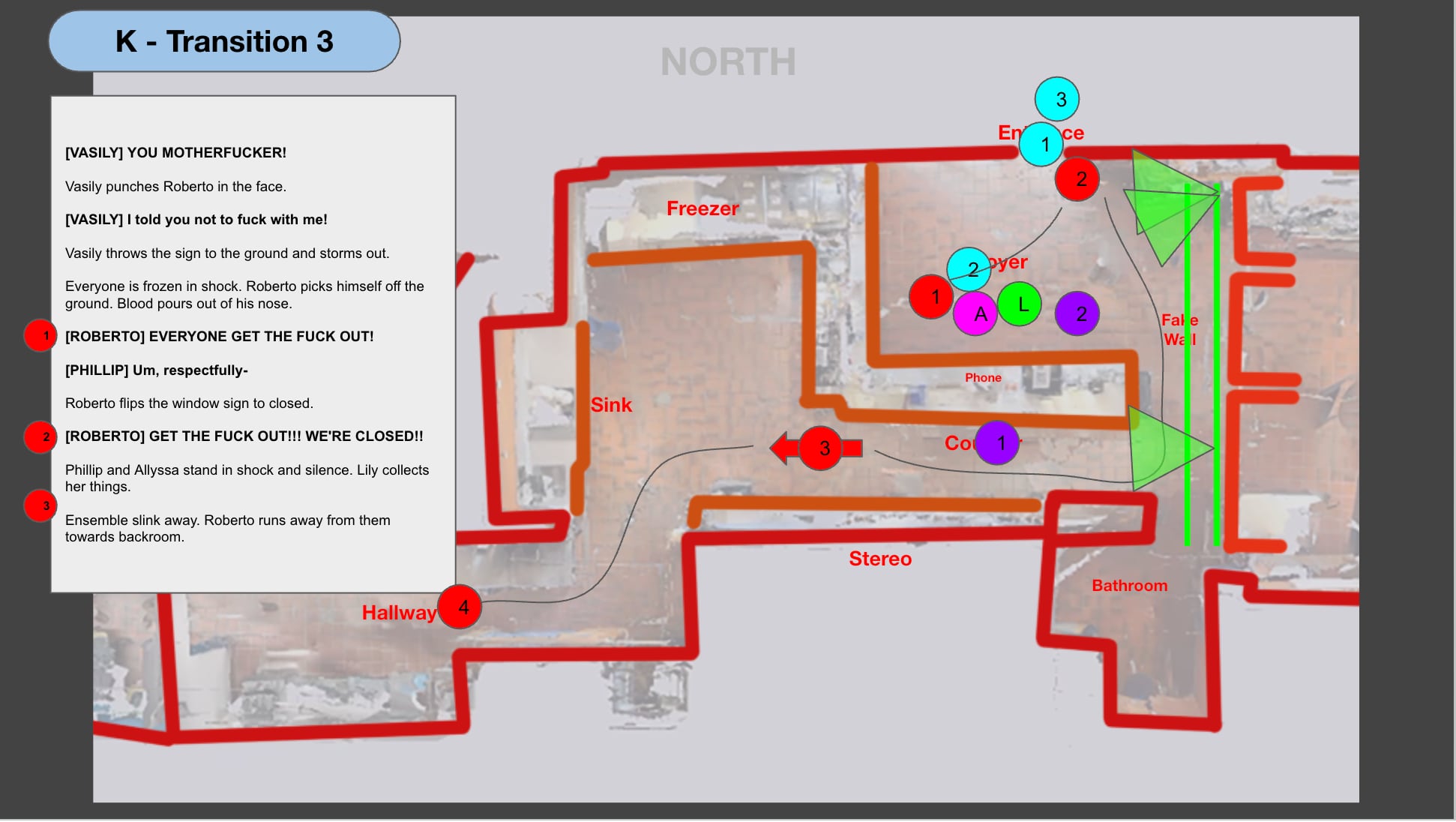
Being a real store, space for the cast and crew would have been at a premium. How did you go about making sure the shoot went as smoothly as possible and making the most of the limited space that you had – especially for the scenes with multiple characters and lots of action?
CP: We got really in the weeds with blocking. Something I had never done before that our 1st AD, Nathan Colby, suggested was to make maps for each shot from the shot list. Every shot in the film had a corresponding map made in Google Sheets that laid out where the camera was, where each character was, and where both started and ended. Ideally, I would have loved to have had a full rehearsal prior to shooting, but this is indie filmmaking baby. No such thing as luxury.
CB: I got to play Roberto in an iPhone-shot animatic in the ice cream shop a month or two before the shoot, where we tested things like, would this really work in the space? Will this look like we think it will? How does this feel with test music? Are we in way over our heads? It sort of let us go into the actual shoot not completely cold.
Every shot in the film had a corresponding map made in google sheets that laid out where the camera was, where each character was, and where both started and ended.
The music plays a pivotal role in this film, adding to the comedy with some awkwardly timed transitions while also perfectly building tension throughout. Can you tell us about the part it played in telling this story?
CB: We think a lot about the role of music in film, and really loved the idea of it influencing the story and the characters as much as possible here – being almost fully diegetic, it forces the characters to respond to it, it can fully stop a scene, make a character bigger or smaller, speed up or (as it does in the climax) slow down time…
Once we knew we wanted to set the whole thing to this strange DJ set, I started writing it as we were writing the script, and we went into shooting with about 12 minutes of draft material we thought was going to inform the final soundtrack. We ended up playing this on set to establish the vibe – in the scene where Roberto bursts out from his curtain, I’m crouched, hiding in the corner playing the opening music on my laptop to give him the correct cadence and swagger… After filming, I really developed the soundtrack with my brother, Bradford. We knew we wanted to draw from a wide variety of genres and time periods, and explore the different ways that chaos and movement can be communicated. We ended up writing a ton of different miniatures and seeing how they played with each scene, what notes they brought out that maybe weren’t there without any music.
Each character ended up sort of getting their own ‘theme’, their own unique time period and geographic place of inspiration and instrumentation, and these will even evolve as their relationship with Roberto evolves. The core was always going to be this chaotic DJ set, but to get that variety and authenticity, we placed a heavy emphasis on recording as much live instrumentation as possible, both playing the instruments ourselves and recruiting a slew of great collaborators. Trumpet, saxophone, violin, voice, percussion, analog modular synth, electric bass, and lots of guitars were all written and recorded live.
The core was always going to be this chaotic DJ set, but to get that variety and authenticity we placed a heavy emphasis on recording as much live instrumentation as possible.
The first piece written for the film was actually the ending song that I think of as Roberto’s theme. It’s western in tone and written about this figure just wandering alone on the plains, and led to us starting to think of Roberto as a modern-day cowboy – a man who looks west to the great promise of capitalism and manifest destiny – his God-given destiny being staking a claim in a strip mall and erecting a small business. The ending is easy to view as a success for Roberto, and it is, but we liked the aspects that this song highlighted – the fact that he’s alone, he’s bleeding, and he’s watching his success play out as a voyeur from his dingy back room. After 10 minutes of claustrophobic, pounding music, here’s a last cue that’s lonely and eerie and filled with space, the sound of a man lost in the dunes.
You edited the film yourself, having retrained yourself in Premiere to do so. What was that process like for you on a technical level? Did much about the film change during the edit process, and is that something you would do again?
CP: Technically, it was difficult, scary, and very stressful. But ultimately, the film did not change a lot story-wise during the edit process. Our process is so pre-production heavy that we haven’t ever made a film that changes vastly in the edit. We always have a very good idea of what we’re trying to make and any changes in the edit are usually a result of continuity constraints or small exposition/pacing issues. The meat all tends to be there and it just ends up being a tedious process of slowly chipping away at things.
CB: Chelsie had a right-handed mouse and I’m left-handed, so it was very difficult mechanically to make the precise clicks I needed to in Premiere. It was nice, from a creative control freak perspective, to be able to see all the footage and know exactly what takes are going in the film and what aren’t. We had a lot of help from fellow EPs Robin and An as well, who each had a large hand in shaping the film in post. I will never do it again.
What’s coming up next for you both, and might we be seeing Roberto Ferrari popping up in the feature film soon?
CP: We’re in the process of getting our first feature off the ground, though it doesn’t involve Roberto. It’s an existential coming-of-age horror film set on Virginia Beach. We’ve written a few drafts of the script but we’re still working on it and we’re in the very beginning stages of shopping it around. We do absolutely believe that Roberto needs a feature and we want to make one, but it feels like a second feature kind of story that will require a bigger budget. All I can say about that one is that it’s tentatively called Kill Yourself.
CB: I don’t know if it’s going to be called that.