With the world seemingly becoming a bleaker place by the day, Guy Larsen’s Root Note is a perfectly timed antidote and joyous reminder of the beauty in life that can be found if you know where to look – and stay resolved to find it. It’s a film that is both a gentle and playful story of musical discovery and, at the same time, something of a protest film, revolting against the challenges artistic expression can face in terms of unsupportive environments, lack of funding opportunities, and even modern-day censorship. What’s striking about the meaning of this story is how it is so clearly reflected in the making of the crowdfunded film that tells it. A team of dedicated creatives, in animation, filmmaking and music, led by Larsen, spent a year independently creating this stop-motion gem that has delighted audiences on the festival circuit. First coming to our attention at the Manchester Animation Festival back in 2024, it’s our great pleasure to welcome this jazz-fuelled, musical treat to the Directors Notes community for its online premiere.
Firstly, can you tell us where the concept for this story came from and how it developed into Root Note?
We’d made a stop motion music video for Cavetown’s Green a couple years before. It was accepted into some film festivals, but hit a bit of a ceiling because it wasn’t technically a narrative film (watch it and judge for yourself!). So we decided over lockdown to develop a full stop motion short.
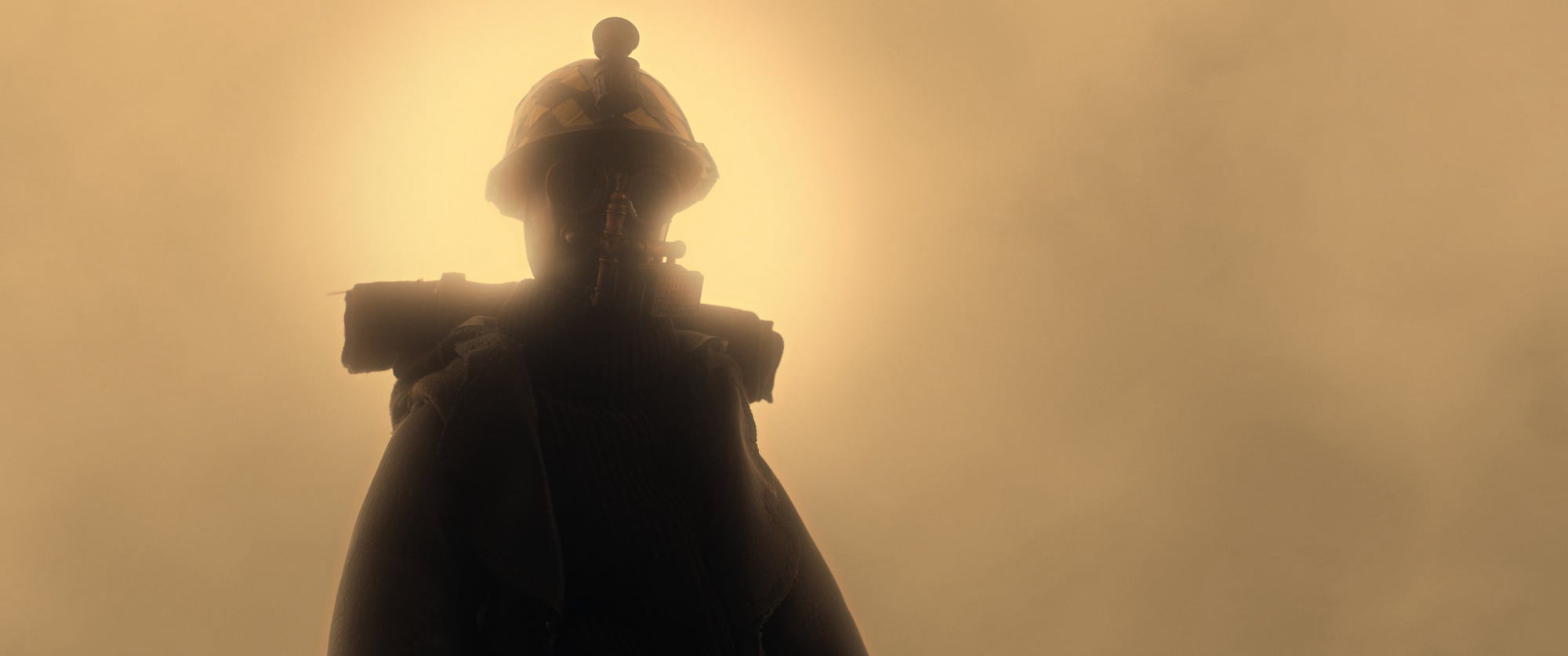
Cambria Bailey-Jones, the co-writer and producer, had a concept for a film about mischievous plants living in a hole in the wall, that were alive and stole kitchen items. My sensibility is a touch darker, so we asked the question: “Where would be the most hostile place for a plant to try and grow?” A dusty, remote world became the new setting for them, but then the question was, what items are they stealing to survive? If this dusty world were on the edge of a slate mine, could they be stealing mining equipment from miners walking by? Perhaps these miners in all their gear were actually just doing the same as these plants – taking what they need to subsist and survive, but not to thrive and grow. Many of us today are doing the exact same thing – just about getting by.
As a setup that was fine, but then we had to consider what makes this a story. What could they discover to make their lives, if not actually better, at least more enjoyable? And that’s where we landed on the idea for them to discover music. Specifically jazz, because of its historic legacy of being such a genre of defiance against an often oppressive backdrop around it.
The plant characters are all fantastic! Can you tell us about the inspiration behind each of their designs?
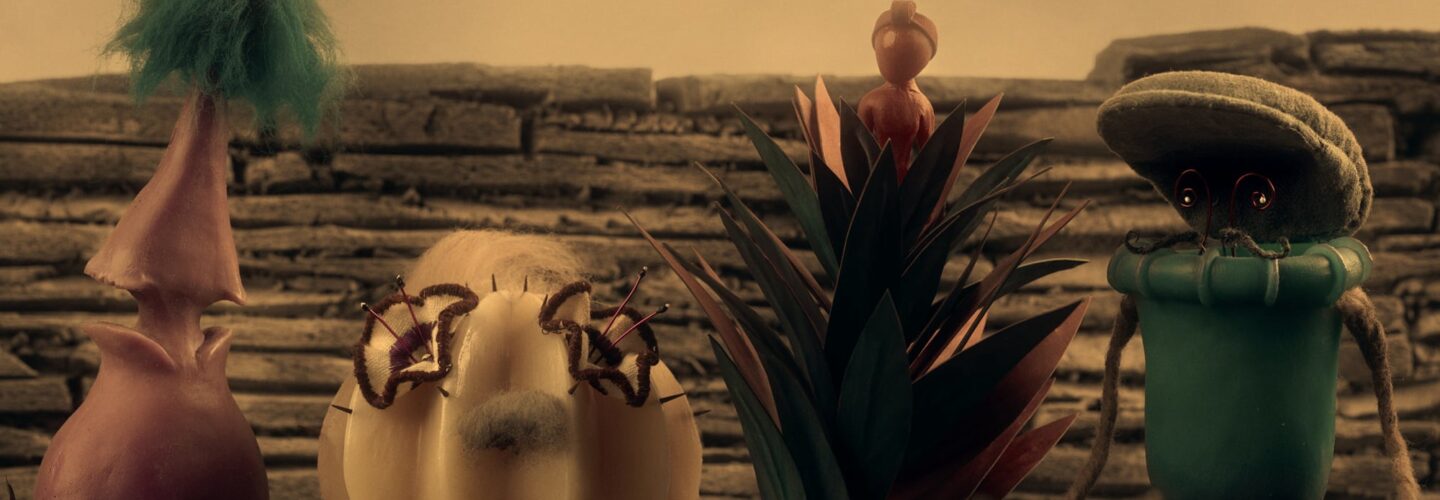
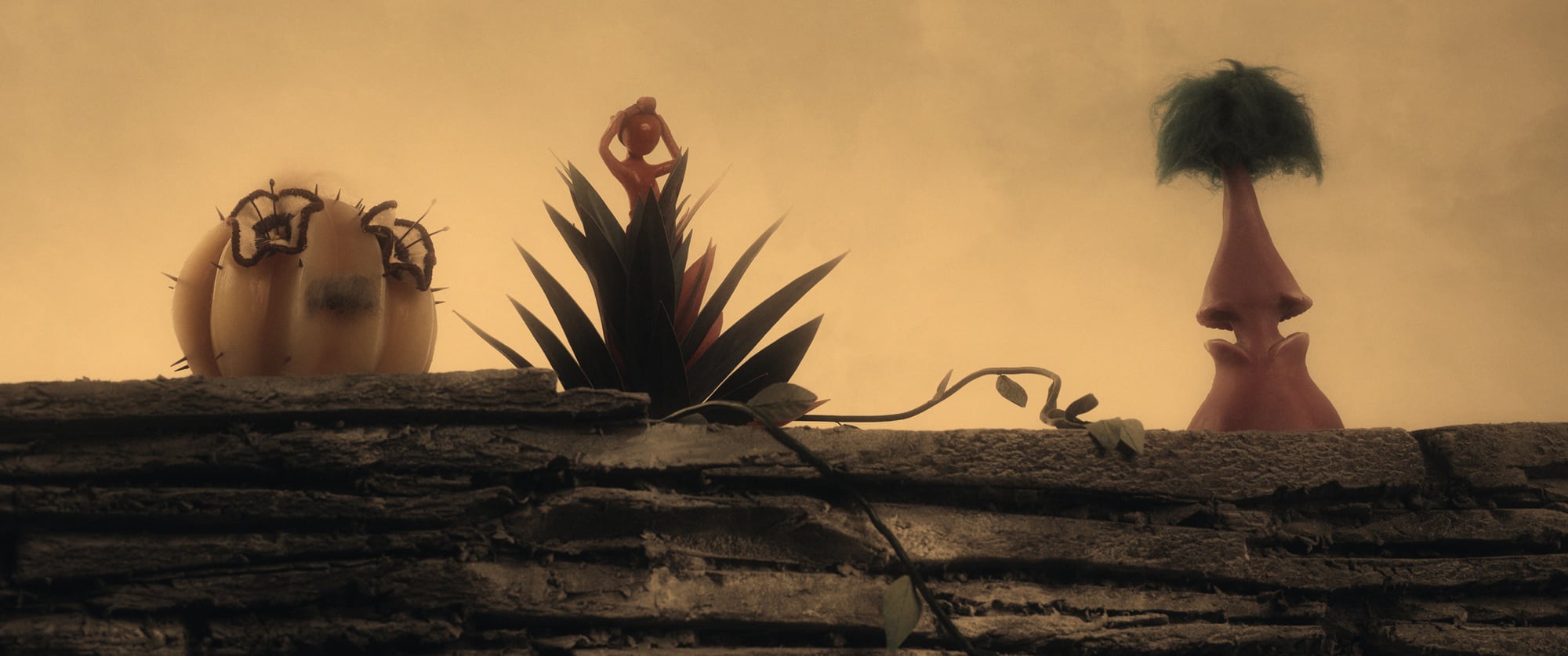
This is a story about characterful, possibly alien plants. It gave us lots of scope to really push the design of them. However, they also needed to be human enough to be able to play instruments, whilst being distinctive enough from each other. So there were many factors we had to balance. We began by pulling together lots of references of the world’s most exotic, most extraterrestrial-looking plants, and how they might pair against creating a really characterful jazz band. At this point I was really open to anything that jumped out at me.
We saw some flycatchers that had large canopy lids over them, which looked a lot like a flat cap. Some had thin stems that looked like little moustaches or glasses, so that became this plant’s signature look. We had to name them all for production, so we creatively called this one Flatcap. Another was quite tall and broad, like a double bass, with a fun flurry of hair on top that looked like it would be falling across their face in the same way that some double bass players stoop round their instruments. I think maybe because of the hair, their nickname became Rocker.
They also needed to be human enough to be able to play instruments, whilst being distinctive enough from each other.
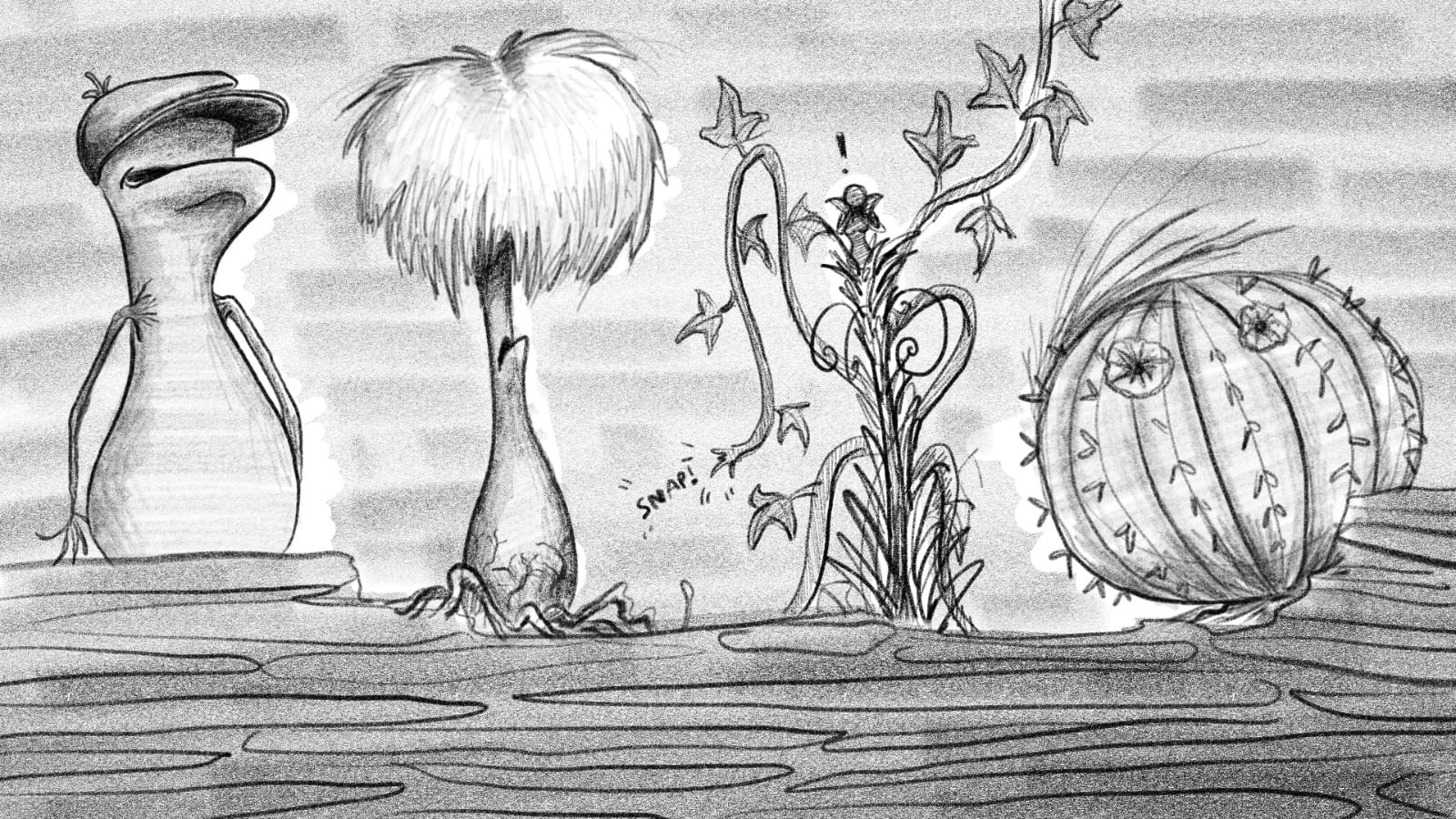
To create variety in the shapes of the band, we looked at some rounder, squatter plants. We were drawn to round cacti that look inflated and often have wispy hair on them, that reminded me of a combover. They look similar to big, round, inflated cheeks blowing through a trumpet, and that decided which instrument Combover would be playing. We needed a front person to lead the troupe, and we found a plant that had this central stigma in the flower that looked strangely like a little person. If there was to be a conductor, this would be a great way to do it. We gave them long vine-like tendrils that enabled them to pickpocket quickly without being noticed, that also would let ‘Vine’ play the piano too.
Most Popular
Did you have a particular favourite in terms of design and were there any trickier than others in terms of the physical build and to animate
I love all my children equally, but like children, they were all occasionally a pain in the arse. Once I drew the first character designs, it was then about selecting which materials best looked like plant material. Obviously, organic matter was out of the question… but silicone had that same smooth, slightly translucent quality. I’d never worked with silicone before so had to ask lots of help from others about how to colour and mix it correctly so it set. Amazingly all came out great the first time except for a few bubbles, which I learned you could inject silicone into to fill up and set!
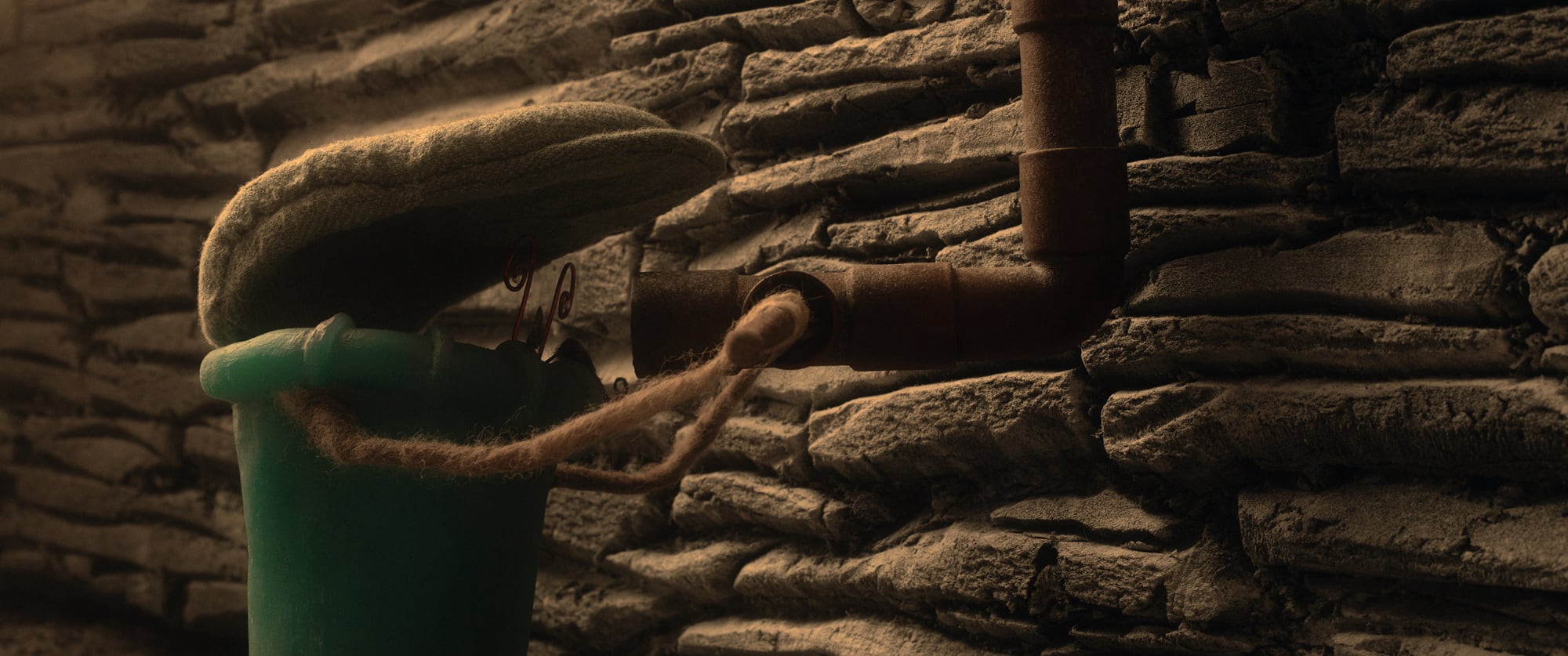
Vine in particular was difficult to build and animate. Their stems were made from green garden wire, which had to be stiff enough to be posable, but not so stiff that it lost its curve as you did it and just kinked, if that makes sense. As soon as their vine extended any distance (e.g. reaching across a street to steal something from the miners), we’d get sagging as gravity gently pulled it down. So when it was reaching, we had to hold that up with invisible fishing wire. The central flower for Vine was also quite top-heavy, so had to be clamped down for every shot.
I love all my children equally, but like children, they were all occasionally a pain in the arse.
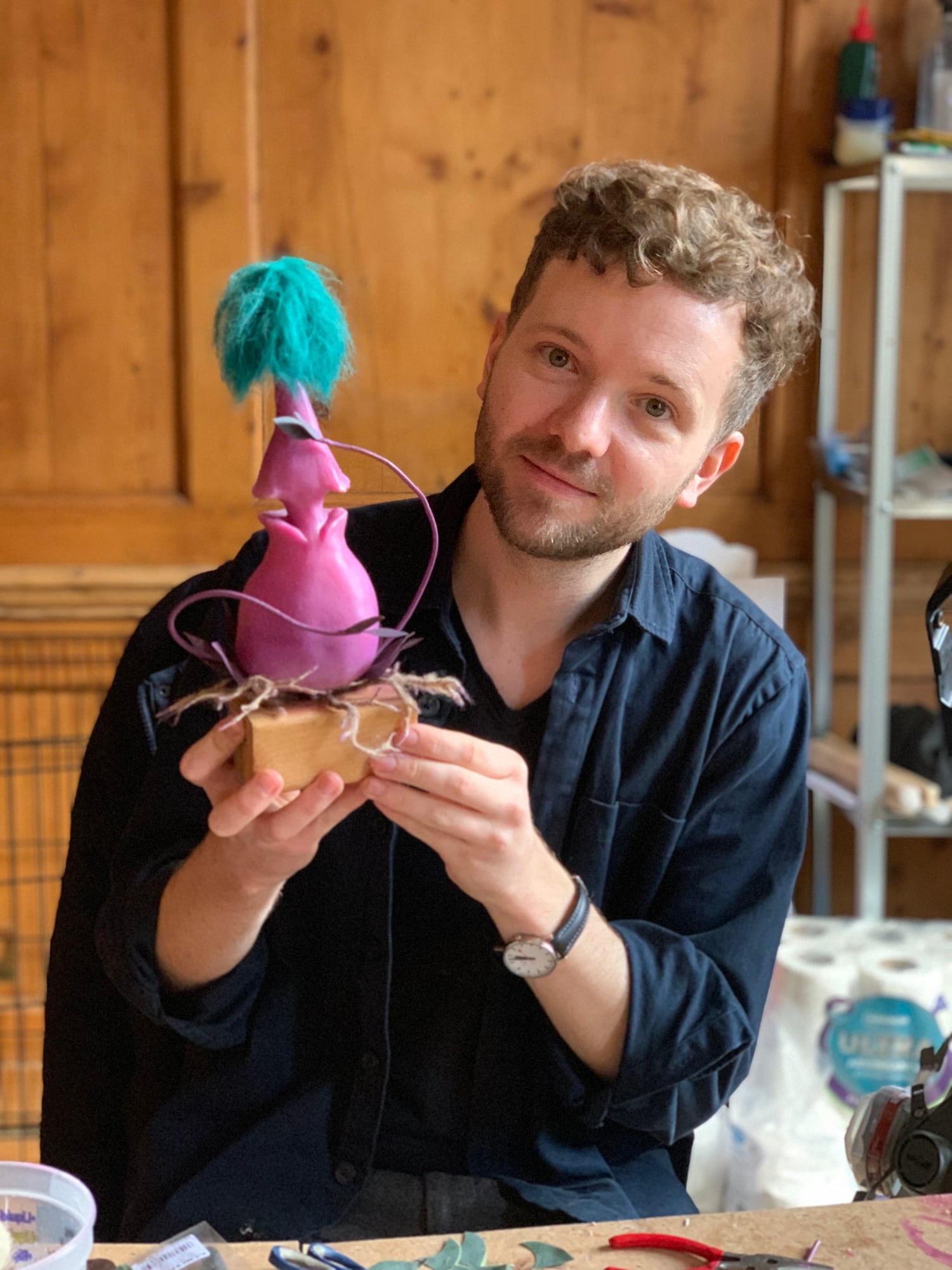
My favourite today is Rocker, because they sadly passed away. We offered owning the puppets as a tier of our Kickstarter, and Royal Mail seized them in the post on their way to Austria. When we went chasing them about what happened, they sheepishly revealed they were either auctioned off or destroyed! Eventually we found out it was the latter, which was gutting. After an internal review they found themselves not at fault – so I’m pleased and relieved it must have just been my misunderstanding…
I love the drawing of the human jazz players that the plants discover and ultimately go on to mimic. Can you tell us how the image was designed and created?
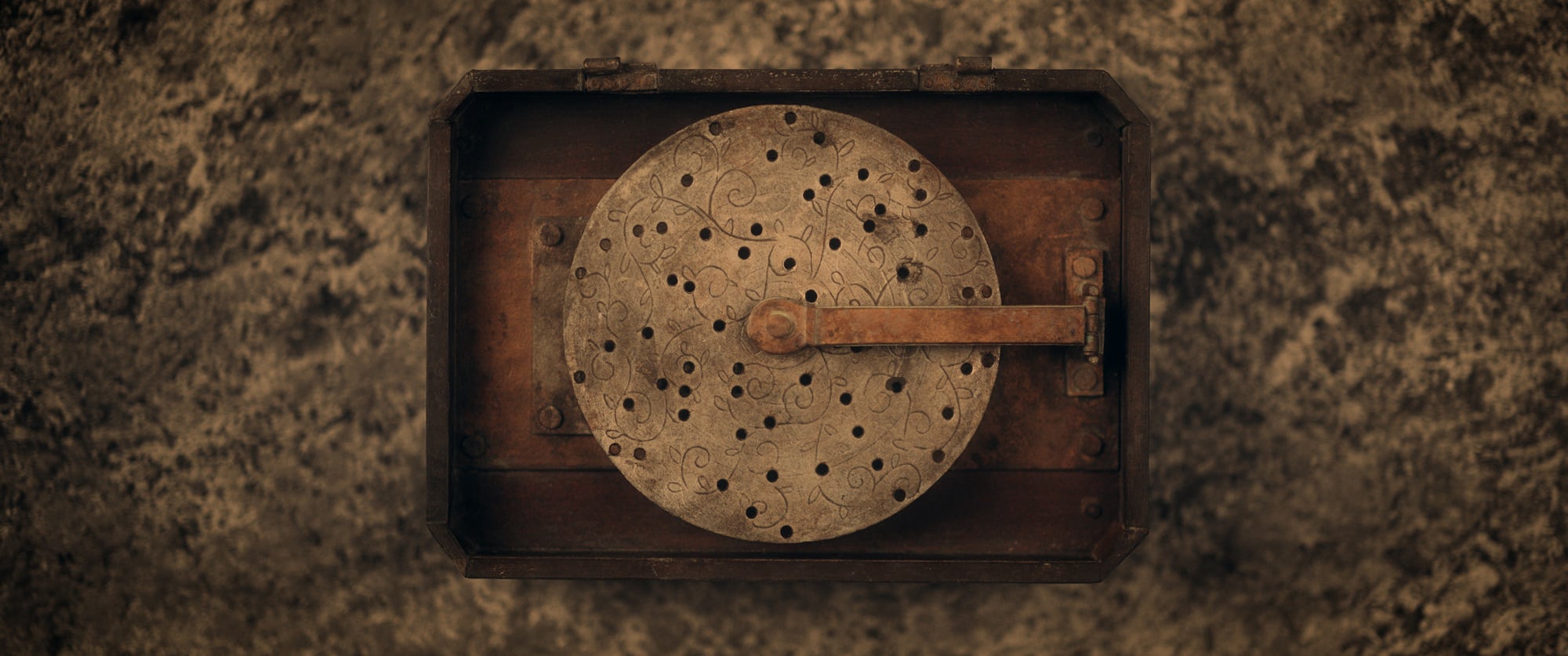
The postcard design of the four human jazz players was illustrated by Madison Coby – an old friend and one of the best illustrated poster designers working today. We tasked her with creating this image with nothing but the concept art for the plant versions of them! It was up to her to interpret those in a way that was immediately obvious these were the same four characters. If the viewer didn’t immediately clock they were the same people, the film would fall apart as we wouldn’t understand the bolt of inspiration – so the pressure was on her to nail that!
The score is obviously so central to the film, not just to the story but to the animation as well. Can you tell us how the music came together to match the action on screen?
The music needed to follow the action, but the animation needed to follow the music. We knew jazz players would be looking critically to see how accurate the drum and trumpet playing would be, so we knew that had to be right. Immediately it was a massive challenge to marry the visuals and the score!
We bounced between music and animatic until it locked into place, but it was very much a process of bouncing between until we found the right middle.
We started with a hand-drawn animatic that roughly established pacing. This was at least something Benjamin Squires could work with. We knew the central musical number needed to last ‘roughly’ a minute, and needed to actually begin as they were stealing bits of equipment to invent instruments. From there, Benjamin had the task of hitting all the emotional beats in the story, whilst creating a song that had a strong hook and could be played by a real jazz band. We bounced between music and animatic until it locked into place, but it was very much a process of bouncing between until we found the right middle. I’m really proud of Benjamin’s work on this, the hook of the song is a proper earworm.
You recorded the score with the Chineke! Orchestra with orchestration by Tristan Noon and Evan Rogers. Can you tell us about that process and your experience of it?
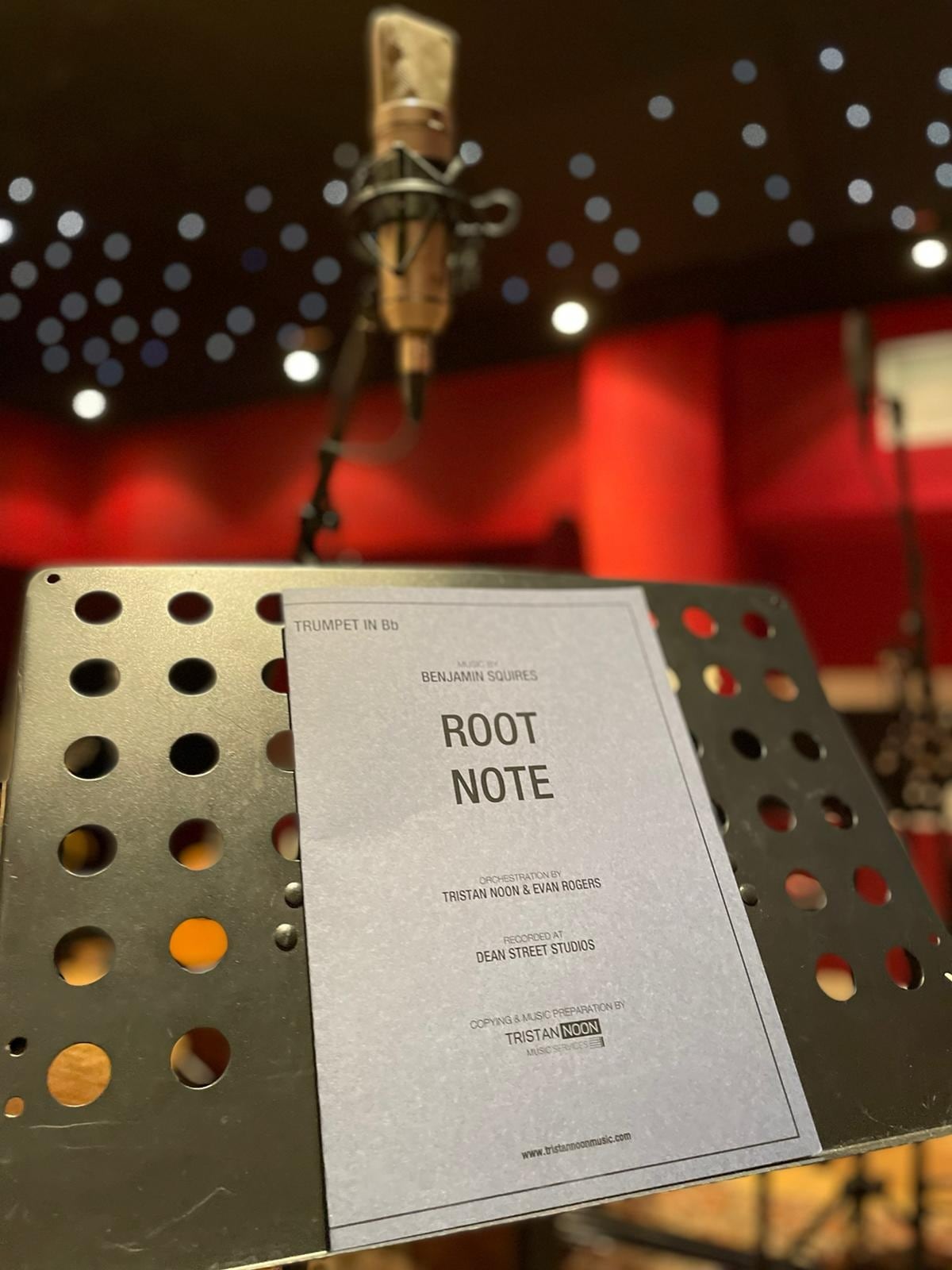
We consulted with the brilliant Juan-Miguel Hernandez on how best to approach the music for this film. He agreed the central song will always sound best performed by real musicians, especially the trumpet sounds. If this was a film about jazz, it might be an actual sin to not record with a jazz band. He introduced us to The Chineke! Orchestra, Europe’s first majority Black and ethnically diverse orchestra, founded by Chi-chi Nwanoku CBE. She kindly was our double bass player on the day we recorded in Dean St Studios in Soho, and all the players were kind enough to let us film their performances to match against the stop motion animation later. Tristan and Evan’s great work in orchestrating and leading the day made it a very enjoyable experience. I don’t have the shorthand to direct music in the same way they can with musicians, and the result is exactly what we imagined in our heads.
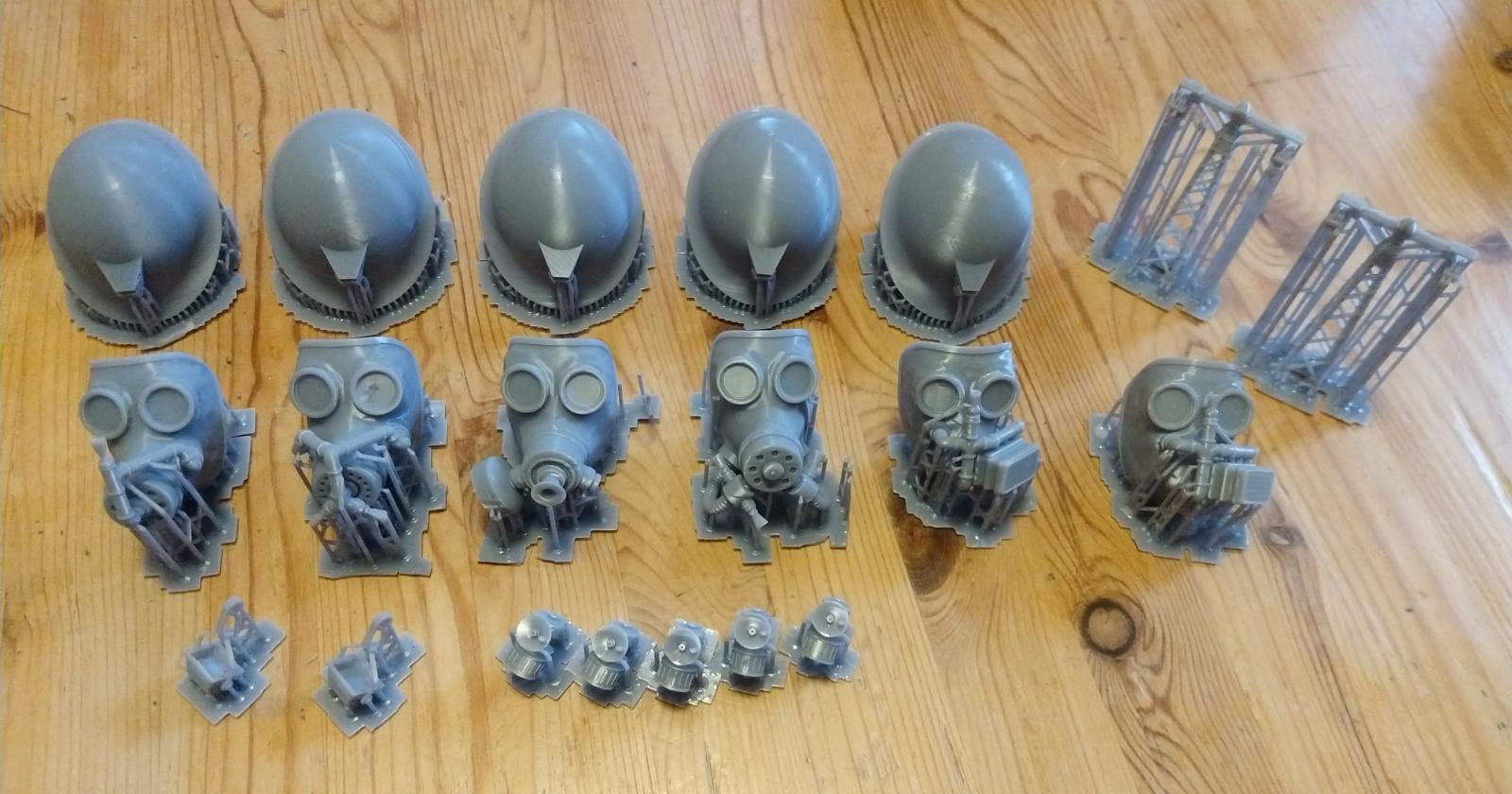
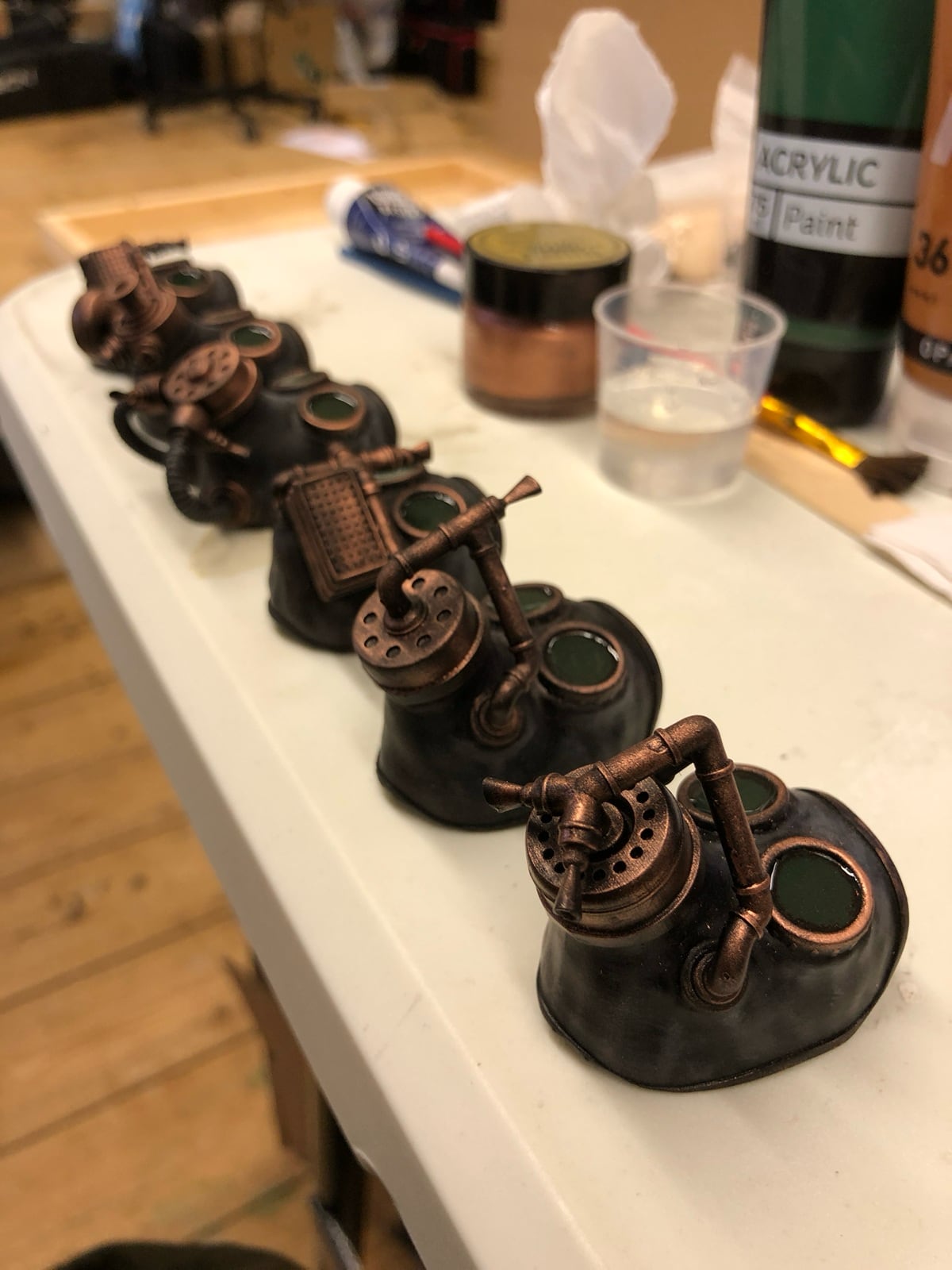
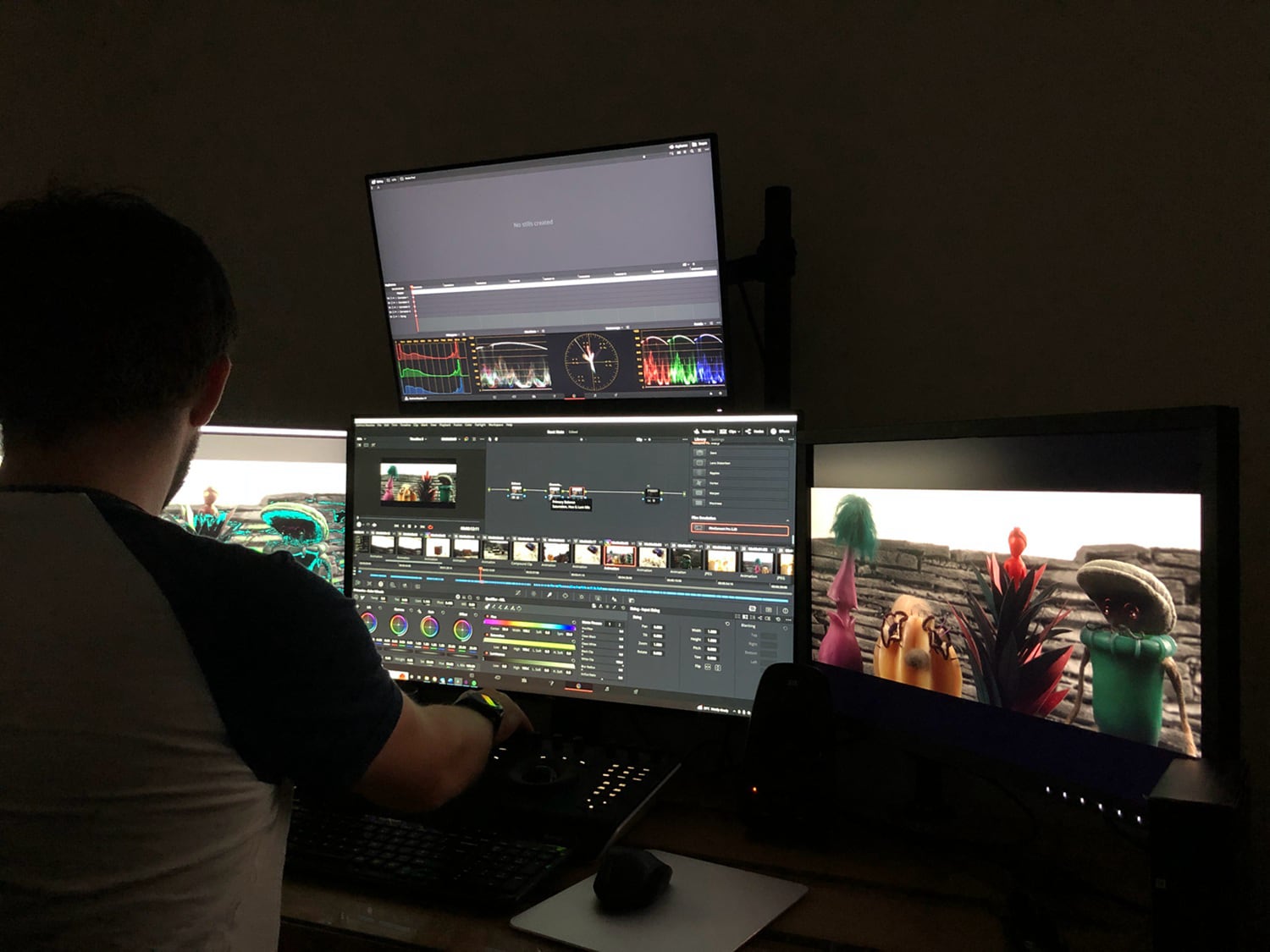
Can you tell us about the animation process of the characters and their physical world? How long did the entire production take?
The production was split into two halves for us – six months making the props for it, and six months animating it. That sounds long, but we also had to make this film alongside our other digital video work at Penny4. We raised the money to make this film on Kickstarter (in one day!) right after the pandemic, and when production restarted we had to juggle everything at the same time.
We had two floors of this disused, beautiful wood-panelled Victorian terraced house that had been leased by somebody and let to artists and musicians. That community really felt like one of the last affordable pockets of creativity in London and I have a lot of nostalgia for it. Penny4’s office was in the space that used to be the offices for the band The Rolling Stones, and we shot Root Note upstairs in Gary Barlow’s old offices. The legend is the fire alarms in there were so loud because they had to be able to wake up Jagger from a stupour if he’d fallen asleep with a cigarette in his hand. Again that’s ALLEGED. Alleged legend. But I believe it.
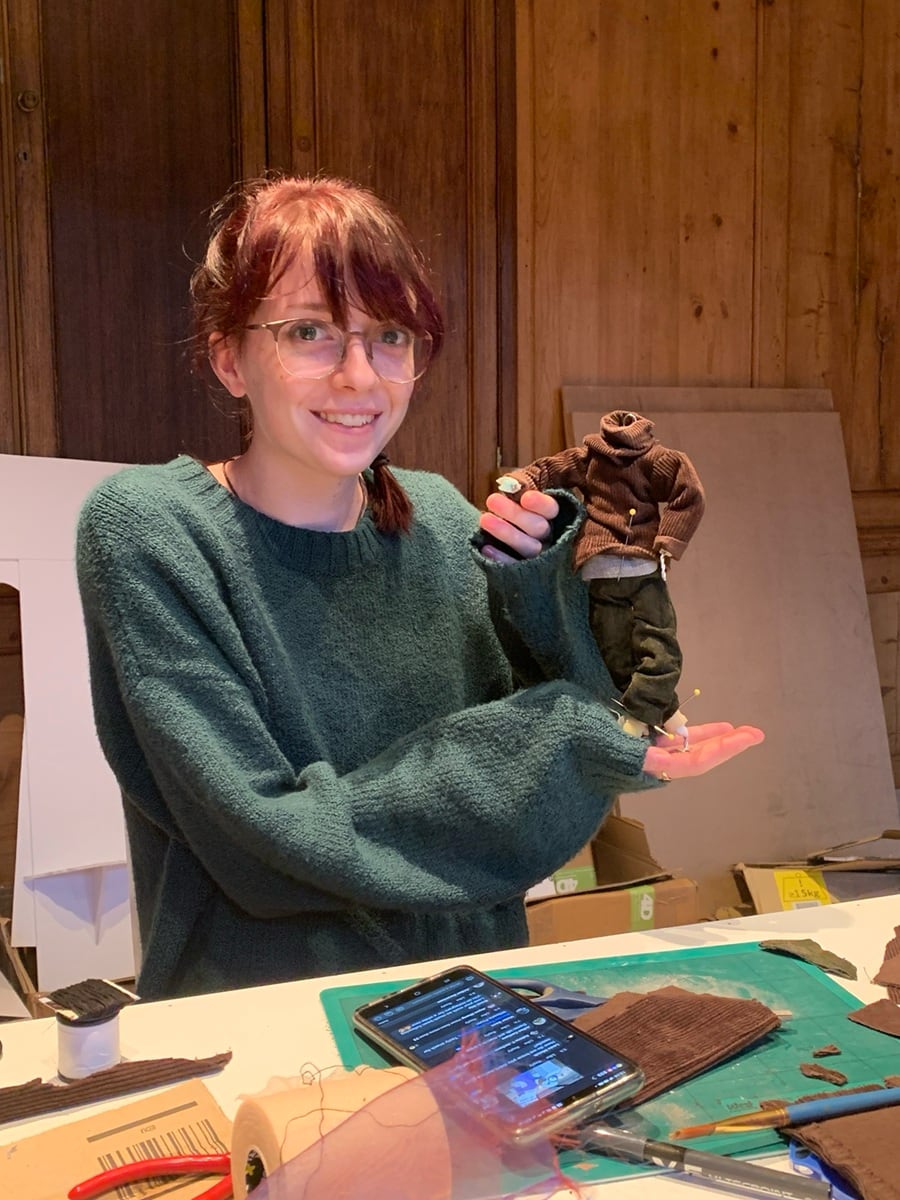
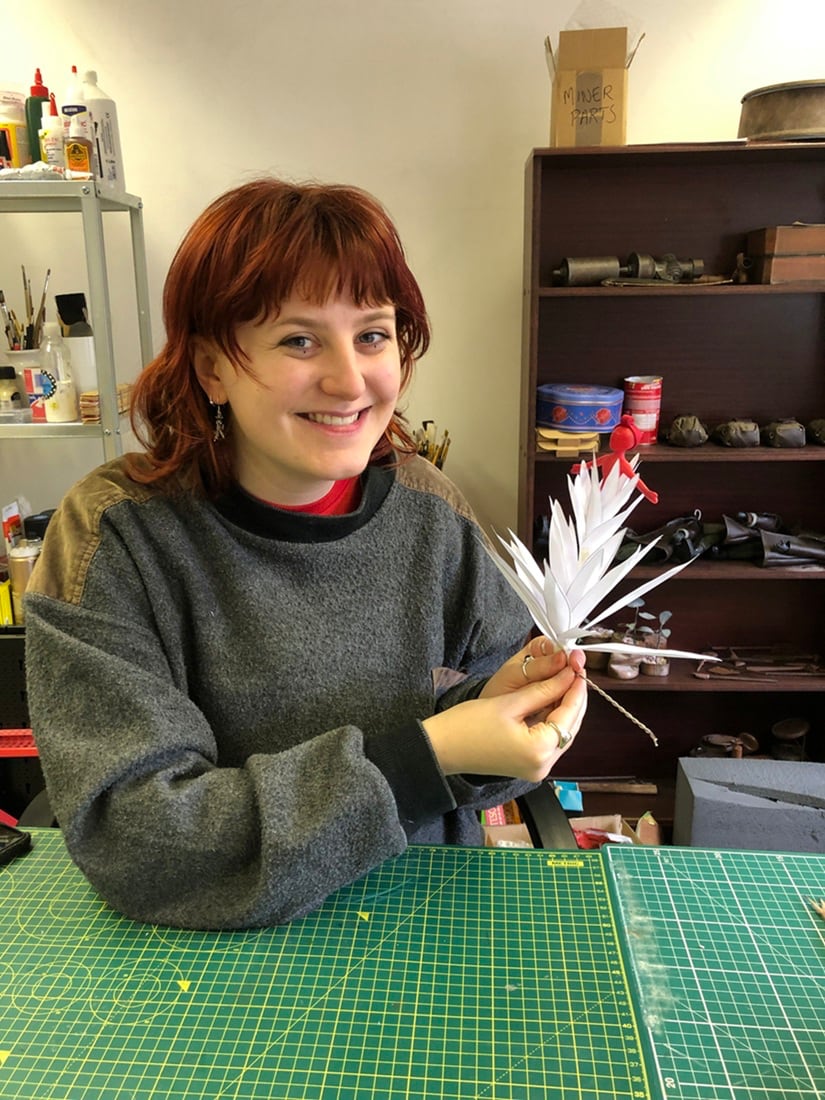
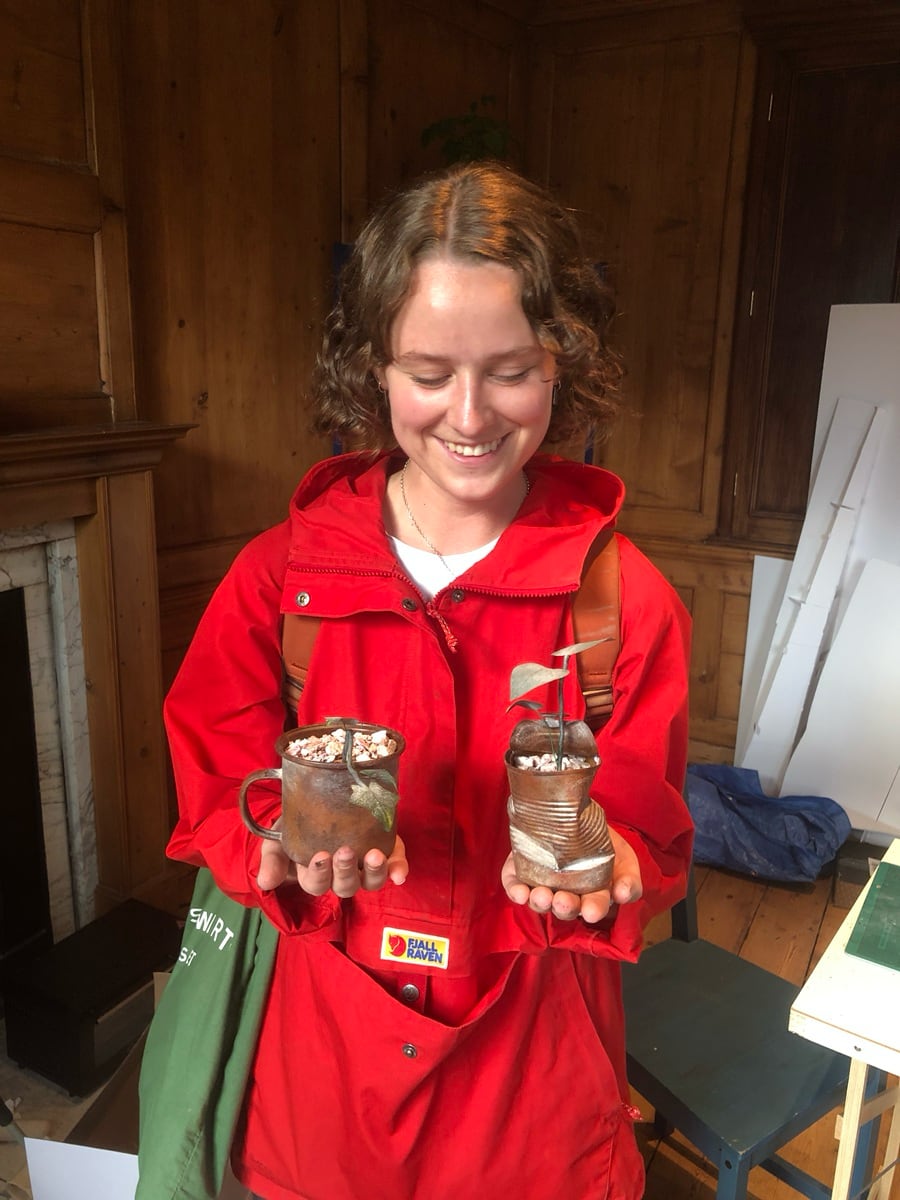
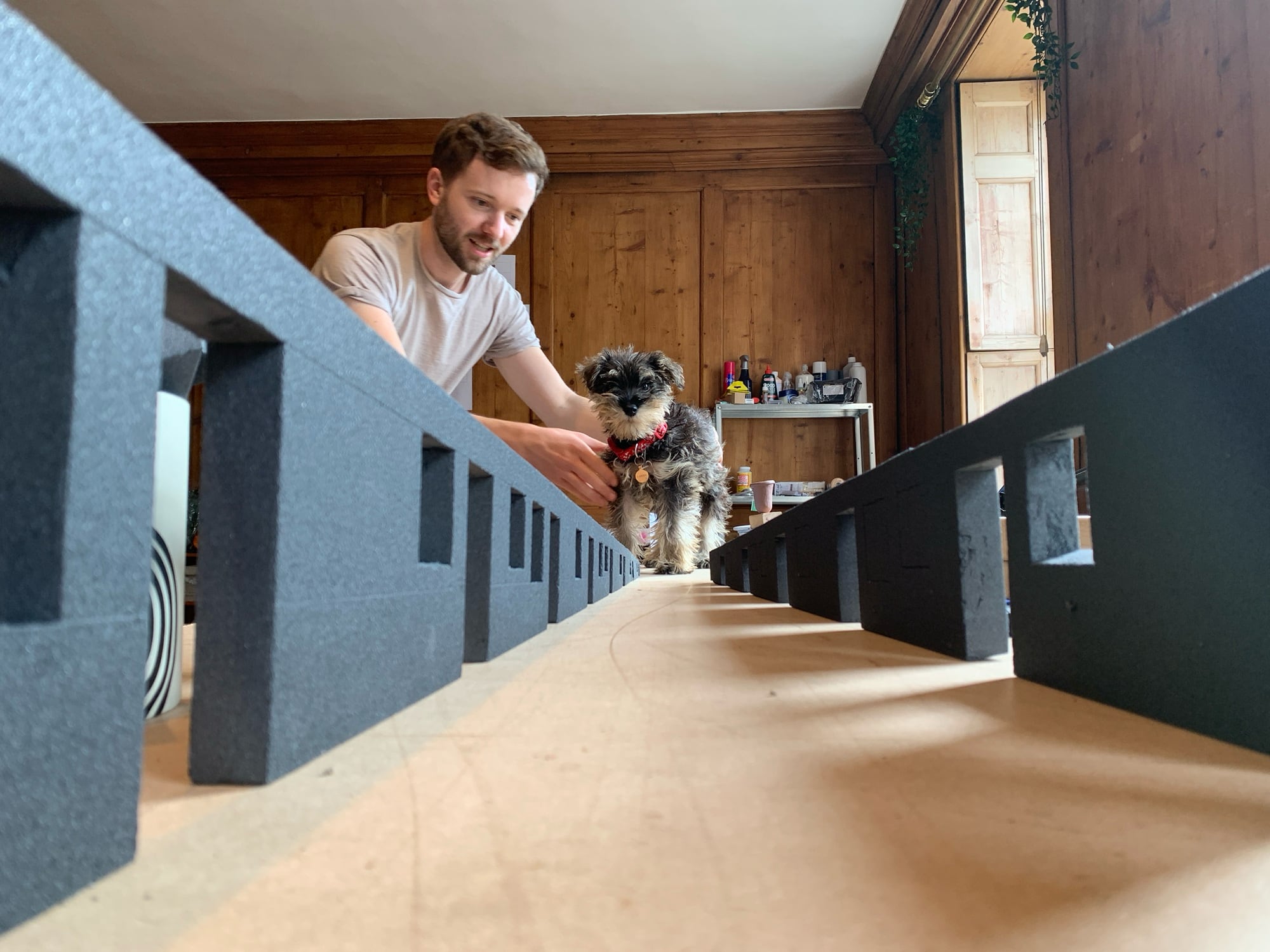
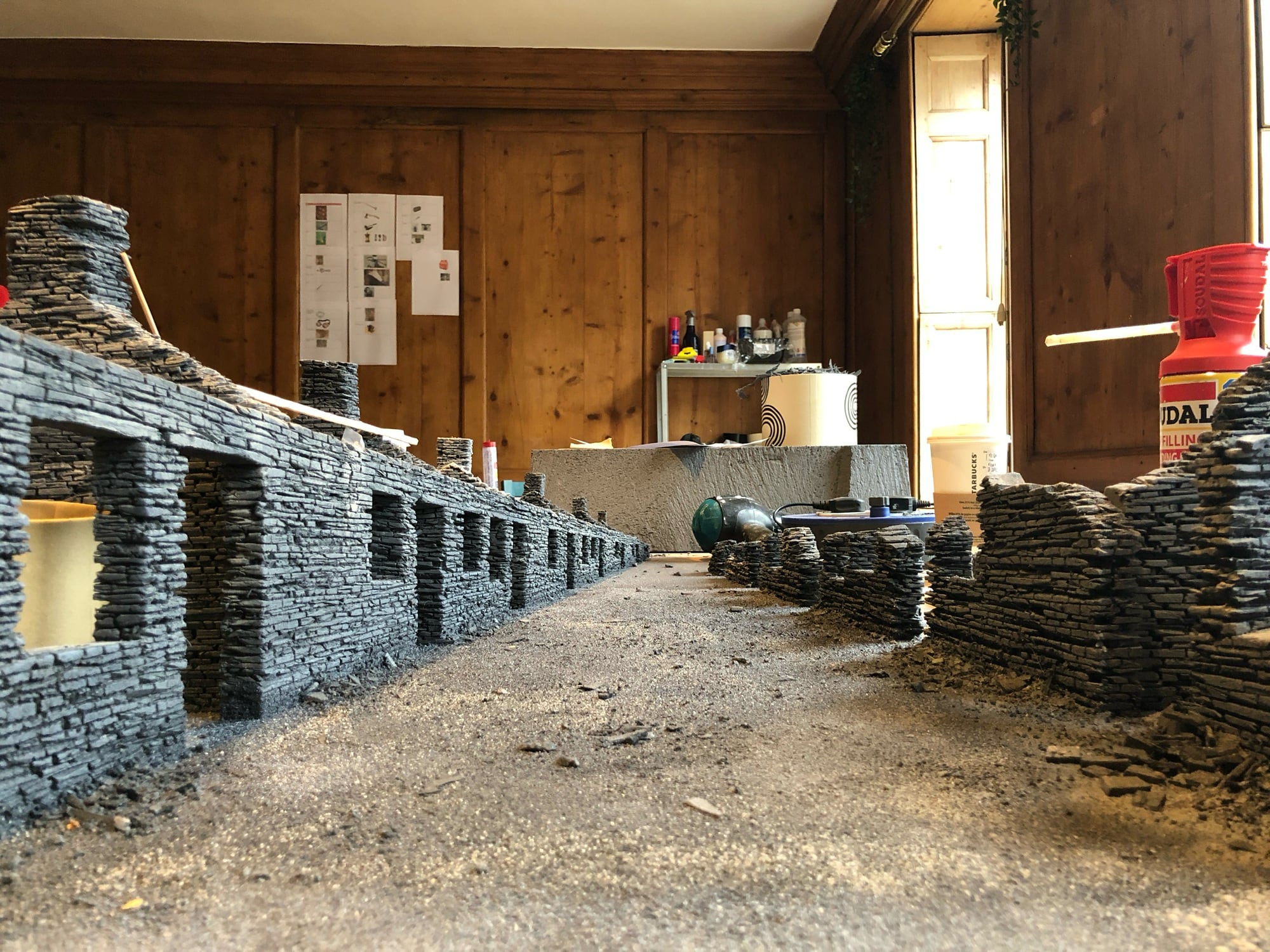
We had a team of great people making props for the film, and Louis Grant designing the larger sets for the wider shots. He created some incredible force perspective sets that looked really strange from above, but down at eye level looked massive. The Main Street and the very first shot of the mountains are sets no bigger than two metres, but they look vast in camera!
Everything was shot on my Canon 5D3 – still my very first camera I bought in 2012 that I shot my first short film on. It takes 5k images which in stop motion – where you’re just lining up images in a sequence – is equivalent to 5k video. The lens choice by our DP Jamie MacLeod was a Zeiss Prime lens. It’s a cinema lens that isn’t too sharp and has a very near depth of field. At first we went for the Canon electronic shutter, which we realised created the tiniest flicker. Turns out every time the shutter opens and closes, it does so with MICRO-level differences, creating a flicker! We had to swap for a Nikon version of the Zeiss lens and buy an adapter.
We were given notice on the premises not long after I started work, which was very stressful but was the impetus I needed to be able to prioritise it and get it done.
After Jamie lit everything, it was a strange transition to go from a massive team to literally just me in a room animating by myself, using the animation software Dragonframe, cut together in Adobe and graded in Da Vinci Resolve. It fell across summer, and we weren’t able to have any air conditioning that would blow air around. I also had to have really hot blackout blinds over all the windows to not let light in, so I tin foiled up the windows. The police would have conducted a drugs bust and found a very different kind of plant. We were given notice on the premises not long after I started work, which was very stressful but was the impetus I needed to be able to prioritise it and get it done. I tacked up every shot on the wall, created a proper schedule and crossed them off as I went. Getting evicted forced us to be professional!
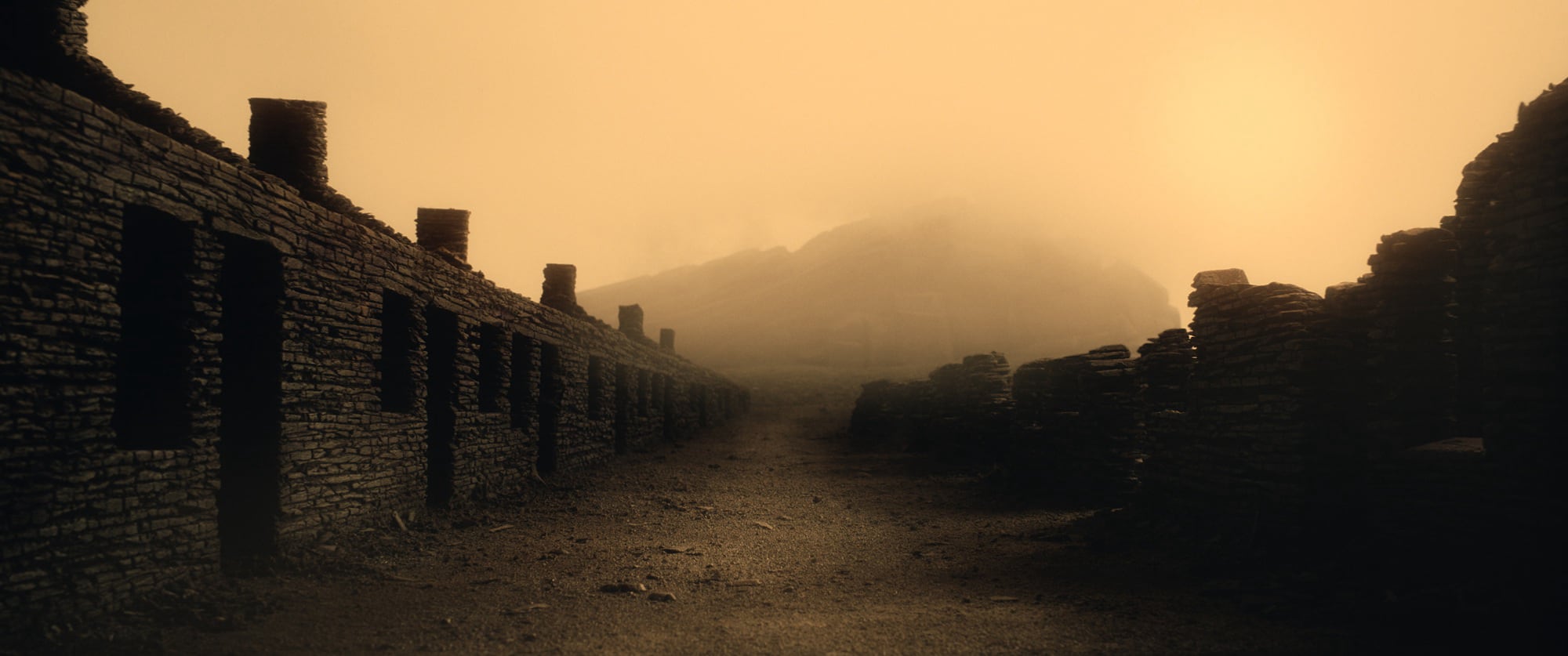
Root Note is set in a dead/dying world with miners marching through, but with the way ‘our’ world is right now, I can’t help seeing a post-war landscape in which the beauty of art, music, life and passion has been destroyed. How do you see the film and has that changed in your eyes – or that of audiences – since you first screened it?
Unless you’re being ultra-literal with any art, a lot of what you meant to say is realised after the fact. At the time it felt like we were making a quaint story of plants surviving against the odds, but actually our generation is increasingly feeling this way today. We’re just about getting by on the bare minimum, after others who have benefited from years of growth realised it wasn’t sustainable anymore and pulled the ladder up behind them. We’re not about to find something that will change the game for us, but moments of getting away from all that in the way music does is what we go to. Maybe there’s a sequel where the plants rise up and take control of the mine!
At the time it felt like we were making a quaint story of plants surviving against the odds, but actually our generation is increasingly feeling this way today.
Now that the story of Root Note has fully bloomed for all to see, what’s next on the horizon for you?
I work across animation, live action and audio as a multimedia director – so I jump between them all the time! The story idea often fits a certain type of approach. Right now I’m focussing on a lot of longer-form writing, and fiction podcasts lets us tell very big stories with very little money. We released a fiction podcast called Up In Smoke starring Mei Mac and Adam Buxton that topped the charts and has led to really exciting opportunities, so we’re building out a new series of that. I’m also launching a new horror anthology podcast this year too. But modelmaking and stop motion has always been a love of mine since painting Lord of the Rings Warhammer as a kid, and will always be a real love of mine. I’m always looking for another story that works for animation.
And finally, can you tell us about a short film you’ve watched that you’d recommend to the Directors Notes community?
It would be Oh Willy By Marc James Roels and Emma De Swaef forever and always. It’s such a great blend of absurd and emotional. It uses felted puppets and props so beautifully, they bring out such great performances from these little (and big!) characters, and the score is great. The BTS for it is amazing and we looked a lot at their techniques for sun lighting and diffusion in the clouds for Root Note! I feel like I could talk with them for hours about model making.