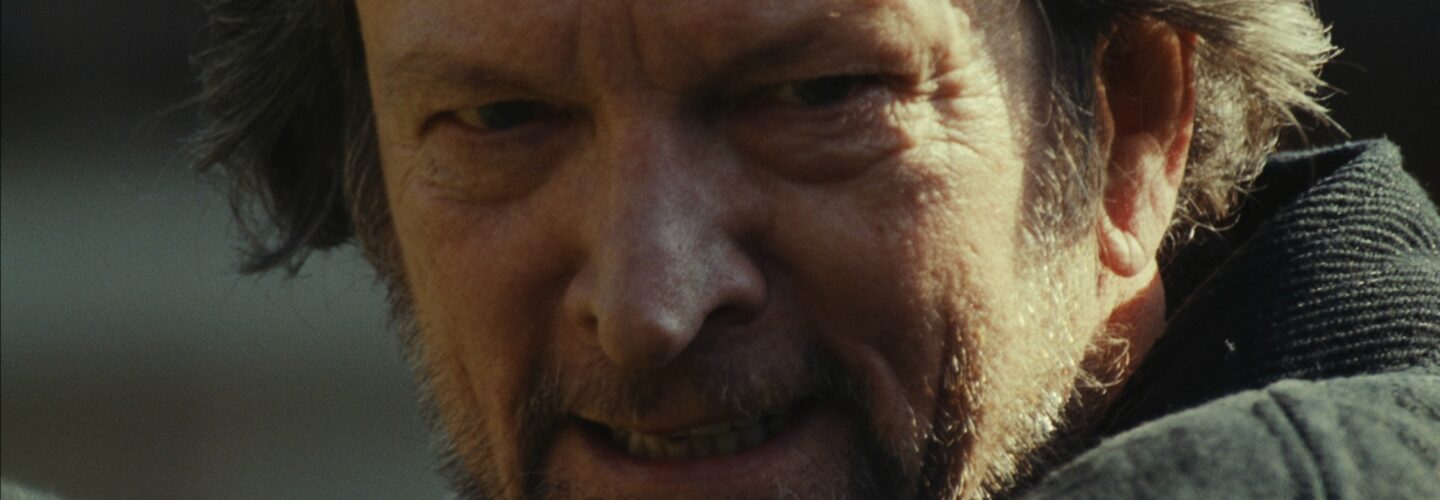
It takes a great deal of skill – and even restraint – as a filmmaker to craft a story that successfully straddles more than one genre. It requires trusting the audience while subverting their expectations, using those very expectations to deliberately lead them one way, then another. Elliott Power delivers this with aplomb in K-9INE!, his debut narrative short film about a lonely, retired police officer who receives a knock at the front door from a local thief looking to sell his stolen wares. The film is as much about one man’s need for human connection as it is about another man’s sudden need to avoid it. This devilishly compelling, and at times desperately awkward, tale dips its toes into comedy, drama, and even thriller. For today’s premiere of K-9INE!, Power talks to Directors Notes about the making of his genre-traversing short, the real-life inspiration behind the story, and the cinematic touchstones that shaped its creation. He also discusses using production design to build character and the lessons he will carry forward into future projects.
Congratulations on K-9INE!, which is your first narrative short. What was the inspiration for this film and what made it ‘the’ one to make for your debut?
K-9INE! grew out of memories of the street I grew up on in Brentford. As a kid, there were always ‘knockers’ bopping door to door selling things that had ‘fallen off the back of a lorry’, often supermarket meat. Those encounters stayed with me. Years later, I started thinking about the strange psychology of those exchanges: two people standing on a doorstep, both trying to read the other, each holding a different kind of power.
It captures a lot of the themes I’m drawn to as a filmmaker: power, masculinity, performance, domesticity, humour and the absurdity of everyday life.
I never wanted to make a kitchen-sink realism, even though it’s rooted in a world I know. I was more interested in creating something heightened, wonky, unsettling and slightly surreal. The film became a collision of personal memory, British suburbia and the filmmakers I admire—Robert Bresson, Bruno Dumont and Ulrich Seidl—where performance, silence and behaviour reveal more than dialogue ever could.
It felt like the right debut because it was the most personal story I could tell without making an autobiographical film. It captures a lot of the themes I’m drawn to as a filmmaker: power, masculinity, performance, domesticity, humour and the absurdity of everyday life. It also reflects how I like to work, contained, character-driven and built around tension rather than spectacle. It was the film that felt most unmistakably like my voice, so it had to be the first.
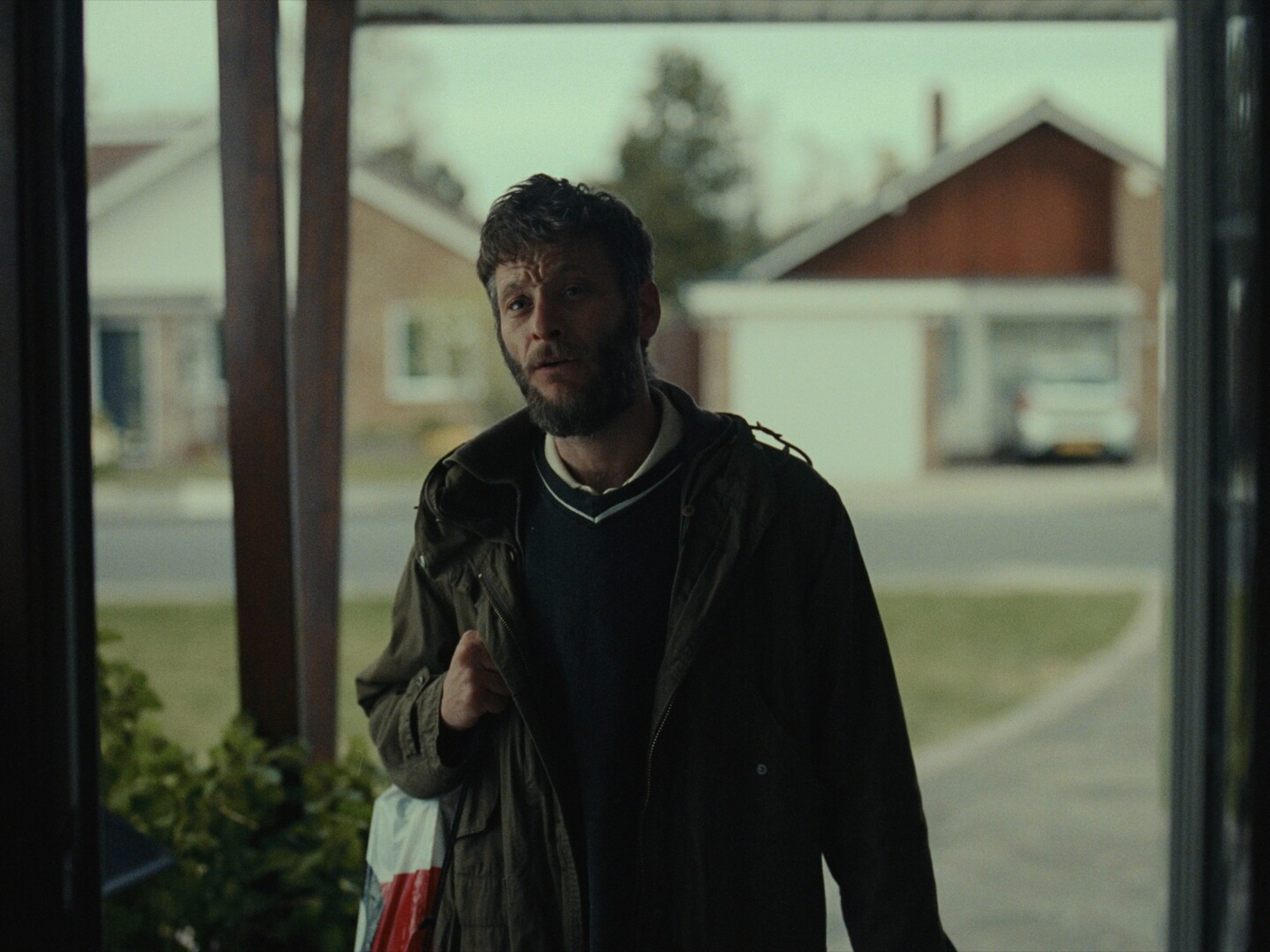
The film has a wonderful tone that moves between tension and comedy at any given moment, complemented with aplomb by the lead actors. How did you come to cast each one and what was the collaborative process like on set?
I’d always imagined the film as a psychological standoff disguised as something ordinary, so the casting had to live in that space between menace and humour. My key references were Ulrich Seidl’s Paradise Trilogy for its unapologetic social critique, hyper-realism, and striking contrast between rigid, painterly compositions and raw, often improvisational performances. Bruno Dumont’s Outside Satan was a major influence for its unconventional character psychology, raw physicality, and unvarnished emotional truth. I was also inspired by the minimalism of Robert Bresson and Chantal Akerman, particularly their ability to evoke loneliness, interiority, and emotional tension through restraint rather than exposition.
Both lead actors brought lived experience from opposite sides of the law, one having served in the police, the other having experienced life on the wrong side of it.
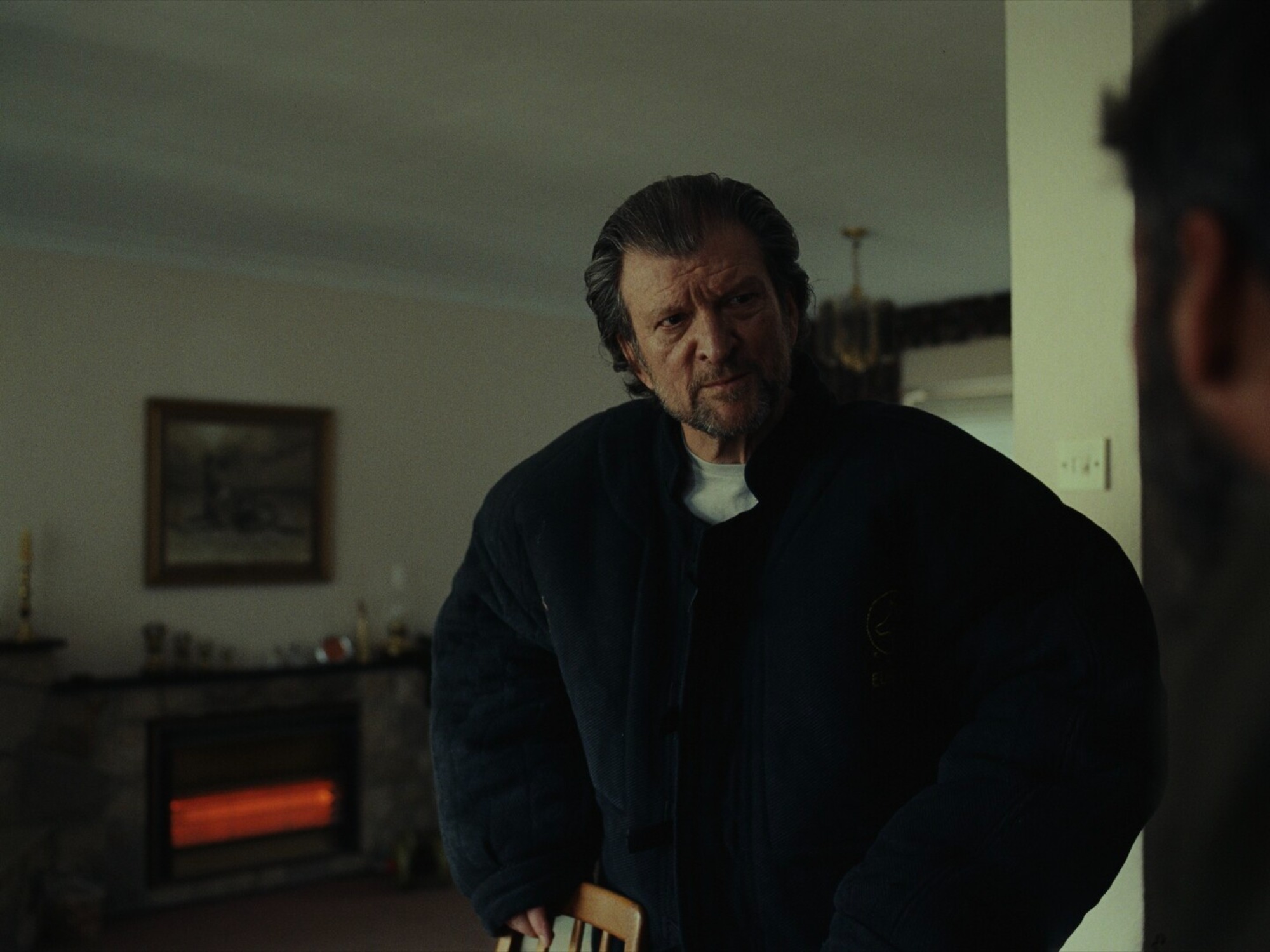
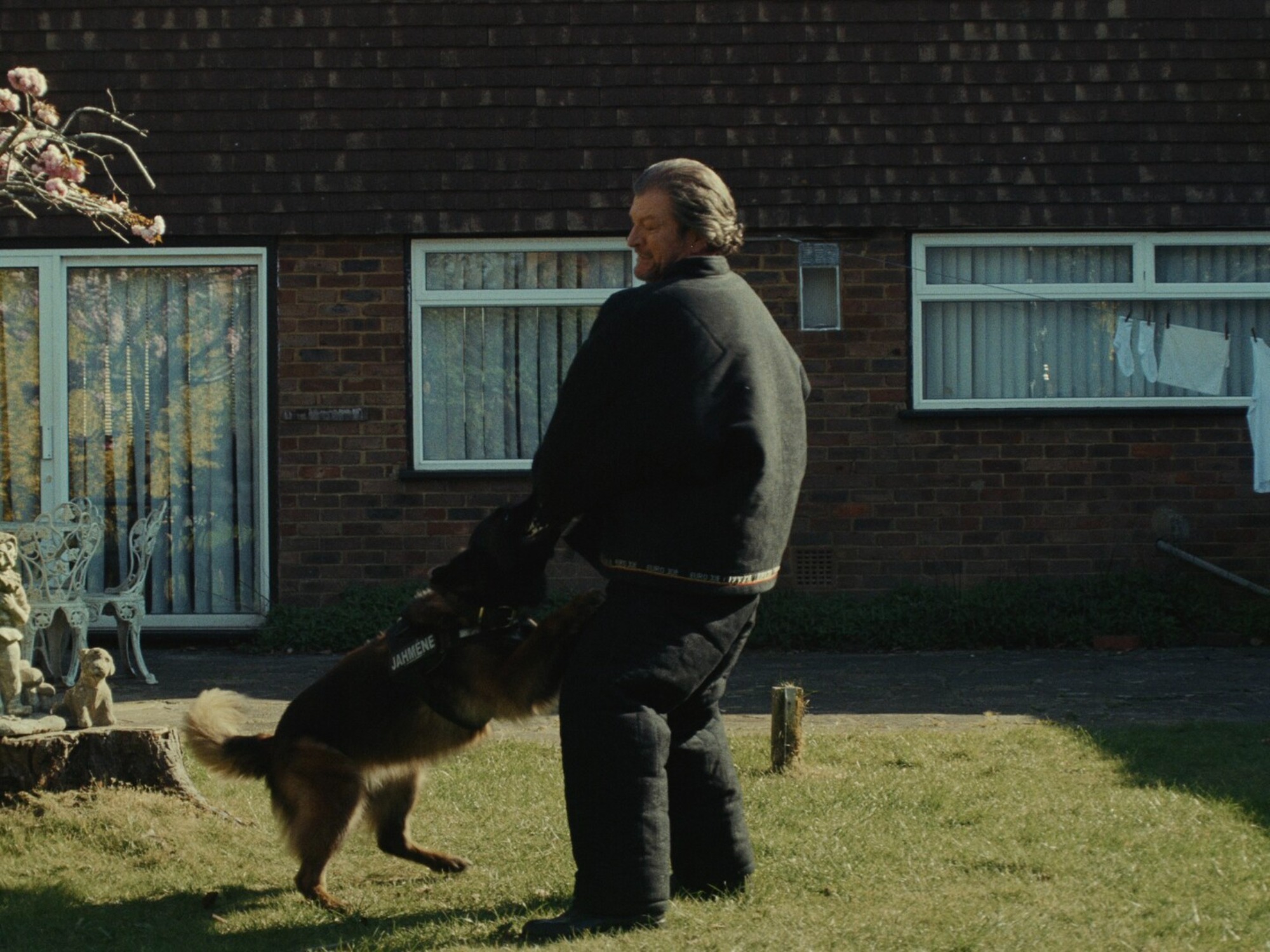
Casting Director Kharmel Cochrane and I looked for actors who felt authentic rather than performative. Both lead actors brought lived experience from opposite sides of the law, one having served in the police, the other having experienced life on the wrong side of it. In the casting sessions I was looking for an ability to communicate through behaviour more than dialogue. Once we found them, the focus on set was creating an environment where they could surprise each other. We rehearsed very little, kept performances restrained, and let the awkward silences and small gestures do the work. A lot of the absurdist tone comes from everyone playing the situation completely seriously, which made the tension feel even more real.
Most Popular
It can be tricky for films to feel expansive and build a world when set in one location, but you deliver that here. What was the journey like with your cinematographer to achieve that and intent behind your visual creative choices?
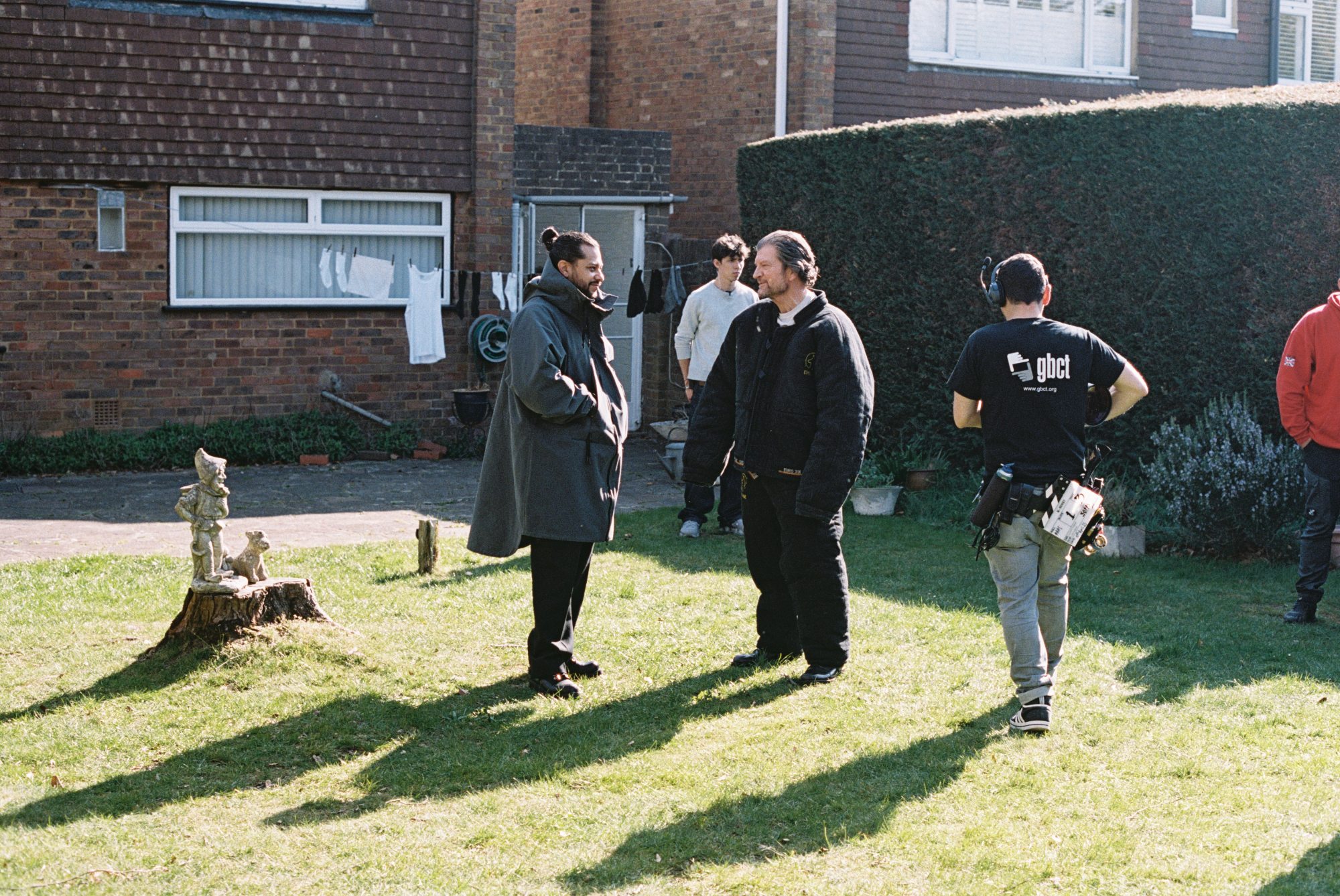
Patrick Golan, my cinematographer, and I embraced the limitation rather than fighting it. We wanted the house to feel like its own universe. ordinary on the surface, but increasingly tense and psychologically charged. Shooting on film was important to me because I wanted K-9INE! to have a tactile, organic quality that complemented its grounded performances and heightened visual style. We shot on 35mm film stock using a Panavision Panaflex camera in a 1.37:1 aspect ratio, which naturally creates a sense of intimacy and containment, making the characters Roy and Tea Leaf feel boxed in. The almost-square frame creates a sense of claustrophobia and confinement, reinforcing the emotional and psychological traps each character finds themselves in.
The camera is patient and observational, allowing the performances and subtle shifts in power to unfold within the frame. Rather than relying on coverage, we carefully composed each shot to make the world feel rich, lived-in and cinematic. The constraint of a single location became a strength, forcing us to find depth in behaviour, space and atmosphere rather than scale.
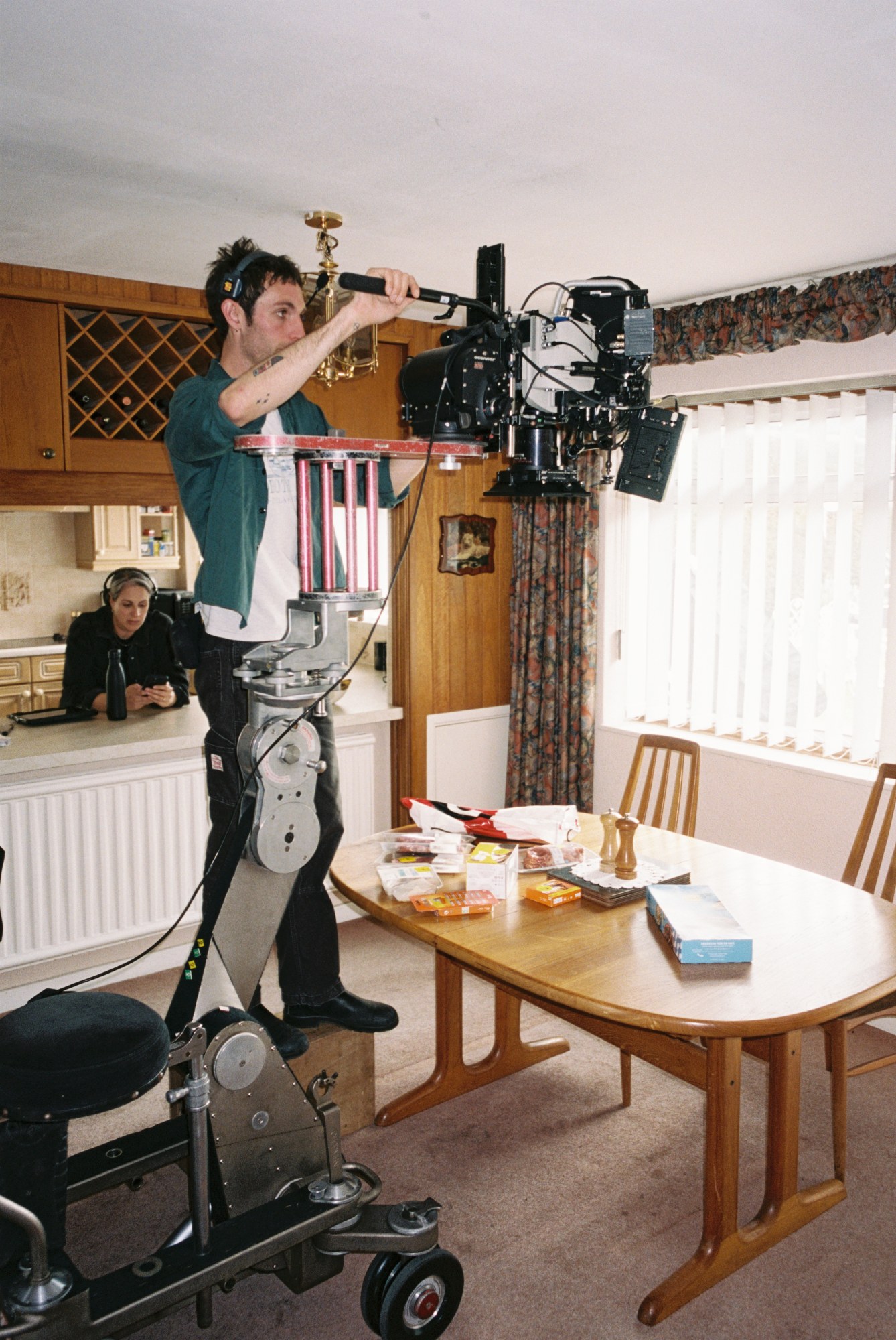
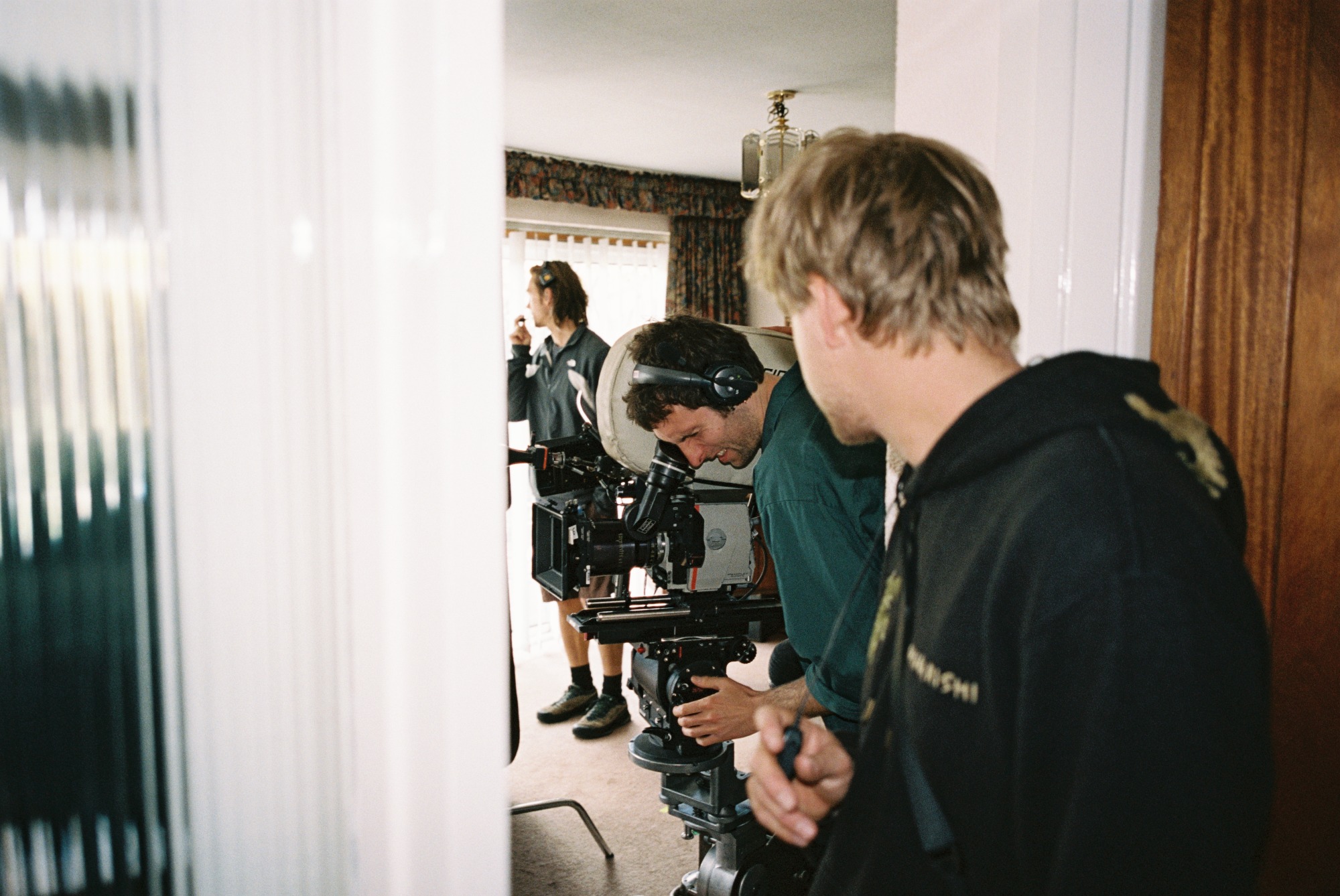
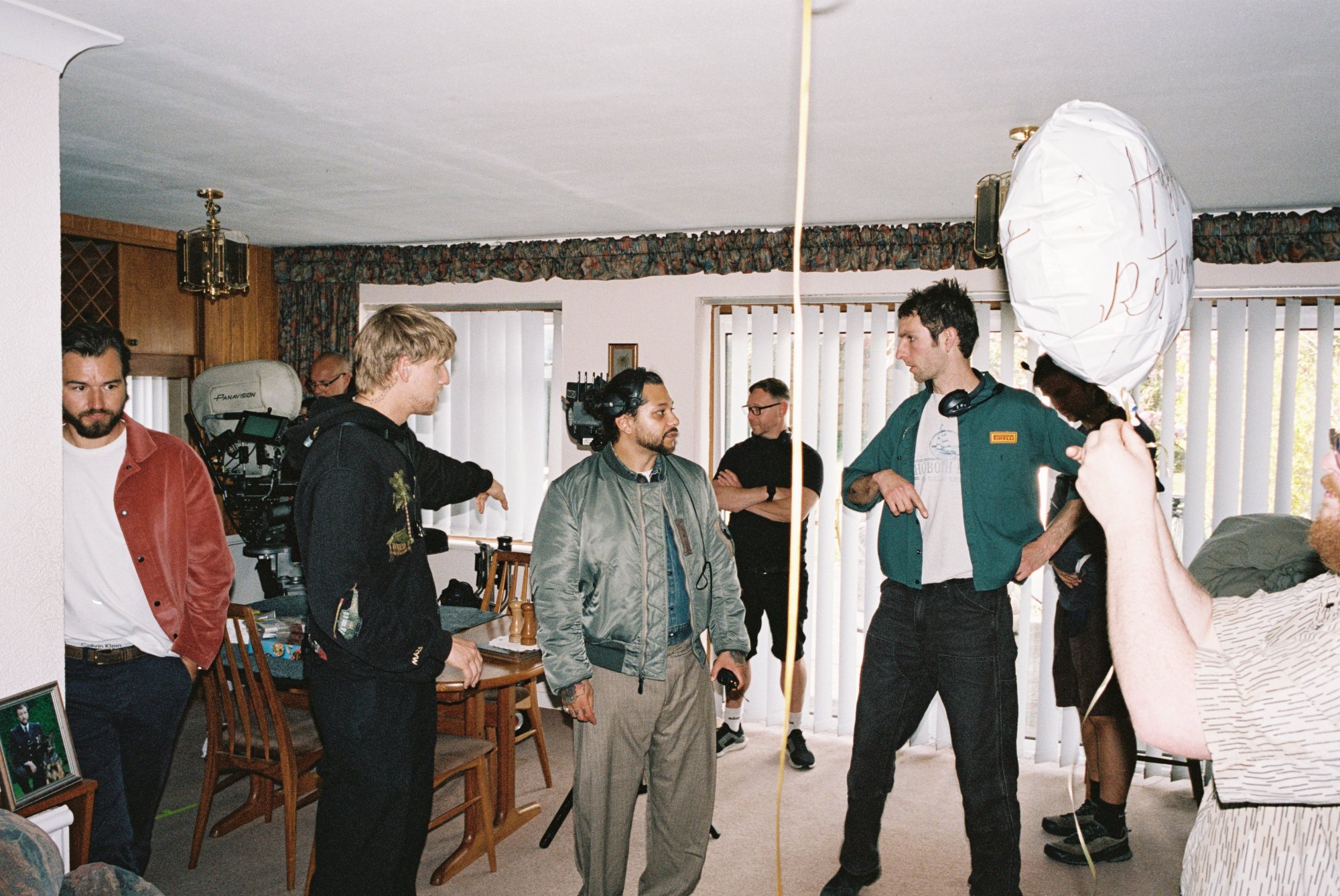
Speaking of one location, how did you go about finding yours and what work was needed to redress it in the image you envisioned?
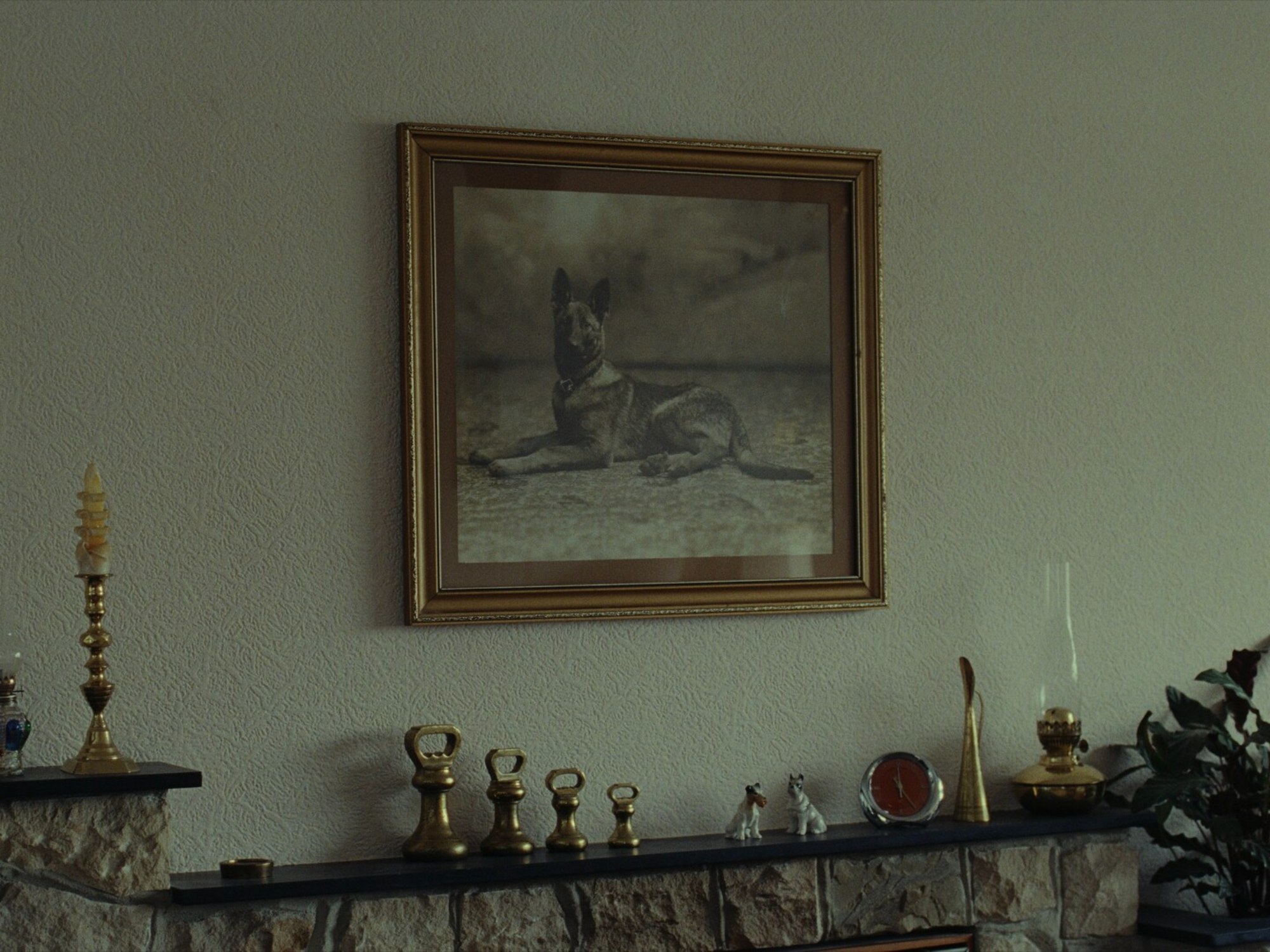
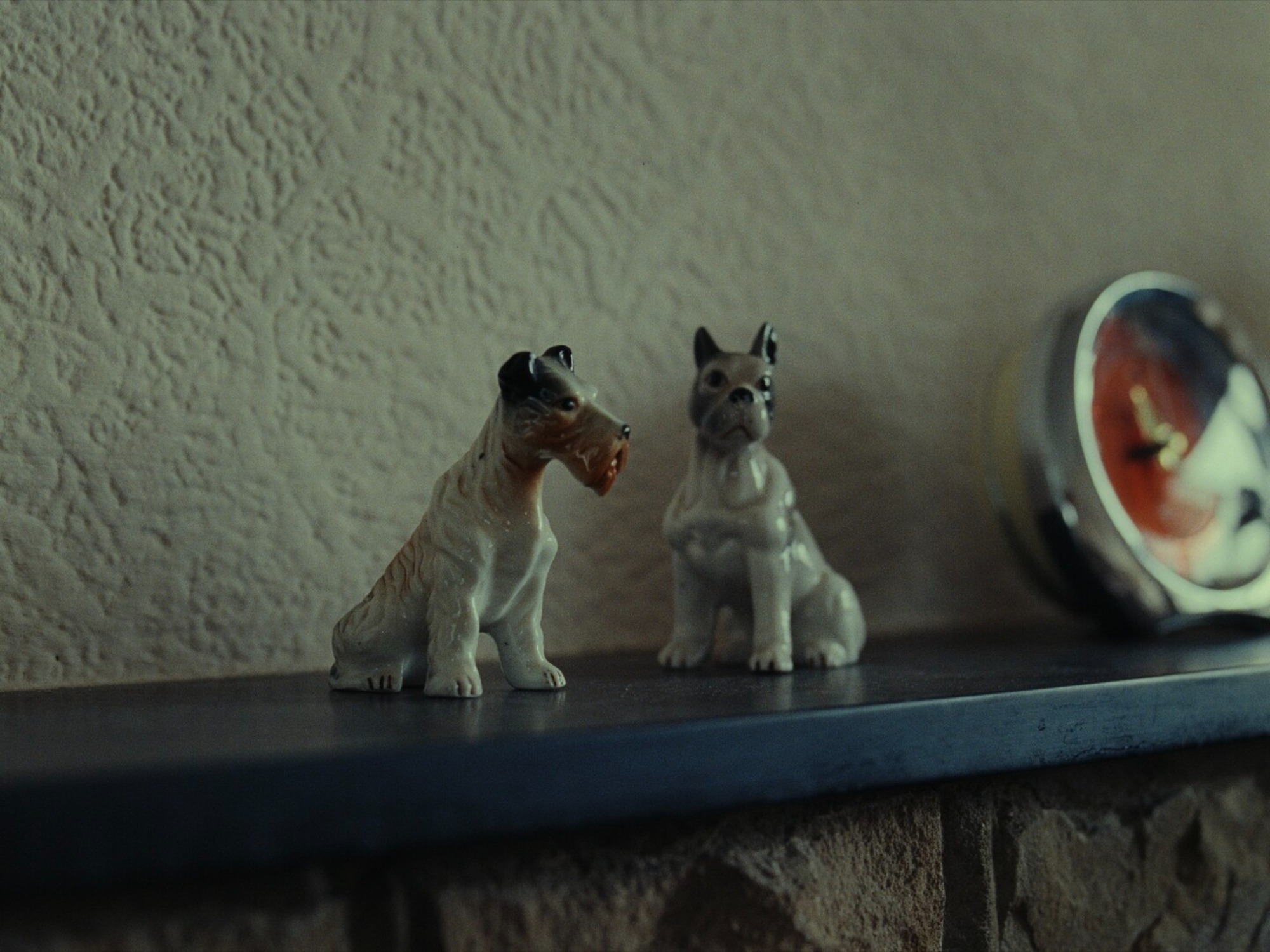
Finding the house was one of the biggest challenges. We looked at a lot of locations, but I was searching for somewhere that felt unmistakably British and familiar. The house needed history, but also enough character to hold your attention for eleven minutes. Once we found it, we did relatively little. It was more about subtraction than addition—removing anything that felt too contemporary or distracting, then carefully dressing it with objects that hinted at Roy’s life without over-explaining him. We wanted the space to feel lived in and quietly cinematic, as if it had occupied it for decades before we arrived.
The constraint of a single location became a strength, forcing us to find depth in behaviour, space and atmosphere rather than scale.
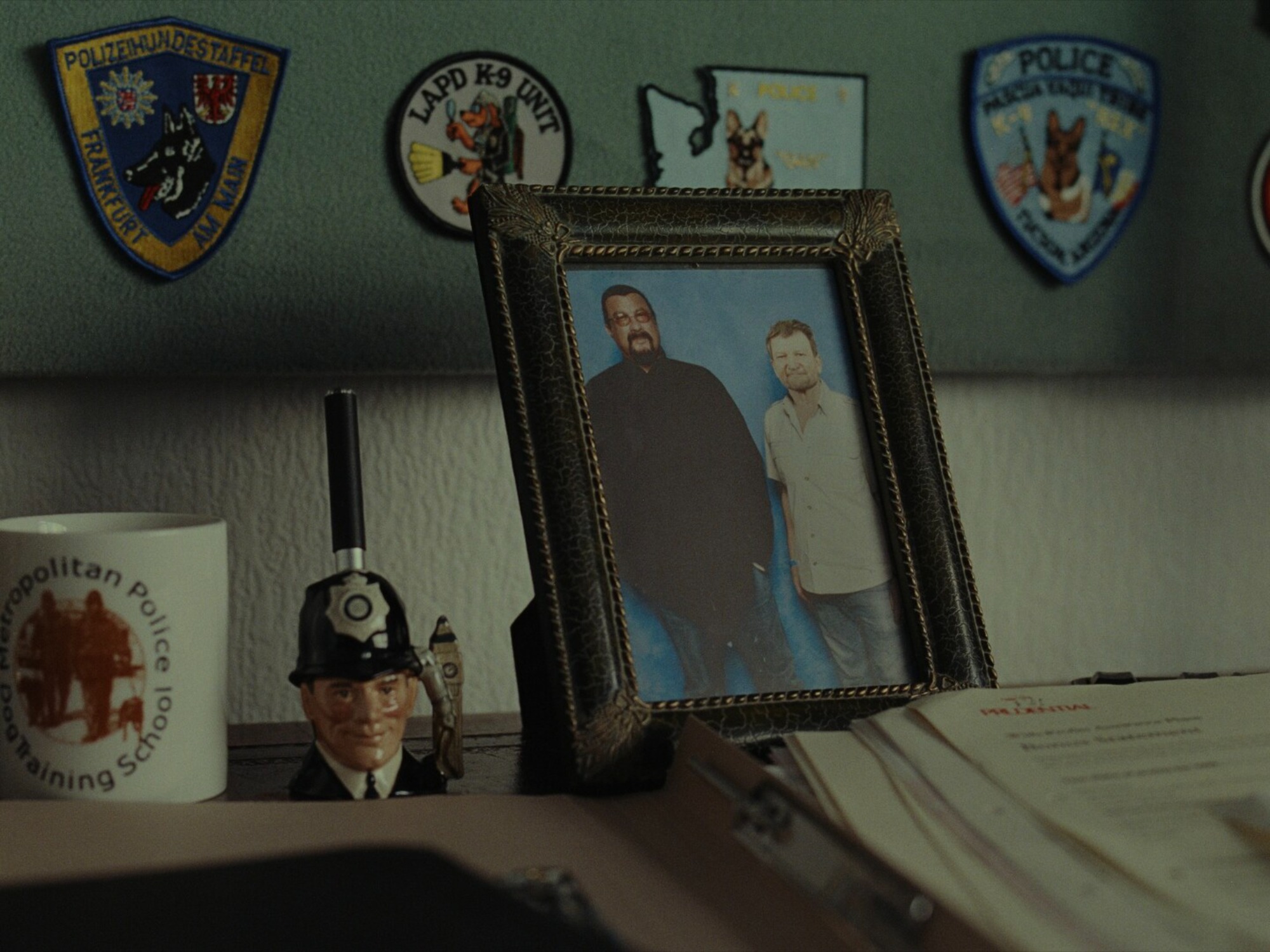
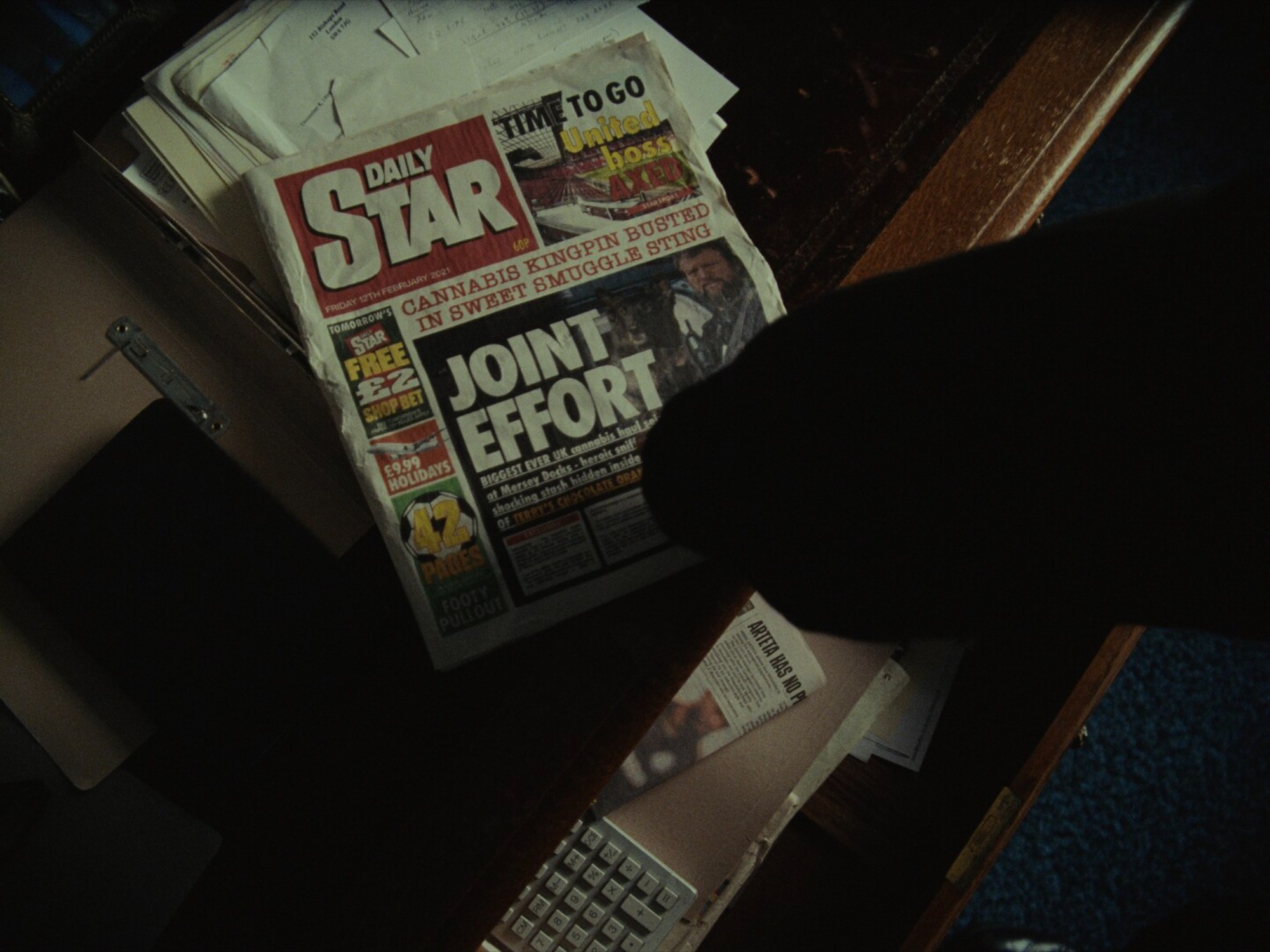
There are some lovely nods to the main character in the production design; a newspaper mock-up and a photo with none other than Steven Segal, for example. How did you decide on these items and then go about creating them?
I love props that reward a second viewing. Rather than explaining Roy through dialogue, the production designer Tim Crosbie and I wanted the audience to piece his life together from the objects around him. Every detail was there to suggest a larger world beyond the frame. The newspaper clippings, certificates and photographs were all created specifically for the film in collaboration with the art department. The Steven Seagal photo came from a conversation about the kind of action heroes Roy would have idolised, a slightly absurd detail that felt completely believable for someone of his generation. Those little touches added humour, but they also helped build a history for the character without ever stopping to explain it. I love the Prince Naseem Hamad poster.
Being shot on film, what was the post-production process like for you and was there still room for creative freedom in the edit?
Shooting on film makes you more intentional, but it doesn’t make the edit any less creative. If anything, it forces you to make stronger decisions earlier, so by the time you’re in the edit you’re shaping rhythm, performance and tension rather than searching for the film. I worked closely with my editor, Amanda James, and we were still discovering things in the material, holding on a reaction a little longer, trimming a pause, letting the silence do more work. The film really lives in those tiny shifts. Once the cut was locked, the grade with Jason Wallis was about preserving the texture and richness of the 35mm negative rather than polishing it away.
The soundscape of the film helps to keep the audience on their toes as to the tone of the film, leading certain assumptions down a certain path. Was this always planned from the start or discovered in post?
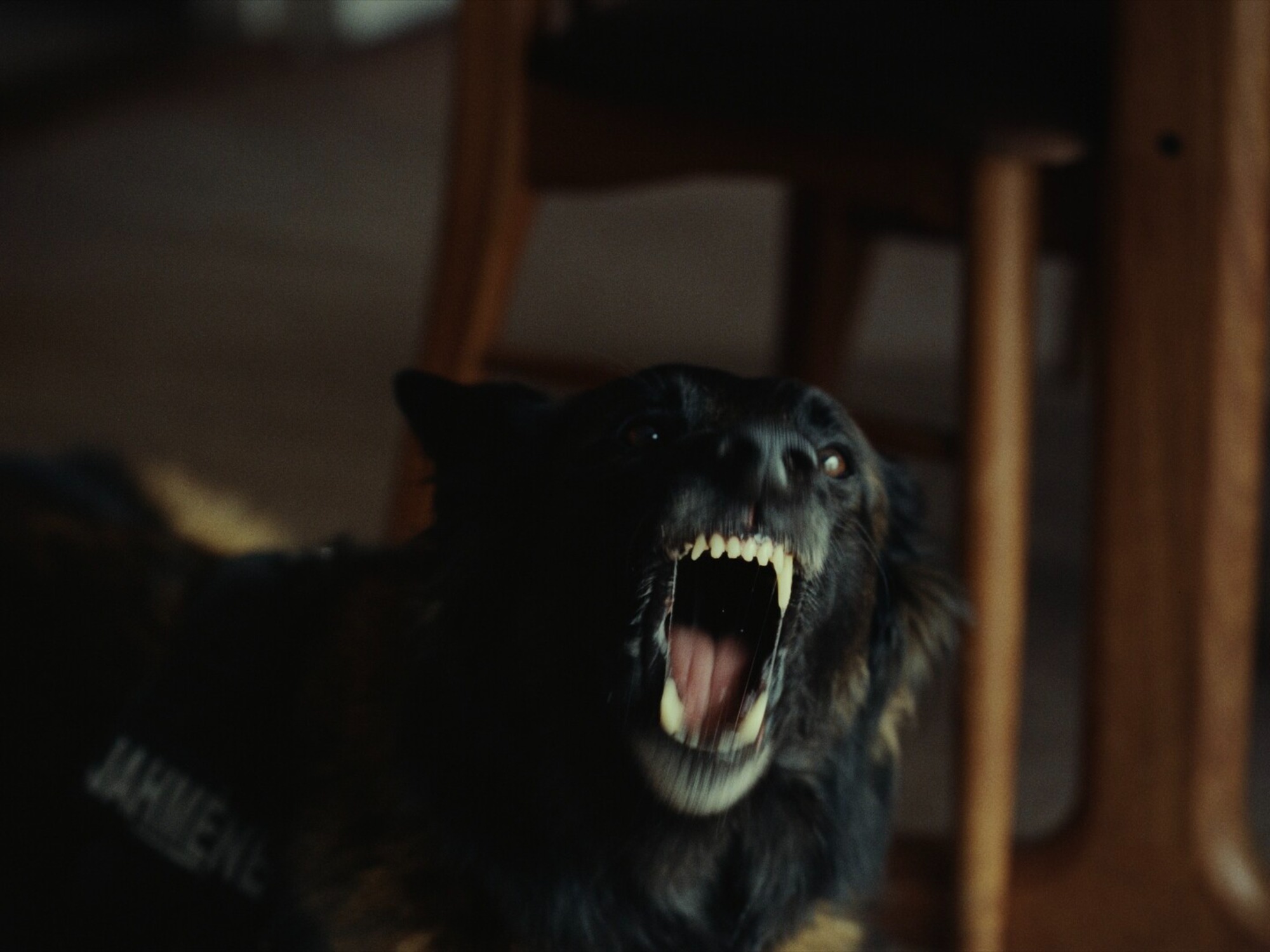
It was always part of the plan. I wanted the audience to feel slightly unsettled without ever being told how to feel. Sound became a way of gently pulling the film between tension and comedy, often making an ordinary moment feel loaded with meaning. That said, it really came to life in post. Working with the sound team, we found that the smallest details, a dog breathing, a floorboard creaking, the silence between lines, could completely shift how a scene played. We were constantly asking whether a moment should make you laugh, lean forward, or feel uneasy, and the sound design became the invisible hand guiding that experience.
As your first narrative film, what’s been your experience screening it to audiences and what were the main lessons you learned you’ll take with you moving forward?
The biggest surprise has been how universal the film feels. It’s rooted in a very specific part of West London and a world I know well, but audiences have connected with the characters and the humour in places I never expected (especially in America). Hearing people laugh at moments I’d worried were too subtle has been incredibly reassuring. The biggest lesson has been to trust the audience. You don’t need to explain everything. If the characters feel truthful and the world is specific enough, people will meet you halfway. That’s something I’ll definitely carry into my next films.
And thinking of moving forward, what’s next for you?
I’m developing my first feature while continuing to make shorts, commercials and music videos. Narrative is where I want to keep pushing myself, and K-9INE! has given me the confidence to trust my instincts and lean further into my own voice. The goal is to keep telling stories that feel specific, cinematic and a little unexpected.
Finally, what short film by another filmmaker would you recommend to the Directors Notes community and why?
I’d recommend No Faces by Louis McCourt. It’s one of those films that stays with you long after it’s finished. It’s formally confident without ever feeling showy, and it creates an incredible sense of unease through atmosphere, restraint and visual storytelling. It reminded me that the most powerful films often leave space for the audience to do some of the work.