

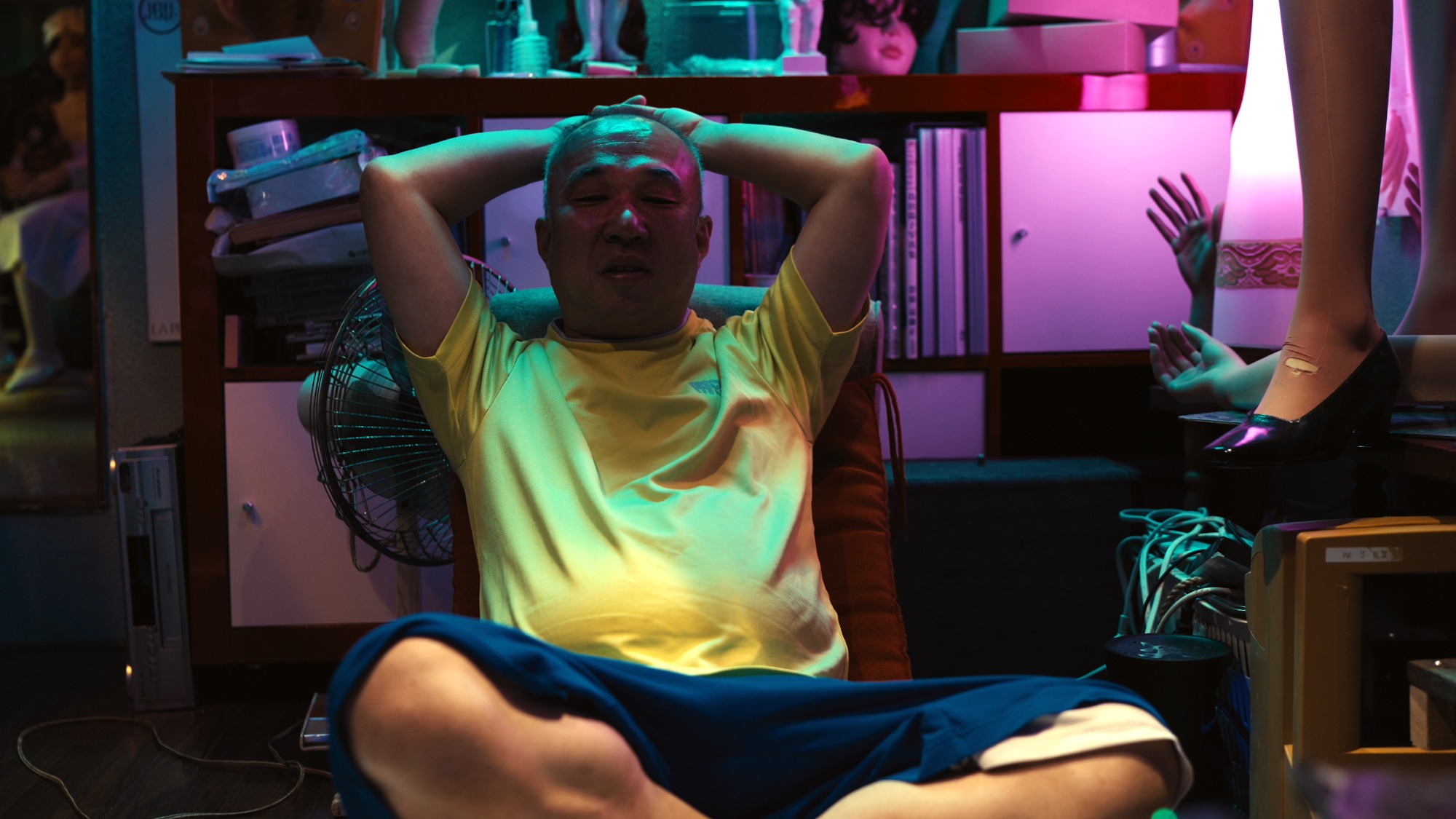
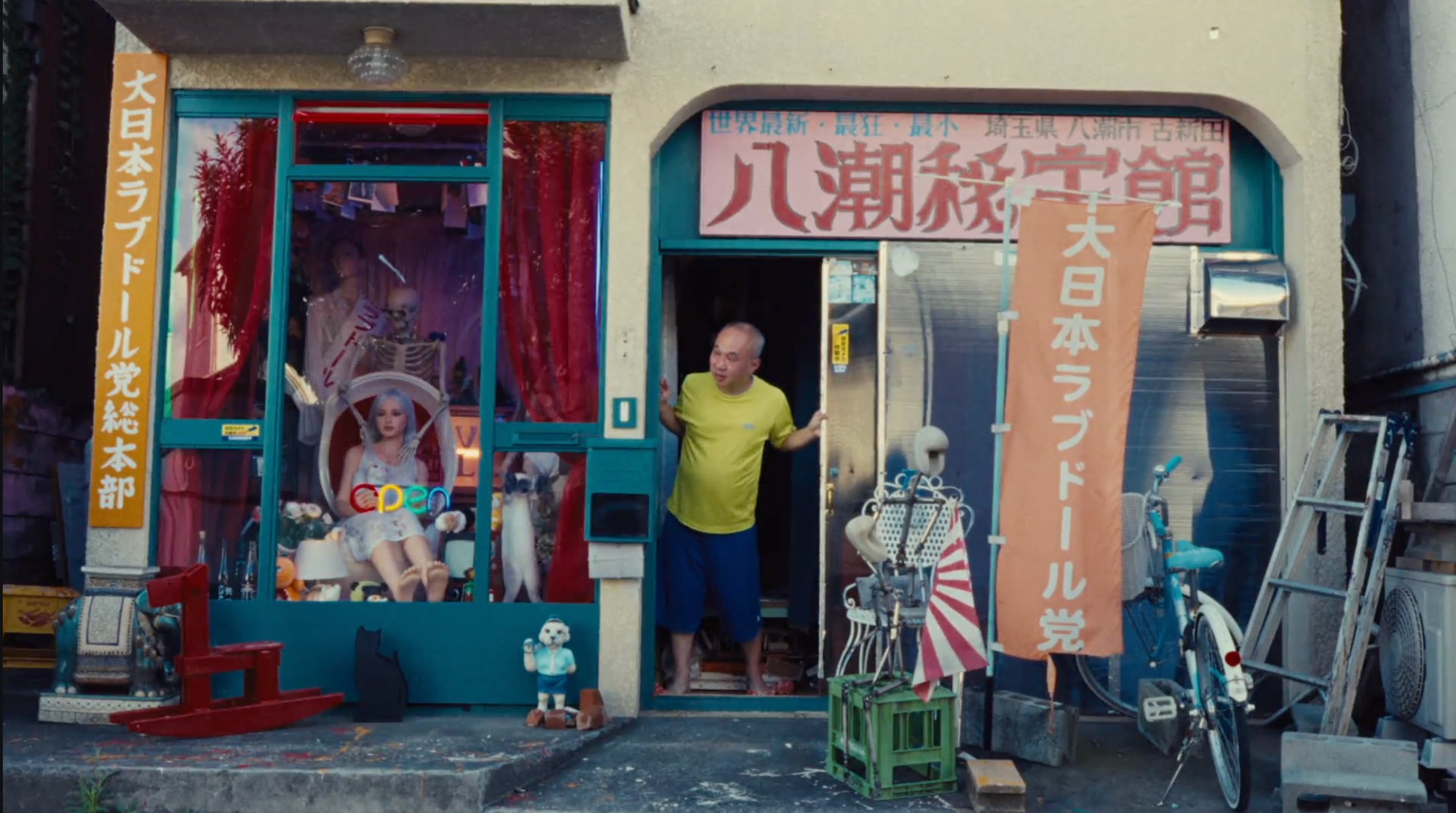
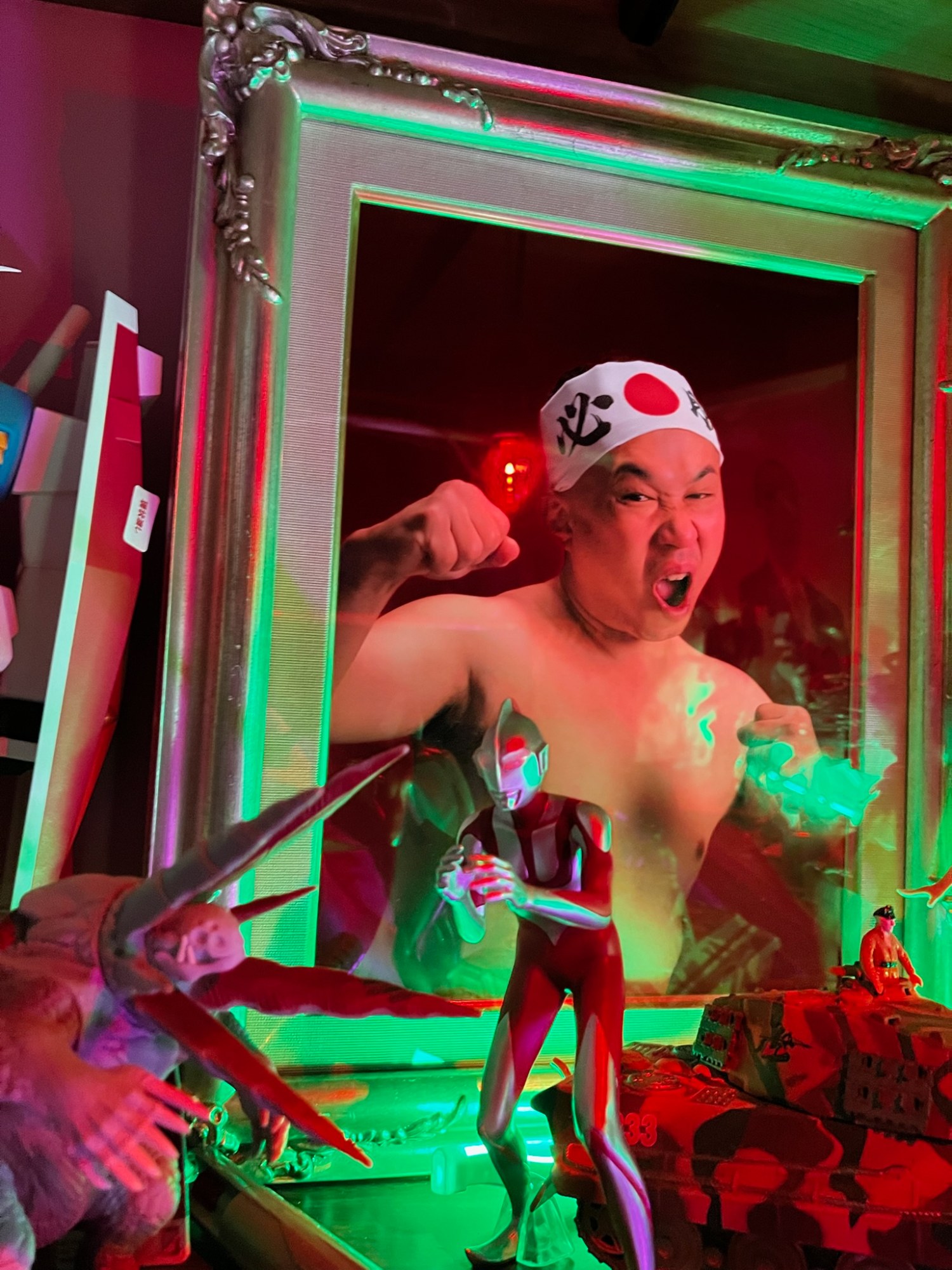
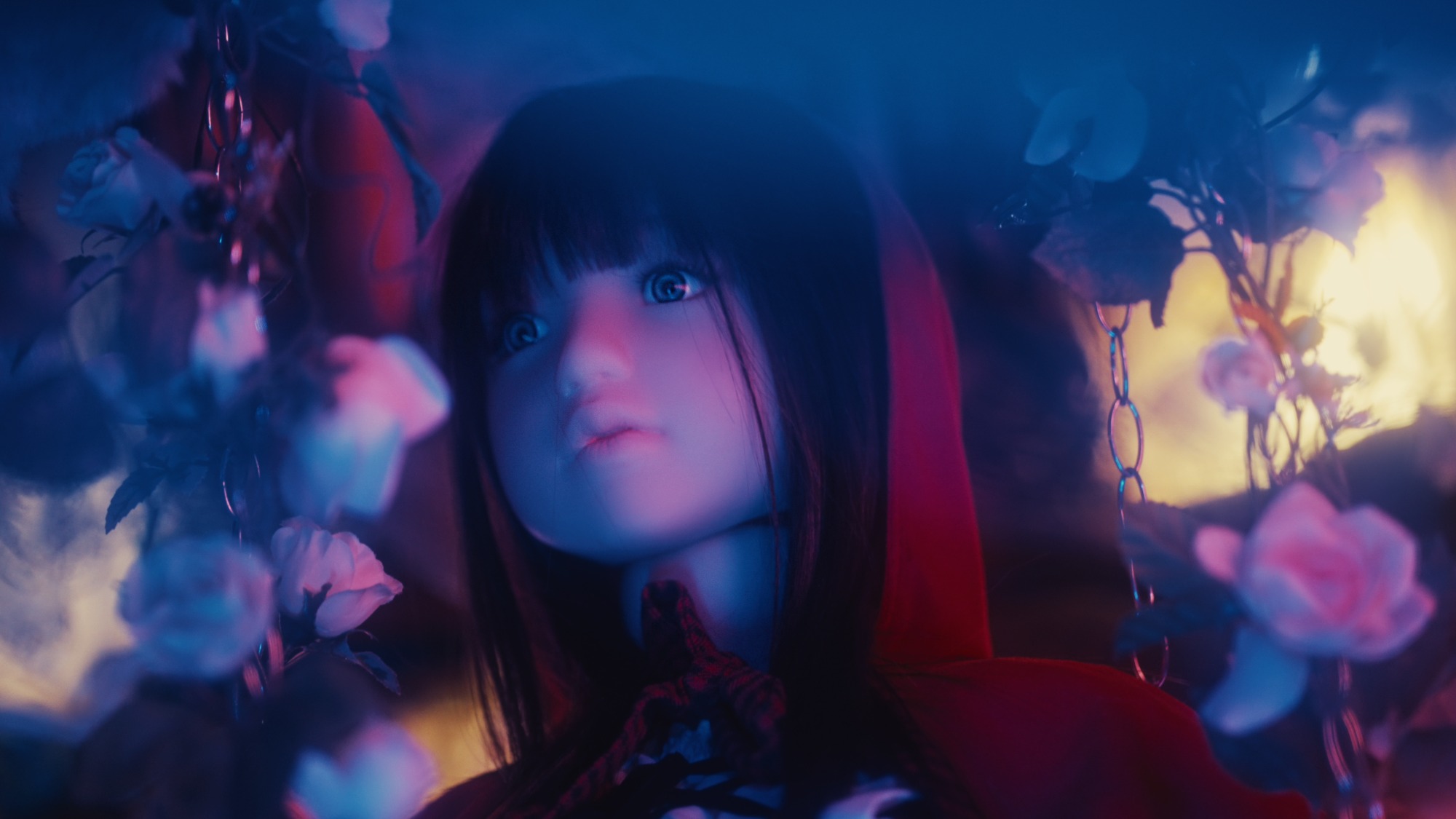
There’s an obvious visual appeal and heightened intrigue to a documentary about a man who lives in a museum of sex dolls. But in Hyodo’s Paradise, director Jacque Rabie is less interested in the novelty of the situation than in the person living it. Over 22 minutes, Rabie observes Hyodo in the everyday rhythms of his home – vacuuming, washing his dolls, talking about his life and revealing increasingly personal aspects of himself – while resisting the easy temptation to turn his unusual circumstances into spectacle. Instead, Hyodo’s Paradise becomes an unexpectedly complex examination of judgement, sexuality and more.
That complexity was not necessarily something Rabie understood from the outset. Having previously worked exclusively in narrative filmmaking, he initially approached Hyodo’s home wondering how he could turn its unique and visually compelling environment into a short film. It was only through spending time with the man that he realised the more meaningful story was already there. For Directors Notes, Rabie joins us to discuss the transition from narrative to documentary, building intimacy across a language barrier and how making Hyodo’s Paradise unexpectedly encouraged him to confront his own relationship with sexuality.
You’d only made narrative films before this. Narrative lets you author a character; documentary hands that authorship over to your subject. Was there a moment this stopped being a film you were making and became one you were receiving?
I remember thinking when I came out of the first visit with Hyodo: how can I turn this into a short? How can I use his house in some interesting way for a film? Would he be willing to act in whatever I made? Eventually it clicked that I wasn’t going to be able to make anything more interesting than what was presented to me. The most interesting, and frankly meaningful, story was already there. So I pitched the idea to Tegan Slattery and decided to try something that felt very unfamiliar, but also felt like the most natural way to channel the inspiration I found at Hyodo’s place.
You reached Hyodo through several layers – your limited Japanese, his limited English, a translator, and, later, Tina Imahara catching things in the edit that you’d missed. Did all that mediation flatten the intimacy, or do something else to it?
On my new doc project, a feature entitled Kur, I just filmed another segment that was translated. In all honestly, this go around it felt totally stilted compared to my dialogue with Hyodo. I attribute this to a couple of things. The first simply being the speed of translating and nuances caught by our translator Stephan May (where he would frequently qualify responses by saying there was no perfect English translation and giving poetic alternatives). The second was that I really felt a connection with Hyodo, especially by the end. I didn’t need to know exactly what he was saying to really be there with the meaning of it. Even when the Japanese was way beyond my level, I almost knew what was coming just by his expression.
The edit was a totally different story. I struggled big time, and it’s only through Tina Imahara’s fantastic editing and fluency that the intimacy found on set could be brought out in the edit.
At what level was he open with you? Were there things he offered easily that felt polished, and quieter things that seemed to slip out unguarded?
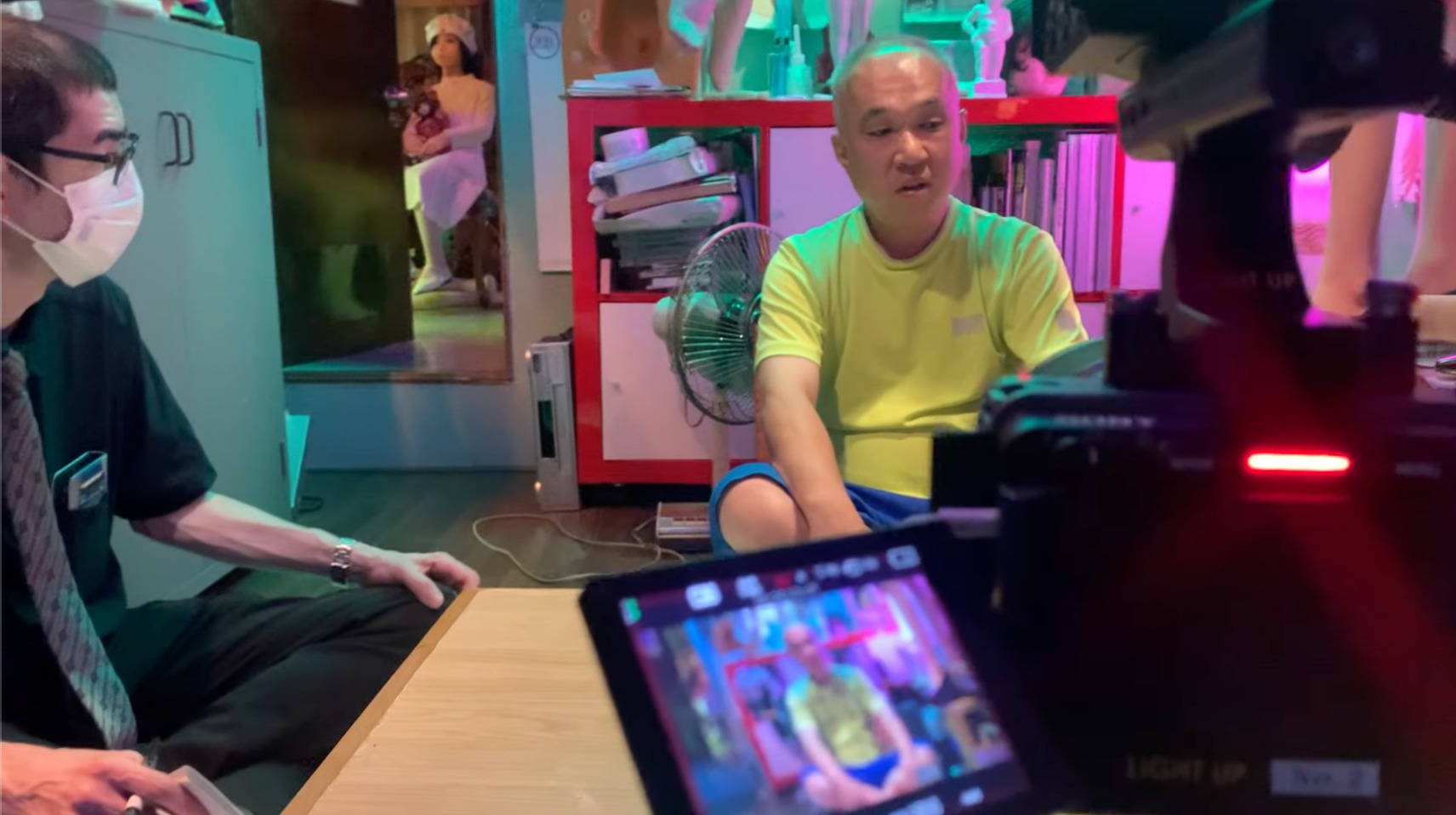
Hyodo was quite guarded the first day. His responses were very matter of fact. When I tried to go a little more emotional, there was some clear resistance. I think that faded right at the end of day 1 when he realized what the film was. Hyodo had been filmed a few times before in the past, but those films always portrayed him as a novelty. Local TV programs would come to his house just to gawk at how ‘strange’ it all was. When he realized we were trying to do something a little different, he sort of started to play into it – seeing, hopefully this doesn’t sound too pretentious haha, the attempted artistry – and really allow himself to be vulnerable.
I really felt trusted by him and didn’t want to betray that trust in the edit.
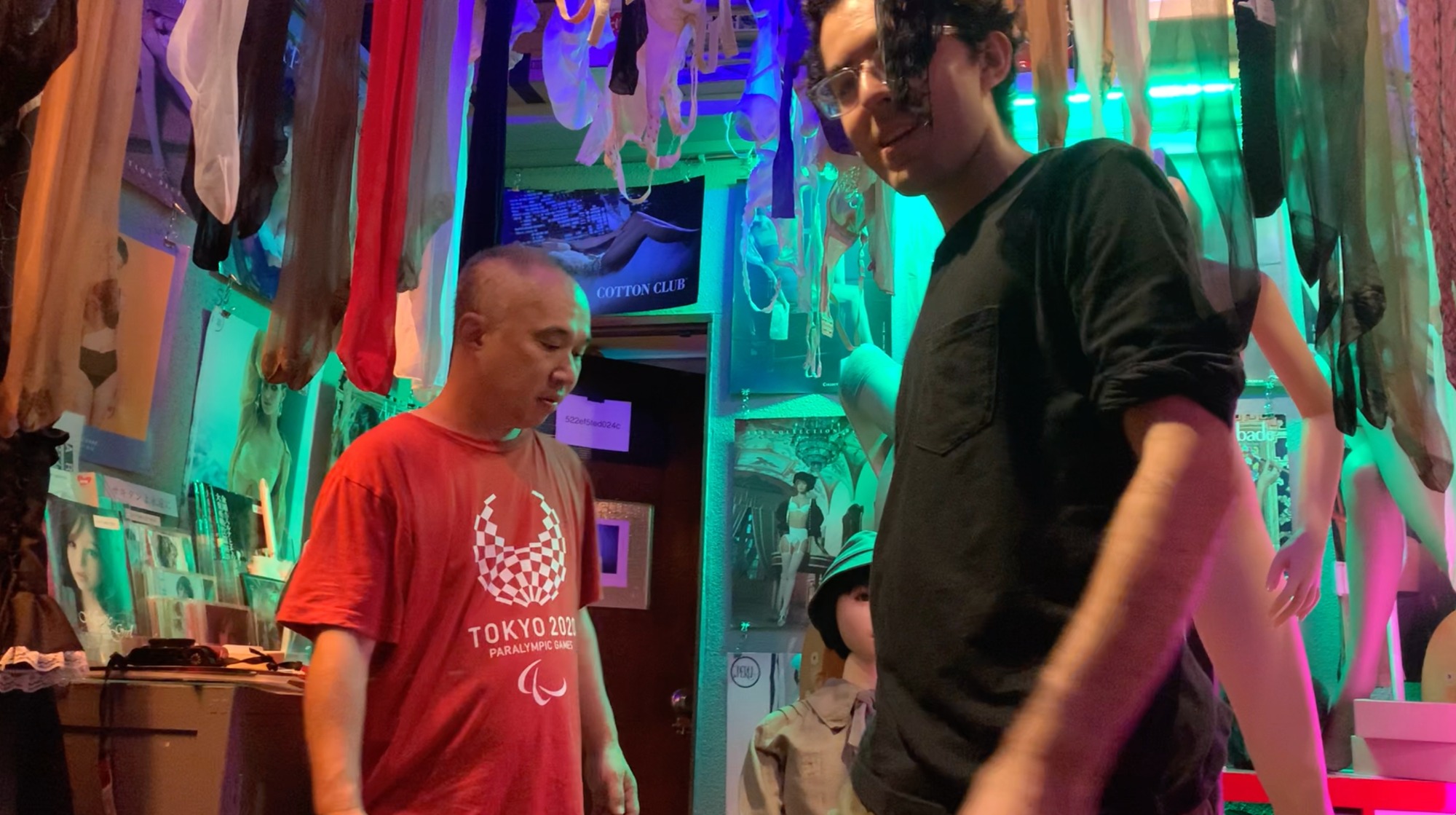
Actually, now that I’m thinking about it, it was after I saw a poster of Tarkovsky’s Stalker in his room somewhere and we started speaking about it. Hyodo loves films, especially the same slow-burn ones I do, so I think that was a turning point where he started to trust me as an artist and trust my intentions with his portrayal. By the last day, he was very willing to let out some really deeply personal things I wouldn’t put on the film for the sake of his privacy. I really felt trusted by him and didn’t want to betray that trust in the edit. It also didn’t hurt that he had a few beers at a few points…
Most Popular
What did you actually feel, hour to hour, inside that house? And did it shift as you got to know him?
I felt like I was on a rollercoaster. I don’t remember exactly how I left feeling, but I know it oscillated between judgmental, excited, confused, tired, even a bit scared at points!
You’ve said your first cut read as judgmental because you were projecting your own judgments onto him. What did the film end up showing you about your own discomfort?
I tried to put aside my own worldview or perspective so the viewer of the film can just view Hyodo as rawly as possible, but speaking only for myself, I personally don’t think it’s healthy or particularly internally productive to put all that on display for the world. There is something potentially beneficial to society in having a sense of decency and mindfulness of how our behaviors impact others (and I’m not just speaking in terms of sexuality but all of the things we tuck away), but far worse than the exhibitionism of our shadows is their repression. Hyodo’s complete openness, in that way, is inspiring. I feel that it is a first step to genuine healing and integration that most of us don’t take. I don’t think I would have taken that for a long time without meeting Hyodo.
This film really let me open up about my own sexuality.
This wasn’t something I noticed until we started showing the film to others, but this film really let me open up about my own sexuality. While I don’t share the same fantasies or worldview as Hyodo, I certainly can recognize elements of him and his house in myself. I think all of us can to some degree. And as I stopped judging Hyodo, I think I honestly did stop judging myself for feeling certain things and having certain lenses through which my mind views the world of its own accord. And only from that place of welcoming could I start to really make peace with sides of myself I had so long shunned.
Critics singled the film out for refusing to mock Hyodo where it easily could have. Where do you land on judgment in documentary – is the compassionate eye an ethical choice, a craft one, or the same thing?
Honestly – I think it’s fine to judge. We all judge everything every second of the day. It’s more important to me what place are you coming from when you’re judging. Are you judging because it’s entertaining? Or are you judging against the viewpoint of peace and compassion? Most of my favorite doc directors do the latter. But at the same time, I think a truly powerful film, like The Act of Killing, for instance, is saying the most clear thing without needing to say anything overtly judgemental at all.

Can a filmmaker ever give a subject like Hyodo a truly fair portrait, or is every edit a verdict? How did you make peace with that much power over how he’d be seen?
I think it’s always casting some kind of eye that isn’t wholly true. I mean, there’s no such thing as true objectivity. You can’t ever truly see someone, truly. So I do feel some degree of remorse that some aspect of this comes from a position of power over Hyodo (in the context of this film). I think that realization has made filmmaking harder for me, as I’ve come to see that you’re playing God a bit with your subjects (even actors in narrative). I simply hope that the film does more good in opening the hearts of others than it does harm towards Hyodo and those who see him.
You’ve said it was the women on the project who brought the compassionate, unjudgmental eye. What do you make of that pattern, and why do you think it fell that way?
I’m not sure if it was due to gender or societal influence based on gender norms, but I think that myself and the men I’d shown it to all almost immediately tacked on some level of condemnation and subtle belittling to Hyodo. In stark contrast, all the women approached it with a deeply compassionate, understanding eye. Part of me wants to joke and say it’s why women should be world leaders, but I think it more importantly points to the way the patriarchy affects men. To me, it points to how deeply ingrained ideals of masculinity, propriety, and an unhealthy relationship to sexuality affect men.
There’s no such thing as true objectivity. You can’t ever truly see someone, truly.
Was there a cut you loved that you had to kill because it served your judgment of him rather than the film?
Yes, but sadly sharing it would be breaching the internal sense of confidentiality I have for Hyodo! Let’s say there was a long CG sequence in the middle over a VO of a story he told me. Would’ve been pretty cool, but unfair…
The crude and the heartbreaking sit right up against each other, rather than in tidy tonal blocks. Was that deliberate, or just the texture of the man?
It really was just putting on display the mind of Hyodo, which sits in a myriad of contradictions.
You stayed late shooting B-roll while Hyodo got ready for bed. What were you chasing in those hours?
Shots of his house! It was more practical since we spent all day interviewing that I wanted to get tons and tons of footage of every corner of his place. I unfortunately found in the edit that I got a lot, and I mean a lot, of cool shots of the same things rather than diversifying as much as I should have! Lots more cat stuff to be found in his place!

The festival run’s been strong. What reaction has surprised you most – and you mentioned a feature in there you’d have loved to capture. Is that still alive, and what’s next?
I remember at our screening at Big Sky, a woman asked a question to Tegan and I with a startling amount of intensity: “Why did you make this? I felt incredibly uncomfortable watching this.” I think I just said something like, “I just felt like I had to, it felt like I was just expressing myself”. After the screening she came up to me and revealed how hard the film was to watch, but that my answer made her realize it was all coming from her. I think the process for the film did that for me too.
It’s a globe-spanning production where we will team up with directors across the world.
At that same fest, I met a wonderful producer – Chloe Campion. Chloe, Tegan, and I have teamed up to work on a new project entitled Kur. Kur is a feature-length doc about death, and how the way we relate to it shapes the way we live. It’s a globe-spanning production where we will team up with directors across the world (as of now, one in South Africa and one in Morocco) to film the deeply intimate aspects of death we so oft overlook.
And the one we always end on: if you could send our readers to a single short film you love, what is it, and why?
Lance Oppenheim’s The Happiest Guy in the World. While I don’t like that the portrayal felt a bit unfair to the subject, I must admit this little short is the one that most deeply changed my life and opened me up to shooting docs.