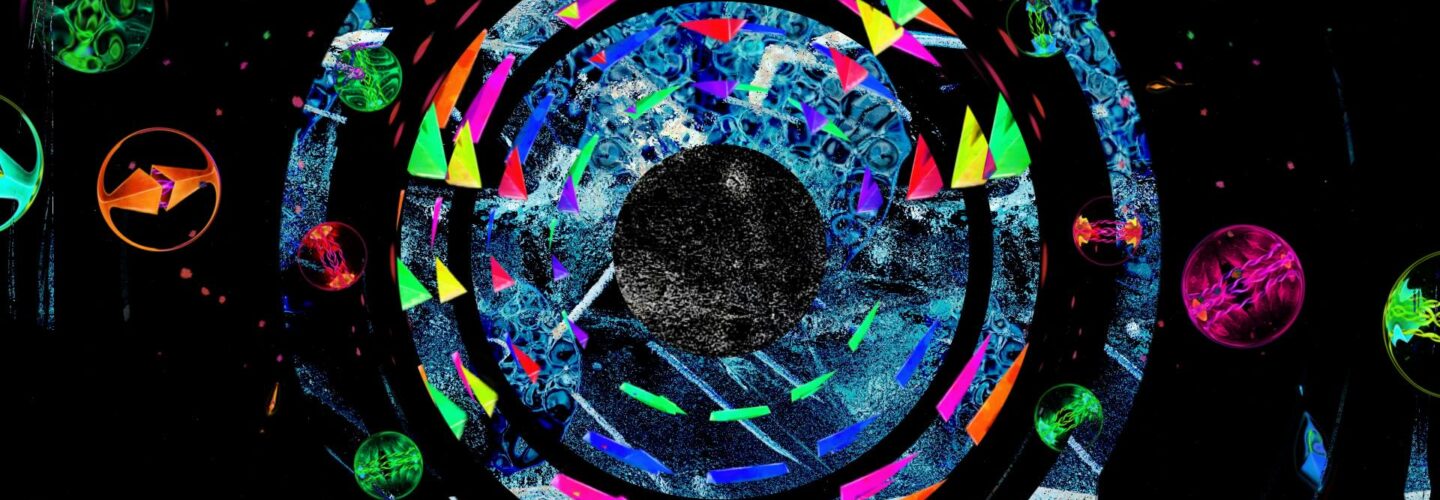

Transporting viewers to a mysterious galaxy where vivid geometric forms pulse and collide like the glowing lifeforms of a deep-sea world, Tsz-wing Ho’s latest animation, Shapes, is a stunning showcase of her growing talent. The Hong Kong–born animator, who has graced Directors Notes twice before with Pulse at the Centre of Being and & More, continues to expand her visual style and emotional range, with this film once again highlighting her talent of combining rhythm and motion in her work. The result is a hypnotic exploration of movement, emotion, and abstraction – a piece that not only reinforces Ho’s reputation for crafting mesmeric, music-driven worlds, but also underscores her ongoing pursuit of pushing animation to its most expressive, boundary-defying edges. Now somewhat of a regular on DN, the award-winning animator and illustrator returns to our pages to discuss letting a soundtrack guide her work, the pressures of balancing creative and commercial work and avoiding burnout.
Welcome back to Directors Notes, Wing. The last time we spoke—about your music video for Max Cooper’s Pulse at the Centre of Being—you mentioned your obsession with abstract art and its limitless potential. How does your new piece, Shapes, reflect that belief, and what motivated you to create this latest experimental animation?
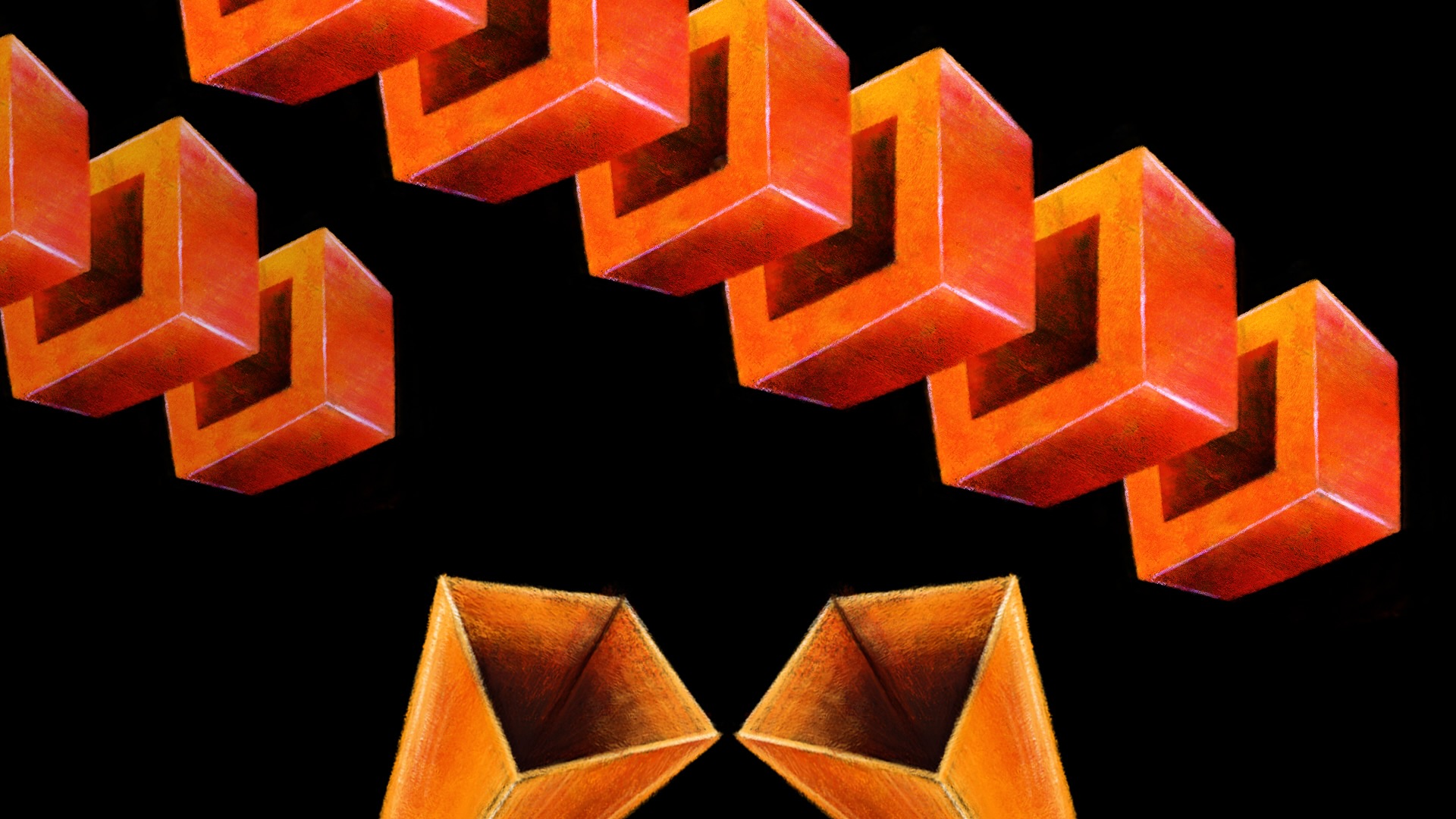
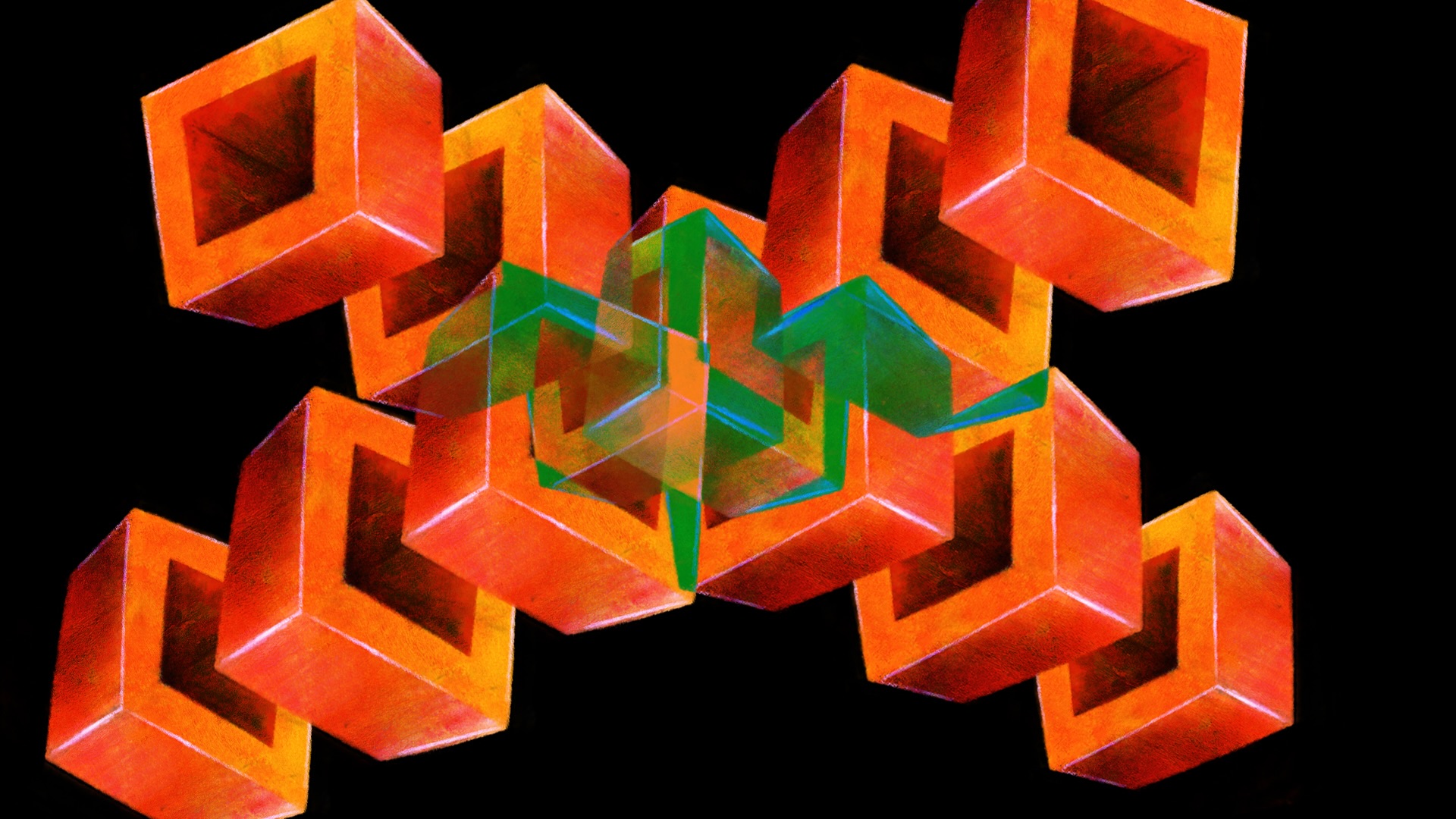
In my latest piece, Shapes, I wandered into a world without a fixed story, letting color and graphic variations lead the way. I played with geometric forms – flat dots, hollow 3D rhombuses, and diamonds that open and close – each shape bringing its own energy and rhythm to the patterns. The scenes emerged through playful experiments, blending colors and shapes in unpredictable ways. This spontaneous layering of elements deepened the complexity and unlocked new possibilities, capturing the very essence of what draws me to abstract art – the endless chance for discovery.
Beyond the demands of commissioned projects, creating Shapes was a personal journey to push the boundaries of experimental animation and to dive into the infinite potential of abstract art. It’s been about exploration, embracing uncertainty, and seeing where the creative flow takes me.
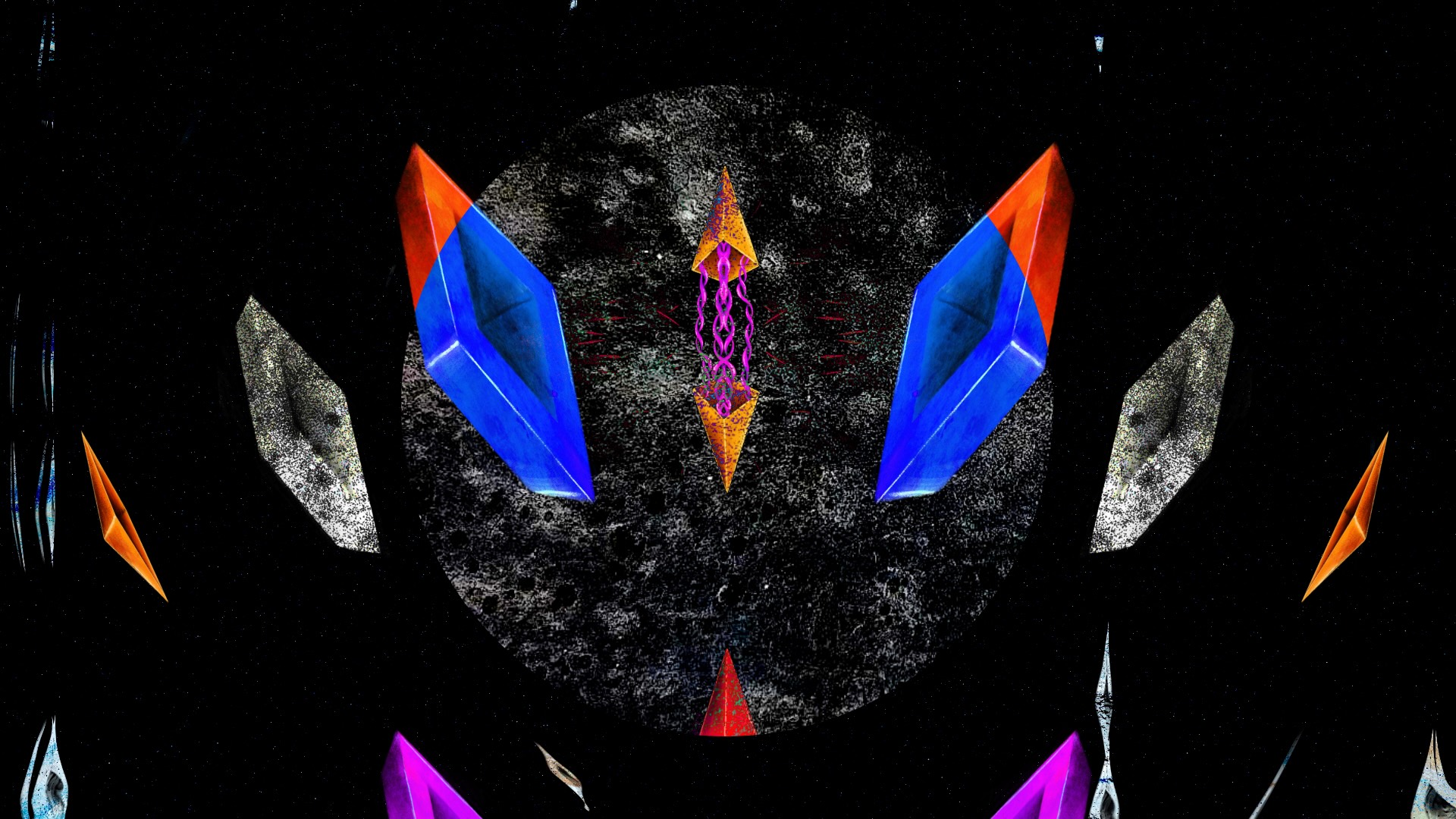
You describe the film as “a psychedelic and mysterious galaxy composed of different shapes,” and it certainly feels transportive. Beyond being utterly mesmerising, what were your aims with this piece?
Creating this film was a personal journey for me – a way to satisfy my creative urges and delve deeper into my artistic exploration. At the same time, I wanted to provide viewers with more than just visuals; I hoped they would become fully immersed in the experience, finding entertainment and a chance to explore the mysterious, experimental world that the animation creates. It’s about sharing a space where both self-expression and audience connection come alive through the psychedelic dance of shapes.
It is a patience-testing but rewarding journey of crafting every frame piece by piece.
As with much of your work, Shapes is visually captivating. Can you share some insight into your production methods — the tools or software you used, and how long the film took to create?
For Shapes, I first drew all the graphics in Procreate and Photoshop. Then, I imported those elements into After Effects, carefully tweaking the shapes to sync with the rhythm and layering effects to bring everything to life. The entire project took about five to six months to complete. It is a patience-testing but rewarding journey of crafting every frame piece by piece.
What would you say was the biggest challenge in making Shapes?
One of the biggest challenges I encountered while creating Shapes was time management. As this was my first personal project after completing my masters, I had to juggle between paid commissions and my own creative work, which wasn’t always easy. There were moments when commissioned jobs demanded so much attention that my personal project took a backseat. To keep myself on track, I created a daily schedule, dedicating two to three hours each day to work on small portions of the animation.
I made sure to balance commitment with kindness to myself – never pushing too hard or risking burnout. If I felt tired, I allowed myself to rest. I believe that steady, consistent progress adds up over time, and trusting that process helped me stay motivated and confident that I’d reach my goals in the end.
Most Popular
I’m always struck by the precision of your timing – the way your animation syncs so perfectly with the soundtrack. Shapes is no exception. Which came first this time, the visuals or the soundtrack? And how do you achieve such seamless coordination?
The soundtrack was my starting point. I dove deep into the music, listening to it again and again until I really felt its structure – the calm moments, the climaxes, and the rhythm. Immersing myself in the track helped me internalize its flow. While editing in After Effects, I could carefully sync each drawn element to the beats using the waveform as my guide.
As the music played on, vivid images of a galaxy started to unfold in my mind. From there, I built upon that simple cosmic vision, imagining geometric shapes pulsating through the galaxy in perfect harmony with the soundscape. It’s all about feeling the music deeply, letting it inspire the visuals, and patiently aligning every pulse to create that seamless rhythm between sight and sound.

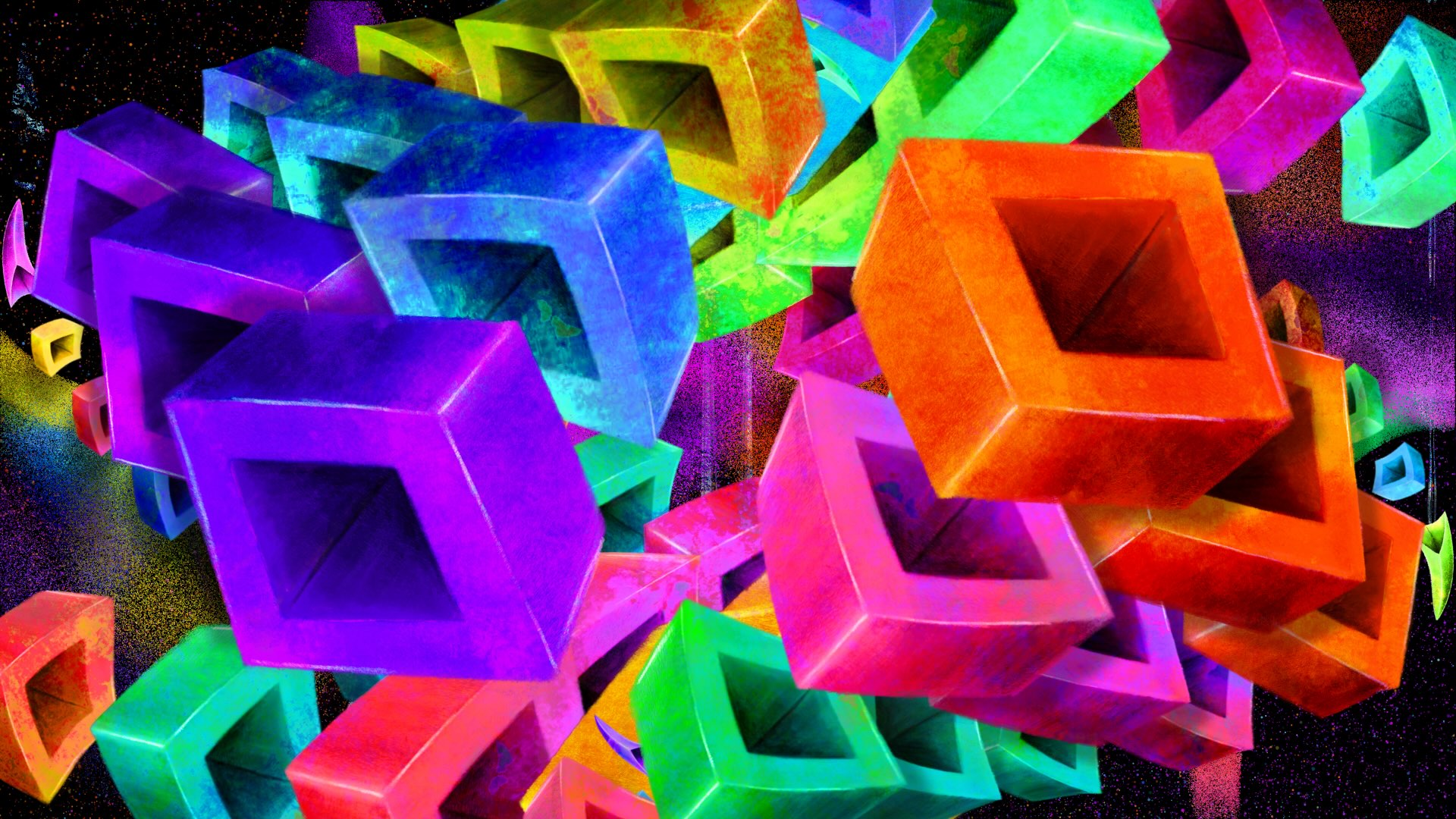
As the music played on, vivid images of a galaxy started to unfold in my mind. From there, I built upon that simple cosmic vision, imagining geometric shapes pulsating through the galaxy.
Did the soundtrack also influence your choice of shapes? They seem to match so intuitively.
Absolutely, the soundtrack profoundly shapes my creative choices. For example, hearing a ‘dong’ sound instantly sparks the image of bouncing balls or circles in my mind. You’ll notice in one scene how several spheres bounce playfully, their number, size, and color shifting right along with the music’s rhythm. And during the beat, especially toward the end of the animation, the hollow 3D rhombuses burst into vibrant, colorful life – directly reflecting the energy of the sound. This intuitive dance between music and shapes makes the visuals feel so alive and connected.
Beyond personal projects like Shapes, you also work on concert visuals and commercials. How do you balance paid commissions with the need to satisfy your own creative impulses?
Balancing paid commissions with personal creative work is definitely something many artists struggle with, myself included. Commissioned projects are vital – they keep the lights on, cover my rent, pay for software subscriptions, and handle everyday costs. Additionally, they provide me with the financial freedom to pursue my own creative ideas.
However, if I get immersed in client work for too long, burnout creeps in. The constant pressure of deadlines and the need to meet expectations can take a toll on my mental health. Eventually, it even affects the quality of both my commission and personal projects. That’s why, no matter how busy things get, I carve out time for my own creations – even if it’s just quick sketches or jotting down ideas instead of diving into full animations. This personal space helps me reconnect with myself, explore my unique style, and keep my passion alive, ensuring that the work I create stays true to who I am and what I love.

No matter how busy things get, I carve out time for my own creations.
Finally, what’s next for you?
Right now, I’m creating concert visuals and working on a projection-mapping project that will light up a heritage site in Hong Kong next year. It’s an exciting opportunity! In addition, I’m developing illustrations and short animations for a meditation app, blending creativity with calmness in a different way. I’m really looking forward to sharing these projects with everyone soon and hope they resonate and bring joy as much as I’ve enjoyed making them.