
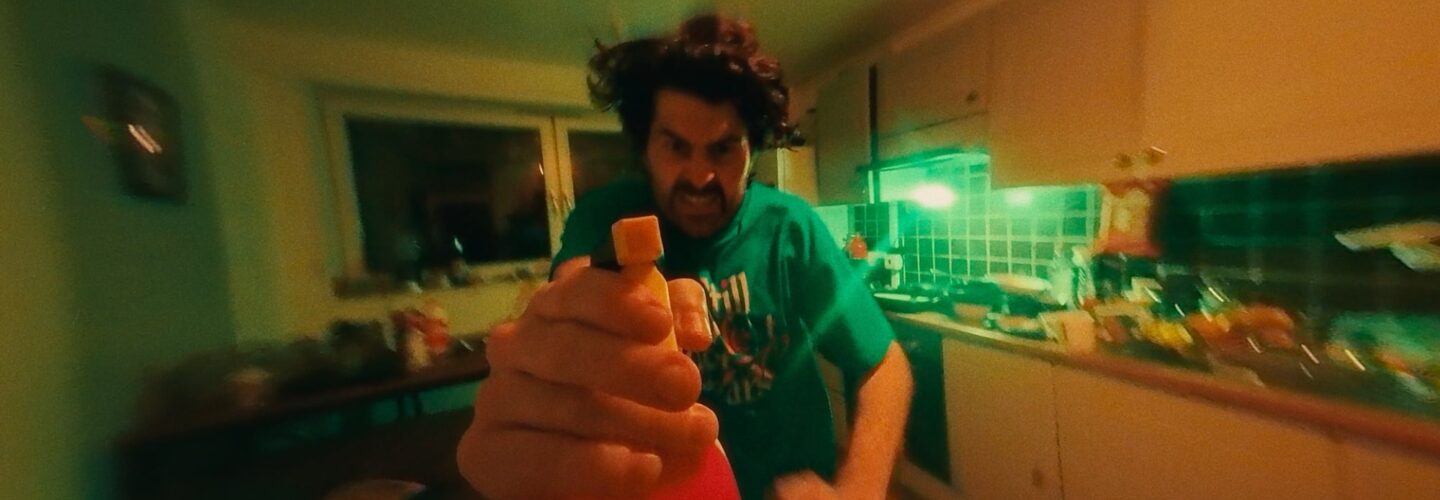
When your home becomes a prison of accumulated grime and passive-aggressive flatmate dynamics, what form does your rage take? For Will Wightman, too many years harbouring disgust and resentment in unkempt shared houses has manifested as a delightful darkly comic horror short filmed with a camera technology more associated with influencer culture than narrative cinema. This Place is a Sh*thole demonstrates how constraint breeds innovation in the most literal sense—the entire visual language emerged from testing what a consumer-grade action camera definitively could not do, then weaponising its accidental strengths. Wightman immediately grabs your attention as he dismantles the assumed and frankly overdone applications of 360-degree capture, where most creators chase the obvious spectacles, he discovered something more subversive: the ability to choreograph impossible camera movements in post-production, layering practical chaos with digital precision, a process inverting traditional filmmaking logic. Rather than the typical live action route of storyboarding then shooting, he spent months creating a fully edited previsualisation that then dictated every second of the eventual production. Cast members performed to predetermined timings, throwing themselves into meticulously mapped choreography while a camera the size of a matchbox hurtled between them. After delighting us here at DN with his graduate short film musical Heart Failure Wightman, now signed to Blinkink, once again reveals himself to be a filmmaker who treats limitations as creative fuel rather than an obstacle and a director who likes to embrace the creative possibilities of chaos while maintaining absolute control. Welcoming Wightman back to Directors Notes with This Place is a Sh*thole, we explore how the Insta360 camera’s specific limitations directly shaped the story beats and action choreography, the eureka moment of realising he didn’t need to use the entire 360-degree image all the time, and the crucial decision to shoot a fully edited previsualisation that meant arriving on set with a crystal clear vision of exactly how to achieve the film.
How did the Insta360’s specific capabilities—like the single, tiny lens or the need for post-production keyframing—directly shape the story beats?
There are so many useful attributes to this camera that I wanted to utilise. There’s actually so much more I wanted to use, but the story had to come first. The size of the camera is obviously the first advantage. It’s an action camera so we could throw it around and stick it in all kinds of surprising places. It has amazing stabilisation though, so it always feels smooth and cinematic. The size also means nearly zero camera set-up time, which meant we could shoot really quickly and try ideas out on the fly.
Then the second advantage is the fact you are shooting a full 360-degree image the whole time and there are so many creative possibilities of what you can do with that. You can bend and stretch an image to create these weird push-pull effects, or do post-camera moves like whip pans or subtle adjustments to make the camera work feel super precise. Once in a while, you even get a shot you didn’t realise you had when you look at the full 360 image and notice you were catching another cool shot in the opposite direction to the way you thought you were filming!!
What was the key insight that made you realise this tool could carry a narrative film and not just lean into the more clichéd uses of the cameras we’ve seen on YouTube ad infinitum?
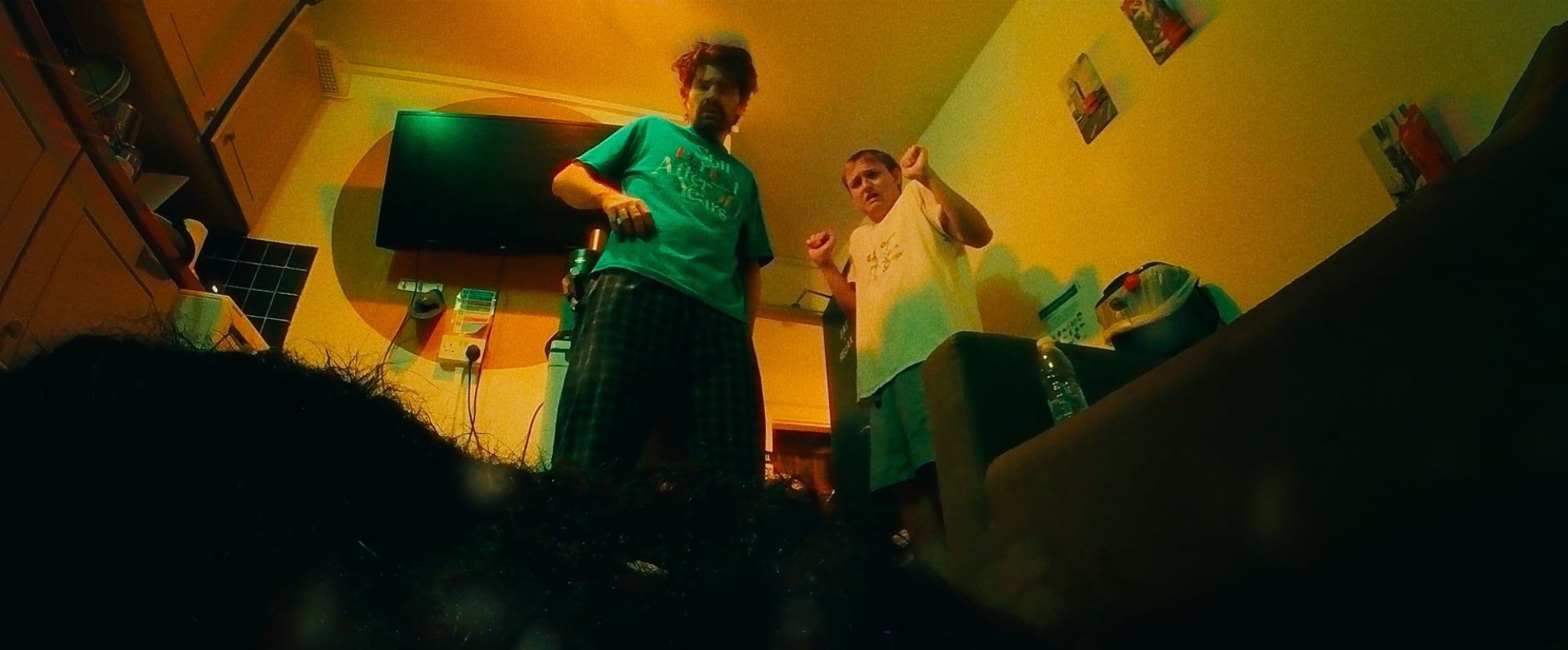
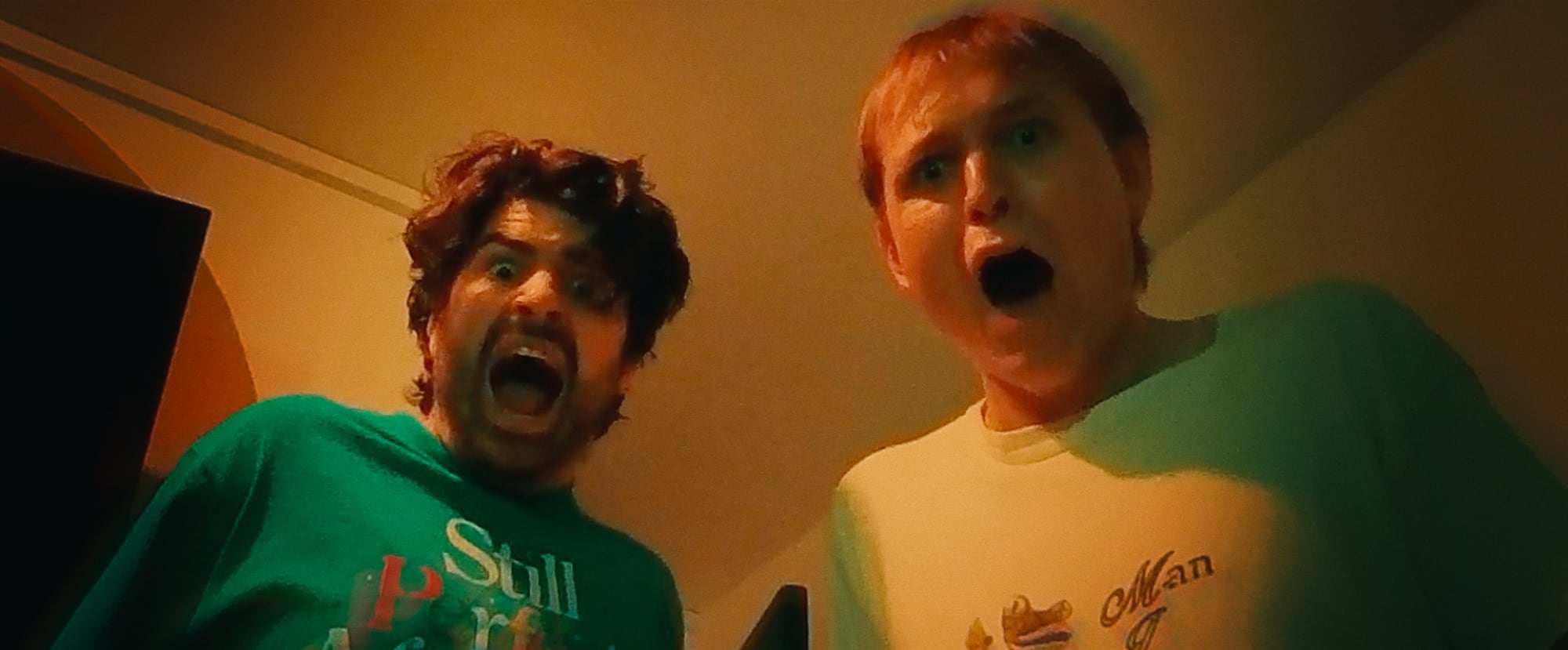
Typically, the ways 360 cameras are used are quite limited. They’re used a lot in videography for action shots, time-lapses or general vlogging purposes, and most people associate them with those tiny planet or black hole shots, which can be super cool, but feel quite overdone these days. I used a 360 camera on a commercial shoot a good few years ago and immediately got excited about the untapped possibilities. Blinkink had one lying around in the studio, so me and my DOP Will Marchant started experimenting with it in our spare time to test the camera’s limits.
Fairly quickly, it became clear that there were lots of things the camera couldn’t do, but once in a while, we’d get something that looked totally unique and really interesting, which spurred us on to try more things out. Slowly but surely, we refined this aesthetic. Then, I wrote this with the 360 camera in mind, so the story really played into the camera’s strengths.
The look we honed in on was a combination of practical camera moves and post-production keyframing to create these really dynamic but incredibly precise action sequences.
I think the eureka moment though, was realising that we didn’t have to use the whole 360 image all of the time. We could pick and choose how much of the image we wanted and which part at any given moment. The look we honed in on was a combination of practical camera moves and post-production keyframing to create these really dynamic but incredibly precise action sequences. Will and I made a full previs of the film; shooting with the 360 camera and editing as we went to get every shot just right. We are both acting in the previs though, so that will never see the light of day.
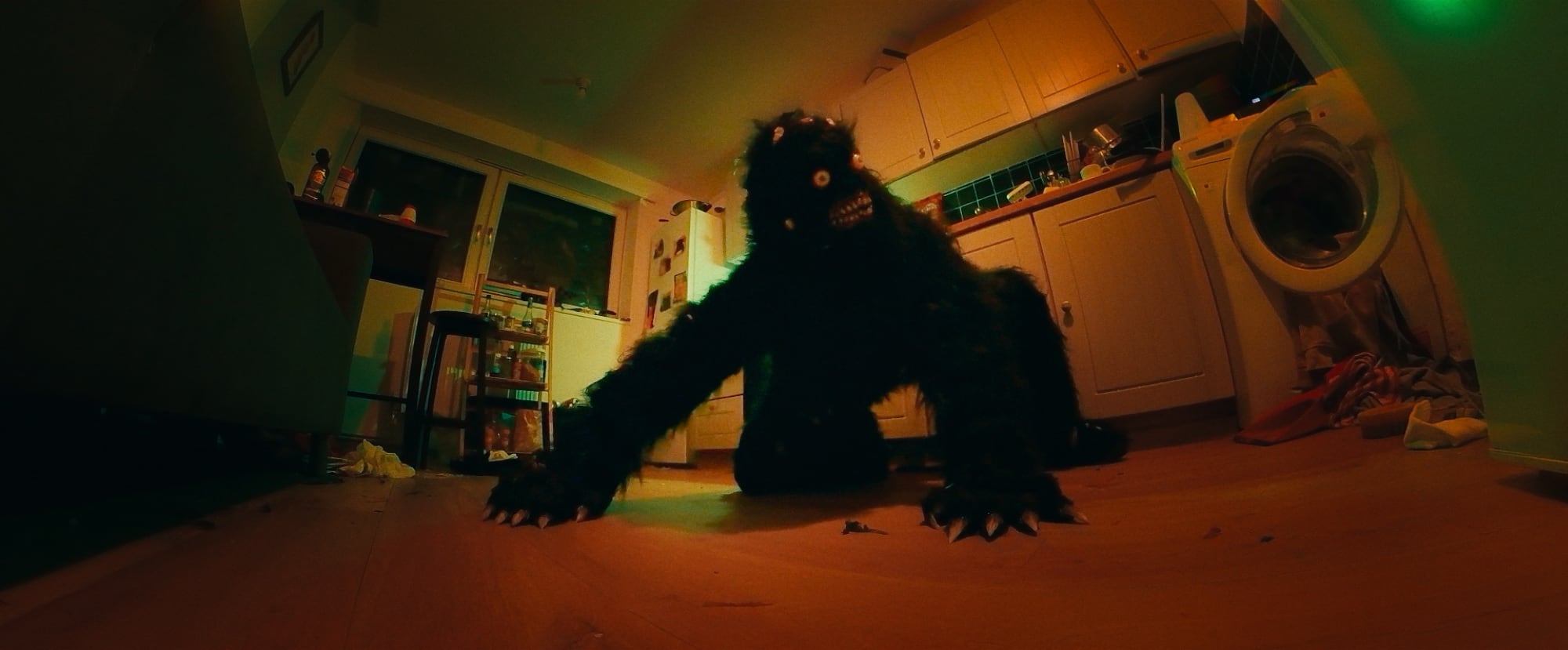
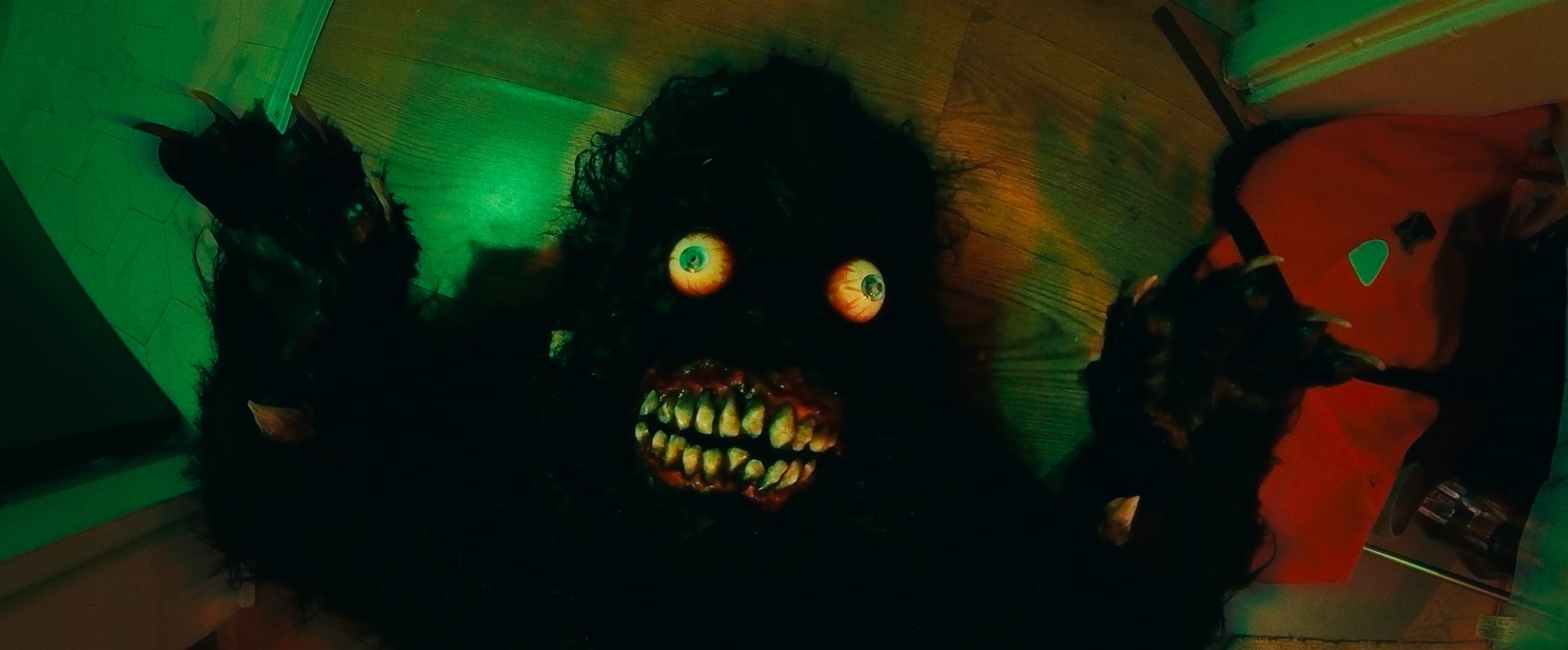
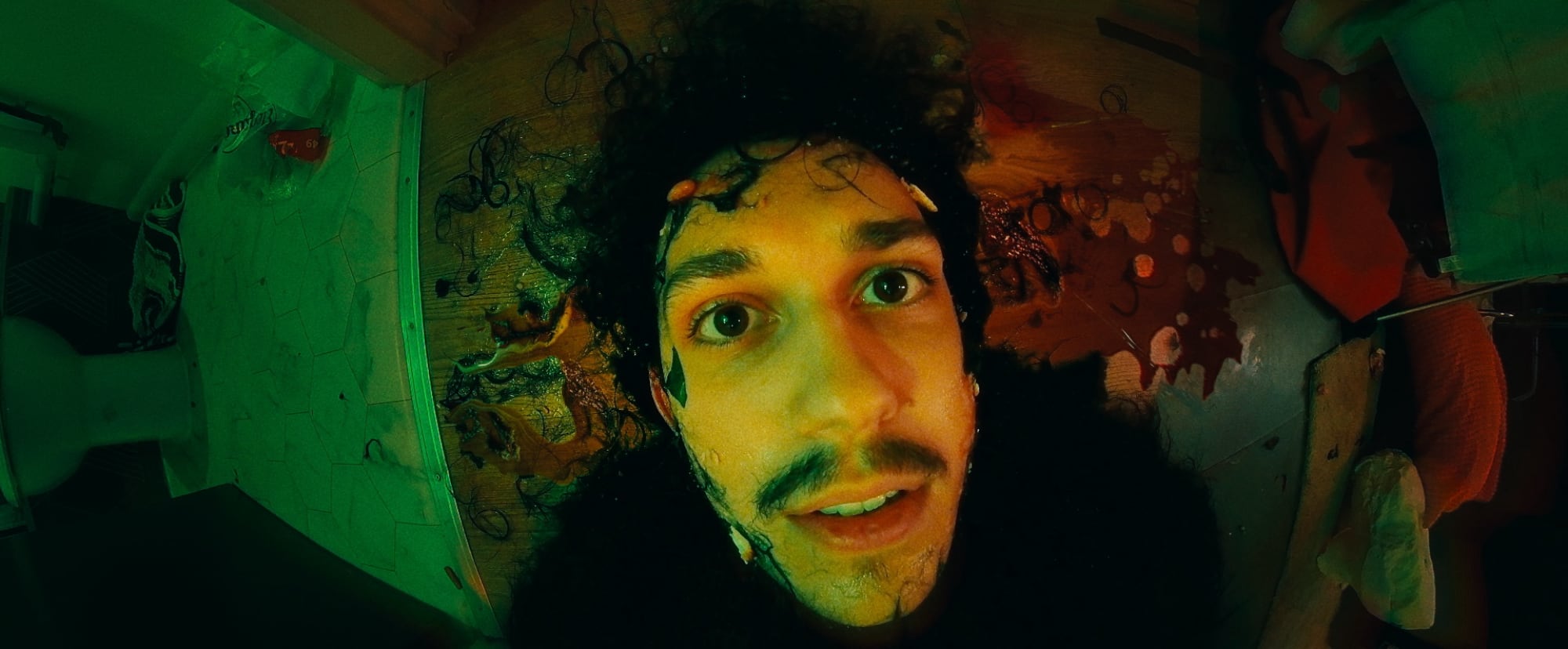
The monster is a masterpiece of low-budget, high-concept design. Tell us about your collaboration with costume designer Lani Hernandez to arrive at its gross look and dogged nature.
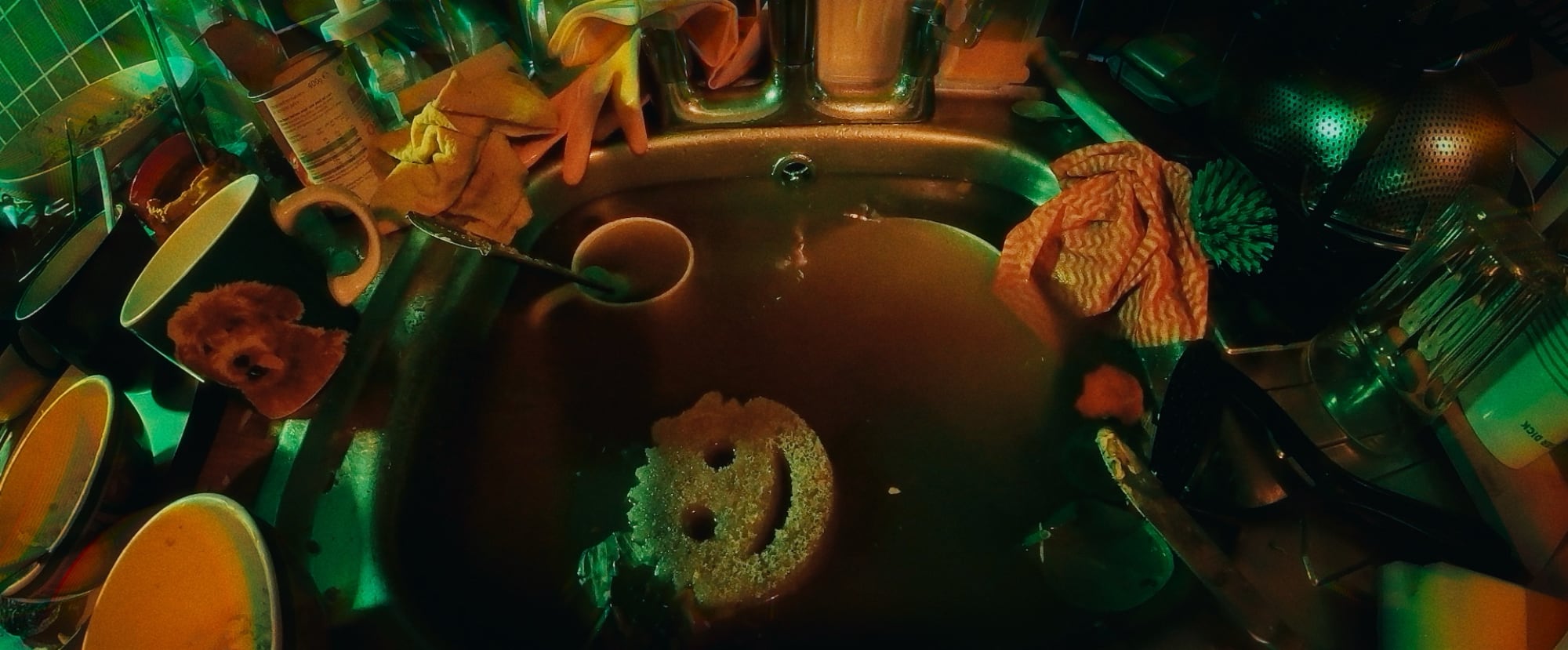
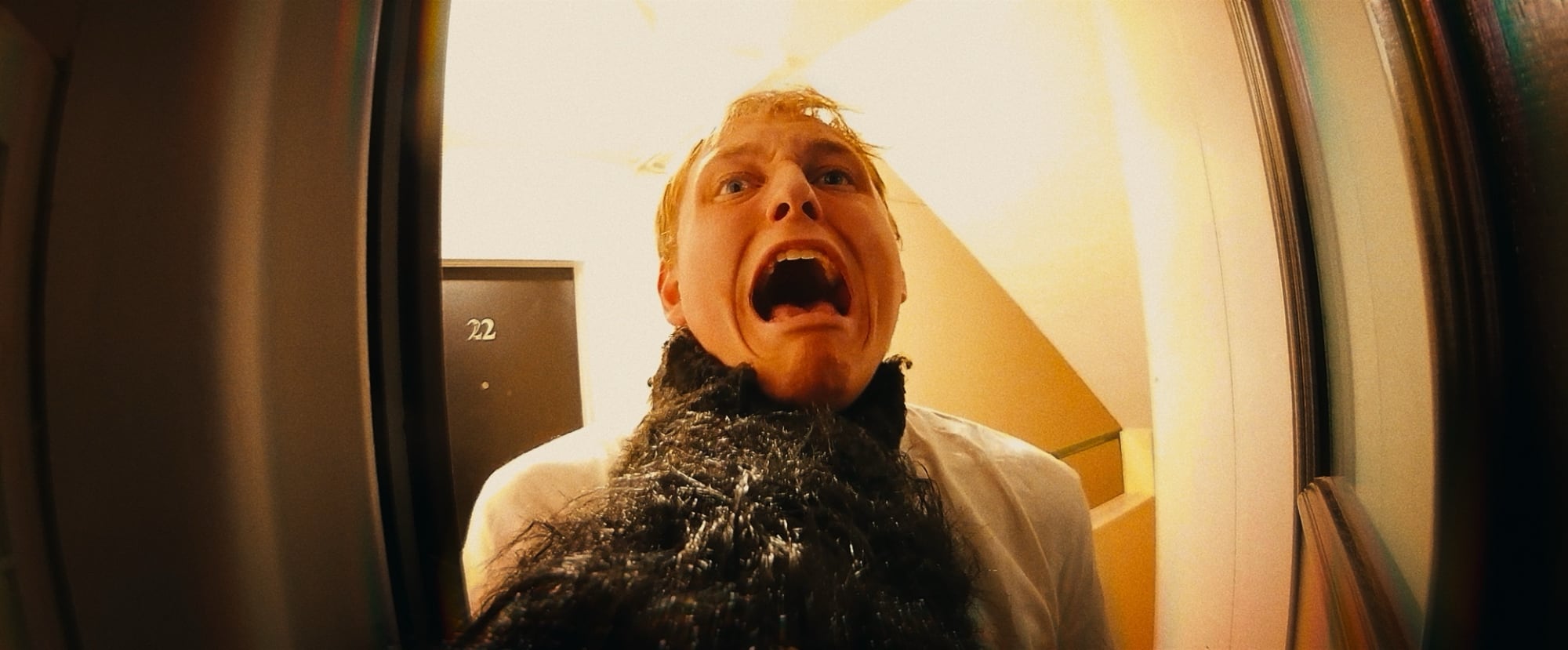
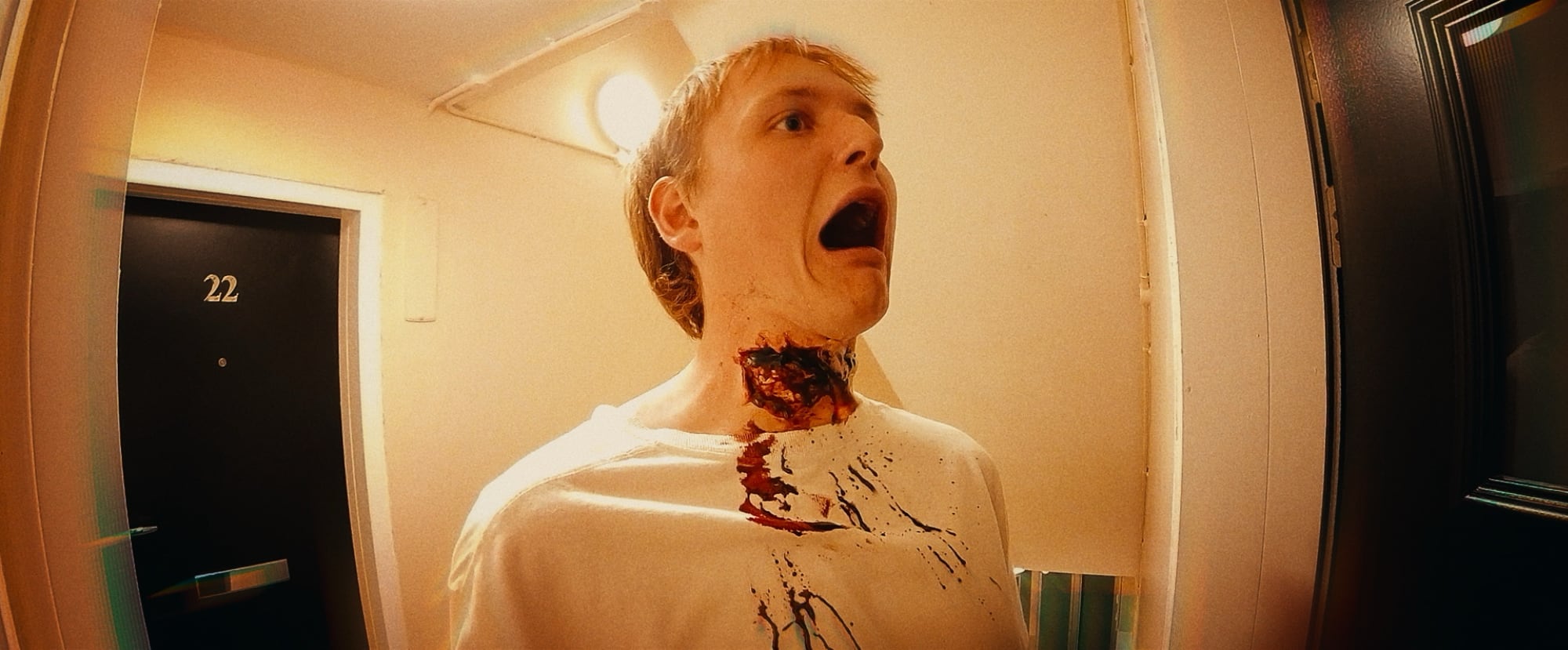
Creatively, I wanted a creature that embodied the horrible shit that we find in our plugholes with a design that left enough to the imagination so its origin felt ambiguous. Practically, though, this was a passion project that we made on a shoestring budget, so we needed a creature design that was effective but also simple and leaned on the audience’s imagination around what you can’t see. That way, we could channel what little resources we had into the right places. I did the designs in Photoshop, then Lani Hernandez, our stupidly talented costume designer, bought a gorilla costume and sculpted a new face and hands for it. Then, we covered all of the fur with disgusting things you might find in your sink. I still have the costume, and let me tell you, it stinks.
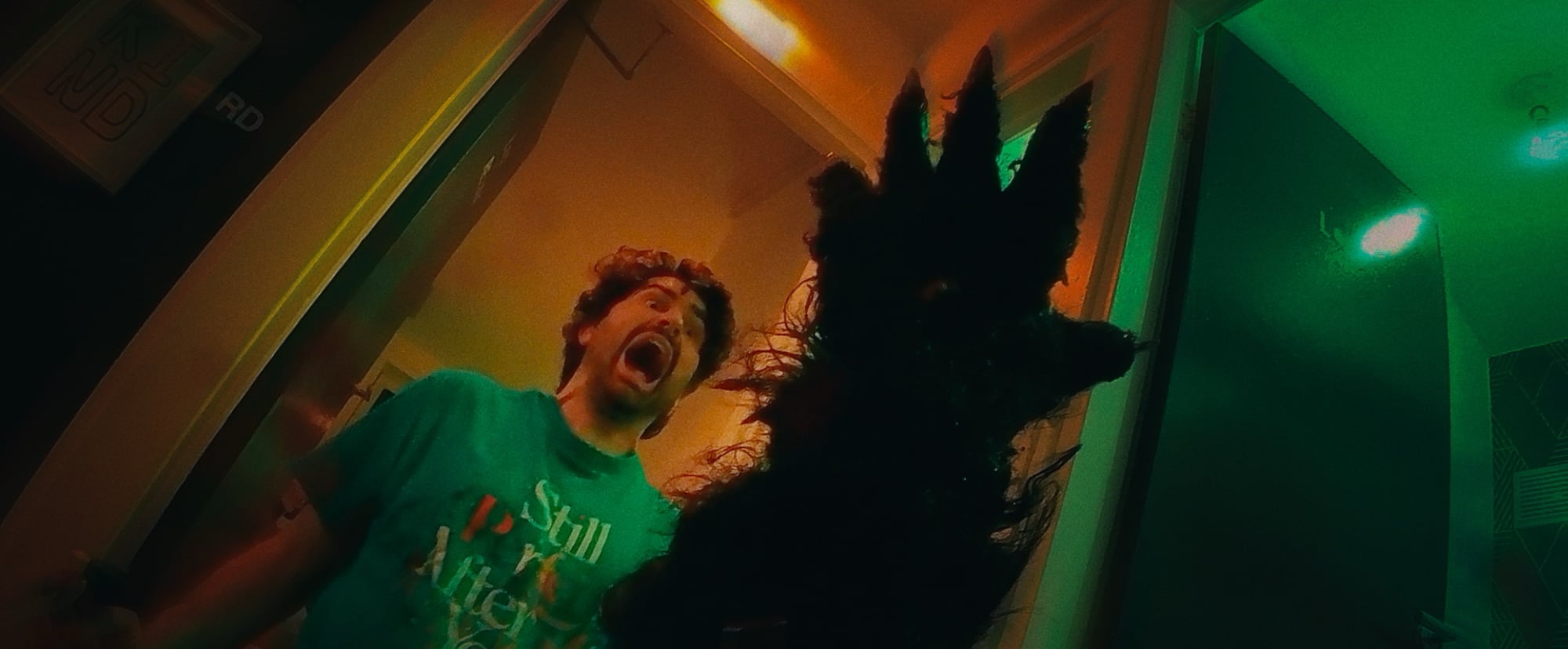
As for performance, I wanted this creature to be utterly relentless, like a wild animal. A rapid chimp was the description we kept coming back to on set haha. For me, both the humour and horror of the creature came from its manic, unrelenting energy. The kind of creature that will bang its head against a wall for 3 days straight if that’s what it takes to get through.
Most Popular
The fact that you created a fully edited previsualisation is interesting. What did these shots actually look like on set?
During the previs, we used a super cheap 360 camera to do experiments but we couldn’t see what we were filming on the camera until we’d shot it and stuck it in the editing software. That made it a painfully slow process to begin with. Over time though, I got to understand how the camera worked: close ups have to be shot about an inch from the lens: anything filmed around the stitch lines between the two lenses was distorted and so and so on. Slowly, I could start to visualise what the footage would look like as we were testing and begin to block out action scenes like using any camera. When we got closer to the shoot, we got hold of an Insta360 1-inch, which is a much better 360 camera with an app that allows you to connect the camera to an iPad and see the live image as if you’re using a monitor. You can’t view a 16:9 image in that app though; only vertical. Insta360, if you’re reading this, please change that!
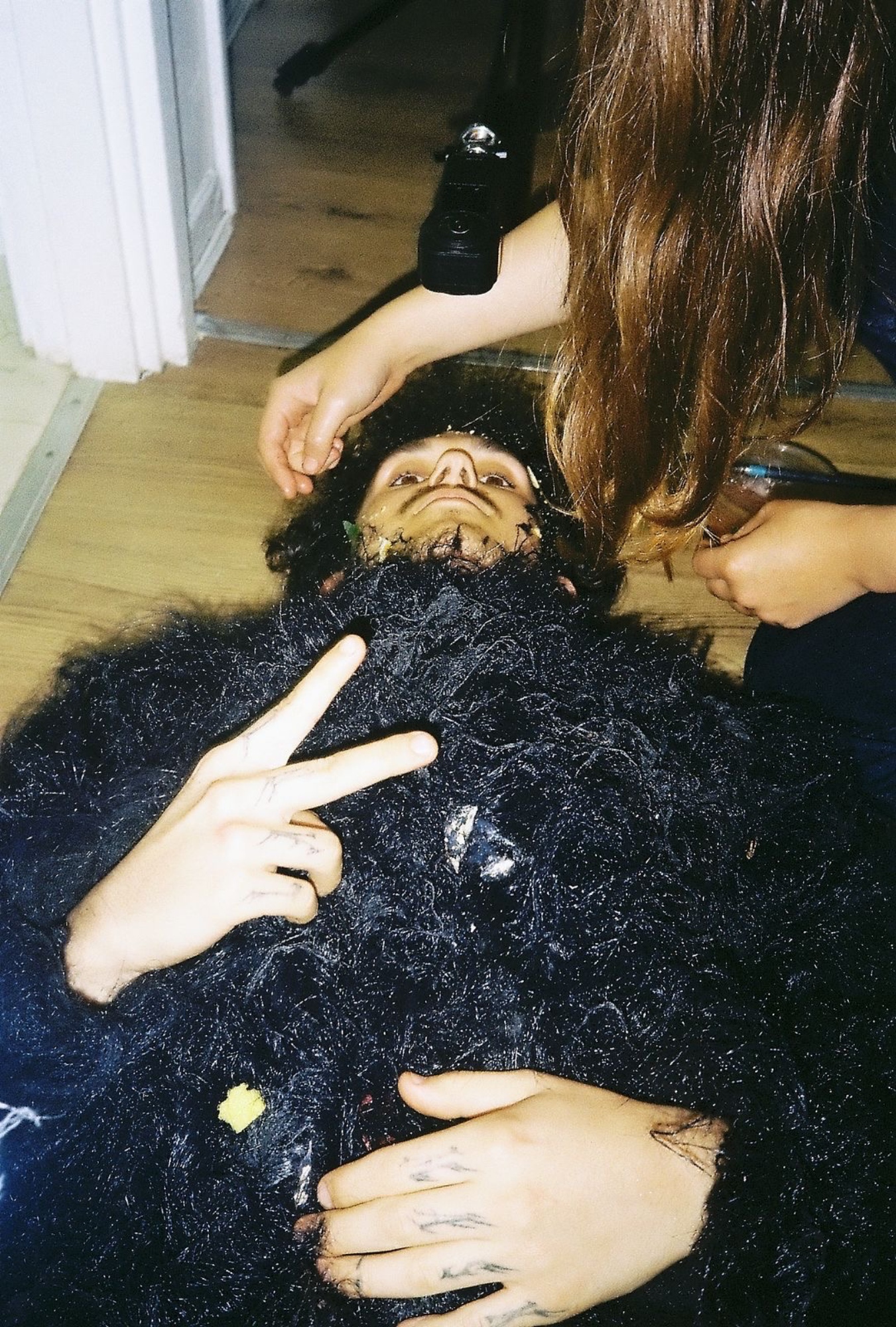
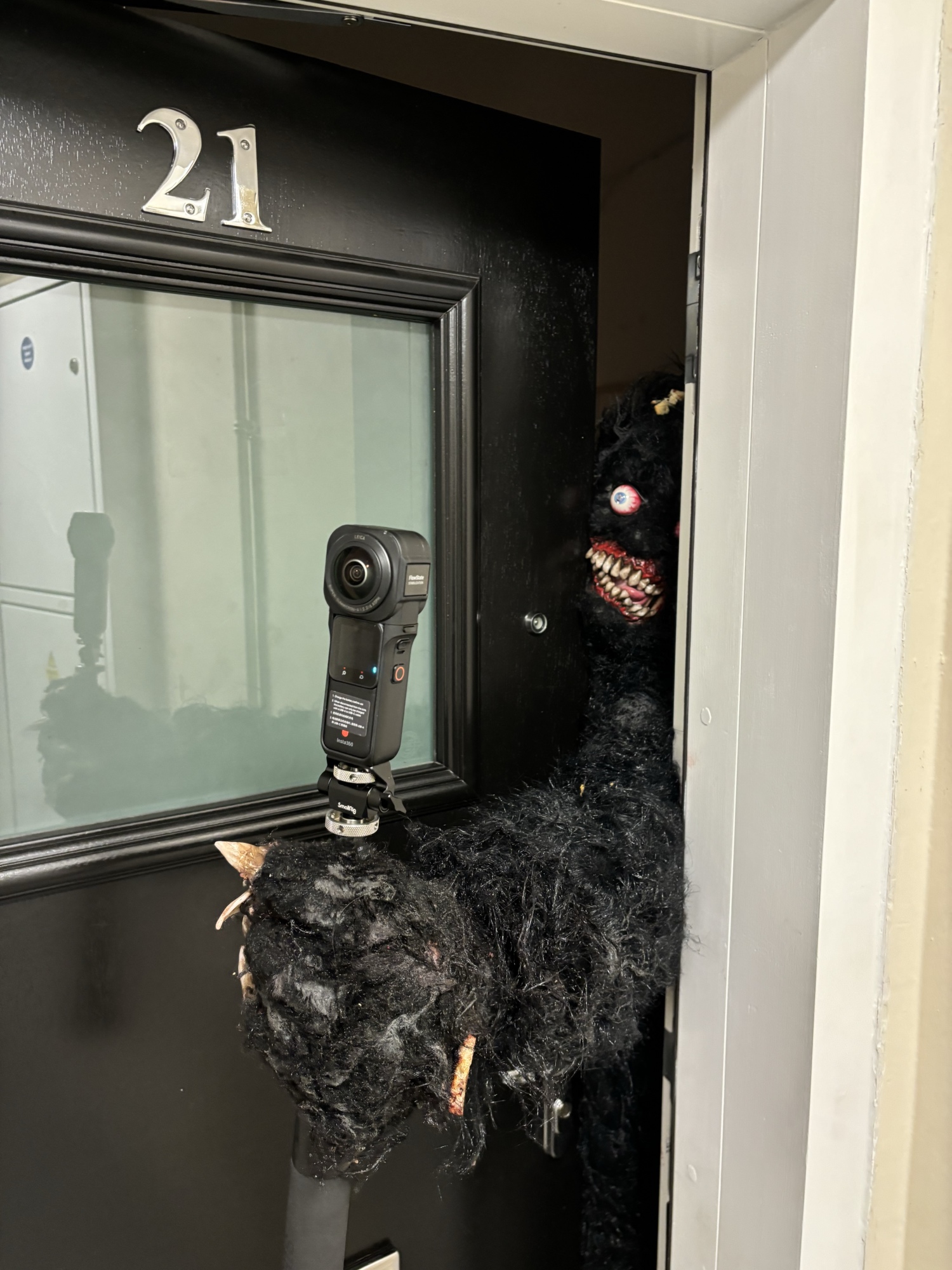
The film combines practical camera moves with post keyframing. Can you walk us through a specific, complex shot and break down what was achieved physically versus what was crafted in the edit suite?
A moment that best captures everything coming together and the real uniqueness of this camera is the moment Jamie (in blue) and Mr Sticky (the sink monster) are pulling on the door, and Jamie loses his grip on the door handle and goes flying backwards onto the floor. The camera flies towards the doorframe (right past Jamie’s head as he falls back onto a crash mat) and lands on the monster, as it too goes flying back into the kitchen. That’s a totally in-camera move that was only possible with the tiny action camera zipping between the two characters.
It feels like quite an innocuous beat, when actually it’s a moment that is only possible with that camera.
Then, there’s post-whip and a hidden cut, back to Jamie on the floor without the crash mat as he scrambles into the bathroom. Then, we post whip and secretly cut back to the best performance of the monster arriving in the door frame. Finally, we do one more whip and cut back to Jamie shutting the door on the bathroom.
I love that moment because in the grand scheme of things, it feels like quite an innocuous beat, when actually it’s a moment that is only possible with that camera. We have total control of which takes we use, when the camera whips back and forth and the exact framing of both the characters in the edit, so the rhythm and readability of the moment is as precise as possible.

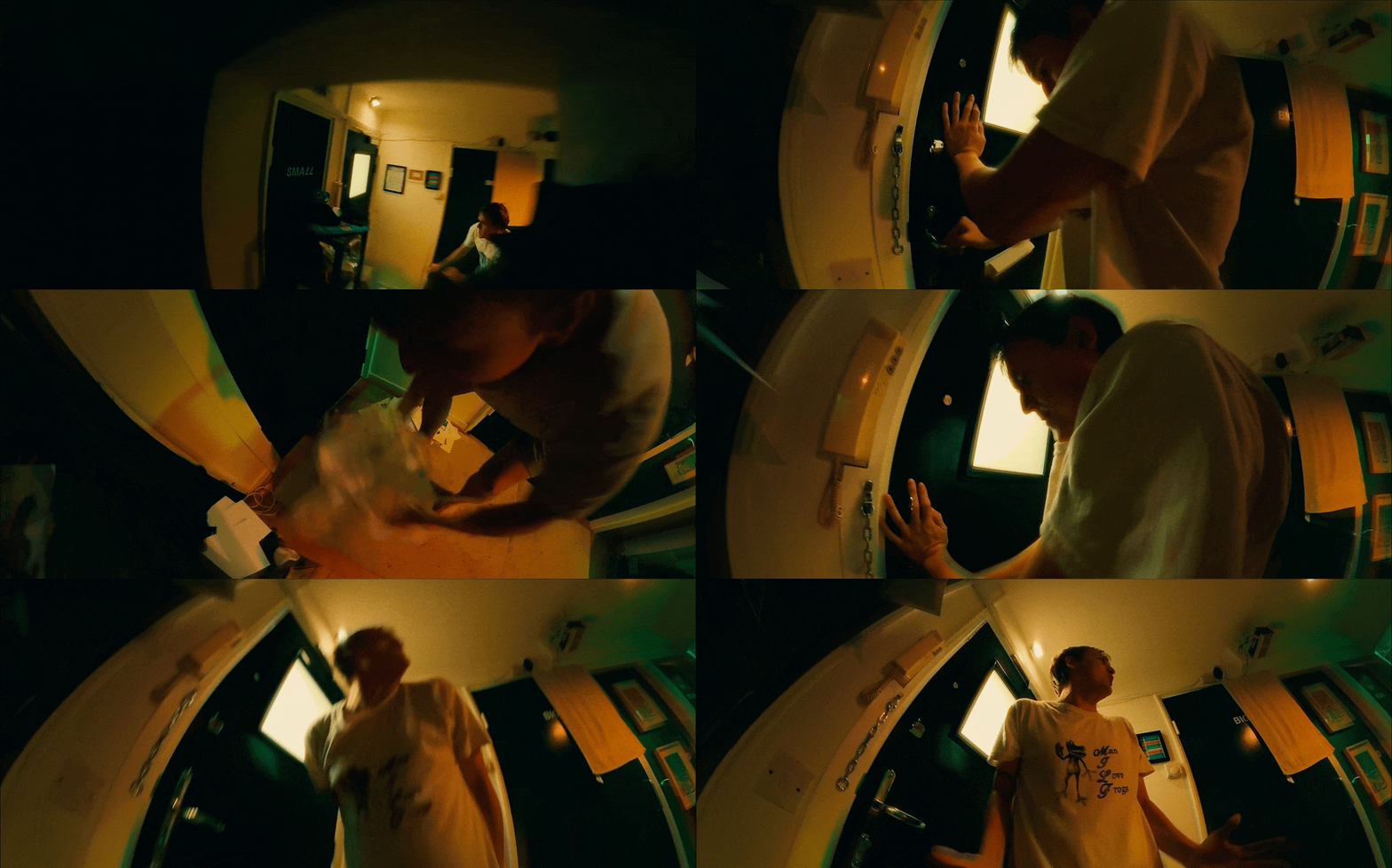
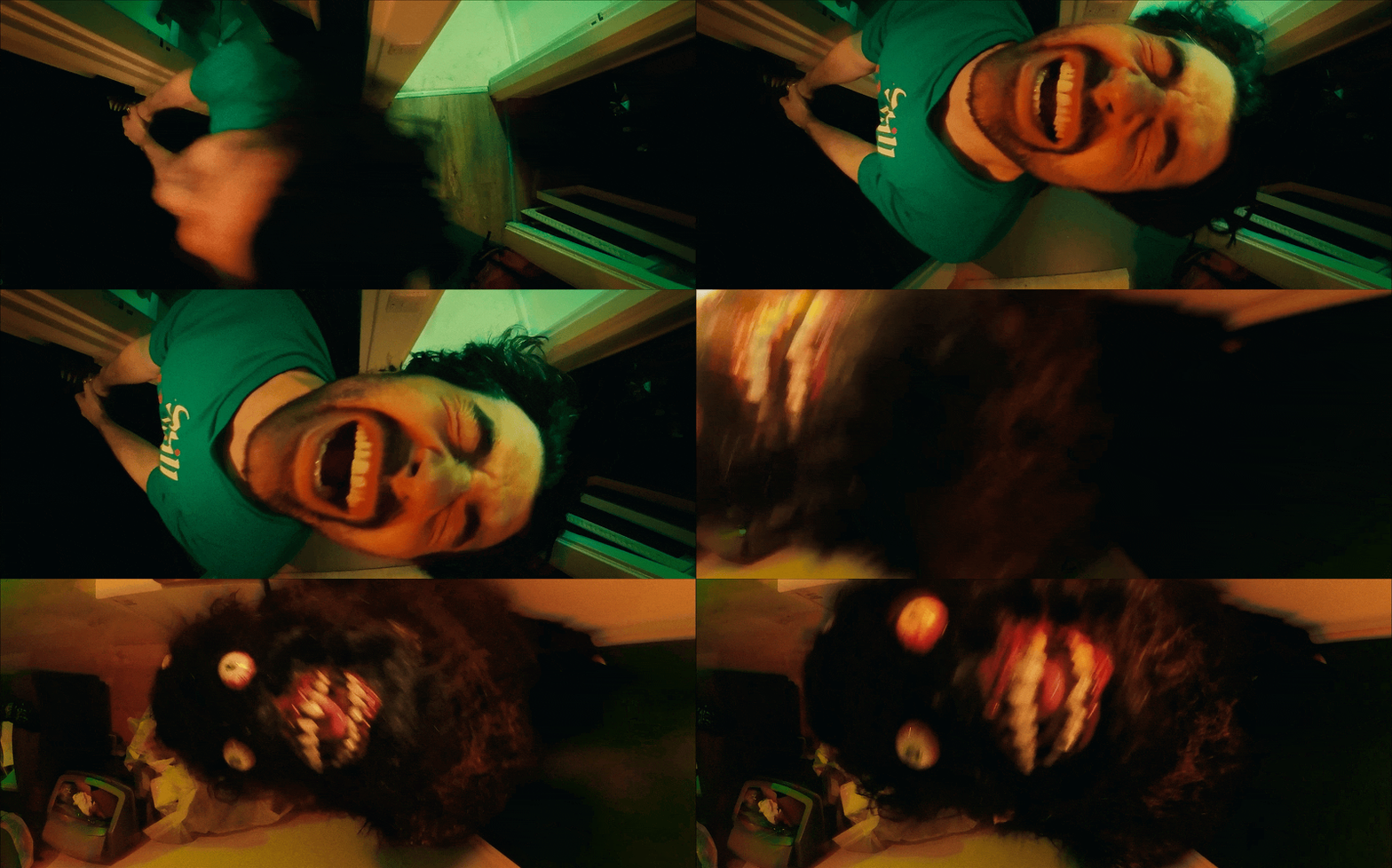
You made a crucial decision to surround the 360 footage with pro colour, VFX, sound, and music.
I really wanted this film to have a deeply cinematic quality to it, in a cartoonish and lo-fi sort of way. But while the camera has a distinctive look, it’s not exactly an Alexa 35, so it was really important to me that everything on camera and in post was as professional and heightened as possible. That way, the look we ended up with felt stylised and deliberate rather than a product of not having enough money.
I’m a big believer in leaning into what you don’t have with projects like this and capitalising on the resources that you do, rather than trying to make a film that would be shot on an Alex 35 if you could afford it (which we, of course, could not). Thankfully, though, I knew I could pull a lot of favours from many good friends in post-production to really amp up the production value. They all very patiently put up with my silly monster movie shot on an action camera, and I am eternally grateful.
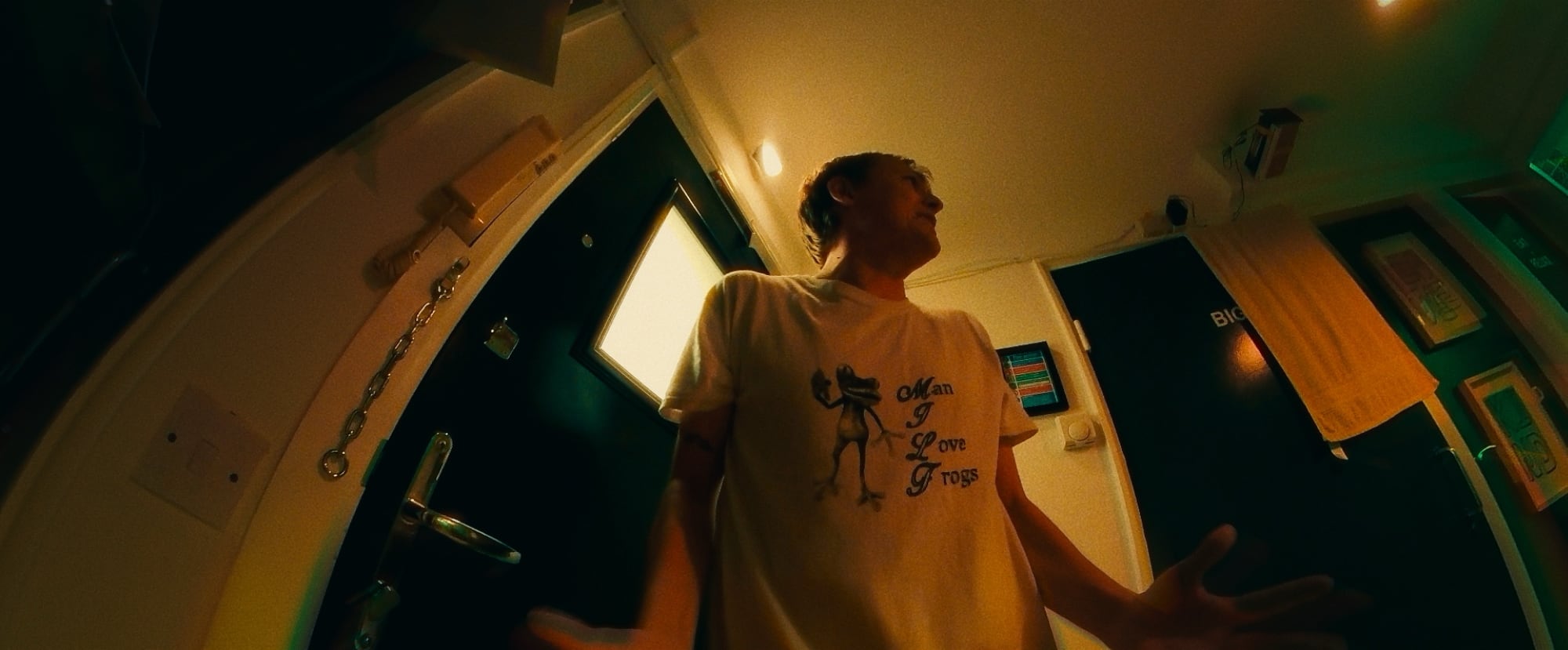
What was the single biggest technical hurdle in the edit, and what was your lightbulb moment where you knew you had cracked the workflow and could get the visuals exactly as you envisioned?
Honestly, we did so much problem-solving in the previs that as soon as we started shooting the monster and our hilarious cast, I knew it was going to work. That was a real luxury, to be honest, I’m never usually that sure something is going to cut together. The most frustrating stage, though, was definitely the colour grade. The 360 footage is just impossible to work with.
I had Alex Gregory on board, my favourite colourist ever and even he struggled to get much out of the footage. In the end, he worked miracles and we had to lean into what we could already see in the footage rather than trying to find some whole new look. If you’re reading this, Alex, I love you and promise I will never subject you to 360 footage again.
We last spoke to you about the meticulously crafted Heart Failure. Now, after the chaotic, innovative success of This Place is a Sh*thole, how has your approach to filmmaking changed? What has this journey from grad film to viral sensation taught you about your own voice, and what are you building towards now?
Since releasing Heart Failure, I signed with Blinkink and Independent and have been working mostly on commercial and long-form projects. It’s been a dream come true and I feel very very lucky but, weirdly, this project in many ways was about getting back to what I really loved about Heart Failure, and probably didn’t appreciate it enough at the time. It was about making something just for me, with no outside voices; with a small group of my favourite talented people and a tiny pot of resources.
Having said that, the main thing I have now that I didn’t before is a much bigger network of amazing creative people. Whereas Heart Failure was really created by me and about six other people for the most part, I had a whole host of talented people to reach out to for help with this personal project. I’m incredibly grateful to every single one of them, especially when I look back at how hard it was when I was a lot more on my own with it all.
Since signing at Blinkink though, I’ve also been honing my craft and design skills. I’ve worked with puppets, stop motion, 2D and 3D animation and through working with all these wicked mediums at Blink, have discovered how much I love world-building and creature design. Three years ago, I never would’ve had the skills or people around me to make a monster movie like this but given all my favourite movies are either music movies or monster movies, the transition felt inevitable. I guess I’ll have to do a music monster movie next…
I absolutely adore returning to this style of indie filmmaking with my new skills and sensibilities. If I can manage it, I’d love the next thing I make like this to be a feature film. Who knows though? I just feel grateful to be making stuff!