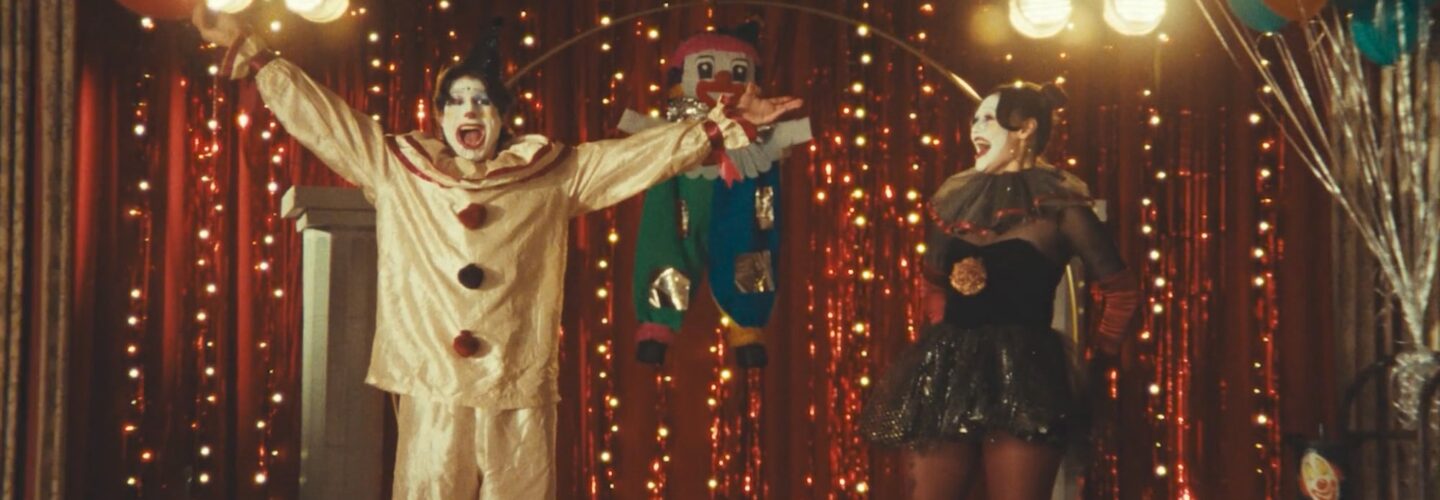
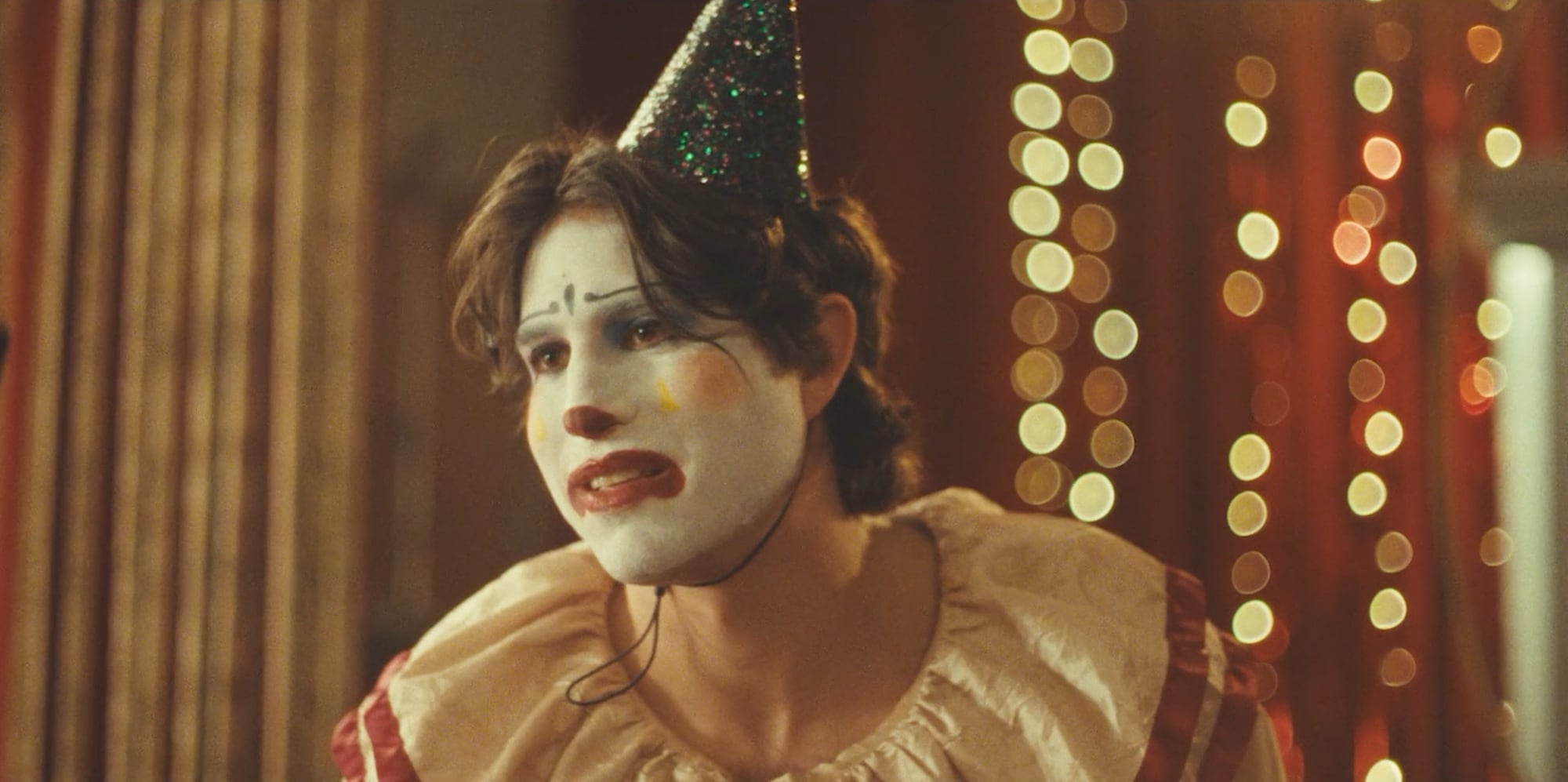
What happens when a clown becomes terrifying? We’ve seen this trope explored in cinema before, but rarely with the same sharp social commentary on display in Are You Fucking Kidding Me?!, particularly when it comes to the crisis facing the entertainment industry, especially live entertainment. On a broader scale, this horror comedy narrative also reflects a more general crisis within the entertainment world, which includes short films as a medium, too. DN alum Zen Pace—who was last on our pages with poetic experimental short Little Mirror—cleverly uses comedy in the opening scenes to introduce us to Jordyn, a young man who works as a children’s party clown and tries his best to enjoy his demeaning job while struggling to make ends meet. Unfortunately, as professional boundaries dissolve under intense pressure, things don’t go as planned and the situation takes a volatile turn. For today’s premiere of Are You Fucking Kidding Me, Pace returns to DN to take us inside the project and shares how his understanding of camp evolved throughout the production of the short, the wonderful films that served as inspiration, and the importance of ensuring that the film maintained a distinctly queer perspective.
The script arrived to you from writer/actor Zachary Solomon with a wig mannequin, razor-sharp teeth, and a switchblade in its head. The film clearly announced itself as completely unhinged. What was the first thing you saw underneath all that which made you think, “There’s actually a movie here I want to make”?
Zach poured a lot of trust in me, which I’m really grateful for. I suggested things like a script doctor and script ideas to help ground the piece. So I think it was a combination of trust, but also I related to Zach. When we got on a call I saw a part of myself in him, someone who came from nothing, who’s dealt with their own fair share of shit in life, and who’s had to define themselves in a society that is so eager to define you. There was this unnerved nature to him that felt very honest when you got to it. It was very camp, but it came from a genuinely truthful place, and that’s what pulled me in.
Camp is something you don’t naturally gravitate toward. Did making this project change your perspective on it? Was there anything about the form that you unexpectedly found yourself enjoying?
It expanded my idea of camp. And now, I see camp in so many things. Primetime for example is riddled with it, both in tone and performance. But this film was always going to be camp because it’s in the DNA. To omit it wouldn’t be truthful to Zach or what the writing called for. I think if you are directing something someone else wrote, you need to meet them where the soul of the piece is. So the more I worked on it, the more I started to see how camp is in so much horror today, especially with so many films toying with the line between ‘serious psychological drama’ and comedy. Even in films like Hereditary, you can sense what Susan Sontag called failed seriousness, this elevated, high camp in some of the performances, to the point where it teeters on the ridiculous. Like Toni Collette sawing her head off with piano wire. (Please, someone make a techno remix of that image.)
What I unexpectedly enjoyed was the permission it gives you. Camp lets you be loud and strange and sincere all at once, and once I stopped fighting it, I felt free to fully realize what this film could be. There was this moment where Zach, in character, is watching a vision of his mother vomiting blood. It was ridiculous, but we paired it with this really earnest performance Zach tapped into. I think you really need dichotomy in film to create a synthesis you didn’t expect.
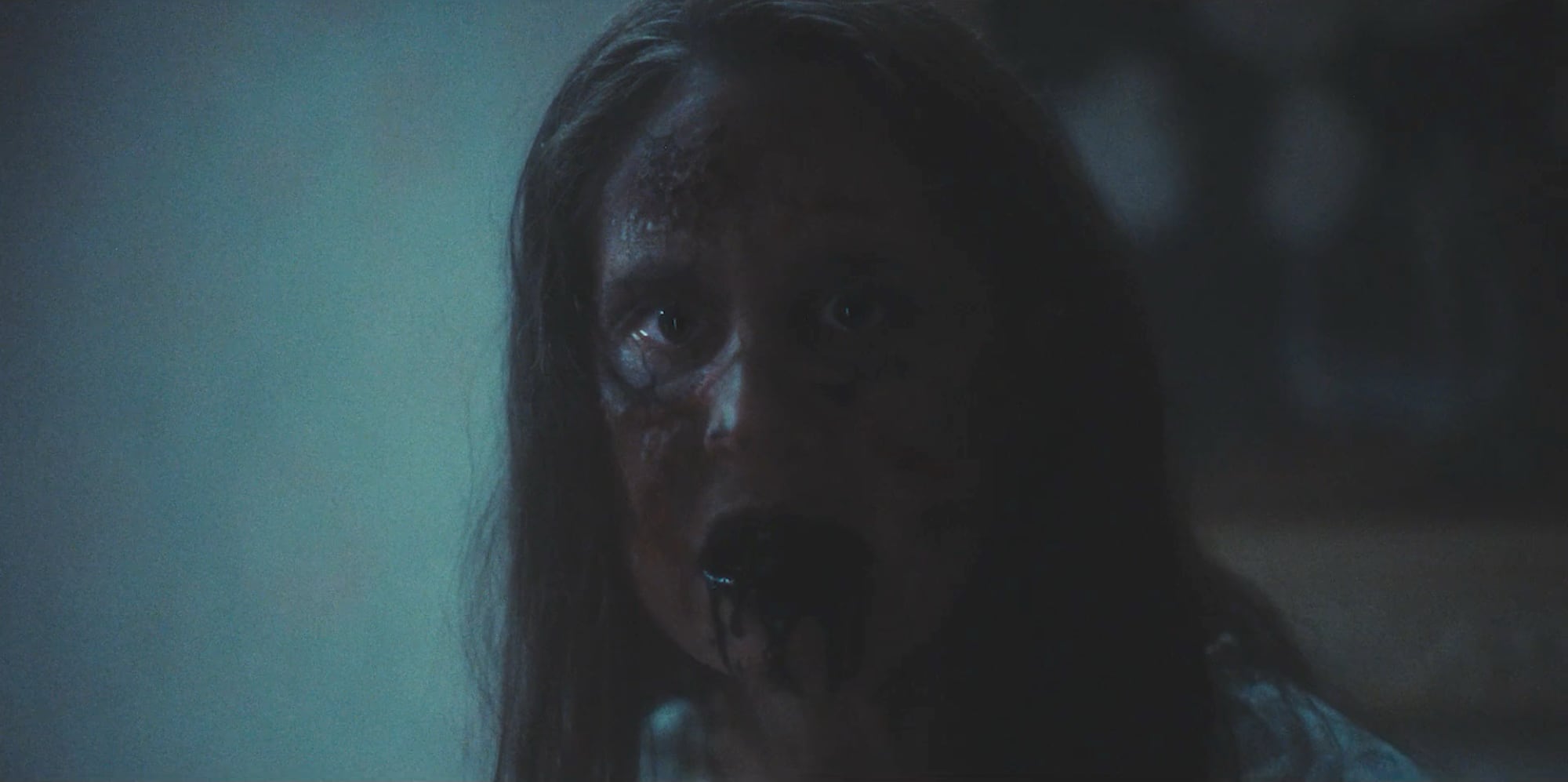
The more I worked on it, the more I started to see how camp is in so much horror today, especially with so many films toying with the line between ‘serious psychological drama’ and comedy.
You use the phrase “grounded camp”, which sounds almost contradictory. What does “grounded camp” mean to you? If you were to describe Are You Fucking Kidding Me to someone who doesn’t know anything about it, what other words would you use?
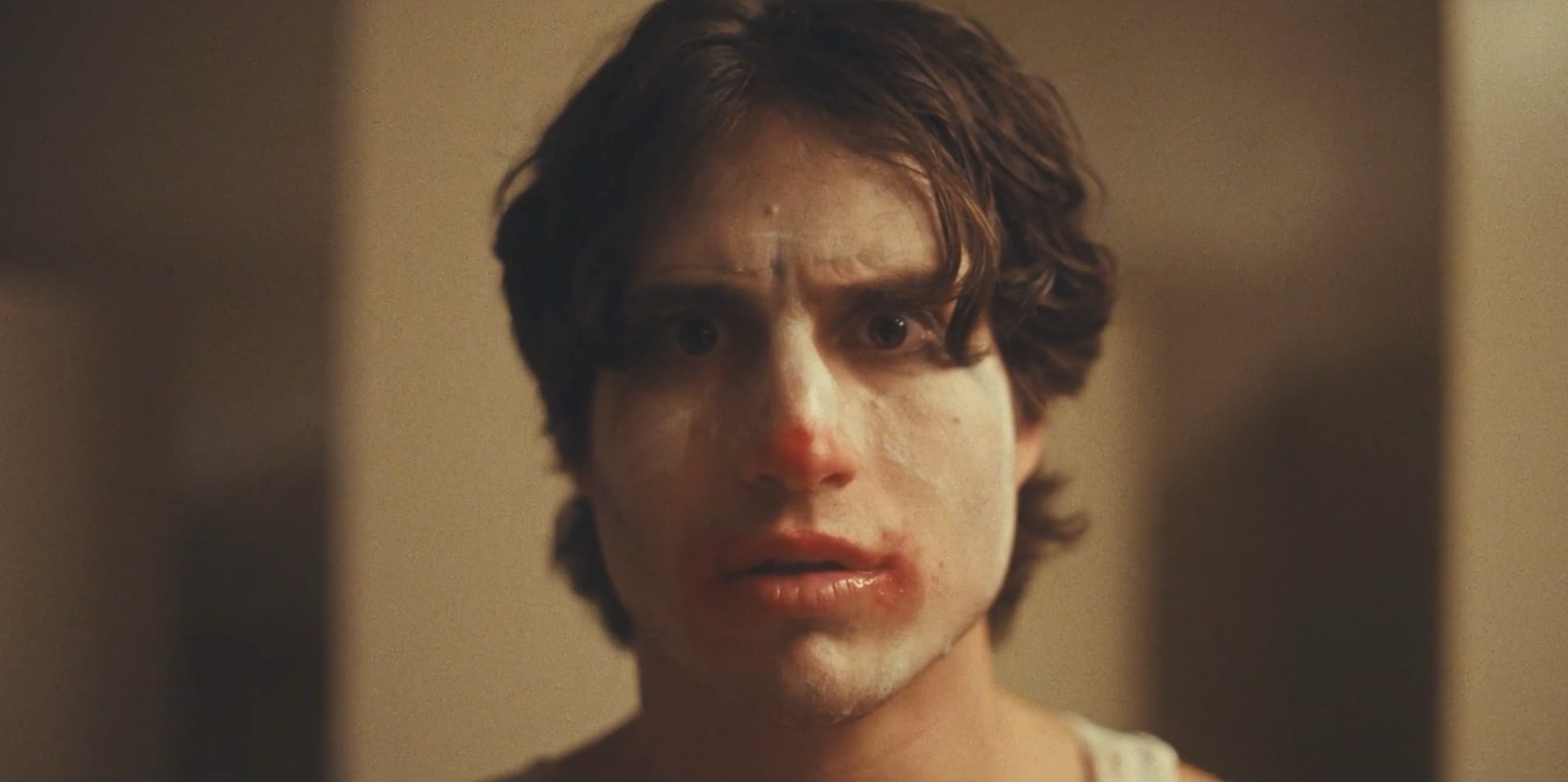
I love a good contradiction. It’s the Libra in me. I use that phrase now after having sat with the piece and asking myself what I wanted to achieve with it, in the performances, music, color. So much of this film is loud so the grounded nature of it was finding ways to bring everything down a bit, to make things a bit more approachable. There’s this really lovely moment after our hero in the bathroom realizes they’ve been screwed over, and we just sit on their face as it all washes over them. In something strictly camp that type of scene wouldn’t exist. It’s quiet. And because it’s quiet, it’s sad, and deeply relatable. If everything in your film is at a 10, it doesn’t allow a journey for the audience. Even in films I work on now, with actors of all calibers, there is a time and place for the full emotional outpouring of a scene. Often it’s not needed. Often it’s more interesting to struggle through feelings, because repression is more psychologically honest than simply feeling, or worse… playing a mood.
If I had to describe it to someone who knows nothing about it: it’s a horror comedy about the absurdity of the gig economy, of hustling just to survive. In a few words: unhinged, loud, sad, and deeply relatable. Or I’d say “saddest blow job ever.”
Most Popular
You cite The Following and American Psycho as tonal reference points. Both balance humour with menace and psychological unease. I think this shows in the early scenes when it’s already obvious there’s something weird going on. What did that tonal tension give you that a more straightforward comedy couldn’t? Was there ever a moment where you worried the comedy might let the audience off the hook, or the darker elements might overwhelm the humour?
No, I wasn’t worried about that. I spent a lot of time with Zach working on tone. I drafted out the emotional architecture of the film: what do I want the audience to feel here, here, and here. Of course your film can shift during each phase of production, but if your North Star is clear, it helps frame up the tone of the film for yourself, your DP, your PD, the actors. Having a playlist of music really helps me, and a deck where I break down every scene and talk through it.
Horror that laces in comedy allows for humor that irks you, that gets under your skin. It’s the uncanny, the familiar made strange. It’s some of my favorite uses of humor because it catches you off guard, like a jump scare but with levity instead. Having levity in the piece allows for a bigger roller coaster ride, almost a catharsis, when some of the more dramatic scenes happen. I love watching this film with an audience cause they are VERY active. People never know what to expect, but they love it. It’s been a joy to witness the spectacle of horror and comedy with an audience.
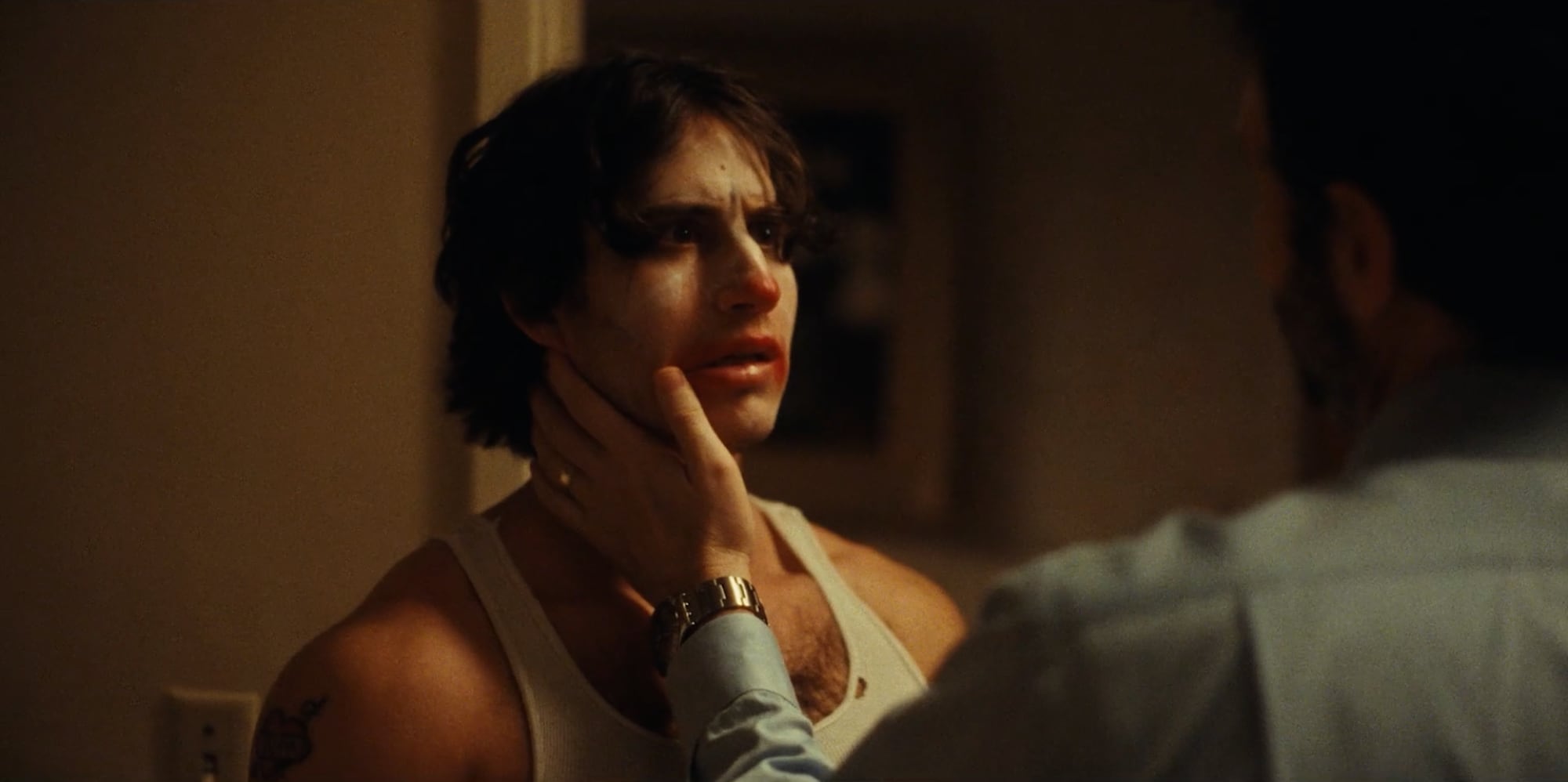
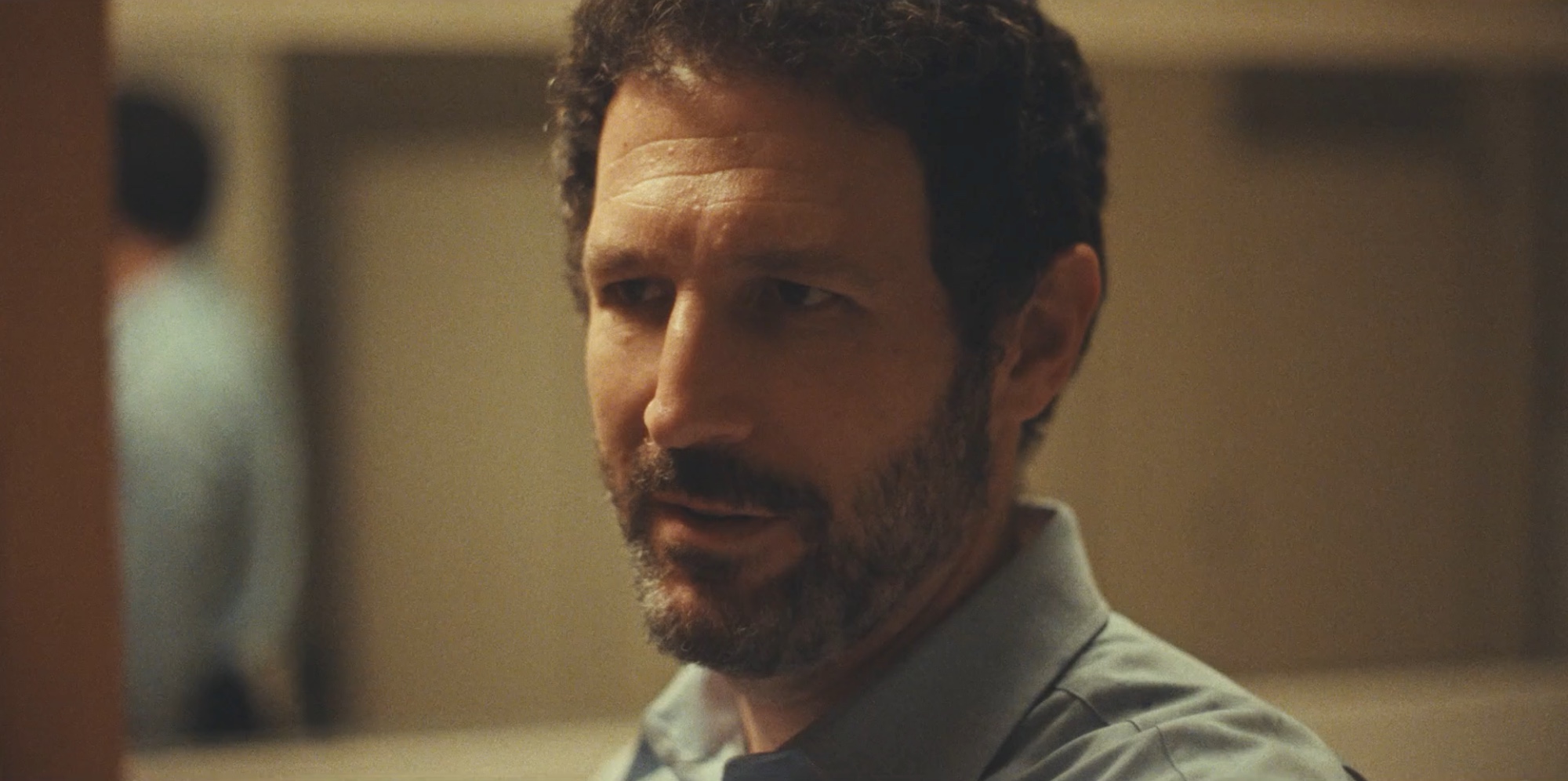
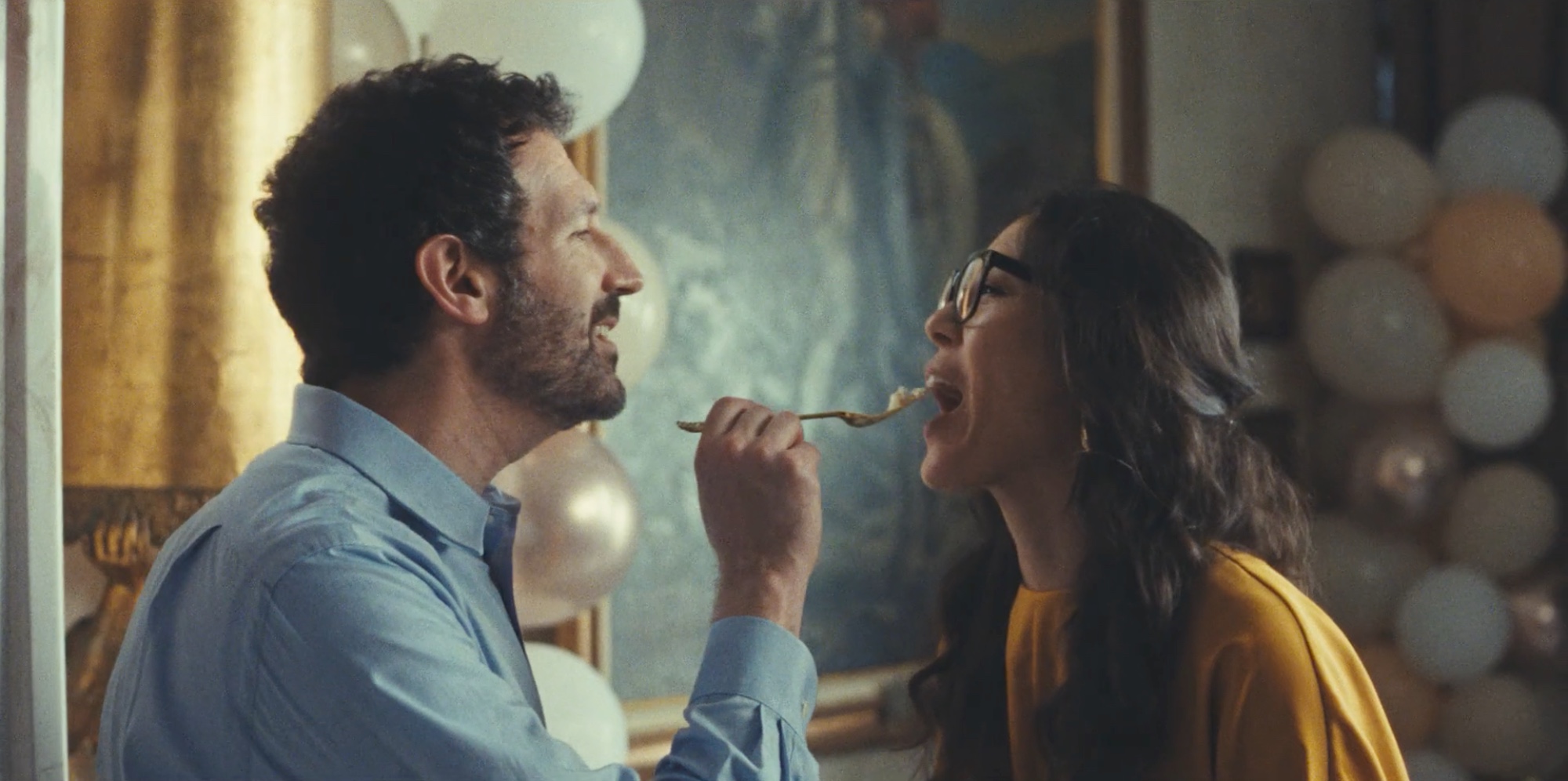
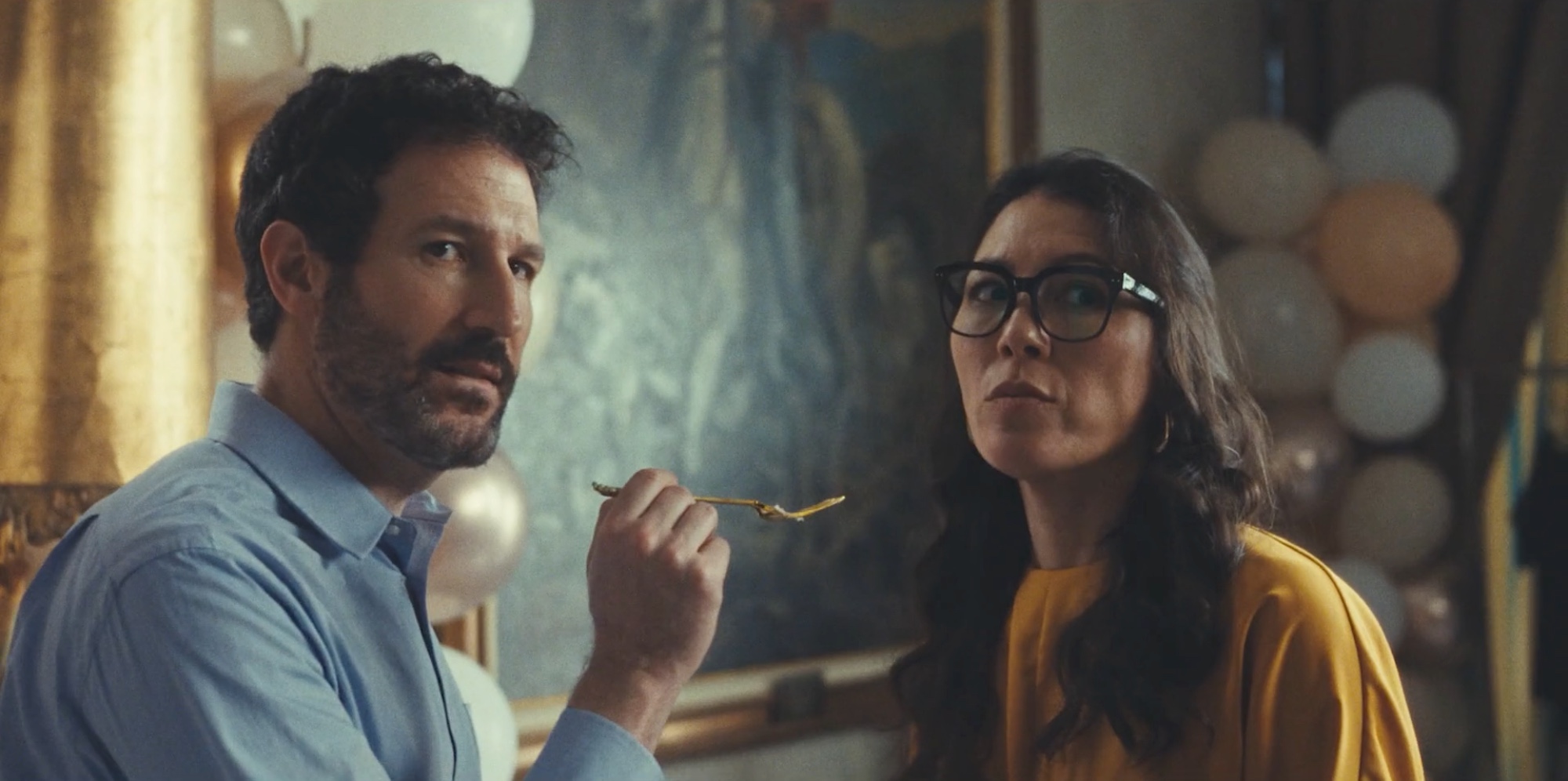
Horror that laces in comedy allows for humor that irks you, that gets under your skin. It’s the uncanny, the familiar made strange.
You’ve said the biggest thing you walked away with was that no detail is too small. Looking back, what do you think you nailed, what would you do differently, and did that experience change the way you think about prep and the things that need to be protected before you ever get to set?
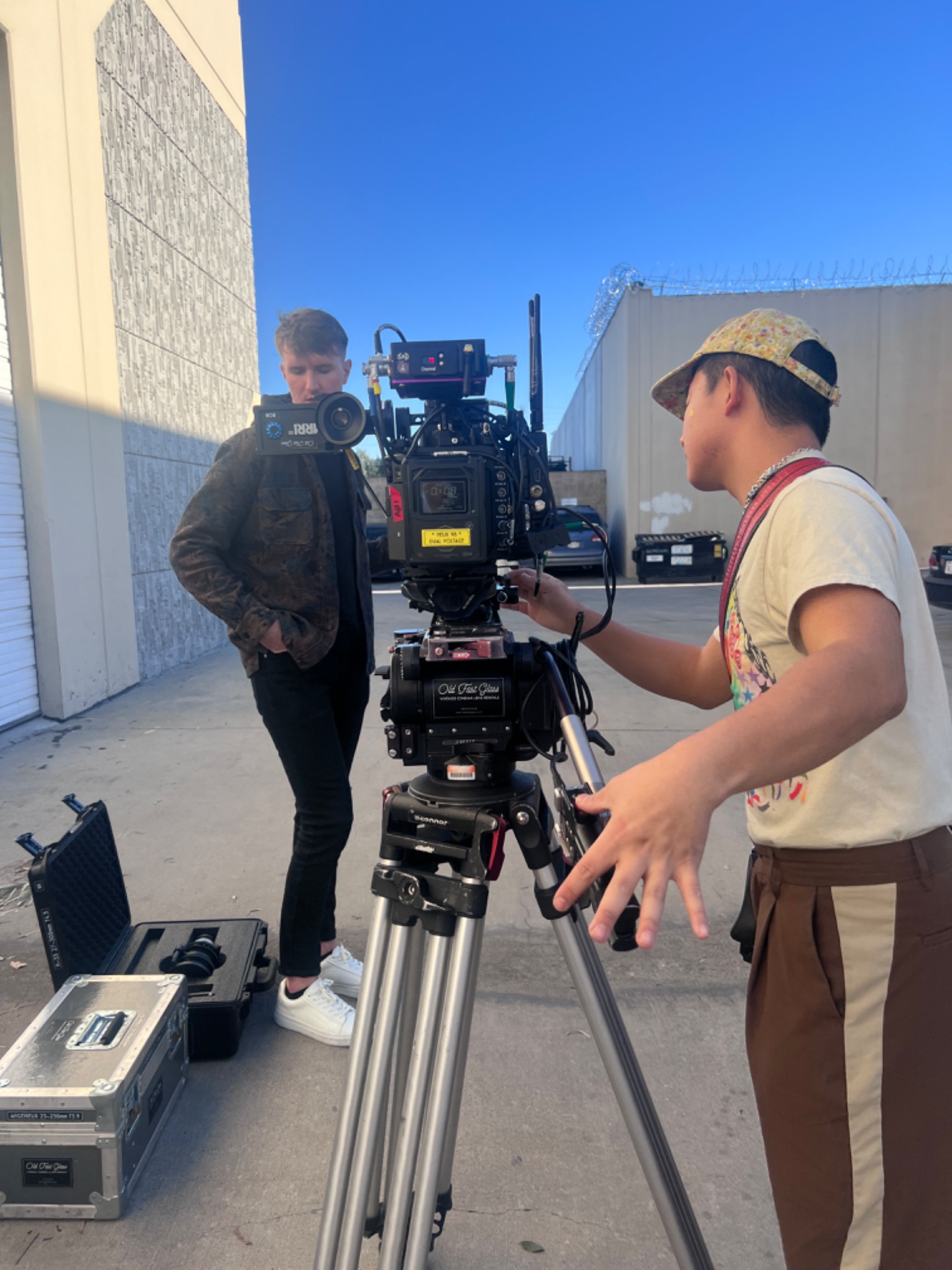
What I’m most proud of is that the film feels cohesive. We enter a world and it feels uniquely like its own film. Of course I wish we did 100 things differently, but that’s anything I do. It was my first time working with VFX makeup at this level, and I wanted the Mom scenes and blood to feel more realistic. The campiest thing in the film is probably her makeup. It did change how I think about prep. No detail is too small. I’m grateful for our DP Peter Pasucci, a collaborator whose curiosity and dedication to the craft is inspiring. Our lens test at Old Fast Glass was essential. Testing vintage glass let us find the texture of the film before we shot a frame: how the lenses rendered skin, blood, and that muted palette. We work in a medium of mediums, and every department head is their own artist. When budgets are tight, things fall through the cracks. Like our stunt knife arrived the day of the shoot looking laughably fake. Fixing it in post cost us time and money we didn’t have to spare. Big learning lesson on prop testing.
On the day, there’s only so much experimentation you can allow for as a director, something ECHO taught me too. I’m very collaborative. I started in comedy in New York, working for Stephen Colbert and doing improv at Upright Citizens Brigade, where so much good comedy comes from 1000 shit ideas. It makes me less emotional about my ideas because I know there’s something better around the corner. But that can bite you in the ass. Spend too much time trying things out and you aren’t getting the film. A great filter for any idea: does this serve the central dramatic argument of the film? No? Cut it.
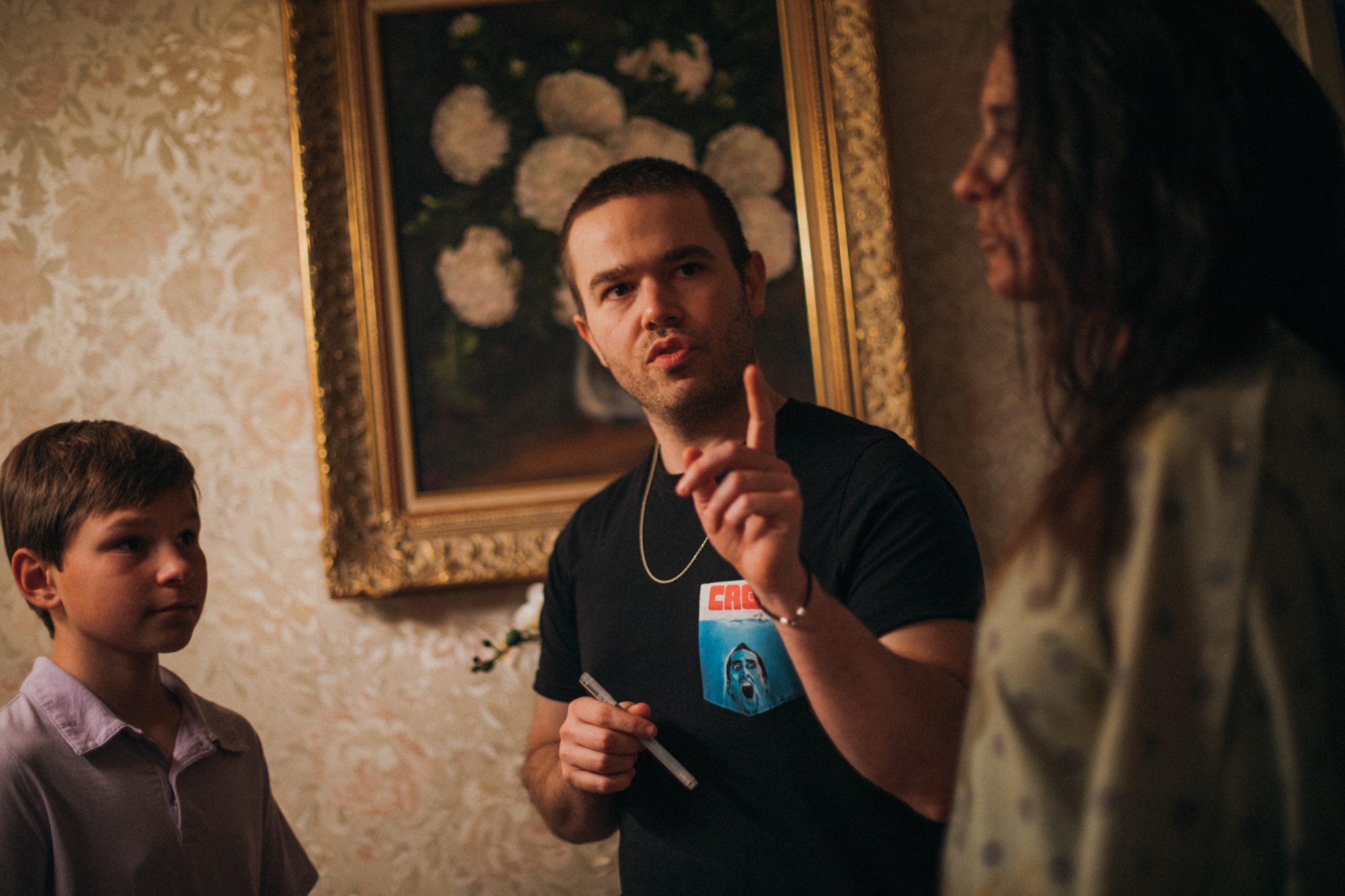
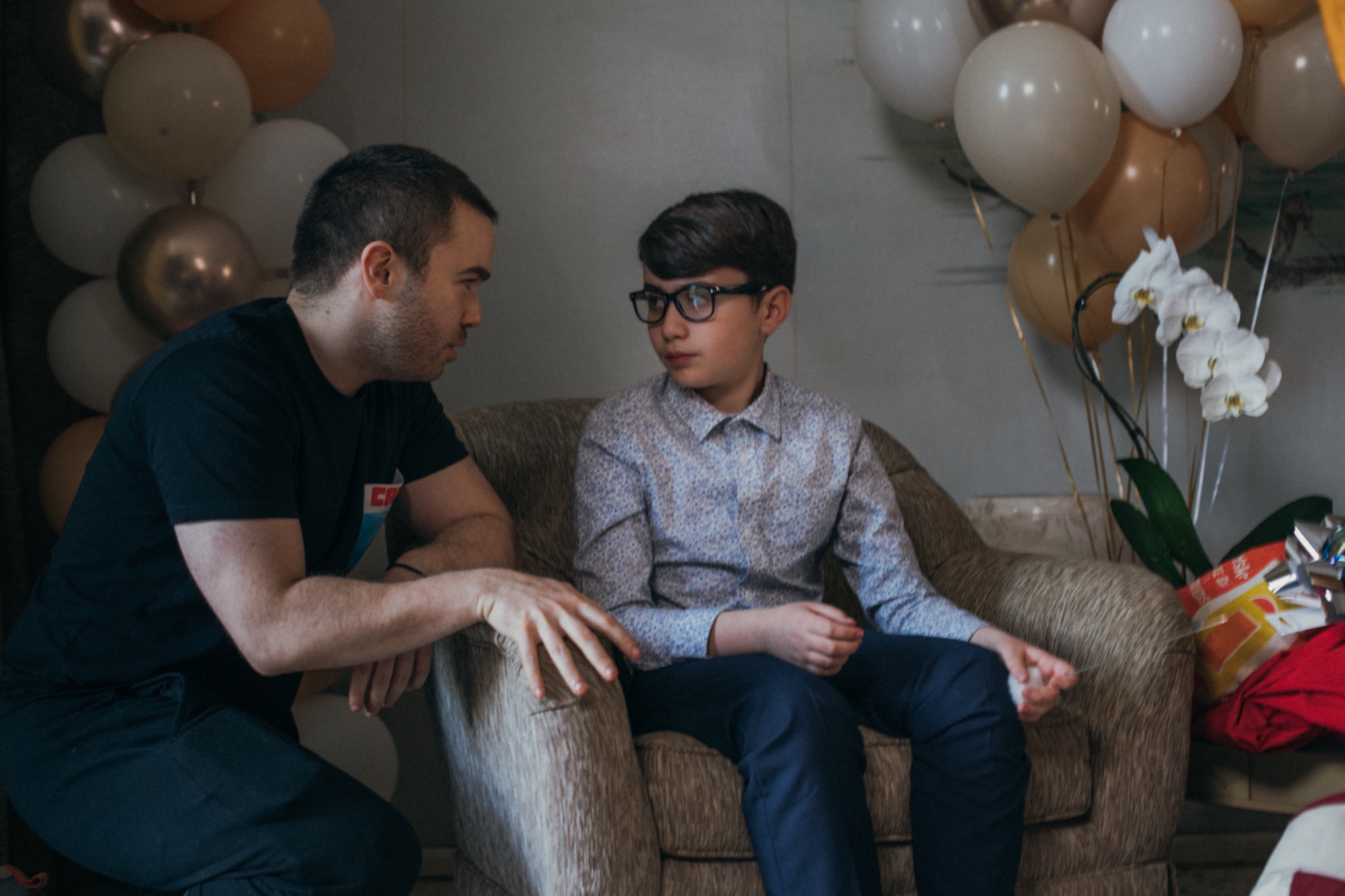
The film was made predominantly by queer artists. How did that collective queer perspective influence the story, characters, or humour, particularly in a film that also speaks to the much broader anxieties of economic survival?
I think that perspective is in the film’s bones. A lot of us know what it’s like to hustle, to perform a version of yourself just to get by, to put on the makeup even when you’re falling apart. That’s the heart of this film. We’re all clowns dancing through capitalism trying to keep the party going. The humor comes from that place too. It’s survival humor. Camp has always been a queer survival language. It shaped the set too. I remember one moment when an actor was really trying to nail a line and it just wasn’t landing. The inherent comedy in the line wasn’t there. And the team around me, all queer, knew it wasn’t the actor, it was the line (I believe one that I pitched earlier). CUT IT. On the opposite end of that, when we all laugh, I know it’s actually working. Having this community there not only helps ensure a sense of safety on set but is also a great barometer.
Camp has always been a queer survival language.
You used slow push-ins, zooms and Steadicam to gradually tighten the pressure, letting the dread sit just beneath the humour. How do you technically know when a scene needs to stay funny and when to let the discomfort take over? What was the approach like with your cinematographer Peter Pascucci?
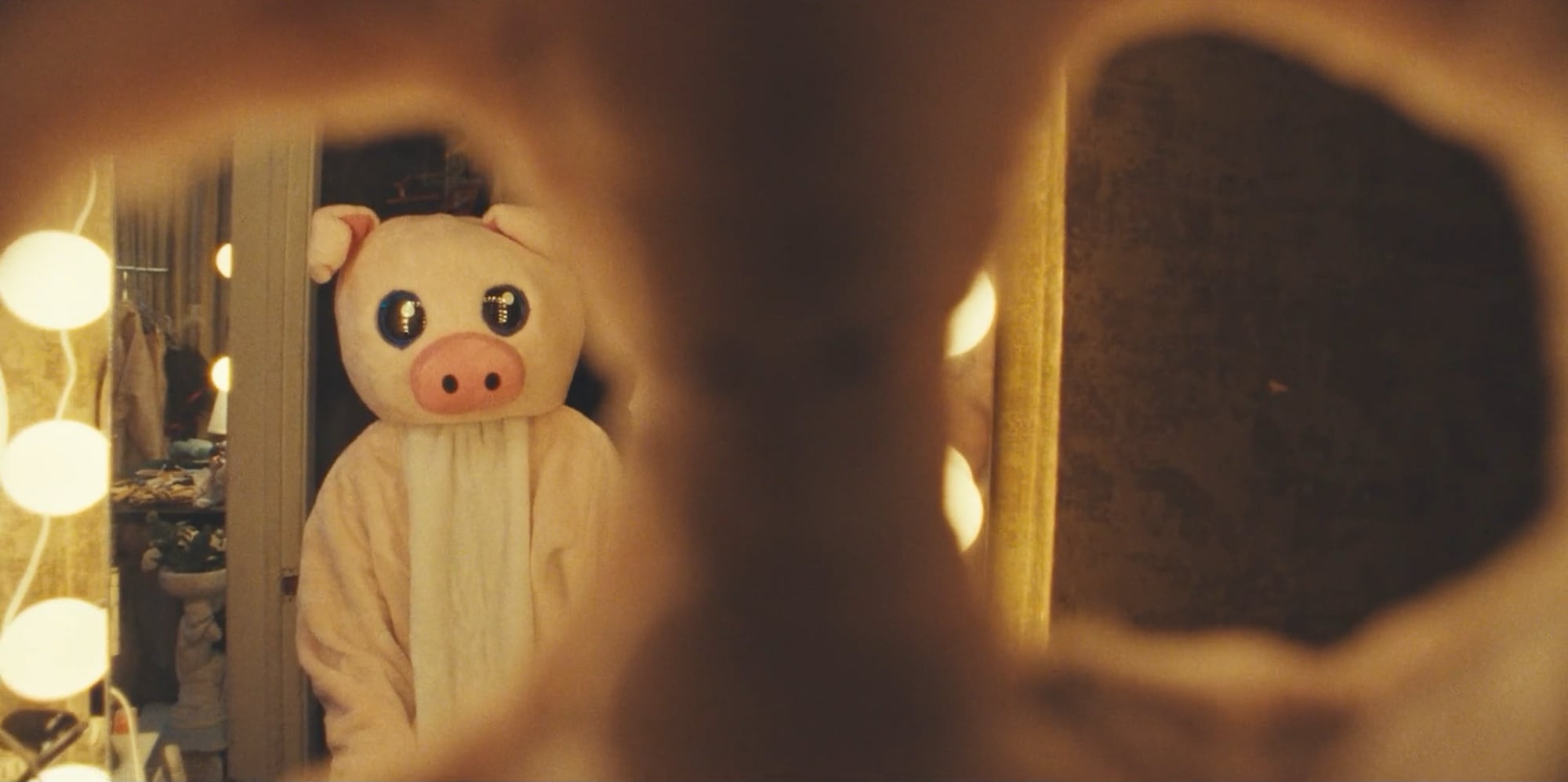
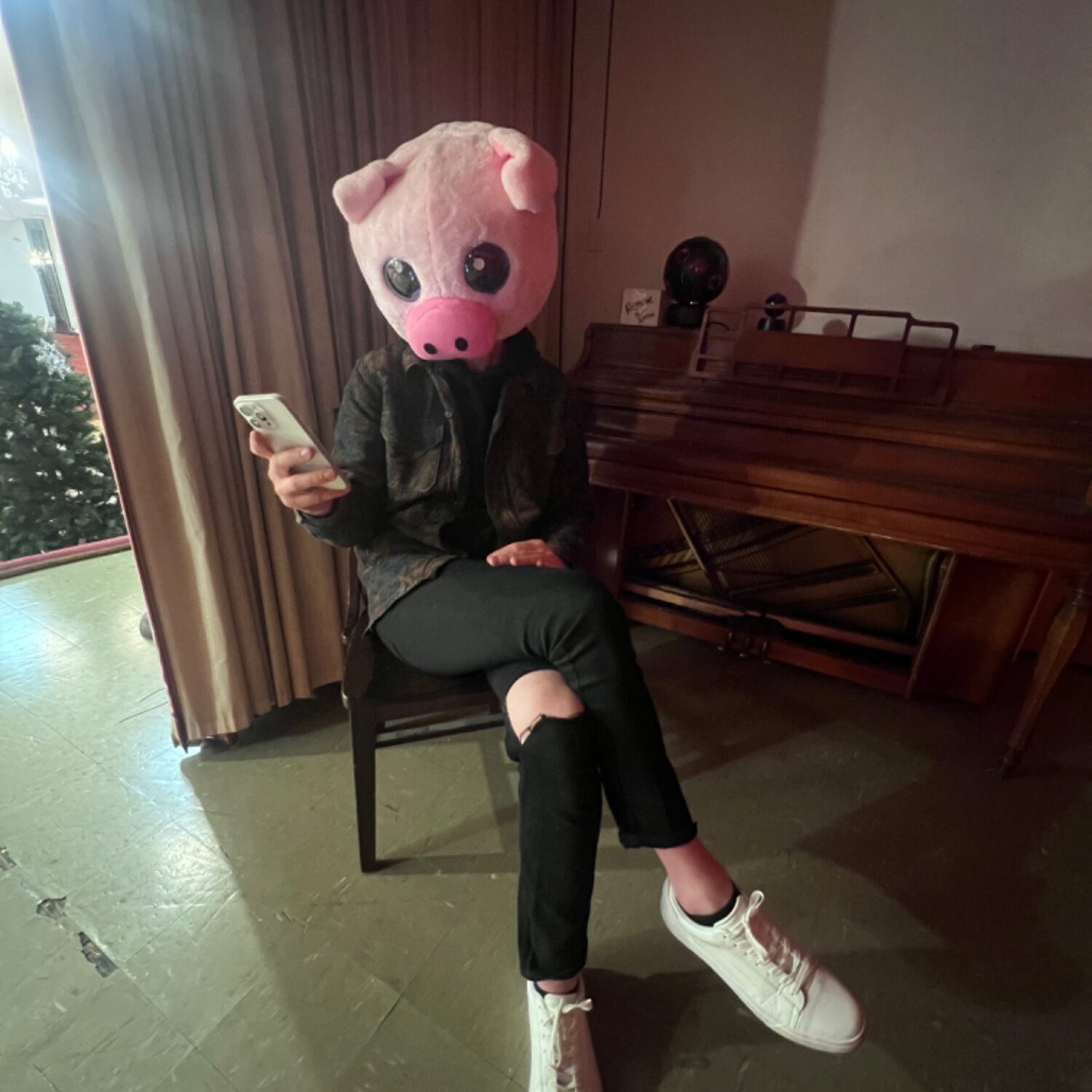
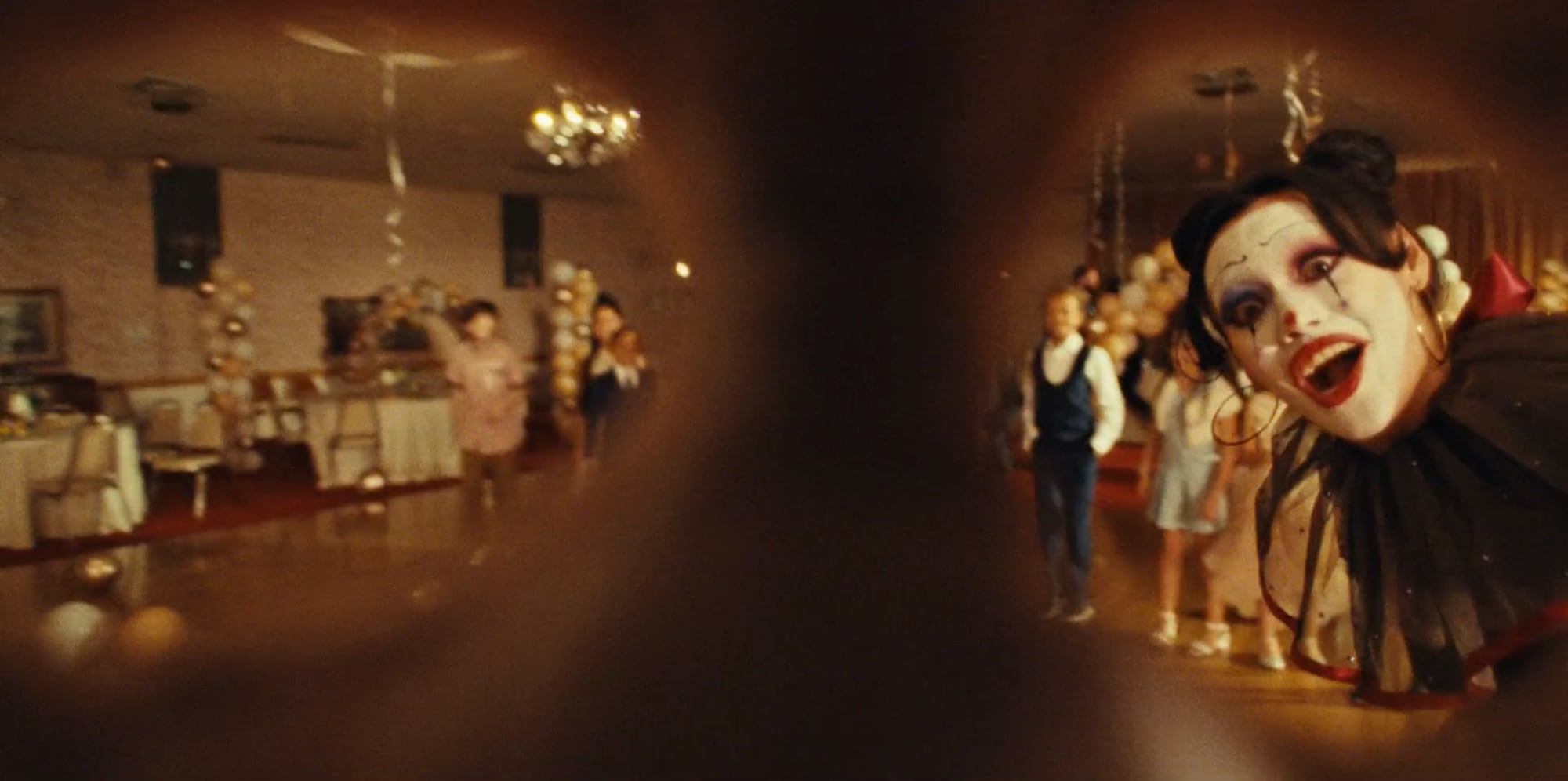
A big part of it is already planned. But we were always balancing something sad with something funny. Like when we see the Porky Wiggles mask go on Jordyn. I knew from the start that technically the best way to feel his own sense of claustrophobia would be a subjective POV, being in there with him. So the moment from Being John Malkovich came to mind, when John Cusack is seeing out of Malkovich’s eyes, shot by Lance Acord. Technically, this was quite complex to get right, ESPECIALLY when we needed to have him look in the mirror. There was a very fine line for us before you see the camera and reveal our world. We fought hard in prep for the right equipment to rig the pig outfit. With that emphasis on humanity, Peter and I built a look with a distressed, lived in quality. Muted, almost harsh, mirroring the characters’ interiority rather than where the comedy might suggest. We leaned on slow push-ins, zooms, and Steadicam to build tension the way films like Parasite and Shiva Baby do, with dread sitting right underneath the humor. The comedy lives in the script and the performances, so the camera doesn’t have to chase the joke. The camera stays with the dread.
I think it’s all in the script, and when something in the script is funny but, when read aloud, it’s not, we adjust and find something new. I’ve worked with Peter more than any other DP. I trust him, and we have a working relationship where we are both very honest. He’s not a typical DP who is only focused on his department; he really wants to understand the world we are designing. And it starts with the script for him, which I really appreciate. Our approach for this film was ambitious. We planned for a lot of shots, and while we got most of them, we probably didn’t need all of them.
The edit taught you not to settle, even when a simpler choice might make the process easier. What was the process like technically and how do you know when you’re just being a perfectionist and when you’re fighting for something the film genuinely needs? When is a sacrifice worth making?
It’s very very very very hard. We took our time with this edit and I’m very thankful for Will Mayo getting us there. He is always down to clown and try things. We completely changed the beginning to set the tone of the movie immediately and hook our audience. Starting on his face was never intended, but it helped draw us in. That helped a lot, but it really wasn’t till the last 3 edits that it started to feel like the film. I got the first cut and was sweating. I think a big part of every process in filmmaking is listening to that little part of you that says “this can be better.” But on the opposite end of that, there’s also a part that just wants to be done with the project and move on to the next thing. I avoid that part because it’s lazy.
As a director you have to fight quite a bit, because everyone else is going to suggest ideas that might be simpler, easier, or make for a smoother process. And you have to decide when and if it’s worth it.
What I’ve learned is that sometimes you have a project and it feels like there’s no way to make it better, but then you take a week, or say fuck it and shift something massive, and then you realize, oh wait, if that works and we cut it, what else can work? I haven’t had a project where my gut needs to keep pushing to make something better has become a negative. And it’s all a sacrifice, because it’s your time. As a director you have to fight quite a bit, because everyone else is going to suggest ideas that might be simpler, easier, or make for a smoother process. And you have to decide when and if it’s worth it.
What upcoming projects do you have that we can look forward to?
I have ECHO, a new short I’m submitting to festivals, and I’m writing my feature Gutter Kidz, which I had at the Cine Qua Non Lab recently.
And finally, which is your favourite short of all time and why?
Andrea Arnold’s Milk. It’s such a beautifully raw and gritty film. For so long our society has made women feel that losing a pregnancy is somehow their fault. After a stillbirth, the protagonist skips the funeral and there is this feeling of her saying “fuck it” and choosing healing in her own way. I love that kind of autonomy and I found the end so heartbreakingly beautiful. Grief has become so sterilized in America and here we see a character mourn in a way that feels natural to her.