The weight of history is not always something that can be spoken about, but it can be shown, or it can come out in unexpected ways or times. For many Cambodian people, the trauma of the Khmer Rouge regime, the genocide and the generations of silence that followed remain an ever-present burden, passed down through families and carried into everyday life. In Celeste Diep’s Australian Film Television and Radio School (AFTRS) short film Interview with a Hero, that inherited pain becomes the starting point for a deeply affecting story about generational trauma and diaspora, centred on Chhay, a man whose buried past threatens his relationships with his family and community. The short caught my eye some time ago, and was part of my SXSW London selection, so it feels completely natural to welcome the film to our pages for its premiere. Recently, Taz F. Stark’s Child of Rouge hit me in a similar way with its portrayal of this historical tragedy when I highlighted it in my HollyShorts UK Best of Fest – a powerful thematic shorts pairing that would not be for the faint of heart. Joining Directors Notes for Interview with a Hero’s online release, Diep digs deep into the process of bringing the past back to life, opens up about the emotional toll of revisiting such a painful chapter of Cambodian history and explains her fascinating use of shadow puppetry to bring its story to life.
Writing a “self-insert” daughter means you are simultaneously acting as the objective director, the subjective writer, and the real-world daughter. That requires an intense amount of emotional gymnastics. How did you manage to maintain enough narrative distance while talking about such a personal story?
It’s always been in my mind to tell this story from a young age (although I hadn’t known as a child that film would be the medium). I’ve always had this burning desire to make a film about my local Cambodian diaspora, and to particularly make a film inspired by my father. Much of it takes place and is shot in my local community in Bonnyrigg, Sydney, where I grew up and met other Cambodian children and adults. Many of them immigrated from Cambodia in the 80s to escape the Khmer Rouge, which to this day might be classed as one of the worst genocides in human history, something which to this day affects almost every living Cambodian of adult age.
In a way, I’ve come back to this story at a much older age, which has allowed me to take a much more objective look at the times in my life that left the greatest impression on me, and while I’ve written the film in a voice that very much resembles the young girl who went to the temple, listened to my family’s stories and learnt about the history for the first time, the objective director has a very removed, almost Brechtian approach to telling that story. Having a co-writer in Valentin Domont who also drew from his father’s experience in Lebanon also allowed me to add an extra layer of objectivity, allowing me to look at the screenplay as a piece of writing instead of simple autobiography.
The emotion is mostly fueled through my role as the real-life daughter. As someone who is passionate about sharing the story of my diaspora and who truly believes that my father is a true hero through and through (even as an adult). I truly believe that immigrants like my parents are some of the most resilient, strongest and kindest people in our communities, and much of that perspective fueled the more emotive and visual aspects of the film.
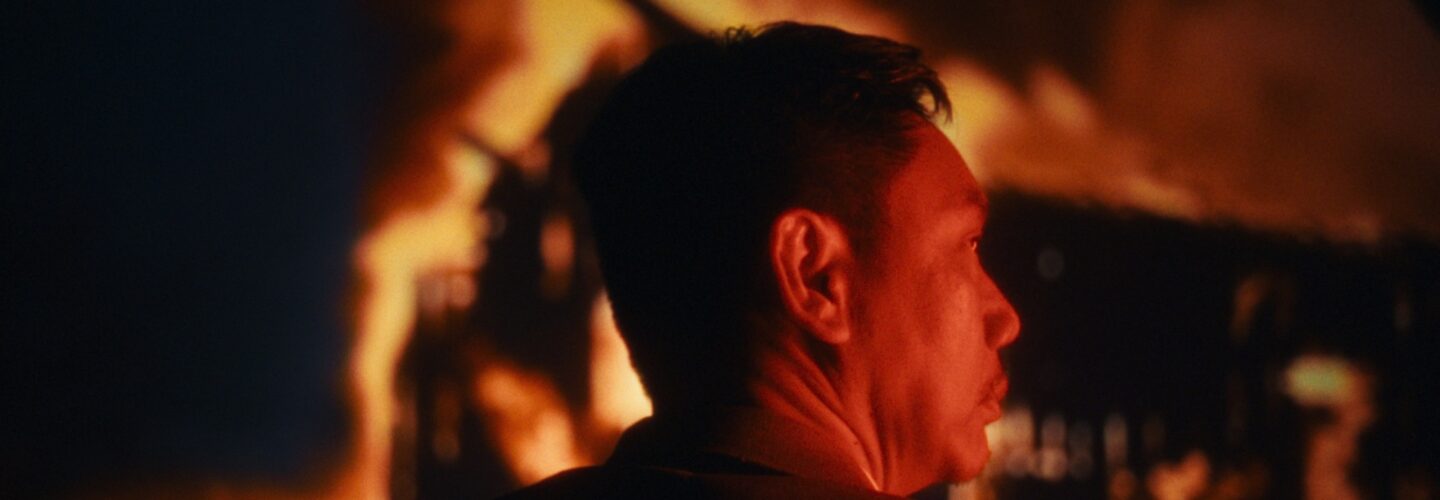
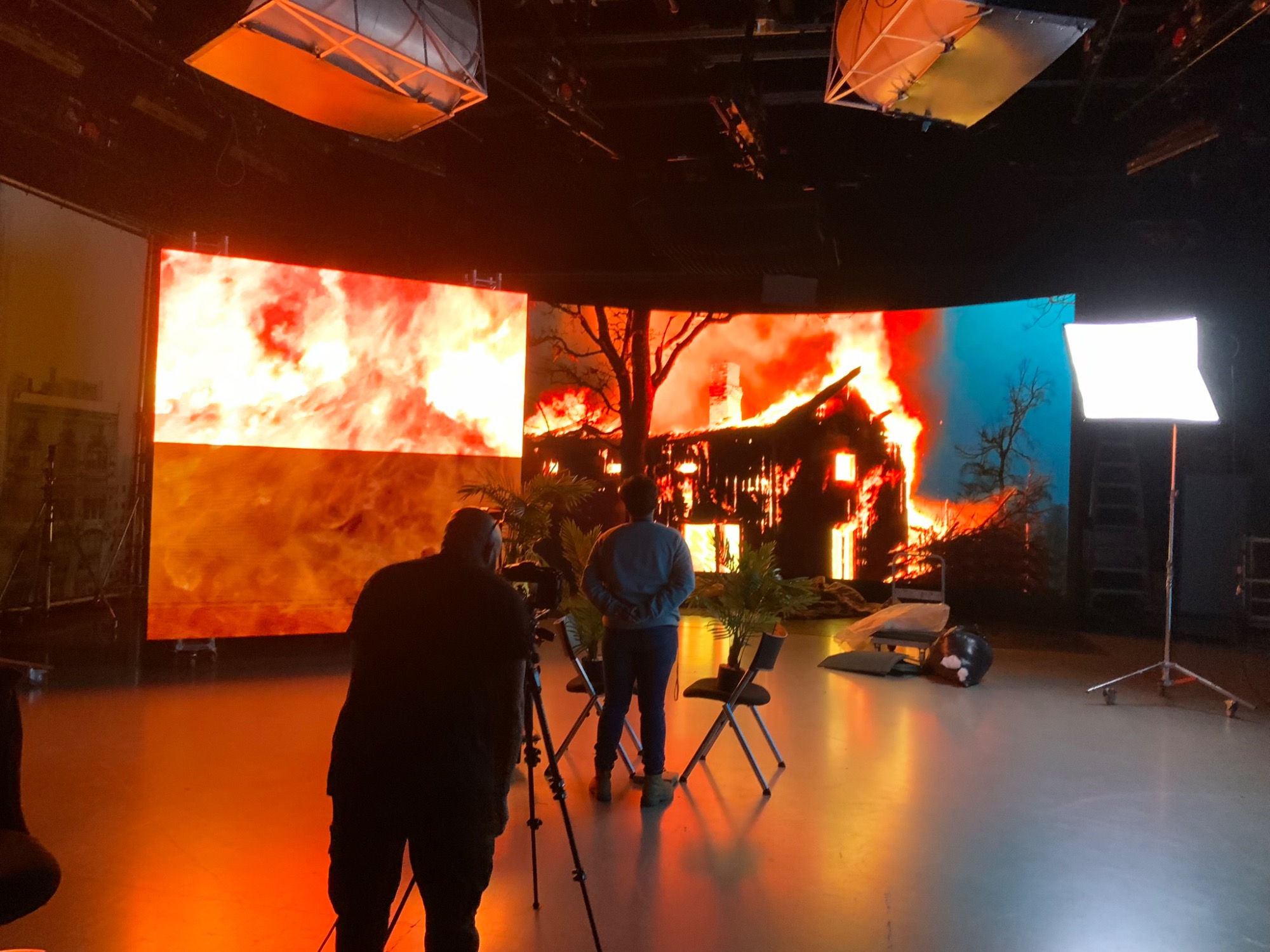
Interview with a Hero opens with one of the most unforgettable openings I’ve seen used in a short like this. You decided to show Chhay’s childhood home engulfed in flames. You experimented with quite a few options before landing on that choice: from miniatures to practical effects before turning to the Australian Film Television and Radio School’s (AFTRS) million-dollar LED volume. How did that technology transform your approach to the scene?
For the opening sequence of the film, I really wanted the very first scene to be a vision of Chhay’s childhood mentioned in the interview, watching his house go up in flames, an image that summarised the themes and the tone of the film. Initially, we had experimented with burning miniatures, we debated burning a full-size barn for real and even debating whether we could do something overseas. That’s when I began to experiment with AFTRS’ LED volume. For a long time, students had struggled to find a use for the volume. I had been on Taika Waititi’s Thor: Love and Thunder set as a VFX assistant, and the problems on that set had to do with when the volume was in focus, but when it was out of focus and the scale was correct, it excelled at on-screen structures and landscapes. I realised that if the scale was correct, and if we could have enough foreground elements, we could make the barn burning sequence look real enough in the context of this “hyperrealist” film we were making.
I truly believe that immigrants like my parents are some of the most resilient, strongest and kindest people in our communities, and much of that perspective fueled the more emotive and visual aspects of the film.
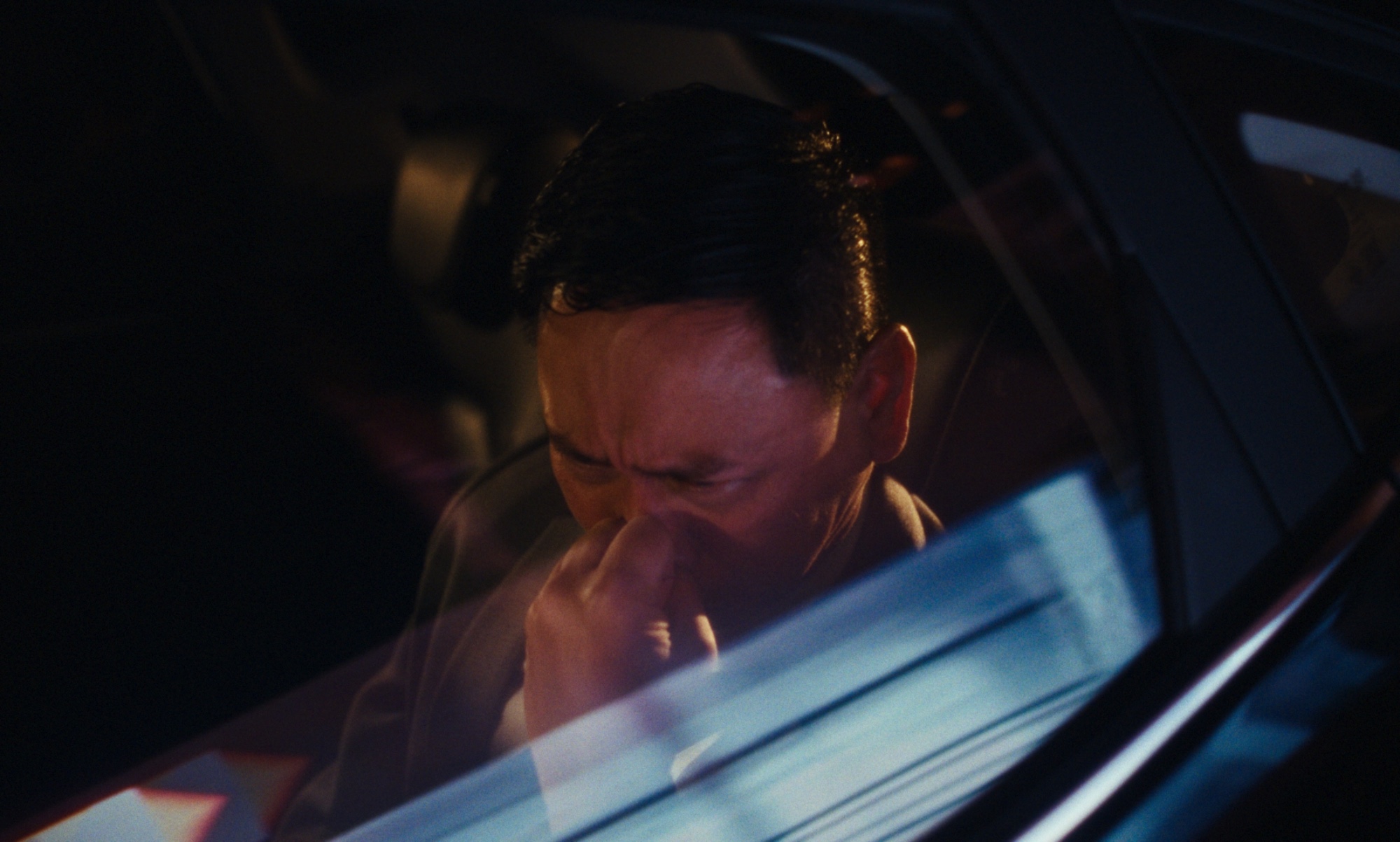
Additionally, we also wanted a single-take sequence where we see Chhay having a moment of contemplation in the car. Again, we had discussed possibly hiring a low-loader or shooting the film guerrilla-style, but I was quite certain I wanted the shot to be from outside the car looking in, as I felt it was important for most of the film for us to be either looking at Chhay from afar or through a window, mirror or screen. Hence, we drove a car into the studio and shot plates in my local childhood neighbourhood and used them to create reflections on the car. I drew direct inspiration from Tarkovsky’s use of fire and its subconscious emotional impact on viewers. The destruction and desecration of religious, artistic, and cultural artefacts was central to the Khmer Rouge’s attempt to cleanse the Cambodian psyche, severing Khmer people from traditions and personal expressions of identity in favour of absolute devotion to the Angkar. The lasting consequence has been an irreparable loss of Khmer history, memory, and cultural heritage. I wanted the first scene in the film to encapsulate all of this. Initially, we experimented with elongated flashback sequences and different forms of exposition, but I landed on the fire based on a story I had heard about a Khmer family needing to evacuate their home the moment they heard the Khmer Rouge were invading Phnom Penh.
You and your cinematographer coined the term “Hyperrealism” for your final result, which came out after a long process. As a devotee of Taiwanese New Wave masters, your instinct was to make a film anchored in strict, patient realism, yet during a dense 12-month development period at AFTRS, that approach changed. How many different turns did the concept take over that year?
One of the reasons why Interview looks the way it does is because it ultimately feels like a Taiwanese New Wave film, but is shot like a genre piece. This conflict and contradiction within the film has been a throughline throughout the entire production. As a fan of films of the Taiwanese New Wave, like those of Edward Yang and Hou Hsiao Hsien, I initially wanted to make a film that embodied the realism of those films, shot entirely on location with minimal lighting and an absence of music. However, because the film was made at AFTRS and had an overly long development period (around 12 months), I spent a long time debating how to actually approach the film. The biggest challenge relates to the question of how to represent a tragedy like the Khmer Rouge and the shared trauma that Khmer people have around the event (something that, if handled incorrectly, could either re-traumatise audiences or alienate audiences if we were too vague). It’s a question of how to speak about the unspeakable.
We decided to approach the film by combining a realistic film with very formalist techniques, maintaining the ideas of the long take, of viewing the world through wide shots with minimal coverage and also with grounded performances with heightened cinematography and lighting, as well as over-the-top production design.
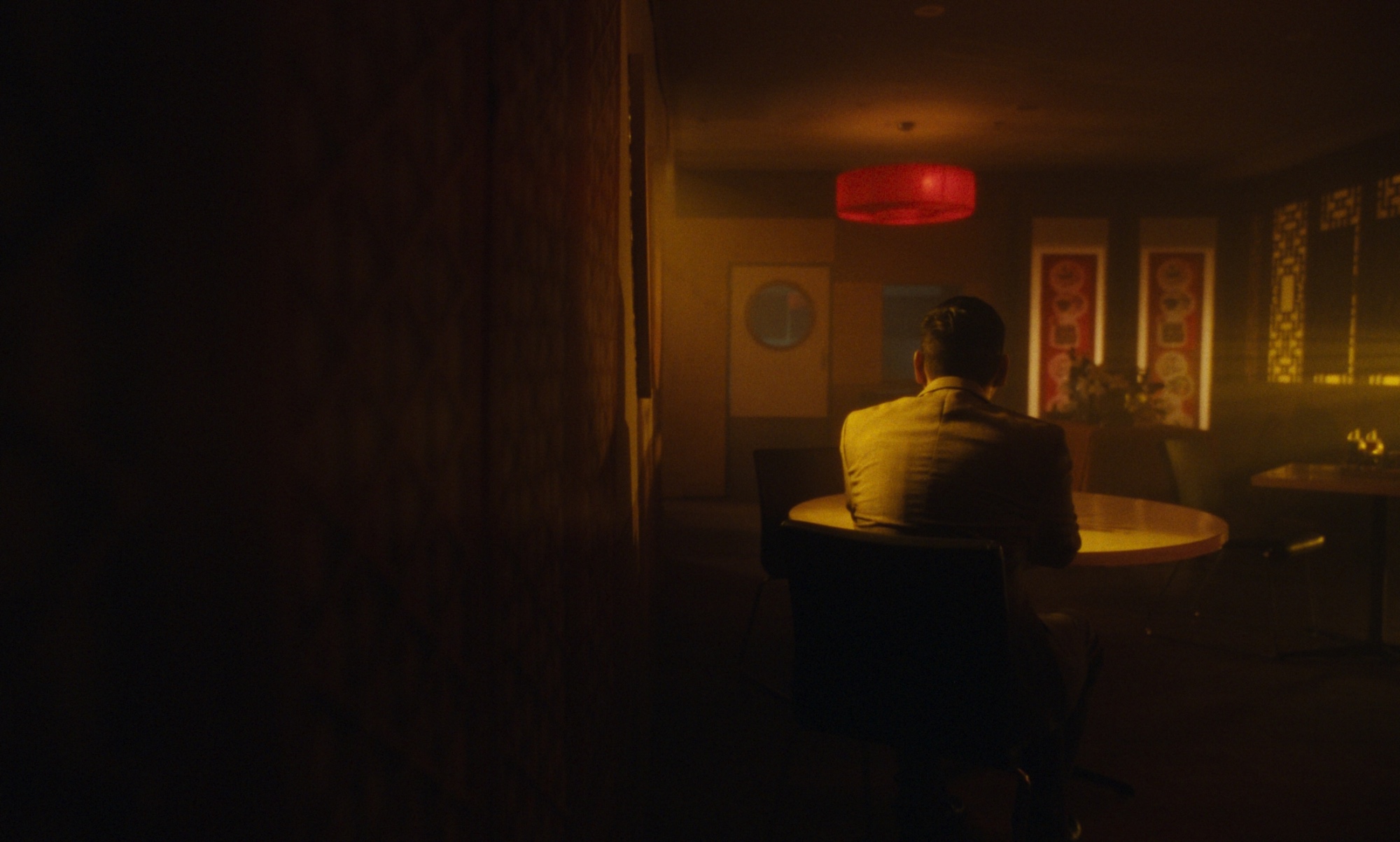
We felt that to tap into Chhay’s memories and the tone of the film we are trying to make, it would be a disservice to the screenplay to make a straight-up realistic film. We decided to approach the film by combining a realistic film with very formalist techniques, maintaining the ideas of the long take, of viewing the world through wide shots with minimal coverage and also with grounded performances with heightened cinematography and lighting, as well as over-the-top production design. Besides any scenes involving the temple, almost everything had a major element of production design. The result of all of this is something my cinematographer and I coined as “Hyperrealism”. It started with the cinematography, then through to our production design with the choice to build major sets to allow us to shoot through windows and walls, and to light things the way we preferred, which eventually informed the sound design and composition, with bespoke music throughout almost the entire film.
Most Popular
What did you shoot with?
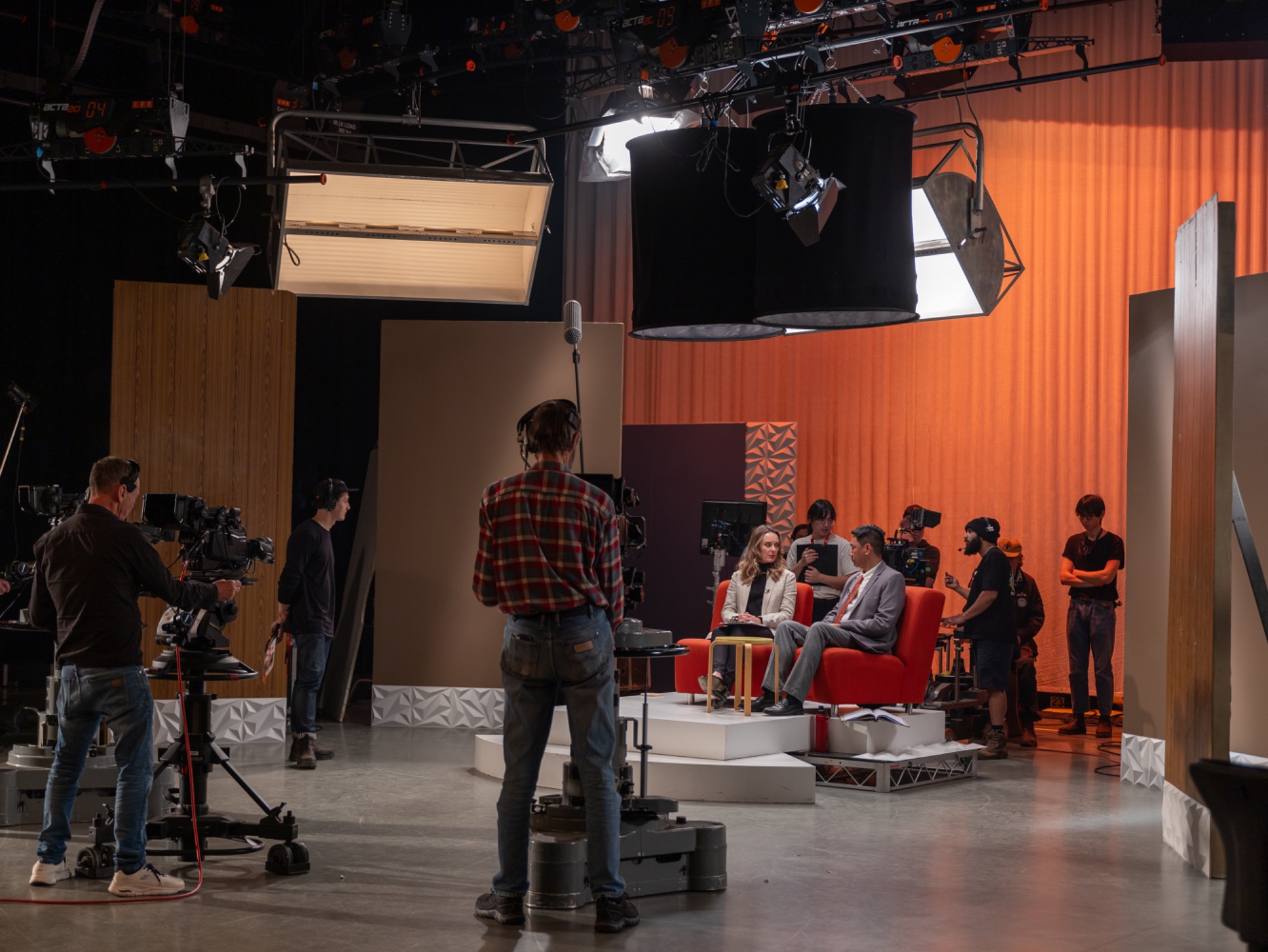
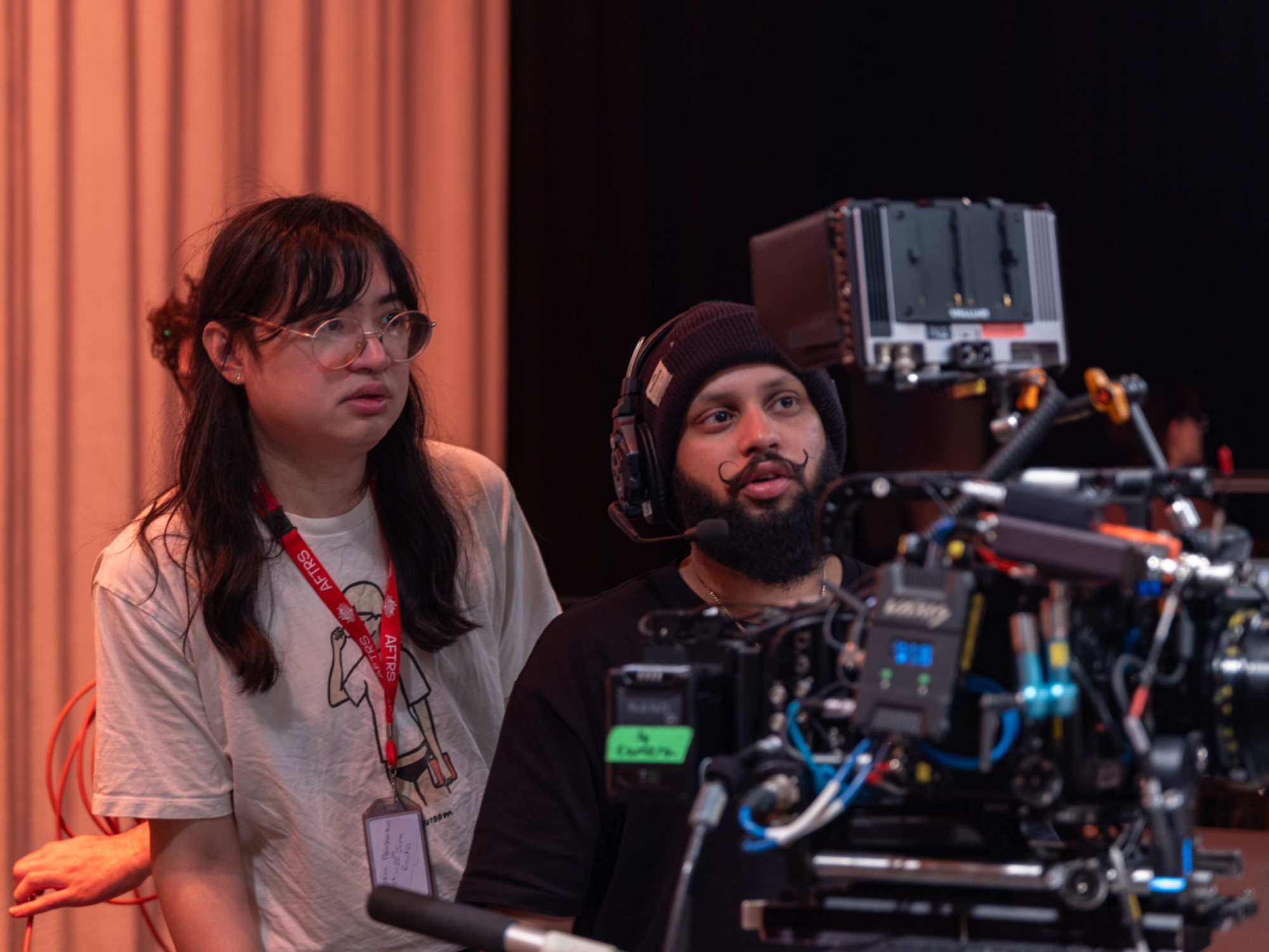
Instead of relying too heavily on LEDs, my cinematographer opted for tungsten and other older lights to create the look of the film. We shot on an Arri Alexa Mini LF with Cooke Panchro Full Frame lenses as well as Radiant Soft for the majority of the filming. The interview itself was filmed with 3 older Sony cameras that had their SDI signals inputted into a Blackmagic ATEM Mini Pro switcher that then converted into an analog signal and fed into the old CRT screen, which we shot with the Arri Alexa Mini LF.
Were there particular film’s you drew inspiration from when making Interview with a Hero?
There are a few that have had a profound impact on me. Tsai Ming-liang’s The Skywalk is Gone and Bong Joon-Ho’s Incoherence were major for Interview with a Hero (especially the ending of Incoherence where the three misbehaving middle-aged men come together for a media interview about the declining morals of society). Simon Mesa Soto’s Cannes winner Leidi was also a huge influence on Interview, and led the original vision for the film. I would also say that the filmmakers of the Trans New Wave have inspired me immensely, like Jane Schoenbrun, Louise Weard and Vera Drew.
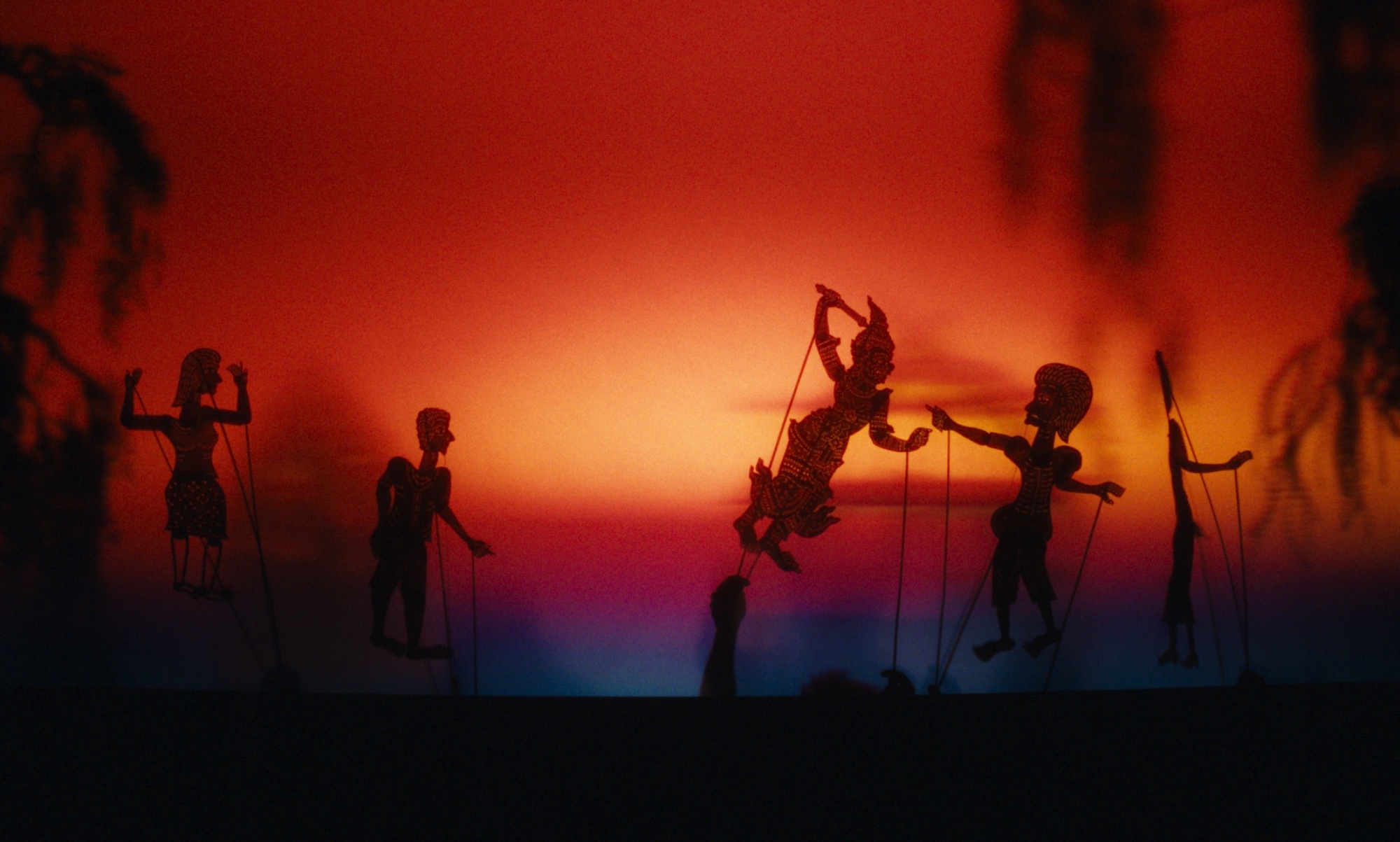
Your palette draws directly from the Cambodian flag—red, blue, and orange—but you repurpose these national colours into a deeply intimate psychological spectrum. Red embodies both love and violence, blue evokes isolation, and orange offers a longing warmth. How did you and your cinematographer, Devamanikandan Kannaya Somu, manage the transition of these colours so they didn’t feel merely decorative?
Just like a lot of the other elements in the film, Deva and I often pick and choose moments for when we wanted to reveal certain colours and when we wanted to hold them back, but tried as best we could to integrate them with the scene. Deva had this to say himself:
“The transition really came from the emotional journey of the story rather than from a predetermined colour plan. Our palette was intentionally rooted in the Cambodian flag and Cambodian culture from the very beginning, and that remained the foundation throughout the filmmaking process. As we spent more time discussing the characters and their emotional journeys, we began exploring how those same colours could also support the emotional language of the film. It wasn’t about moving away from the cultural inspiration, but about allowing it to take on another layer of meaning within the story. From a practical standpoint, we never relied on lighting alone to create that emotional language. Every frame became a canvas that we gradually painted through the combination of location, production design, set dressing, wardrobe, and lighting. By allowing all of those elements to work together, the colours felt naturally embedded within the world of the film rather than simply applied as visual decoration.
Rather than approaching a scene with the mindset of this moment needs more red or this scene should be blue, we always began with the emotional truth of the scene. The colours were there to support that emotion, not dictate it, and their presence naturally evolved alongside the characters’ journeys. We also never wanted to prescribe exactly what each colour meant. The emotional associations we arrived at were personal to us, and we recognise that audiences may interpret them differently. Our hope was simply that the colours would work on a subconscious level, quietly shaping the emotional experience of the film rather than asking the audience to decode a visual language. When colour serves the emotion first, it stops feeling decorative and instead becomes another voice in the storytelling.”
We never relied on lighting alone to create that emotional language. Every frame became a canvas that we gradually painted through the combination of location, production design, set dressing, wardrobe, and lighting.
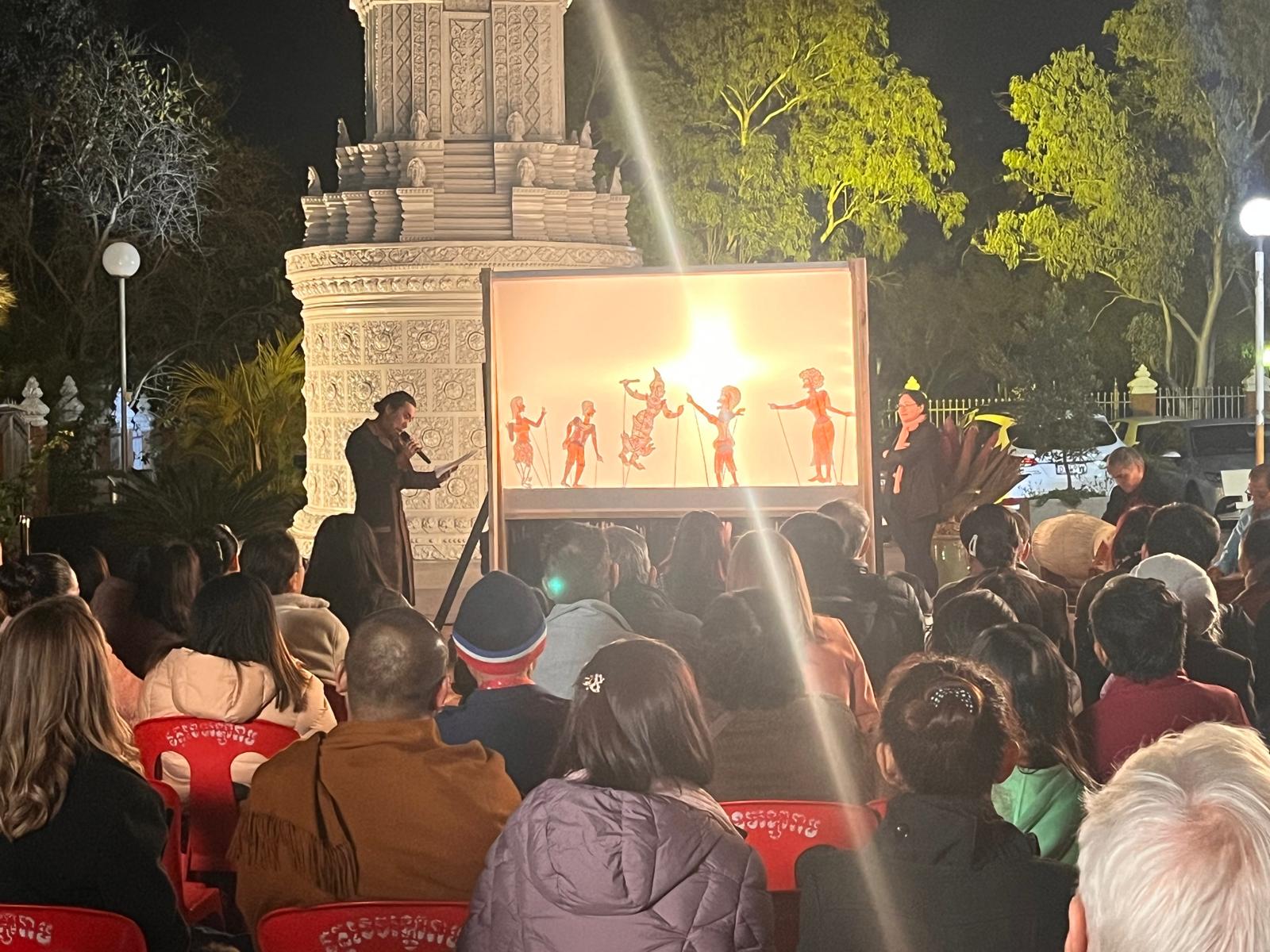
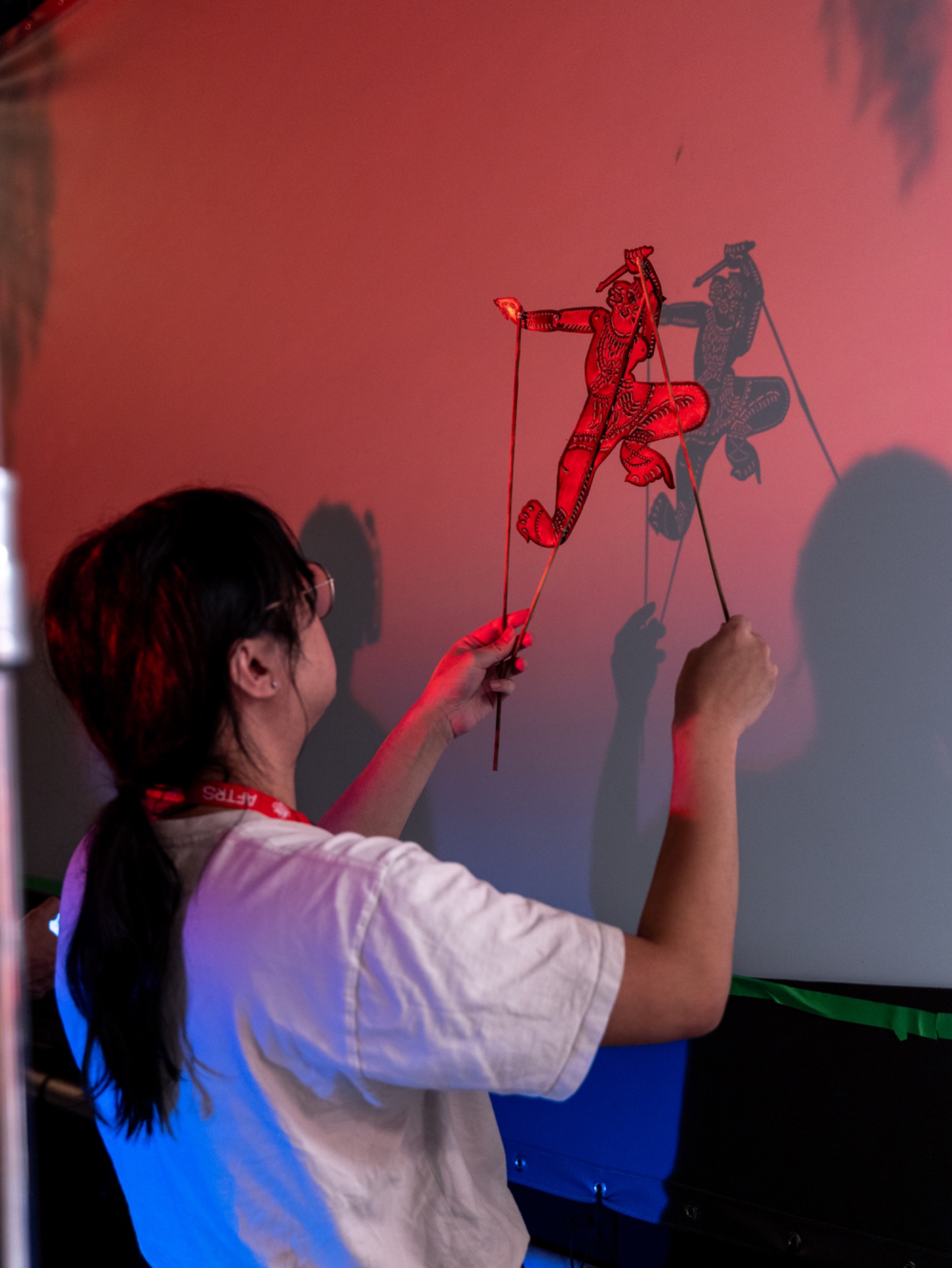
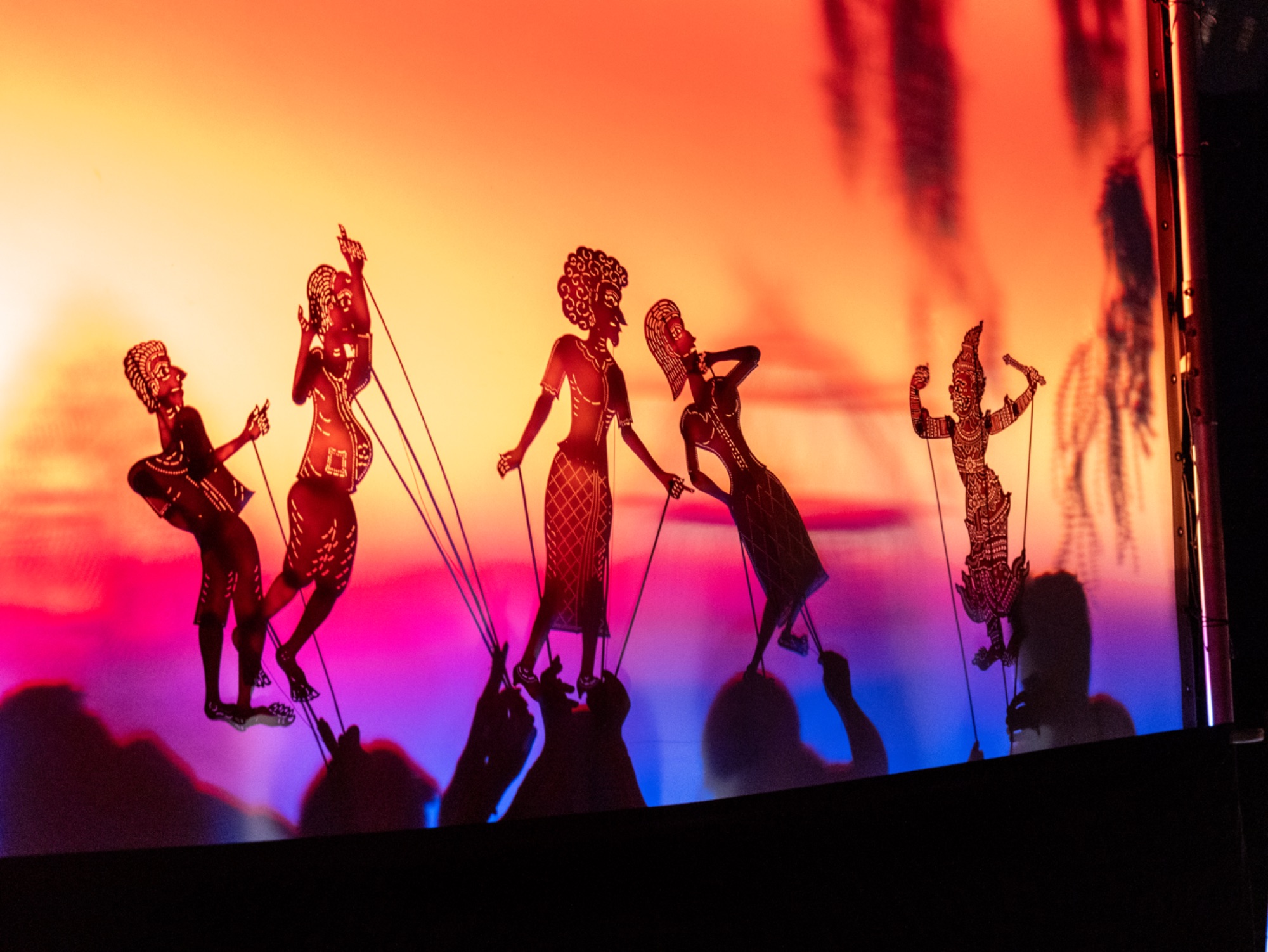
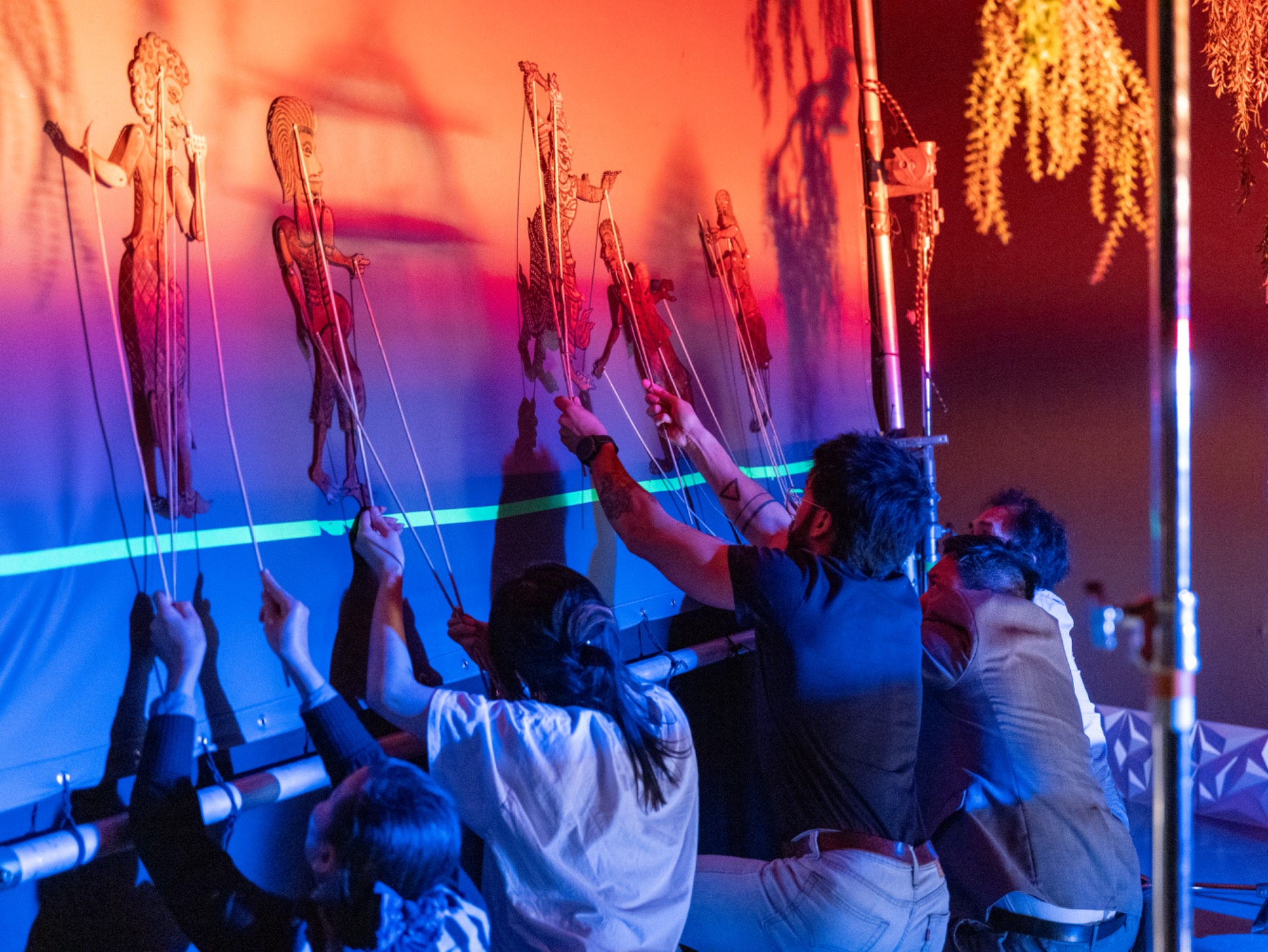
You chose to shoot the puppet show twice: once in the raw reality of an on-location audience, and again in the controlled environment of a studio using retro cameras. What did the retro cameras give you in the studio that the live audience shot couldn’t, and how do these two distinct texture choices cut together in the final edit?
The final, major piece of the film that we put together that was also our key to telling this story cinematically as opposed to turning to archival footage of memory recreation was the shadow puppets. Shadow puppetry is one of the earliest forms of cinema. For this sequence, we really wanted to commit to the authenticity of the original Khmer Shadow Puppet theatres that exist in Cambodia. We had the puppets custom made by Ty Chien Puppet Troupe in Phnom Penh and had them shipped down to Australia.
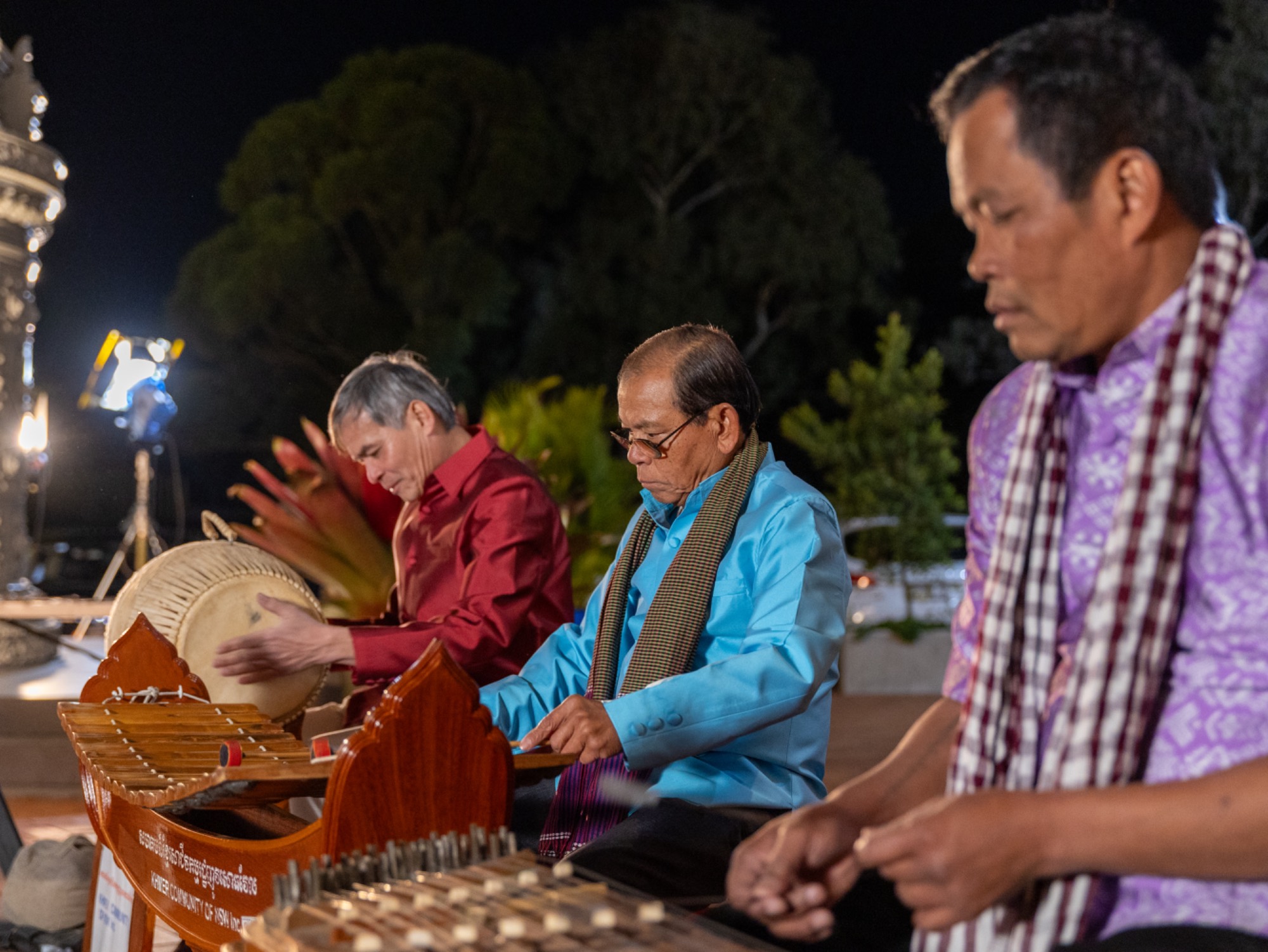
Initially, we had two shadow puppet shows – one which set up the shadow puppet concept (and was based on an original Cambodian folk tale) and another which was written by Chhay (in the context of the film) that was a direct recreation of his childhood memory of living through the Khmer Rouge. We wanted to maintain the tone of traditional Cambodian shadow puppetry while telling Chhay’s story, and to do that, we had musicians playing traditional Khmer music that might be played at an actual show and tried our best to learn how puppeteers originally articulated their puppets, while writing and narrating the show in a way that kept the illusion of mythology. Ultimately, we decided to shoot the puppet show twice: once on location with an audience, and again in the studio using our retro cameras to film.
You committed to keeping Chhay at a distance for much of the film so that his first close-up would carry greater emotional weight. What were the technical and narrative challenges of such a choice?
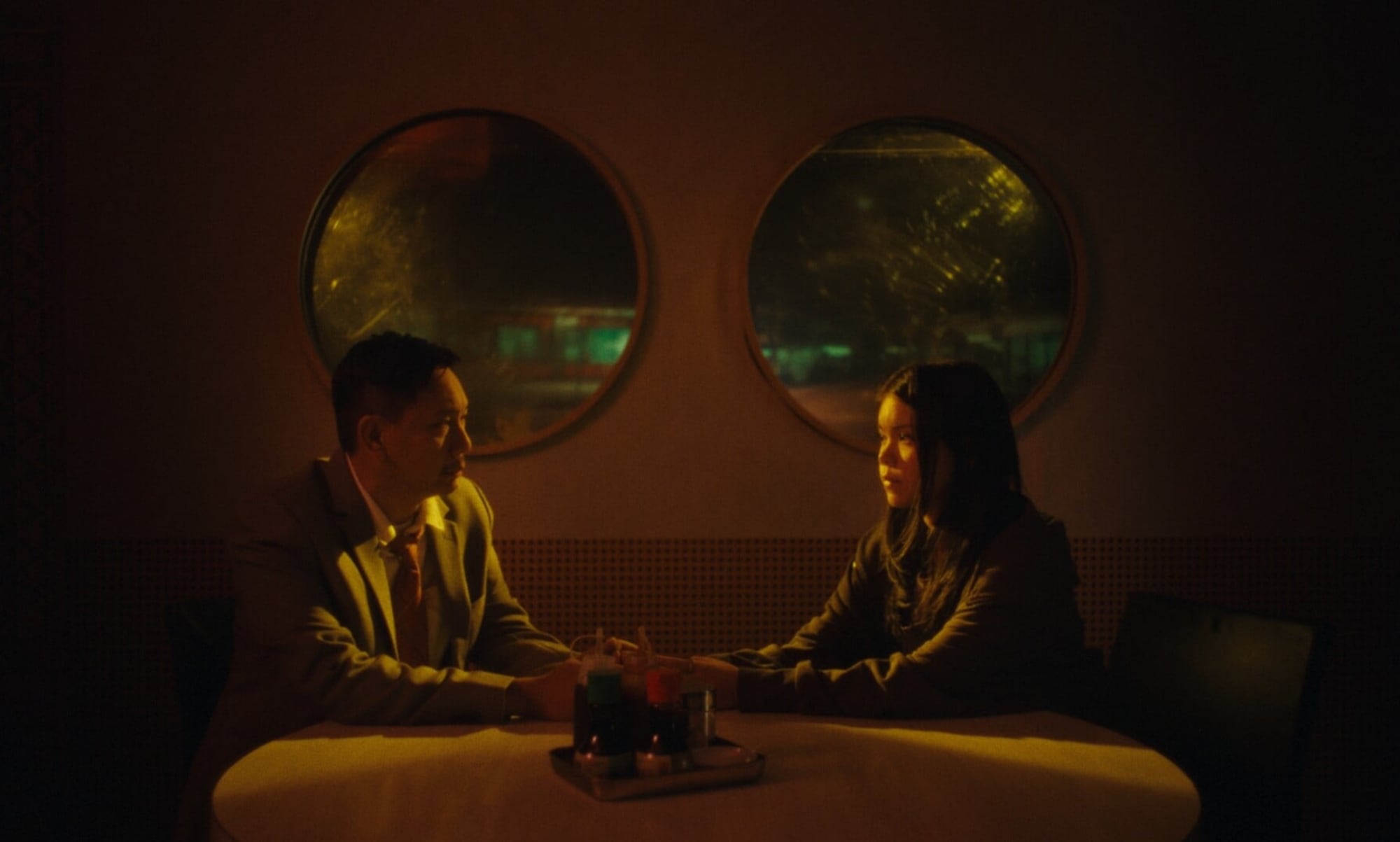
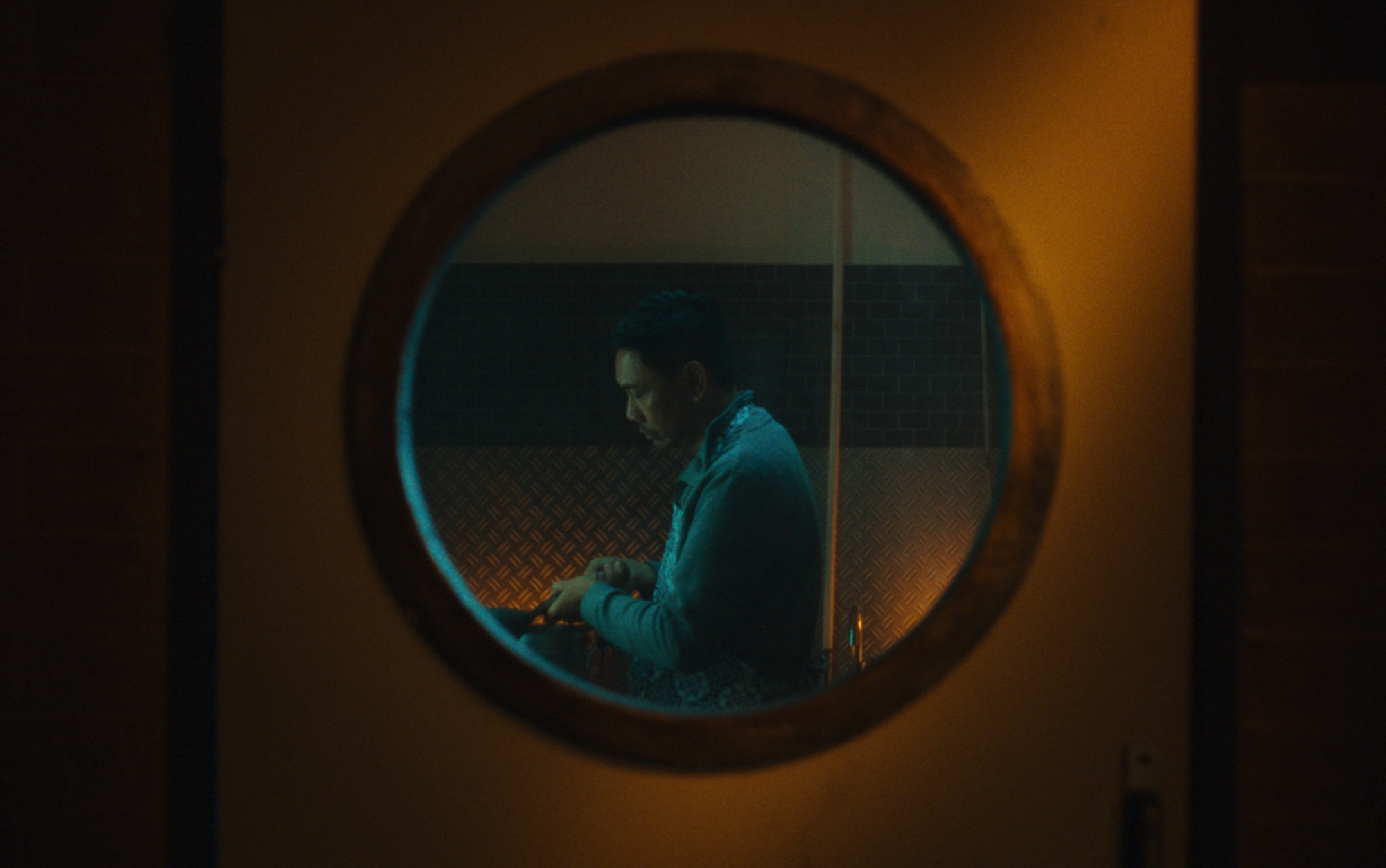
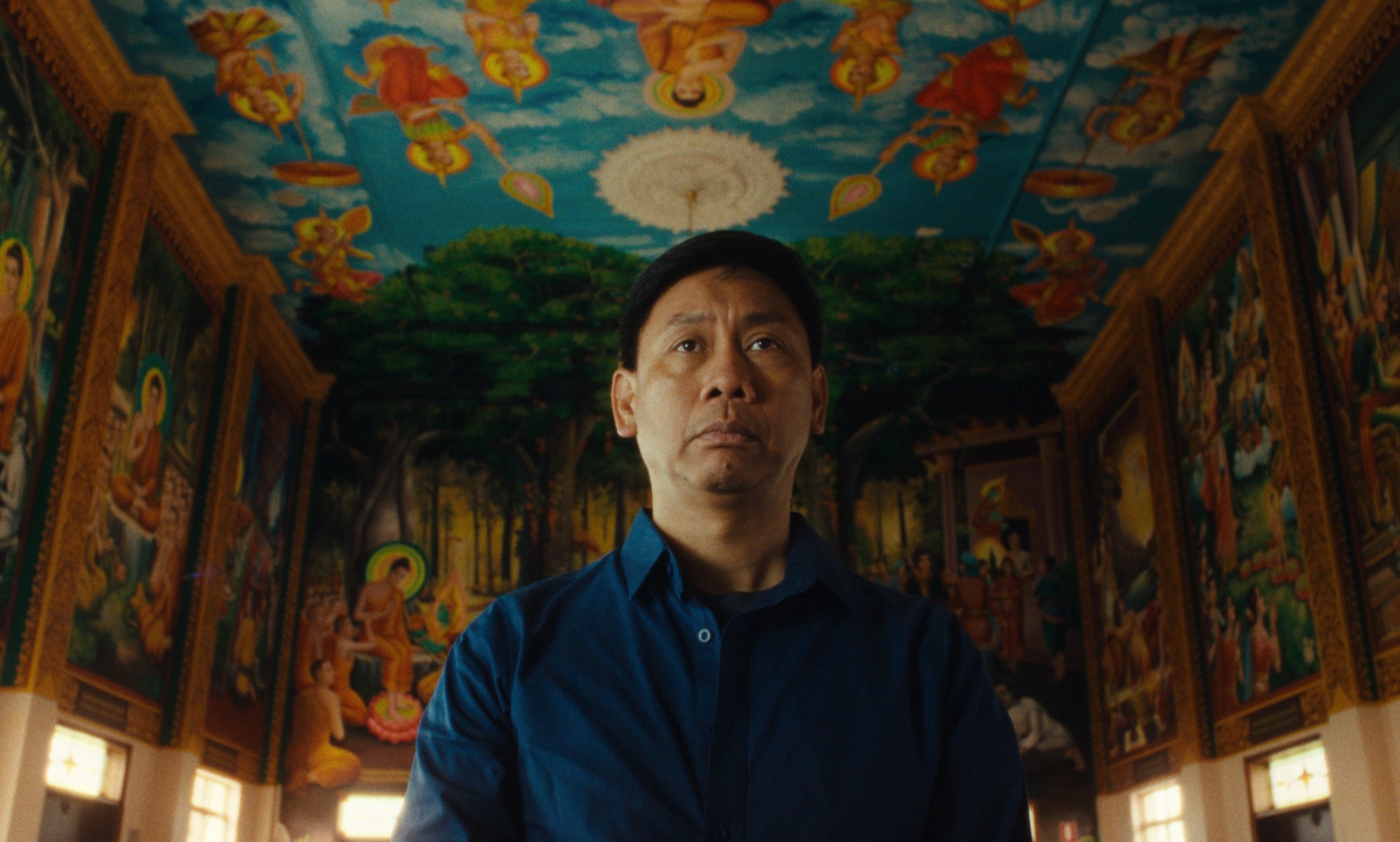
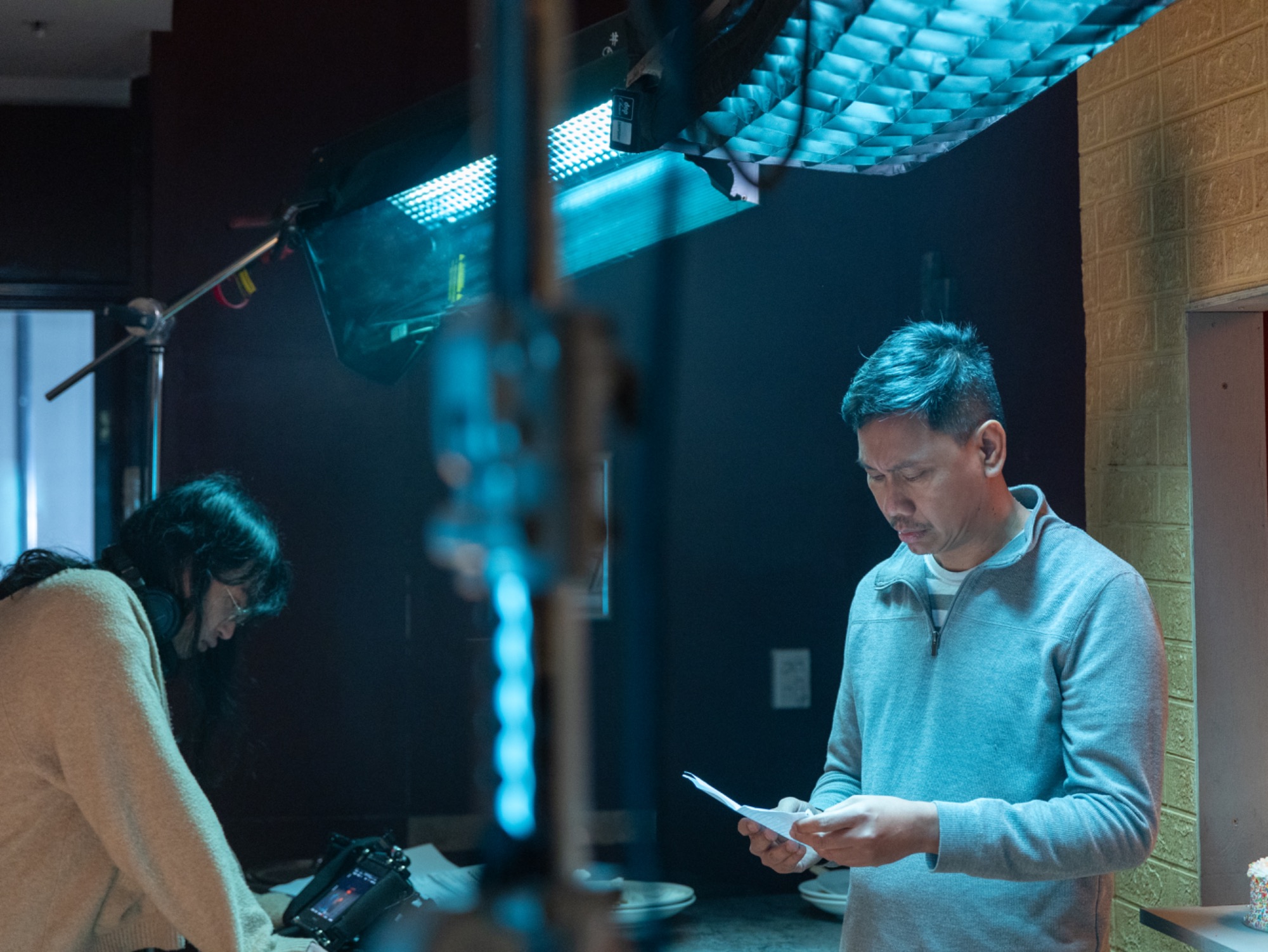
It made the film a lot more expensive, and also forced us into some specific narrative choices, including telling the story in the third-person subjective POV (in the daughter’s voice, but not necessarily always her direct POV). Since we wanted to maintain this almost Brechtian distance from Chhay until the right moment, we committed to this Taiwanese New Wave style of shooting obstructions and avoiding any specific clean close-up until the very end. As a result, we had to build a lot of the major sets. Any scene within the restaurant sequences had to be built. My team and I were all really set on committing to this specific visual language of only seeing our main character Chhay in either a wide shot, far away from him or through windows, doorways, reflections or screens. We did this so that in a specific sequence in the film, when we see him in close-up for the first time, the viewers would be rattled by truly seeing his face for the first time.
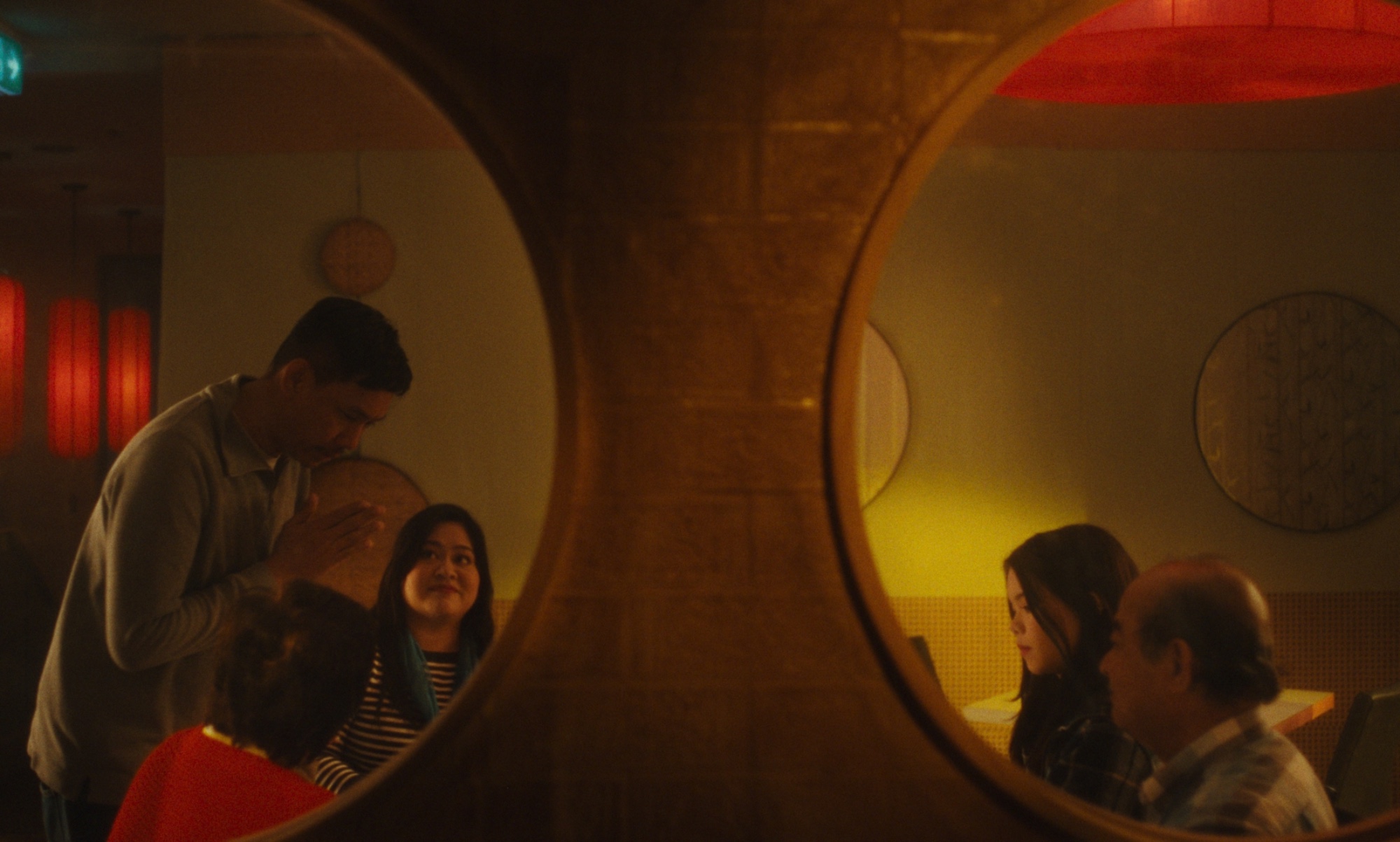
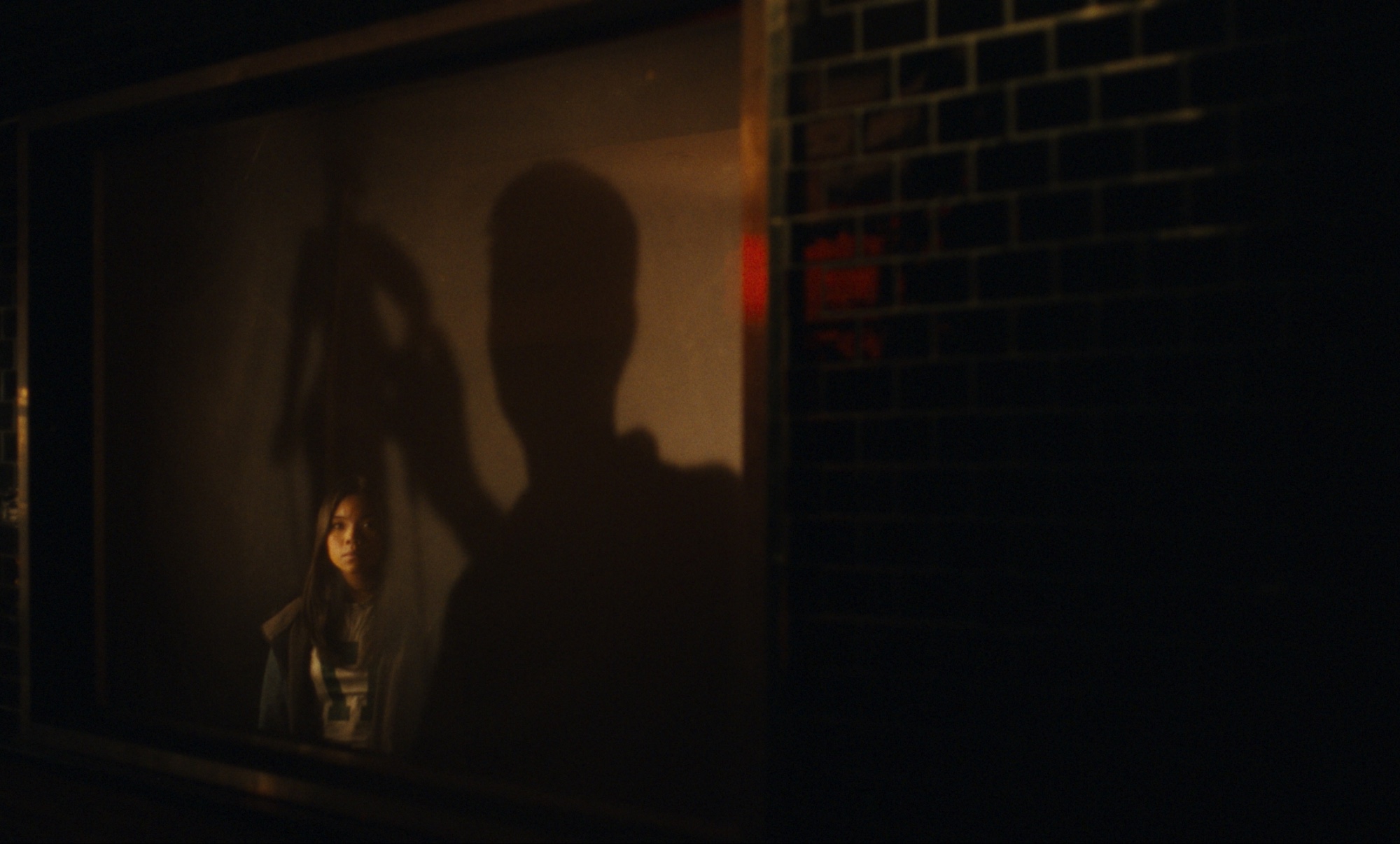
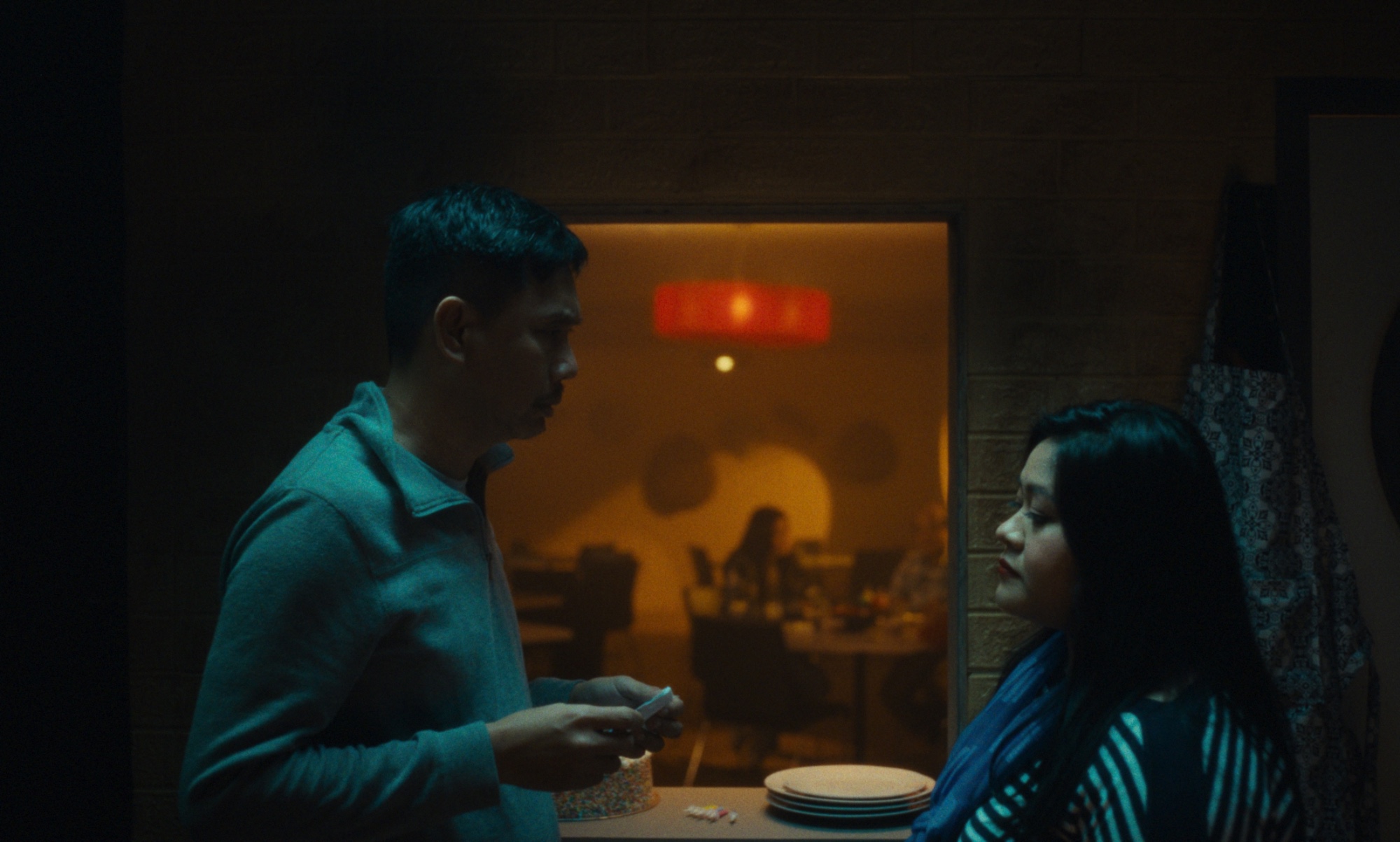
Since we wanted to maintain this almost Brechtian distance from Chhay until the right moment, we committed to this Taiwanese New Wave style of shooting obstructions and avoiding any specific clean close-up until the very end.
To commit to this visual language, we had to find a restaurant that fit our needs, which proved impossible. We did, however, find an abandoned hot pot restaurant in Sydney’s Chinatown, and my production designer made a plan to retrofit half of the restaurant with false walls and flats. Within those walls and flats, he custom-built windows, both circular and square, to fit the exact shots that we were trying to create. That’s how we got the shots of looking at Chhay while he is cooking food, Chhay looking at his daughter, the double window scene as we watch the family and the sequence where we see Chhay alone in the kitchen with his wife with his family in the deep background. All of this had to be custom built. The final problem with the set was that because we shot on a restaurant on the second floor, we couldn’t shoot outside of our windows because it would just be black. Hence, we used rear projection for the final scene of the film to create the illusion of an outside world (and the rear projection had to be accurately scaled and timed perfectly, a credit to our DIT Sebastian Reatagui).
What are you working on next? Another personal story?
I’ve just wrapped on a new short film titled Promise Me You’ll Tell Her, which follows on loosely from my last two shorts being about families of the Asian diaspora learning how to live. I’ve titled the Trilogy the Moving Forward shorts and it starts with Happy New Year, Ms. Luna, continues with Interview and ends with Promise Me. With the new film, it’s a story about a girl who is given an ultimatum by her trans girlfriend to tell her family about their relationship, and is inspired by both my past relationship and current relationship where I was both the unwanted trans element, and the one who has to tell my family that I’m dating someone they might not approve of. I’m in pre-production for a slightly unhinged Dance Dance Revolution t4t foot fetish short that I think might be my best work yet.
After that, I have a number of features in the works: one about a trans woman on a Grindr date gone wrong, the other about a mother trying to find her missing trans daughter and the final one a feature adaptation of Interview with a Hero, which would expand on the short and explore Chhay’s past in Cambodia, and would also take the film there. There’s a number of directions I want to go with my storytelling, but I’m most passionate about trans/queer and Khmer stories. One day, I might even reach the intersection of both, and it’ll end up being my most personal story yet.