While mental health remains a prevalent subject in modern filmmaking, genuinely authentic depictions of these experiences, and the systems designed to support those living with them, can still be difficult to find on screen. One filmmaker seeking to address this is writer/director Billy Lumby, whose debut feature, FLORID, offers an uncompromising portrait of a young man’s experience of schizophrenia. It’s a subject Lumby has engaged with for quite some time on screen, the first of which noticed by DN being his top-down perspective short God View, which we played as part of our 2015 Reading & Leeds Cinema Tent live screenings.
Screened in the Journey section of the 2026 BFI London Film Festival, FLORID follows Jamal through the highs and lows of daily life as he struggles to reconcile his desires with the realities of his condition. The result is a powerful and deeply affecting film, marking a brave feature debut from Lumby. Its achievements have since been recognised with multiple nominations at this year’s BIFA awards, including one for Lumby in The Douglas Hickox Award (Best Debut Director), alongside other nominations for its lead performance, casting and sound. Even without that recognition, FLORID is precisely the kind of thoughtful, filmmaker-driven work we love to champion on Directors Notes. With that in mind, we invited Lumby to join us to discuss the challenges of representing mental health on screen, the research and preparation required to get it right and the importance of building trust with actors when bringing such complex experiences to life.
Hi Billy, thanks for joining us on Directors Notes. Before we get into discussing your debut feature, FLORID, I wanted to take a quick look back at your filmmaking career so far. I’ve been following your work since first seeing your shorts God View and Samuel-613 over ten years ago. How has your journey from making shorts to directing a feature developed and how important have those earlier films been in shaping you as a filmmaker?
I self-funded my short films with bank loans but it’s difficult to do that with a feature. Being nominated for a BAFTA helped open doors and motivate me. I saw contemporaries getting their features funded and realised I could do similar. My shorts were simply a desire to tell my weird outsider stories and this feature has been an extension of that.
God View feels like a particularly interesting film to revisit, having just watched FLORID, as both explore issues surrounding mental health. What is it about this subject that continues to draw you in? And what was it about the story of FLORID – following a young man who hears voices – that made it the right project for your debut feature?
All my films have been about madness. I have my own physical and mental health issues and along with the NHS they are a significant part of my life. FLORID originated as an expression of this. There are many people out there having similar and much worse experiences. 25% of the working-age population is disabled and mental health is the number one cause. This is a film about psychosis and about 1 in 50 people have these experiences. Yet many live on the margins of society with little understanding or representation in media and culture.
Can you take us back to the beginnings of FLORID and how did you go about turning it into a feature film? I’d also be interested to hear a little about the funding process and how you managed to get the project off the ground.
I first started doing research and writing story ideas in 2015. I wrote a treatment and joined forces with producer Rupert Lloyd in 2017. We went into development with Eva Yates at BBC Film in 2018 and I began writing the script. In late 2019 we began casting and in 2020 producer Joy Gharoro-Akpojotor came on board. We were ready to shoot from about 2021 but it took another 3 years and a change in tax laws before the funding fully came together. The whole process isn’t usually this long-winded but I needed time and there were some bumps along the way.
I wanted to find the humanity in the everyday experience.
One of the things that struck me about FLORID is how grounded and authentic it feels. When approaching a story dealing with mental health and the systems designed to support people living with these conditions, how important was it for you to get that representation right? What kind of research or preparation did you undertake before making the film?
It was really important not to make something inaccurate or unhelpful. I spent about 5 years doing research in psychiatric hospitals and supported accommodation blocks. A close friend of mine has a diagnosis of schizophrenia and he helped me a lot. The film is partly inspired by him, along with other young men and women who hear voices that I met. Many of them read the script and gave feedback along the way.
There’s also a difficult balance to strike when telling a story like this: presenting the often-uncompromising realities of living with mental health conditions, while still creating a compelling and engaging piece of cinema. How did you approach that balance and were there particular considerations you kept in mind when shaping the story?
Psychosis is naturally quite an unusual and dramatic thing so I always knew that it could be cinematic. The main thing was not portraying it in a violent way, which is the media’s lazy stereotype and something I’ve been guilty of in the past. Instead, I wanted to find the humanity in the everyday experience.
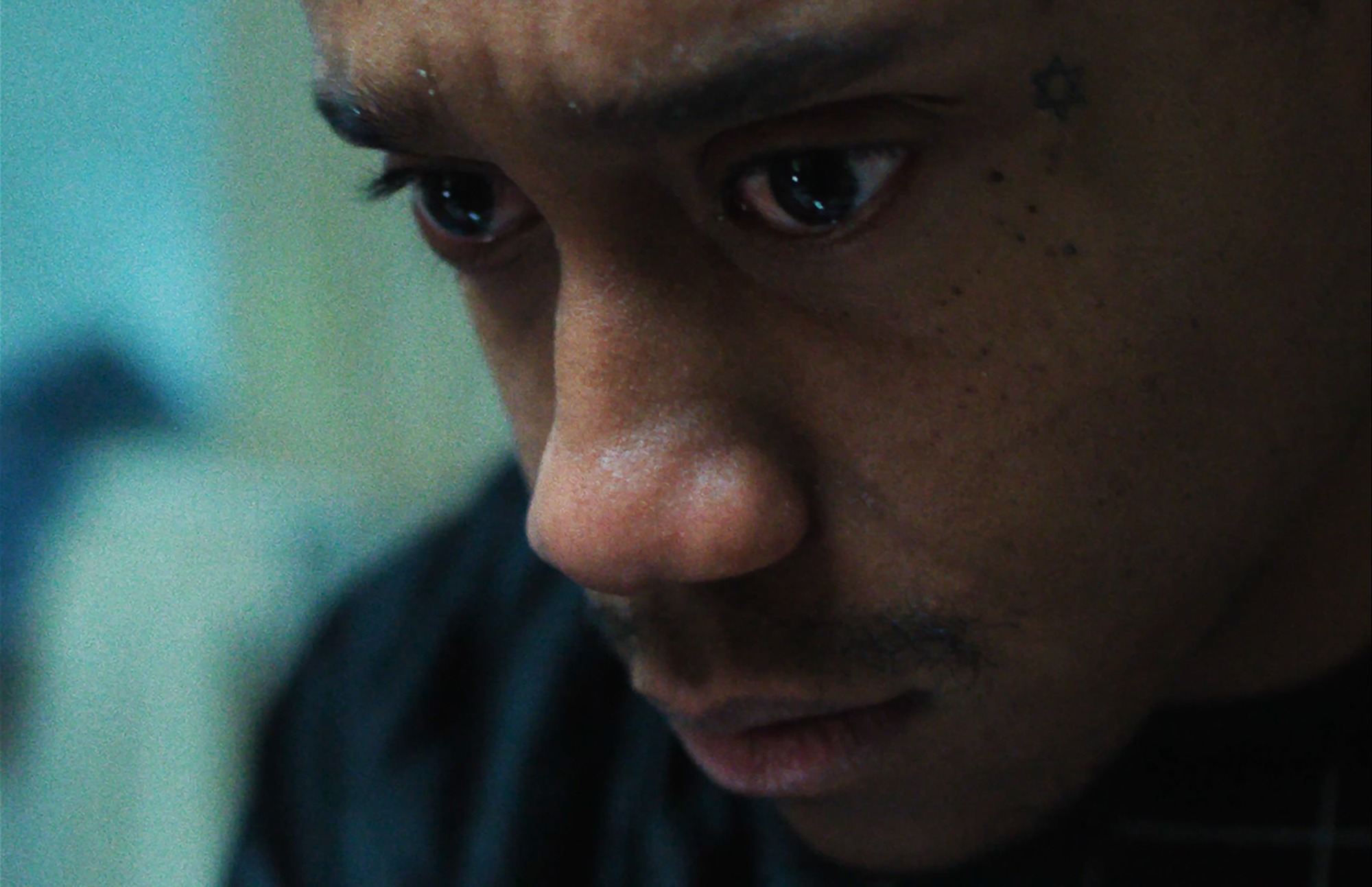
Jonathan Jules is absolutely vital to the success of the film in the lead role of Jamal and his BIFA nominations for both Best Lead Performance and Breakthrough Performance feel thoroughly deserved. How did Jonathan come on board and what was it about him that made you feel he was the right person to bring Jamal to life?
Jonathan came through the usual casting process. In the audition he was incredibly naturalistic and he’s a lovable human being, which also made him perfect for the role. After we built trust and I could see he was willing to go deep, I realised he was the right person.
In the film, there are many non-actors who are playing a version of themselves. Real psychiatrists, social workers, and lots of real people with lived experiences of severe mental health.
Your casting director, Lara Manwaring, has also received a BIFA nomination for her work on the film. How did the two of you approach putting the cast together? I’m particularly interested in how many of the performers were first-time actors, and, where that was the case, how you approached working with them on set.
Lara and I spent years casting this film. We did colourblind casting, looking at both actors and non-actors for every single role. We must’ve seen every person in London. In the film, there are many non-actors who are playing a version of themselves. Real psychiatrists, social workers, and lots of real people with lived experiences of severe mental health. They all contributed to the story on set – it was a semi-improvised process.
Another member of the crew whose work I was already familiar with from the short-film world is your cinematographer, Adric Watson. How did the two of you approach developing the visual language of FLORID? What were your conversations around the look and feel of the film and how did you want the camera to reflect Jamal’s experiences?
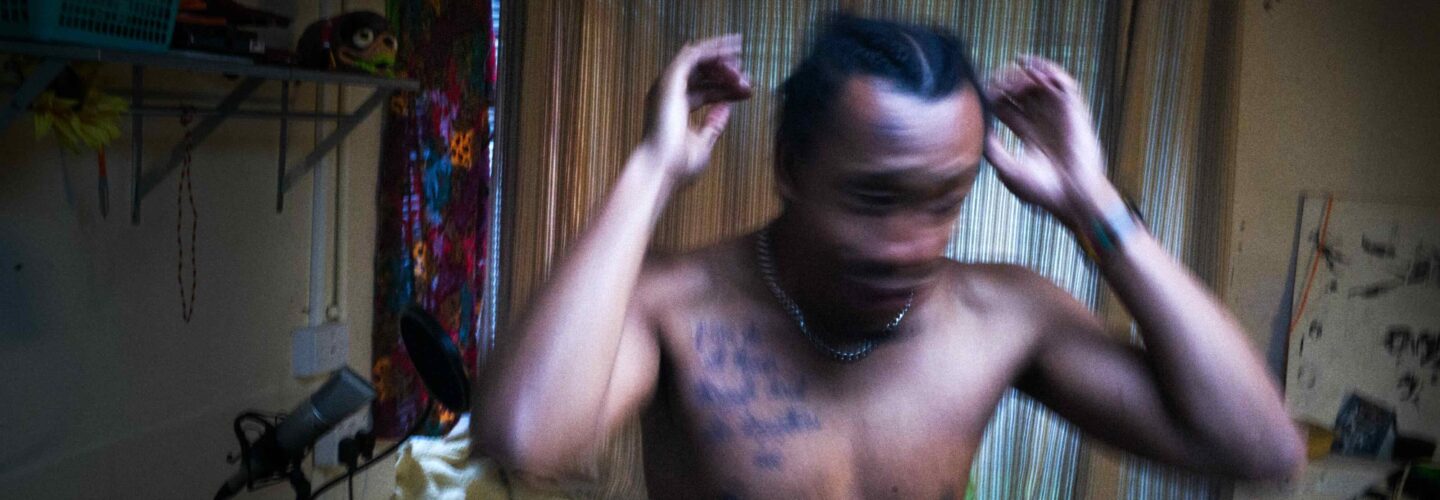
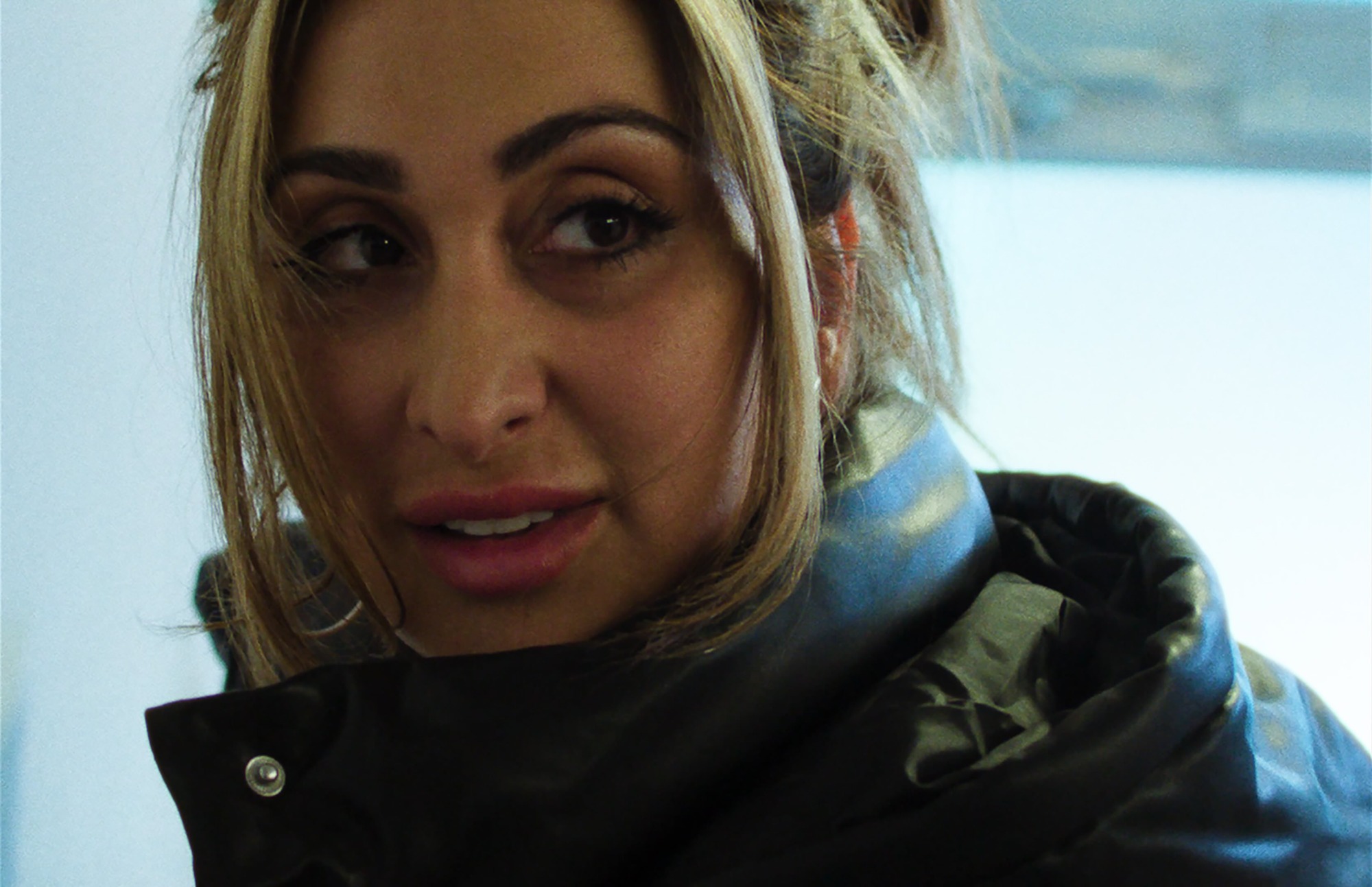
Due to budgetary constraints, we had very little prep time so we agreed on a handheld, documentary-style approach to give us flexibility and realism. We wanted to reflect the state of Jamal’s mind through dynamic camerawork. Sometimes through the reality of the situation unfolding in a doco way. Sometimes through using more expressive techniques like close-ups and slow motion.
If possible, could you also tell us a little about the technical side of the cinematography? What camera and lenses did you shoot on and were there particular reasons behind those choices?
We shot on an Arri Alexa 35 in Super 16 mode, using Adric’s own 16mm lenses. We wanted to shoot fast and freely.
The approach was to make the voices feel like they were in the environment. The overall aim was to make them as objectively real to the audience as they were to Jamal.
I promise this isn’t going to turn into a full rundown of the BIFA nominations, but your sound team – Dario Swade, George Elliott and Tom Harburt – have also been recognised for their work. Sound plays such an important role in how we experience Jamal’s mental health struggles, particularly when it comes to the voices he hears. How did you work with the team to create that soundscape? And how did you ensure it felt authentic to Jamal’s experience, rather than simply using sound as a conventional cinematic device to represent his condition?
To enable Jonathan to react and speak back to the characters in his head, he often wore an earpiece on-set. Actors playing voices spoke into microphones in a separate space nearby. It meant that Jonathan could hear his voices while no one else could. Then in post-production we did a lot of additional recordings and large amounts of audio editing. The approach was to make the voices feel like they were in the environment. The overall aim was to make them as objectively real to the audience as they were to Jamal.
We’ll obviously be following the BIFAs with great interest, both to see how FLORID gets on and whether you take home the Douglas Hickox Award for Best Debut Director. The film has already enjoyed a strong festival run and screenings around the world, but have you started thinking about what comes next? Are there any upcoming projects you can tell us about?
I have many ideas and projects that I would love to make, but filmmaking is a very exhausting process and I need to think hard about it. Attending film festivals, being nominated for awards, and reading all the positive reviews on Letterboxd is something that gives me confidence.
And finally, a question we ask all our interviewees: if you could recommend one short film by another filmmaker for our audience to watch, what would it be, and why?
Meshes of the Afternoon by Maya Deren. It had a big impact on me when I first discovered cinema. A spiritual companion piece to Mulholland Drive.