
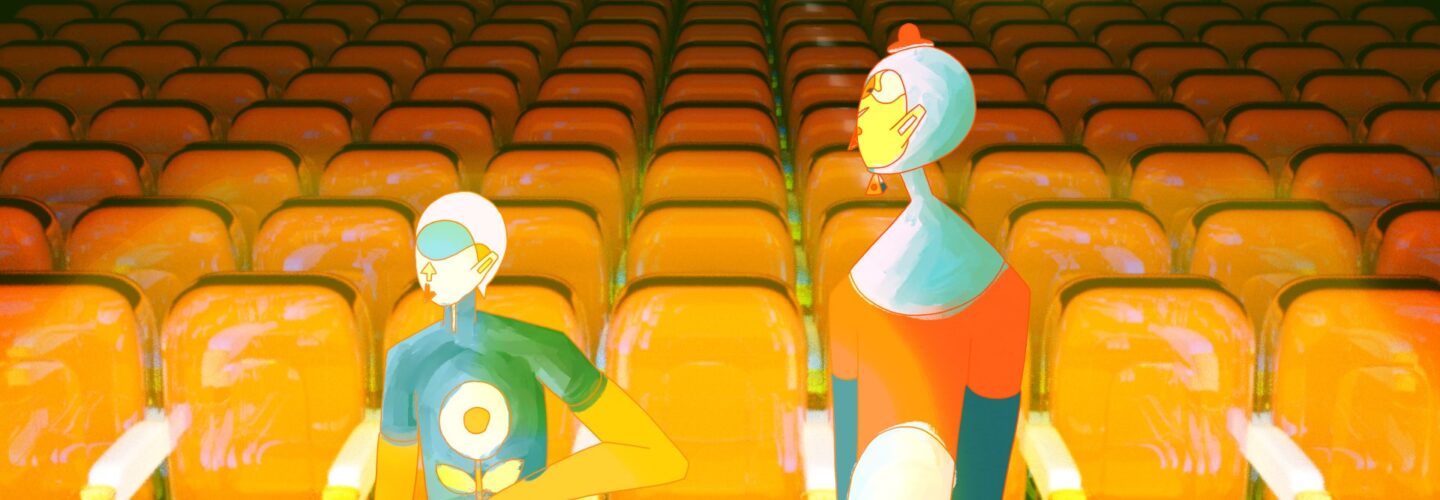
Returning to our site six years after we first featured her graduate film There Were Four of Us, animator Cassie Shao is back on the pages of Directors Notes with her latest abstract animation, This is a Story Without a Plan. True to its title, this new short is a highly experimental piece in which emotions take precedence over conventional narrative structure, allowing the visual style to roam freely and unpredictably. Shao’s work continues to push the boundaries of animated storytelling, blending 2D and 3D elements, abstract painting, and mixed media to create immersive, surreal worlds. The film has already made a strong impression on the festival circuit, winning Best Film at the 2024 Fantoche International Animation Film Festival and The Barbara Aronofsky Latham Award at Ann Arbor in the same year. We invited Shao back to DN to discuss the origins of her surreal approach to storytelling, the creative and technical challenges of producing mixed-media animation, and how she continues to evolve her unique cinematic voice.
Usually, when watching a short film, I often try to put myself in the filmmaker’s headspace and see things from their perspective – to try and understand where the story came from. With This Is a Story Without a Plan its more abstract nature meant that I found this somewhat difficult to do. With that in mind, can you tell us a bit about your thought process when you decided to make your film?
I write regularly, mostly about my random thoughts or moments in my life that remain with me. When I start conceptualising a film, I read those writings and recall the feelings I had regarding events in my life. It felt like similar things kept happening to me, and every time they did, I would feel like I was watching an explosion slowly unfolding in front of me – as if I was watching something slowly deconstruct or destroy itself.
Everywhere they turn, there is an explosion slowly happening.
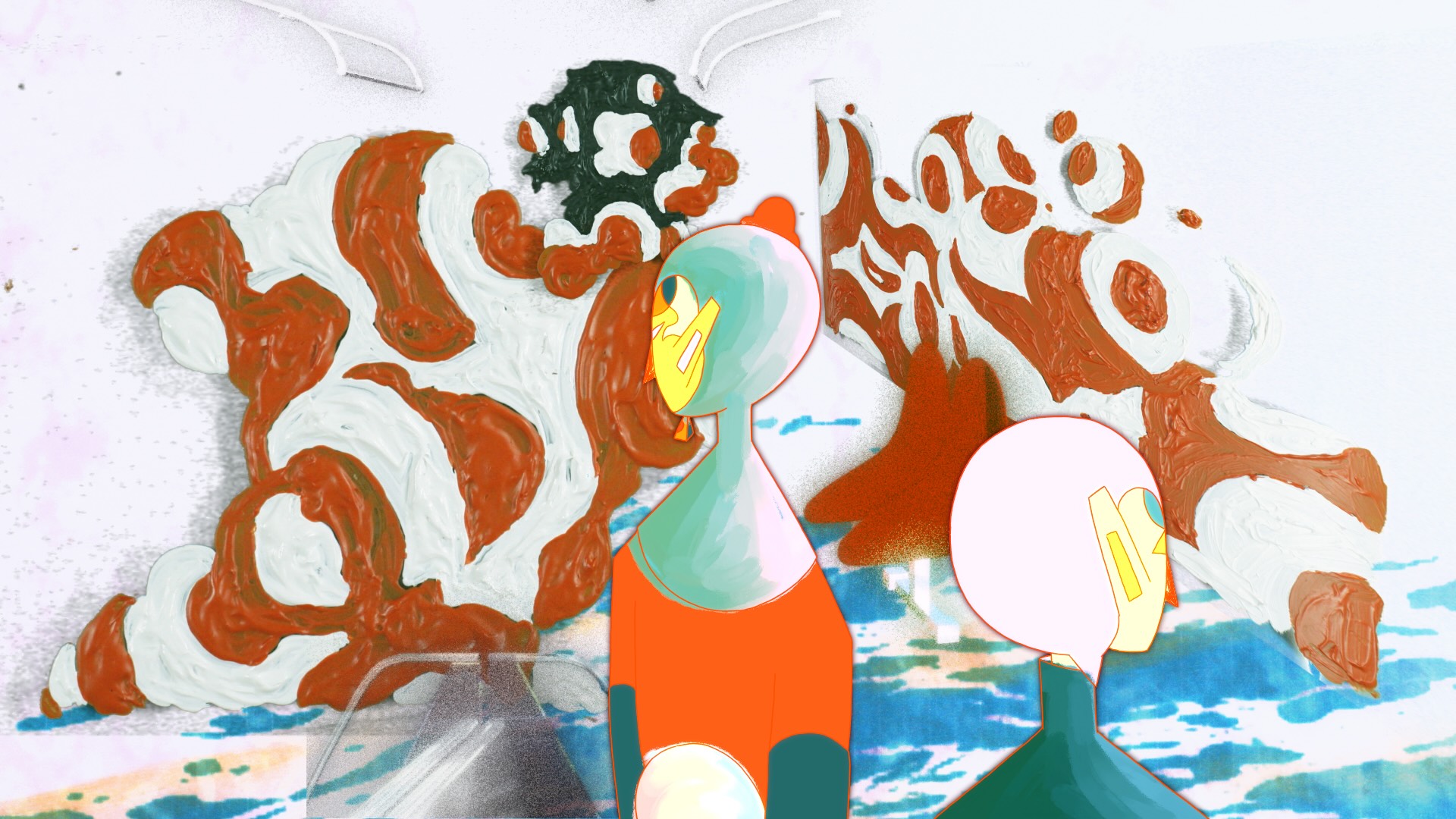
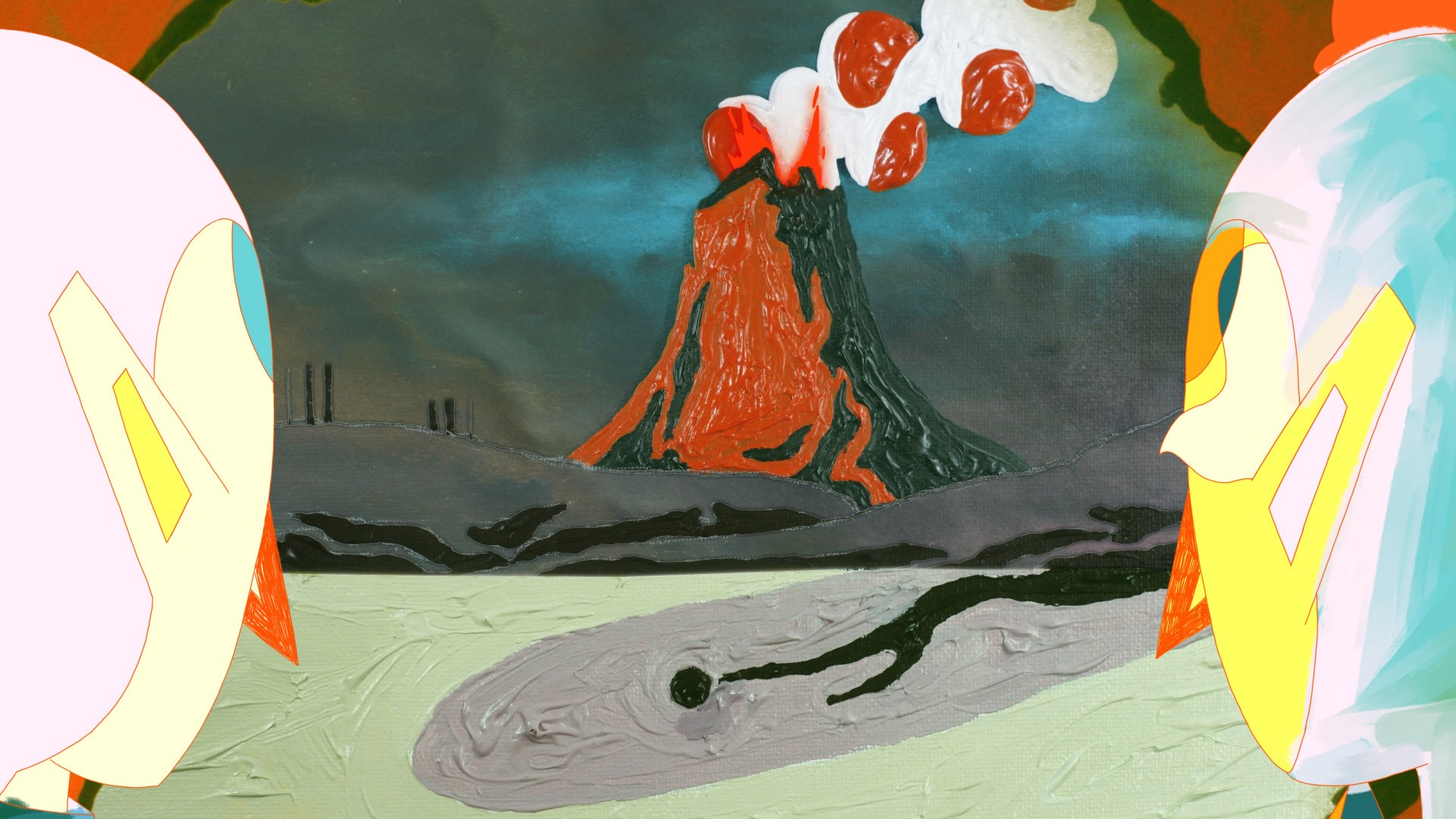
Many of the events were about relationships with other people, so I imagined this film about two characters as they observe and interact with each other. Everywhere they turn, there is an explosion slowly happening. The explosion changes its form and embeds itself in every weird corner of their lives, as if it’s forcing them to look at it. I think there is this idea of continuation that I was thinking about, because even if I felt something might be destructive, I didn’t stop it. By observing it, I am letting it happen, or in a way, wanting to continue it. As I translated this idea into the film, I could feel that this very slow explosion had a way of forcing you to look at it. If you looked away, it would just pause in time until it gained your attention again.
You describe the premise of the short, quite simply, as “two people, and an explosion” – what does this ‘explosion’ represent for you?
For me, this explosion is something destructive, but also unlike how we usually think of them. This explosion is slow, alive, and very soft, like liquid. The explosion is an image I created, but I don’t think the meaning is really about destroying anything. As it unfolds very slowly, it forces the characters to look at it because it needs to be seen. It keeps coming back because it wants to remind me that I need to see past its destructive nature and release it from my narrative plans so I can see its true nature and understand why I created it.
Most Popular
By releasing and understanding the explosion, I would then understand myself and the relationship I have with others. So, as the film progressed, I also wanted to show that the characters grew stronger initiatives towards it. They chose the explosion and recognised its soft nature and their strong will towards it. Although they choose something seemingly destructive, perhaps through this destruction of their ideas of the explosion, an initiative that expands the boundaries or definitions of their relationship is born.
It feels as if the creation of this film was a cathartic experience for you – was that the case and if so, do you often use your filmmaking to work through emotions and help better understand them?
I don’t think it was a cathartic experience for me because I made this film after the event had passed. I don’t think I ever created something when the event that inspired the film was still happening, but that might be because animated films generally take a long time to make. Writing about the experience is where the film started.
A film always reveals something about yourself that you weren’t even aware of.
During the making of the film, it feels more instinctive. I simply try to visualise the emotions and feelings surrounding the event. I think it is only after I make a film – as I examine it and try to put everything together more logically – that I then understand more about this feeling, where it had come from and what it was really trying to say. In my experience, a film always reveals something about yourself that you weren’t even aware of, and in this way, I use filmmaking to better understand my feelings and myself.
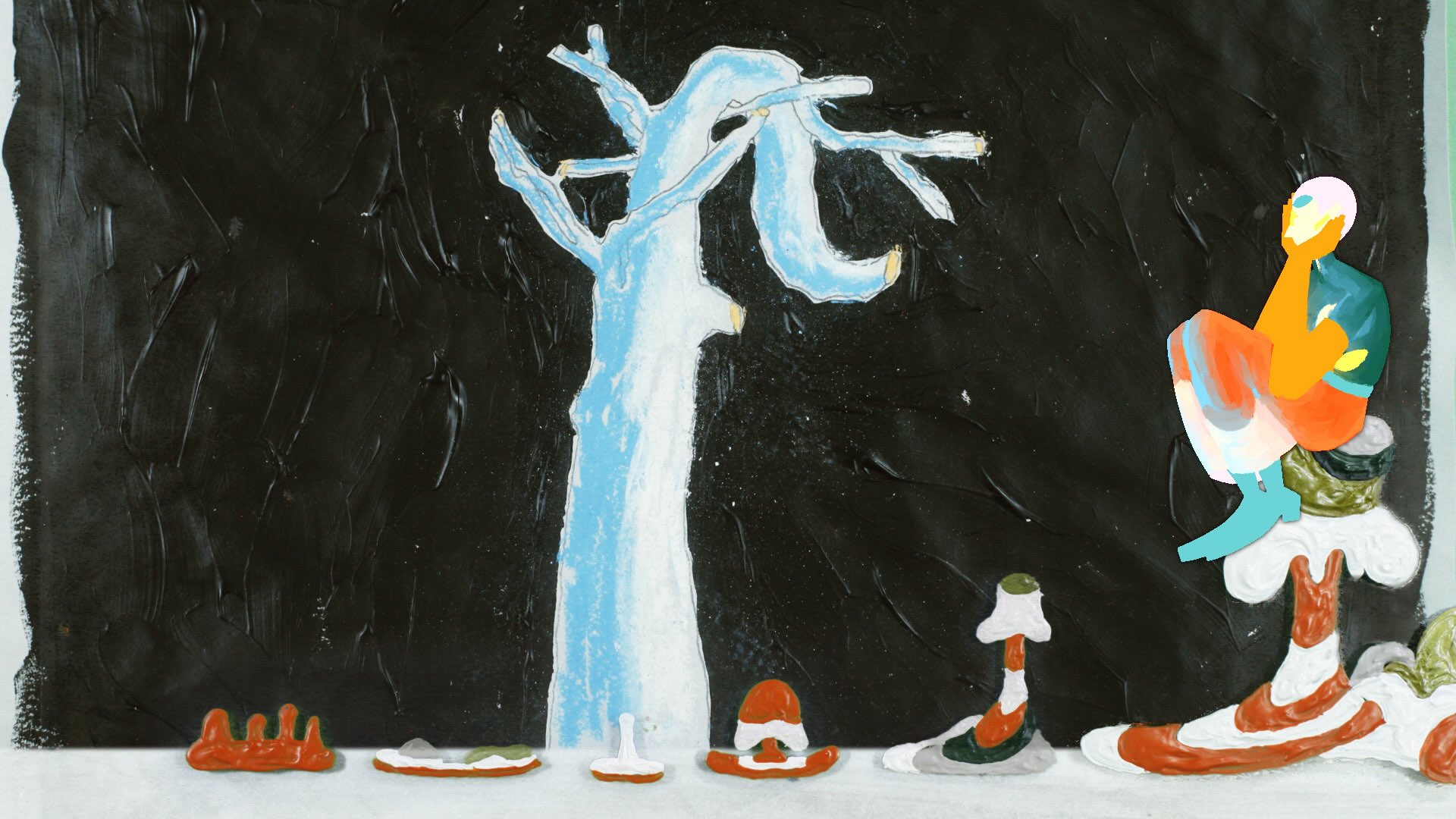
Although the storytelling in This Is a Story Without a Plan could be described as unconventional and surreal, those emotions feel very real. Would you say that this is a film that should be experienced more than understood and what do you hope someone takes away from viewing it?
I think this film definitely feels more like an experience, as many of my visuals are focused on capturing a feeling or an emotion. The narrative is also fragmented and doesn’t have a clear arc, so I think, in a way, it forces you to experience it rather than understand it. It’s hard for me to say whether this is something I purposely want viewers to feel, because I think what was happening and how I was looking at events during the making of this film shaped the work itself. I was spending a lot of time with these emotions, but it was also a rather enclosed period for me, which I think made the film less communicative, as it doesn’t try as much to make people fully understand what was going on behind these emotions.
I don’t believe one approach is better than another, since I feel our work must remain true to our experience at that time. However, I do hope to communicate to the viewers through mutual feelings – despite coming from different backgrounds and understandings of imagery – but ultimately, the viewers will take away what is true to their experience and the film will probably speak to them in a way that is unique to them.
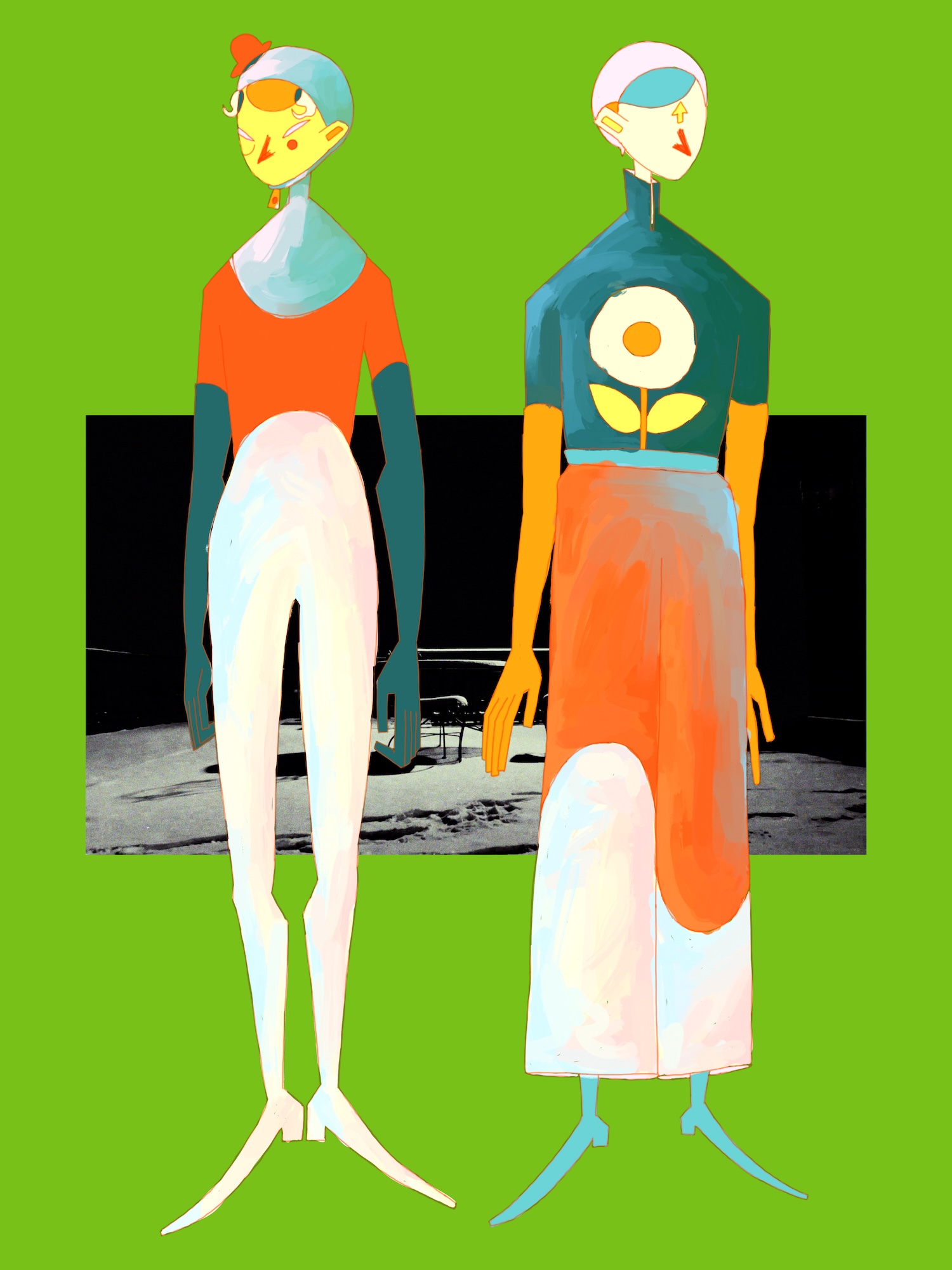
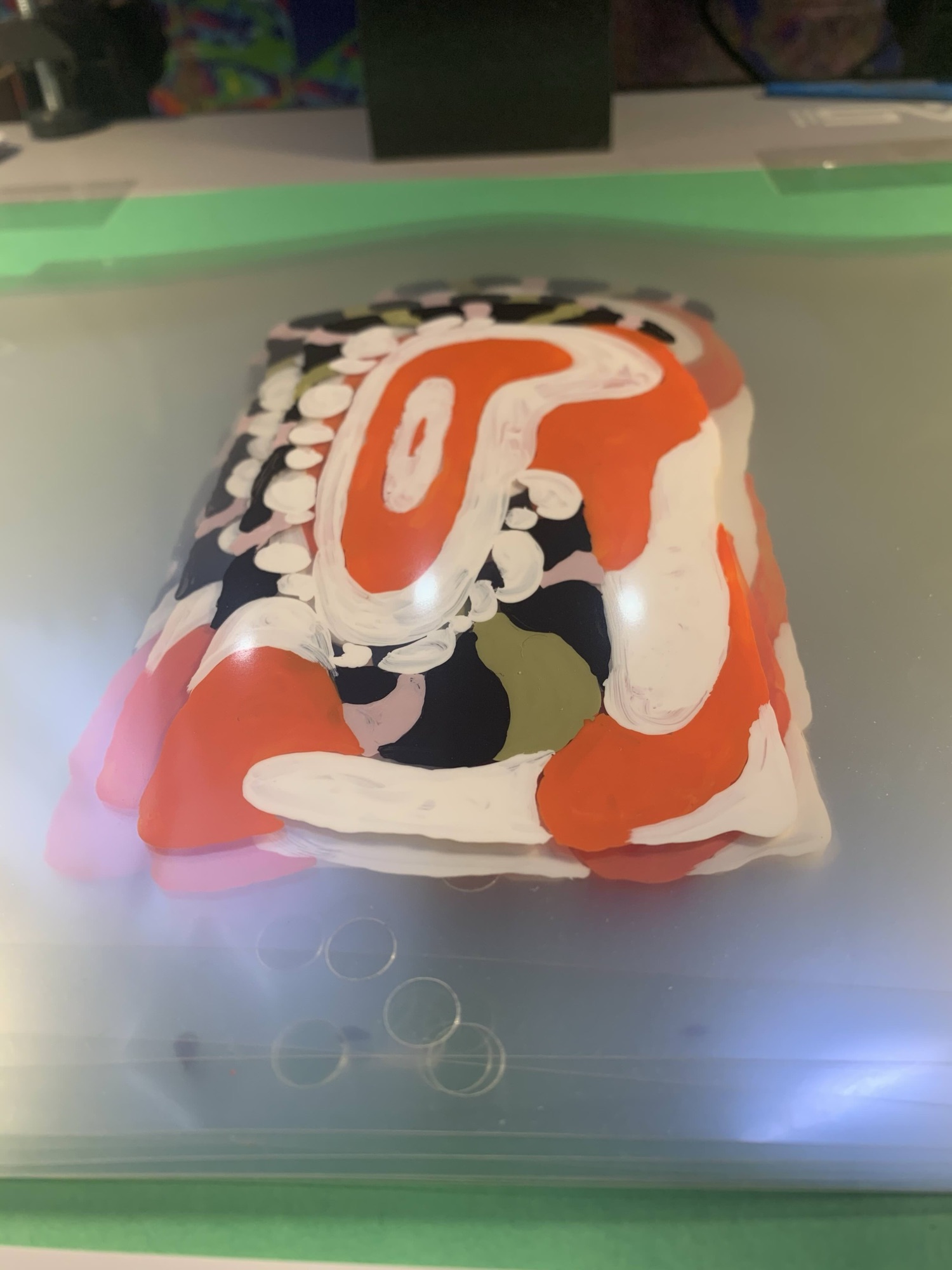
Visually, this is a really striking film and I was hugely impressed by how you merged the different animation techniques in your short. Can you guide us through your thinking with regard to combining these different styles and what you think they added to the overall watching experience?
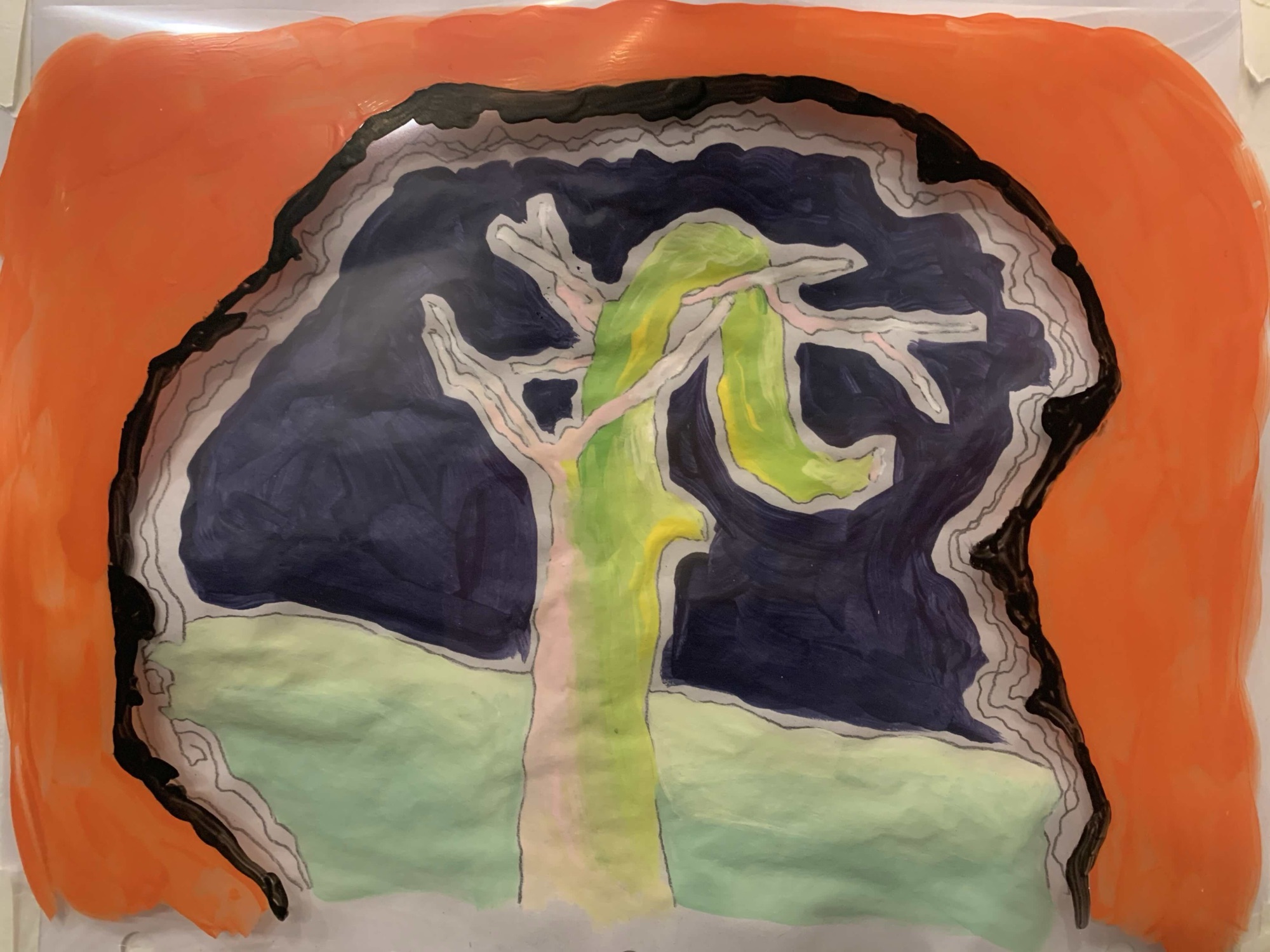
The explosion plays a major part in this film, as it is the point from which the rest of the scenes develop. The first thing I worked on was its design. In my opinion, this explosion is slow and soft. It extends itself outward like liquid, and to achieve that feeling, I decided to animate it using acrylic paint on an animation cel. I apply the paint quite thickly and shoot the footage under the camera to get a three-dimensional effect, making it pop out in a scene – so it is attention-grabbing, like it wants to be seen.
I also incorporated the mixed-media approach I have been developing since my first animation, which combines 2D digitally drawn characters with environments that are a mixture of 3D objects and abstractly painted backgrounds. This helps to move away from reality a bit and emphasise the emotion and feelings communicated within a scene.
It is a process of these elements influencing each other and taking on each other’s characteristics.
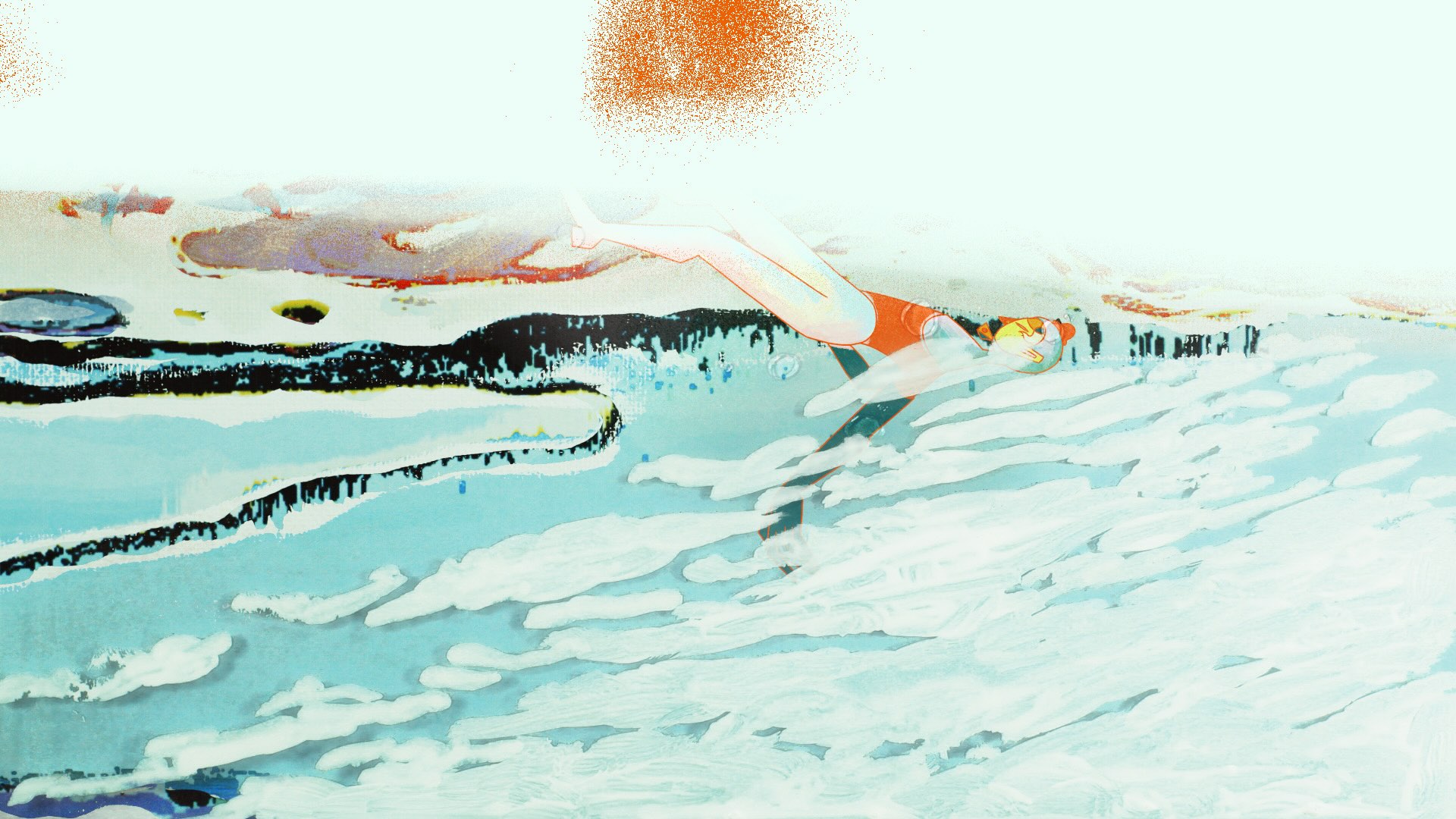
During the making of some scenes, it occurred to me that the explosion also tries to blend in with the world, as it changes its shape and medium. The colour remains constant, but its form changes. For example, in the swimming pool scene, the explosion becomes the water that surrounds them and it is created in 3D. In my opinion, it is a process of these elements influencing each other and taking on each other’s characteristics, creating a world that is centred around the explosion, but is also changing it.
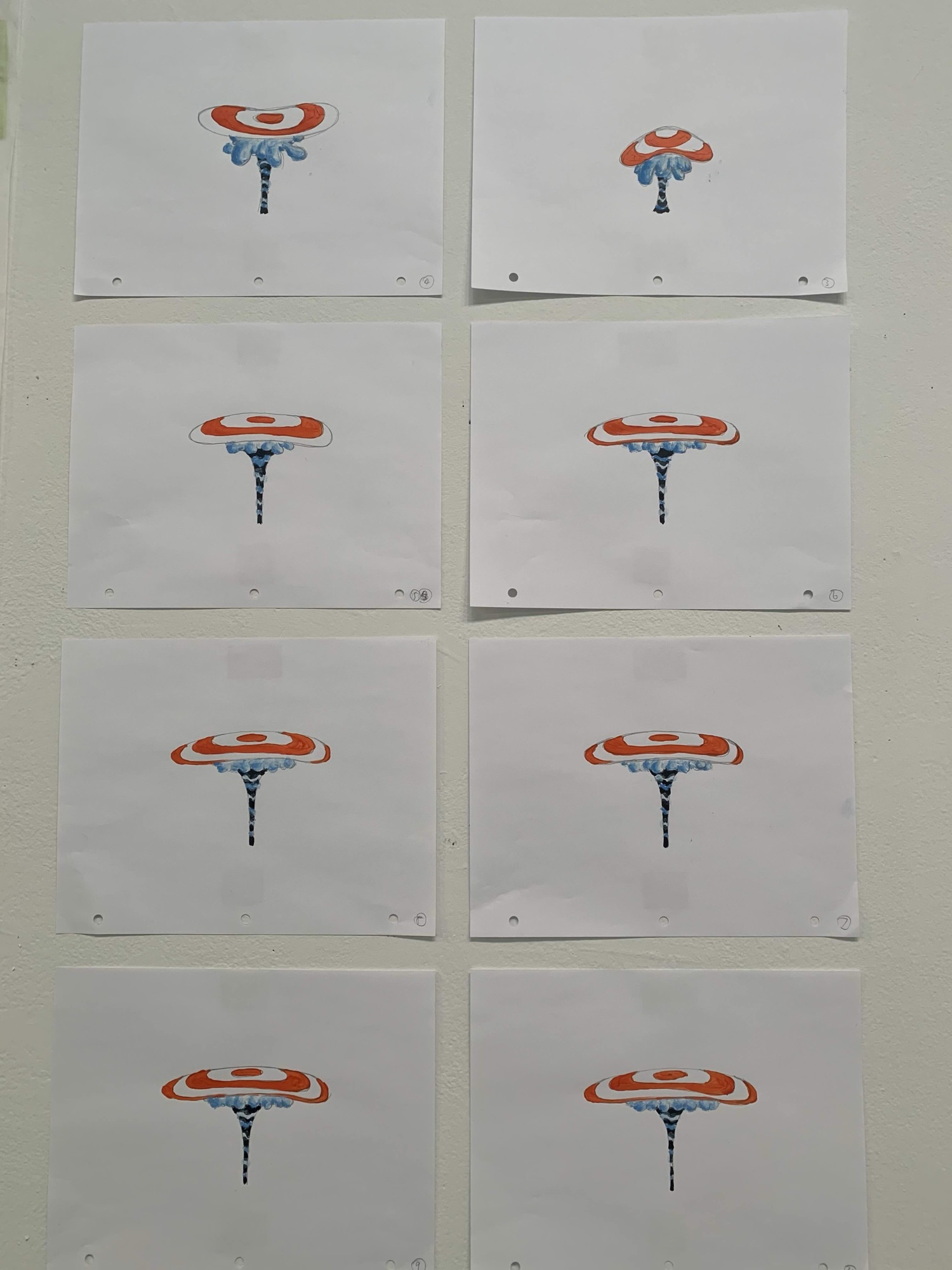
What was the most challenging aspect of adopting this mixed-media approach to your filmmaking?
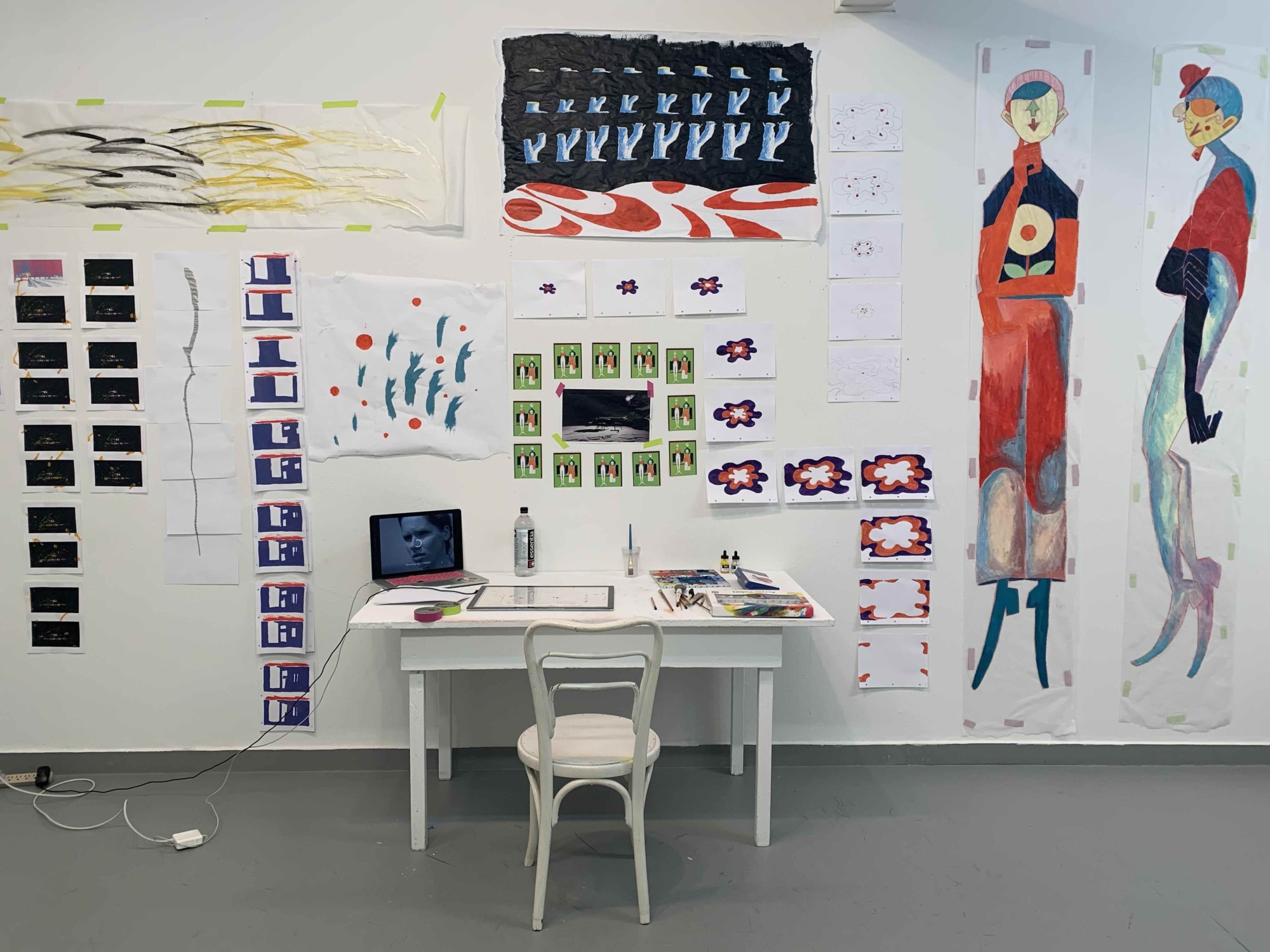
I started adopting this mixed-media approach to my work – mixing 2D characters and 3D backgrounds – when I made There Were Four of Us, my master’s graduation film. At that time, I was excited to make images using all sorts of materials: different papers, brushes, cotton balls, or any other things I could find. I also incorporated live-action footage, screen-printed images, and more
I’ve learnt to limit the mediums used.
It creates an exciting world that you can easily get lost in. But with This is a Story Without a Plan, and even more so with my next film, I am learning to create a cohesive world with its own logic while still mixing all these different media. To do that, I’ve learnt to limit the mediums used, keeping to a main colour palette (colours and lighting are very important in terms of making everything look like they belong in the same space) and even keep the abstract backgrounds ‘on theme’ – as they are created in a way that focuses on the emotion they aim to express, rather than just a purely visual approach.
Sound also plays a vital role in the immersive, hypnotic nature of This Is a Story Without a Plan – how do you work with your sound designer and percussionist to produce the soundtrack of the film?
With my percussionist, MB Gordy, I went to his recording studio for a few hours and just had him improvise using several different types of drums. I showed him a clip of the film where I want the drums to play, and a reference clip of the ending credits of the film The Nun (1966). Then we listened to all the different drums he had and picked out the sounds we thought were the best fit (not too high-spiritedly cheerful and not too heavily profound either), and he just improvised several tracks. It was a quick yet on-point session.
With my sound designer, Monteith McCollum, it was a much longer process. When I was initially looking for a sound designer, I contacted several of them and had them design test audio for a 30-second clip of the film. With this film, I really wanted to collaborate with a sound designer, so they could bring in their own vision and interpretations of the film. Monteith created sound for the scene in the movie theatre by playing his violin, which immediately grabbed me (and remained the same as in the final version of the film).
From that point, it was just a back-and-forth process of him creating sounds for each section and me giving notes. We would listen to each other and decide together what is best for each scene. He really is a wizard of sound, recording, creating, and inventing using everything around him – whether it’s the voice of a loved one, an instrument, or a broken-down piano.
Much like your graduation film, There Were Four of us, this short had an incredible festival run, playing all over the world – how has that festival exposure helped shape your filmmaking and your career?
I think what the festivals – and other kinds of exposure – bring is really the audience’s reaction and thoughts. I worked on this film by myself, without any real exposure to other people’s feedback. I always try to do something new with each project, so each one feels like a fresh start where there’s no way of predicting an audience’s reaction. It is an exciting, but frightening experience, but it motivates me to continue making the projects that I feel I should make.
Being accepted into festivals around the world and receiving awards along the way really is the greatest encouragement. It indicates to me that this approach to filmmaking is acknowledged and encouraged, and proves that we should always strive for creative ways to express ourselves and what we need to say – even if it is outside the realm of what we usually recognise. Playing at festivals around the world and hearing how an audience reacts to my film makes me feel determined to continue down this road and create many more projects that I hope to share with others in the future.
Final question, what are you working on next?
I am working on my next short film, A Becoming. It’s about a character who embarks on an internal journey to change a reality in which she feels tired and sorrowful. Following revelations of the journey, she repeatedly transforms the room she is in. As her reality continues to acquire new forms and meanings, she explores her deepest thoughts and fears.