
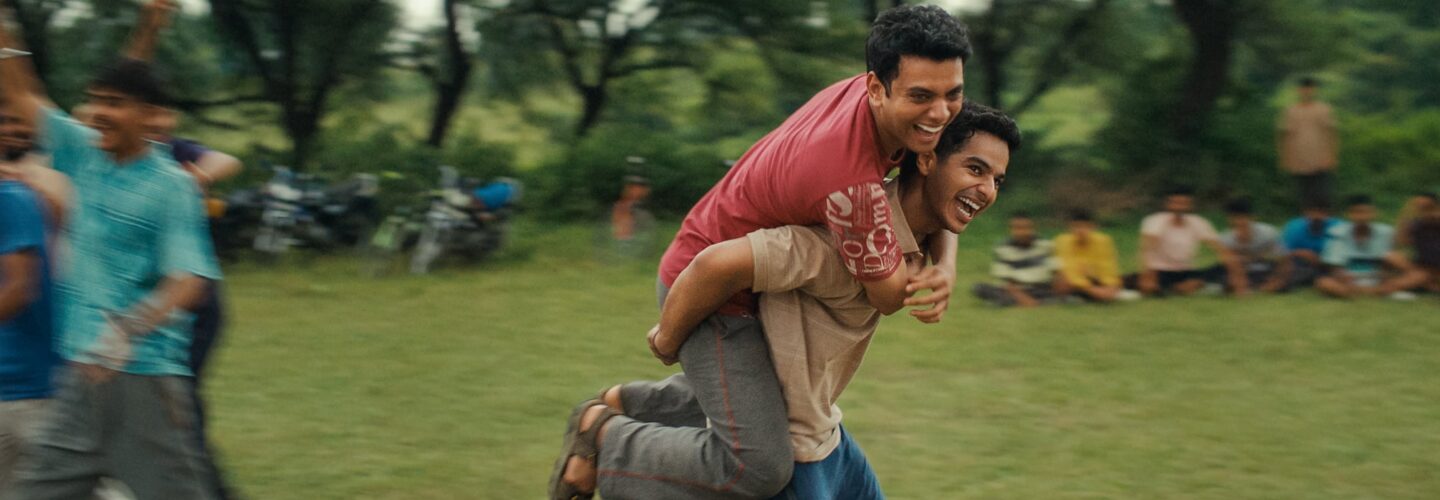

We live in turbulent times, where constant crises—whether in the news cycle or on social media—seem to be leaving us as a society feeling increasingly numb. For me, anyway, it seems to take a lot to break through that desensitisation. Yet Neeraj Ghaywan’s Homebound managed to do exactly that in one fell swoop. Watching a screener late one Saturday in mid-September, I expected a strong film; what I wasn’t prepared for was just how much it would make me feel. When the credits rolled, I sat dumbfounded for a full five minutes. In the weeks since viewing this stark reminder of the privileges it’s easy to take for granted, I’ve found myself reflecting on specific scenes or moments that evoked such deep emotion.
Inspired by a true story first reported in The New York Times—documenting the reality behind a photograph of a young man cradling his dying friend on a highway in India—Homebound offers a fictional interpretation that probes the lives of its characters with incredible depth. Though rooted in Indian society, its themes—of class and morality, sibling bonds, friendship, family, and caring for ageing parents—are universally resonant. Ghaywan avoids broad strokes or surface-level storytelling; instead, he delves into the messiness of human emotion: never linear, never simple, but always layered and authentic. This commitment to nuance has defined his work from the beginning. His debut feature Masaan (2015), which won the Cannes Film Festival’s Un Certain Regard award, showed him to be a director attuned to the quiet complexities of everyday life. His later work on Sacred Games expanded that reputation, exploring systemic inequities through layered character portraits. With Homebound, he builds on that foundation, but with even greater emotional precision and restraint.
The cinematography underscores this intent. Rather than presenting a story about India, it portrays the intimate realities of people living in India. Through this lens, the audience can experience the protagonists’ joys, sorrows, hopes and dreams, immersed in these narratives as though they were their own. This is testament to the broad influences and inspirations Ghaywan has drawn on from his own personal experiences to things that have inspired him along the way, whether art, music or literature. That artistry has drawn notable support, including Martin Scorsese, who signed on as executive producer. His involvement signals both the film’s quality and its global resonance.
Even within the confines of a (strictly managed) 15-minute interview, Ghaywan’s generosity of spirit and clarity of vision match the emotional intelligence of the film. He makes you feel like an old friend you’re catching up with, whilst simultaneously feeling like a professor at the most prestigious film school in town. As Homebound continues its festival journey, advances as India’s official entry to the 98th Academy Awards, and captures audience attention following the recent theatrical release, its relevance and impact are undeniable. For Ghaywan, this moment marks not only recognition of his craft but also a widening conversation about the power of film to drive real impact.
[A heads up, the following interview contains light spoilers. You can also watch it at the end of this article.]
Congratulations on an incredible film and all the success so far, not least the Academy push this week. How are you feeling?
Well, honestly, it hasn’t sunk in yet. When we started out we thought, “OK, we’ll do our best – we’ll aim for the competitive section of Cannes.” But we’ve done so much more: TIFF runner-up of the International People’s Choice Award, then gearing up for release and we get the news about the Academy entry, which I definitely was not expecting. But all of this gives you a sense of pride. And more so because this film has a universal message through the conduit of friendship. Contrary to what people might think, I am not here to cast aspersions at any community. I’m not saying this one’s bad, that one’s good. I feel people fail people. I feel with the way the world is going it’s time that we, even to people that we don’t agree with, people whose worldviews and value systems differ from us, who may not look like you, may not live where you live, or have a different approach to life, they may be ideologically different to you, are still people we need to have empathy with/for.
I would want to empathise with my own adversary, because we’ve gone on too much spewing hate at each other, it’s time that we sit down and have dignified conversations, and talk like humans with empathy, and understand each other a bit. And you know, maybe self-reflect and correct a bit. That’s my entire aim with this film. And with that aim, if we go and we talk about our heartland and the stories of our country and the stories of people who are often overlooked, that is a sure win for me.
Contrary to what people might think, I am not here to cast aspersions at any community. I’m not saying this one’s bad, that one’s good. I feel people fail people.
When I finished the screener, I just stopped for a few minutes because it was a gut-wrenching punch, but in a really good way of emotion and feeling that I haven’t experienced in a really long time. One thing that I can’t get out of my head is the aerial shot of the two on the road because you sort of realise the vastness of everything that they’re up against. I’d love to hear what you were trying to achieve with that specific perspective.
You mean the way you see the migrants walking on the road?
Yes, that shot and the aerial shot of them both on the highway.
That particular shot (highway) was a way to say that he’s gone. It’s a God angle. So what I’m saying with that view instantly is that he’s gone. Then it cuts to the mother sitting and waiting at home so that was the connection we were trying to draw there. The migrants walking was actually a reference from National Geographic of a very famous photograph of these camels walking in a desert. In that picture, the shadows are taller. Also, it was inspired by this very famous song that I like: “Our shadows taller than our soul.” (Led Zeppelin – Stairway to Heaven). When we create art, it’s an amalgamation of many references and influences that we’ve had over several years. So that was one point, of course. In the whole making of the film, my influences have been arthouse cinema, of course, but my strongest influences have been Ken Loach and the Dardenne brothers of Belgium.


Picking up on the point of empathy and how you relate to these characters, Ishaan Khatter, Vishal Jethwa and Janhvi Kapoor play their roles so incredibly, but when the mother cries when she gets handed the shoes God, that sense of emotion, you just want to hug her! I’d love to hear your process as a director for getting those performances out of your actors.
I actually get into a very academic and very internalised process of training them for emotional scenes. Technically, there is this thing which I devised on my own called the ‘Code 360’. It goes into the call sheet. “This is a Code 360 scene”, and everyone knows what that means. What happens in Code 360 is that the entire set goes quiet. People talk in whispers. Only I and the 1st AD will talk to the actors, and we’ll only interact with them within the tone of the scene. And I use music that can create the atmosphere of the scene, because you know, everybody’s working, right? And suddenly they hear the music, which is similar to the tone of the scene, I use background scores. I use some of my favourite songs, which are very, very close to the scene. I play those and the set becomes that. I even go to the extent of ensuring the clapper also claps in the same tone as the scene. And it’s not just emotional, it has to match whatever the scene is, is it like pathos? Is it anger? Is it comedy?
Technically, there is this thing which I devised on my own called the ‘Code 360’. It goes into the call sheet. “This is a Code 360 scene” and everyone knows what that means.
Also, we did two months of huge dialect workshops with these boys. And then I did an immersion exercise with them, so I took them to the villages, we stayed there, and we spoke to the people from the original story. I told them this was the lived experience I wanted them to borrow from. I borrow from reality a lot and that’s how I work, so I told them a good performance is not enough for me. I said to them, “You guys are good actors, you’ll nail that line, and you’ll know how to move but that’s not enough for me. I want you to live the character. This is a moral responsibility, because you’re representing 1000s and millions of Shoaibs, 1000s and millions Chandans, Sudhas, and Vaishalis of our country. You have to travel and make the distance to go to these characters; these characters are not coming to you. I want you to feel them.” That’s why I think it becomes so immersive as an experience.
Most Popular
That’s totally the way to describe it. It is an immersive experience. Even Chandan’s sister, you feel her struggle. She knows what her role is and she knows what she needs to do, but you know, she’s very aware of the injustice.
I actually derived this from my own personal life. I put a lot of my personal life into the film. I have masqueraded as an upper caste member for a very long time. So to live with that shame, to live with, always trying to watch your back, that creates a big imposter in you that creates the fear inside of you. I lived with that, so I put that out there. I also had three older sisters, and I was favoured a lot, so I wanted to put that shame out there too – of being preferred as a male, and my actual sister’s name is also Vaishali so that was my inspiration there.
You’ve taken on so much from the big societal issues to the realities of living life and managed to do so in such a human way. It’s 10 years since Masaan and you’ve done bits in between, but something like a Made in Heaven is obviously still great but a lot more commercial. How does your process differ when you’re trying to show real life and depth versus something a bit more commercial?
You know, my penchant for realism is constant regardless. Even if you watch Made in Heaven, it is in a very showy world, but the characters are from that world so I will stay authentic to that. I think, regardless of what I do, I feel I will stick to realism. I’ll stick to something that feels authentic, and authenticity doesn’t just mean the milieu or the place, but more so the emotion. What I also do is that I read psychology a lot because you need to know how characters will form their arc, what their motivation will be, and set out the base of their psychological framework. So that has been a thing for me.
Regardless of what I do, I feel I will stick to realism. I’ll stick to something that feels authentic, and authenticity doesn’t just mean the milieu or the place but more so the emotion.

How did you work with your DOP, Pratik Shah? It feels like the cinematography really complements, in a brilliant way, the journey that the characters go on.
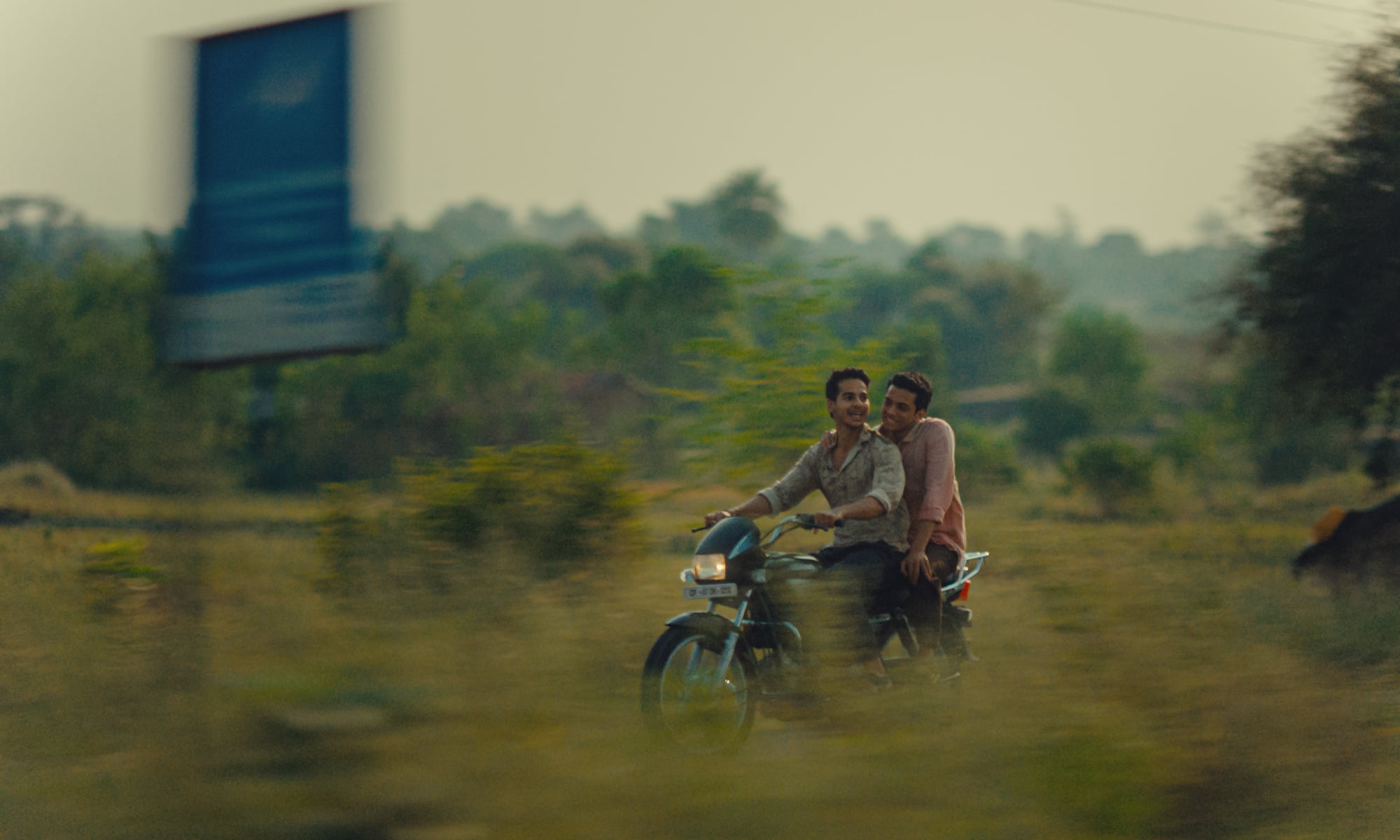
The big call that we took early on was that I was initially thinking that we’d shoot the classic way of a dolly and the regular works. But then I thought that if we want to bring in energy and make it more contemporary, we should go handheld. And we chose this aspect ratio 1:66 because the intent was not to show what India looks like, that’s a very voyeuristic gaze. We wanted to stay with the characters, that’s why the aspect ratio is also important. So I didn’t go with the classic large format. Those were the calls that we made earlier on and also the look. The palette, you may not notice, you may feel that it is actually the place, but we carefully made a point to stick to a specific colour palette.
It’s a beautifully shot film. The casting process, how was that, because obviously these actors are all very well known?
There was an intent to get well known people, because honestly, when we make a film we go to a festival abroad, we maybe get a standing ovation, or a prize here and there, and then we come back and that’s about it. What happens to the people that you based the film on? When do they get their due? I have always made a film where it is sort of a middle road. It’s not entirely an arthouse. It’s not entirely commercial. It’s just accessible, like, exactly the same way Ken Loach makes films. A festival audience will see it, but also a person on the street will watch it and be affected by it.
The process of taking the article—which was obviously so beautifully written and gave so much depth—to getting to where you are now, how did you do that? How did you evolve the story and make choices about what was kept, added, etc?
Honestly, when I read the article, of course, I was super gutted. I was so devastated reading it. But I also saw an opportunity to talk about larger themes through it; how marginalised identities, caste, religion, colour, race, sexual minorities, migrants, and immigrants are always spoken about in statistics. I thought that with this film, you could talk about them as people and get to the human aspect. That was the starting point with this article, which I thought was a very good vessel to do that. So me and the writer Shreedhar Dubey went to the place the story was set, we met the people, and from then on I tried to weave in something else. I like to make it personal. I can’t do it if it’s not personal, you know. That’s why I’ve woven a lot of my childhood experiences as a Dalit person growing up. I put in those experiences.
What happens to the people that you based the film on? When do they get their due?
It was honestly very challenging, because in the article, you have the climax of the film and you have to build an entire world around you. It’s like, there’s this famous commercial that I saw where this very rich lady goes into an architect’s office, and she pulls out a faucet from her LV bag, and she gives it to him and says, “Build a house around this.” It’s that, it’s exactly that.
And finally, I obviously have to ask what it was like to get notes from Martin Scorsese and that whole process?
Absolutely surreal. I think I was vicariously living the dream of every independent filmmaker. He’s been such a champion, honestly. My co-producer Melita Toscan Du Plantier is friends with him so she brought him on board. He wanted to come on Masaan as well but that didn’t work out, so I asked if he could read this script and he loved it. He then came on board and mentored me on the script. Then he also mentored me on the edit, two/three rounds of editing. All of this is simply out of his graciousness. He gets nothing out of it but he does it. That’s exactly why he’s the greatest filmmaker of our times right now.