
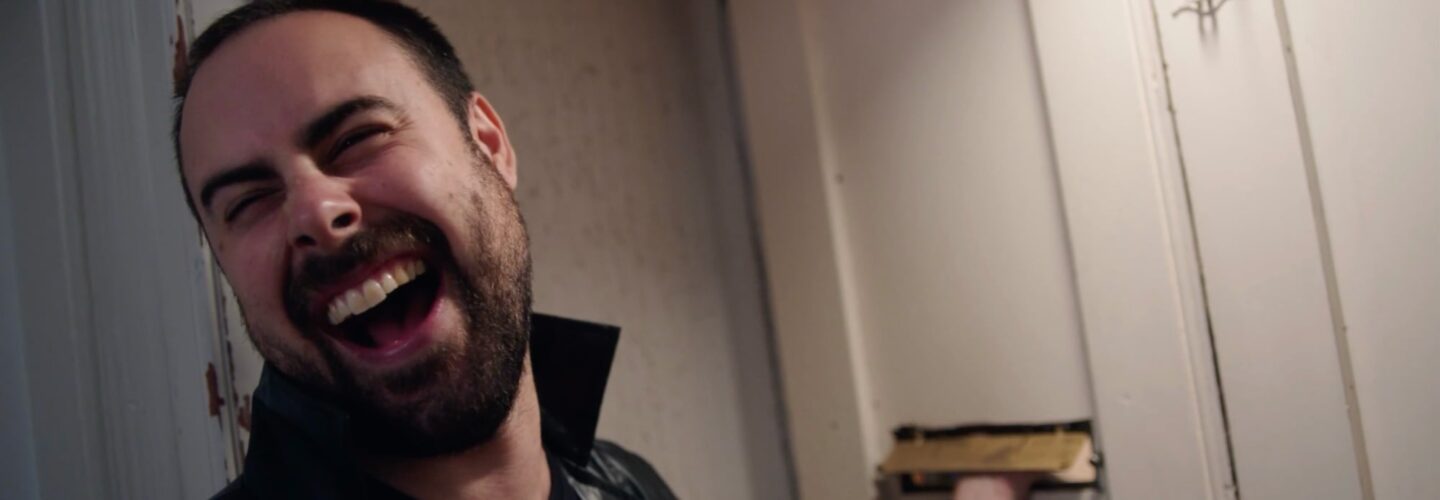

Filmmakers Louis Paxton and Sam Baron spent years exchanging scripts and admiring each other’s work, but it wasn’t until the industry’s gatekeeping had left them both feeling disconnected from why they started making films in the first place that they finally decided to make something together. Baron, co-writer and actor, issued a challenge to Paxton, co-writer and director: he’d act in it, playing a character called Sam. What emerged is Tippy Toes, a sharp-toothed comedy about a nice guy pushed past breaking point—dumped by his girlfriend, fired from his job, and left alone in a flat with nothing but a rice cooker as a reminder of his ex. As Sam attempts to rewire his people-pleasing tendencies, the short traces his overcorrection into something far less palatable, mining the gap between who we think we are and who we actually become under pressure. The collaboration clearly served its purpose—both filmmakers have been on a tear since wrapping this micro-budget gem. Paxton’s feature debut The Incomer—a Scottish folk comedy starring Domhnall Gleeson, Gayle Rankin, and John Hannah—opens Sundance’s NEXT section this Thursday, where it’s sold out all five of its screenings. Meanwhile, Multi-DN alum Baron’s performances in Fragile Package and Tippy Toes caught the eye of director Ariel Heller, leading to Baron co-writing and starring in their upcoming feature Circles, a high-concept relationship drama about a couple trapped in a time loop that resets every time they lie. Tippy Toes remains a testament to what happens when two kindred comedic spirits strip everything back—tiny crew, no gatekeepers, only themselves to please—and rediscover the joy that made them pick up a camera in the first place and as it premieres online with DN today, Paxton takes us through the genesis of ‘niceness’ as the film’s comedic engine, the challenge of crafting those perfectly pitched ‘not nice’ montages, and how stripping back to a tiny crew allowed the comedy to breathe and improvisation to flourish.
You have a long-standing relationship with Sam as a director. How exactly did having him in front of the camera for Tippy Toes emerge?
Sam and I have known each other for a long time, each creating short films and admiring one another’s work. We share a sense of humour and a practical philosophy regarding filmmaking. For us, the experience of making something is as important as the end result; it’s about the creative journey, not just winning awards or advancing our careers. Although we often exchanged scripts and edits for feedback, we had never collaborated on the same project.
In 2022, after years of making shorts and pitching longer-form TV and film projects, we both felt somewhat disconnected from our roots as filmmakers. It seemed we were spending all our time waiting for gatekeepers to grant us permission to create, missing out on the joy of making things ourselves. Sam approached me with a challenge: to make a film together, with me directing. The only stipulation was that he had to play a character named Sam. The goal was to reconnect with why we started making films in the first place—low budget, small crews, and only ourselves to please.
We both shared a genuine interest in understanding why people behave the way they do—ourselves included.
Apart from your shared humour, what about your history, filmmaking and sensibilities worked so well together?
We share a foundation in sketch-based comedy, often working with friends and finding creative solutions on the fly. There’s a genuine joy in that style of filmmaking that had faded as we transitioned into more professional roles. Sam and I make each other laugh, and I was often struck by how easily we opened up to one another. We both shared a genuine interest in understanding why people behave the way they do—ourselves included. This project provided a wonderful opportunity to explore that curiosity together, making it both a personal and collaborative endeavour.

How personal did your writing sessions get, and did the script become a way of processing something you were both grappling with?
We talked a lot, and I began conceptualising Sam as a character, which was tricky since he is also a real person… Immediately, I thought how genuinely NICE Sam is. Everyone agrees he’s a really nice guy. But then I questioned whether I would want to be characterised as ‘nice.’ Is he really that nice? No one can be nice all the time—what does being nice even mean? This idea of ‘niceness’ was the starting point for our development, and we soon realised that people pleasing was something we both were prone to. The more development we did, the more the character became a kind of extreme proxy for this shared aspect of our personalities. What felt funny to us was the idea of ‘nice’ and ‘not nice’ being these kinds of binary states—and how, through trying to change your behaviour, you could overcorrect and become a total dick.
Most Popular
Outside of the laugh-out-loud funny moments, how did you calibrate the balance between the ridiculous situations and the genuine emotional enquiry underneath, which, having gone through your back catalogue and knowing Sam’s work, is a very important common theme between you two?
While Sam and I may have different styles as filmmakers, we’ve both spent the majority of our careers balancing comedy and drama in our work. For me, a self-led project like this has to truly be worth the effort. These projects take a lot of time, and you don’t make any money as the filmmaker. Comedically, the ideas must make me laugh, but the story also needs to have a dramatic impact.
I have to care about these characters and understand what they want. I often feel I don’t really write comedy—my films aren’t necessarily full of gags. My early outlines often read like dramas, and the humour emerges in the execution. So I think, for me, the balance comes from the fact that the characters and drama are always driving the story, not the comedy. I also think Tom Kingston’s score really helped define the tone, balancing comedy and drama without veering into overt silliness or sickly melodrama.

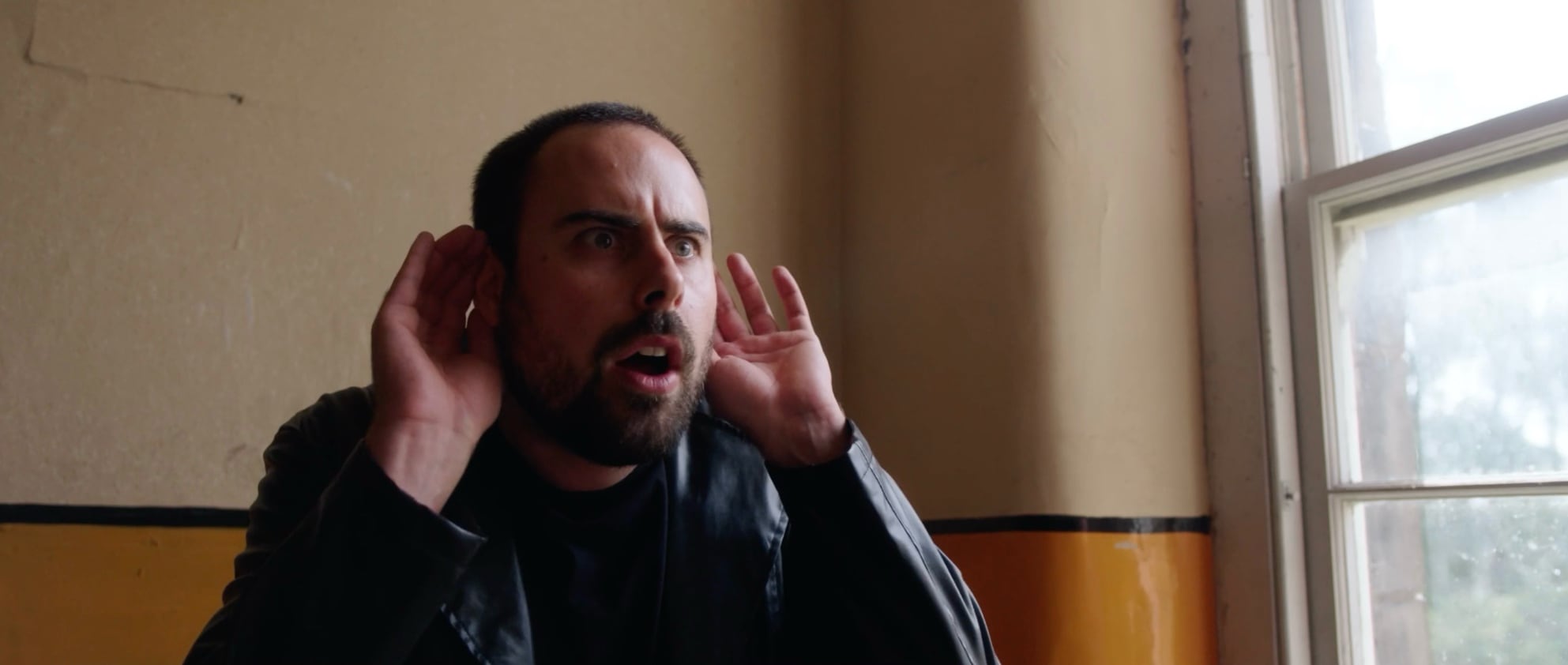
I often feel I don’t really write comedy—my films aren’t necessarily full of gags. My early outlines often read like dramas, and the humour emerges in the execution.
I want a full breakdown of writing and then staging the ‘not nice’ scenes as they are perfectly balanced with a little bit of rawness, but overall, obscenely funny and ridiculous.
I really enjoy a good montage! This film presented a perfect opportunity for two escalating ‘not nice’ montages. The second one, where Sam crosses the line, was much easier to create. By that point, he’s completely off the rails, so its extremity made it straightforward. The first montage posed a bigger challenge. It was about finding relatable ways for Sam to assert himself without prioritising others’ feelings, which is quite a nuanced thing to dramatise visually. We struggled to think of ways to do so (which perhaps reflects our own failings in this area!).
Often, the ideas felt too small or too specific, and it had to be visually engaging since it was part of a musically driven sequence. At the same time, we wanted to enjoy watching the relationship develop as these characters hang out and have fun. Ultimately, it came down to balancing what we could achieve with what was most effective in telling the story.
His life is abjectly shit. Why did he need to be in such a dire position, living wise? The lone rice cooker really did it for me!!
I think it’s essential when writing to question why you’re setting your story at this particular point in a character’s life rather than any other. The answer should always be that it’s the most dramatic moment for that character! When we meet Sam, he is truly at his lowest; he’s been pushed to breaking point, and he’s on the cusp of snapping. He needs to change, but change is hard—and watching people struggle is entertaining! The rice cooker was Sam’s idea; it just made us laugh. It’s so specific, and in his empty flat, it seemed absurd. It became a symbol of his ex-girlfriend—or at least his attachment to her.
You made a deliberate choice to work with just your DOP, one camera assistant and your editor. What did parring the crew roles down give you that a more resourced shoot wouldn’t have?
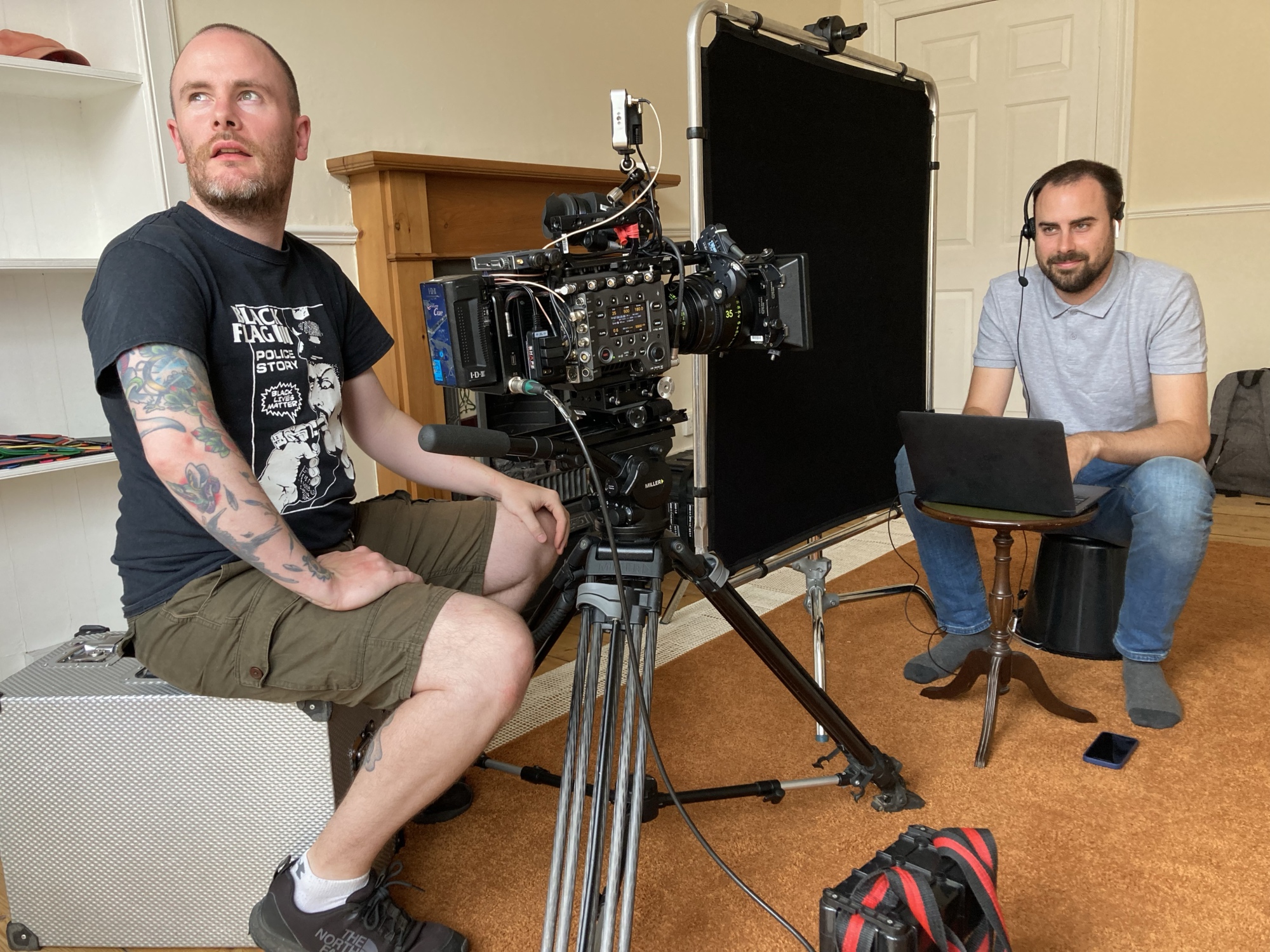
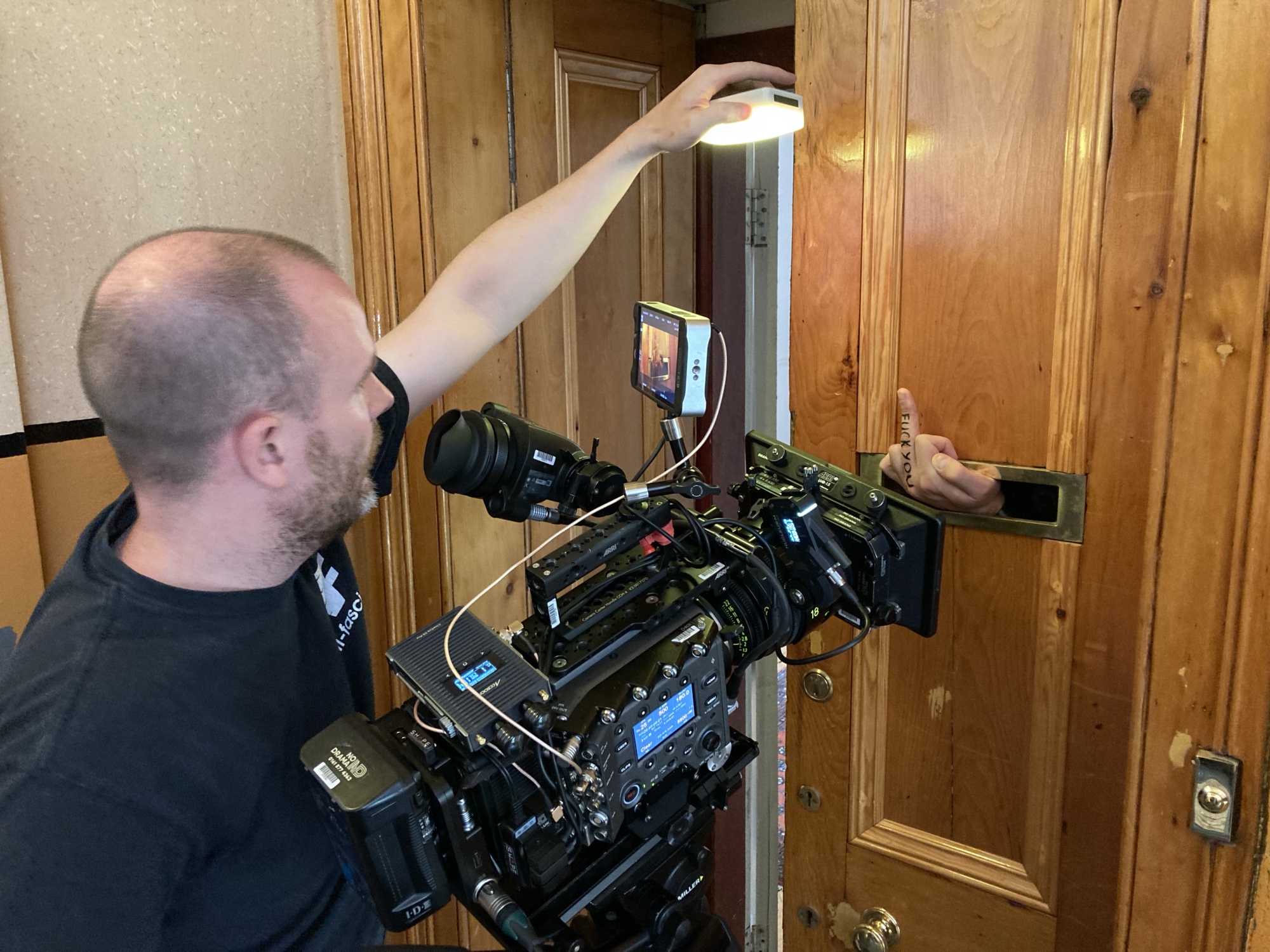
Whilst we did have a small budget, and so were limited in our scale production-wise, I knew I wanted to work with a smaller crew anyway. We’d set out to reconnect with the way we used to make films before we had started working in the industry, and part of what made those early experiences so rewarding was how adaptive you could be. A small crew is really conducive to comedic improv—if you come up with an idea last minute, then it’s not a massive issue to change the schedule and move a half dozen cast/crew onto something else as opposed to a hundred crew with a big unit base, etc. There’s a freedom with a smaller team.
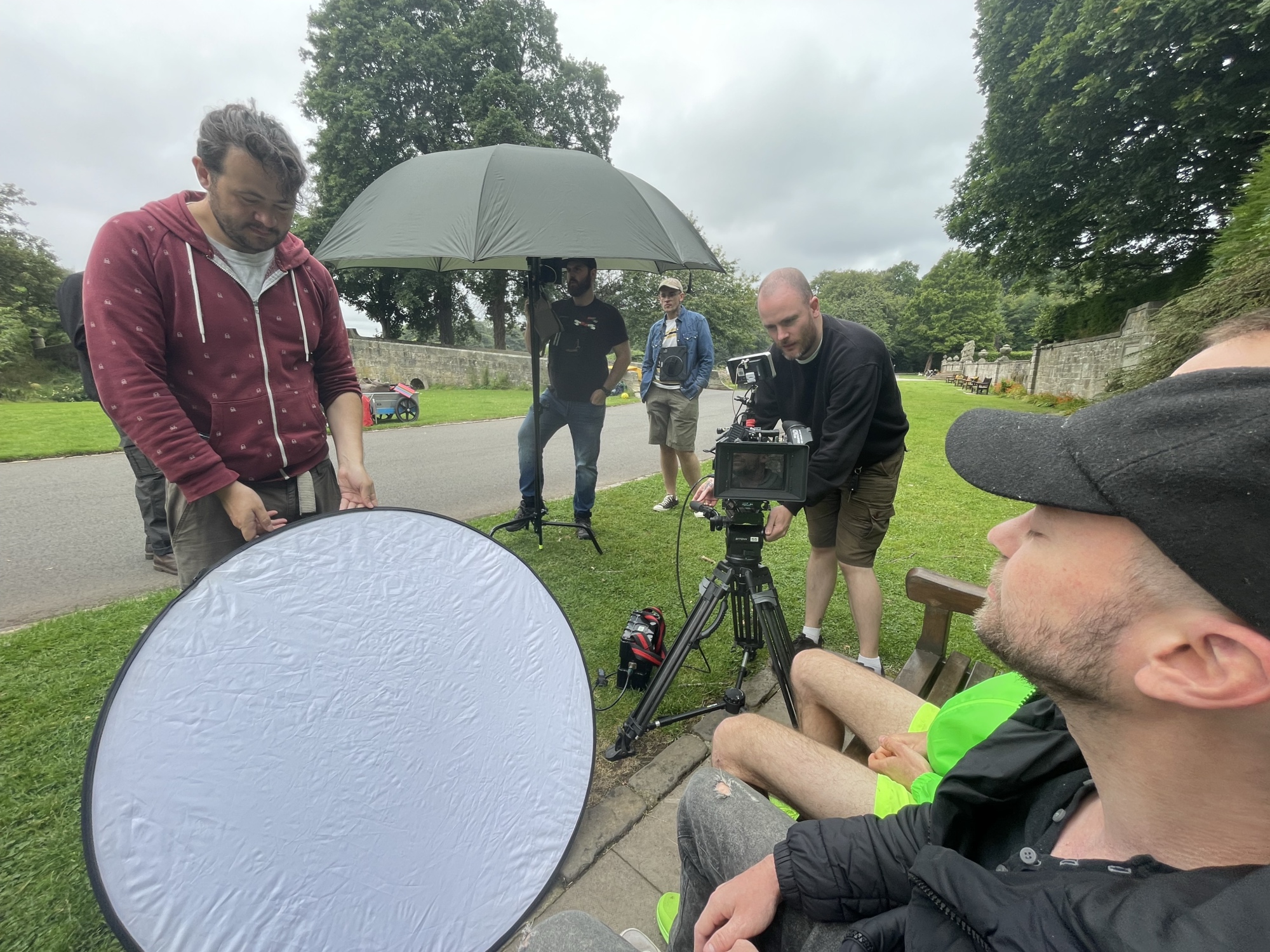
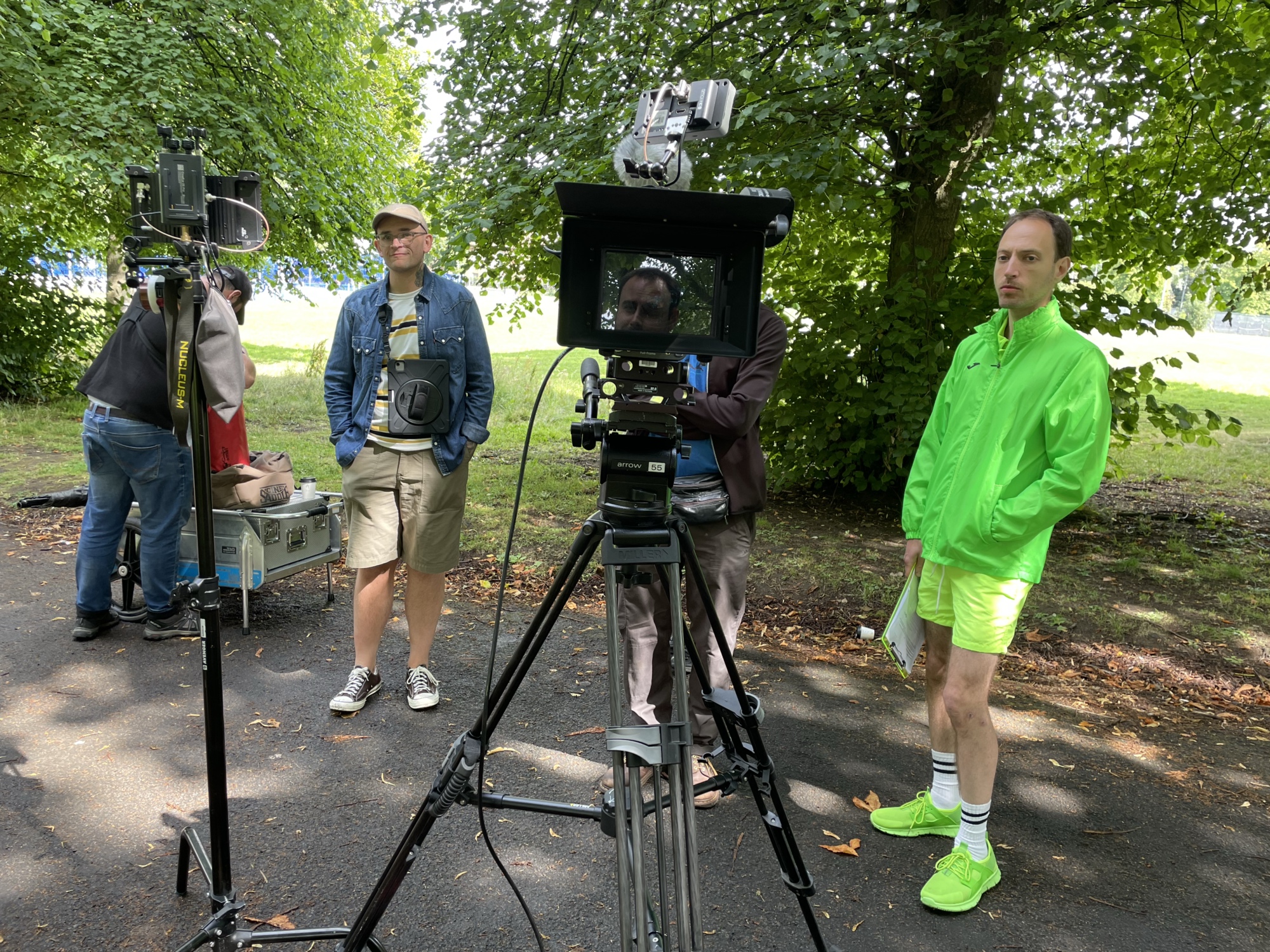
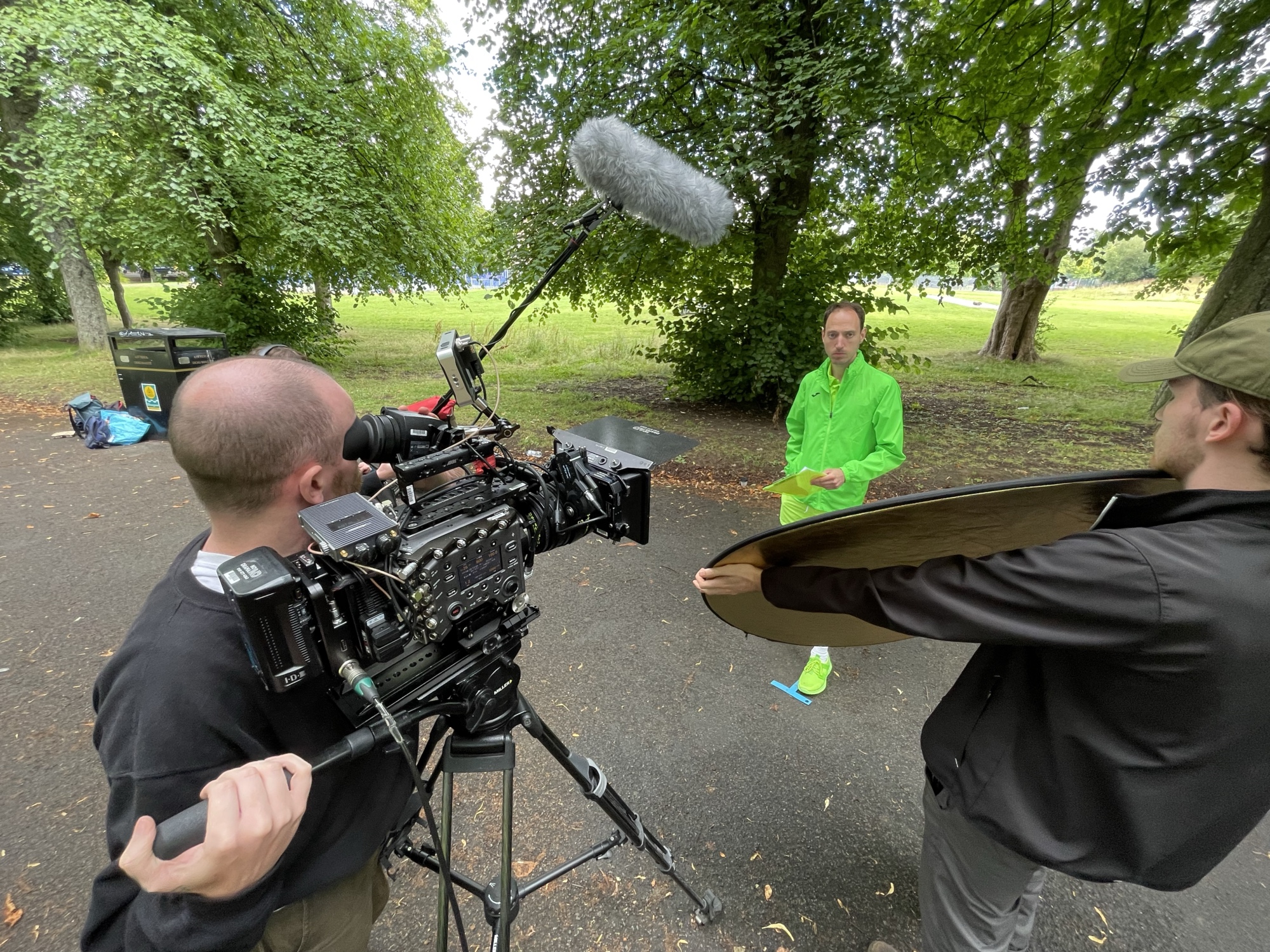
What conversations did you have with DOP Sean McDonald about the visual approach, and how did your stripped-back aesthetic serve the comedy?
Working with Sean was also really rewarding; he’s brilliant at lighting and worked well under the budgetary constraints. I was opposed to shooting in a typical comedy style—with wacky angles and the like. I often find it funnier to depict the absurd as something ordinary, and that became our visual foundation. Practically speaking, I always want to control the rhythm in the edit to achieve the right comedic timing, so we needed to have adequate coverage. However, there’s always a trade-off in how you achieve that coverage without making it dull. To define our visual approach, Sean and I continually returned to the concept of tension. Sam is like a boiling pot of repressed frustration, and we wanted to reflect that, which is where the slow zooms came into play.
The comedy lands through its brilliant simplicity. Were there moments where you were tempted to do more visually and had to pull back?
The montages were probably as fancy as we got. Beyond the fun they provided, they also pushed the story forward. I’ve created all kinds of comedies, many of which are more explicitly silly. As I’ve developed, I’ve seen how audiences respond to silly humour when it’s grounded in real and relatable emotions, and it’s a wonderful experience to create that for people. I still love absurd or bizarre comedy, where the goal is simply to make you laugh without any emotional strings attached. However, for me, there’s something special about experiencing humour while being genuinely invested in a character and narrative.

How did you approach the edit in terms of comic timing—were you cutting for the joke or trusting the performances to carry it?
While the final timing is always discovered in the edit, as a writer-director, I feel that timing is defined in my scripts, which are sparse and often read like edits. Sam and I would write a draft, then I’d hold workshops with Sam and Paddy Kondracki to uncover new material, which we’d subsequently incorporate into the script before filming. There wasn’t much ad-libbing on set, making my collaboration with editor Ian Robertson less about comparing alternative comic lines and more about refining the timing. To me, it’s all trial and error—you roll the edits back and forth until it feels right and evokes the reaction you want.
The scenes between Michael (Grant O’Rourke) and Sam were more improvised, which turned the process into a whittling exercise to find the best material—we had so much great content between them. As for the big comedy beats, those are entirely about the edit. I love using hard cuts in my work to punctuate the comedy. However, by and large, these moments are also defined in the script before shooting.
Here on Directors Notes we’re asking all of our filmmakers to divulge their favourite shorts, past or present. What are your picks?
Sam Baron: I’d have to say Wasp by Andrea Arnold because it was the first short film that impacted me so much, I had to rewatch it endlessly to study how it worked. It taught me the power of emotional tension, which I still think about every time I make a film.
Louis Paxton: It’s the one I’ve watched more than any other… I had it on repeat when I was younger, Wallace and Gromit: The Wrong Trousers! by Nick Park
By stripping away many of the more time-consuming elements of filmmaking and returning to a simpler, more nostalgic way of working, I reconnected with the reasons I started making films in the first place.

This process helped you reconnect with why you started making films in the first place. Now that your debut feature is out, and you’re developing multiple TV projects, how do you hold onto that feeling when the scale and stakes are so different?
Making Tippy Toes felt like a beautiful blend of my old filmmaking approach—bringing together a group of people to create something fun—with the refined storytelling techniques I’ve honed over the years in television. By stripping away many of the more time-consuming elements of filmmaking and returning to a simpler, more nostalgic way of working, I reconnected with the reasons I started making films in the first place. Ultimately, filmmaking should be a fun and communal experience that unites people in creating something. This mindset carried over into my feature film shoot, enhancing the experience immensely for me and also for the cast and crew.
Of course, other challenges come with larger-scale productions, and the bigger budgets certainly make some challenges easier to navigate… but the biggest challenge as a director remains consistent with smaller productions: how do you evoke emotions using the tools at your disposal? You have a camera, actors, a crew, and a story to tell—all within a schedule. In that regard, whether you’re directing Domhnall Gleeson or your friend Sam, the approach isn’t all that different. I suppose a big difference between shooting a feature and a low-budget short is that on one of them, you’re eating Greggs sausage rolls for lunch.