

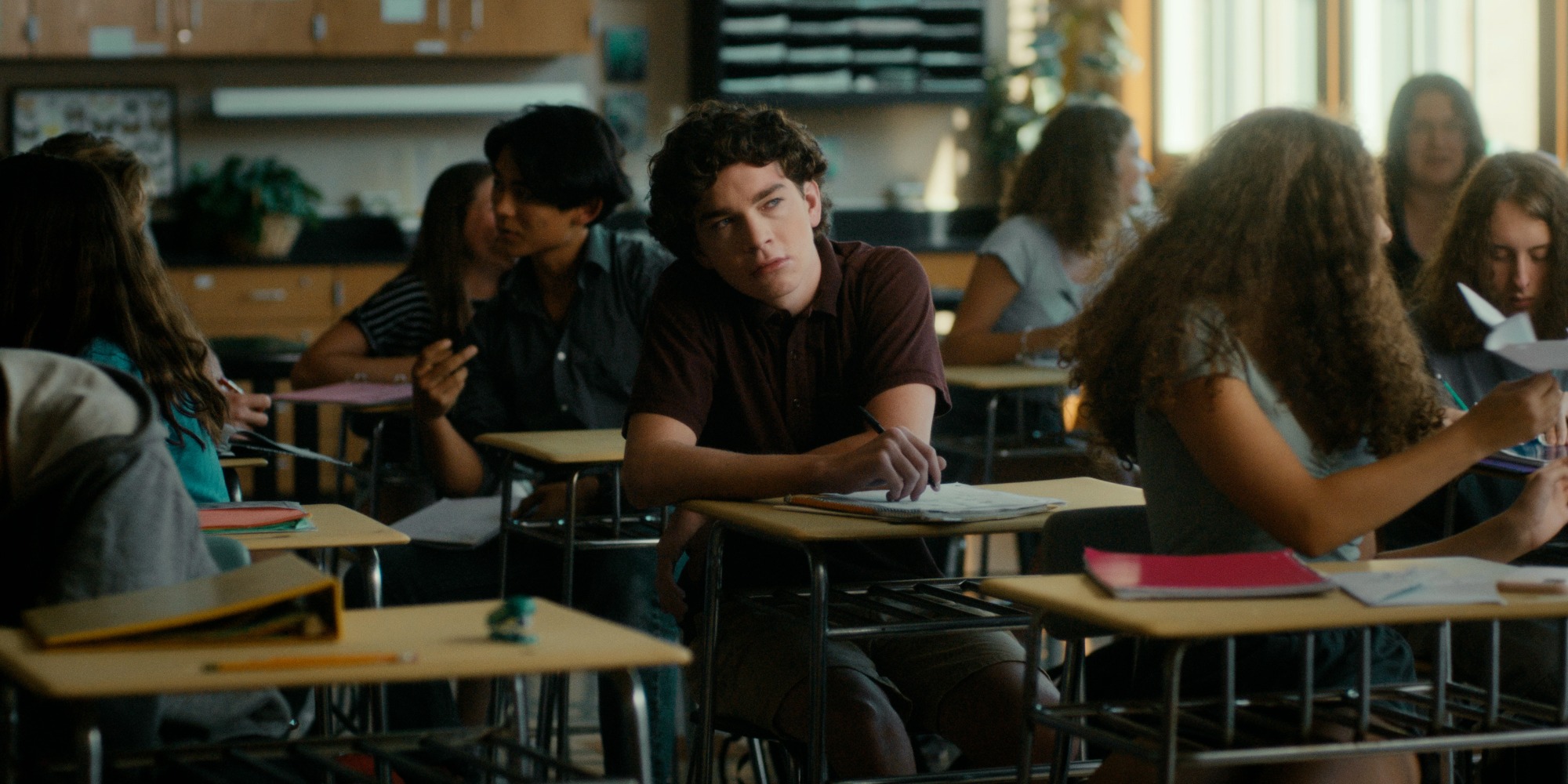
Dialogue is often seen as one of cinema’s most fundamental tools for developing character, establishing relationships and guiding an audience through a story. To remove it from the process will undoubtedly place an unusual amount of focus on physical performance to convey the emotions and tensions of a story. In Kyle Sims’ captivating short film Galapagos – the story of a lonely teacher whose classroom rabbit suddenly disappears and the increasingly unsettling encounter with one of her students that follows – this challenge becomes central to the film’s exploration of power, vulnerability and evolution.
A Tisch School of the Arts alum and commercials director, Sims joins us on Directors Notes to discuss the decision to make a dialogue-free film, the process of working with actors Catherine Curtin and Trace Talbot to develop such a complex relationship and his long-held desire to return to his childhood school as a filmmaking location. He also takes us inside the challenges of working with the film’s animal performers, the visual language developed with cinematographer Alex Hass and the idea of evolution that sits at the heart of Galapagos.
Hi Kyle, welcome to Directors Notes. Let’s dive straight in and talk about your striking film, Galapagos. You’ve chosen to tell this story without dialogue, instead relying on your actors’ physical performances. Can you talk a little about that decision and why you felt it was the right approach for this particular story?
First off, thanks for having the film on Directors Notes. As for dialogue, it just never featured in my initial conception of the film. I was always open to whatever those two characters might say, but I could never come up with something that didn’t feel anti-climactic. This particular teacher and student – theirs is a silent relationship. It happens in glances and gestures. It’s never something they would verbally acknowledge to each other, or anyone else. Or it could be that I just write terrible dialogue… who knows.
There’s something liberating about abandoning the dialogue convention and focusing entirely on the physicality of the performances.
But with this particular story, I always felt that words would not only puncture the tonal atmosphere I wanted to explore, but would also spoil this strange connection these two characters discover. Plus, there’s something liberating about abandoning the dialogue convention and focusing entirely on the physicality of the performances.


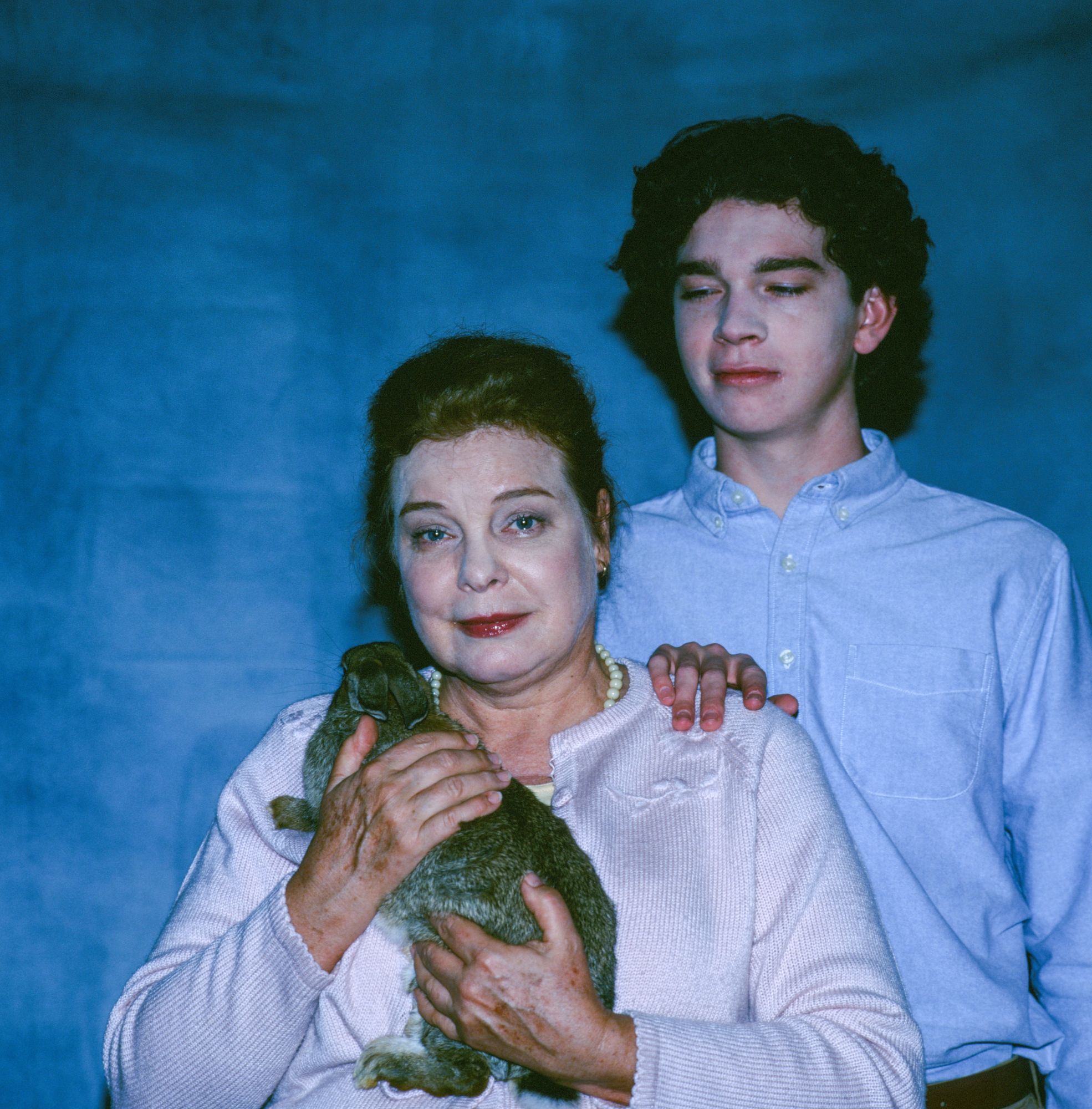

With that dialogue-free approach in mind, I imagine finding the right performers was crucial to the success of the film. How did you go about casting Catherine Curtin and Trace Talbot and what did you feel each of them brought to the story?
I still remember discovering Trace Talbot in this short called Two Little Boys. It’s an incredible piece of work. And with Trace in particular, seeing how far he could go in that one scene – I just knew I wanted to do a project with him. So I worked backwards and reverse engineered the ‘student’ character for him specifically. And he was an absolute treasure to work with. He was willing to go through all sorts of oddities on behalf of the film, and the way he readily adopted the character was just so frictionless. I certainly plan on working with him again.
For the teacher character, we had a wish list of our ideal actors. Cathy was right at the top of that list, and I was shocked when she agreed to come on board, especially since the script was still somewhat embryonic at that stage. But she’s an incredible talent, and as someone who simply loves the work, she was willing to try something stranger than usual. We’re still great friends, and Galapagos just wouldn’t have any kind of punch if it weren’t for her. I’ve certainly got other roles planned for her as well.


There was no need to yell action and cut and constantly interrupt the chemistry.
It feels as though the power dynamic between these two characters is at the heart of what makes the film so captivating. How did you work with Catherine and Trace to develop that relationship and make it feel so intense, yet strangely authentic?
They met on the first day of shooting. So there was a certain distance at first, and because we shot chronologically it worked in our favor. They only got to know each other more between takes, and there was a kind of camaraderie that developed. A sort of “we’re in this weird thing together, aren’t we” mentality. And so when it came time to shoot the bathroom scene, where she’s actually touching his hair and feeding him lettuce, there was really no friction in terms of finding the exact blocking and figuring out how they were going to interact with each other physically.
Most Popular
It’s an oddly intimate scene. I remember thinking, “this is almost a sex scene.” It certainly has some of those trappings. But really it all came back to the fact that no matter how strange an interaction this was, it didn’t require any speech. I think that gave Cathy and Trace a certain relief, in that it wasn’t about delivering lines, it was a matter of finding the right posture and the right gesture. And even the way we shot that scene, because there was no dialogue, there was no need to yell action and cut and constantly interrupt the chemistry. Instead, we ended up with a whole series of takes strung together. And so even that ability to just let them go for minutes at a time, it allowed them to find those expressions and gestures that couldn’t really be rehearsed in advance.

Staying with that power dynamic, it continually shifts throughout the film, keeping the audience on edge before culminating in that unforgettable ending. Can you explain why you chose to conclude the story in this way, particularly why you decided to tip the balance of power in that direction?
I try to think of writing as discovering a series of images more than dictating a set of conditions. So I was always open to the ending that was waiting for us, so to speak. And after meditating on the characters for a long time, I realized that there was no way this teacher was going to lose this conflict. She starts out as this vulnerable, isolated creature, unable to register the threat sitting in her classroom. And it was always obvious to me that the student was not going to kill the rabbit. He never needed to. After what happens in the bathroom, it’s over. He’s gotten his thrill. But I knew from the beginning that this teacher had the potential to evolve. What she does at the end – it was really the only logical conclusion given how badly she’d been humiliated in that bathroom.
It’s a testament to Cathy and Trace and their talent as actors that they were able to visualize that through expression alone.
I sensed that there was almost a benevolent motivation on the part of the teenage boy – almost as if he were trying to show her where she was vulnerable and maladapted to the harsh law of the jungle – and it’s only after realizing that for herself that she’s able to reclaim the personal authority she’d been lacking all along. One of my favorite aspects of the last scene is how it instantly gets all of the other kids’ attention. They’re blabbering all through homeroom. They don’t see her. They don’t respect her. And then, in that one decisive gesture, she’s able to silence all of them and force them to drop what they’re doing and pay attention. She reclaims her authority and earns his respect in a way even he couldn’t have predicted, which is what leads to that thinnest of grins he gives her as a parting gift. There’s been an irreversible evolution in their dynamic, and it’s a testament to Cathy and Trace and their talent as actors that they were able to visualize that through expression alone.
The cinematography also plays an important role in shaping the relationship between your two main characters. How did you work with Alex Hass to develop the visual language of Galapagos?
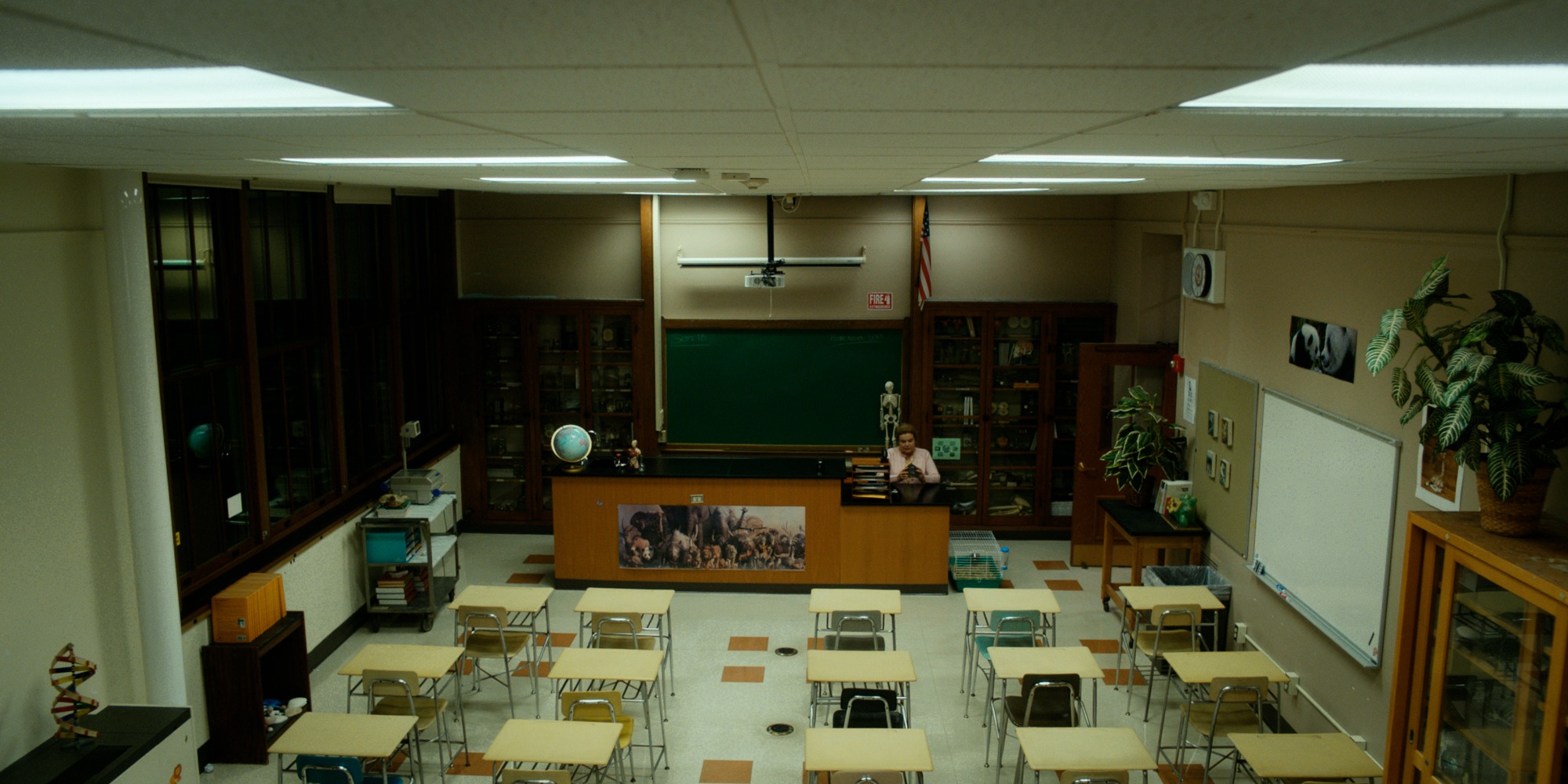
Alex is a dear friend from film school. And he was willing to go into this unsettling film world without hesitation. Luckily we were able to access the high school the week before shooting. So he and I got to go in together and figure out how to exploit the specific architecture of each room we were in. And so the cinematography was really dictated by the design of each space – the classroom, the courtyard, auditorium, etc.
The bathroom was a very late discovery. We were almost panicking trying to figure out which of the bathrooms on hand would be the least bad option, in terms of the blocking of that interaction. And then by chance we drifted into what was once my locker room. And we turned the corner and there was that windowless, symmetrical set of toilets and urinals. One of those liminal spaces. And so we always leaned into the architecture of that school, which was built back in the 1950s, whenever we were stumped as to where to put the camera.
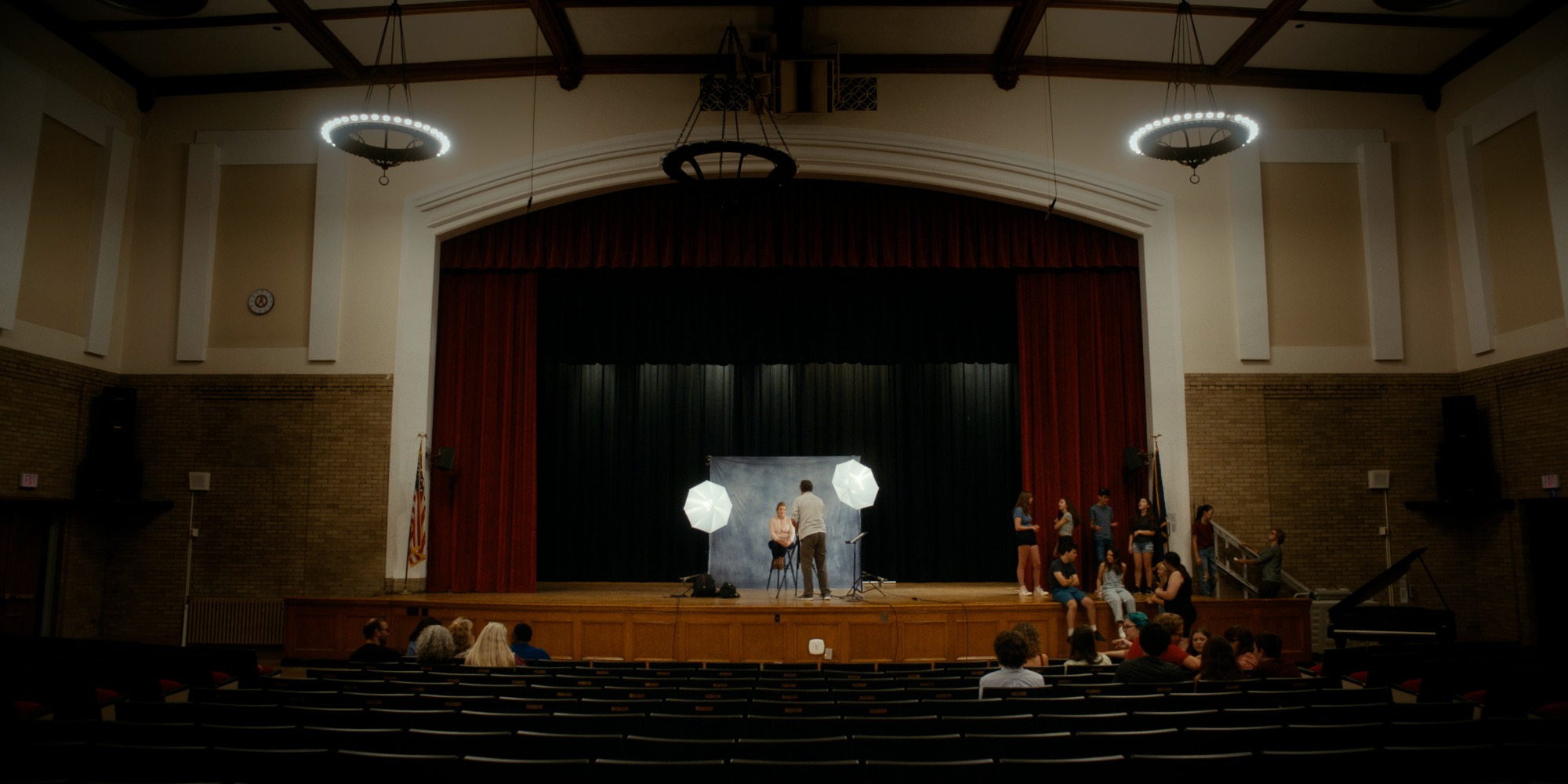
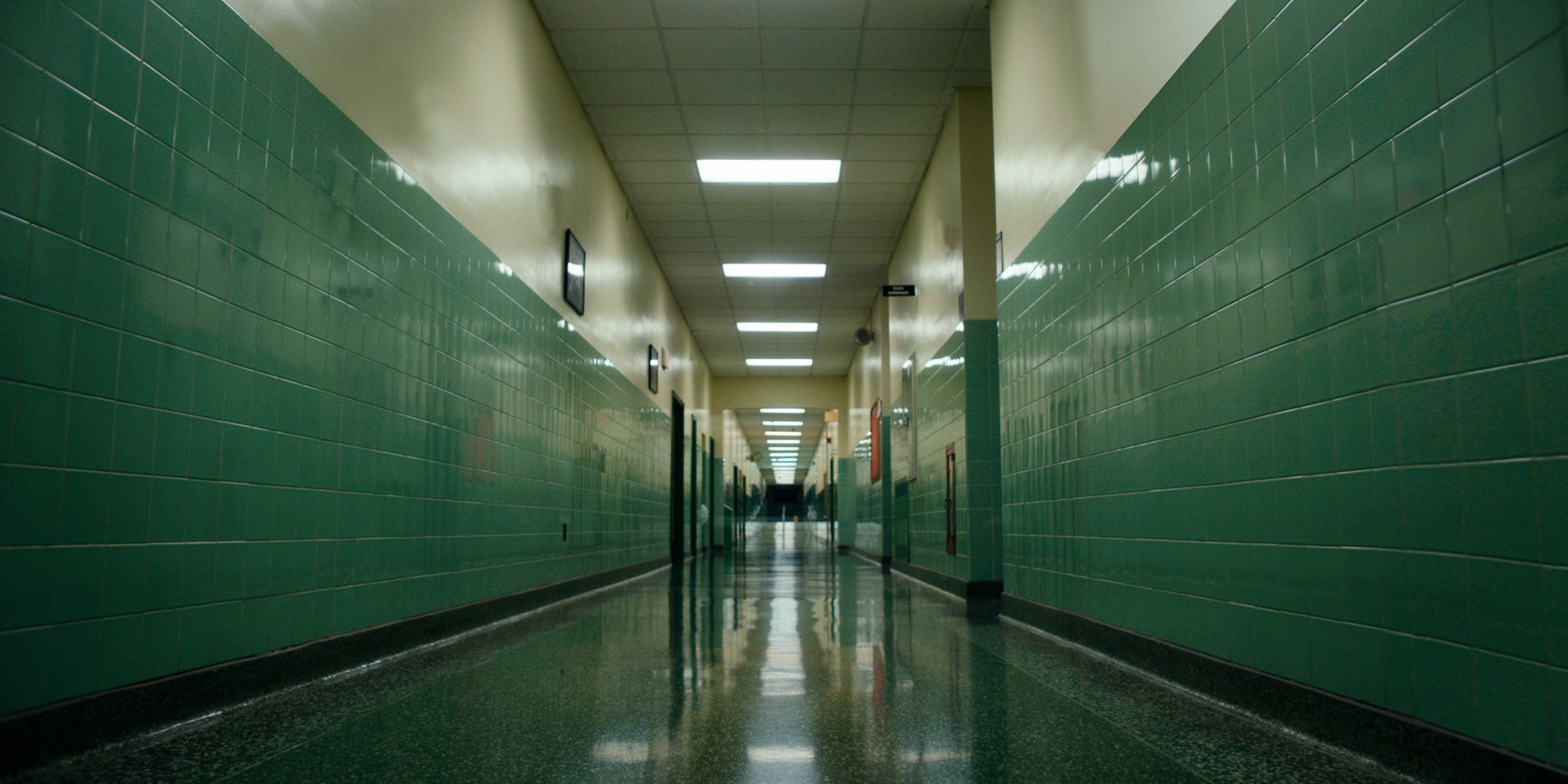
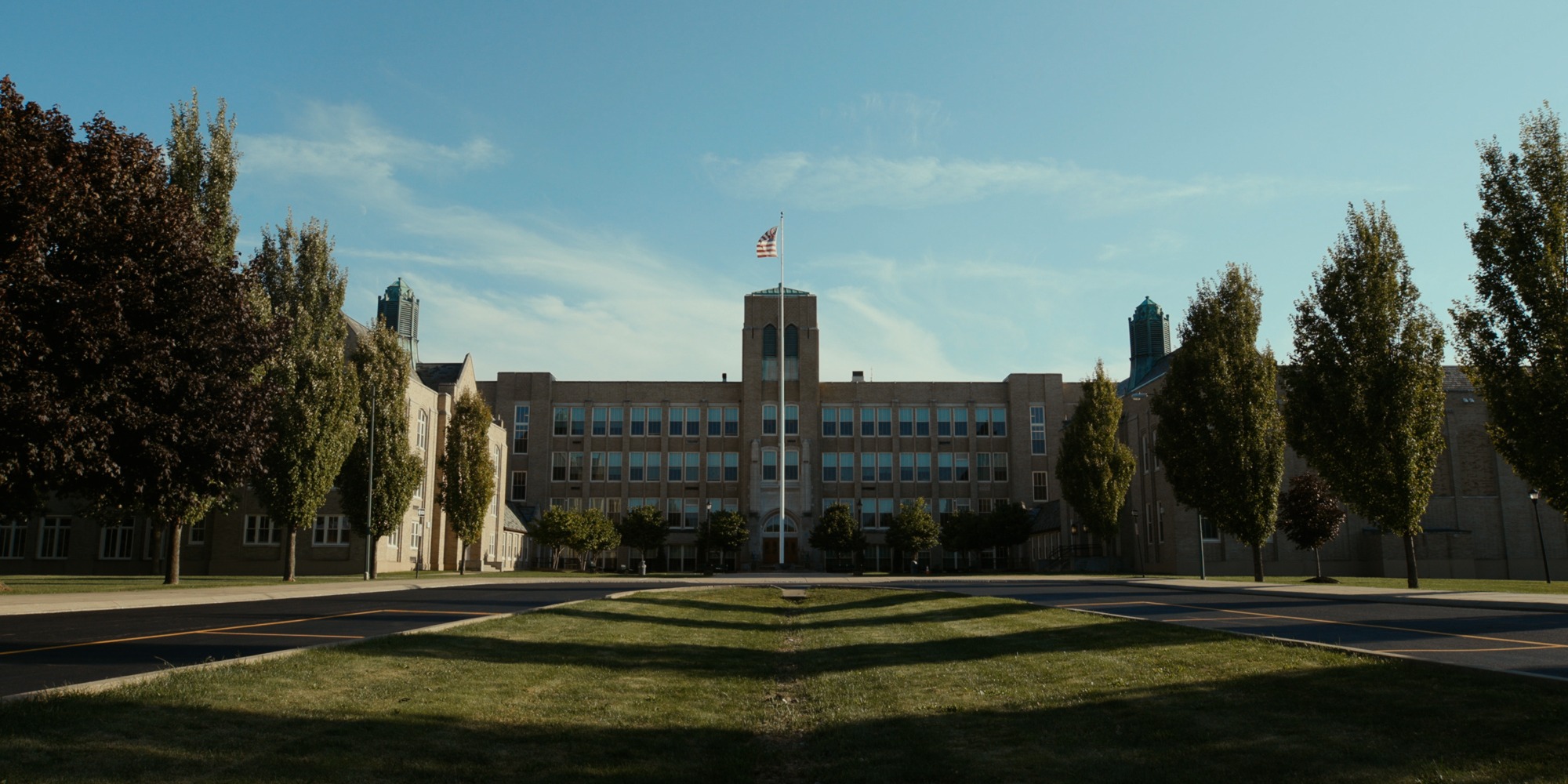

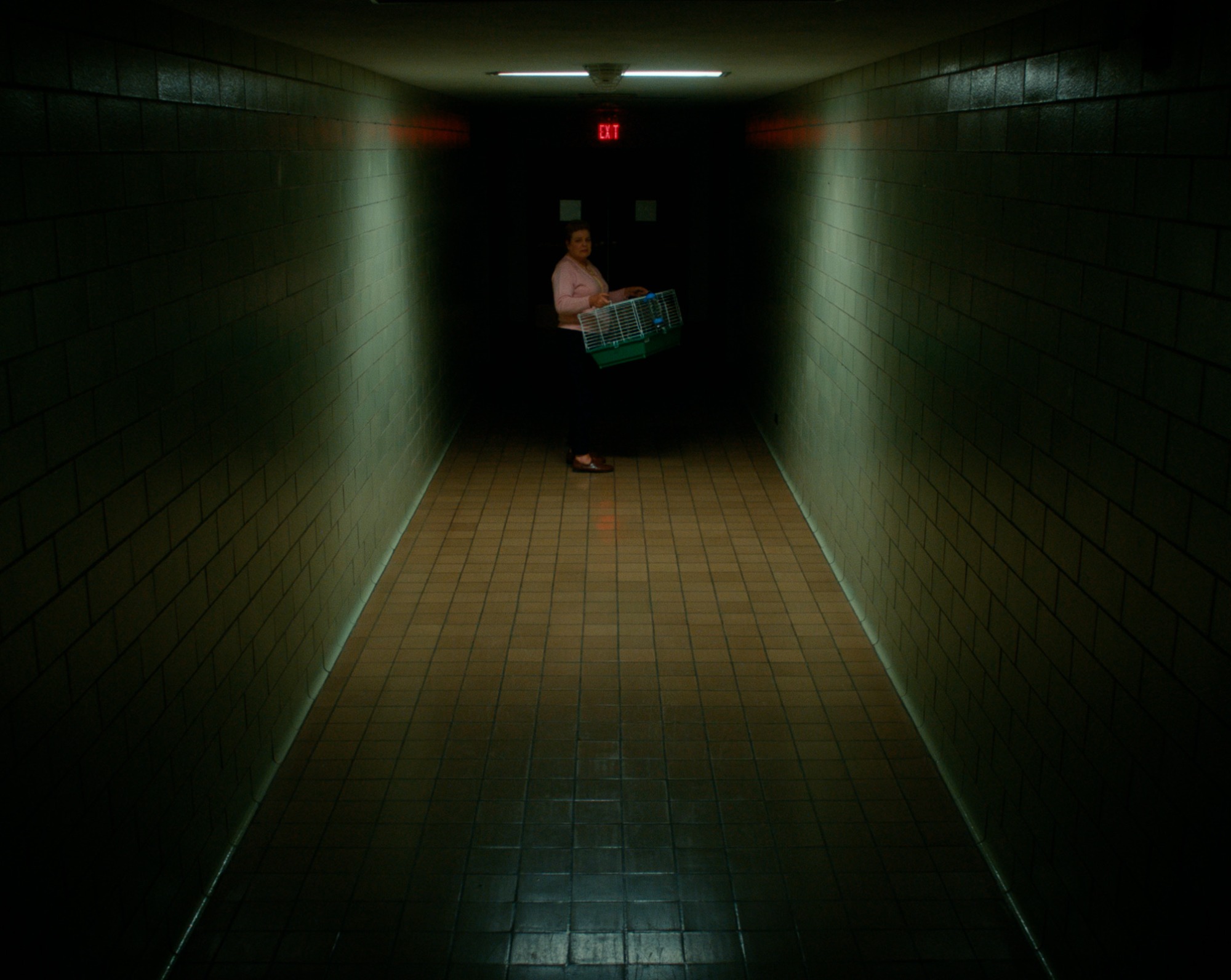
We turned the corner and there was that windowless, symmetrical set of toilets and urinals.
Talking of the school, the setting is integral to both the tone and narrative of the film. Was it always your intention to set the story in an educational environment, and how did you go about finding the right locations?
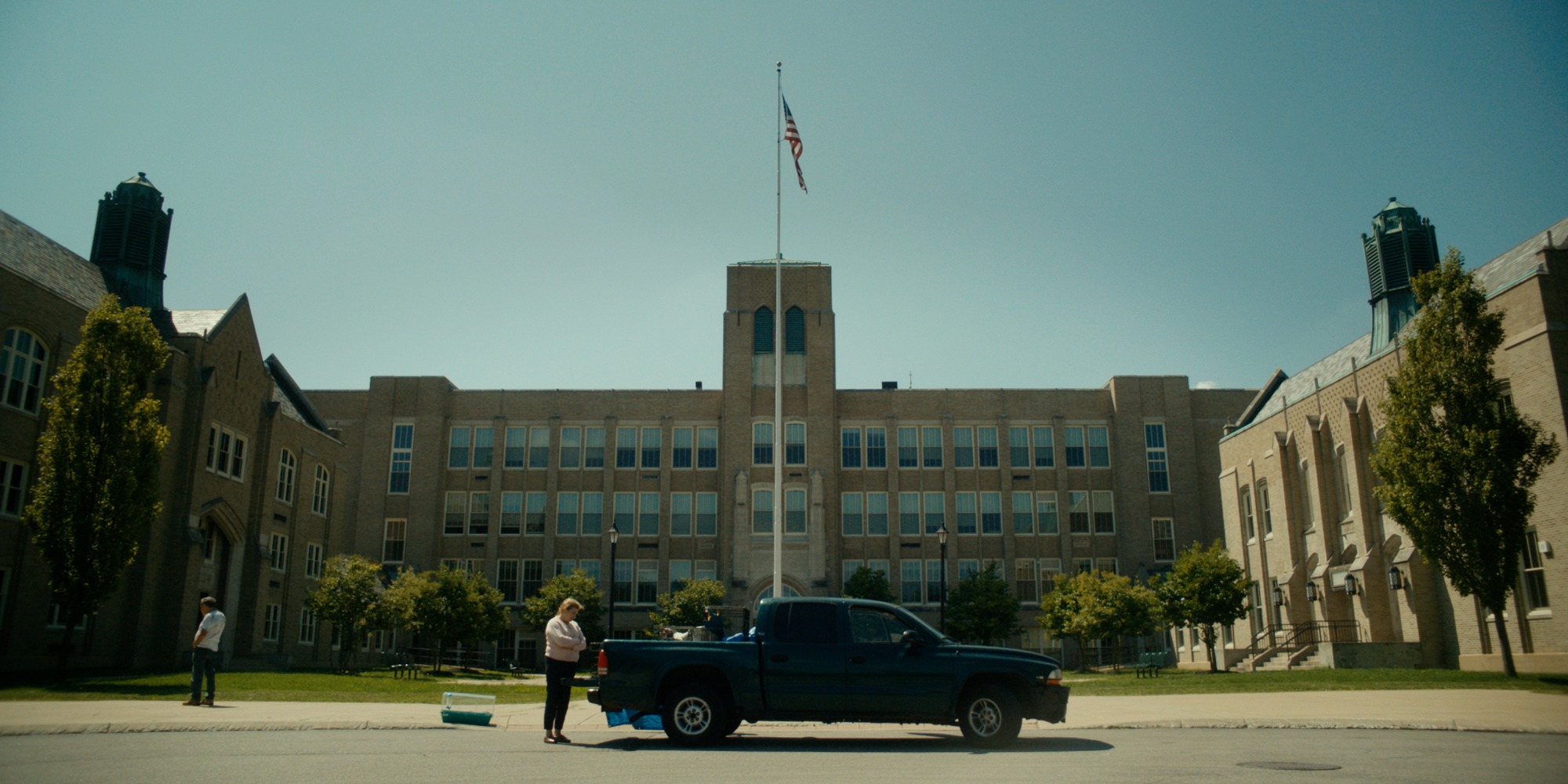
The same way I knew I wanted to make a film with Catherine Curtin, I always knew I wanted to make a short film at my high school. I can remember sitting in classes as a teenager picturing all sorts of ‘scenes’ that might take place in the halls, in the courtyard. That school has an incredible character and texture to it that you just can’t find in modern schools. And so the whole film emerged only after I decided on the school as the definitive location, since I knew it was a location I could secure for free (thank you Principal Pigeon).
I like to write for particular settings the way you might write for a particular actor. And if anything, we only scratched the surface of that particular high school. The nooks and crannies are endless. I mean, the scene where the student sits in front of a mirror in a basement dressing room – that’s a real room. We didn’t dress that at all. It’s certainly a location that seems to suggest other stories.


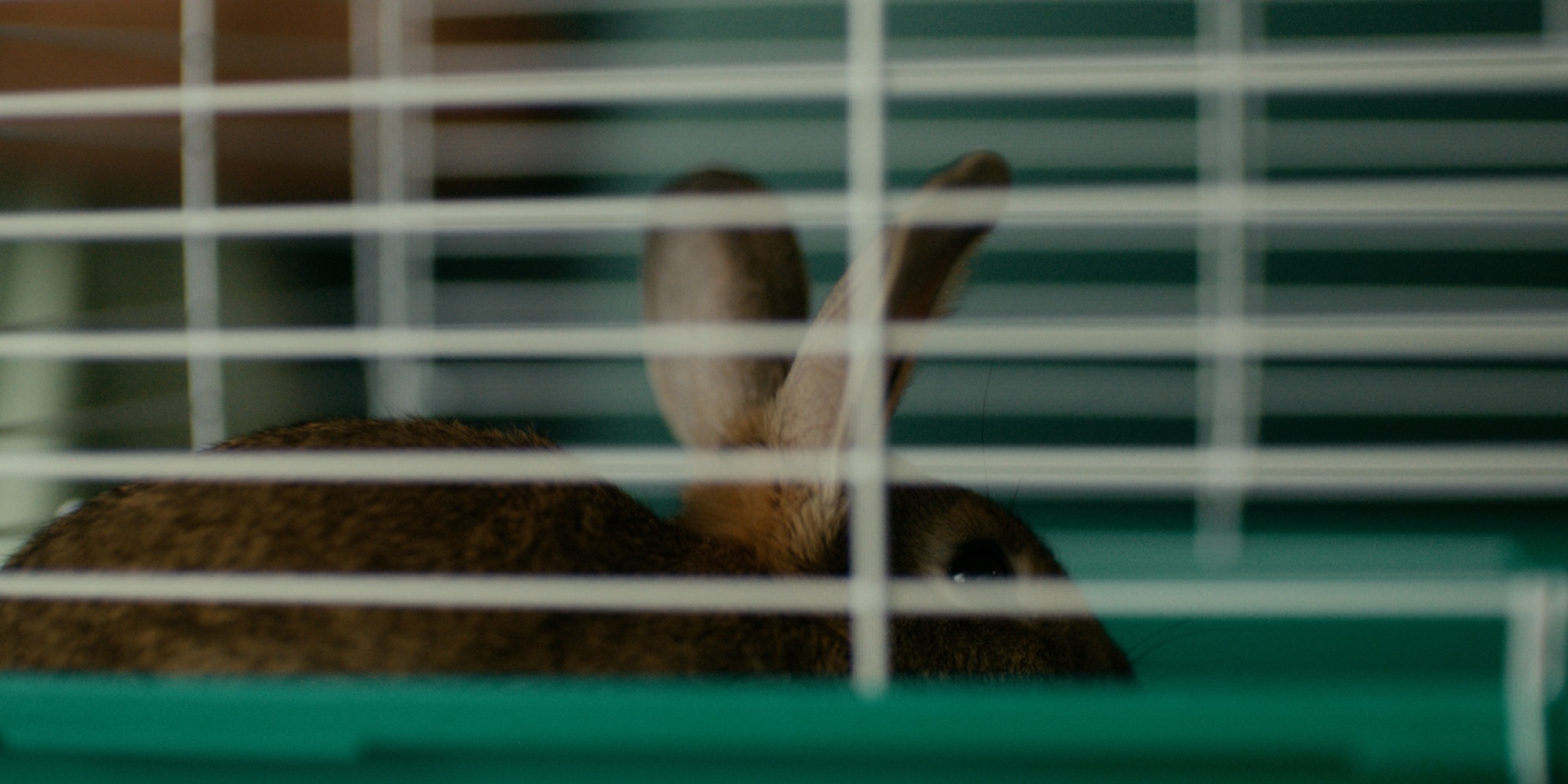

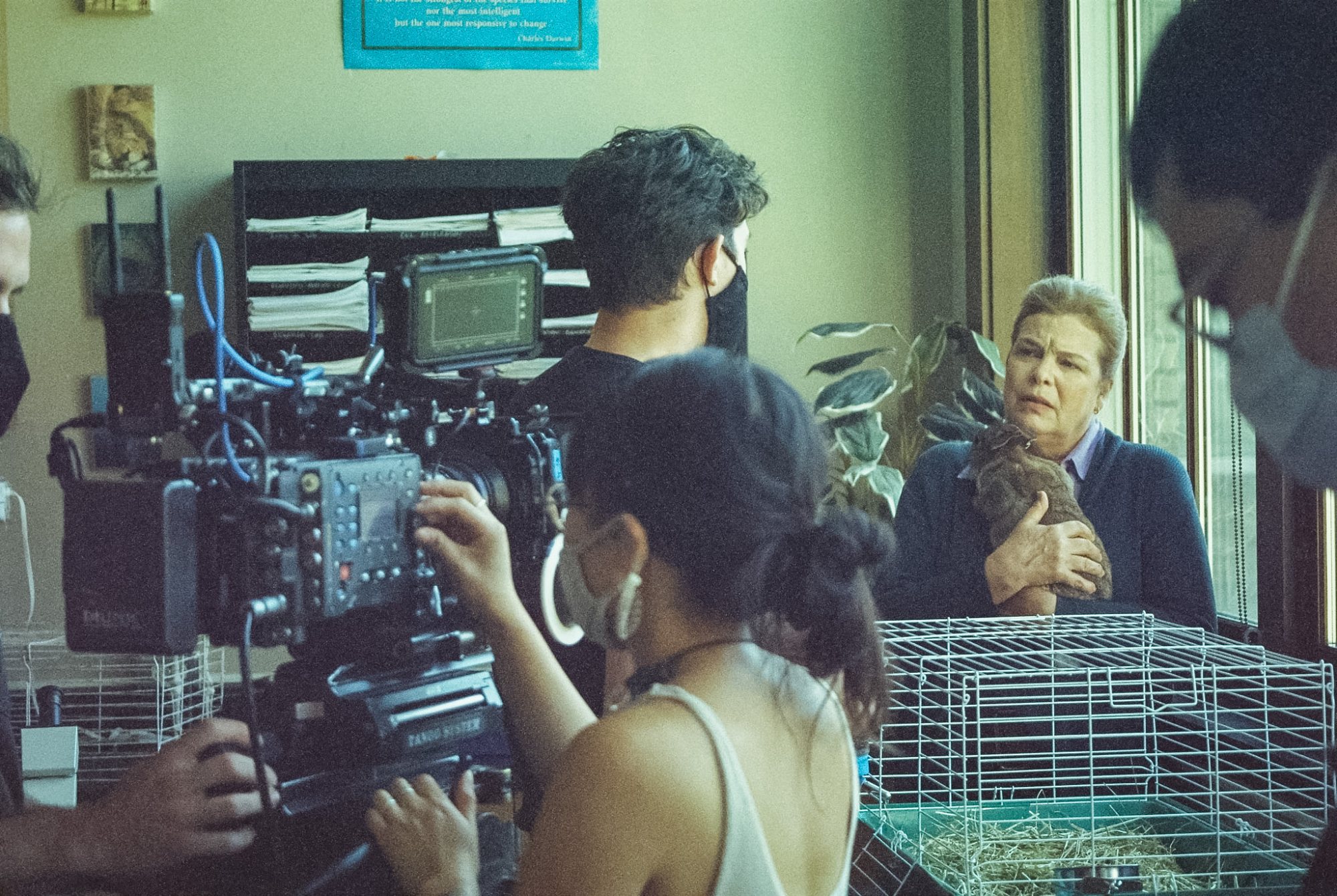
Alongside the two excellent central performances, the other ‘characters’ that steal the spotlight are the film’s animal co-stars. What was it like working with such a menagerie of creatures and did they present any unexpected challenges during production?
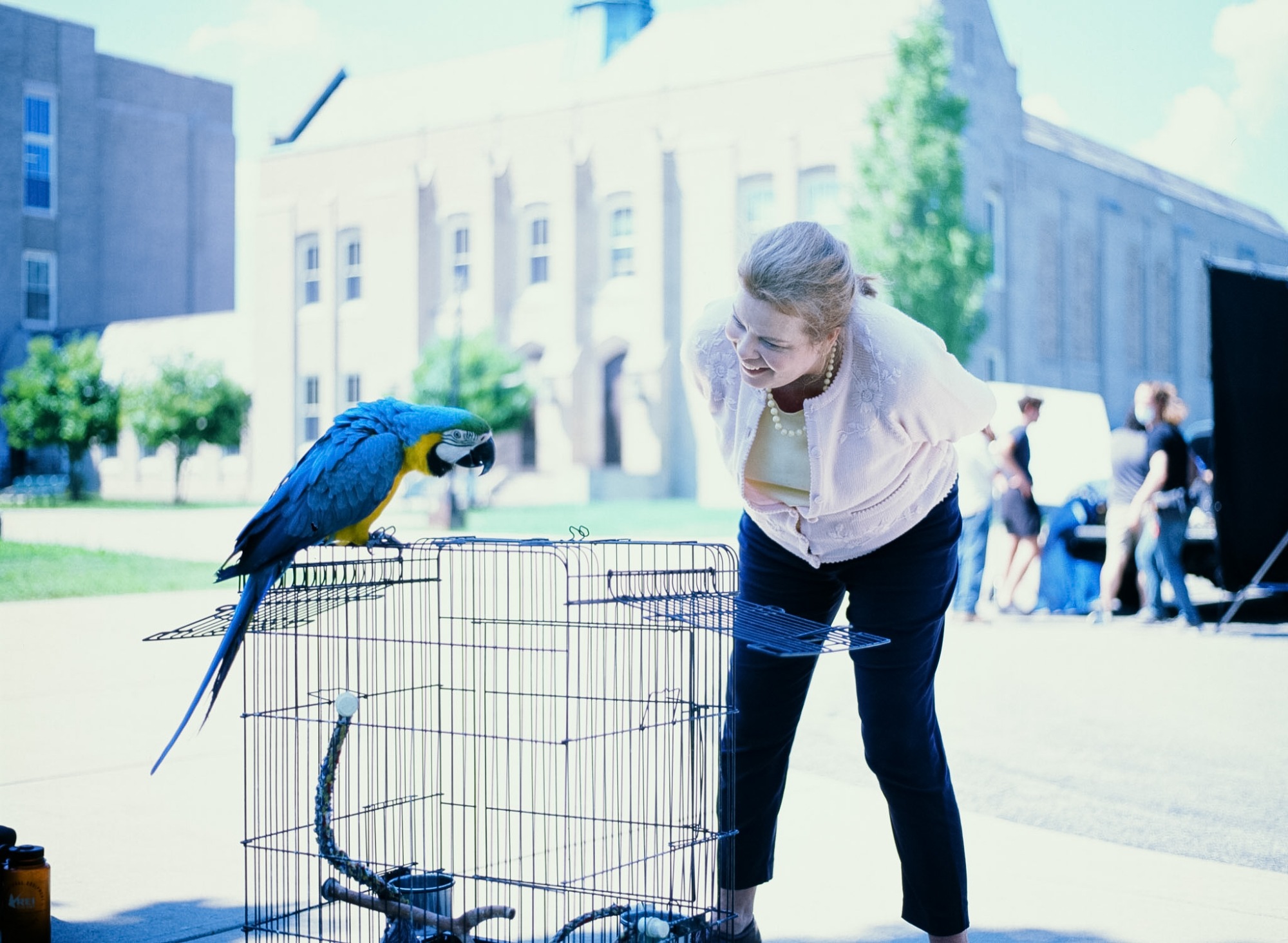
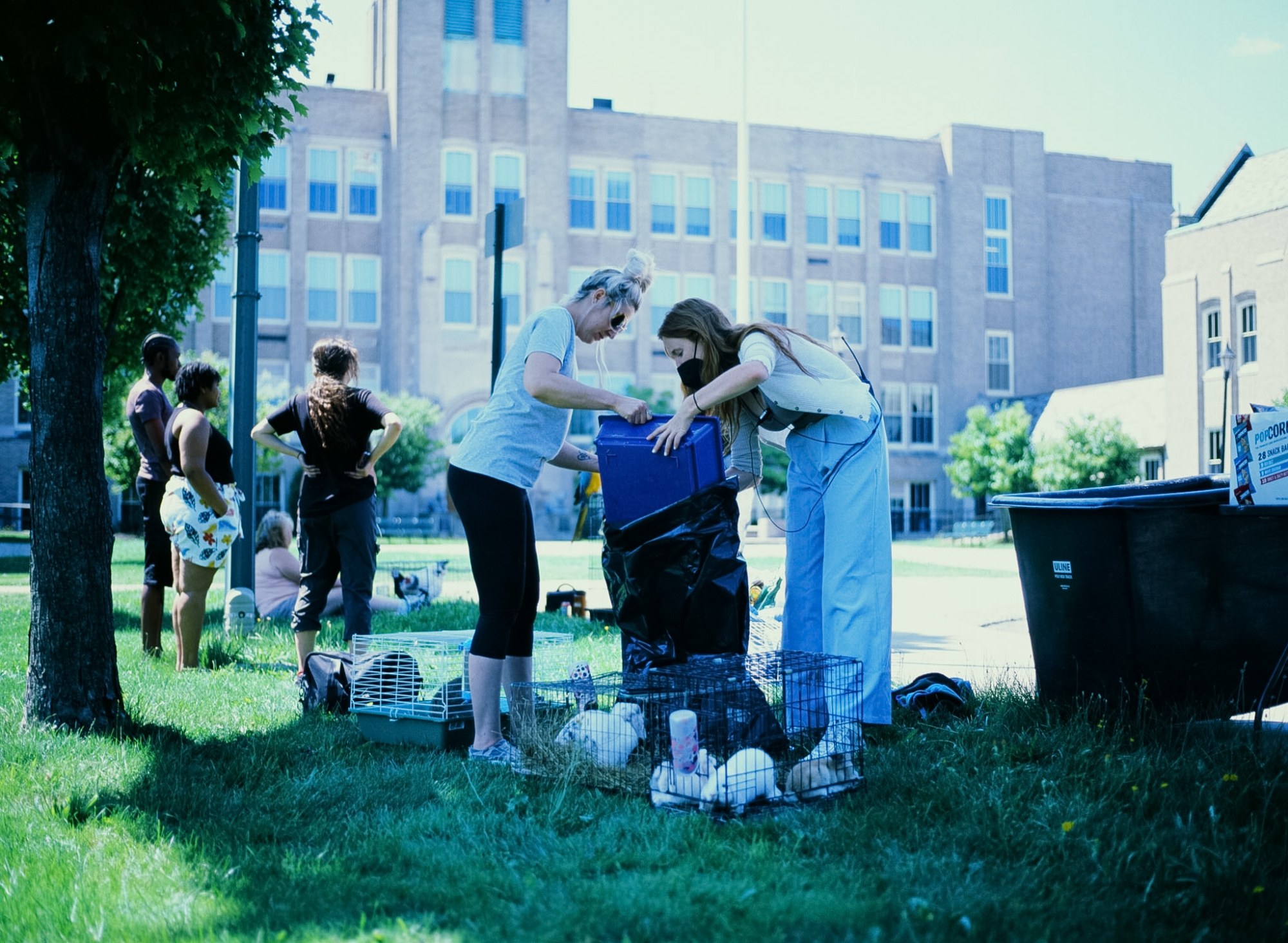
It was definitely a challenge. Animals and children usually are. And with this film we needed a whole zoo of creatures to really round out the cast. We ‘rented’ a rabbit from a craigslist vendor that was trying to sell it, and we then had a local rabbit breeder come on set as our rabbit wrangler. We named the rabbit Sallie. Then returned her to the owner the day after shooting.
The snake was a bigger challenge, because snakes aren’t nearly as active as you’d expect. They’re largely inert creatures, happy to sit there for hours at a time in one position. We achieved the snake’s movement by placing the snake into the enclosure and waiting for it to curl itself back up – then reversing the shot in post so it seems to be rearing to strike.
The way that one dog barks incessantly, that does so much more than a mere sound effect.
We did actually put the rabbit and the snake in the same glass terrarium, with a thick piece of plexiglass between them. The snake wrangler told us that because this snake has never seen a rabbit, it isn’t going to react aggressively. And she was absolutely right, that snake didn’t care less. Neither did Sallie. But because the snake was actually relatively small compared to Sallie, showing them in the same frame felt wrong. That last punch had to rely on the sound design to suggest what was beginning to happen offscreen.
One of my favorite moments in the film is this interaction Cathy has with the offscreen animal dealer. This scruffy conman selling baby rabbits, chickens, dogs and a rare blue macaw out of the back of his truck. This kind of traveling menagerie. I felt that just getting a bunch of different potential pets into one shot would have its own unsettling effect. Sinister, but shootable. And in that moment, just the way that one dog barks incessantly, that does so much more than a mere sound effect. It’s this pitiful howling that really echoes how despondent that character – the teacher mourning her missing rabbit – is feeling by the end of that awful day.




Before we wrap up, I just wanted to ask about the title – Galapagos – what does it mean and why did you choose it?
The title was meant to suggest the film’s core theme: evolution. The Galapagos Islands are where Darwin developed his theory of natural selection, and between the evolution of the teacher character and the biodiversity of the film, Galapagos felt like a subtle but evocative nod. An early edit even included an insert of a Darwin poster on the wall (which we ended up cutting for time), but other references are sprinkled in throughout – from the design of the end credits to those specimens in the jars in the biology classroom – giving that sense of ‘evolution no more’. In other words, look what happens to these creatures who don’t evolve fast enough to avoid getting caught… it’s ultimately the unspoken question the student asks the teacher: will you be prey? Or will you evolve fast enough to become the predator?

With Galapagos now available online, what are you focusing on next? Are there any upcoming projects you’re particularly excited about? And where can our audience go to follow your work?
I’m currently in pre-production on my next short film, which will feature one of my favorite living actors. We’ll be shooting that in Buffalo later this year. Beyond that, I’ve written a feature film called Kathleen’s which was recently selected as a semifinalist in the Pipeline Screenplay Competition. I’m still in publicity training, but you can follow my Instagram @kylemsims and check out my website at kylemsims.com
Finally, this is a question we’re asking all the filmmakers we interview: if you could recommend one short film by another filmmaker, what would it be and why?
World of Glory (1991) by Roy Andersson. My experimental film professor Darrell Wilson showed it to us in school, and I was absolutely floored. The first scene alone is a masterpiece – visually, aurally, narratively. It just stabs you and lets you do the most horrible math as to what’s happening. Roy Andersson is definitely a master of the short-form. What he’s able to do in terms of stringing micro vignettes together into a wider tapestry – it’s just incredible. I was definitely aping World of Glory when I made my college thesis film, which was just 10 unbroken shots, 10 little vignettes. And I remember being flattered when a real Hollywood director saw it and said, “Roy Andersson – I love him!”