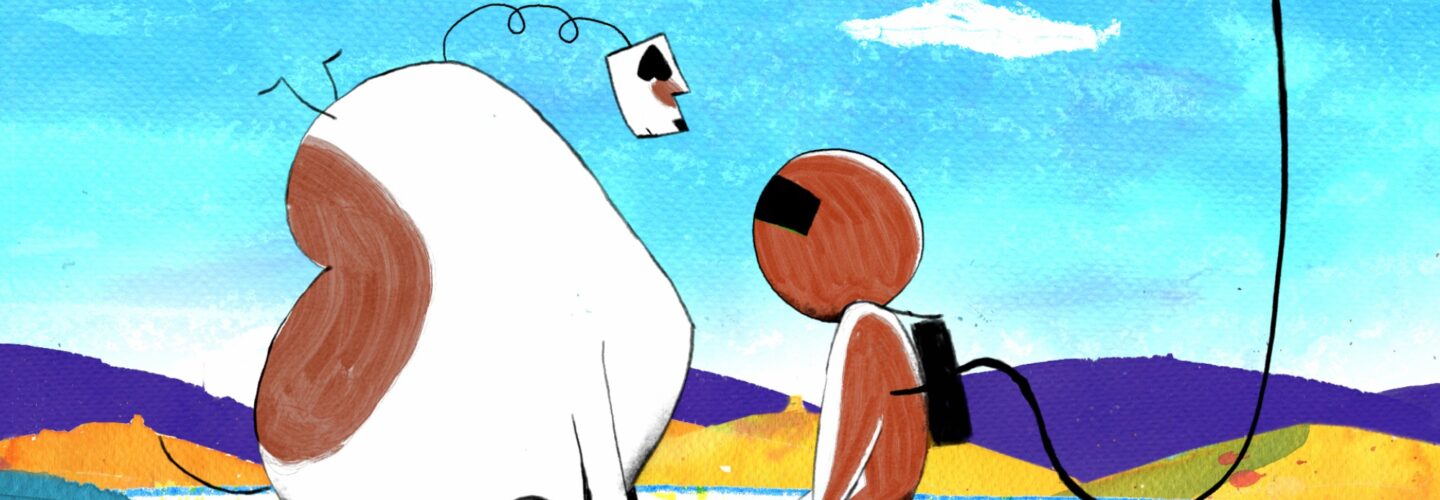
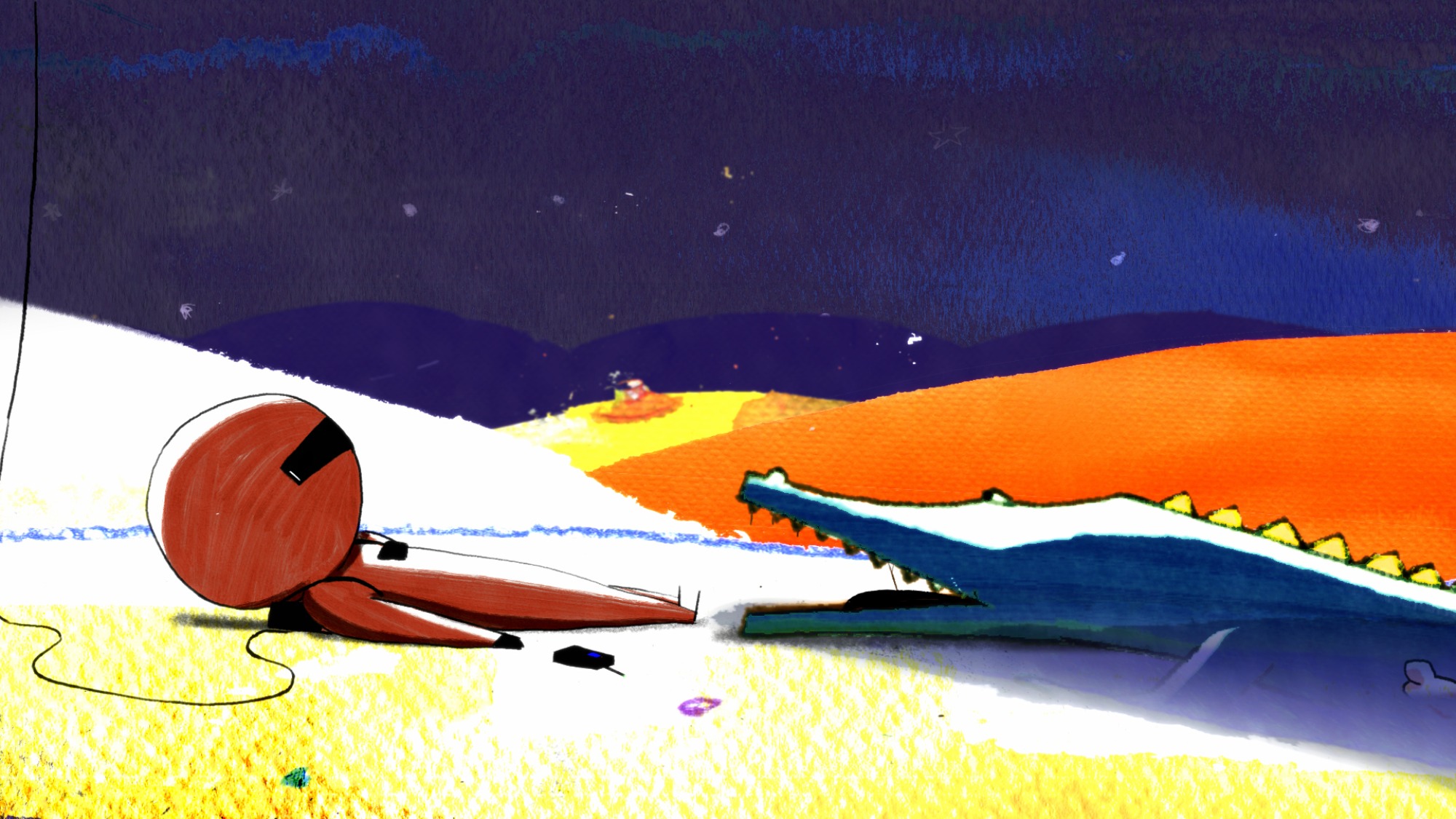
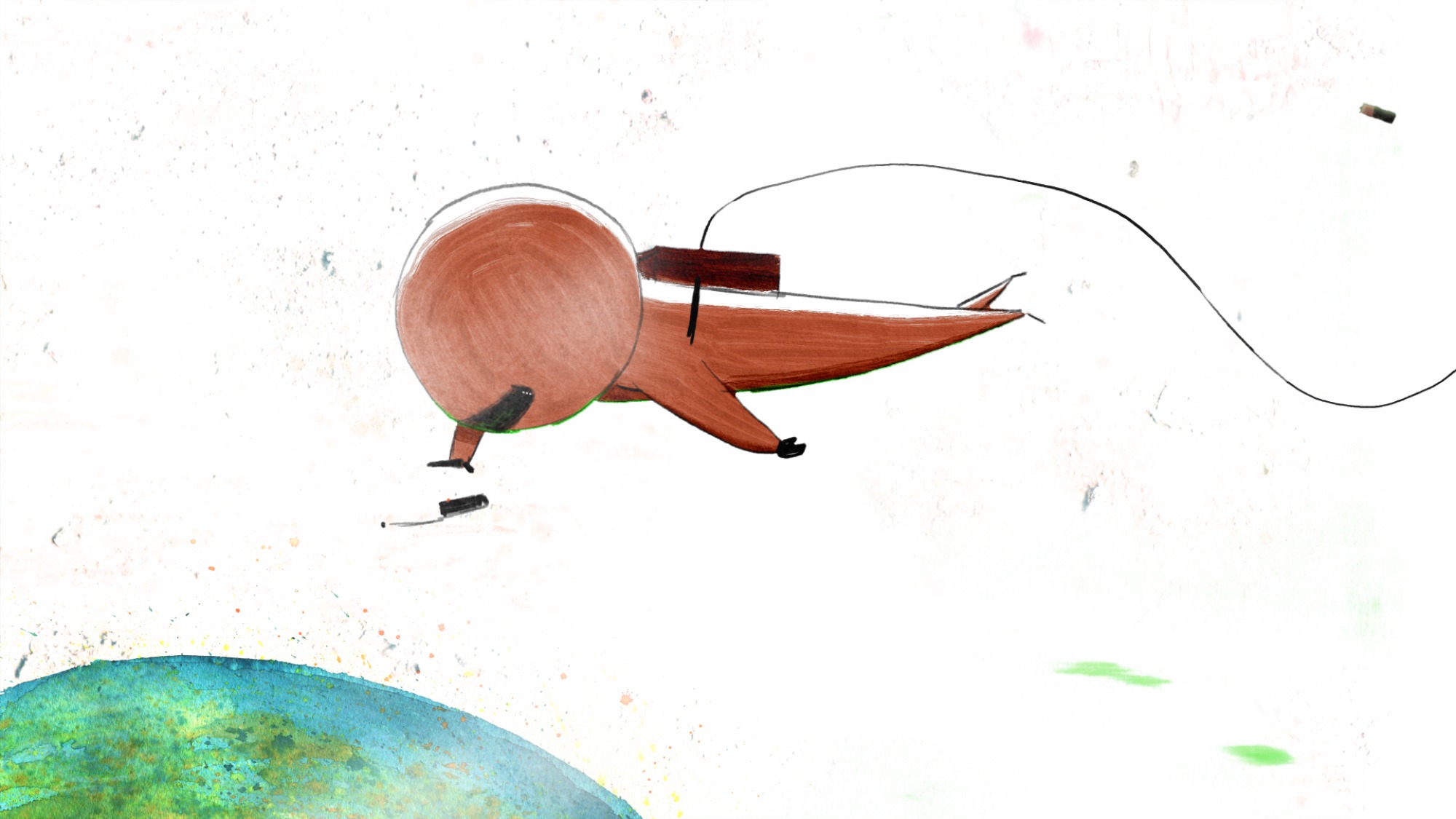
When we talk about independent filmmaking, we usually mean a filmmaker working outside the structures and expectations of the studio system. For Shahaf Ram, however, independence has taken on a more literal meaning. His latest short, Orange Story, is a remarkably personal production that he created almost single-handedly, without funding or institutional support, over the course of seven years. An ambitious space opera about a heartbroken astronaut forced to abandon his mission to save humanity after crash-landing on an alien planet, Orange Story initially appears to operate on an epic scale. Yet beneath its cosmic setting, Ram has created an intimate exploration of loneliness and heartbreak. Conceived originally as the first episode of a 12-part series, the film offers only a glimpse into a much larger world that Ram has been developing since 2019.
The remarkable circumstances of its production would be reason enough to speak with the filmmaker, but it is the combination of ambition and vulnerability that makes Orange Story particularly compelling. Following the film’s recent online release, we invited Ram back to Directors Notes—having last featured his work on our site in 2018—to discuss the seven-year journey of bringing his astronaut to life, the challenges of working solo and the importance of feedback when working on an independent production.
Hi Shahaf, we’re really excited to have you return to DN to talk about your epic new short film, Orange Story. Your film follows an astronaut on an extraordinary journey, but I wanted to begin by talking about your own journey in bringing the film to life. I know you started working on it back in 2019, so can you take us through the process of making Orange Story and what it has been like to finally release the film to an audience?
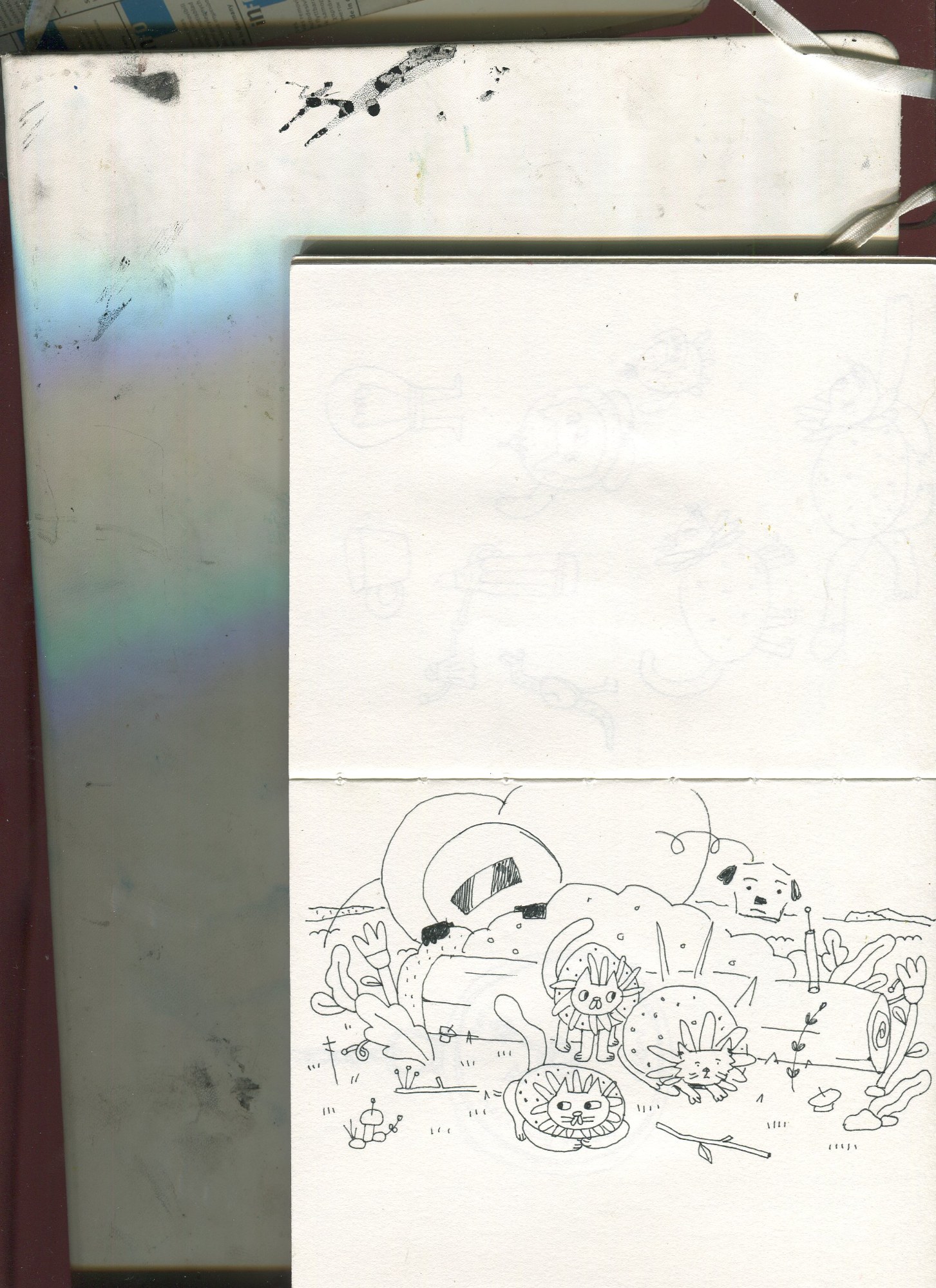
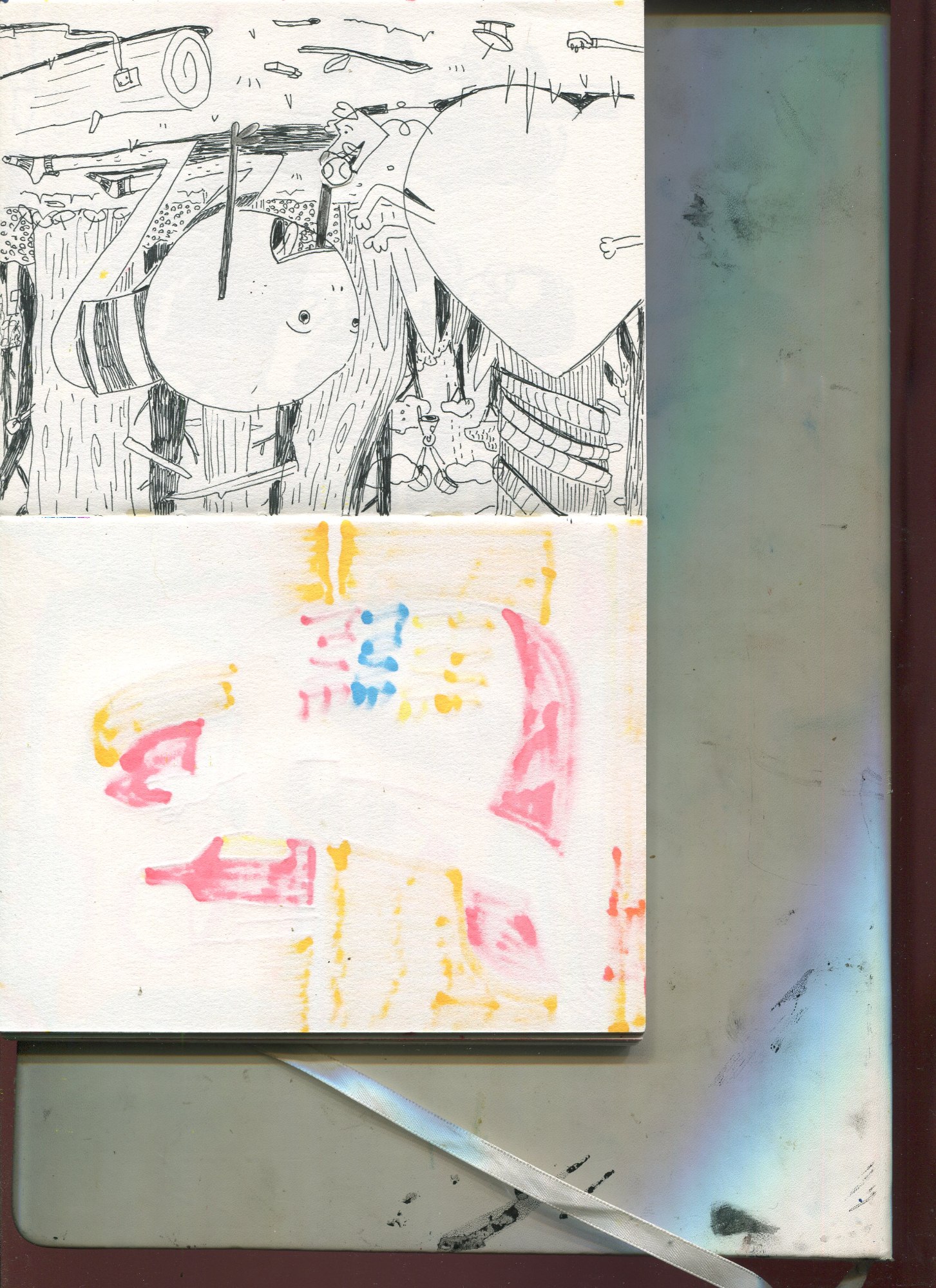
Hi! It’s great to be back! Honestly, my obsessive thoughts about the astronaut started back in 2019. After a long period in Tel Aviv of work and routine, I found myself between apartments and between projects, and I felt like it was a good opportunity to do something strange. So instead of looking for a new apartment in Tel Aviv and jumping into the next project, I sublet a room in Paris without any clear reason, and without a clear date for when I would come back. I didn’t know anyone there, and there was nothing waiting for me. I just wanted to experience something completely different for a while — to shake off some of the dust of routine and fantasise about new possibilities. And honestly, it was quite lonely and sad there. I never really felt connected to the place. But I would sit in cafés and parks, and somehow the astronaut started appearing on the pages of my sketchbook everywhere I went. I think that feeling of being a stranger, disconnected from the world around me, somehow connected with the character.
I wanted to make one film where, when people watched it, I would really feel that they were seeing something very clean and authentic from me.
I especially remember one day when I went to this huge park and, almost like a stream of consciousness, started writing more and more ideas about the astronaut’s world. What came out of that day was actually a rough storyline for an entire season of the astronaut — twelve episodes. Looking back, it wasn’t really a structured story yet. It was more a chain of associations — themes I wanted to explore, moments, characters, and ideas about the logic of this world. It probably helped that it was my first time getting high in Paris, after not smoking anything for several months. Of course, in that moment I felt like I had completely figured it all out. Then you go back to the studio, sit with it again, think, erase, change things, and realise that what you have is really just the foundation you’re starting from.
As for what it feels like to finally release it to an audience — mostly, it feels like a relief. I felt that I was trying to make something that would distil my artistic beliefs. After years of making commissioned work and collaborating with other people, I wanted to make one film where, when people watched it, I would really feel that they were seeing something very clean and authentic from me — without mannerisms, without trying to pretend to be something I’m not. So that I wouldn’t have to explain who I am every time.


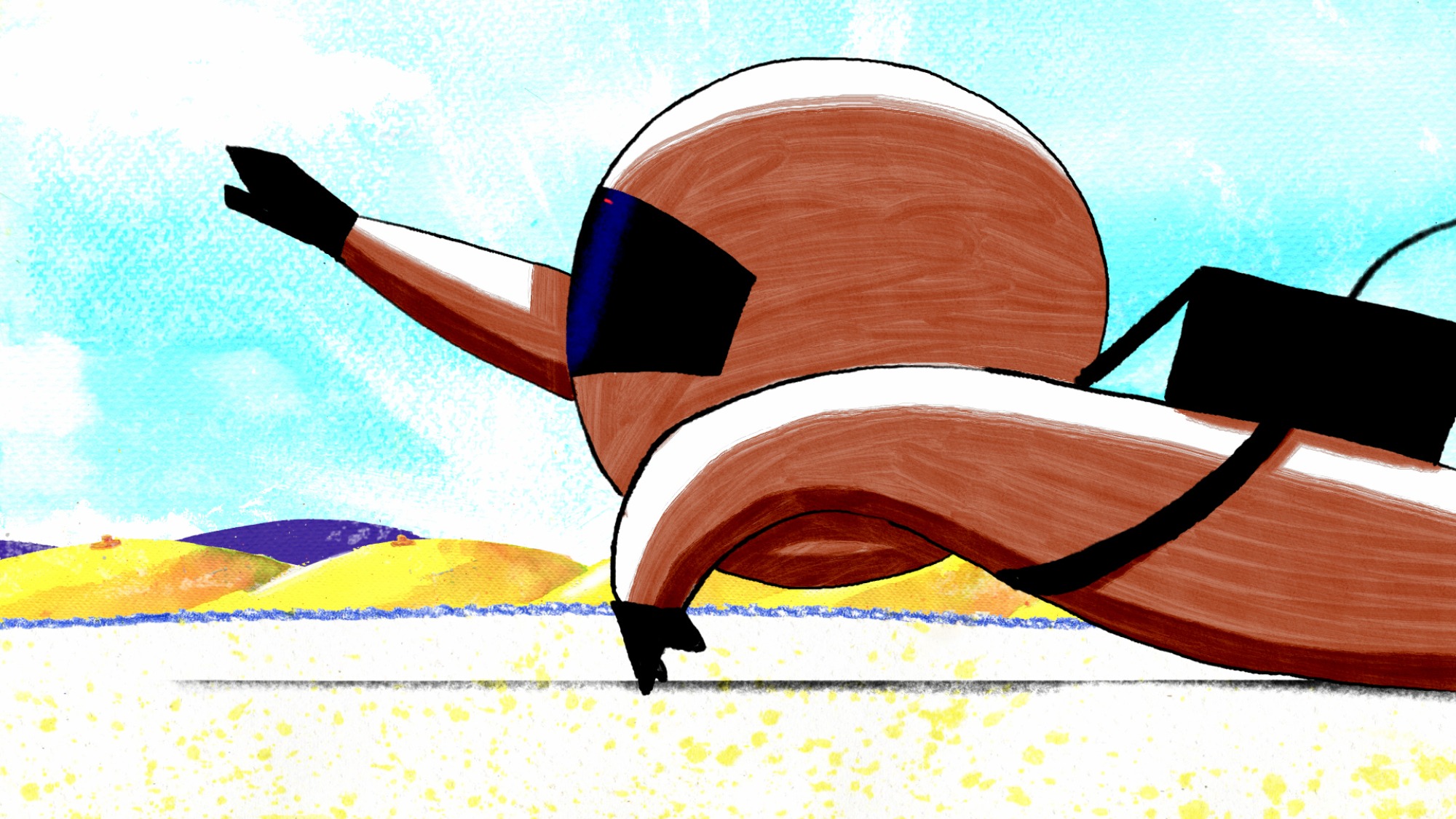
Seven years is a long time to live with a single project and a lot has happened with the world in that time. Did the film, or your relationship to it, change significantly during that period?
Yes, it’s been a very long period. Most of the animation for the film was made during the COVID pandemic. Before COVID, I was working in theatre, and when the pandemic hit and the theatre closed, I felt like it was exactly the right moment to pull the astronaut ideas I had developed in Paris back out and finally start producing the first episode. I already had ideas for a whole 12-episode season, but I decided to focus on the first episode and start from there. It was a very intense period. At some point I realised that I needed someone to bounce ideas off — someone who could help me make sense of the endless amount of ideas I had for the world of Orange Story. That’s when I approached the screenwriter Tom Madar, who became almost like my complementary half. If I’m chaotic and full of ideas and thoughts running in parallel, Tom has an incredible ability to take all those thoughts, arrange them into something linear, understand what is important and what is not, and bring some order to the chaos.
I ended up cutting four minutes of animation from it. Some of it was really beautiful, so that was quite painful, but I believe it was the right thing for the film
After that intense period during the pandemic, the film was about 90% finished. But those damn final ten per cent… COVID was over, I went back to work and to everyday life, and new projects came along. The astronaut, however, stayed somewhere in the back of my mind. I kept returning to the film — changing little things, adding things, editing, recording again, deleting things, having new insights about particular moments. At one point the film was 21 minutes long, and I ended up cutting four minutes of animation from it. Some of it was really beautiful, so that was quite painful, but I believe it was the right thing for the film. I still hadn’t reached the point where I loved the film and felt that it represented me in the way I had imagined.
Most Popular
One interesting thing that happened was that I changed the voice of the main character four times. Eventually I realised that I was never going to be satisfied with an actor doing it, because somehow I needed to do it myself. That was the last major change I made to the film, and it happened quite recently. Only after that did I finally feel that the film was ready.
There seems to be a recurring theme of heartbreak and relationship grief running through your work. We saw it in Separation, and it returns in Orange Story. What is it about this particular kind of emotional experience that continues to draw you towards telling these stories?
That’s a good question. I think on the most immediate level, it’s because it’s something I haven’t figured out for myself yet. But honestly, Orange Story isn’t really about one specific relationship or one specific woman. In a way, I think it’s trying to distill ten years of being single in Tel Aviv. Actually, the name of the astronaut’s ex-girlfriend and commander, which you hear through the radio, is K.T. It’s an inside joke: if you type the Hebrew word “לא” (“no”) on an English keyboard, you get “kt”. So K.T. represents the big “no” – the general disappointment with the fantasy of romantic relationships, and at the same time the desire to be alone.
Do you choose a relationship, or do you completely devote yourself to your work and bring whatever gift you have into the world? I think that’s something I’m still trying to figure out.
There’s this familiar idea of “save the world, lose the girl” – like Spider-Man. I think people who don’t really know how to do anything other than create can struggle with something similar: do you choose a relationship, or do you completely devote yourself to your work and bring whatever gift you have into the world? I think that’s something I’m still trying to figure out. I still don’t know how to fully give myself to a woman and build something that makes her want to stay, while at the same time remaining true to the part of me that, as an artist, feels almost compelled to question everything and keep asking endless questions about life, myself, and the world around me. I really hope it’s possible to have both. What about Spider-Man? Did he figure it out eventually?
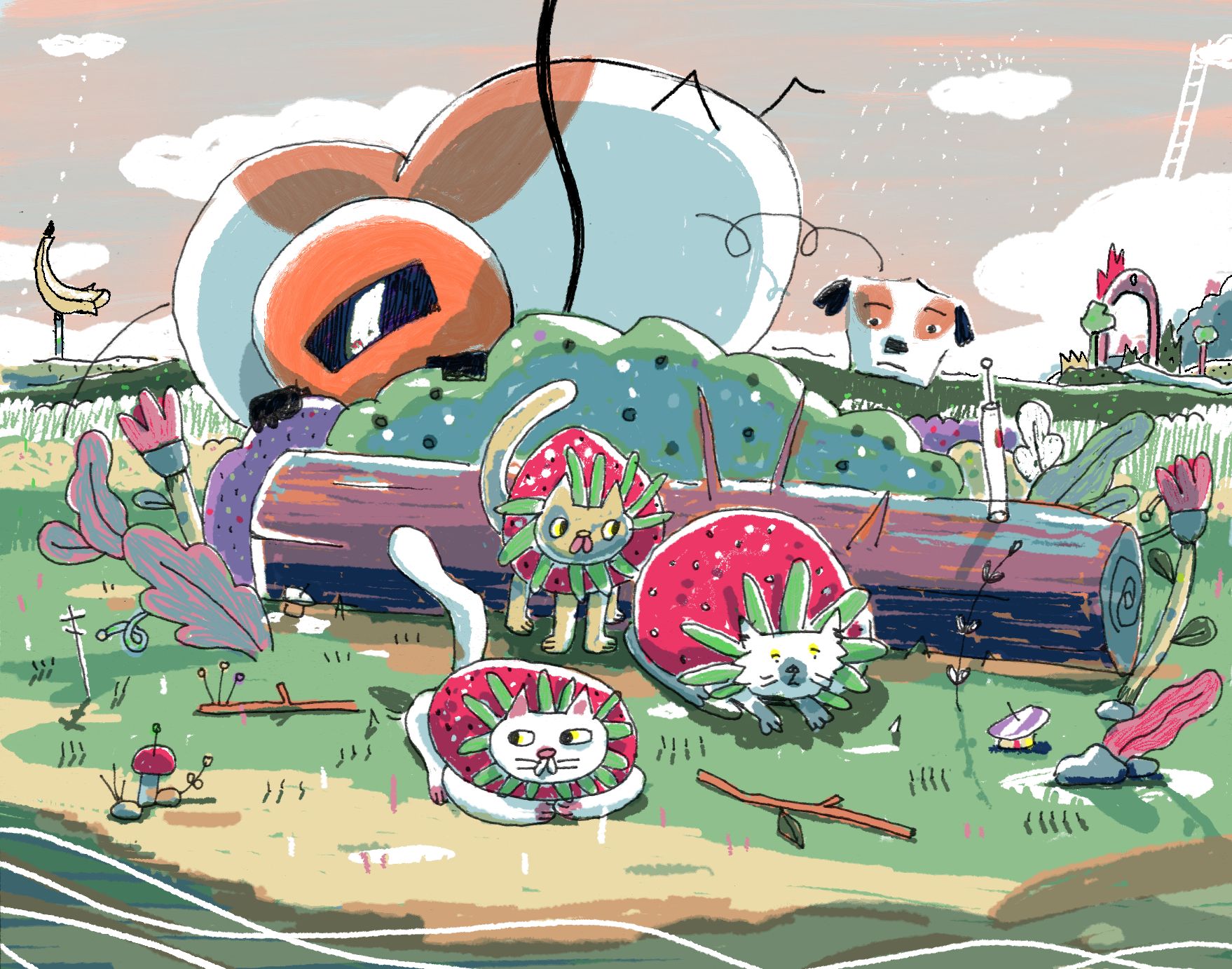
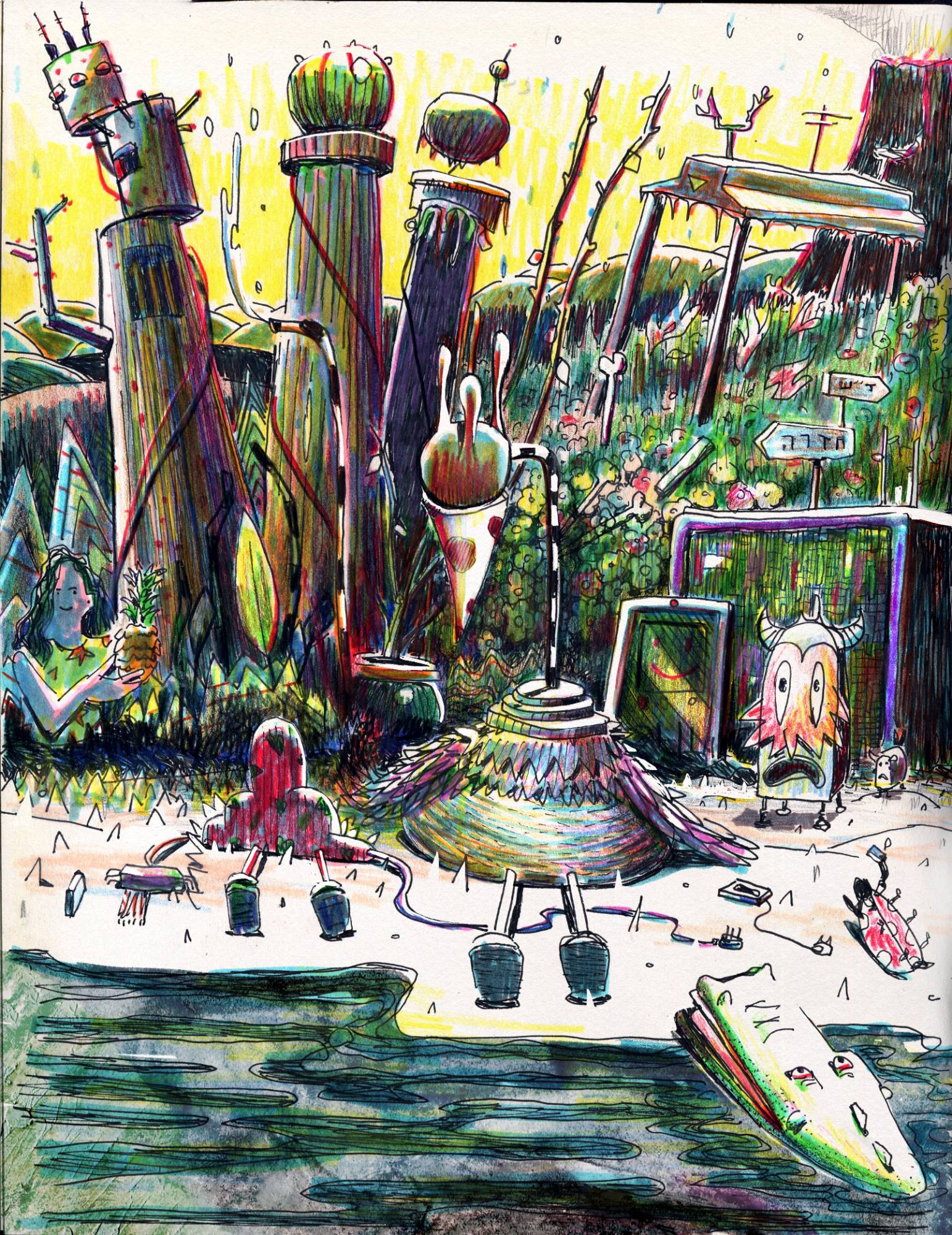
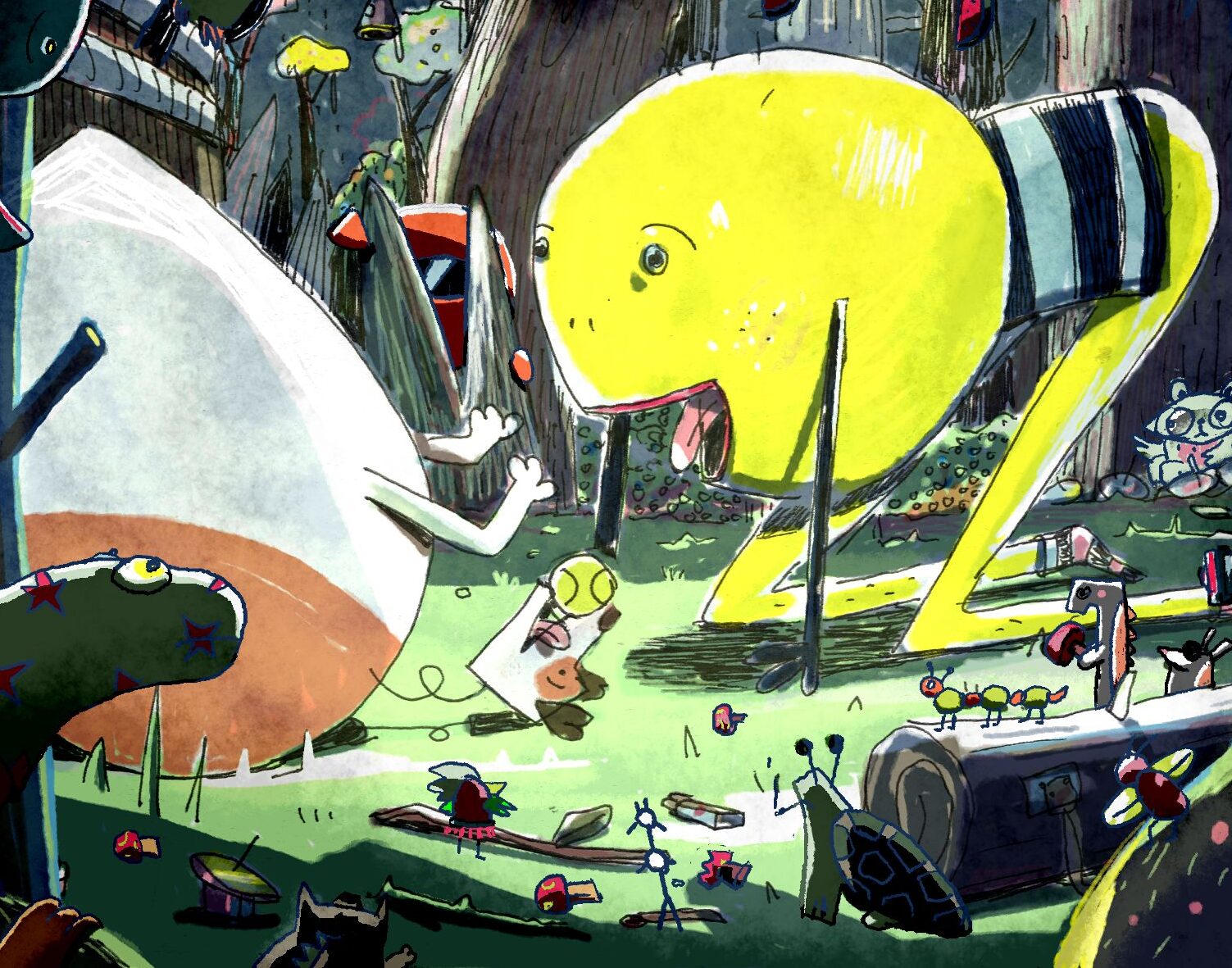
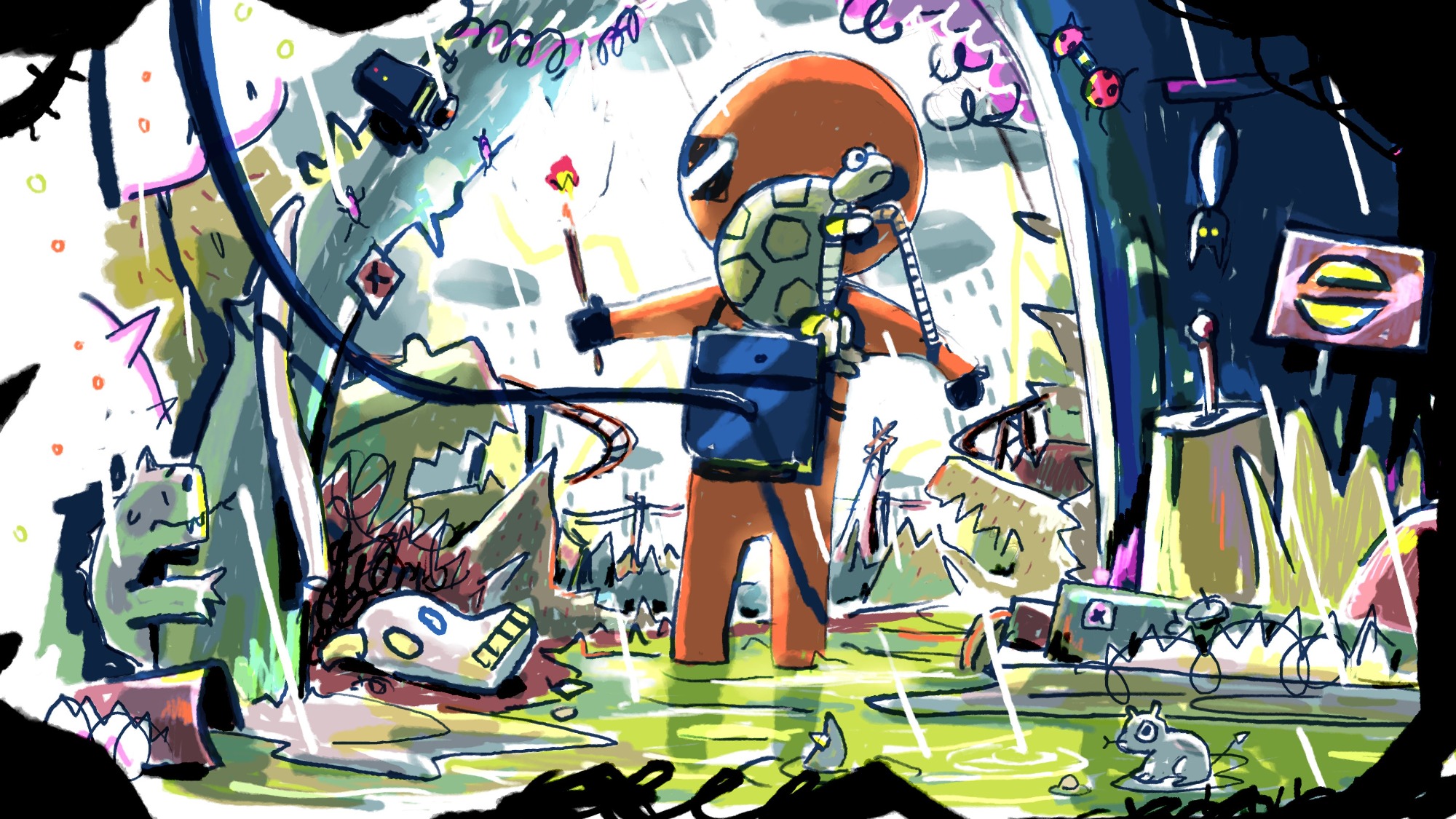
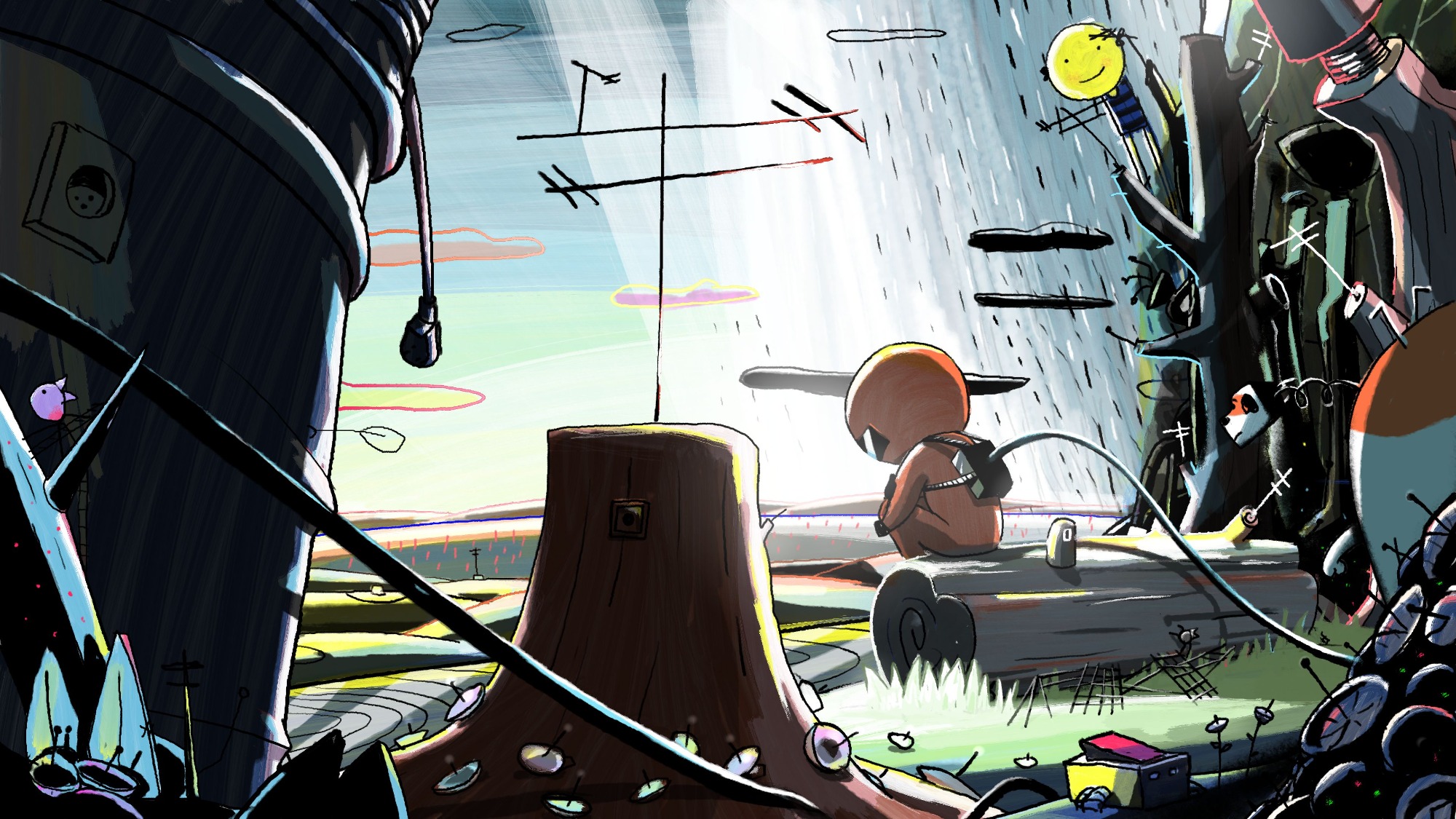
There’s an interesting contrast between the scale of Orange Story – an astronaut travelling through space – and what ultimately feels like a very intimate emotional story. What appealed to you about using such an epic setting to explore something so personal?
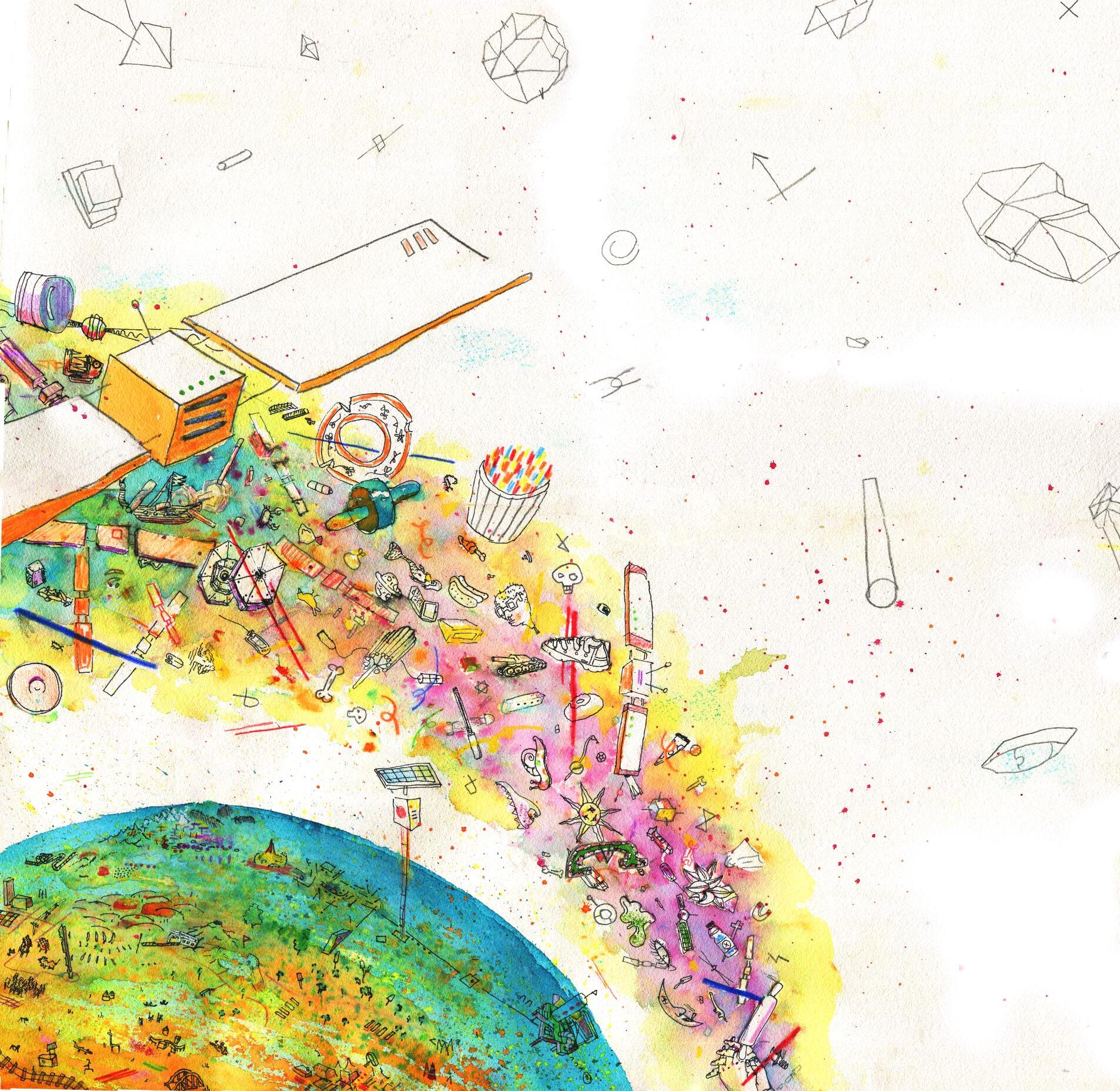
I think this is a contradiction that we all feel all the time. We are inside this insane cosmic system – the moon, the sun, space, life itself – and nobody has any answers. Nobody really knows what the hell this stupid game is. And yet, we can’t help but take things personally, as if our individual problems are the most important thing in the universe.
In a strange way, I feel that it works the other way around too. In the moments when I’ve managed to connect with another person completely, to somehow make that person more important than everything else in the universe – which I guess is what we call love – it actually became easier for me to see how cosmic the universe is. How this strange, chaotic, one-of-a-kind thing we’re part of can also feel incredibly precise and meaningful. When that connection isn’t there, everything can start to feel quite arbitrary, grey and meaningless, and you almost don’t understand why we’re trying so hard.
I also think that life in Israel, whether you want it or not, forces you to be political, even when all you really want is to live your private life. It’s almost impossible to separate your life from politics, war, survival and the everyday struggle. Three of my ex-girlfriends have left Israel, and another only had Russian citizenship, so she could only stay in Israel for a limited amount of time and ended up moving between countries and between wars. Even our private lives are constantly being pushed around by the reality of living between one war and the next.


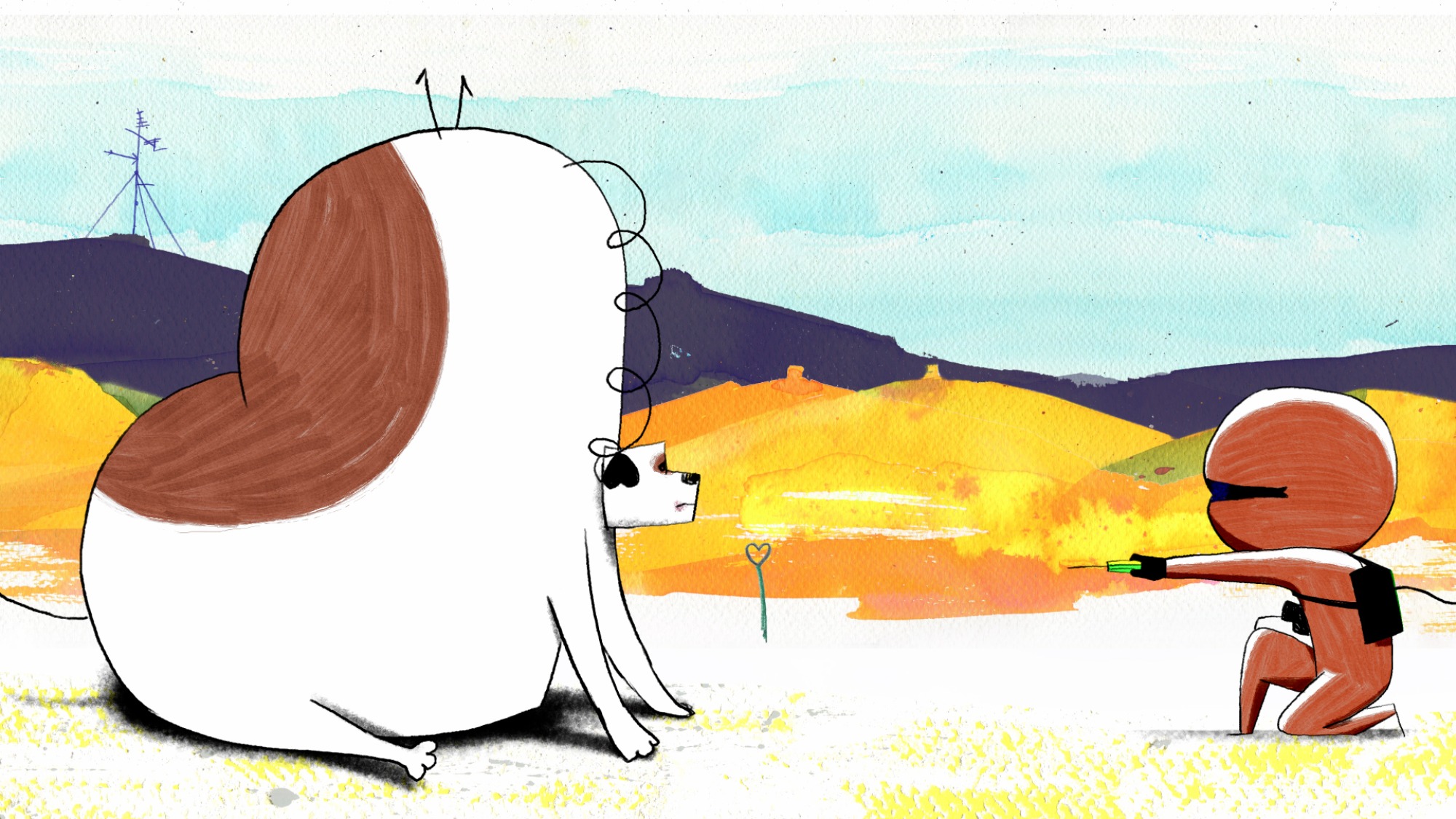

Alongside your astronaut protagonist, the film features two animal characters, a crocodile and a dog. What do these characters represent to you and why did you feel they needed to be part of this story?
It’s not a coincidence that I do the voices for both the astronaut and the crocodile. In a way, they represent two different ideals of masculinity. The astronaut is sensitive and searching — looking for meaning and believing in true love. The crocodile, on the other hand, is strong, aggressive, intimidating, grounded, realistic, stable and supportive. From the beginning, this was part of their relationship. In the 12-episode story, the crocodile is actually the ‘villain’ the astronaut is fighting against. But as their story unfolds, they gradually come full circle and start to understand each other. Like the classic hero and his sworn enemy, they discover that they have opposite but complementary qualities, and that each of them has something to learn from the other. I wanted to bring these two characters together and let them have a dialogue – not just literally, but also between these two different ways of being. I felt they could contribute something to each other.
And then there’s the dog. She is, of course, based on my beloved dog, Gush. She’s a sweet Boxer, and you could say she’s the love of my life – the ultimate refuge of a single man. She has taught me a lot about unconditional love, about myself, and in her own way, helped me open up to the world. So I guess the dog actually represents… dog. 🙂
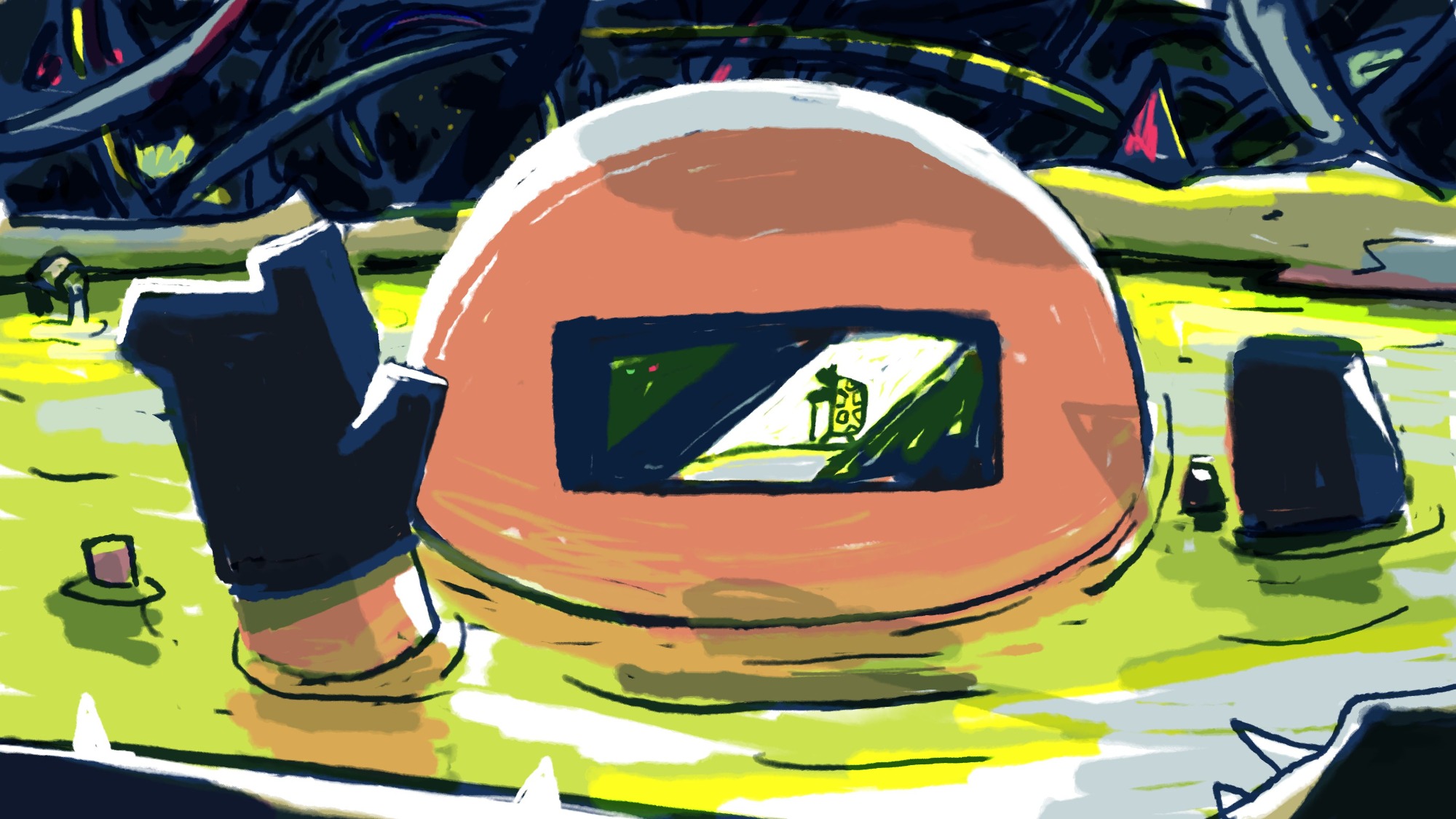
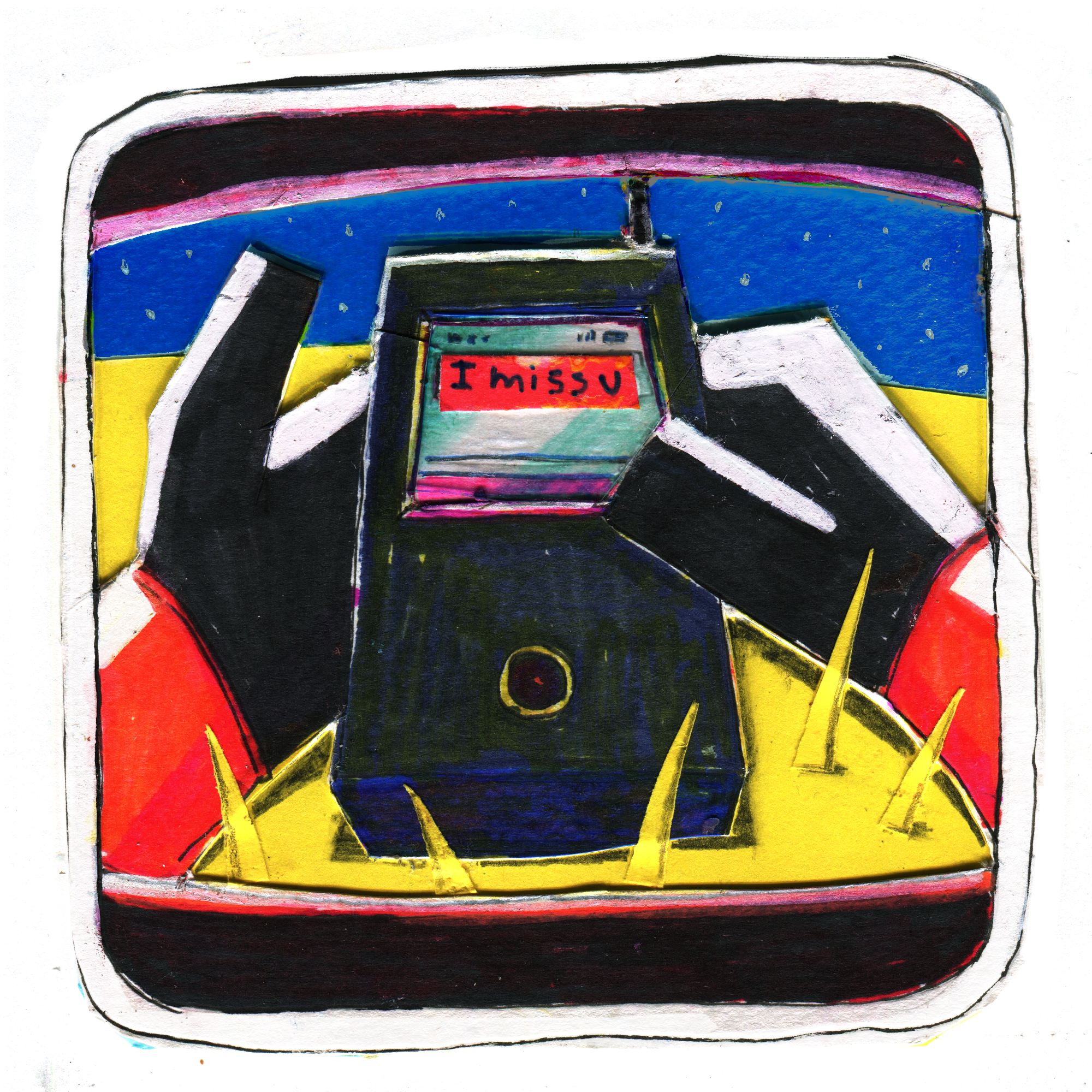
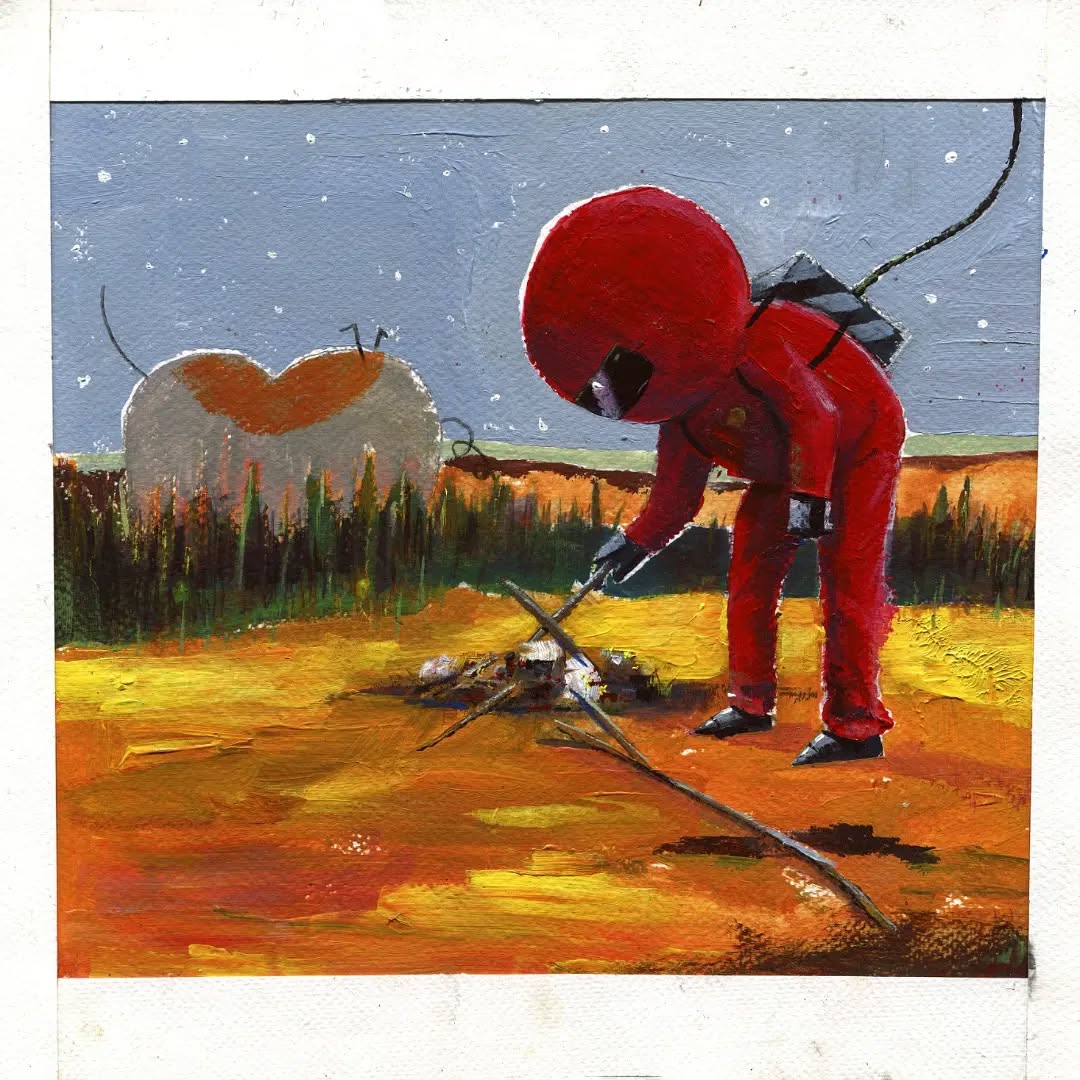
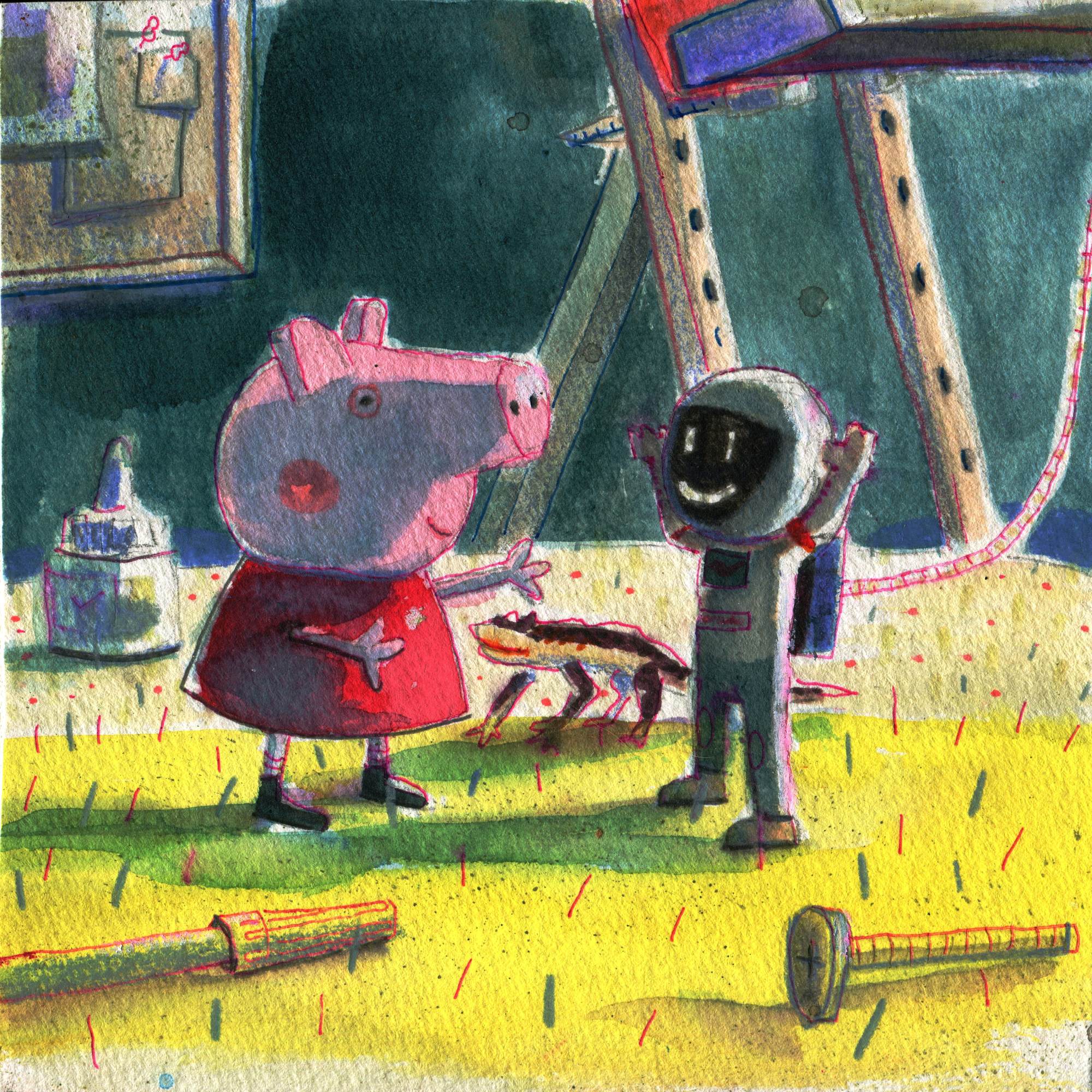
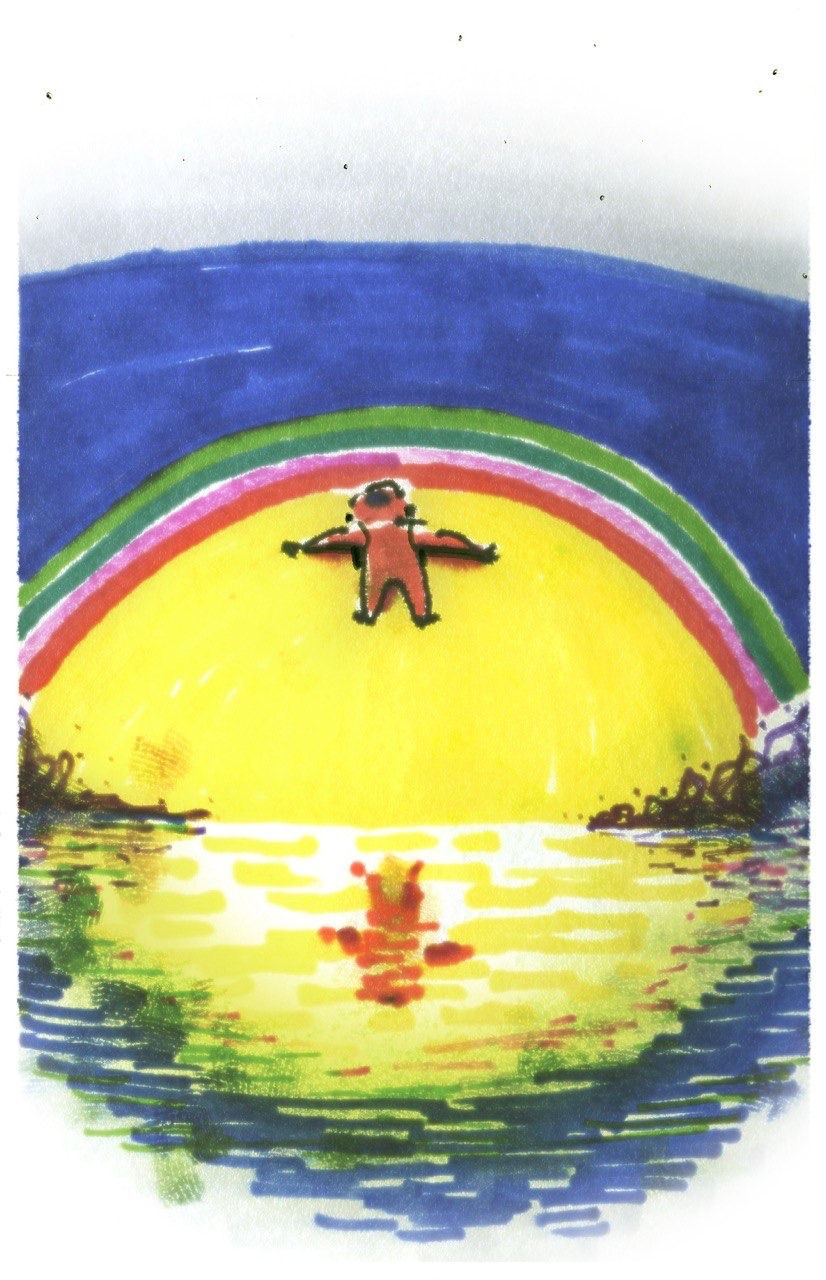
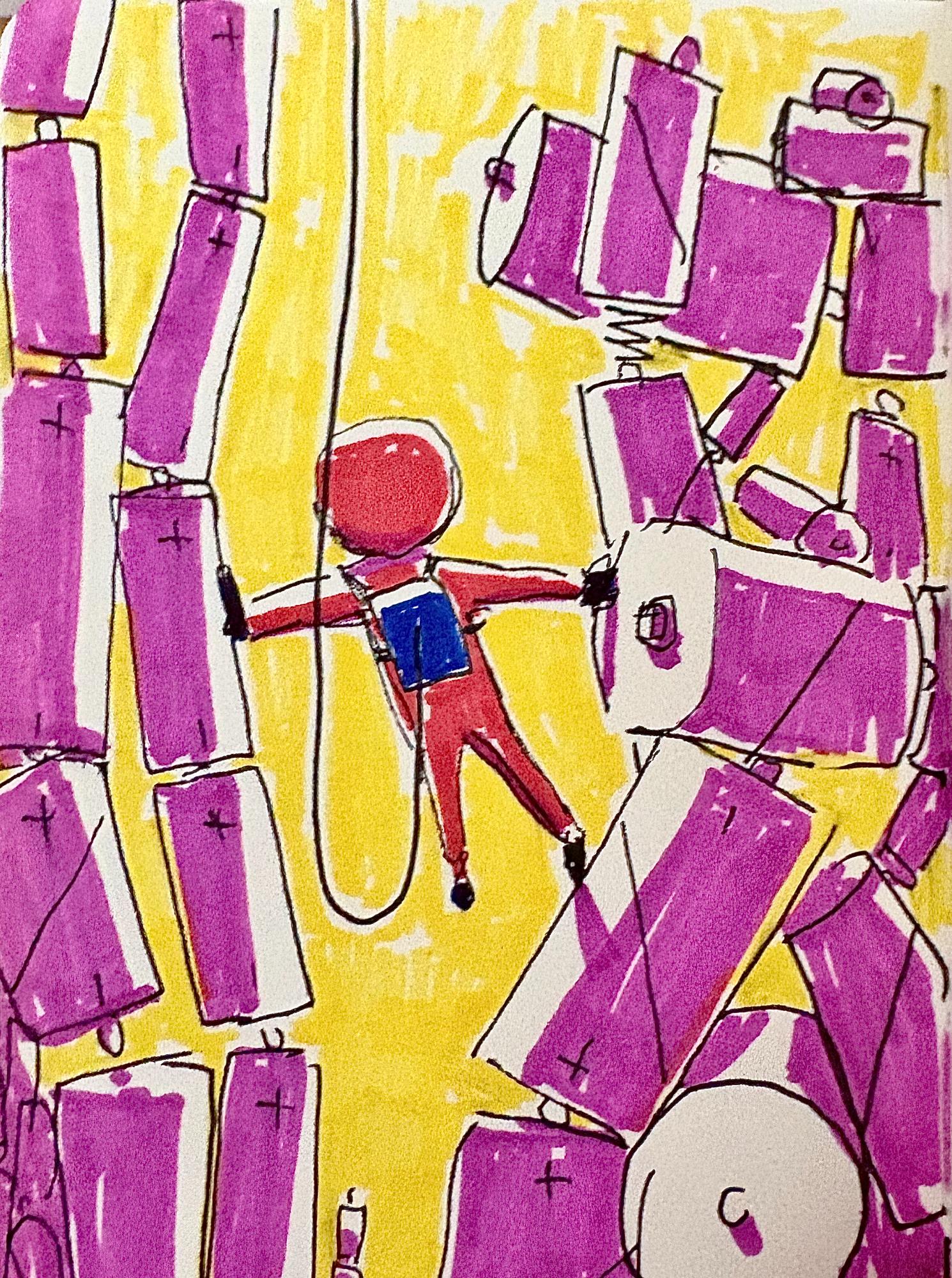
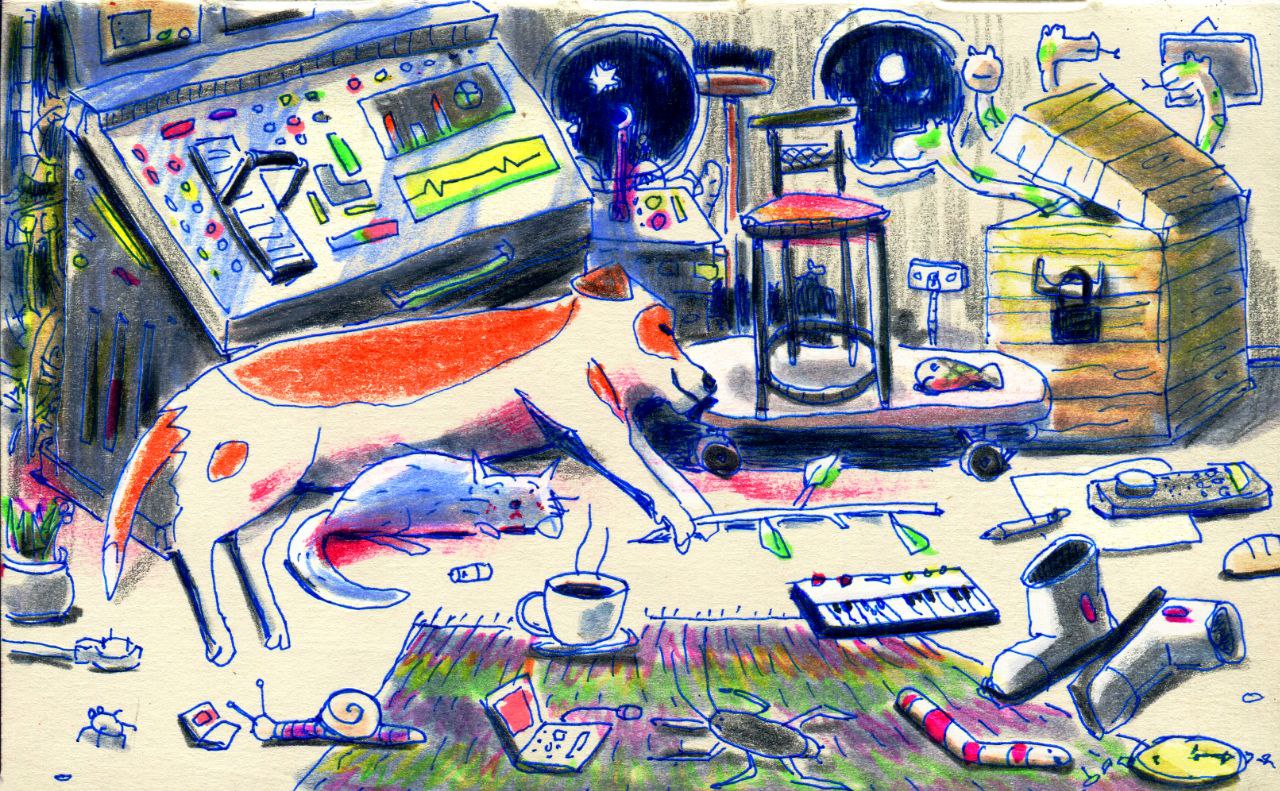
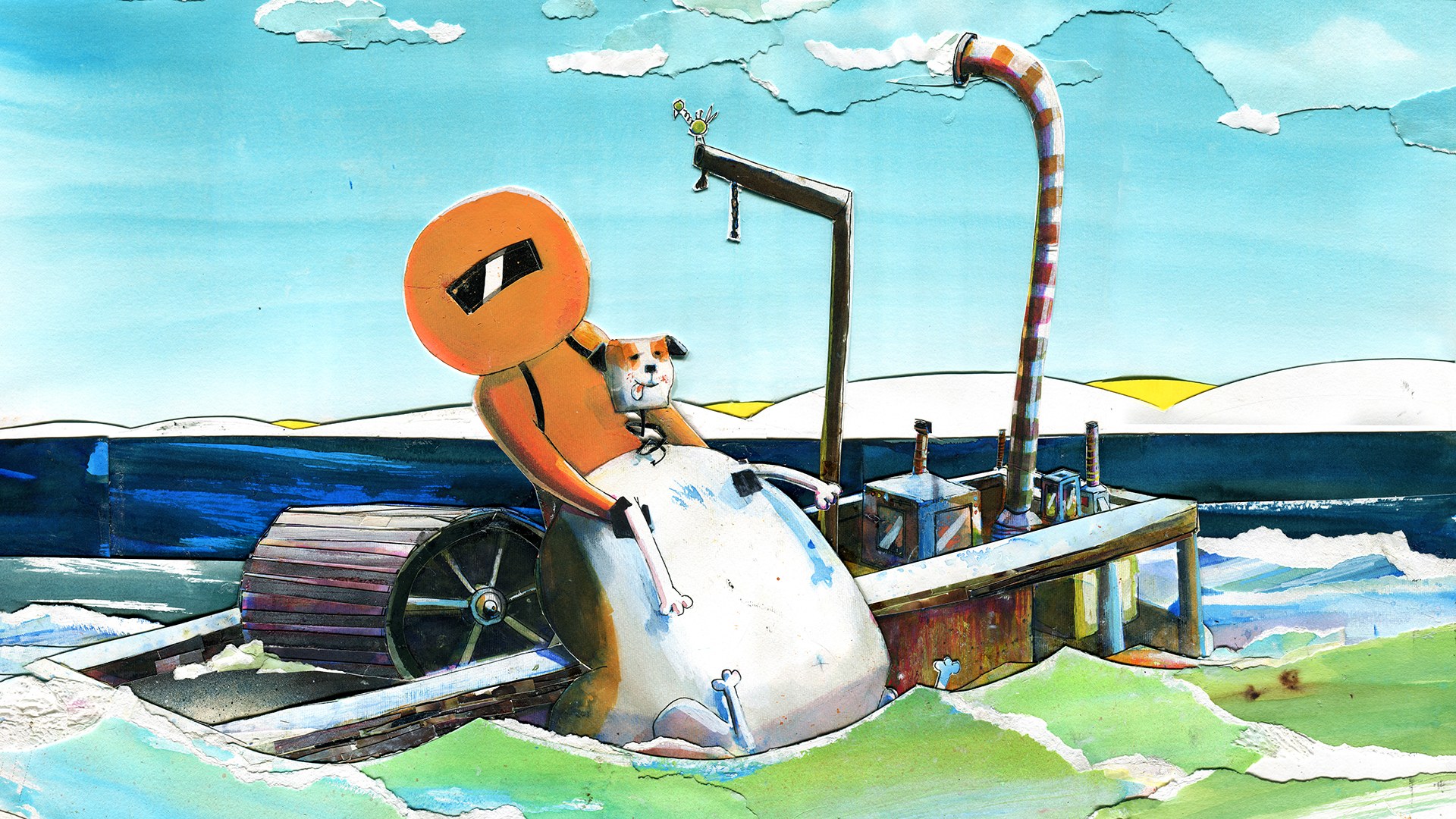
Visually, Orange Story has a very distinctive aesthetic. What were your initial visual ambitions for the film, and how did you go about developing its visual language over such a long production period?
I wanted to create something very naive, but where the naivety would almost be a cover for talking about deeper emotions. I’ve always loved the illustrations of Winnie-the-Pooh, and the way that, beyond any particular drawing, you get the feeling that there is a whole world existing somewhere outside the frame. You’re just seeing one specific moment from it, but the world is much bigger and continues beyond what you’re shown. That’s actually how I feel about the world of Orange Story. The first episode mostly focuses on the astronaut, the crocodile, K.T. and the dog, and takes place mainly in the desert, but between my sketchbooks and the scripts for the future episodes, the world has grown much bigger, with many characters I know and love and lots of places that could still be explored.
I had to keep everything very simple. Otherwise I could easily fall into a hole of incredibly detailed animation that I wouldn’t be able to climb out of on my own.
I don’t think I consciously spent that much time trying to ‘develop’ the visual language. I was mostly trying to draw in the way that felt most natural to me, without forcing it, and just surrendered to that. I already had so many sketches and ideas for this world before I even approached the first frame that I didn’t feel the need to design a whole new visual system for the film. I just went back to my sketchbooks and to the simplest, most naive things that came naturally to me. I also realised pretty early on, from a production point of view, that I had to keep everything very simple. Otherwise I could easily fall into a hole of incredibly detailed animation that I wouldn’t be able to climb out of on my own, especially without a budget.


Looking at the credits, Orange Story is a remarkably independent production, with you taking on so many different roles yourself. Is that a way of working you actively enjoy, or was it primarily a necessity dictated by the resources available to you?
Hmm, I think it’s probably a combination of both. I’m naturally like this – I’m an obsessive person who tends to want to do everything myself, and I enjoy working on lots of different things at the same time. But I also think it was very much a necessity dictated by the circumstances. From my experience with the Israeli film industry, Orange Story was a difficult film to imagine getting funded. It didn’t fit very neatly into the kinds of subjects that are often easier to fund in Israel – it wasn’t directly political, it wasn’t a Holocaust story or about the Israeli-Palestinian conflict, it wasn’t a children’s film, and it certainly wasn’t religious.
I wanted this strange, universal world to still carry something from where I come from.
In fact, in some ways it’s almost a film without a nationality. It takes place in space, it has an astronaut at its centre, and there isn’t much in the story that immediately says ‘Israel’. But to me, it’s still very much an Israeli film. Maybe that’s why it was important for me to bring Hebrew into it, and to use my very distinctly Israeli accent. I wanted this strange, universal world to still carry something from where I come from. I felt that if I had to wait for someone to understand my vision and agree to put money into it, it might never happen. And I really believed in the world of Orange Story, and wanted to make other people believe in it too. So instead of waiting for a ‘proper’ budget, I simply made it. I hoped that maybe someone would see it and think, “Hey, this is cool. This is also an Israeli film. Let’s make more things like this.”


When you’re so deeply involved in every stage of a project, how do you create enough distance from the film to judge whether something is working? Did you have people you could turn to for an outside perspective during the seven-year process?
It’s honestly difficult, and I don’t have a very clear answer to that. I try to show the film during the process only to people whose opinion and artistic taste I genuinely value, rather than just showing it to everyone. Otherwise, I think it can become confusing. I do believe in testing things throughout the process — seeing what works, what doesn’t, what comes across to the viewer and what doesn’t, drawing conclusions from that, and being willing to make the necessary changes, even if it means throwing a lot of work away.
I showed many different versions of the film to many people over the years, and that was an important part of the process. But when I reached the point where I had to finally finish it, it became just as important to stop asking what everyone else thought, close the door, sit alone with the material, and trust my own judgment.
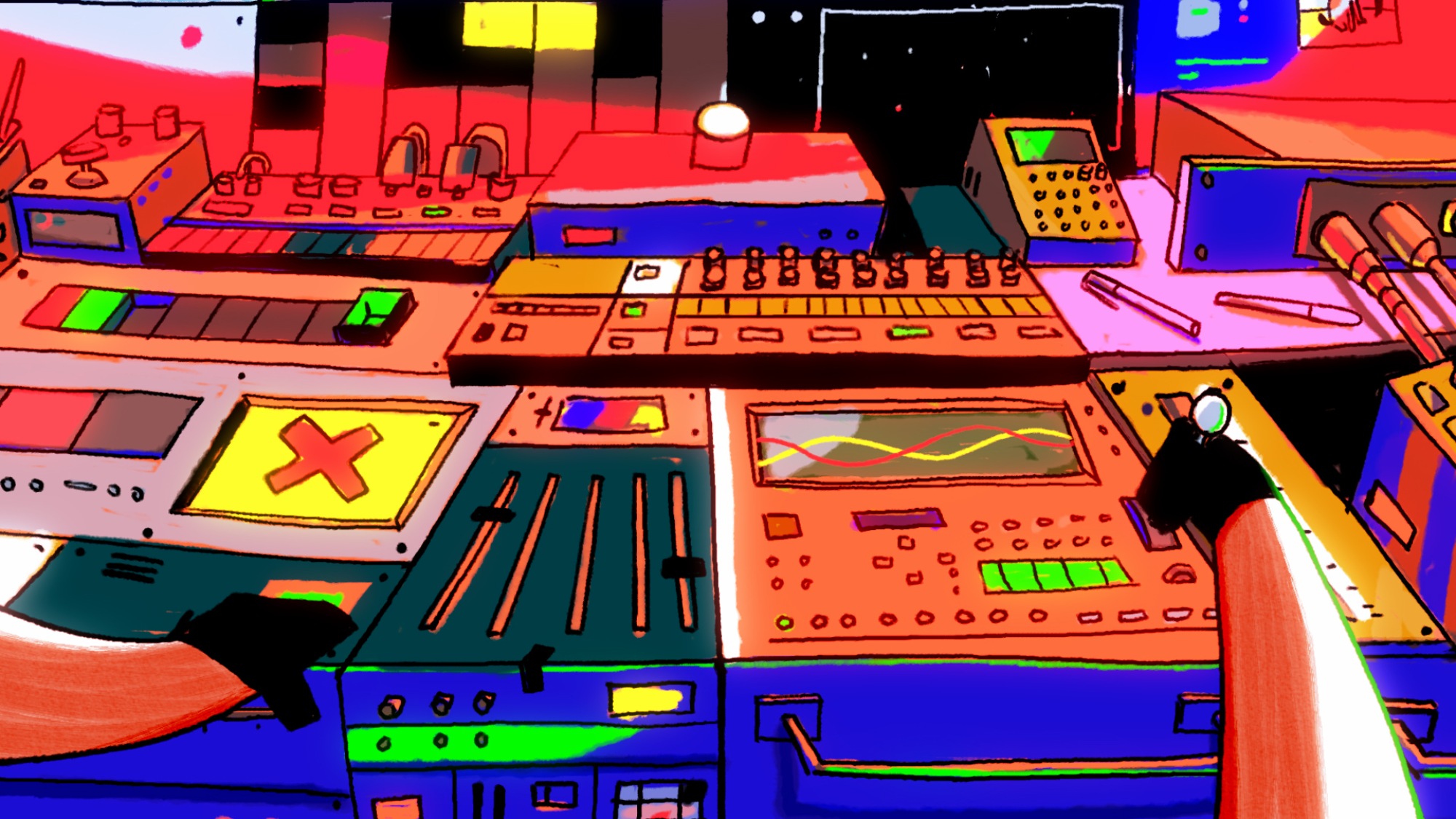
Music is one of the major creative contributions from outside yourself and the score feels incredibly tailored to the film. How did that collaboration come about and at what stage did the music enter the process?
The main and most substantial part of the sound was created by the incredibly talented Yuval Goren. Most of the sound design happened after the animation was finished. I would go to his studio and we would obsessively go through the film, part by part, recording sounds and playing around with all the strange instruments and equipment he had there.
The film was actually very musical from the beginning, even though at that stage I hadn’t realised it was going to have actual songs. A lot of the songs came later, after we already had the sound design. By that point, Yuval was no longer living in Israel, so I ended up developing the songs myself in my studio. Because the film was so musical to begin with, it felt quite natural to take that extra step – from background music into an actual song with lyrics whenever I suddenly felt that a particular moment wanted to become one.
With Orange Story finally out in the world, do you have any other projects on the slow burner that you’re able to tell us about?
I’ve been working for quite a long time on a feature film in collaboration with the director Gur Bentovitz, who also wrote the screenplay. It’s very different from the world of Orange Story – a much more realistic film, set in Tel Aviv, with characters who feel very real, almost as if they’re based on people we know. Definitely no astronauts or science fiction this time. And yet, I think it could be just as beautiful, if not more so. The main mission right now is simply to get it across the finish line.
Finally, this is a question we ask all our featured filmmakers: what’s one short film by another filmmaker that you’d recommend to the Directors Notes audience and why?
I’d recommend Pillowz by Moshe Ben Avraham, who I think is the best Israeli animator working today. It’s a beautifully animated film, with incredible backgrounds by Dafi Ben Ami. On the surface, it’s presented almost like a children’s film, but I think there’s something darker and much deeper underneath it – ideas about right and wrong, intention versus outcome, and especially expectations.