
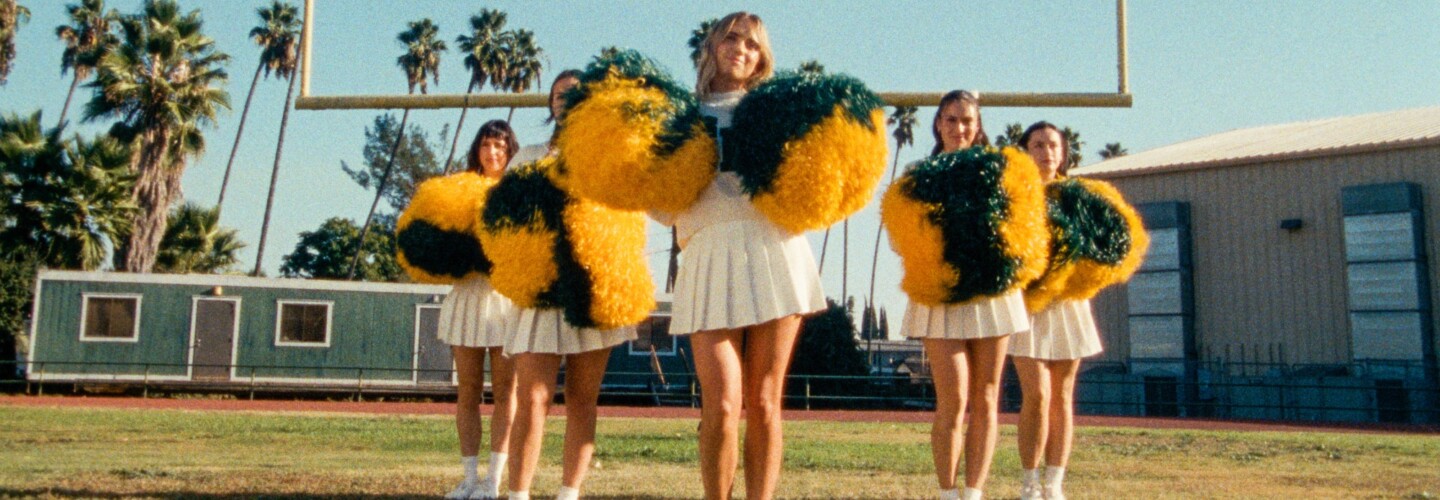

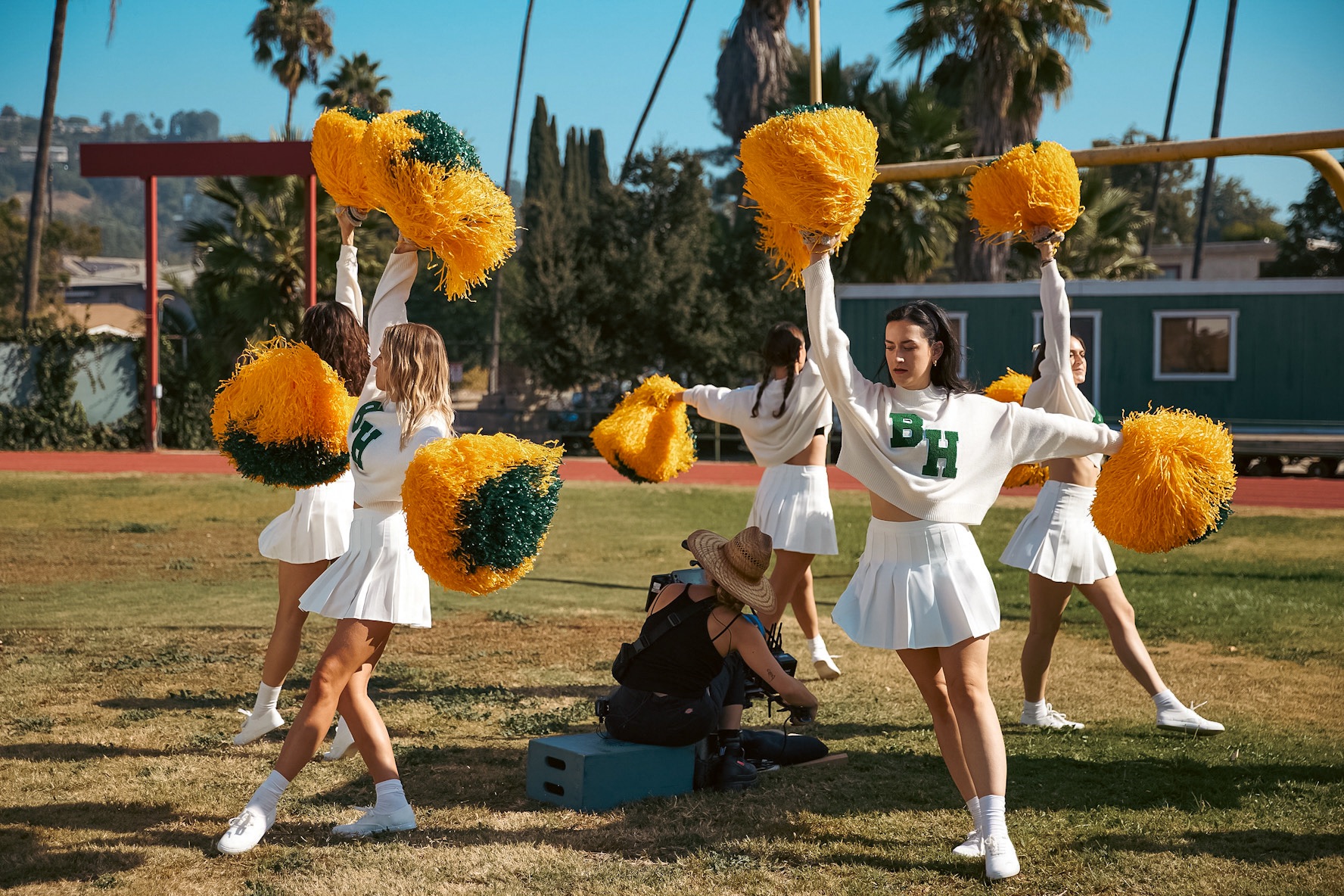
There’s a timelessness to Beverly Heights, writer/director Alyssa Aldaz’s evocative exploration of queer repression in the entertainment industry. Following Marci, a TV superstar renowned for her All-American Cheerleader image, the haunting debut short is centrally interested in the growing disjunct between Marci’s public image and queer identity. What emerges is a meditation on heteronormative repression, nocturnal longing, and the performance of identity, lingering in the discomfort of a young woman caught between honesty and expectation. Gorgeous 16mm cinematography evokes 1970s cinema, lending the film a familiar, dreamlike texture, rendering LA with Lynchian eeriness – simultaneously glamorous, nostalgic and ominous. But most impressive is Aldaz’s atmospheric pacing, prioritising ominous long takes, showcasing unsettling, immersive sound design, and a strong lead performance from Milena Abilova. Aldaz joins Directors Notes to discuss how a surreal dream inspired the world of Beverly Heights, the emotional texture of shooting on 16mm, and how collaboration and constraint shaped the film.
How did the initial idea come to you, and did the narrative develop throughout production?
It came to me in a dream. I was going to a party at Romy’s house—yes, the Romy and Michele’s High School Reunion Romy—and she had a pool out back with red high heels just sitting at the bottom. I asked her what they were doing there, and she just laughed like it made perfect sense. I remember waking up thinking, “That’s either deeply meaningful or completely chaotic.” Either way, it stuck with me. The whole film kind of grew from that one strange, vivid image.
Sometimes limitations and surprises are what end up giving a film its soul.
The narrative definitely shifted throughout production. We ran out of time to shoot everything as scripted, so I had to rethink some scenes. An unexpected surprise was Milena, who played Marci. I originally imagined the film being much darker—more satirical than sincere—but Milena brought something raw and emotionally grounded to the role. Her take on Marci reshaped the tone. It started feeling like a true coming-of-age story, and I actually loved how it turned out—more heartfelt than I expected, and better for it. Sometimes limitations and surprises are what end up giving a film its soul.
What drew you to shoot on 16mm film and how do you think the grain of celluloid aided the story’s tone and emotional texture?
I’m drawn to film because nothing else feels like it. There’s something about 16mm. It has this texture that’s both raw and romantic. It sets the tone instantly and carries this built-in nostalgia that was key to the world we were creating. I wanted it to feel dreamy and a little off, like something you’d catch on late-night TV and not be totally sure when it was made—like it exists in its own little world.


There’s a meditative quality to the short, how did you approach the film’s pacing?
I tend to work pretty instinctively. I try to follow the rhythm that feels right in the moment, whether I’m writing, editing, or directing. With Beverly Heights, I wanted the pacing to feel a little stretched, like time was moving differently. That sense of lingering was important. I wanted the audience to sit in the unease and the heartbreak because that’s how it feels for Marci, like she’s stuck in a dream she can’t quite wake up from. Something people might miss is the title of the script Marci’s reading, The End Is the Beginning. That always felt like a key detail to me. I see the end of the film as the true beginning. It’s the moment she meets Emily and starts to dream about her. Everything else folds in from there. I’ve always liked the idea that you could play the whole film in reverse and it would still make emotional sense.
Most Popular
Late night drives, liminal spaces and ambient sounds… the dreamy influence of David Lynch flows through your work. Did his work inspire your vision, and did any other filmmakers inspire Beverly Heights?
Thank you! That’s really flattering. David Lynch is probably my favorite director. He influences everything I do. I’m drawn to that dream logic in his work—how scenes unfold in a way that doesn’t always make literal sense. I love the meditativeness, the ambient sounds, the way it all pulls you in. I remember watching Mulholland Drive and feeling totally hypnotized—like I had been lulled into some strange, beautiful trance. That’s the feeling I want my films to have, too. I want the audience to sit with ambiguity, to bring their own meaning. I don’t have all the answers and I think that’s fine. Other filmmakers that inspire me: definitely Sofia Coppola—the longing, the loneliness, the quiet ache of being a girl. Her films are all about vibe, and I connect to that deeply. And then I’ve always loved camp. I love Paul Verhoeven—his satire, the way he leans into excess. So Beverly Heights might be a little cheesy in places… but I love it for that.
I want the audience to sit with ambiguity, to bring their own meaning. I don’t have all the answers and I think that’s fine.

The production design is so evocative and transportive. Can you tell us more about how you worked alongside Production Designer Vera Jigalova to transport us back into such a nostalgic space?
Vera understood the vision right away. We had one conversation, and then she sent over this beautiful lookbook that perfectly captured the tone I wanted. She brought so much creativity, especially considering the budget and location constraints we were working with. Marci’s bedroom in particular was a standout. It needed to feel intimate, nostalgic, and a little haunted by her past, and Vera filled it with these subtle, emotional details—fan mail, old envelopes on the dresser, the one Marci touches quietly in that moment. They’re small things, but they add this quiet texture that makes the world feel real. What I love about Vera’s work is that it doesn’t hit you over the head—it lingers. That’s the kind of atmosphere I wanted, and she brought it to life beautifully.
The film features a standout monologue sequence. How did you direct Milena Abilova to achieve such a captivating long take?
This monologue was actually written after our original three days of shooting. Once I reviewed the footage—what we had and, more importantly, what we didn’t—I realized the film needed something more to ground it emotionally. So we added another day and a half of shooting. The truth is, the monologue comes from a really personal place. As a gay woman, I spent years brushing off certain kinds of longing, telling myself they were cheesy or not meant for me. But deep down, I’ve always wanted those things too. Writing it was a moment of honesty. It felt a little scary to admit, but also freeing. And ultimately, it’s not about being gay or straight, it’s about being human. We all want to be happy and loved.
Milena and I rehearsed the scene a few days before shooting, and she immediately got it. The first time she delivered it, the rhythm, the tone—it was all there. We just saw the moment the same way. There’s this raw sincerity she brings that made it all land. And shoutout to Candice Rose, our cinematographer that day, and her team. That long pullback shot was done by hand. It wasn’t easy, but she nailed it. It’s one of my favorite shots in the film. Also, yes we ate a lot of cheeseburgers that day. It was a good one.

Do you think your experience as an editor has impacted your directorial style?
Definitely. I’ve been editing for about 15 years, mostly trailers, and that’s really shaped how I approach writing and directing. It’s made me pretty clear on what I need and what I don’t, so I try to work efficiently on set. If we’ve got it, we move on. That probably comes from spending so much time in the edit room, especially cutting from dailies and seeing how easily things can pile up. I’ve learned to recognize the moment when something clicks. That said, I know every director has their own rhythm. For me, keeping the takes limited helps the energy stay focused and alive. Editing trailers also gave me a deep appreciation for music and tone. Music drives so much of how I see a scene. It helps me figure out the emotional rhythm, even while I’m writing. I’ll often think, how would I cut the trailer for this? That mindset helps clarify what’s really necessary, what’s vivid, what lands, and what doesn’t. I’m always thinking in terms of rhythm and structure.
I’ve learned to recognize the moment when something clicks. That said, I know every director has their own rhythm. For me, keeping the takes limited helps the energy stay focused and alive.
Much of the film’s dazzling imagery comes from the dreamy pool sequence. Did this sequence bring any challenges to the production?
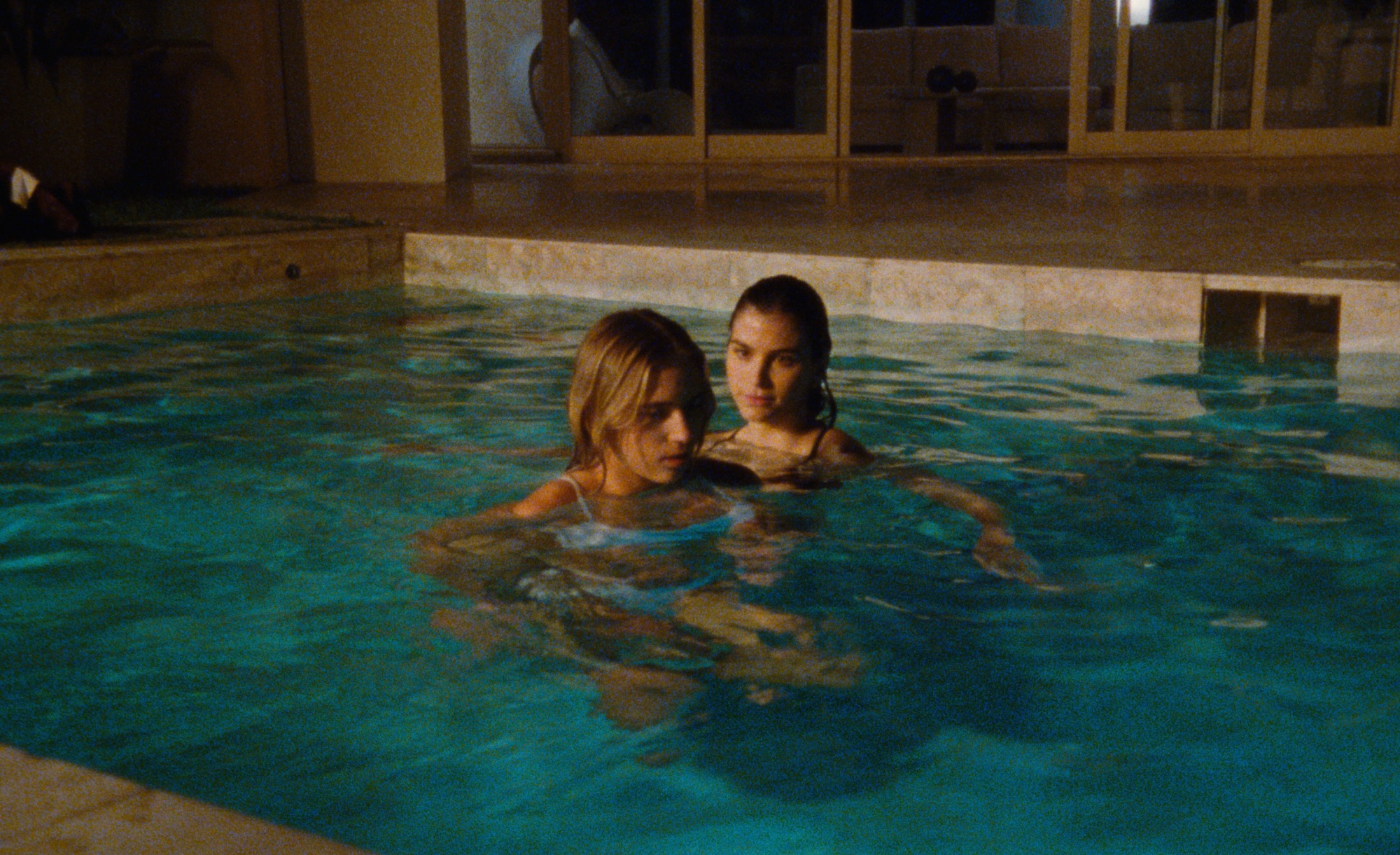
Oh god, yes, so many challenges. We had the location for one day, but could only shoot at night, so the time crunch was real. Blocking the whole sequence around a pool, in the dark, with very little time—it was one of the more stressful days of the shoot. And then there were the heels. I fully thought they’d just sink. They didn’t. We had a cheap pair and a vintage pair of Guccis, and after way too much time trying to keep the cheap ones down, we gave in and threw in the Guccis. They sank pretty well actually.
The entire pool scene was originally written as one long, continuous sequence. Emily was supposed to drown Marci at the end of it, right after the kiss. But it just didn’t look right on camera. And once Milena’s hair got wet, we couldn’t reset—there was no time to dry it and redo anything. So I scrapped the original plan and ended up cutting the scene into smaller pieces in the edit. It worked out for the better. The final version feels more hypnotic, fragmented, and dreamlike, which is what I was going for all along, I just didn’t know it yet. In case you’re wondering—the Guccis still look great.

What do you hope a queer audience takes away from the film?
I’m really just trying to make the kind of films I wish I’d seen when I was younger—ones that might’ve helped me realize it was okay to be who I was. It took me a long time to get there, and honestly, I’m still figuring it out. I hope queer audiences feel seen, but more than that, I hope they feel like they don’t have to perform or fit into anything. You don’t have to shrink yourself. You can be the lead. The head cheerleader. The mystery. Whatever feels true to you, and you don’t need anyone’s permission.
This is such an exciting vision, what can we expect to see from you next?
I’m directing a new short this summer called Camp Oleander. It’s got the same dreamy vibe as Beverly Heights, but it goes way darker—more psychological, a bit more unhinged. Definitely not your typical summer camp. It’s a slice of a feature I’ve been developing, and we’re shooting on 35mm, which is how I always imagined this world. We’ve got an incredible team on board, and I’m really excited about what we’re building.