
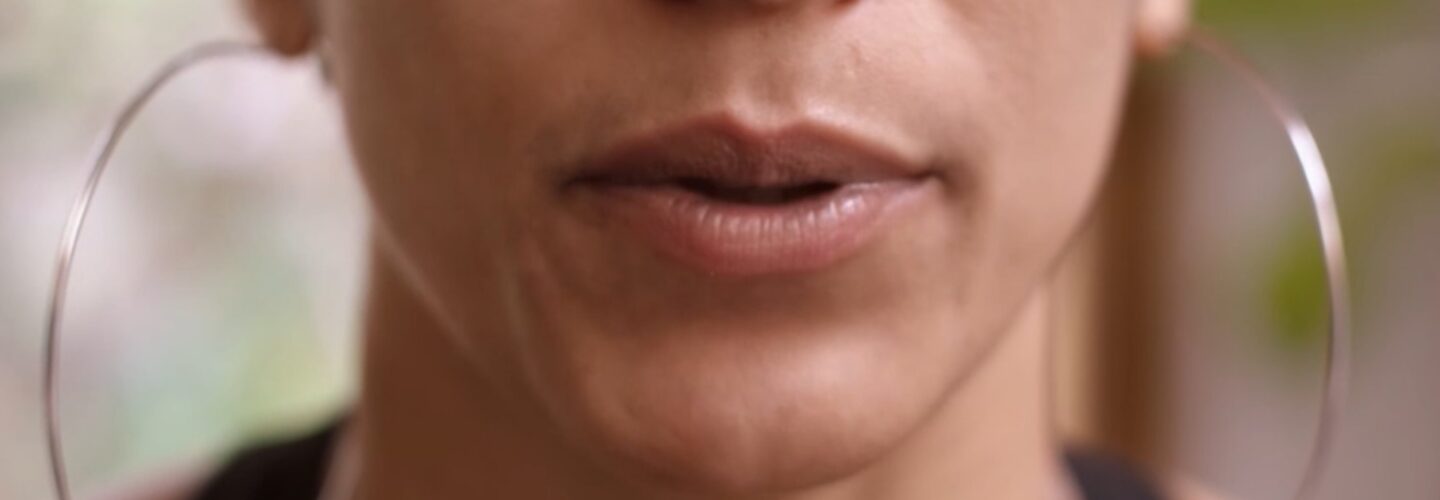

I am always delighted when introduced to bold and innovative female-led work exploring conversations that, for far too long, have been kept in the shadows, and Bronwen Parker-Rhodes’ COME is a very welcome part of the discourse on the (not so elusive) female orgasm. Parker-Rhodes achieves a powerful synergy between form and content, creating a viewing experience that is as structurally concise as it is emotionally expansive and visually arresting. The film’s bedrock is the physical certainty of its subjects—women recounting the precise, physical moment of their own orgasm with stunning and unadorned honesty. These interviews are tight, focused, and devoid of florid metaphor; they are pure, concise descriptions of a peak physical experience. It is from this foundation of stark, truthful testimony that the breathtaking animation erupts. The filmmaking here operates in exact tandem with the story, using the fluidity of the animated form to articulate what words alone can only point towards visually. Hand-drawn by Parker-Rhodes’ mother and academy-nominated animator, COME doesn’t just illustrate these accounts; it embodies them. The animations become a direct visual corollary to the ecstasy, a marriage of raw, verbal testimony with the sublime flow of visual abstraction. COME is a profound joy because it allows women to own their narrative completely, from the candid, grounded truth of their words to the glorious, unrestrained expression of their embodied experience. As it joins the curation of films on DN, we dove into COME and spoke to Parker Rhodes and animator, Erica Russell, about the benefits of hand-drawn illustration, eschewing digital manipulation, the joy in discovering such a breadth of experiences and sensations when women discussed their orgasms and how the narrative naturally found its own flow.
I’m always so happy to see this type of raw, honest filmmaking. What inspired you to make COME?
Bronwen Parker-Rhodes: Most of my work explores the female experience and the ways women relate to their bodies. The female orgasm is something we still don’t talk about enough. So many women carry fear, doubt, or shame around their own experience of orgasms – often because there’s no clear sense of what it ‘should’ feel like, and because there’s no way of knowing for sure if what we’re feeling is the same as what other women feel. This uncertainty can lead many to question whether their experience is valid or ‘enough’. I believe it doesn’t matter how you reach orgasm – whether alone or with a partner – what matters is the pleasure.
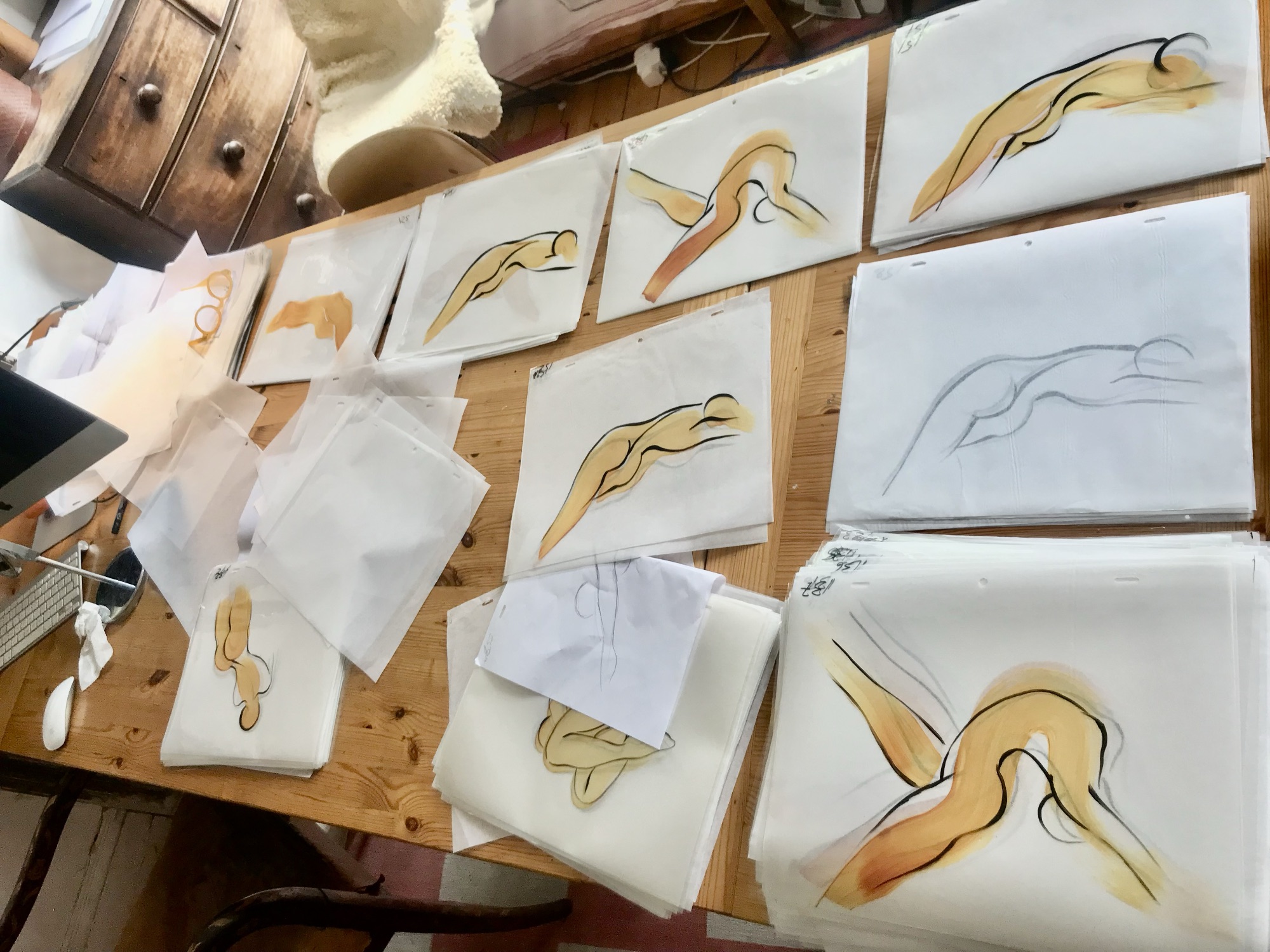
As a passion project with limited funding, I had to work on it intermittently between other, more commercial jobs. All of the animation in the film was hand-drawn by my incredibly talented mother, Erica Russell, who was nominated for an Oscar back in 1994 for her animated short Triangle. Erica is a traditional animator who doesn’t use computers, so the process was extremely time-consuming. We worked closely together to find the best way to visually interpret each woman’s description.
Just as physical sensations are ephemeral so the visuals are fleeting and suggestive of the body.
How did you both develop the animation to reflect each woman’s unique story?
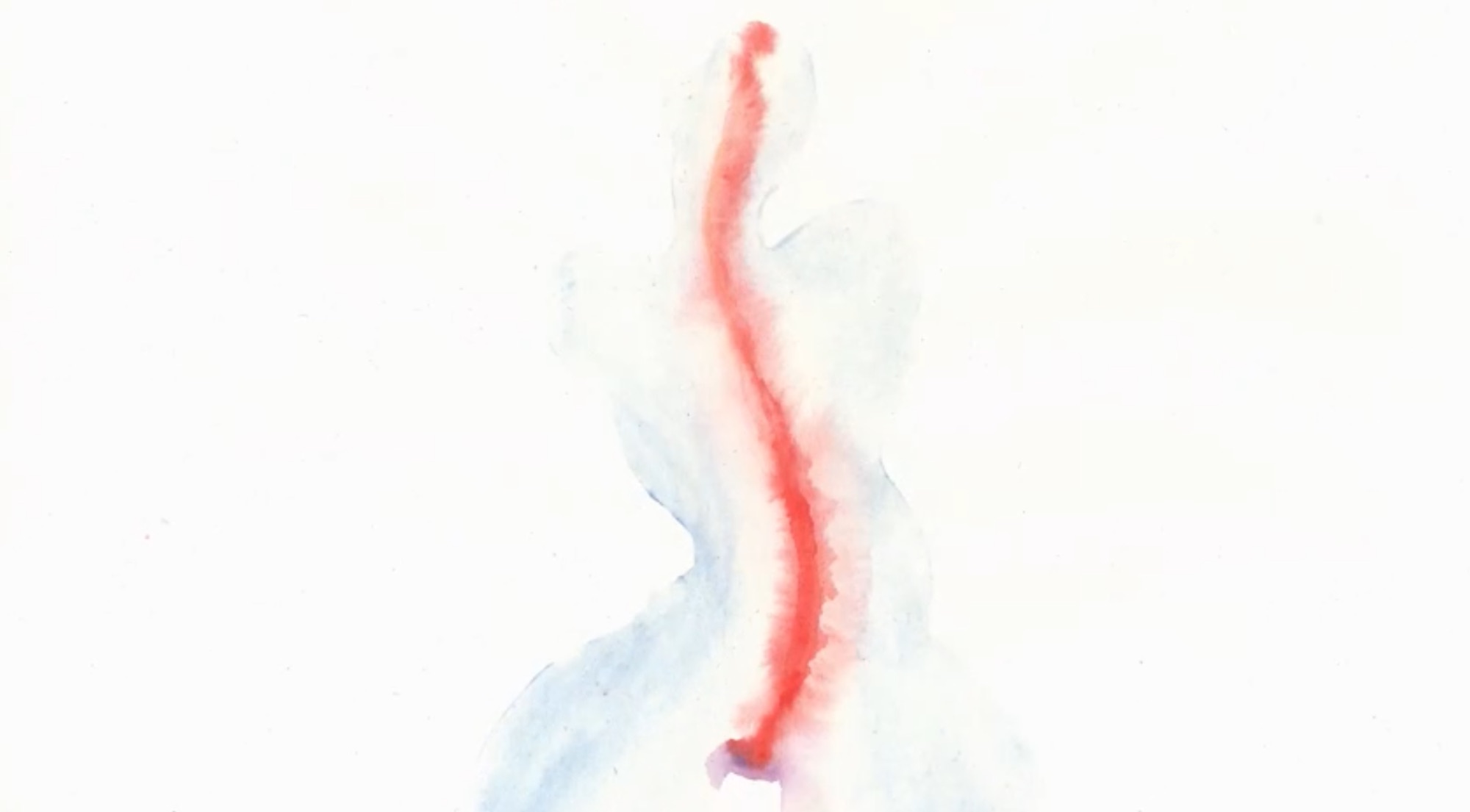
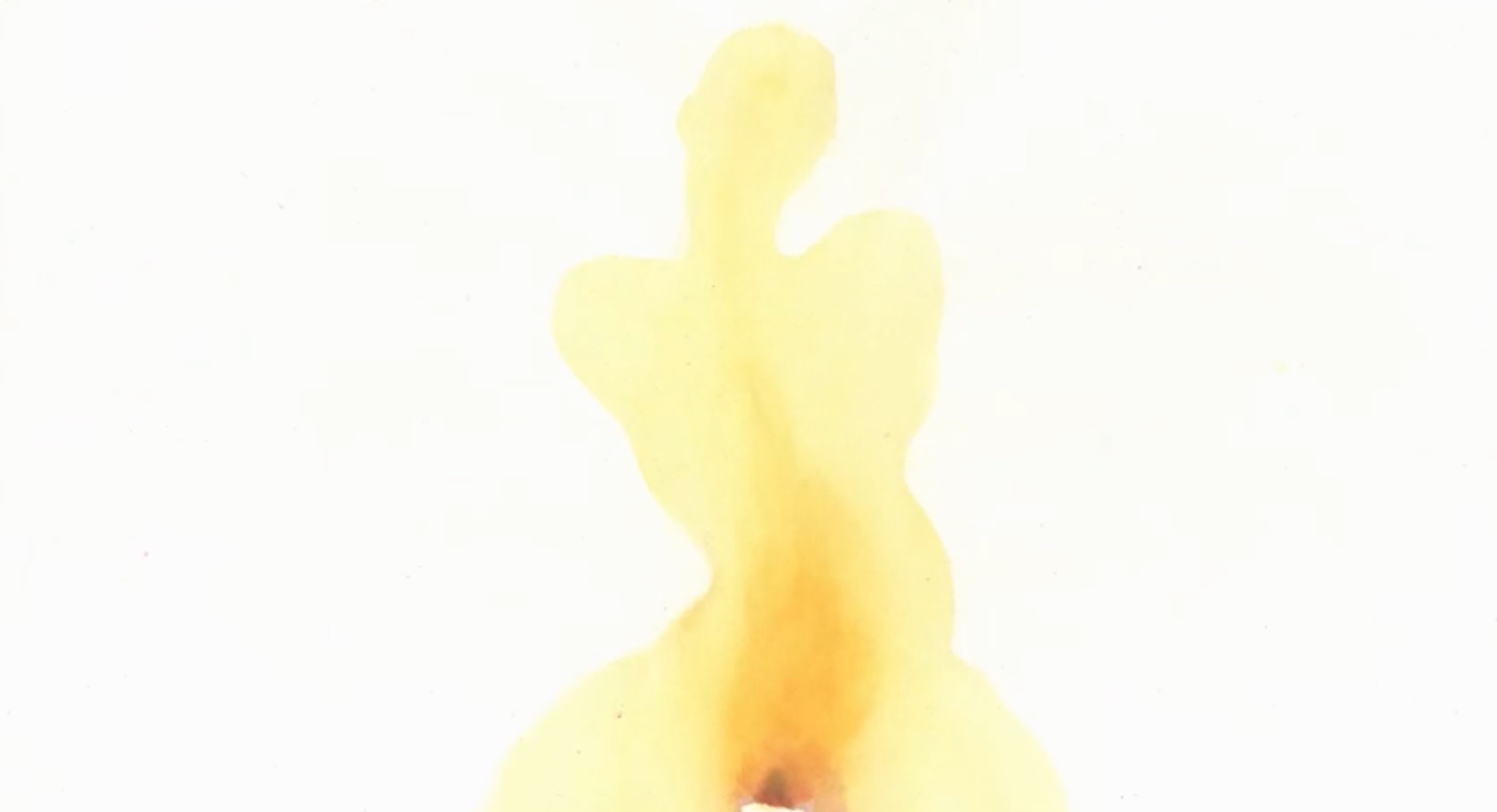
Erica Russell: We wanted to keep the imagery as abstract as possible and to convey feelings rather than do literal interpretations of what they were describing. Just as physical sensations are ephemeral so the visuals are fleeting and suggestive of the body. We went for simplicity and emotive colors, cycles of action to create rhythm and hand-painting to give a tactile and physical feel as far from digitally produced animation as possible.
What challenges or discoveries did you find in translating such an intimate experience into animation?
ER: The challenges were to try and create a different look for each piece. To try to avoid any cliché imagery and to try to be surprising in the way each piece was interpreted. One woman (Rosie) spoke of explosions and galaxies of stars, I chose not to animate to that as I felt it has been seen before, rather I went for the descriptions that were more abstract like, “From my head right down to my very core of my being” and a complex interweaving of two female bodies creating a visual suggestion of sexual play between two women – but also of an intimate play with oneself. Also, the viewer is allowed to create their own interpretation if the imagery is not explicit. Abstraction acts as a stimulation for the viewer’s imagination.
Most Popular
Did you notice recurring phrases or metaphors women used to describe their experiences? How did those accounts shape the visuals?
ER: I was very surprised how different each woman’s experiences were described, how they each had their own way of not only relating to their orgasms, but also how they visualised them. It made me think about how we all own our sensations in our own unique ways. Each woman had their own individual experiences and their descriptions were unique. Worms wriggling all through the body. Being pulled apart and feeling all the particles in the spaces in your body is a deep and mind-blowing image. They were so wonderful to hear, they were so graphic in their own right that they hardly needed any animated interpretation.

Traditional hand-drawn animation inherently contains these qualities and has an organic and accidental look that can make us have a strong physical and emotional sensation while watching it.
Do you think the use of traditional animation and avoidance of digital tools affected the film’s emotional tone?
ER: Yes, very much. We are dealing with physical bodily sensations that contain random fluctuations and rhythms, and are then related through the imagination, so they are far from any mechanical means of creation. Traditional hand-drawn animation inherently contains these qualities and has an organic and accidental look that can make us have a strong physical and emotional sensation while watching it, digital work’s perfection is inclined to lessen this sensation.
Bronwen, how did you create a safe space for women to share such personal experiences? Were there any interviews that particularly changed your perspective?
BPR: I cast the women through Instagram and my wider network of friends. I probably interviewed around 50 women about their experiences with orgasm before settling on the final cast. That part of the process was both heartwarming and deeply educational – I realised how much women want to talk about this topic, but often haven’t had the space or been asked the right questions.
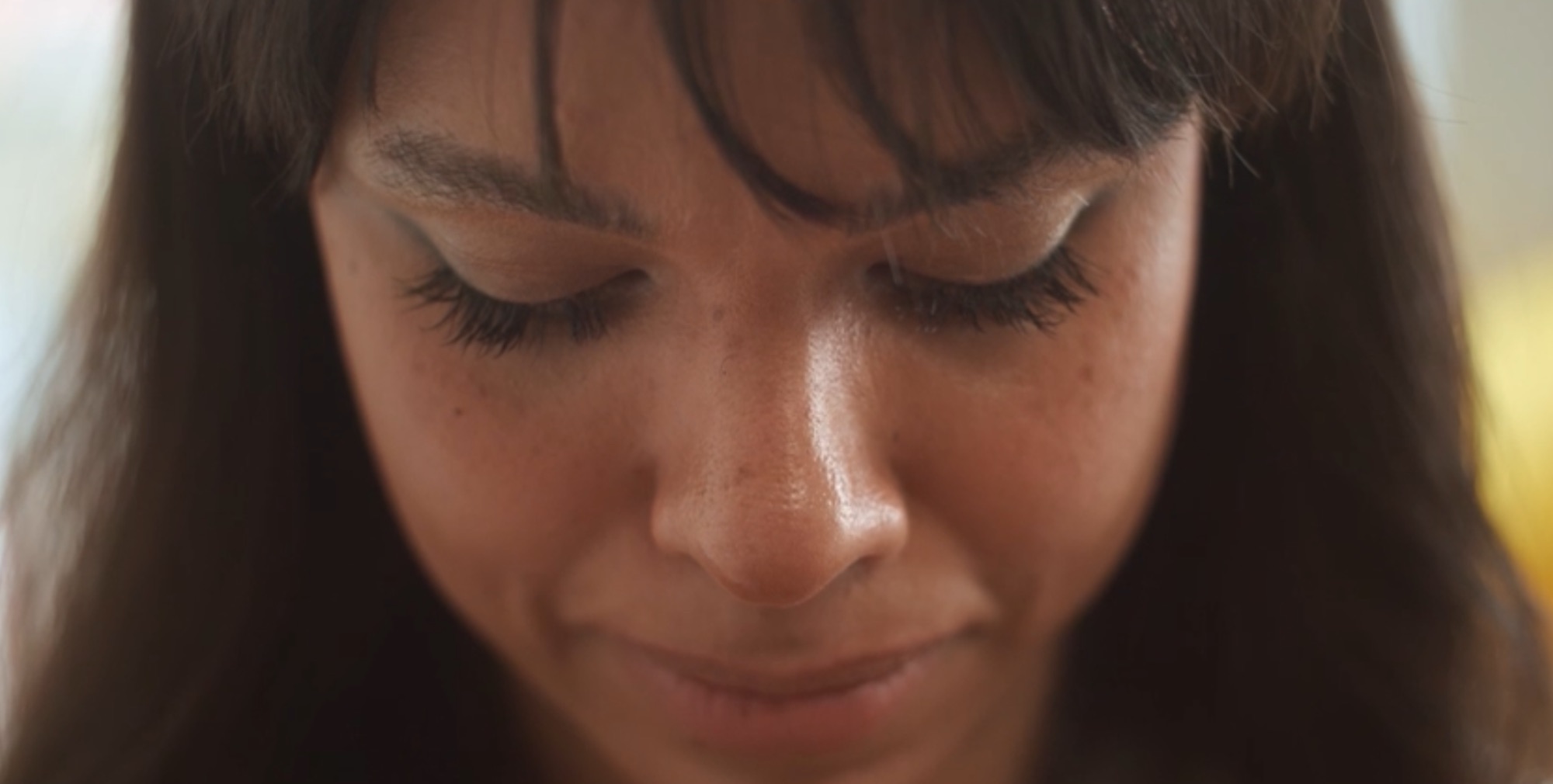
I always like to work with a micro crew on docs so the people in front of the camera can feel relaxed and comfortable. For this film it was just me and the camera operator. I did the interviews and sound. For each woman we shot a lot – and I think that’s also key to getting the good stuff. You just need to let the contributors feel like they can lead the conversation wherever they want.
How did you select the final participants from the 50 interviews? Were you looking for diversity in age, background, or types of orgasmic experiences?
BPR: It was really important for me to have a variety of women with very different experiences in the film. The process of casting was really educational. I spoke to around 50 women before deciding on the final five and it really opened my eyes to how differently women relate to their orgasms. Many women I spoke to felt like their orgasms were in some way inferior to other women’s because of how they reached climax. I was shocked at how many women still believed that there was something wrong with them because they couldn’t reach orgasm from penetrative sex alone.
I really appreciate the straightforward framing of the interview subjects, not detracting from their accounts.
BPR: The choice to keep the interview framing very simple and to build the entire film only from the interviews and the animation was very intentional. I wanted the sole focus of the film to be the orgasm, and I felt that any cutaways or overly stylised shots would distract from what the women were sharing.

Since you edited the film yourself, how did you structure the narrative? Did you consider a more experimental format, or was clarity the priority?
BPR: The narrative of the film developed very organically in the edit. It loosely follows the journey of the orgasm from start to finish. I wanted to begin the film with the women searching for words to express the indescribable. It felt important to preserve the “umms” and pauses, those moments where they struggled to articulate their experience. From the outset, I also wanted to highlight how different each woman’s experience was. The animation was designed to flow in and out seamlessly at the beginning, gradually building toward a kind of climax about two-thirds of the way through, when multiple voices overlap as they describe the peak of orgasm. Finally, the film resolves with reflections on the lingering sensations – the feelings we are left with.
So what’s next for you?
BPR: I’m currently working on my first feature film, which will blend documentary and fiction. Like most of my work, it will also focus on the female experience.