
We’re used to science fiction exploring the external—the threat of invasion or the marvel of technology but in his short Stellan and the Stars, writer/director Matthew Rollins instead redirects this gaze inward. Rollins uses the iconography of UFOs and the pulse of electronic music to chart a far more intimate frontier: the modern spiritual crisis. Stellan and the Stars operates under a clever guise, presenting itself as a genre piece while its true mission is a soulful and often hilarious interrogation of a man’s search for the divine in a world saturated with synthetic light and pulsating beats. The intimate handheld camera work rejects sterile digital perfection in favour of a kinetic, run-and-gun energy that places us directly inside Stellan’s disoriented, chemically-assisted headspace. This is a world where improvisational comedy collides with moments of genuine transcendence, and where a raucous, earthly journey somehow becomes the most likely path to the divine. With Stellan and the Stars landing on Directors Notes for its online premiere, Rollins joins us to discuss finding the spiritual in the sci-fi, crafting a unique visual language for disorientation, and harnessing the power of improvisation to explore the messy, human side of the UFO phenomenon.
Stellan and the Stars is such a wonderfully oddball mix of cosmic seeking and earthly comedy. What was the initial spark that sent you down this particular rabbit hole?
I wanted to make a spiritual movie under the guise of a genre film. I wanted to play with sci-fi imagery and comedy to make something fun and entertaining, but at the end of the day, it’s about a man’s search for God. Early inspiration came during lockdown in Vermont, when I saw a strange light moving in the sky. It very well could’ve been an explainable thing, but regardless, it inspired me to dig into UFO lore. These online wormholes led me to new age spiritual movements and gurus who claim to channel extraterrestrials through meditation. UFOs in a spiritual context interested me–thinking of aliens as a higher consciousness that can be summoned by enlightened humans. Diana Walsh Pasulka’s research also inspired me. She studies UFOs in a religious context.
I was imagining a movie with a UFO encounter and started to flesh out the main character. DJ just felt right. Sharp synthesizers and neon lights; an unfulfilled DJ who’s losing his grip on his life’s purpose. Then plugged in the spiritual aspect. Just like spiritual leaders, DJs bring huge groups of people together and put them in a meditative trance. I also liked that this guy might have questionable credibility—a familiar tale with spiritual leaders and UFO experiencers. I wanted to lean into the blurriness of many reported UFO encounters–a common thread is that they’re hard to put into words. Was the witness on drugs? Was it real? Usually, in these encounters, whether it’s real or not, it’s real to the experiencer because it changes their life, the way they think, etc. I’m fascinated by the messy human side of the UFO phenomena.

I’m using genre as a delivery system to ask the questions. Maybe you’ll be more inclined to think about it if you enjoyed watching it.
Genre films often go big or go home, and I really like your mashup of sci-fi, comedy with the film’s deeper, more ambiguous questions.
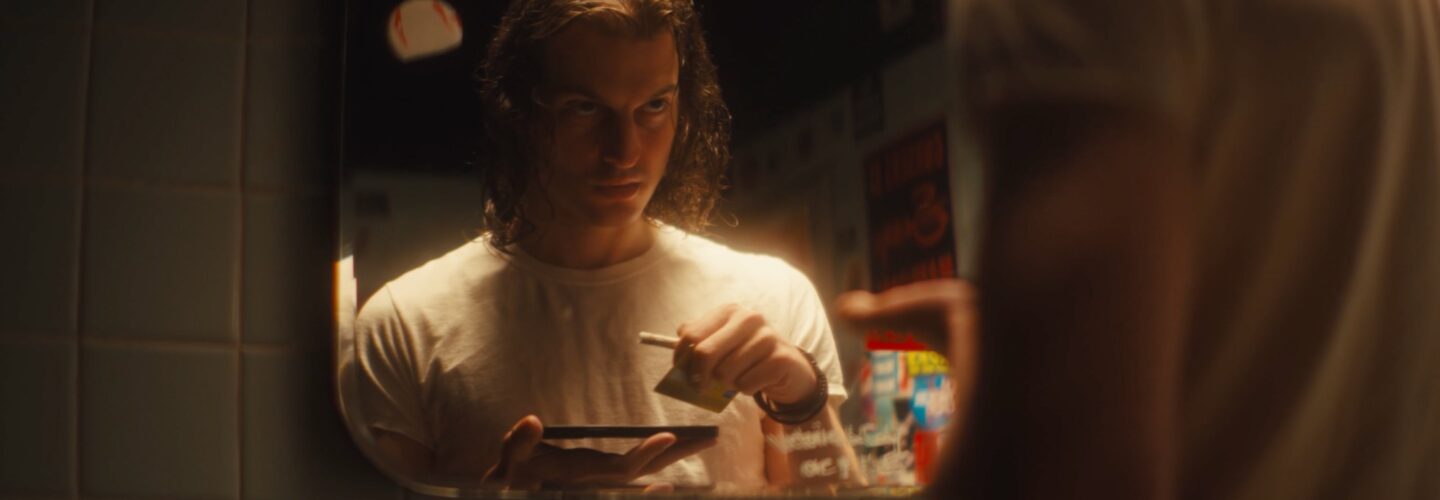
I think movies should be entertaining, and genre films are usually unashamedly entertaining. Once I came up with the story for the film, my main goal was: how do we make this fun to watch? I can’t force the audience to like this story, or like these characters, but there’s a lot that can be done to keep it moving and keep it fun. So in the bathroom scene, for example, it’s a full-blown comedy. During the encounter, it’s sci-fi. If you don’t want to think about the film’s deeper, more ambiguous questions, I at least want it to be a fun, unexpected ride. I’m using genre as a delivery system to ask the questions. Maybe you’ll be more inclined to think about it if you enjoyed watching it.
Most Popular
Let’s dig into the cinematography and capturing the energy of Stellan’s journey.
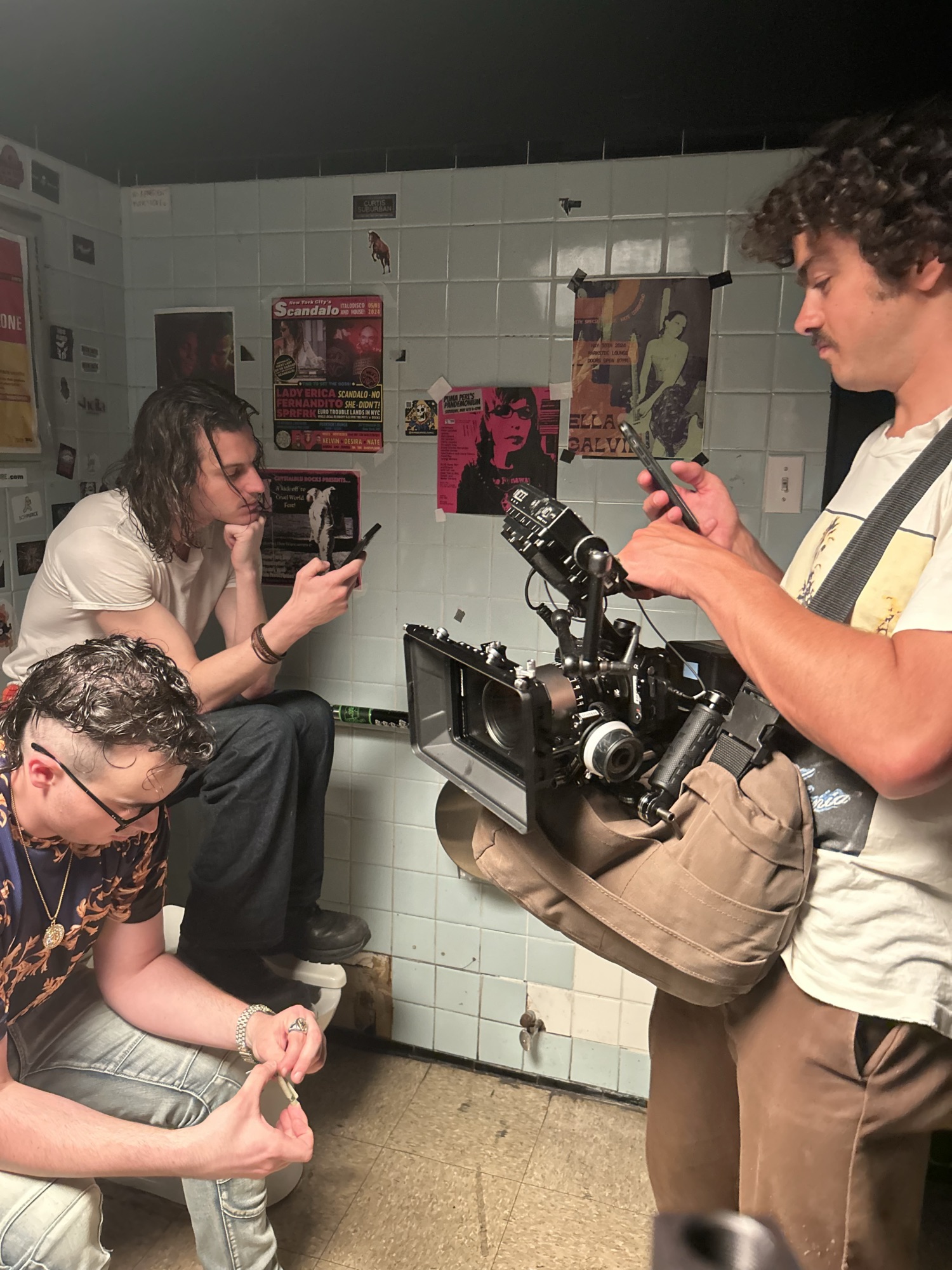
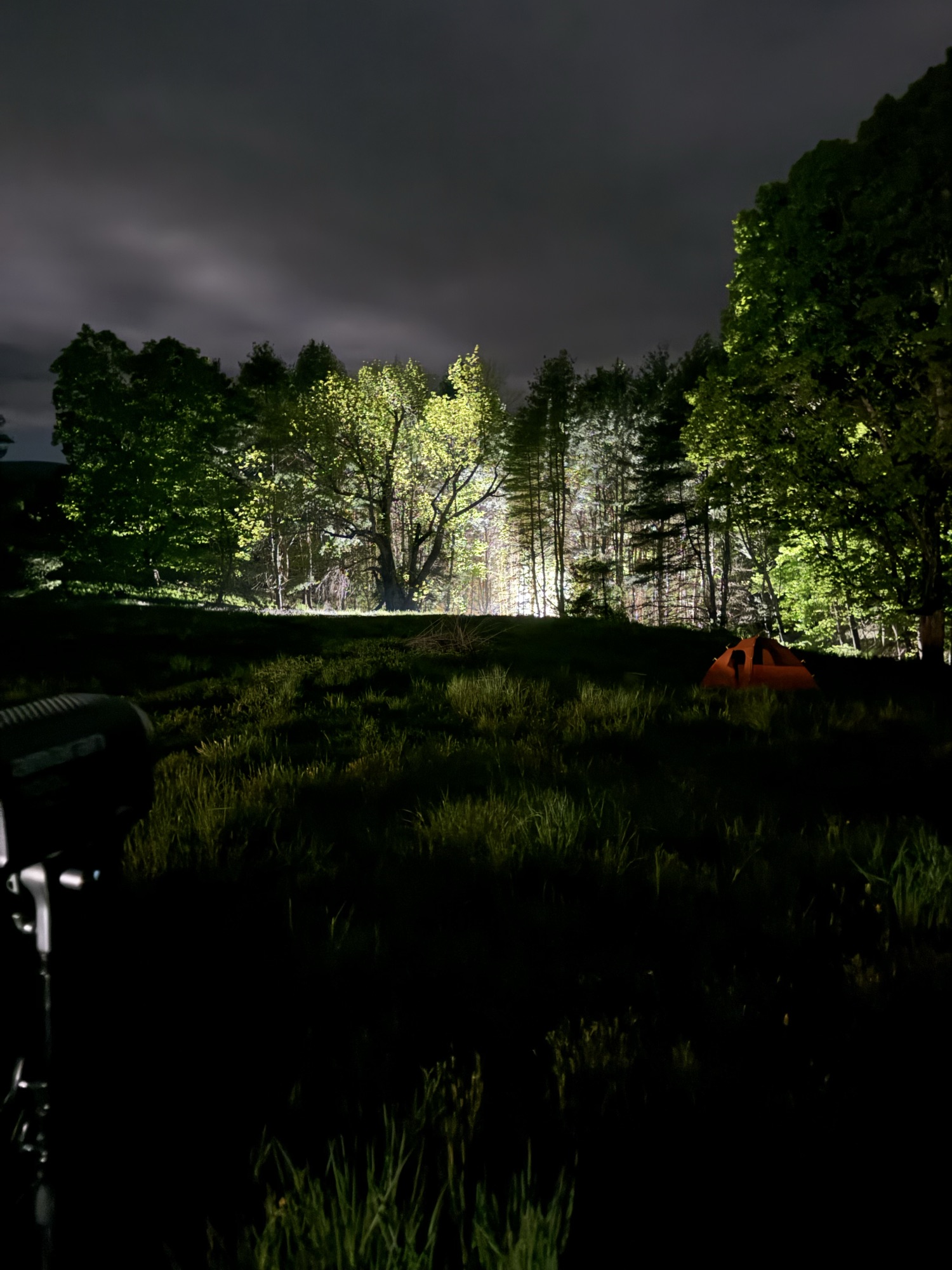
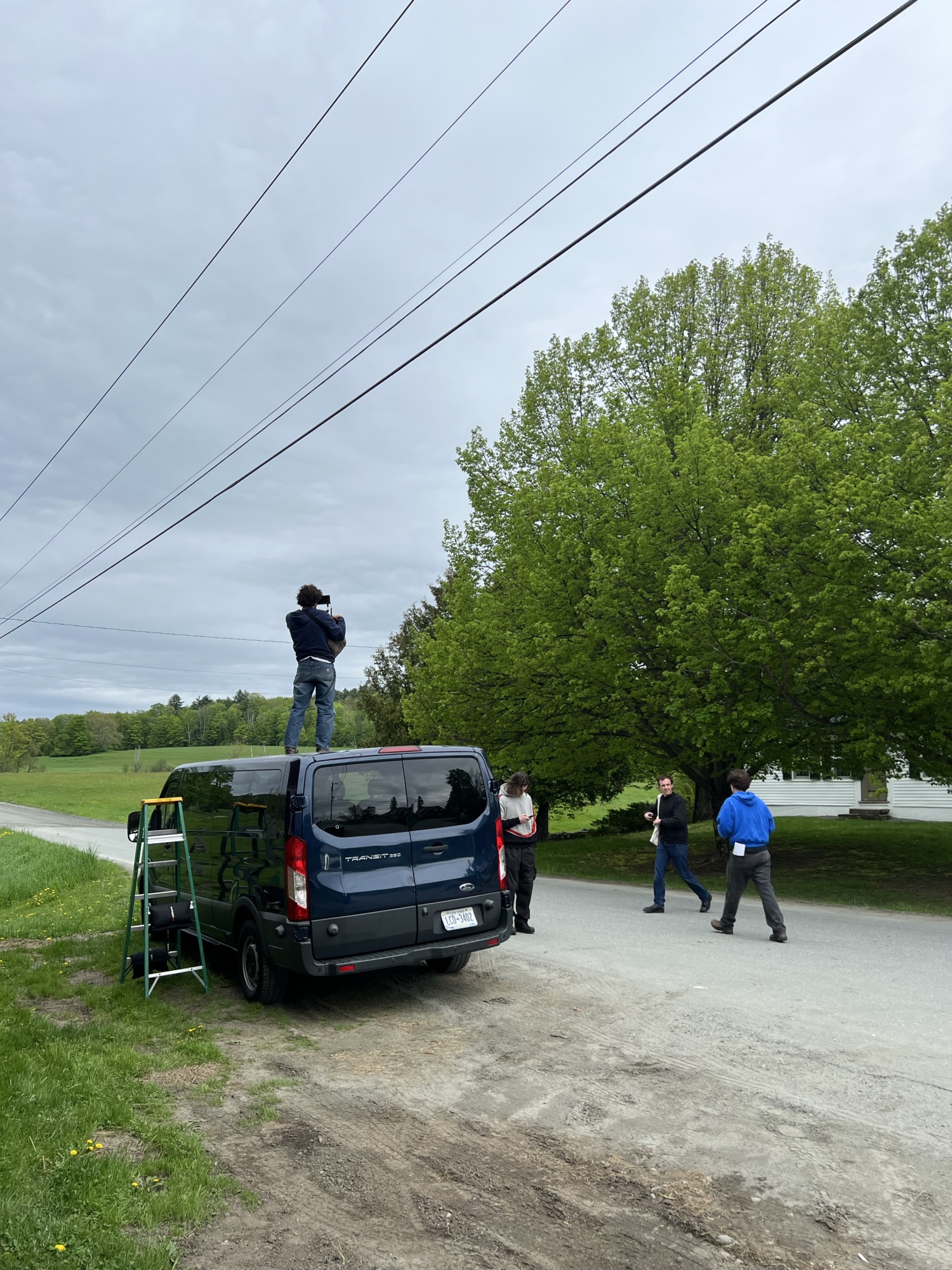
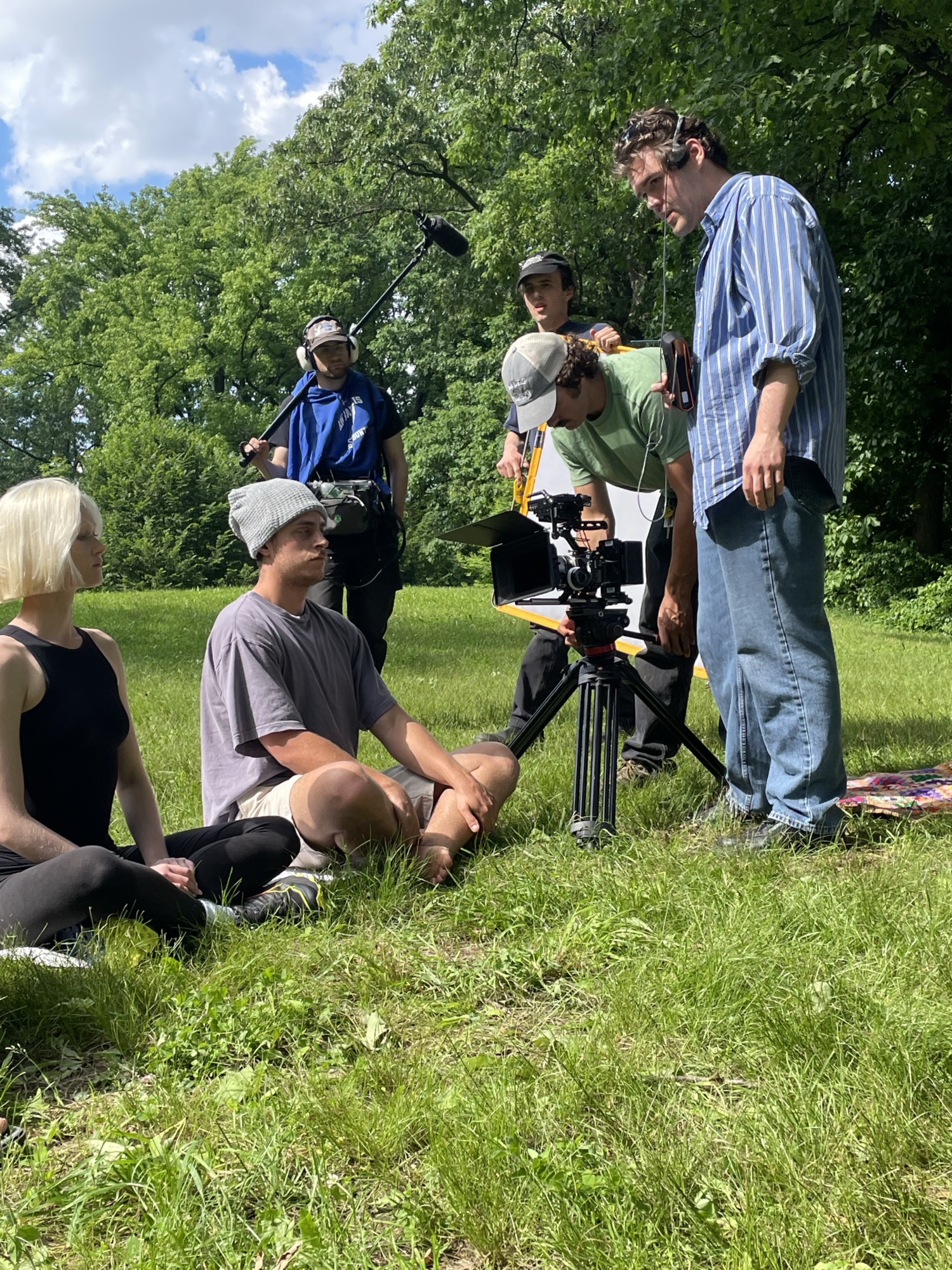
We used a Sony FX3 with Blazar anamorphic lenses. DP Rhys Scarabosio and I shot our last project on film, so this time we wanted to go completely the other direction and really lean into this digital/sci-fi/widescreen anamorphic look. We wanted a setup that would allow for maximum flexibility because we were jumping around locations and wanted to encourage improvisation. The camera was handheld for everything until the final scene. We used a really basic LED lighting kit and went really run-and-gun with it.
The whole approach of how we shot it was designed around our DP’s style. He does a lot of handheld 16mm work, and I thought it would be cool to bring his sensibilities to digital, a fun contrast to a lot of digital cinematography I see, which can be a little too clean or sterile, sometimes. It felt like a good way to get on Stellan’s level—jaded, disoriented, drugs in the system, probably a little dehydrated.
There is a palpable through spirit of improvisation.
There was a segment in the bathroom scene where Richard describes his buddy Jimbo’s ayahuasca trip that we did a lot of takes of, with brand new improvised descriptions each time. Oscar Landry, who plays Richard, was making the whole crew cry of laughter while shooting that scene. The meditation was scripted, with specific things Peter Vack needed to mention, but we did 10 minute takes, basically allowing Peter to truly guide a meditation for the extras. The line in the film where he says “if you feel them buzzing” came from a moment that happened in the previous take: Stellan was summoning the extra terrestrials, and one of our extras felt something buzz past her as he said it. So that’s where that line came from.
I left a lot of this for Peter to embody in his own way; he didn’t want it to feel like the same zen guru we’ve seen in a lot of movies before.
That leads perfectly into Stellan’s transformation. What was the specific direction you gave to Peter to differentiate the post-encounter Stellan?
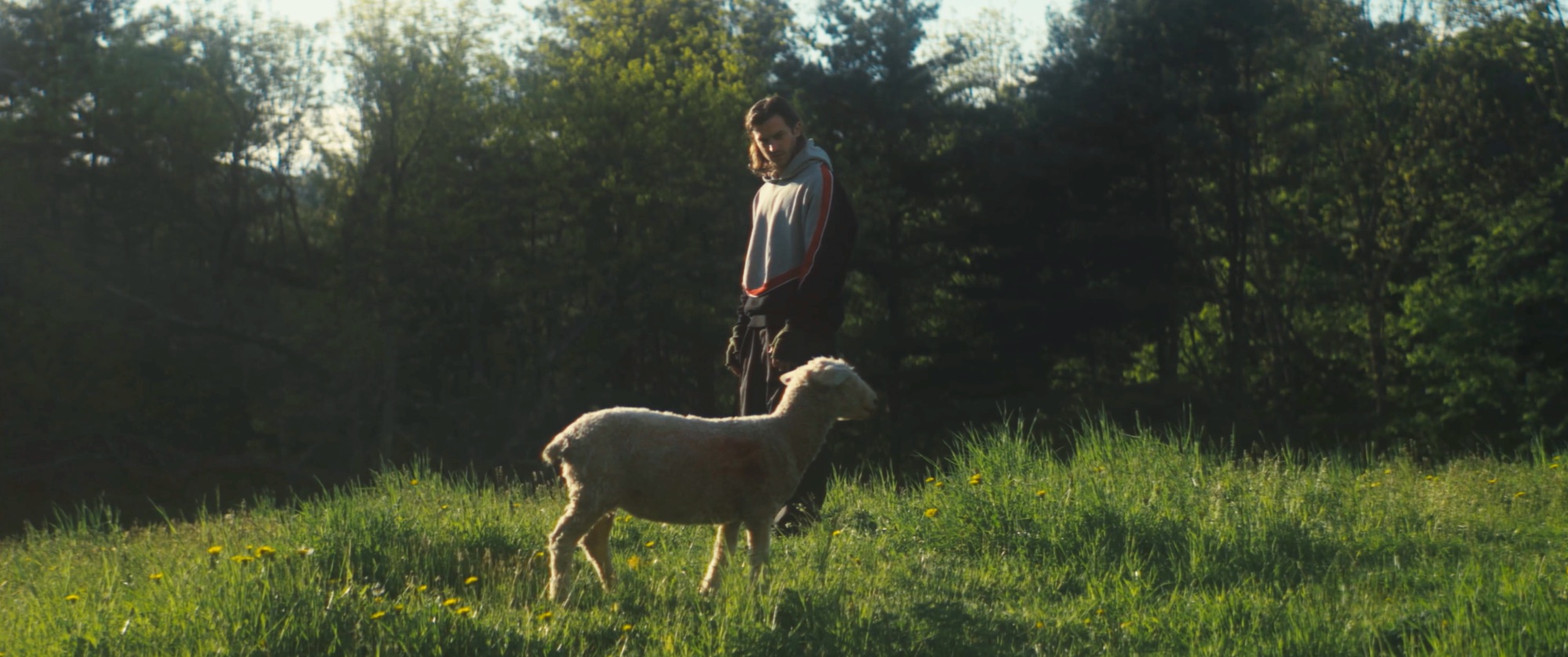
We had a two-week break between shooting the rest of the film and the encounter, which, if I remember correctly, came out of a scheduling conflict for someone. But I decided to lean into it. The time between shoots felt like a total reset. I even had Jordan Raf (who plays Stellan’s manager) get a new haircut. Peter and I would send each other some examples of current alien-summoning gurus. And there are a lot. I left a lot of this for Peter to embody in his own way; he didn’t want it to feel like the same zen guru we’ve seen in a lot of movies before. He brought a real intensity to it that I love. A lot of these enlightened gurus are actually kind of scary, not always super calm yogi energy. That was a great nuance Peter brought to it. For this scene, we basically treated it like a real meditation. We’d do 10+ minute takes where Peter would actually guide the extras through a meditation. I trusted Peter, made sure he said a few of the essential lines, but more importantly, I just wanted him to really go there.
There is a great fusion of digital and practical effects for the big encounter scene.
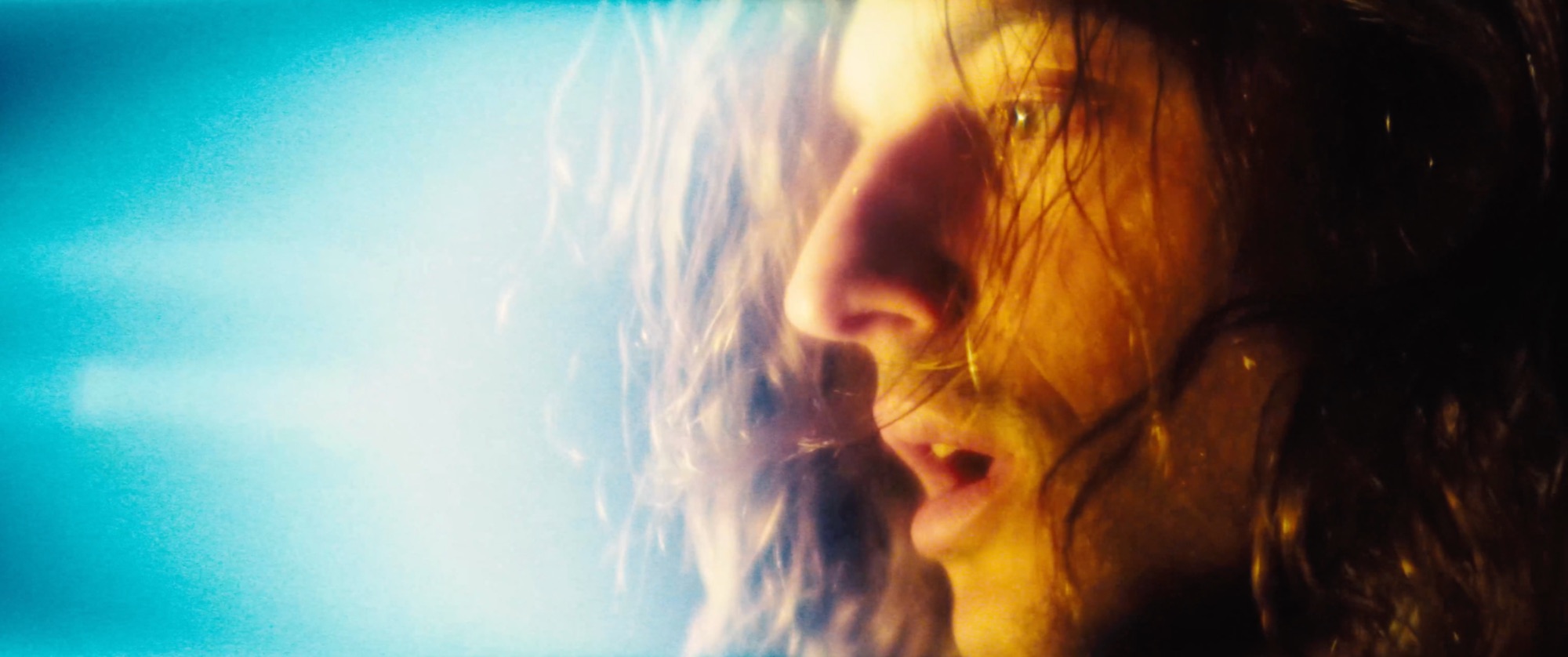
That sequence was a big post-production challenge. It went through many iterations. Thanks to the great work of Macky Macguire and Beth Walker, we were able to crack the code. Macky did the digital VFX textures and lights, and Beth did the practical macro lens liquid stuff. There have been so many Stargate sequence rip-offs in movies, and it’s easy to think in maximalist mode. My north star was simplicity. The practical macro-lens stuff felt perfect to me—gives you a dose of that sci-fi psychedelia, but it’s organic, simple, and clean. I think I got the idea from a featurette for Aronofsky’s The Fountain—they did a lot of petri dish macro lens stuff for VFX.
The practical macro-lens stuff felt perfect to me—gives you a dose of that sci-fi psychedelia, but it’s organic, simple, and clean.
With clear importance because of his DJ persona, Saul Nadis’s score really ties the whole film together.
It was very fun to collaborate with Saul on the score. Because the music in the film is kind of diegetic and non-diegetic, I wanted it to feel familiar but also only exist within the world of the film. I wanted Stellan’s sound to feel a little bit like Y2K EDM (Tiesto, Paul van Dyk, etc.) but also feel modern with a bit of hyperpop influence. Saul is incredibly talented, and he really tied it all together.
Having gone from film to digital for this project, what’s next for you?
We’ll see! I love both. I think the script will tell me.