
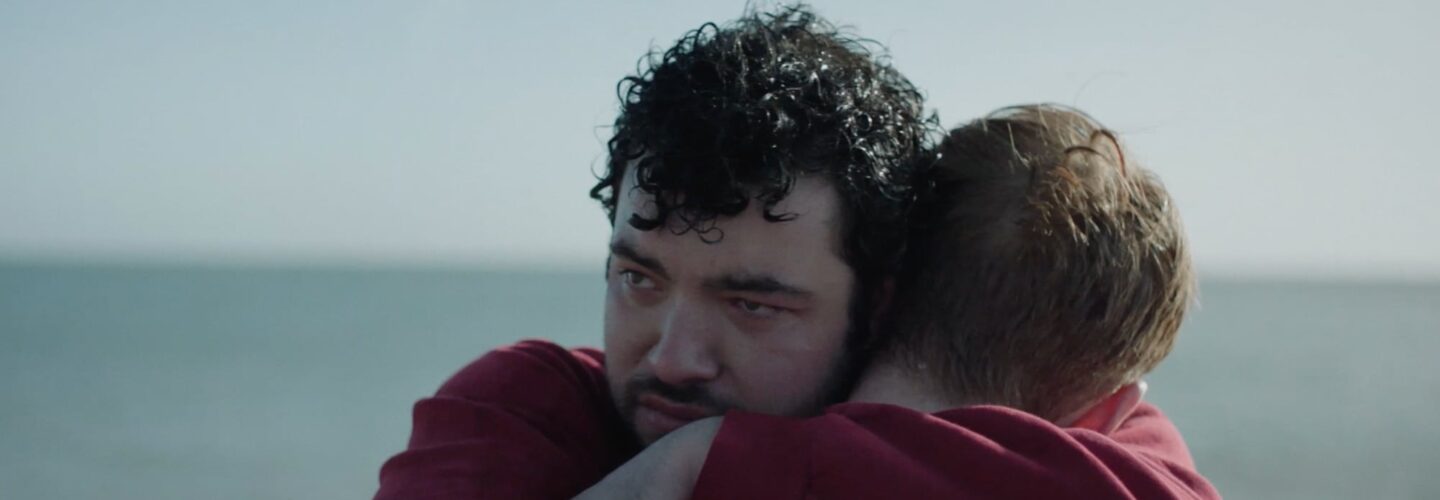

Filmmaker Jamie McCormack, no stranger to the pages of DN, returns today with his brooding familial drama Mersea. The short follows a disparate group of relatives embarking on a ritual pilgrimage to the coast to scatter ashes in a poignant exploration of love and reconnection, all overshadowed by a sinister, unseen threat. McCormack’s journey to realise this vision was itself a long and evolving process, with the initial concept—a raw, drug-infused road trip born from his own experience with bereavement—lying dormant for years. It was only with creative distance and a newfound directorial focus that he found the key: infusing the personal narrative with a genre element to provide structural tension and a profound, rounded completeness. This evolution towards a richer story is palpable in the film’s construction. McCormack leverages his skill in reading human emotion to draw out lived-in, authentic performances from his cast, architecting a visual and emotional progression that moves from claustrophobic interiors and tight, static frames into the expansive release of a beach setting. The final sequence, encompassing a single, breathtaking shot of the characters running into the water, embodies this transformation. The camera, once restrained, now chases alongside them in a moment of hectic, pure freedom, visually cementing the fragile bonds rebuilt along the way. Join McCormack as he speaks to DN about Mersea for its online premiere and discusses how it emerged from a totally different script, his love of the nuanced performances he was able to draw out and the raw energy captured in that memorable closing scene.
Mersea could fit into a few genre conventions. Where does it sit for you?
I think the reason this film works is that it’s not conventional. It’s set in the UK gangster genre, but it’s more about love than anything else. So whilst it’s got these dark undertones and a pretty hard conclusion, the film itself is this family saga where a small group of disparate relatives fall back in love with one another on their way to throw some ashes in the sea.
The very first draft, which back then had a working title of Dashed Ash, was written as early as 2012, and it was meant to just be about love and the journey. My dad had died (in 2006), and writing this was part of the creative reaction to that. Originally it was a drama/comedy about two recently bereaved brothers, separated by age and outlook, along with their supportive friends, all travelling to the seaside to dash this ash. It was also a ribald, rowdy, raucous, drug-infused road trip and a love story: sad and funny, a poetic journey that leaned into the amazing clarity that a close bereavement in the family gives you. But it never quite came together so I parked it.
I realised that if I added this genre/gangster element, a sinister energy that hangs over the entire film, the film would have this nice, complete structure to it.
What was the catalyst to re-examine it?
In early 2023 I was newly freelancing, committed to becoming a director in my own right (I’d been part of a directing duo) and I felt a new creative freedom. I pulled this old idea out of a drawer and completely rewrote it. I realised that if I added this genre/gangster element, a sinister energy that hangs over the entire film, the film would have this nice, complete structure to it—a roundedness to it that is really hard to achieve in a short film format and what I always look for. Short films are often set up and punch-line—that’s all you’ve time for—but I was aiming for something deeper than that.

It’s always interesting to hear how a film and concept evolve. Was it the distance from the grief, or the grief itself, that made you realise it was missing that extra element?
I definitely think it was the distance from grief that made it possible to bring it all together. In the early days, there was some element of pressure to do justice to this life-defining feeling and moment. The script had to be perfect at capturing a time and all of the feelings of bereavement to do justice to my dad after he’d died, which was an impossible task.
Every time I read it and then amended, I’d be searching for something different, then eventually, after a bunch of rewrites, the script had lost its heart and direction to such an extent that I didn’t know what to do with it—a Frankenstein’s monster of a script. Then years later, I approached the script with absolute knowledge of what it was about and it virtually wrote itself.
Most Popular
Let’s talk about casting and finding actors to inhabit your very lived in characters.
I’d lived with variations of these characters for months and years, iterations of them that were locked on the page in words and spaces, deleted and reimagined several times over. So to see them brought to life by all these different actors who would give us their take on them, new backgrounds, motivations and emphasis, was truly lovely, humbling, and absolutely, incredibly fun.
The cast we settled on was a dream come true. Amy Booth-Steele, playing a little against type as she’s amazing at comedy, Dylan Corbett-Bader, who can seem threatening and lovable all in the space of a shrug, Henry Lawfull with his ability to portray an innocence and love between the brothers so easily, then Russell Barnett at the end as the cherry on top. My directing notes for him were simple, “Say it with less meaning. You’re dead inside. You really don’t care.”


You’ve made some well received documentaries in your career. I’d love to know how you found the shift to narrative.
The shift from documentary to narrative and working with actors was incredible. It’s so nice to be able to give directions to the performer! When you’re making a documentary, you have to be very careful with the performance of your contributor, generally, as a rule, you can’t direct them. As soon as you suggest they act, behave, or respond in a certain manner, you’ve turned them into an actor. Suddenly, they’re alien beings thrust into this new body. They’re trying to figure out how to move and speak, it’s the strangest thing.
We’d discussed the emotion of each moment, the backgrounds and beliefs leading up to this moment.
This teaches you, as a director, to be super empathic, to read the mood of your talent, and to push with them if they’re going somewhere interesting. And this skill crosses over. The performances in this film are probably what I’m most proud of. And I think that was because we’d had a table read, and we’d discussed the emotion of each moment, the backgrounds and beliefs leading up to this moment, and then the actors lived it and did it. But most amazingly, when I wanted a little shift or change in delivery or emotion, I could just say it. And they would do it like it was the first time they’d delivered that line – for the fifth or sixth time or whatever. It’s an amazing skill.

Apart from the obvious shift to the beach, how did you architect your visual journey in the film from suffocation to reluctant freedom?
The key to the journey across the film is the emotional one between Sonny and his Aunty. It starts dark, moody, heavy, and then as the day brightens, so do their relationships. At the end, you feel they’ve all found that family love that was always there. So hopefully the ending is particularly heartbreaking. The Aunty has made a choice based on her life and circumstances, but you bet your life if she could go back in time, she’d do it differently. The abstract version of Sonny, who’s committed this terrible act and is on the run, versus this kid she’s known his whole life and is family, a reflection of her now-dead sister. I really hope that comes across!
Everything was very static, and then in this pure moment of emotional release, we’re suddenly moving and running with them.
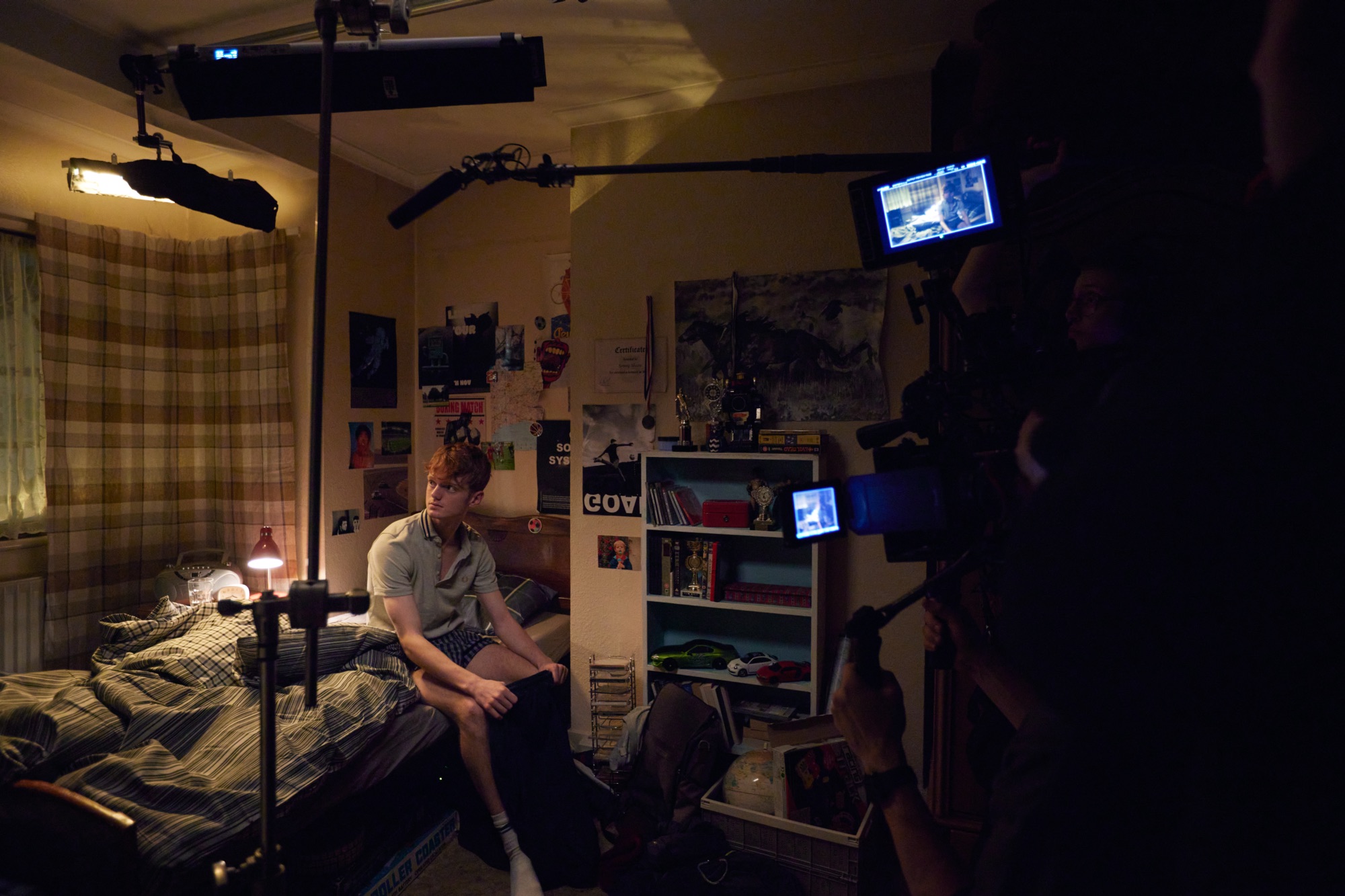
A lot of it was that the locations we were working with were smaller. We had shots framed close and tight, and static close shots all through the openings. Then it opens up in terms of wides and seeing them all together as a family in that first car shot in daylight. Then, really wide open on the beach.

The beach is where the film exhales after all that claustrophobic tension. How did you approach shooting that final sequence with its difference in framing?
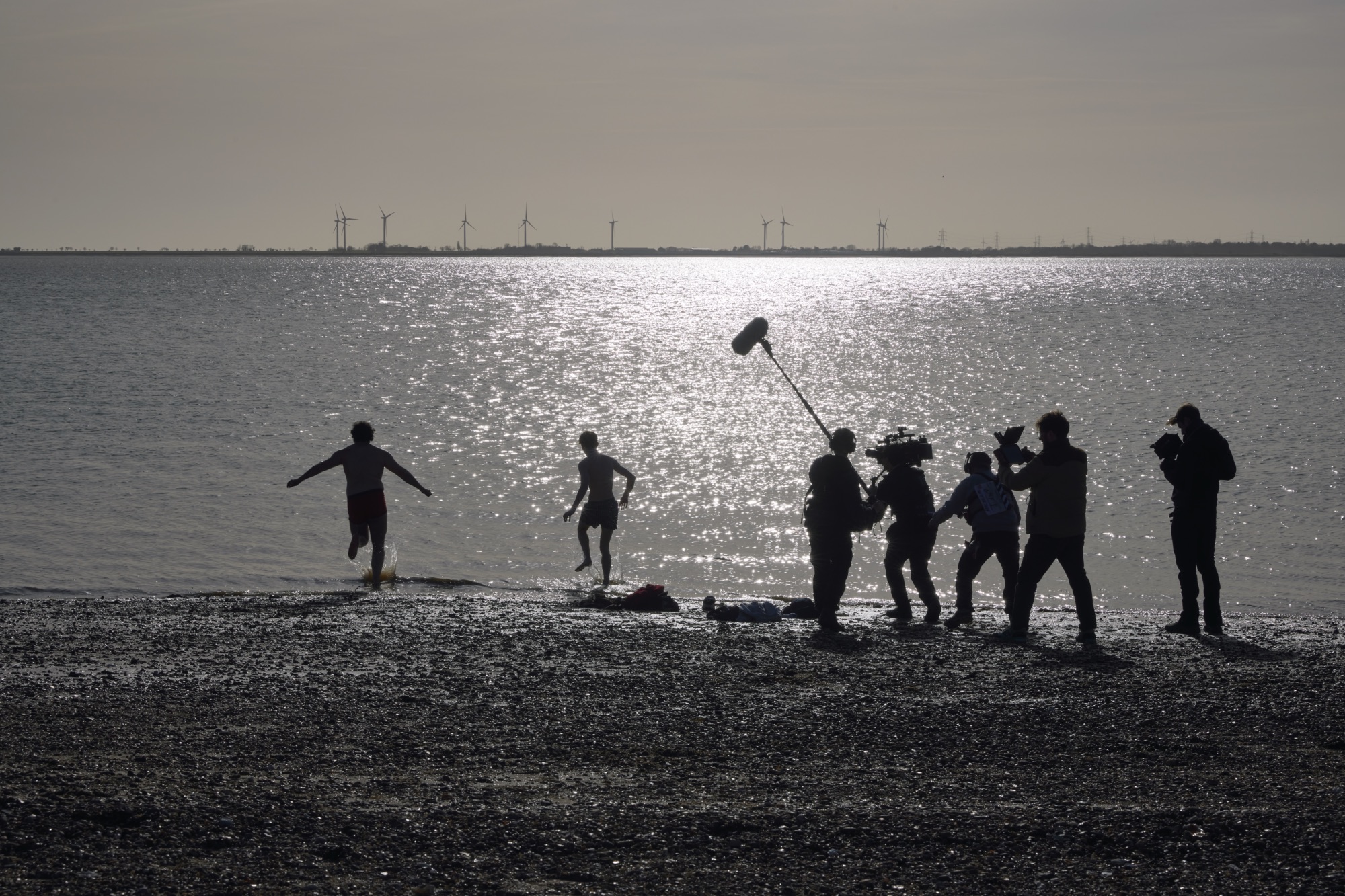
The best moment for me is them running into the water. Before that, everything was very static, and then in this pure moment of emotional release, we’re suddenly moving and running with them, and it’s all hectic and free. We shot that whole sequence in one take. They took off, and DOP Adam Singodia was running alongside and our first assistant camera, Oliver Pearson Pajtra, was pulling focus like a maniac, and our Soundie, Felix Waverley-Hudson, was chasing with the boom. The shot is bumping and bouncing along, yet Adam stays moving with them and picks up details such as the sweet tin on the sand, then up to them again. Amazingly, the brothers stay within the bounds of the frame.
When Sonny spotted Auntie Syl with Jim up the beach, you see the realisation in his eyes and he makes the choice to come back to his brother and just be in that moment with him. It was so great and felt so right that we didn’t want another take and we didn’t need it.
What are you working on next?
I’ve got a finished short film script that’s a psycho-sexual sci-fi thriller. Which is fun to say as fast as you can. It’s about a trio roaming the hills and valleys of the English Countryside, hunting shape-shifting aliens that are insidiously taking over society. The youngest in the group begins to doubt the truth of their mission, but the only way she can clarify her doubts is by taking part in a kill. It’s inspired by They Live with a touch of Badlands thrown in. Sissy Spacek in an urban British crime sci-fi thriller. As a short film, it’s 15 pages, but I’m already imagining the developments necessary to boost it up to a feature film or series. It’s full of angles that are fun to explore.