
In 2018, Ita O’Brien walked onto the set of Sex Education with a framework that would quietly revolutionise the film industry. Now, her name appears in the credits of some of the most celebrated and culturally significant screen productions of the past decade—It’s a Sin, Gentleman Jack and Normal People, to name but a few—and the role she pioneered is now as essential to a production as the fight director or the choreographer.
The principles O’Brien brought to those sets—open communication, agreement and consent, clear choreography, closure—didn’t just make those productions safer, they made them better. The intimate scenes in I May Destroy You didn’t just break taboos; they changed the conversation about what intimacy on screen could look like, more psychologically true, more anatomically honest, and in the case of Michaela Coel’s period sex scene, more quietly revolutionary than anything that had come before. The geometry of a lift. The choreography of a taxi. The detail of how much blood on a sheet is too much. This is the craft that O’Brien has spent decades developing.
Now, with her book, Intimacy: A Field Guide to Finding Connection and Feeling Your Deep Desires, O’Brien has taken those same principles off set and into everyday life, because the tools she developed for actors and filmmakers turn out to be tools everyone needs. From the boardroom to the bedroom, from adolescence to older age, this is a book about the radical potential of open communication in all its forms. In our extensive conversation, available to watch in full at the end of this interview, O’Brien speaks with DN about craft, consent, the future of the embodied director, and why the way we depict intimacy on screen matters more than most of us realise.

I am a huge advocate for intimacy coordination. I’ve been closely following your work in Normal People, I May Destroy You, It’s a Sin, Sex Education, among so much more, and have just devoured your book, Intimacy: A Field Guide to Finding Connection and Feeling Your Deep Desires.
I had the joy of writing this book, taken from what I’ve learned building The Intimacy On Set Guidelines and how that impacts how we can engage with the intimate content and realising the fundamental tenets of open communication, agreement and consent, clear choreography and closure are wonderful tools to bring into our own lives.
Whilst the book has been influenced and guided by your work in the film industry, it is very much accessible and aimed towards everyone, as it covers so many areas of life that we might not necessarily consider intimate.
Fundamentally, in our lives, open communication is the first step, and it is such a biggie. Open communication means, first of all, taking responsibility for yourself. So you’re thinking about what you want, so you can communicate this. But then, once you have a life and relationship that you work from, communicating openly, then you can engage with anything. It can be really supportive for all walks of life, what you’re going to eat for dinner, if you’re going to have children or not, right through to navigating being a parent, the biggest shift throughout your life.
It’s wonderful to say you are able to switch and communicate with transparency, but it’s a big shift. We all have various reasons why we don’t talk about things; it comes from our upbringing, our culture, possibly our religion, so I am really aware that that can be a huge step for people, and that takes work. In the industry, just because the intimacy guidelines are there doesn’t suddenly mean that everybody can talk openly about it. People in all walks of life have different relationships with how they engage with intimacy, and so you’re navigating the unspoken uncomfortableness.
I was a kid born in the nineteen sixties, the attitude to sex was still so Victorian—there has been a wonderful shift. The contraceptive pill was a huge part of that, the idea of female pleasure, and then that continued journey to understanding more about female anatomy and our female hormonal journey through life into the menopause. Wonderful people like Davina McCall and Mariella Frostrup are championing talking about this. It’s natural, it’s normal. Half of the population is going to go through this. And what does it mean? So the lid has been lifted in that way. And now, I’m inviting people to look at how we can engage with our joy, with our pleasure around our embodiment, around our sensuality and sexuality, and just giving some tools from my embodied practice. How we can really connect with ourselves and enjoy living a life of luscious sensuousness, what that gives you then, it’s your choice to take that into your sexual relationships, should you so wish.
For me, your name is synonymous with starting to hear about intimacy coordinators, largely due to director Lenny Abrahamson singing your praises in our Normal People interview. I’d love a bit of background on where you came from and how you came to be leading this relatively new part of the industry.
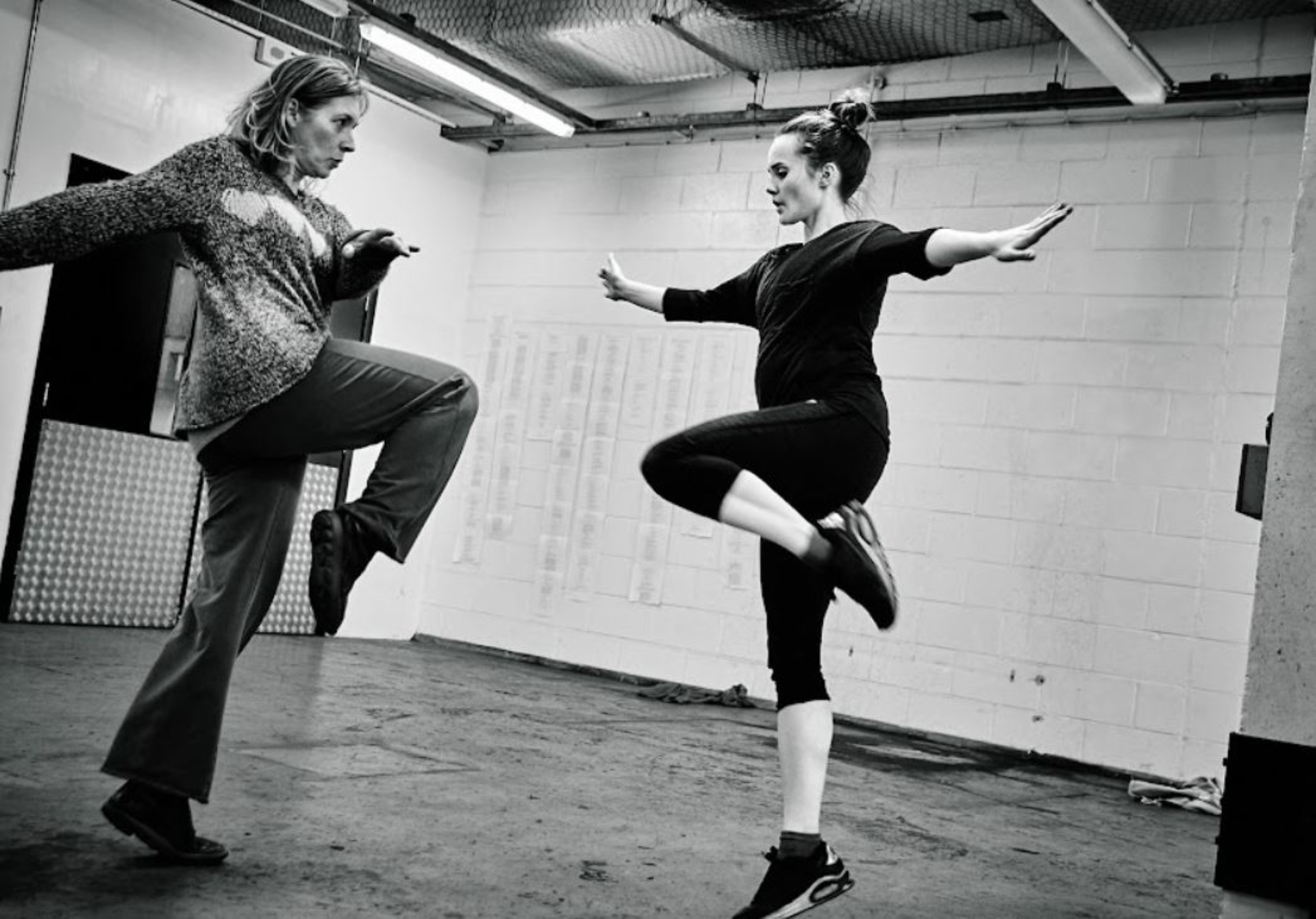
I was brought up in Bromley by very strict Irish Catholic parents, my mum’s from Cookstown, County Tyrone in the North of Ireland, and my dad is from Clonmel in Tipperary in the South. My mum wanted me to go to Irish dancing classes, but there weren’t any, so she sent me to ballet at the age of three. I was fortunate enough to be taught by the most amazing lady called Madeline Sharp—she had taught Beryl Grey in the 1930s, the most beautiful, elegant ballet teacher, so I had that training from the very beginning. In my twenties, I worked professionally as a musical theatre dancer for ten years, then retrained as an actor for eight years, and then, when my kids were young, I was looking at what I could do between jobs and found the MA in Movement Studies at Central School of Speech and Drama.
From 2007, I started teaching movement to actors and movement directing, and I also wrote my own work. I put on my own play in 2009, called April’s Fool, and then I was looking at taking that further and what I was doing was extracting and taking the dynamic of the perpetrator and the victim. I was very inspired by the Forgiveness Project and restorative justice, looking at the flip sides of conflict. In that place I was thinking, “How do I hold a really safe rehearsal space when I’m asking my actors to come and explore possibly challenging material?”
I put on a week-long R&D at Central School of Speech and Drama in the summer of 2014, then a second year at the Barbican Pit in 2015, which, if anybody’s interested, you can see there’s a five minute YouTube video called Does My Sex Offend You. I was also teaching at different drama schools, and it was Meredith Dufton who said to me: “I’m suddenly having to note all these plays that my second and third years have got with intimate content and there is no professional structure.” I was creating a structure in order to do this work in a really conscious, present and professional way, so she asked: “Please come and teach what you’re developing.” So that was April 2015.
I also co-worked with and was mentored by Vanessa Ewan, who had already had the inspiration of watching a fight rehearsal and realised that’s the structure that we need for intimacy. She’d written about that in her book and was one of the main creators of the course and tutors on the MA in Movement Studies. So I co-worked with her, bringing in the container that I had created alongside the core of her inspiration, using how you create a fight to choreograph intimate content.
I was thinking, “How do I hold a really safe rehearsal space when I’m asking my actors to come and explore possibly challenging material?”
April 2015 was the first term that I taught the work, and I made mistakes along the way. I tried to do an intimate scene way too much, so I scaled back—just do a kiss, that’s enough. Over the next year, I taught MA, BA, actors, acting musicians, and musical theatre. And then, with wonderful ongoing practice with Meredith, constantly reflecting and looking at what was working, it was the students who were saying to me, “This is great here, but what’s happening in the industry?” So that’s where I started to take it to Equity in February 2017. I presented it to a group of agents in June, and they instantly said, “Oh my goodness, we need this”, and then, of course, in October 2017, Weinstein happened, and that shift in the industry.
Most Popular
Equity called me in as part of their preparation for creating their safe spaces. I was able to share the Intimacy On Set Guidelines that I had brought together, and with the industry’s intention to do better, I had the opportunity—within the codes of conduct being written—to say: yes, and within that, here is how you can work with intimate content in a way that embeds that open communication and respect for everybody, so we can actually work with it in a really safe way.
The 25th of April 2018 was the very first day I was employed as an intimacy coordinator on Sex Education. I said to John Jennings and Ben Taylor, the best thing I can do is run my day’s workshop, so that’s what we did. We had this groundbreaking day. Everybody was there—producers, directors, DOPs, first, second, third ADs, and as many of the production as were already cast—all sat around in a huge circle. I always start with, when’s it being done well? When is it not being done well? What do you want to equip yourself with? Then, into the afternoon, up on its feet. I’d identified various different scenes, and some of the choreography created that afternoon made its way into the production. That cast bounded out of the room with joy and ease and understanding, and they were set to create what became the wonderful phenomenon that is Sex Education.

I know intimacy coordination isn’t regulated yet. I had the opportunity to interview Poor Things‘ intimacy coordinator, Elle McAlpine, over at EK Intimacy, who trained under you, and I’d love to know what you look for in someone you can nurture into this role. Also, could you discuss the problems with people thinking they can simply step into it?
I’m so proud of everything Elle and Kat are doing and have done, and how they operate in the industry. When I was teaching movement on the MA Acting course at The Drama Centre they were two of the students on that course. When I started demonstrating how the Intimacy On Set Guidelines worked in 2017, I was also asked to make a short film showing how the guidelines worked in the industry. My students, the people who really knew and understood my work, were the people I asked to demonstrate it. I had taught them a year’s worth of embodied actor movement, so they understood my approach, and I had helped support them in developing their actor movement training. They were among the first people I was constantly sharing the work with, and then gradually, as more productions started to come in, those lovely people, including Elle and Kat, were the people who knew the work best, other than myself.
For me, it is about understanding and having the skills that recognise acting as an embodied art. It is about physical transformation, and bringing the detail and skill of the movement director into understanding that that’s what underpins the physical storytelling of intimate content. So that’s what I’m looking for—people who are fundamentally embodied practitioners: either really wonderful embodied actors, or people who are movement directors. Because this is about lifting and recognising that intimate content is physical storytelling.
Your yes is your yes, your no is your no, and your maybe is also a no. Consent is a process, not a moment.
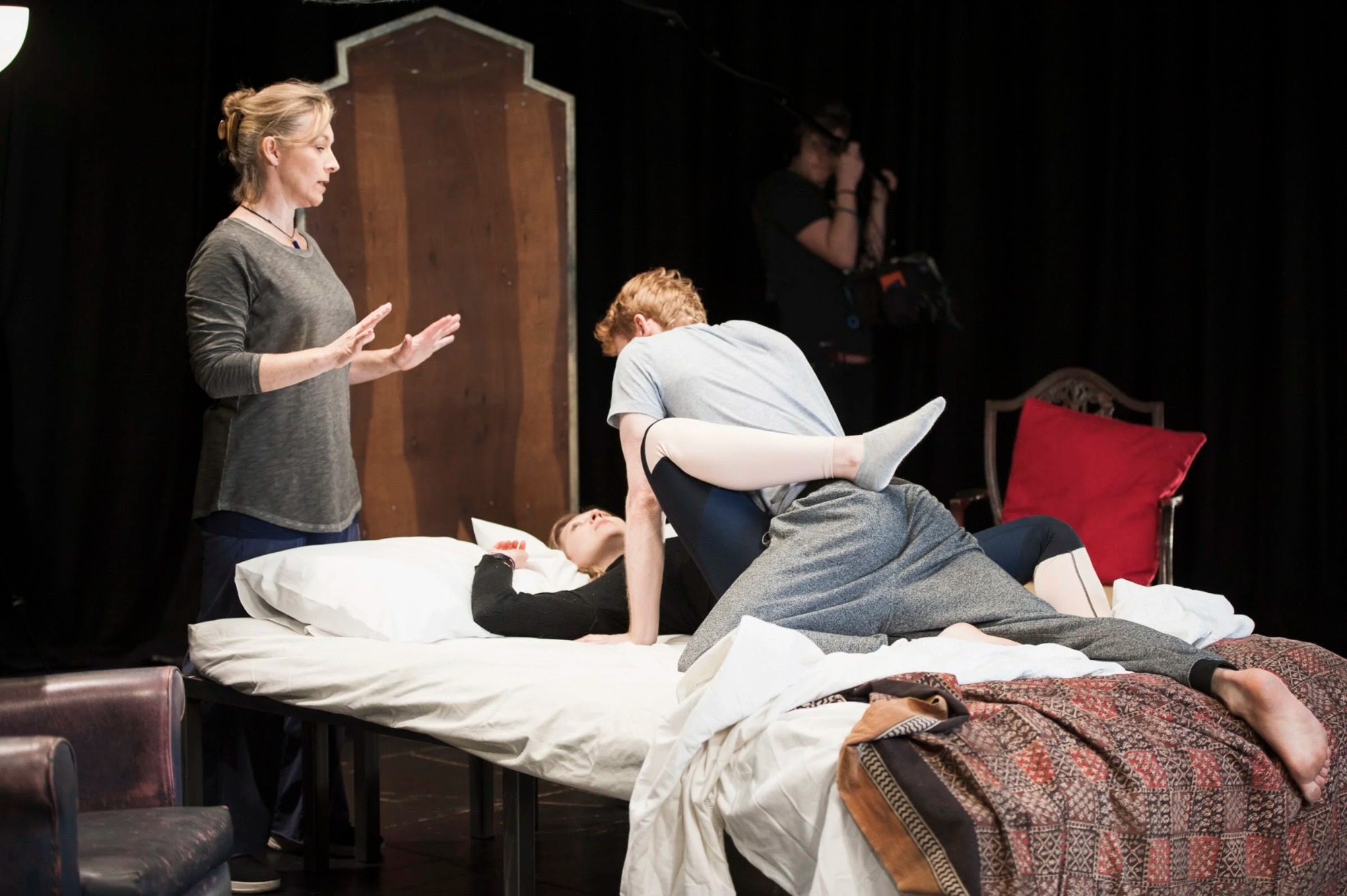
There was some confusion too, with some actors saying, “If you choreograph it, won’t you take away the spontaneity?” And the key difference is this: this isn’t people who are choosing to make love, this is whatever is happening in the service of a drama, on TV, film or in theatre. These are characters, and that intimate content has been written by the writer because it’s telling us something about these characters and their intimate relationship. Just as dialogue can build until you have no choice but to burst into song in a musical, or anger builds until you have no choice but to throw a punch—that’s what we’re doing with intimate content. The gaze, touch, playfulness, until you can’t do anything but release into sensuality and sexuality if it’s a loving scene, or into something more challenging if it’s an abusive one. It is a body dance, and just as you need a choreographer to teach skills for a dance, or a stunt coordinator and fight director to teach skills for a fight, you need a practitioner to teach skills and choreograph intimate content—someone who knows anatomy, rhythm, physical storytelling, and character transformation.
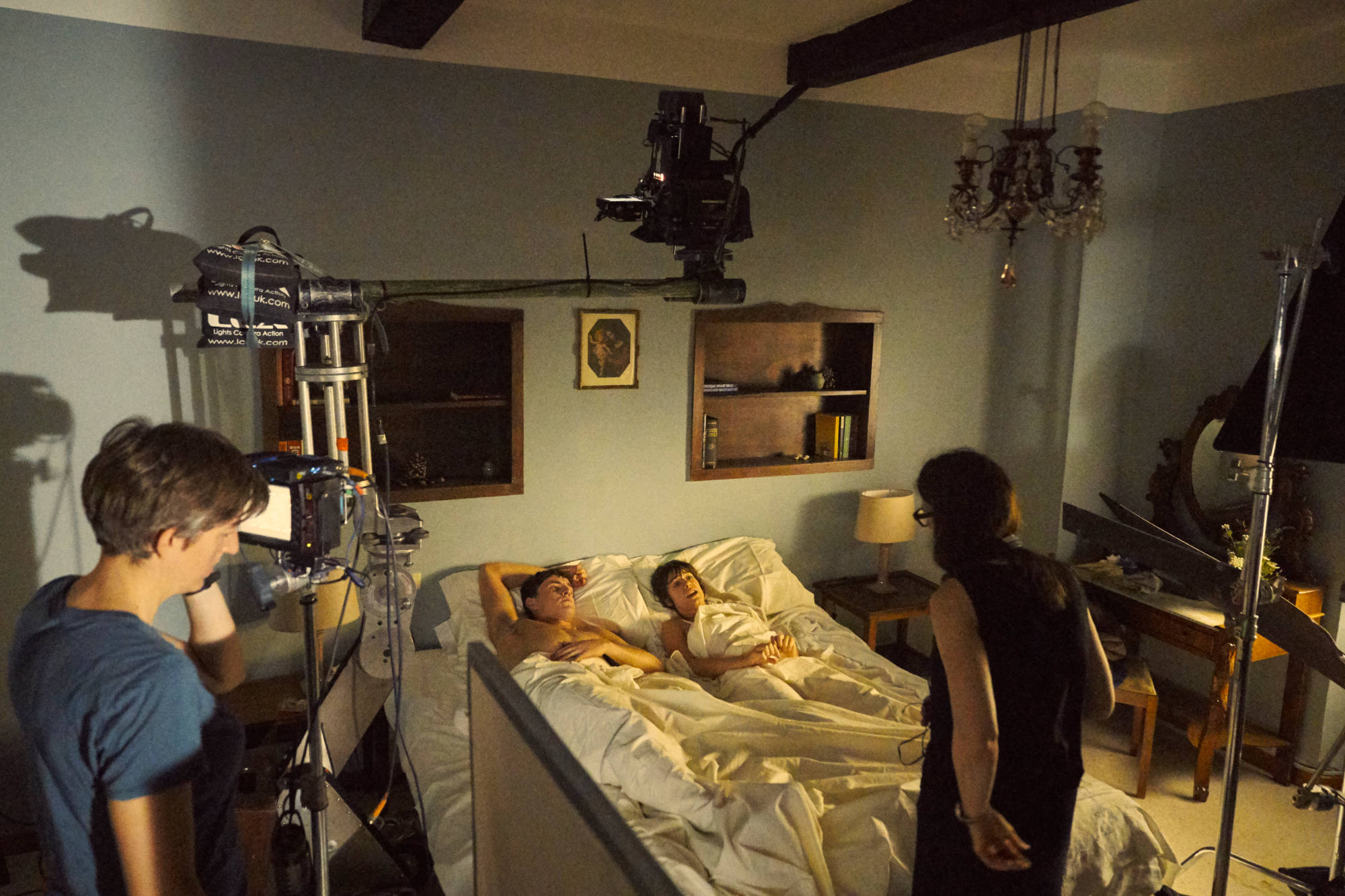
That needs communication. It needs artistic riffing and imagination. And this is where the shift with this work is so important for directors too—it allows the director to riff, to be creative, to be excited, to be fully present elsewhere, while opening out the creative conversation with their actors and inviting them to take responsibility, to bring their ideas. As the intimacy coordinator, I’m watching the actors—even in conversation—where is the impulse coming from? Are they talking about this character, and the impulse is coming from their groin? From their heart? I’m observing all of that because I want to support an actor to be who they are creatively, not impose something on them, but lift what their inspiration is, what they have decided. Then we bring in the skills, the techniques, the anchoring, the rhythm, and give a really clear choreographic frame.
The number of times I absolutely nail it and get it right throughout a whole production is pretty much zero. Because what you’re navigating is how each person works, including their unconscious relationship with their body, with touch, with nudity. If I ask someone, “Are you happy to be naked-breasted, naked-nippled”? And they go, “hmmmmm” instantly tight, looking away, that’s a definite maybe-no. And in this work, a maybe is a no. Your yes is your yes, your no is your no, and your maybe is also a no. Consent is a process, not a moment. Something you’ve said no to might become a yes; something you’ve said yes to might become a no. That’s hard, because actors are trained to say yes—to shut up, put up, and offer. What this work does is lift the lid off that and say: actually, what we want is to honour what is right for you personally, so that you can be the absolute best of yourself in this scene.
You’d never have an actor say, “I don’t want to rehearse a fight, I don’t want to talk about it, I don’t want to make it more of a thing than it needs to be.” But in the early days, I’d hear exactly that about intimate scenes. And in all of that, I’m hearing: it is a thing. It is still a thing. And that’s part of our skill—listening. Not just to what someone says, but the timbre of their voice, the words they choose, what’s happening in their body. I observe, I notice, and then I reflect back. “I notice that you’re shaking your head when I’m asking about nudity. So my invitation is, “Let’s keep that off the cards.” And they go, “Oh yes, actually, thank you.” Then we work with that, and I share it back with the director, the producer, the costume department, and we find solutions that give the director the image they need while that cast member is completely personally taken care of.
I can imagine how working on all of these sets and regularly navigating these situations naturally led to writing a book that allows everybody to explore intimacy and open themselves up.
What’s been lovely with the book is taking a step back, because it really is for the everyday person. It acknowledges the intimate content we see on screen and the impact those images have on us. Our intimacy, how we love and who we love, is so fundamental to who we are as human beings. And societies learn from whatever artistry is happening at the time—from Shakespeare’s plays to Jane Austen’s novels to now, where we recognise ourselves through our screens. And it’s not just long-form TV and film any more; it’s our phones, TikTok, and Instagram. That’s how our youngest people in particular consume their entertainment, and that can’t be ignored.
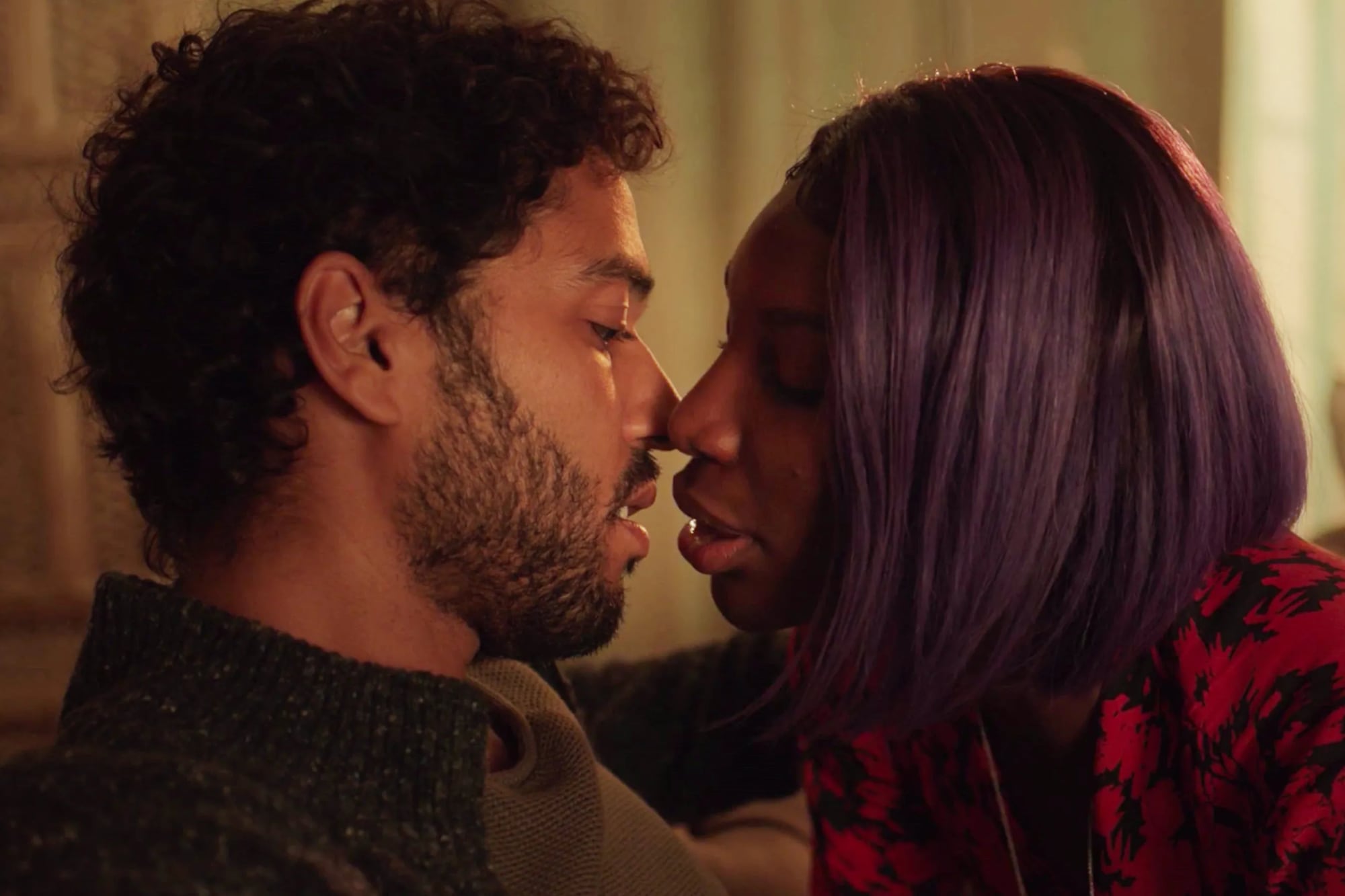
And so first of all, the mirror. I’m saying, come on, there’s a joy in making better intimate content. Make anatomically better intimate content, invite more different body shapes and write periods, so we see the reality of all those kinds of things. I implore writers and directors to write better intimate content because I feel there’s been a nervousness recently, a stepping back. A lot of scripts where it’s kissing up to the point of sex, and then cut to the morning after. Which is fine if the scene doesn’t need to go further, but the question has to be, do we need it? And if we do, research it, really understand who these characters are. As in Normal People, a beautiful part of the storytelling pushing the storytelling forward.
I May Destroy You, the period scene with the clots. When I first saw it, I was celebrating, speaking to all my friends. Finally, conversations you might have whispered to a friend were on screen.
And where else is it? We need more. Michaela’s beautiful scene, sat on the loo, talking to her friend, taking off a pad and replacing it, just the everydayness of it. When I was researching, I found quite a few scenes where people talked about sex during periods, but I couldn’t find a single other one where they’d actually had sex on a period. There have been some since—there was one in Saltburn, although it wasn’t loving or empowering.
I was talking to actor Marouane Zotti, who played her hook up through the beats of the scene, explaining about wearing a tampon, wearing a pad on a heavy flow, and he asked, “Really? Does this happen?” It was just glorious. I really want to do a big shout out to the whole creative team – the really clear choreography of the camera, and then the props department. It was the right story, but it wasn’t too in your face for an audience, because if it was too gross, it would have turned everybody off. And again, just the detail and the delicacy of how that clot was, how much blood, that all mattered so that people could stay engaged and experiencing it and being empowered. You know, that thing of I’m on my period, I’ll get a towel out and put it down on the sheet because I know that blood will be involved. It’s not a bad thing, it’s a beautiful thing. It has lubrication in a different way. You feel sexy in a different way. We need more of that writing. Write better!
Then jumping forward in the book, the myth versus the reality of sexual arousal. Working with intimacy coordinators, I learned things I hadn’t known: the womb rising, the vagina moving from horizontal to vertical, engorging. And the clitoris has as much engorging tissue as the penis—most of it internal. This book shares some of that detail, and then invites the reader to ask: what do I actually want? From my sensuality, my sexuality. What positions work for me? Perhaps you’ve had knee surgery and can’t do something you used to, but you can do something else. Just being practical, taking ownership.
There’s a case study in your book that I love, the short film Keep Breathing, by Mark Corden. I’d love to dive into the specifics, particularly the geometry of intimacy in such a tiny space.
It’s a wonderful piece of writing. The writer also played the lead character, and it’s drawn from their lived experience. So there’s that real duty of care around what you offer from lived experience, how you offer it up in art, and how you safeguard it. Both the lead actress and the director approached me well before they started and I said, the best thing you can do is come to a weekend workshop, learn the process of the Intimacy On Set Guidelines“, which is available to watch on the Guardian YouTube channel, and then we can all work openly together with a real understanding of the process. So that’s what they did.
Like Michaela Coel’s story, this is about the grey area of consent. And again, as I make really clear, whenever there’s abusive content, it’s not about love, it’s about power and recognising that. This story is about two characters who meet up in a lift. Before this, they’d had a lovely evening together, and as far as the woman was concerned, that was the end of it. She comes home in the taxi thinking, that’s it, but he’s followed her with an expectation that things will go further. The story depicts that grey area: the coercion, her saying no, and what the reality of that is, rape. When they meet again, she helps him understand that she hadn’t given her consent. That he had taken her silence as consent, without ever seeking freely given consent. That shock, and what it makes him consider, that’s the fundamental story. I know it has also since been used in schools to raise exactly these situations and open up conversation around them.
When you’re looking at intimacy, it’s a whole arc, the journey into intimacy, the tension of it, the power of the space between.
There are so many layers to it. That all important conversation takes place in a lift, and you can feel the tension between them, how uncomfortable it is, and all of that is intimacy too. I think many people assume intimacy coordination is just about the sex or the physicality, but it’s also about the connection between two people and the space between them.
Exactly. When you’re looking at intimacy, it’s a whole arc, the journey into intimacy, the tension of it, the power of the space between. All the work in the lift itself, I wasn’t actually present for; there was no touch, but I had done the work with the director and lead actress around the guidelines and process beforehand, so that was well supported. I was there for the work in the bar and into the taxi, which was an interesting one to choreograph, given the physical constraints. There wasn’t space for me to be present in the taxi itself, so it’s about putting a really solid frame in place, everyone knowing exactly what’s happening, everyone happy, and then the camera and director are in there with them. All of those moments come back to having done really clear table work first.
I wanted to ask you about aftercare with the director. You’ve spoken a lot about working with actors, but I’d love to know how you navigate making sure the director also feels supported.
It’s so important to bring this into the conversation. The concern in the early days was that intimacy coordination would take over from the director. In all my check-ins, I start by asking: how do you like to work? What do you want from me? Everybody works differently, and finding that out first is how you develop that open communication and transparency. The hope is that a director quickly feels, this is a real ally, a practitioner who is here to be the conduit—not just with the actors but with all departments: sound, camera, costume, makeup, the second AD. Giving them professional ease and structure.
A director colleague of mine did a challenging intimate scene without an intimacy coordinator—she checked in with the actor beforehand, held the space well on the day, got exactly what she wanted, and made sure the actor was okay afterwards. But she told me afterwards that she had spent so much of her own energy on that wraparound care. Since having worked with an intimacy coordinator, she realised that concern can be communicated—but then handed over. That emotional and psychological check-in with the actor, that duty of care, becomes the intimacy coordinator’s responsibility, freeing the director to bring the absolute best of themselves to the work.
There’s a future of embodied directors coming, isn’t there, directors who will have worked like this their whole career and will just understand it instinctively?
I hadn’t thought about it quite like that, but yes, exactly. And the joy is that you can now engage with this part of the storytelling openly, creatively, and excitedly. The guidelines make that possible.
Returning to the book, there are some brilliant exercise sections where you give the reader a real window into what you’d be working through on set. Were those always an obvious inclusion?
What I was really excited about when I was offered this book was the chance to say: This is the work on set, and here it is for you in real life. The fundamentals of everything I’ve been able to create with the intimacy guidelines come from my movement practice and the various tools within it. So the exercises are drawn directly from that—tools I use to support actors that are equally wonderful for supporting yourself.
No is a gift to yourself and to others. We’re taught that no is negative, but on set I realised that if you haven’t truly created a space where someone can say no, you can’t trust the yes. We need to practise our no.
The first one is 20 Connective Breaths. It’s so simple, we breathe all the time, but when you consciously work with your breath to change your rhythm and your energy, it’s profound. It takes two minutes. For a director who is holding the entire set, holding everybody’s questions and needs all day and then going home to prep tomorrow’s script, something like 20 Connective Breaths is a really lovely reset.
The one I’m perhaps most proud of is the Power of No. It came directly out of my R&D work, sounding into each of your energy centres and exploring your no from each of them. From your base, your belly, your solar plexus, your heart, your throat, from your mind and from the top of your head. Because a no is a gift to yourself and to others. We’re taught that no is negative, but on set, I realised that if you haven’t truly created a space where someone can say no, you can’t trust the yes. We need to practise our no. So that exercise is about making it part of your being, finding the different qualities of it, the different textures. I’m really happy to be sharing it with everybody.
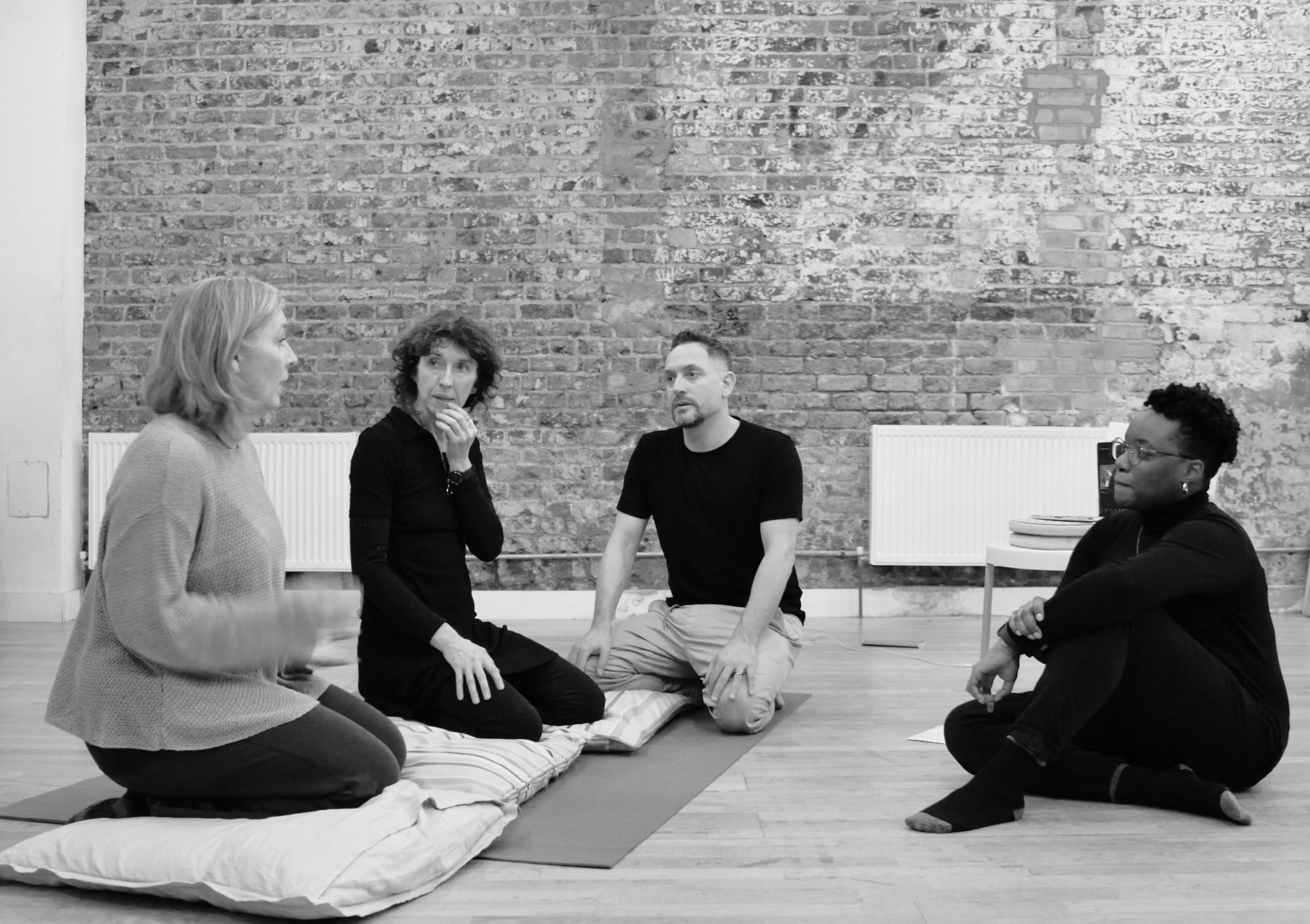
I wasn’t going to let us close without talking about your work on sex education in schools, because in a way, it’s been the backbone of everything we’ve discussed today—how the Intimacy On Set Guidelines and what you’re doing on film and TV is so reflective and so important in every aspect of our world. I know you’re bringing the guidelines into schools at GCSE level.
The inspiration came from my workshops. I always open by asking, “When has intimacy been done well, when has it not, and what do you want to get out of this work?” And so many people would say, “I did Romeo and Juliet for GCSE drama, and that was the first time I kissed anybody. I was fourteen, and the geography teacher who was directing said ‘right, now kiss’ while all my classmates stood around going kiss, kiss, kiss.” So, of course, we need to bring the Intimacy On Set Guidelines into schools to support all teachers, whether they’re experienced directors or the PE teacher who’s been asked to take drama, giving them a structure and guidelines so they can work with open communication and engage with intimate content professionally.
That’s so beautifully shown in Molly Manning Walker’s film How to Have Sex. We need to be giving young people the language and the boundaries before they finish their GCSEs so that they can listen to themselves, ask for what they want, and understand that a non-answer or a reticence does not mean that person is open to coercion. Consent is only when someone is absolutely saying yes. Developing this work in secondary schools is a huge part of my intention for the next phase of the Intimacy On Set Guidelines.
It’s a movement, and what strikes me is the full circle of it—people seeing these things depicted on screen in something like Normal People, and then being able to bring that conversation into their own lives and relationships.
Full circle, exactly. I had the joy of doing a panel discussion at Sundance with Dr Orna Guralnik, the psychologist behind Couples Therapy, and the morning after, she came to me and said, “I’m realising the feedback loop.” When you work more openly, when you create better intimate content within a framework of respect, with real detail and different qualities of intimacy that goes out into the world, and people understand themselves better in their own intimacy as a result. And that feeds back. That’s the circle.
You can purchase Ita’s Intimacy book in the US here, or in the UK here