


I couldn’t help but find myself immediately drawn to a filmmaker who hears a story of quiet human grace and immediately wants to know what might be rotting underneath it. Elliott Louis McKee, the New Zealand-born, Berlin-based director and former indie-pop touring musician, first encountered the seed of their short film Forever Yours at a party, in the form of a woman caring devotedly for a partner irrevocably changed by a serious accident. A less cynical filmmaker might have made a film that honoured her. McKee, by their own admission, doesn’t make those sorts of films. What McKee has made is a short that arrives dressed as a sad-quirky-indie-romance and leaves as something considerably more unsettling. Developed in close collaboration with lead actor and longtime friend Andrea Ariel—who began by writing the film’s central letter in fragments with McKee shaping scenes around her words—Forever Yours tells the story of a hopeful young woman, newly arrived in Berlin and newly in love with a dashing man, until a devastating accident reshapes both their lives. She stays. She cares for him. The film trusts us with her voice, her memories, her version of events. It is, for a long time, genuinely moving. Shot on a self-funded budget, almost entirely on McKee’s own Kreuzberg block, Forever Yours turns its constraints into intimacy, rendering memories of Berlin in heightened, nostalgic warmth before draining the colour from the present. Fall under its spell of devotion below, after which we speak with McKee about corrupting sincerity, earning the right to betray an audience, and why cinema remains, for them, a place you can be manipulated safely.
In your director’s statement, you describe the woman you met at that party as someone who radiated compassion, and your need to corrupt it. What is it about sincerity—in love, in film, in life—that makes you want to find the dark seam running through it?
I don’t think I’m much of a cynic. If anything, I’m probably annoyingly idealistic – I try, by default, to believe in the best in people and in situations. But I have a persistent urge to try and find the dark seam running through bright things. I can’t really explain it, it’s just where my instincts take me. The story I heard at that party was genuinely moving. The woman I met there – her boyfriend had been in a serious accident only months into their relationship and had become, in many ways, a different person. Most people wouldn’t judge her for walking away, but she stayed and cared for him. That’s a rare and beautiful thing, and it’s entirely worthy of its own film. Just not one I’m capable of making. Because when I’m faced with something that sincere, my instinct is always to ask: what’s underneath it? Romantic love in particular – I think it’s often a more self-serving impulse than we like to admit. In her case I genuinely don’t think that was true. But it inspired me to corrupt the story as if it were. I don’t know why – it’s a dark but enjoyable compulsion.

The script emerged from a collaborative exchange—writer and lead actor Andrea writing the letter in fragments, you building scenes around them. How did that back-to-front process shape the structure of Forever Yours?
I asked Andy to go away and let her inner romantic completely loose – to write about what it feels like to be in love, how you look at someone, how you think about them, with no filter. And she would send me these long passages of completely unabashed romance. Genuinely beautiful, tender writing. My job was then to edit those passages down and figure out how to illustrate them. Almost like a music video director working from a piece of music – how do you find images that can genuinely match that kind of language? The scenes and structure grew out of that exchange.
Because the project was entirely self-funded, we also wrote very deliberately to what we had. Almost the entire film takes place on my block in Kreuzberg – Sebastian’s apartment is my apartment, the bookstore is three doors down, the dog is my dog, Amy. When you’re working with very little money it helps to build a film out of the world that already exists around you. In a strange way limitation clarifies, there’s no tyranny of choice. It forces a kind of resourcefulness, and the film is often richer for it. And then of course, there’s the point where the images and the words begin to pull apart. Where what she’s saying and what we’re seeing start to contradict each other. But I think that dissonance only works because of how the script was built – Andy writing from inside the delusion, me framing it from outside. That division is what stopped the contradiction from feeling manufactured.
Most Popular
Your subversive intent was baked into the concept before a word of script was written. How do you construct a story around an audience’s emotional manipulation without that cynicism bleeding into the filmmaking itself and poisoning the well?
The secret is that you actually have to mean it. You can’t construct genuine emotional manipulation through irony or with tongue in cheek – an audience feels that immediately, and you lose them. For the first two-thirds of the film, besides laying little clues, I wasn’t thinking about the twist. We were genuinely trying to make a beautiful and tragic love story, a sad-quirky-indie-romance. Valeria is new to Berlin, newly in love, living through one of those brief periods when life feels unusually vivid and full of possibility – and then it’s robbed from her. The goal was to make the audience actually care, because the height from which the audience falls is directly proportional to how high you’ve managed to lift them first. The best responses I’ve had after screenings are when someone tells me they were genuinely moved by her devotion before the rug was pulled. If people are already braced for something dark, the ending has no force.
You can’t construct genuine emotional manipulation through irony or with tongue in cheek – an audience feels that immediately, and you lose them.
The test I kept applying was: if you removed the final act entirely, would the love story still hold on its own terms? If the answer is yes, you have something worth betraying. Cinema, for me, is fundamentally an instrument of manipulation – and one of the few places you can be manipulated safely. As a filmmaker, the difference is how consciously you do it.

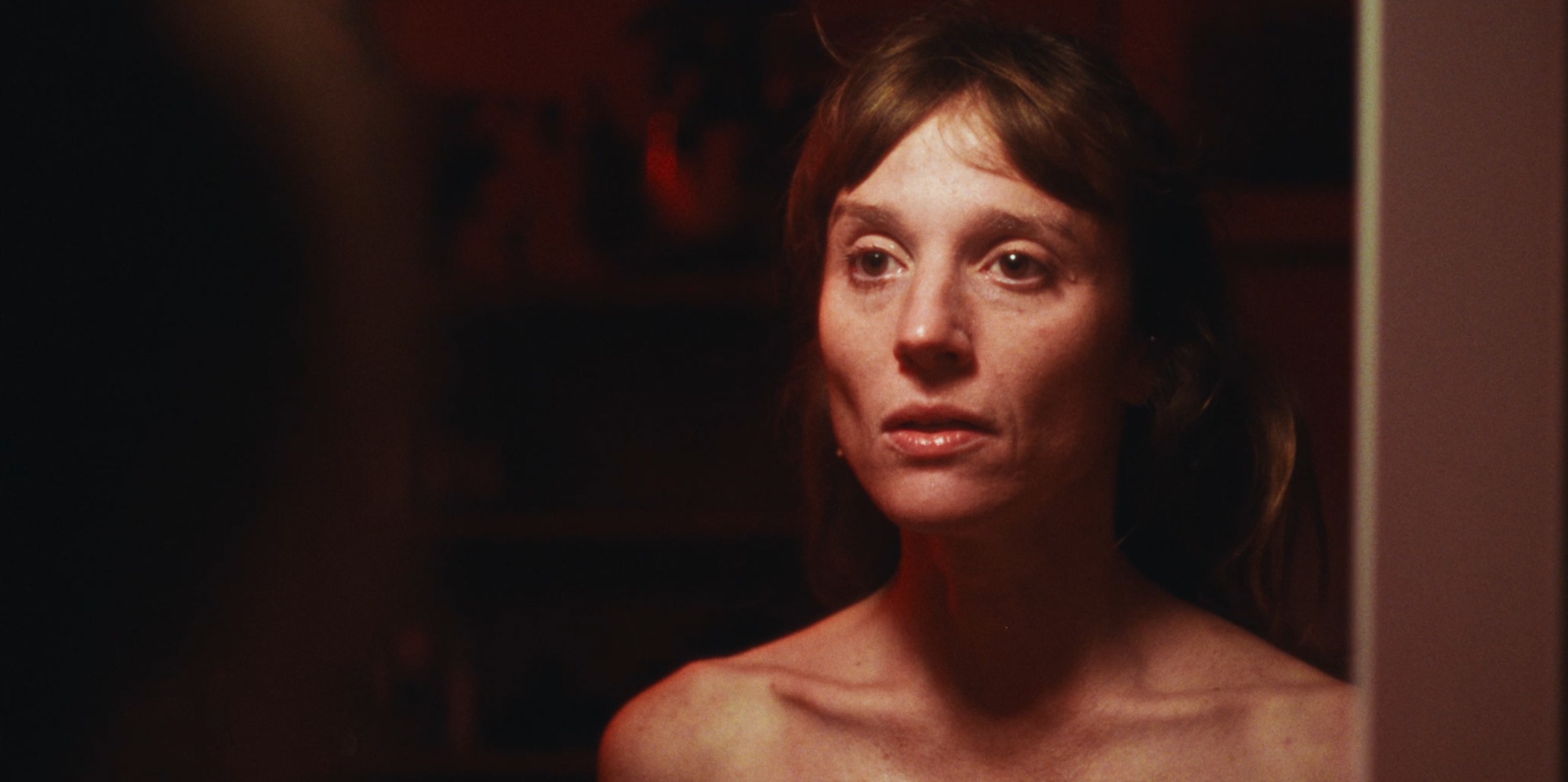

The film operates almost entirely through Valeria’s voiceover, which means the audience only ever has her account of events. At what point did you realise an unreliable narrator was the right formal choice for a story about self-deception?
It never felt like a choice; it felt inevitable, I think. The story is told entirely through memory, and memory is notoriously unreliable. We all edit our own stories, consciously or not – we cut the parts that don’t serve the version we’re trying to tell, we embellish, we reframe. And when we listen to someone tell a story, we tend to trust them – as if their reconstruction were reality. But Valeria isn’t actually trying to deceive the audience – she’s trying to deceive herself. Her voiceover isn’t manipulation directed outward; it’s the sound of someone constructing a version of events that gives her peace. And besides, it’s a love story – and the whole act of falling in love is often a form of unreliable narration. You cut, you embellish, you reframe your feelings to fit the person in front of you.
In some ways, the biggest twist in the film is not the accident – it’s the love story itself. She chose what she wanted to see, interpreted certain signals in a certain way, and built a love story out of them. It’s only when we revisit scenes we’ve already seen through her eyes – slightly reframed, Lola now visible – that you realise how much of it she constructed herself. But it’s still her truth. For that to work dramatically, the audience has to be completely on her side first. The unreliable voiceover does that. It puts you inside her perception – her truth is yours – and it does it so completely that when reality starts to intrude, the disorientation hits you the same way it hits her.

Valeria isn’t actually trying to deceive the audience – she’s trying to deceive herself. Her voiceover isn’t manipulation directed outward; it’s the sound of someone constructing a version of events that gives her peace.
You and DOP Manuel Schamberger made a clear visual distinction between Berlin as Valeria first experienced it—heightened, luminous, cinematic—and the present-tense reality of the story. How did you calibrate that contrast without tipping the audience off too early to what the film is actually doing?
Manuel and I really tried to capture that feeling of falling in love visually. In Valeria’s case, she was falling in love with a person and a city simultaneously, which gave us a lot to work with. When you’re in the act of falling, everything feels more saturated, more alive, more serendipitous. So cinematographically, we tried to hold onto that – the camera is constantly moving, the colour is warmer, and the grain is deliberately thick, which gives those memory scenes a nostalgic quality. We leaned into the tropes of Berlin to an almost eyerolling degree. Lake days, club nights, mornings after – it’s almost a preposterously heightened version of the city. But that’s intentional. The most vivid moments are those when you first arrive here. After a few years you can’t remember the last time you went to a lake. But when you’re new, you’re ticking all these Berlin boxes. We wanted to capture that specific feeling of newness. All of that makes it very easy to juxtapose against the present day – the stillness, the sadness, the drained and joyless palette of the life she’s in now. By the end the camera has stopped moving entirely. Like their lives, the movement has vanished from it. The newness has faded.
As for tipping the audience off – I actually didn’t worry about it too much, because the tragedy of the present-day situation is right there from the very first scene. The audience knows something devastating has happened. What they don’t know is how or why. So the contrast between past and present was never really a spoiler. It was the engine of the whole thing.


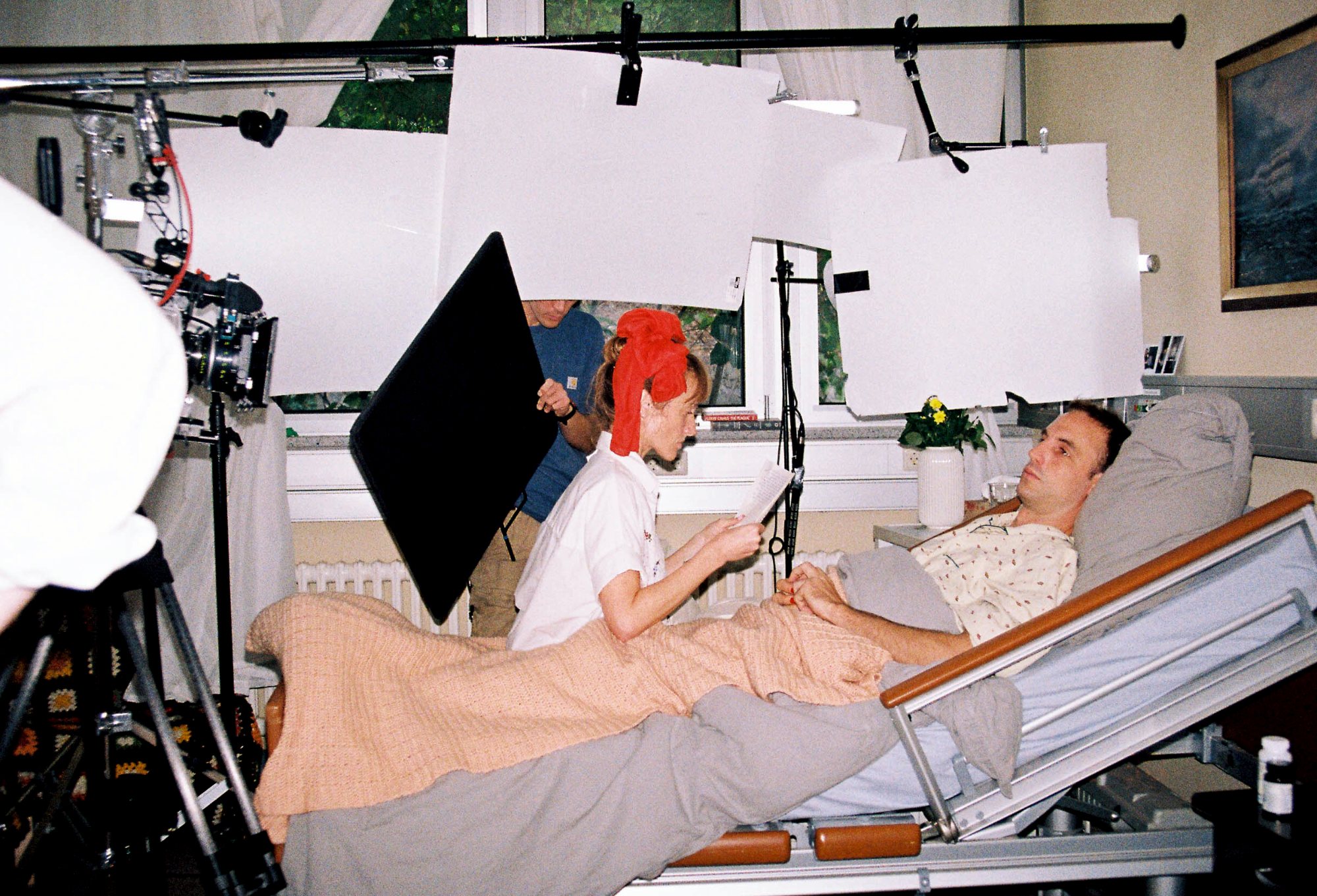


How did you know in the edit when you’d earned the right to pull the rug?
There were really two things we needed to earn before we had the right to pull the rug. The first was the audience’s trust in Valeria. That’s a big part of why we cast Andy – I’ve known her for nearly two decades and she has this quality that’s very hard to manufacture. People just naturally warm to her. She’s the kind of person who is everybody’s best friend. And we put Valeria in the most sympathetic possible position – this person sacrificing her own life to care for someone she loves. You’re on her side almost immediately.
The second thing was belief in the love itself. You have to believe in it the way she believes in it. Once the audience has genuinely felt something for these two people – once that love story has actually moved them – that’s when you can yank it apart. Because then there’s something real to lose. And what I find most interesting is where that leaves the audience at the end. Her actions are morally indefensible. But you’ve chosen a side, and you’re on hers. Trying to square that is a disorienting place to be.
You’ve described Wouter Rentema’s score as the element that finally made the bread rise. Given that the film is working to seduce the audience, how much of that seduction is the music’s job specifically, and how aware were you of leaning on it as an instrument of manipulation in its own right?
For me, music is probably the greatest instrument of manipulation in art. It has the power to transform any image, any room, any moment. And this film, which has almost no dialogue and runs almost entirely on voiceover, was always going to live or die by its score. I edited the whole film without any temp music deliberately. If you cut to music that won’t be in the final film, you’re editing to the wrong rhythm and you get attached to tracks you probably can’t afford. So for months, it was completely musicless. I spent a large part of that time editing in Mexico City, which gave me distance from the street in Berlin where we shot – and that distance helped. But honestly, by the time I was approaching picture lock I had serious doubts. The story beats were there, Andy was extraordinary, it looked great, but I wasn’t sure it had reached the level I’d set out to reach. I kept telling myself the music would be the thing.
The question of how much manipulation to ask of the score is a real one. Audiences are savvy – they know when music is doing more work than the images deserve, and it feels false.
I’m a musician myself, so had a feeling what the film needed. I also knew I wasn’t capable of writing it. So I sent the cut to Wouter nervously, and what came back transformed the film. He worked with a saxophonist, and with Berlin musician Alex Rapp, whose ghostly vocals appear throughout the film, and slowly the whole thing came together. But the question of how much manipulation to ask of the score is a real one. Audiences are savvy – they know when music is doing more work than the images deserve, and it feels false. So it’s not about turning the emotional dial up. It’s about finding something that lifts the narrative, the performances, the cinematography, and holds them all together. That’s what Wouter’s score does. It doesn’t tell you how to feel. It brings out what was already there.

I can’t wait to know what your favourite short film(s) are and why?
Recommending specific short films, for me, is a bit like being asked to recall your favourite joke. You’ve heard thousands, been genuinely delighted by so many, and then someone asks you to name one and your mind goes completely blank. What I can say is that I watch a lot of short films at festivals, and the ones that stay with me tend to be the ones that do something you couldn’t do in a feature – that use the constraints of the form rather than apologise for them.
If I’m allowed to cheat slightly – Wild Tales (Relatos salvajes), the Argentinian film by Damián Szifron, is essentially six short films inside one feature, and it’s brilliant. Dark, funny, morally unhinged, and each story lands with the precision of a perfectly told joke. And if we’re expanding the definition further, The Twilight Zone, the old ones. Each episode is a self-contained short film – different cast, different story, different world – but often the same structure: lure you into something familiar and then pull the floor out from under you. I find that endlessly satisfying. I think it’s probably somewhere in the DNA of everything I make.
What have you found the dark seam in recently, and what is next for you?
I’ve just finished a short called Daddy – a ten-minute two-hander set on Christmas night in the UK in the 1990s. It starts somewhere familiar and ends somewhere darker.
The film I’m working on now is a bigger undertaking. It’s called Please Don’t Stand On Me, I Will Break, and it’s set inside a dystopian border detention processing centre. The dark seam there isn’t hard to find – but the film approaches it sideways, through absurdism and dark comedy rather than straight drama. What interests me is the way systems of control strip something deeply human down into a mechanism of exclusion and dehumanisation – and how people find moments of tenderness and resistance inside that. It’s quite different in scale and tone from the last few shorts, but it still comes from the same instinct. Beyond that I do have ideas for features. The difficulty, as always, is not the ideas but imagining who might actually give me the money to make them. But I’m trying.