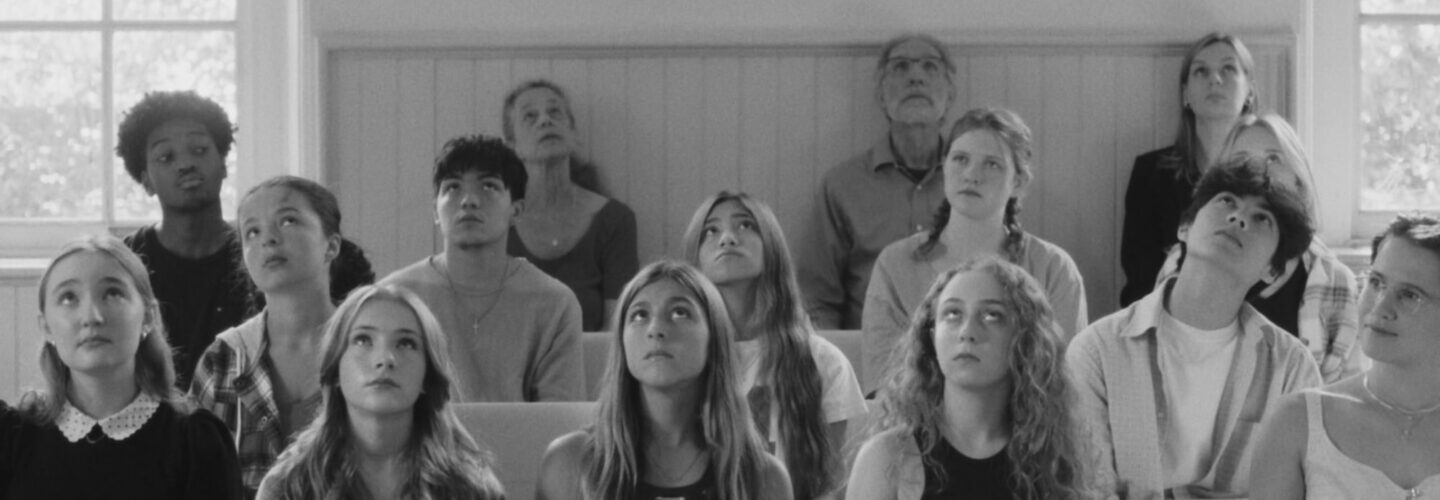
Whether it’s a good memory or not, high school is something we can all remember: a time of discovering who you really are, trying like hell to prove you’re someone else entirely, and becoming so wrapped up in your own scholastic and social situation that you can completely miss what’s really going on with the people around you living their own ‘truths’. The idea of a public forum where teenagers can openly and honestly share their thoughts and feelings in a safe space for all to hear would have made my blood run cold back in the day. But writer/director Giovanna Molina has drawn on her own experience of attending Quaker meetings in high school to bring us the coming-of-age drama Quaker, which sees Brooklyn high school seniors get candid with each other. Joining us today, Giovanna talks to Directors Notes about creating this short, which shines a light on a community misunderstood by many, assembling a huge cast of actors and non-actors to revisit her teenage years, the visual challenges of shooting an ensemble cast in a single space, and premiering the film at Berlinale.
The film is based on your real-life experience attending Quaker meetings while in high school. What was the inspiration to make a film depicting that experience?
I attended a Quaker school, called Brooklyn Friends School, for fourteen years. Throughout my K-12 schooling, I sat in about 500 Quaker Meetings. Sitting in silence with my classmates and listening to their words served as an integral part of my week—like breathing, it felt natural and necessary. At the time, I took for granted how unique our Wednesday meetings were, but with many years of distance from high school, I started to reflect upon this period of my life and the particularity of a Quaker education. For most young people, the opportunity to have the space for reflection among their classmates and the empowerment to speak as an equal within their community feels foreign—especially in high school. With this film, I aimed to document the power of meeting within the context of a coming-of-age narrative and share it with those unfamiliar with Quaker practices.
Before I had the idea for Quaker, I was working on my previous film, Hickey, which is set in an evangelical Christian community. Since Hickey depicts an upbringing quite disparate from my own—I grew up in a non-religious household in Brooklyn, NY—I spent a lot of time interviewing women who did grow up in similar communities to that of the film. During these conversations, I began to reflect on my own relationship to religion and spiritual practice. While I would consider myself an atheist, my 14 years attending a Quaker school had a profound effect on me, particularly my experience attending Quaker meetings with my classmates. This practice felt normal to me, so it took a lot of distance from high school for me to realize that it would make an intriguing setting for a film.
For most young people, the opportunity to have the space for reflection among their classmates and the empowerment to speak as an equal within their community feels foreign—especially in high school.
For those not familiar, what are Quaker schools?
Quaker schools, most commonly known as ‘Friends’ schools, are K-12 educational institutions built on Quaker values like community, equality, peace, and integrity. The majority of students who attend these schools do not identify as Quaker, but were sent there by their parents who believed in the school’s approach to education. The school I attended was a small and tight-knit community—I had a graduating class of 55 students and we called our teachers by their first names. Students and teachers came from diverse cultural, economic, and theological backgrounds.
And how does a Quaker Meeting work?
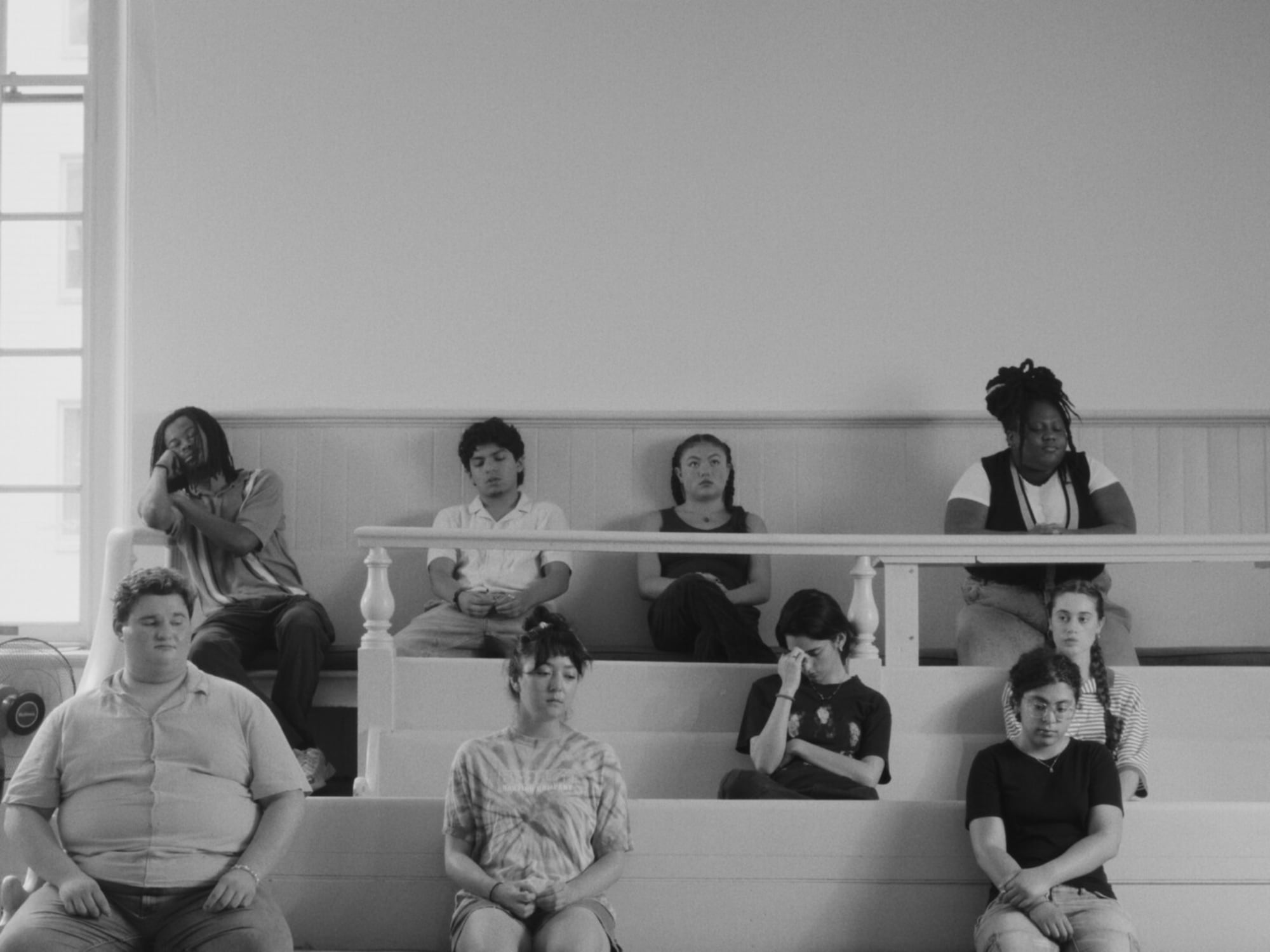
During Meeting, a community sits in silence for an hour each week. Benches are arranged in a circle and face inward, so that everyone can see each other. At any time during a meeting, a community member can stand up and share a message with everyone in the room. After the person sits down, the room sits in silence for an extended period of time, processing that message until the next person stands. During my time in high school, Quaker meetings ranged with messages of grief, reflection, social action, and even humour. Speaking your mind, or speaking ‘truth to power’, was encouraged.
Most Popular
You chose to bring a co-writer on board to complete the script. What was that collaborative process like?
I co-wrote Quaker with Louisa Grenham, a close friend who grew up attending the same Quaker school. With such a personal subject matter, it felt very special to write with someone who understood the world as deeply as me. Since this script is essentially a series of monologues, it was an easy piece of writing to collaborate on. Often, the challenge of co-writing is finding a balance of two voices. For Quaker, however, it felt essential to have the feeling of both our voices at play. With such a large speaking cast, we wanted to ensure that every monologue felt unique. I started the casting process before the script was completed, because I knew I wanted to have the freedom to tailor the script to the actors I wanted to work with.
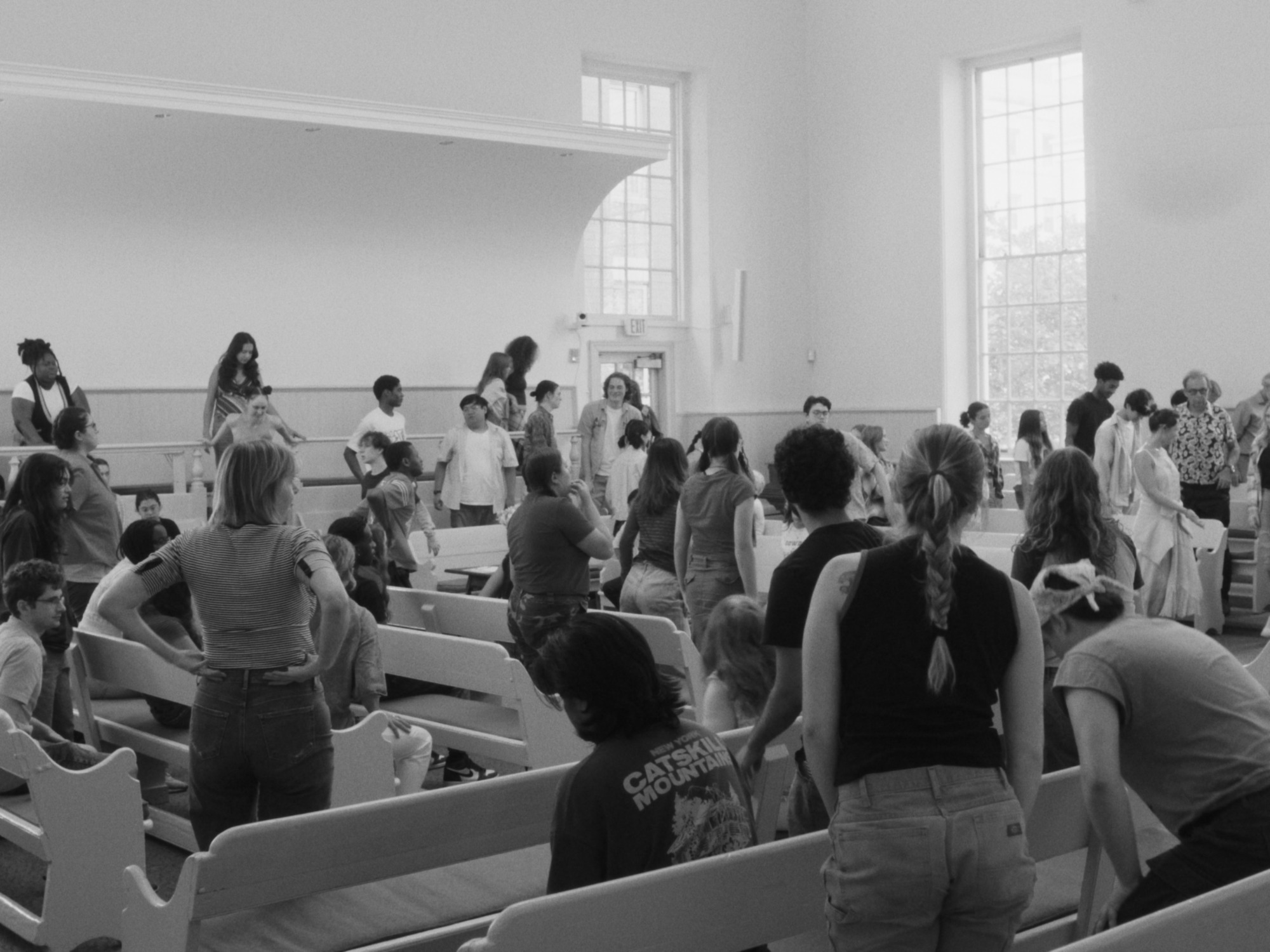
Quaker boasts a huge ensemble cast not often seen in short films. How did you go about casting the project and collaborating with your actors to bring a unique voice to each one?
This film was incredibly fun casting-wise because we could include so many talented actors and shape the script to fit who we wanted. In many ways, this film felt like creating devised theatre. Actors were able to choose their own names and had the opportunity to integrate their own high school experiences into their characters and shape the dialogue to fit their way of speaking. The cast included a mix of actors I already knew and fresh discoveries that I found with my Casting Director, Ruby Green. Caroline Campos, the last actor who speaks in the film, attended my high school, so she was a great anchor for the rest of the cast. All of these steps really created a beautiful sense of realism and earnestness throughout.
The fantastic background cast included my high school Spanish teacher, members of the Brooklyn Quaker community, my family, neighbours, friends, and some lovely folks I found on Backstage. Since the film so closely fits my high school experience and is set in the actual Quaker meeting house I used to attend, I liked the idea of extending that sense of realism by casting many people from my community.
There is a particular focus given to one character who hasn’t had the fulfilling experience her classmates have enjoyed in school. How does her experience of the school sit in comparison to your own?
Quaker meetings often function as a forum for uncensored thought and expression—a type of space rare for high school students. I liked the idea of focusing the film on a character who dared to push the limits of that freedom. Celina’s monologue functions as a major gear change moment, that I always knew would be the centrepiece of the film.
Even though this film depicts an extremely specific coming-of-age experience, my hope was to create a universal experience for the viewer.
While there are other characters in Quaker that I feel closer to than Celina, I relate a lot to her frustration with watching her classmates have an easier time than her and her overall allergy to inauthenticity. In small schools, it can be incredibly difficult to find your people, and I wanted to explore a character who was confident in expressing that feeling.
Even though this film depicts an extremely specific coming-of-age experience, my hope was to create a universal experience for the viewer. To be a senior in high school at the precipice of your adult life holds so much promise and hope for the future. Many yearn to end high school with the feeling that they’ve figured everything out—some feel like they do, some pretend that they do, and others struggle to make it out in one piece. Quaker aims to document this extreme range of feelings and emotions young people have at this time, with a balance of humor, sincerity, and vulnerability.
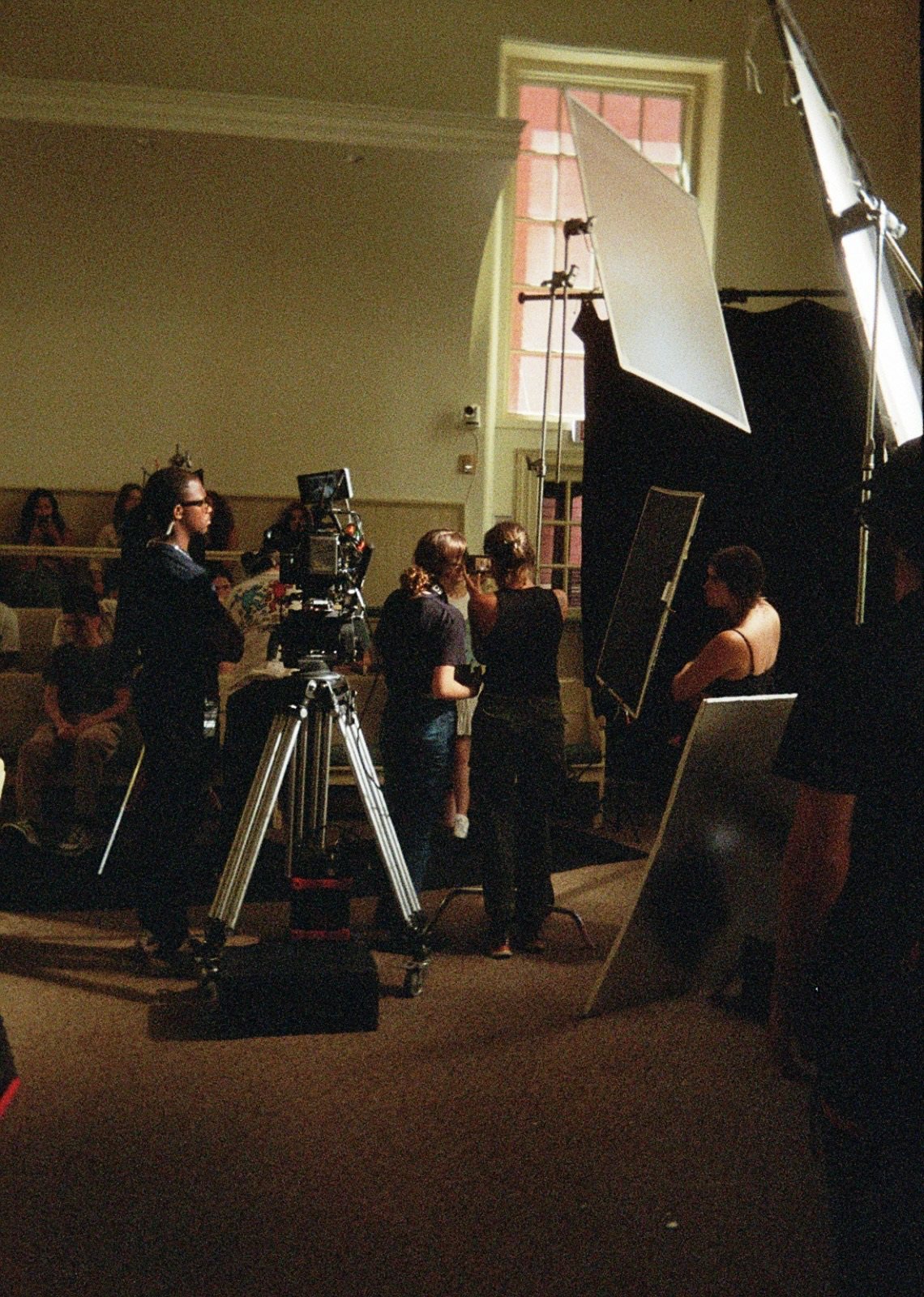
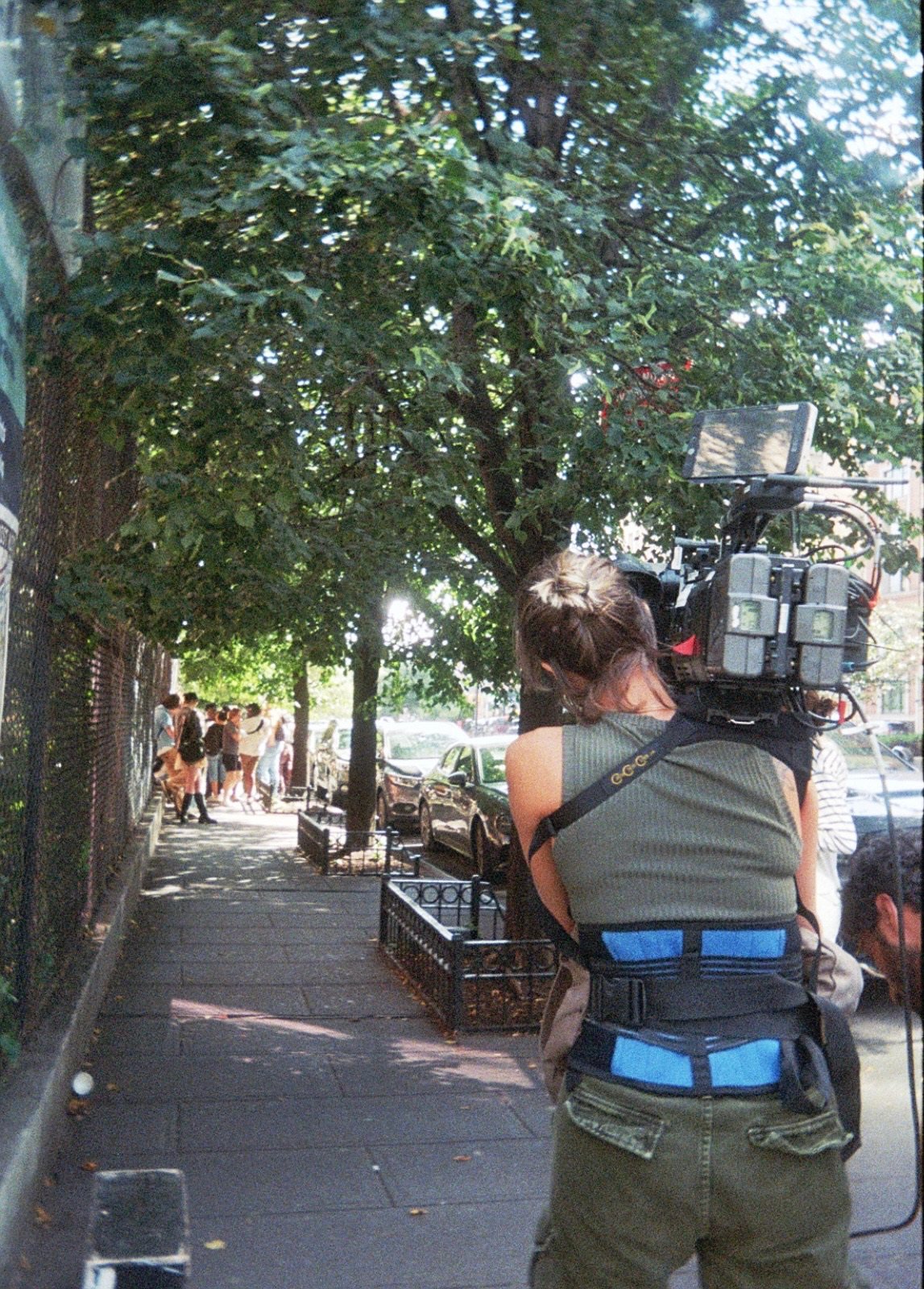
Being set in a single location, how did you approach capturing this story with your cinematographer to keep the film visually interesting?
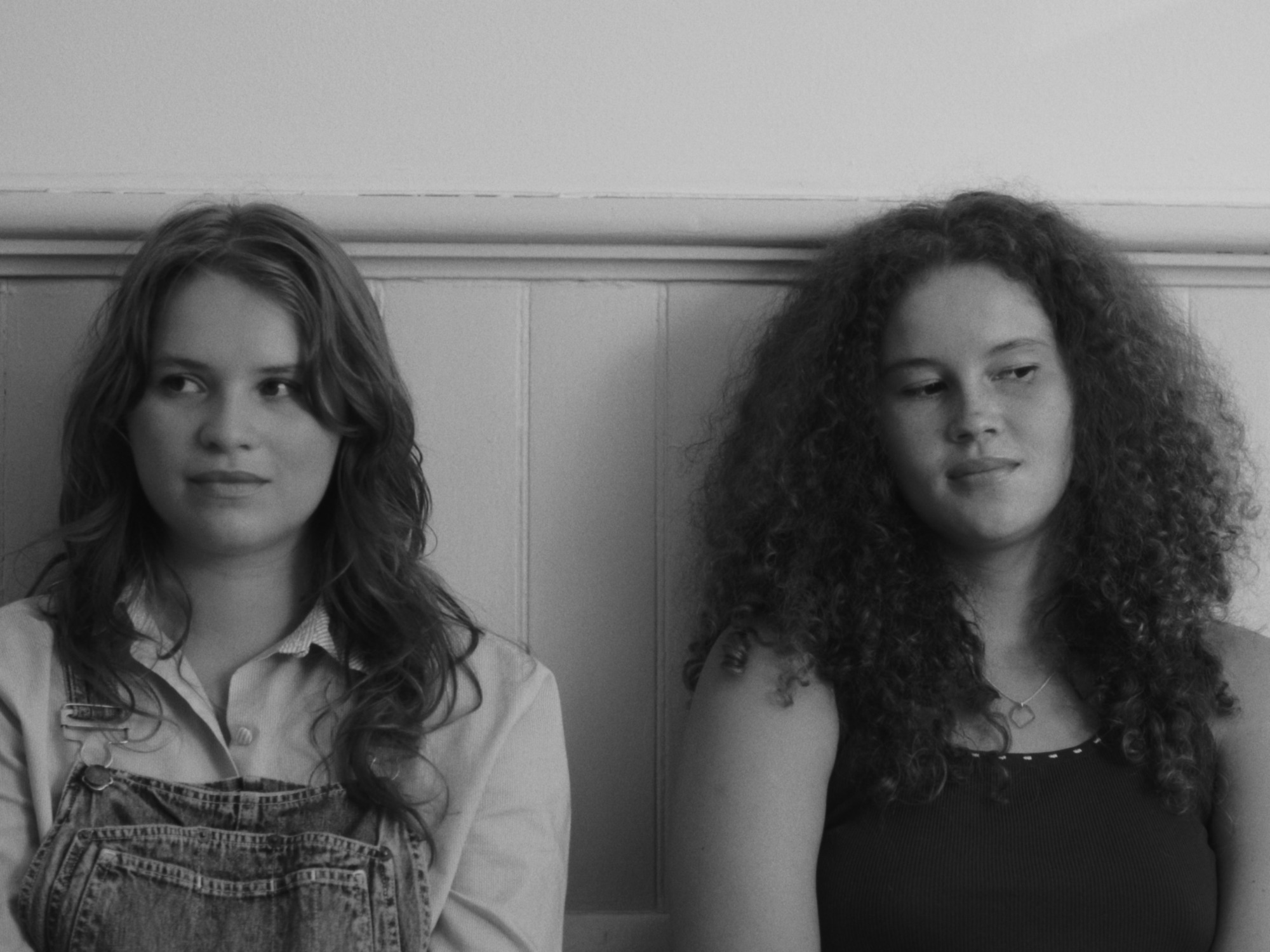
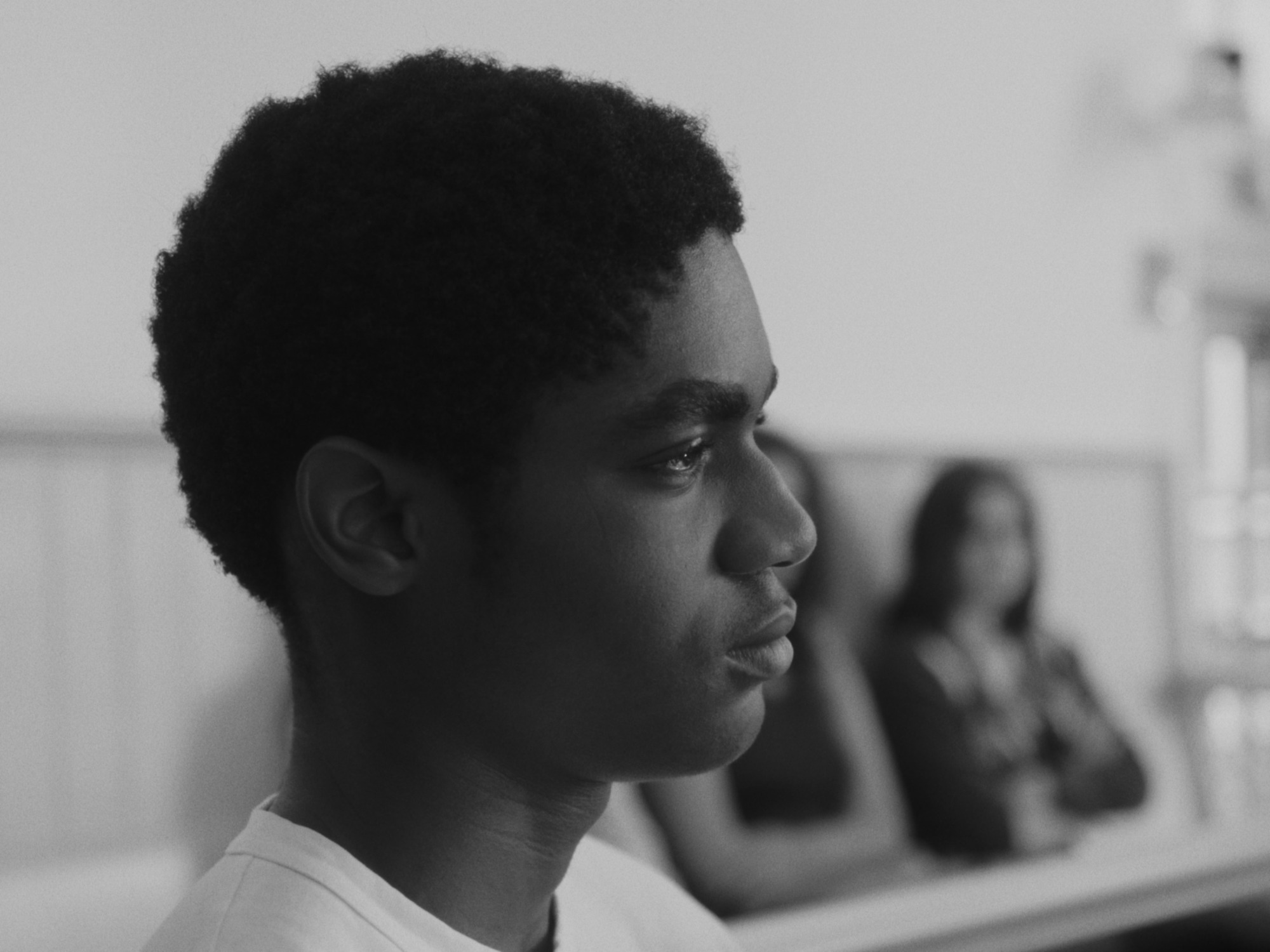
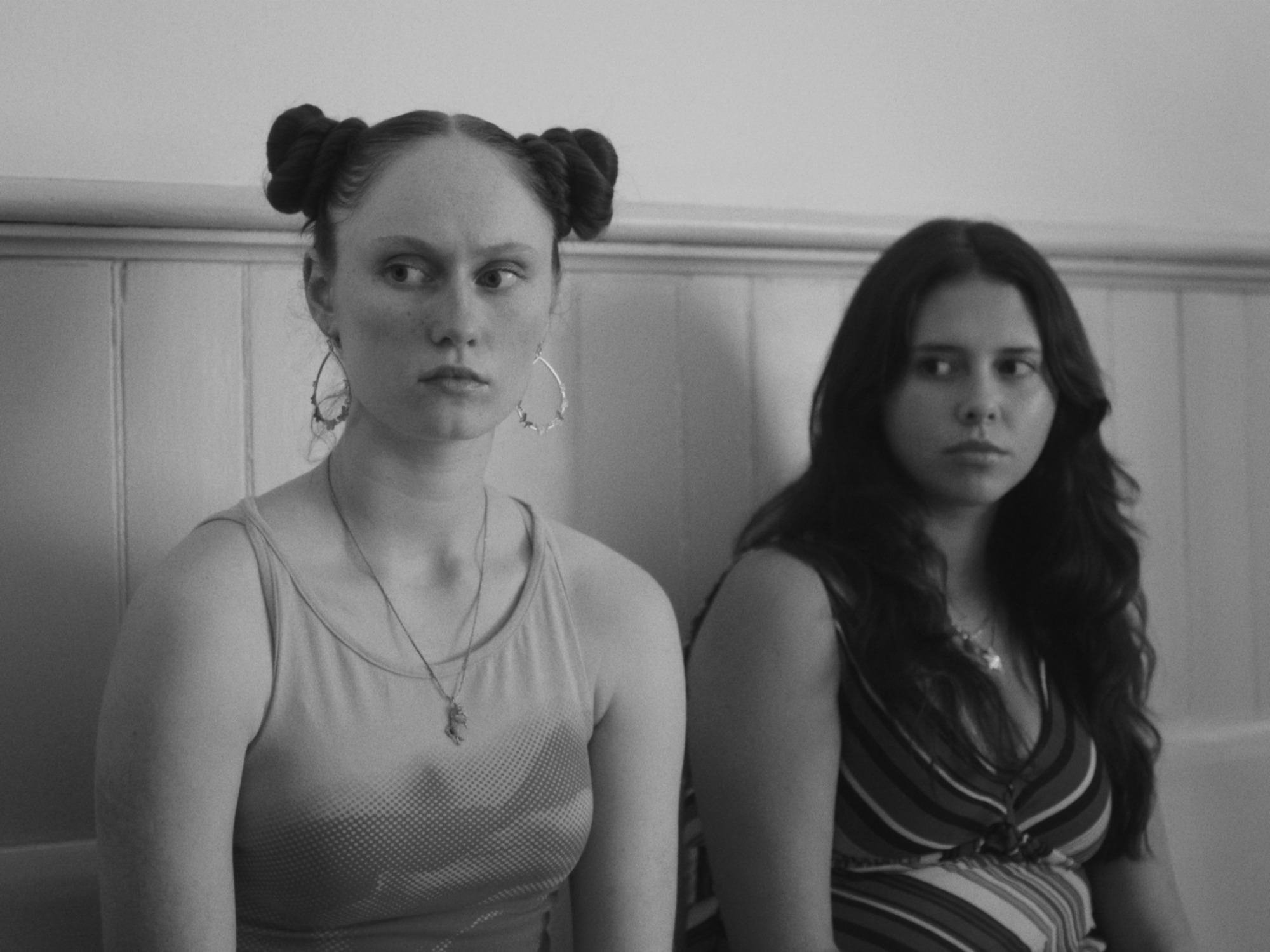
I loved the structural challenge of how to make a film set in one room not feel stale or too much like a play. Most of Quaker exists in close up, so my cinematographer, Vittoria Campaner, and I focused most on designing portraits that reflected the personality of each character. We were very inspired by Paweł Pawlikowski’s film, Ida, for its incredibly expressive use of black and white portraiture. Our choice to shoot black and white came early on, while I was flipping through my high school yearbook for research. The photos in my yearbook were printed in black and white and captured this feeling of a frozen past that felt akin to my feeling reflecting on this period of my life.
We filmed in the same space over a period of three days. The left side of the main cast on day one, right side on the second day, and everyone all together, including the full background cast on the third. We couldn’t have the full cast together all of the days due to budget, so it took a bit of movie magic, careful eyelines, and a lot of me acting out the parts of people not there in order to create the illusion of a cohesive room.
There is a transition at the end where the black and white imagery gives way to colour. Can you talk us through your intention here and was this something you had always envisioned from the beginning?
My cinematographer made the fantastic suggestion to shift to colour in the last shot. I liked thinking about it like a reverse Wizard of Oz moment, where stepping into colour felt like stepping into a new reality or life chapter. We end the film not knowing what will come of Celina, but there is a sense that she will move forward and ultimately find her way.
Silence is used to incredible effect in the film. Was it always your intention to keep the soundscape sparse, amplifying awkward moments?
Silence is such a vital aspect of a Quaker meeting, so I always knew it would be a key aspect of the film’s rhythm. The film, like a Quaker meeting, challenges the viewer to sit in silence. In a movie theatre, this film has a great meta quality to it—as the characters are sitting in their seats and listening to the creaks and shifts in the room, the audience in the room is doing the same with the people around them. Though Quaker’s duration is only 16 minutes long, I wanted the time in the film to feel like the actual length of a Quaker meeting, which is an hour. It’s very difficult to sit in silence with others, and I liked the idea of challenging the viewer to confront that sense of awkwardness. As the actors on screen shift in their seats as they settle into silence, so does the audience. When the actors laugh on screen, so do we, as if we’re participating in the meeting.
In a movie theatre, this film has a great meta quality to it—as the characters are sitting in their seats and listening to the creaks and shifts in the room, the audience in the room is doing the same with the people around them.
My sound designer, Rachel Ruggles, coincidentally had spent time attending Quaker meetings when she was a high schooler living in Berkeley, so she was very tuned into designing a film that felt true to the experience of a meeting. We wanted every creak and rustle to feel amplified, as if they were aspects of the non-existent score.
Many could not imagine being so public with their feelings back in school. And with social media today, it’s easier than ever for young people to project an image of themselves to the world, while not connecting in a real way. How valuable to young people do you think spaces like those offered in Quaker meetings are?
I took for granted how lucky I was to have this kind of space from a young age, and I think everyone, not only young people, would benefit from it. The practice of learning to sit in silence with your community and listen to what they’re going through is an invaluable experience, especially in a time when free speech is being constantly threatened.
The film featured at Berlinale, which would be the dream for any filmmaker. What was your experience like being part of the festival and sharing the film more widely thereafter?
I had admired the Berlinale Generation programming for many years, so it was a literal dream to premiere Quaker there. My time in Berlin was an overwhelmingly beautiful blur that will be one of the most memorable experiences of my life. It’s felt both special and strange to share such an intimate aspect of my upbringing with others.
I’ve found that despite how specific an experience it depicts, audiences have related strongly to the messages in the film. My hope always was to capture this feeling of universality, so I am very proud of my whole team for helping me achieve this.
Being such a personal film to you, do you feel any kind of catharsis from making it?
Making this film has encouraged me to think back on high school with a lot of care and appreciation. It felt very special to preserve my memory of Quaker meeting and the emotions my peers and I had at this age. It also helped me explore some complicated feelings I’ve had more recently. Making the film didn’t feel cathartic in a ‘capital C’ way, but it gave me a lot of time to reflect, which perhaps was always the point of Quaker meeting.
Now that Quaker has been released, what’s next for you?
I am in pre-production for my debut feature, Kismet, set to shoot fall 2026. It’s another coming-of-age story about loneliness and belief, but in this case it’s about a girl’s belief in aliens… We’re looking for a couple more EPs, so if you’re reading this and want to help us out, drop me a line.
And finally, which short film by another filmmaker would you recommend to the Directors Notes community and why?
Lynne Ramsay’s Gasman has been my short film north star for a long time. It’s a brilliant piece of filmmaking that captures incredibly complex character dynamics in such an efficient way. Her frames and the way she positions characters within them inspire me constantly. It’s brilliant, and everyone should watch it.