
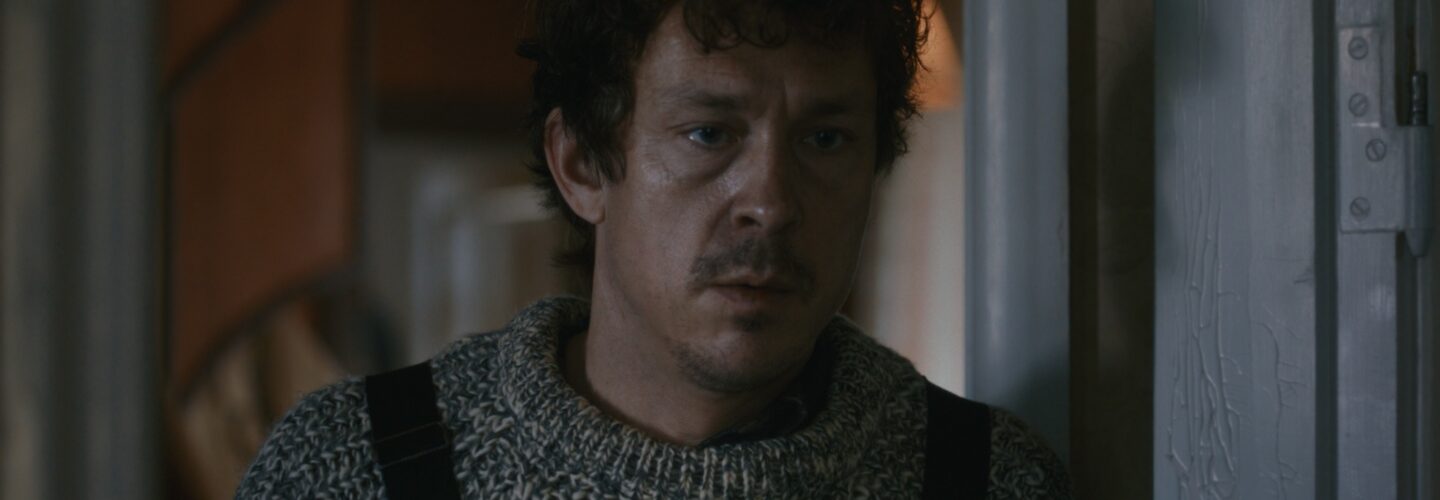

On a remote Swedish island, a sheltered farmer is forced beyond the boundaries of his isolated life, confronting autonomy, fear, and the fragile possibility of connection. Billy Chester’s film Bonde enacts that synopsis through formal decisions that work systematically against the cues a more conventional short would deploy. There is no expository dialogue, no guiding score, no rural-poverty shorthand of decay and gloom. Chester instead builds the film’s emotional reach through observation, duration and a near-total commitment to silence. The architecture does much of the work. Chester builds his visual vocabulary from the bones of the house itself—doorways, window frames, interior thresholds—accumulating compositions that contain his protagonist within the very space he calls home, until that home, as his routines begin to collapse, becomes a prison. The aesthetic is weathered rather than wretched, refusing the misery shorthand that rural isolation so often invites. The soundscape carries equivalent weight. With the composed score lifted from the final cut, the audience is left inside a heightened version of the house’s own acoustics—the hum of old appliances, drifting flies, restless floorboards—and is asked to listen at a pitch ordinary life rarely demands. The central performance from Oscar Töringe as Hasse is calibrated to that listening. Almost wordless, it transforms self-directed murmurs into something closer to company, so that what should read as loneliness becomes a kind of fragile presence. Each formal choice deepens our understanding of our protagonist’s predicament in a way conventional dramaturgy could not. With Bonde freshly launched on the festival circuit, we speak to Chester about location discipline, the removal of the score, and how the film’s central voice was discovered rather than written.
Bonde traces back to overhearing your grandmother and mother discussing what would happen to your cousin Michael once she was gone—the question of what happens when the structure built around someone disappears. How did that long-held question find its way into Hasse?
I don’t remember the exact words. I was six or seven, and I don’t think I was meant to fully understand them. But I remember the feeling. Up until that point, Michael was just my cousin. We were close. We played together. He felt completely normal to me. And then something shifted. I realised, almost all at once, that his life wasn’t going to unfold the way I had assumed mine would. He wouldn’t drive a car. He wouldn’t have the same independence. He wouldn’t grow into the same future I had already started imagining for myself without knowing it. It was the first time I compared myself to him in a real way. And what made it heavy was that I didn’t have the language for it. As a kid, you don’t understand why something is the way it is. You just feel that something is different, and that it isn’t going to change.
That question stayed with me, but not in a way I was actively trying to answer. It was more like something that lived underneath everything. Whenever I found myself wanting to express something personal, this was always the place my mind returned to. When I eventually started writing, the first versions were too literal. They stayed close to the reality of my cousin and my grandmother, and they didn’t work. I recently revisited the original 2018 draft, and one of the early descriptions read: “Hasse, a young farmer, recently struck with the loss of his mother… continues his days tending to his daily responsibilities, while dealing with the unfamiliar emotion caused by his recent loss.” Looking at it now, it feels distant. It explains him, but it doesn’t really see him. The film only started to come alive when I let go of the need to be accurate. Hasse became older. Someone with a life behind him, but still existing in a kind of isolation that most people never stop to observe. That shift created distance from my cousin, but it also let me get closer to something more honest. If you haven’t grown up around someone with special needs, it’s easy to overlook their world. Not out of intention, but because you don’t know how to see it.
As you said, you wrote the first draft in 2018 but held the film back for years. What had to develop in you as a director — and in your relationship with silence — before you felt you could commit to it?
Two things weren’t ready in 2018: the script, and me. The script was too simple, too close to reality. I was holding onto what was true instead of letting the character become his own. But beyond that, I didn’t feel I had earned the right to make this film yet. Bonde was the most personal project I had ever written, and I wasn’t willing to commit to it until I had proven to myself that I could actually direct. So I made two other shorts first, and they were everything Bonde wasn’t. The first was built around tension and release. The second was almost entirely dialogue. They weren’t tests for Bonde. They were a way to develop technically without tainting the exploration of what Bonde was going to be. I wanted to keep this one protected. I also believe that mastering cinema is, in some way, the ability to make a film within silence. The first two shorts were a different form of exploration. Bonde was the one I was trying to grow toward.
Bonde was the most personal project I had ever written, and I wasn’t willing to commit to it until I had proven to myself that I could actually direct.
My relationship with silence changed during that time, too. I spent a lot of summers on Gotland, and I started to notice something specific about that environment. On the surface, it feels quiet, almost empty. But when you actually sit in it, it’s full of sound. Wind moving through the fields, the constant presence of flies, the subtle mechanical noises of daily life. That started to feel more like the narrative than anything I could write in dialogue. The film is about a man alone on an island. It felt natural to explore what actually exists in that space, rather than filling it with explanation. The more I observed those environments, on the family farm or on Gotland, the more I realised that silence isn’t empty. It carries time.
There was a moment watching Bergman’s The Silence where that clicked for me. It’s a film driven by observation and duration rather than dialogue. That gave me confidence that Bonde could exist in that space. I don’t think I was ever fully ready. I was still rewriting the script up until days before we started shooting. But the moment I committed was when I accepted that the film would live or die on its restraint.

The farm you shot on felt familiar, and many of the objects in the film are real. What did it mean to let those into the film?
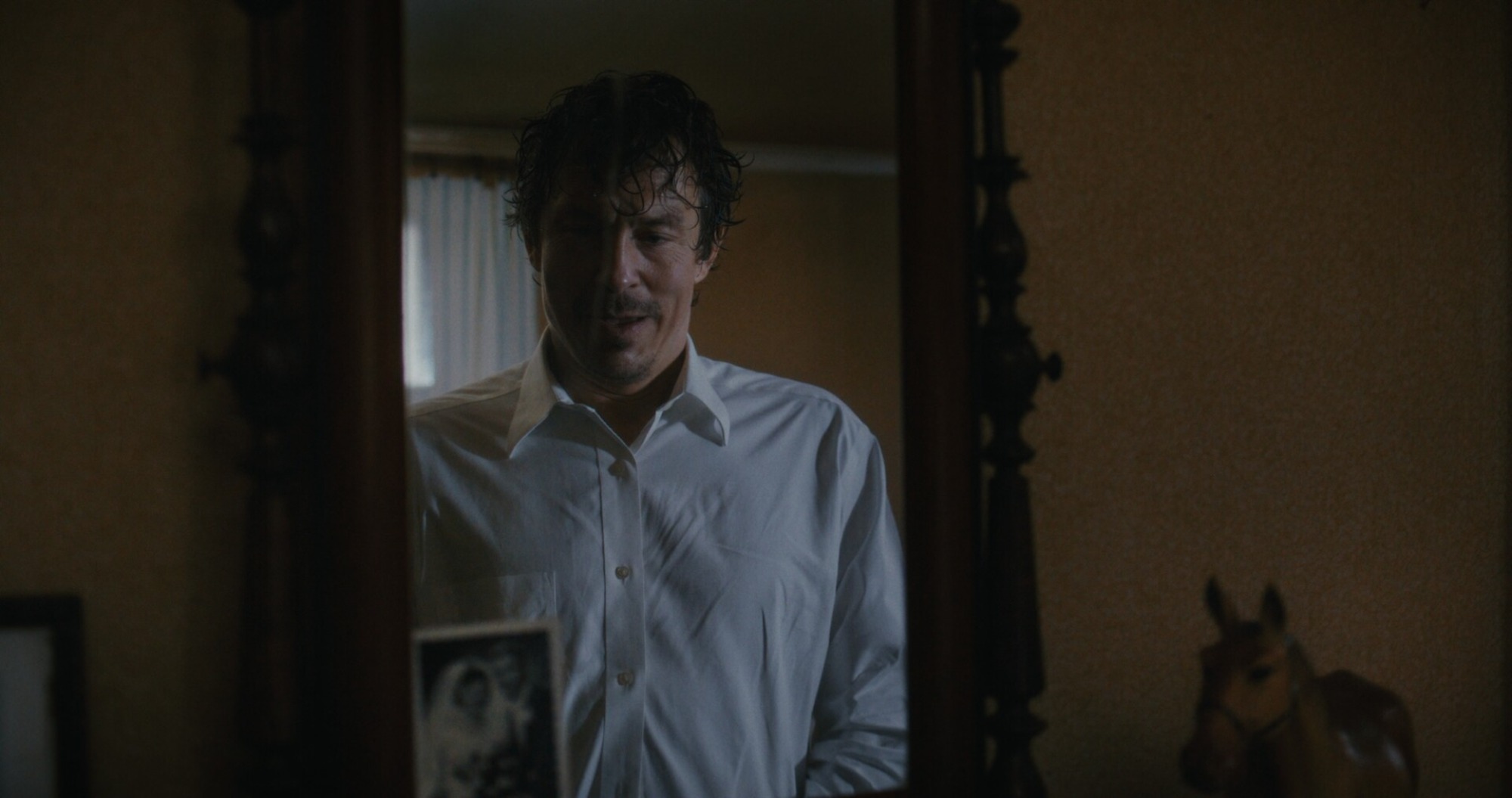
From the beginning, I was writing from a place I had already seen. I’m a very visual person, and I tend to write from observed reality rather than invention. So when I was developing the script, I found myself building scenes around very specific things I remembered from my wife’s family farm. A phone on a table, a photograph on the wall, the layout of a room. The film existed in that space long before we ever shot it. Because of that, when it came time to make the film, it didn’t feel right to recreate those objects. They were already real.
I didn’t assume we would be able to use them, but when I spoke with my wife’s grandparents, they were incredibly open to it. It wasn’t about convenience; it felt like something they genuinely wanted to support. Many of those objects carry a very personal history. The photographs in the house are all real. I know the people in them. They’re family. When Hasse looks at those images, I’m looking at people who matter to me in the same way they matter to him. That created a strange overlap during the edit, where his emotional experience and mine started to feel aligned.
Most Popular
The phone book became especially meaningful. It originally belonged to my wife’s grandmother’s first husband, who had passed away. She and my wife’s grandfather later found each other and married in their sixties, both having been widowed. She had kept that phone book all those years. I remember finding it in a drawer and feeling immediately that it carried weight. When I asked if she had something like that we could use in the film, she suggested that specific book. It felt like her way of allowing a part of her past to live inside the story. It stopped being a prop.
The house itself holds a similar weight. My wife was born there. Her grandmother passed away in that house. It’s a place that has existed long before I entered it, and one I was welcomed into over time. That history is present in the space in a way that’s difficult to recreate. It’s also a place I go to step away from the pressure of daily life. Which made it slightly ironic that it became the setting for a character experiencing the opposite, someone trapped within that same environment.
Her grandfather, Morfar, was also a quiet influence on the film. He’s someone I deeply admire. A steady, encouraging presence. He became a kind of reference point for Hasse, not in a direct way, but in the sense of grounding and direction. There’s a quiet strength to him that I think found its way into the film.

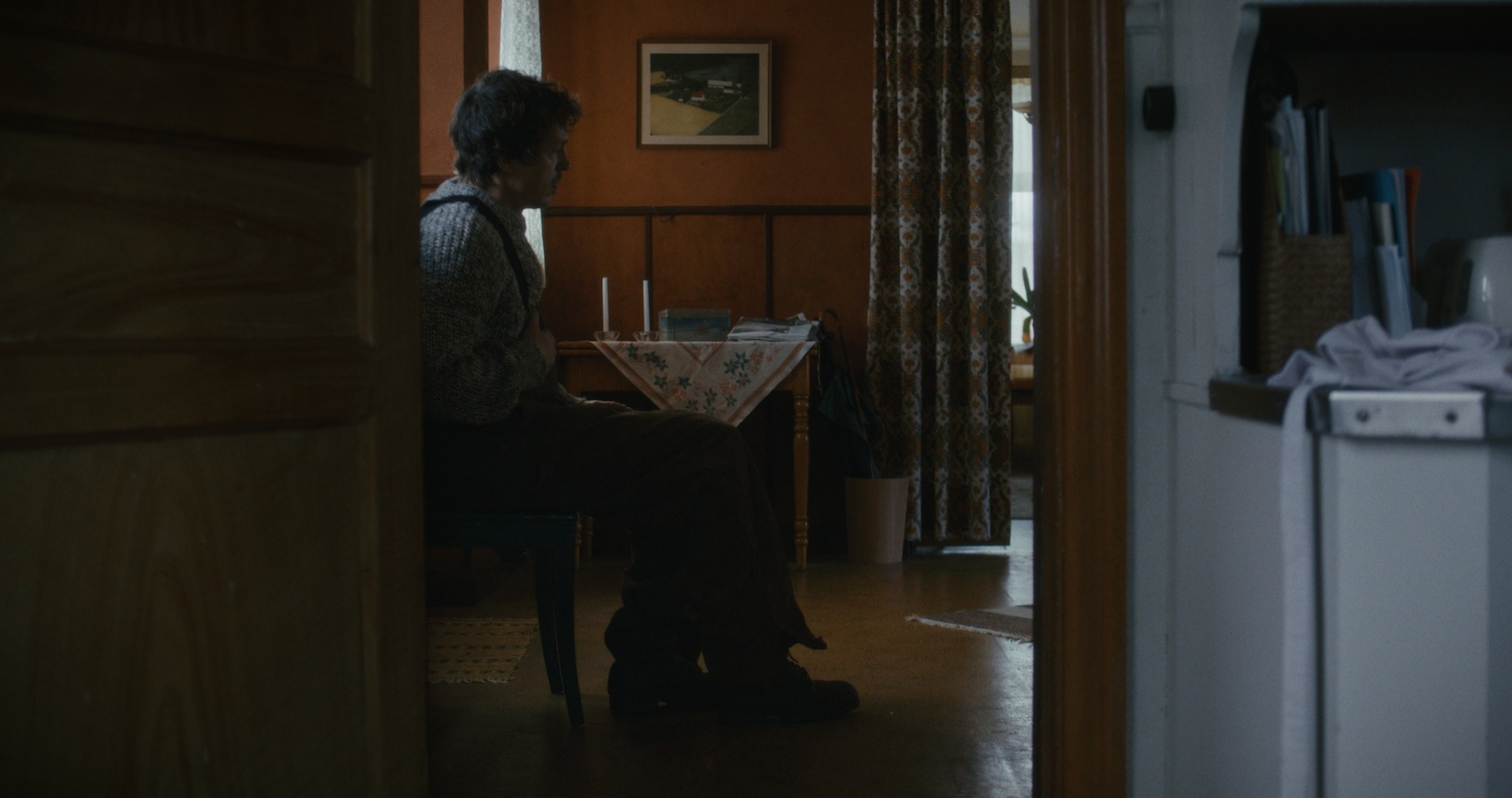

Visually, we leaned into the structure of the house — the doorways, the windows, the frames within frames. Those naturally created a sense of containment around Hasse.
The farm isn’t destitute, and it isn’t romanticised; it’s loved, but old. The tools work. The house is cared for. How consciously did you and DP John Anderson Beavers push against the aesthetic shorthand rural isolation so often gets—poverty, decay, melancholy in favour of something more honest?
The farm was central to the entire film. I had a rule from the beginning that we couldn’t shoot Bonde until we found the right house. The house wasn’t just a location. It was a character. If we didn’t believe in the house, we couldn’t believe in Hasse. When I wrote the film, I was writing from the memory of a real working farm. A place where animals lived, where people lived, where daily life had rhythm and usefulness. So the farm could never feel like a symbol of misery. It had to feel functional. It had to feel cared for. That was important because Hasse’s life worked before his mother died. The system around him functioned. The farm was sustained. The tools worked. The routines worked. His world had order. The tragedy isn’t that the farm is broken from the beginning. The tragedy is that the structure holding everything together disappears, and only then does the decay begin.
When John Anderson Beavers and I walked through the house, we knew almost immediately that its condition was what we had been searching for. It was a preserved museum house from the 1940s, and it carried the feeling of a lived farm without us having to invent it. Real dust, real flies, real surfaces that had aged naturally. There was a moment right before shooting that clarified our approach. Because the house had been preserved for so long, our set designer suggested adding a few more modern details to show that time had passed. It was a smart idea, and at first we agreed. The night before shooting, she began placing those newer objects throughout the house. But when I saw it, I had this gut feeling that we were robbing the house of its honesty. It wasn’t an easy conversation, but I called her that night and asked that everything be returned to how it was. The house already had the truth we needed. Trying to update it made it feel designed, and the whole point was that it shouldn’t feel designed.
Visually, we leaned into the structure of the house — the doorways, the windows, the frames within frames. Those naturally created a sense of containment around Hasse. But we were careful that the house didn’t feel like a prison from the beginning. It needed to feel like a home first. The prison comes later, as the routines begin to collapse and the flies begin to gather. I didn’t want the audience to look at the farm and think, “This is a sad place.” I wanted them to feel it was a real place. A place with history, care, function, and memory. A place where life had worked for a long time, until suddenly it didn’t.
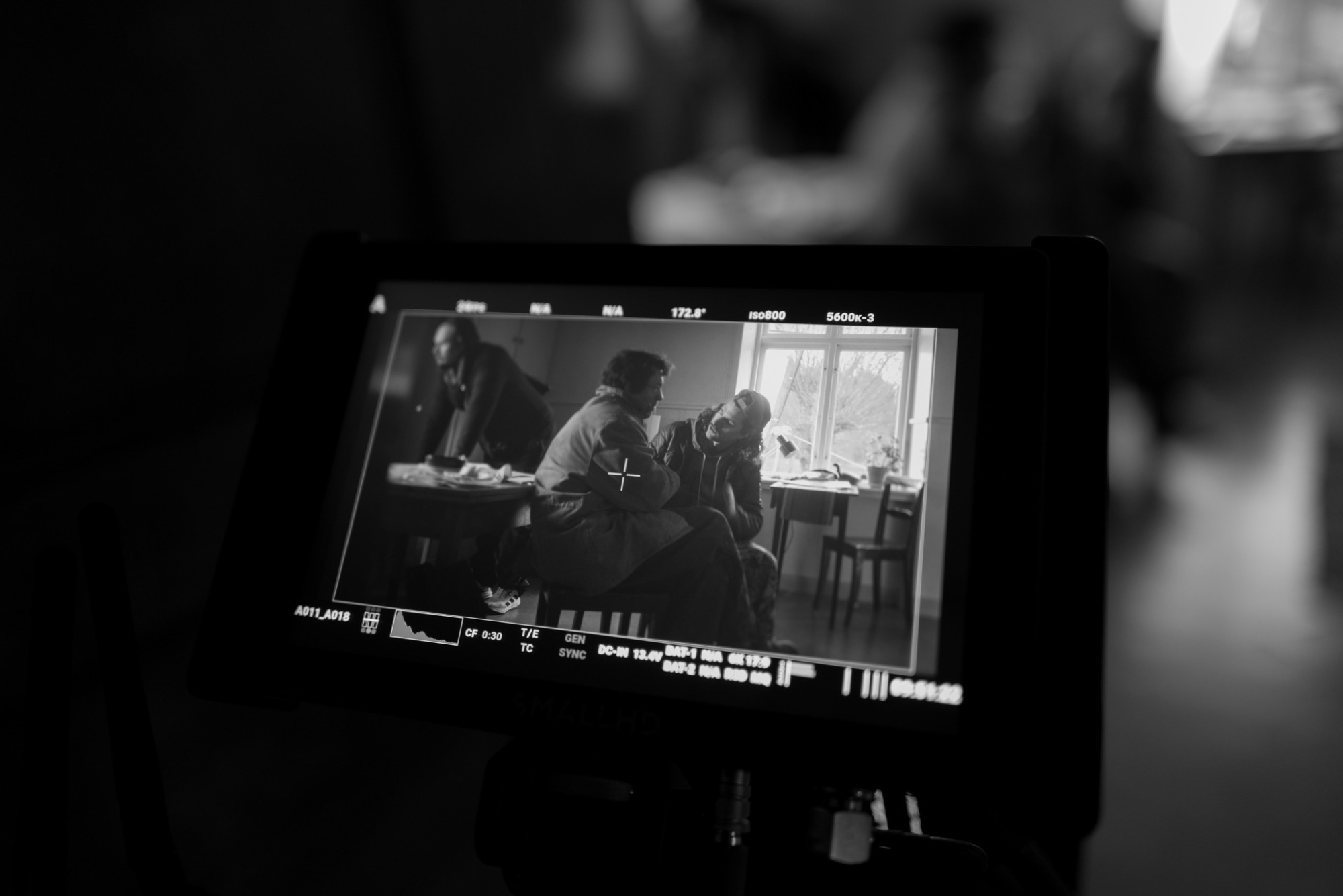
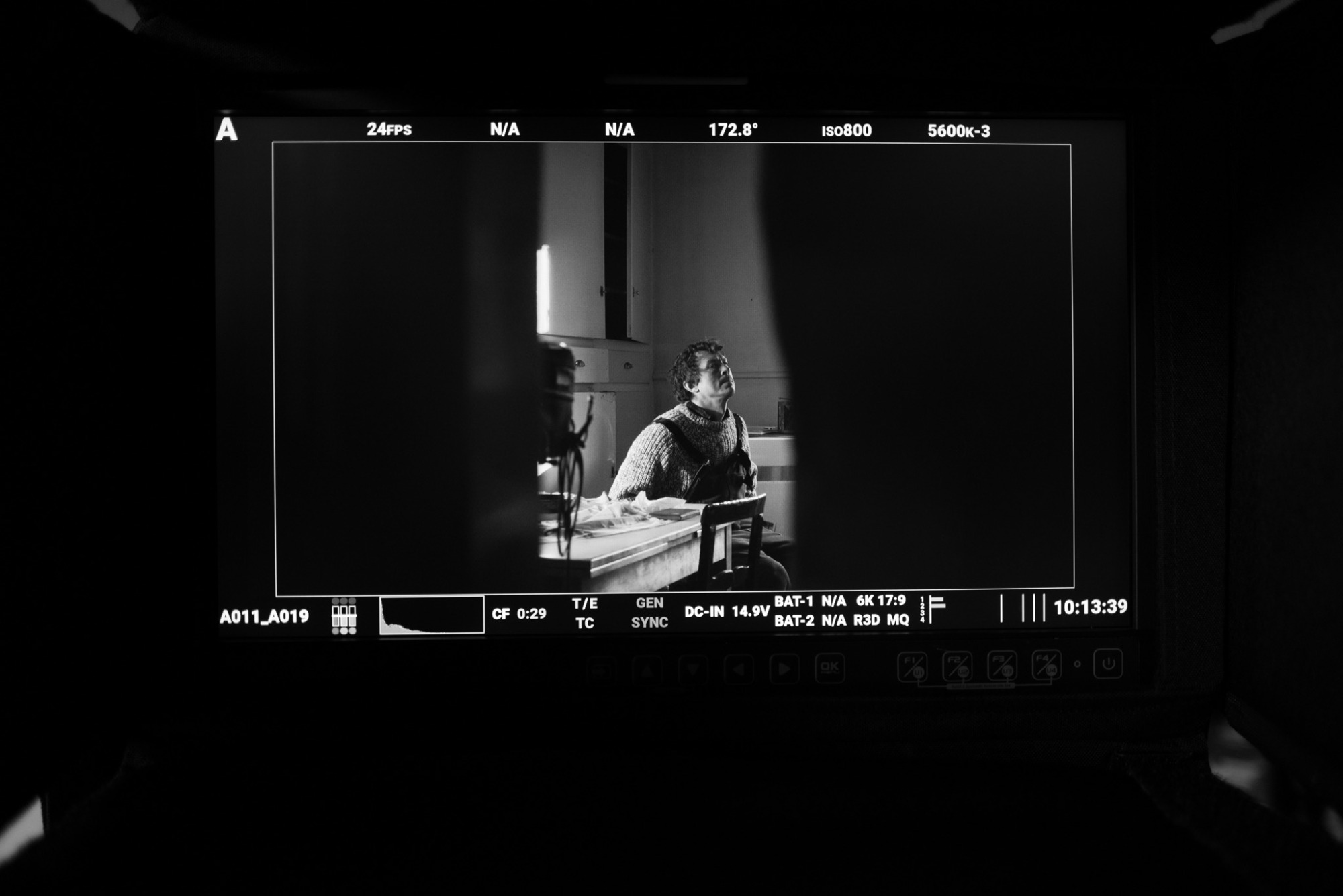

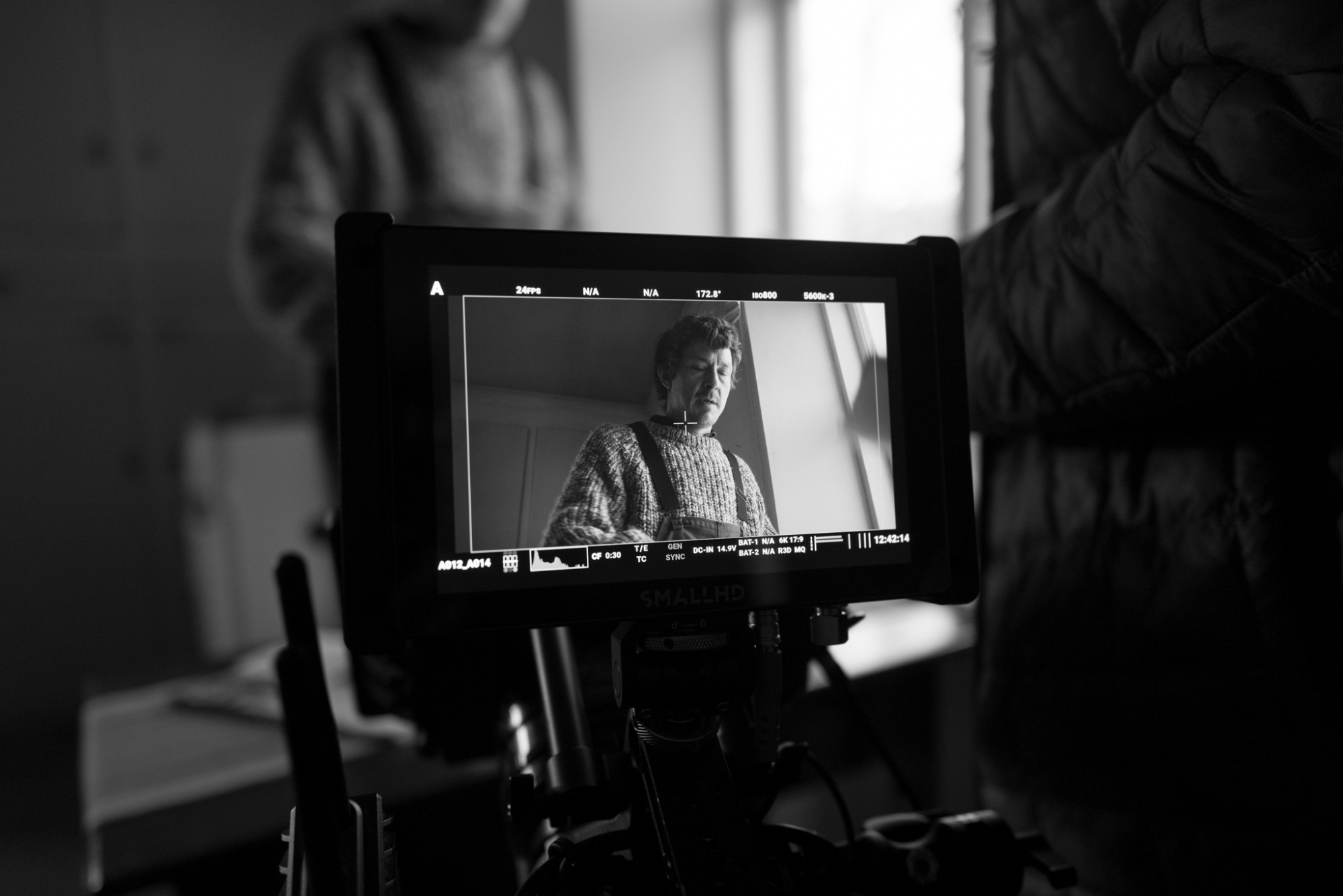
Oscar Töringe wasn’t who you originally had in mind for Hasse. What changed your reading of him—and at what point did you stop trying to fit him to the character you’d written, and start letting the character become him?
Oscar wasn’t the first person I had in mind for Hasse. I had originally written the role with another Swedish actor in mind and spent a few years trying to convince him to do it. During that time I was still developing the film, so there wasn’t any urgency. But eventually he passed, and I had to start looking elsewhere. When Oscar was first suggested to me, I honestly didn’t see it. He felt too composed, too defined. His previous work, especially as a police officer, didn’t immediately align with what I had imagined for Hasse. But he connected very deeply to the script and was persistent in wanting to explore it. When we met, something shifted. It felt like he understood aspects of the character that hadn’t even been fully articulated yet. There was a shared intuition there that made me curious enough to keep going, even though I wasn’t fully convinced. I asked him to put together an audition tape. That was the moment everything changed. There was a stillness in the tape I hadn’t expected. It wasn’t about what he was doing, it was about what he wasn’t doing. The silence carried something real. I remember watching it and feeling emotional in a way I hadn’t anticipated. That’s when I knew.
From there, we started spending time together, not to define the character too rigidly, but to let it emerge. I was very conscious of not over-directing or forcing something onto him. I didn’t want to intellectualise Hasse. The physicality of the character was something I had always understood. But the voice came almost entirely from Oscar. I had written indications of it in the script, things like, “with a low grunt, he moves to another drawer,” but they were directions more than defined choices. What Oscar brought went far beyond that. Once you reach that level of understanding with an actor, the focus shifts to consistency rather than construction.
There was a stillness in the tape I hadn’t expected. It wasn’t about what he was doing, it was about what he wasn’t doing. The silence carried something real.
We didn’t cut much in terms of performance. Oscar was incredibly precise. The balance of the vocal elements was something we adjusted slightly in post, but the core of what he did on set remained intact. If anything, I encouraged him to push it further during filming, knowing we could always pull it back later. At a certain point, you have to commit to the version of the character that’s emerging. I had written one version of Hasse on the page, but I was fully open to the idea that a different version would exist on screen. And when Oscar walked through that door in the first scene, it wasn’t a variation. It was Hasse.


With so little conventional dialogue, those half-murmurs become a kind of private language. Were there reference points or observations that shaped what Hasse sounds like when he’s alone with himself?
It came from two places, and they met somewhere in the middle. The first was my cousin Michael. As he got older he began to keep to himself, and with that came sounds, mutters, self-talk. I don’t think he was trying to communicate. It felt more like a way of staying connected to himself when there wasn’t anyone else around. I didn’t sit down and study it, but it was always there in the back of my mind, and when I started writing Hasse it came through almost on its own.
So I wrote it into the script. Not as dialogue, but as a way of giving Hasse language without giving him words. On the page it was a tool for expressing scenes that otherwise had no one to speak in them. I knew it needed to exist, but I didn’t know what it would actually sound like. Oscar took that and made it real. We were sitting together at my house when he first started muttering, building the character out loud. It wasn’t planned. He was inside Hasse, and the sounds just came. I remember it landing immediately. Whatever I had written on the page, this was the version that was going to live on screen.
On set I never felt it went too far. Oscar was so consistent that the murmurs felt like part of him, not a performance choice. It was only in the edit that I realised how much of it there actually was. When you let an entire scene play out, it’s a lot of Hasse talking to himself. So we pulled his voice down in places, not to remove it, but to let the silence around it breathe. That balance was the whole point. Hasse needed to be heard, but not too clearly. The audience had to feel like they were close enough to overhear him, not being spoken to.

The sonic world of the farm feels completely natural, yet the way we’re invited to listen is heightened. How did you approach that balance?
The sound design was there from the very beginning. The script was descriptive about sound. The flies in the room, the creaking floorboards, the distant buzz of a refrigerator, the wind moving through old windows. Those details were written into the film because I always felt the house needed to speak. Even when we were searching for the location, sound was part of the decision. The house didn’t just need to look right. It needed to look like those sounds could exist there. The windows needed to feel slightly loose. The floors needed to feel alive. The rooms needed to hold stillness in a way where a single sound could suddenly become important.
What happened when we found the house was almost strange. At the time, it had been closed for the season. It was winterised, and the heat wasn’t on. But when we arrived for prep and they turned the heat back on, the house started to come alive. The radiators began making noise. The refrigerator had this distant hum. Water was dripping. And then all of these hibernating flies started waking up inside the rooms. Suddenly, the house sounded exactly like the film I had written.
We weren’t trying to create an exaggerated soundscape. We were trying to restore the house to what it felt like when we stood inside it.
That became the foundation for the sound design. In post, we knew what the house sounded like because we had experienced it. The challenge was bringing that feeling back to life without making it feel manufactured. We weren’t trying to create an exaggerated soundscape. We were trying to restore the house to what it felt like when we stood inside it. For a while, we were balancing that against a composed score. But eventually, I wanted to hear what would happen if the house carried the emotion on its own. The flies, the wind, the windows, the radiators, the floorboards — all of it became part of how the film communicates. It had to feel completely real, but the audience also had to be invited to listen more closely than they might in ordinary life.
Removing a composed score after a year of building the film around it isn’t a small decision. What did you hear in the silent version that the scored one couldn’t carry, and how did you have that conversation with Magnus?
For a long time, we developed Bonde with the idea that it would have music. We spent nearly a year working toward that version. The score carried emotion, and there were moments where it genuinely helped shape the film. So removing it wasn’t an obvious decision. We had all become attached to what the music was bringing. At a certain point, though, I hit a crossroads. Almost out of instinct, I tested the film without music. And my immediate feeling was that it was better. Not easier. Not more polished. But more honest. A lot of my collaborators felt differently at first, and I understood why. We had spent so much time building the film with music in mind, and the score gave the audience something to hold onto emotionally. But I started to feel that it was protecting the film from the very thing it was meant to be. I think, deep down, I always knew Bonde was a film about silence. I just wasn’t confident enough at first to fully commit to that.
Telling Magnus, the composer, was the conversation I was most nervous about. We had been working together for a long time, and the score he had built was a real piece of work. But when I told him, he took it like a true collaborator. He felt honoured that the music had been part of how the film was built, even if it wasn’t going to be in the final version. I don’t think the edit would have ever become what it did without his music guiding it. The film is what it is because the score existed during the build, and then we turned it off.
Once we did, the whole film changed. The house started to speak. Oscar’s performance had more room. The pauses became heavier. The audience had to sit inside the world instead of being guided through it. That was the version of the film I had been trying to reach from the beginning. Removing the score wasn’t about rejecting music. It was about trusting that this particular film didn’t need to be carried by it.

Bonde has the nerve to stay with Hasse long enough for his waiting, his small attempts, his near-ritual routines to become increasingly uncomfortable and desperate. How did you calibrate the pace?
It happened at every stage, but the real rhythm was found in the edit. The script was around 28 pages, and it was very detailed. Hasse’s routines, his attempts, the small actions he takes throughout the house and farm — all of that was written with a lot of specificity. I wanted the audience to feel how he moved through the world, not just understand what was happening to him. On set, we let those actions live. We shot long takes and often played scenes all the way through, giving Oscar the space to remain inside the character and allowing small pieces of reality to appear.
The first rough cut was around 34 minutes, and it was a very lived-in version of the film. Part of me loved that version. I never really wanted Hasse to leave the screen because Oscar’s performance was so immersive. But over time, I had to accept that what feels alive to me as the filmmaker can sometimes ask too much of the audience. That was the real challenge of the edit. I wasn’t trying to make the film fast, but I also didn’t want stillness to become flat. If the duration is the same across the whole film, it stops feeling like tension and starts becoming passive. So the edit became about contrast. Where do we stay? Where do we move? Where does the audience need to sit with him, and where do they need the story to keep pulling them forward?
The three test screenings were important in that process. I wasn’t using them to let the audience direct the film. It was more about getting distance from my own attachment to the material. I had spent so long with the footage that it became difficult to see it clearly. Hearing where viewers leaned in, where they drifted, where they felt the duration helped me see the film from the outside again. The final version gives Hasse the time he needs, but not every second I wanted to give him. That was the right decision for the short. It also leaves me excited for the feature, because I do believe Hasse deserves more time.
What’s a short film that’s shaped the way you think about the form, which you’d point our readers toward?
Fauve. John shared it with me during prep. He felt it had something I could use as inspiration for Bonde, and he was right. I watched it alone on my computer one night, and I’ve watched it probably a dozen times since. What made it land wasn’t a single craft choice. It was the way it sat with me afterwards. The 15 minutes on screen were almost the smallest part of the experience. It was the days after that I kept thinking about it. That’s something I associate with Bergman more than with shorts. Most shorts close themselves off when they end. Fauve didn’t.
The moment that has stayed with me most is near the end, when the boy walks down the road and realises the reality of his situation. There’s no explanation. You just watch him understand. I think about that shot a lot. The landscape around him does as much of the work as he does. Fauve treats environment as a character. The visuals don’t just look beautiful, they feed the story. That’s something I really took with me. The film leans heavily on music, whereas Bonde ended up going the opposite direction. But the underlying instinct — letting place carry meaning, trusting the audience to sit inside an experience — felt deeply familiar.
A short doesn’t need to behave like a compressed version of a feature, or build toward a single final beat. It can be a contained experience that leaves you inside a feeling rather than handing you a conclusion.
What’s strange is that I had already written Bonde when I saw it. So Fauve didn’t influence the origin of the film, but the comparisons feel uncanny at times. Two boys, two landscapes, two films that refuse to translate the experience for the audience. Watching it gave me the confidence that what I had written could actually exist as a film. That a short doesn’t need to behave like a compressed version of a feature, or build toward a single final beat. It can be a contained experience that leaves you inside a feeling rather than handing you a conclusion. That’s the kind of short film I’m most drawn to. The ones that don’t over-explain themselves. Fauve does that as well as anything I’ve seen.

What are you working on next?
The feature version of Bonde. It’s greenlit and we’re shooting in April 2027. Oscar is returning to play Hasse, and we’re going back to the same house with most of the same team. That continuity is important to me. The house became such a central part of the short, almost a living presence, and returning to it lets us continue that relationship rather than reinvent it.
I’m in the middle of writing the script now, and it’s interesting because it feels both very connected to the short and very different from it. Hasse still lives at the centre of the film, but the feature gives us the space to understand him in a fuller way. After what we discovered together in the short, it feels like there’s still so much more life in that character. His performance made me feel that Hasse deserves more time. Not because everything needs to be explained, but because there’s a whole world inside him that we only begin to touch in the short. The short taught me a tremendous amount about restraint, silence, performance, and how much emotion can live inside very small moments. Those lessons are going to be essential. The short was the foundation. The feature is the room we get to build inside it.
A note to close: Thank you to Directors Notes for the space to talk through this film honestly. Most interviews ask for the polished version, and I appreciate getting to sit with the actual one.
Bonde started with a question I didn’t know how to ask when I was six. It’s been with me for a long time. Watching it exist as a film now, and prepare to grow into a feature, is something I don’t fully have the language for yet. With thanks to Oscar Töringe, who became Hasse in a way I didn’t write but immediately recognised. To John Anderson Beavers for the patience to walk every scene with me before we shot a frame. To Benjamin Cotton, my producer and friend, who brought this film into reality within every limitation and constraint we had. To Magnus, for the score we built the film around, and for the grace with which he let us turn it off. To Morfar and the family, whose memories and objects helped shape the world of the film. To my wife, Judith, who has lived inside all of this with me. And to Hasse, whose world I was trying to see when I was too young to know I was looking.