
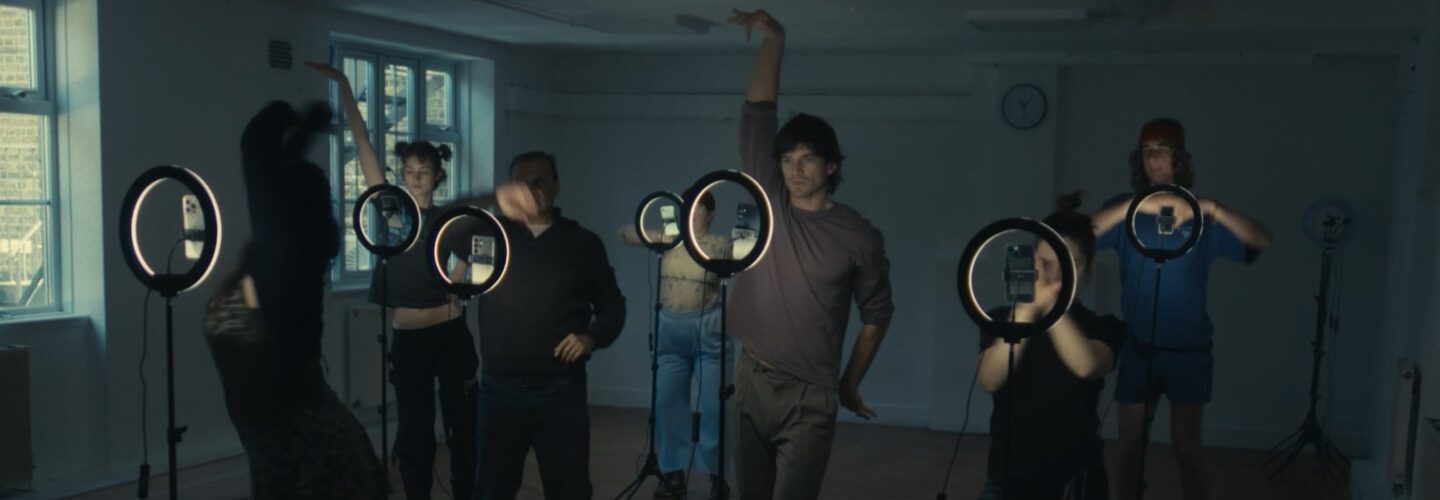
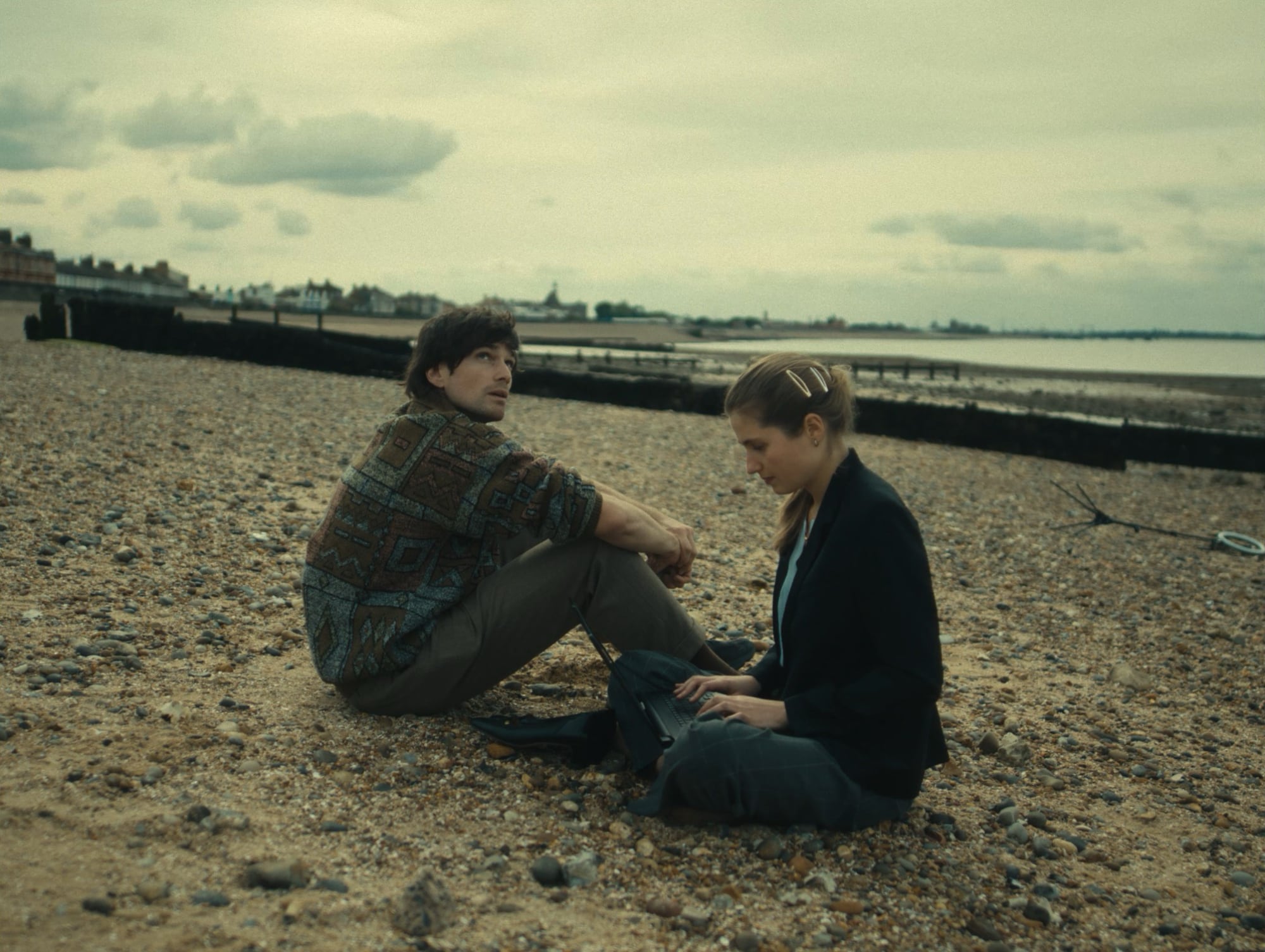
Caught in the humdrum of day-to-day life, it can be easy to forget just how bizarre the world around us truly is. Luckily, Tim Nathan’s delightfully peculiar comedy Thoughts & Prayers is here to bring a part of our current baffling reality into focus by channelling his frustrations with late-stage capitalist culture through bewildering absurdism. Through clinical cinematography and dry humour, the bleak plight of a man brought to breaking point after being served a threatening TV Licence warning is rendered with both comedy and an underlying sadness. A melancholic undertone, strongly embodied by Jackson Gallagher’s charismatic performance, elevates Thoughts & Prayers, making it less a film about the bizarre world around us and more an expression of what it feels like to exist in detachment, out of sync with your surroundings. Premiering on Directors Notes today following a successful festival run, including Bolton, where it was highlighted in our 2025 Best of Fest. Nathan joins DN to discuss finding creativity in cinematographic restraint, grounding absurdism in truth, and how a period of financial struggle, including an Uber Eats accident and a threatening TV Licence investigation letter, inspired the film.
How did this peculiar vision of the UK begin?
The film came out of a strange period of my life after I moved from Australia to London. I found myself fighting to stay afloat financially, which eventually led to doing Uber Eats deliveries. I was mid shift on my pushbike one evening and got T-boned by a car. I was flying through the air in slow motion with my Uber Eats backpack on, thinking: “Wow, Tim… this is so far from what you imagined your life would look like at 32. How did you end up here?” In that moment, I thought about the younger version of myself who was convinced everything would be sorted by then — career, money, home, family. I imagined how disappointed he would be watching this scene unfold: me airborne on a busy street in Whitechapel in the rain with a ruined Zinger burger meal in my backpack. The thought felt both tragic and darkly funny at the same time.
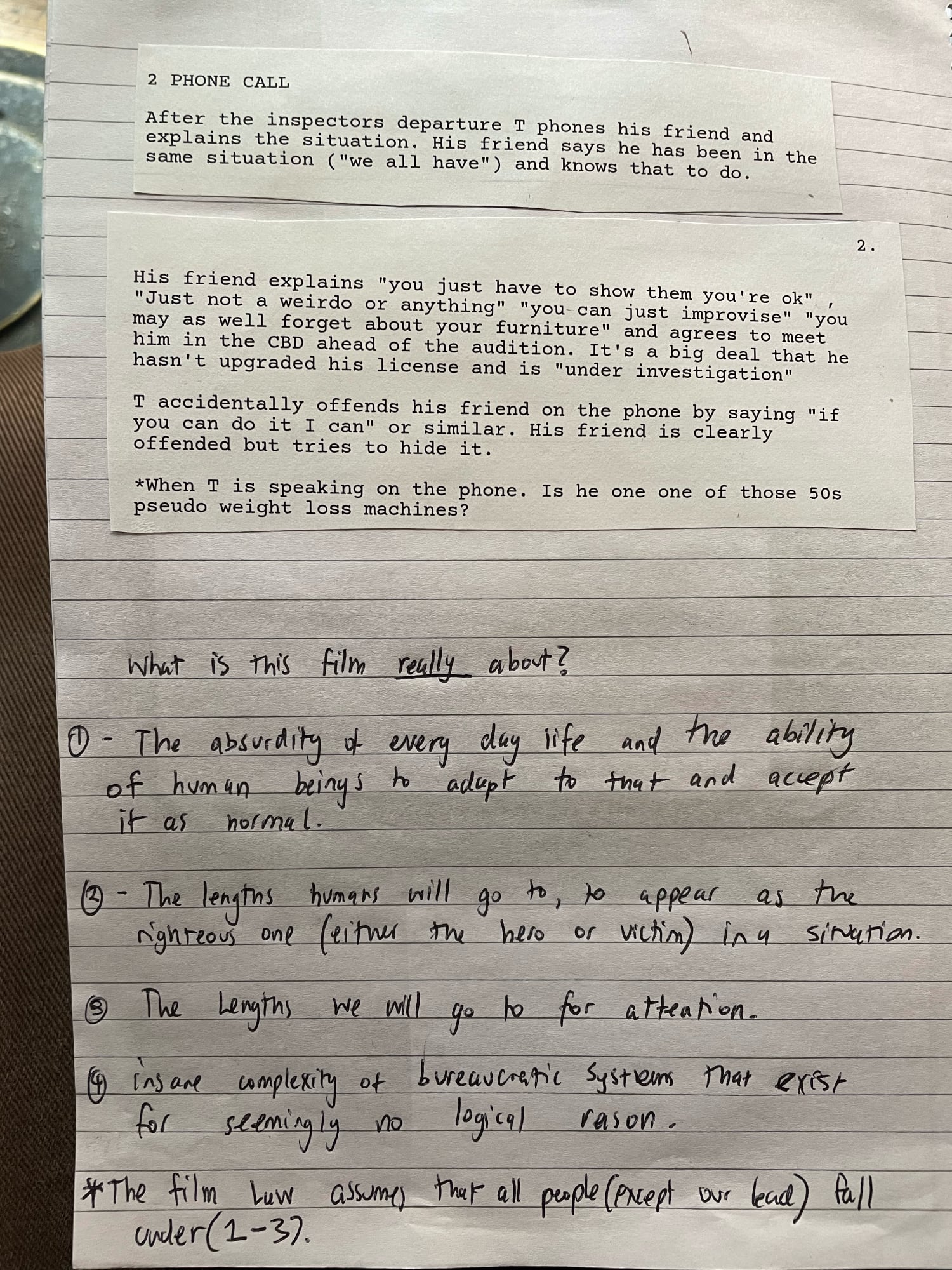
Around the same period, I received a letter from the UK TV Licensing service saying I was under investigation, which felt equally absurd and slightly threatening. That letter eventually became the spark for the opening of the film. From there, it grew into something about the way life can quietly dismantle the plans you make for yourself. Things happen that you can’t control or predict, and suddenly you’re somewhere you never expected to be. But time keeps moving, and life carries on regardless. I’m drawn to stories that sit in that strange overlap between comedy and existential pressure. Sometimes the worst moments in life end up leading somewhere unexpected – like writing a film that takes you to SXSW and quietly changes the trajectory of your career.
Under all the surrealism is a very recognisable resentment towards late-stage capitalism. Could you share more about your process of grounding the playful absurdism in truth?
A lot of that came from how I experienced London as an outsider. It felt quite hostile at first, like I was watching my own slow decline – being ground down day by day, but somehow powerless to stop it, even though it was entirely self-inflicted. The scenes began to emerge as extensions of that feeling. They’re slightly twisted or heightened, but they all come from something that felt true. I had to trust that if the writing felt honest to me (no matter how bizarre), then it would connect with others, too. The approach was to take something pretty ordinary and give it a slight twist – just enough to expose how weird it actually is. The systems themselves aren’t surreal – they’re just indifferent, and that indifference is what begins to feel absurd when you’re living inside it.
I’m generally interested in that space where something can feel both funny and quite bleak at the same time, and you’re not entirely sure how you’re supposed to respond to it.
Often, when I’m writing, I don’t fully understand what a scene is about until much later. I’ll suddenly realise I’ve written something that connects quite directly to a personal experience or a particular person without consciously intending to, and those moments of clarity can be really cathartic. I’m generally interested in that space where something can feel both funny and quite bleak at the same time, and you’re not entirely sure how you’re supposed to respond to it. I think we’re in a good place if we don’t know whether to laugh at the character or cry for them in that same moment.
Most Popular
The world around T feels infuriatingly robotic, and yet traces of humanity shine through. How did you and DoP Charles Mori build such a distinct world through aesthetic choices?
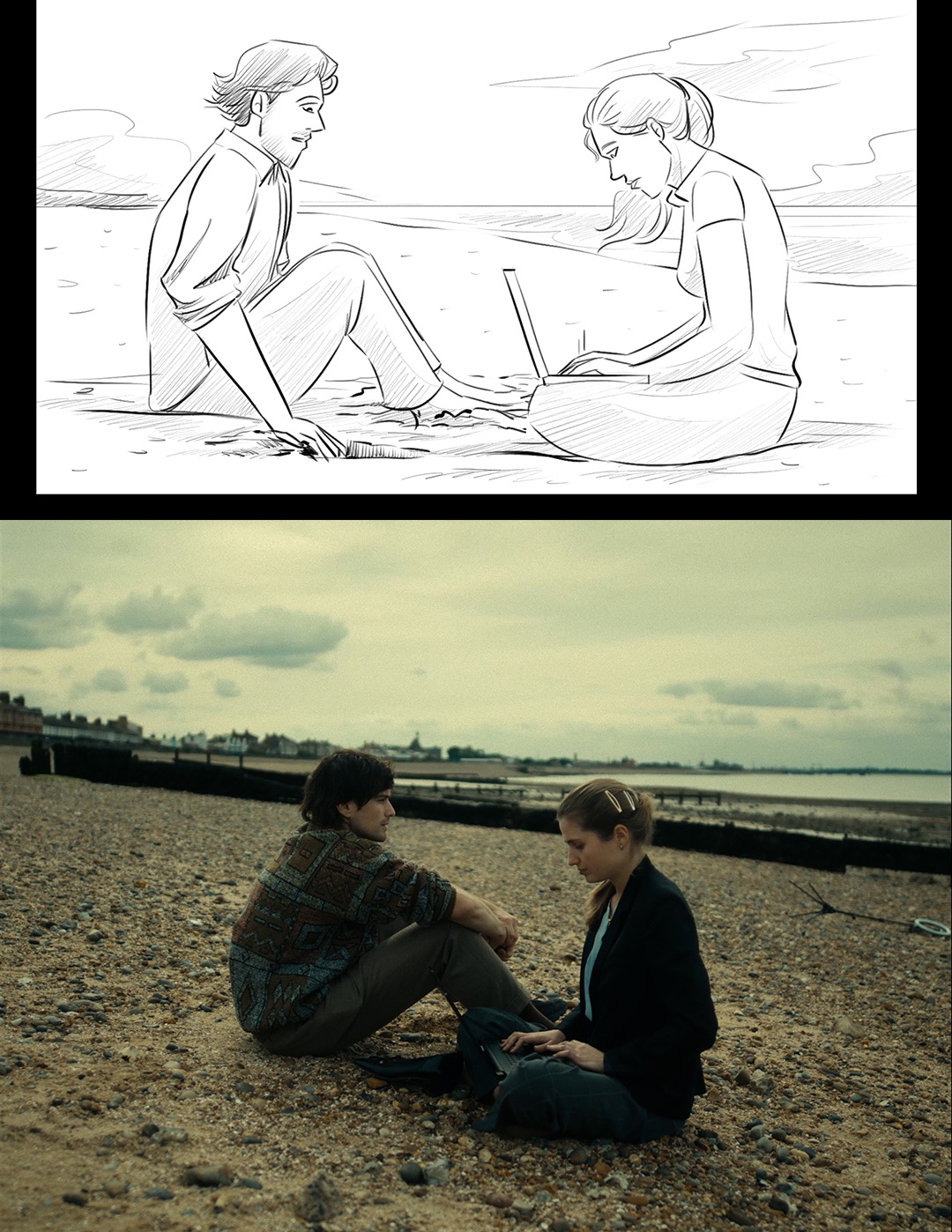
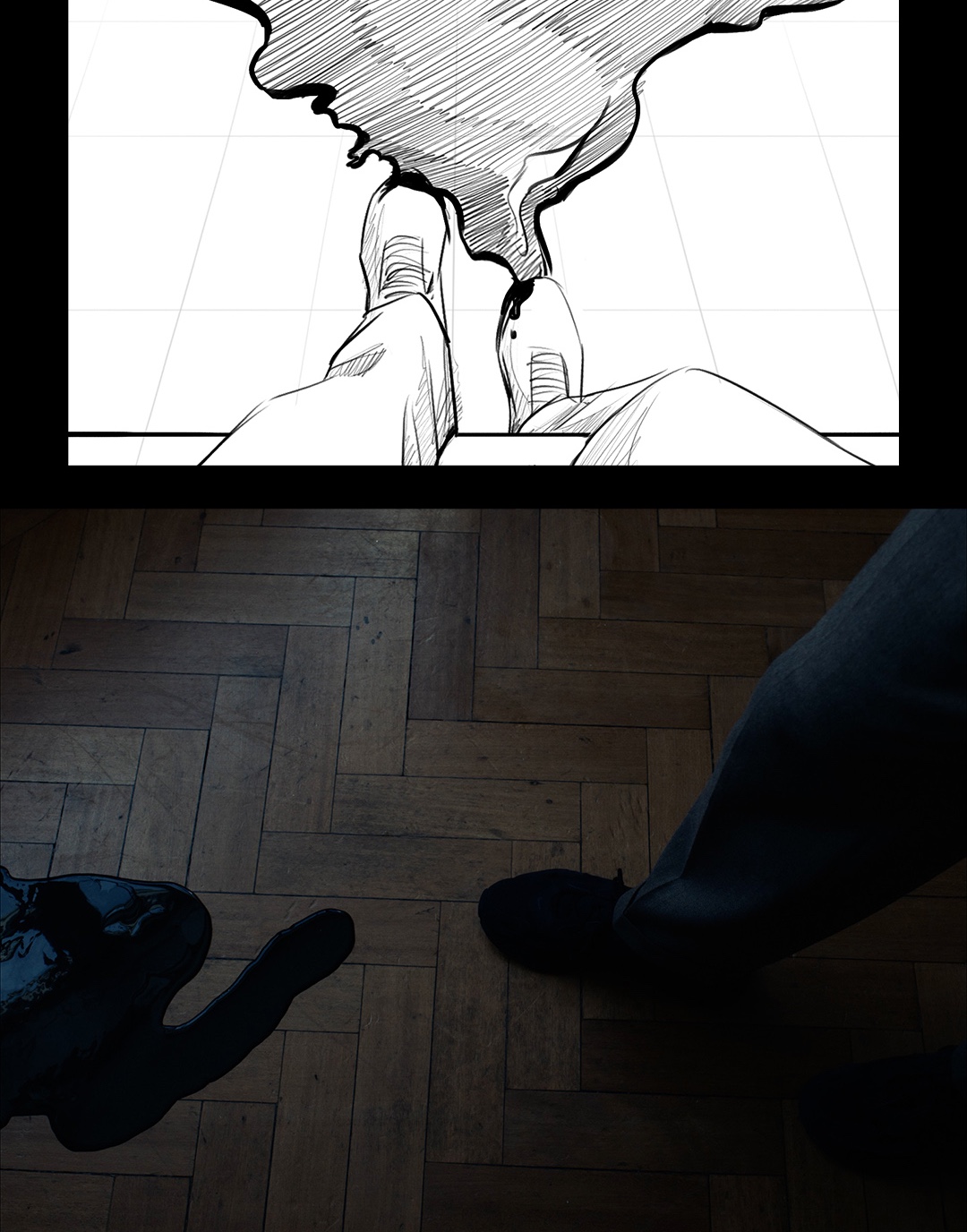
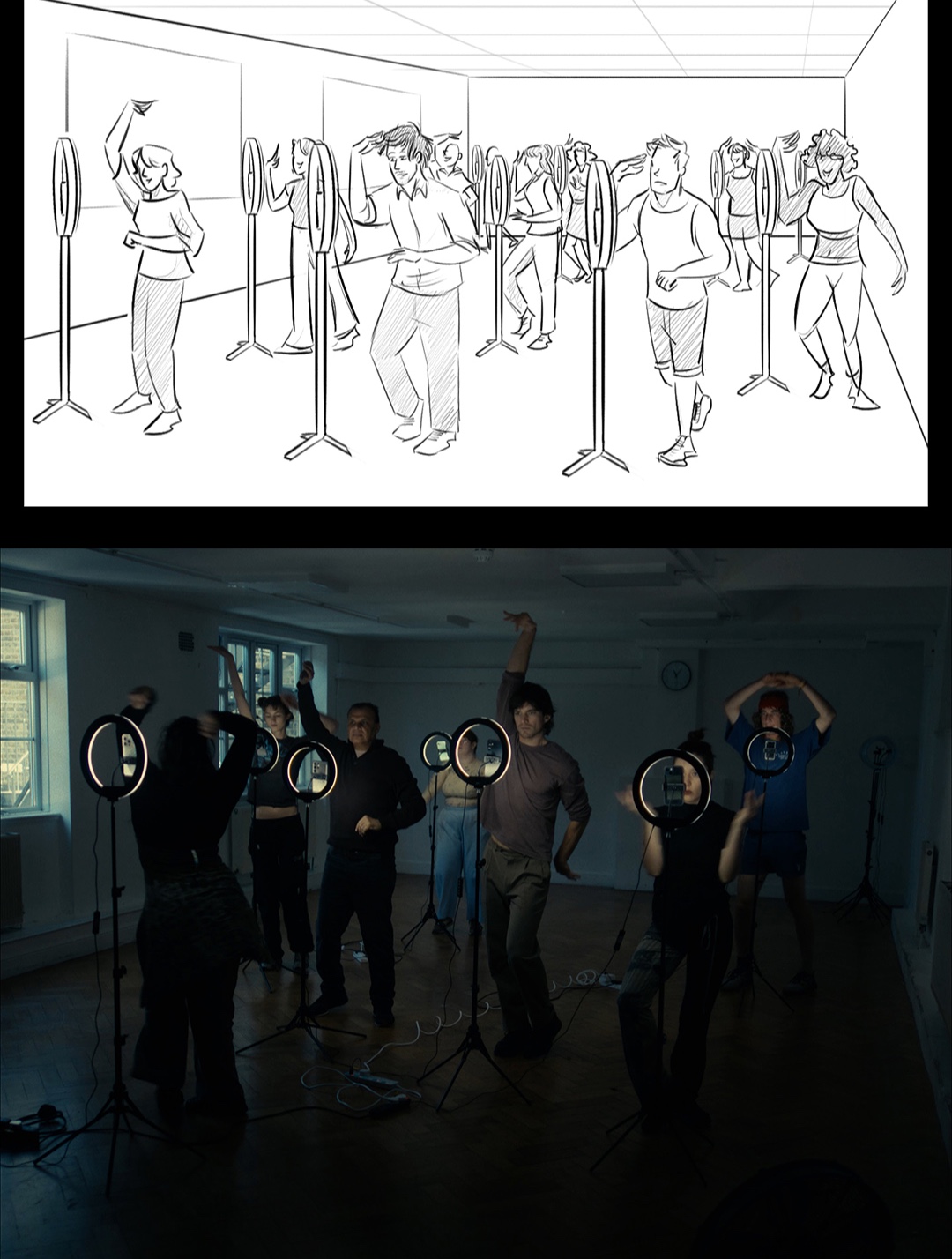
We shot the film over three days with a small crew of about ten people using my RED Komodo. Visually, the approach to the film was quite strict. After we’d reccied the locations together and cast the lead actor, I brought a storyboard to Charles Mori, the DP. From there, we refined the camera positioning and the overall look of the film. Almost every shot is static and locked off, and nearly the entire film was shot on the same 28mm cine lens.
There’s one moment where the film deliberately breaks those rules. It’s the scene where he’s zig-zagging through alleyways while on the phone to his mother. We’re on a Dutch tilt, looking up through a fisheye lens, and the sound of his footsteps is out of sync. It’s the first time the outside world really enters the film, and we wanted it to feel hostile immediately. The camera almost behaves like it’s spying on him – intruding on his privacy and quietly adding to the pressure he’s under.
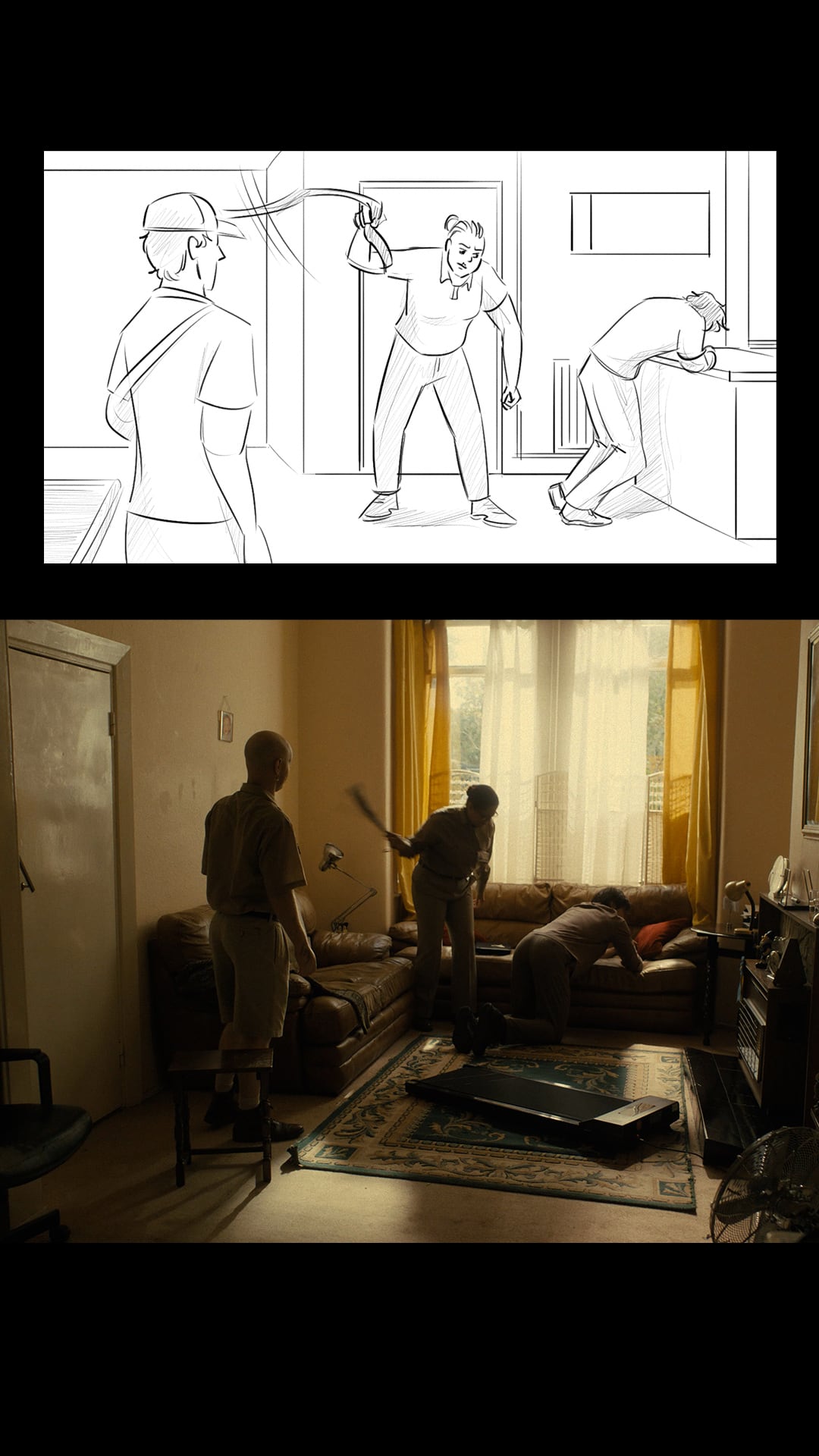
I find your strict cinematographic rule set fascinating. What about this narrative drew you to these visual choices, and could you speak further on the power of creating within restriction?
The restrictions really came from the character and the world he’s moving through. It felt like someone whose life is slowly closing in on them, so it made sense for the frame to behave in a similar way – fixed, controlled, and not particularly interested in helping him. The idea was for it to feel like it was simply observing, or even spying, without comment. It’s not there to empathise with him or guide the audience emotionally, just to witness what’s happening. Because of that, it made sense to keep it locked off for almost the entire film, only breaking that rule very occasionally. That stillness also helped create a feeling of hostility in the world – like everything is indifferent to what he’s going through.
It felt like someone whose life is slowly closing in on them, so it made sense for the frame to behave in a similar way – fixed, controlled, and not particularly interested in helping him.
Working within those restrictions was actually quite freeing. Once the rules are set, a lot of decisions fall away, and you can just focus on performances. For me, it’s less about imposing a style and more about finding a visual language that feels inevitable for the story. In this case, the restraint felt right for a character who’s trying to maintain control while his entire life is falling to pieces.
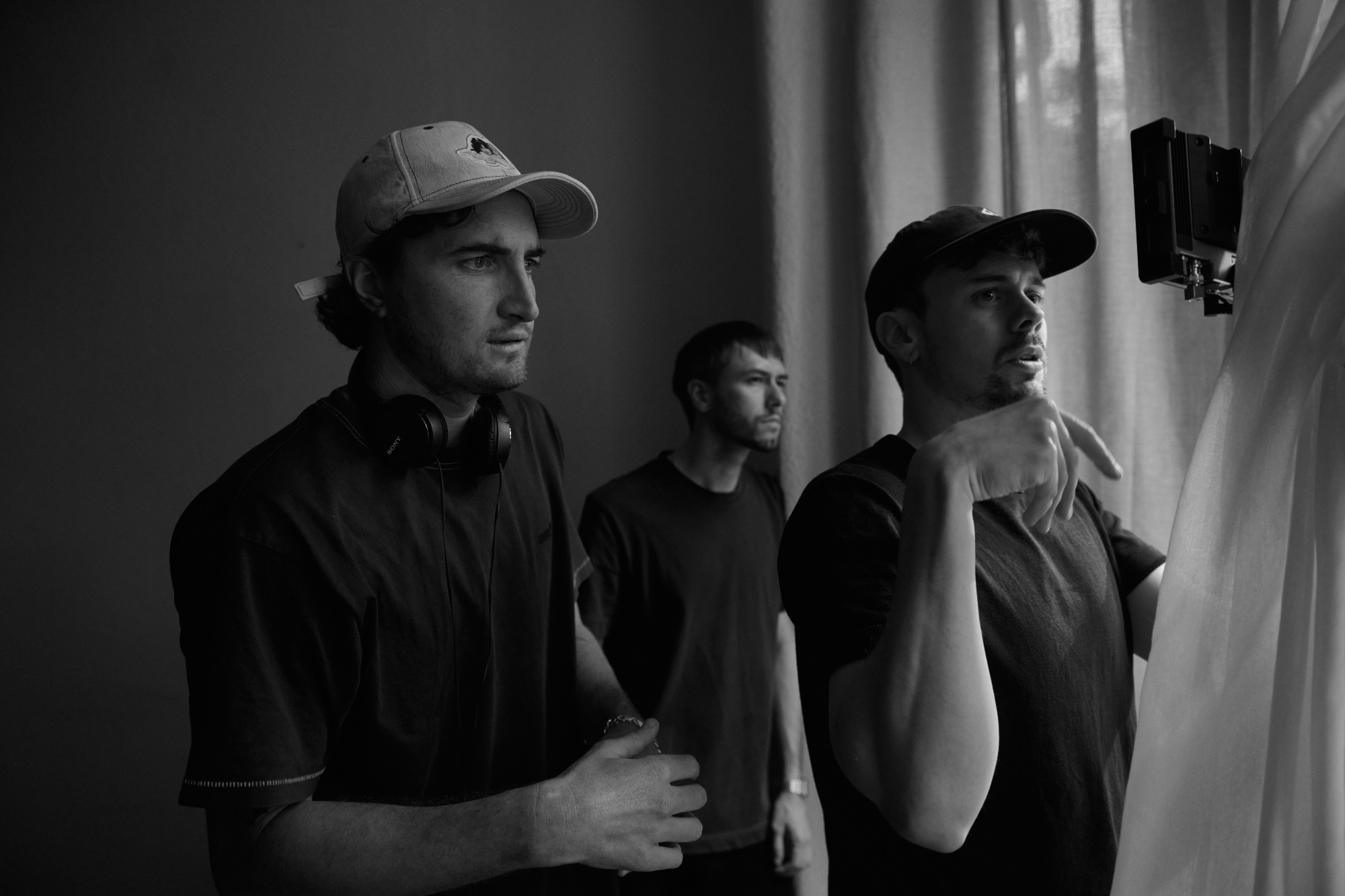
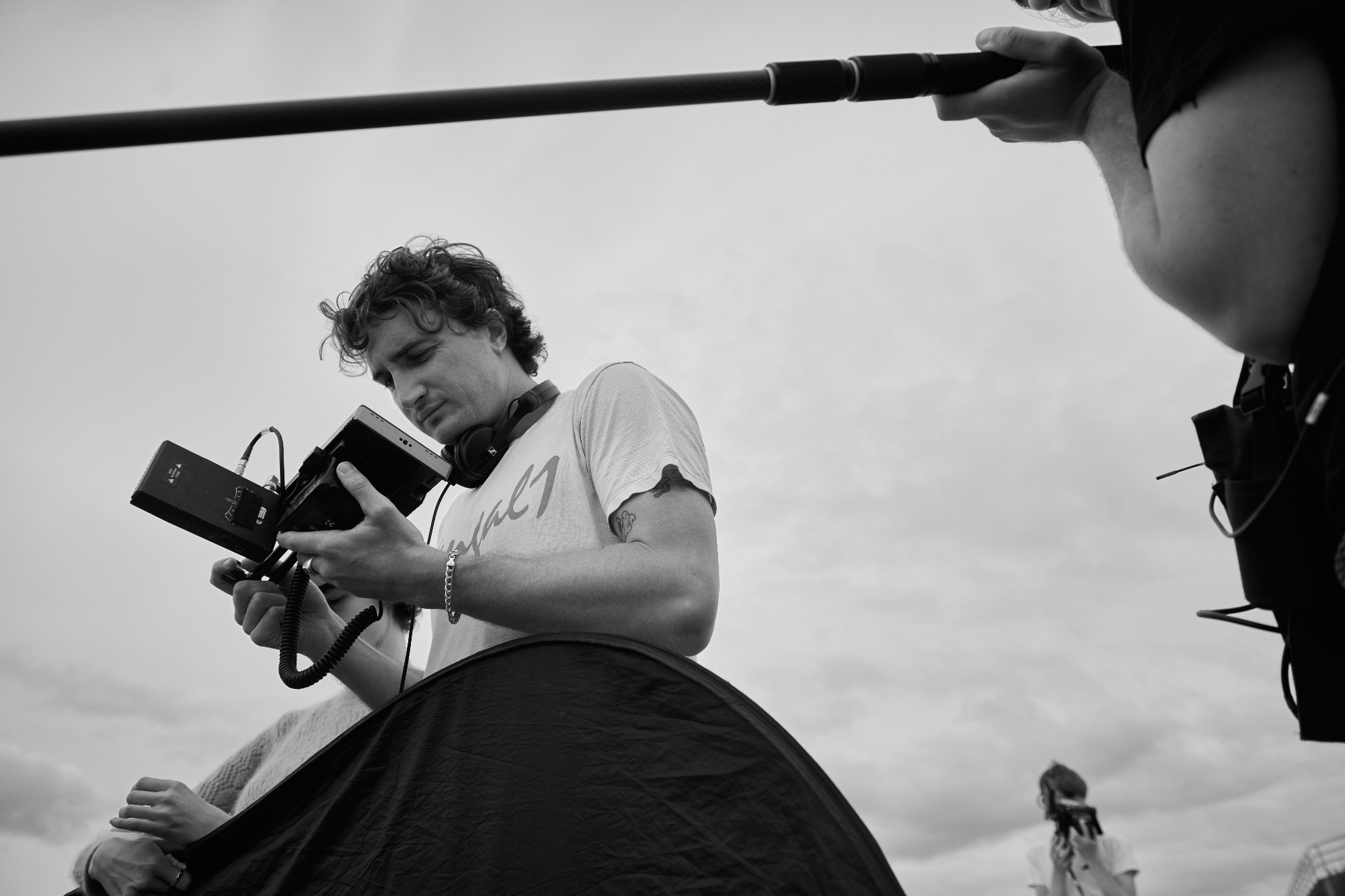
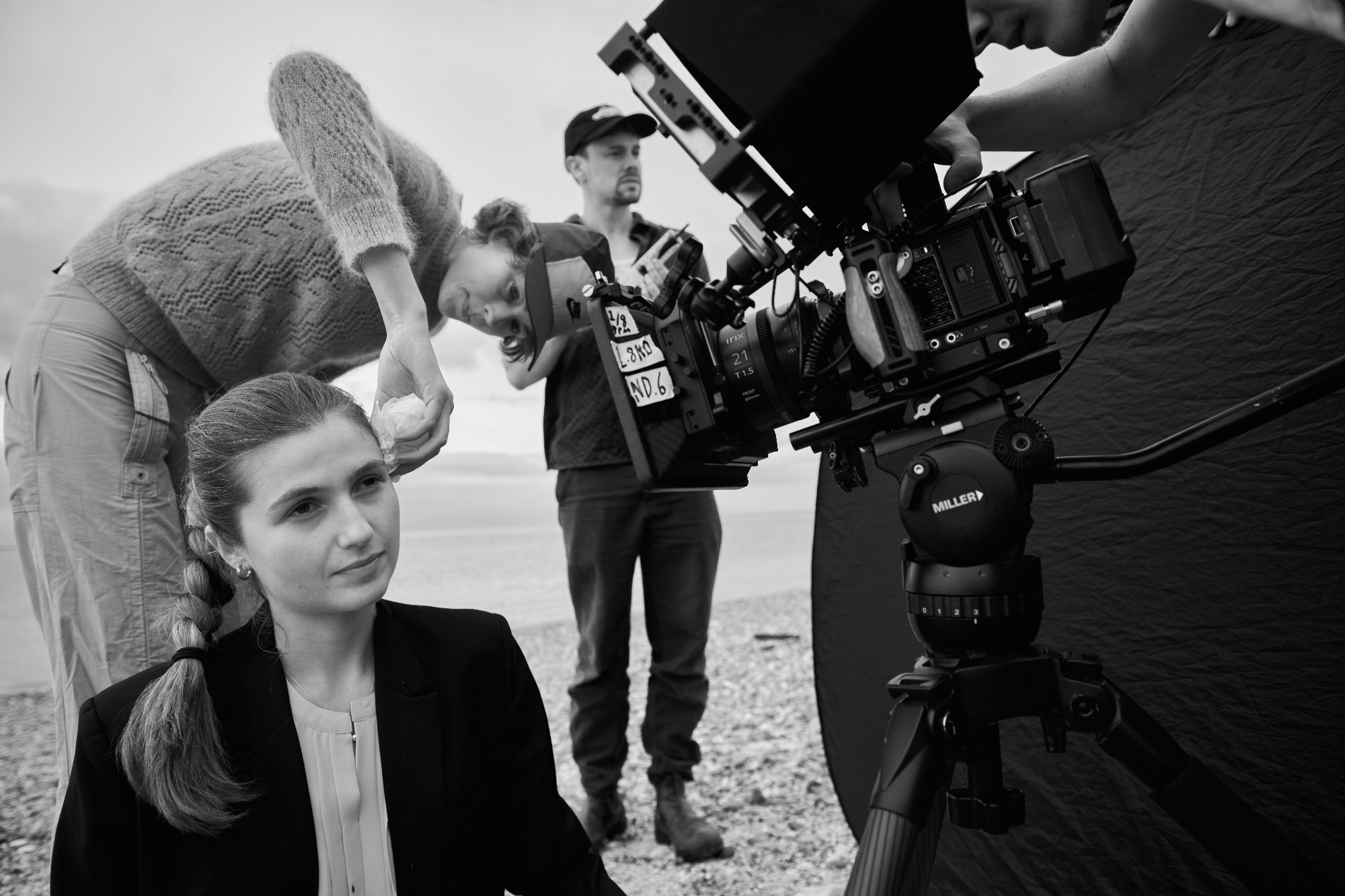
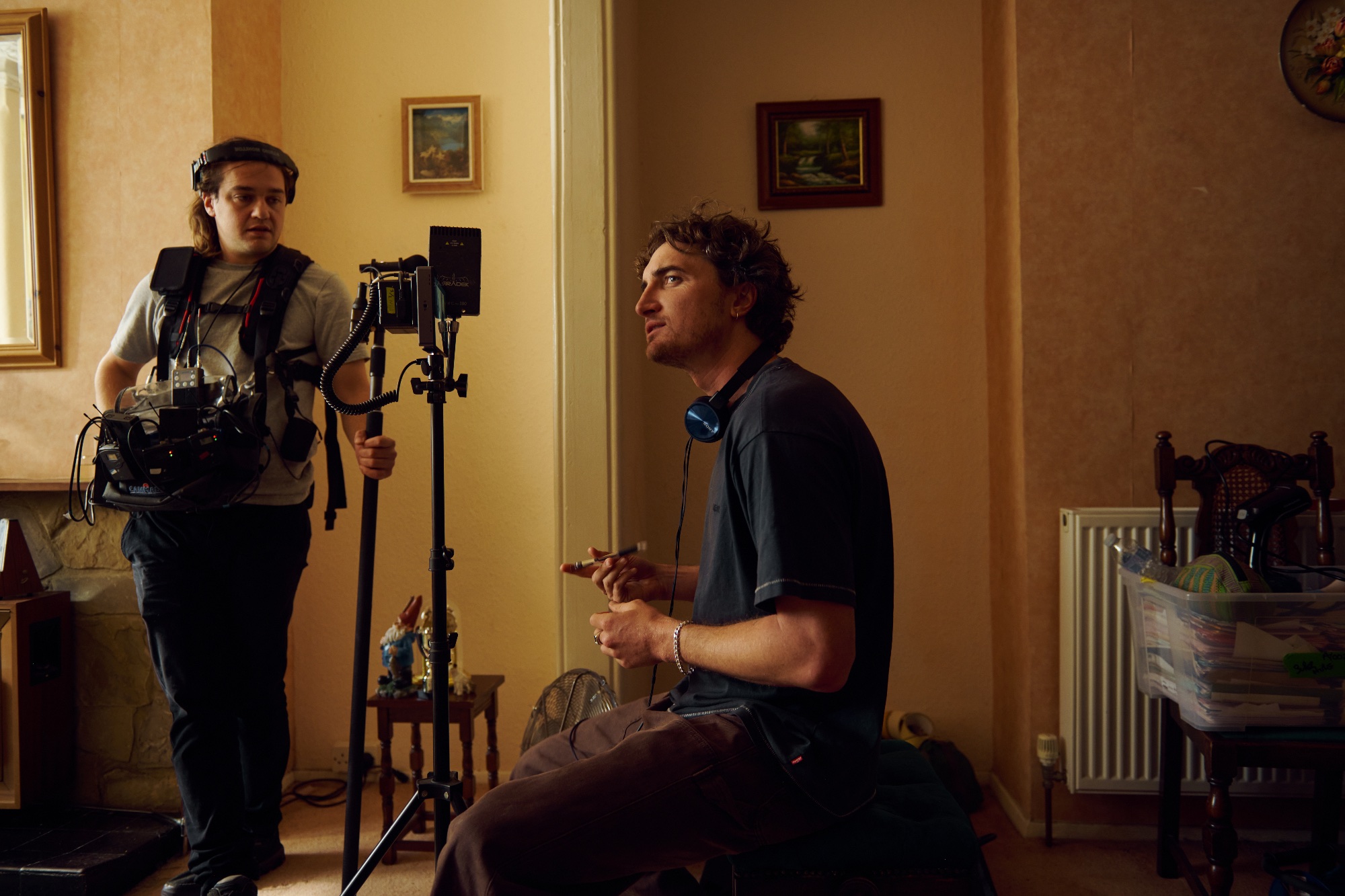
I was compelled by the disjunction between T and the society around him. In a film so interested in how we interact with the world around us, what did your location scouting process look like – and what do they contribute to the texture of the film?
A lot of the locations were chosen based on how indifferent they felt to the character. I wanted spaces that didn’t really acknowledge him – places that would continue exactly the same whether he existed or not. For the interiors, we leaned towards quite empty environments. That allowed us to be very deliberate about what we placed within the frame and how those elements built out the world around him. It also helped reinforce that sense of him being slightly exposed within these spaces. His living room, for example, is so small that he already feels compressed inside it when he’s alone, let alone when the inspectors burst in. There’s a gentle theme of people watching each other throughout the film, so I was drawn to locations that allowed for that – tight hallways, doorways, or spaces where someone could be partially seen or quietly observing from a distance.
I became quite obsessed with some of England’s coastal towns – some of the most perfectly bleak sights I’ve ever seen. I spent a lot of time walking around those areas before we eventually landed on Sheerness. There was something about that environment – the monotone, pebbled beaches, the ruined structures along the shoreline, and the kinds of characters you’d encounter there – that created a subtle sense of pressure. It felt like a world that T didn’t belong in, but also couldn’t escape from.
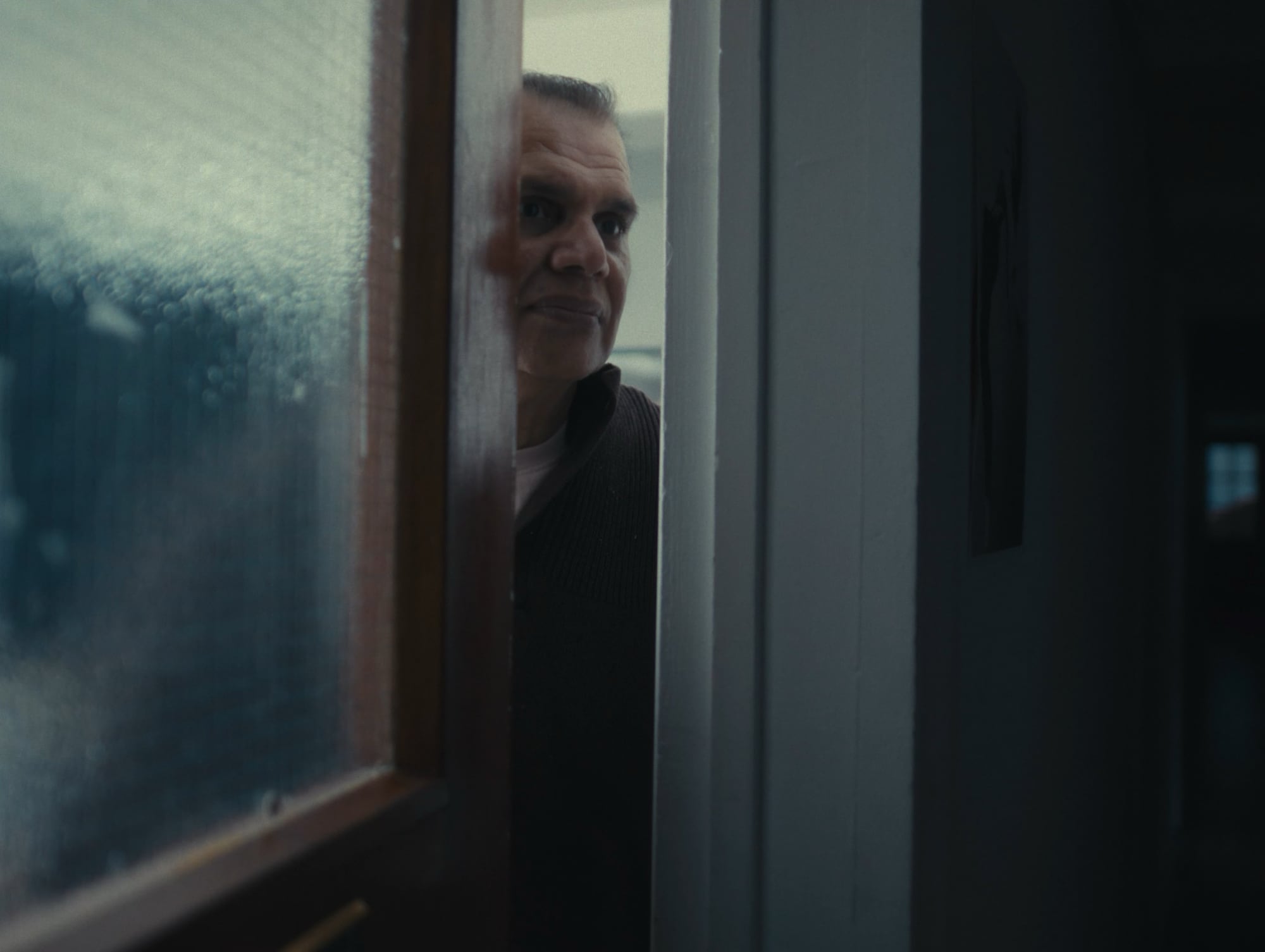
Despite the cold monotony of his surroundings, Jackson Gallagher’s performance retains so much humanity. I’d love to hear more about T as an outsider, and how you collaborated with Gallagher to build such a charismatic performance.
T always felt like someone who carries a kind of quiet optimism, even when nothing around him is really working. There’s a naivety to him, but it comes from a genuine openness rather than ignorance, and I think that helps the audience stay with him. That mismatch was really important – he’s trying to approach things in a normal, considered way, but the world around him doesn’t really respond in kind. We feel like he’s operating with a slightly different logic to those around him. That fed into how we approached certain scenes. Even when the subject matter was quite brutal – like having your belongings repossessed, there was a sense of approaching it from an innocent or almost childlike way.
The more grounded his performance was, the more absurd the world around him became.
Jackson was attached to the project from early on, so I was writing the character with him in mind – I could lean into his natural instincts and the idiosyncrasies he brings to a performance. We didn’t over-discuss things in a technical way. It was more about arriving at a shared understanding of the character and then letting the scenes play out naturally. The more grounded his performance was, the more absurd the world around him became. I think that contrast between his openness and the indifference of the world is what creates a lot of the tension.
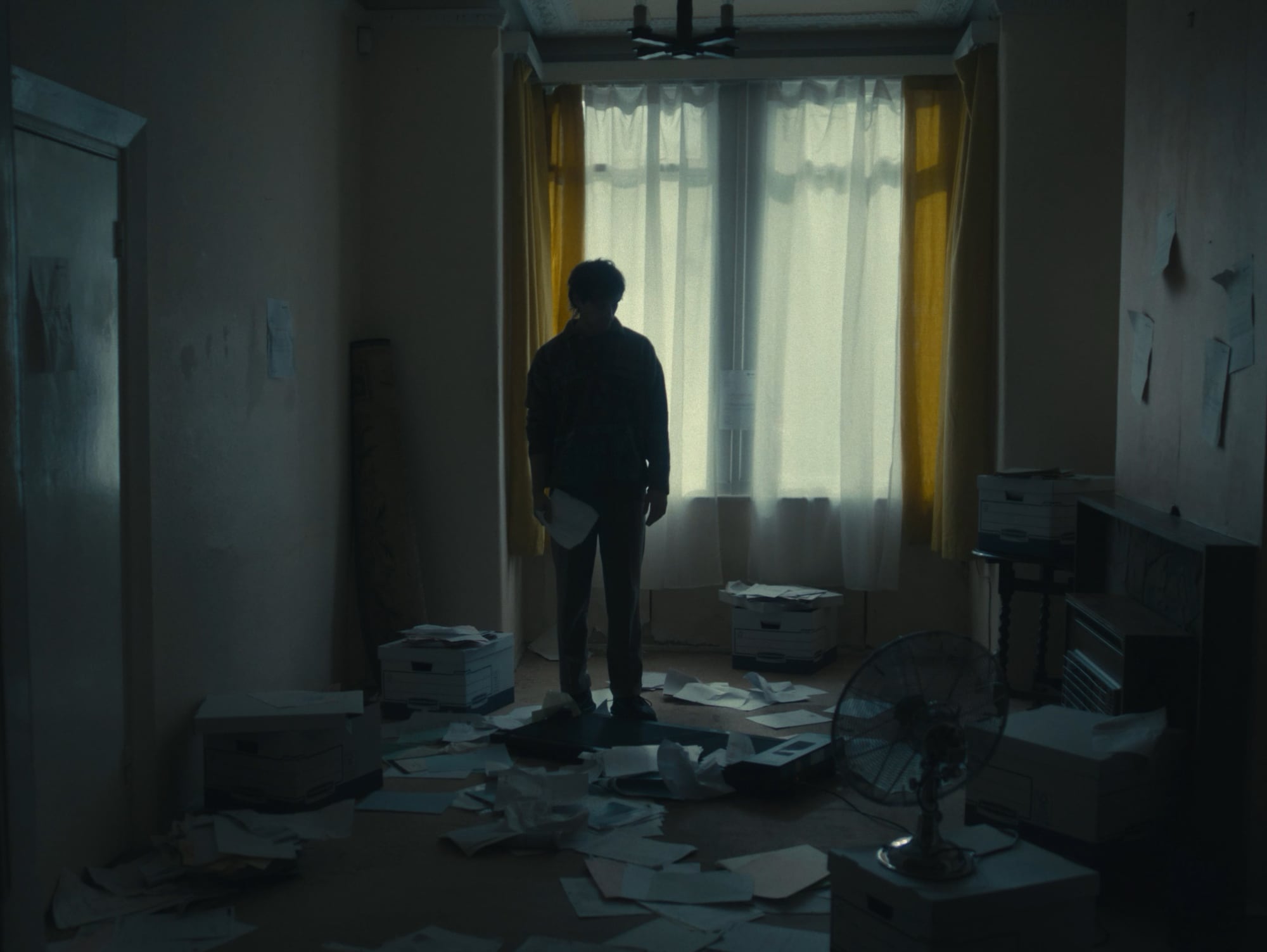
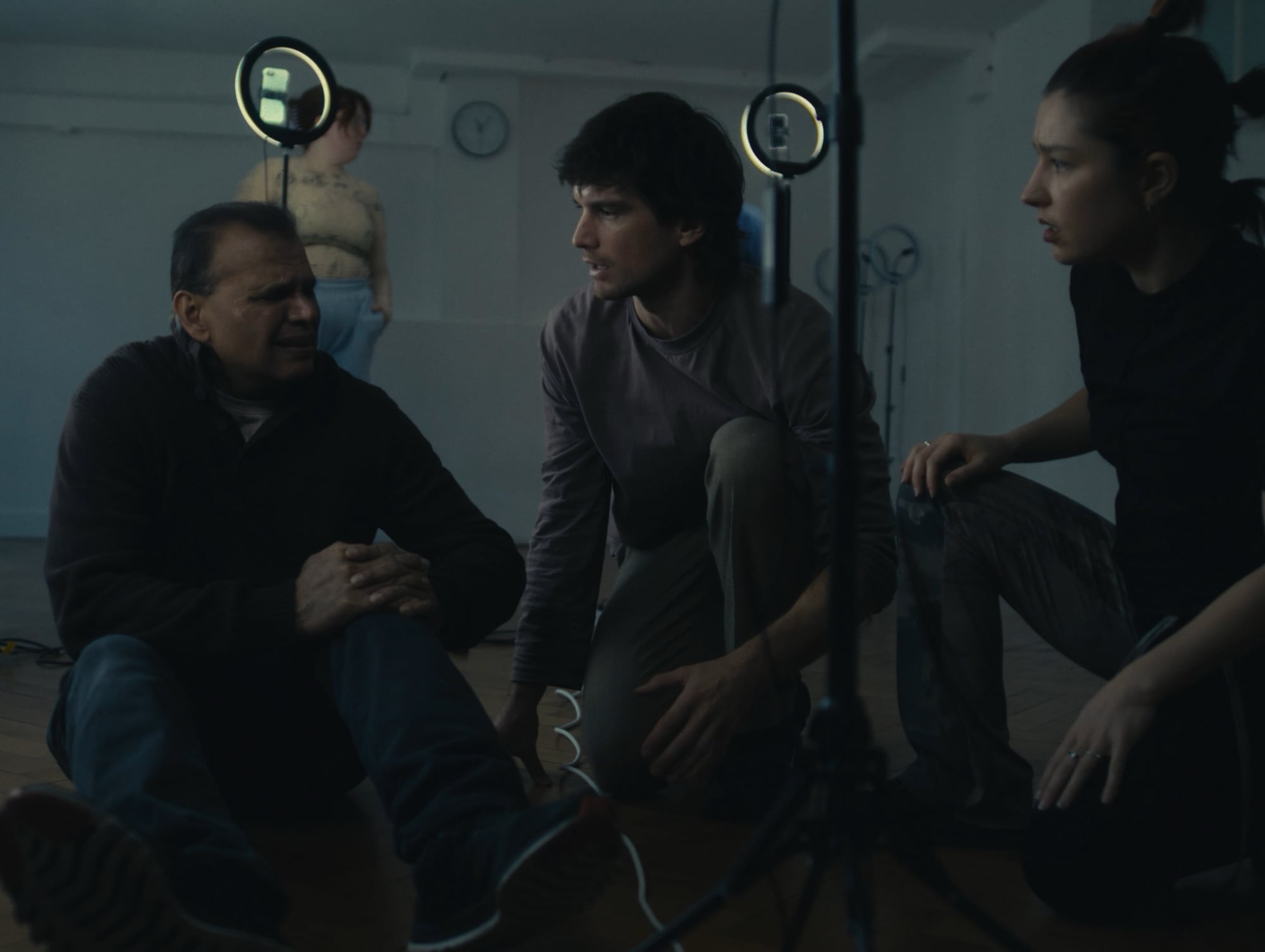
The choice to use North Korean propaganda music is bone-chilling and adds such a dark subtext to the film. Where did this idea come from, and what do you feel it adds to the narrative?
I came across the track while watching a documentary about North Korea and was struck by the idea that they broadcast it through loudspeakers every morning as part of a kind of daily ritual. I wasn’t necessarily trying to draw a direct comparison between his life and that kind of environment, but the piece itself had a quality that felt very haunting and isolating. Luke Fuller, my sound designer, responded to it straight away as well, and we decided to weave it very subtly into the alleyway scene. It’s not something you’re necessarily meant to consciously notice, but it adds a strange underlying tension – like something is slightly off without being able to immediately place why. In that same scene, there’s also the sound of a train bell in the distance, so there’s this suggestion of escape, but you never see it. It exists just out of reach.
Is there a short film you’d like to recommend to the Directors Notes audience?
La Cabina by Antonio Mercero (1972) comes to mind as one of the most diabolical short films I’ve ever seen.
And finally, what’s next for you?
I’ve just finished the first draft of my debut feature – an absurd rom-com that explores similar ideas around navigating pressure, systems, and little moments of beauty in the everyday. I’m applying for development funding this year, with the aim of shooting towards the end of next year. I’m also continuing to develop short-form and commercial work alongside that.