True world-building can be such a tricky thing to master in a short film. By definition, the budgets are not always there to physically create it, nor is the available runtime sufficient to fully explore it. That said, when done well, it can be a genuinely absorbing and transportive experience. Winter Slaap (Hibernation), from co-directors Leandros Braounos and Daniel Howells, is exactly that—and, even more impressively, it’s also a student film. Inspired in part by the collective global trauma of the pandemic lockdowns and the world we encountered as we emerged back into society, the film explores how two sisters respond when the events unfolding around them outpace their understanding. Joining us today, Braounos talks to Directors Notes about the challenges of shooting in South Africa’s stunning natural landscapes, the production considerations required when filming in black and white, the meticulous crafting of the soundscape to make it as immersive as possible, and the lessons they took away from a difficult shoot that, at one point, felt as though it would never be finished.
Winter Slaap transports audiences to a time and place in South Africa not often seen on screen. What was the inspiration for this story, both thematically and narratively?
Daniel and I had established years prior that if we ever collaborated again, it would be on an Afrikaans period film. We wanted to craft a type of film that hadn’t really been seen in South Africa before. Our country has a fascinating, complex history deeply shaped by conflict — not just along racial lines, but across deeply fractured cultural ones as well.
Narratively, the film is about a family disintegrating under pressure, exploring how two sisters navigate the unique guilt, scars, and expectations placed upon each of them.
When we sat down to write the script, the world was emerging from the Covid-19 lockdowns, and Russia’s invasion of Ukraine had just begun. The global landscape felt like it was shifting at a terrifying pace; we were collectively stepping into the unknown. We found ourselves asking: How would society change after being isolated indoors for so long? How do people react when confronted with monumental events entirely outside of their control? Do they wither inward, passively accepting their reality, or do they grow outward, driven by a conviction to act — no matter how misdirected or dangerous that belief might be? We wanted to place all of these ideas within a slightly fantastical world full of metaphor and allegory, but anchor them with a very intimate story at its heart. Narratively, the film is about a family disintegrating under pressure, exploring how two sisters navigate the unique guilt, scars, and expectations placed upon each of them.
The striking black and white cinematography against wintery landscapes is at odds with most depictions of South Africa. How did you go about defining the visual style and tone you wanted to capture?
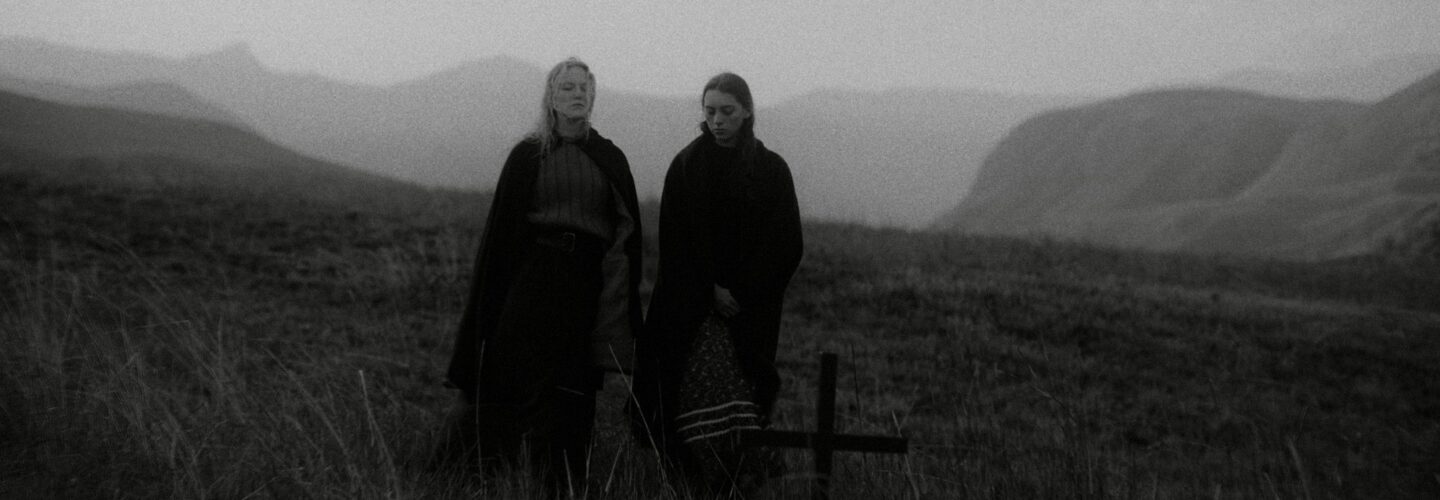
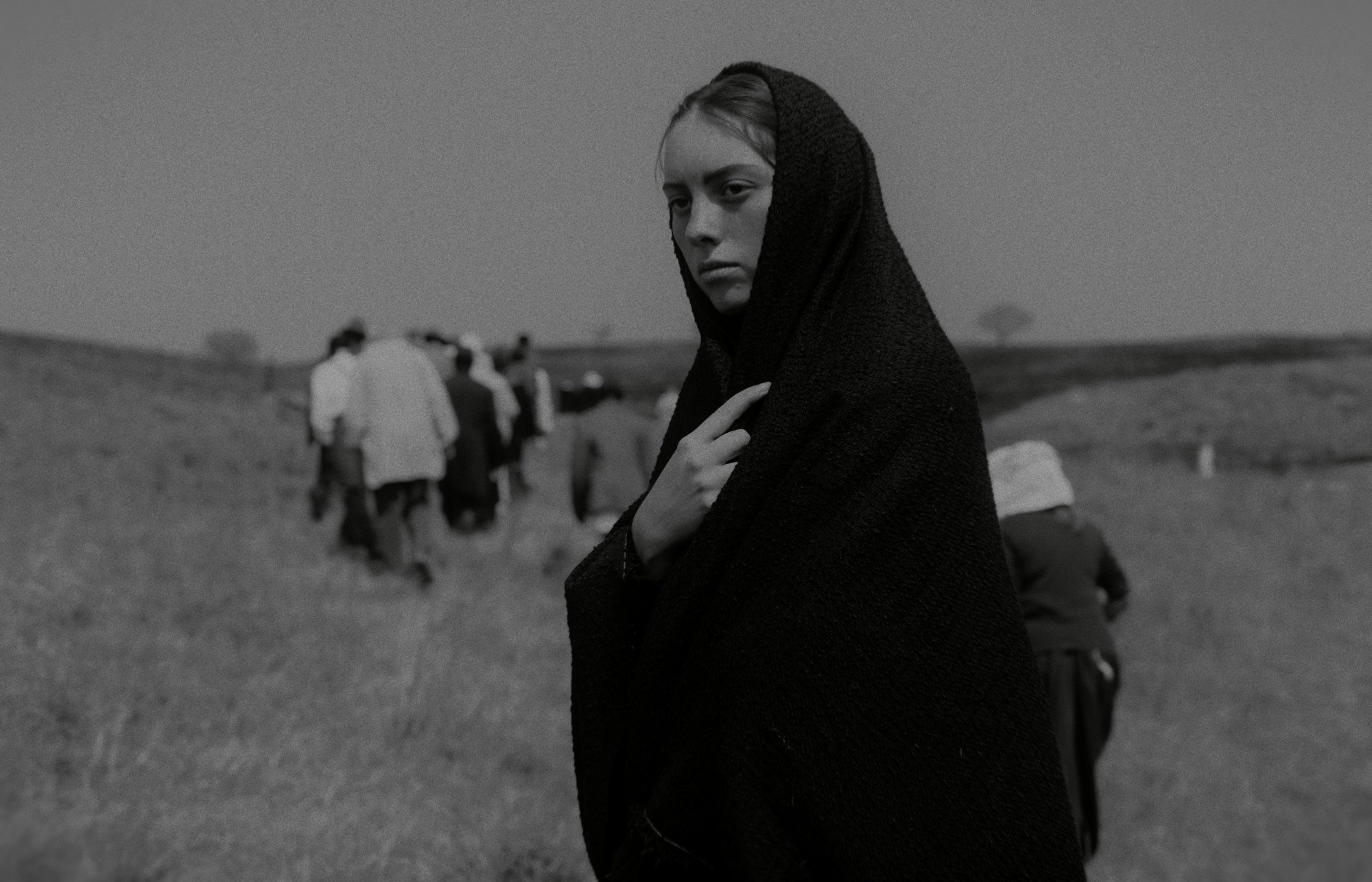
Deciding to shoot in black and white was one of our very first creative choices. Stylistically, it served as a stark, almost supernatural window into that specific era. As you mentioned, it subverts the typical, vibrant depiction of South Africa, which was exactly the fresh perspective we wanted to explore.
Working with a very limited budget, we knew that stripping away colour and leaning into high-contrast, atmospheric lighting, would help us transform a region that is typically quite lush into a cold, dying world.
We desperately wanted the film to possess the texture of a 16mm film stock, but sourcing, shooting, and processing physical film in South Africa is incredibly difficult and cost-prohibitive. To overcome this, we worked closely with our Art Director and colourist, Chloe Iacovou. Together, we dove into deep research surrounding digital film emulation techniques and the specific ‘colour’ theory of monochromatic grading, meticulously crafting that organic grain and tonal depth in post-production. However, the choice was also born out of practical necessity. Working with a very limited budget, we knew that stripping away colour and leaning into high-contrast, atmospheric lighting would help us transform a region that is typically quite lush into a cold, dying world.
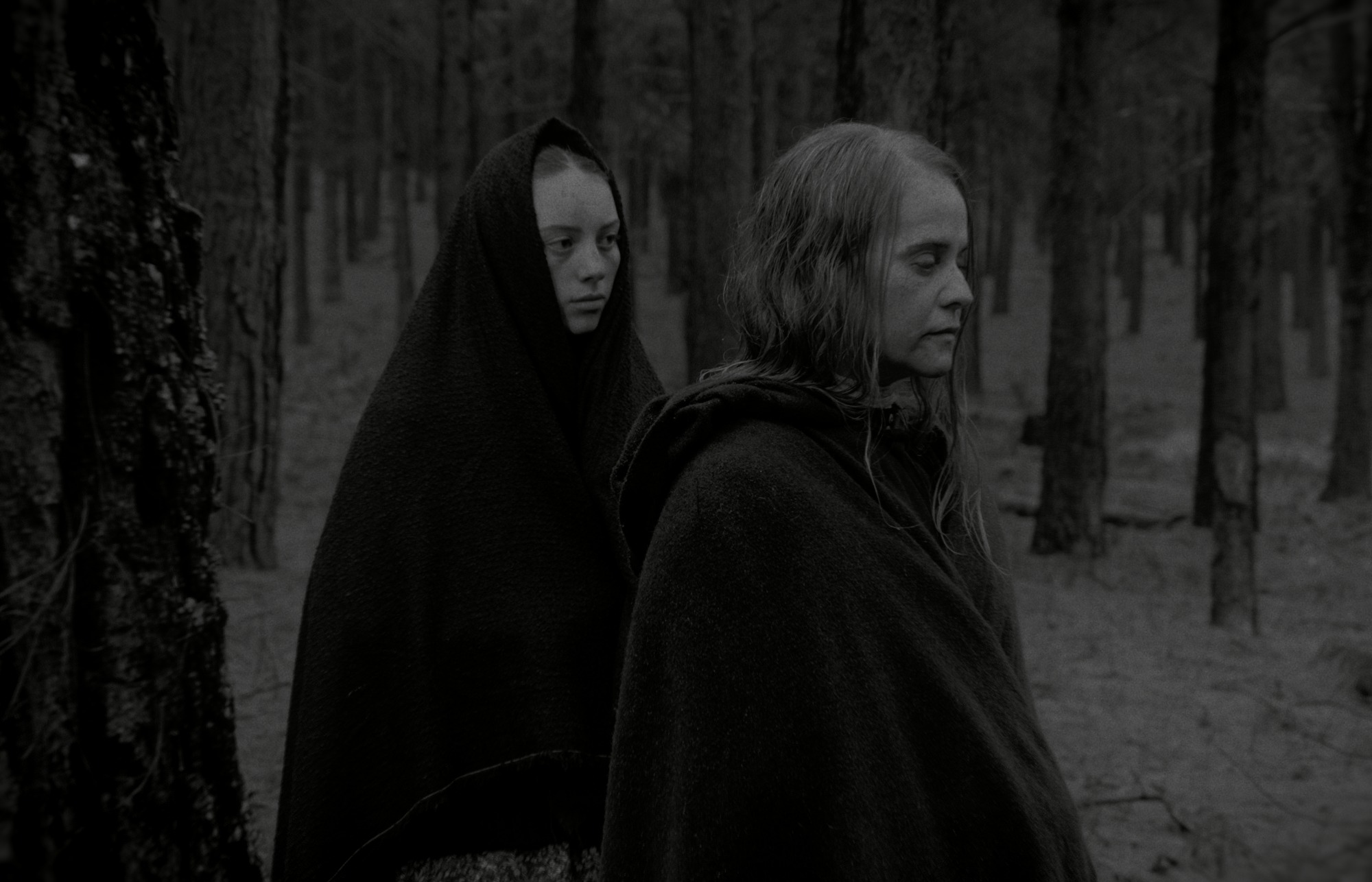
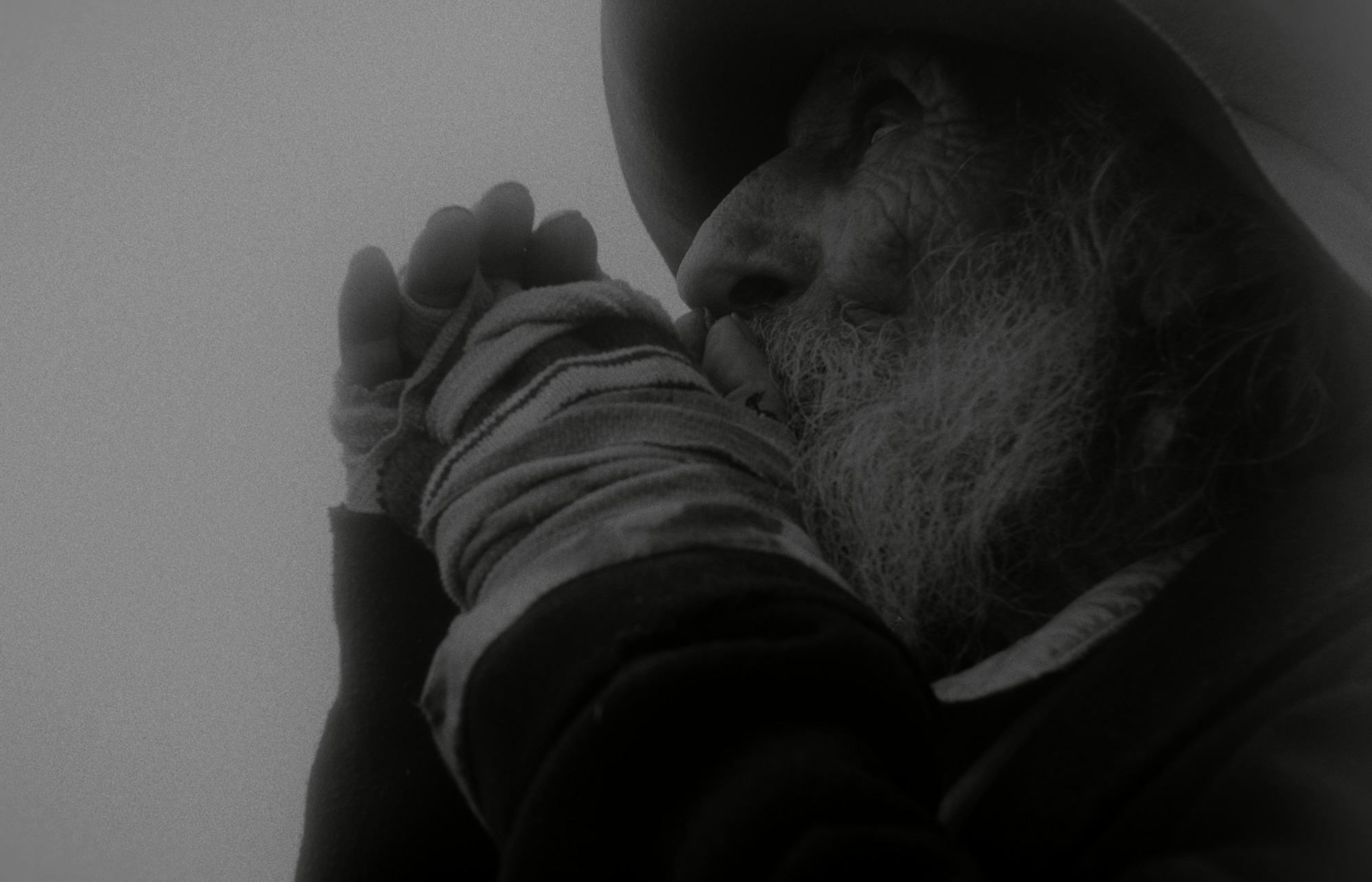
The tone of the film is matched and complemented on screen by both the main and supporting cast. What was the casting process for both the leads and the many background artists featured?
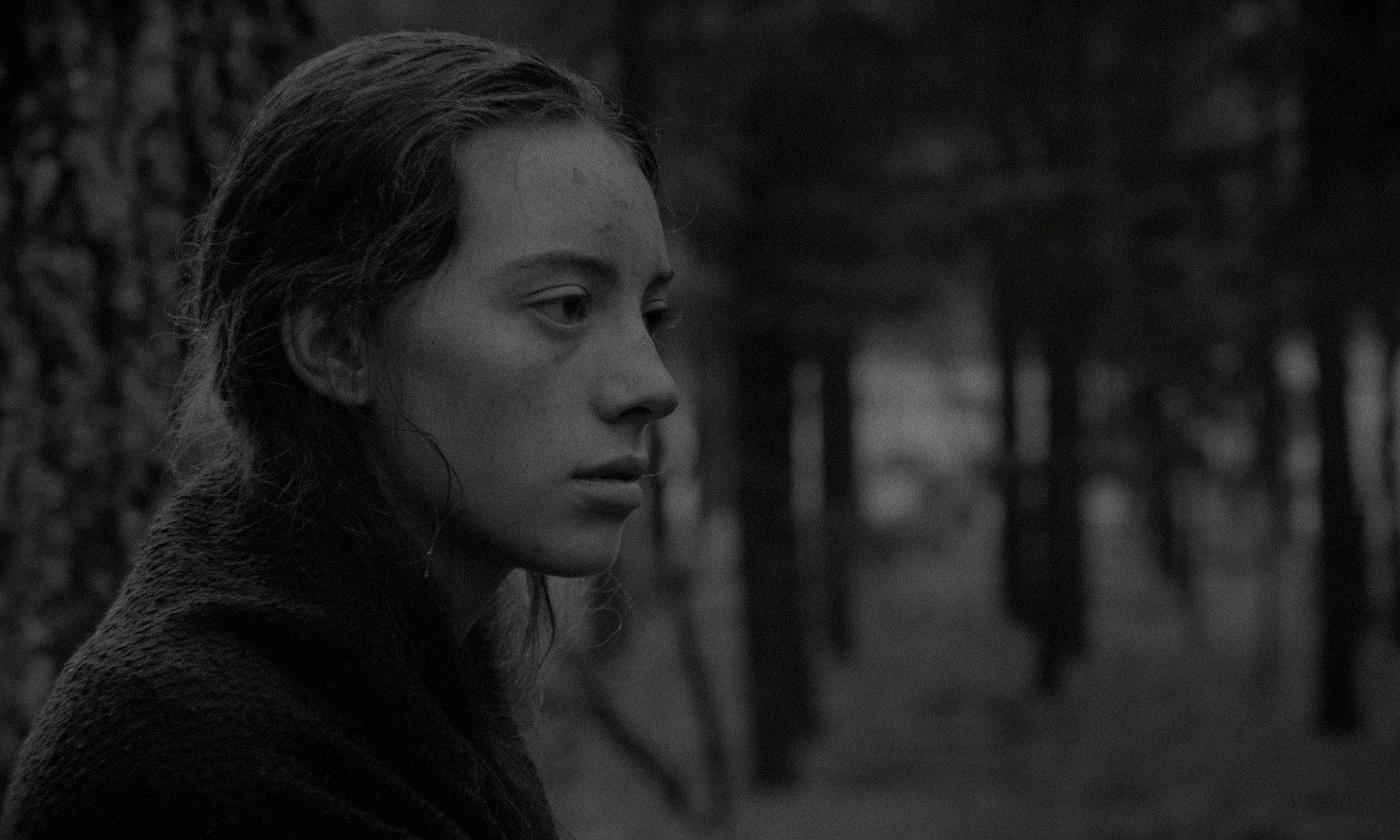
The casting process was an intentional mix of industry experience and raw texture. For our supporting cast and background artists, we balanced established South African actors with non-professionals. We were hunting for faces that carried a distinct weight — faces that held a presence on screen almost like the landscape itself.
Most Popular
For our leads, the journey was a bit different. We knew very early on that we wanted Sam Faure for Magda; she was a fellow acting student at our film school, and we had long been admirers of her screen presence. For Elna, we needed an actor who possessed a very soft physical and vocal quality to capture the character’s inherent insecurity. Yet, she also needed to be entirely unreadable, never fully letting the audience into her internal world. We put out an open casting call on social media, and Zonya Swart was one of the first to respond. The moment we saw her, we knew we had found Elna.
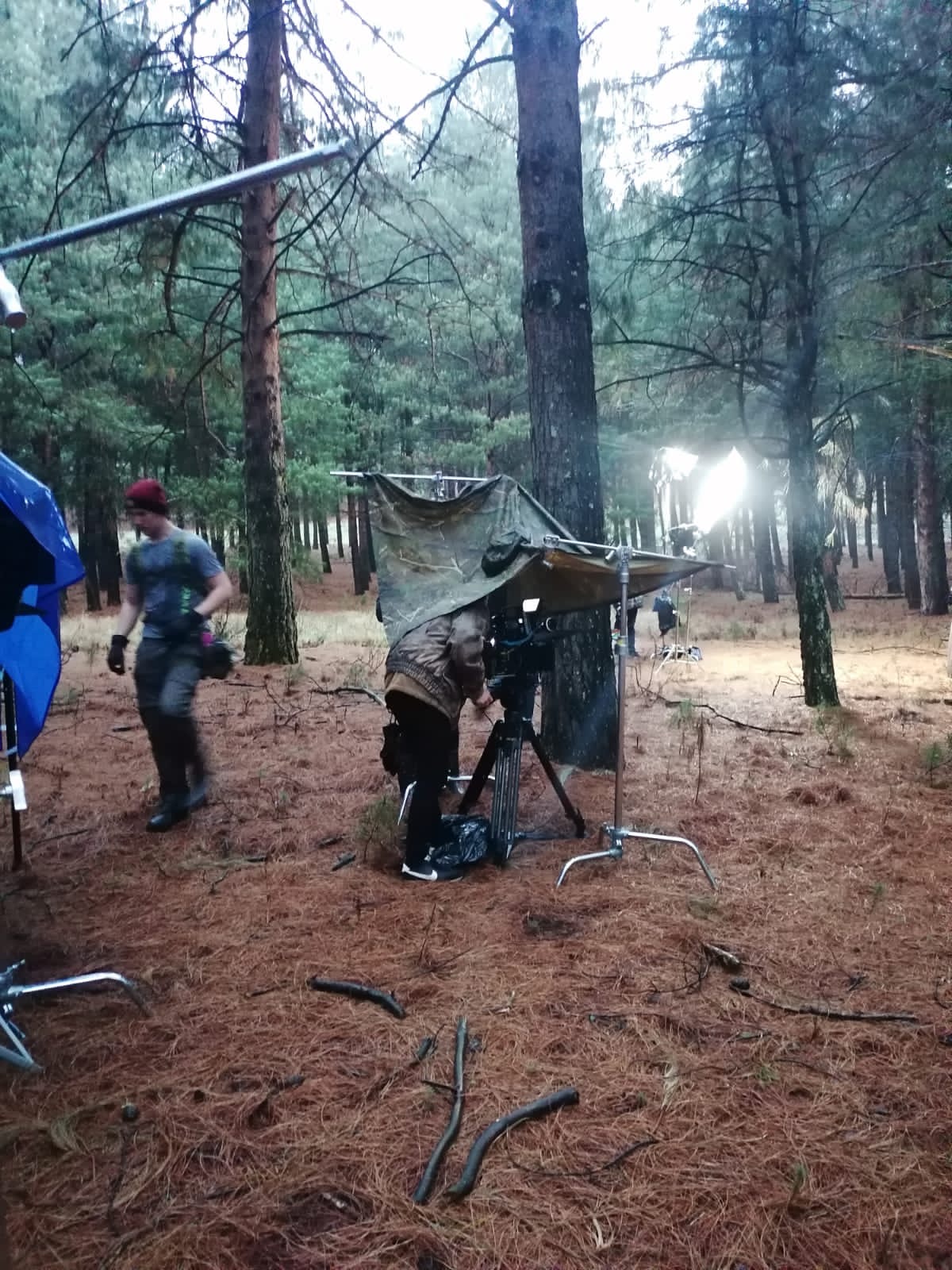
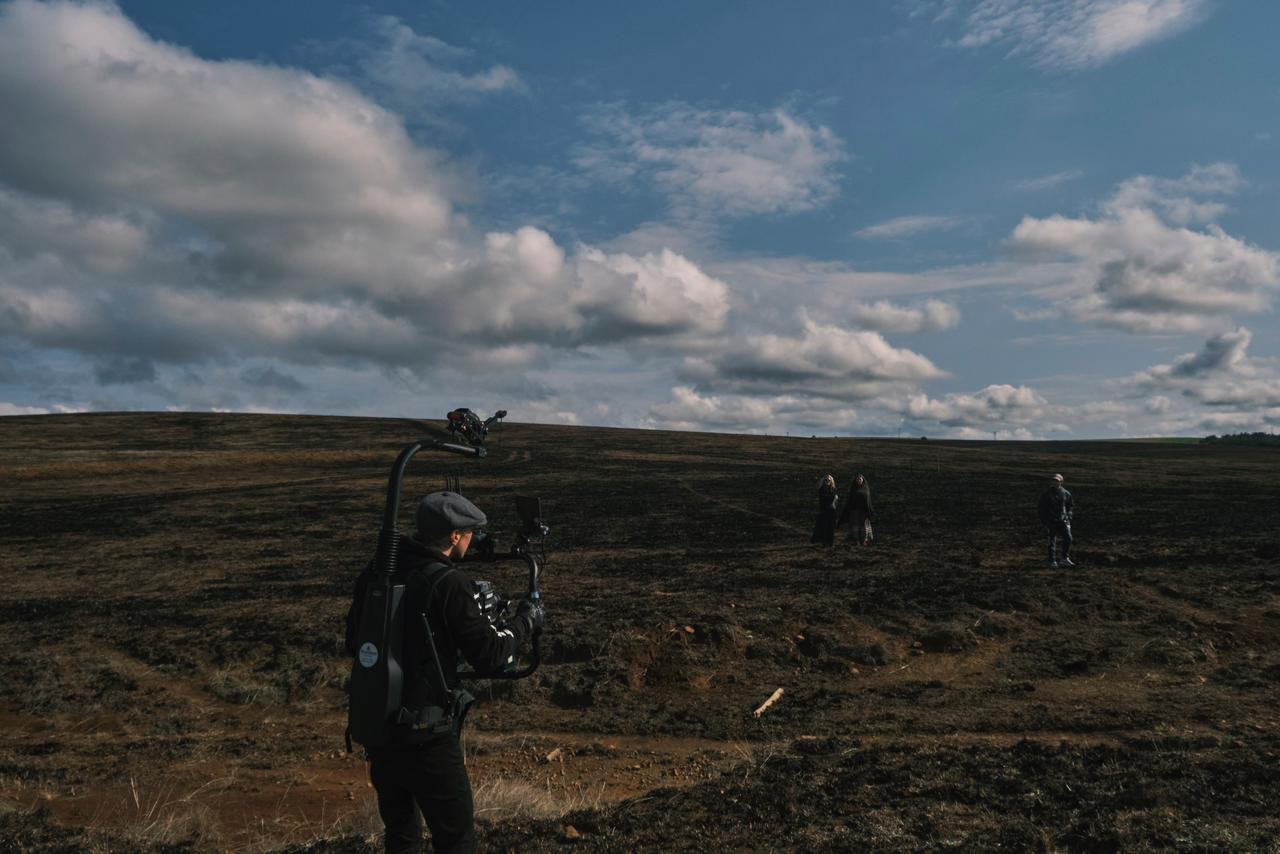
With much of Winter Slaap shot outdoors in natural landscapes, what were some of the challenges you faced filming outdoors?
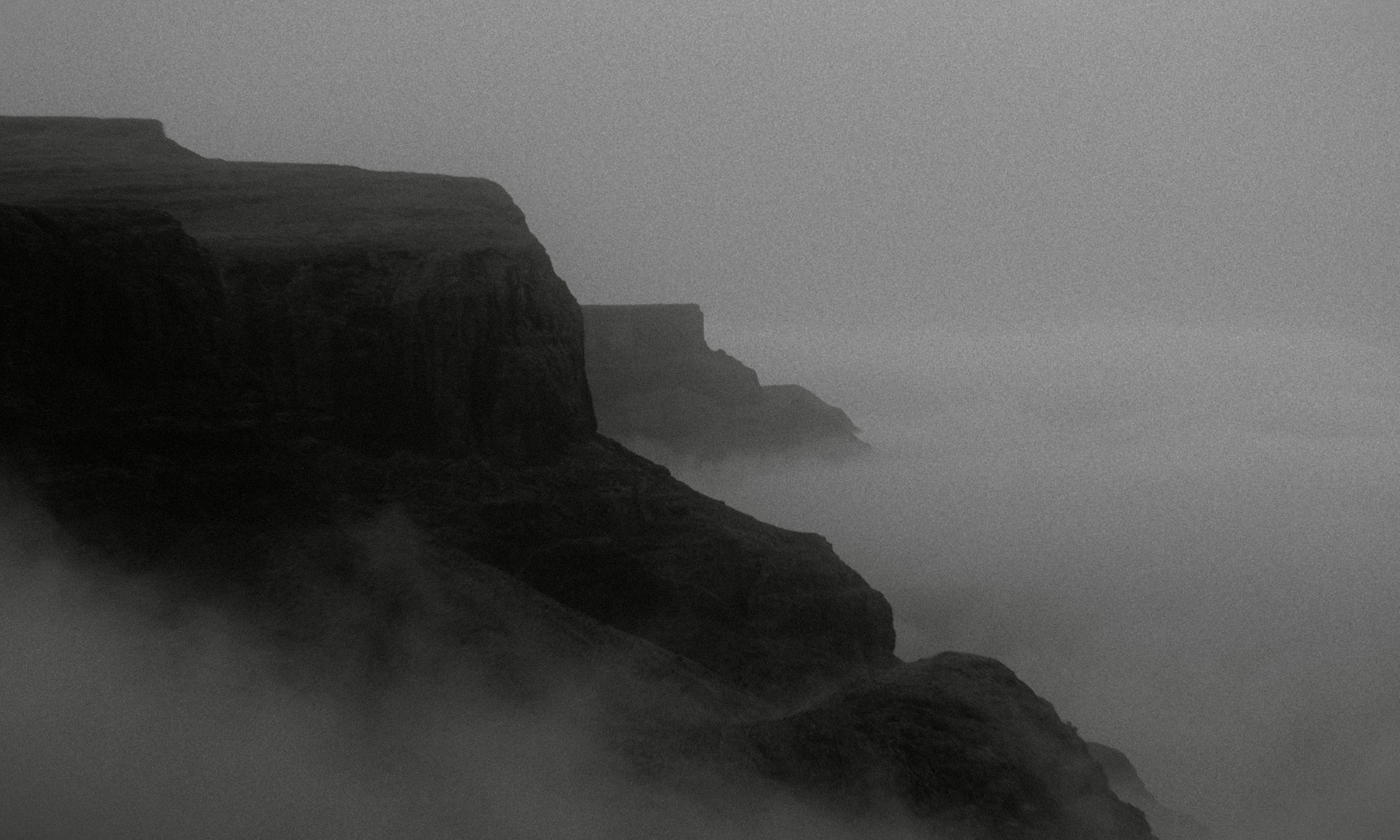
We shot the entire film in the Drakensberg region of KwaZulu-Natal — an incredibly beautiful, rugged, and largely untouched landscape far from any city. We intentionally scheduled the shoot for September, which is historically one of the driest months in the region. Instead, we were hit with a week of torrential downpours, the highest rainfall the area had experienced in years. This completely derailed our logistics; the dirt roads leading to our main homestead location became a thick sludge. At one point, our generator slid completely off the road, and we had to track down a local tractor to pull it out.
We had to surrender to the environment, and leaning into that unscripted chaos of the elements is exactly what gave us our most striking and unexpected moments on screen.
It made for an incredibly high-stress shoot. We were constantly fighting a disappearing timeline, and chasing the rapidly shifting natural light in those deep valleys was a massive challenge. Ultimately, we realised we couldn’t fight nature. We had to surrender to the environment, and leaning into that unscripted chaos of the elements is exactly what gave us our most striking and unexpected moments on screen.
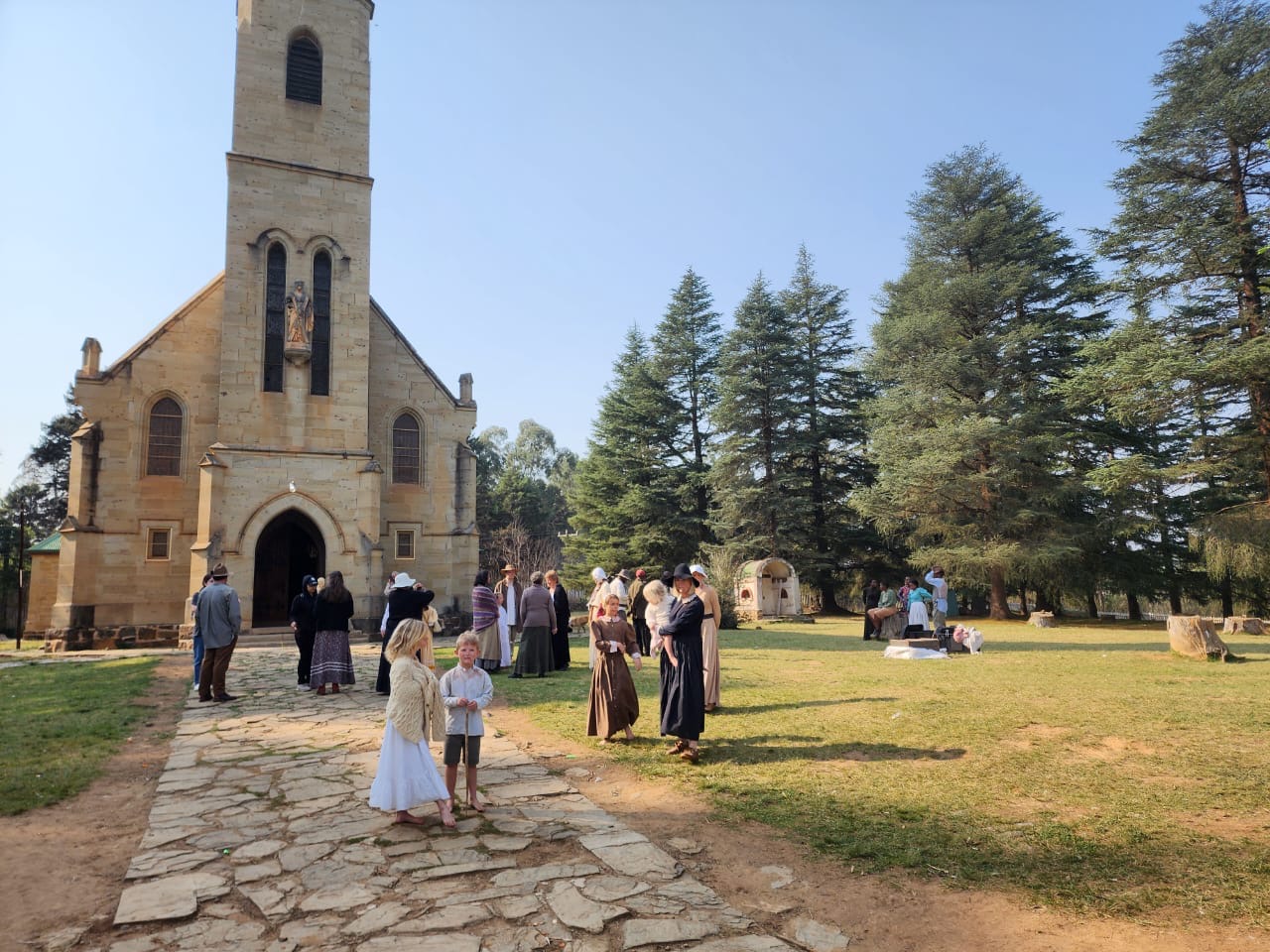
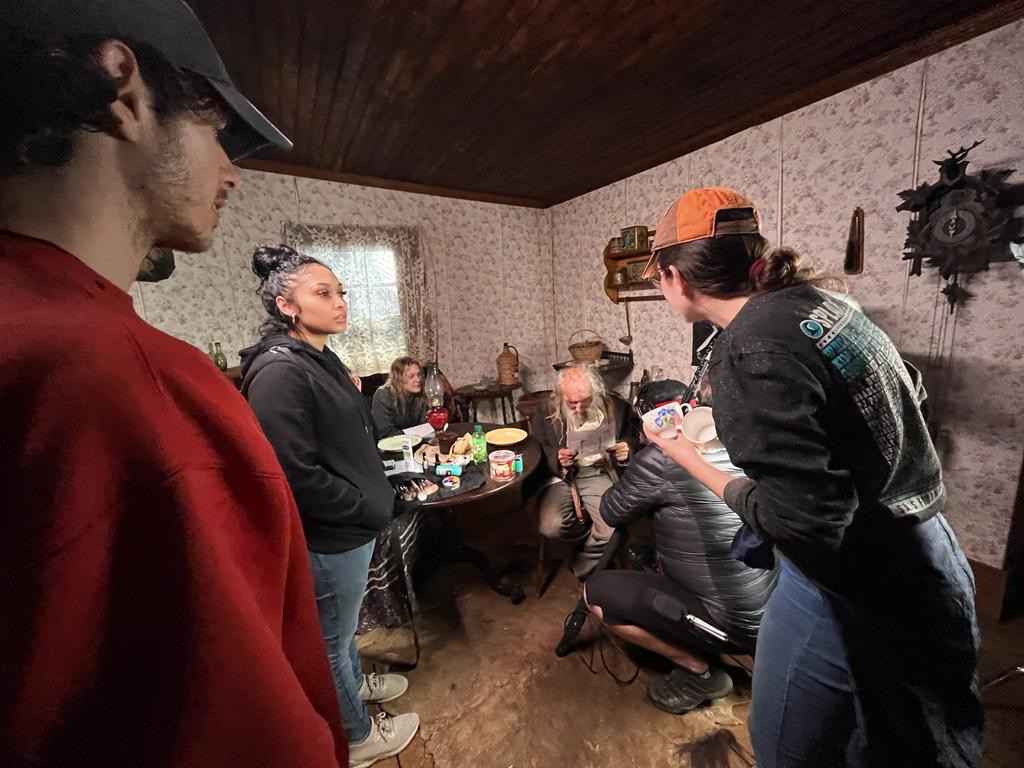
As well as the exterior locations, there are some impressive interiors such as the farmstead and the church. How did you go about sourcing and securing these locations?
We knew from the start that our locations had to carry the same raw texture and atmospheric weight as other aesthetic elements of the film. We deliberately avoided shooting in a studio; there is an artificiality to built sets that audiences subconsciously pick up on, which would have shattered the immersion. Instead, we spent a significant portion of pre-production researching and scouting across the province to find spaces that naturally exuded a sense of historical aura and profound isolation.
We initially chose the Lotheni Nature Reserve for our exterior landscapes. While scouting there, we stumbled upon their museum — a preserved homestead built in the exact historical period our film is set in. It contained beautifully preserved furniture and period artefacts, which we were able to use either directly on screen or as precise references for our production design.
The church was brought to our attention by a friend from the Underberg community. The moment we stepped inside, we were in awe of its striking architecture and rich history. It was built in the late 1800s by Trappist monks who had journeyed into the interior to establish a mission to support the local community. Remarkably, it still functions as a school today. Securing it was a testament to the local community, who were incredibly hospitable and enthusiastic about supporting the project. In fact, that was true for our entire experience in the region — it was the warmth and excitement of the local people that truly made the film possible.
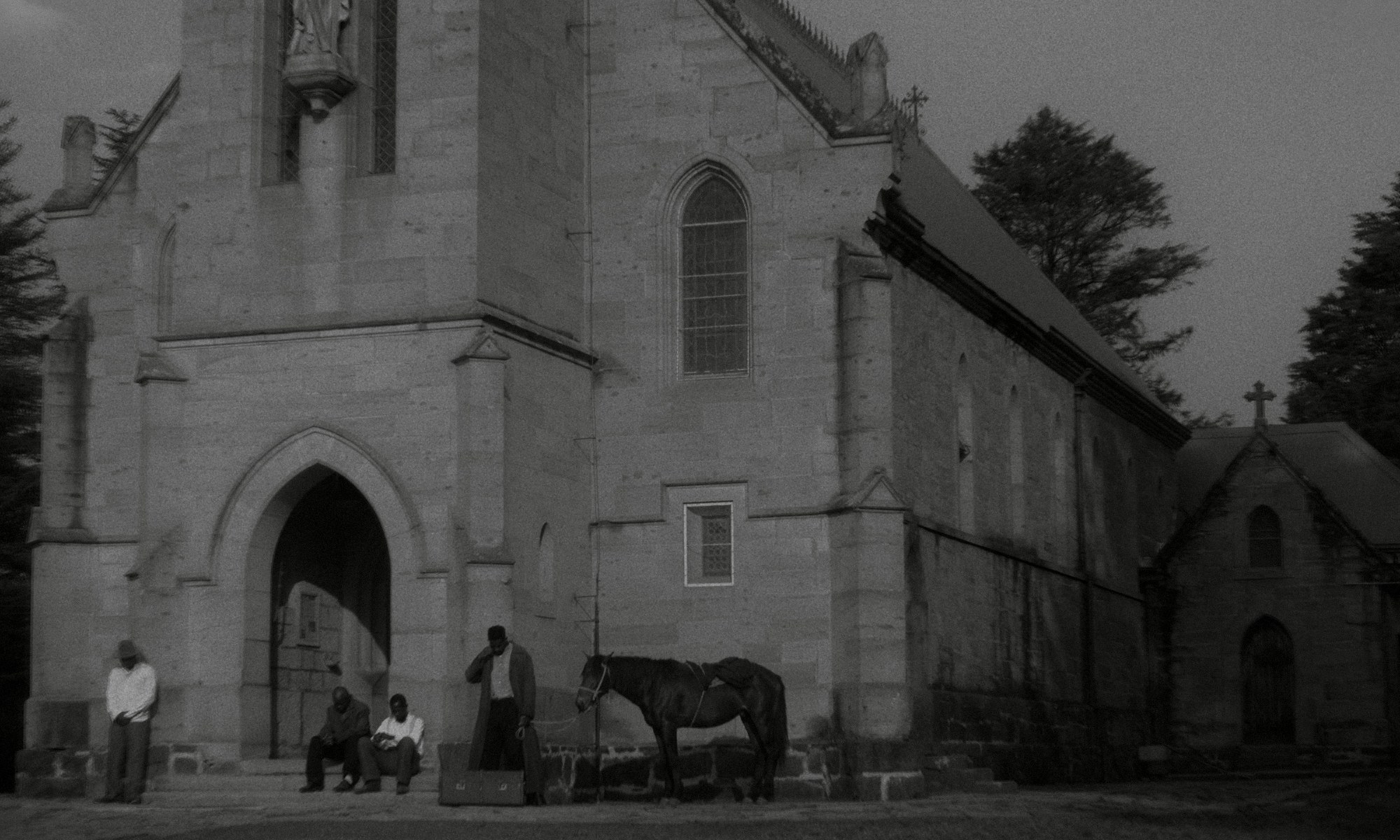
The period is captured beautifully through the production and costume design of the film. How much research/work was needed to achieve that authenticity?
We wanted every single frame to feel historically grounded, but we were also chasing a sense of haunting, melancholic beauty that directly mirrored the inner world and hopelessness of our characters. To achieve that, we did extensive historical research into the brutal realities of daily life during that period, delving into everything from scarce food sources to the living conditions. It was an era defined by conflict and famine, so pristine clothing and cleanliness simply wouldn’t have existed. Because of that, a massive amount of the work went into distressing and aging the costumes and set pieces. We wanted a heavily weathered, lived-in texture where absolutely nothing felt like a prop pulled new out of a packet.
Designing for a monochromatic film also introduced a fascinating technical challenge. Because we were shooting in black and white, our primary focus had to be on tonal separation and maximising contrast rather than colour harmony. Amusingly, if you were to see the costumes in colour, they looked like a chaotic mishmash of clashing tones. But when translated through the black-and-white monitor, those specific colour values allowed the characters to pop perfectly against each other and the stark, wintery background.
Because we were shooting in black and white, our primary focus had to be on tonal separation and maximising contrast rather than colour harmony.
There is a thick atmosphere that helped in no small part to create an absorbing soundscape, with natural sounds echoing throughout. How did you approach the sound design?
Mood and atmosphere are always at the forefront in our minds as filmmakers; we constantly strive to create immersive worlds that completely transport the viewer and evoke a visceral, subconscious response. For Winter Slaap, we felt the sonic landscape was perhaps the most integral component in achieving that sensation. We knew we wanted the sound design to rely primarily on minimalist, diegetic elements, but we chose to subtly distort and hyper-texturise those natural sounds. The goal was to create an environment that felt recognisable but fundamentally off-kilter — mirroring the psychological state of the characters and the dying world they inhabit.
At the same time, we wanted the film to possess a distinct musical motif that could act as both an overture and an epilogue, anchoring the narrative arc. Collaborating with our composer, Braam du Toit, was an incredible experience because he deeply understood the visual and thematic textures we were exploring. Instead of leaning into a standard, modern minimalist score, Braam researched and utilised period-accurate instruments and traditional cultural tones. Through that approach, he crafted music that feels less like a traditional accompaniment and more like the voice of the landscape itself.
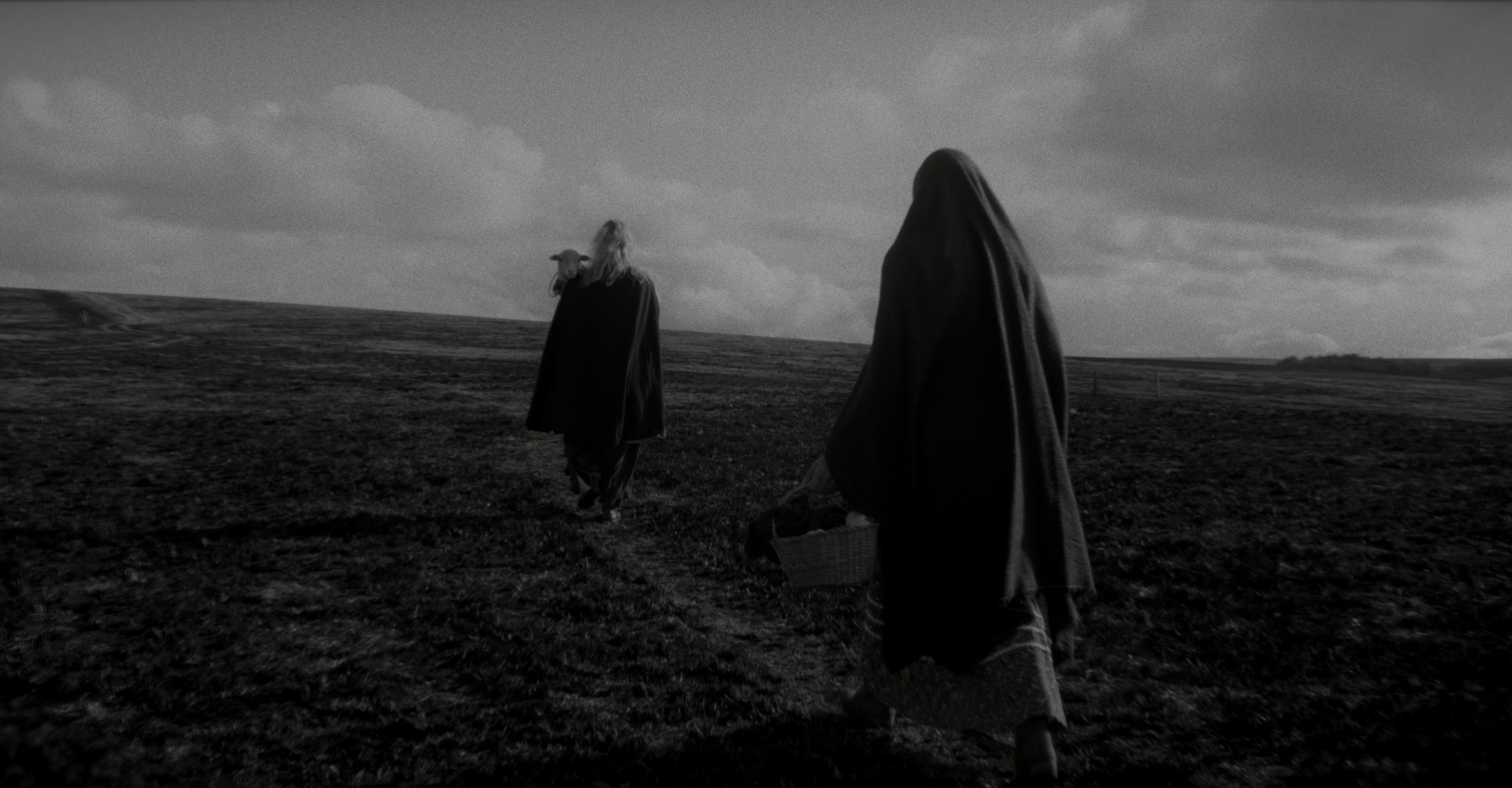
You mentioned to us that you’re fans of slow cinema. What does that mean to you and what makes you feel so strongly about it?
We both deeply appreciate the artistry on display when a filmmaker is able to subdue time, placing the viewer entirely at its mercy. There is something incredibly bold about a director who isn’t afraid to hold on a shot far longer than what modern pacing dictates, forcing the audience to actively stretch their attention span – especially in a world as fast-paced and hyper-stimulated as ours today.
For us, this cinematic patience returns us to a more ancestral way of experiencing life, where the mundane was given room to breathe and allowed to find its own meaning. As filmmakers, that is exactly the boundary we wanted to explore with Winter Slaap: to see if we could successfully command that silence and invite the audience to truly inhabit the space with us.
As a student film, what were some of the biggest lessons you learned both in making the film and screening it to audiences?
Making Winter Slaap was a massive learning curve that deeply humbled our entire team. We completely underestimated how brutal and unpredictable shooting in a remote location could be; at certain points, the logistical pressures were so intense that we genuinely felt we had failed and wouldn’t be able to finish. We had to make dramatic script changes on the fly, but that forced adaptability taught us our most valuable lesson: you have to keep pushing forward, because you’ll always be surprised by how resourceful you can become when your back is against the wall. We can look at the film now and clearly see its narrative and technical faults, but that has only made us hungrier to rectify them on the next project. That is the nature of filmmaking — nothing will ever be a flawless replica of what you imagined before the shoot.
We completely underestimated how brutal and unpredictable shooting in a remote location could be; at certain points, the logistical pressures were so intense that we genuinely felt we had failed and wouldn’t be able to finish.
Screening the film to audiences has been equally eye-opening, revealing a fascinating divide in how people react to this style of cinema. While we’ve been incredibly fortunate to receive praise and win awards, we’ve also had viewers tell us it was simply too slow or boring. Ultimately, it taught us that you cannot please everyone. A film that tries to cater to every taste is a compromise of vision, and we’d rather make something that polarises than something that leaves people indifferent.
What’s next for you?
I am still based in Cape Town and currently developing a few new projects. I am hoping to head into production on a new short film either at the end of this year or early next year. It’s another historical piece with elements of fantasy, following a group of Dutch sailors searching for their missing captain on Table Mountain. Beyond that, I am in the early writing stages of my first feature film. Daniel is now based in Ireland, but we stay in close contact and are actively talking about these upcoming scripts, with the intention of hopefully working together again in the future.
What’s a short film by another filmmaker that you would recommend to the Directors Notes community and why?
We would highly recommend Sycorax by Lois Patiño and Matías Piñeiro. It might seem like an unconventional pick, but it served as a constant creative reference for us throughout every stage of making Winter Slaap. The film possesses an incredible, deeply immersive atmosphere and a remarkably rich sound design. Watching it for the first time gave us the creative courage to trust our instincts and pursue a piece of cinema that is slow, atmospheric, and unapologetically experimental — one that respects the audience enough not to spell out every narrative beat.