For many people, heading to any social gathering can be a bit of a nightmare. Especially one where you don’t know the other people who will be there. There’s worry about saying too much, too little, not being liked, not being funny… the list of worst-case scenarios can be as limitless as they are overwhelming. Kendall Goldberg’s Surprise takes that idea and runs with it, when one woman is invited to an intimate birthday gathering and delivers hilarious chaos – as well as a healthy helping of heart palpitations for those similarly hesitant to go to parties. Premiering on our pages today, Goldberg talks to Directors Notes about writing Surprise with the film’s star Mary Elizabeth Ellis, collaborating on set with an ensemble cast that includes the great Ray Wise, the challenges of shooting and blocking in a house designed by a mathematician, editing the film herself to find the right rhythm and tone for the story, and working with her composer to create a score that would sneak up on the audience.
Surprise brings new meaning to asking yourself, “What’s the worst that could happen?”. Where did the idea for this fateful birthday come from and what was the process to bring it to the screen?
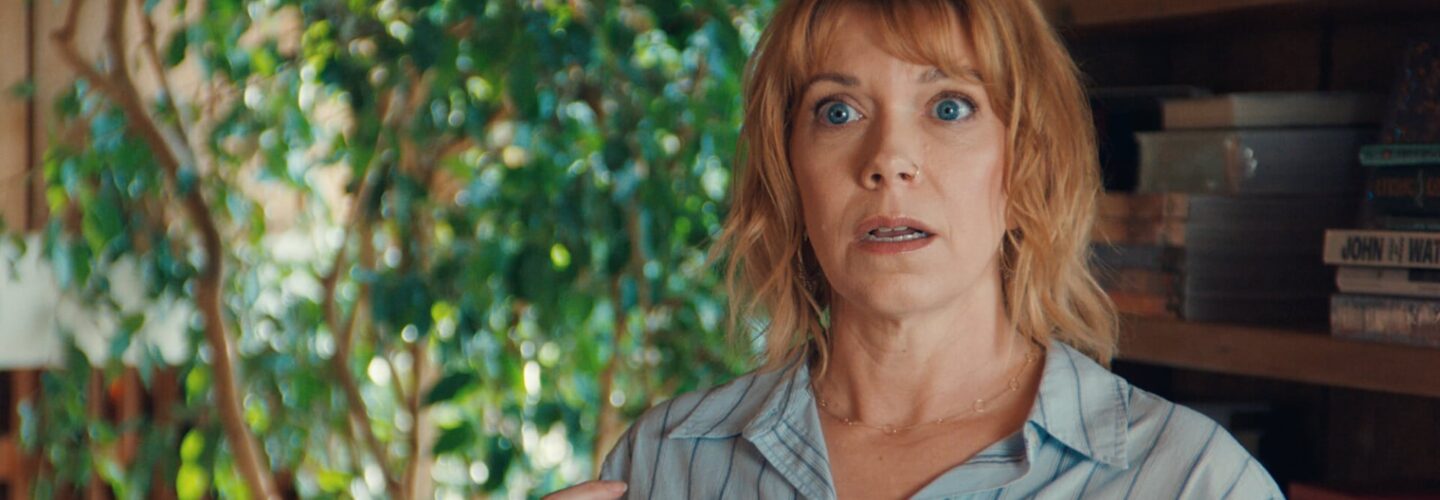
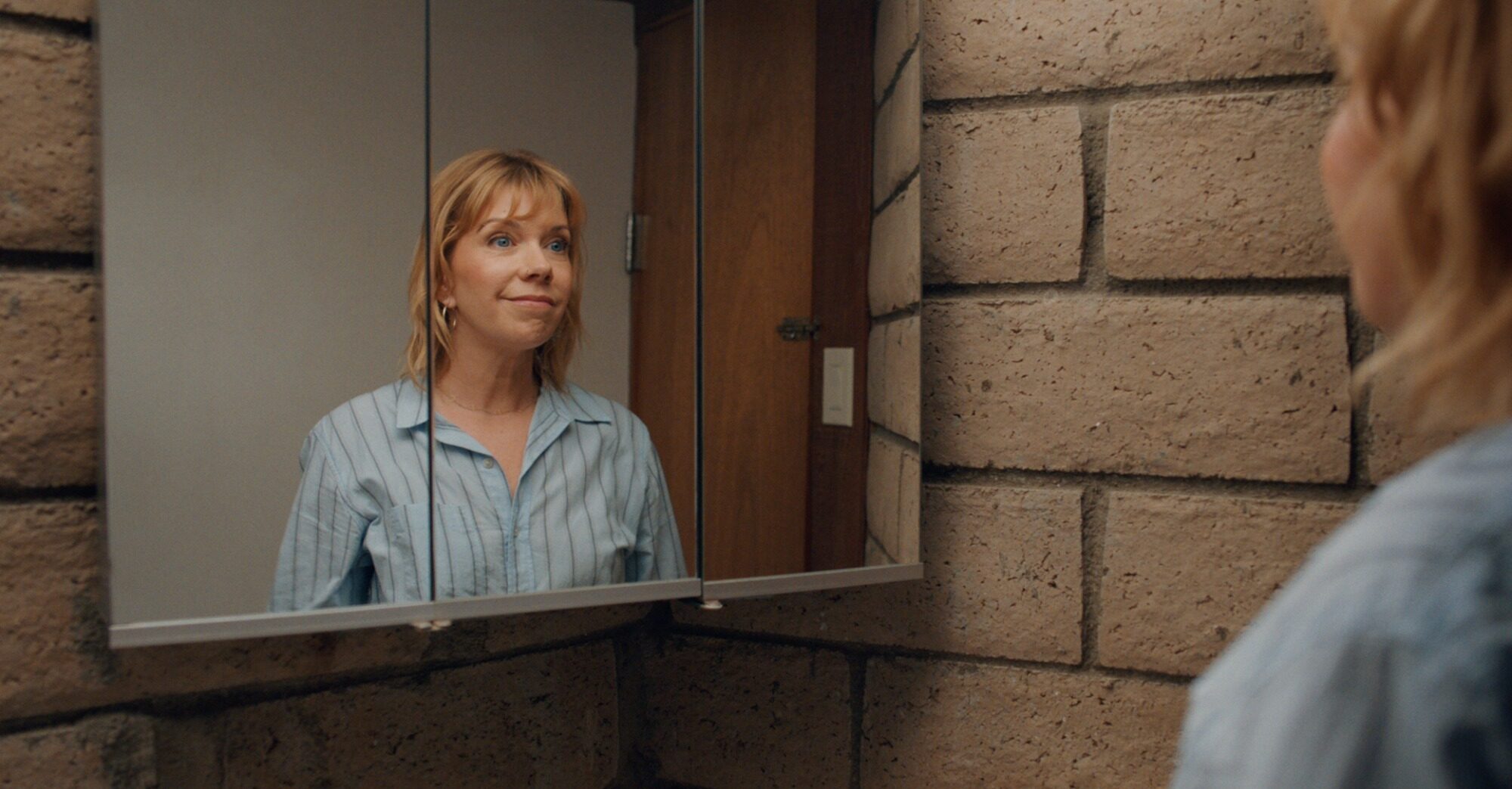
Mary Elizabeth and I are both fascinated by social anxiety and that feeling when something relatively minor happens and your brain immediately races toward the absolute worst version of how it could unfold. We wanted to take that internal spiral and make it literal. So, I guess you could say we have a shared interest in minor social embarrassment going full-scale catastrophe. Walking in on someone in the bathroom – which I’ve quite possibly discovered is a mild fear of my own – felt like the perfect starting point because it’s so mundane and private, but when you’re trapped at someone else’s house surrounded by people, it can suddenly feel like a cataclysmic pressure cooker.
No matter how absurd things became, I never wanted the film to wink at the audience or feel like the characters knew they were in a comedy.
From there, the writing process became an exercise in escalation. What is the next choice Amber could make that feels completely logical to her in the moment, but objectively makes everything worse? The challenge in bringing it to the screen was protecting that logic. No matter how absurd things became, I never wanted the film to wink at the audience or feel like the characters knew they were in a comedy. The more seriously everyone takes the situation, the funnier it becomes.
With Mary writing and producing with you, what was the collaboration like when working on set with you directing and Mary performing?
Mary Elizabeth and I have been friends for years, and I had previously produced her directorial debut short, but this was the first thing we built together from the writing stage. By the time we were on set, we’d already spent a lot of time discussing exactly how Amber thinks and where the comedy should and shouldn’t live.
Once we were shooting, I wanted Mary Elizabeth to be able to let go of the writer/producer brain as much as possible and just be Amber. One of the great things about directing another filmmaker is that the conversation can be incredibly specific without needing a ton of explanation. Mary Elizabeth understands how tiny adjustments in behavior or timing can completely change a comedic moment, and she’s also fearless about looking ridiculous or uncomfortable if that’s what the scene needs. There was a lot of trust between us, which let us keep pushing things without losing the emotional reality underneath it.
The film boasts a great ensemble, including the legendary Ray Wise. How did that cast come together and how did you prep for the shoot itself?
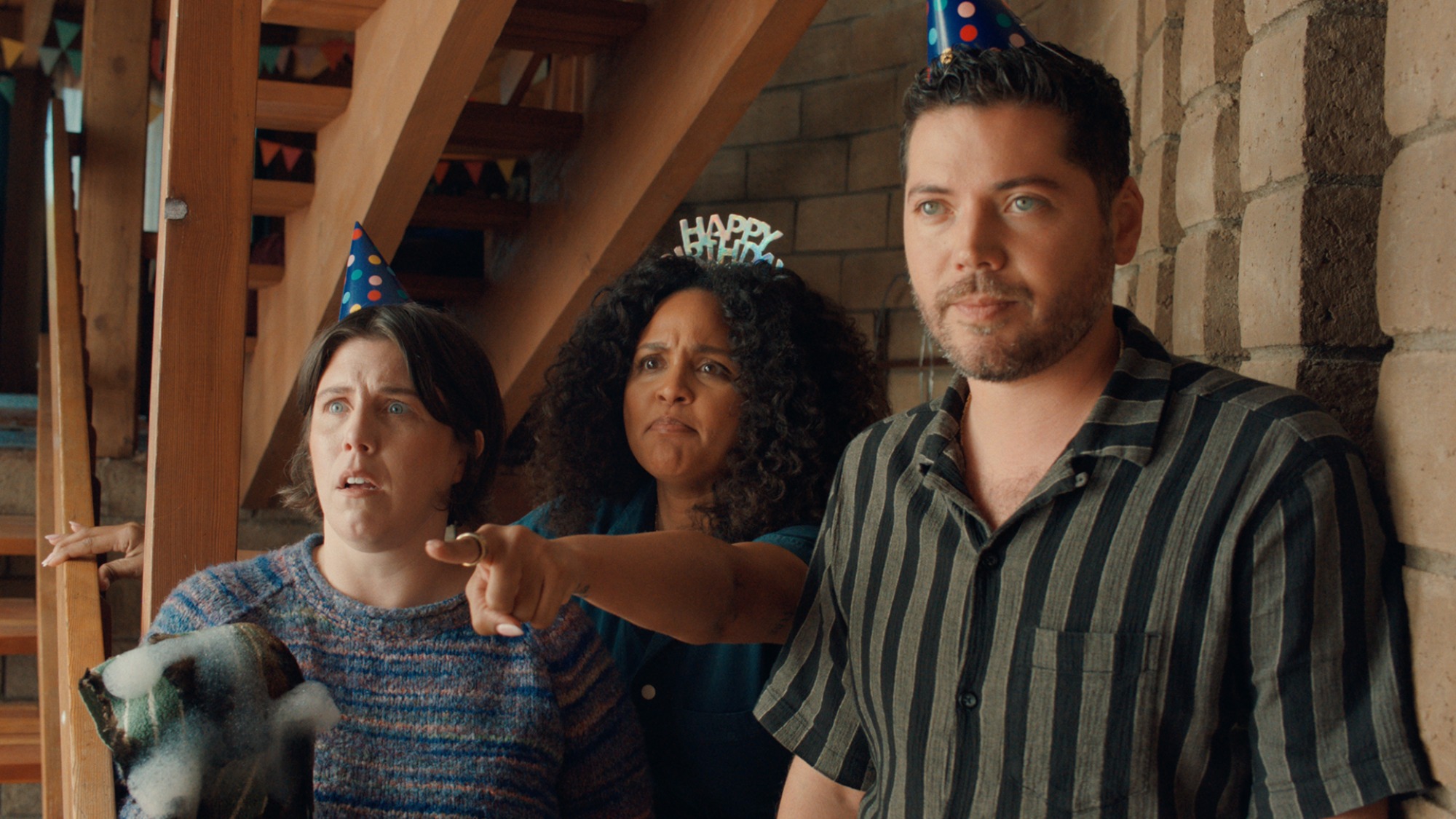
Mary Elizabeth was always going to be Amber, and from there we started building this ensemble around her. We were incredibly fortunate to end up with Ray Wise, Derek Waters, Ryan Asher, Jeffrey Murdoch, Jordan Mosley, Tien Tran, Hayley Marie Norman, Chad Ratto, and Candi Milo. A lot of the cast came out of relationships I’d built over years of making things together. I had previously worked with Ryan, Jeff, and Tien on The Bert Show, a hilarious YouTube series Ryan created, and I was such a fan of all three of them that getting them in this was a dream. Derek is a good friend of mine; years ago we created a pilot together called You Are Not Alone with Steve Berg, and I’d been wanting to work with him again ever since.
The gift of the entire cast was that everybody understood the tone immediately.
Candi is one of my longest-standing collaborators. She was the star and inspiration for my college thesis film, and we’ve been making things together since 2014. Jordan is also a long-time friend and collaborator who I’ve worked with across several projects over the years – he’s such an incredible talent. Chad is a good friend I’d always wanted to work with, so it felt especially satisfying to finally get him into something. Hayley came through Mary Elizabeth, and Ray happens to share a manager with her. We were genuinely so stoked when he said yes. Ray is such a legend, and his monologue is one of my absolute favourite parts of the film. He brings this incredible gravity to everything. You can put him inside a completely ridiculous situation and he gives it total legitimacy, which is exactly what this movie needed. I need to cast him in everything I ever do from now on.
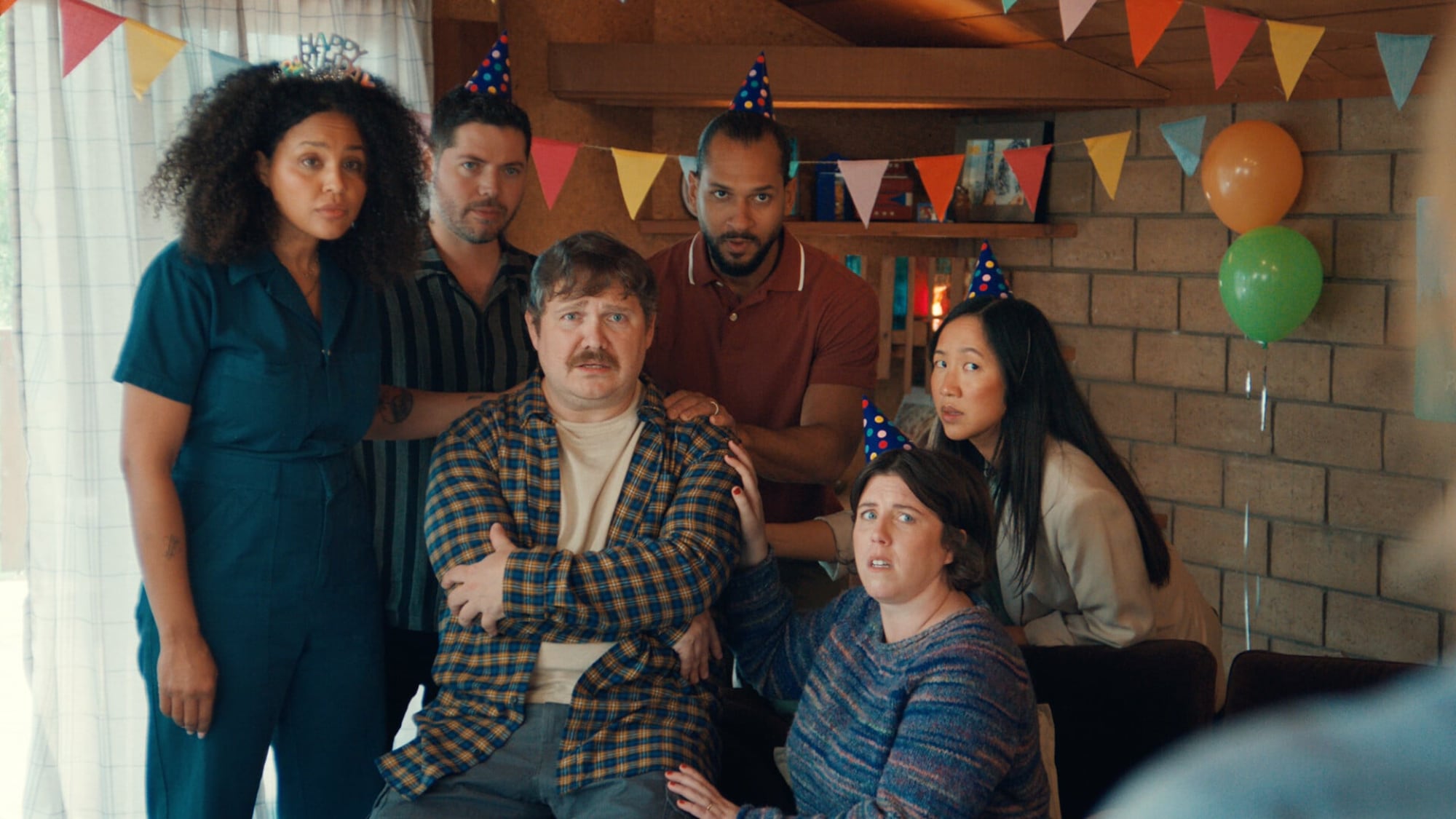
The gift of the entire cast was that everybody understood the tone immediately. These are naturally very funny people, so the temptation could have been to decorate every moment with another joke or reaction. Instead, everyone committed completely to the reality of the party. That restraint is a huge part of why the comedy works.
Were there any elements of the script that changed in terms of tone or execution once you were on set and working with all the actors?
The architecture of the story stayed pretty intact, but the actors changed the texture of it. Once you put that many funny people in a room together, you start discovering reactions and silences you couldn’t really write on the page. I think the biggest adjustment was often doing less. With this cast, I didn’t need to underline the comedy. If anything, I was constantly trying to protect the restraint of it.
The other thing we had to discover on set was the blocking. We didn’t have a ton of rehearsal time, and there are scenes with six to eight people occupying these relatively unusual spaces at once, so figuring out where everyone could naturally exist while still preserving the geography and getting the camera where we needed it became a bit of a puzzle. There was a lot of adjusting in the moment based on how the actors moved through the space and what felt organic once everybody was actually in the room.
Most Popular
Did you work with your DOP to create a visual language you already had in mind for the film or find one together?
Kayla Hoff, our DP, and I wanted the visual language to follow the same rule as the performances – the filmmaking shouldn’t announce that this is a comedy. We wanted the birthday party to initially feel warm, grounded and familiar, and then allow the framing and coverage to increasingly participate in Amber’s anxiety as things unravel. We shot on the Alexa Mini with an 18–100mm Cooke Varotal and Cooke 5/i primes, and really wanted to be intentional when using that zoom to create suspense in only the right moments.
Geography was also a huge part of it. A lot of the tension depends on the audience understanding where everyone is in relation to Amber. Kayla and I were very deliberate about preserving that spatial clarity while still letting the camera become more subjective as Amber loses control. We wanted the movie to get more stressful without suddenly becoming a different-looking film. The world stays relatively composed while Amber is the thing falling apart inside it.
The location works perfectly for the story, with open plan kitchen and different levels inside. How did the unique architecture of the house help or hinder the visuals you wanted to capture?
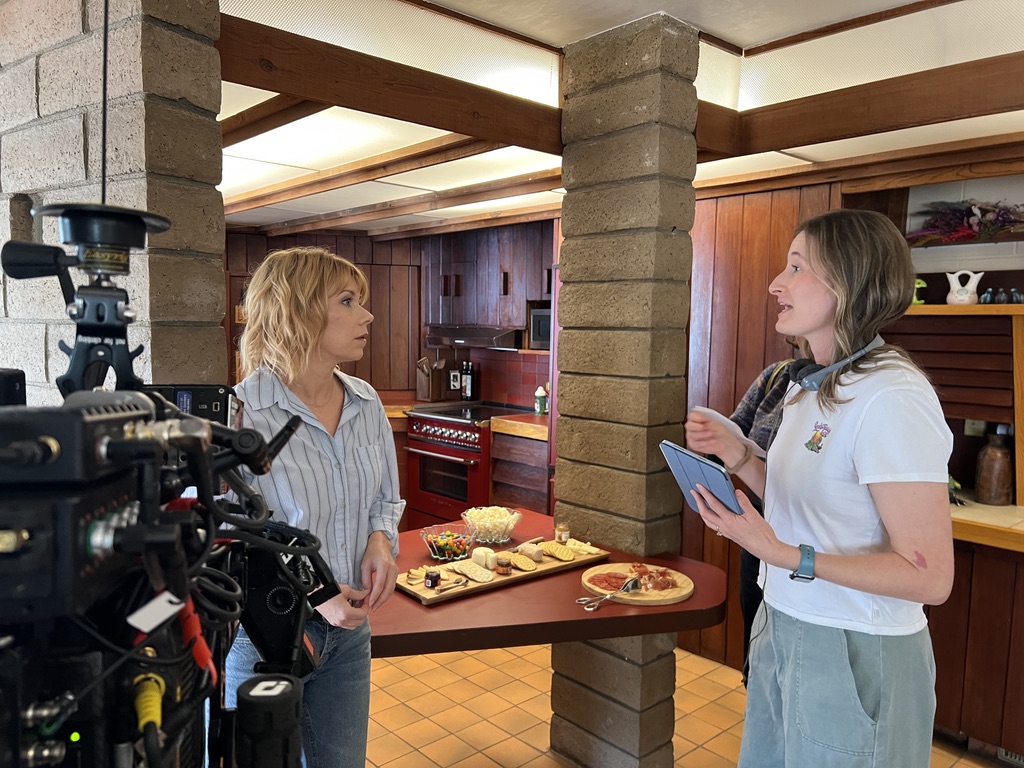
The house actually belongs to one of our producers, and it was built by a mathematician, which I think explains some of its wonderfully strange geometry. It has all these unusual angles, different levels and open sightlines that made it incredibly cinematic and textural, but also turned blocking into a bit of a puzzle. For this story, though, that architecture was a gift. Amber is constantly trying to deal with something privately while surrounded by people, and the house gave us so many opportunities to keep that pressure alive within the frame.
The challenge was that we often had six to eight actors in these oddly shaped spaces at once, plus camera, lighting, sound and crew, so there was a lot of problem-solving around where everyone could naturally exist and how to preserve the geography without making the staging feel overly designed – and all of this was happening in a very short amount of time, of course. The nature of a short film! But I think those limitations ultimately helped the film. The house is beautiful, but it also feels slightly impossible to disappear inside of, which is exactly what Amber needed.
With so much of comedy being about timing, what was it like editing the film yourself and finding the rhythms you were looking for?
Editing comedy is probably one of my favourite parts of filmmaking because the difference between something landing and not landing can literally be eight frames. With Surprise especially, the edit was really about deciding when to sit in discomfort and when to accelerate. There were moments where the funniest thing we could do was stay with Mary Elizabeth slightly longer than feels comfortable. But once the dominoes start falling, the movie can’t keep breathing at that same pace. The cuts start coming faster because Amber no longer has time to process anything before the next problem arrives.
If something felt like we were cutting for the joke rather than because it was the right moment in her experience, I usually pulled it back.
Editing it myself also meant I could keep testing the original tonal rule we had while writing. Does this still feel emotionally real to Amber? If something felt like we were cutting for the joke rather than because it was the right moment in her experience, I usually pulled it back. The comedy works best when the audience is laughing at how seriously she is experiencing something that has become objectively insane.
The score helps to ramp up the tension and momentum as the film reaches its climax. Was that always your intention and what was the process of finding the final soundtrack?
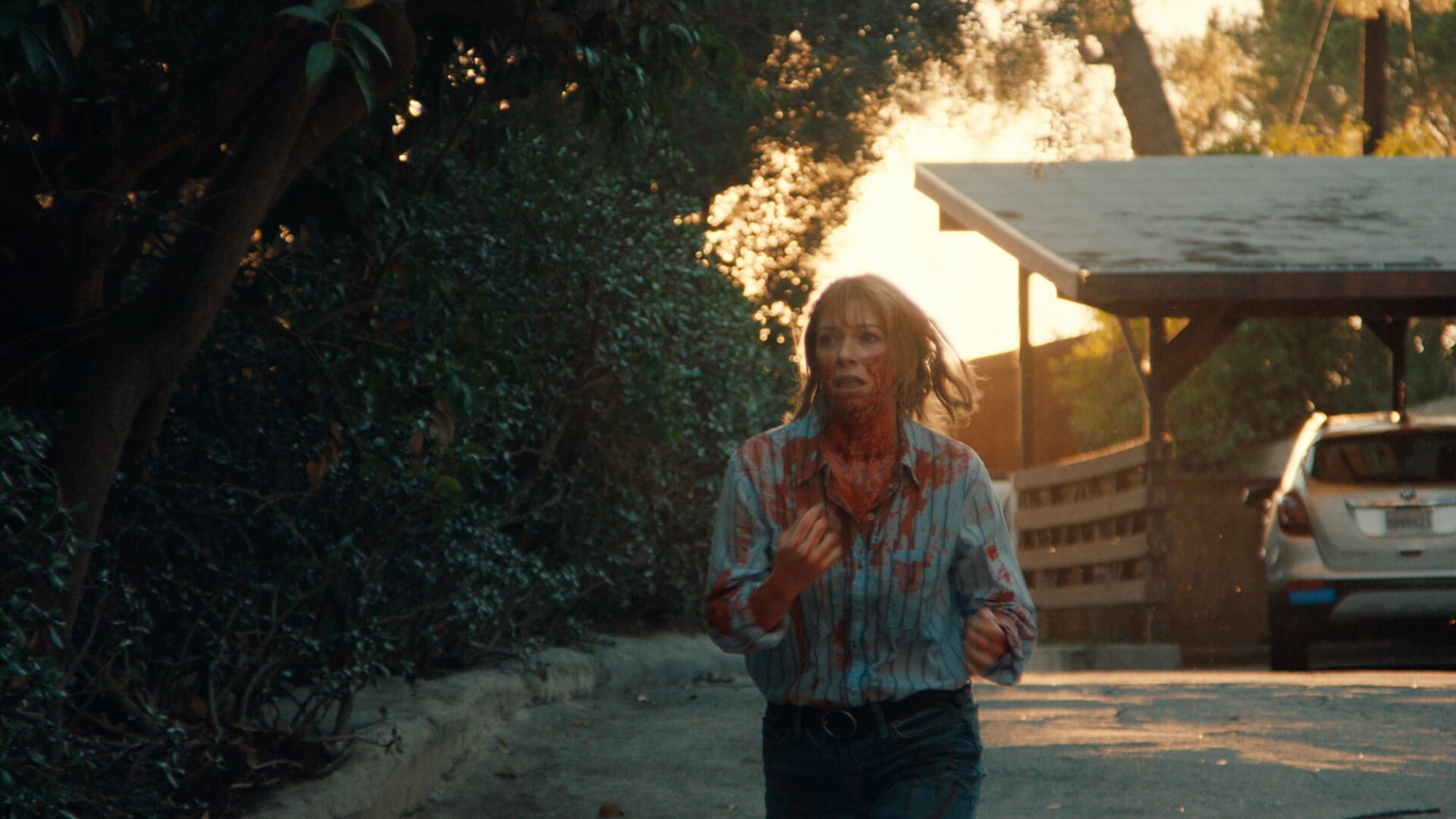
Yes. I always wanted the score to gradually tighten the vise rather than tell the audience that something was funny. As Amber’s options get worse, the music starts treating her predicament with the gravity that she feels it deserves. Brian Heveron-Smith composed the score, and a lot of the process was finding exactly how much pressure the music should add. If we pushed too hard too early, the film started to feel like it was announcing the escalation instead of letting the audience discover it with Amber. We wanted the score to almost sneak up on you until suddenly you’re experiencing this completely ridiculous situation with the intensity of a thriller. That relationship between comedy and genuine tension was really important throughout the film. The fun comes from treating Amber’s worst day with absolute sincerity.
What’s next for you?
I’m actually getting ready to shoot another short in December called Frank & Arnold, a dark comedy about a woman who discovers at her father’s funeral that the urn contains the ashes of a stranger. It lives in a different world than Surprise, but I’m still very interested in that intersection of comedy, discomfort, and genuine emotion.
I’m also continuing to direct commercially – I just wrapped up a fun spot for Marvel’s Avengers: Doomsday – while developing several longer-form narrative projects. Ultimately, I want to keep moving between those worlds – commercials, shorts, television and features – and keep making things that are very funny without sacrificing emotional truth.
And finally, what’s a short film by another filmmaker you would recommend to the Directors Notes community and why?
Funnel by Andre Hyland. I love, love, love that short. The premise is so incredibly simple – his car breaks down and he has to go find a funnel – and somehow it becomes this hilarious little adventure. I think about it a lot because it’s such a good reminder that you really don’t need an elaborate premise to make something memorable. The specificity of the character, the performance and all of these tiny mundane interactions are enough. It feels so loose and effortless while still being incredibly funny and having a real beginning, middle and end. Taking something completely ordinary and treating it like it’s worthy of an entire movie is the kind of comedy I’m obsessed with.