
Of all the creative crossroads a filmmaker faces, the choice between the controlled studio and the unpredictable real world is most certainly up there. For Italian director Tobia Passigato, this decision became the crucible that forged his short film Wasted from a simple branded project into a potent, punk-rock fable. Initially conceived as an ecological metaphor, the film’s heart truly began to beat when a chance conversation about second chances—for people, not just objects—reframed its entire narrative. This new, human-centric theme demanded an environment that felt authentically alive, a demand that a perhaps more sterile virtual production studio could not meet. Forsaking the ease and comfort of a soundstage, Passigato and his crew embraced a glorious, madcap ambition: they built the floating trash island of Trashchipelago for real, anchoring it in the sea, allowing for the genuine elements—the lapping waves, the shifting wind, the very real seasickness experienced by an actor—to become unscripted collaborators. Premiering Wasted on Directors Notes today, we speak to Passigato about the pivotal shift from ecological metaphor to human redemption, costume and production design as integral narrative tools and utilising every single hour of the day as their source of lighting.
I first saw this film last year at Conero Film + ADV, a festival committed to sustainable practices. What shaped the themes of Wasted?
Wasted started as a branded film—produced by Basement and Giffoni and partially funded by the Stellantis group—but very soon became a passion project. Not only for me but for all the crew involved. Originally, screenwriter Ernesto Giuntini and I had this idea of a young man wrecking on a trash island where he found an old and crazy/wise man who made him reflect on things/himself. At the beginning, the ecological metaphor was the main meaning of our story, but then something happened.
I was shooting a small doc inside a juvenile prison in Milan, and a vocational instructor told me something that deeply touched me: “We are used to giving a second chance to objects or material, but we struggle to give a second chance to people”. We started thinking about this, and from there came the idea that everything the world thinks is useless ends up on Trashchipelago. Therefore, Steve should be useless to someone: he is a sort of trash, someone who is stuck and cannot find a second chance. We felt that this concept was much more powerful, and so we started to build our film around this.


How did your creative process shift when integrating the new human-centric theme? How did it change your approach to Steve’s character and his emotional arc from being waste himself to finding value again?
At the beginning, the story was just about Steve learning the values of waste and how to use his hands to transform an inhospitable island into a home. But then we started to think of Steve as a metaphor for all the people that are left out of our society, and so we deeply investigated his relationship with Neso. This led us to slightly change the arc of our character: not only does he need to understand how to use his hands, but also how to see beyond appearances, under the skin, to understand what things (and people) really are. In the end, we also discovered the meaning of what a home is: more than a comfortable place, it is the place where people we love live.
Most Popular
Building the actual island must have been a fun challenge.
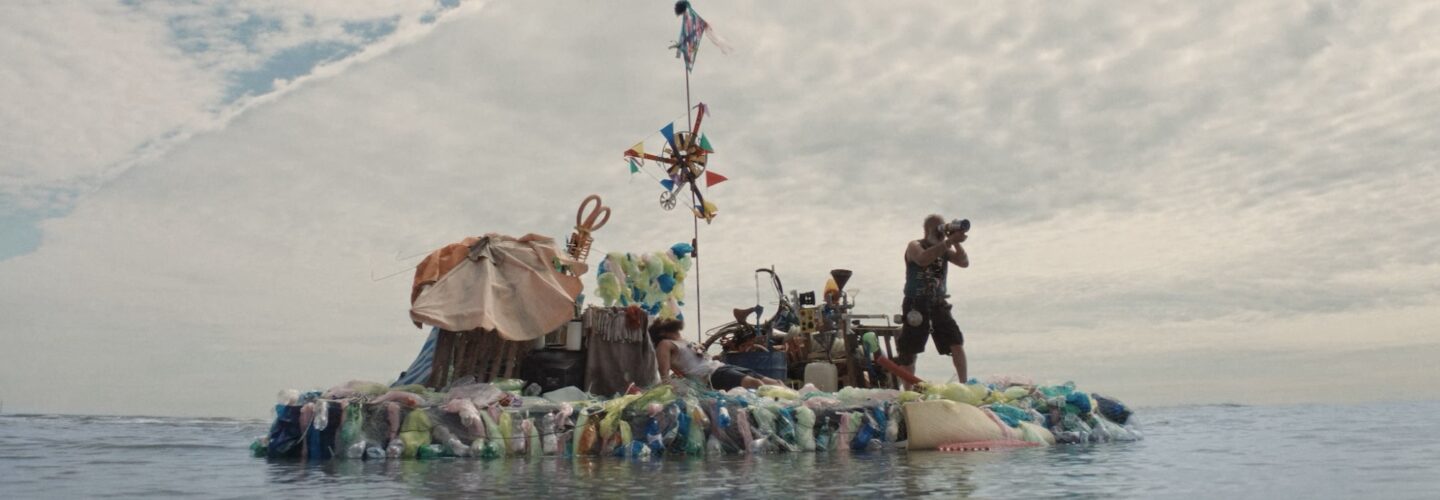
When we were writing, we didn’t have a clue how we could build it. We explored various options (virtual studio, VFX), but since the beginning, I had the strong feeling that doing it for real was the best choice for the film. You know, it’s something very specific of short films: you can take risks that—in longer productions or in commercial ones—you simply cannot afford to take. And at the end we did it: we built Trashchipelago for real, in the sea, with a very punk approach, that was quite fun and at the same time very coherent con the spirit of the film.
It’s something very specific of short films: you can take risks that—in longer productions or in commercial ones—you simply cannot afford to take.
The decision to build the island for real, in the sea, is the kind of glorious, punk-rock madness that defines the best ambition in short film.
At the beginning, I wanted to shoot Wasted in virtual production: some friends had just opened a virtual production studio so it was a great opportunity to test it. But then we realized that shooting in a studio has the risk of creating an environment that is too still; instead, I wanted to have an island that feels alive. By shooting outside, the sea, the waves and the wind were really moving the island, making it feel real. I think this helped the actors: in one scene, one of the actors was feeling seasick due to some big waves and this gave to his performance a unique edge.
I also believe that this punk approach has given to all of us—not only the actors but also the DP, the set design department and also to me—a sense of freedom (in the difficulties of the real world) that really pushed us to fill with energy and passion the whole project.


Instead of moving the lights, we had to rotate the island to get the right light.
The film’s visual language had to sell the incredible premise of a vast rubbish island. Can you discuss the collaboration with your DOP to find the right balance between the aforementioned grotesque reality of the garbage and the almost whimsical, magical quality it takes on?
The main challenge for the DOP Giacomo Frittelli was to make this island live and evolve over time. We used all the hours from dawn to sunset, night and day, sunny days and cloudy ones. We always shot outdoors, so we always had to take into consideration the time of day and light conditions. The sun was always the key light in our frames; instead of moving the lights, we had to rotate the island to get the right light. We wanted to give the film the visual scope of a fantastic story, which is why we decided to shoot with Cooke Anamorphic 2x lenses: with their soft but natural look, they helped us to create the feeling of a fairy tale.
We shot with the Alexa 35, which was critical to grab the best light from dawn and sunset. In terms of camerawork, the film is all handheld because we wanted to be closer to our characters: we wanted to alternate moments in which the camera is on the island with others when it is on the water. Here the real location in shallow water helped a lot, and with big fishermen’s boots, we could stay in the water and easily get up and down from the island.
For the opening scene underwater, we had a dedicated crew: we shot it on a completely different location and sea: instead of shallow water, we needed it to be deep and very clean. We ended up in Bonassola, Liguria, and our operator was shooting without diving equipment, something really crazy to see. He disappeared underwater for minutes and then emerged shouting, “I have it!”

I have to ask about production and costume design, and how you came upon the whimsical but slightly gross design of the boat and their clothes.
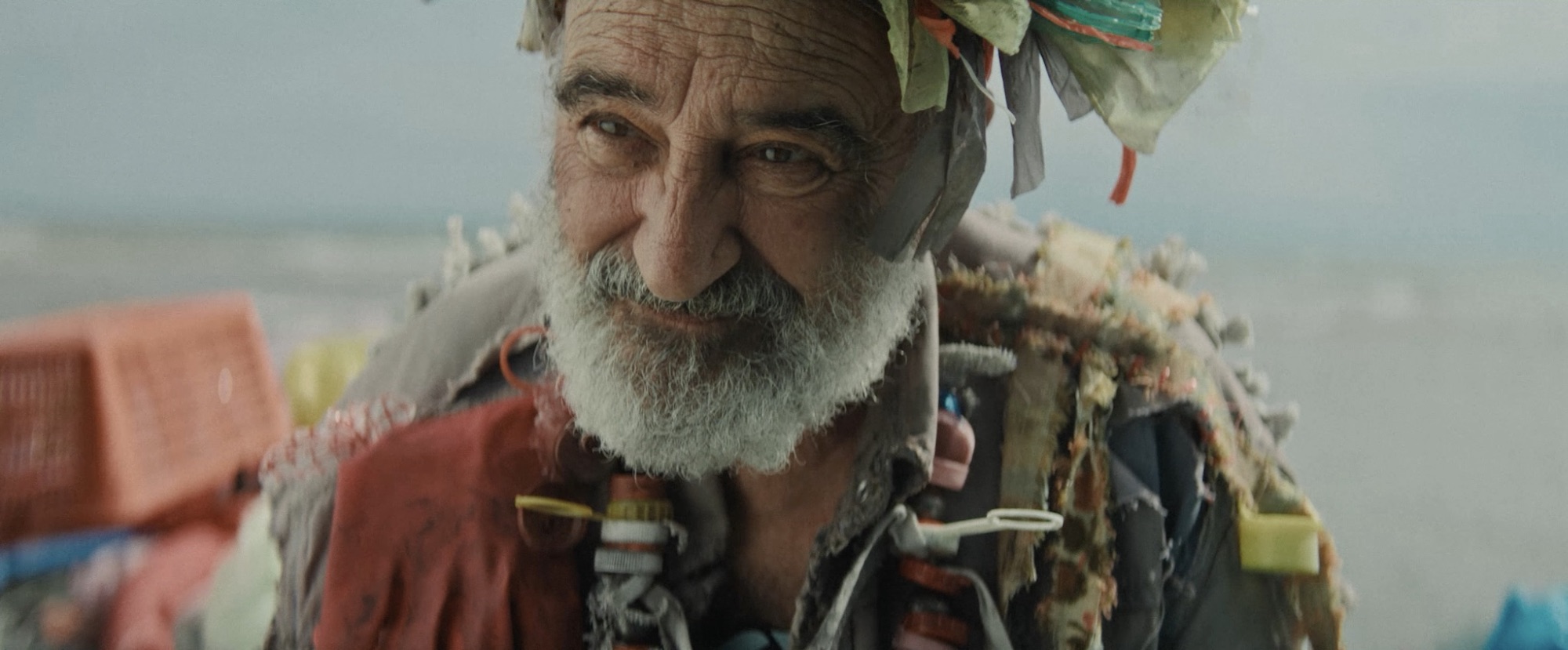
We started working on the costume design before the production design. It is something I always like to do in narrative projects. I like to start with the characters. With Sara Costantini—an amazing costume designer—we discussed how Neso should look, and we wanted to achieve a balance between a practical costume, in which every part has a function, and the aesthetic result. I wanted to show that taking care of things means also trying to make them nice. The necklace, for example, is not useful, but it gives the feeling that Neso and Steve, in some wa,y want to look good.
We carefully crafted the evolution of Steve’s outfit. Steve gradually became Neso in the way he dresses. The island follows this transformation accordingly: from a floating mountain of trash to a small house in the sea. The set designer, Marco Monti, pushed me a lot in building various objects for real with only the things that we had on the island. For example, when Steve creates the dynamo system to get electric power, I love the idea that he fixes it with a colored plastic stripe: it was much more powerful than a screw!
As a reference for the work, we started from a study of the production design of the vintage blockbuster Waterworld. We wanted to make something similar, but made of plastic, and so colorful. I loved all the desaturated colors all around. Waterworld was shot in the nineties and all the floating islands were made of wood or metal. I found it very meaningful that today, if we have to imagine a similar world, it is made of plastic, much more colorful but no less unsettling.


I love the open ending; it aptly fits the fable-like tone of the film.
I love it too; it was something that the screenwriter Ernesto suggested from the beginning, and it has always been there. It is a moment that is clear to anybody, but probably different for each one. Of that scene, I really love Steve’s performance. I love that he nearly looks into the camera and that with his hand, he asks all of us to join in. It is something that always makes me emotional. Maybe because in the end I would love to end up—maybe just for a week—on Trashchipelago.
This film also taught me how powerful the real physical world can be for the actors.
Having navigated Wasted’s journey from branded content to personal passion, what are the lessons from this punk approach to filmmaking that you’ll carry into your future projects, and what are those?
This project taught me again that you have to start from the story. A strong story generates passion in all the people involved in the shooting—from actors to runners—and passion is the most important fuel for a film. This film also taught me how powerful the real physical world can be for the actors, how they can grip onto it to create a memorable performance.
During these days, I’m scouting for my first feature film that we will hopefully start shooting in November. It is a thriller, all set at night, in a cold and wet Italian region. Potentially, it would also have been the right film to shoot in a studio, but I pushed to shoot it for real, at night, in the countryside. It will be dark, it will be cold, it will be wet. All the actors and the crew followed me in this decision, despite the fact that everybody knows that it will be more tiring, strenuous, and hard. However, we all know that we will see this effort in every frame. Filming is something that is made by ideas, but also by sweat and flesh, and this is something that I learned on Trashchipelago.