

As a film programmer, being presumptuous isn’t exactly a trait to aspire to. Yet it’s difficult not to form expectations when you see a filmmaker’s name attached to a submission – especially one whose work you’ve consistently admired. Animator Amanda Bonaiuto is one such filmmaker for me. Her shorts have always resonated with my personal tastes in cinema: bold, challenging, surprising (a quality I value deeply when curating for Directors Notes or anywhere else), and the kind of work that demands conversation. So when her latest film, Confetti, appeared in our submissions, I couldn’t help but hope it would once again be something worth featuring – and give me another chance to speak with her. Happily, Confetti doesn’t disappoint. A surreal, four-minute animation layered with striking imagery, textured sound design, and an unsettling mood, it’s a unique short. Building on the dialogue we began with her previous film, Hedge, Bonaiuto returns to DN for the online premiere of Confetti to discuss the creative liberation of pushing boundaries, the central role of sound in her process, and why tone has always been the defining element of her work over style.
Your film carries a beautifully abstract synopsis — “Separation, fever dreaming, and a deflated celebration.” If you were to go beyond that line, how would you describe the film to someone who hasn’t yet seen it?
I would describe it as a collection of associations that feel both tender and dreadful, haha. I wanted to make something that felt porous and stripped down so that the atmosphere and tone were moving the film forward more than anything else really. This film seems to sometimes make people uncomfortable, possibly because of its abstraction, but also maybe the tone and sound design. Confetti started as a film with a more specific narrative, as often happens in my work, and it ended up in a place that’s more ephemeral and atmospheric. Both of those descriptors relate to the narrative and experiences and interests that inspired the film (going through major life shifts, ruptures, divorce), but without telling the details of the actual story.
It feels like something that you could walk into at any point and have a different experience.
Working more narratively is something I want to push myself to do, but the more I tried to form a narrative with this film, the more I found the process restrictive when really I just wanted to draw and stretch out different thoughts and emotions. I’m working on a film now that I hope pushes me a little bit on this front. With Confetti, as I drew scenes with similar threads and followed the pleasure of that experience, the more abstract it became and I’m happy I allowed myself to go there. The longer this film lives and travels around to festivals, the more I see it as non-narrative; it feels like something that you could walk into at any point and have a different experience, like maybe it could be a looping installation in a gallery.
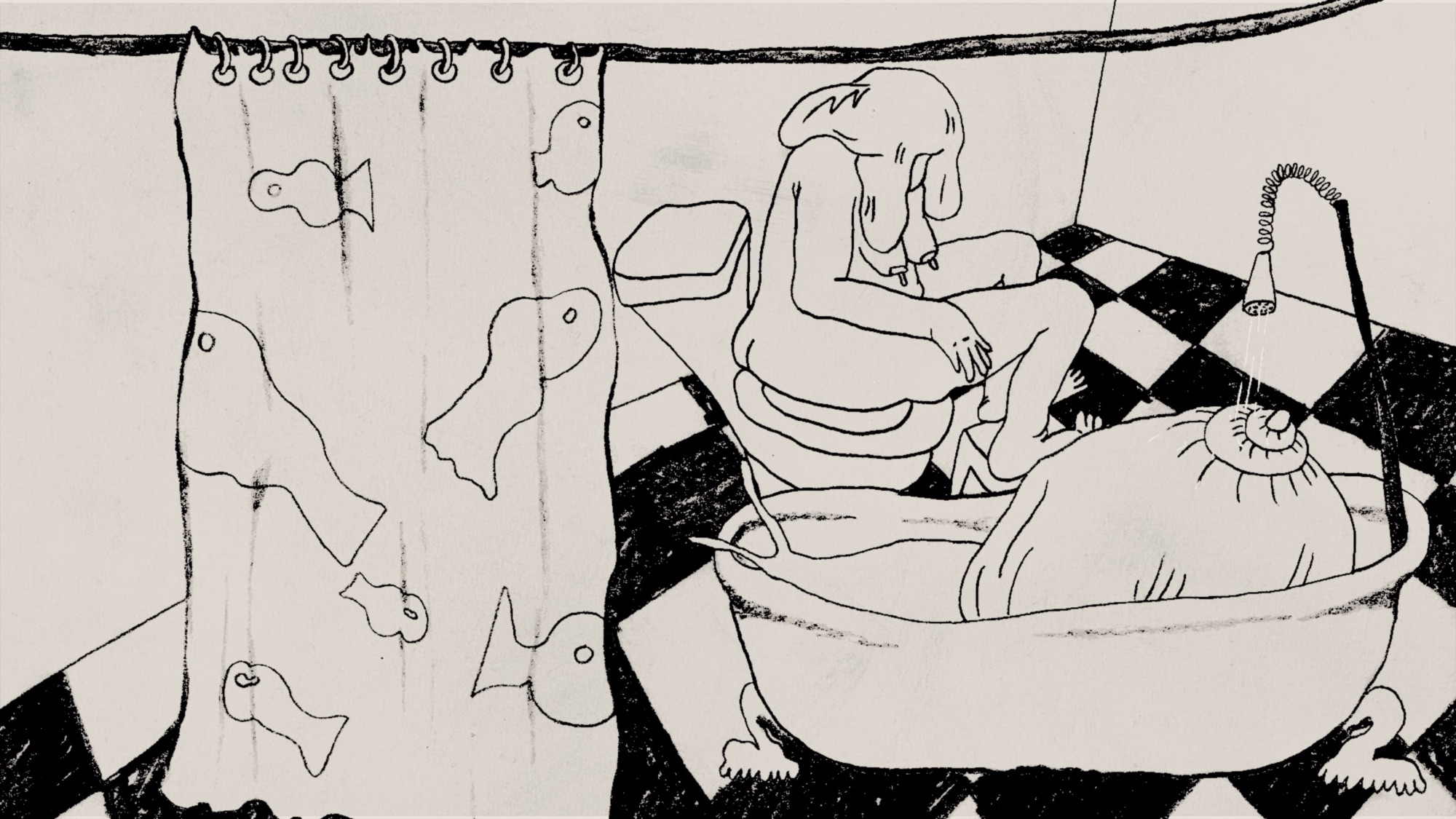
You mentioned Confetti making people “uncomfortable” and that’s something I wanted to ask you about. The film has this eerie, slightly unsettling atmosphere, was that something you deliberately set out to create, or did it emerge more organically during the process?
The tone is really the only thing I confidently knew I wanted to try to create straight from the start. Building out tone is something that comes more naturally to me than other processes, and it’s a major part of making films that really delights me, and also pushes me to want to continue making a film. It’s always interesting to see what happens once I’ve got animation into a timeline with rough sound, because that’s where I can really manipulate tone. I always work with patched temporary sounds to build tone from the beginning of a production, and use that to mold the film as I go.
Most Popular
It’s interesting that you’ve mentioned the sound so early in our conversation, as I agree that it plays a major role in the uneasy feeling your film emits – maybe more so than the visuals! Can you walk us through your approach to audio and what you feel it adds to the film?
Totally! I worked with an incredible sound designer, MB Al-Rahim, on this film, who will also be doing the sound design for my next film. I gave them an initial cut of Confetti with my temporary sound design to help give them a general sense of the mood I was hoping for. This temporary audio was almost like a collaged sound moodboard, and I handed it off along with some bullet notes, further expressing the mood. We had a good connection and synergy, so it made this process feel very natural, and I got to be present for the final mix and watch the sound magic happen. It was amazing and I’m extremely happy with the finished sound design. It really filled out the world of the film and also introduced some totally unexpected and amazing tonal surprises.
When we last spoke about Hedge, you mentioned how the project shifted — beginning as “a straightforward narrative about a dead father” before becoming something more poetic and abstract. You’ve already alluded that Confetti started as a film with a “more specific narrative”, but how did the making of this film compare to the previous one? How did Confetti evolve when you were making it?
Confetti definitely went even further down the path toward abstraction, which was really fun to explore. It wasn’t the film I envisioned from the start, but I didn’t really have a concrete vision for it. Once I started really focusing on it and drawing scenes, it came together very quickly over the course of a few weeks. One of those weeks was spent at an artist residency called Arts, Letters, and Numbers in Upstate New York, and that’s where I did a huge bulk of the animation.
It was really the loosest I’ve ever worked on a film and it felt really liberating.
I did some very rough storyboarding and then let some of those storyboards guide the initial scenes, starting with the ones I knew I wanted in the film – like the two figures in bed merging into one another in a bird’s eye view. Then I let go of the storyboard at a certain point and just spent an hour or so drawing in reaction to a previous scene, until I arrived at a drawing that inspired a new sequence. It was really the loosest I’ve ever worked on a film and it felt really liberating.

For those familiar with your work, your visual style is instantly recognisable — particularly your use of colour and that recurring off-white backdrop. What draws you to this palette, and what do you feel it brings to your films?
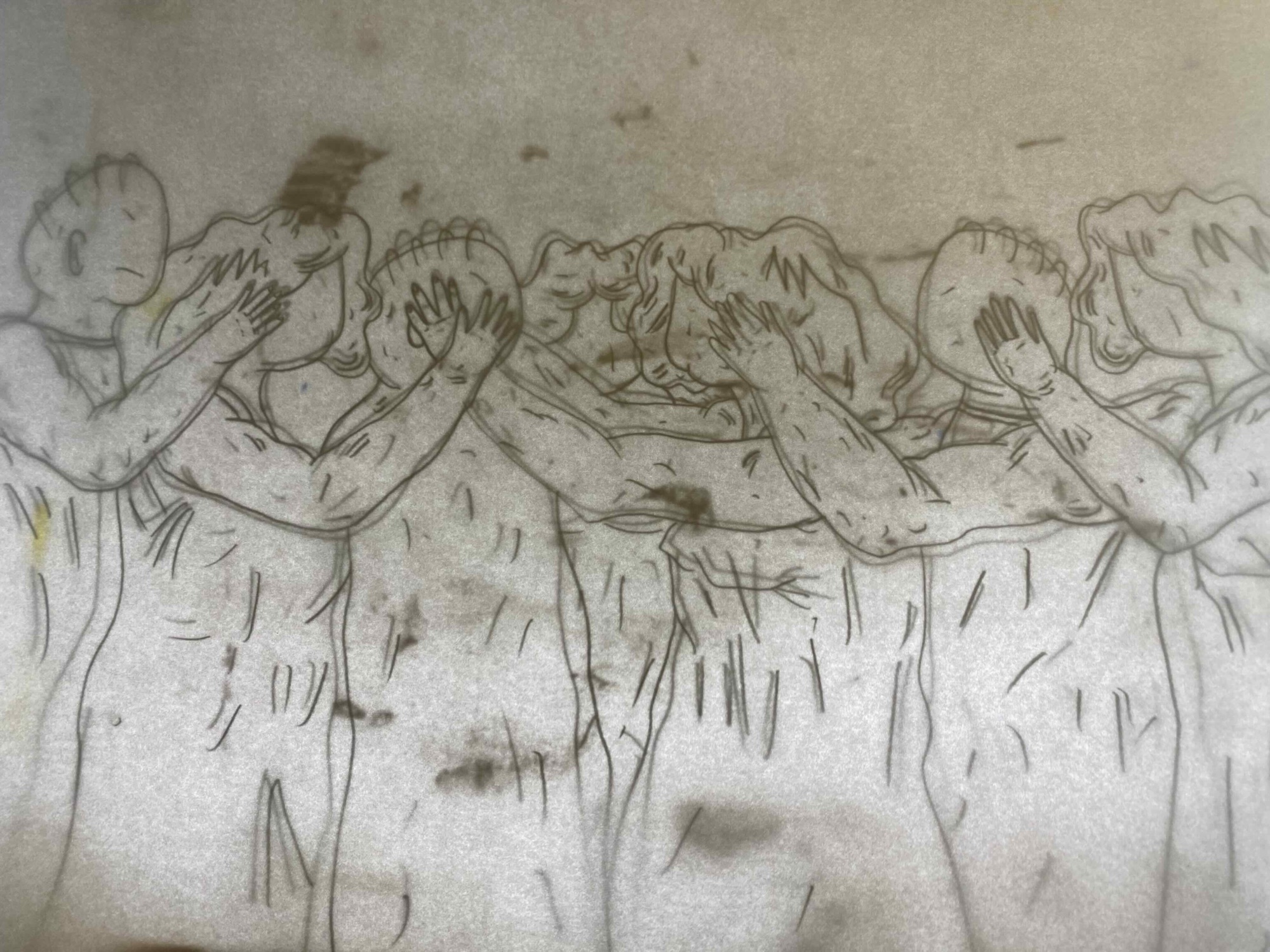
When I tried to color Confetti, even minimally, I was so repulsed by how it felt that I decided to stick with the sort of gritty scanned graphite lines and felt really happy with that texture and feel. With this film I think color felt distracting, when what I was really interested in visually was the line, weight, and texture. I think working on paper might have something to do with the muted, paper-toned color palette in my work as well. I like having the paper texture remain in the film, as a reminder of its physicality. My commissioned work seems to be more colorful, though I’m still always drawn to a more muted kind of Giorgio Morandi-esque color palette. My personal films have generally been a bit more pared down, and are also made more quickly because of the time restraints that come with making work for no money.
You received support from the GLAS Animation Grant for this project. How did that opportunity come about, and what kind of assistance did they provide?
I actually got that grant a couple of years ago and it took me some time to sit down and actually make the film – between freelance gigs and teaching. It was a small seed grant and it covered a few months of my studio rent, which I deeply appreciated, but otherwise it was totally hands-off. I’m super excited that GLAS is back this year after a few years’ hiatus.


In our previous conversation, you spoke about resisting the idea of a “recognizable voice,” instead focusing on tone and direction. Confetti seems very much in line with that philosophy. Do you still see tone and direction as the key elements shaping your work going forward?
Definitely, I think having a recognizable ‘style’ has been something I’ve been pinned for and I’ve struggled with feeling a little boxed in because of it. However, it’s also something I’ve benefited from and I’ve gotten a lot of opportunities because of my style, so there are absolutely two sides to the coin. It’s something my students are often concerned about, having a style figured out and locked in ASAP. I think there’s a feeling of security and marketability in that, which isn’t untrue. But trends in style are constantly changing, and if we start to mimic the style of the moment to make ourselves marketable, I think there’s a danger to that. In my experience, it can also feel a bit stifling to always be asked for the same thing and it can be challenging to experiment and grow.
I’m getting much deeper into exploring and I feel more aligned with my work.
Growing a recognizable tone and direction feels to me like it has a deeper resonance and more staying power. It requires being more aligned with your own path of interest, which allows for more flexibility and growth from project to project. It’s hard to be a working artist but the more resilience we develop through shifts in the landscape the better! I’m in a position now where I’m not primarily doing commissions to support myself and have shifted to teaching for income, and that has somewhat freed me from the question of style. I can tell that I’m getting much deeper into exploring and I feel more aligned with my work.

Finally, what’s next for you — any projects currently in motion or on the horizon?
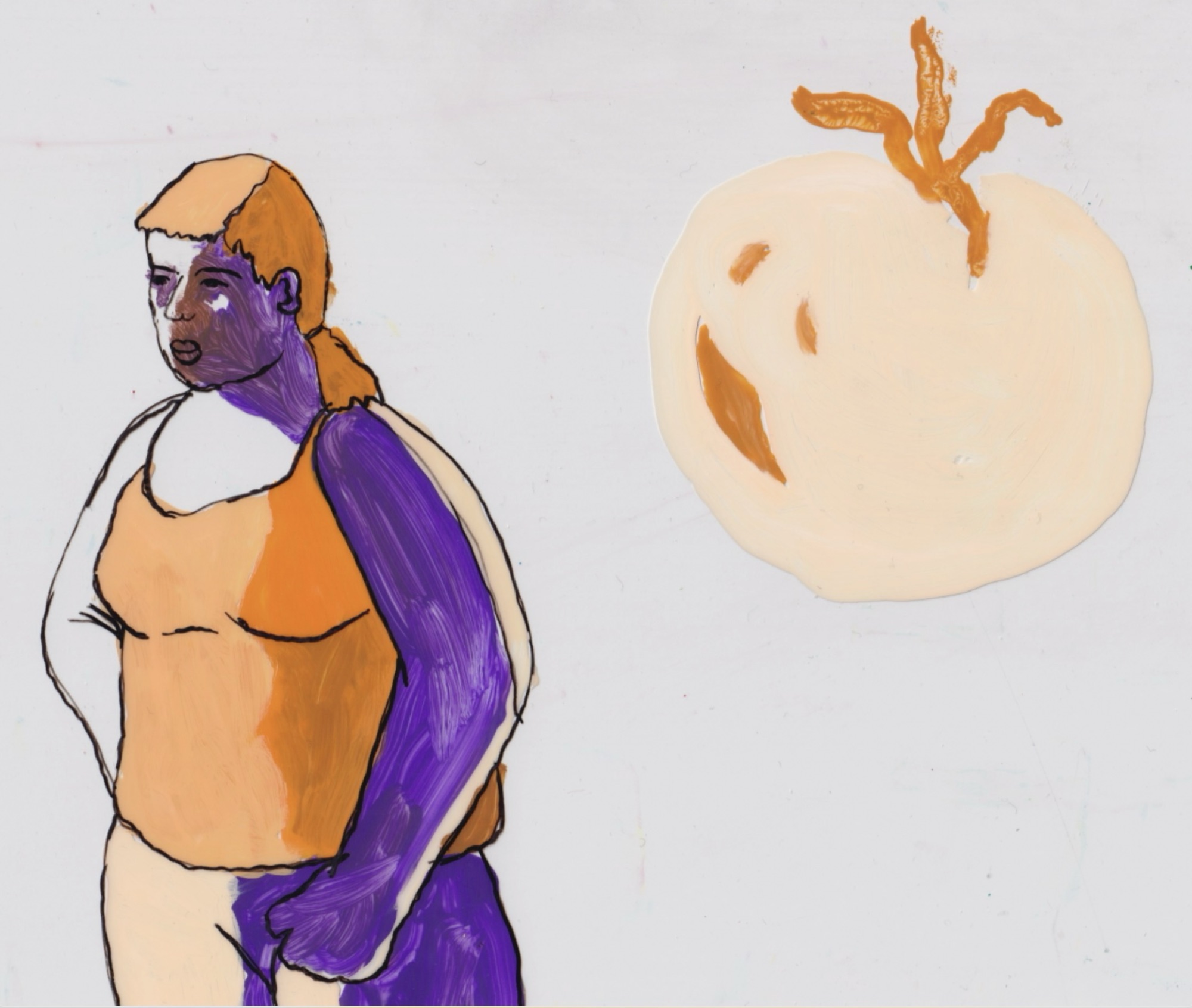
Yes! I’m working on another animated short right now, still in the writing and testing stage. The new film is set in a rural American town and examines the cultural impact of small-town life on the collective American psyche. It mostly surrounds a tangled sisterhood, scapegoats, and the effects of isolation. I’m hoping it’s both an anchor and in some ways a departure from my previous work. Through a pair of sisters, I’m trying to explore the unspoken and often marginalized parts of ourselves, particularly the aspects that are diminished or erased when others enter the room. It’s going to be painted on cels and I’m doing some test animation at the moment, which I’m excited about!
Also, my dear friend James Thacher and I started a little studio called Magician recently, and through that project we’re focusing on creating accessible animation educational resources, offering mentorship, curatorial projects, and making publications. It’s been a fun project to develop over the last few months and we’re working on putting out our first publication later this year.