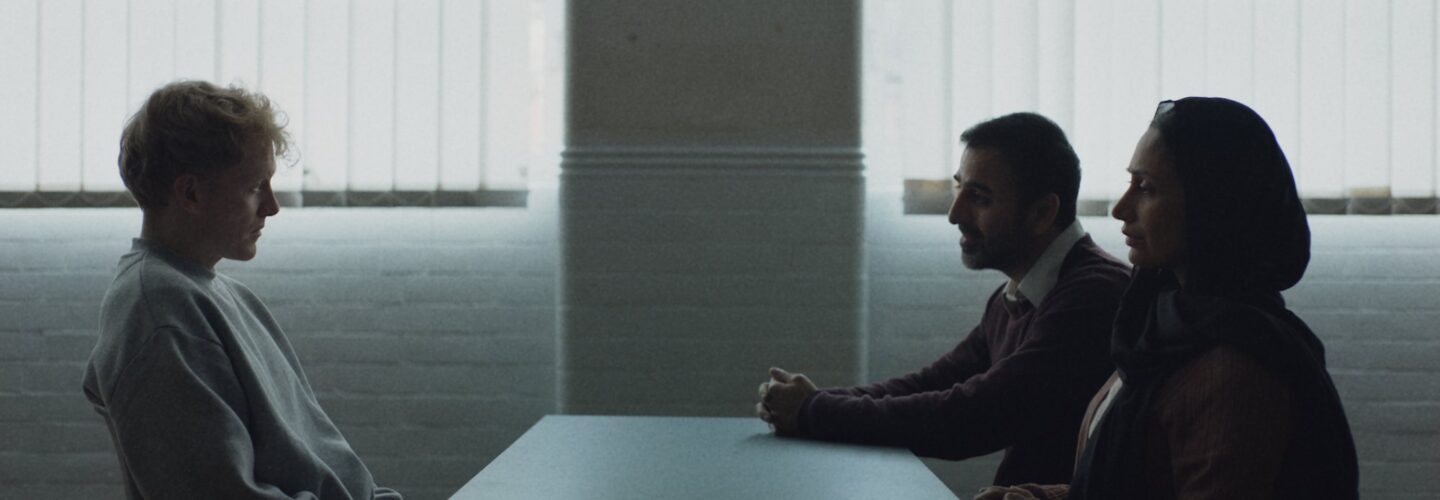

Emotions run incredibly high in Huse Monfaradi’s One Punch, a quietly powerful drama that shifts the spotlight away from the act of violence itself to focus instead on the emotional reverberations that follow. Anchored in emotional truth, the film traces the fault lines of grief, guilt, and the fragile pursuit of forgiveness. Set almost entirely within the confines of a prison visitation room, its restrained aesthetic—static frames and a muted palette—forces a direct, unflinching engagement with its central question: could compassion take root where anger might otherwise thrive? Broaching themes of male bravado, prejudice, faith, and inner conflict, One Punch offers a layered reflection on human frailty and moral complexity. Monfaradi resists resolution, choosing instead to immerse the viewer in flux—where answers remain elusive and emotional terrain must be felt more than understood. His instinctive, emotionally attuned writing carves out space for raw human experience to unfold without judgment, amplifying the film’s quiet but resonant power. At Directors Notes, we were struck by the film’s restraint and depth, and invited Monfaradi to join us in conversation for One Punch’s premiere, where we discuss shaping the film’s emotional terrain and the creative decisions behind this compelling, emotionally resonant work.
I was struck by the incredibly emotional intensity. What was the initial spark that led you to tell this particular story?
I had always been a huge fan of Steve McQueen’s first film Hunger, and the well-known one-shot scene he captured with Michael Fassbender and Liam Cunningham in the prison visitation room, so in many ways that was my biggest influence and something that had been knocking around in the back of my mind for quite some time. Another strong influence was a really underrated film in my opinion, Mass by director Fran Kranz, focusing around two sets of parents meeting up after a school shooting—the parents of the shooter and the parents of a boy who was murdered by the shooter. I then stumbled across an article about a guy who’d gone to prison for killing someone with one punch and when I looked into it further it seemed to be ‘a thing’. There were multiple cases of it, loads of articles, a Channel 4 documentary called One Punch Killers, and even a charity set up to support victims.
But here’s the thing, and I’ve said this before, my film isn’t really about the punch per se. That merely acts as a device of sorts to get us into the room. It’s much more about the fallout from that violent act—how people deal with grief, tragedy and trauma in different ways, viewpoints on morality and how people can have forgiveness in their hearts even in the darkest of times of great adversity. As a filmmaker, I have always loved simple storytelling and strong performance-led lead narratives that focus on the dialogue and emotion at hand—an attention to the micro rather than the macro as I’ve always put it, and I think every aspect of One Punch was written and designed with this in mind.
A single act, steeped in violence and tragedy, unravels into the complex web of human relationships that follows. How did you approach the writing process?
I knew I wanted the film to be very achievable in the sense that the writing and storyline shouldn’t be overly complex and over ambitious in terms of needing multiple cast, locations and shoot days. I knew I wouldn’t have much money, if any and when I first started formulating ideas, a trap I’d fallen into in the past was to write something that was over ambitious. One Punch was therefore written with one principle location in mind—a prison visitation room—with a beginning and end that required a secondary location—a prison interior and exterior.
What you see on screen is 90% of what I wrote in the first draft.
I write very quickly and from the gut. I don’t find writing very easy. I never studied it, and I don’t think I’ve ever successfully finished reading a book on screenwriting. It’s pure instinct from beginning to end for me. I wrote the script back in October 2022 in literally just a couple of days, and very little changed in subsequent drafts. I shared the script with just a couple of writer and director friends for feedback and took on a couple of notes, but mainly stuck to what I wanted. What you see on screen is 90% of what I wrote in the first draft.
There’s lots that’s very personal and relevant to me in the script, and influences from around me. Jamie’s character was named after my friend the director Jamie Donoughue who directed the Oscar-nominated short film Shok and who introduced me to George Jaques who plays him. Hasan, the father in the film, was named after my own dad. Ahmed, his son, is my nephew’s name. My mum would always make me daal and rice as comfort food…the list goes on!

In what ways do the film’s aesthetic choices and visual imagery serve to enhance and deepen the emotional depth of the narrative?
It was very important to me that everything from the film’s cinematography and colour grade to production design, editing and music all served to focus the viewers’ attention on the characters and their performances rather than distract or detract from them in any way. I knew I wanted to make bold photographic choices and I was definitely influenced by Pawel Pawlikowski’s films Ida and Cold War and Łukasz Żal’s cinematography.
We shot in a 3:2 aspect ratio and the camera was always static in its framing. In every aspect I chose a less-is-more approach, all to enhance the intensity of what was unfolding dramatically within the frame. I didn’t want the viewer’s eye to ever wonder over the course of the film’s ten-minute duration, and I wanted it to feel like you’re really on this journey with them.
I have to take my hat off to my good friend and collaborator of many years Benedict Spence BSC, One Punch’s Director of Photography. As a director, I go into any new project with a fairly clear idea of what I want every department to deliver, and I never tire of seeing them overdeliver and just far exceed any expectations I initially have. Ben’s lighting and framing and his ideas around blocking are second to none.
Most Popular
Working with actors to convey such intense emotions must have required a sensitive approach. Can you speak about how you navigated the emotional work with the cast, and what challenges or breakthroughs emerged in bringing these complex emotions to life?
You never really know if your words actually work until they’re spoken. That’s the only way I can really describe it, because up until the actors are in place this has all been in your head. Writing for a character, but still having your own voice present is really tricky. Honestly, I know directors say this kind of thing all the time, but the actors in the film were truly extraordinary. All three were my first choices. George Jaques as Jamie, Preeya Kalidas as Zainab and Riz Khan as Hasan. As soon as I saw their self-tapes, and each of them was the first self-tape I’d seen for that role, I really felt I didn’t need to look any further. They completely embodied what I had pictured for these characters, both in terms of their performances and their physicality.
The anxiety that follows comes when they’re all individually cast and wondering will they work together in a cohesive way and with believable dynamics when it’s just three people talking in a room. There’s no room for error in that sense. I was fortunate enough to have an afternoon of rehearsals with them a couple of days before the shoot, and I was super nervous to see them perform the script—not only to see their performances but also to see if they’d learnt the material, as up until this point I really had no idea! Any concerns I had went out the window as soon as they started speaking.
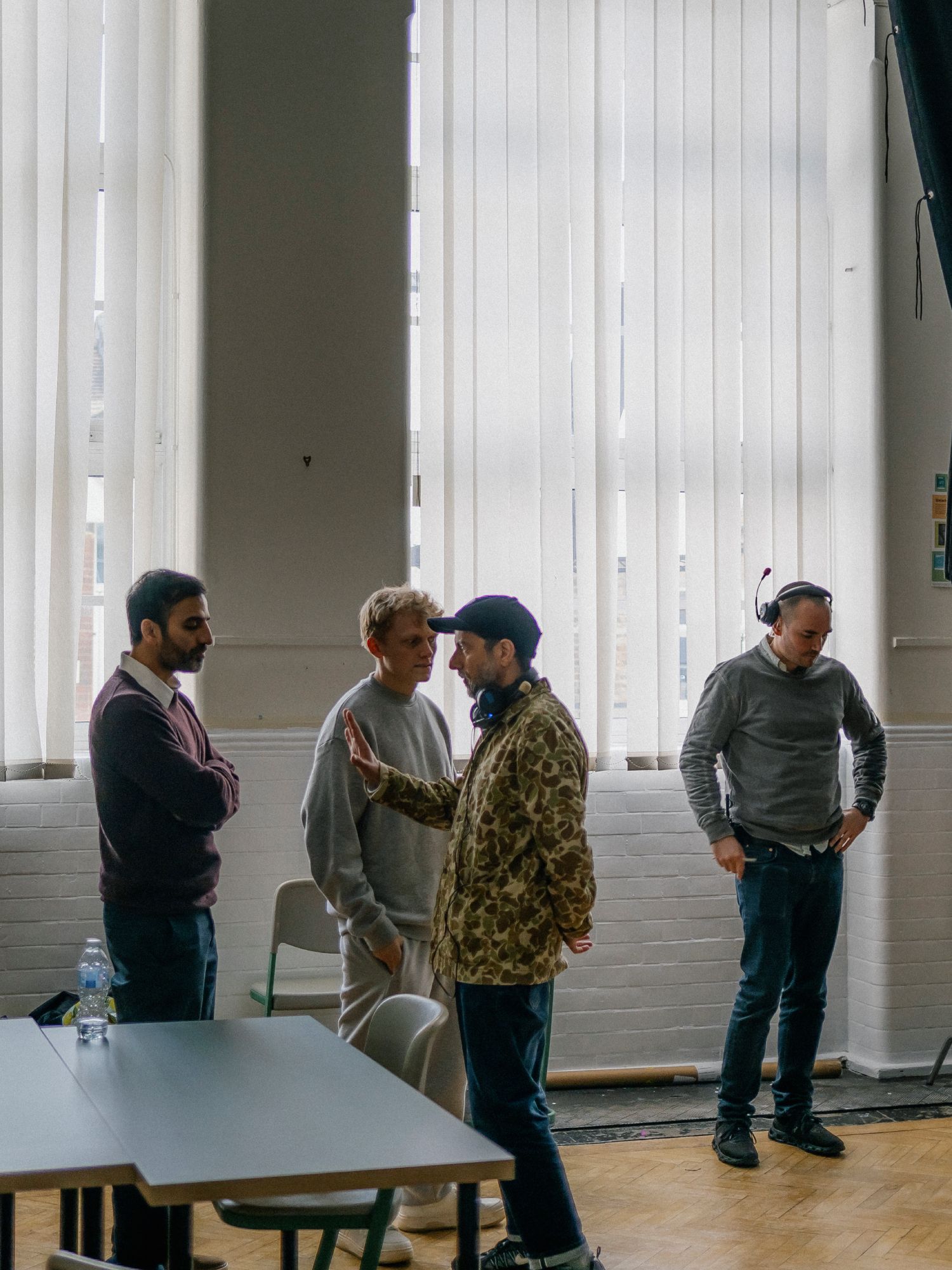
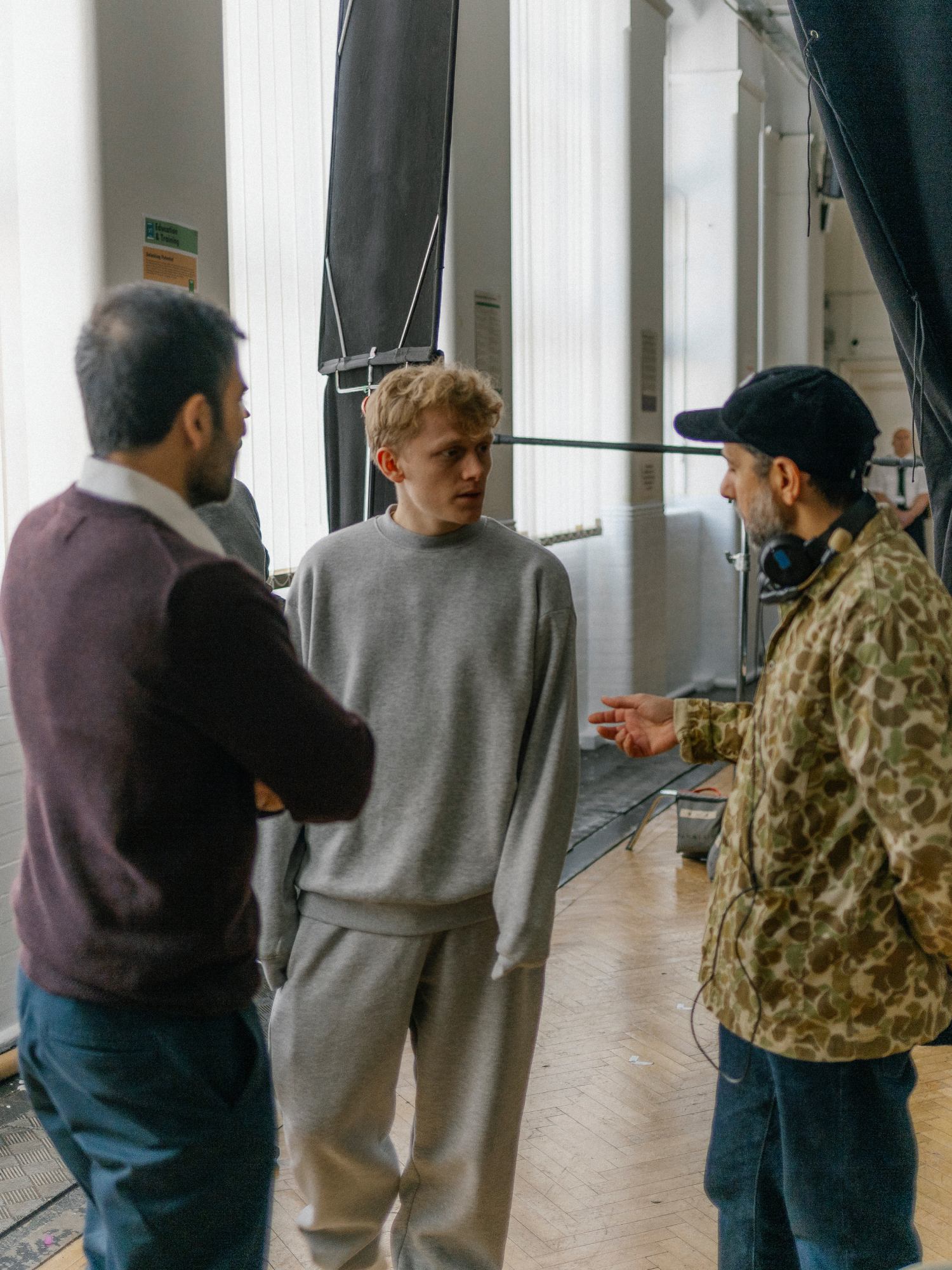

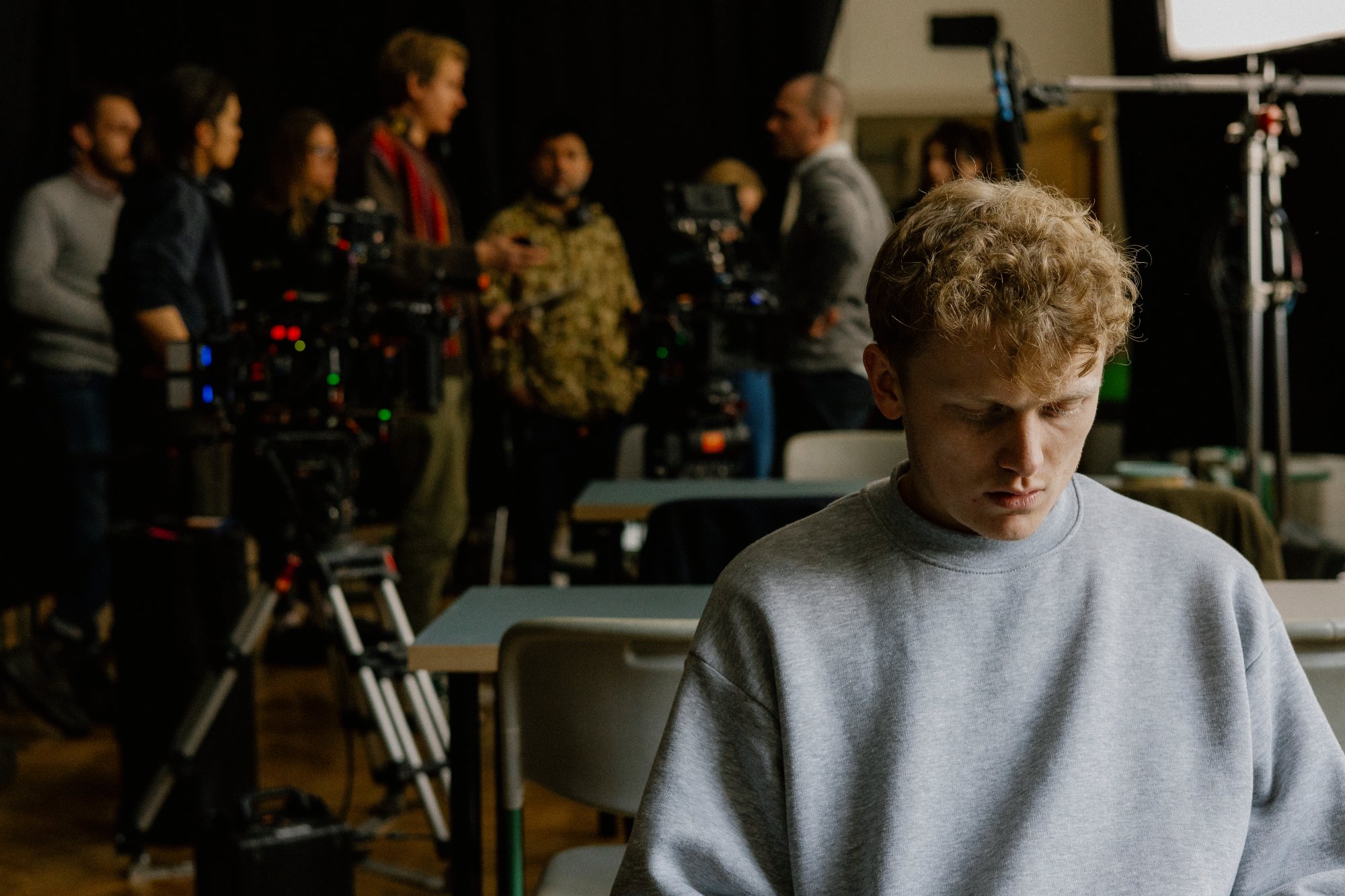
When we came to shooting, they delivered the dialogue and the emotional intensity required each time without any wavering whatsoever.
What was really amazing is how they’d immersed themselves so naturally in these roles. After the first rehearsal, they all looked at me and I didn’t really say anything. I think they worried I was unhappy, but in fact I was just really blown away and speechless. I gave such limited notes as a result, because there wasn’t that much to note.
Each of the actors came up with further thoughts and suggestions of their own and I think I took on pretty much all their ideas to make their characters more their own but really not much changed overall. When you see an actor’s instinct like this, it’s really what sets them apart from other actors and puts them in a league of their own. When we came to shooting, they delivered the dialogue and the emotional intensity required each time without any wavering whatsoever. I think we only did at the most two takes per camera set-up, and then moved the camera positions accordingly and not once did I have to re-do a take because I’d felt the emotion or believability of performance wasn’t there. It was really extraordinary, especially on the part of George Jaques with his emotional breakdown towards the end of the main scene and the genuine tears he cried each and every take.
The table in the visit room seems to serve as a symbolic barrier, separating Jamie from the parents, yet the mother is the only one who crosses it. What does this crossing signify for you?
This was something I’d actually thought about in the writing a fair amount from an authenticity point of view. In an actual prison visitation room, physical contact like that wouldn’t be allowed, but I decided to suspend reality there for the sake of the narrative, which I initially struggled with. In the end, I just thought that the moment where Zainab expresses herself physically by hugging Jamie could be a really powerful, symbolic and also a visual full stop to the scene, and I really didn’t want to change that. There’s no physical movement in the scene prior to this. Everything is said through words rather than actions, and the emotions are conveyed through those words, which puts much more focus on their expressiveness and how restrained the characters are, especially Zainab and Hasan.
It’s a tragic story, there’s no doubt about that. Jamie wants reassurance that he’s not a bad person, and yet here he is sitting across a table from the parents of a young man he killed. Parents who have found forgiveness for him in their hearts. I guess one of the main questions the film asks is: how would you react if you were in Zainab and Hasan’s shoes? Could you show the same level of humanity towards someone who had inflicted great hardship upon you? In that moment, Zainab’s actions of hugging the boy who killed her son answers that question.
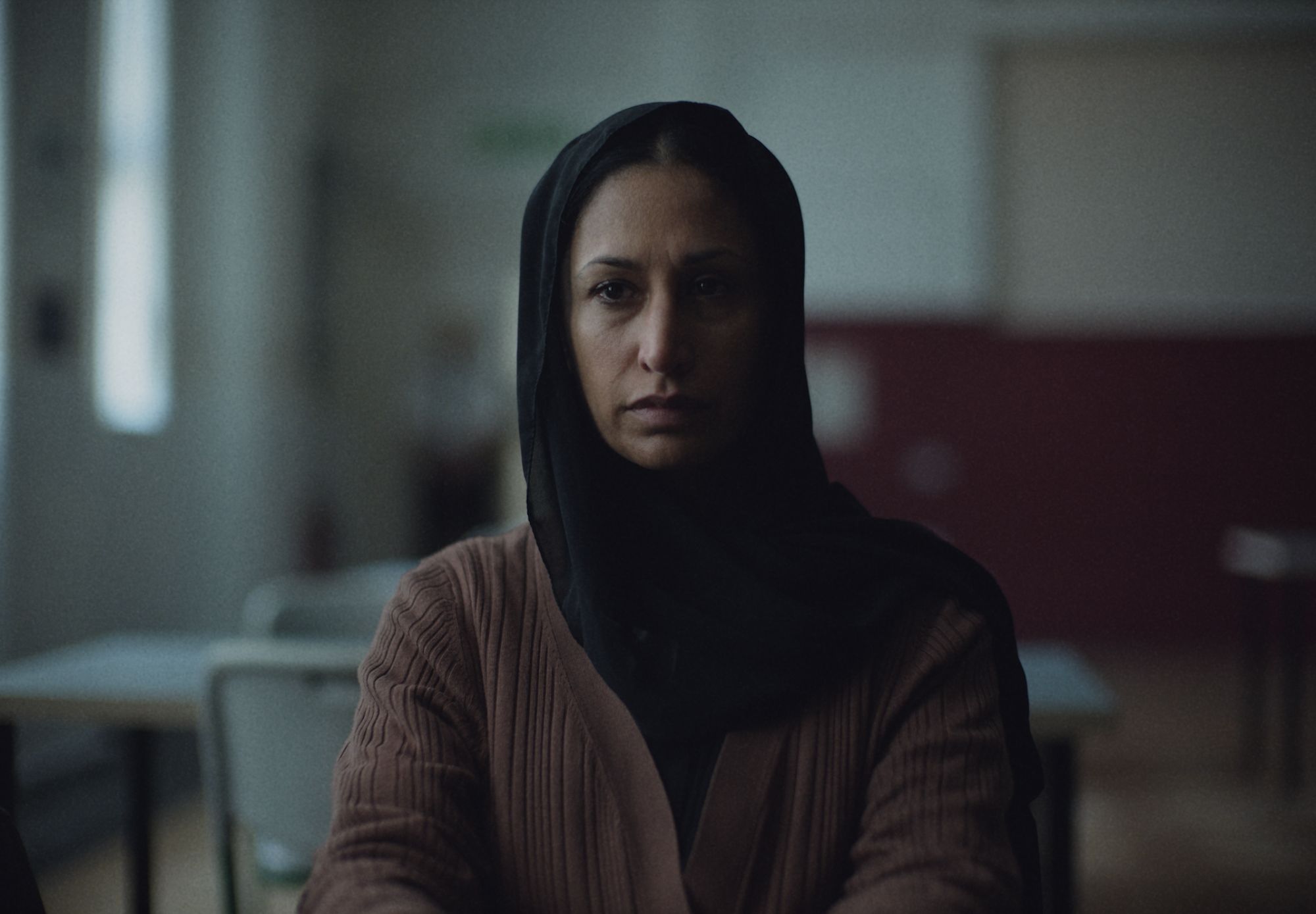
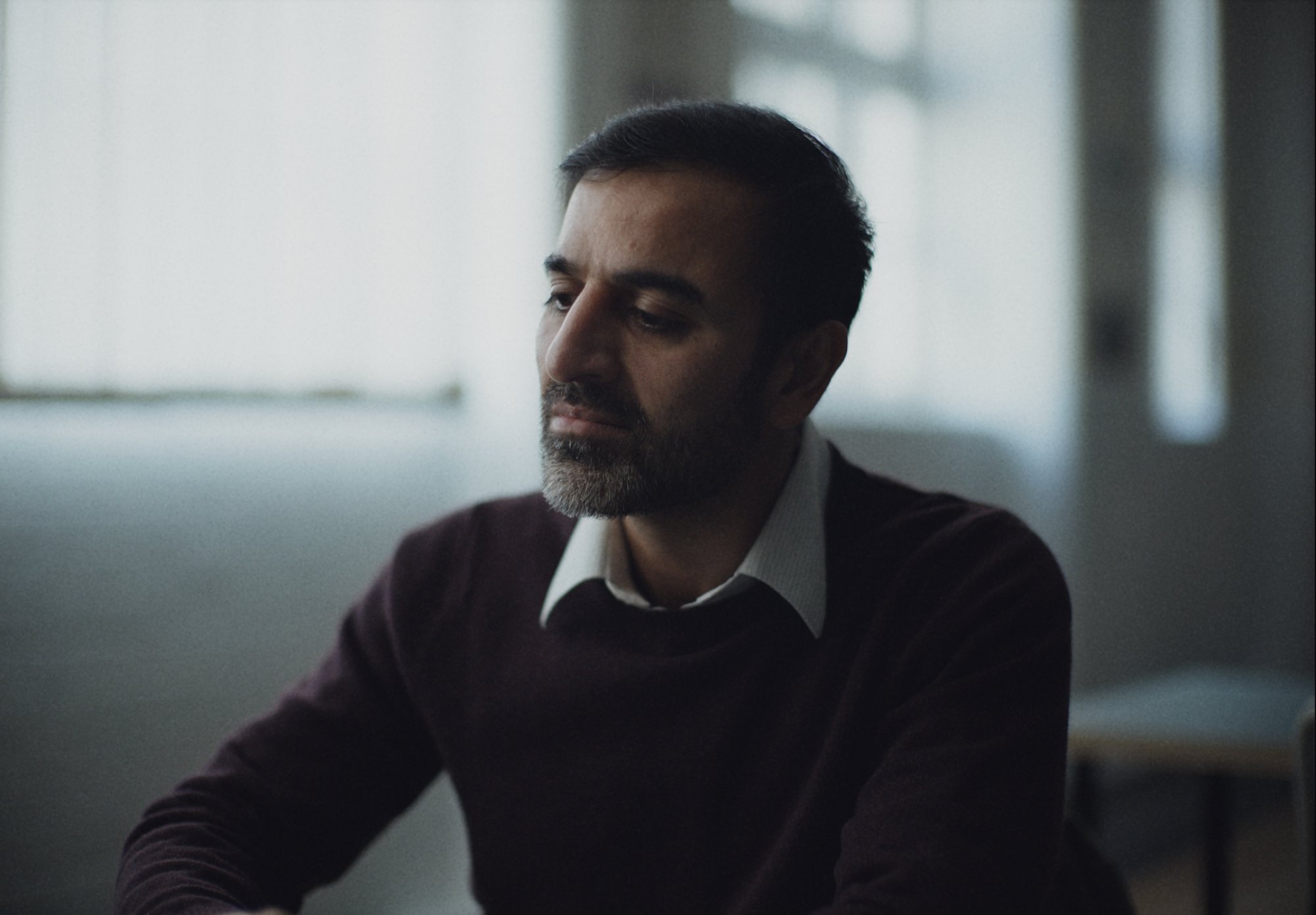
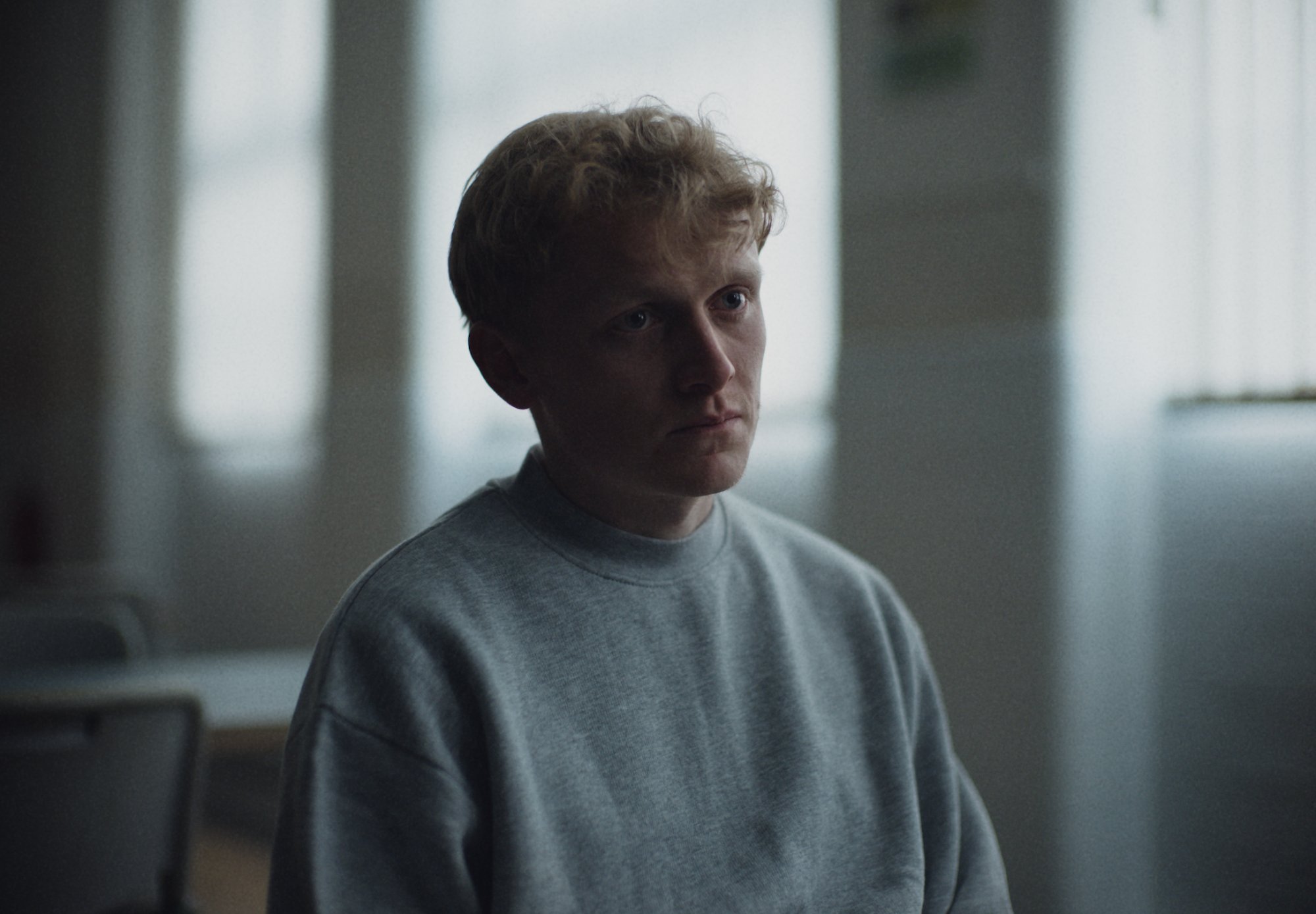
One of the main questions the film asks is: how would you react if you were in Zainab and Hasan’s shoes?
How did sound design and music contribute to shaping and amplifying the already profound emotional core?
I was really fortunate that, through my music supervisor friend Raife Burchell at Dirty Soup, I was introduced to the director Lenny Abrahamson and his close friend and collaborator, the composer Stephen Rennicks, both of whom I admired a great deal. I loved Stephen’s scores across Lenny’s work, especially for Normal People and of course for the Oscar-winning Irish language film The Quiet Girl.
Stephen very kindly read the script and said yes immediately. Even at the writing stage, I knew that as for the cinematography, I wanted something super minimalist with the score that featured really at the beginning and end of the film, as sort of bookends, as the narrative was so dialogue-heavy. When I spoke with Stephen in the pre-production stage, his approach really resonated with me and we were definitely on the same page. When I sent him pictures, he worked super quickly to send me ideas back. To be honest, I think his final score, made up primarily of a sparse single piano instrumentation, was very close to his first WIPs with just a couple of minor tweaks.
George Castle, our supervising sound editor, came on board at the recommendation of George Jaques, having worked on George’s debut feature Black Dog. A challenge for us was that we shot the opening and closing scenes in Gloucester Prison, but obviously we didn’t have a supporting cast of hundreds of prisoners and guards, so we needed to create a believable soundscape that supported what was on screen with just the two or three guards we had and cleverly positioned background cast. George did a brilliant job of making it more believable with a busier sound design that punctuates where needed.

Can you tell us about the experience of shooting in a prison, and how the confined setting shaped the filming process with the crew and actors?
Only the opening and closing scenes of the film were shot in the disused Gloucester Prison, which is a really spooky place to be honest. In an ideal world we would have been able to use the visitation room there, but it just wasn’t suitable. We had a location for the visitation room in London fall through at the last minute, so finding one so late in the day became one of the biggest challenges for the production.
We needed to create a believable soundscape that supported what was on screen with just the two or three guards we had and cleverly positioned background cast.
We ended up shooting in a primary school in Acton, West London on our second day. Most prisons in the UK are Victorian era, so finding somewhere that would believably marry architecturally was actually really tough. Fortunately, a lot of schools are also Victorian. Our Production Designer Caroline Steiner and her team did a brilliant job in making what was essentially an assembly hall look like a believable visitation room, matching the colours and textures to Gloucester’s look and feel.
Once you’re in that room, it’s eight pages of dialogue from an eleven-page script. It’s supposed to feel almost claustrophobic. By definition, there’s no escaping the situation. You’re locked around this table with these three characters alone. Having no money for a supporting cast of other prisoners and visitors played to our advantage, in the sense that without others present in the space, it creates a more isolated and lonely experience for them, surrounded by the empty tables.
With the frames of One Punch still vivid in our minds, can you share any insights into your upcoming film projects?
I’m moving country in December, from London back to Bahrain, where I’m originally from, and I feel that there’s a story there to tell, something to do with my roots and heritage, so I’m kind of just writing down bits of inspiration here and there at the moment and possible narrative ideas. I think it’s a really untapped part of the world in terms of storytelling. I’ve had a UK-based feature idea for a couple of years that I’ve been trying to develop as well. There’s a very strong idea in there somewhere but I’m just taking my time to mould it and see where it goes.
Other than that, one of my main focuses is to try and get into HETV drama directing. I got my first Film & TV Agent off the back of One Punch—Chalcot Square—so I’m hoping to get a block of something to shoot soon. I think TV is such a super interesting medium right now, and it feels like there’s a lot of possibility there at the moment.