
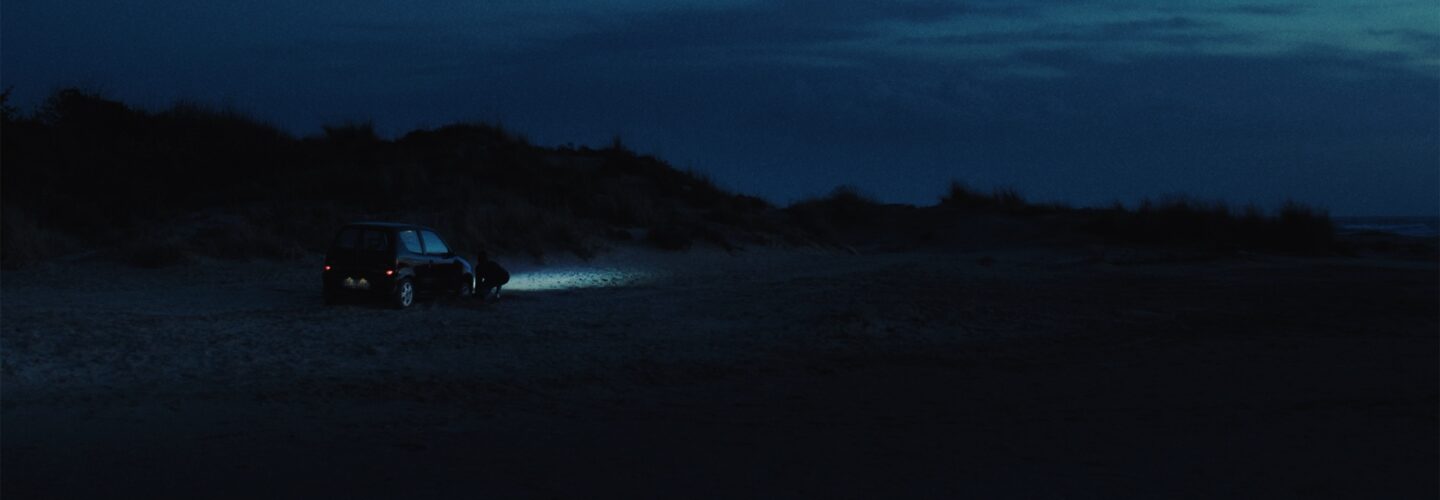

A young woman drags a lifeless body across a remote beach, documenting each laboured step on her phone. Where she’s going and why remains obscured, the nature of her connection to the corpse surfacing only in fragments. It’s a premise that could belong to any number of genre thrillers, but in Italian director, screenwriter and photographer Lorenzo Gonnelli’s hands, Godless Animals (Animali Senza Dio) becomes something far more elusive—a film that uses familiar tension to draw us into territory where easy answers dissolve and moral certainty collapses. Gonnelli’s background in still photography—where emptiness and waiting carry meaning, where every element must earn its place—saturates every composition. But it’s his willingness to embrace unconventional narrative tools that gives the film its unsettling intimacy. The mobile phone becomes a confessional device, its warm, imperfect footage sitting in stark contrast to the cold detachment of the main camera. The resulting visual rupture isn’t gimmick but grammar, two distinct languages speaking to the public and private dimensions of an act that exists in perpetual moral suspension. Sound operates with equal precision: the ocean’s constant breath, the cavernous silences, and a visceral sonic intrusion in the finale that arrives like something primordial and uncontrollable breaking through. What emerges is a film built on omissions and negative space, trusting the audience to inhabit ambiguity rather than be guided through it. Ahead of today’s Directors Notes premiere, we spoke to Gonnelli about crafting tension through what remains unseen, the half-hour improvised conversation that yielded the film’s final fragments, and why suspending judgement becomes its own form of honesty.
What inspired you to create a film tackling such contentious, very heavy subject matter?
The idea came to me on the way back from a job with an association dealing with end-of-life issues. I felt the need to explore that subject further, but I didn’t want to do it through a documentary lens. I was looking for a way to capture its emotional and ethical weight, and genre felt like the right tool. I was interested in addressing such a complex issue without the weight of current events. For me, genre is more than just a format; it is a language that offers the viewer points of reference, creating familiar ground on which to orient themselves. Through its codes—the atmosphere, the emotional tension, the rhythm—I can accompany them into difficult territory without repelling them. Then, once those points of reference have been established, I am interested in removing them, making them waver. This shift creates a sense of disorientation that opens up a more fragile and human space, where fear and compassion coexist.
This choice reshaped the film, creating two distinct narrative levels.
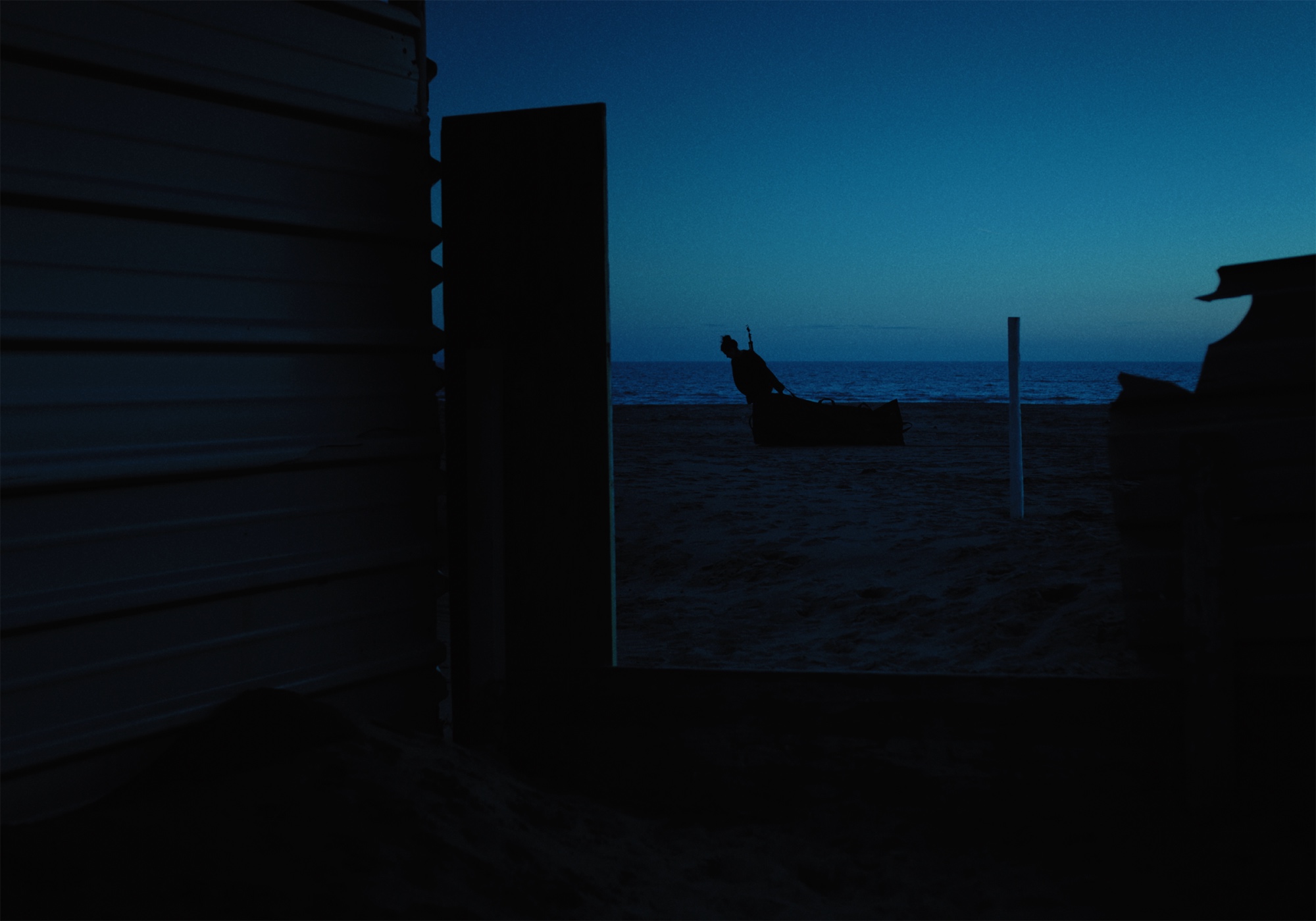
At first, I approached it with an objective, almost detached gaze, avoiding judgment on the protagonist’s actions. But when I saw the first rough cut, I realized something was missing: her point of view. That’s when I decided to introduce the phone as a narrative tool—something spontaneous and intimate, almost like a visual diary documenting her bond with the body. This choice reshaped the film, creating two distinct narrative levels, later reinforced in post through color grading: warmer and more immediate for the phone, colder and more distant for the camera.
Tell us about the very sharp distinction between the deliberate technical and aesthetic choices that differentiate those two perspectives.
From a technical point of view, I wanted the two cameras to speak different languages. The main camera returns a cleaner, more composed image, with cold colour grading that amplifies the distance and moral suspension of the story. The phone, on the other hand, is the opposite: warm, saturated, imperfect colours. Its language is impulsive—unbalanced shots, irregular movements, flickering. It is living matter, where error becomes part of the truth.
Sound also plays a fundamental role. The recordings from the mobile phone have not been cleaned up: I wanted to keep the hiss, the compression, the imperfections of the built-in microphone. All this contributes to making those sequences more real, more intimate, as if they really belonged to the protagonist’s private world. In post-production, I then accentuated this visual and auditory fracture, so that the transition from one perspective to another was not only narrative, but also physical and perceptual.
Most Popular
Godless Animals employs powerful omissions—we never clearly see the body in the bag, and the final conversation is suggestive rather than explicit. How did you use what is not shown and not said to build tension and engage the audience’s imagination on a deeper level?
I am very interested in what happens off-screen, because that is where the viewer becomes an active participant. The imagination is often more ruthless and precise than any image shown. Not seeing the body forces us to confront its absence, and that absence becomes presence. Similarly, the final conversation avoids giving explicit answers: what is left unsaid leaves room for ambiguity, and in that ambiguity the meaning of the film manifests itself. Silence, interruption, restrained gestures—these are tools for building tension without resorting to emphasis. It is a way of respecting the complexity of the subject, allowing the viewer to inhabit it without feeling guided.
I felt your experience and background in photography in every shot. How did that discipline inform your approach to framing and composing shots?
Photography taught me the value of emptiness and waiting. In a static image, every element must have a precise weight, and this approach transferred naturally to film. When I frame a shot, I always think about the tension between what is inside and what remains outside the frame: composition becomes a way of conveying the silences, the mental spaces of the characters. I always look for light that has an emotional function rather than an aesthetic one—I’m not interested in whether it’s beautiful, but whether it resonates with the character’s inner state.
Even in photography, I don’t limit myself to using canonical tools, but always look for the most suitable means to convey a certain emotional state. In the case of the short film, it was the mobile phone; in photography, I sometimes use camera traps, thermal cameras or other unconventional devices. I am interested in the way each tool betrays reality, filters it, distorts it—because that is where something true can emerge.
I don’t limit myself to using canonical tools, but always look for the most suitable means to convey a certain emotional state.

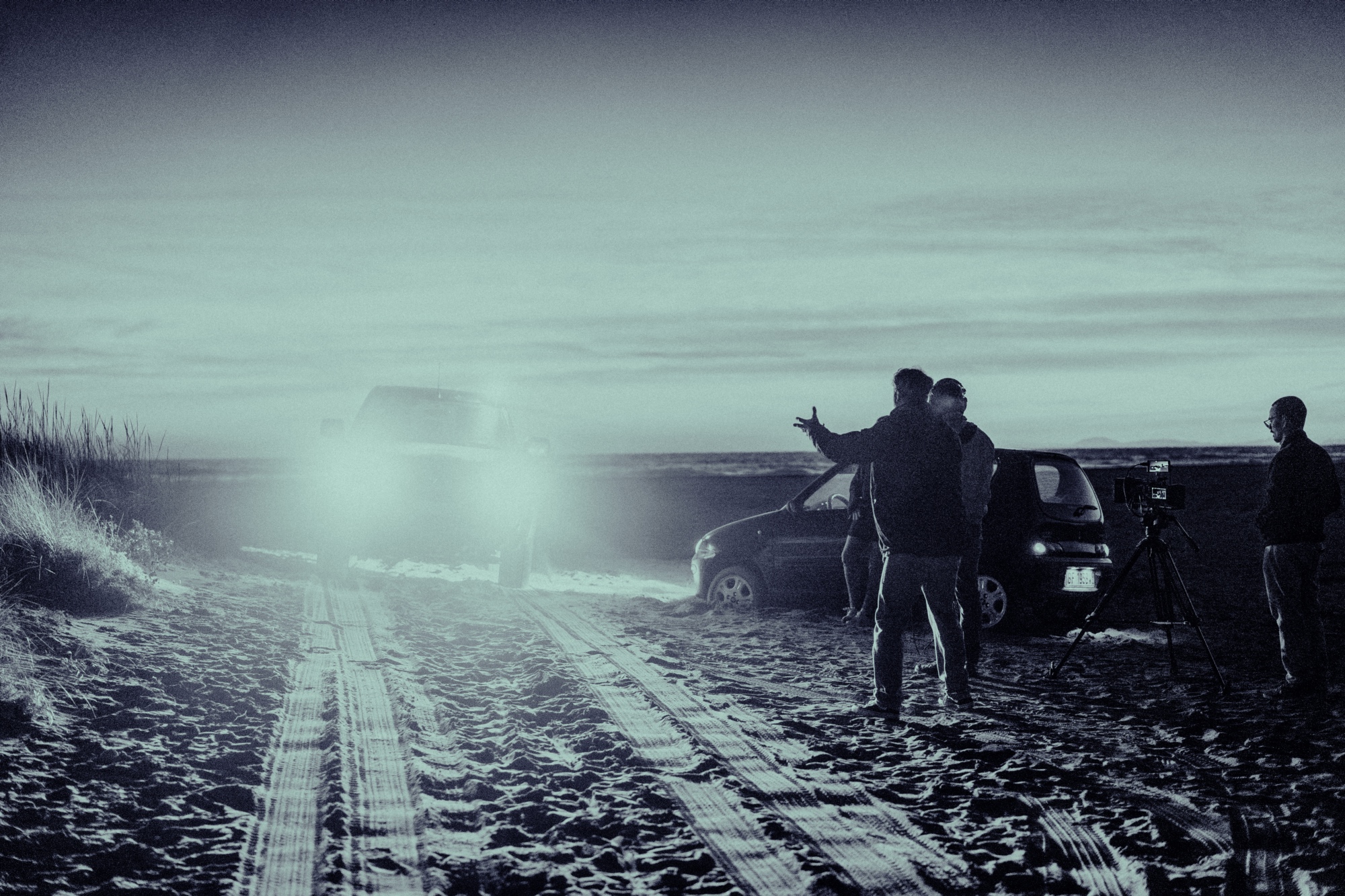
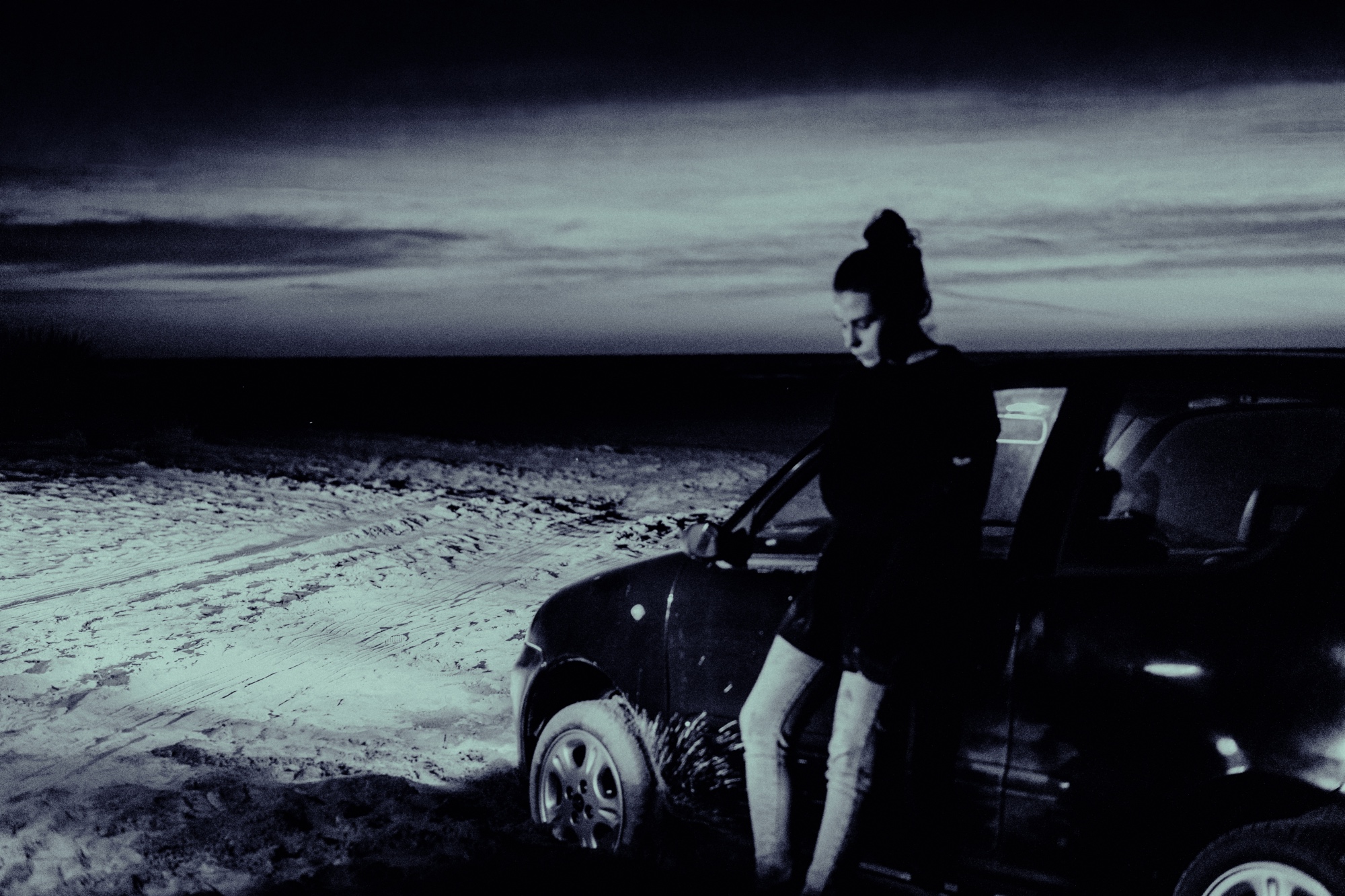
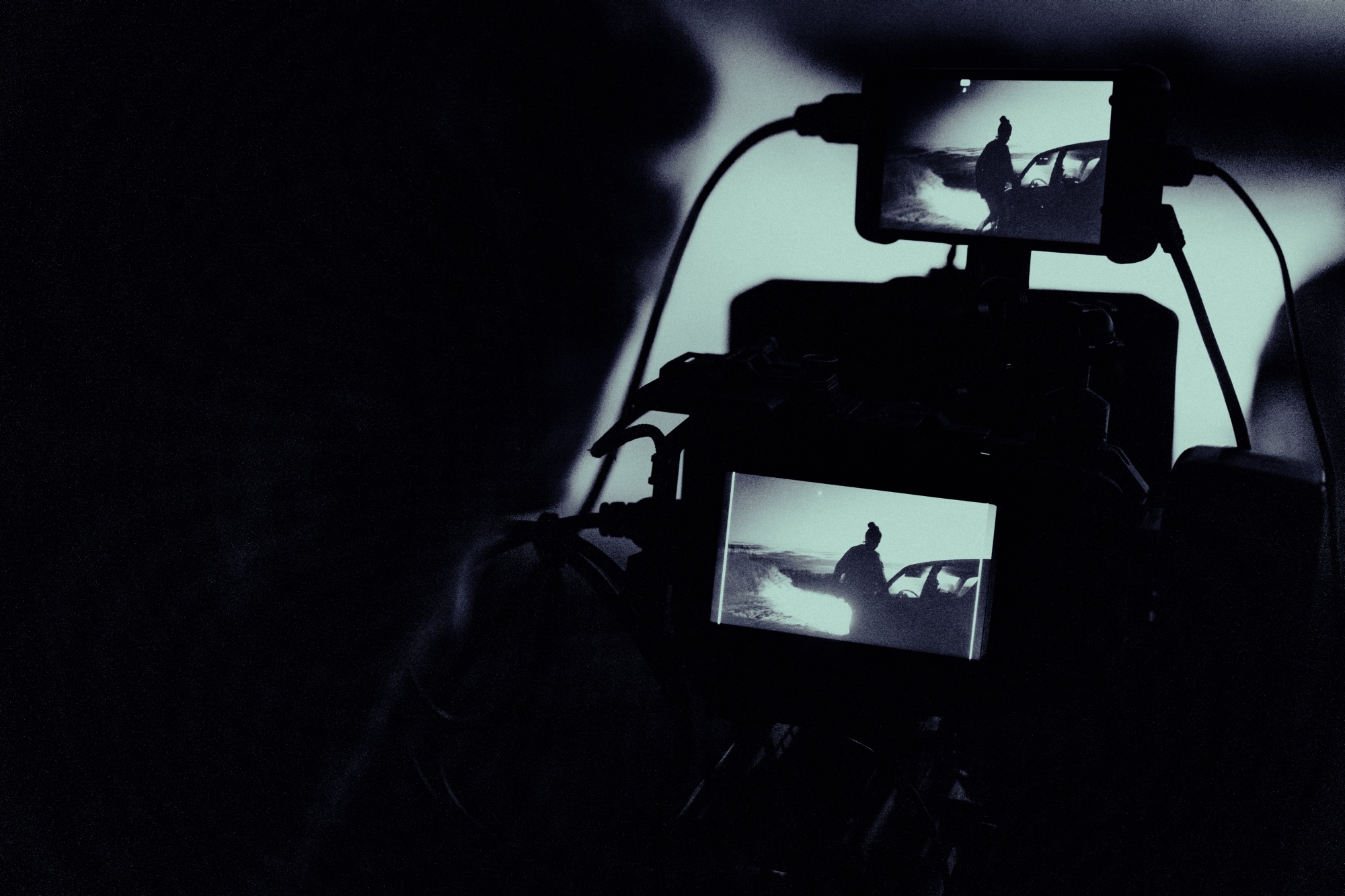

Given your guerrilla-style approach and limited equipment, how did you approach the lighting for the twilight and nighttime scenes to maintain both the visual atmosphere and the necessary exposure?
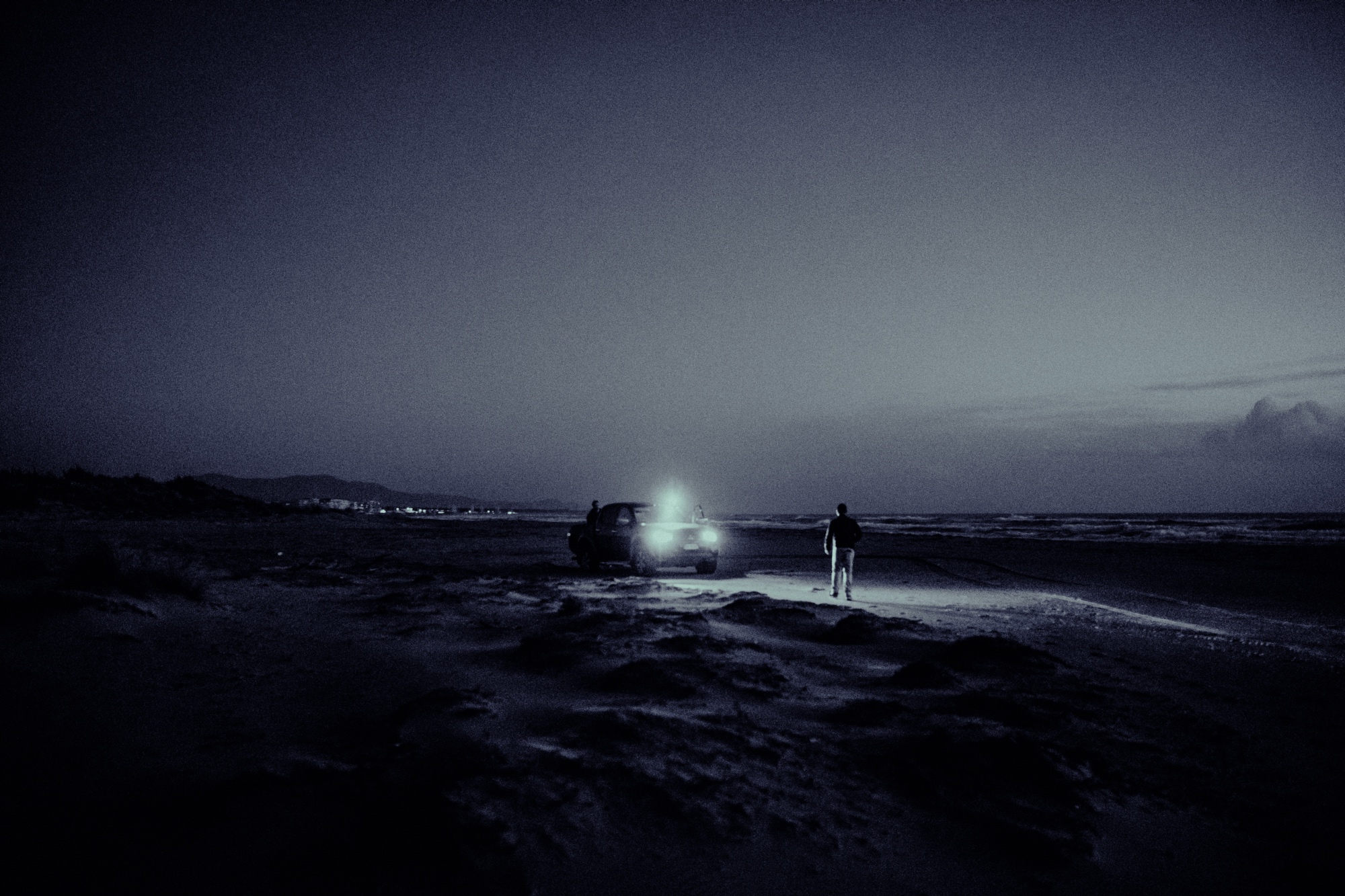
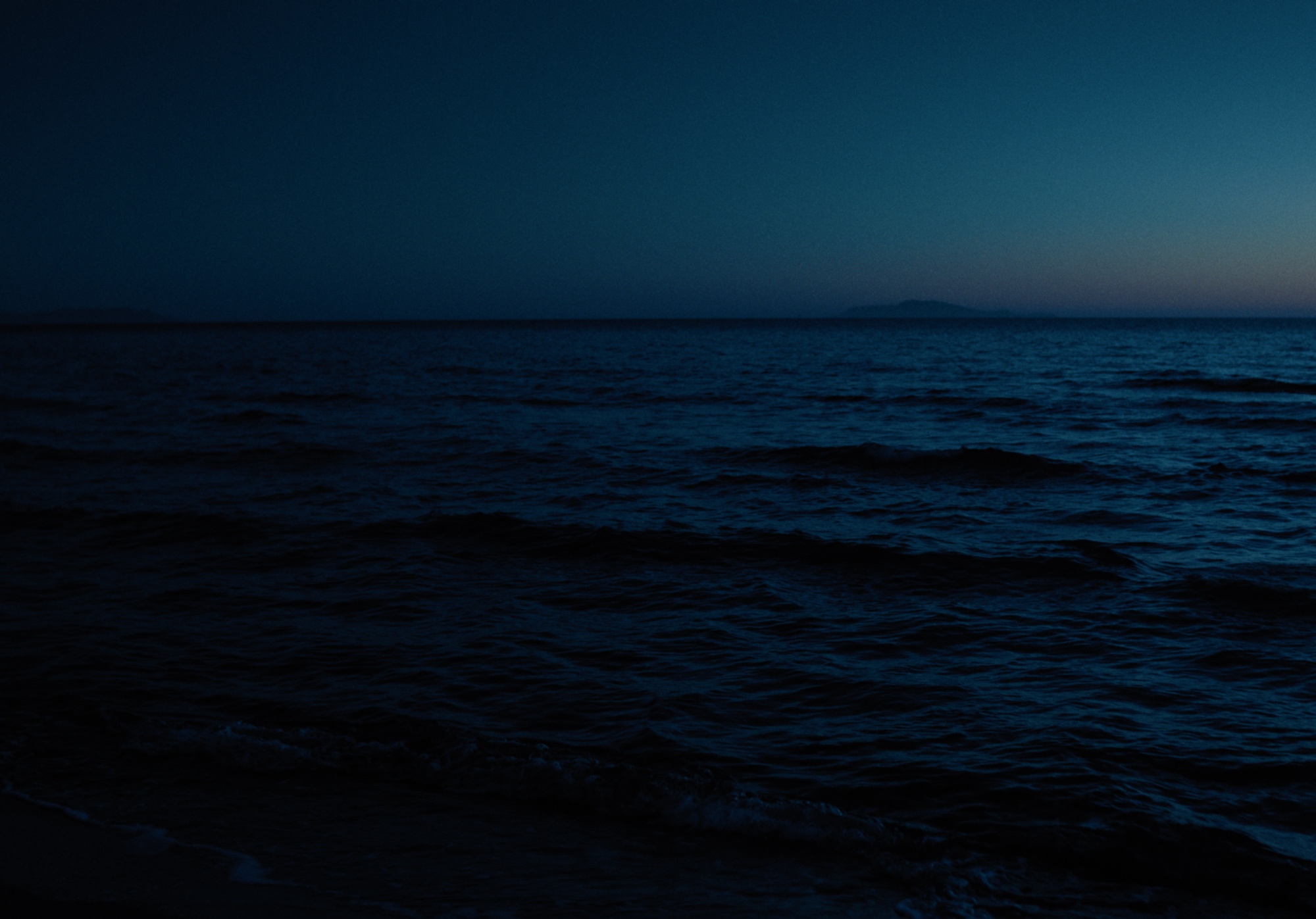
We worked a lot with natural light and its imperfections. Some of the most important scenes were shot during the blue hour in winter, when the light lasts very little. In that context, the Blackmagic Pocket Cinema Camera 6K with its dual native ISO was crucial: it allowed me to push beyond the exposure limit without losing detail. I chose to accept the noise, not to clean up the image too much. That grain, that dirty texture, becomes part of the film’s visual language—consistent with its fragile and unstable nature.
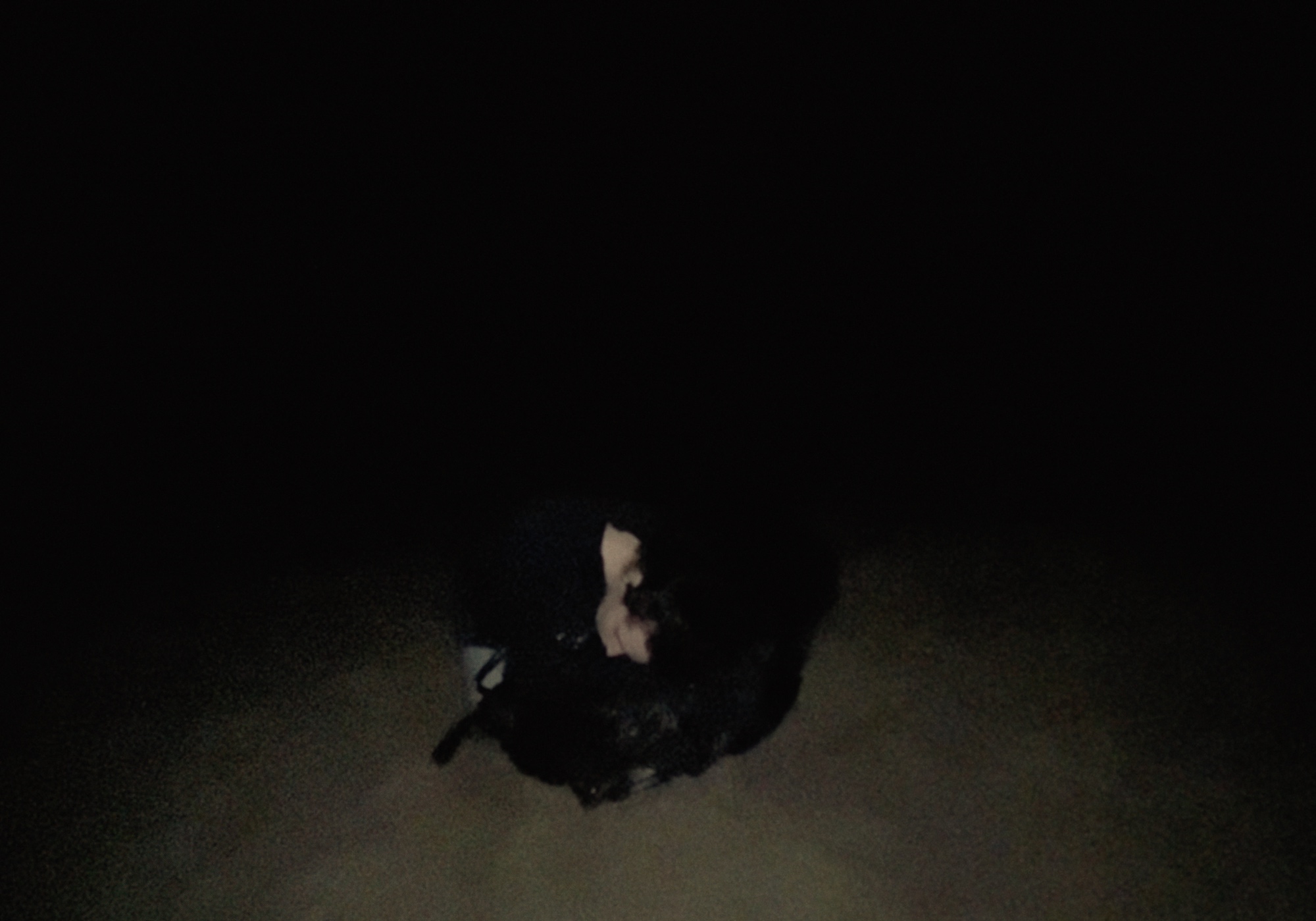
For the scenes shot with a mobile phone, on the other hand, we used only the phone’s built-in light. I was interested in capturing the noise that the light source produces, that weak, direct light that only illuminates a short distance, leaving everything else immersed in darkness. It’s a type of light that makes the gesture more intimate, almost clandestine. In a second step, I filmed the mobile phone screen with the BMPCC to obtain a sort of RAW from the mobile phone: this allowed me to experiment further with lighting and the way digital light breaks down and degrades. This process also became an integral part of the film’s language, a way of bringing technology and fragility together organically.
I was interested in capturing the noise that the light source produces, that weak, direct light that only illuminates a short distance, leaving everything else immersed in darkness.
The sound design, particularly the overwhelming grunts of the pigs, is so effective within the diegetic sound and silences which create unease and underscore the film’s thematic weight.
For me, sound is always an invisible presence, a parallel narrative level. The pigs only appear in the finale, but their sonic entrance has enormous weight: it comes as an intrusion, something concrete and uncontrollable that breaks the silence that has built up until that moment. I was fascinated by the visceral and confused noise they make when they eat, something primordial, almost disturbing. To recreate it, we used vegetables, looking for a real, physical texture that suggested the idea of a body being consumed without ever showing it.
In the background, the sea remains constant—a kind of white noise that runs through the entire film, like a distant breath. And then there are the silences, which for me are not absences but spaces for listening: when the sound recedes, only the presence of the characters remains, and everything becomes more fragile, more exposed.

What did the final one-shot scene give you that a multi-shot scene would not?
It was shot in a single take without cuts and was almost entirely improvised and came about very simply, almost by chance. We wanted to explore in real time the reasons that might lead the characters to such a choice. This gave the performance a natural flow and the dialogue the texture of a real conversation. We had only planned a short conversation, but the shoot lasted more than half an hour. We sat down and started talking, without a real script, trying to figure out together what might lie behind that gesture.
I believe that suspending judgement is not an act of neutrality, but a way of recognising the depth and complexity of a choice.
We then extracted only a few fragments from that long conversation, but that extended time was fundamental: it became a sort of open experiment, a moment of research rather than staging. In that process of exploration, nuances and questions emerged that a sequence written and shot in multiple shots could hardly have contained.
The subject of voluntary death is ethically and legally fraught. How did you approach crafting a narrative that immerses the audience in your protagonist’s experience without explicitly judging her actions or making an overt statement of any kind?
The starting point was not to impose a moral position, but to create a space for listening. I wasn’t interested in recounting an extreme gesture as a news item, but as a human act—fragile, conscious, charged with emotional complexity. That’s why I avoided showing the moment of the gesture or explaining the motivations explicitly. Everything happens in the relationship between the characters, in their silences, in small acts of care.
I believe that suspending judgement is not an act of neutrality, but a way of recognising the depth and complexity of a choice. Letting the viewer remain in that grey area—without answers, but full of questions—is the most honest thing I could do.
What’s next for you?
I am currently in pre-production on a new short film, set once again in the province of Grosseto. It tells the story of a kidnapping that takes place inside a quarry. Unlike Godless Animals, it will have a more structured production set-up, but I will try to maintain the same intimate and instinctive approach to filming.
At the same time, I am working on editing my first photography project, created in 2025 as part of a workshop organised by Yogurt Magazine with Caimi and Piccini. And finally, I am in the process of writing my first feature film, which continues some of the visual research I began with Godless Animals.