
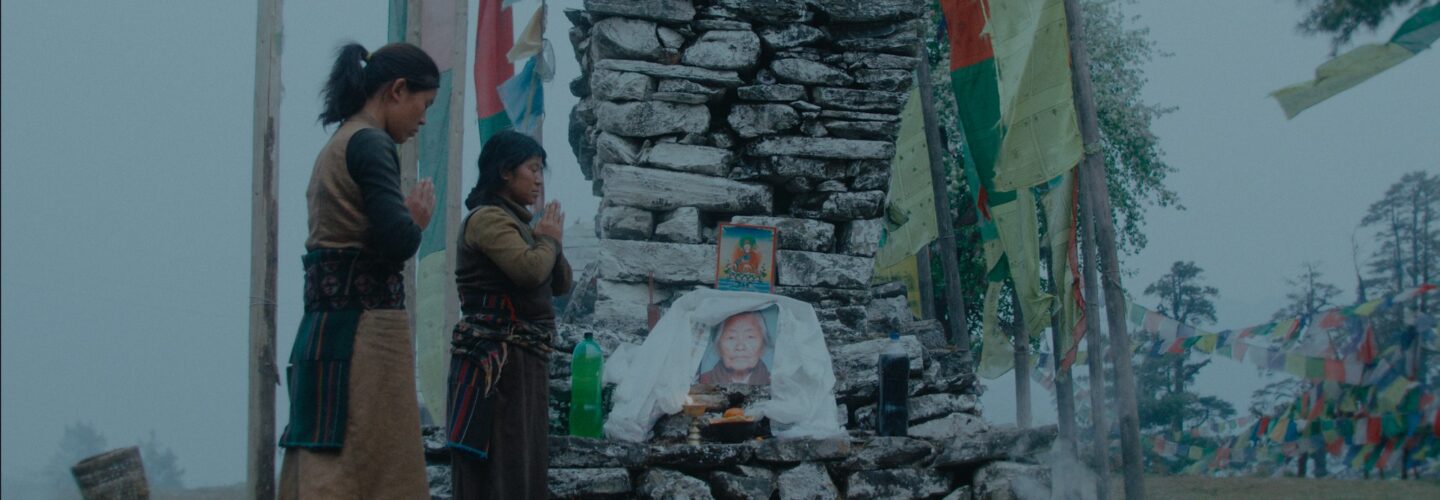
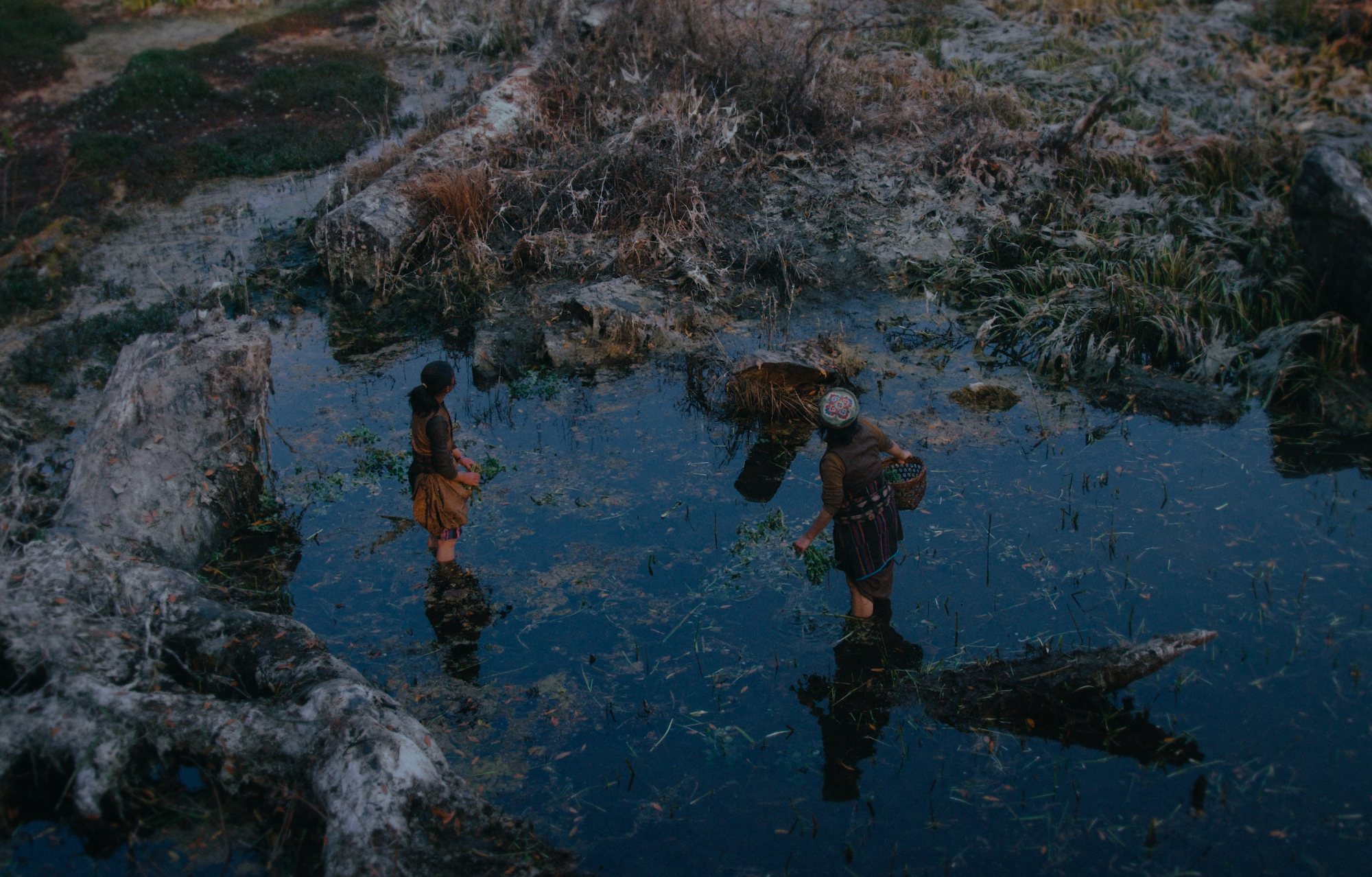
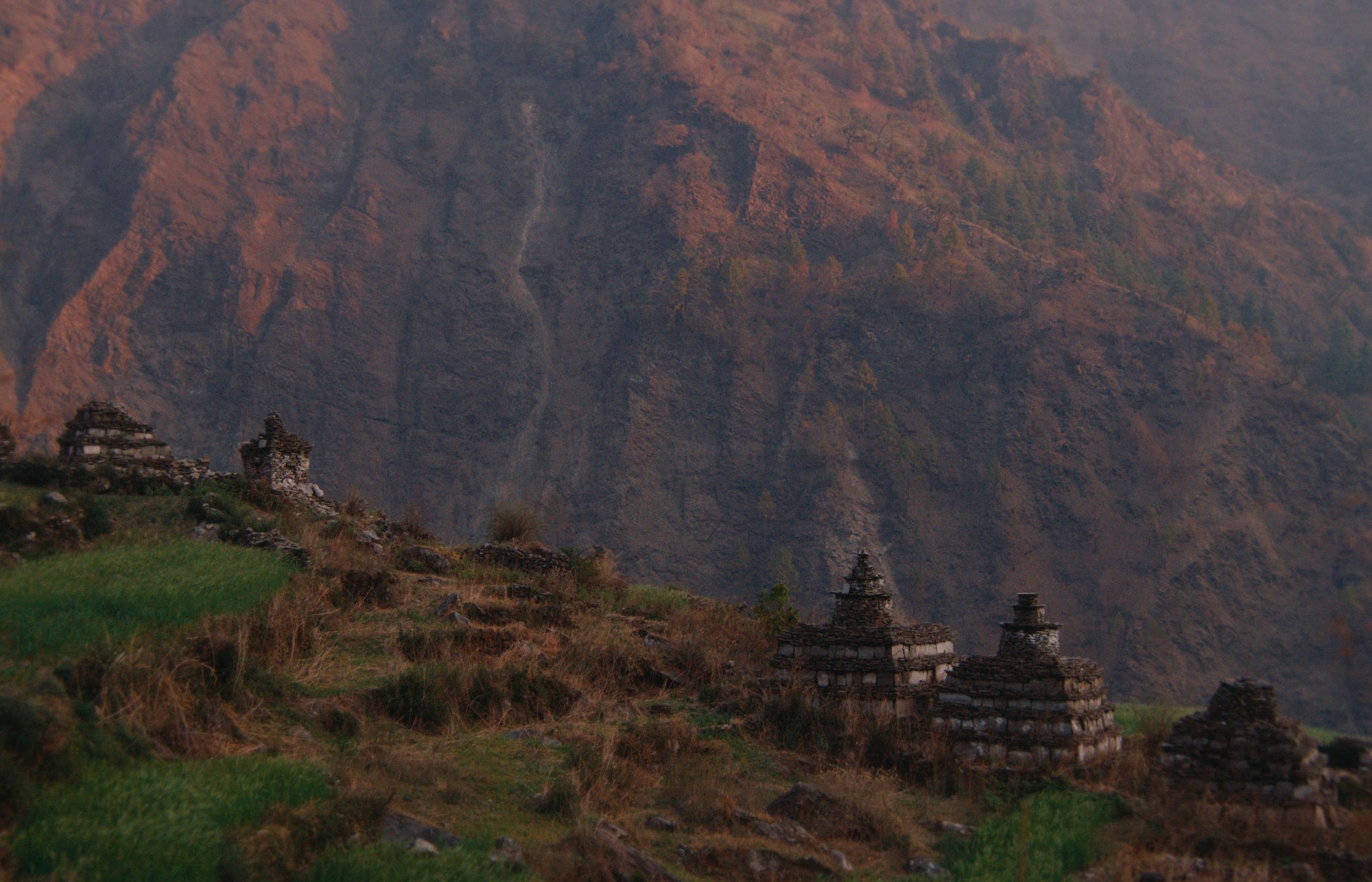
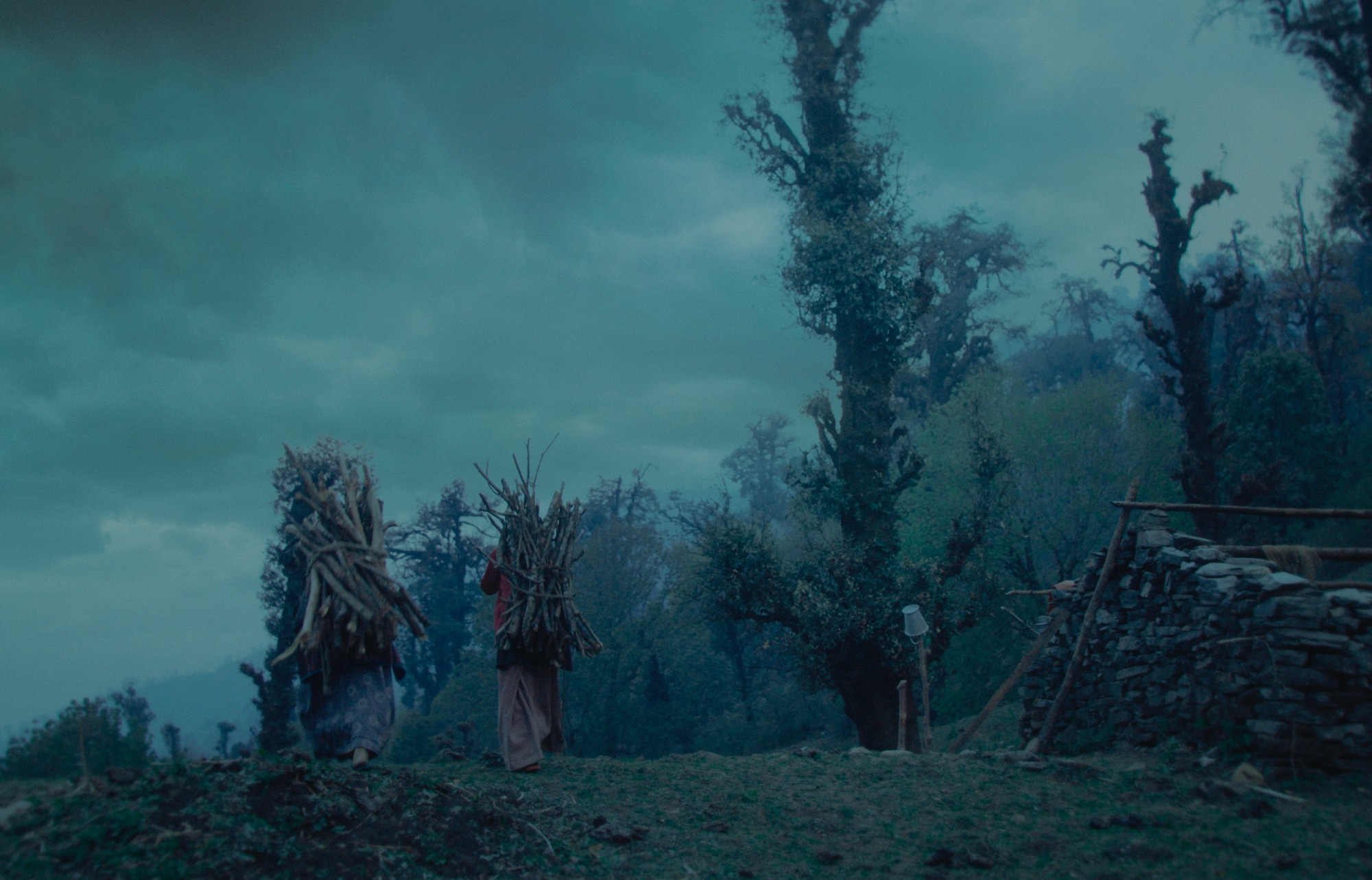
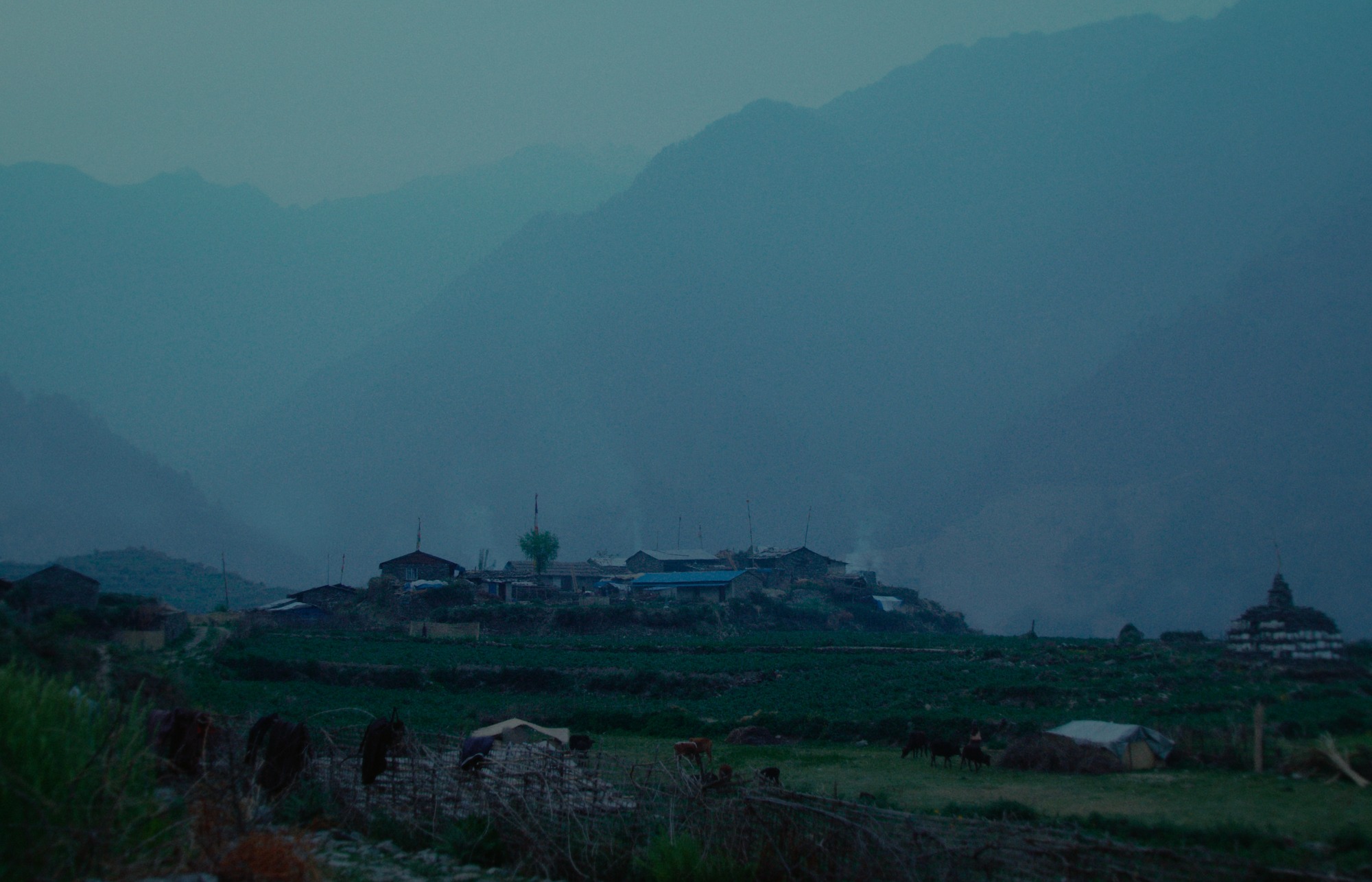
A father has been gone ten years. No word, no body, no explanation, only the shape of his absence, and a daughter afraid of losing the last memory she has of him. Then, on the day the season’s first storm breaks, a stranger walks into the family’s home. Who he is, and why he has come, is the mystery at the centre of Family Man. Kalani Gacon’s fifth film, made in Nepal, is a near-wordless, mythic seventeen minutes that lives in porous places: between the living and the dead, presence and absence, a wish and the wrong way it might be answered. Shot in the high Himalayan village of Gatlang, in an endangered dialect of Tamang particular to those hills, it withholds nearly everything a film usually relies on and trusts instead to image, gesture, weather and silence. Its only voice is a song. And its rain is no ordinary weather: it is the medium through which a spirit might move, dissolving the distance between the one who left and the ones who remain.
What emerges is less a story told than a feeling conjured—grief and longing given a body, a family allowed to imagine that the missing might come home. Directors Notes delights in featuring Family Man on our pages alongside our conversation with Gacon, where we discuss the wish at the film’s heart, the spirit who fills the spaces the missing leave behind, and the months of living that let this film grow up out of its place rather than be set down upon it.
Family Man begins close to home. You grew up without a father, imagining as a child what it might be if he simply walked back through the door, and from there, the idea of those wishes getting mixed up, so that the wrong man is returned to the wrong house. How did that wish become this film?
Like many others, I grew up in a home without a father, and as a child used to imagine what would happen one day if our father magically came home. Could some greater power grant such a wish? What if the wishes of another family were mixed up with my own and the wrong man was sent back? Family Man explores this surreal and emotionally delicate place.
After living in the Nepali village of Gorsyang in Nuwakot for nine years on and off, I have experienced firsthand how outward labour migration pulls families apart for the best part of their lives, many of whom never come back. I chose to set my film in a neighbouring village and in the local dialect of the Tamang language to pay homage to the stories of families whose fathers never returned home and the families who wished for an alternate reality, and capture this beautiful, endangered language on screen while it is still being spoken.
You set out across Nepal with a map and a motorbike, deepening the story as you searched for where it would live rather than starting from a fixed place. What does discovering a film that way do to it?
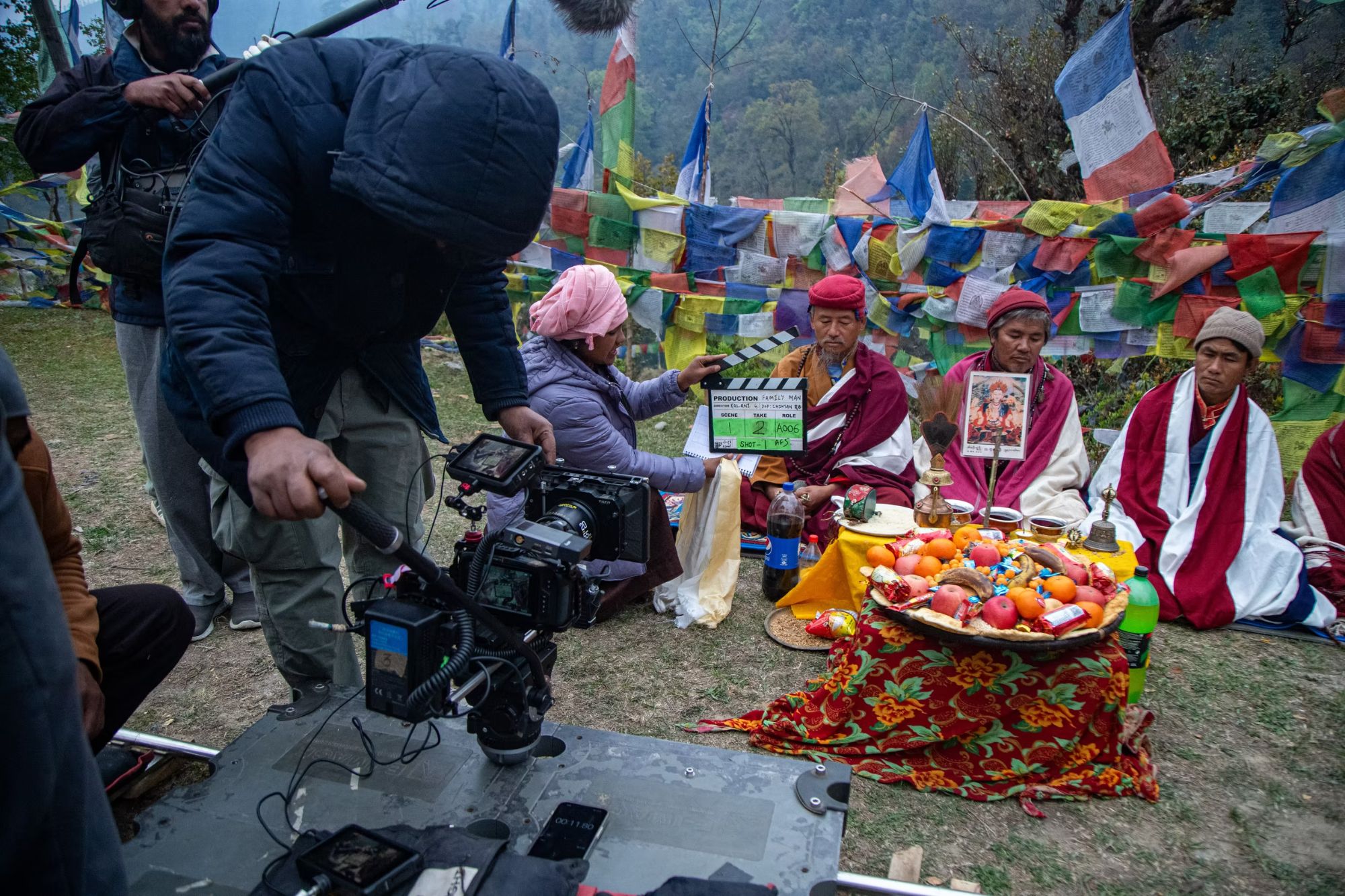
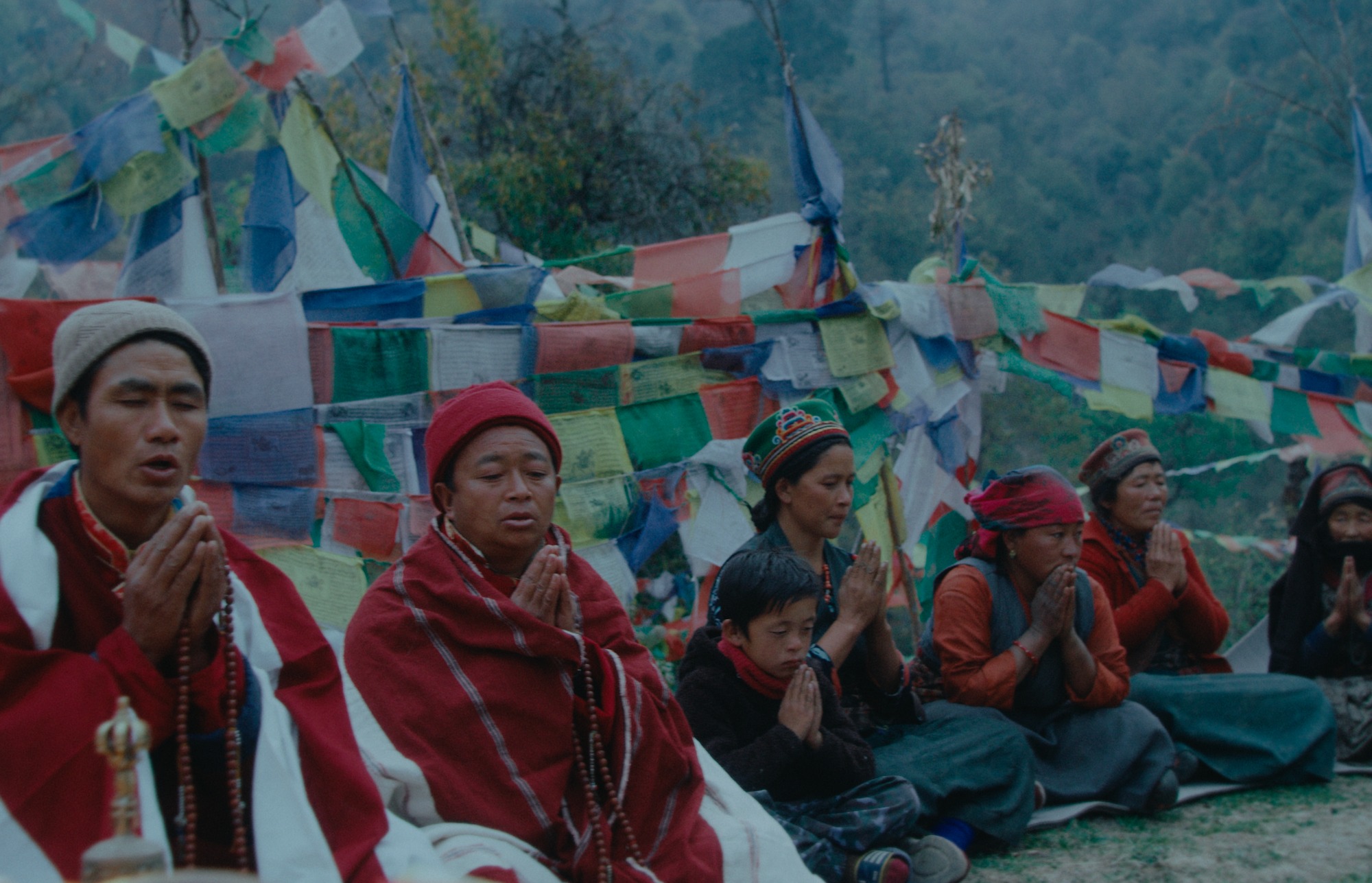
In my case, it meant that I opened up the process of making the film to become co-authored by the world of the people I was representing in my film. The opening scene, for example, a Chofulba (death ritual 1 year after someone has passed away), was something I witnessed while exploring backroads between villages, on the way while location scouting. I was so moved by what I saw – it was so perfectly complete a moment, I just knew it had to be in my film.
I opened up the process of making the film to become co-authored by the world of the people I was representing in my film.
Spending 2 months in the village we were shooting in, before the shoot itself, gave me an opportunity to really sit with the moments of the film, practice playing them out in the locations where they might happen. This triggered quite a lot of re-writing, a lot of time to talk about the story with the community, a lot of time to talk with the monks and hear their thoughts on the film. This was just the process that this film demanded.
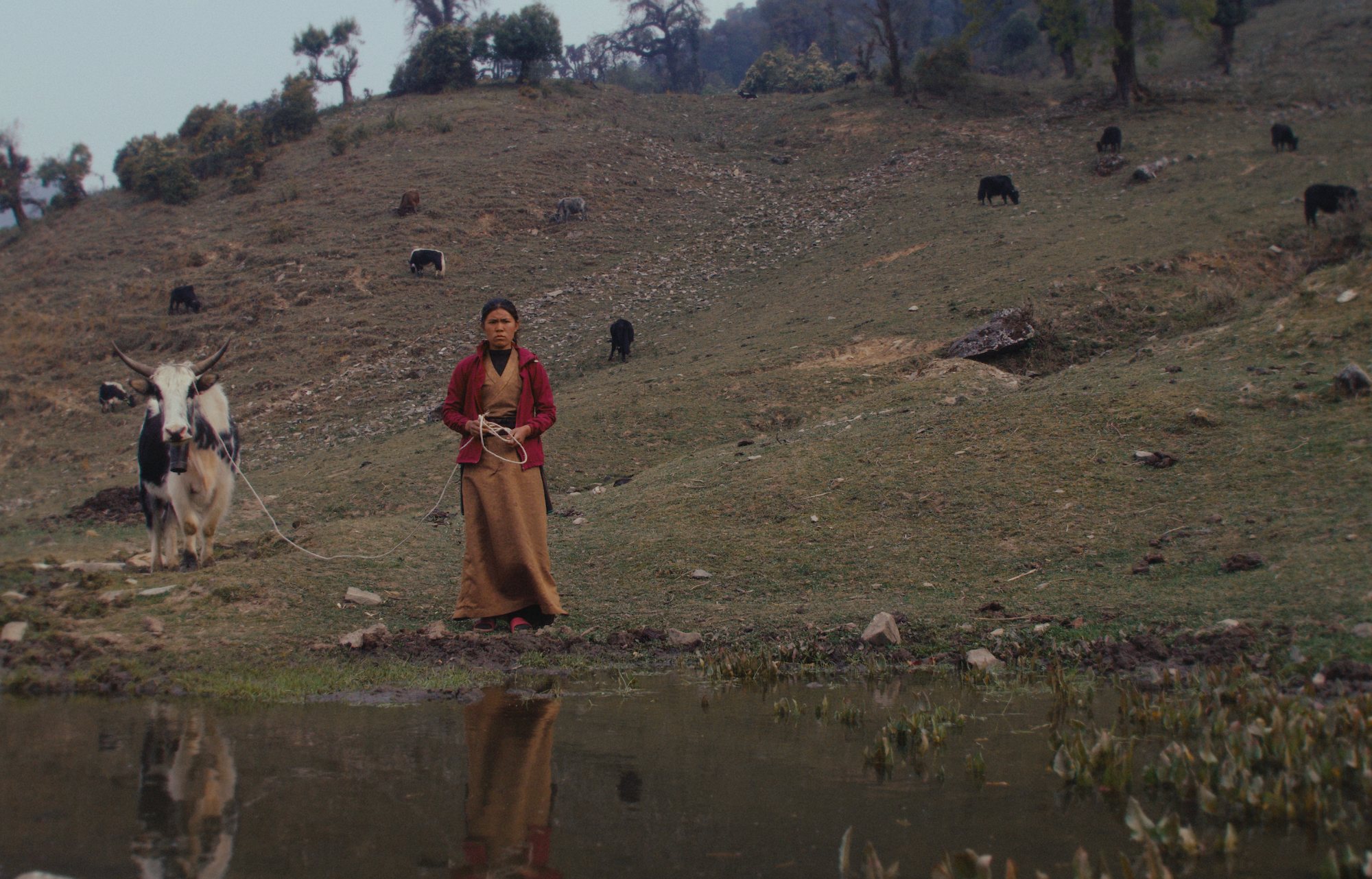
We lean almost entirely on image, gesture and weather; the song is the only thing we ever hear spoken or sung. Was that a decision you reached on the page, or one that revealed itself as the film took shape?
In many ways, it is a consequence of me not having a great command of the language of the film – a specific dialect in Gatlang of the Tamang language, and my instinctive response to this. Despite having been learning the language for almost a decade, each village has their own dialect that makes it very, very hard to learn. Gatlang’s was completely different.
It’s also because my previous film was extremely dialogue-heavy. I felt that I had some lessons to learn about leaning away from needing words to carry everything. Watching my previous film back, I would sometimes cringe, wondering why I couldn’t just let moments breathe. As I started to come closer to visualising Family Man, the lack of dialogue began to make more sense and began to feel more like what the film wanted. I wanted the song to be the only words we ever see being spoken or sung, so that it could hold more mythical weight – the song carrying all that which words could never.
Most Popular
Family Man feels woven into its village rather than set against it. How did you build that relationship with the community at Gatlang, and at what point did the collaboration begin shaping the film itself rather than simply making it possible?
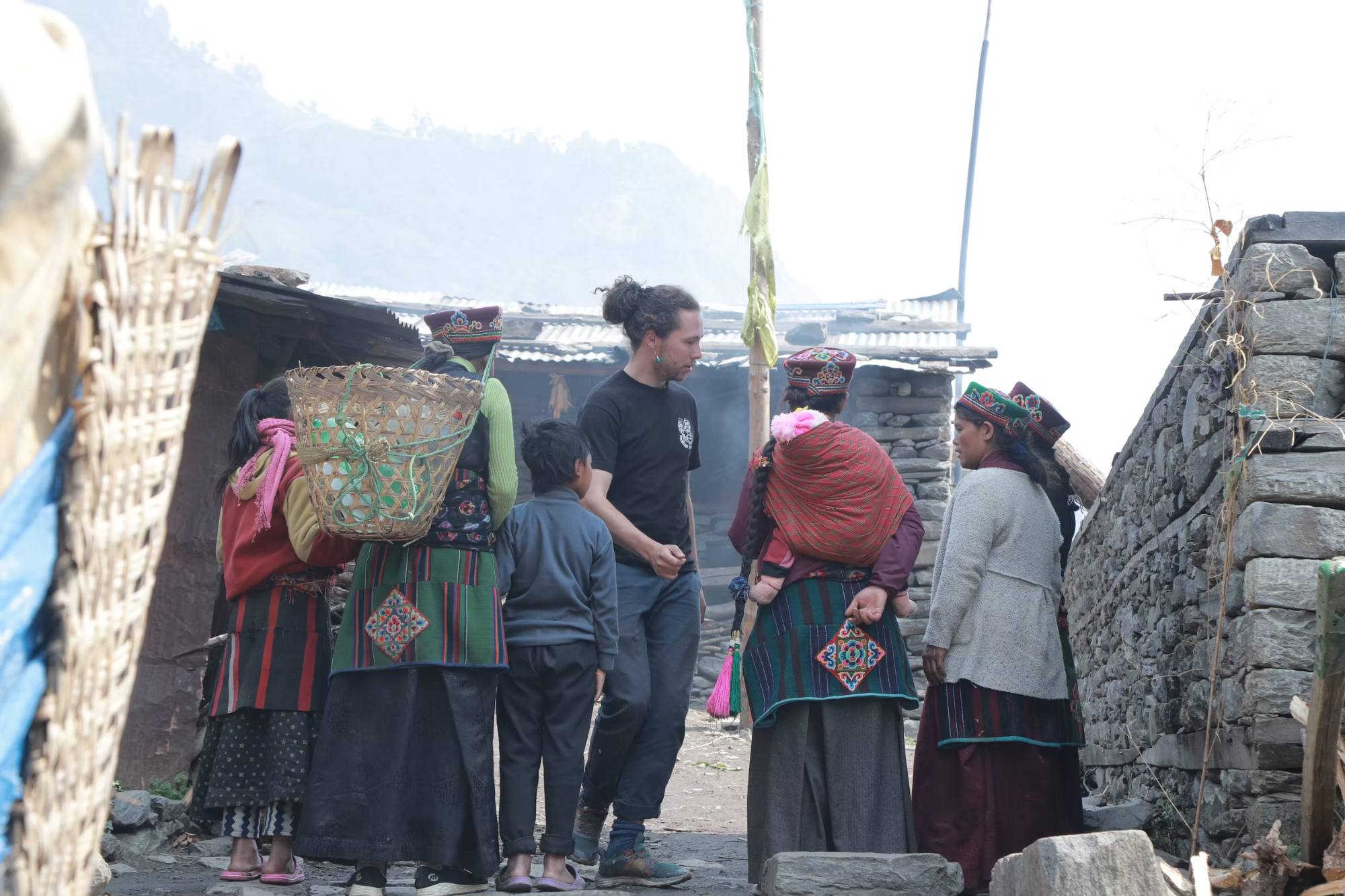
We spent around 2 months living in Gatlang before we shot our film there. A lot happened in these 2 months that I’m still processing. Our Nepali team has had a lot of experience producing films in remote communities on micro-budgets – so I lucked out having them there. There’s no way to rush this kind of relationship – our 2 months there was our way to give respect to learn, listen, workshop the film with the local actors and create a culture of co-authorship on our production.
For us filmmakers, our film is the most important singular thing in the world, and we, especially I, definitely had some arrogance to assume that our film would become the focus of the lives of the people in the village, and we would all happily work together every day. When we arrived, the villagers were busy living their lives. Living relatively self-sufficiently, they have a lot to do, from making thick winter jackets to planting vegetables to tending to livestock. These are all very demanding tasks. How could that life leave any space for the all-consuming experience of creating cinema? And yet, we were able to bring people into our process who genuinely became part of the fabric of the story.
Pasang Chheten Tamang, our lead actor, an 18-year-old girl who had just recently retired from being a Buddhist nun, spent the entire 2 months living with us. She said she had always dreamed of being an actor, and I’m so glad that at least this dream we could have made possible. We talked a lot about karma, rebirth, and the rituals needed between these spaces, rituals which the missing father character did not have. This helped me rewrite with a culturally specific handle on the cosmology and spirituality of the world of the film. Slowly, word spread that there was a film team living in the village, and in the evenings, we would have all kinds of visitors coming to share stories or talk about our film with us. Then, whenever we would workshop scenes and practice blocking on the sets, we would have dozens of locals watch us and give their unsolicited opinions. The very public process we had of rehearsing made it a bit of a show for people, and this gave us a chance to get immediate, real-time thoughts and feedback.
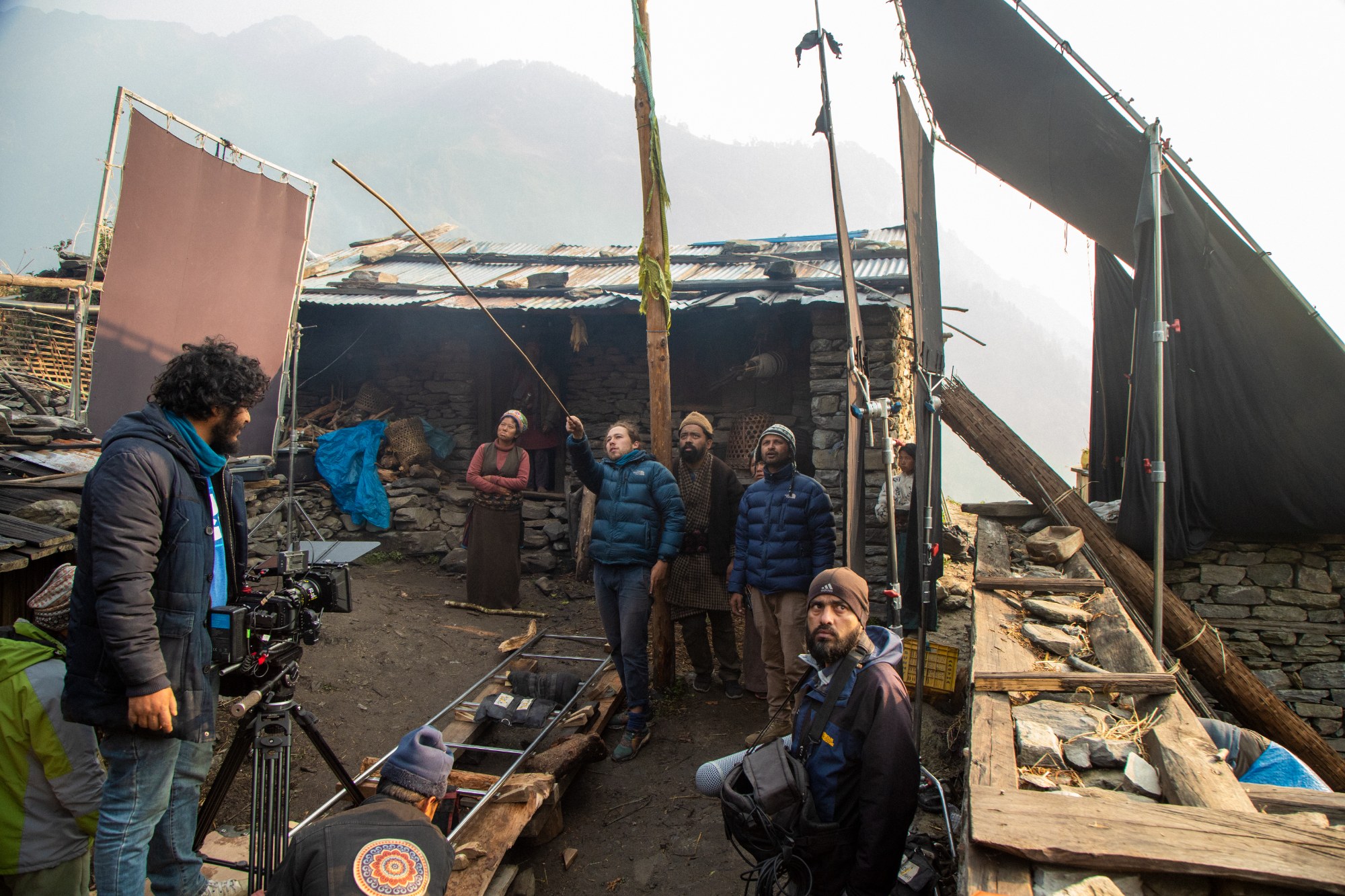
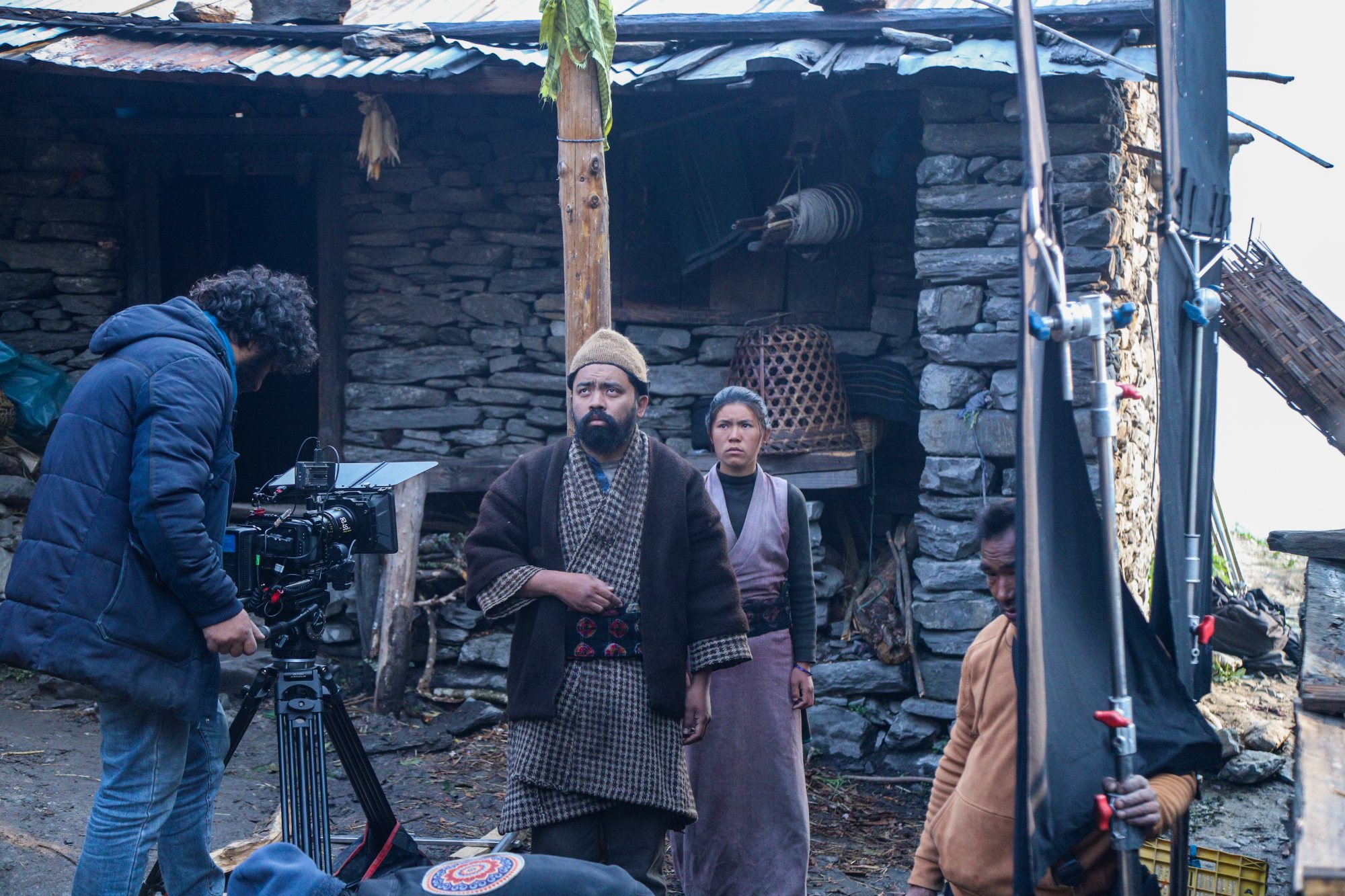
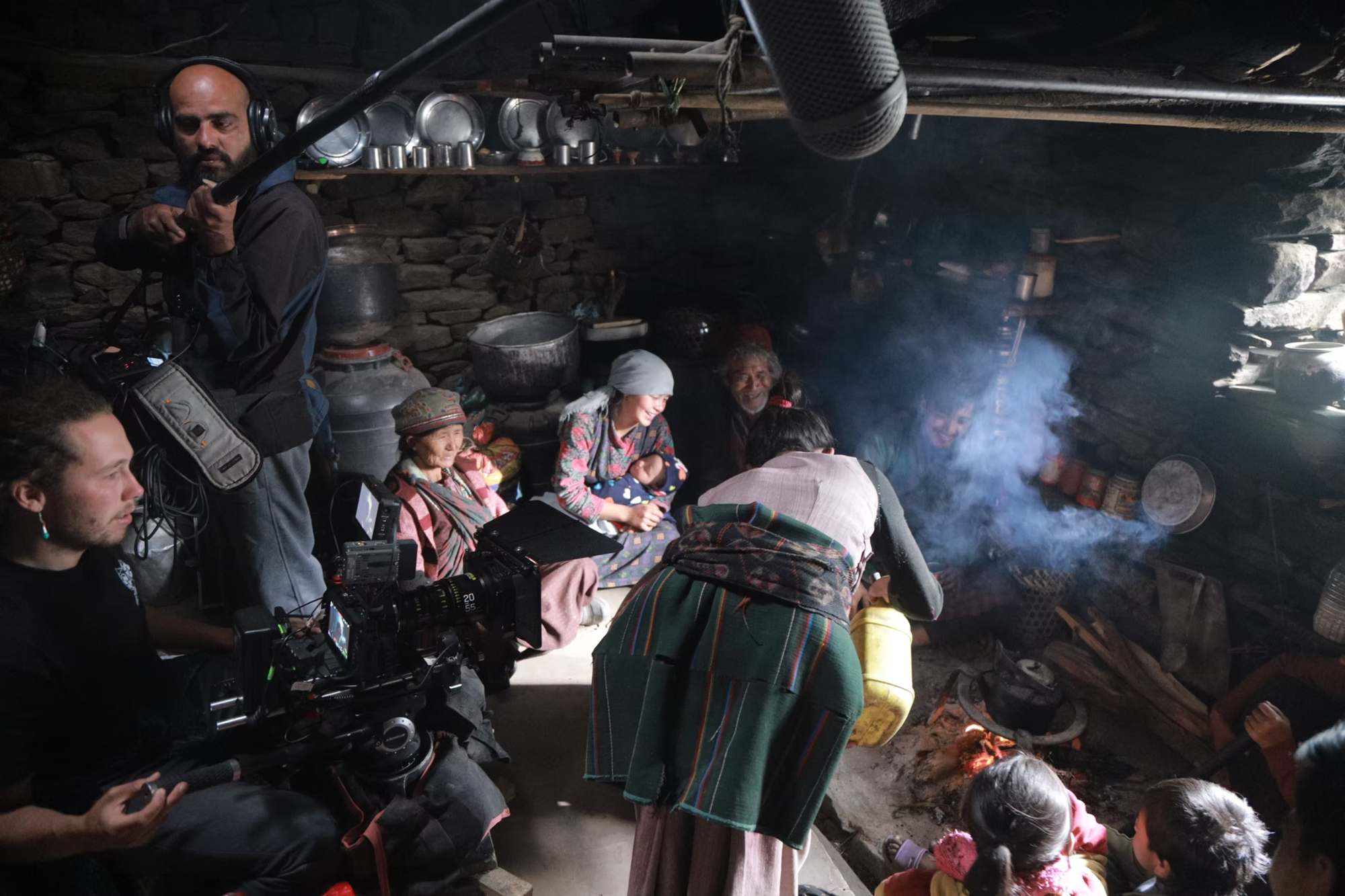
So much of the film’s power comes from faces and presences that feel entirely unperformed, especially in the group scenes with villagers and non-professional actors. How did you create the conditions for that naturalness, and keep the camera feeling like a guest rather than an intrusion?
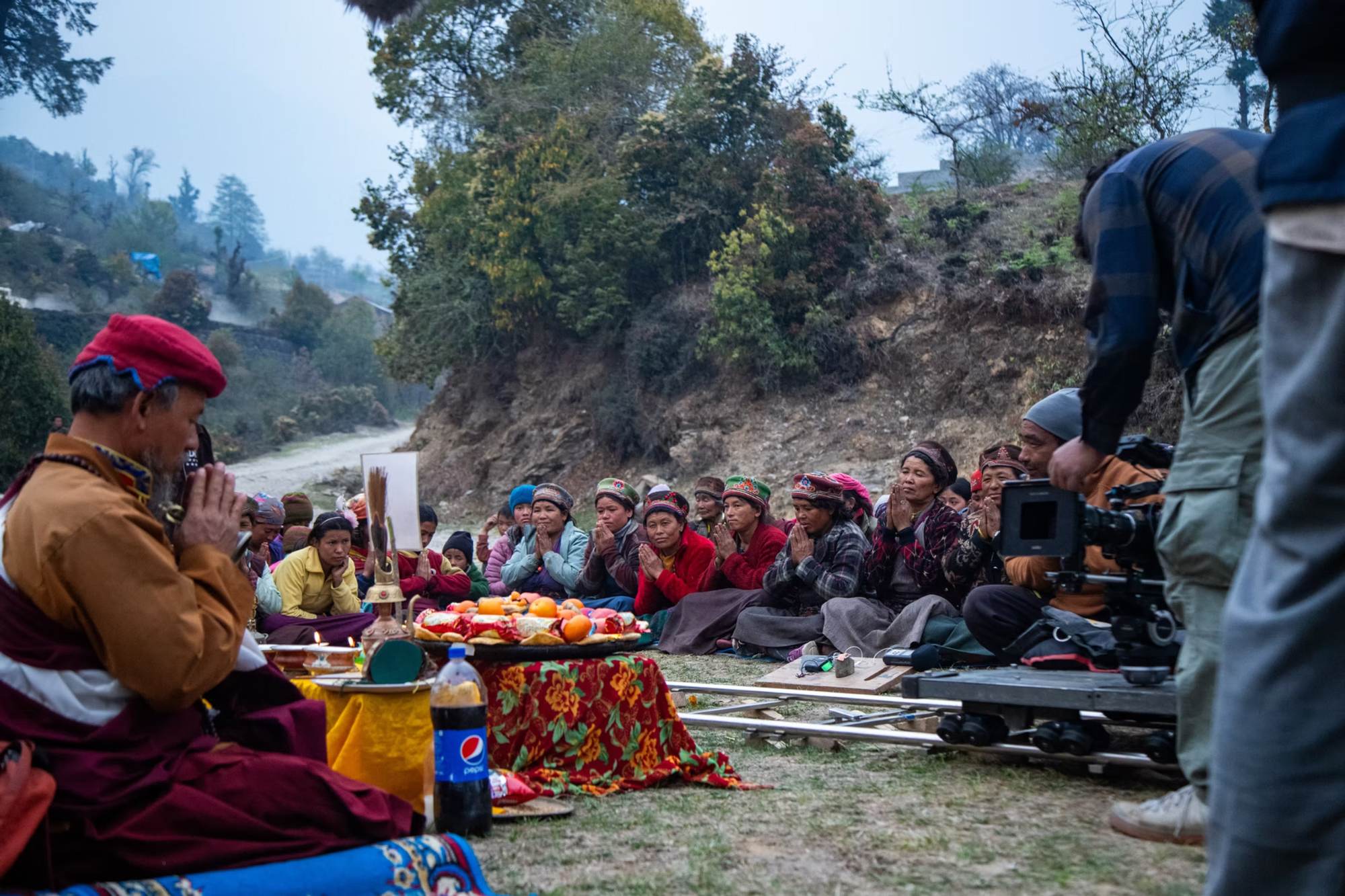
Putting a camera in front of a human being, trained actor or not, is a fundamentally disruptive act. I don’t know if it’s ever possible to overcome this, but if it is, I would love to learn how other filmmakers have pulled this off if they did. For the opening scene, we had the entire village present for the moment. They performed the ritual from beginning to end, not because we needed to film the entire process – we only took one moment for our film, but because for them, the entire ritual needed to be completed once it began.
I think because we tried our very best not to interrupt the ritual and let it play out as it always had for the locals, and there was minimal direction taking place, it became a moment we could capture that wasn’t really performed. For working with the other non-actors in the film, we had built real connections through time, and I feel like time alone is the main ingredient to build trust and comfort.
Putting a camera in front of a human being, trained actor or not, is a fundamentally disruptive act.
In the 2 months living in Gatlang, we spent a lot of time with Pasang’s family, played a lot of games and just spent time together as humans. She lived with Sangita Thapa Magar (an actor who played the mother), sharing every moment together, including sharing a bed. By the end, they built a really strong connection, which was a big part of the process.
You were filming inside a living culture with its own traditions and rhythms. How did you approach representing those details truthfully, and where did the responsibility of getting it right sit alongside the freedoms of fiction?
One of the first steps was surrendering expectations surrounding the process, including concepts of things like the schedule and how the set would run, to resemble how I have experienced filmmaking in Australia. Luckily, I have made a number of films in Nepal before, so at least partially, I knew what I might be in for. We were working within a real community with their own way of living – filmmaking operates on a completely different plane of living that is fundamentally quite incompatible with the cycle of crop harvesting, animal herding, and spiritual duties. This friction is both the impossibility and the magic of creating cinema in a community like Gatlang.
Our film is a work of fiction and a kind of mythic tale, grounded in the local cosmology and culture. Certain things we took very seriously in representing truthfully – the opening ceremony, for example. Other things were led by imagination and instinct, as cinema and art ought to be. Some things felt sacred and demanded representation that respects the living truth of things. We spent plenty of time rehearsing and talking with Lamas to get moments like the opening scene and rituals right. Our lead actor, Pasang, who had recently retired from living in a Buddhist monastery, taught us a lot, too.
Some things felt sacred and demanded representation that respects the living truth of things.
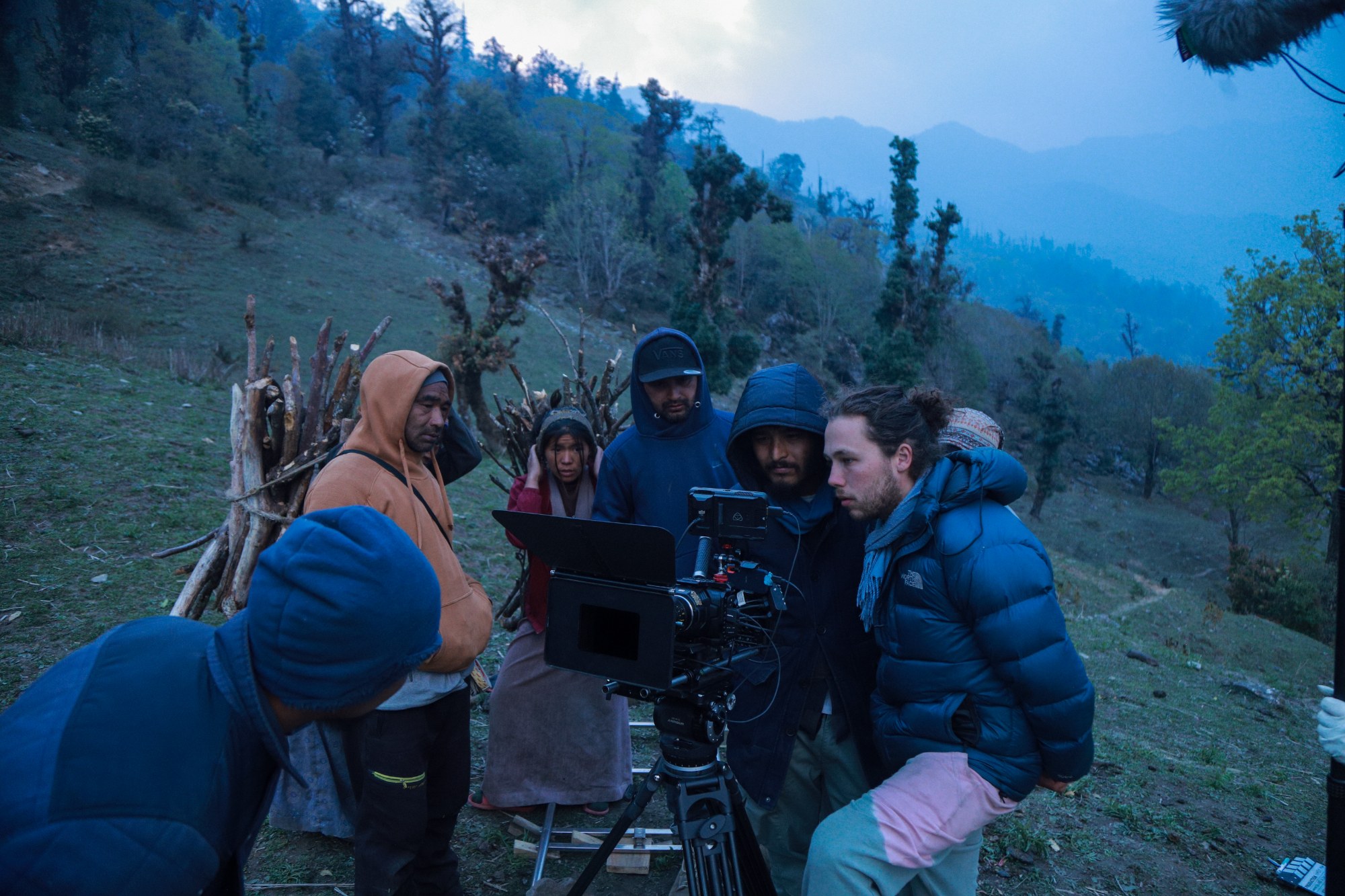
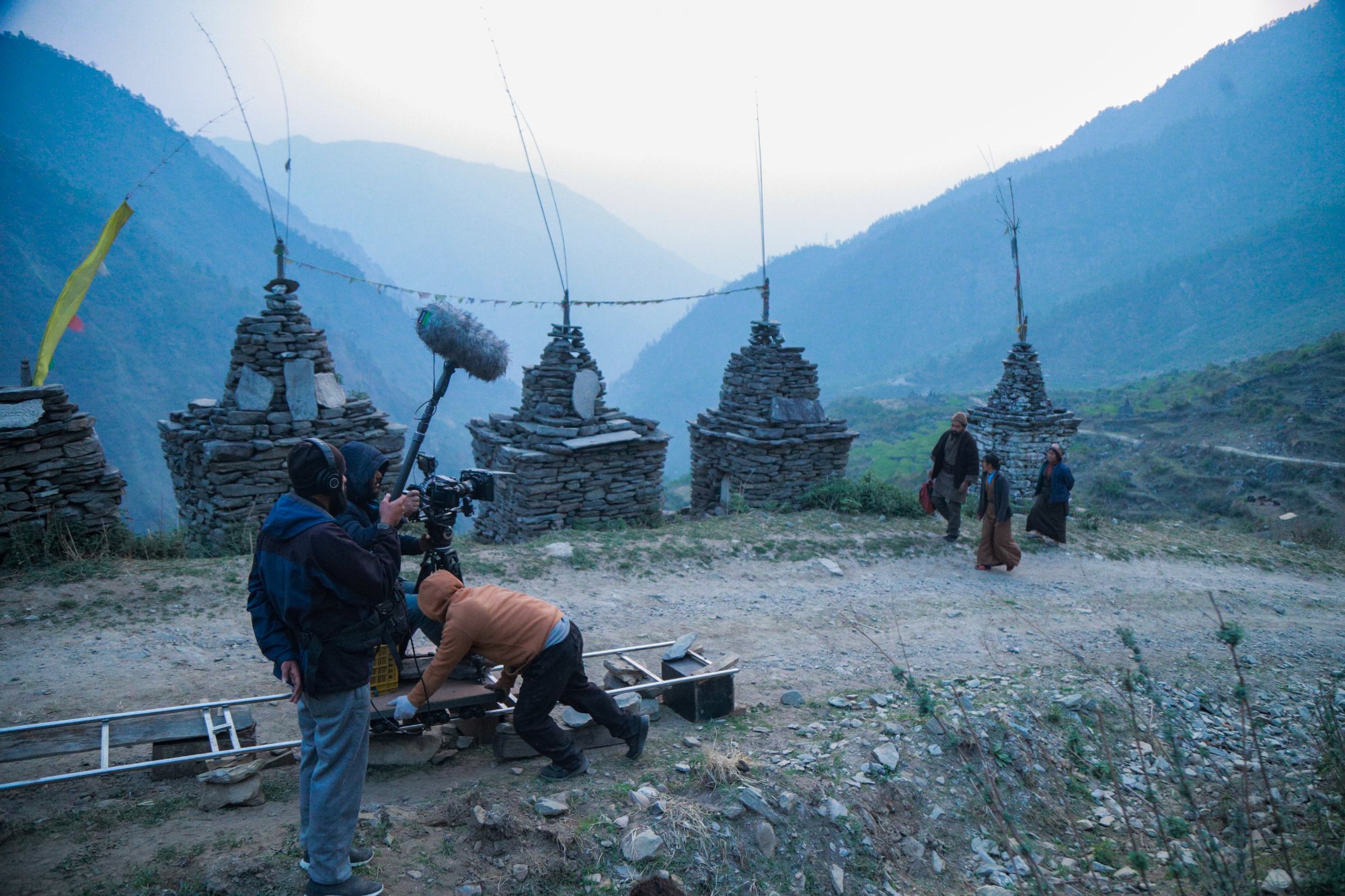
Filming somewhere with none of the infrastructure a crew usually leans on must have reshaped how you worked day to day. What were the practical realities of mounting a production up there, and how did those constraints end up feeding the film rather than fighting it?
Regarding filmmaking in a place like Gatlang – everything is difficult, and in a way, maybe that is why I was drawn to the experience. Everything that you can imagine being difficult about shooting in a remote Himalayan village is slightly more difficult than you can imagine – and then there’s everything else you wouldn’t have thought about on top of that. In a way, making a film like this is like good Italian cooking. The meal is not good because the chef has all the ingredients in the world. It’s good because the chef has a couple of ingredients he was able to bring together because they were in season, and he could go for a walk and get them, and they were just ripe and grown in high-quality soil.
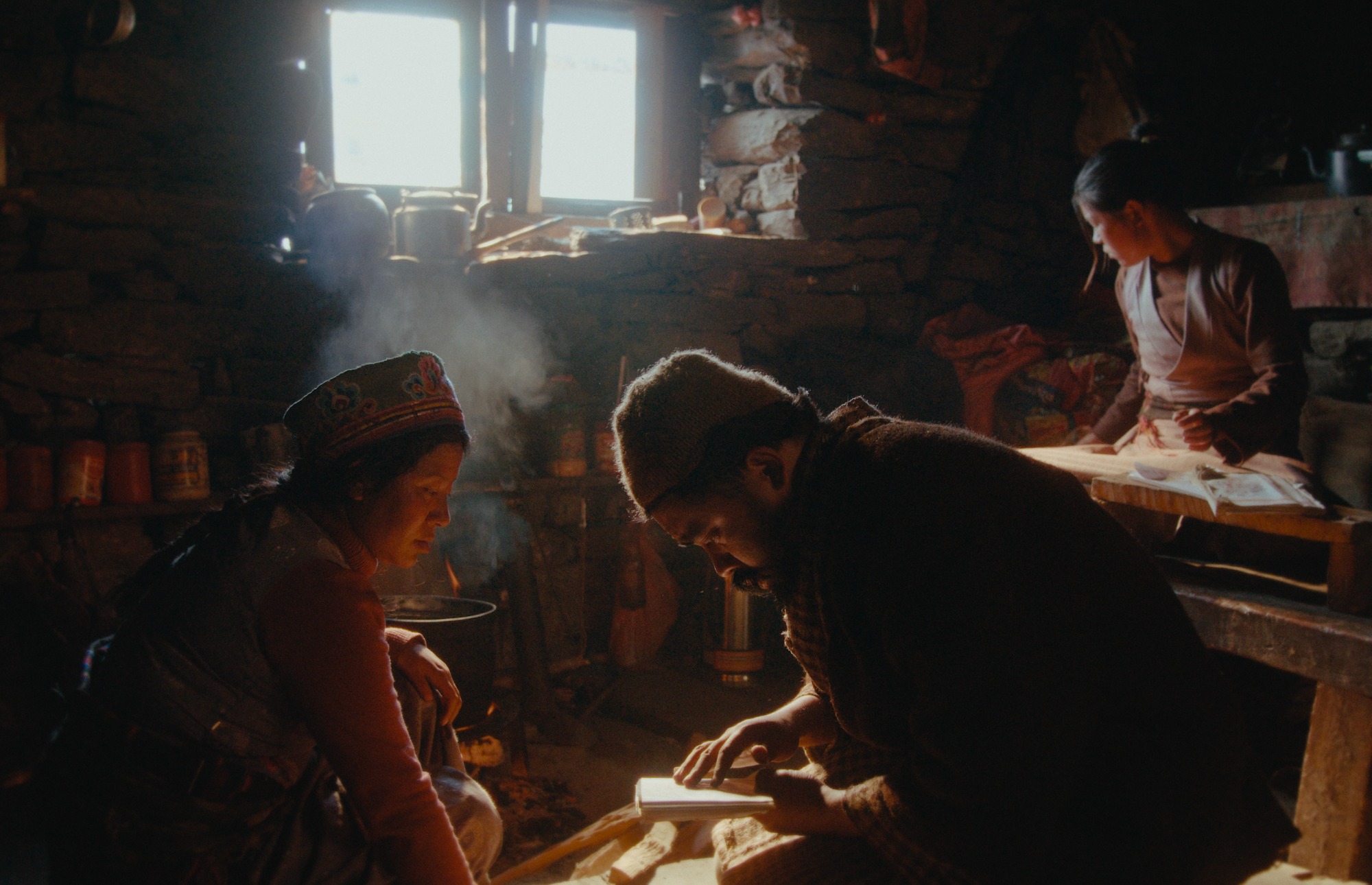
The interiors are lived-in and almost sacred, even in near-darkness. Take us inside the camera and lighting choices for the house — how did you and your team find images in those spaces?
A lot of credit must be given to the locations themselves – homes of the villagers which had been built and rebuilt by hand for hundreds of years – giving so much texture, life and soul to the frames. These homes are works of art in their own right. We tried to accentuate what was already there – the way the light looks in the morning, when the sun pierces through the window and hits the steam and smoke of the cooking pots. The blessing of working in real locations that interact with the sun in real ways is that a lot of the work becomes about observing rather than constructing. We made sure we saw how the light hit the locations at all different times of the day and built from there.
The first storm of the season is the engine of the whole film, and you had to make the rain yourselves. Tell us about conjuring a storm in a remote village, and what you were chasing emotionally in those drenched scenes.
People find transcendence in different experiences – drugs, dance, music, prayer – for me, water is my way there. I feel this so much that, in the myth created through Family Man, I am exploring how a spirit can move through rain, literally transcending time and space through water. The Family Man is not seen after the final storm, and he arrives in the first storm of the film. The daughter, too, remembers that her missing father left on the day of a big storm. So perhaps the missing father’s spirit found its way back through the rain.
I am exploring how a spirit can move through rain, literally transcending time and space through water.
All credit must be given to our rain team, who engineered a rain machine that utilised boring machines, pumps, and borrowed pipes to pull water from the underground streams, into a standby water storage container and then, up through a homemade sprinkler/pipe system made from agricultural materials. The ingenuity and hustle was remarkable. We even had to borrow pipes from the villagers and stitch them together because we didn’t have pipes long enough from the water source to set.
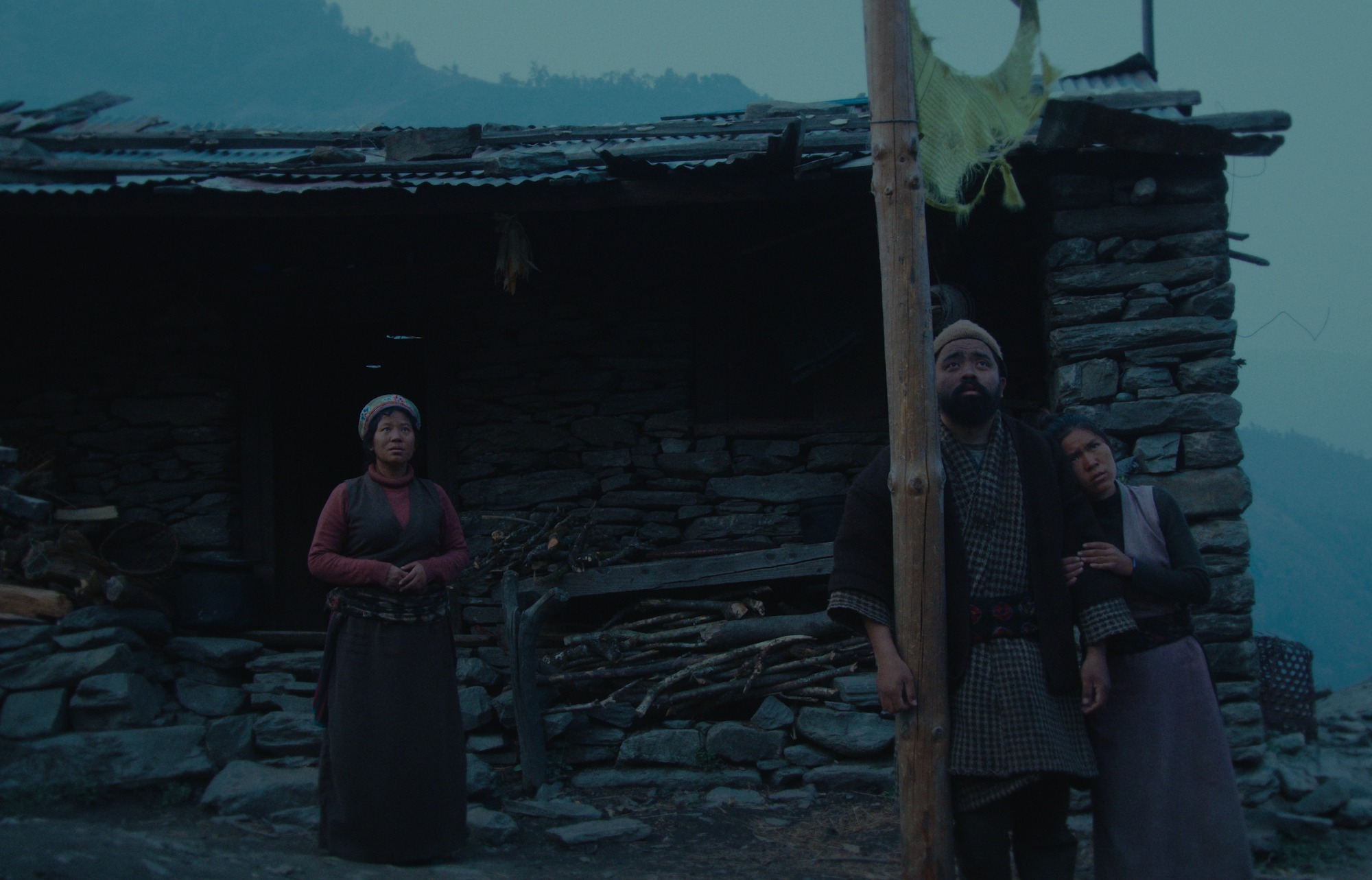
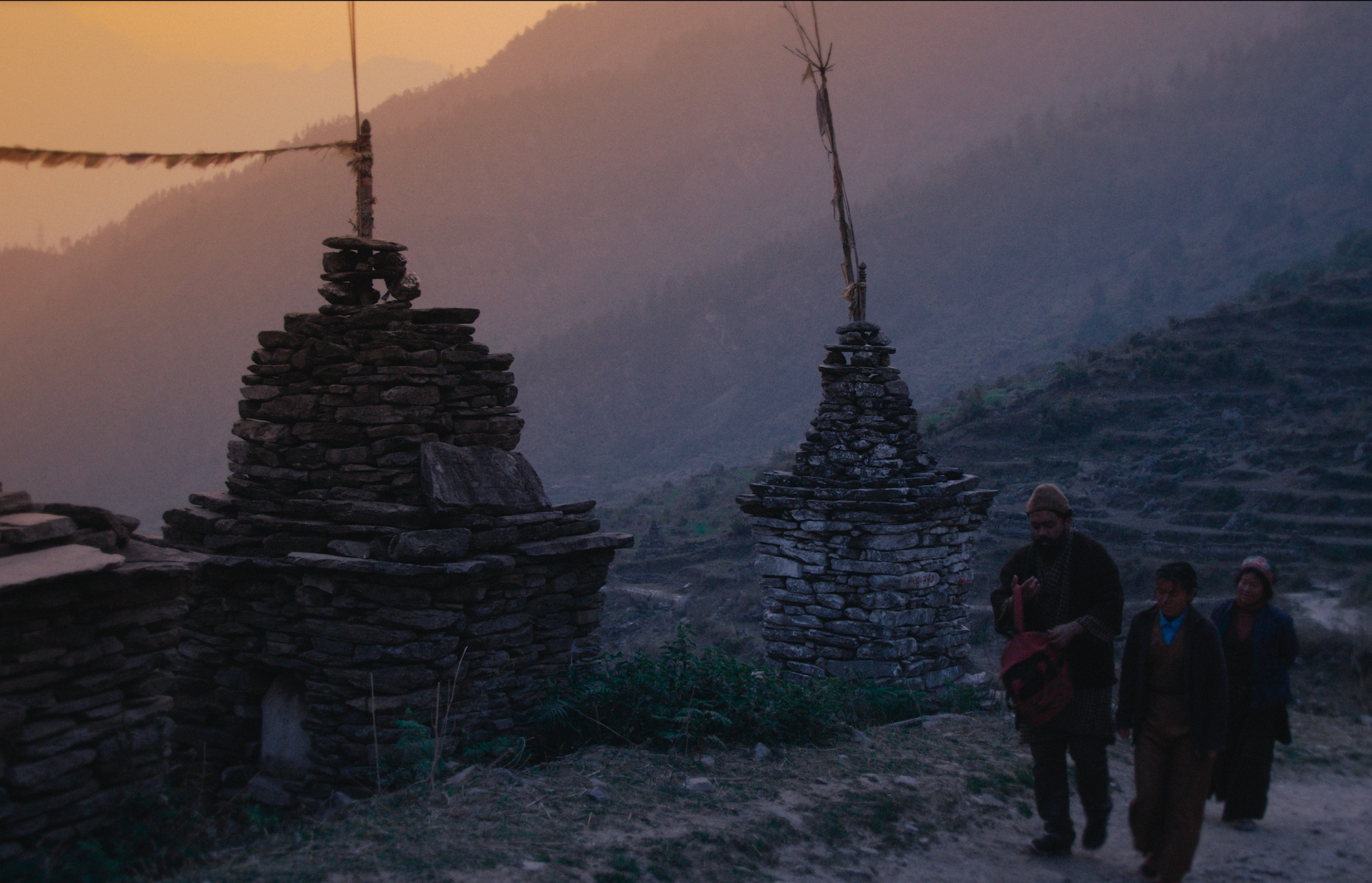
You’ve described the stranger as a kind of spirit who fills the spaces a missing person leaves behind. How early did you come to understand him that way, and how did you guide your actors and your camera to hold him in that in-between place — neither fully real nor fully apparition?
It was honestly tough to direct Bijay Tamrakar to play the Family Man because there’s little substance to hold onto for his character. I know he found it difficult, too, because the normal conversations about character history, motivation, and truth are all abstracted with this kind of character/lack of character. He did a remarkable job, regardless – we talked about instinct and how he could be led by that, as that would be the only truth needing to be held on to.
The Family Man, being a spirit who fills the spaces a missing person leaves behind, wasn’t the first impression I had of the character. At first, I imagined it to be more absurd and grounded – a literal stranger who hangs around in the house of a family where the father was missing. When I found the location for the film in the Nepali Himalayas, this evolved. Conversations about past lives, of spirits, of ghosts that I had in the 2 months I spent looking for the location made a pretty strong impression on me. When we finally found Gatlang – a village with a Tibetan style of Buddhism, a few things clicked. I thought – what if the missing father had died overseas and no one knew about it? What would happen to his soul with no ritual to help him pass on to the next place he needs to go? That’s where I began to imagine my myth.
That final song lands like an open wound. What’s the story of that piece of music, and how did you think about the place of song and sound in a film that otherwise withholds so much?
This song, Naam Nasunya Ful, was written and composed by Shreeti Pradhan, with whom I had worked previously on The Sound of Dreaming. I first met her by chance, when I was filming a documentary in the burn ward of a Kathmandu children’s hospital where she was working as a music therapist. There are some people roaming this world who are blessed with a gift inherited straight from God, and I’m convinced that Shreeti is one of them. We discussed a lot about why the story would be important for the daughter and why that memory is the only one that remains, and Shreeti took it from there. We wanted the song to feel like it had always existed in the childhood memories of Nepalis, for it to feel like it had always been around, even if it was just written for our film. The lyrics are quite beautiful too, but I chose not to put subtitles; it felt somehow disrespectful to the poetry to force it into the form of another language.
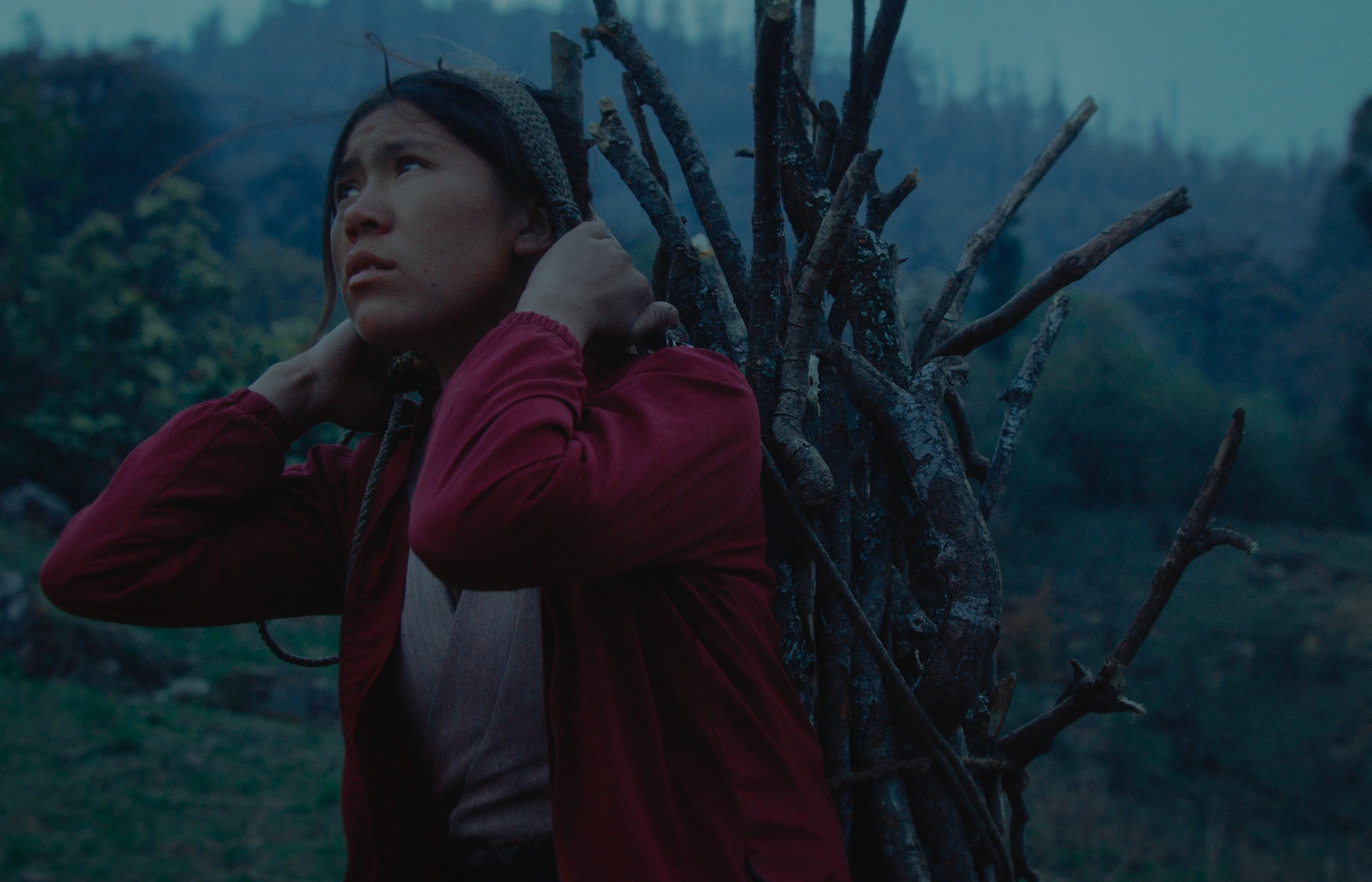
Shooting in Tamang was both a tribute and an act of preservation, capturing an endangered language while it’s still spoken. What did working in Tamang ask of you as a director who doesn’t carry it as a mother tongue, and what does it mean to you to have it held on screen?
I’ve had a lot of Tamang who’ve seen the film be so moved that they heard their language in the cinema for the first time in their lives. This was some of the most important feedback I have received from the film. I have been learning the language for the past 10 years, but working in Tamang made me realise how little I had learnt and what’s more, every village has their own dialect, and in Gatlang, the form of the language was very, very different to what I had learned lower down in the hills. Pasang, despite communicating primarily in Tamang with her family and community, needed lots of help with the voiceover dialogue and had to consult with local elders to get the words right. I really liked this part of the process.
I’m very passionate about languages, despite not speaking that many. A language is not a form of communication – it is a worldview, an understanding of reality, of the universe, expressed through sound, that in it, contains the collective knowledge, lessons and understandings of all the people who have ever spoken it. And so to create a small film like this that captures the language of a community that I hold so dearly is a form of prayer to hold their wisdom close for a moment.
At seventeen minutes, every shot feels weighted and deliberate, yet a shoot like this must, I assume, have generated an enormous amount of material. What was the edit like, and what was hardest to let go of in the paring down?
Unlike other films I have made, where I would capture things from multiple points of view, this film was captured with very deliberate and finite camera positions. It didn’t leave much room for much in the edit. The film was more or less assembled after it was shot because there were not many options to do anything else. There was a bit to play with in the structure, but within the scenes themselves, there was not much I could do.
A language is not a form of communication – it is a worldview, an understanding of reality, of the universe, expressed through sound, that in it, contains the collective knowledge, lessons and understandings of all the people who have ever spoken it.
Surprisingly, it took a very long time to get done because of the lack of options I saw – I was stumped with how to get the film closer to what I had imagined. There were some additional moments we shot that were really quite beautiful, but they didn’t serve this story, and Andy Finn, who came on board as an editor later in the process, reminded me that we have a lot of beautiful stuff anyway and that made it easier to let go.
Please share your favourite short film with us.
Same Old, directed by Lloyd Lee Choi, is a really well-made film. Shot in real locations, rough, in New York, extremely human and with incredibly contained emotion, yet oh so very simple.
Across your previous work and now Family Man, there’s a clear throughline, disappearing ways of life, the pull between absence and return, a deep-rootedness in Nepal. With five films made there, where do you feel this body of work is pointing you next?
I have 2 upcoming feature films that I’m developing in Nepal. Recently, I’ve been more interested and more open to digging deeper into my own personal story and experiences, and my films are beginning to pull more directly from that space – from living between Australia and Nepal, and from questions of identity, belonging, memory, grief and home. I’ve written a feature, Home Before Night, a mystical, sci-fi drama about a Nepali migrant nurse in regional Australia who receives the donated memories of a dying Australian-Nepali woman. Through those memories, she is pulled into the woman’s journey through Nepal to find her estranged father, and begins to confront her own sense of displacement and unfinished connection.
I’m also developing Between Thangka Clouds, a contained Himalayan feature about two women – one Australian, one Nepali – who arrive at a monastery to collect the bodies of their loved ones after a mountain accident. When they become stranded, they are sent into the Bardo, between life and death, to meet their loved ones one last time, but are sent to the wrong person.