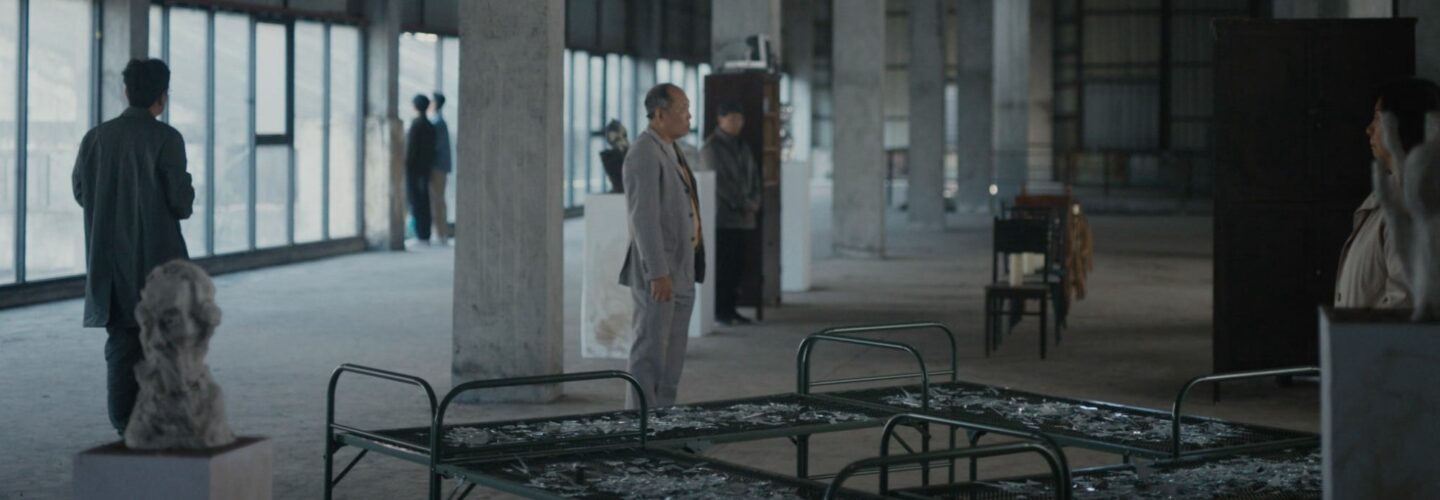
A soul retraces the fragments of a life once lived, wandering through a museum where discarded, weathered objects stand as manifestations of everything that has been left behind. Rooted in Chinese myth and memory, Museum of Death draws on the legend of Meng Po Tang to shape its protagonist’s passage through birth, old age, suffering, parting, and longing, as he observes himself and other souls scattered among the ruins, each dwelling on their own private reckonings. Drawing on lived memory, writer/director Lianpeng Zhao lingers in the ordinary moments that never quite fade, withered flowers, a burned letter, falling dust, rather than building towards dramatic turning points. What emerges in Museum of Death is a slow, contemplative farewell, quietly touched by love.
Slipping between an outside eye and the soul’s own point of view, Museum of Death moves through classical Chinese poetry, objects inscribed with memory, and Cantonese opera drifting across its soundscape. Already highlighted in our 2025 London Film School Graduate Showcase selection, Museum of Death premieres today on Directors Notes, where Zhao joins us to discuss adapting real memories into fiction and the creative choices behind the film’s narrative and visual fabric, woven through with Chinese cultural motifs.
What drew you to the concept of a soul’s recollection of life as a central storyline, and how did you and co-writer Xiaotong Liu approach developing that internal journey through the screenwriting process?
In fact, parts of the story are adapted from our real memories, experiences, and feelings. We both agree that the dramatic tension in life actually comes from those seemingly ordinary, everyday moments. It is the small details of daily life that stay with us and are hard to forget. So after we decided to tell the story in this way, we didn’t deliberately plot out turning points or dramatic twists. We wanted the film to feel more like a long, lingering farewell and letting go — one that may carry guilt, may hold regret, and may also be touched by love.
I wanted to express a fantasy in which the daughter’s tears cross the boundary between yin and yang, becoming the last drop of medicine that lets the father pass into his next life.
Museum of Death poetically explores the nuances of Chinese culture, subtly invoking traditional motifs such as the legend of Meng Po Tang. How did you approach that representation, and how did you weave these cultural elements into both the narrative and the visual fabric of the film?
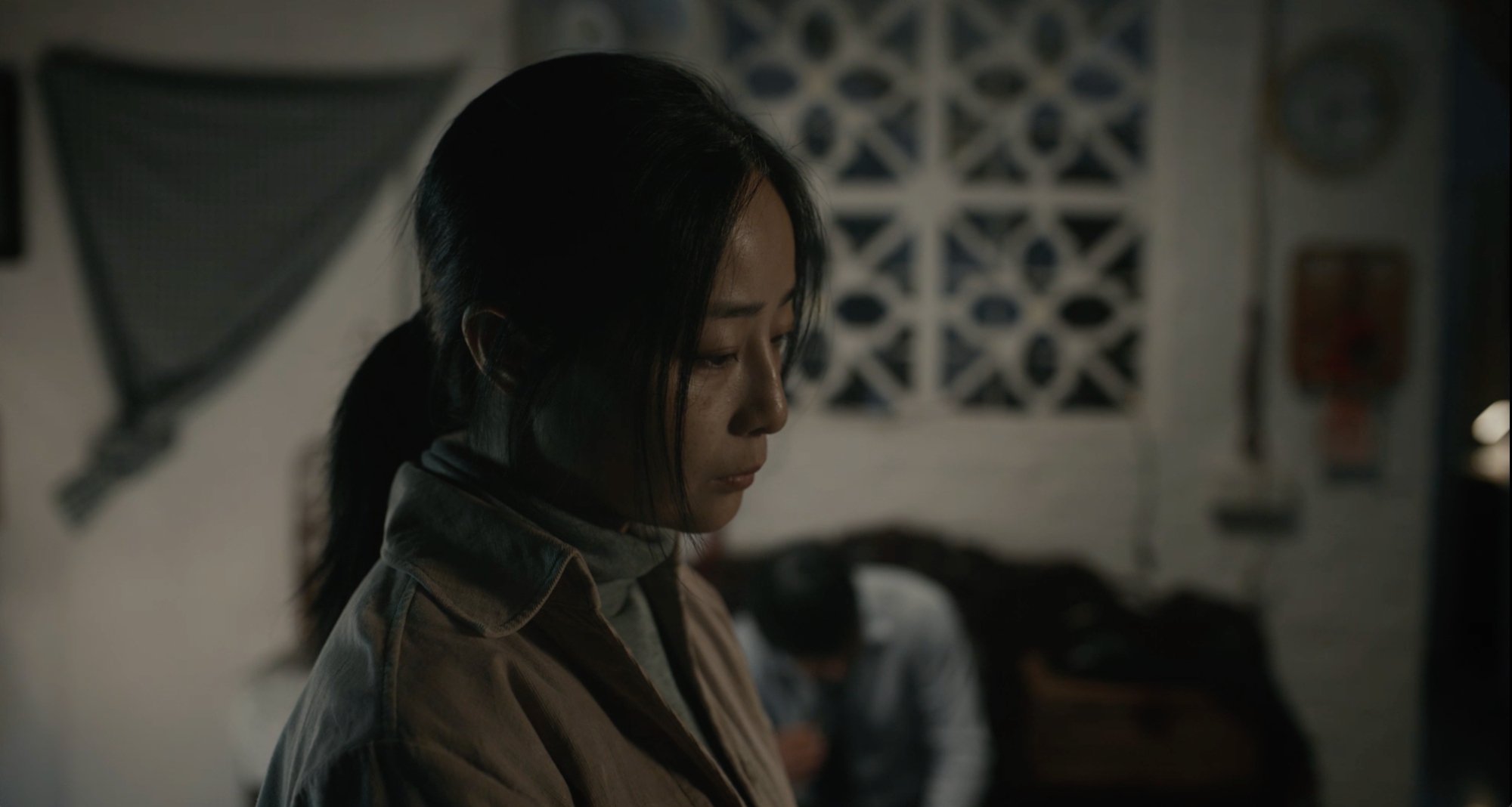
The myth and legend of Meng Po Tang fit the atmosphere of this film perfectly. But I chose not to film the protagonist shedding tears as he recalls his life. In the film, the only tears that fall are those shed by the daughter in her dream, symbolizing the last and best tear — Meng Po’s sad tear. I wanted to express a fantasy in which the daughter’s tears cross the boundary between yin and yang, becoming the last drop of medicine that lets the father pass into his next life.

The film conveys love through the lens of Chinese culture—profound and indirect, where feelings live in a silent glance or a simple question. How did you work with the tone and pacing to translate this delicate, unspoken language onto the screen?
Many parts of the film use scenery to express emotions, which is a way of expression in Chinese poetry. For example, a letter burned out a hole, withered flowers, and dust falling from the ceiling. I try to express some indescribable emotions through scenery, precisely because the complex emotions of human beings are difficult to express entirely in words, which gives rise to art. I believe everyone experiences emotions differently. To me, longing is like a hollow void; ageing, a neglected wilting flower; and love, a quiet greeting tucked inside an envelope.
Most Popular
When it came to the casting process, what were you looking for in your actors, and specifically in the main character, Guannan, to anchor this story?
Hong Bi, the actor playing the lead role, Guan Nan—Bi Hong, possesses a reserved and steady demeanor that aligns perfectly with the character in the script. During our first conversation, he came across as very composed; he doesn’t talk much, but exudes a gentle, peaceful presence. Before performing, he tends to sink into thoughtful reflection. His traits make this character appear real and lonely in those moments of silence.
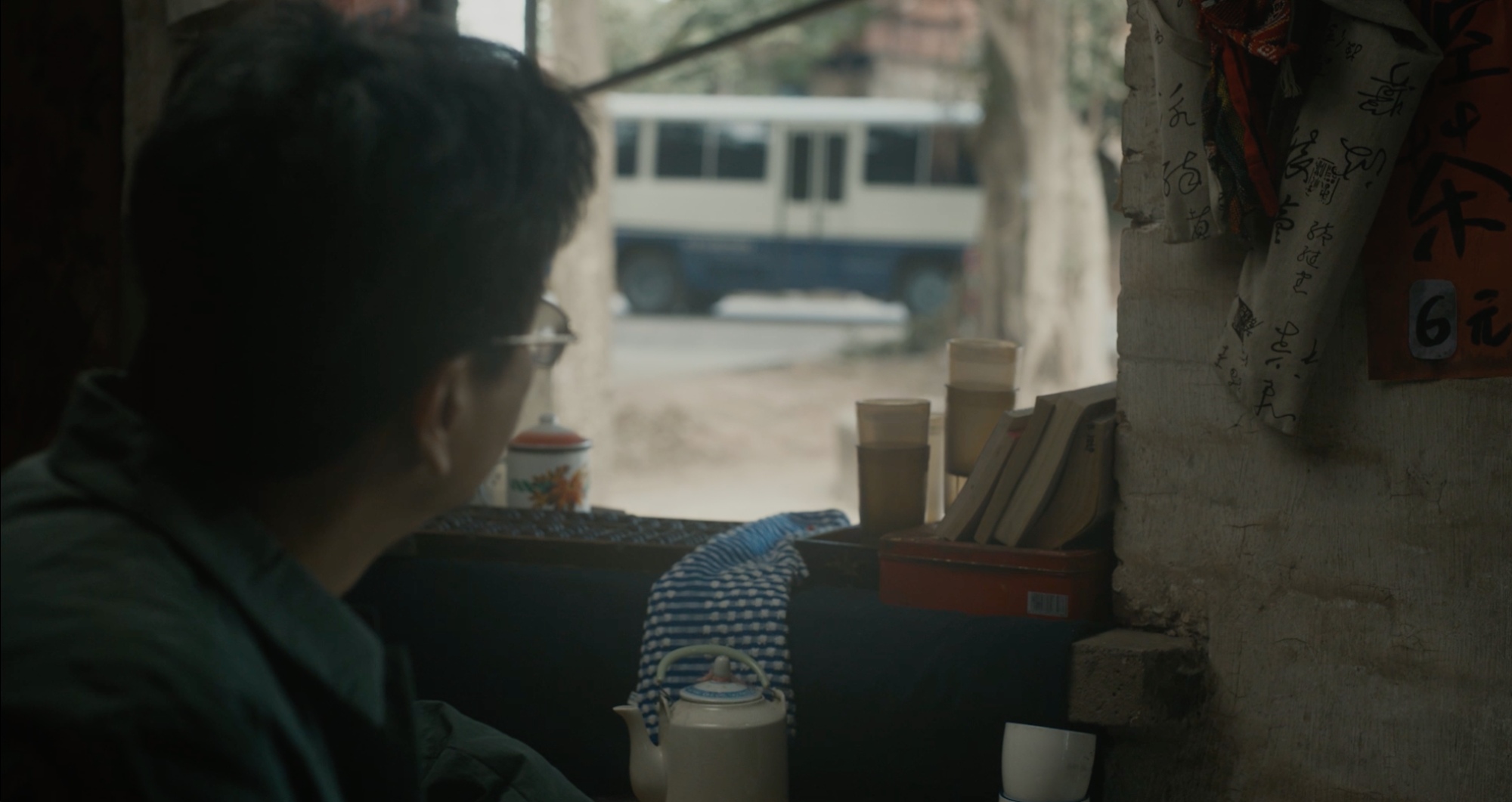
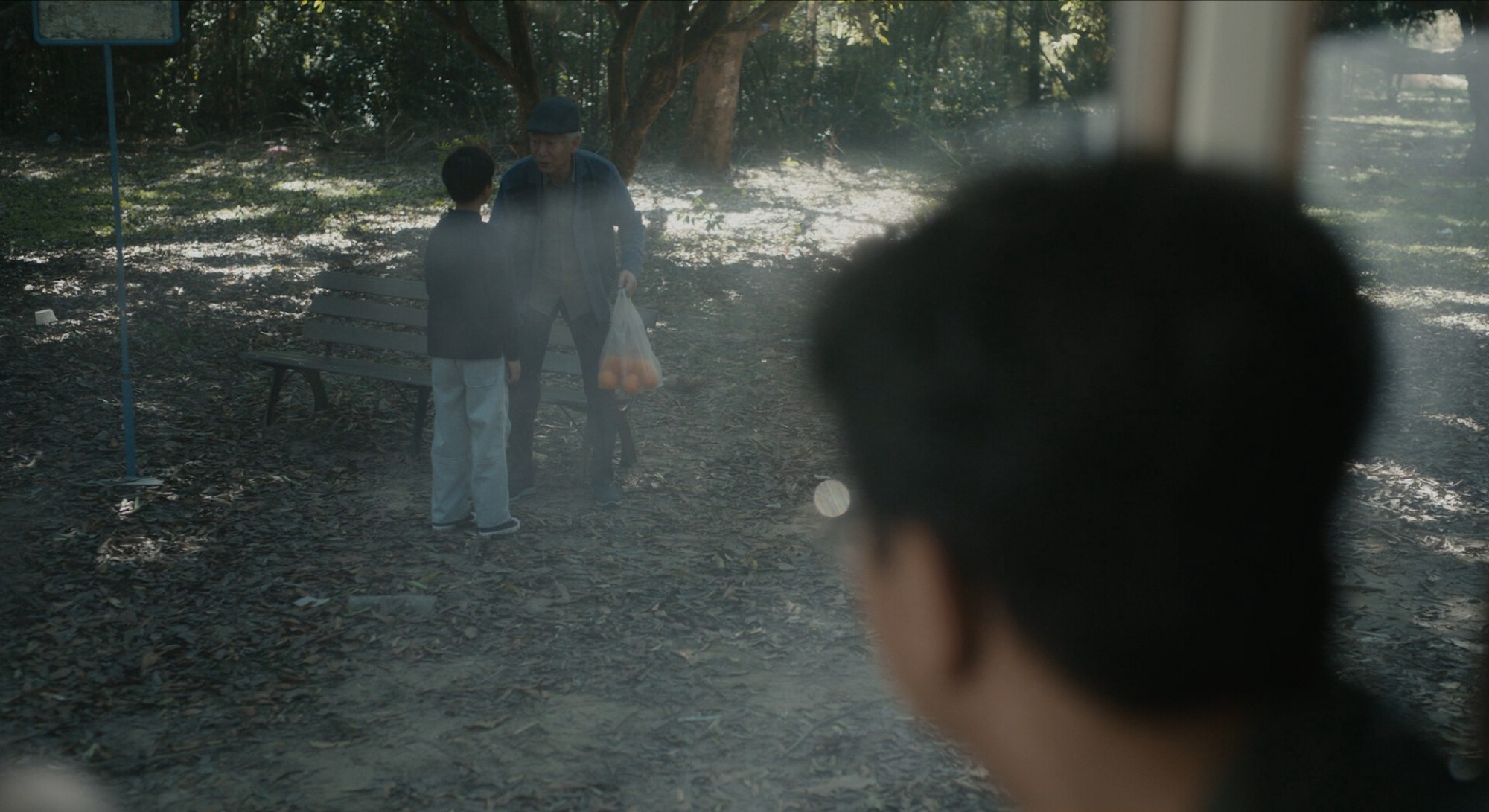
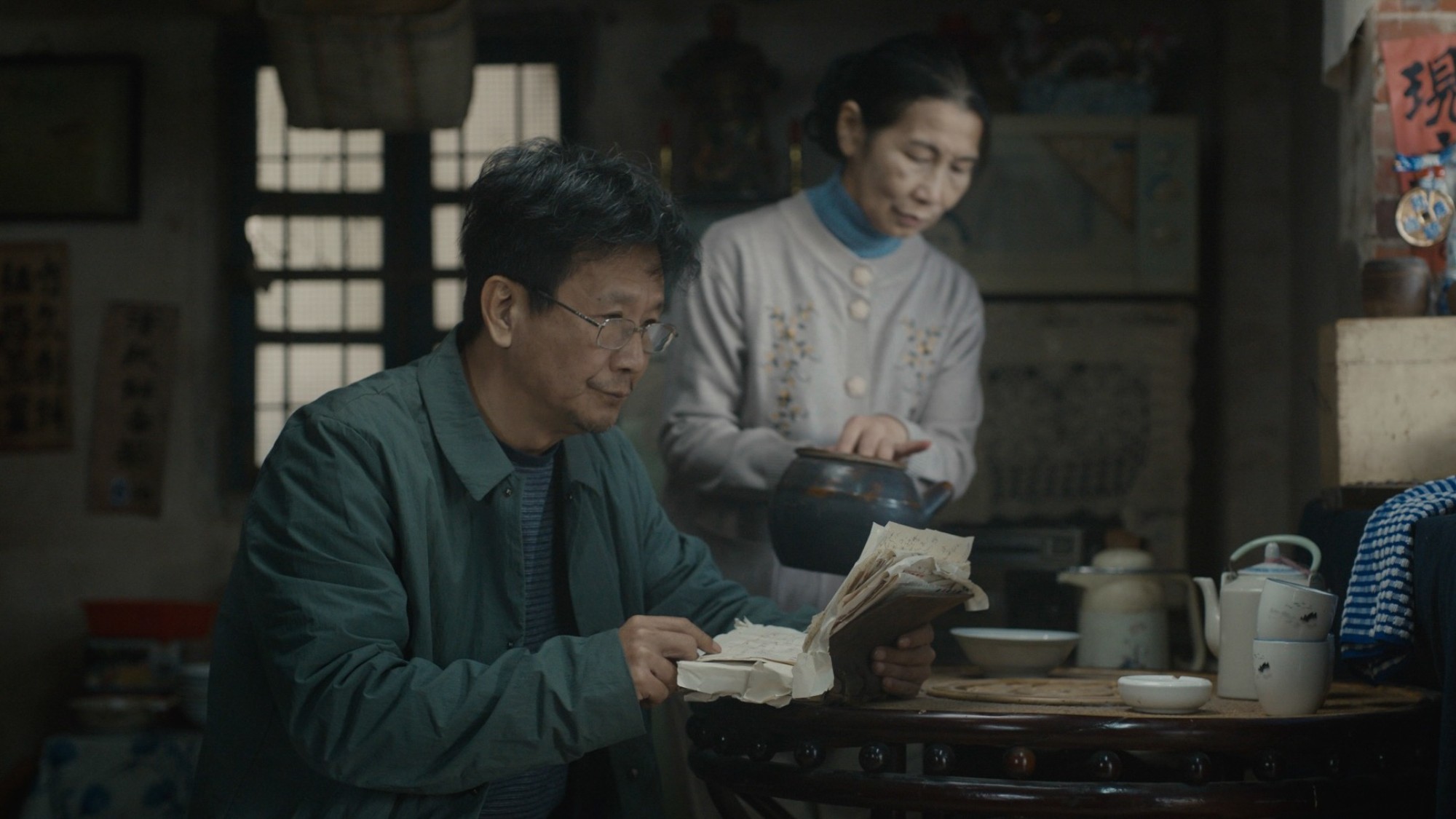
Mirroring the protagonist’s slow, serene emotional landscape, the cinematography adopts a delicate, contemplative yet multi-focal perspective. How did you work with your camera department to craft this visual grammar?
I want the overall atmosphere of the film to maintain a contemplative stillness. At the same time, I feel that what the audience takes away from it is just as important as what I want to say, so I like to leave plenty of room for their imagination. To that end, some shots are from an objective perspective, while others feel more like the point of view of a soul. Sometimes we switch between the two — for example, the protagonist looks up at the hole in the ceiling as dust and sand fall through it, and by the end of the shot he has already walked away and become part of the environment. I find that kind of design intriguing, and I’m curious to see what feeling it will evoke.
Some shots are from an objective perspective, while others feel more like the point of view of a soul.
Our director of photography, Zhang Yang, favors a realistic approach to lighting, and that naturalistic light gives the film’s visuals a distinct quality. We don’t always see eye to eye on a given visual idea, and even after talking it through, we don’t always reach a consensus — and that’s alright. Sometimes, by listening to others while holding firm to your own vision, you come to take full responsibility for the film. Often we genuinely want to hear different perspectives because that’s how we recognize what we ourselves are trying to achieve.
I got to know camera operator Zhou Zixi during my time at school, working with her on several short films, and we’ve built a real chemistry. She has a deep, intuitive understanding of the emotional side of filmmaking and executes those shots beautifully, attentive to every detail — down to the precise speed of a camera move.
The scene of the various souls entering the forest is deeply striking. Could you unpack the symbolism and the cultural or visual references behind that imagery — and the destination these souls are ultimately heading toward?
There’s a classic Chinese farewell poem that goes: “Outside the long pavilion, by the ancient road, the green grass stretches to the horizon.” It was exactly that atmosphere that inspired me when I shot this scene. I’ve always felt that a soul entering — or returning to — the forest carries a certain melancholy and desolation. Like the protagonist, these souls find themselves retracing their own lives, much like the figures scattered through the rooms among the ruins, each one dwelling on their most profound regret or fragments of memory.
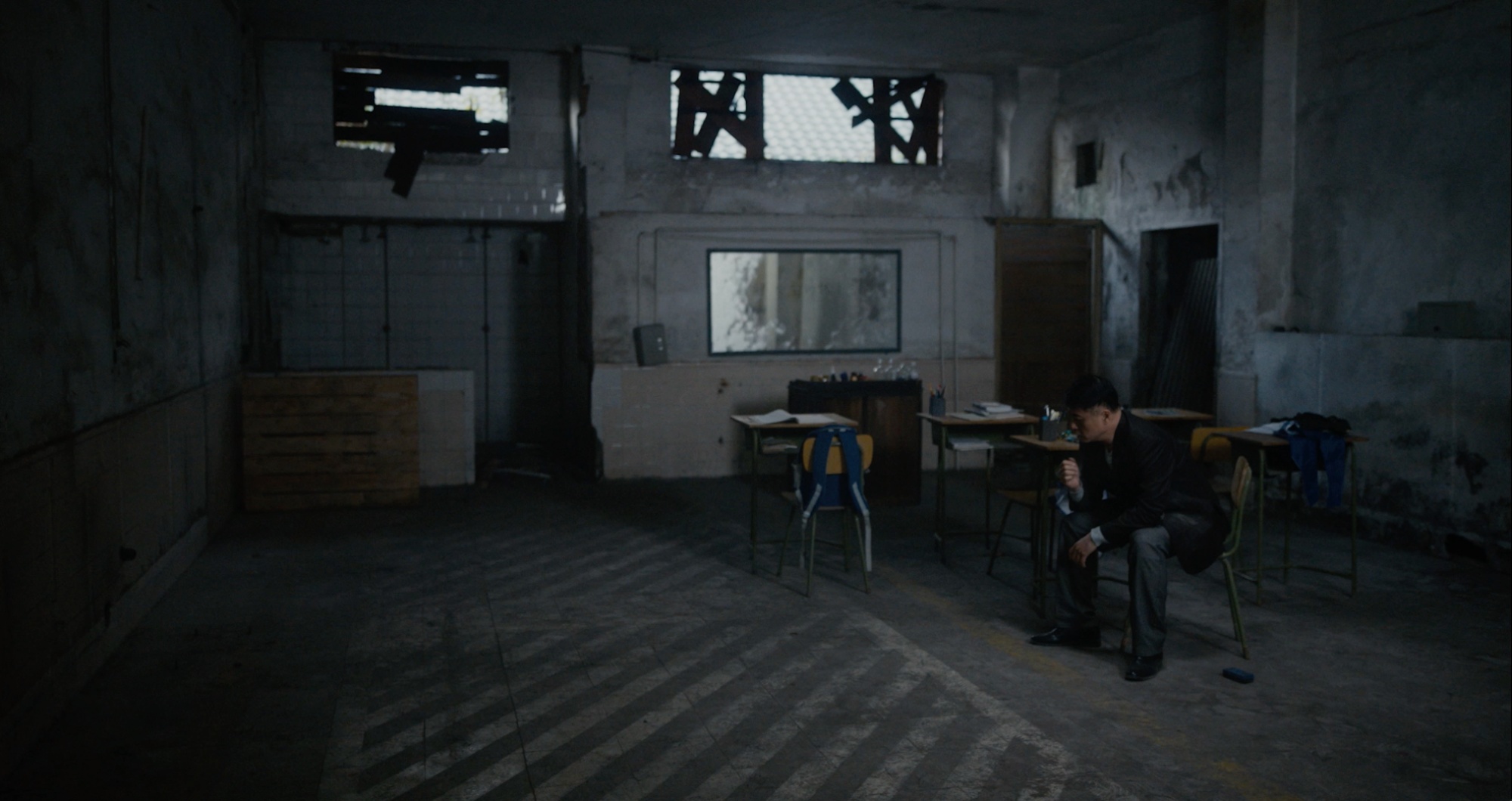
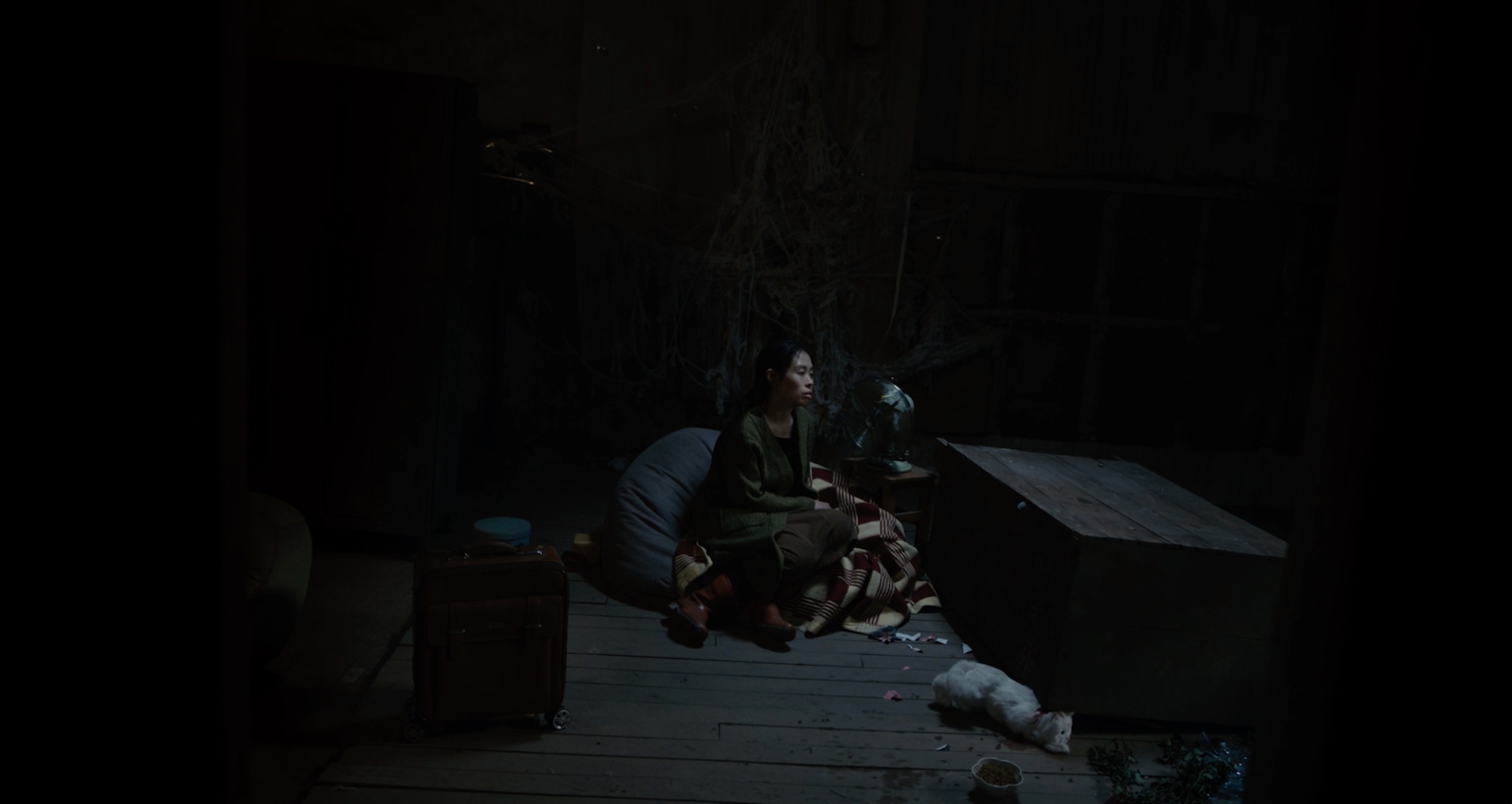
Throughout the film, a sensitive attention to objects meets a meticulous approach to the wider set design. How did you move from envisioning these spaces to realising them on set, working with the art department?
Every object can be seen as the manifestation of a soul. For the protagonist, these discarded, weathered belongings are all inscribed with fragments of his past — each one tied to someone he once knew. The memories and emotions embedded in the objects rest in silence, like relics in a vault of feeling, patiently waiting to be touched. I’m very grateful to the art department. Liu Jingyi and Zhou Sijie are both incredibly capable and have a deep understanding of the script, which made communication with them very smooth — they brought so much richness and texture to the visuals.
The memories and emotions embedded in the objects rest in silence, like relics in a vault of feeling, patiently waiting to be touched.
I am very grateful for the work of the art department. Liu Jingyi and Zhou Sijie are both incredibly capable and have a deep understanding of the script, which made communication with them very smooth. They brought so much richness and interest to the visuals.
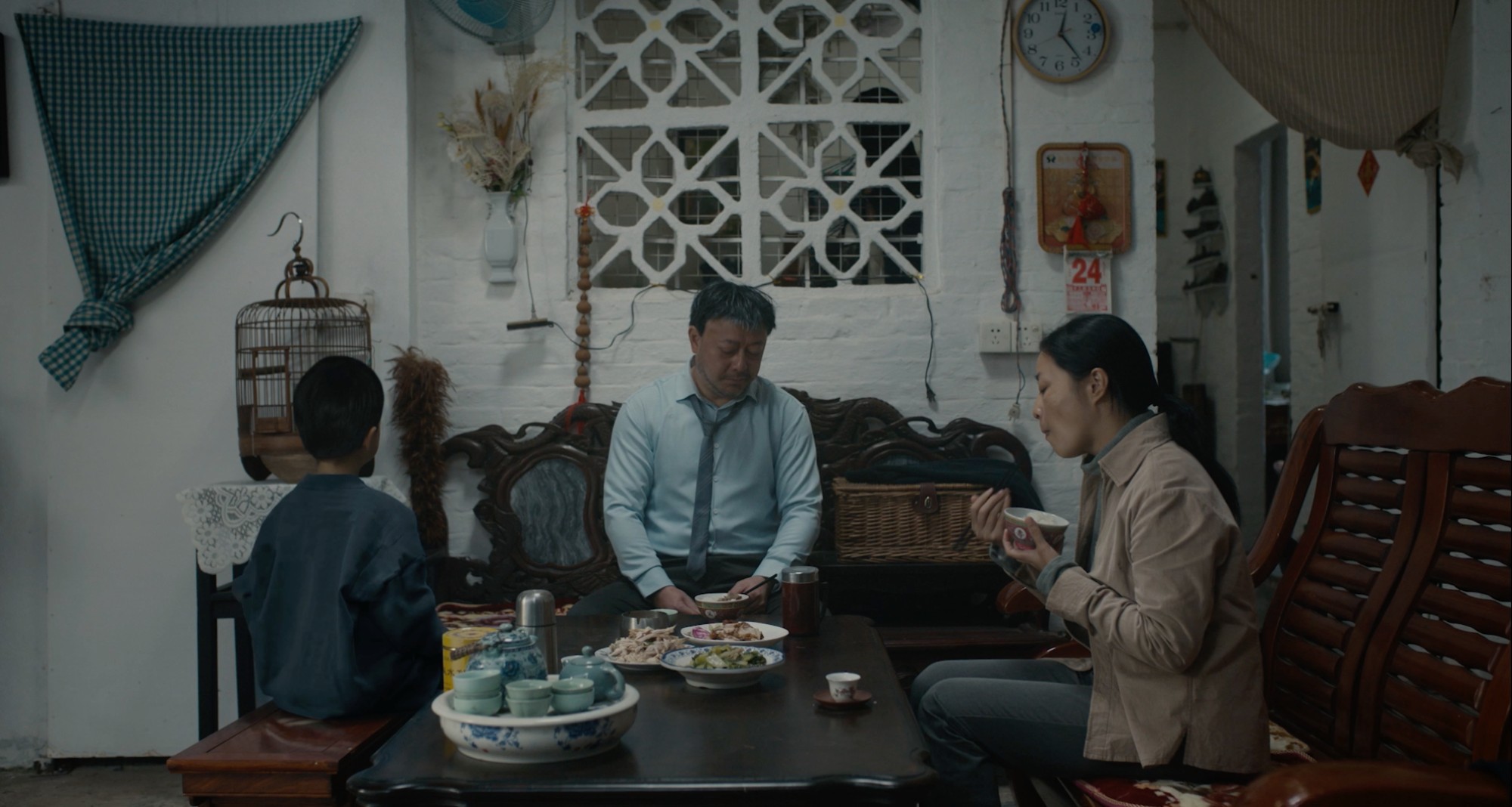
The sound design is a multilayered landscape that also draws in Cantonese opera. How did you work with the sound department to build that atmospheric quality, and how does it reverberate with the film’s core themes?
The Cantonese opera was our sound designer Qili’s idea. Initially, we were discussing how to make the off-screen space feel fuller and more immersive, and from there we moved into talking about region, memory, and a sense of place through sound. That’s when Qili suggested weaving in Cantonese opera. We all thought it was a brilliant choice, because when we were children, it really was common to hear an elderly neighbor playing opera at home, or someone singing out in the alley. As those sounds of opera drift in from the streets, the family in the film is making a difficult decision.
With the striking imagery of Museum of Death still lingering in our minds, what can you tell us about what you’re working on next?
I’ll keep making films. I want to tell stories that give people something to hold onto — a sense of strength, maybe even solace. And perhaps one day I’ll make a film about the simple pleasures of food and the beauty of the places we pass through.