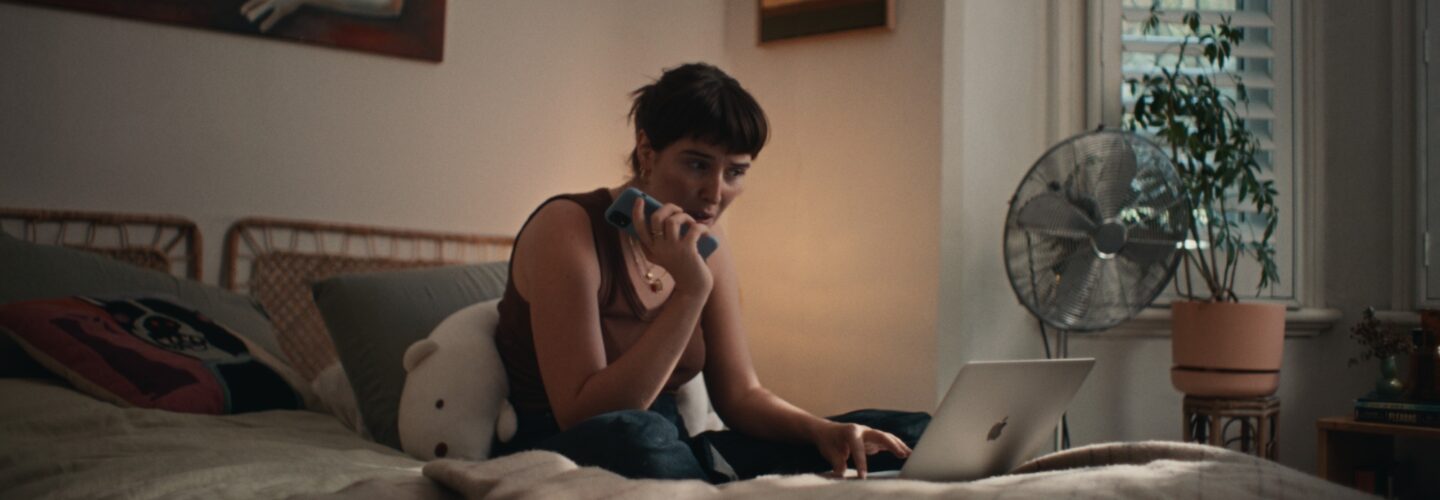
Having recently encountered the frustration of AI customer service, it’s easy to understand why satisfaction with this form of ‘support’ is reportedly at its lowest level in a decade. Yet, while the subject might be both topical and immediately relatable, that doesn’t necessarily make it compelling screen material. Particularly when the central dramatic situation involves a person sitting on the phone, waiting for a machine to solve their problem. None of these challenges deterred writer/director Jasper Martin when it came to making his latest short film, Listen Then Repeat. Following a woman who finds herself locked out of her email account and turns to an AI-powered customer service hotline for help, the film transforms an increasingly familiar technological frustration into a tightly contained piece of comedy that gradually takes a more unsettling turn.
With the film relying largely on a single location, a single on-screen performer and the disembodied voice of an AI, Martin and his team faced some interesting creative constraints in bringing the story to life. Keen to explore how they overcame those limitations, as well as what Martin ultimately wanted to say about our increasingly complicated relationship with technology, he joins us to provide a behind-the-scenes look at the making of Listen Then Repeat.
Hey Jasper, welcome to Directors Notes. I’m really excited to dive into Listen Then Repeat with you today. I wanted to start with the film’s relatability. There’s something immediately recognisable about the experience of being trapped in an automated customer-service system. How much were you thinking about capturing something that felt real when writing the story?
Thank you for having me. I really appreciate the opportunity and I’m so excited to share the film with your audience. Short films are so important for the eco-system of our industry and art form, so long live Directors Notes!
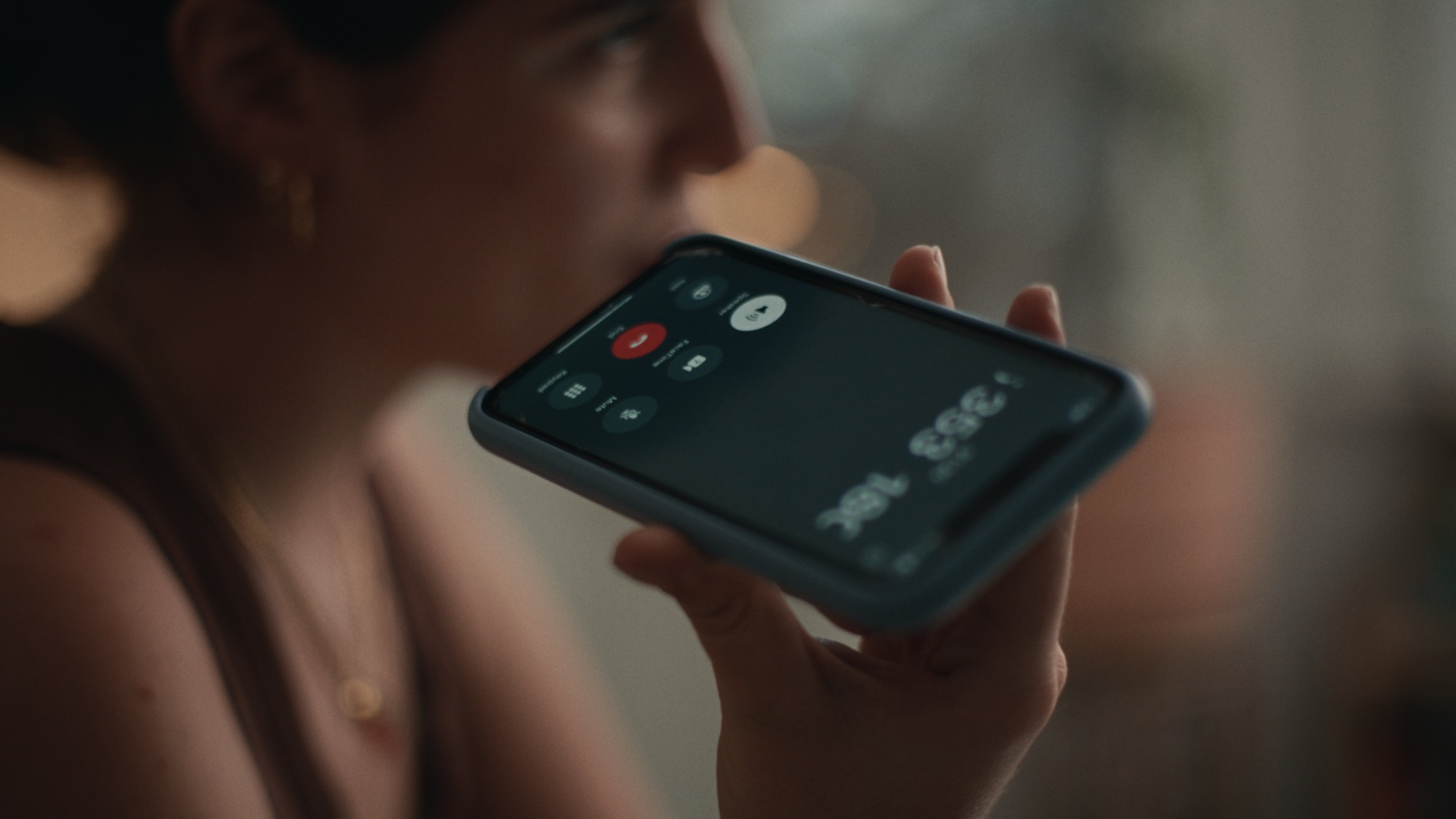
Well, reality and authenticity were definitely at the top of my mind when writing the screenplay and approaching how it should be directed. But looking back, I think it was from a place of trying to avoid unreality more than anything else. Technology, when used on screen, can very quickly skew into completely ridiculous territory, used as a cheap exposition device by hackers and law enforcement personnel running impossible commands that bear no relationship to the reality of what these devices can actually do.
If you turn on any show or film set in a contemporary setting, you’re undoubtedly going to see an obviously comped phone screen with a completely fabricated operating system and a poor actor’s rotoscoped finger, thumbing between imaginary buttons. But these devices are so ubiquitous in our lives now, and we spend so much time looking at them, that we’re able to spot when a text bubble is even a millimeter too small to design specifications. It’s one of my biggest cinematic pet peeves. When it happens during something I’m watching, my suspension of disbelief immediately bursts. I was trying my best to avoid any moments like this and treat the audience as an expert on the subject.

The AI-powered customer service hotline feels like a particularly fertile setting for exploring some very contemporary frustrations. What was it about this specific scenario that made you want to build a story around it?
I had the idea and wrote the first draft in 2022 when ChatGPT had just been released. I had heard how revolutionary and useful the tool was, so I began to test it. Quickly, I became struck by how good the illusion of its intelligence was, but also how unbelievably useless and frustrating it could be. I tend to have a cynical streak, and my mind rushed to speculate on all the ways LLMs could be used to make the world a paradise for company owners and a living hell for consumers trapped in their subscription services. What followed was the instinct that customer service was about to become outsourced and ‘enshittified’ to a level I didn’t think was possible. And in that world, one in which it would be next to impossible to talk to another human being, it would be both horrifying but at the same time so absurd that you’d almost have to laugh about it.
Stammering and struggling to find the right word and string a sentence together is what ultimately makes us human.
I had the realization that when I tried to poke and prod the LLM to make something “less refined and perfect”, it was incapable of imitating roughness and making a mistake. But our stammering and struggling to find the right word and string a sentence together is what ultimately makes us human. Like an actor in a play imitating an accidental trip down the stairs, the question is, can you fake an accident? In the future, when trying to discern whether the voice on the other end of the line is a real person or a chat-bot, I think that will be the test. Can it make a realistic error?
It took me about three years until we were able to produce it and get the film shot, but by that time what read as prophetic a couple of years earlier was almost trite compared to the reality of what’s now happening.

Frustration is arguably the film’s dominant emotion and you gradually push that feeling throughout the film. What interested you about exploring this idea of irritation in such a way?
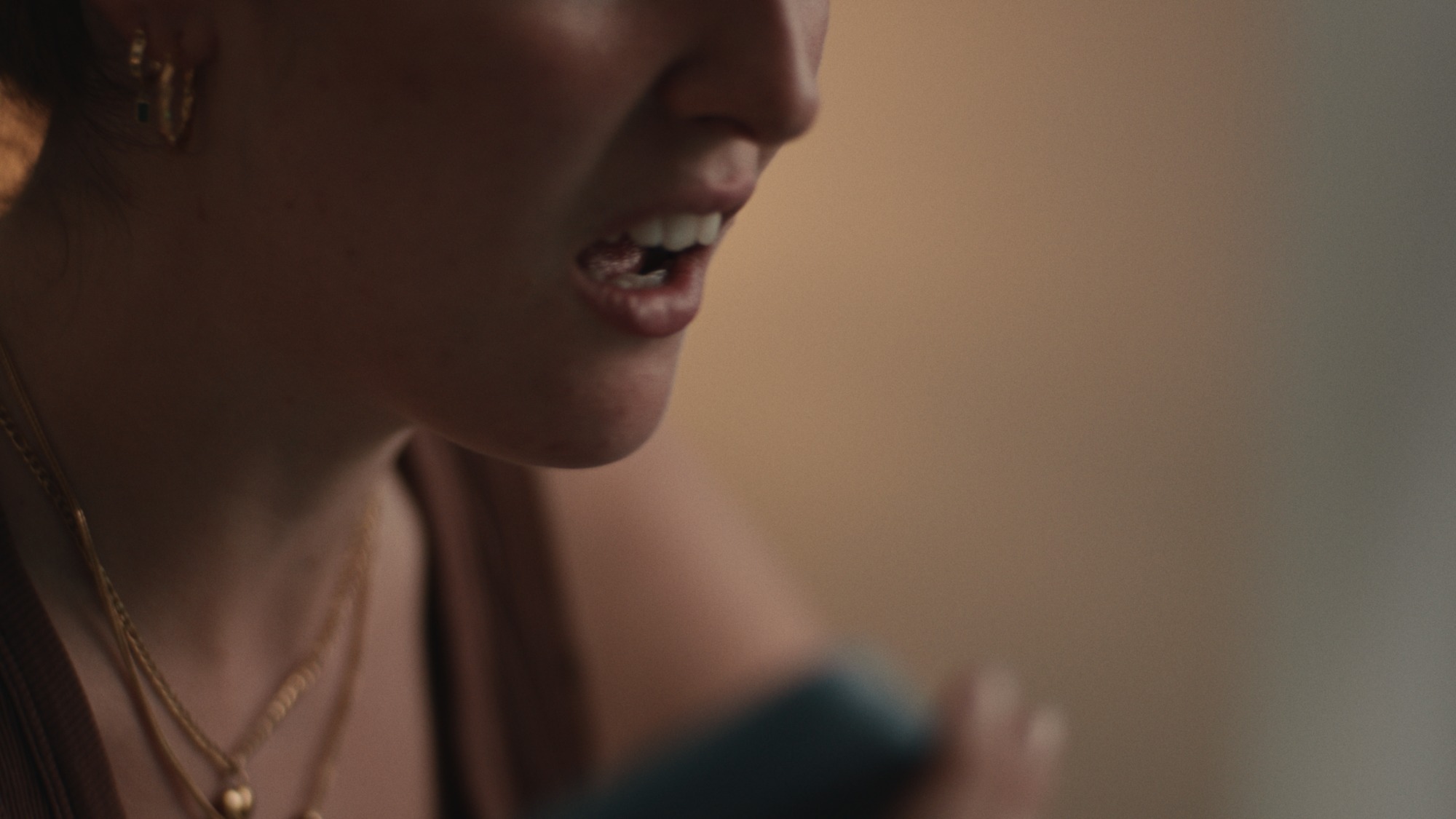
I don’t know if you can have a customer service interaction now without getting completely frustrated and pissed off. I can’t tell you how many afternoons I’ve waited on hold and how much cortisol I’ve overdosed on, trying to fix a problem with a service that I pay a lot of money for and deserve help with. I could be enraged, seething and clenching my teeth, but I still always feel a trepidation to be assertive when you finally get on the line with a representative. I think that’s common with my generation. Maybe it’s a little bit of the purging of catharsis, writing a script where I can swear at the top of my lungs at the other end of the line.
This film is a cautionary tale about placing your trust in amorphous infrastructure.
Alongside that frustration, questions around trust gradually emerge. How did you approach the relationship between your protagonist and the AI and what did you want the film to say about our willingness (or reluctance) to trust technology?
If I sit back for just a moment and think about all of the ways in which my life could be disrupted, the simple breach of my primary email could end up as an apocalyptic event. If something like that were to happen, I would quickly be locked out of every service that every company has ever sold me; services that have become so ingrained in my day-to-day life that not having access to them would mean a complete inability to function.
Most Popular
I think that this film is a cautionary tale about placing your trust in amorphous infrastructure. It’s really easy to be complacent and trust that over a decade of emails and a terabyte of cloud storage full of sentimental data is safe and sound. But the reality is, it’s so fragile. I don’t think we realise how much we are all innately dependent on companies like Google. We are stuck, lock-step with a company who doesn’t even have a customer service number you can ring if something were to go wrong.
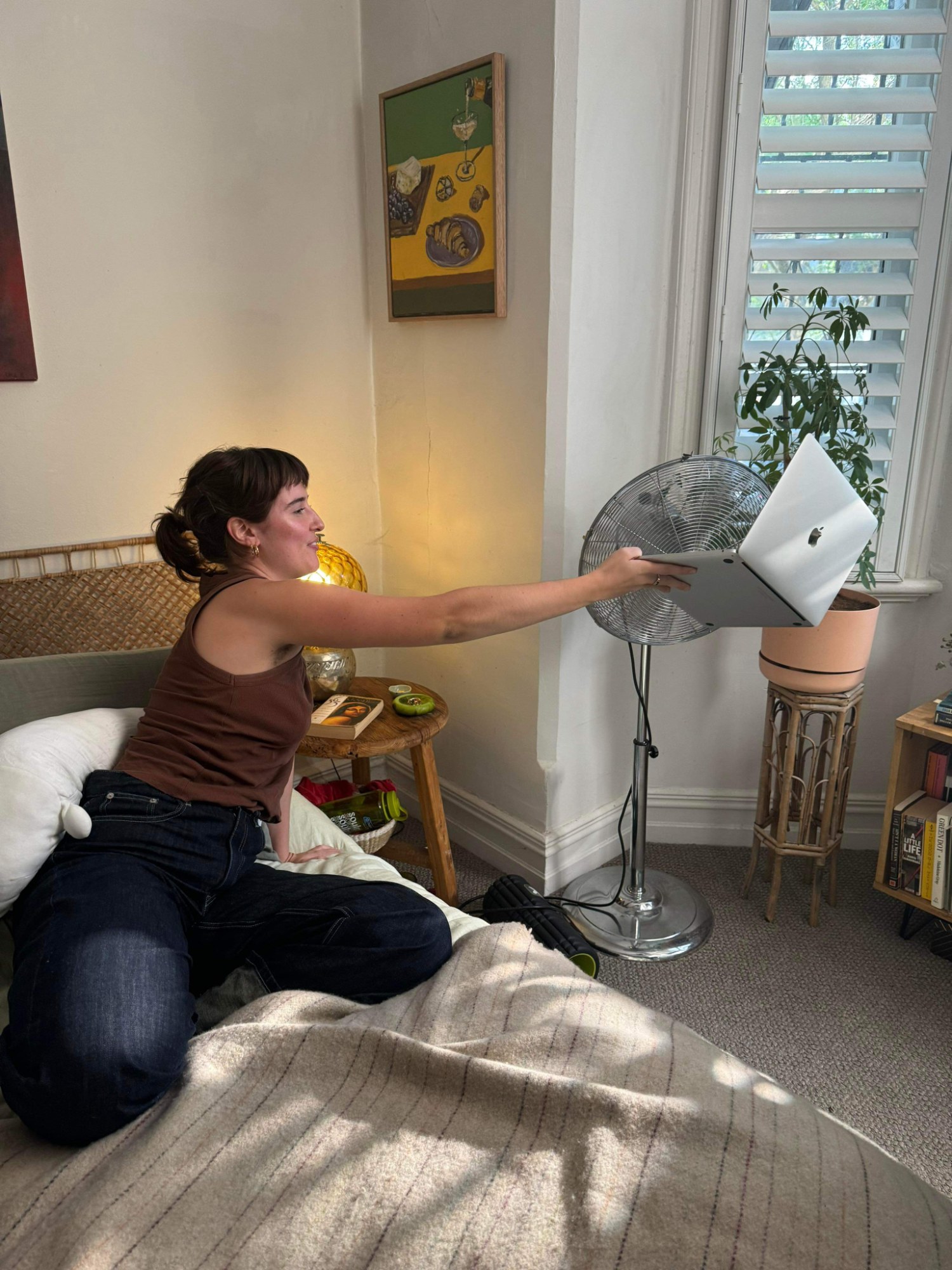
Your lead actor Ruby Blinkhorn does an outstanding job of capturing the exasperation and confusion at the heart of the story. What were you looking for when casting her and how did you work together to develop such an authentic performance?
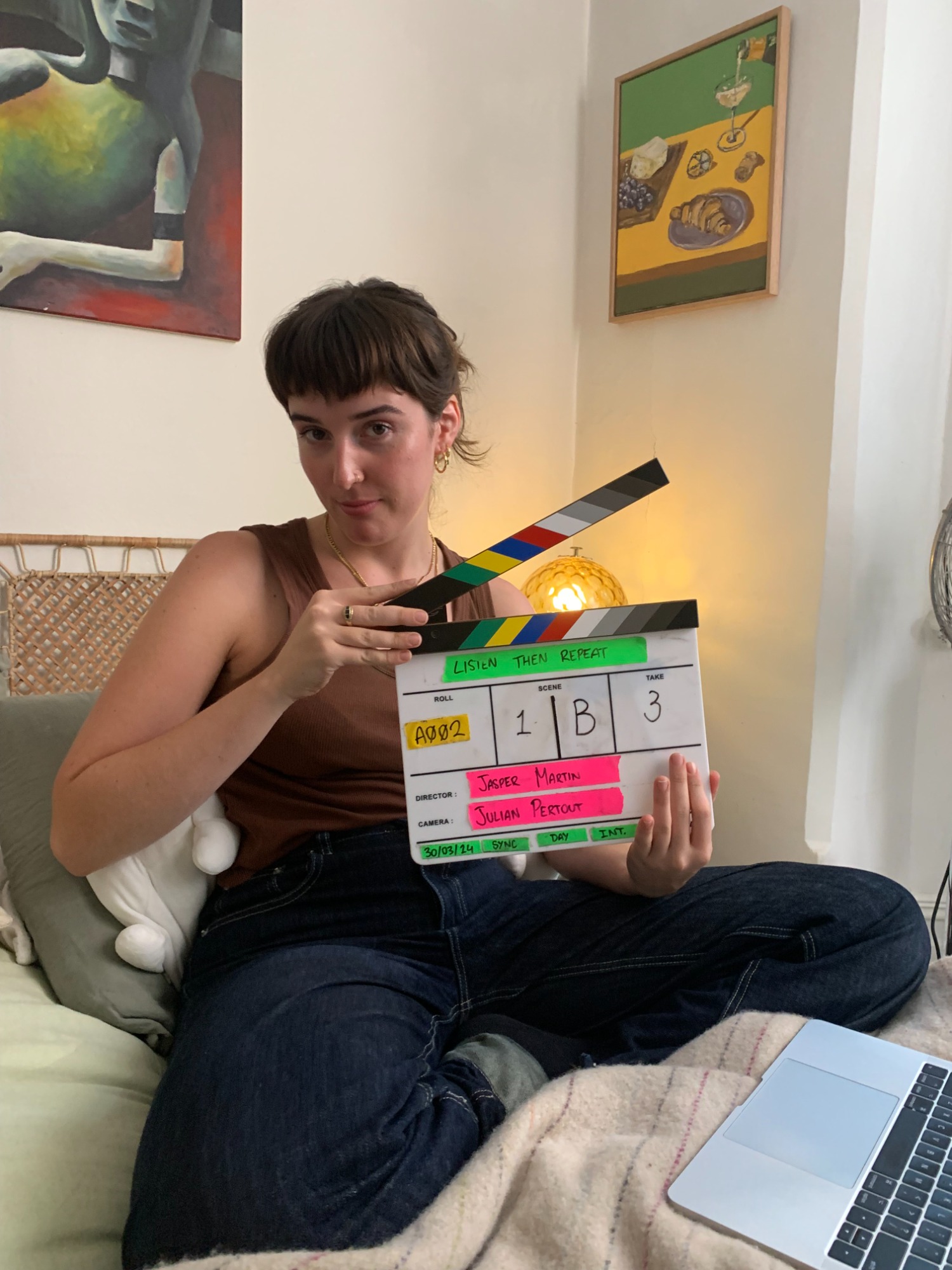
Ruby’s a childhood friend of my partner, and early in our relationship we would go and watch revues and sketch comedy shows that Ruby would perform live around Sydney. I thought she was unbelievably funny as a base-line, but when she got angry, it was electric. So, I wanted to work with her on a film, and I particularly wanted to write something where she got enraged. I probably wouldn’t have even come up with the idea had I not been banging my head against the wall and pleading with the universe to give me something suitable to write for her. I encouraged Ruby to use her years of stagecraft chops, improvise and really dirty up the dialogue I had written. We needed stammering and self-consciousness and so I wanted her to feel free that she could do whatever she felt like in the moment and that mistakes and accidents were actually what we were looking for.
It was really a two-hander, a push and pull between Ruby and the actual disembodied voice.
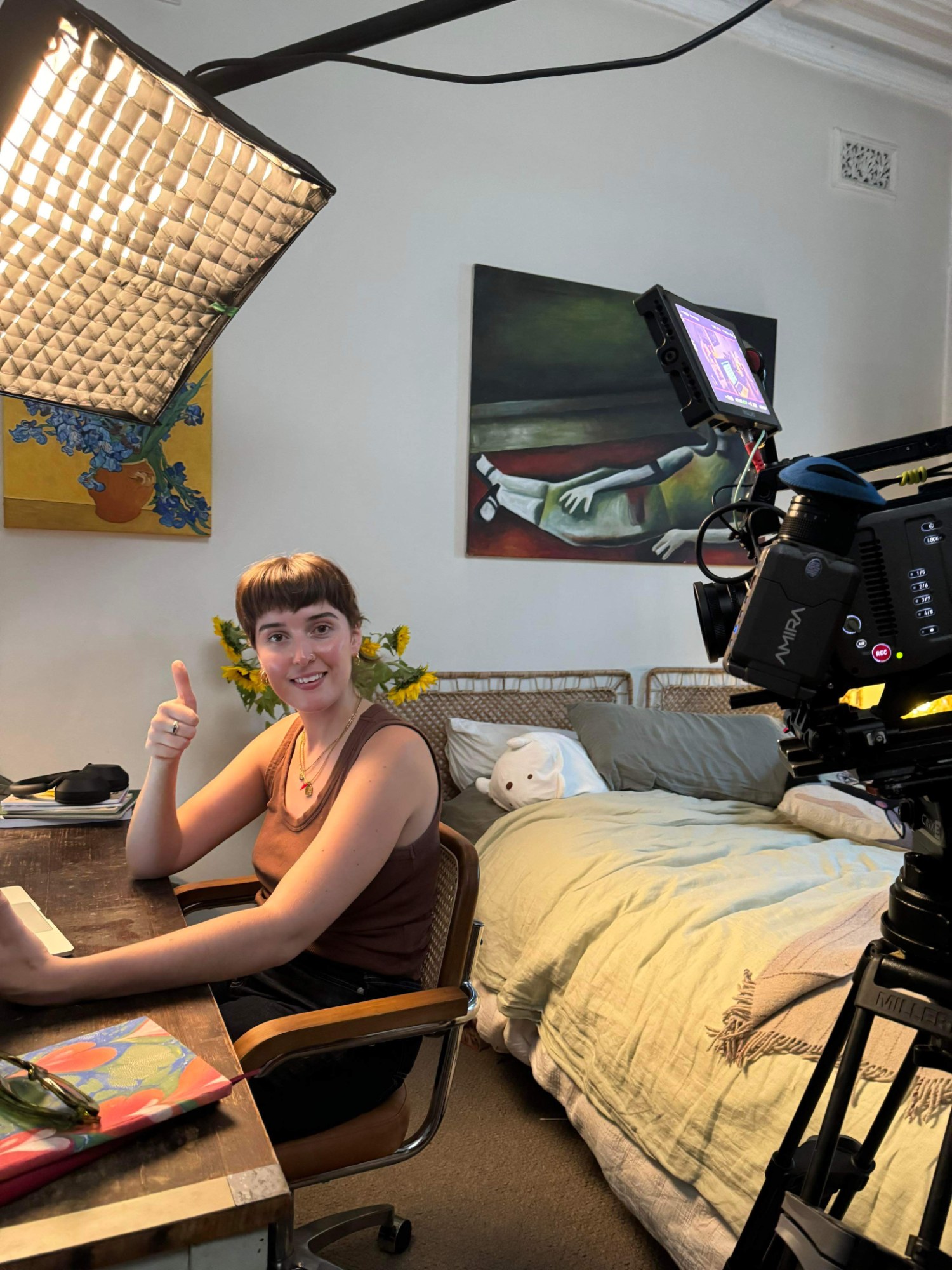
The strategy for directing that I’ve arrived at is to do whatever you possibly can to make the experience realistic for the actor. One of the things we did to try and make it as immersive as possible was to put our trusty production assistant Cameron Greenlees in another room with a laptop and a piece of cueing software loaded up with all of the various audio cues. So when Ruby called the line from her phone, he would answer as the AI. If you were in the room, it really just looked like a frustrated customer desperately trying to get a problem fixed. The timing could be modulated, I could go and ask Cameron, “This time, cut her off, really try to frustrate her”. The slight change of cue timing, whether too soon or too late, could dramatically affect how Ruby responded to the line. So it was really a two-hander, a push and pull between Ruby and the actual disembodied voice. I think it would have been a very different film had it just been me off-screen reading out the other lines of dialogue.
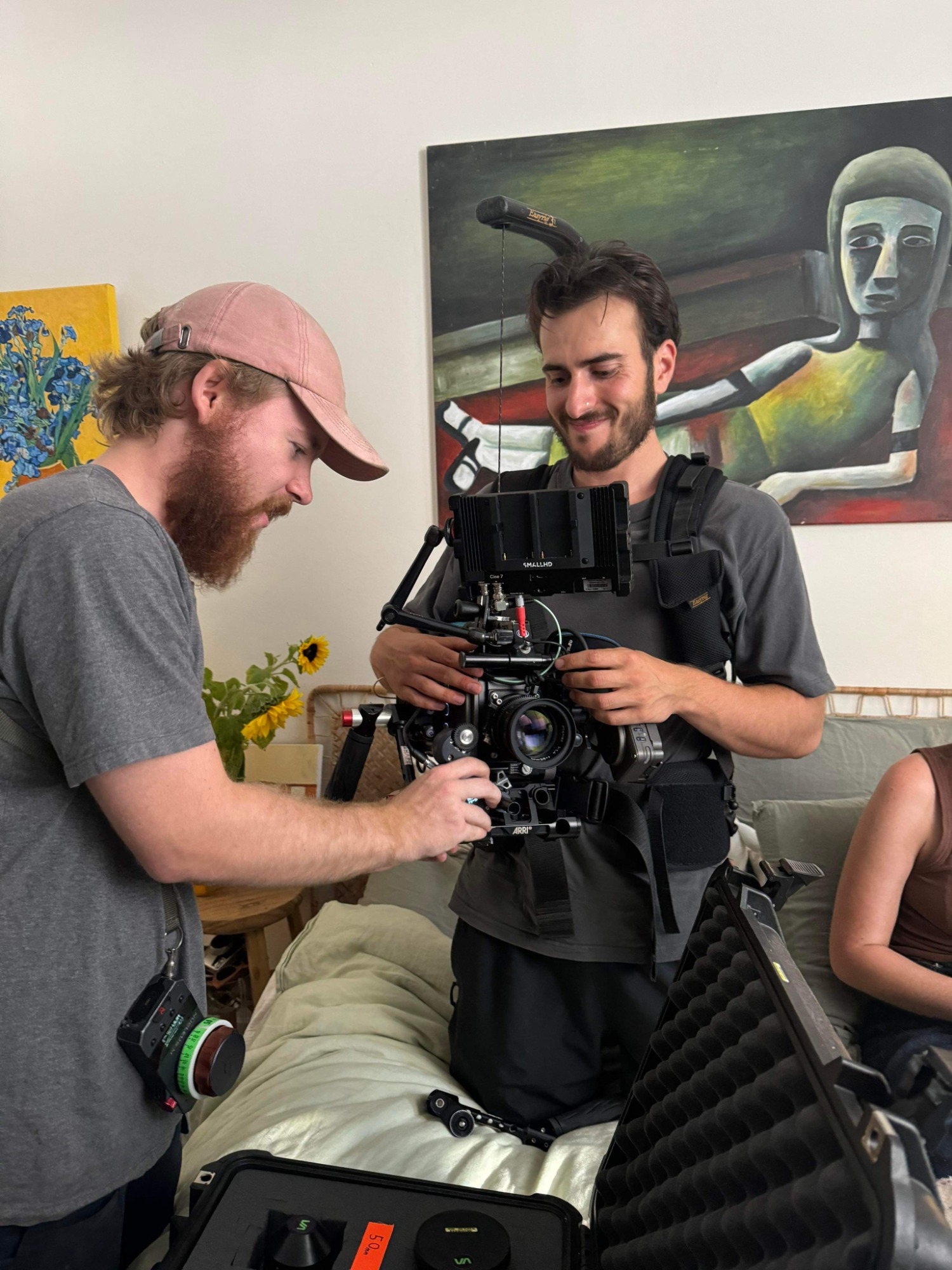
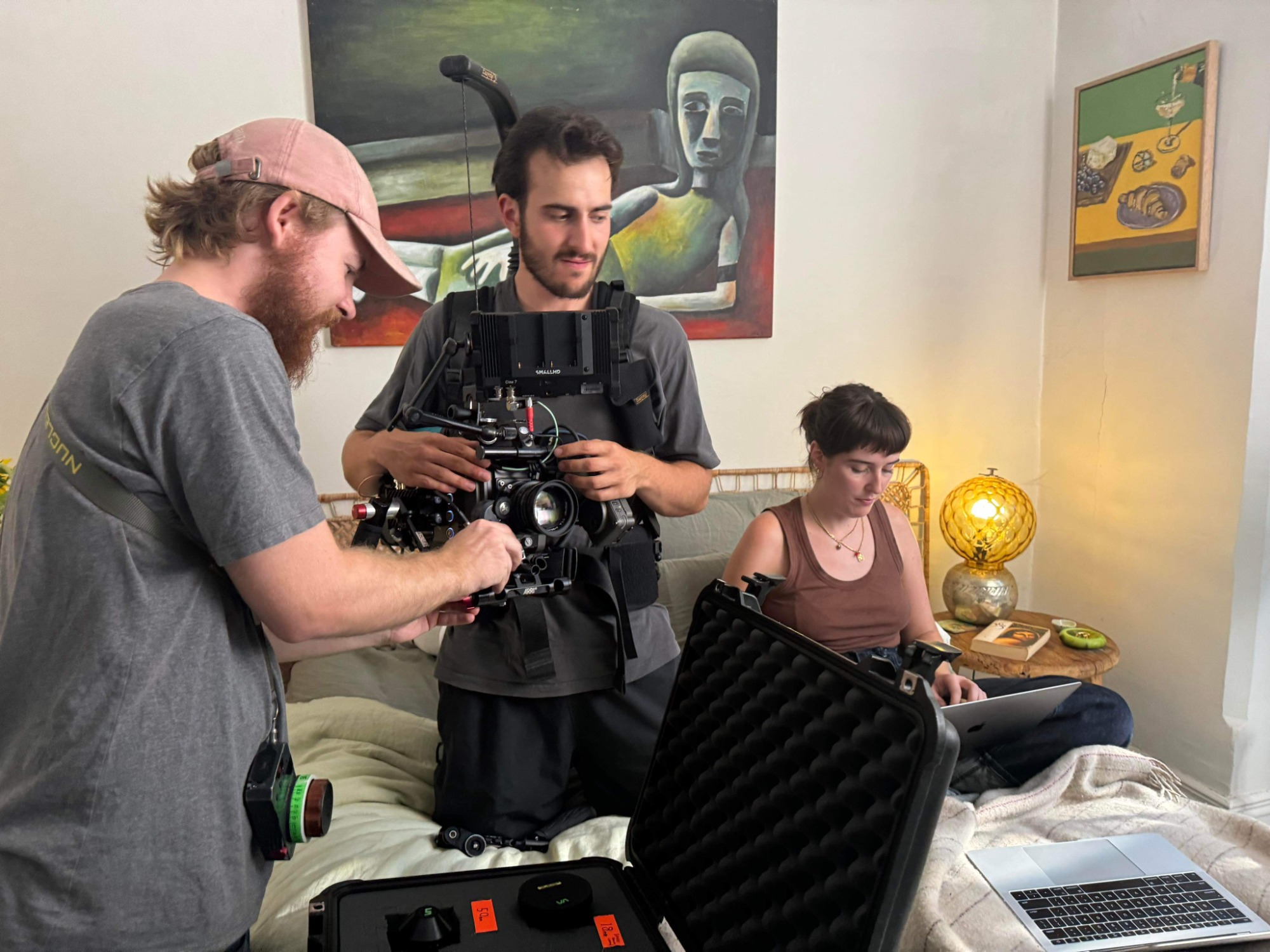
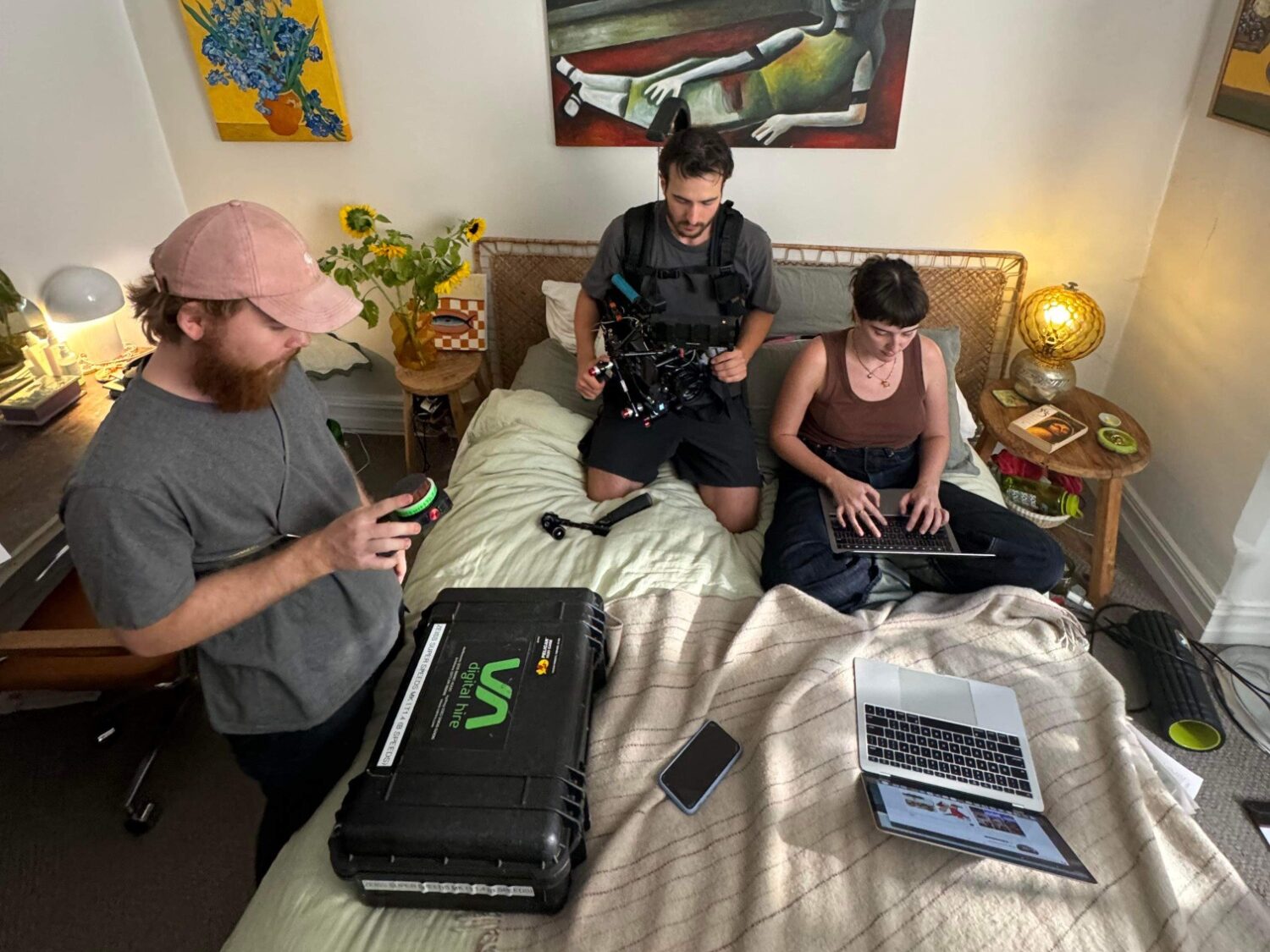
The film takes place entirely within a single location, which could easily have become visually restrictive. How did you work with cinematographer Julian Pertout to create a visual language that keeps the space interesting while reflecting the protagonist’s increasingly claustrophobic experience?
This is definitely something we were concerned about. Julian and I discussed various solutions we could implement. Could she be pacing down a hallway? Is there more dynamic blocking that we could implement here? But at the end of the day, I was confident in Ruby’s ability of owning the stage and keeping an audience engaged as I’d seen her do countless times. Our job was to simply capture the scene in the least frilly way and let her do the work of keeping the audience engaged.
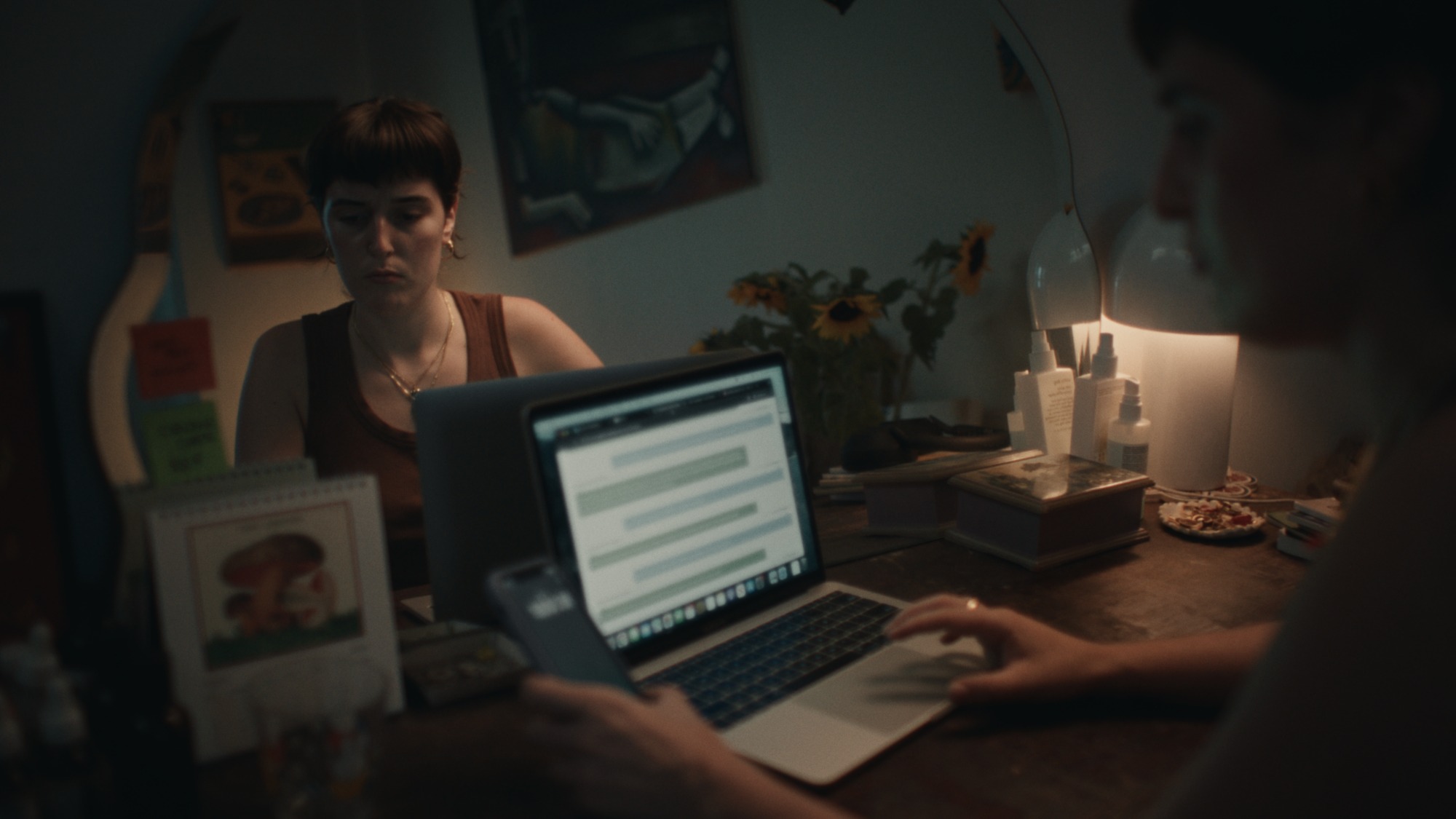
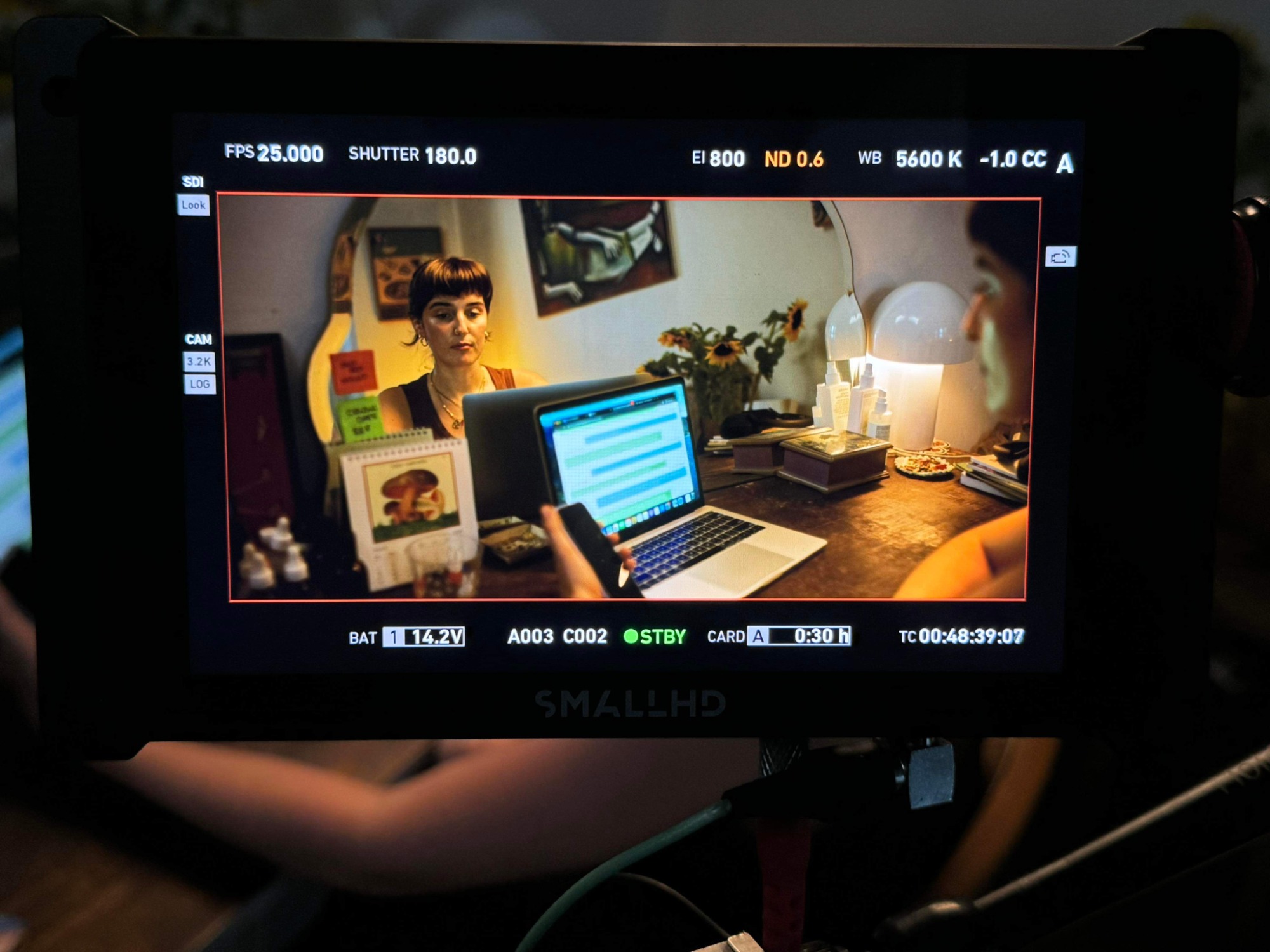
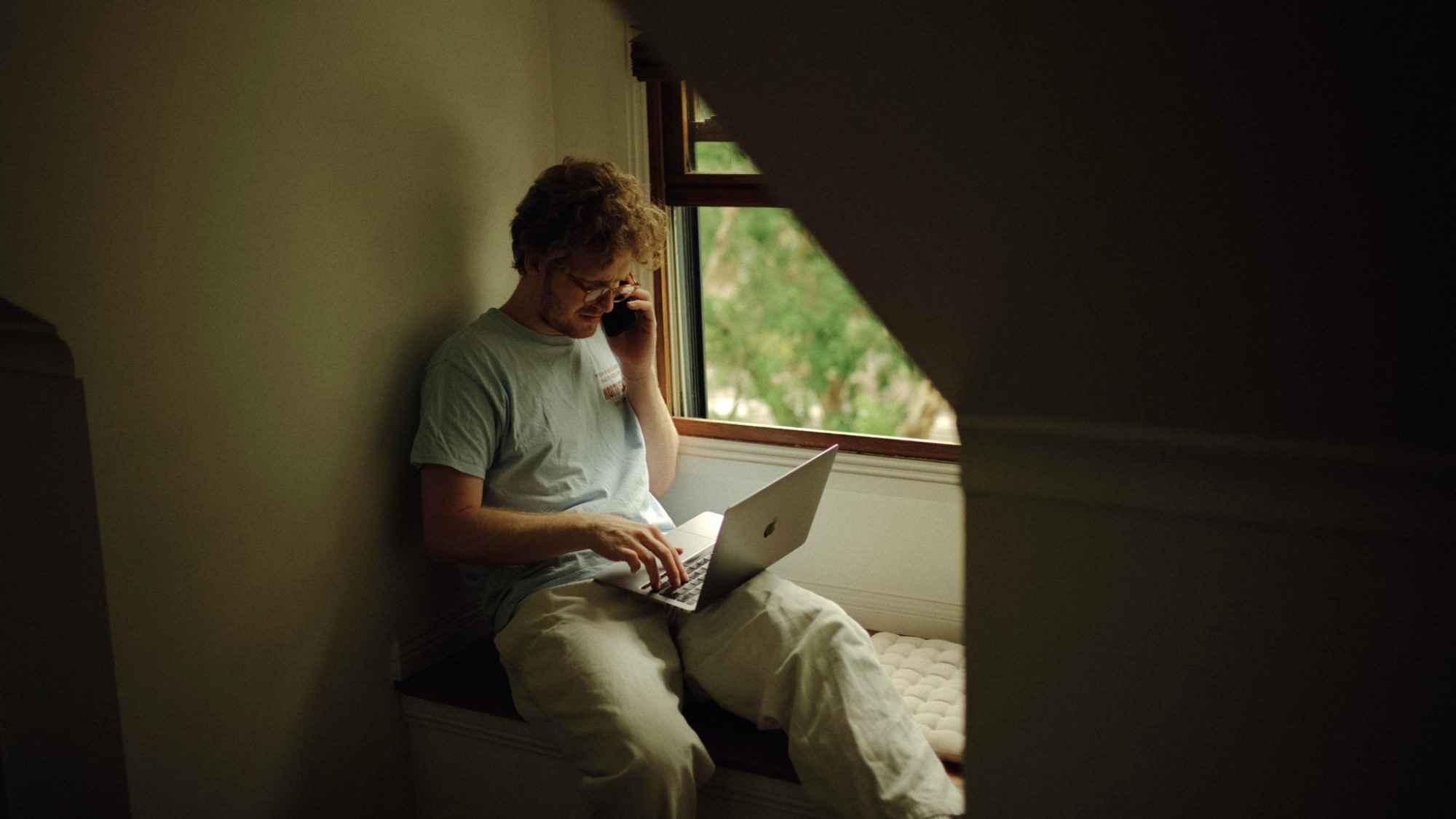
The film is really two scenes set in the same room, one during the day and one during the night, bifurcated in the middle. In order to split it up and try to ensure it all didn’t feel the exact same way the whole runtime, we set ourselves some rules. We had a strong feeling that the start should be frenetic and handheld and quite close-up and claustrophobic to match the character’s stressed-out state. We stayed really close most of the first scene, so that when cutting to a wide you had the ability to really disrupt and shift the energy and hit home a punchline. Then, with the second scene, we decided to plant it all on sticks and shoot through a mirror. It has a different energy, and so we wanted the camera to be less of an active participant matching the character’s frame of mind, to more of a disembodied, omniscient view of the proceedings, as if from the perspective of the AI.
James Tate’s score is also crucial to the film, particularly in transforming the protagonist’s irritation into something increasingly unsettling. What conversations did you have with James about the sound and musical language of the film?
It’s amazing, isn’t it? James is a childhood friend of mine and a prodigal musician. He’s scored a few films and other projects I’ve directed. I sent him the script well before production and said I was thinking it could be something like a blend between Jon Brion’s score for Punch Drunk Love and Cristobal Tapia de Veer’s work on Utopia. It had to be rhythmic, percussive, possibly distorted electronica, all around anxiety-inducing. He sent me a few sketches of what he thought the score might sound like. One of those pieces is in the film, practically unchanged from the final; it’s the song you hear at the start. It was amazing because I could play it on set and get the cast and crew into the tempo of what I thought the film should feel like.
It’s a drastically different short with the music layer turned off, I think a lot of the tone comes from the music.
It was a long process to transform those original sketches and conform and arrange them to the film. I’m very particular about music and we worked for a few months just making sure that the peaks and valleys were falling at the right spots, that crescendos’ we’re landing on jokes, that the music wasn’t just an afterthought applied in post but really embedded and snugly fit into the film. It’s a drastically different short with the music layer turned off, I think a lot of the tone comes from the music.
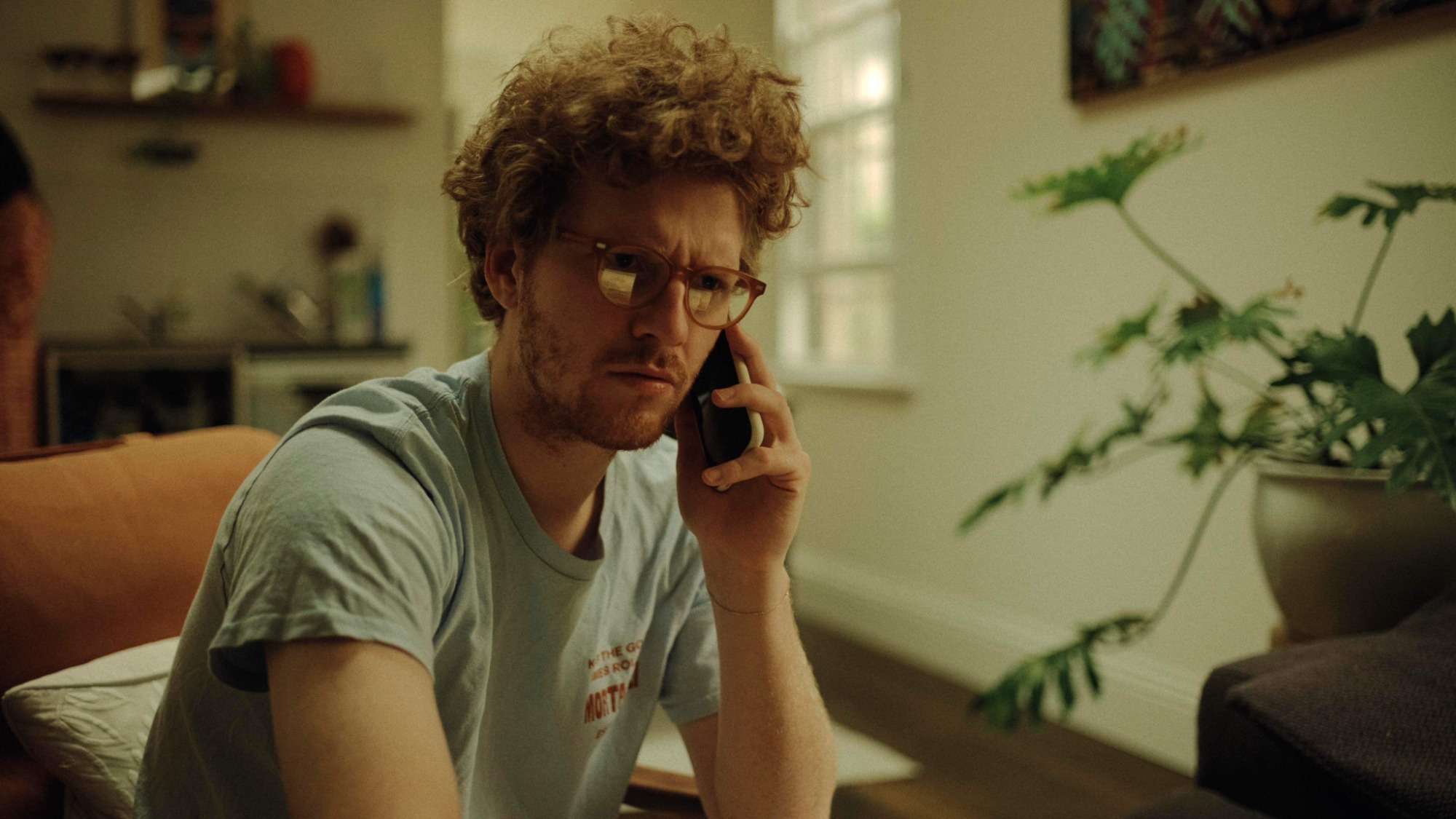
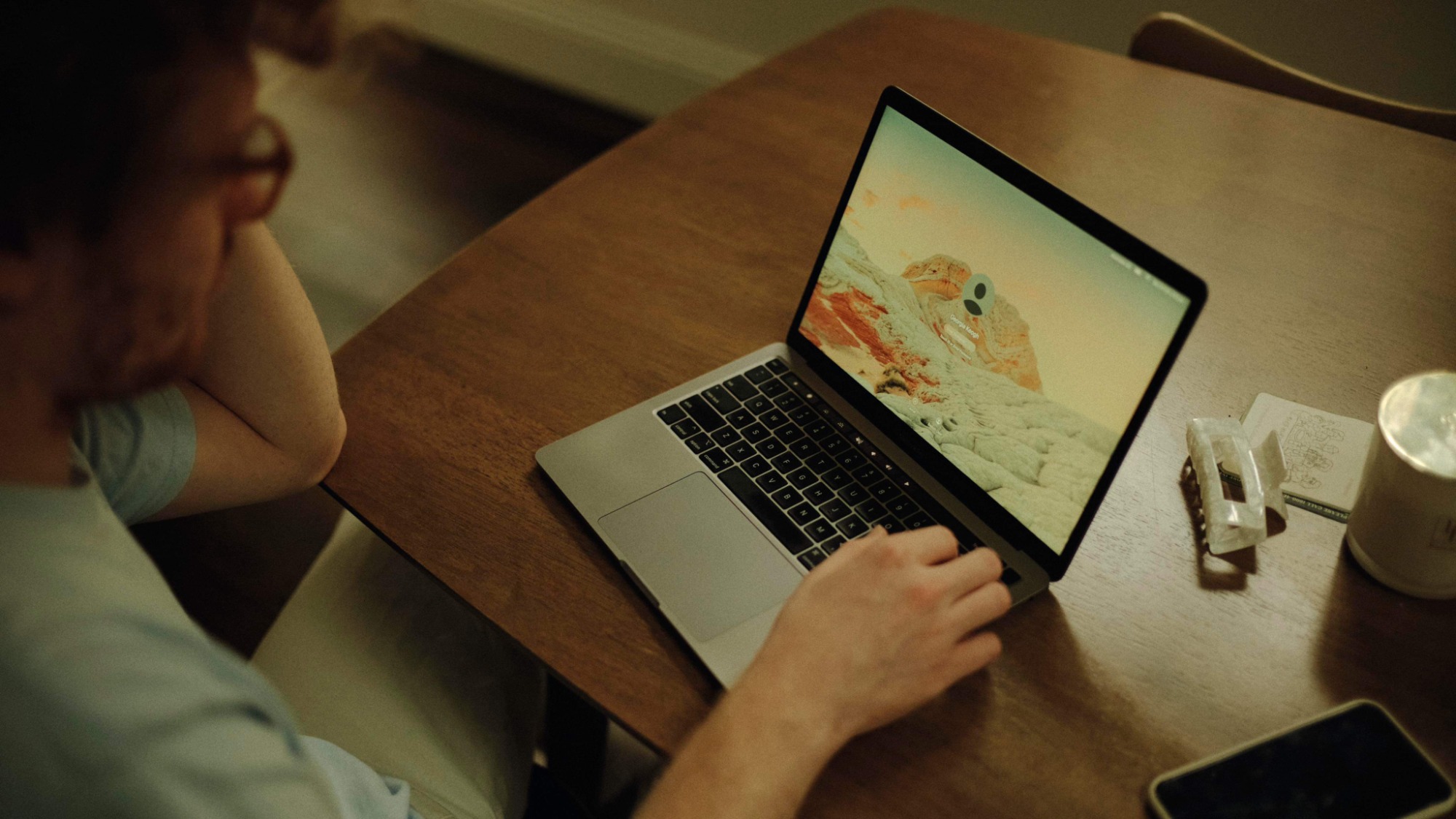
As both writer/director and editor, you had a lot of control over the film’s rhythm. The edit does a great job of continually shifting our expectations and building an unpredictable sense of momentum. What was your approach to finding that rhythm?
I was cognisant of the rhythm in the writing process and tried where possible to embed these rises and falls of momentum into the screenplay. However, once the post process began, my first port of call, after I’d laid down all of my selects of the takes, was to try and cut them as infrequently as I could. I set myself the challenge that, where possible, I would stay on the current shot and only cut if there was a shift in energy or the stakes were raised or there was a reveal of some information.
After I’d finished that process, I arrived at an assembly still without music, and I became horrified, thinking that I had made something unbelievably dull and akin to the torture of actually calling a customer service hotline. It was only when I started laying in James’ tracks and conforming the takes to his music that I realised that it added a whole new dimension to the energy. The score became a kind of momentum engine for the film and it informed the areas where I should refine and squeeze down and the areas where I should open up and allow for breath.
And having been so involved in the film from the writing through to the edit, how do you create enough distance to judge whether something is actually working for an audience rather than simply working for you?
I think the director’s job is to be the audience, that’s our role. We have to constantly put ourselves in the headspace of an uninitiated observer. Of course, this is easier said than done. Sometimes it’s nearly impossible to see the forest from the trees. But I have picked up a few editorial tricks along the way to try and switch and freshen it up. My mum (who lends her voice as Eve’s mother in the film) is a painter and I remember she always told my siblings and I to occasionally flip the canvas upside down to get another perspective on the work. One strategy which is quite common in the editing room is to watch the film in black and white. You have to use constant strategies to trick your brain into seeing something you can no longer see after repetitive viewing.
I’m detail-oriented and my process is constantly trying to eliminate distractions and things that make me cringe, and whittling those unwanted elements away until I’m no longer distracted by a mistake I made on the day or a cut that just doesn’t feel right in my stomach, until the moment when I watch it back I’m not pausing every few frames to fix something. Once I got it to a place where I was no longer fiddling and tinkering, I have a great community of filmmaker friends in Sydney who I trust will tell me the unadulterated truth, and so I sent around a copy and got some feedback; some that dramatically shifted the film.
Originally, I had something entirely different as the prologue and epilogue. I thought it worked on the page, but something in the translation to screen made it obtuse and confusing, and it wasn’t achieving its potential of being a guttural punch. Based on some feedback I received from some director friends (Peter Skinner and Orla Harper Doyle), I actually rewrote these two parts and went and reshot them over a year later. It can be nerve-wracking showing your work, but I really believe in feedback screenings, particularly with comedies. Often, the crowd can help you make it better. Let people in!
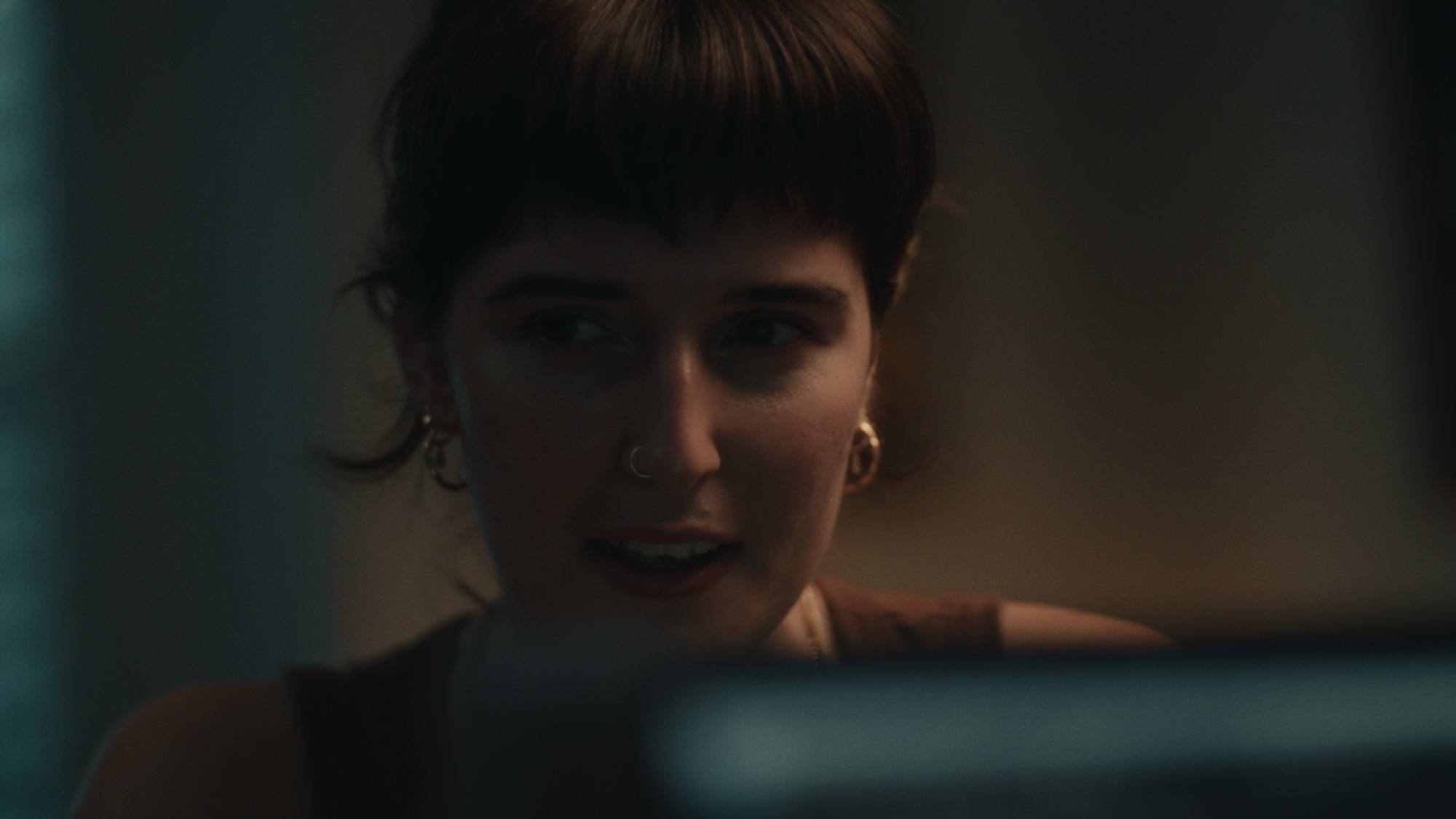
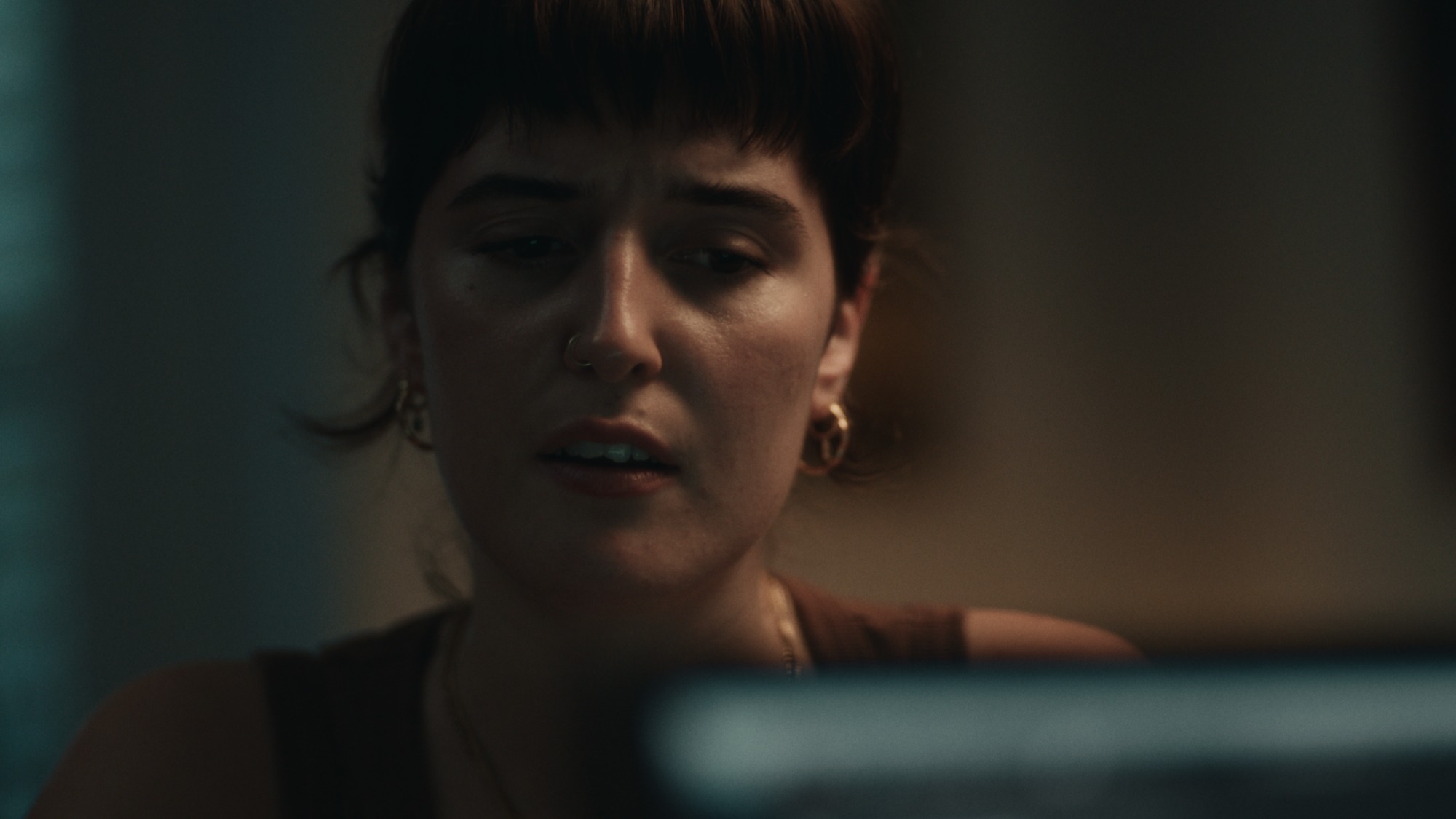
Listen Then Repeat occupies an interesting tonal space, existing largely in comedy before gradually flirting with something closer to horror. How did you approach that tonal balance and what does moving between comedy and horror allow you to explore?
For whatever reason, I’m drawn to stories that typically fit the mold of what you might call existential or cosmic horror. But it’s not necessarily because they scare me, it’s more because they make me laugh. The inverse occurs when watching standup. The jokes I respond to tend to be the ones that end up in such an unpredictable and horrifying place you have to nervously laugh through a slack jaw.
Often, the crowd can help you make it better. Let people in!
The path is well trodden in press interviews with wonderful filmmakers like Jordan Peele and Zach Cregger who walk the line between the genres, and many salient things have been said on the topic of the symbiosis of comedy and horror. Anything I could say is probably a regurgitation of what has been better said before me. But, yeah, I don’t know if you can have one without the other. A scare and a laugh are very similar and they probably work on the same psychological underpinning. I think of them as being a very similar energetic force. I like my laughs horrifying and I like my scares funny. It’s my sense of humour, I can’t really help toeing the line between the two. It sort of just came out that way.

Before we wrap up, what does your filmmaking future look like? Are there any new projects you’re working on that you can tell us about?
I recently moved to London from Australia, but before I left, I made a short film called No River Runs Here which has just been finalised. It’s treading in similar tonal territory to this one. It’s all about a consultant working for a water company who has a run-in with a disgruntled farmer she’s pitching new infrastructure to. I’m hoping to get that out soon. Other than that, I’ve got a couple of feature film scripts I’m developing. One of them is Curiosity Killed the Cat, and there’s a little bit of thematic overlap with Listen Then Repeat – it’s another techno-satire, black comedy meets cosmic horror. I’m very excited to make it happen.
And finally, this is a question we’re asking all the filmmakers we speak to: if you could recommend one short film by another filmmaker to the Directors Notes audience, what would it be and why?
I love short films that feel like a timeless bar-stool story you might overhear at the pub, now or a hundred years ago. The first thing that came to mind – there’s an Argentinian anthology of short films called Wild Tales by director Damián Szifron. It’s amazing, but particularly the first entry Pasternak, has been a big inspiration for me. You have to watch it. It’s amazing, a masterclass in how to structure a comedic short film.