


A bottle smashes. A mind fractures. From the grit-stained pavements of New York, a fantasy, drawn from old legends, blooms blue-toned and serene. Theodore Collatos’s Slamdance Grand Jury Prize-winning short, Palookaville, delivers a vibrant, disorienting ripple through a consciousness with legendary boxer Joe Louis shadowing a struggling young man. Welding a veritable tapestry of footage and archival images, and showcasing a selection of brilliant comedic performances in distinct roles, Palookaville is a cohesive, rhythmic representation of a wandering mind under pressure—a cinematic head trauma. Collatos’ multiplayered and vibrant tale of urban escapism serves as a pilot for a potential series that uses a kaleidoscopic filmmaking approach to explore grief, sibling bonds, and the very texture of the American psyche. Collatos joins us below, where we discuss deconstructing the American Dream through the lens of head trauma, using a shifting visual form to mirror a fractured consciousness, and the profound connection between violence and respect.
We’ve got the fascinating friendship from WWII, a frantic but truly authentic sweep of NYC, sibling rivalry, discussion of class and a visceral fantasy but Palookaville is about so much more.
With Palookaville, I wanted to create a compelling pilot episode, or proof of concept, for a television show. At its core, it’s about a fractured sibling relationship after losing their parents, and how they move on and relate, or don’t relate. My father passed away during the process, and this phenomenon was on my mind: the cycle of life and isolation as we age.
Episodically, New York City itself is a wonderland where surreal comedy and melancholy drama coexist every day. Absurd moments, mixed with harsh reality and fractured perspective. So playing with form is in the DNA of life in this city. Also coming from both the documentary and drama worlds, I wanted to make a New Wave-y show that shifts perspectives, style, and tone, that would be damn fun to make!
Thematically, with JoJo’s unrooted resourcefulness, the overarching theme of the show’s entirety is taking the false ‘American Dream’ and having a character, in this case a man with head trauma who believes he’s Joe Louis, ‘Faking-it-‘till—he-makes-it’ as a professional boxer—manifesting, hopes, dreams, comedy, tragedy. The American Way… and Joe Louis’ story is powerful, with how he and Max Schmeling’s friendship developed during WWII, and became a bond that transcended politics and national divides.

Why are verbal fights so everlasting, yet actual sanctioned violence between people often earns respect?
Tell us more about the central violent exploration of Joe Louis and Max Schmeling.
After a fight, you’ll often see two bloodied men hug and bond over the violence they shared, becoming friends at best, like Louis and Schmeling, or having earned mutual respect at worst. Rarely do beefs last after fights. This idea interested me in the Louis and Schmeling story. Why are verbal fights so everlasting, yet actual sanctioned violence between people often earns respect? In JoJo’s case, the violence is random and based on an actual attack I had on a subway car where a stranger smashed a bottle over my head… but JoJo’s resulting injury is an actual phenomenon that has been documented, where head trauma can cause these types of delusions. People have woken from comas thinking they’re someone else, or speaking other languages. I find this really fascinating to play around with a character. Beneath the comedy and surrealism, the gloves and footwork are really about connection, conflict, and the desperate hope of going the distance.
Most Popular
Your score in the opening scene strikes an off-beat, almost fairytale-like vision of America, an almost direct antithesis to the reality that follows.
With the score, I wanted to create the dreamy world we all live in, shifting between music, thoughts, and podcasts, everything alien, subjective, and foreign, and yes, a bit of a fairytale too. When things are too real, they almost bend around to surreal, and back and forth. America is a bizarre fairytale, and Palookaville is about a place and a character with trauma who believes they’re something they’re not, which, on a basic level, is everyone’s belief. We wish things into existence or they float away into nothingness. But if you believe it enough, it can happen. In fact, it can only happen if you believe it enough, much like filmmaking itself – a gritty, grimy fairytale, comedy, and pain.

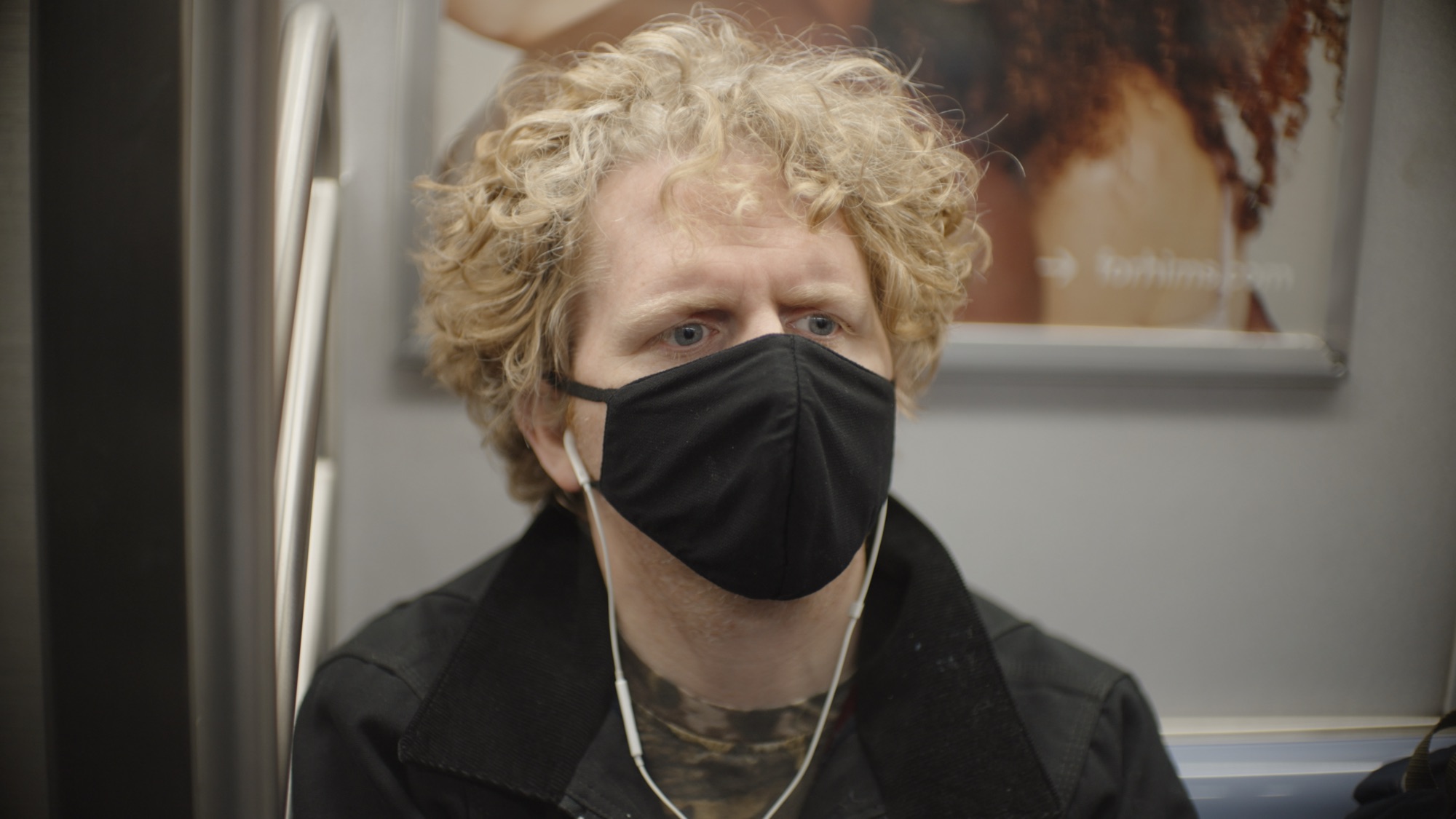


The film observes its protagonist with an unflinching, often uncomfortable intimacy.
I’m a fan of intimacy in film. I think we need more of it. More real-life intimacy. I think if you point and hold a camera on anyone but a psychopath, you’ll find empathy. I don’t think anyone truly experiences the world objectively, so with film, I think the best films are subjectively told through point of view. Ensembles even, shift POV, but there’s POV nonetheless. I find that objectively telling a story works best in a documentary with a subjective camera, if that makes sense. Subjective intimate camera, that withholds judgment.
On a technical level, I love associational editing, where an image next to another seemingly random image creates a third image in the viewer’s mind.
What were you aiming to evoke in the audience in the jarring cut from a violent, chaotic real-world scene to the serene, blue-toned fantasy?
Well, let me tell you, when you’re smashed over the head with a bottle, a true whiplash does occur. There’s nothing more grounding, humiliating, and self-reflective than being punched in the face. And that’s what violence is, and that’s what the fight game is. The result is trauma, head and otherwise, that is rampant through sports but particularly fight sports, and that’s rarely talked about in cinema. Most movies are concerned with the underdog story leading to fame and fortune, the dream, but the reality is a lifetime of physical and mental pain and misery. Chaotic, random, and unforgiving is the way of life without love.
On a technical level, I love associational editing, where an image next to another seemingly random image creates a third image in the viewer’s mind. They say you see your life flash before your eyes before you die, but what if someone else’s life flashed before your eyes?


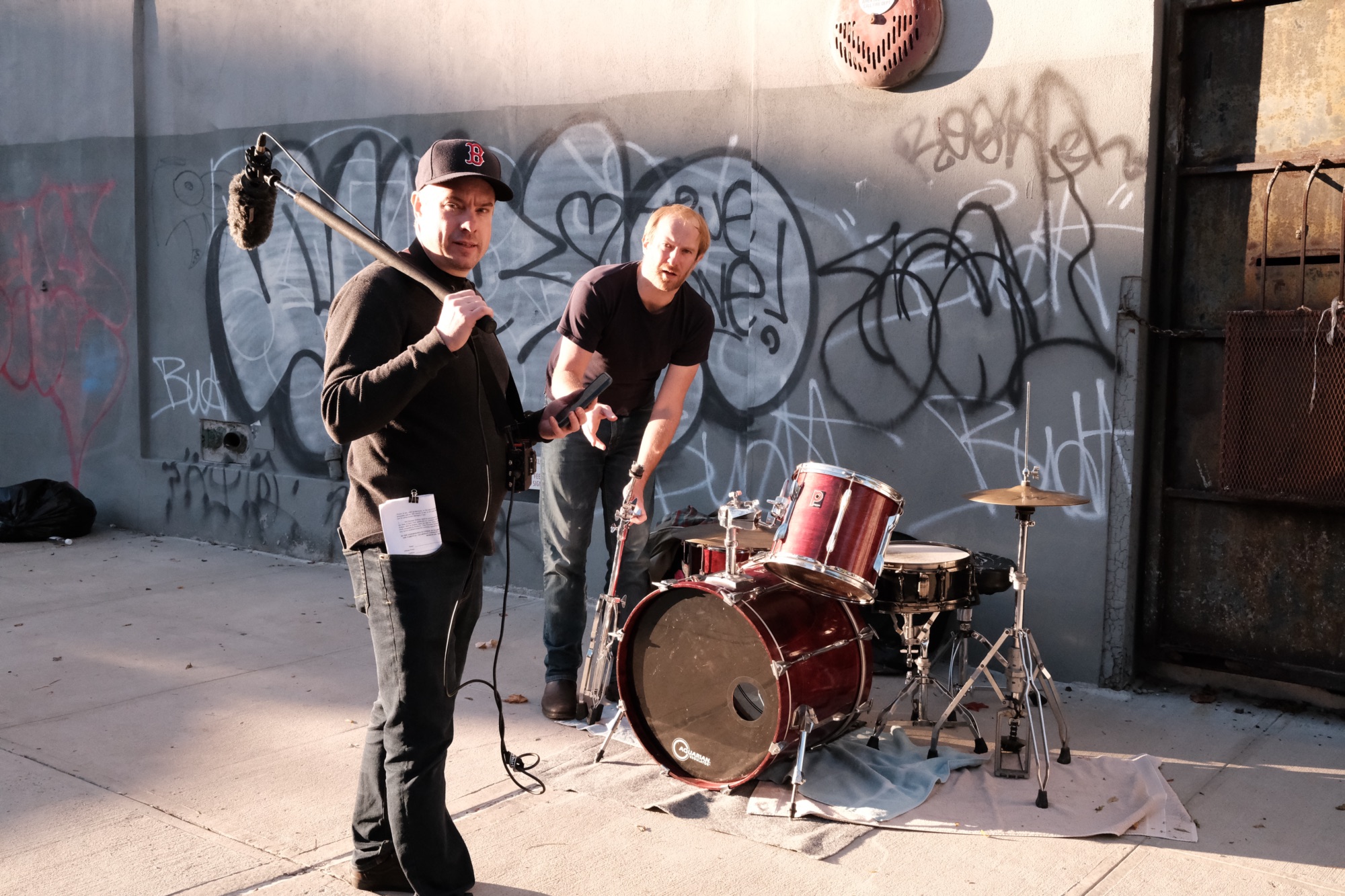
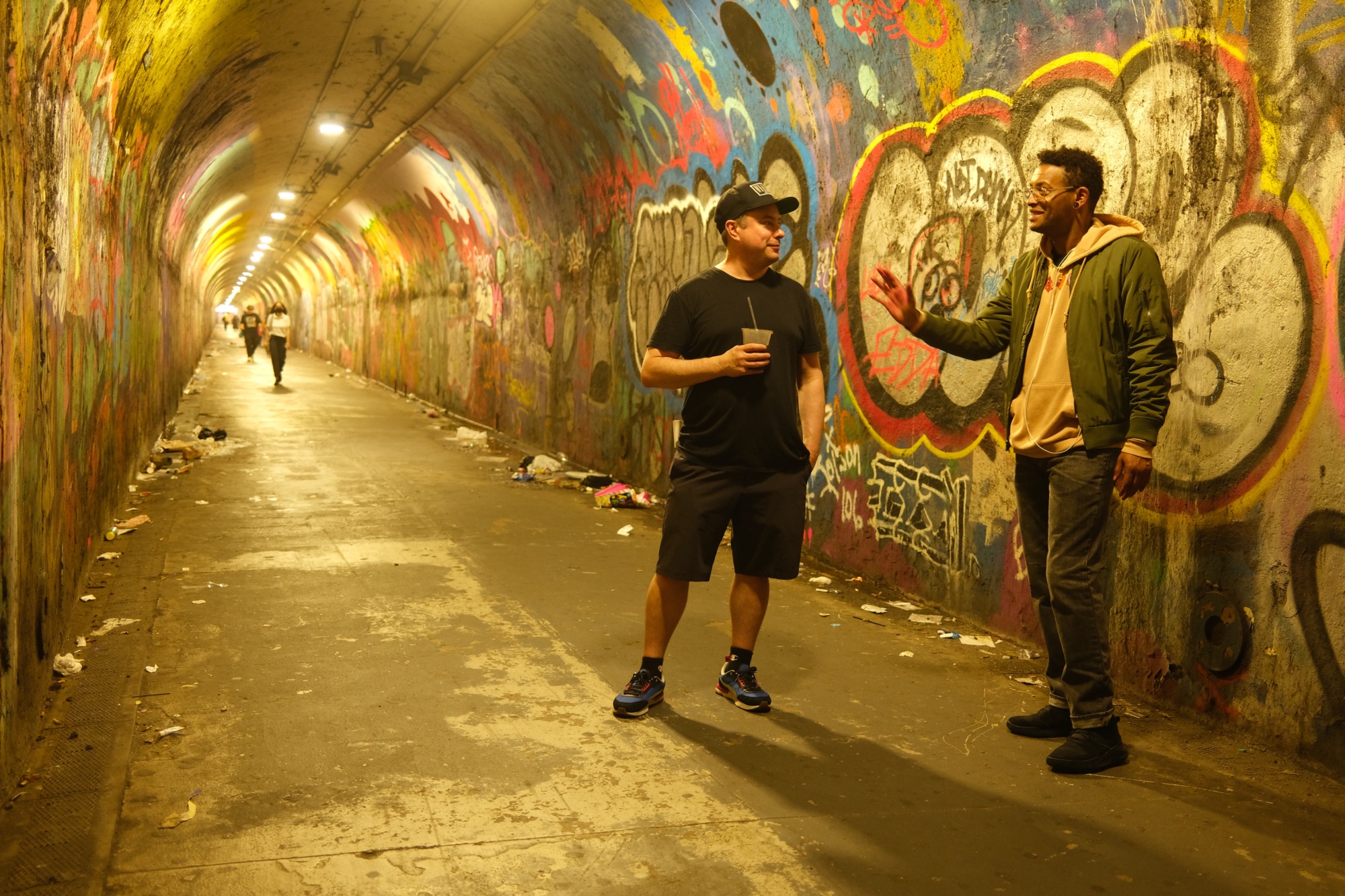
I had no idea if the shifts of style would work at all in a cohesive rhythm; I just wanted to make something unstable, enjoyable, and keep people’s attention, including my own.
The film’s texture is built from a tapestry of different elements: 16mm, surreal fantasy, and archival footage. How did you ensure these shifts felt like a cohesive rhythm rather than a disjointed mess?
Thoughts are fantasies with lyrical texture and emotion. Throughout every day, our mind wanders; that’s all I was trying to show. Different thoughts, different moods, tonal swings, styles, and textures – everything in service of attention, and making a fun watch while still having gravity. My idea of the playfulness of the New Wave films inspired me, although while re-watching some of those classics, I found myself deeply bored. But the idea of playing with form was on my mind. Someone speaks of something, and we recall it later. A hero is mentioned, and we visualize ourselves to be, or become, that hero. We are all the heroes of our own stories after all. I had no idea if the shifts of style would work at all in a cohesive rhythm; I just wanted to make something unstable, enjoyable, and keep people’s attention, including my own. If it ended in a disjointed mess, I would have shelved it and cried into my pillow.
Palookaville is a proof-of-concept for an episodic television show. Now that the short has had its festival run and been met with a positive reception, what’s next for the project?
After an extended festival run, awards, and a pitch to AMC Network, my small team and I developed a whole series bible, including three full seasons of material. We are seeking production partners and/or production companies to work with. If anyone reading this is a producer or company interested in collaborating with us, we would love to hear from you!