
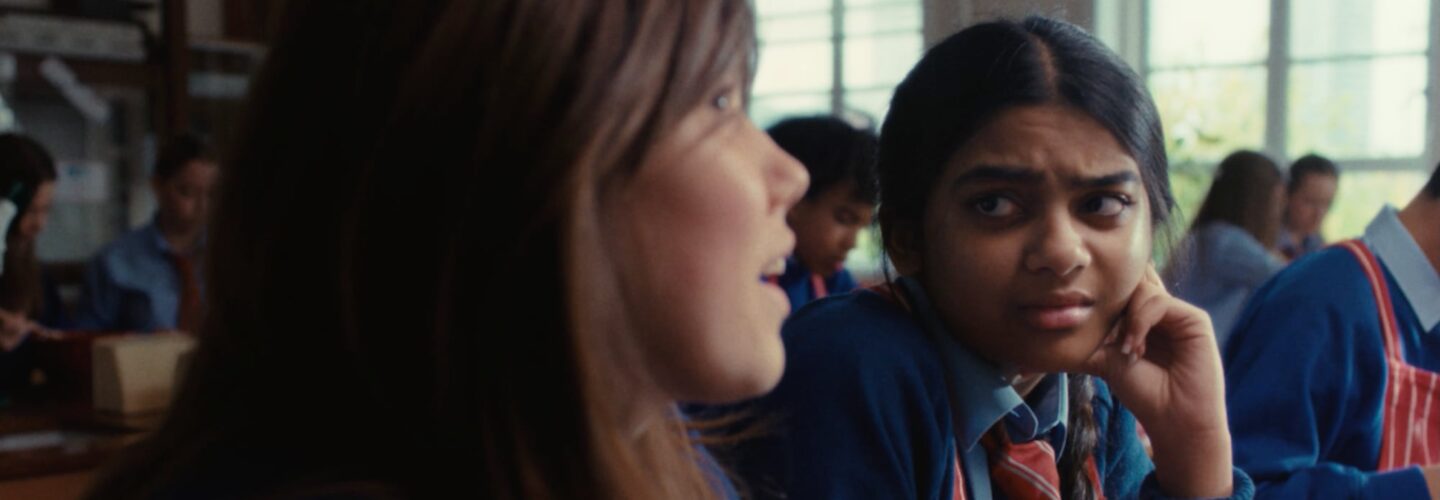
Ah, school. We either remember it fondly or have tried to block it out altogether but there’s no escaping the memory of our fledgling adult emotions coming alive at the sight of a certain someone. It’s why the teen comedy genre is so evergreen, no matter how many more turns around the sun the viewer has made long since exam time was over, we all remember that confusing period when the innocence of childhood starts to give way to more grown-up thoughts, feelings, and even actions. The best teen comedies capture the heart of that time, as well as the humour, which is why Katie Lambert’s I Hate Helen is such a deserving addition to the graduating class of 2025. Not only does it take the universal themes of what it is to be a teenager wrestling with ‘feelings’ (ew) but tells its story from an underserved perspective with undeniable aplomb, style, and verve. As we premiere I Hate Helen on Directors Notes today, we speak to Lambert about working with her teenage cast, feeling like perverts by the pool, developing the ‘Priya Cam’ with her director of photography, and the stress of recreating a school disco with a school full of teenage extras.
For many people the idea of revisiting high school memories is a bone-chilling proposition (I know I’m shuddering as I type). As the writer, how did you find diving back into those teenage years when pulling the script together?
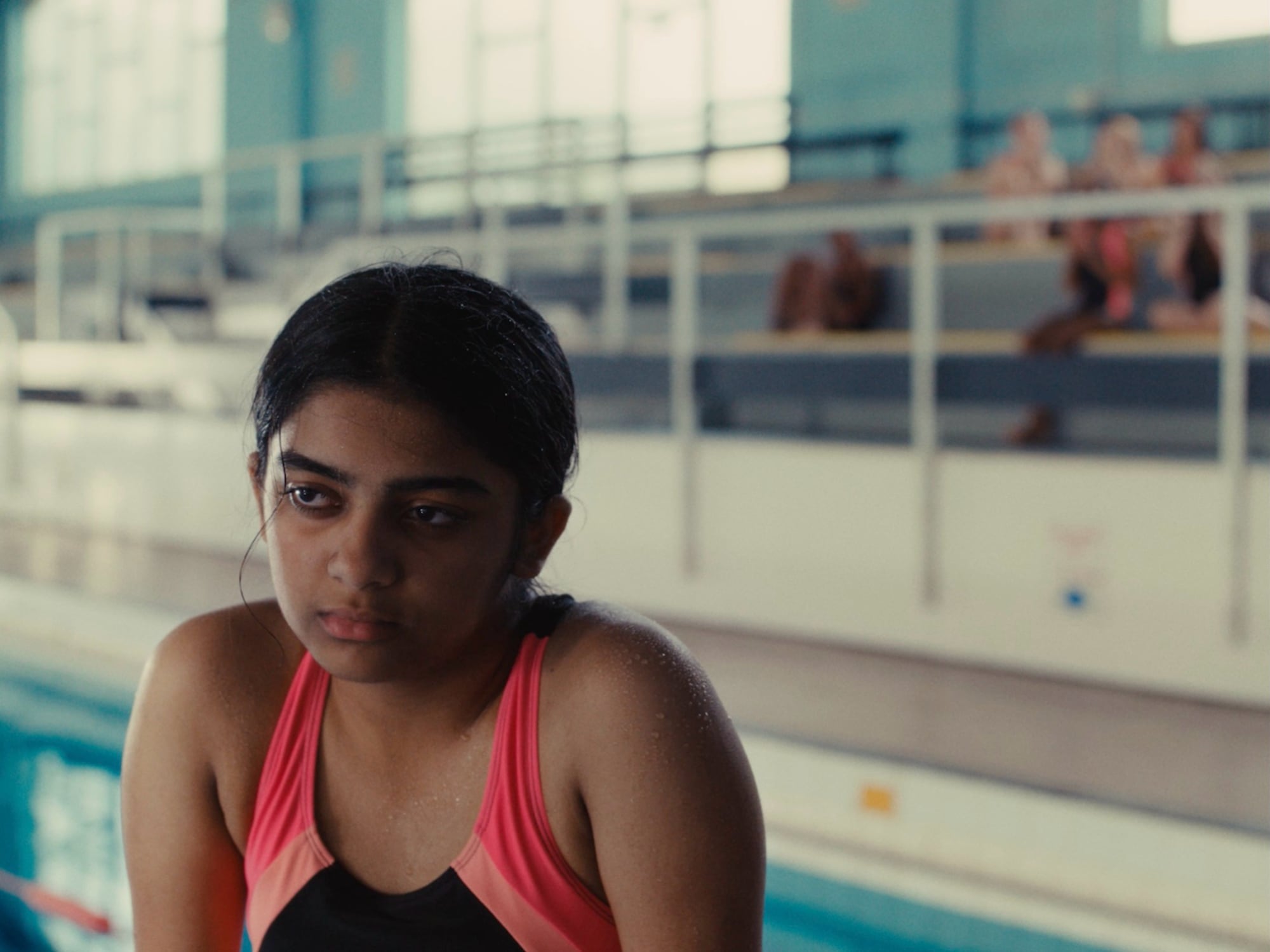
I loved school (nerd alert) but really hated PE. Especially swimming. I feel like it’s incredibly cruel to make teenagers wear swimming costumes in public together. I always felt like a blubber whale and tried any means possible to escape those dreaded lessons. Added to that – it’s not just your self-consciousness, but also an awareness of everyone else and their bodies. I feel like it’s almost too much at that age to see your crush semi-dressed. It’s overwhelming. The whole thing is a minefield and something I wanted to draw on in the film.
I feel like it’s almost too much at that age to see your crush semi dressed.
My producer (and partner-in-crime) Martha McGuirk and I also spoke about being queer at that age and feeling like a real pervert, especially in something like P.E. When we were in school there was so much heteronormativity. So, to have gay feelings, especially if they were in a private space like the girls’ changing rooms, felt very shameful. Again – gold for the film.

One of the many triumphs of I Hate Helen is the performances of all your leads, especially that of Kanan Verma. The chemistry between her character and her friends feels very authentic.
The best thing I got the three actors (Kanan Verma, Kelly Ye and Delina Tesfay) to do together was make up the dance routine for the disco scene. It instantly evaporated any awkwardness between them, and it was something they were all very passionate about. I also asked them to teach me and Sophie Cooch (amazing, invaluable intimacy co-ordinator) it, and this was also really fun and meant they saw me as the mal-coordinated clown I really am. Edie Allen (Helen) was a little bit older than the others, and I purposefully kept her apart. She needed to have mystique.
At one point I got ahead of myself and re-wrote the script with current lingo. I was laughed out of the room by Kanan for trying to use the word ‘lengers’ instead of fit – “he’s so lengers”. Apparently not.
Most Popular
Speaking of the students, the school feels so real, not least of all because of the many extras you were able to include to make the place so genuinely lived in. What was it like for you working with so many extras, especially in the disco scene?
The extras were heroes! They were all from local drama groups and they were all so excited. Because they had less to do, there were lots of times someone would come and ask me questions when we were shooting or wanted to watch the monitor, which was (mostly) sweet. The disco got a little stressful as all of them went quite method and just thought they were at a real disco. They were chugging Coke and singing along to Sabrina Carpenter full pelt, even when we switched the song off. They didn’t skip a beat and went acapella. In hindsight, it was funny but at the time I was incredibly stressed. It’s ruined Espresso for me forever.


There are some wonderful scenes in the swimming pool capturing that teenage awkwardness of being in a swimsuit (especially around a crush), underpinned by underwater filming that illustrates how out of depth Priyanka is with her feelings. How did you go about conceiving, choreographing and shooting those scenes with DOP Konrad Losch?
Konrad was absolutely scrupulous in his prep for this film and absolutely amazing. We left nothing to chance. I had storyboarded it all with pictures of me, Martha and Rosie Brear (producer). This meant that for the swimming we had to go and do some real practising. But it turns out that Bethnal Green Leisure Centre isn’t that cool with two fully grown adults trying to film a 14 year old while she swims. Which is for the best probably.
We were very worried about Kanan and Edie getting too cold in the pool or not having the stamina to do all the shots and the full rescue. It’s a big ask! So, in many ways, the swimming practice was actually a sneaky test to check their mettle. Luckily, they are both actually amazing swimmers.
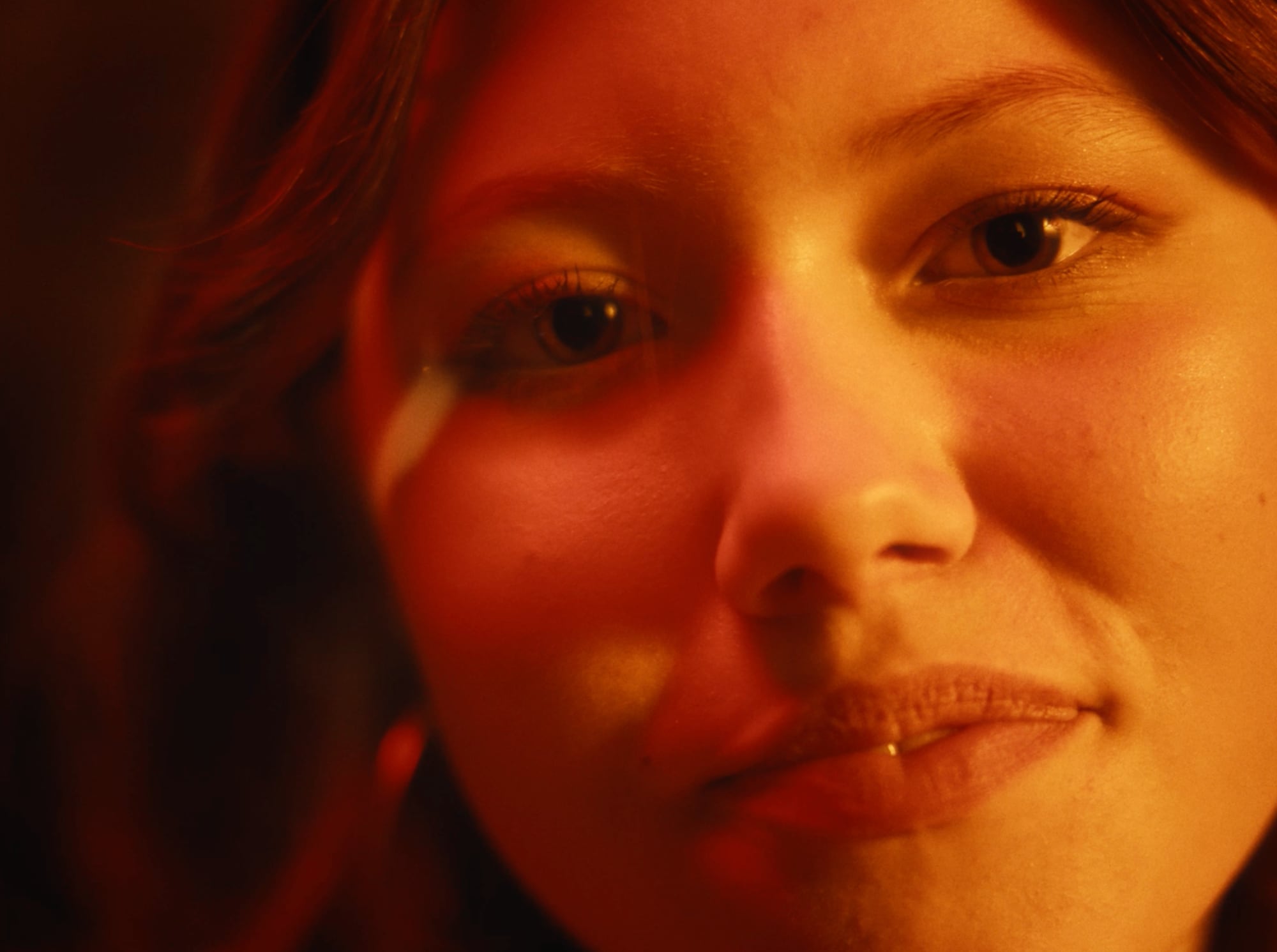
A lot of the film is actually Priya-cam. I wanted us to see things from her POV – but the comedy is created in how she misunderstands it. We don’t, she does.
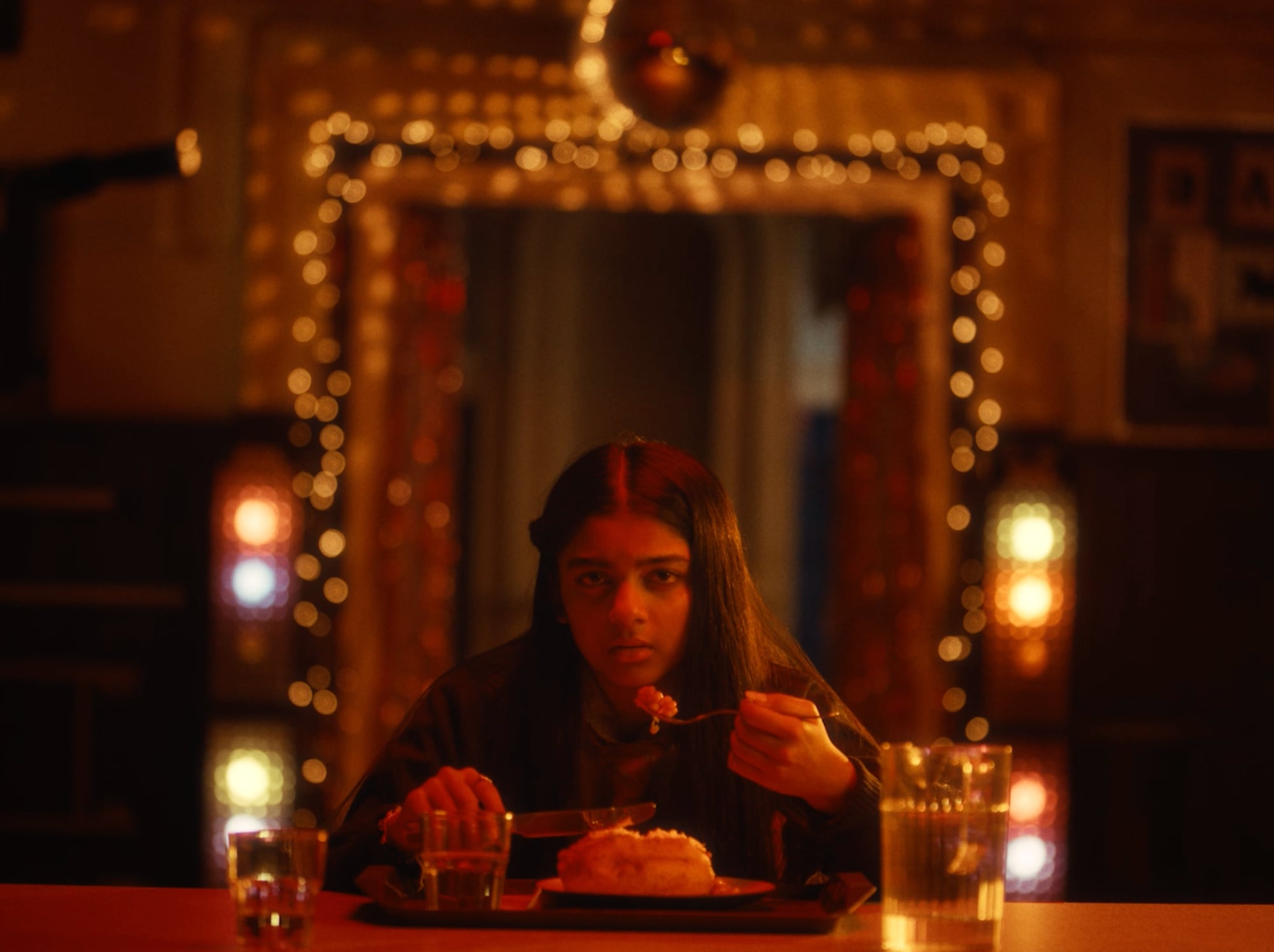
The use of colour and lighting is a thing of beauty, especially when used to denote a state of mind in Priyanka. Was this stylised approach something you envisioned from the start?
Yes! When Martha and I talked about feeling like a pervert in school, we developed this idea with Konrad into something we called Priya-cam. It’s used throughout but mostly in the opening. It’s when Priya is ogling Helen – but of course, she can’t recognise these lusty feelings, so they just come out as anger. It’s also in the pool scene when she watches Helen and Tariq. A lot of the film is actually Priya-cam. I wanted us to see things from her POV – but the comedy is created in how she misunderstands it. We don’t, she does.

The film is remarkably edited with a wicked pace, helping to make the world and story of this 6.5-minute film feel far more expansive and textured. How much of that was conceived at the writing stage vs being discovered with your editor Tamara Ishida?
I knew I wanted it to be pacey and it was written as such. I actually think what Tamara did, which is her absolute superpower, is that she really landed the heart and character beats. Tamara has such an amazing talent for story and character. She made the most of the emotional moments, the exchanges. She made it take a breath where it needed to.
There’s also a wonderful use of sound, especially in the moments where Priyanka is internalising her feelings.
Because the Priya-cam was so ingrained in the way we shot the film, we wanted to bring this to the sound too. This actually started with slowing down our main track to a kind of hypnotic, daydream kind of sound and them experimenting with layering in things like a heartbeat, breaths, etc. The snap OUTS were super important too, especially in the disco scene, which took us ages.
The greatest thing I gained from the short is the belief that the tone of teenage girls, chatting shit and being cheeky (in a non-contrived way) would hold for a feature.

And finally, with I Hate Helen ending on something of a cliff-hanger, are there any plans to tell a feature version of this story? What projects do you have lined up next?
Ah, there is no peace at MrMr! I (Katie) have a few features in development – including a dance movie set in rural Kent, which is very much the tone of I Hate Helen. The short doesn’t have the same characters or even themes but I wanted to make it as almost a tone sample, to prove the dry comedy would work, that I could work with a teenage cast, and to show my aesthetic as a director. The interior life of teenage girls and dream vs reality is something which is very crucial in the feature too.
The greatest thing I gained from the short is the belief that the tone of teenage girls, chatting shit and being cheeky (in a non-contrived way) would hold for a feature. Even watching the cast interacting off camera – talking about things like their favourite bands, shops, teachers. Young teenagers are so deeply funny and so unself-aware. I would love to develop a film where we capture this in an authentic way. I think it would be hilarious.