
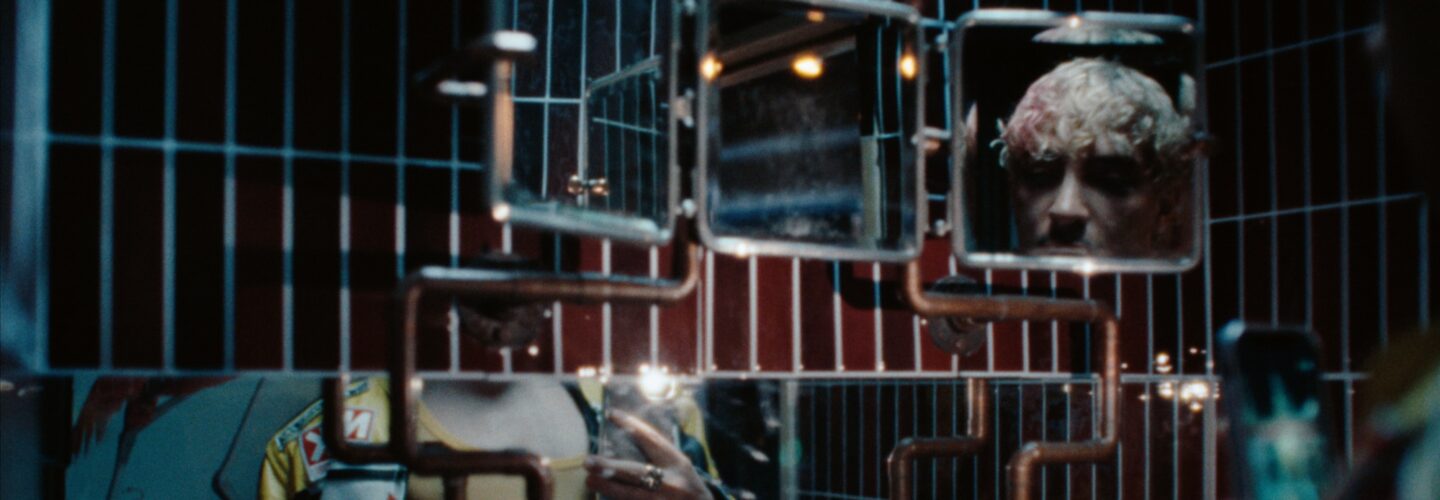

Especially now, in the age of app dating, it is not uncommon for relationships to have two versions of their meet-cute: the one you tell, and the one that actually happened. Leve Kühl, whilst under the guidance of UPPERFAST, has produced Grinder’s first Christmas film by contrasting those well-trodden worlds. On one side, the formality of an overbearing and uptight family dinner: measured, lit and set up just so, loaded with expectation. On the other hand, the real story of how they found each other—joyful, spontaneous, and very much alive—plays out in a montage of vignettes that carries the film’s true emotional weight. It’s here, in the mess and momentum of actual intimacy, that Peas quietly makes its case that a love story doesn’t need to be tidy or to conform. Kühl, a returning DN filmmaker who cut his teeth editing in San Francisco, then finessed his storytelling in Filmakademie Baden-Württemberg, brings his editor’s eye for structure and a writer’s instinct for what people actually feel. As Peas hits the pages of Directors Notes, we speak to him about working with Grindr’s culturally loaded brief, the thinking behind that 4:3 frame, and why specificity is always the route to something universal.
Grindr is one of the most culturally loaded apps in existence! When you were brought onto this project, did the brief immediately feel like permission to be playful rather than earnest?
Grindr absolutely carries a massive cultural footprint, and tackling a project around their brand felt like an immediate invitation to be playful. But for me, the best comedy always comes from a place of truth, so the film had to be anchored in something relatable. And who hasn’t lied to their parents before?
We all know how significant Christmas adverts are. Did that bring additional considerations to the project?
The Christmas Ad is practically its own genre in advertising at this point, full of well-worn tropes and expectations. Venturing into that territory with a brand like Grindr in mind meant setting a completely new kind of tone. We wanted to subvert the traditional, overly emotional holiday ad, while still delivering on the festive warmth. It was a balancing act to make something that felt undeniably Christmas but unapologetically Grindr.


There’s something inherently political about placing a brand synonymous with anonymous sex into a nativity-adjacent family setting… The montage is where the real film is doing the heaviest emotional and comedic lifting. How did you arrive at the vignettes? What was the guiding principle for the selection?
For the vignettes, our guiding principle was authenticity. Every love story is specific, no matter who’s involved, and the more specific you are, the more universally funny it becomes. I did a lot of research before starting to write, and my co-writer, Mathis van den Berg, was incredibly helpful. We wanted to develop scenes that reflected a few different sides of queer dating, specifically those coded for an app like Grindr.
Taking that extreme digital confidence and dropping it into a real-life conversations, created immediate awkwardness.
We had a lot of different ideas floating around, but one thing that absolutely had to be in there was the unfiltered, straight-to-the-point messages you get. Instead of just showing text on a screen, we decided to translate those actual messages into spoken, face-to-face dialogue during the dating sequence. People type things on apps that they would never actually say in person. So taking that extreme digital confidence and dropping it into real-life conversations created immediate awkwardness. Beyond that, we wanted to tap into highly specific elements like cruising culture, as well as the broader, much more complex topic of masculinity in gay dating.
Most Popular
The film most certainly embraces the specific feel of gay culture rather than softening it for mainstream palatability. How considered was that balance?
It was highly considered. Watering down queer culture for mainstream palatability usually results in something that feels hollow to everyone. To achieve that authenticity, we worked closely with our amazing casting director, Bardha Krasniqi. We held live castings to test various actors, and from early on, Adam Ali just stood out. And honestly, they brought so much to the film!


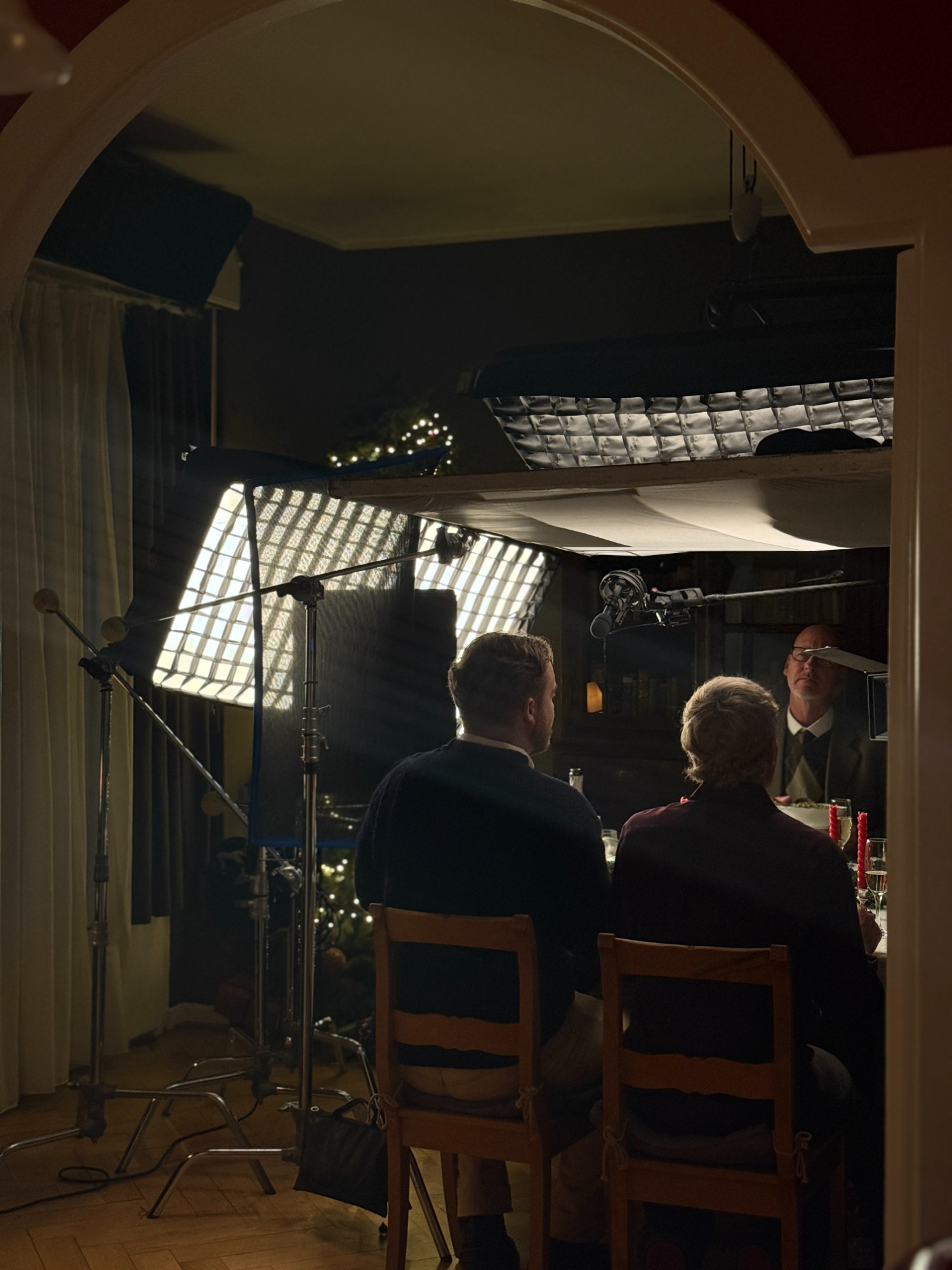

4:3 was the standard aspect ratio for older films about love stories, which helped set up that expectation of falling in love being perfect in the first place.
Peas is shot in 4:3, a ratio that carries a lot of cultural meaning… In a film that’s fundamentally about the gap between the story you tell your parents and the life you actually live, that choice feels loaded.
The 4:3 ratio immediately evokes the feeling of a family home video. It provides an inherent intimacy while simultaneously creating a subtle sense of being boxed in, perfectly mirroring the claustrophobia of that dinner table. Additionally, 4:3 was the standard aspect ratio for older films about love stories, which helped set up that expectation of falling in love being perfect in the first place — so choosing 4:3 felt like the right choice to shatter it as well.
You’ve hit on the perfect pace, cutting between the fabricated meet-cute and the gorgeous, messy truth.
Nik Kohler from Cabin Edit was a fantastic partner in finding that exact comedic timing. Nik and I also worked very closely with our Composer, Gustav Karlström, and Adam Smyth from String and Tins for music and sound. Because of this, everything actually came together all at once, rather than sequentially, which helped the pacing immensely.

We are expanding our already vast collection of shorts and asking our filmmakers what their favourite short(s) are and why!
That is really difficult to answer! I’ve seen so many great shorts at festivals, cinemas, or online, so it’s hard to pick just one favorite. But one that really stuck with me is Wasp by Andrea Arnold. I watched it for the first time in film school, and I was struck by how effortlessly it combines poetry and realism. It’s raw, uncompromising, and incredibly intimate. It really taught me a lot about finding beauty in the most unlikely situations. It’s a classic, but definitely one of my faves.
When you’re working within a brand’s identity, do you feel you’re making a Leve Kühl film that happens to be for Grindr, or does the constraint generate something you wouldn’t have arrived at independently?
It’s always a dance! I definitely can’t help but bring my own perspective to the films I make, but the process is always deeply collaborative. Making a film is never a one-person job, so everyone I work with definitely plays a huge part. Making films with people you genuinely like is a huge privilege. So whatever comes next, I can’t wait!